Skip to content · ⁨דלג לתוכן⁩

Collecting Data · ⁨איסוף נתונים⁩

AP Statistics · ⁨סטטיסטיקה - AP⁩ · Topic 3 · ⁨נושא 3⁩

Video lesson for this topic · ⁨שיעור וידאו לנושא זה⁩ Open the video page · ⁨פתח את עמוד הוידאו⁩
7:31

איסוף נתונים

סקר מקוון אסף שלושים אלף תגובות. סקירה קפדנית שואלת רק אלף אנשים. איזה מהם קרוב יותר לאמת? הקטן, כמעט כל…

English narration · English + 中文 subtitles burned in · ⁨קריאת קול באנגלית · תרגום אנגלי + סינית שרוף בתוך הסרטון⁩

3.1

Can We Trust the Data We Collected? · ⁨האם ניתן לסמוך על הנתונים שאספנו?⁩

Syllabus · ⁨סיילבוס⁩
English

Enduring Understanding (VAR-1): Given that variation may be random or not, conclusions are uncertain.

Learning Objective VAR-1.E: Identify questions to be answered about data collection methods. [Skill 1.A]

  • VAR-1.E.1 Methods for data collection that do not rely on chance result in untrustworthy conclusions.
עברית

הבנה מתמשכת (VAR-1): בשל כך ששינוי עשוי להיות אקראי או לא, המסקנות הן לא וודאות.

מטרת למידה VAR-1.E: זיהוי שאלות להשקפה על שיטות איסוף נתונים. [מיומנות 1.A]

  • VAR-1.E.1 שיטות לאיסוף נתונים שאינן מבוססות על chance מובילות למסקנות שאינן אמינות.
Source: College Board AP Course and Exam Description · ⁨מקור: תיאור הקורס והמבחן של College Board AP⁩

English

A conclusion is only as good as the data behind it. How data are collected decides what you may conclude – whether you can generalize to a population 总体, and whether you can claim cause and effect. Poorly collected data can be worse than none.

עברית

המסקנה טובה רק בהתאם לנתונים העומדים מאחוריה. איך הנתונים אספו קובע מה ניתן להסיק – האם ניתן לגנרליזציה לאוכלוסייה, והאם ניתן לטעון סיבה והשפעה. נתונים שנאספו בצורה לקויה יכולים להיות גרועים יותר מאין כלל.

3.2

Observational Studies and Experiments · ⁨מחקרים צופים וניסויים⁩

Syllabus · ⁨סיילבוס⁩
English

Enduring Understanding (DAT-2): The way we collect data influences what we can and cannot say about a population.

Learning Objective DAT-2.A: Identify the type of a study. [Skill 1.C]

  • DAT-2.A.1 A population consists of all items or subjects of interest.
  • DAT-2.A.2 A sample selected for study is a subset of the population.
  • DAT-2.A.3 In an observational study, treatments are not imposed. Investigators examine data for a sample of individuals (retrospective) or follow a sample of individuals into the future collecting data (prospective) in order to investigate a topic of interest about the population. A sample survey is a type of observational study that collects data from a sample in an attempt to learn about the population from which the sample was taken.
  • DAT-2.A.4 In an experiment, different conditions (treatments) are assigned to experimental units (participants or subjects).

Learning Objective DAT-2.B: Identify appropriate generalizations and determinations based on observational studies. [Skill 4.A]

  • DAT-2.B.1 It is only appropriate to make generalizations about a population based on samples that are randomly selected or otherwise representative of that population.
  • DAT-2.B.2 A sample is only generalizable to the population from which the sample was selected.
  • DAT-2.B.3 It is not possible to determine causal relationships between variables using data collected in an observational study.
עברית

הבנה מתמשכת (DAT-2): הדרך שבה אנו אוספים נתונים משפיעה על מה שאנו יכולים ולא יכולים לומר לגבי אוכלוסייה.

מטרת למידה DAT-2.A: זיהוי סוג המחקר. [מיומנות 1.C]

  • DAT-2.A.1 אוכלוסייה כוללת את כל הפריטים או הנושאים הרלוונטיים.
  • DAT-2.A.2 דגימה שנבחרה למחקר היא תת-קבוצה של האוכלוסייה.
  • DAT-2.A.3 במחקר תצפיתי, טיפולים אינם מוטלים על ידי החוקרים. החוקרים בוחנים נתונים מדגימת פרטים (תצפית רטרוספקטיבית) או עוקבים אחרי דגימת פרטים לעתיד ואוספים נתונים (תצפית פרוספקטיבית) כדי לחקור נושא רלוונטי לגבי האוכלוסייה. סקר דגימה הוא סוג של מחקר תצפיתי שאוסף נתונים מדגימה בניסיון ללמוד על האוכלוסייה שבה נלקחה הדגימה.
  • DAT-2.A.4 בניסוי, תנאים שונים (טיפולים) מיועדים ליחידות ניסוי (משתתפים או נבדקים).

מטרת למידה DAT-2.B: זיהוי הכללות והסקות מתאימות מבוססות על מחקרי תצפית. [מיומנות 4.A]

  • DAT-2.B.1 קבלת הכללות לגבי אוכלוסייה היא מתאימה רק אם הדגימות נבחרו באופן אקראי או כייפות אחרת לאוכלוסייה זו.
  • DAT-2.B.2 לדגימה יש יכולת הכללה רק לאוכלוסייה ממנה נבחרה.
  • DAT-2.B.3 אין אפשרות לקבוע קשרים סיבתיים בין משתנים באמצעות נתונים שנאספו במחקר תצפיתי.

Source: College Board AP Course and Exam Description · ⁨מקור: תיאור הקורס והמבחן של College Board AP⁩

English
  • In an observational study 观察性研究 you measure individuals without trying to influence them. It can show association, but not causation, because lurking variables may explain the link.
  • In an experiment 实验 you deliberately impose a treatment 处理 and compare responses. A well-designed experiment can establish cause and effect.
עברית
  • במחקר צופה אתה מדד אינדיבידואלים מבלי לנסות לשפוע עליהם. הוא יכול להראות קשר, אך לא סיבתיות, מכיוון שמשתנים נסתרים עשויים להסביר את הקשר.
  • בניסוי אתה מטיל בכוונה טיפול ומשווה תגובות. ניסוי מתוכנן היטב יכול לקיים סיבה והשפעה.
Explore · ⁨חקור⁩

Observational study or experiment? · ⁨מחקר תצפית או ניסוי?⁩

In an experiment the researcher imposes a treatment (and can show cause); an observational study only records what already happens (and can show association, not cause). · ⁨בניסוי החוקר מטיל טיפול (וכל להראות סיבה); במחקר תצפית נרשמים רק מה שכבר קורה (וכל להראות קשר, אך לא סיבה).⁩

3.3

Random Sampling · ⁨דגימה אקראית⁩

Syllabus · ⁨סיילבוס⁩
English

Enduring Understanding (DAT-2): The way we collect data influences what we can and cannot say about a population.

Learning Objective DAT-2.C: Identify a sampling method, given a description of a study. [Skill 1.C]

  • DAT-2.C.1 When an item from a population can be selected only once, this is called sampling without replacement. When an item from the population can be selected more than once, this is called sampling with replacement.
  • DAT-2.C.2 A simple random sample (SRS) is a sample in which every group of a given size has an equal chance of being chosen. This method is the basis for many types of sampling mechanisms. A few examples of mechanisms used to obtain SRSs include numbering individuals and using a random number generator to select which ones to include in the sample, ignoring repeats, using a table of random numbers, or drawing a card from a deck without replacement.
  • DAT-2.C.3 A stratified random sample involves the division of a population into separate groups, called strata, based on shared attributes or characteristics (homogeneous grouping). Within each stratum a simple random sample is selected, and the selected units are combined to form the sample.
  • DAT-2.C.4 A cluster sample involves the division of a population into smaller groups, called clusters. Ideally, there is heterogeneity within each cluster, and clusters are similar to one another in their composition. A simple random sample of clusters is selected from the population to form the sample of clusters. Data are collected from all observations in the selected clusters.
  • DAT-2.C.5 A systematic random sample is a method in which sample members from a population are selected according to a random starting point and a fixed, periodic interval.
  • DAT-2.C.6 A census selects all items/subjects in a population.

Learning Objective DAT-2.D: Explain why a particular sampling method is or is not appropriate for a given situation. [Skill 1.C]

  • DAT-2.D.1 There are advantages and disadvantages for each sampling method depending upon the question that is to be answered and the population from which the sample will be drawn.
עברית

הבנה מתמשכת (DAT-2): הדרך שבה אנו אוספים נתונים משפיעה על מה שאנו יכולים ולא יכולים לומר לגבי אוכלוסייה.

מטרת למידה DAT-2.C: זיהוי שיטת דגימה בהתבסס על תיאור של מחקר. [מיומנות 1.C]

  • DAT-2.C.1 כאשר פריט מאוכלוסייה ניתן לבחירה פעם אחת בלבד, זה נקרא דגימה ללא החזרה. כאשר פריט מאוכלוסייה ניתן לבחירה יותר מפעם אחת, זה נקרא דגימה עם החזרה.
  • DAT-2.C.2 דגימה אקראית פשוטה (SRS) היא דגימה שבה לכל קבוצה בגודל נתון יש סיכוי שווה להיבחר. שיטה זו מהווה בסיס לסוגים רבים של מנגנוני דגימה. מספר דוגמאות למנגנונים המשמשים להשגת SRSs כוללים מספר פרטים השימוש במחשב יוצר מספרים אקראיים בחירת אלו שייכללו בדגימה, התעלמות ממספרים חוזרים, השימוש בטבלת מספרים אקראיים, או גרירת כרטיס מארסה ללא החזרה.
  • DAT-2.C.3 דגימה אקראית שכבתית מעורבת בחלוקת אוכלוסייה לקבוצות נפרדות הנקראות שכבות, בהתבסס על מאפיינים או תכונות משותפות (קבוצות הומוגניות). בתוך כל שכבה נבחרת דגימה אקראית פשוטה, והיחידות הנבחרות משולבות כדי ליצור את הדגימה.
  • DAT-2.C.4 דגימת אשכולות מעורבת בחלוקת אוכלוסייה לקבוצות קטנות הנקראות אשכולות. אידיאלית, קיים הבדליות בתוך כל אשכול, והאשכולות דומים זה לזה במרכיביהם. נבחרת דגימה אקראית פשוטה של אשכולות מהאוכלוסייה כדי ליצור את דגימת האשכולות. נתונים נאספו מכל התצפיות באשכולות הנבחרים.
  • DAT-2.C.5 דגימה אקראית מערכתית היא שיטה שבה חברי הדגימה מהאוכלוסייה נבחרים לפי נקודת התחלה אקראית ומרווח תקופתי קבוע.
  • DAT-2.C.6 מפקד אוכלוסין בוחר את כל הפריטים/הנושאים באוכלוסייה.

מטרת למידה DAT-2.D: הסבר מדוע שיטת דגימה מסוימת היא או אינה מתאימה למצב נתון. [מיומנות 1.C]

  • DAT-2.D.1 לכל שיטת דגימה יש יתרונות וחסרונות תלויים בשאלה שעומדת להיענות ובאוכלוסייה ממנה תובחר הדגימה.

Source: College Board AP Course and Exam Description · ⁨מקור: תיאור הקורס והמבחן של College Board AP⁩

English

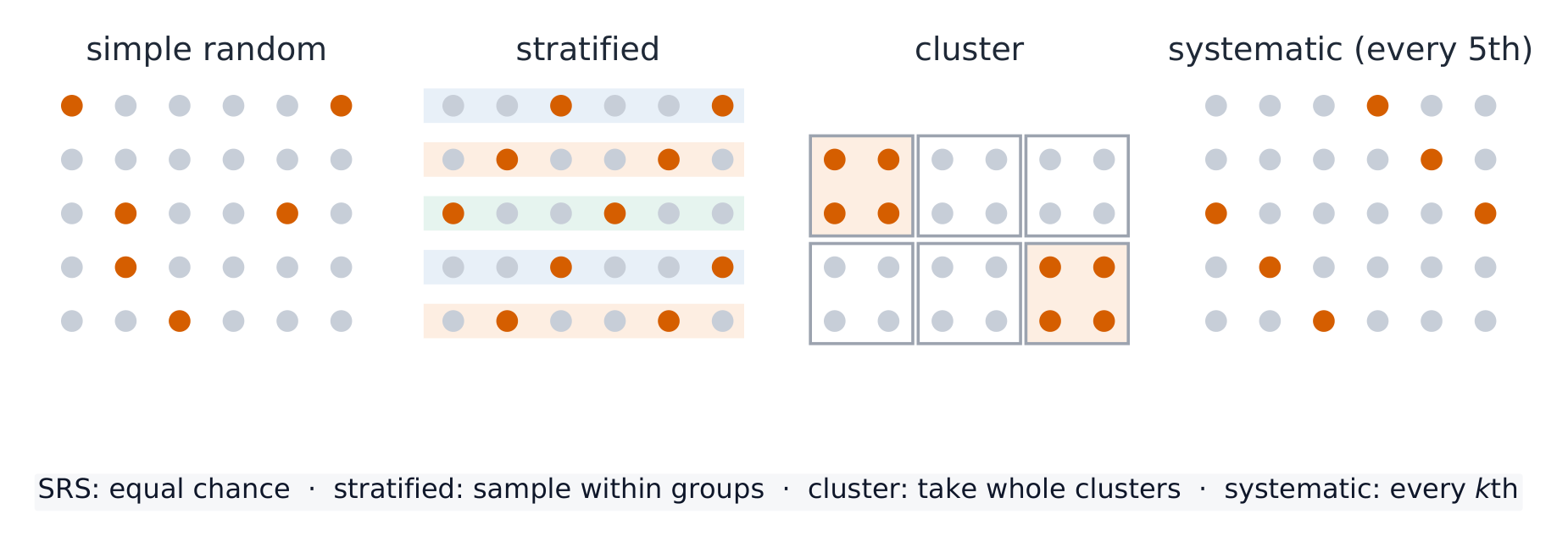
To learn about a population you take a sample 样本. Random sampling 随机抽样 protects against selection bias 偏差 and lets you generalize (it cannot fix undercoverage, nonresponse, or response bias — see below). Common designs:

  • Simple random sample (SRS) 简单随机样本: every group of the chosen size is equally likely.
  • Stratified 分层: split the population into similar strata, then sample within each.
  • Cluster 整群: split into clusters, randomly choose whole clusters.
  • Systematic 系统: pick every $k$th individual from a random start.

A convenience sample 方便样本 or voluntary response sample is not random and is biased.

Worked example. To survey a school, an administrator lists all students by grade and randomly selects $20$ from each grade. This is a stratified sample – the grades are the strata – which guarantees every grade is represented, unlike an SRS that might by chance draw few from one grade.

עברית

כדי ללמוד על אוכלוסייה לוקחים דגימה. דגימה אקראית מגנה על הטיות בחירה ומאפשרת גנרליזציה (היא אינה יכולה לתקן כיסוי חסר, אי-תגובה או הטיות תשובה – ראה למטה). עיצובים נפוצים:

  • דגימה אקראית פשוטה (SRS): כל קבוצה בגודל הנבחר היא באותו הסבירות.
  • שכבות: לחלק את האוכלוסייה לשכבות דומות, ולאחר מכן לדגום בתוך כל שכבה.
  • אשכולות: לחלק לאשכולות, לבחור אשכולות שלמים באקראיות.
  • מערכתית: לבחור כל $k$-אייחיד מאתחל אקראי.
ארבע עיצובי דגימה אקראית: מי נבחר, וכיצד
ארבע עיצובי דגימה אקראיים: מי נבחר, וכיצד

דוגמה נוחה או דוגמת תגובה התנדבותית אינה אקראית ומוטה.

דוגמא פתורה. כדי לבצע סקר בבית ספר, מנהל רשימה של כל התלמידים לפי כיתה ובוחר אקראית $20$ מתוך כל כיתה. זוהי דוגמה שכבתית – הכיתות הן השכבות – שזה מבטיח שכל כיתה תיוצג, בניגוד לדוגמה אקראית פשוטה (SRS) שעלולה להוציא באופן מקרי מספר קטן מאוד מתלמידי כיתה אחת.

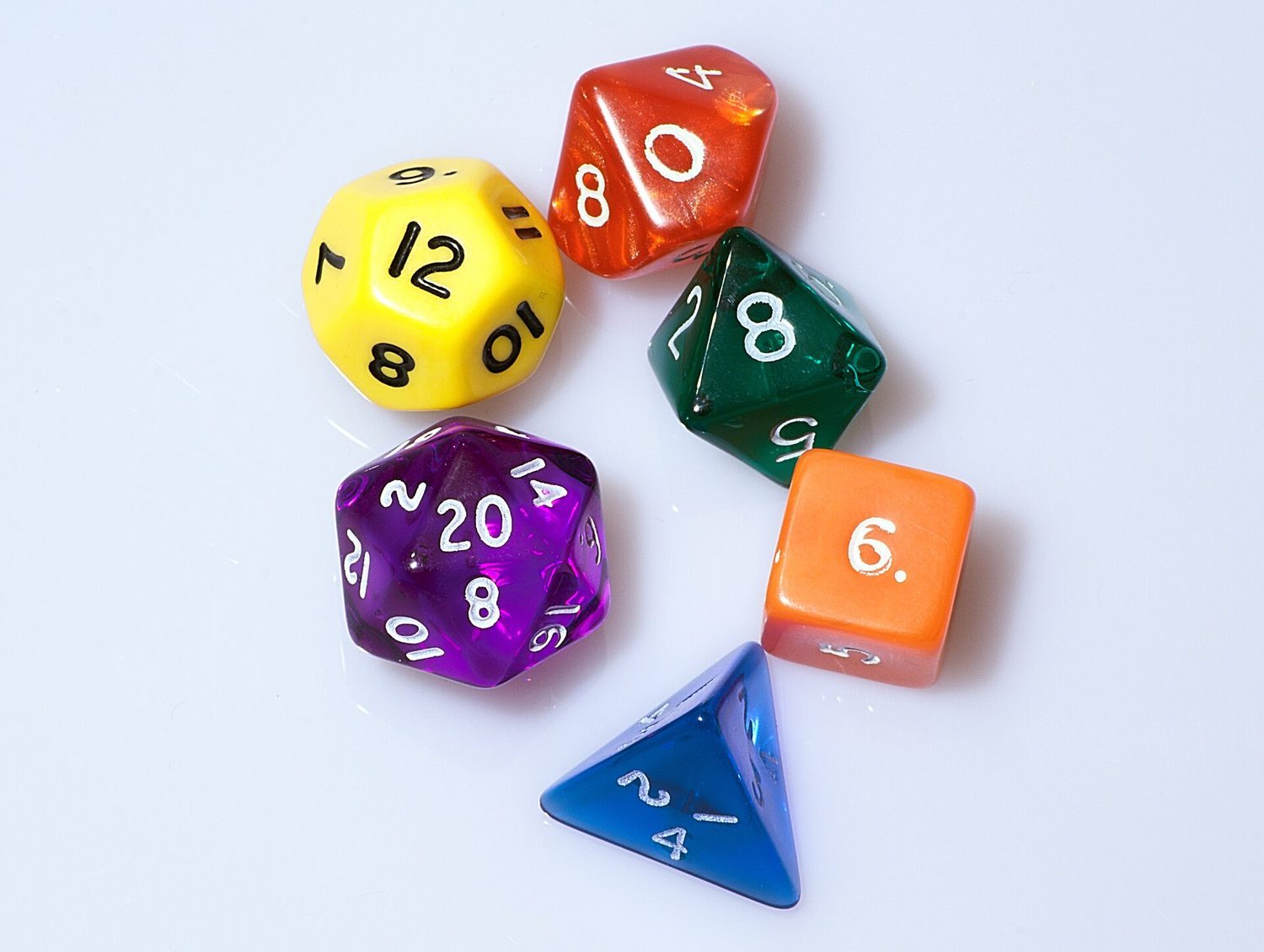
תוצאות אקראיות: בנרות גרעין כל צד באופן שווה בתנאים הוגנים
3.4

When Sampling Goes Wrong · ⁨כשדגימה יורעת⁩

Syllabus · ⁨סיילבוס⁩
English

Enduring Understanding (DAT-2): The way we collect data influences what we can and cannot say about a population.

Learning Objective DAT-2.E: Identify potential sources of bias in sampling methods. [Skill 1.C]

  • DAT-2.E.1 Bias occurs when certain responses are systematically favored over others.
  • DAT-2.E.2 When a sample is comprised entirely of volunteers or people who choose to participate, the sample will typically not be representative of the population (voluntary response bias).
  • DAT-2.E.3 When part of the population has a reduced chance of being included in the sample, the sample will typically not be representative of the population (undercoverage bias).
  • DAT-2.E.4 Individuals chosen for the sample for whom data cannot be obtained (or who refuse to respond) may differ from those for whom data can be obtained (nonresponse bias).
  • DAT-2.E.5 Problems in the data gathering instrument or process result in response bias. Examples include questions that are confusing or leading (question wording bias) and self-reported responses.
  • DAT-2.E.6 Non-random sampling methods (for example, samples chosen by convenience or voluntary response) introduce potential for bias because they do not use chance to select the individuals.
עברית

הבנה מתמשכת (DAT-2): הדרך שבה אנו אוספים נתונים משפיעה על מה שאנו יכולים ולא יכולים לומר לגבי אוכלוסייה.

מטרת הלמידה DAT-2.E: זיהוי מקורות פוטנציאליים לעיוות במתודולוגיית דגימה. [מיומנות 1.C]

  • DAT-2.E.1 עיוות מתרחש כאשר תגובות מסוימות מועדפות באופן מערכתיות על פני אחרות.
  • DAT-2.E.2 כאשר הדגימה מורכבת כולה ממתנדבים או מאנשים בחרו להשתתף, הדגימה לרוב אינה מייצגת את האוכלוסייה (עיוות תגובה התנדבותית).
  • DAT-2.E.3 כאשר חלק מהאוכלוסייה יש לו סיכוי מופחת להיכלל בדגימה, הדגימה לרוב אינה מייצגת את האוכלוסייה (עיוות כיסוי חסר).
  • DAT-2.E.4 פרטים שנבחרו לדגימה עבורם לא ניתן לקבל נתונים (או הם סירבו לתגובה) עשויים להיות שונים מאלו שעבורם ניתן לקבל נתונים (עיוות היעדר תגובה).
  • DAT-2.E.5 בעיות בכלי או בתהליך איסוף הנתונים גורמות לעיוות תגובה. דוגמאות כוללות שאלות המבלבלות או מכוונות (עיוות ניחוח שאלה) ותגובות המדווחות עצמית.
  • DAT-2.E.6 מתודולוגיות דגימה שאינן אקראיות (למשל, דגימות הנבחרות לפי נוחות או תגובה התנדבותית) מביאות יחד עם זאת אפשרות לעיוות מכיוון שהן אינן משתמשות בה chance לבחירת הפרטים.

Source: College Board AP Course and Exam Description · ⁨מקור: תיאור הקורס והמבחן של College Board AP⁩

English

Bias makes estimates systematically miss the truth:

  • Undercoverage 覆盖不足: some groups are left out of the sampling frame.
  • Nonresponse 无回应: selected people do not answer.
  • Response bias 回应偏差: people answer inaccurately (bad wording, sensitive topics).

Bias is about a consistent error in one direction – increasing the sample size does not fix it.

עברית

הטיה גורמת להערכות לחסות את האמת באופן שיטתי:

  • כיסוי חסר: קבוצות מסוימות נותרות מחוץ למסגרת הדגימה.
  • תגובה לא-תגובה: אנשים שנבחרו אינם עונים.
  • הטיית תשובה: אנשים עונים בצורה לא מדויקת (ניסוח לקוי, נושאים רגישים).

הטיה היא שגיאה קבועה בכיוון אחד – הגדלת גודל הדגימה לא פותרת אותה.

דוגמאות נוחות מפספסות את האוכלוסייה: הטיה נשפת כאשר הבחירה אינה אקראית
Vocabulary · ⁨מילון מונחים⁩ Train · ⁨אימון⁩
English עברית
bias/ˈbaɪəs/ שיפוטיות
Simple random sample (SRS)/ˈsɪmpl ˈrændəm ˈsæmpl/ דגימה אקראית פשוטה (SRS)
Stratified/ˈstrætɪfaɪd/ שכבתית
Cluster/ˈklʌstə/ אשכולית
Systematic/ˌsɪstəˈmætɪk/ מערכתית
convenience sample/kənˈviːnɪəns ˈsæmpl/ דוגמה נוחות
Undercoverage/ˌʌndəˈkʌvərɪdʒ/ כיסוי לא מלא
Nonresponse/ˌnɒnrɪˈspɒns/ עדר תגובה
Response bias/rɪˈspɒns ˈbaɪəs/ שיבוע תגובה
control group/kənˈtrəʊl ɡruːp/ קבוצת ביקורת
placebo/pləˈsiːbəʊ/ פלאסבו
Random assignment/ˈrændəm əˈsaɪnmənt/ הקצה אקראי
Replication/ˌreplɪˈkeɪʃn/ חזרות
Confounding/kənˈfaʊndɪŋ/ בלבול
Blinding/ˈblaɪndɪŋ/ עיוורון
single-blind/ˈsɪŋɡl blaɪnd/ עיוורון יחיד
double-blind/ˈdʌbl blaɪnd/ עיוורון כפול
Blocking/ˈblɒkɪŋ/ חסימה
3.5

Designing an Experiment · ⁨עיצוב ניסוי⁩

Syllabus · ⁨סיילבוס⁩
English

Enduring Understanding (VAR-3): Well-designed experiments can establish evidence of causal relationships.

Learning Objective VAR-3.A: Identify the components of an experiment. [Skill 1.C]

  • VAR-3.A.1 The experimental units are the individuals (which may be people or other objects of study) that are assigned treatments. When experimental units consist of people, they are sometimes referred to as participants or subjects.
  • VAR-3.A.2 An explanatory variable (or factor) in an experiment is a variable whose levels are manipulated intentionally. The levels or combination of levels of the explanatory variable(s) are called treatments.
  • VAR-3.A.3 A response variable in an experiment is an outcome from the experimental units that is measured after the treatments have been administered.
  • VAR-3.A.4 A confounding variable in an experiment is a variable that is related to the explanatory variable and influences the response variable and may create a false perception of association between the two.

Learning Objective VAR-3.B: Describe elements of a well-designed experiment. [Skill 1.B]

  • VAR-3.B.1 A well-designed experiment should include the following:
    • a. Comparisons of at least two treatment groups, one of which could be a control group.
    • b. Random assignment/allocation of treatments to experimental units.
    • c. Replication (more than one experimental unit in each treatment group).
    • d. Control of potential confounding variables where appropriate.

Learning Objective VAR-3.C: Compare experimental designs and methods. [Skill 1.C]

  • VAR-3.C.1 In a completely randomized design, treatments are assigned to experimental units completely at random. Random assignment tends to balance the effects of uncontrolled (confounding) variables so that differences in responses can be attributed to the treatments.
  • VAR-3.C.2 Methods for randomly assigning treatments to experimental units in a completely randomized design include using a random number generator, a table of random values, drawing chips without replacement, etc.
  • VAR-3.C.3 In a single-blind experiment, subjects do not know which treatment they are receiving, but members of the research team do, or vice versa.
  • VAR-3.C.4 In a double-blind experiment neither the subjects nor the members of the research team who interact with them know which treatment a subject is receiving.
  • VAR-3.C.5 A control group is a collection of experimental units either not given a treatment of interest or given a treatment with an inactive substance (placebo) in order to determine if the treatment of interest has an effect.
  • VAR-3.C.6 The placebo effect occurs when experimental units have a response to a placebo.
  • VAR-3.C.7 For randomized complete block designs, treatments are assigned completely at random within each block.
  • VAR-3.C.8 Blocking ensures that at the beginning of the experiment the units within each block are similar to each other with respect to at least one blocking variable. A randomized block design helps to separate natural variability from differences due to the blocking variable.
  • VAR-3.C.9 A matched pairs design is a special case of a randomized block design. Using a blocking variable, subjects (whether they are people or not) are arranged in pairs matched on relevant factors. Matched pairs may be formed naturally or by the experimenter. Every pair receives both treatments by randomly assigning one treatment to one member of the pair and subsequently assigning the remaining treatment to the second member of the pair. Alternately, each subject may get both treatments.
עברית

הבנה מתמשכת (VAR-3): ניסויים מעוצבים היטב יכולים לקבוע ראיות ליחסים סיבתיים.

מטרת הלמידה VAR-3.A: זיהוי רכיבי הניסוי. [מיומנות 1.C]

  • VAR-3.A.1 היחידות הניסוי הן הפרטים (שהם עשויים להיות אנשים או אובייקטי למחקר אחרים) שמקבלים טיפולים. כאשר היחידות הניסוי מורכבות מאנשים, הן מכונות לעיתים קרובות משתתפים או נבדקים.
  • VAR-3.A.2 משתנה הסבר (או גורם) בניסוי הוא משתנה whose levels are manipulated intentionally. The levels or combination of levels of the explanatory variable(s) are called treatments.
  • VAR-3.A.3 משתנה תגובה בניסוי הוא תוצאה מהיחידות הניסוי שנמדדת לאחר שניתנו הטיפולים.
  • VAR-3.A.4 משתנה מבולבל בניסוי הוא משתנה הקשור למשתנה ההסבר ומשפיע על משתנה התגובה ועשוי ליצור תפיסה שגויה של קשר בין השניים.

מטרת הלמידה VAR-3.B: תיאור אלמנטים של ניסוי מעוצב היטב. [מיומנות 1.B]

  • VAR-3.B.1 ניסוי מעוצב היטב צריך לכלול את הבא:
    • א. השוואות של לפחות שתי קבוצות טיפול, אחת מהן עשויה להיות קבוצת בקרה.
    • ב. הקצאה/הקצה אקראית של טיפולים ליחידות הניסוי.
    • ג. שכפול (יותר מיניה יחידה ניסויית אחת בקבוצת הטיפול).
    • ד. שליטה במשתנים מבולבלים פוטנציאליים כאשר מתאים.

מטרות למידה VAR-3.C: השוואת עיצובים ושיטות ניסוי. [מיומנות 1.C]

  • VAR-3.C.1 בעיצוב אקראי מלא, טיפולים מיועדים ליחידות הניסוי באופן חלוטין אקראי. הצבת טיפולים אקראית נוטה לאזן את השפעותיהם של משתנים שאינם נשלטים (משתנים מפריעים) כך שההבדלים בתגובות ייחסו לטיפולים.
  • VAR-3.C.2 שיטות להצבת טיפולים אקראית ביחידות הניסוי בעיצוב אקראי מלא כוללות שימוש במחולל מספרים אקראיים, טבלת ערכים אקראיים, גרירת פיסות ללא החזרה ועוד.
  • VAR-3.C.3 בניסוי סמוי בודד, הנבדקים אינם יודעים אילו טיפול הם מקבלים, אך חברי צוות המחקר יודעים זאת, או להפך.
  • VAR-3.C.4 בניסוי סמוי כפול, גם הנבדקים וגם חברי צוות המחקר שמגישים איתם אינם יודעים אילו טיפול נבדק קיבל.
  • VAR-3.C.5 קבוצת בקרה היא קבוצה של יחידות ניסוי שלא קיבלו טיפול מעניין או קיבלו טיפול עם חומר לא פעיל (פלסיבו) כדי לקבוע אם לטיפול המעניין יש השפעה.
  • VAR-3.C.6 אפקט הפלסיבו מתרחש כאשר ליחידות ניסוי יש תגובה לפלסיבו.
  • VAR-3.C.7 בעיצובי בלוקים אקראיים מלאים, טיפולים מיועדים באופן חלוטין אקראי בתוך כל בלוק.
  • VAR-3.C.8 בלוקינג מבטיח שבתחילת הניסוי היחידות בתוך כל בלוק דומות זו לזו בכל הקשור לפחות למשתן בלוקי אחד. עיצוב בלוקים אקראי עוזר להפריד בין תנודתיות טבעית לבין הבדלים הנובעים ממשתן הבלוקינג.
  • VAR-3.C.9 עיצוב זוגות מותאמים הוא מקרה פרטי של עיצוב בלוקים אקראי. באמצעות משתנה בלוקינג, נבדקים (בין אם מדובר באנשים או לא) מסודרים בזוגות המותאמים על פי גורמים רלוונטיים. זוגות מותאמים יכולים להתהוות באופן טבעי או על ידי המנסה. לכל זוג מתקבלים שני הטיפולים על ידי הצבה אקראית של טיפול אחד לחבר אחד מהזוג והצבה מאוחרת יותר של הטיפול שנותר לחבר השני. בחלופה, כל נבדק עשוי לקבל את שני הטיפולים.

Source: College Board AP Course and Exam Description · ⁨מקור: תיאור הקורס והמבחן של College Board AP⁩

English

Good experiments follow three principles:

  • Comparison with a control group 对照组 (often a placebo 安慰剂).
  • Random assignment 随机分配 of subjects to treatments, to balance out other variables.
  • Replication 重复: enough subjects per treatment to see a real effect.

Confounding 混杂 occurs when another variable is tied to the treatment so their effects cannot be separated; random assignment guards against it. Blinding 盲法 hides who is getting which treatment to prevent expectation effects: in a single-blind 单盲 study only one side is kept unaware (usually the subjects, or only the people assessing the result), while in a double-blind 双盲 study neither the subjects nor the researchers who interact with them know, blocking both the placebo effect and biased assessment. Blocking 区组 groups similar subjects and randomizes within each block to reduce variability.

עברית

ניסויים טובים עוקבים אחר שלושה עקרונות:

  • השוואה עם קבוצת ביקורת ( לעיתים קרובות פלייבוס).
  • הטלה אקראית של נבדקים לטיפולים, כדי לאזן משתנים אחרים.
  • שחזור: מספיק נבדקים בכל טיפול כדי לראות אפקט אמיתי.
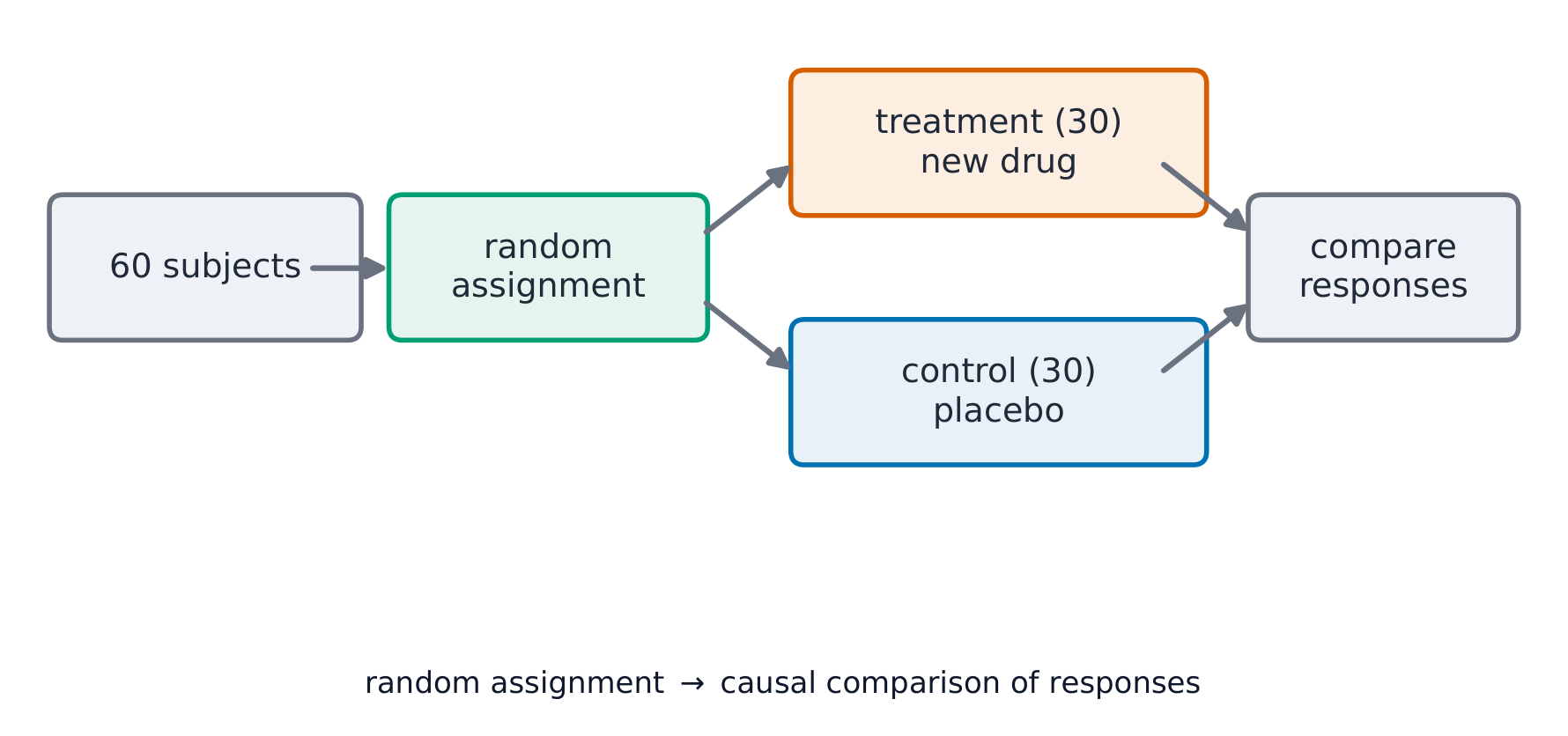
ניסוי אקראי לחלוטין משווה בין קבוצת טיפול לקבוצת ביקורת

הבלגה מתרחשת כאשר משתנה אחר קשור לטיפול כך שלא ניתן להפריד בין השפעותיהן; הקצאה אקראית מגנה על כך. עיוורון מסתיר מי מקבל איזה טיפול כדי למנוע השפעות ציפיות: במחקר עיוור אחד-צדדי רק צד אחד נשאר בלתי מודע (בדרך כלל המשתתפים, או רק אנשי הערכת התוצאות), בעוד שמחקר עיוור כפול אינו כולו את המשתתפים וגם החוקרים המקיימים עמם אינטראקציה, וכתוצאה מכך חוסם גם אפקט פלאסבו וגם הערכה מעוותת. חסימה מקבוצות נושאים דומים ומקצה אקראית בתוך כל חסימה כדי להפחית את השונות.

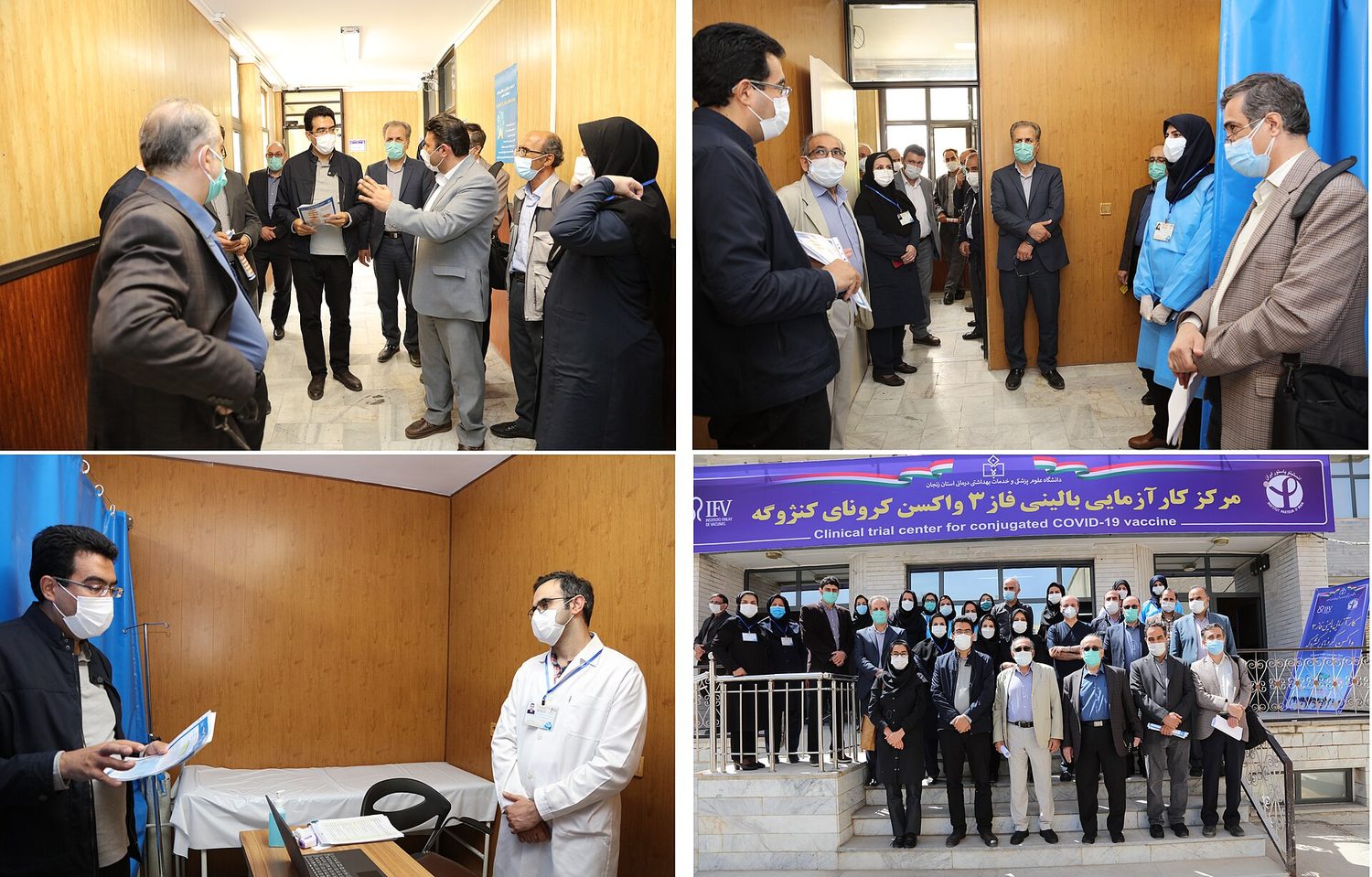
ניסוי קליני: הקצאה אקראית מפרידה בין טיפול לבין בקרה
Vocabulary · ⁨מילון מונחים⁩ Train · ⁨אימון⁩
English עברית
population/ˌpɒpjʊˈleɪʃn/ אוכלוסייה
observational study/ɒbzəˈveɪʃənl ˈstʌdi/ מחקר תצפיתי
experiment/ekˈsperɪmənt/ ניסוי
treatment/ˈtriːtmənt/ טיפול
sample/ˈsæmpl/ דוגמה
Random sampling/ˈrændəm ˈsæmplɪŋ/ דגימה אקראית
3.6

Choosing the Right Design · ⁨בחירת העיצוב המתאים⁩

Syllabus · ⁨סיילבוס⁩
English

Enduring Understanding (VAR-3): Well-designed experiments can establish evidence of causal relationships.

Learning Objective VAR-3.D: Explain why a particular experimental design is appropriate. [Skill 1.C]

  • VAR-3.D.1 There are advantages and disadvantages for each experimental design depending on the question of interest, the resources available, and the nature of the experimental units.
עברית

הבנה מתמשכת (VAR-3): ניסויים מעוצבים היטב יכולים לקבוע ראיות ליחסים סיבתיים.

מטרות למידה VAR-3.D: הסבר מדוע עיצוב ניסוי מסוים מתאים. [מיומנות 1.C]

  • VAR-3.D.1 לעיצוב ניסוי כלשהו יש יתרונות וחסרונות בהתאם לשאלה המעניינת, המשאבים הזמינים ואופי יחידות הניסוי.

Source: College Board AP Course and Exam Description · ⁨מקור: תיאור הקורס והמבחן של College Board AP⁩

English

Match the design to the goal: use a completely randomized design for uniform subjects; a randomized block design when a known variable (sex, age) affects the response; a matched-pairs design when each subject can serve as its own control. State how you would carry out the randomization.

עברית

התאם את העיצוב למטרה: השתמש בעיצוב אקראי לחלוטין עבור נושאים אחידים; בעיצוב אקראי חסום כאשר משתנה ידוע (מין, גיל) משפיע על התגובה; בעיצוב זוגות תואמים כאשר כל נושא יכול לשמש כבקרה עצמו. ציין כיצד תבצע את ההקצאה האקראית.

3.7

What an Experiment Lets You Conclude · ⁨מה ניסוי מאפשר לך להסיק⁩

Syllabus · ⁨סיילבוס⁩
English

Enduring Understanding (VAR-3): Well-designed experiments can establish evidence of causal relationships.

Learning Objective VAR-3.E: Interpret the results of a well-designed experiment. [Skill 4.B]

  • VAR-3.E.1 Statistical inference attributes conclusions based on data to the distribution from which the data were collected.
  • VAR-3.E.2 Random assignment of treatments to experimental units allows researchers to conclude that some observed changes are so large as to be unlikely to have occurred by chance. Such changes are said to be statistically significant.
  • VAR-3.E.3 Statistically significant differences between or among experimental treatment groups are evidence that the treatments caused the effect.
  • VAR-3.E.4 If the experimental units used in an experiment are representative of some larger group of units, the results of an experiment can be generalized to the larger group. Random selection of experimental units gives a better chance that the units will be representative.
עברית

הבנה מתמשכת (VAR-3): ניסויים מעוצבים היטב יכולים לקבוע ראיות ליחסים סיבתיים.

מטרות למידה VAR-3.E: פרשנות תוצאות ניסוי מתוכנן היטב. [מיומנות 4.B]

  • VAR-3.E.1 היסק סטטיסטי מייחס מסקנות המבוססות על נתונים למחלקה ממנה נאספו הנתונים.
  • VAR-3.E.2 הצבת טיפולים אקראית ביחידות הניסוי מאפשרת לחוקרים להסיק שחלק מהשינויים הנצפים גדולים מדי כדי להתרחש chance. שינויים כאלה נקראים משמעותיים סטטיסטית.
  • VAR-3.E.3 הבדלים משמעותיים סטטיסטית בין או בתוך קבוצות הטיפול בניסוי הם עדות לכך שהטיפולים גרמו לתוצאה.
  • VAR-3.E.4 אם יחידות הניסוי המשמשות בניסוי הן נציגות של קבוצה גדולה יותר של יחידות, ניתן לגנרליזציה את תוצאות הניסוי לקבוצה הגדולה יותר. בחירה אקראית של יחידות הניסוי מעלה את הסיכוי שיהיו נציגות.

Source: College Board AP Course and Exam Description · ⁨מקור: תיאור הקורס והמבחן של College Board AP⁩

English

Two questions decide the scope of a conclusion:

  • Random assignment used? Then a significant difference can be attributed to the treatment (causation) – for these subjects.
  • Random sampling from a population? Then results generalize to that population.

Only an experiment with random assignment supports a cause-and-effect claim; only random sampling supports generalization. Say exactly which you have.

Worked example. Researchers randomly assign $100$ volunteers to a new drug or a placebo, and the drug group improves significantly more. Because of the random assignment, the improvement can be attributed to the drug (causation) – but because the subjects were not randomly sampled, the conclusion applies only to these volunteers and does not automatically generalize to everyone.

עברית

שתי שאלות קובעות את היקף ההסקה:

  • הופעלה הקצאה אקראית? אז הבדל משמעותי ניתן יחס לטיפול (סיבתיות) – עבור נושאים אלו.
  • נעשתה דגימה אקראית מאוכלוסייה? אז התוצאות מתפשטות לאוכלוסייה זו.

רק ניסוי עם הקצאה אקראית תומך בטענת סיבה-תוצאה; רק דגימה אקראית תומכת בהתפשטות. אמור בדיוק איזה מהם יש לך.

דוגמה מפורטת. חוקרים מקצים אקראית $100$ מתנדבים לקבל תרופה חדשה או פלאסבו, והקבוצה שקיבלה את התרופה שיפרה משמעותית יותר. בשל ההקצאה האקראית, השיפור ניתן ליחס לתרופה (סיבתיות) – אך בשל כך שהנושאים לא נדגמו אקראית, ההסקה חלה רק על מתנדבים אלו ואינה מתפשטת באופן אוטומטי לכל אדם.

3.7

Exam tips · ⁨טיפים לבחינות⁩

English
  • Distinguish an observational study (finds association) from an experiment (can show causation).
  • Good sampling is random (SRS, stratified, cluster) — beware bias (voluntary response, undercoverage, nonresponse).
  • Good experiments use control, randomization, and replication; blocking handles a known nuisance variable.
  • Only a randomized experiment supports a cause-and-effect conclusion.
  • Name the population, sample, and any confounding clearly.
עברית
  • הבדל בין מחקר תצפיתי (מוצא קשר) לבין ניסוי (יכול להוכיח סיבתיות).
  • דגימה טובה היא אקראית (SRS, שכבתית, אשכולית) – זהרו ממוטיות (תגובה וולונטרית, כיסוי חסר, אי-תגובה).
  • ניסויים טובים משתמשים ב-בקרה, הקצאה ואחזור; חסימה מטפלת במשתנה מטרד ידוע.
  • רק ניסוי אקראי תומך בהסקת סיבה-תוצאה.
  • ציין את האוכלוסייה, הדגימה וכל משתנה מבלה בבירור.

Interactive lessons on this topic · ⁨שיעורים אינטראקטיביים בנושא זה⁩

Work through it step by step, with instant-check exercises. · ⁨לעבור על הדברים צעד אחר צעד, עם תרגילים לבדיקה מיידית.⁩

Past Papers · ⁨מבחני עבר⁩

More topics in AP Statistics · ⁨סטטיסטיקה - AP⁩ · ⁨נושאים נוספים בAP Statistics · ⁨סטטיסטיקה - AP⁩⁩

Log in or create account · ⁨היכנס או צור חשבון⁩

IGCSE, A-Level & AP