פיזיקה AP 1 היא מכניקה המבוססת על אלגברה: קינמטיקה, כוחות, עבודה, אנרגיה ועוצמה, תנע, מומנטום וסיבוב, תנודות ונוזלים. אין צורך באינטגרל — מה שהופך אותה למושגית קשה יותר, לא קלה יותר. אתה מסיק על מצבים במקום לסובב ידית.
חלק התשובות הפתוחות מפריד בין הצללות. הוא דורש ממך לנמק, להשוות בין שני מצבים, ולהסיר תוצאה במילים. מספר נכון ללא סיבה מניקה מעט מאוד.
קרא את העקרון קודם. "מכיוון שתנע שמר והכוח החיצוני האופקי אינו פועל…" הוא המשפט שהקריטריון מחפש. צייר דיאגרמת גוף חופשי לכל בעיה, גם כאשר נראה שאינה נדרשת — זו ההרגל בעלת הערך הגבוה ביותר בקורס.
העמודים למטה מסודרים לפי יחידות דרך CED, מקינמטיקה ועד תנודה הרמונית פשוטה, כל אחת עם דוגמאות מופיעות. שאלות תשובה פתוחות שפורסמו ומדריכי ההצללה שלהם נמצאים בספרייה, ושאלת עיצוב ניסוי שווה לתרגל בנפרד — היא מופיעה בכל שנה ומעניקה על הליהוק ברור מאשר על נוסחה.
Scalars and Vectors in One Dimension · סקאלרים ווקטורים בממד אחד
Syllabus · סיילבוס
English
Learning Objective 1.1.A: Describe a scalar or vector quantity using magnitude and direction, as appropriate.
1.1.A.1 Scalars are quantities described by magnitude only; vectors are quantities described by both magnitude and direction.
1.1.A.2 Vectors can be visually modeled as arrows with appropriate direction and lengths proportional to their magnitude.
1.1.A.3 Distance and speed are examples of scalar quantities, while position, displacement, velocity, and acceleration are examples of vector quantities.
1.1.A.3.i Vectors are notated with an arrow above the symbol for that quantity.
Equation:$\vec{v} = \vec{v}_0 + \vec{a}t$
1.1.A.3.ii Vector notation is not required for vector components along an axis. In one dimension, the sign of the component completely describes the direction of that component.
Derived equation:$v_x = v_{x0} + a_x t$
Learning Objective 1.1.B: Describe a vector sum in one dimension.
1.1.B.1 When determining a vector sum in a given one-dimensional coordinate system, opposite directions are denoted by opposite signs.
עברית
מטרות למידה 1.1.A: תיאור כמויות סקלריות או וקטוריות באמצעות גודל וכיוון, בהתאם לצורך.
1.1.A.1 סקאלרים הן כמויות המתוארות על ידי גודל בלבד; וקטורים הן כמויות המתוארות על ידי גודל וכיוון.
1.1.A.2 וקטורים יכולים להיות דגמונים ויזואלית כחצים עם כיוון מתאים ואורכים פרופורציונליים לגודל שלהם.
1.1.A.3 מרחק ומהירות הם דוגמאות לסקאלרים, בעוד שמיקום, הזזה, מהירות ותאוצה הם דוגמאות לוקטורים.
1.1.A.3.i וקטורים מסומנים בחץ מעל הסמל של הכמות הרלוונטית.
משוואה:$\vec{v} = \vec{v}_0 + \vec{a}t$
1.1.A.3.ii סימון וקטורי אינו נדרש לרכיבי וקטור לאורך ציר נתון. בממד אחד, הסימן של הרכיב מתאר לחלוטין את כיוונו של הרכיב.
משוואה נגזרת:$v_x = v_{x0} + a_x t$
מטרות למידה 1.1.B: תיאור סכום וקטורים בממד אחד.
1.1.B.1 בקביעת סכום וקטורים במערכת קואורדינטות חד-ממדית נתונה, כיוונים מנוגדים מסומנים בסימנים מנוגדים.
Source: College Board AP Course and Exam Description · מקור: תיאור הקורס והמבחן של College Board AP
English
Kinematics 运动学 describes how objects move, without asking why. First, two kinds of quantity:
A scalar 标量 has only size (magnitude 大小): distance 距离, speed, time, mass.
A vector 矢量 has magnitude and direction: displacement, velocity, acceleration, force.
The difference matters. Distance is the total path length travelled – a scalar that only grows. Displacement is the straight-line change in position, with a direction. Walk $3\ \text{m}$ east then $1\ \text{m}$ back west: the distance is $4\ \text{m}$, but the displacement is only $2\ \text{m}$ east.
In one dimension, direction is just a sign (+ or −) along a chosen axis. Choosing the positive direction first is essential – every vector's sign depends on it. A velocity of $-5\ \text{m/s}$ does not mean "slow"; it means $5\ \text{m/s}$ in the negative direction.
עברית
מד מהירות ברכב: המהירות היא הגודל של המהירות — סקלר של קצב תנועה
קינמטיקה מתארת איך אובייקטים זזים, ללא שאלה מדוע. תחילה, שני סוגי כמות:
סקלר יש לו רק גודל (גודל: מרחק, מהירות, זמן, מסה).
לווקטור יש גודל וגם כיוון: תזחה, מהירות, תאוצה, כוח.
ההבדל משמעותי. מרחק הוא אורך מסלול הכולל שנע – גדיל (סקלאר) שמגדל רק. תזחה היא שינוי במיקום בקו ישר, עם כיוון. הליכה $3\ \text{m}$ מזרחית ואז $1\ \text{m}$ מערבית חזרה: המרחק הוא $4\ \text{m}$, אך התזחה היא רק $2\ \text{m}$ מזרחית.
במימד אחד, הכיוון הוא פשוט סימן (+ או −) לאורך ציר נבחר. בחירת הכיוון החיובי מראש היא קריטית – הסימן של כל ווקטור תלוי בזה. מהירות של $-5\ \text{m/s}$ אינה אומרת "איטי"; היא אומרת $5\ \text{m/s}$ בכיוון השלילי.
Displacement, Velocity, and Acceleration · תזחה, מהירות ותאוצה
Syllabus · סיילבוס
English
Learning Objective 1.2.A: Describe a change in an object's position.
1.2.A.1 When using the object model, the size, shape, and internal configuration are ignored. The object may be treated as a single point with extensive properties such as mass and charge.
1.2.A.2 Displacement is the change in an object's position.
Equation:$\Delta x = x - x_0$
Learning Objective 1.2.B: Describe the average velocity and acceleration of an object.
1.2.B.1 Averages of velocity and acceleration are calculated considering the initial and final states of an object over an interval of time.
1.2.B.2 Average velocity is the displacement of an object divided by the interval of time in which that displacement occurs.
Learning Objective 1.2.B: Describe the velocity and acceleration of an object.
1.2.B.4 An object is accelerating if the magnitude and/or direction of the object's velocity are changing.
1.2.B.5 Calculating average velocity or average acceleration over a very small time interval yields a value that is very close to the instantaneous velocity or instantaneous acceleration.
עברית
מטרות למידה 1.2.A: תיאור שינוי במיקום של גוף.
1.2.A.1 בעת שימוש במודל הגוף הנקודתי, גודל, צורה ומבנה פנימי מתעלמים מהם. הגוף עשוי להתחשב כנקודה אחת עם מאפיינים נרחבים כמו מסה ומטען.
1.2.A.2 הזזה היא השינוי במיקום של גוף.
משוואה:$\Delta x = x - x_0$
מטרות למידה 1.2.B: תאר את המהירות הממוצעת והתאוצה הממוצעת של גוף.
1.2.B.1 ממוצעים של מהירות ותאוצה מחושבים על בסיס מצב ההתחלה והמצב הסופי של הגוף לאורך מרווח זמן נתון.
1.2.B.2 מהירות ממוצעת היא ההזזה של הגוף חלקי מרווח הזמן שבו ההזזה מתרחשת.
1.2.B.4 לגוף יש תאוצה אם הגודל ו/או הכיוון של המהירות שלו משתנים.
1.2.B.5 חישוב מהירות ממוצעת או תאוצה ממוצעת במרווח זמן קטן מאוד מניב ערך הקרוב מאוד למהירות רגעית או לתאוצה רגעית.
Source: College Board AP Course and Exam Description · מקור: תיאור הקורס והמבחן של College Board AP
English
Projectile motion is two independent motions
Three linked vectors describe motion along a line:
Displacement 位移$\Delta x$ is the change in position – a vector from start to end (not the total path length, which is distance).
Velocity 速度 is the rate of change of position, $v=\dfrac{\Delta x}{\Delta t}$. Its sign gives direction; its magnitude is speed 速率.
Acceleration 加速度 is the rate of change of velocity, $a=\dfrac{\Delta v}{\Delta t}$.
Be careful to separate average velocity 平均速度 (total displacement over total time) from instantaneous velocity 瞬时速度 (the velocity at one instant, the slope of the position–time graph at that point). They are equal only when the velocity is constant.
An object speeds up when $v$ and $a$ have the same sign, and slows down (deceleration 减速) when they have opposite signs. Note that a negative acceleration does not always mean slowing down – a ball falling faster and faster has negative velocity and negative acceleration.
For constant acceleration, the four kinematic equations (often called SUVAT) apply:
Pick the equation that contains the three quantities you know plus the one you want, so only one unknown is left. They apply only while $a$ is constant.
Worked example. A car starts from rest and accelerates uniformly at $2.0\ \text{m/s}^2$ for $6.0\ \text{s}$. Find its final velocity and the distance it travels.
List what you know: $v_0=0$, $a=2.0\ \text{m/s}^2$, $t=6.0\ \text{s}$.
Worked example (free fall). A ball is thrown straight up at $15\ \text{m/s}$. Taking $g=9.8\ \text{m/s}^2$ and up as positive, how high does it rise, and how long is it in the air before returning to the thrower's hand?
At the highest point the velocity is momentarily zero, and $a=-g=-9.8\ \text{m/s}^2$ throughout (this is free fall 自由落体, ignoring air resistance 空气阻力):
$$v^2=v_0^2+2a\,\Delta x \;\Rightarrow\; 0=15^2+2(-9.8)\Delta x \;\Rightarrow\; \Delta x=\frac{225}{19.6}=11.5\ \text{m}.$$
Time to the top: $0=15-9.8\,t \Rightarrow t=1.53\ \text{s}$. By symmetry the fall takes the same time, so the total is $3.1\ \text{s}$.
עברית
רכבת מהירה: קינמטיקה מתארת תזחה, מהירות ותאוצה לאורך זןתנועת פרויקטייל היא שתי תנועות עצמאיות
שלושה ווקטורים מקושרים מתארים תנועה לאורך קו:
תזחה$\Delta x$ היא השינוי במיקום – ווקטור מהנקודה ההתחלתית לנקודה הסופית (לא אורך המסלול הכולל, שהוא מרחק).
מהירות היא קצב שינוי המיקום, $v=\dfrac{\Delta x}{\Delta t}$. הסימן שלה נותן את הכיוון; הגודל שלה הוא מהירות. *
תאוצה היא קצב שינוי המהירות, $a=\dfrac{\Delta v}{\Delta t}$.
יש להיזהר ולהפריד בין מהירות ממוצעת (תזחה כוללת חולקת בזמן כולל) לבין מהירות רגעית (המהירות ברגע נתון, השיפוע של גרף המיקום-זמן בנקודה זו). הן שוות רק כאשר המהירות קבועה.
גוף מאיץ כאשר $v$ ו$a$ הם בעלי אותו סימן, ומאט (תאוצה שלילית) כאשר יש להם סימנים נגדיים. שים לב שתאוצה שלילית לא תמיד אומרת האטה – כדור הנופל מהר יותר ויותר יש לו מהירות שלילית וגם תאוצה שלילית.
עבור תאוצה קבועה, חלות ארבע המשוואות הקינמטיות (שנקראות לעיתים SUVAT):
דוגמה מפורטת (נפילה חופשית). כדור זרקו ישר למעלה ב$15\ \text{m/s}$. בהנחת that $g=9.8\ \text{m/s}^2$ and up are positive, how high does it rise, and how long is it in the air before returning to the thrower's hand?
ברגע העליון ביותר המהירות היא אפס לרגע, ו$a=-g=-9.8\ \text{m/s}^2$ לאורך כל זמן זה (זהו נפילה חופשית, ללא התחשבות במתח אוויר):
$$v^2=v_0^2+2a\,\Delta x \;\Rightarrow\; 0=15^2+2(-9.8)\Delta x \;\Rightarrow\; \Delta x=\frac{225}{19.6}=11.5\ \text{m}.$$
זמן לעלייה: $0=15-9.8\,t \Rightarrow t=1.53\ \text{s}$. לפי סימטריה, הזמן לירידה הוא זהה, ולכן הסך הכולל הוא $3.1\ \text{s}$.
Note: The equations above are written to indicate motion in the x-direction, but these equations can be used in any single dimension as appropriate.
1.3.A.3 Near the surface of Earth, the vertical acceleration caused by the force of gravity is downward, constant, and has a measured value approximately equal to $a_g = g \approx 10 \ m/s^2$.
1.3.A.4 Graphs of position, velocity, and acceleration as functions of time can be used to find the relationships between those quantities.
1.3.A.4.i An object's instantaneous velocity is the rate of change of the object's position, which is equal to the slope of a line tangent to a point on a graph of the object's position as a function of time.
1.3.A.4.ii An object's instantaneous acceleration is the rate of change of the object's velocity, which is equal to the slope of a line tangent to a point on a graph of the object's velocity as a function of time.
1.3.A.4.iii The displacement of an object during a time interval is equal to the area under the curve of a graph of the object's velocity as a function of time (i.e., the area bounded by the function and the horizontal axis for the appropriate interval).
1.3.A.4.iv The change in velocity of an object during a time interval is equal to the area under the curve of a graph of the acceleration of the object as a function of time.
Boundary statement: AP Physics 1 does not expect students to quantitatively analyze nonuniform acceleration. However, students will be expected to be able to qualitatively analyze, sketch appropriate graphs of, and discuss situations in which acceleration is nonuniform.
Boundary statement: For all situations in which a numerical quantity is required for $g$, the value $g \approx 10 \ m/s^2$ will be used. However, students will not be penalized for correctly using the more precise commonly accepted values of $g = 9.81 \ \text{m/s}^2$ or $g = 9.8 \ \text{m/s}^2$.
עברית
מטרות למידה 1.3.A: תאר את המיקום, המהירות והתאוצה של גוף באמצעות ייצוגים של תנועתו.
1.3.A.1 תנועה יכולה להיות מיוצגת באמצעות דיאגרמות תנועה, איורים, גרפים, משוואות ותיאורים ספרתיים.
1.3.A.2 עבור תאוצה קבועה, ניתן להשתמש בשלוש משוואות קינמטיות כדי לתאר תנועה ליניארית רגעית בממד אחד:
משוואה:$v_x = v_{x0} + a_x t$
משוואה:$x = x_0 + v_{x0}t + \dfrac{1}{2}a_x t^2$
משוואה:$v_x^2 = v_{x0}^2 + 2a_x(x - x_0)$
הערה: המשוואות לעיל כתובות כדי לציין תנועה בכיוון x, אך משוואות אלו ניתנות לשימוש בכל ממד יחיד בהתאם.
1.3.A.3 בקרבת פני השטח של כדור הארץ, התאוצה האנכית הנובעת מכוח הכבידה היא כלפי מטה, קבועה, ולוקחת ערך מדוד השווה בקירוב ל$a_g = g \approx 10 \ m/s^2$.
1.3.A.4 גרפים של מיקום, מהירות ותאוצה כפונקציות של הזמן יכולים לשמש למציאת הקשרים בין גדלים אלו.
1.3.A.4.i המהירות הרגעית של גוף היא קצב השינוי במיקומו, והיא שווה לשיפוע הישר המשיק לנקודה בגרף המיקום של הגוף כפונקציה של הזמן.
1.3.A.4.ii התאוצה הרגעית של גוף היא קצב השינוי במהירותו, והיא שווה לשיפוע הישר המשיק לנקודה בגרף המהירות של הגוף כפונקציה של הזמן.
1.3.A.4.iii ההזזה של גוף במרווח זמן נתון שווה לשטח התחתון לגרף המהירות של הגוף כפונקציה של הזמן (כלומר, השטח המוגבל על ידי הפונקציה והציר האופקי עבור המרווח המתאים).
1.3.A.4.iv השינוי במהירות של גוף במרווח זמן נתון שווה לשטח התחתון לגרף התאוצה של הגוף כפונקציה של הזמן.
הצהרת גבול: AP Physics 1 אינה צופה שמ学生 ינתחו כמותית תאוצה לא אחידה. עם זאת, סטודנטים יצטרכו לנתח באופן איכותי, להציג גרפים מתאימים ולדון במצבים בהם התאוצה היא לא אחידה.
הצהרת גבול: בכל מצב שבו נדרשת כמות מספרית עבור $g$, הערך $g \approx 10 \ m/s^2$ ישמש. עם זאת, סטודנטים לא יוקללו על שימוש נכון בערכים המקובלים והמדויקים יותר של $g = 9.81 \ \text{m/s}^2$ או $g = 9.8 \ \text{m/s}^2$.
Source: College Board AP Course and Exam Description · מקור: תיאור הקורס והמבחן של College Board AP
English
The same motion appears as a description, a graph, a table, or an equation, and you should move between them:
On a position–time graph, the slope is velocity (steeper = faster; a curve = changing velocity).
On a velocity–time graph, the slope is acceleration, and the area under the line is displacement.
Reading slopes and areas off graphs is a core exam skill. To get displacement from a velocity–time graph, split the area into triangles and rectangles and add them up; area below the time axis counts as negative displacement (motion the other way).
Worked example. A cyclist speeds up uniformly from rest to $8.0\ \text{m/s}$ in $4.0\ \text{s}$, then holds $8.0\ \text{m/s}$ for $6.0\ \text{s}$. Find the total distance from the velocity–time graph.
אותה תנועה יכולה להופיע כתיאור, גרף, טבלה או משוואה, ועליך לעבור ביניהם:
קריאת גרף מרחב-זמן: קו אופקי פירושו שבת, שיפוע ישר פירושו מהירות קבועה
בגרף מיקום–זמן, השיפוע מייצג את המהירות (שיפוע תלול יותר = מהירות גבוהה יותר; עקומה = שינוי במהירות).
בגרף מהירות–זמן, השיפוע מייצג את התאוצה, והשטח מתחת לקו מייצג את ההסחה.
קריאת שיפועים ושטחים מגרפים היא מיומנות ליבה לבחינה. כדי למצוא הסחה מגרף מהירות–זמן, חלק את השטח למثلשים ומלבנים וסכם אותם; שטח מתחת לציר הזמן נחשב להסחה שלילית (תנועה בכיוון הפוך).
בגרף מהירות–זמן השיפוע הוא התאוצה והשטח המוצלע הוא ההסחה
דוגמה מפורטת. רוכב אופניים מאיץ באופן אחיד ממצב של שבת ל$8.0\ \text{m/s}$ בזמן $4.0\ \text{s}$, ואז שומר על $8.0\ \text{m/s}$ במשך $6.0\ \text{s}$. מצאו את המרחק הכולל מגרף המהירות–זמן.
Explore the velocity–time graph · חקרו את הגרף מהירות-זמן
Change the start velocity $u$ and the acceleration $a$. The gradient (slope) of the line is the acceleration; the area between the line and the time axis is the displacement. · שנו את המהירות ההתחלתית $u$ ואת התאוצה $a$. ה-שיפוע (gradient) של הקו הוא ה-תאוצה; ה-שטח בין הקו לציר הזמן הוא ה-הזזה.
Reference Frames and Relative Motion · מערכות ייחוס ותנועה יחסית
Syllabus · סיילבוס
English
Learning Objective 1.4.A: Describe the reference frame of a given observer.
1.4.A.1 The choice of reference frame will determine the direction and magnitude of quantities measured by an observer in that reference frame.
Learning Objective 1.4.B: Describe the motion of objects as measured by observers in different inertial reference frames.
1.4.B.1 Measurements from a given reference frame may be converted to measurements from another reference frame.
1.4.B.2 The observed velocity of an object results from the combination of the object's velocity and the velocity of the observer's reference frame.
1.4.B.2.i Combining the motion of an object and the motion of an observer in a given reference frame involves the addition or subtraction of vectors.
1.4.B.2.ii The acceleration of any object is the same as measured from all inertial reference frames.
Boundary statement: Unless otherwise stated, the frame of reference of any problem may be assumed to be inertial.
Boundary statement: Adding or subtracting vectors to find relative velocities is restricted to motion along one dimension for AP Physics 1.
עברית
מטרות למידה 1.4.A: לתאר את מערכת הייחוס של צופה נתון.
1.4.A.1 בחירת מערכת הייחוס תקבע את הכיוון והגודל של כמויות שנמדדות על ידי צופה במערכת זו.
מטרות למידה 1.4.B: לתאר את תנועת אובייקטים כפי שנמדדו על ידי צופים במערכות ייחוס אינרציאליות שונות.
1.4.B.1 מדידות ממערכת ייחוס נתונה יכולות להיות מומשות למדידות ממערכת ייחוס אחרת.
1.4.B.2 המהירות הנצפתה של אובייקט נובעת משילוב מהירות האובייקט ומהירות מערכת הייחוס של הצופה.
1.4.B.2.i שילוב תנועת אובייקט ותנועת צופה במערכת ייחוס נתונה מחייב חיבור או חיסור של וקטורים.
1.4.B.2.ii התאוצה של כל אובייקט זהה כפי שנמדדת מכל מערכות הייחוס האינרציאליות.
הצהרת גבול: אלא אם כן צוין אחרת, ניתן להניח שמערכת הייחוס של כל בעיה היא אינרציאלית.
הצהרת גבול: חיבור או חיסור של וקטורים למציאת מהירויות יחסיות מוגבלים לתנועה לאורך מימד אחד ב-AP Physics 1.
Source: College Board AP Course and Exam Description · מקור: תיאור הקורס והמבחן של College Board AP
English
All motion is measured against a reference frame 参考系. Velocities measured in different frames differ, and you combine them by vector addition. The velocity of A relative to C is
$$\vec{v}_{A/C}=\vec{v}_{A/B}+\vec{v}_{B/C}.$$
A person walking on a moving train has one velocity relative to the train and another relative to the ground – this is relative motion 相对运动. A useful shortcut: the velocity of A relative to B is $\vec{v}_{A/B}=\vec{v}_A-\vec{v}_B$ (subtract B's velocity).
A frame that is not accelerating is an inertial reference frame 惯性参考系: one in which a free object (no net force) obeys Newton's first law, staying at rest or moving at constant velocity. A frame that accelerates – a braking car – is non-inertial, where objects seem to speed up with no force acting on them.
Worked example. A boat points straight across a river and moves at $3.0\ \text{m/s}$ relative to the water. The current flows at $4.0\ \text{m/s}$ along the river. Find the boat's speed and direction relative to the bank.
The two velocities are perpendicular, so add them as a right triangle:
$$v=\sqrt{3.0^2+4.0^2}=5.0\ \text{m/s},\qquad \theta=\tan^{-1}\!\frac{4.0}{3.0}=53^{\circ}\ \text{downstream from straight across.}$$
עברית
כל תנועה נמדדת ביחס למערכת ייחוס. מהירויות שנמדדות במערכות ייחוס שונות שונות, ועליכם לשלב אותן בעזרת חיבור וקטורי. המהירות של A ביחס ל-C היא
$$\vec{v}_{A/C}=\vec{v}_{A/B}+\vec{v}_{B/C}.$$
אדם הולך בתוך רכבת נעה יש לו מהירות אחת ביחס לרכבת ומהירות אחרת ביחס לקרקע – זהו תנועה יחסית. קיצור דרך שימושי: המהירות של A ביחס ל-B היא $\vec{v}_{A/B}=\vec{v}_A-\vec{v}_B$ (חסרו את המהירות של B).
מערכת ייחוס שאינה מאיצה היא מערכת ייחוס אינרציאלית: מערכת שבה גוף חופשי (ללא כוח נטו) מקיים את החוק הראשון של ניוטון, נשאר בשבת או נע במהירות קבועה. מערכת שאינה מאיצה – כמו רכב שמוסע – היא לא אינרציאלית, שבה נראה כאילו גופים מאיצים ללא פעולת כוח עליהם.
דוגמה מפורטת. סירה פונה ישר לחצות נהר ונעה במהירות $3.0\ \text{m/s}$ ביחס למים. הזרם זורם במהירות $4.0\ \text{m/s}$ לאורך הנهر. מצאו את מהירות הכיוון של הסירה ביחס לגדה.
שתי המהירויות מאונכות זו לזו, ולכן יש לחבר אותן כמשולש ישר זווית:
$$v=\sqrt{3.0^2+4.0^2}=5.0\ \text{m/s},\qquad \theta=\tan^{-1}\!\frac{4.0}{3.0}=53^{\circ}\ \text{downstream from straight across.}$$
1.5
Vectors and Motion in Two Dimensions · וקטורים ותנועה במישור
Syllabus · סיילבוס
English
Learning Objective 1.5.A: Describe the perpendicular components of a vector.
1.5.A.1 Vectors can be mathematically modeled as the resultant of two perpendicular components.
1.5.A.2 Vectors can be resolved into components using a chosen coordinate system.
1.5.A.3 Vectors can be resolved into perpendicular components using trigonometric functions and relationships.
Equation:$\sin \theta = \dfrac{a}{c}$
Equation:$\cos \theta = \dfrac{b}{c}$
Equation:$\tan \theta = \dfrac{a}{b}$
Equation:$a^2 + b^2 = c^2$
Learning Objective 1.5.B: Describe the motion of an object moving in two dimensions.
1.5.B.1 Motion in two dimensions can be analyzed using one-dimensional kinematic relationships if the motion is separated into components.
1.5.B.2 Projectile motion is a special case of two-dimensional motion that has zero acceleration in one dimension and constant, nonzero acceleration in the second dimension.
עברית
מטרות למידה 1.5.A: לתאר את הרכיבים האנכיים של וקטור.
1.5.A.1 וקטורים יכולים לדגם מתמטי כהשורה (הריסולט) של שני רכיבים אנכיים.
1.5.A.2 וקטורים יכולים להתפצל לרכיבים באמצעות מערכת קואורדינטות שנבחרה.
1.5.A.3 וקטורים יכולים להתפצל לרכיבים אנכיים באמצעות פונקציות טריגונומטריות ויחסים.
משוואה:$\sin \theta = \dfrac{a}{c}$
משוואה:$\cos \theta = \dfrac{b}{c}$
משוואה:$\tan \theta = \dfrac{a}{b}$
משוואה:$a^2 + b^2 = c^2$
מטרות למידה 1.5.B: לתאר את תנועת אובייקט הנע בשני מימדים.
1.5.B.1 תנועה בשני מימדים ניתנת לניתוח באמצעות קינמטיקה חד-ממדית אם התנועה מפוצלת לרכיבים.
1.5.B.2 תנועת זריקה היא מקרה פרטי של תנועה בשני מימדים שבה יש אפס תאוצה במימד אחד ותאוצה קבועה ולא-אפס במימד השני.
Source: College Board AP Course and Exam Description · מקור: תיאור הקורס והמבחן של College Board AP
English
In two dimensions, resolve each vector into components 分量 along perpendicular axes ($x$ and $y$), handle each axis separately, then recombine. A velocity $v$ at angle $\theta$ to the horizontal has components $v_x=v\cos\theta$ and $v_y=v\sin\theta$.
For projectile motion 抛体运动 (an object moving under gravity alone): the horizontal and vertical motions are independent. Horizontally, velocity is constant ($a_x=0$); vertically, acceleration is $-g$ (down). The two motions share only the time. So a projectile's path (its trajectory 轨迹) is a parabola, and you solve it as two one-dimensional problems joined by $t$.
Worked example. A ball is kicked at $20\ \text{m/s}$, $30^{\circ}$ above the horizontal. Taking $g=9.8\ \text{m/s}^2$, find the time of flight, the maximum height, and the horizontal range 射程 (assume it lands at launch height).
Vertical motion sets the time. At the top $v_y=0$, so $0=10-9.8\,t \Rightarrow t_{\text{up}}=1.02\ \text{s}$, and the total flight is $2t_{\text{up}}=2.0\ \text{s}$. The maximum height is
A common trap: at the top of the flight the vertical velocity is zero, but the ball is not at rest – its horizontal velocity $v_{0x}$ never changes. The speed at the top equals $v_{0x}=17.3\ \text{m/s}$.
עברית
במישור, פירקו כל וקטור לרכיבים לאורך צירים מאונכים ($x$ ו$y$), טיפל בכל ציר בנפרד, ואז שלב מחדש. למהירות $v$ בזווית $\theta$ האופק יש רכיבים $v_x=v\cos\theta$ ו$v_y=v\sin\theta$.
וקטור מהירות מפורק למרכיביו האופקי והאנכי
עבור תנועת פרציל (גוף הנע תחת כובד בלבד): התנועה האופקית והתנועה האנכית הן עצמאיות. אופקית, המהירות קבועה ($a_x=0$); אנכית, התאוצה היא $-g$ (למטה). לשתי התנועות יש רק את ה-זמן המשותף. כך שמסלול הפרציל (מסלול התעופה) הוא פרבולה, ואפשר לפתור אותו כשתי בעיות חד-ממדיות המחוברות על ידי $t$.
פרויקטיל שנורה בזווית: התנועה האופקית והתנועה האנכית הן בלתי תלויותכדור המושחך וכדור שנורה אופקית נופלים יחד – התנועות האנכיות זהות
דוגמה מופרשת. כדור מוכתם ב$20\ \text{m/s}$, בזווית $30^{\circ}$ מעל האופק. בהינתן $g=9.8\ \text{m/s}^2$, מצאו את זמן התעופה, הגובה המרבי וה-טווח האופקי (הניחו שהכדור נוחת בגובה ההשקה).
תנועה אנכית קובעת את הזמן. בנקודה הגבוהה ביותר $v_y=0$, ולכן $0=10-9.8\,t \Rightarrow t_{\text{up}}=1.02\ \text{s}$, והזמן הכולל בטיסה הוא $2t_{\text{up}}=2.0\ \text{s}$. הגובה המרבי הוא
לכידה נפוצה: בנקודת העלייה המהירות האנכית היא אפס, אך הכדור אינו במצב רגיעה – המהירות האופקית שלו $v_{0x}$ לעולם אינה משתנה. הגודל בנקודה זו שווה ל$v_{0x}=17.3\ \text{m/s}$.
Explore · חקור
Explore projectile motion · חקרו תנועת פריל
Fire the ball, then change the angle and speed. The horizontal motion stays steady while gravity pulls it down — together they trace a parabola. Find the launch angle that gives the longest range, and try the Moon. · שחררו את הכדור, ולאחר מכן שנו את הזווית ואת המהירות. התנועה האופקית נשארת יציבה בעוד שכבידה מושכת את הכדור כלפי מטה — יחד הם משרטטים פרבולה. מצאו את זווית השיגור שתניא את ה-טווח הארוך ביותר, ונסו גם את הירח.
Explore · חקור
Explore vectors and their components · חקרו וקטורים ורכיביהם
Drag the vectors to change their $x$- and $y$-components. See how a single vector is built from independent horizontal and vertical parts, and how two vectors add tip-to-tail into a resultant. · גרור את הווקטורים כדי לשנות את רכיבי ה$x$- וה$y$-. התבונן כיצד וקטור יחיד נבנה מחלקים אופקיים ואנכיים עצמאיים, וכיצד שני וקטורים מתחברים קצה לקצה ליצירת וֶקטור תוצאתי.
Choose the right kinematic equation by listing the three quantities you know plus the one you want, so only one unknown remains; the SUVAT equations apply only while acceleration is constant.
Fix a positive direction first — every displacement, velocity, and acceleration then carries a sign; a negative velocity means "moving the other way", not "slow".
Treat a projectile as two independent 1-D problems sharing only the time $t$: constant velocity horizontally, $a=-g$ vertically. At the top $v_y=0$ but $v_x$ is unchanged.
On a velocity–time graph the gradient is the acceleration and the area is the displacement (area below the axis is negative).
Distinguish distance (scalar, total path) from displacement (vector, start-to-end), and speed from velocity.
עברית
בחרו את המשוואה הקינטית המתאימה על ידי ספירת שלושת הגדלים הידועים שלכם ועוד אחד שמבוקשים, כך שנותר רק משתנה אחד; משוואות SUVAT חלות רק כאשר התאוצה קבועה.
קבעו כיוון חיובי תחילה – כל הזזה, מהירות ותאוצה יהיו עם סימן; מהירות שלילית פירושה "מתקדם בכיוון הפוך", ולא "איטי".
טפלו בפרויקטיל כ-שתי בעיות 1-D בלתי תלויות המשותפות רק לזמן $t$: מהירות קבועה אופקית, $a=-g$ אנכית. בנקודת העלייה $v_y=0$ אך $v_x$ נשאר ללא שינוי.
בגרף מהירות–זמן, השיפוע הוא התאוצה וה-שטח הוא ההזזה (שטח מתחת לציר הוא שלילי).
הבדילו בין מרחק (גודל סקלרי, סך אורך המסלול) לבין הזזה (וקטור, מקום התחלה לקצה), ובין מהירות גודל לבין מהירות (וקטור).
2
Force and Translational Dynamics · כוח ודינמיקה תרגולית
Learning Objective 2.1.A: Describe the properties and interactions of a system.
2.1.A.1 System properties are determined by the interactions between objects within the system.
2.1.A.2 If the properties or interactions of the constituent objects within a system are not important in modeling the behavior of the macroscopic system, the system can itself be treated as a single object.
2.1.A.3 Systems may allow interactions between constituent parts of the system and the environment, which may result in the transfer of energy or mass.
2.1.A.4 Individual objects within a chosen system may behave differently from each other as well as from the system as a whole.
2.1.A.5 The internal structure of a system affects the analysis of that system.
2.1.A.6 As variables external to a system are changed, the system's substructure may change.
Learning Objective 2.1.B: Describe the location of a system's center of mass with respect to the system's constituent parts.
2.1.B.1 For systems with symmetrical mass distributions, the center of mass is located on lines of symmetry.
2.1.B.2 The location of a system's center of mass along a given axis can be calculated using the equation
2.1.B.3 A system can be modeled as a singular object that is located at the system's center of mass.
Boundary statement: AP Physics 1 only expects students to calculate the center of mass for systems of five or fewer particles arranged in a two-dimensional configuration or for systems that are highly symmetrical.
עברית
מטרת למידה 2.1.A: לתאר את המאפיינים והאינטראקציות של מערכת.
2.1.A.1 מאפייני מערכת נקבעים על ידי האינטראקציות בין חלקי המערכת.
2.1.A.2 אם המאפיינים או האינטראקציות של החלקים המרכיבים את המערכת אינם חשובים בדגם התנהגות המערכת המקרוסקופית, ניתן לטפל במערכת כבדיד אחד.
2.1.A.3 מערכות עשויות לאפשר אינטראקציות בין חלקיה לבין הסביבה, שיכולות להוביל להעברת אנרגיה או מסה.
2.1.A.4 בדידים יחידים בתוך מערכת שנבחרה עשויים להתנהג שונה זה מזה וכן שונה מהמערכת כולה.
2.1.A.5 המבנה הפנימי של מערכת משפיע על ניתוחה.
2.1.A.6 כאשר משתנים חיצוניים למערכת משתנים, תת-מבנה המערכת עשוי להשתנות.
מטרת למידה 2.1.B: לתאר את מיקום מרכז המסה של מערכת ביחס לחלקיה המרכיבים אותה.
2.1.B.1 עבור מערכות עם חלוקת מסה סימטרית, מרכז המסה נמצא על קווי הסימטריה.
2.1.B.2 מיקום מרכז המסה של מערכת לאורך ציר נתון ניתן לחשב באמצעות המשוואה ⟦⟧
2.1.B.3 מערכת יכולה להיות דגם של בדיד יחיד הנמצא במיקום מרכז המסה שלה.
הצהרת גבול: AP Physics 1 מצפה רק מתלמידים לחשב את מרכז המסה של מערכות בעלות חמישה בדידים או פחות המסודרים בקונפיגורציה דו-ממדית, או של מערכות בעלות סימטריה גבוהה.
Source: College Board AP Course and Exam Description · מקור: תיאור הקורס והמבחן של College Board AP
A system 系统 is the object or group of objects you choose to analyze. A system can be treated as a single point at its center of mass 质心 – the average position of its mass. External forces change the motion of the center of mass; internal forces (between parts of the system) do not.
This is why a wrench spinning across a table still has its center of mass move in a straight line: the spinning is internal, and only the (near-zero) external force matters for the center of mass. For two masses $m_1,m_2$ on a line at positions $x_1,x_2$, the center of mass sits at $x_{\text{cm}}=\dfrac{m_1x_1+m_2x_2}{m_1+m_2}$ – always closer to the heavier mass.
Learning Objective 2.2.A: Describe a force as an interaction between two objects or systems.
2.2.A.1 Forces are vector quantities that describe the interactions between objects or systems.
2.2.A.1.i A force exerted on an object or system is always due to the interaction of that object with another object or system.
2.2.A.1.ii An object or system cannot exert a net force on itself.
2.2.A.2 Contact forces describe the interaction of an object or system touching another object or system and are macroscopic effects of interatomic electric forces.
Learning Objective 2.2.B: Describe the forces exerted on an object or system using a free-body diagram.
2.2.B.1 Free-body diagrams are useful tools for visualizing forces being exerted on a single object or system and for determining the equations that represent a physical situation.
2.2.B.2 The free-body diagram of an object or system shows each of the forces exerted on the object by the environment.
2.2.B.3 Forces exerted on an object or system are represented as vectors originating from the representation of the center of mass, such as a dot. A system is treated as though all of its mass is located at the center of mass.
2.2.B.4 A coordinate system with one axis parallel to the direction of acceleration of the object or system simplifies the translation from free-body diagram to algebraic representation. For example, in a free-body diagram of an object on an inclined plane, it is useful to set one axis parallel to the surface of the incline.
Boundary statement: AP Physics 1 only expects students to depict the forces exerted on objects, not the force components on free-body diagrams. On the AP Physics exams, individual forces represented on a free-body diagram must be drawn as individual straight arrows, originating on the dot and pointing in the direction of the force. Individual forces that are in the same direction must be drawn side by side, not overlapping.
עברית
מטרת למידה 2.2.A: לתאר כוח כאינטראקציה בין שני בדידים או מערכות.
2.2.A.1 כוחות הם גדלים וקטוריים המתארים את האינטראקציות בין בדידים או מערכות.
2.2.A.1.i כוח המופעל על בדיד או מערכת נובע תמיד מאינטראקציה של בדיד זה עם בדיד אחר או מערכת אחרת.
2.2.A.1.ii בדיד או מערכת אינו יכול להפעיל כוח נקי על עצמו.
2.2.A.2 כוחות מגע מתארים את האינטראקציה של בדיד או מערכת הנוגעת בבדיד או מערכת אחרת, והן תוצאות מקרוסקופיות של כוחות חשמליים בין-אטומיים.
מטרת למידה 2.2.B: לתאר את הכוחות המופעלים על בדיד או מערכת באמצעות תרשים גוף חופשי.
2.2.B.1 דיאגרמות גוף חופשי הן כלי עזר לייצוג ויזואלי של כוחות הפועלים על גוף או מערכת בודדים, ולקביעת המשוואות המתארות מצב פיזיקלי.
2.2.B.2 הדיאגרמת הגוף החופשי של גוף או מערכת מציגה את כל הכוחות הפועלים על הגוף על ידי הסביבה.
2.2.B.3 כוחות הפועלים על גוף או מערכת מתוארים כווקטורים היוצאים מהייצוג של מרכז הכובד, כמו נקודה. מערכת מטופלת כאילו כל מסתה ממוקמת במרכז הכובד.
2.2.B.4 שימוש במערכת צירים שבה אחד הצירים מקביל לכיוון ההאצה של הגוף או המערכת מקל על המרת דיאגרמת גוף חופשי לייצוג אלגברי. לדוגמה, בדיאגרמת גוף חופשי של גוף על משטח משופע, כדאי לקבוע ציר אחד מקביל לפני המשופע.
הצהרת גבול: AP Physics 1 מצפה רק מתלמידים להציג את הכוחות הפועלים על גופים, ולא רכיבי כוח בדיאגרמות גוף חופשי. במבחני AP Physics, כוחות יחידים המוצגים בדיאגרמת גוף חופשי חייבים להיות מאורכים כחצים ישרים בודדים, היוצאים מהנקודה ומצביעים בכיוון הכוח. כוחות יחידים הנמצאים באותו כיוון חייבים להיות מאורכים זה לצד זה, ולא חופפים זה על זה.
Source: College Board AP Course and Exam Description · מקור: תיאור הקורס והמבחן של College Board AP
A skydiver: free-body diagrams balance gravity and air resistance at terminal speedA rocket launch: net force changes momentum — F_net = ma for translational dynamics
A force 力 is a push or pull – a vector, measured in newtons (N). A free-body diagram 受力图 shows one object as a dot with arrows for every force acting on it (weight 重力, normal, tension 张力, friction, applied), each labelled and pointing the right way. Draw it before any dynamics problem; it is where most marks are won or lost.
A free-body diagram shows every force acting on one object
Two rules keep free-body diagrams honest: draw only forces acting on the chosen object (not forces it exerts on other things), and draw only real, physical forces (a rope, a surface, gravity, a hand) – never an "$ma$" arrow, which is the result of the forces, not a force itself.
Explore · חקור
Balance the forces on a free-body diagram · איזון הכוחות במדיה של גוף חופשי
A free-body diagram shows every force on one object as an arrow. The object accelerates only if the forces don't cancel — the net force sets $a=F/m$. · מדיה של גוף חופשי מציגה כל כוח הפועל על גוף אחד בחץ. הגוף מאיץ רק אם הכוחות אינם מבטלים זה את זה — ה-כוח הנקי קובע את ה$a=F/m$.
Learning Objective 2.3.A: Describe the interaction of two objects using Newton's third law and a representation of paired forces exerted on each object.
2.3.A.1 Newton's third law describes the interaction of two objects in terms of the paired forces that each exerts on the other.
Equation:$\vec{F}_{\text{A on B}} = -\vec{F}_{\text{B on A}}$
2.3.A.2 Interactions between objects within a system (internal forces) do not influence the motion of a system's center of mass.
2.3.A.3 Tension is the macroscopic net result of forces that segments of a string, cable, chain, or similar system exert on each other in response to an external force.
2.3.A.3.i An ideal string has negligible mass and does not stretch when under tension.
2.3.A.3.ii The tension in an ideal string is the same at all points within the string.
2.3.A.3.iii In a string with nonnegligible mass, tension may not be the same at all points within the string.
2.3.A.3.iv An ideal pulley is a pulley that has negligible mass and rotates about an axle through its center of mass with negligible friction.
Boundary statement: AP Physics 1 only expects students to describe tension qualitatively in a string, cable, chain, or similar system with mass. For example, students might note that the tension in a hanging chain is greater toward the top of the chain.
Boundary statement: The interaction between objects or systems at a distance is limited to gravitational forces in AP Physics 1. In AP Physics 2, gravitational, electric, and magnetic forces may be considered.
עברית
מטרות למידה 2.3.A: לתאר את האינטראקציה בין שני גופים באמצעות חוק השלישי של ניוטון וייצוג של זוגות כוחות הפועלים על כל גוף.
2.3.A.1 חוק השלישי של ניוטן מתאר את האינטראקציה בין שני גופים דרך הזוגות כוחות שהכל פועלים האחד על השני.
משוואה:$\vec{F}_{\text{A on B}} = -\vec{F}_{\text{B on A}}$
2.3.A.2 אינטראקציות בין גופים בתוך מערכת (כוחות פנימיים) אינן משפיעות על תנועת מרכז הכובד של המערכת.
2.3.A.3 מתח הוא התוצאה המקרוסקופית הכוללת של כוחות שאזורים של חוט, כבל, שרשרת או מערכות דומות מפעילים זה על זה כתגובה לכוח חיצוני.
2.3.A.3.i חוט אידיאלי בעל מסה זניחה ואינו נמתח כאשר הוא נתון למתח.
2.3.A.3.ii המתח בחוט אידיאלי הוא זהה בכל נקודה בתוך החוט.
2.3.A.3.iii בחוט בעל מסה לא זניחה, המתח עשוי להשתנות בכל נקודה בתוך החוט.
2.3.A.3.iv גלגלת אידיאלית היא גלגלת בעלת מסה זניחה המסתובבת סביב ציר העובר דרך מרכז הכובד שלה עם חיכוך זניח.
הצהרת גבול: AP Physics 1 מצפה רק מתלמידים לתאר מתח באופן איכותני בחוט, כבל, שרשרת או מערכת דומה בעלת מסה. לדוגמה, תלמידים עשויים לציין שהמתח בשרשרת תלויה גדול יותר ככל שעולים לעבר קצה העליון של השרשרת.
הצהרת גבול: האינטראקציה בין גופים או מערכות במרחק מוגבלת לכוחות כבידה ב-AP Physics 1. ב-AP Physics 2, ייתכן שישולבו גם כוחות חשמליים ומגנטיים.
Source: College Board AP Course and Exam Description · מקור: תיאור הקורס והמבחן של College Board AP
Newton's third law 牛顿第三定律: if object A pushes on object B, then B pushes back on A with a force equal in size and opposite in direction. These two forces act on different objects, so they never cancel each other. Identify third-law pairs by the "A on B / B on A" wording.
A Newton's third-law pair: equal and opposite forces on two different objects
A classic trap: the weight of a book and the normal force from the table are not a third-law pair – they act on the same object (the book). The partner of the book's weight is the pull the book exerts on the Earth; the partner of the table's push is the push the book makes on the table.
Learning Objective 2.4.A: Describe the conditions under which a system's velocity remains constant.
2.4.A.1 The net force on a system is the vector sum of all forces exerted on the system.
2.4.A.2 Translational equilibrium is a configuration of forces such that the net force exerted on a system is zero.
Derived equation:$\sum_i \vec{F}_i = 0$
2.4.A.3 Newton's first law states that if the net force exerted on a system is zero, the velocity of that system will remain constant.
2.4.A.4 Forces may be balanced in one dimension but unbalanced in another. The system's velocity will change only in the direction of the unbalanced force.
2.4.A.5 An inertial reference frame is one from which an observer would verify Newton's first law of motion.
עברית
מטרות למידה 2.4.A: לתאר את התנאים שבהם מהירות המערכת נשארת קבועה.
2.4.A.1 הכוח הכולל הפועל על מערכת הוא הסכום הווקטורי של כל הכוחות הפועלים עליה.
2.4.A.2 איזון תרגולי הוא מצב של כוחות כך שהכוח הכולל הפועל על מערכת הוא אפס.
משוואה גזורה:$\sum_i \vec{F}_i = 0$
2.4.A.3 חוק ראשון של ניוטון קובע כי אם הכוח הנקי הפועל על מערכת הוא אפס, מהירות המערכת תישאר קבועה.
2.4.A.4 כוחות עשויים להיות מאוזנים בממד אחד אך לא מאוזנים בממד אחר. מהירות המערכת תשתנה רק בכיוון הכוח הלא מאוזן.
2.4.A.5 מסגרת ייחוס אינרציאלית היא מסגרת שבה צופה יאמת את חוק התנועה הראשון של ניוטון.
Source: College Board AP Course and Exam Description · מקור: תיאור הקורס והמבחן של College Board AP
Newton's first law 牛顿第一定律 (the law of inertia 惯性): an object's velocity stays constant unless a net force 合力 acts on it. So zero net force means constant velocity (including rest) – the object is in translational equilibrium 平衡. Inertia is the tendency to resist changes in motion, measured by mass.
Worked example. A $1200\ \text{kg}$ car cruises at a steady $25\ \text{m/s}$ on a level road. What is the net force on it? Because the velocity is constant, the acceleration is zero, so by the first law the net force is zero – the forward drive force exactly balances drag and friction. "Steady speed" always means balanced forces.
Learning Objective 2.5.A: Describe the conditions under which a system's velocity changes.
2.5.A.1 Unbalanced forces are a configuration of forces such that the net force exerted on a system is not equal to zero.
2.5.A.2 Newton's second law of motion states that the acceleration of a system's center of mass has a magnitude proportional to the magnitude of the net force exerted on the system and is in the same direction as that net force.
2.5.A.3 The velocity of a system's center of mass will only change if a nonzero net external force is exerted on that system.
עברית
מטרות למידה 2.5.A: תאר את התנאים שבהם מהירות מערכת משתנה.
2.5.A.1 כוחות לא מאוזנים הם מצב כוחות כך שהכוח הנקי הפועל על מערכת אינו שווה לאפס.
2.5.A.2 חוק התנועה השני של ניוטון קובע שאיץ מרכז המסה של מערכת יש לו גודל פרופורציונלי לגודל הכוח הנקי הפועל על המערכת והוא באותו כיוון כמו הכוח הנקי הזה.
Apply it one axis at a time: add the force components along each axis and set the sum equal to $ma$ for that axis. Acceleration points the same way as the net force.
Worked example. A $4.0\ \text{kg}$ box is pulled along the floor by a horizontal force of $18\ \text{N}$. Friction on the box is $6.0\ \text{N}$. Find its acceleration. Along the direction of motion the net force is $18-6.0=12\ \text{N}$, so
Worked example (incline 斜面). A block of mass $m$ slides down a frictionless ramp tilted at angle $\theta$. Find its acceleration. Resolve gravity into components along and perpendicular to the ramp; only the along-ramp part, $mg\sin\theta$, drives the motion, so
$$a=\frac{mg\sin\theta}{m}=g\sin\theta.$$
The steeper the ramp, the larger $\sin\theta$ and the faster it accelerates; at $\theta=90^{\circ}$ it is free fall.
Learning Objective 2.6.A: Describe the gravitational interaction between two objects or systems with mass.
2.6.A.1 Newton's law of universal gravitation describes the gravitational force between two objects or systems as directly proportional to each of their masses and inversely proportional to the square of the distance between the systems' centers of mass.
2.6.A.1.ii The gravitational force is always exerted along the line connecting the centers of mass of the two interacting systems.
2.6.A.1.iii The gravitational force on a system can be considered to be exerted on the system's center of mass.
2.6.A.2 A field models the effects of a noncontact force exerted on an object at various positions in space.
2.6.A.2.i The magnitude of the gravitational field created by a system of mass $M$ at a point in space is equal to the ratio of the gravitational force exerted by the system on a test object of mass $m$ to the mass of the test object.
2.6.A.2.ii If the gravitational force is the only force exerted on an object, the observed acceleration of the object (in m/s$^2$) is numerically equal to the magnitude of the gravitational field strength (in N/kg) at that location.
2.6.A.3 The gravitational force exerted by an astronomical body on a relatively small nearby object is called weight.
Equation:$\text{Weight} = F_g = mg$
Learning Objective 2.6.B: Describe situations in which the gravitational force can be considered constant.
2.6.B.1 If the gravitational force between two systems' centers of mass has a negligible change as the relative position of the two systems changes, the gravitational force can be considered constant at all points between the initial and final positions of the systems.
2.6.B.2 Near the surface of Earth, the strength of the gravitational field is $g \approx 10 \text{ N/kg}$
Learning Objective 2.6.C: Describe the conditions under which the magnitude of a system's apparent weight is different from the magnitude of the gravitational force exerted on that system.
2.6.C.1 The magnitude of the apparent weight of a system is the magnitude of the normal force exerted on the system.
2.6.C.2 If the system is accelerating, the apparent weight of the system is not equal to the magnitude of the gravitational force exerted on the system.
2.6.C.3 A system appears weightless when there are no forces exerted on the system or when the force of gravity is the only force exerted on the system.
2.6.C.4 The equivalence principle states that an observer in a noninertial reference frame is unable to distinguish between an object's apparent weight and the gravitational force exerted on the object by a gravitational field.
Learning Objective 2.6.D: Describe inertial and gravitational mass.
2.6.D.1 Objects have inertial mass, or inertia, a property that determines how much an object's motion resists changes when interacting with another object.
2.6.D.2 Gravitational mass is related to the force of attraction between two systems with mass.
2.6.D.3 Inertial mass and gravitational mass have been experimentally verified to be equivalent.
עברית
מטרות למידה 2.6.A: תאר את האינטראקציה הכבידתית בין שני עצמים או מערכות בעלות מסה.
2.6.A.1 חוק הכבידה האוניברסלי של ניוטון מתאר את הכוח הכבידתי בין שני עצמים או מערכות כפרופורציונלי ישירות לכל אחת ממסותיהם ובלבילי פרופורציונלי לריבוע המרחק בין מרכזי המסה שלהם.
2.6.A.2.ii אם הכוח הכבידתי הוא הכוח היחיד הפועל על עצם, האיץ הנצפה של העצם (ב-m/s$^2$) הוא שווה מספרית לגודל עוצמת השדה הכבידתי (ב-N/kg) במקום זה.
2.6.A.3 הכוח הכבידתי הפועל על ידי גוף אסטרונומי על עצם קרוב יחסית הוא קטן נקרא משקל.
משוואה:$\text{Weight} = F_g = mg$
מטרות למידה 2.6.B: תאר מצבים שבהם ניתן להסתכל על הכוח הכבידתי כאילו הוא קבוע.
2.6.B.1 אם שינוי הכוח הכבידתי בין מרכזי המסה של שני מערכות הוא זניח כאשר משתנה המיקום היחסי שלהן, ניתן להסתכל על הכוח הכבידתי כקבוע בכל נקודה בין המיקומים ההתחלתי והסופי של המערכות.
2.6.B.2 בקרבת פני כדור הארץ, עוצמת השדה הכבידתי היא $g \approx 10 \text{ N/kg}$
מטרת הלמידה 2.6.C: לתאר את התנאים שבהם הגודל של המשקל apparent (הכאורי) של מערכת שונה מגודל הכוח הכבידתי הפועל עליה.
2.6.C.1 גודל המשקל apparent של מערכת הוא גודל הכוח הנורמלי הפועל עליה.
2.6.C.2 אם המערכת מאיצה, המשקל apparent שלה אינו שווה לגודל הכוח הכבידתי הפועל עליה.
2.6.C.3 מערכת נראית חסרת משקל כאשר אין כוחות הפועלים עליה או כאשר הכוח הכבידתי הוא הכוח היחיד הפועל עליה.
2.6.C.4 עקרון השוויון קובע כי צופה במערכת ייחוס לא-אינרציאלית אינו יכול להבחין בין המשקל apparent של אובייקט לבין הכוח הכבידתי הפועל עליו בשדה כבידתי.
מטרת הלמידה 2.6.D: לתאר מסה אינרציאלית ומסה כבידתית.
2.6.D.1 לרצפים יש מסה אינרציאלית, או אינרציה, תכונה הקובעת כמה התנועה של רצף מתנגדת לשינויים כאשר היא נמצאת באינטראקציה עם רצף אחר.
2.6.D.2 מסה כבידתית קשורה לכוח המשיכה בין שני רצפים בעלי מסה.
2.6.D.3 הוכח ניסויית שהמסה האינרציאלית והמסה הכבידתית שוות זו לזו.
Source: College Board AP Course and Exam Description · מקור: תיאור הקורס והמבחן של College Board AP
Orbital motion (Kepler's 2nd law)
Near a planet's surface, the gravitational force (weight) is $F_g=mg$, directed down, where $g$ is the gravitational field strength 重力场强度. More generally, Newton's law of gravitation 万有引力定律 gives the attraction between any two masses:
$$F_g=\frac{G m_1 m_2}{r^2},$$
directed along the line joining them, weaker as the distance $r$ grows (an inverse-square law). Doubling the separation quarters the force.
Two masses attract each other with equal, opposite, inverse-square forces along the line joining them
Worked example. A $2.0\ \text{kg}$ object weighs $19.6\ \text{N}$ on Earth ($g=9.8\ \text{m/s}^2$). On the Moon $g_{\text{Moon}}=1.6\ \text{m/s}^2$. Its mass is unchanged ($2.0\ \text{kg}$), but its weight becomes $F_g=mg=2.0\times1.6=3.2\ \text{N}$. Mass measures inertia; weight is a force that depends on where you are.
Mass actually plays two distinct roles. Inertial mass 惯性质量 sets how strongly an object resists acceleration ($F=ma$); gravitational mass 引力质量 sets how strongly it attracts other masses ($F=Gm_1m_2/r^2$). Experiments confirm the two are equal – which is exactly why every object, heavy or light, falls with the same $g$.
gravitational field strength/ˌɡrævɪˈteɪʃənl fiːld streŋθ/
חוזק שדה כבידה
Newton's law of gravitation/ˈnjuːtnz lɔː ɒv ˌɡrævɪˈteɪʃn/
חוק הכבידה של ניוטון
Inertial mass/ɪˈnɜːʃl mæs/
מסה אינרציאלית
gravitational mass/ˌɡrævɪˈteɪʃənl mæs/
מסה כבידתית
2.7
Kinetic and Static Friction
Syllabus · סיילבוס
English
Learning Objective 2.7.A: Describe kinetic friction between two surfaces
2.7.A.1 Kinetic friction occurs when two surfaces in contact move relative to each other.
2.7.A.1.i The kinetic friction force is exerted in a direction opposite to the motion of each surface relative to the other surface.
2.7.A.1.ii The force of friction between two surfaces does not depend on the size of the surface area of contact.
2.7.A.2 The magnitude of the kinetic friction force exerted on an object is the product of the normal force the surface exerts on the object and the coefficient of kinetic friction.
2.7.A.2.i The coefficient of kinetic friction depends on the material properties of the surfaces that are in contact.
2.7.A.2.ii Normal force is the perpendicular component of the force exerted on an object by the surface with which it is in contact; it is directed away from the surface.
Learning Objective 2.7.B: Describe static friction between two surfaces.
2.7.B.1 Static friction may occur between the contacting surfaces of two objects that are not moving relative to each other.
2.7.B.2 Static friction adopts the value and direction required to prevent an object from slipping or sliding on a surface.
Static friction 静摩擦 (while not yet sliding): $f_s\le \mu_s N$ – it adjusts up to a maximum to prevent motion.
Here $N$ is the normal force 法向力 (surface push, perpendicular to the surface) and $\mu$ is the coefficient of friction 摩擦系数.
Worked example. A $5.0\ \text{kg}$ crate sits on a level floor with $\mu_s=0.40$. Will a horizontal push of $15\ \text{N}$ move it? On a level floor $N=mg=5.0\times9.8=49\ \text{N}$, so the largest static friction is $f_{s,\max}=\mu_s N=0.40\times49=19.6\ \text{N}$. The $15\ \text{N}$ push is smaller than $19.6\ \text{N}$, so friction rises to match it and the crate stays still.
Explore · חקור
Slide a block down a slope with friction · החלק בלוק לאורך משטח משופע עם חיכוך
Friction opposes motion up to a maximum $\mu N$. Tilt the slope until gravity's pull along it beats static friction and the block starts to slide. · חיכוך מתנגד לתנועה עד סף מקסימלי של $\mu N$. שיפ את המשטח עד שהמשיכה הכבידתית לאורכו עולה על החיכוך הסטטי והבלוק מתחיל להחליק.
Learning Objective 2.8.A: Describe the force exerted on an object by an ideal spring
2.8.A.1 An ideal spring has negligible mass and exerts a force that is proportional to the change in its length as measured from its relaxed length.
2.8.A.2 The magnitude of the force exerted by an ideal spring on an object is given by Hooke's law:
Equation:$\vec{F}_s = -k\Delta\vec{x}$
2.8.A.3 The force exerted on an object by a spring is always directed toward the equilibrium position of the object–spring system.
עברית
מטרות הלמידה 2.8.A: לתאר את הכוח שמפעיל קפיץ אידיאלי על גוף
2.8.A.1 לקפיץ אידיאלי יש מסה זניחה, והוא מפעיל כוח היחסוני לשינוי באורכו כפי שנמדד מאורכו הרפוי.
2.8.A.2 הגודל של הכוח שמפעיל קפיץ אידיאלי על גוף נתון על ידי חוק הוק:
משוואה:$\vec{F}_s = -k\Delta\vec{x}$
2.8.A.3 הכוח שמפעיל קפיץ על גוף מופנה תמיד אל מיקום האיזון של מערכת הגוף-קפיץ.
Source: College Board AP Course and Exam Description · מקור: תיאור הקורס והמבחן של College Board AP
Hooke's law & the elastic limit
An ideal spring exerts a restoring force 回复力 proportional to its stretch or compression – Hooke's law 胡克定律:
$$F_s=-kx,$$
where $k$ is the spring constant 弹簧常数 (stiffness) and $x$ is the displacement from the spring's natural length. The minus sign means the force points back toward equilibrium.
Hooke's law: extension is proportional to load up to the limit of proportionality
Worked example. A spring with $k=200\ \text{N/m}$ hangs vertically and a $0.50\ \text{kg}$ mass is hung on it. How far does it stretch at rest? At rest the spring force balances the weight, $kx=mg$, so
Stretch a spring (Hooke's law) · מתיחת קפיץ (חוק הוק)
A spring's force is proportional to its extension, $F=kx$ (Hooke's law). Pull harder and the extension grows in step — until the spring's limit. · כוח הקפיץ פרופורציונלי למתיחתו, $F=kx$ (חוק הוק). משוך חזק יותר והמתיחה גדלה בצעד — עד לגבול ההתמתחות של הקפיץ.
Learning Objective 2.9.A: Describe the motion of an object traveling in a circular path.
2.9.A.1 Centripetal acceleration is the component of an object's acceleration directed toward the center of the object's circular path.
2.9.A.1.i The magnitude of centripetal acceleration for an object moving in a circular path is the ratio of the object's tangential speed squared to the radius of the circular path.
Equation:$a_c = \dfrac{v^2}{r}$
2.9.A.1.ii Centripetal acceleration is directed toward the center of an object's circular path.
2.9.A.2 Centripetal acceleration can result from a single force, more than one force, or components of forces exerted on an object in circular motion.
2.9.A.2.i At the top of a vertical, circular loop, an object requires a minimum speed to maintain circular motion. At this point, and with this minimum speed, the gravitational force is the only force that causes the centripetal acceleration.
Equation:$v = \sqrt{gr}$
2.9.A.2.ii Components of the static friction force and the normal force can contribute to the net force producing centripetal acceleration of an object traveling in a circle on a banked surface.
2.9.A.2.iii A component of tension contributes to the net force producing centripetal acceleration experienced by a conical pendulum.
2.9.A.3 Tangential acceleration is the rate at which an object's speed changes and is directed tangent to the object's circular path.
2.9.A.4 The net acceleration of an object moving in a circle is the vector sum of the centripetal acceleration and tangential acceleration.
2.9.A.5 The revolution of an object traveling in a circular path at a constant speed (uniform circular motion) can be described using period and frequency.
2.9.A.5.i The time to complete one full circular path, one full rotation, or a full cycle of oscillatory motion is defined as period, $T$.
2.9.A.5.ii The rate at which an object is completing revolutions is defined as frequency, $f$.
Equation:$T = \dfrac{1}{f}$
2.9.A.5.iii For an object traveling at a constant speed in a circular path, the period is given by the derived equation
Equation:$T = \dfrac{2\pi r}{v}$
Learning Objective 2.9.B: Describe circular orbits using Kepler's third law.
2.9.B.1 For a satellite in circular orbit around a central body, the satellite's centripetal acceleration is caused only by gravitational attraction. The period and radius of the circular orbit are related to the mass of the central body.
Equation:$T^2 = \dfrac{4\pi^2}{GM} R^3$
Boundary statement: AP Physics 1 only expects students to quantitatively analyze banked curves in which no friction is required to maintain uniform circular motion. Analysis of situations in which friction is required on a banked curve is limited to qualitative descriptions.
Boundary statement: AP Physics 1 does not expect students to know Kepler's first or second laws of planetary motion.
עברית
מטרות הלמידה 2.9.A: לתאר את תנועת גוף הנע לאורך מסלול מעגלי.
2.9.A.1 תאוצה צנטריפטלית היא רכיב התאוצה של הגוף המופנה אל מרכז המסלול המעגלי שלו.
2.9.A.1.i הגודל של התאוצה הצנטריפטלית לגוף הנע במסלול מעגלי הוא היחס בין ריבוע המהירות המשיקית של הגוף לבין רדיוס המסלול המעגלי.
משוואה:$a_c = \dfrac{v^2}{r}$
2.9.A.1.ii התאוצה הצנטריפטלית מופנית אל מרכז המסלול המעגלי של הגוף.
2.9.A.2 התאוצה הצנטריפטלית יכולה לנבוע מכוח יחיד, מכוחים מרובים, או מרכיבי כוחות המופעלים על גוף הנע בתנועה מעגלית.
2.9.A.2.i בחלק העליון של לולאה אנכית-מעגלית, גוף דורש מהירות מינימלית כדי לשמור על תנועה מעגלית. בנקודה זו, ובמהירות המינימלית הזו, הכוח הכבידה הוא הכוח היחיד הגורם לתאוצה הצנטריפטלית.
משוואה:$v = \sqrt{gr}$
2.9.A.2.ii רכיבי כוח החיכוך הסטטי וכוח התגובה (הנורמלי) יכולים לתרום לכוח הכולל המייצר תאוצה צנטריפטלית לגוף הנע במעגל על משטח שיפולי.
2.9.A.2.iii רכיב של מתח תורם לכוח הכולל המייצר תאוצה צנטריפטלית הנחווית על ידי מטוטלת קונית.
2.9.A.3 תאוצה משיקית היא הקצב שבו מהירות הגוף משתנה, והיא מופנית במשיק למסלול המעגלי של הגוף.
2.9.A.4 התאוצה הכוללת של גוף הנע במסלול מעגלי היא הסכום הווקטורי של התאוצה המרכזומטלית והתאוצה המשיקית.
2.9.A.5 סיבובו של גוף הנע במסלול מעגלי במהירות קבועה (תנועה מעגלית אחידה) ניתן לתאר באמצעות מחזור ותדר.
2.9.A.5.i הזמן הדרוש להשלמת מסלול מעגלי מלא אחד, סיבוב מלא או מחזור תנודתי מלא מוגדר כמחזור, $T$.
2.9.A.5.ii הקצב שבו גוף משלים סיבובים מוגדר כתדר, $f$.
משוואה:$T = \dfrac{1}{f}$
2.9.A.5.iii עבור גוף הנע במהירות קבועה במסלול מעגלי, המחזור נתון על ידי המשוואה הנגזרת
משוואה:$T = \dfrac{2\pi r}{v}$
מטרות למידה 2.9.B: לתאר מסלולים מעגליים באמצעות חוק השלישי של קפלר.
2.9.B.1 עבור לוויין במסלול מעגלי סביב גוף מרכזי, התאוצה המרכזומטלית של הלוויין נובעת רק ממושך כבידה. המחזור והרדיוס של המסלול המעגלי קשורים למסת הגוף המרכזי.
משוואה:$T^2 = \dfrac{4\pi^2}{GM} R^3$
הצהרת גבול: AP Physics 1 מצפה רק מתלמידים לנתוח כמותית עקומות בנקויות בהן אין צורך בשפלה כדי לשמור על תנועה מעגלית אחידה. ניתוח מצבים בהם נדרשת שפלה בעקומה בנקויה מוגבל לתיאורים איכותניים.
הצהרת גבול: AP Physics 1 אינה מצפה מתלמידים לדעת את החוק הראשון או השני של קפלר לגבי תנועת כוכבי הלכת.
Source: College Board AP Course and Exam Description · מקור: תיאור הקורס והמבחן של College Board AP
Uniform circular motion
An object moving in a circle at constant speed still accelerates, because its velocity direction keeps changing. This centripetal acceleration 向心加速度 points toward the center:
$$a_c=\frac{v^2}{r}.$$
It is produced by a net inward (centripetal) force 向心力$F_c=\dfrac{mv^2}{r}$ – supplied by whatever real force points inward (tension, gravity, friction, normal). The time for one full revolution is the period 周期$T$, and the number of revolutions per second is the frequency 频率$f$; they are reciprocals, $f = 1/T$, and the same definitions describe any rotation or oscillation.There is no separate outward force; "centrifugal" is only an apparent effect.
The velocity points along the tangent; the centripetal force and acceleration point to the centre
Worked example. A $0.30\ \text{kg}$ ball on a string is whirled in a horizontal circle of radius $0.80\ \text{m}$ at $4.0\ \text{m/s}$. Find the tension in the string. The tension supplies the whole centripetal force:
Translational Kinetic Energy · אנרגיה קינטית תרגולית
Syllabus · סיילבוס
English
Learning Objective 3.1.A: Describe the translational kinetic energy of an object in terms of the object's mass and velocity.
3.1.A.1 An object's translational kinetic energy is given by the equation
Equation:$K = \dfrac{1}{2}mv^2$
3.1.A.2 Translational kinetic energy is a scalar quantity.
3.1.A.3 Different observers may measure different values of the translational kinetic energy of an object, depending on the observer's frame of reference.
עברית
מטרות למידה 3.1.A: לתאר את האנרגיה הקינטית התרגולית של גוף בהתאם למסתו ולמהירותו.
3.1.A.1 האנרגיה הקינטית התרגולית של גוף נתונה על ידי המשוואה
משוואה:$K = \dfrac{1}{2}mv^2$
3.1.A.2 אנרגיה קינטית תרגולית היא גודל סקלרי.
3.1.A.3 צופים שונים עשויים למדוד ערכים שונים של האנרגיה הקינטית התרגולית של גוף, בהתאם למערכת הייחוס שלהם.
Source: College Board AP Course and Exam Description · מקור: תיאור הקורס והמבחן של College Board AP
English
Energy 能量 is the capacity to do work, measured in joules 焦耳 (J). A moving object has kinetic energy 动能:
$$K=\tfrac{1}{2}mv^2.$$
It depends on the square of the speed, so doubling the speed quadruples the kinetic energy. Kinetic energy is a scalar and is never negative.
Worked example. A $1500\ \text{kg}$ car travels at $20\ \text{m/s}$. Its kinetic energy is $K=\tfrac12\times1500\times20^2=3.0\times10^{5}\ \text{J}=300\ \text{kJ}$. If it speeds up to $40\ \text{m/s}$ (double), the kinetic energy becomes $4\times$ larger, $1200\ \text{kJ}$ – which is why stopping distance grows so fast with speed.
עברית
אנרגיה היא היכולת לבצע עבודה, נמדדת בג'ואלים (J). לגוף הנע יש אנרגיה קינטית:
$$K=\tfrac{1}{2}mv^2.$$
היא תלויה בריבוע המהירות, ולכן הכפלת המהירות מארבע את האנרגיה הקינטית. אנרגיה קינטית היא סקלרית ואינו שלילית לעולם.
דוגמה מפורטת. רכב בעל מסה של $1500\ \text{kg}$ נוסע במהירות של $20\ \text{m/s}$. האנרגיה הקינטית שלו היא $K=\tfrac12\times1500\times20^2=3.0\times10^{5}\ \text{J}=300\ \text{kJ}$. אם הוא מגיע למהירות של $40\ \text{m/s}$ (כפול), האנרגיה הקינטית הופכת להיות גדולה ב-$4\times$, כלומר $1200\ \text{kJ}$ – וזהו הסיבה לכך שמרחק עצירה עולה כל כך מהר עם המהירות.
3.2
Work · עבודה
Syllabus · סיילבוס
Learning Objective
Essential Knowledge
3.2.A
Describe the work done on an object or system by a given force or collection of forces.
3.2.A.1 Work is the amount of energy transferred into or out of a system by a force exerted on that system over a distance.
3.2.A.1.i The work done by a conservative force exerted on a system is path-independent and only depends on the initial and final configurations of that system.
3.2.A.1.ii The work done by a conservative force on a system—or the change in the potential energy of the system—will be zero if the system returns to its initial configuration.
3.2.A.1.iii Potential energies are associated only with conservative forces.
3.2.A.1.iv The work done by a nonconservative force is path-dependent.
3.2.A.1.v Examples of nonconservative forces are friction and air resistance.
3.2.A.2 Work is a scalar quantity that may be positive, negative, or zero.
3.2.A.3 The amount of work done on a system by a constant force is related to the components of that force and the displacement of the point at which that force is exerted.
3.2.A.3.i Only the component of the force exerted on a system that is parallel to the displacement of the point of application of the force will change the system's total energy.
Equation:$W = F_{\parallel}d = Fd\cos\theta$
3.2.A.3.ii The component of the force exerted on a system perpendicular to the direction of the displacement of the system's center of mass can change the direction of the system's motion without changing the system's kinetic energy.
3.2.A.4 The work-energy theorem states that the change in an object's kinetic energy is equal to the sum of the work (net work) being done by all forces exerted on the object.
Equation:$\Delta K = \sum_{i} W_i = \sum_{i} F_{\parallel,i}\,d$
3.2.A.4.i An external force may change the configuration of a system. The component of the external force parallel to the displacement times the displacement of the point of application of the force gives the change in kinetic energy of the system.
3.2.A.4.ii If the system's center of mass and the point of application of the force move the same distance when a force is exerted on a system, then the system may be modeled as an object, and only the system's kinetic energy can change.
3.2.A.4.iii The energy dissipated by friction is typically equated to the force of friction times the length of the path over which the force is exerted
3.2.A.5 Work is equal to the area under the curve of a graph of $F_{\parallel}$ as a function of displacement.
Boundary statement: AP Physics 1 only expects students to analyze the transfer of mechanical energy (as defined in Unit 3, Topic 4: Conservation of Energy), although students should be aware that mechanical energy may be dissipated in the form of thermal energy or sound. In AP Physics 2, students will also study how thermal energy can be transferred between systems through heating or cooling.
Source: College Board AP Course and Exam Description · מקור: תיאור הקורס והמבחן של College Board AP
English
Work 功 is energy transferred by a force acting over a displacement:
$$W=F\,d\cos\theta,$$
where $\theta$ is the angle between the force and the displacement. Work is positive when the force has a component along the motion (adds energy), negative when it opposes the motion (removes energy), and zero when the force is perpendicular. On a force–position graph, work is the area under the curve. The work–energy theorem 动能定理 states that the net work equals the change in kinetic energy: $W_{\text{net}}=\Delta K$.
Worked example. A $2.0\ \text{kg}$ block moving at $3.0\ \text{m/s}$ on a frictionless floor is pushed by a $5.0\ \text{N}$ force over $4.0\ \text{m}$ in the direction of motion. Find its final speed. The net work is $W=Fd=5.0\times4.0=20\ \text{J}$, and by the work–energy theorem $W=\tfrac12 m(v^2-v_0^2)$:
עבודה היא אנרגיה המועברת על ידי כוח הפועל לאורך תזוזה:
$$W=F\,d\cos\theta,$$
כאן $\theta$ הוא הזווית בין הכוח לבין התזוזה. עבודה היא חיובית כאשר לכוח יש רכיב לאורך התנועה (מוסיף אנרגיה), שלילית כאשר היא נגד התנועה (מורידה אנרגיה), ואפס כאשר הכוח מאונך לתזוזה. בגרף כוח-מיקום, העבודה היא ה-שטח מתחת לעקומה. משפט העבודה-אנרגיה קובע שסך העבודות שווה לשינוי באנרגיה הקינטית: $W_{\text{net}}=\Delta K$.
רק רכיב הכוח לאורך התזוזה מבצע עבודה
דוגמה מופרדת. בלוק בעל מסה $2.0\ \text{kg}$ הנע במהירות $3.0\ \text{m/s}$ על רצפה חסרת חיכוך דוחף אותו כוח של $5.0\ \text{N}$ לאורך מרחק של $4.0\ \text{m}$ בכיוון התנועה. מצאו את מהירותו הסופית. סך העבודות הוא $W=Fd=5.0\times4.0=20\ \text{J}$, ולפי משפט העבודה-אנרגיה $W=\tfrac12 m(v^2-v_0^2)$:
Learning Objective 3.3.A: Describe the potential energy of a system.
3.3.A.1 A system composed of two or more objects has potential energy if the objects within that system only interact with each other through conservative forces.
3.3.A.2 Potential energy is a scalar quantity associated with the position of objects within a system.
3.3.A.3 The definition of zero potential energy for a given system is a decision made by the observer considering the situation to simplify or otherwise assist in analysis.
3.3.A.4 The potential energy of common physical systems can be described using the physical properties of that system.
3.3.A.4.i The elastic potential energy of an ideal spring is given by the following equation, where $\Delta x$ is the distance the spring has been stretched or compressed from its equilibrium length.
Equation:$U_s = \dfrac{1}{2}k(\Delta x)^2$
3.3.A.4.ii The general form for the gravitational potential energy of a system consisting of two approximately spherical distributions of mass (e.g., moons, planets or stars) is given by the equation
Equation:$U_g = -G\dfrac{m_1 m_2}{r}$
3.3.A.4.iii Because the gravitational field near the surface of a planet is nearly constant, the change in gravitational potential energy in a system consisting of an object with mass $m$ and a planet with gravitational field of magnitude $g$ when the object is near the surface of the planet may be approximated by the equation
Equation:$\Delta U_g = mg\Delta y$
3.3.A.5 The total potential energy of a system containing more than two objects is the sum of the potential energy of each pair of objects within the system.
עברית
מטרות למידה 3.3.A: לתאר את האנרגיה הפוטנציאלית של מערכת.
3.3.A.1 למערכת המורכבת משני גופים או יותר יש אנרגיה פוטנציאלית אם הגופים בתוך המערכת אינטראקטים זה עם זה רק דרך כוחות שימוריים.
3.3.A.2 אנרגיה פוטנציאלית היא גודל סקלארי הקשור למיקום גופים בתוך מערכת.
3.3.A.3 הגדרת אפס לאנרגיה פוטנציאלית עבור מערכת נתונה היא החלטתו של הצופה בהתבונן במצב כדי לפשט או לסייע אחרת בניתוח.
3.3.A.4 את האנרגיה הפוטנציאלית של מערכות פיזיקליות רגילות ניתן לתאר באמצעות המאפיינים הפיזיקליים של המערכת.
3.3.A.4.i האנרגיה הפוטנציאלית האלסטית של קפיץ אידיאלי נתונה על ידי המשוואה הבאה, כאשר $\Delta x$ הוא המרחק שהקפיץ נמתח או הדחוס מהאורך האיזון שלו.
משוואה:$U_s = \dfrac{1}{2}k(\Delta x)^2$
3.3.A.4.ii הצורה הכללית עבור האנרגיה הפוטנציאלית הכבידתית של מערכת המורכבת משני חלוקי מסה ספריים בקירוב (למשל, ירחים, כוכבי לכת או כוכבים) נתונה על ידי המשוואה
משוואה:$U_g = -G\dfrac{m_1 m_2}{r}$
3.3.A.4.iii מכיוון ששדה הכבידית בקרבת פני כוכב לכת הוא קבוע כמעט, השינוי באנרגיה הפוטנציאלית הכבידתית במערכת המורכבת מחפץ בעל מסה $m$ וכוכב לכת עם שדה כבידית בגודל $g$ כאשר החפץ נמצא בקרבת פני כוכב הלכת ניתן לקרוב על ידי המשוואה
משוואה:$\Delta U_g = mg\Delta y$
3.3.A.5 האנרגיה הפוטנציאלית הכוללת של מערכת המכילה יותר משני אובייקטים היא סכום האנרגיה הפוטנציאלית של כל זוג אובייקטים בתוך המערכת.
Source: College Board AP Course and Exam Description · מקור: תיאור הקורס והמבחן של College Board AP
English
Potential energy 势能 is stored energy that depends on position or configuration:
Gravitational potential energy 重力势能 near the surface: $U_g=mgh$ (height $h$ above a reference level).
Elastic potential energy 弹性势能 in a spring: $U_s=\tfrac{1}{2}kx^2$.
Potential energy is defined only for conservative forces 保守力 (gravity, springs), for which the stored energy depends on position, not path. Only changes in potential energy matter, so you may put the zero level wherever is convenient.
The $U_g=mgh$ form only holds near a surface where $g$ is roughly constant. The general form, for two spherical masses a distance $r$ apart, is
$$U_g=-\frac{G m_1 m_2}{r}.$$
It is negative and defined to be zero at infinite separation, so gravitational PE rises toward zero as the masses move apart. $mgh$ is simply its near-surface approximation. (This is the form you need for satellites and escape speed.)
עברית
אנרגיה פוטנציאלית היא אנרגיה מאגרת התלויה במיקום או בתצורה:
אנרגיה פוטנציאלית כבידתית בסמוך לפני השטח: $U_g=mgh$ (גובה $h$ מעל מפלס ייחוס).
אנרגיה פוטנציאלית אלסטית בקפיץ: $U_s=\tfrac{1}{2}kx^2$.
אנרגיה פוטנציאלית מוגדרת רק עבור כוחות שמירה (כבידה, קפיצים), עבורם האנרגיה המאגרת תלויה במיקום ולא במסלול. רק שינויים באנרגיה פוטנציאלית הם רלוונטיים, ולכן ניתן לקבוע את מפלס האפס בכל מקום הנוח.
הצורה $U_g=mgh$ תקפה רק בסמוך לפני השטח שבו $g$ הוא קבוע לערך. הצורה כללית, לשני גופים כדוריים במרחק $r$ זה מזה, היא
$$U_g=-\frac{G m_1 m_2}{r}.$$
היא שלילית ומוגדרת להיות אפס במרחק אינסופי, ולכן PE כבידתית עולה לכיוון אפס כשהגופים מתרחקים זה מזה. $mgh$ היא פשוט הקירוב לסמוך לפני השטח. (זוהי הצורה שהינה נדרשת עבור לוויינים ומהירות בריחה.)
Explore · חקור
Store elastic potential energy in a spring · אחסון אנרגיה פוטנציאלית אלסטית בקפיץ
Stretching a spring stores elastic potential energy$\tfrac12 kx^2$ — the area under the force-extension line. Release it and that energy becomes kinetic. · מתיחת קפיץ אוכפת אנרגיה פוטנציאלית אלסטית $\tfrac12 kx^2$ — השטח מתחת לקו הכוח-המתיחה. שחרר אותו ואותה אנרגיה הופכת לקינטית.
3.4
Conservation of Energy · שימור אנרגיה
Syllabus · סיילבוס
English
Learning Objective 3.4.A: Describe the energies present in a system.
3.4.A.1 A system composed of only a single object can only have kinetic energy.
3.4.A.2 A system that contains objects that interact via conservative forces or that can change its shape reversibly may have both kinetic and potential energies.
Learning Objective 3.4.B: Describe the behavior of a system using conservation of mechanical energy principles.
3.4.B.1 Mechanical energy is the sum of a system's kinetic and potential energies.
3.4.B.2 Any change to a type of energy within a system must be balanced by an equivalent change of other types of energies within the system or by a transfer of energy between the system and its surroundings.
3.4.B.3 A system may be selected so that the total energy of that system is constant.
3.4.B.4 If the total energy of a system changes, that change will be equivalent to the energy transferred into or out of the system.
Learning Objective 3.4.C: Describe how the selection of a system determines whether the energy of that system changes.
3.4.C.1 Energy is conserved in all interactions.
3.4.C.2 If the work done on a selected system is zero and there are no nonconservative interactions within the system, the total mechanical energy of the system is constant.
3.4.C.3 If the work done on a selected system is nonzero, energy is transferred between the system and the environment.
Boundary statement: AP Physics 1 expects students to know that mechanical energy can be dissipated as thermal energy or sound by nonconservative forces.
עברית
מטרות למידה 3.4.A: לתאר את האנרגיות הקיימות במערכת.
3.4.A.1 מערכת המורכבת מאובייקט יחיד יכולה להיות לה רק אנרגיה קינטית.
3.4.A.2 מערכת המכילה אובייקטים המגיבים זה לזה באמצעות כוחות שימוריים או שמסוגלים לשנות את צורתם באופן הפיכי יכולה להיות לה גם אנרגיה קינטית וגם אנרגיה פוטנציאלית.
מטרות למידה 3.4.B: לתאר את התנהגות מערכת באמצעות עקרונות שימור אנרגיה מכנית.
3.4.B.1 האנרגיה המכנית היא סכום האנרגיה הקינטית והפוטנציאלית של מערכת.
3.4.B.2 כל שינוי בסוג אנרגיה בתוך מערכת חייב להיות מאוזן על ידי שינוי שווה בסוגי אנרגיה אחרים בתוך המערכת או על ידי העברת אנרגיה בין המערכת לסביבתה.
3.4.B.3 ניתן לבחור מערכת כך שהאנרגיה הכוללת שלה תהיה קבועה.
3.4.B.4 אם האנרגיה הכוללת של מערכת משתנה, השינוי יהיה שווה לאנרגיה שהועברה לתוך המערכת או מחוץ לה.
מטרת למידה 3.4.C: תאר כיצד בחירת המערכת קובעת האם האנרגיה שלה משתנה.
3.4.C.1 האנרגיה נשמרת בכל האינטראקציות.
3.4.C.2 אם העבודה שנעשתה על מערכת הנבחרת היא אפס ואין אינטראקציות לא-שימוריות בתוך המערכת, האנרגיה המכנית הכוללת שלה תהיה קבועה.
3.4.C.3 אם העבודה שנעשתה על מערכת הנבחרת אינה אפס, אנרגיה מועברת בין המערכת לסביבה.
הצהרת גבול: AP Physics 1 מצפה מהתלמידים לדעת שאנרגיה מכנית יכולה להתפרק לאנרגיה תרמית או לקול על ידי כוחות לא-שימוריים.
Source: College Board AP Course and Exam Description · מקור: תיאור הקורס והמבחן של College Board AP
English
Energy conservation: KE ⇄ PE
The total mechanical energy 机械能 is $E=K+U$. When only conservative forces do work, mechanical energy is conserved 守恒:
$$K_1+U_1=K_2+U_2.$$
When friction or other non-conservative forces act, they transfer mechanical energy to thermal energy 热能; then the general statement is that total energy (including thermal) is conserved. Energy bar charts are a good way to track where the energy goes.
Worked example. A ball is released from rest at the top of a frictionless ramp $5.0\ \text{m}$ high. Find its speed at the bottom. All the gravitational potential energy becomes kinetic energy:
The mass cancels, so every object reaches the same speed – exactly the free-fall result, now got from energy. If instead $30\ \text{J}$ were lost to friction, you would subtract it: $mgh-30=\tfrac12 mv^2$.
עברית
שימור אנרגיה: KE ⇄ PEרוכבת הרים משנה אנרגיה חוזר וחזור: היא הגבוהה ביותר (יש לה את האנרגיה הפוטנציאלית המקסימלית) בראש והיא הנעה במהירות המקסימלית (יש לה את האנרגיה הקינטית המקסימלית) בתחתית
האנרגיה המכנית הכוללת היא $E=K+U$. כאשר רק כוחות שמירה מבצעים עבודה, האנרגיה המכנית שמורה:
$$K_1+U_1=K_2+U_2.$$
כאשר חיכוך או כוחות אחרים שאינם שמירה פועלים, הם ממירים אנרגיה מכנית לאנרגיה תרמית; אזי ההצהרה הכללית היא שאנרגיה כוללת (כולל תרמית) שמורה. גרפי עמודות אנרגיה הם דרך טובה לעקוב אחר למי האנרגיה הולכת.
מטוטלת מתנדדת מחליפה אנרגיה פוטנציאלית כבידתית לאנרגיה קינטית ולהפך
דוגמה מופת. כדור משוחרר ממצב רךוק בראש מסלול חסר חיכוך בגובה $5.0\ \text{m}$. מצאו את מהירותו בתחתית. כל האנרגיה הפוטנציאלית הכבדית הופכת לאנרגיה קינטית:
המסה מתבטלת, ולכן לכל גוף נגיע אותה מהירות – בדיוק תוצאת הנפילת החופש, אך הפעם דרך אנרגיות. אם במקום זאת $30\ \text{J}$ אובדו עקב חיכוך, יש לחסר אותם: $mgh-30=\tfrac12 mv^2$.
Explore · חקור
Watch energy convert as an object falls · צפה בהמרת אנרגיה כאשר גוף צולל
With no friction, mechanical energy is conserved: as an object falls, gravitational potential energy turns into kinetic energy while the total stays fixed. · ללא חיכוך, אנרגיה מכנית נשמרת: כאשר גוף צולל, אנרגיה פוטנציאלית כבידתית הופכת לאנרגיה קינטית בעוד שהסך הכל נשאר קבוע.
Learning Objective 3.5.A: Describe the transfer of energy into, out of, or within a system in terms of power.
3.5.A.1 Power is the rate at which energy changes with respect to time, either by transfer into or out of a system or by conversion from one type to another within a system.
3.5.A.2 Average power is the amount of energy being transferred or converted, divided by the time it took for that transfer or conversion to occur.
3.5.A.3 Because work is the change in energy of an object or system due to a force, average power is the total work done, divided by the time during which that work was done.
Equation:$P_{\text{avg}} = \dfrac{W}{\Delta t}$
3.5.A.4 The instantaneous power delivered to an object by the component of a constant force parallel to the object's velocity can be described with the derived equation.
So the same job done faster requires more power. On an energy–time graph, power is the slope.
Worked example. A motor lifts a $50\ \text{kg}$ load at a steady $2.0\ \text{m/s}$. Because it moves at constant speed, the lifting force equals the weight, so
$$P=Fv=mgv=50\times9.8\times2.0=980\ \text{W}.$$
Real machines waste some energy, so we quote efficiency 效率 – useful output power divided by total input power. If this motor draws $1400\ \text{W}$ of electrical power to deliver $980\ \text{W}$ of useful lifting, its efficiency is $980/1400=0.70$, or $70\%$; the other $30\%$ becomes heat and sound.
עברית
הספק הוא קצב ביצוע עבודה או העברת אנרגיה, שנמדד בואטים (W):
לכן, ביצוע אותו עבודה בזמן קצר יותר דורש הספק גבוה יותר. בגרף אנרגיה-זמן, ההספק הוא השיפוע.
הספק הוא השיפוע בגרף עבודה-זמן: אותה עבודה בזמן פחות משמעו הספק גבוה יותר
דוגמה מופת. מנוע מרים עומס של $50\ \text{kg}$ בקצב יציב של $2.0\ \text{m/s}$. מכיוון שהעומס נע במהירות קבועה, כוח הרמה שווה למשקלו, ולכן
$$P=Fv=mgv=50\times9.8\times2.0=980\ \text{W}.$$
מכונות אמיתיות מבזבזות חלק מאנרגיה, ולכן מציינים יעילות – הספק יציא שימושי חלוקת בסך כל ההספק הנכנס. אם מנוע זה צורך $1400\ \text{W}$ של הספק חשמלי כדי לספק $980\ \text{W}$ של הספק רמה שימושי, היעילות שלו היא $980/1400=0.70$, או $70\%$; היתר $30\%$ הופך לחום וצליל.
מפל מים: הספק הוא עד כמה מהר אנרגיה מועברת – אותה נפילה בזמן פחות משמעו הספק גבוה יותר
Use $W=Fd\cos\theta$: work is zero when the force is perpendicular to the motion, and negative when it opposes it.
Reach for the work–energy theorem ($W_{\text{net}}=\Delta K$) or energy conservation ($K_1+U_1=K_2+U_2$) instead of forces whenever the path is complicated.
When friction acts, mechanical energy is not conserved — subtract the energy lost to heat.
Remember $K\propto v^2$: doubling the speed quadruples the kinetic energy (and the stopping distance).
Use $P=Fv$ for power at a steady speed; at constant velocity the net force is zero but the power is not.
עברית
השתמשו ב$W=Fd\cos\theta$: עבודה היא אפס כאשר הכוח מאונך לתנועה, והיא שלילית כאשר הכוח נגד התנועה.
פנו למשפט עבודה-אנרגיה ($W_{\text{net}}=\Delta K$) או לשימור אנרגיה ($K_1+U_1=K_2+U_2$) במקום כוחות כשהמסלול מורכב.
כאשר פועל חיכוך, אנרגיה מכנית אינה שמורה – יש לחסר את האנרגיה שאבדה לחום.
זכרו ב$K\propto v^2$: הכפלת המהירות מארבע את האנרגיה הקינטית (וגם את מרחק הבלמה).
השתמשו ב$P=Fv$ להספק במהירות קבועה; במהירות קבועה הכוח הניקוד הוא אפס אך ההספק אינו אפס.
Learning Objective 4.1.A: Describe the linear momentum of an object or system.
4.1.A.1 Linear momentum is defined by the equation $\vec{p} = m\vec{v}$.
Equation:$\vec{p} = m\vec{v}$
4.1.A.2 Momentum is a vector quantity and has the same direction as the velocity.
4.1.A.3 Momentum can be used to analyze collisions and explosions.
4.1.A.3.i A collision is a model for an interaction where the forces exerted between the involved objects in the system are much larger than the net external force exerted on those objects during the interaction.
4.1.A.3.ii As only the initial and final states of a collision are analyzed, the object model may be used to analyze collisions.
4.1.A.3.iii An explosion is a model for an interaction in which forces internal to the system move objects within that system apart.
Boundary statement: Unless otherwise stated, the general term "momentum" will refer specifically to linear momentum.
עברית
מטרות למידה 4.1.A: תיאור התנע הליניארי של גוף או מערכת.
4.1.A.1 התנע הליניארי מוגדר על ידי המשוואה $\vec{p} = m\vec{v}$.
משוואה:$\vec{p} = m\vec{v}$
4.1.A.2 התנע הוא גודל וקטורי ולו אותה כיוון כמו המהירות.
4.1.A.3 ניתן להשתמש בתנע כדי לנתח התנגשויות והתפוצצויות.
4.1.A.3.i התנגשות היא דגם לאינטראקציה שבה הכוחות המופעלים בין הגופים המעורבים במערכת הם גדולים משמעותית מהכוח החיצוני הכולל הפועל עליהם במהלך האינטראקציה.
4.1.A.3.ii מכיוון שננתחים רק המצבים ההתחלתי והסופי של התנגשות, ניתן להשתמש בדגם הגוף כדי לנתח התנגשויות.
4.1.A.3.iii התפוצצות היא דגם לאינטראקציה שבה כוחות פנימיים למערכת מזיזים גופים בתוך המערכת זה הרחק מזה.
הצהרת גבול: אלא אם כן צוין אחרת, הביטוי הכללי "תנע" יתייחס ספציפית לתנע ליניארי.
Source: College Board AP Course and Exam Description · מקור: תיאור הקורס והמבחן של College Board AP
English
Linear momentum 动量 is mass times velocity – a vector pointing the same way as the velocity:
$$\vec{p}=m\vec{v}.$$
It measures "how hard it is to stop" a moving object. A heavy slow truck and a light fast ball can have the same momentum. Its unit is $\text{kg m/s}$, the same as $\text{N s}$.
עברית
תנע ליני הוא מכפלת המסה במהירות – וקטור המצביע באותה כיוון כמו המהירות:
$$\vec{p}=m\vec{v}.$$
זהו מדד ל"כמה קשה לעצור" גוף נע. משאית כבדה ואטית וכדור קל ומהיר יכולים להיות אותם תנע. היחידה שלו היא $\text{kg m/s}$, אותה כמו $\text{N s}$.
4.2
Change in Momentum and Impulse · שינוי בתנע ותנופה
Syllabus · סיילבוס
English
Learning Objective 4.2.A: Describe the impulse delivered to an object or system.
4.2.A.1 The rate of change of momentum is equal to the net external force exerted on an object or system.
4.2.A.2 Impulse is defined as the product of the average force exerted on a system and the time interval during which that force is exerted on the system.
4.2.A.3 Impulse is a vector quantity and has the same direction as the net force exerted on the system.
4.2.A.4 The impulse delivered to a system by a net external force is equal to the area under the curve of a graph of the net external force exerted on the system as a function of time.
4.2.A.5 The net external force exerted on a system is equal to the slope of a graph of the momentum of the system as a function of time.
Learning Objective 4.2.B: Describe the relationship between the impulse exerted on an object or a system and the change in momentum of the object or system.
4.2.B.1 Change in momentum is the difference between a system's final momentum and its initial momentum.
Equation:$\Delta \vec{p} = \vec{p} - \vec{p}_0$
4.2.B.2 The impulse–momentum theorem relates the impulse exerted on a system and the system's change in momentum.
Equation:$\vec{J} = \vec{F}_{\text{avg}} \Delta t = \Delta \vec{p}$
4.2.B.3 Newton's second law of motion is a direct result of the impulse–momentum theorem applied to systems with constant mass.
Boundary statement: AP Physics 1 does not require students to quantitatively analyze systems in which the mass of the system changes with respect to time.
עברית
מטרות למידה 4.2.A: תיאור התנופה המסופקת לגוף או למערכת.
4.2.A.1 קצב השינוי בתנע שווה לכוח החיצוני הכולל הפועל על גוף או מערכת.
הצהרת גבול: בפיזיקה AP 1 אינה דורשת מהתלמידים לבצע ניתוח כמותי של מערכות שבהן המסה משתנה לאורך הזמן.
Source: College Board AP Course and Exam Description · מקור: תיאור הקורס והמבחן של College Board AP
English
A net force acting over time changes momentum. The impulse 冲量 delivered is
$$\vec{J}=\vec{F}\,\Delta t=\Delta\vec{p}.$$
This is the impulse–momentum theorem: impulse equals the change in momentum. On a force–time graph, impulse is the area under the curve. It explains why airbags and follow-through help – spreading the same momentum change over a longer time reduces the force.
Worked example. A $0.15\ \text{kg}$ ball hits a wall at $20\ \text{m/s}$ and bounces straight back at $15\ \text{m/s}$. The contact lasts $0.020\ \text{s}$. Find the average force on the ball. Take the rebound direction as positive, so $u=-20\ \text{m/s}$ and $v=+15\ \text{m/s}$:
The sign work matters: forgetting that the velocity reverses is the most common mistake here.
עברית
כוח ניקוד הפועל לאורך זמן משנה תנע. התנופה המוסקת היא
$$\vec{J}=\vec{F}\,\Delta t=\Delta\vec{p}.$$
זהו משפט העתק-תנע: עתק שווה לשינוי בתנע. בגרף כוח-זמן, העתק הוא השטח מתחת לעקומה. זה מסביר מדוע כריות אוויר ו"מעקב" עוזרים – פיזור אותו שינוי תנע על פני זמן ארוך יותר מפחית את הכוח.
העתק הוא השטח מתחת לעקומת הכוח-זמן, שווה לכוח הממוצע כפול זמן המגע
דוגמה מופת. כדור בעל $0.15\ \text{kg}$ נוגע בקיר במהירות $20\ \text{m/s}$ ומתנגש ישר אחורה במהירות $15\ \text{m/s}$. זמן המגע הוא $0.020\ \text{s}$. חשב את הכוח הממוצע על הכדור. קח את כיוון ההתנגשות החוזרת כחיובי, ולכן $u=-20\ \text{m/s}$ ו$v=+15\ \text{m/s}$:
Conservation of Linear Momentum · שימור תנע ליני
Syllabus · סיילבוס
English
Learning Objective 4.3.A: Describe the behavior of a system using conservation of linear momentum.
4.3.A.1 A collection of objects with individual momenta can be described as one system with one center-of-mass velocity.
4.3.A.1.i For a collection of objects, the velocity of a system's center of mass can be calculated using the equation $\vec{v}_{\text{cm}} = \dfrac{\sum \vec{p}_i}{\sum m_i} = \dfrac{\sum m_i \vec{v}_i}{\sum m_i}$.
4.3.A.1.ii The velocity of a system's center of mass is constant in the absence of a net external force.
4.3.A.2 The total momentum of a system is the sum of the momenta of the system's constituent parts.
4.3.A.3 In the absence of net external forces, any change to the momentum of an object within a system must be balanced by an equivalent and opposite change of momentum elsewhere within the system. Any change to the momentum of a system is due to a transfer of momentum between the system and its surroundings.
4.3.A.3.i The impulse exerted by one object on a second object is equal and opposite to the impulse exerted by the second object on the first. This is a direct result of Newton's third law.
4.3.A.3.ii A system may be selected so that the total momentum of that system is constant.
4.3.A.3.iii If the total momentum of a system changes, that change will be equivalent to the impulse exerted on the system.
Equation:$\vec{J} = \Delta \vec{p}$
4.3.A.4 Correct application of conservation of momentum can be used to determine the velocity of a system immediately before and immediately after collisions or explosions.
Boundary statement: AP Physics 1 includes a quantitative and qualitative treatment of conservation of momentum in one dimension and a semiquantitative treatment of conservation of momentum in two dimensions. Exam questions involving solution of simultaneous equations are not included in AP Physics 1, but the AP Physics 1 Exam may include questions that assess whether students can set up the equations properly and reason about how changing a given mass, speed, or angle would affect other quantities. AP Physics 2 includes a full treatment of conservation of momentum in two dimensions for problems that include one unknown final velocity.
Learning Objective 4.3.B: Describe how the selection of a system determines whether the momentum of that system changes.
4.3.B.1 Momentum is conserved in all interactions.
4.3.B.2 If the net external force on the selected system is zero, the total momentum of the system is constant.
4.3.B.3 If the net external force on the selected system is nonzero, momentum is transferred between the system and the environment.
עברית
מטרות למידה 4.3.A: לתאר את התנהגות המערכת באמצעות שימור תנע ליני.
4.3.A.1 אוסף של עצמים עם תנעים פרטיים ניתן לתיאור כמערכת אחת עם מהירות מרכז המסה אחת.
4.3.A.1.i עבור אוסף של עצמים, מהירות מרכז המסה של המערכת ניתן לחשב באמצעות המשוואה $\vec{v}_{\text{cm}} = \dfrac{\sum \vec{p}_i}{\sum m_i} = \dfrac{\sum m_i \vec{v}_i}{\sum m_i}$.
4.3.A.1.ii מהירות מרכז המסה של המערכת היא קבועה בהיעדר כוח חיצוני נטו.
4.3.A.2 התנע הכולל של מערכת הוא סכום התנעים של החלקים המרכיבים אותה.
4.3.A.3 בהיעדר כוחות חיצוניים נטו, כל שינוי בתנע של גוף כלשהו בתוך המערכת חייב להיות מאוזן על ידי שינוי תנע שווה בגודלו אך מנוגד בכיוונו במקום אחר בתוך המערכת. כל שינוי בתנע המערכת נובע מהעברת תנע בין המערכת לסביבתה.
4.3.A.3.i הדחיפה שמפעיל גוף אחד על גוף שני שווה בגודלה ומנוגדת בכיוונה לדחיפה שמפעיל הגוף השני על הראשון. זהו תוצאה ישירה של חוק השלישי של ניוטון.
4.3.A.3.ii ניתן לבחור מערכת כך שתנעה הכולל שלה יהיה קבוע.
4.3.A.3.iii אם התנע הכולל של המערכת משתנה, השינוי הזה יהיה שקול לדחיפה שהופעלה על המערכת.
משוואה:$\vec{J} = \Delta \vec{p}$
4.3.A.4 יישום נכון של שימור התנע יכול לשמש לקביעת מהירות המערכת מיד לפני ומיד לאחר התנגשות או פיצוץ.
הצהרת גבול: בפיזיקה AP 1 כלול טיפול כמותי ואיכותי בשימור התנע בממד אחד וטיפול סמי-כמותי בשימור התנע בממד שני. שאלות במבחן AP 1 שאינן דורשות פתרון של מערכת משוואות אינן כלולות, אך מבחן AP 1 עשוי לכלול שאלות המודדות האם התלמידים יכולים להציב את המשוואות בצורה הנכונה ולנתח כיצד שינוי במסה, מהירות או זווית נתונים ישפיע על גדלים אחרים. בפיזיקה AP 2 כלול טיפול מלא בשימור התנע בממד שני לבעיות הכוללות מהירות סופית אחת לא ידועה.
מטרות למידה 4.3.B: לתאר כיצד בחירת המערכת קובעת האם תנעה שלה משתנה.
4.3.B.1 תנע נשמר בכל האינטראקציות.
4.3.B.2 אם הכוח החיצוני הנטו על המערכת הנבחרת הוא אפס, התנע הכולל של המערכת הוא קבוע.
4.3.B.3 אם הכוח החיצוני הנטו על המערכת הנבחרת אינו אפס, מתבצע העברת תנע בין המערכת לסביבה.
Source: College Board AP Course and Exam Description · מקור: תיאור הקורס והמבחן של College Board AP
English
If the net external force on a system is zero, its total momentum is conserved 守恒:
Internal forces (like the push between two colliding carts) come in third-law pairs and cancel, so they cannot change the total momentum. This is the key tool for collisions 碰撞 and explosions – apply it separately in the $x$ and $y$ directions.
Worked example (recoil 反冲). A $60\ \text{kg}$ skater, initially at rest on frictionless ice, throws a $2.0\ \text{kg}$ ball at $8.0\ \text{m/s}$. Find her recoil speed. The total momentum starts at zero and stays zero:
Since total momentum is conserved when no net external force acts, $\vec{v}_{\text{cm}}$ then stays constant – a $v_{\text{cm}}$-versus-time graph is flat unless an outside force acts. An internal collision or explosion never changes it, however violently the parts fly apart.
עברית
אם הכוח החיצוני הכולל על מערכת הוא אפס, התנע הכולל שלה שמור:
כוחות פנימיים (כמו הדחיפה בין שני עגלות המתייחסות) מגיעים בזוגות החוק השלישי של ניוטון ומתאפסים, ולכן אינם יכולים לשנות את התנע הכולל. זהו הכלי המרכזי להתנגשויות והתפוצצויות – יש להשתמש בו בנפרד בכיווני ה$x$ וה$y$.
התנגשות ראש-בראש: התנע הכולל לפני שווה להתנע הכולל אחרי
דוגמה מופת (התרחקות). רץ בעל $60\ \text{kg}$, שתחילה היה בשקט על קרח חסר חיכוך, משליך כדור בעל $2.0\ \text{kg}$ במהירות $8.0\ \text{m/s}$. חשב את מהירות ההתרחקות שלו/היא. התנע הכולל מתחיל מאפס ונשאר אפס:
מכיוון ששימור התנך מתקיים כאשר אין כוח חיצוני נטו, ה$\vec{v}_{\text{cm}}$ נשאר קבוע – גרף של $v_{\text{cm}}$-מול-זמן יהיה שטוח אלא אם כן פועל כוח חיצוני. התנגשות פנימית או התפוצצות לעולם לא משנות אותה, בין אם חלקי המערכת מתפוצצים באופן אלים.
Explore · חקור
Collide two carts and conserve momentum · התנגשות בין שני עגלות ושימור תנע
In any collision the total momentum$\sum mv$ before equals the total after. Set the masses and speeds and check the momentum bookkeeping. · בהתנגשות כלשהי ה-תנע הכולל$\sum mv$ לפני שווה לזה לאחר. הגדר את המסות והמהירויות ובדוק את חשבונות התנע.
4.4
Elastic and Inelastic Collisions · התנגשויות אלסטיות ולא-אלסטיות
Syllabus · סיילבוס
English
Learning Objective 4.4.A: Describe whether an interaction between objects is elastic or inelastic.
4.4.A.1 An elastic collision between objects is one in which the initial kinetic energy of the system is equal to the final kinetic energy of the system.
4.4.A.2 In an elastic collision, the final kinetic energies of each of the objects within the system may be different from their initial kinetic energies.
4.4.A.3 An inelastic collision between objects is one in which the total kinetic energy of the system decreases.
4.4.A.4 In an inelastic collision, some of the initial kinetic energy is not restored to kinetic energy but is transformed by nonconservative forces into other forms of energy.
4.4.A.5 In a perfectly inelastic collision, the objects stick together and move with the same velocity after the collision.
עברית
מטרת למידה 4.4.A: תאר האם האינטראקציה בין גופים היא אלסטית או לא-אלסטית.
4.4.A.1 התנגשות אלסטית בין גופים היא זו שבה אנרגיית הקינטיקה ההתחלתית של המערכת שווה לאנרגיית הקינטיקה הסופית של המערכת.
4.4.A.2 בהתנגשות אלסטית, אנרגיות הקינטיקה הסופיות של כל אחד מהגופים בתוך המערכת עשויות להיות שונות מאנרגיות הקינטיקה ההתחלתיות שלהם.
4.4.A.3 התנגשות לא-אלסטית בין גופים היא זו שבה סך אנרגיית הקינטיקה של המערכת יורדת.
4.4.A.4 בהתנגשות לא-אלסטית, חלק מאנרגיית הקינטיקה ההתחלתית אינו מוחזר כאנרגיית קינטיקה אלא הופץ על ידי כוחות לא-שמרניים לצורות אנרגיה אחרות.
4.4.A.5 בהתנגשות לא-אלסטית מושלמת, הגופים נדבקים זה לזה ונעים במהירות זהה לאחר ההתנגשות.
Source: College Board AP Course and Exam Description · מקור: תיאור הקורס והמבחן של College Board AP
English
Conservation of momentum in a collision
Momentum is conserved in every collision (with no external force). Kinetic energy is not:
In an elastic collision 弹性碰撞, kinetic energy is also conserved (objects bounce apart cleanly).
In an inelastic collision 非弹性碰撞, some kinetic energy becomes heat or deformation. In a perfectly inelastic collision the objects stick together and move with one common velocity afterward.
Strategy: always write momentum conservation; add energy conservation only if the collision is stated to be elastic. One elastic fact worth memorising: in a 1D elastic collision between equal masses, the two objects simply swap velocities (a moving ball striking an identical stationary one stops dead, and the target flies off at the incoming speed).
Worked example. A $1000\ \text{kg}$ car moving at $20\ \text{m/s}$ runs into a stationary $1500\ \text{kg}$ car and they lock together. Find their common speed, and the kinetic energy lost. Momentum conservation gives
Kinetic energy before is $\tfrac12(1000)(20^2)=2.0\times10^{5}\ \text{J}$; after is $\tfrac12(2500)(8.0^2)=8.0\times10^{4}\ \text{J}$. So $1.2\times10^{5}\ \text{J}$ (about $60\%$) is lost to crumpling and heat – momentum is still conserved, but kinetic energy is not.
עברית
שימור תנע בהתנגשות
תנע שמור בכל התנגשות (ללא כוח חיצוני). אנרגיה קינטית אינה שמורה:
התנגשות צדדית, פרוקה לאורך שני צירים מאונכים
בהתנגשות אלסטית, אנרגיה קינטית גם שמורה (הגופים מתנגשים יחד וחוזרים בחוד).
בהתנגשות לא-אלסטית, חלק מהאנרגיה הקינטית הופכת לחום או לעיוות. בהתנגשות לא-אלסטית מושלמת הגופים נדבקים זה לזה ונעים עם מהירות משותפת אחת לאחר מכן.
אסטרטגיה: תמיד כתוב שימור תנע; הוסף שימור אנרגיה רק אם התנגשות מצוינת כאלסטית. עובדה אלסטית אחת ששווה לשנן: בהתנגשות אלסטית ב-1D בין מסות שוות, שני הגוף פשוט מחליפים מהירויות (כדור הנע הופך לפגיע בכדור זהה וניצב, והמטרה טסה במהירות ההפגעה).
דוגמה מודגמת. רכב $1000\ \text{kg}$ הנע במהירות $20\ \text{m/s}$ התנגש ברכב רדום מסך $1500\ \text{kg}$ והם ננערו יחד. מצאו את המהירות המשותפת שלהם, ואת האנרגיה הקינטית שהושקעה. שימור תנע נותן
האנרגיה הקינטית לפני היא $\tfrac12(1000)(20^2)=2.0\times10^{5}\ \text{J}$; אחר כך היא $\tfrac12(2500)(8.0^2)=8.0\times10^{4}\ \text{J}$. לכן $1.2\times10^{5}\ \text{J}$ (בערך $60\%$) הושקע בעיקום ובחום – התנע עדיין שמר על עצמו, אך האנרגיה הקינטית לא.
עגלת ניוטון מדגימה מעבר של תנע ואנרגיה קינטית דרך שורת כדורים בהתנגשות כמעט אלסטית
Explore · חקור
Compare elastic and inelastic collisions · השוואת התנגשות אלסטית ולא-אלסטית
Momentum is always conserved, but kinetic energy is only conserved in an elastic collision. In an inelastic one the carts stick and some energy becomes heat. · תנע תמיד נשמר, אך אנרגיה קינטית נשמרת רק בהתנגשות אלסטית. בהתנגשות לא-אלסטית העגלות נדבקות וחלק מהאנרגיה הופך לחום.
4.4
Exam tips · טיפים לבחינות
English
Momentum is a vector — assign $+$/$-$ signs before adding; a ball that rebounds reverses its velocity, giving a large $\Delta p$.
Momentum is conserved in every collision (no external force); kinetic energy is conserved only if the collision is stated to be elastic.
In a perfectly inelastic collision the objects stick and move with one common velocity.
Impulse $=F\,\Delta t=\Delta p$ = the area under a force–time graph; spreading a collision over a longer time reduces the force (airbags, bending knees).
For recoil/explosions, set the total momentum equal before and after (often zero before).
עברית
תנע הוא וקטורי – הקבעו סימנים $+$/$-$ לפני החיבור; כדור שנהפך משנה את כיוון המהירות שלו, מה שמניב שינוי גדול ב$\Delta p$.
תנע שמר על עצמו בכל התנגשות (בהיעדר כוח חיצוני); אנרגיה קינטית שמרה על עצמה רק אם נאמר במפורש שההתנגשות היא אלסטית.
בהתנגשות לא אלסטית מוחלטת הגופים נדבקו ונעים במהירות משותפת אחת.
תנועה (אימפולס) $=F\,\Delta t=\Delta p$ = השטח מתחת לגרף כוח-זמן; פריסת ההתנגשות על פני זמן ארוך יותר מפחיתה את הכוח (כריות אוויר, כיפוף ברכיים).
עבור רתע/פיצוצים, השוו את התנע הכולל לפני ואחרי (לרוב אפס לפני).
5
Torque and Rotational Dynamics · מומנט וכוח ודינמיקה סיבובית
Learning Objective 5.1.A: Describe the rotation of a system with respect to time using angular displacement, angular velocity, and angular acceleration.
5.1.A.1 Angular displacement is the measurement of the angle, in radians, through which a point on a rigid system rotates about a specified axis.
Equation:$\Delta\theta = \theta - \theta_0$
5.1.A.1.i A rigid system is one that holds its shape but in which different points on the system move in different directions during rotation. A rigid system cannot be modeled as an object.
5.1.A.1.ii One direction of angular displacement about an axis of rotation—clockwise or counterclockwise—is typically indicated as mathematically positive, with the other direction becoming mathematically negative.
5.1.A.1.iii If the rotation of a system about an axis may be well described using the motion of the system's center of mass, the system may be treated as a single object. For example, the rotation of Earth about its axis may be considered negligible when considering the revolution of Earth about the center of mass of the Earth–Sun system.
5.1.A.2 Average angular velocity is the average rate at which angular position changes with respect to time.
5.1.A.4 Angular displacement, angular velocity, and angular acceleration around one axis are analogous to linear displacement, velocity, and acceleration in one dimension and demonstrate the same mathematical relationships.
5.1.A.4.i For constant angular acceleration, the mathematical relationships between angular displacement, angular velocity, and angular acceleration can be described with the following equations:
Equation:$\omega = \omega_0 + \alpha t$
Equation:$\theta = \theta_0 + \omega_0 t + \dfrac{1}{2}\alpha t^2$
5.1.A.4.ii Graphs of angular displacement, angular velocity, and angular acceleration as functions of time can be used to find the relationships between those quantities.
Boundary statement: Descriptions of the directions of rotation for a point or object are limited to clockwise and counterclockwise with respect to a given axis of rotation.
עברית
מטרת למידה 5.1.A: תאר את הסיבוב של מערכת ביחס לזמן באמצעות הזזה זוויתית, מהירות זוויתית ותאוצה זוויתית.
5.1.A.1 הזזה זוויתית היא מדידת הזווית, ברדיאנים, דרך נקודה מערכת קשיחה מסתובבת סביב ציר מסוים.
משוואה:$\Delta\theta = \theta - \theta_0$
5.1.A.1.i מערכת קשיחה היא אחת ששומרת על צורה אך שבה נקודות שונות במערכת נעות בכיוונים שונים בזמן הסיבוב. מערכת קשיחה לא ניתן לדמות כגוף.
5.1.A.1.ii כיוון אחד של הזזה זוויתית סביב ציר סיבוב – עם כיוון השעון או נגד כיוון השעון – מצוין בדרך כלל כחיובי מתמטית, כאשר הכיוון השני הופך לשלילי מתמטית.
5.1.A.1.iii אם סיבוב מערכת סביב ציר ניתן לתאר היטב באמצעות תנועת מרכז המסה שלה, ניתן להתייחס למערכת כגוף בודד. לדוגמה, סיבוב כדור הארץ סביב צירו יכול להיחשב לזניח בעת בחינת החצייה של כדור הארץ סביב מרכז המסה של מערכת כדור הארץ-שמש.
5.1.A.2 מהירות זוויתית ממוצעת היא קצב השינוי הממוצע של המיקום הזוויתי ביחס לזמן.
For constant $\alpha$, the rotational kinematic equations have the same form as the linear ones, with $\theta,\omega,\alpha$ replacing $x,v,a$: $\omega=\omega_0+\alpha t$, $\theta=\omega_0 t+\tfrac12\alpha t^2$, and $\omega^2=\omega_0^2+2\alpha\theta$.
Worked example. A wheel starts from rest and speeds up uniformly to $30\ \text{rad/s}$ in $6.0\ \text{s}$. Find its angular acceleration and the total angle turned:
התנגשות מבחן פגיעה: כוחות ומומנטומים גדולים גורמים לשינויים מהירים בתנועה ליניארית וסיבוביתקפיץ תחת עומס: חוק הוק מקשר כוח למתיחה – רלוונטי להבנת אנרגיה במערכות סיבוביות
הסיבוב מתואר על ידי גודלים זוויתיים המשקפים את הגודלים הליניאריים:
רדיאן אחד הוא הזווית שבה אורך הקשת שווה לרדיוס
הזזה זוויתית$\theta$ (ברדיאנים),
מהירות זוויתית$\omega=\dfrac{\Delta\theta}{\Delta t}$,
עבור תאוצה זוויתית קבועה $\alpha$, משוואות הקינמטיקה הסיבוביות נוהגות באותה צורה כמו הליניאריות, כאשר $\theta,\omega,\alpha$ מחליף את $x,v,a$: $\omega=\omega_0+\alpha t$, $\theta=\omega_0 t+\tfrac12\alpha t^2$ ו$\omega^2=\omega_0^2+2\alpha\theta$.
דוגמא מופתרת. גלגל מתחיל ממצב רגע ומאיץ באופן אחיד ל$30\ \text{rad/s}$ בתוך $6.0\ \text{s}$. מצאו את התאוצה הזוויתית ואת זווית הסיבול הכוללת:
Connecting Linear and Rotational Motion · חיבור בין תנועה ליניארית לתנועה סיבובית
Syllabus · סיילבוס
English
Learning Objective 5.2.A: Describe the linear motion of a point on a rotating rigid system that corresponds to the rotational motion of that point, and vice versa.
5.2.A.1 For a point at a distance $r$ from a fixed axis of rotation, the linear distance $s$ traveled by the point as the system rotates through an angle $\Delta\theta$ is given by the equation $\Delta s = r\Delta\theta$.
5.2.A.2 Derived relationships of linear velocity and of the tangential component of acceleration to their respective angular quantities are given by the following equations:
Equation:$s = r\theta$
Equation:$v = r\omega$
Equation:$a_T = r\alpha$
5.2.A.3 For a rigid system, all points within that system have the same angular velocity and angular acceleration.
Boundary statement: Descriptions of the directions of rotation for a point or object are limited to clockwise and counterclockwise with respect to a given axis of rotation.
עברית
מטרת למידה 5.2.A: תאר את התנועה הליניארית של נקודה על מערכת קשיחה מסתובבת העוקבת אחר התנועה הסיבובית של הנקודה, ולהפך.
5.2.A.1 עבור נקודה במרחק $r$ ממסב סיבוב קבוע, המרחק הליניירי $s$ שעברה הנקודה כאשר המערכת מסתובבת בזווית $\Delta\theta$ נתון על ידי המשוואה $\Delta s = r\Delta\theta$.
5.2.A.2 הקשרים הגזורים מהמהירות הליניארית ומרכיב המשיק של התאוצה לגודלים האנגולריים המתאימים שלהם נתונים על ידי המשוואות הבאות:
משוואה:$s = r\theta$
משוואה:$v = r\omega$
משוואה:$a_T = r\alpha$
5.2.A.3 עבור מערכת קשיחה, לכל הנקודות בתוך המערכת יש אותה מהירות זוויתית ואותה תאוצה זוויתית.
הצהרת גבול: תיאורי כיווני הסיבוב עבור נקודה או גוף מוגבלים לכיוון השעון ונגד כיוון השעון ביחס לציר סיבוב נתון.
Source: College Board AP Course and Exam Description · מקור: תיאור הקורס והמבחן של College Board AP
English
A point at radius $r$ from the axis has linear quantities tied to the angular ones:
Points farther from the axis move faster. This link lets you switch between "how fast the wheel spins" and "how fast a point on its rim moves."
Worked example. A bicycle wheel of radius $0.35\ \text{m}$ spins at $12\ \text{rad/s}$. A point on the rim (and so the bike) moves at $v=r\omega=0.35\times12=4.2\ \text{m/s}$. A point halfway to the axis moves at half that speed.
עברית
נקודה הממוקמת במרחק $r$ מהציר מחוברת לכמויות ליניאריות הקשורות לזוויתיות:
נקודות הרחוקות יותר מהציר נעות מהר יותר. קשר זה מאפשר מעבר בין "כמה הגלגל מסתובב" לבין "כמה נקודה על שפתו נעה."
כאשר הרדיוס מסתובב בזווית, נקודה נעה לאורך קשת במהירות v
דוגמא מופתרת. גלגל אופניים ברדיוס $0.35\ \text{m}$ מסתובב ב$12\ \text{rad/s}$. נקודה על השפה (ועל כן האופניים) נעה ב$v=r\omega=0.35\times12=4.2\ \text{m/s}$. נקודה בחצי המרחק לציר נעה במחצית המהירות הזו.
5.3
Torque · מומנט (Torque)
Syllabus · סיילבוס
English
Learning Objective 5.3.A: Identify the torques exerted on a rigid system.
5.3.A.1 Torque results only from the force component perpendicular to the position vector from the axis of rotation to the point of application of the force.
5.3.A.2 The lever arm is the perpendicular distance from the axis of rotation to the line of action of the exerted force.
Learning Objective 5.3.B: Describe the torques exerted on a rigid system.
5.3.B.1 Torques can be described using force diagrams.
5.3.B.1.i Force diagrams are similar to free-body diagrams and are used to analyze the torques exerted on a rigid system.
5.3.B.1.ii Similar to free-body diagrams, force diagrams represent the relative magnitude and direction of the forces exerted on a rigid system. Force diagrams also depict the location at which those forces are exerted relative to the axis of rotation.
5.3.B.2 The magnitude of the torque exerted on a rigid system by a force is described by the following equation, where $\theta$ is the angle between the force vector and the position vector from the axis of rotation to the point of application of the force.
Equation:$\tau = rF_{\perp} = rF\sin\theta$
Boundary statement: While AP Physics 1 expects students to mathematically manipulate the magnitude of torque using vector conventions, the direction of torque is beyond the scope of the course.
עברית
מטרת למידה 5.3.A: לזהות את מומנטי הכוח הפועלים על מערכת קשיחה.
5.3.A.1 מומנט כוח נובע רק מהרכיב האנכי לכוח ביחס לווקטור המיקום ממסב הסיבוב לנקודת יישום הכוח.
5.3.A.2 רדיוס המנוף הוא המרחק האנכי ממסב הסיבוב לקו פעולת הכוח המופעל.
מטרת למידה 5.3.B: לתאר את מומנטי הכוח הפועלים על מערכת קשיחה.
5.3.B.1 ניתן לתאר מומנטי כוח באמצעות דיאגרמות כוח.
5.3.B.1.i דיאגרמות כוח דומות לדיאגרמות גוף חופשי ומשמשות לניתוח מומנטי הכוח הפועלים על מערכת קשיחה.
5.3.B.1.ii כמו דיאגרמות גוף חופשי, דיאגרמות כוח מייצגות את הגודל היחסי והכיוון של הכוחות הפועלים על מערכת קשיחה. דיאגרמות כוח מציגות גם את המיקום בו הכוחות פועלים ביחס למסב הסיבוב.
5.3.B.2 גודל המומנט הפועל על מערכת קשיחה על ידי כוח נתון על ידי המשוואה הבאה, כאשר $\theta$ היא הזווית בין וקטור הכוח לבין וקטור המיקום ממסב הסיבוב לנקודת יישום הכוח.
משוואה:$\tau = rF_{\perp} = rF\sin\theta$
הצהרת גבול: בעוד שב-AP Physics 1 מצופה מתלמידים לבצע עיבוד מתמטי בגודל המומנט באמצעות קונבנציות וקטוריות, הכיוון של המומנט אינו כלול בתוכנית הלימודים.
Source: College Board AP Course and Exam Description · מקור: תיאור הקורס והמבחן של College Board AP
English
The principle of moments (torque)
Torque 力矩 is the rotational effect of a force – how effectively it turns an object about an axis:
$$\tau=r F\sin\theta = F\cdot r_\perp,$$
where $r_\perp$ is the moment arm 力臂 (the perpendicular distance from the axis to the force's line of action). A force applied farther out, or more perpendicular, produces more torque. Torque has a sign (clockwise vs counterclockwise).
Worked example. You push with $20\ \text{N}$ at the end of a $0.30\ \text{m}$ wrench. Perpendicular to the wrench the torque is $\tau=rF=0.30\times20=6.0\ \text{N m}$. If you push at $60^{\circ}$ to the wrench instead, only the perpendicular part counts: $\tau=rF\sin 60^{\circ}=0.30\times20\times0.87=5.2\ \text{N m}$ – which is why you push at a right angle for the most turning effect.
עברית
עקרון המומנטים (מומנט)
מומנט הוא ההשפעה הסיבובית של כוח – עד כמה הוא יעיל בהפיכת גוף סביב ציר:
$$\tau=r F\sin\theta = F\cdot r_\perp,$$
כאשר $r_\perp$ הוא זרוע המומנט (המרחק האנכי מהציר לקו פעולת הכוח). כוח המופעל רחוק יותר או בצורה מאונכת יותר מייצר מומנט גדול יותר. למומנט יש סימן (שעון/נגד כיוון השעון).
מומנט הכוח תלוי במרחק האנכי מהציר
דוגמא מופתרת. אתם דוחקים בכוח של $20\ \text{N}$ בקצה מפתח של $0.30\ \text{m}$. אם הדחיפה מאונכת למפתח, המומנט הוא $\tau=rF=0.30\times20=6.0\ \text{N m}$. אם אתם דוחקים בزاوية $60^{\circ}$ למפתח במקום זאת, רק החלק המאונך נחשב: $\tau=rF\sin 60^{\circ}=0.30\times20\times0.87=5.2\ \text{N m}$ – ולכן דוחקים בזווית ישרה כדי להשיג את אפקט הסיבול המקסימלי.
Explore · חקור
Balance torques on a beam · איזון מומנטים בקורה
Torque is force times perpendicular distance, $\tau=Fd$. The beam is in rotational equilibrium when the torques on each side are equal. · מומנט הוא כוח כפול במרחק האנכי, $\tau=Fd$. הקורה נמצאת באיזון סיבובי כשהמומנטים בשני הצדדים שווים.
5.4
Rotational Inertia · אינרציה סיבובית
Syllabus · סיילבוס
English
Learning Objective 5.4.A: Describe the rotational inertia of a rigid system relative to a given axis of rotation.
5.4.A.1 Rotational inertia measures a rigid system's resistance to changes in rotation and is related to the mass of the system and the distribution of that mass relative to the axis of rotation.
5.4.A.2 The rotational inertia of an object rotating a perpendicular distance $r$ from an axis is described by the equation
Equation:$I = mr^2$
5.4.A.3 The total rotational inertia of a collection of objects about an axis is the sum of the rotational inertias of each object about that axis:
Learning Objective 5.4.B: Describe the rotational inertia of a rigid system rotating about an axis that does not pass through the system's center of mass.
5.4.B.1 A rigid system's rotational inertia in a given plane is at a minimum when the rotational axis passes through the system's center of mass.
5.4.B.2 The parallel axis theorem uses the following equation to relate the rotational inertia of a rigid system about any axis that is parallel to an axis through its center of mass:
Equation:$I' = I_{\text{cm}} + Md^2$
Boundary statement: AP Physics 1 only expects students to calculate the rotational inertia for systems of five or fewer objects arranged in a two-dimensional configuration.
Boundary statement: Students do not need to know the rotational inertia of extended rigid systems, as these will be provided within the exam. Students should have a qualitative understanding of the factors that affect rotational inertia; for example, how rotational inertia is greater when mass is farther from the axis of rotation, which is why a hoop has more rotational inertia than a solid disk of the same mass and radius.
עברית
מטרת למידה 5.4.A: לתאר את האינרציה הסיבובית של מערכת קשיחה ביחס למסב סיבוב נתון.
5.4.A.1 האינרציה הסיבובית מודדת את התנגדותה של מערכת קשיחה לשינויים בסיבוב והיא קשורה למסת המערכת ולחלוקת המסה ביחס למסב הסיבוב.
5.4.A.2 האינרציה הסיבובית של גוף מסתובב במרחק אנכי $r$ ממסב נתונה על ידי המשוואה
משוואה:$I = mr^2$
5.4.A.3 האינרציה הסיבובית הכוללת של אוסף אובייקטים סביב ציר היא הסכום של האינרציות הסיבוביות של כל אובייקט סביב הציר ההוא:
מטרת למידה 5.4.B: לתאר את האינרציה הסיבובית של מערכת קשיחה מסתובבת סביב ציר שאינו עובר דרך מרכז הכובד של המערכת.
5.4.B.1 האינרציה הסיבובית של מערכת קשיחה במישור נתון מינימלית כאשר ציר הסיבוב עובר דרך מרכז הכובד של המערכת.
5.4.B.2 משפט ציר מקביל משתמש במשוואה הבאה כדי לקשר את המומנט האינרציה של מערכת קשיחה סביב כל ציר המקביל לציר העובר דרך מרכז הכובד שלה:
משוואה:$I' = I_{\text{cm}} + Md^2$
גבול תוכן: AP Physics 1 מצפה רק מהתלמידים לחשב את המומנט האינרציה עבור מערכות של חמישה עצמים או פחות המסודרים בתצורת דו-ממדית.
גבול תוכן: התלמידים אינם זקוקים למידע על המומנט האינרציה של מערכות קשיחות מורחבות, שכן יסופק להם במהלך המבחן. עליהם להבין באופן איכותי את הגורמים המשפיעים על המומנט האינרציה; לדוגמה, כיצד המומנט האינרציה גדול יותר כאשר המסה נמצאת רחוק יותר מציר הסיבוב, ולכן לעיגול יש מומנט אינרציה גבוה יותר מאשר לדיסק מוצק בעל אותה מסה ואותו רדיוס.
Source: College Board AP Course and Exam Description · מקור: תיאור הקורס והמבחן של College Board AP
English
Rotational inertia 转动惯量 (moment of inertia) $I$ measures how hard it is to change an object's rotation – the rotational version of mass. It depends on both the mass and how far that mass sits from the axis: mass spread farther out gives a larger $I$. For a point mass, $I=mr^2$; for extended bodies, standard formulas are provided (a hoop is $mR^2$, a solid disk $\tfrac12 mR^2$). This is why a figure skater spins faster when she pulls her arms in – she reduces $I$.
עברית
אינרציה סיבובית (מומנט אינרציה) $I$ מדד את הקושי לשנות את סיבול הגוף – הגרסה הסיבובית של המסה. היא תלויה גם במסה וגם בכמה המסה מרוחקת מהציר: חלוקת מסה רחוקה יותר נותנת מומנט אינרציה גדול יותר $I$. עבור נקודת חומר, $I=mr^2$; לגופים מורכבים מסופקות נוסחות סטנדרטיות (למשאלה עיגול הוא $mR^2$, דיסק מוצק הוא $\tfrac12 mR^2$). זוהי הסיבה שהמחולצת מסתובבת מהר יותר כשהיא מכנסת את הידיים – היא מפחיתה את $I$.
5.5
Rotational Equilibrium · איזון סיבובי
Syllabus · סיילבוס
English
Learning Objective 5.5.A: Describe the conditions under which a system's angular velocity remains constant.
5.5.A.1 A system may exhibit rotational equilibrium (constant angular velocity) without being in translational equilibrium, and vice versa.
5.5.A.1.i Free-body and force diagrams describe the nature of the forces and torques exerted on an object or rigid system.
5.5.A.1.ii Rotational equilibrium is a configuration of torques such that the net torque exerted on the system is zero.
Equation:$\sum \tau_i = 0$
5.5.A.1.iii The rotational analog of Newton's first law is that a system will have a constant angular velocity only if the net torque exerted on the system is zero.
5.5.A.2 A rotational corollary to Newton's second law states that if the torques exerted on a rigid system are not balanced, the system's angular velocity must be changing.
Boundary statement: AP Physics 1 does not expect students to simultaneously analyze rotation in multiple planes.
עברית
מטרת לימוד 5.5.A: לתאר את התנאים שבהם מהירות הזוויתית של מערכת נשארת קבועה.
5.5.A.1 מערכת עשויה להציג איזון סיבובי (מהירות זוויתית קבועה) מבלי להיות באיזון תרגולי, ולהפך.
5.5.A.1.i דיאגרמות גוף חופשי ודיאגרמות כוח מתארות את אופי הכוחות והמומנטים הפועלים על גוף או מערכת קשיחה.
5.5.A.1.ii איזון סיבובי הוא מצב של מומנטים כך שהמומנט הכולל הפועל על המערכת הוא אפס.
משוואה:$\sum \tau_i = 0$
5.5.A.1.iii האנלוג הסיבובי לחוק ראשון של ניוטון קובע שמערכת תהיה בעלת מהירות זוויתית קבועה רק אם המומנט הכולל הפועל עליה הוא אפס.
5.5.A.2 קורולרי סיבובי לחוק השני של ניוטון קובע שאם המומנטים הפועלים על מערכת קשיחה אינם מאוזנים, מהירות הזוויתית של המערכת חייבתשתנות.
גבול תוכן: AP Physics 1 לא מצפה מהתלמידים לבצע ניתוח סיבובי בו-זמנית במספר מישורים.
Source: College Board AP Course and Exam Description · מקור: תיאור הקורס והמבחן של College Board AP
English
An object is in rotational equilibrium 转动平衡 when the net torque is zero, so its angular velocity stays constant. For a balanced (static) object, both the net force and the net torque are zero. Choosing the axis at an unknown force's location removes it from the torque equation – a useful trick for beam and ladder problems.
Worked example. A $30\ \text{kg}$ child sits $2.0\ \text{m}$ from the pivot of a seesaw. Where must a $40\ \text{kg}$ child sit on the other side to balance it? Set the clockwise torque equal to the anticlockwise torque (the $g$'s cancel):
The heavier child sits closer to the pivot – less distance, same torque.
עברית
גוף נמצא באיזון סיבובי כאשר המומנט הכולל הוא אפס, כך שהמהירות הזוויתית נשארת קבועה. עבור גוף מאוזן (סטטי), גם הכוח הכולל וגם המומנט הכולל הם אפס. בחירת הציר במיקום כוח לא ידוע מבטלת אותו ממשוואת המומנט – טריק שימושי לבעיות קורות ומדרגות.
במצב איזון, המומנטים השעון-הידי ונגד-שעון סביב ציר הסיב שווים זה לזה
דוגמה מוצגת. ילד בן $30\ \text{kg}$ יושב במרחק $2.0\ \text{m}$ מציר הסיב של משחוק. היכן על הצד השני יצטרף ילד בן $40\ \text{kg}$ לשמור על האיזון? נשווה את המומנט השעון-הידי למומנט נגד-שעון (ה-$g$'ים מתאפסות):
הילד הכבד יותר יושב קרוב יותר לציר הסיב – מרחק פחות, אותו מומנט.
Explore · חקור
Find the balance point · מצא את נקודת האיזון
For rotational equilibrium the total clockwise torque equals the total anticlockwise torque. Move the forces and distances until the beam balances. · עבור איזון סיבובי, סך המומנטים השעוניים שווה לסך המומנטים נגד השעון. הזז את הכוחות והמרחקים עד שקורה מאוזנת.
5.6
Newton's Second Law in Rotational Form · חוק השני של ניוטון בצורה סיבובית
Syllabus · סיילבוס
English
Learning Objective 5.6.A: Describe the conditions under which a system's angular velocity changes.
5.6.A.1 Angular velocity changes when the net torque exerted on the object or system is not equal to zero.
5.6.A.2 The rate at which the angular velocity of a rigid system changes is directly proportional to the net torque exerted on the rigid system and is in the same direction. The angular acceleration of the rigid system is inversely proportional to the rotational inertia of the rigid system.
5.6.A.3 To fully describe a rotating rigid system, linear and rotational analyses may need to be performed independently.
עברית
מטרת לימוד 5.6.A: לתאר את התנאים שבהם מהירות הזוויתית של מערכת משתנה.
5.6.A.1 מהירות זוויתית משתנה כאשר המומנט הכולל הפועל על הגוף או המערכת אינו שווה לאפס.
5.6.A.2 הקצב שבו מהירות הזוויתית של מערכת קשיחה משתנה פרופורציונלי ישירות למומנט הכולל הפועל על המערכת הקשיחה ובאותו כיוון. התאוצה הזוויתית של המערכת הקשיחה פרופורציונלית הפוכה למומנט האינרציה הסיבובי שלה.
5.6.A.3 כדי לתאר במלואו מערכת קשיחה מסתובבת, ייתכן שיש לבצע ניתוחים ליניאריים וסיבוביים בנפרד.
Source: College Board AP Course and Exam Description · מקור: תיאור הקורס והמבחן של College Board AP
English
Net torque produces angular acceleration, in direct analogy with $F=ma$:
$$\sum\tau = I\alpha.$$
So a larger net torque, or a smaller rotational inertia, gives a larger angular acceleration. Solve rotation problems just like translation problems, with $\tau\leftrightarrow F$, $I\leftrightarrow m$, and $\alpha\leftrightarrow a$.
Worked example. A net torque of $12\ \text{N m}$ acts on a wheel with rotational inertia $I=3.0\ \text{kg m}^2$. Its angular acceleration is $\alpha=\tau/I=12/3.0=4.0\ \text{rad/s}^2$ – the exact rotational twin of $a=F/m$.
עברית
מומנט נטו גורם לתאוצה זוויתית, באנלוגיה ישירה עם $F=ma$:
$$\sum\tau = I\alpha.$$
לכן, מומנט נטו גדול יותר, או עיקבות סיבובית קטנה יותר, נותנים תאוצה זוויתית גדולה יותר. פותרים בעיות סיבוב בדיוק כמו בעברתה, עם $\tau\leftrightarrow F$, $I\leftrightarrow m$, ו-$\alpha\leftrightarrow a$.
דוגמה מוצגת. מומנט נטו של $12\ \text{N m}$ פועל על גלגל בעל עיקבות סיבובית של $I=3.0\ \text{kg m}^2$. התאוצה הזוויתית שלו היא $\alpha=\tau/I=12/3.0=4.0\ \text{rad/s}^2$ – העתיק הסיבובי המדויק של $a=F/m$.
5.6
Exam tips · טיפים לבחינות
English
Torque $\tau=Fr_\perp$ uses the perpendicular distance from the pivot; a force through the pivot gives zero torque.
For balance, set clockwise torque = anticlockwise torque; choosing the pivot at an unknown force removes it from the equation.
Use the rotational analogues: $\tau\leftrightarrow F$, $I\leftrightarrow m$, $\alpha\leftrightarrow a$, so $\sum\tau=I\alpha$ mirrors $\sum F=ma$.
Rotational inertia depends on how far the mass sits from the axis, not just its amount — a hoop resists spinning more than a disc of equal mass.
Convert angles to radians and link linear to angular with $v=r\omega$, $a_t=r\alpha$.
עברית
מומנט $\tau=Fr_\perp$ משתמש במרחק אנכי מציר הסיב; כוח הפועל דרך ציר הסיב נותן מומנט אפס.
בשביל איזון, נשווה מומנט שעון-הידי למומנט נגד-שעון; בחירת ציר הסיב בכוח לא ידוע מחלקת אותו מהמשוואה.
השתמש באנלוגיות הסיבוביות: $\tau\leftrightarrow F$, $I\leftrightarrow m$, $\alpha\leftrightarrow a$, כך ש-$\sum\tau=I\alpha$ משקפת את $\sum F=ma$.
עיקבות סיבובית תלויות ב-איך רחוק המסה נמצאת מהציר, ולא רק בכמותה – טבעת עמידה יותר לסובב מאשר דיסק באותו מסה.
ממיר זוויות ל-רדיאנים וחבר ליניאר לזוויתי באמצעות $v=r\omega$, $a_t=r\alpha$.
6
Energy and Momentum of Rotating Systems · אנרגיה ותנע של מערכות מסתובבות
Rotational Kinetic Energy · אנרגיה קינטית סיבובית
Syllabus · סיילבוס
English
Learning Objective 6.1.A: Describe the rotational kinetic energy of a rigid system in terms of the rotational inertia and angular velocity of that rigid system.
6.1.A.1 The rotational kinetic energy of an object or rigid system is related to the rotational inertia and angular velocity of the rigid system and is given by the equation $K = \frac{1}{2} I \omega^2$.
6.1.A.1.i The rotational inertia of an object about a fixed axis can be used to show that the rotational kinetic energy of that object is equivalent to its translational kinetic energy, which is its total kinetic energy.
6.1.A.1.ii The total kinetic energy of a rigid system is the sum of its rotational kinetic energy due to its rotation about its center of mass and the translational kinetic energy due to the linear motion of its center of mass.
6.1.A.2 A rigid system can have rotational kinetic energy while its center of mass is at rest due to the individual points within the rigid system having linear speed and, therefore, kinetic energy.
6.1.A.3 Rotational kinetic energy is a scalar quantity.
עברית
מטרת לימוד 6.1.A: לתאר את האנרגיה הקינטית הסיבובית של מערכת קשיחה בהתבסס על מומנט האינרציה הסיבובי והמהירות הזוויתית של מערכת זו.
6.1.A.1 האנרגיה הקינטית הסיבובית של גוף או מערכת קשיחה קשורה למומנט האינרציה הסיבובי ולמהירות הזוויתית של המערכת הקשיחה, ונתונה על ידי המשוואה $K = \frac{1}{2} I \omega^2$.
6.1.A.1.i מומנט האינרציה של גוף סביב ציר קבוע יכול לשמש להראות שהאנרגיה הקינטית הסיבובית של הגוף שקולה לאנרגיה הקינטית התרגולית שלו, שהיא האנרגיה הקינטית הכוללת שלו.
6.1.A.1.ii האנרגיה הקינטית הכוללת של מערכת קשיחה היא סכום האנרגיה הקינטית הסיבובית הנובעת מסביבתה סביב מרכז המסה והאנרגיה הקינטית התנועתית הנובעת מתנועה ליניארית של מרכז המסה.
6.1.A.2 למערכת קשיחה יכולה להיות אנרגיה קינטית סיבובית גם כאשר מרכז המסה שלה נמצא במנוחה, בשל העובדה שנקודות יחידיות בתוך המערכת הקשיחה בעלות מהירות ליניארית ולכן אנרגיה קינטית.
6.1.A.3 אנרגיה קינטית סיבובית היא גודל סקלרי.
Source: College Board AP Course and Exam Description · מקור: תיאור הקורס והמבחן של College Board AP
English
A spinning object has rotational kinetic energy 转动动能, the rotational twin of $\tfrac12 mv^2$:
$$K_{\text{rot}}=\tfrac{1}{2}I\omega^2.$$
An object that both moves and spins (like a rolling ball) has both translational and rotational kinetic energy, and its total is $K=\tfrac12 mv^2+\tfrac12 I\omega^2$.
עברית
גוף מסתובב בעל אנרגיה קינטית סיבובית, העתיק הסיבובי של $\tfrac12 mv^2$:
$$K_{\text{rot}}=\tfrac{1}{2}I\omega^2.$$
גוף שמשתנה וגם מסתובב (כמו כדור המתגלגל) יש לו שניהם: אנרגיה קינטית תנועתית ואנרגיה קינטית סיבובית, והסך הכל הוא $K=\tfrac12 mv^2+\tfrac12 I\omega^2$.
6.2
Torque and Work · מומנט ועבודה
Syllabus · סיילבוס
English
Learning Objective 6.2.A: Describe the work done on a rigid system by a given torque or collection of torques.
6.2.A.1 A torque can transfer energy into or out of an object or rigid system if the torque is exerted over an angular displacement.
6.2.A.2 The amount of work done on a rigid system by a torque is related to the magnitude of that torque and the angular displacement through which the rigid system rotates during the interval in which that torque is exerted.
Equation:$W = \tau \Delta\theta$
6.2.A.3 Work done on a rigid system by a given torque can be found from the area under the curve of a graph of torque as a function of angular position.
עברית
מטרות למידה 6.2.A: לתאר את העבודה שנעשתה על מערכת קשיחה על ידי מומנט נתון או קבוצת מומנטים.
6.2.A.1 מומנט יכול להעביר אנרגיה אל תוך אובייקט או מערכת קשיחה או מחוץ אליה אם המומנט מופעל לאורך הסטה זוויתית.
6.2.A.2 כמות העבודה שנעשתה על מערכת קשיחה על ידי מומנת קשורה לגודלו של המומנט הזה ול ההסתה הזוויתית דרכה מסתובבת המערכת הקשיחה במהלך הפרק בזמן בו המומנט מופעל.
משוואה:$W = \tau \Delta\theta$
6.2.A.3 עבודה שנעשתה על מערכת קשיחה על ידי מומנט נתון ניתן לחשב באמצעות השטח מתחת לעקומה של גרף של מומנט כפונקציה של מיקום זוויתי.
Source: College Board AP Course and Exam Description · מקור: תיאור הקורס והמבחן של College Board AP
English
A torque acting through an angular displacement does work, changing rotational kinetic energy:
$$W=\tau\,\Delta\theta,\qquad P=\tau\omega.$$
This is the rotational form of $W=Fd$ and $P=Fv$, and it extends the work–energy theorem to rotation.
Worked example. A motor applies a steady torque of $8.0\ \text{N m}$ to a flywheel while it turns through $10\ \text{rad}$. The work done is $W=\tau\,\Delta\theta=8.0\times10=80\ \text{J}$, and if the flywheel started from rest this all becomes rotational kinetic energy.
עברית
מומנט הפועל דרך זווית סטייה מבצע עבודה, ומשנה את האנרגיה הקינטית הסיבובית:
$$W=\tau\,\Delta\theta,\qquad P=\tau\omega.$$
זוהי הצורה הסיבובית של $W=Fd$ ו-$P=Fv$, והיא הרחיבה את משפט העבודה-אנרגיה לסיבוב.
דוגמה מוצגת. מנוע מפעיל מומנט יציב של $8.0\ \text{N m}$ על גלגל משקל בזמן שהוא מסתובב בזווית של $10\ \text{rad}$. העבודה שנעשתה היא $W=\tau\,\Delta\theta=8.0\times10=80\ \text{J}$, ואם גלגל המשקל החל ממצב רגיע, כל זה הופך לאנרגיה קינטית סיבובית.
Explore · חקור
Balance torques on a seesaw · איזון מומנטים באושר
Torque is force times perpendicular distance, $\tau = Fd$. The beam balances when the torques on each side are equal — move the forces and distances to find the balance point. · מומנט הוא כוח כפול במרחק האנכי, $\tau = Fd$. הקורה מאוזנת כשהמומנטים בשני הצדדים שווים — הזז את הכוחות והמרחקים כדי למצוא את נקודת האיזון.
6.3
Angular Momentum and Angular Impulse · תנע זוויתי ותנע זוויתי
Syllabus · סיילבוס
English
Learning Objective 6.3.A: Describe the angular momentum of an object or rigid system.
6.3.A.1 The magnitude of the angular momentum of a rigid system about a specific axis can be described with the equation $L = I\omega$.
6.3.A.2 The magnitude of the angular momentum of an object about a given point is $L = rmv \sin\theta$.
6.3.A.2.i The selection of the axis about which an object is considered to rotate influences the determination of the angular momentum of that object.
6.3.A.2.ii The measured angular momentum of an object traveling in a straight line depends on the distance between the reference point and the object, the mass of the object, the speed of the object, and the angle between the radial distance and the velocity of the object.
Learning Objective 6.3.B: Describe the angular impulse delivered to an object or rigid system by a torque.
6.3.B.1 Angular impulse is defined as the product of the torque exerted on an object or rigid system and the time interval during which the torque is exerted.
Equation:$\text{angular impulse} = \tau \Delta t$
6.3.B.2 Angular impulse has the same direction as the torque exerted on the object or system.
6.3.B.3 The angular impulse delivered to an object or rigid system by a torque can be found from the area under the curve of a graph of the torque as a function of time.
Learning Objective 6.3.C: Relate the change in angular momentum of an object or rigid system to the angular impulse given to that object or rigid system.
6.3.C.1 The magnitude of the change in angular momentum can be described by comparing the magnitudes of the final and initial angular momenta of the object or rigid system: $\Delta L = L - L_0$
6.3.C.2 A rotational form of the impulse–momentum theorem relates the angular impulse delivered to an object or rigid system and the change in angular momentum of that object or rigid system.
6.3.C.2.i The angular impulse exerted on an object or rigid system is equal to the change in angular momentum of that object or rigid system.
Equation:$\Delta L = \tau \Delta t$
6.3.C.2.ii The rotational form of the impulse–momentum theorem is a direct result of the rotational form of Newton's second law of motion for cases in which rotational inertia is constant: $\tau_{\text{net}} = \dfrac{\Delta L}{\Delta t} = I \dfrac{\Delta\omega}{\Delta t} = I\alpha$
6.3.C.3 The net torque exerted on an object is equal to the slope of the graph of the angular momentum of an object as a function of time.
6.3.C.4 The angular impulse delivered to an object is equal to the area under the curve of a graph of the net external torque exerted on an object as a function of time.
Boundary statement: While AP Physics 1 expects that students can mathematically manipulate the magnitude of angular momentum using one-dimensional vector conventions, the direction of angular momentum and angular impulse is beyond the scope of the course.
עברית
מטרות למידה 6.3.A: לתאר את התנע הזוויתי של אובייקט או מערכת קשיחה.
6.3.A.1 הגודל של התנע הזוויתי של מערכת קשיחה סביב ציר ספציפי ניתן לתאר באמצעות המשוואה $L = I\omega$.
6.3.A.2 הגודל של התנע הזוויתי של אובייקט סביב נקודה נתונה הוא $L = rmv \sin\theta$.
6.3.A.2.i בחירת הציר סביב אובייקט נחשב מסתובב משפיעה על קביעת התנע הזוויתי של אובייקט זה.
6.3.A.2.ii התנע הזוויתי הנמדד של אובייקט הנע בקו ישר תלוי במרחק בין נקודת הייחס לבין האובייקט, במסת האובייקט, במהירות האובייקט ובזווית בין המרחק הרדיאלי לבין וקטור המהירות של האובייקט.
מטרות למידה 6.3.B: לתאר את תנע הזוויתי (האימפולס הזוויתי) שהועבר לאובייקט או מערכת קשיחה על ידי מומנט.
6.3.B.1 תנע זוויתי מוגדר כמכפלת המומנט המופעל על אובייקט או מערכת קשיחה ופרק הזמן שבו המומנט מופעל.
משוואה:$\text{angular impulse} = \tau \Delta t$
6.3.B.2 לתנע זוויתי יש אותו כיוון כמו המומנט המופעל על האובייקט או המערכת.
6.3.B.3 תנע זוויתי שהועבר לאובייקט או מערכת קשיחה על ידי מומנט ניתן לחשב באמצעות השטח מתחת לעקומה של גרף של המומנט כפונקציה של זמן.
מטרות למידה 6.3.C: לקשר את השינוי בתנע הזוויתי של אובייקט או מערכת קשיחה לתנע הזוויתי (האימפולס הזוויתי) שהועבר לאובייקט או למערכת הקשיחה.
6.3.C.1 גודל השינוי בתנע הזוויתי ניתן לתאר על ידי השוואת גדלים של תנעי זוויתיים סופיים והתחלתיים של האובייקט או המערכת הקשיחה: $\Delta L = L - L_0$
6.3.C.2 צורה סיבובית של משפט ההשפעה-תנע מקשרת בין ההשפעה הזוויתית המופעלת על גוף או מערכת קשיחה לבין השינוי בתנע הזוויתי של הגוף או המערכת הקשיחה.
6.3.C.2.i ההשפעה הזוויתית המופעלת על גוף או מערכת קשיחה שווה לשינוי בתנע הזוויתי של גוף או המערכת הקשיחה.
משוואה:$\Delta L = \tau \Delta t$
6.3.C.2.ii הצורה הסיבובית של משפט ההשפעה-תנע היא תוצאה ישירה של הצורה הסיבובית של חוק התנועה השני של ניוטון עבור מקרים בהם מומנט אינרציה הוא קבוע: $\tau_{\text{net}} = \dfrac{\Delta L}{\Delta t} = I \dfrac{\Delta\omega}{\Delta t} = I\alpha$
6.3.C.3 המומנט הכולל המופעל על גוף שווה לשיפוע הגרף של תנע זוויתי של גוף כפונקציה של זמן.
6.3.C.4 ההשפעה הזוויתית המופעלת על גוף שווה לשטח מתחת לעקומה בגרף של המומנט החיצוני הכולל המופעל על גוף כפונקציה של זמן.
הצהרת גבול: בעוד שהמבחן AP Physics 1 מצפה שתלמידים יוכלו לבצע עיבוד מתמטי של הגודל של תנע זוויתי באמצעות מוסכמות וקטור חד-מימדיות, הכיוון של תנע זוויתי והשפעה זוויתית אינם בטווח הלימודים.
Source: College Board AP Course and Exam Description · מקור: תיאור הקורס והמבחן של College Board AP
English
Angular momentum 角动量 is the rotational version of linear momentum:
$$L=I\omega.$$
A net torque acting over time delivers an angular impulse 角冲量 that changes it: $\tau\,\Delta t=\Delta L$ – the rotational impulse–momentum theorem.
עברית
תנע זוויתי הוא הגרסה הסיבובית של תנע ליניארי:
$$L=I\omega.$$
מומנט נטו הפועל לאורך זמן מספק אימפולס זוויתי המשנה אותו: $\tau\,\Delta t=\Delta L$ – משפט האימפולס-הזווית.
6.4
Conservation of Angular Momentum · שימור תנע זוויתי
Syllabus · סיילבוס
English
Learning Objective 6.4.A: Describe the behavior of a system using conservation of angular momentum.
6.4.A.1 The total angular momentum of a system about a rotational axis is the sum of the angular momenta of the system's constituent parts about that axis.
6.4.A.2 Any change to a system's angular momentum must be due to an interaction between the system and its surroundings.
6.4.A.2.i The angular impulse exerted by one object or system on a second object or system is equal and opposite to the angular impulse exerted by the second object or system on the first. This is a direct result of Newton's third law.
6.4.A.2.ii A system may be selected so that the total angular momentum of that system is constant.
6.4.A.2.iii The angular speed of a nonrigid system may change without the angular momentum of the system changing if the system changes shape by moving mass closer to or further from the rotational axis.
6.4.A.2.iv If the total angular momentum of a system changes, that change will be equivalent to the angular impulse exerted on the system.
Learning Objective 6.4.B: Describe how the selection of a system determines whether the angular momentum of that system changes.
6.4.B.1 Angular momentum is conserved in all interactions.
6.4.B.2 If the net external torque exerted on a selected object or rigid system is zero, the total angular momentum of that system is constant.
6.4.B.3 If the net external torque exerted on a selected object or rigid system is nonzero, angular momentum is transferred between the system and the environment.
עברית
מטרות למידה 6.4.A: לתאר את התנהגות מערכת באמצעות שימור תנע זוויתי.
6.4.A.1 התנע הזוויתי הכולל של מערכת סביב ציר סיבוב הוא הסכום של תנעי הזווית של חלקי המערכת המרכיבים אותה סביב ציר זה.
6.4.A.2 כל שינוי בתנע הזוויתי של מערכת חייב להיות תוצאה של אינטראקציה בין המערכת לסביבתה.
6.4.A.2.i ההשפעה הזוויתית המופעלת על ידי גוף או מערכת על גוף או מערכת שנייה שווה בכמותה אך הפוכה בכיוונה להשפעה הזוויתית המופעלת על ידי הגוף או המערכת השנייה על הראשונה. זוהי תוצאה ישירה של חוק השלישי של ניוטון.
6.4.A.2.ii ניתן לבחור מערכת כך שאתר תנע הזוויתי הכולל שלה יהיה קבוע.
6.4.A.2.iii מהירות הסיבוב של מערכת לא-קשיחה עשויהשתנות ללא שינוי בתנע הזוויתי של המערכת אם המערכת משנה צורה על ידי הזזת מסה קרובה יותר או רחוק יותר מציר הסיבוב.
6.4.A.2.iv אם תנע הזוויתי הכולל של מערכת משתנה, השינוי הזה יהיה שקול להשפעה הזוויתית המופעלת על המערכת.
מטרות למידה 6.4.B: לתאר כיצד בחירת המערכת קובעת האם תנע הזוויתי שלה משתנה.
6.4.B.1 תנע זוויתי שמר בכל האינטראקציות.
6.4.B.2 אם המומנט החיצוני הכולל המופעל על גוף או מערכת קשיחה שנבחרה הוא אפס, תנע הזוויתי הכולל של מערכת זו יהיה קבוע.
6.4.B.3 אם המומנט החיצוני הכולל המופעל על גוף או מערכת קשיחה שנבחרה אינו אפס, תנע זוויתי מועבר בין המערכת לסביבה.
Source: College Board AP Course and Exam Description · מקור: תיאור הקורס והמבחן של College Board AP
English
If the net external torque on a system is zero, its total angular momentum is conserved 守恒:
$$I_1\omega_1=I_2\omega_2.$$
So if $I$ decreases, $\omega$ increases to keep $L$ constant – this is why a spinning skater speeds up when pulling their arms in. It applies to collisions and explosions of rotating systems too.
Worked example. A skater spins at $2.0\ \text{rev/s}$ with rotational inertia $I_1=4.0\ \text{kg m}^2$. She pulls her arms in, dropping her rotational inertia to $I_2=1.6\ \text{kg m}^2$. With no external torque, angular momentum is conserved:
Her kinetic energy actually rises – the extra energy comes from the work her muscles do pulling her arms in against the outward pull.
עברית
אם המומנט החיצוני הנטו על מערכת הוא אפס, התנע הזוויתי הכולל שלה שמור:
$$I_1\omega_1=I_2\omega_2.$$
לכן אם $I$ יורד, $\omega$ עולה כדי לשמור על $L$ קבוע – זוהי הסיבה שהגלידה המסתובבת מאיצה כשהיא מושכת את הידיים פנימה. הדבר חל גם על התנגשויות והתפוצצות של מערכות מסתובבות.
דוגמה מופתרת. גלידה מסתובבת ב-$2.0\ \text{rev/s}$ עם מומנט אינרציה סיבובי של $I_1=4.0\ \text{kg m}^2$. היא מושכת את הידיים פנימה, ומורידה את מומנט האינרציה ל-$I_2=1.6\ \text{kg m}^2$. ללא מומנט חיצוני, התנע הזוויתי שמור:
אנרגיית ההקזה שלה למעשה עולה – האנרגיה הנוספת מגיעה מהעבודה שביצעו שריריה במשיכת הידיים פנימה נגד הכוח החוצי.
משיכת מסה פנימה מפחיתה את I, ולכן ω עולה כדי לשמור על L = Iω
Learning Objective 6.5.B: Describe the motion of a system that is rolling without slipping.
6.5.B.1 While rolling without slipping, the translational motion of a system's center of mass is related to the rotational motion of the system itself with the equations:
Equation:$\Delta x_{\text{cm}} = r\Delta\theta$
Equation:$v_{\text{cm}} = r\omega$
Equation:$a_{\text{cm}} = r\alpha$
6.5.B.2 For ideal cases, rolling without slipping implies that the frictional force does not dissipate any energy from the rolling system.
Learning Objective 6.5.C: Describe the motion of a system that is rolling while slipping.
6.5.C.1 When slipping, the motion of a system's center of mass and the system's rotational motion cannot be directly related.
6.5.C.2 When a rotating system is slipping relative to another surface, the point of application of the force of kinetic friction exerted on the system moves with respect to the surface, so the force of kinetic friction will dissipate energy from the system.
Boundary statement: Rolling friction is beyond the scope of AP Physics 1.
Boundary statement: The precise mathematical relationships between linear and angular quantities while a rigid body is rolling while slipping are beyond the scope of AP Physics 1 and 2, and students will not be expected to model those relationships quantitatively. However, students are expected to qualitatively explain the changes to linear and angular quantities while a rigid body is rolling while slipping.
עברית
מטרות למידה 6.5.A: לתאר את האנרגיה הקינטית של מערכת שיש לה תנועה תרגומית וסיבובית.
6.5.A.1 האנרגיה הקינטית הכוללת של מערכת היא סכום האנרגיה הקינטית התנועתית והאנרגיה הקינטית הסיבובית של המערכת.
מטרת למידה 6.5.B: לתאר את תנועת מערכת הנעה ללא החלקה.
6.5.B.1 בזמן הנעה ללא החלקה, התנועה התנועתית של מרכז הכובד של המערכת קשורה לתנועה הסיבובית של המערכת עצמה באמצעות המשוואות:
משוואה:$\Delta x_{\text{cm}} = r\Delta\theta$
משוואה:$v_{\text{cm}} = r\omega$
משוואה:$a_{\text{cm}} = r\alpha$
6.5.B.2 במקרים אידיאליים, הנעה ללא החלקה מציינת כי כוח החיכוך אינו מפזר אנרגיה מהמערכת הנעה.
מטרת למידה 6.5.C: לתאר את תנועת מערכת הנעה עם החלקה.
6.5.C.1 כאשר ישנה החלקה, לא ניתן לקשר ישירות בין תנועת מרכז הכובד של המערכת לבין התנועה הסיבובית שלה.
6.5.C.2 כאשר מערכת מסתובבת ומחליקה ביחס למשטח אחר, נקודת ההשפעה של כוח החיכוך הקינטי הפועל על המערכת נעה ביחס למשטח, ולכן כוח החיכוך הקינטי יפזר אנרגיה מהמערכת.
הצהרת גבול: חיכוך הנעה חוצה את גבולות AP Physics 1.
הצהרת גבול: הקשרים המתמטיים המדויקים בין גדלים ליניאריים וזוויתיים בזמן שגוף קשיח נע עם החלקה חוצים את גבולות AP Physics 1 ו-2, ולא צפויות מתלמידים לדגם קשרים אלו בכמות. עם זאת, צפויות מתלמידים להסביר באופן איכותי את השינויים בגדלים ליניאריים וזוויתיים בזמן שגוף קשיח נע עם החלקה.
Source: College Board AP Course and Exam Description · מקור: תיאור הקורס והמבחן של College Board AP
English
Rolling without slipping 纯滚动 links the translational and rotational motions: the contact point is momentarily at rest, so
$$v=r\omega \qquad\text{and}\qquad a=r\alpha.$$
A rolling object's energy splits between translation and rotation, so on an incline it accelerates more slowly than a frictionless sliding object – some energy goes into spin.
Worked example. For a solid disk ($I=\tfrac12 mR^2$) that rolls without slipping, what fraction of its kinetic energy is rotational? Using $v=R\omega$, the rotational part is $\tfrac12 I\omega^2=\tfrac12(\tfrac12 mR^2)\omega^2=\tfrac14 mv^2$, while the translational part is $\tfrac12 mv^2$. So the total is $\tfrac34 mv^2$ and the rotational share is $\tfrac{1/4}{3/4}=\tfrac13$. A hoop, with its mass farther out, stores half its energy in spin and rolls down a ramp even more slowly.
עברית
גלילה ללא החלקה מקשרת בין התנועה התרגולית והתנועה הסיבובית: נקודת המגע נמצאת רגעית במנוחה, ולכן
$$v=r\omega \qquad\text{and}\qquad a=r\alpha.$$
אנרגיה של גוף מתגלגלת מתחלקת בין תרגול וסיבוב, ולכן במדרון הוא מאיץ איט יותר מאשר גוף מחליק ללא חיכוך – חלק מאנרגייתו הולך לספינת סיבוב.
דוגמה מופתרת. עבור דיסק מוצק ($I=\tfrac12 mR^2$) המתגלגל ללא החלקה, מהו השבר של אנרגיית ההקזה שהוא סיבובי? באמצעות $v=R\omega$, החלק הסיבובי הוא $\tfrac12 I\omega^2=\tfrac12(\tfrac12 mR^2)\omega^2=\tfrac14 mv^2$, בעוד שהחלק התרגולי הוא $\tfrac12 mv^2$. לכן הסכום הכולל הוא $\tfrac34 mv^2$ והחלק הסיבובי הוא $\tfrac{1/4}{3/4}=\tfrac13$. טבעת, עם המסה הרחוקה יותר ממרכז, מאחסנת מחצית מאנרגיית הסיבוב ומתגלגלת למטה במדרון איט יותר עוד.
Motion of Orbiting Satellites · תנועת לוויינים במסלול
Syllabus · סיילבוס
English
Learning Objective 6.6.A: Describe the motions of a system consisting of two objects interacting only via gravitational forces.
6.6.A.1 In a system consisting only of a massive central object and an orbiting satellite with mass that is negligible in comparison to the central object's mass, the motion of the central object itself is negligible.
6.6.A.2 The motion of satellites in orbits is constrained by conservation laws.
6.6.A.2.i In circular orbits, the system's total mechanical energy, the system's gravitational potential energy, and the satellite's angular momentum and kinetic energy are constant.
6.6.A.2.ii In elliptical orbits, the system's total mechanical energy and the satellite's angular momentum are constant, but the system's gravitational potential energy and the satellite's kinetic energy can each change.
6.6.A.2.iii The gravitational potential energy of a system consisting of a satellite and a massive central object is defined to be zero when the satellite is an infinite distance from the central object.
Equation:$U_g = -G\dfrac{m_1 m_2}{r}$
6.6.A.3 The escape velocity of a satellite is the satellite's velocity such that the mechanical energy of the satellite–central-object system is equal to zero.
6.6.A.3.i When the only force exerted on a satellite is gravity from a central object, a satellite that reaches escape velocity will move away from the central body until its speed reaches zero at an infinite distance from the central body.
6.6.A.3.ii The escape velocity of a satellite from a central body of mass $M$ can be derived using conservation of energy laws.
מטרת למידה 6.6.A: לתאר את תנועת מערכת המורכבת משני גופים האינטראקציה ביניהם היא רק דרך כוחות כבידה.
6.6.A.1 במערכת המורכבת רק מגוף מרכזי בעל מסה וגוף לוויני שמסתו זניחה לעומת מסת הגוף המרכזי, התנועה של הגוף המרכזי עצמו היא זניחה.
6.6.A.2 תנועת לווינים במסלולים מוגבלת על ידי חוקי שימור.
6.6.A.2.i במסלולים מעגליים, האנרגיה המכנית הכוללת של המערכת, האנרגיה הפוטנציאלית הכבידתית של המערכת, המומנט הזוויתי והאנרגיה הקינטית של הלווינה הם קבועים.
6.6.A.2.ii במסלולים אלפסיוئידים, האנרגיה המכנית הכוללת של המערכת והמומנט הזוויתי של הלווינה הם קבועים, אך האנרגיה הפוטנציאלית הכבידתית של המערכת והאנרגיה הקינטית של הלווינה עשויות להשתנות כל אחת בנפרד.
6.6.A.2.iii האנרגיה הפוטנציאלית הכבידתית של מערכת המורכבת מלווינה וגוף מרכזי בעל מסה מוגדרת כאפס כאשר הלווינה נמצאת במרחק אינסופי מהגוף המרכזי.
משוואה:$U_g = -G\dfrac{m_1 m_2}{r}$
6.6.A.3 מהירות המילוט של לווינה היא מהירות הלווינה כך שהאנרגיה המכנית של מערכת הלווינה–גוף המרכזי תהיה שווה לאפס.
6.6.A.3.i כאשר הכוח היחיד הפועל על לווינה הוא כוח הכבידה ממקור מרכזי, לווינה שתגיע למהירות מילוט תתרחק מהגוף המרכזי עד שהמהירות שלה תגיע לאפס במרחק אינסופי מהגוף המרכזי.
6.6.A.3.ii מהירות המילוט של לווינה ממקור בעל מסה $M$ יכולה להיות נגזרת באמצעות חוקי שימור אנרגיה.
Source: College Board AP Course and Exam Description · מקור: תיאור הקורס והמבחן של College Board AP
English
Orbital motion (Kepler's 2nd law)
A satellite 卫星 in orbit is in free fall: gravity provides the exact centripetal force needed to curve its path into an orbit. Setting gravity equal to the centripetal requirement,
So a larger orbit means a slower speed. For a circular orbit, angular momentum and mechanical energy are both constant; for an elliptical orbit, angular momentum is conserved (no torque about the planet) while speed varies – fastest when closest.
Worked example. Find the speed of a satellite in a low orbit just above the Earth, radius $r=6.4\times10^{6}\ \text{m}$, with $GM=4.0\times10^{14}\ \text{m}^3/\text{s}^2$:
about $7.9\ \text{km/s}$ – and notice that the satellite's mass cancels, so all low orbits share this speed.
Escape velocity 逃逸速度 is the launch speed that just lets an object leave for good: its total mechanical energy is exactly zero, so it slows to zero speed only at infinite distance. Setting $\tfrac12 mv^2 - \dfrac{GMm}{r}=0$ (using the general gravitational PE $U_g=-GMm/r$) and solving for $v$,
$$v_{\text{esc}}=\sqrt{\frac{2GM}{r}}.$$
It is $\sqrt2$ times the circular-orbit speed at the same radius, and (like orbital speed) does not depend on the escaping object's mass.
עברית
תנועה אורביטלית (החוק ה-2 של קפלר)
לוויין במסלול נמצא במשקל חופשי: כוח הכבידה מספק את כוח המרכז המדויק הנדרש לעקומת המסלול. בהשוואת כוח הכבידה לדרישת המרכז,
לכן מסלול גדול יותר משמעו מהירות איטית יותר. עבור מסלול מעגלי, התנע הזוויתי ואנרגיה מכנית הם שניהם קבועים; עבור מסלול אלפטי, התנע הזוויתי שמור (אין מומנט ביחס לכוכב הלכת) בעוד שהמהירות משתנה – המהירות המקסימלית היא כשהוא הקרוב ביותר.
כוח הכבידה מספק את כוח המרכז שמחזיק את הלוויין במסלול
דוגמה מפורטת. מצאו את מהירותו של לוויין במסלול נמוך מעט מעל פני כדור הארץ, בקרן $r=6.4\times10^{6}\ \text{m}$, עם $GM=4.0\times10^{14}\ \text{m}^3/\text{s}^2$:
כאשר רדיוסו הוא כ-$7.9\ \text{km/s}$ — ושימו לב שמסת הלוויין מצטמצמת, ולכן כל המסלולים הנמוכים משתפים מהירות זו.
התחנה החללית הבינלאומית: לוויין אמיתי המוחזק במסלול על ידי כוח הכבידה בלבד
מהירות בריחה היא מהירות ההשקה המאפשרת לגוף לעזוב לצמיתות: אנרגיה מכנית סך הכל שלו שווה בדיוק לאפס, ולכן הוא מאט למהירות אפס רק במרחק אינסופי. על ידי השוואת $\tfrac12 mv^2 - \dfrac{GMm}{r}=0$ (בשימוש באנרגיה פוטנציאלית כבידתית כללית $U_g=-GMm/r$) ופתרון עבור $v$,
$$v_{\text{esc}}=\sqrt{\frac{2GM}{r}}.$$
היא שווה ל-$\sqrt2$ כפול מהירות המסלול העגול באותו רדיוס, ואם כן (כמו מהירות מסלול) אינה תלויה במסת הגוף שבורח.
Explore · חקור
Compare orbits at different radii · השווה מסלולים בקרני רדיוס שונות
A satellite is in free fall, its gravity supplying the centripetal force. A larger orbit means a slower speed and a longer period — Kepler's third law. · לוויין נמצא בנפילה חופשית, כאשר כוח הכובד מספק את כוח המרכז-מגמה. מסלול גדול יותר אומר מהירות איטית יותר ותקופה ארוכה יותר — משפט קפרל השלישי.
6.6
Exam tips · טיפים לבחינות
English
Conserve angular momentum$L=I\omega$ when no external torque acts: a smaller $I$ (arms pulled in) gives a larger $\omega$.
A rolling object splits its energy between $\tfrac12 mv^2$ and $\tfrac12 I\omega^2$, linked by $v=r\omega$ — so it accelerates down a ramp more slowly than a sliding one.
For a circular orbit set gravity equal to the centripetal requirement: $v=\sqrt{GM/r}$, so a larger orbit is slower and the satellite's mass cancels.
Pulling in raises the spin and the kinetic energy — the extra energy comes from the work done pulling inward; $L$ is unchanged.
Watch which rotational quantity is conserved: $L$ (no torque) versus energy (no friction) are different conditions.
עברית
שמרו על תנע זוויתי$L=I\omega$ כאשר אין מומנט חיצוני: קרן $I$ קטנה יותר (זרועות מקופלות) נותנת ערך גדול יותר ל-$\omega$.
גוף מתגלגל מחלק את אנרגייתו בין $\tfrac12 mv^2$ ל-$\tfrac12 I\omega^2$, הקשורים זה לזה על ידי $v=r\omega$ — ולכן הוא מאיץ מטה מדרון איט יותר מאשר גוף החולק.
עבור מסלול עגול שוו את כוח הכבידה לדרישה המרכזומטרית: $v=\sqrt{GM/r}$, ולכן מסלול גדול יותר הוא איטי יותר ומסת הלוויין מצטמצמת.
קיפול הזרועות מגביר גם את הסיבוב וגם את האנרגיה הקינטית — האנרגיה הנוספת נובעת מהעבודה שנעשתה במהלך משיכה פנימה; $L$ נשמר.
שימו לב איזה גודל סיבובי נשמר: $L$ (ללא מומנט) מול אנרגיה (ללא חיכוך) הם תנאים שונים.
7.1.A.1 Simple harmonic motion is a special case of periodic motion.
7.1.A.2 SHM results when the magnitude of the restoring force exerted on an object is proportional to that object's displacement from its equilibrium position.
Equation:$ma_x = -k\Delta x$
7.1.A.2.i A restoring force is a force that is exerted in a direction opposite to the object's displacement from an equilibrium position.
7.1.A.2.ii An equilibrium position is a location at which the net force exerted on an object or system is zero.
7.1.A.2.iii The motion of a pendulum with a small angular displacement can be modeled as simple harmonic motion because the restoring torque is proportional to the angular displacement.
עברית
מטרת למידה 7.1.A: לתאר תנועה הרמונית פשוטה.
7.1.A.1 תנועה הרמונית פשוטה היא מקרה מיוחד של תנועה מחזורית.
7.1.A.2 SHM נוצר כאשר גודל כוח ההשבה הפועל על גוף הוא פרופורציונלי להזזה של אותו גוף ממיקום האיזון שלו.
משוואה:$ma_x = -k\Delta x$
7.1.A.2.i כוח השבה הוא כוח הפועל בכיוון הנגדי להזזה של הגוף ממיקום איזון.
7.1.A.2.ii מיקום איזון הוא מיקום שבו הכוח הכולל הפועל על גוף או מערכת הוא אפס.
7.1.A.2.iii התנועה של דודק עם סטייה זוויתית קטנה יכולה להיות מדומה כתנועה הרמונית פשוטה, משום שהמומנט המשיב פרופורציונלי לסטייה הזוויתית.
Source: College Board AP Course and Exam Description · מקור: תיאור הקורס והמבחן של College Board AP
English
Simple harmonic motion
Simple harmonic motion 简谐运动 (SHM) is a back-and-forth oscillation 振动 caused by a restoring force 回复力 that is proportional to the displacement from equilibrium and always points back toward it: $F=-kx$. A mass on a spring and (for small angles) a pendulum are the standard examples. Because the force grows with displacement, the motion is smooth and repeating, tracing a sine curve in time.
The test for SHM is exactly this: acceleration proportional to displacement and opposite in direction, $a=-\dfrac{k}{m}x$. A pendulum only obeys it for small swings, where $\sin\theta\approx\theta$; large swings are not quite SHM.
עברית
תנועה הרמונית פשוטה
תנועה הרמונית פשוטה (SHM) היא תנודה חוזרת-ונחזרת הנובעת מ-כוח מחזיר פרופורציונלי להזזה מאיזון ועובר תמיד בחזרה אליו: $F=-kx$. מסה על קפיץ ו-(לזוויות קטנות) מטטול הם הדוגמאות הסטנדרטיות. מכיוון שכוח גדל בהזזה, התנועה חלקה וחוזרת על עצמה, ומציירת קמט סינואידלי בזמן.
בתנועה הרמונית פשוטה האוצר תמיד מצביע חזרה לאיזון, הפוך להזזה
המבחן לתנועה הרמונית פשוטה הוא בדיוק זה: אוצר פרופורציונלי להזזה והפוך בכיוון, $a=-\dfrac{k}{m}x$. למטטול יש פועל כך רק עבור תנודות קטנות, כאשר $\sin\theta\approx\theta$; תנודות גדולות הן לא בדיוק תנועה הרמונית פשוטה.
קפיץ בעומס: חוק הוק F = −kx הוא כוח המחזיר היוצר תנועה הרמונית פשוטה
7.2
Frequency and Period of SHM · תדירות ותקופה של תנודות הרמוניות פשוטות
Syllabus · סיילבוס
English
Learning Objective 7.2.A: Describe the frequency and period of an object exhibiting SHM.
7.2.A.1 The period of SHM is related to the frequency $f$ of the object's motion by the following equation:
Equation:$T = \dfrac{1}{f}$
7.2.A.1.i The period of an object–ideal-spring oscillator is given by the equation $T_s = 2\pi\sqrt{\dfrac{m}{k}}$.
7.2.A.1.ii The period of a simple pendulum displaced by a small angle is given by the equation $T_p = 2\pi\sqrt{\dfrac{\ell}{g}}$.
עברית
מטרת למידה 7.2.A: לתאר את התדירות והתקופה של גוף המציג SHM.
7.2.A.1 התקופה של SHM קשורה לתדירות $f$ של תנועת הגוף באמצעות המשוואה הבאה:
משוואה:$T = \dfrac{1}{f}$
7.2.A.1.i תקופת מתנד קפיץ-גוף אידיאלי נתונה על ידי המשוואה $T_s = 2\pi\sqrt{\dfrac{m}{k}}$.
7.2.A.1.ii תקופת דודק פשוט שמוסח בזווית קטנה נתונה על ידי המשוואה $T_p = 2\pi\sqrt{\dfrac{\ell}{g}}$.
Source: College Board AP Course and Exam Description · מקור: תיאור הקורס והמבחן של College Board AP
English
The period 周期$T$ is the time for one full cycle.
The frequency 频率$f=\dfrac{1}{T}$ is cycles per second (hertz).
For SHM these depend only on the system, not on the amplitude:
שים לב שמשרעת מעולם לא נכנסה לחשבון – נדוד רחב או צר שומר על אותו זמן, וזה מה שהופך נדודים לשעונים טובים.
מזמזמים: מזמזם ארוך וכבד יותר רועד לאט יותר, ומפיק תדירות נמוכה
Explore · חקור
Time a pendulum's swing · מדוד זמן תנודת מתלה
A pendulum's period depends on its length and gravity, not its mass or (small) amplitude: $T=2\pi\sqrt{L/g}$. Lengthen it and each swing takes longer. · התקופה של מתלה תלויה באורכו ובכובד, ולא במסתו או במשרעתו (הקטנה): $T=2\pi\sqrt{L/g}$. אם מאריכים אותו, כל תנודה לוקחת יותר זמן.
7.3
Representing and Analyzing SHM · ייצוג וניתוח של תנודות הרמוניות פשוטות
Syllabus · סיילבוס
English
Learning Objective 7.3.A: Describe the displacement, velocity, and acceleration of an object exhibiting SHM.
7.3.A.1 For an object exhibiting SHM, the displacement of that object measured from its equilibrium position can be represented by the equations $x = A\cos(2\pi ft)$ or $x = A\sin(2\pi ft)$.
7.3.A.1.i Minima, maxima, and zeros of displacement, velocity, and acceleration are features of harmonic motion.
7.3.A.1.ii Recognizing the positions or times at which the displacement, velocity, and acceleration for SHM have extrema or zeros can help in qualitatively describing the behavior of the motion.
7.3.A.2 Changing the amplitude of a system exhibiting SHM will not change the period of that system.
7.3.A.3 Properties of SHM can be determined and analyzed using graphical representations.
עברית
מטרת למידה 7.3.A: לתאר את ההזזה, המהירות והתאוצה של גוף המציג SHM.
7.3.A.1 עבור גוף המציג SHM, ההזזה של אותו גוף הנמדדת ממיקום האיזון שלו יכולה להיות מיוצגת על ידי המשוואות $x = A\cos(2\pi ft)$ או $x = A\sin(2\pi ft)$.
7.3.A.1.i מינימום, מקסימום ואפסים של הזזה, מהירות ותאוצה הם מאפיינים של תנועה הרמונית.
7.3.A.1.ii זיהוי המיקומים או הזמנים שבהם ההזזה, המהירות והתאוצה ל-SHM מגיעים לקיצונים או לאפסים יכול לעזור בתיאור איכותני של התנהגות התנועה.
7.3.A.2 שינוי במשרעת של מערכת המציגת SHM לא ישנה את תקופת המערכת.
7.3.A.3 ניתן לקבוע ולנתח מאפיינים של SHM באמצעות ייצוגים גרפיים.
Source: College Board AP Course and Exam Description · מקור: תיאור הקורס והמבחן של College Board AP
English
The displacement varies sinusoidally: $x(t)=A\cos(\omega t)$ (or sine), where $A$ is the amplitude 振幅 (maximum displacement) and $\omega=2\pi f$ is the angular frequency 角频率. Reading the motion:
At the extremes ($x=\pm A$): displacement and restoring force are maximum, so acceleration is maximum, but velocity is zero.
At equilibrium 平衡 ($x=0$): force and acceleration are zero, but speed is maximum.
Velocity and acceleration are also sinusoidal, shifted in phase 相位 from the displacement – velocity leads displacement by a quarter cycle, and acceleration is exactly opposite to displacement.
Read the figure as a story: where $x$ is largest (the turning point), $v$ has just fallen to zero and $a$ is at its most negative, hauling the mass back; a quarter-cycle later the mass races through the middle at top speed with zero acceleration.
עברית
ההיסחנות משתנה באופן סינוסואידלי: $x(t)=A\cos(\omega t)$ (או סינוס), כאשר $A$ היא המשרעת (ההיסחנות המקסימלית) ו$\omega=2\pi f$ הוא תדר זוויתי. קריאת התנועה:
המיקום משתנה סינוסואידלית עם הזמן בתנועה פשוטה הרמונית
בקצוות ($x=\pm A$): ההיסחנות והכוח המשחזר הם מקסימליים, ולכן האצטות מקסימלית, אך המהירות היא אפס.
באיזון ($x=0$): הכוח והאצטות הם אפס, אך המהירות מקסימלית.
המהירות והאצטות גם הן סינוסואידליות, עם הזזה ב-פאזה בהשוואה להיסחנות – המהירות מובילה את ההיסחנות ברביע מחזור, והאצטות הפוכה בדיוק להיסחנות.
*היסחנות, מהירות ואצטות בתנודות הרמוניות פשוטות, כל אחת בשוני של רביע מחזור
קראו בתמונה כסיפור: כאשר $x$ גדולה ביותר (נקודת ההפיכה), $v$ חדשה לצמצם לאפס ו$a$ נמצאת בערך השלילי הגדול ביותר, מושכת את המסה בחזרה; רביע מחזור מאוחר יותר המסה עוברת דרך האמצע במהירות מרבית עם אצטות אפס.
Energy of Simple Harmonic Oscillators · אנרגיה של מתנדדים הרמוניים פשוטים
Syllabus · סיילבוס
English
Learning Objective 7.4.A: Describe the mechanical energy of a system exhibiting SHM.
7.4.A.1 The total energy of a system exhibiting SHM is the sum of the system's kinetic and potential energies.
Equation:$E_{\text{total}} = U + K$
7.4.A.2 Conservation of energy indicates that the total energy of a system exhibiting SHM is constant.
7.4.A.3 The kinetic energy of a system exhibiting SHM is at a maximum when the system's potential energy is at a minimum.
7.4.A.4 The potential energy of a system exhibiting SHM is at a maximum when the system's kinetic energy is at a minimum.
7.4.A.4.i The minimum kinetic energy of a system exhibiting SHM is zero.
7.4.A.4.ii Changing the amplitude of a system exhibiting SHM will change the maximum potential energy of the system and, therefore, the total energy of the system.
Relevant equation for a spring–object system:$E_{\text{total}} = \dfrac{1}{2}kA^2$
עברית
מטרת למידה 7.4.A: תאר את האנרגיה המכנית של מערכת המציגה תנועה הרמונית פשוטה (SHM).
7.4.A.1 האנרגיה הכוללת של מערכת המציגה תנועה הרמונית פשוטה היא סכום האנרגיה הקינטית והאנרגיה הפוטנציאלית של המערכת.
משוואה:$E_{\text{total}} = U + K$
7.4.A.2 חוק שימור האנרגיה קובע שאנרגיה כוללת של מערכת המציגה תנועה הרמונית פשוטה היא קבועה.
7.4.A.3 האנרגיה הקינטית של מערכת המציגה תנועה הרמונית פשוטה נמצאת בשיאה כאשר האנרגיה הפוטנציאלית של המערכת נמצאת במינימום.
7.4.A.4 האנרגיה הפוטנציאלית של מערכת המציגה תנועה הרמונית פשוטה נמצאת בשיאה כאשר האנרגיה הקינטית של המערכת נמצאת במינימום.
7.4.A.4.i האנרגיה הקינטית המינימלית של מערכת המציגה תנועה הרמונית פשוטה היא אפס.
7.4.A.4.ii שינוי בהיקף התנודה של מערכת המציגה תנועה הרמונית פשוטה ישנה את האנרגיה הפוטנציאלית המקסימלית של המערכת ולכן גם את האנרגיה הכוללת שלה.
משוואה רלוונטית למערכת קפיץ-גוף:$E_{\text{total}} = \dfrac{1}{2}kA^2$
Source: College Board AP Course and Exam Description · מקור: תיאור הקורס והמבחן של College Board AP
English
Energy conservation: KE ⇄ PE
Energy sloshes between kinetic and potential while the total stays constant (no friction):
At the extremes it is all potential; at equilibrium it is all kinetic (maximum speed). Because $E\propto A^2$, doubling the amplitude quadruples the energy.
Worked example. A $0.50\ \text{kg}$ mass on a spring of stiffness $k=200\ \text{N/m}$ oscillates with amplitude $A=0.10\ \text{m}$. Find its maximum speed. All the energy is kinetic at the equilibrium point, so $\tfrac12 kA^2=\tfrac12 mv_{\max}^2$:
בקצוות זה כולו פוטנציאל; באיזון זה כולו קינטי (מהירות מקסימלית). מכיוון ש$E\propto A^2$, הכפלת המשרעת מכפילה את האנרגיה פי ארבע.
אנרגיה קינטית ופוטנציאלית מתחלפות במהלך מחזור בעוד שהאנרגיה הכוללת נשארת קבועה
דוגמה מפורטת. גוף בעל מסה $0.50\ \text{kg}$ על קפיץ בקשיחות $k=200\ \text{N/m}$ מתנודת עם משרעת $A=0.10\ \text{m}$. חשב את מהירותו המקסימלית. כל האנרגיה היא אנרגיה קינטית בנקודת האיזון, ולכן $\tfrac12 kA^2=\tfrac12 mv_{\max}^2$:
שיטת האנרגיה היא מהירה יותר מעקוב אחר פונקציות הסינוס כאשר צריך רק את המהירות הגדולה ביותר.
Explore · חקור
Trade kinetic and potential energy in SHM · חילוף אנרגיה קינטית ופוטנציאלית בתנועה הרמונית פשוטה
In simple harmonic motion, energy sloshes between kinetic (fastest at the centre) and potential (greatest at the extremes) while the total stays constant. · בתנועה רמונית פשוטה, האנרגיה מתחלפת בין קינטית (מהירה ביותר במרכז) לפוטנציאלית (גבוהה ביותר בקצוות), בעוד שהסך הכל נשאר קבוע.
7.4
Exam tips · טיפים לבחינות
English
Test for SHM: the acceleration must be proportional to the displacement and directed back toward the middle ($a=-\tfrac{k}{m}x$).
The period does not depend on amplitude — use $T=2\pi\sqrt{m/k}$ (spring) or $T=2\pi\sqrt{L/g}$ (pendulum, small angles).
Speed is maximum at the middle (all kinetic) and zero at the extremes (all potential); acceleration is largest at the extremes.
Use energy ($\tfrac12 kA^2 = \tfrac12 kx^2 + \tfrac12 mv^2$) to find the maximum speed quickly: $v_{\max}=A\sqrt{k/m}$.
Total energy $\propto A^2$, so doubling the amplitude quadruples the energy.
עברית
בדיקה ל-תנועה סינוסואידלית: התאוצה חייבת להיות פרופורציונלית להזחה וכיוונה חוזר למרכז ($a=-\tfrac{k}{m}x$).
התקופה אינה תלויה במשרעת – השתמש ב-$T=2\pi\sqrt{m/k}$ (קפיץ) או ב-$T=2\pi\sqrt{L/g}$ (מתלה, זוויות קטנות).
המהירות היא מקסימלית באמצע (כלה קינטי) ואפס בקצוות (כלה פוטנציאל); התאוצה היא הגדולה ביותר בקצוות.
השתמש באנרגיה ($\tfrac12 kA^2 = \tfrac12 kx^2 + \tfrac12 mv^2$) כדי למצוא במהירות את המהירות המקסימלית: $v_{\max}=A\sqrt{k/m}$.
האנרגיה הכוללת $\propto A^2$, ולכן הכפלת המשרעת מארבע את האנרגיה.
Internal Structure and Density · מבנה פנימי וצפיפות
Syllabus · סיילבוס
English
Learning Objective 8.1.A: Describe the properties of a fluid.
8.1.A.1 Distinguishing properties of solids, liquids, and gases stem from the varying interactions between atoms and molecules.
8.1.A.2 A fluid is a substance that has no fixed shape.
8.1.A.3 Fluids can be characterized by their density. Density is defined as a ratio of mass to volume.
Equation:$\rho = \dfrac{m}{V}$
8.1.A.4 An ideal fluid is incompressible and has no viscosity.
עברית
מטרת למידה 8.1.A: תאר את תכונותיו של נוזל.
8.1.A.1 תכונות המבדילות בין מוצקים, נוזלים וגזים נובעות מהאינטראקציות השונות בין אטומים ומולקולות.
8.1.A.2 נוזל הוא חומר שאין לו צורה קבועה.
8.1.A.3 ניתן לאפיין נוזלים לפי הצפיפות שלהם. צפיפות מוגדרת כיחס בין מסה לבין נפח.
משוואה:$\rho = \dfrac{m}{V}$
8.1.A.4 נוזל אידיאלי הוא בלתי דחוס ואינו בעל ויסקוזיות.
Source: College Board AP Course and Exam Description · מקור: תיאור הקורס והמבחן של College Board AP
English
The differences between solids, liquids, and gases come from how strongly their particles interact. A fluid 流体 (liquid or gas) has no fixed shape – it flows because its particles move past one another. Density 密度 is mass per unit volume:
$$\rho=\frac{m}{V}.$$
It depends on the substance and its state. An object sinks or floats depending on how its density compares with the surrounding fluid's – less dense floats, more dense sinks. An ideal fluid 理想流体 is incompressible 不可压缩 (constant density, whatever the pressure) and has no viscosity 黏度 (internal friction) – the model AP uses throughout.
עברית
ההבדלים בין מוצקים, נוזלים וגזים נובעים מכוח האינטראקציה בין החלקיקים שלהם. נוזל (נוזל או גז) אין לו צורה קבועה – הוא זורם משום שחלקיקיו עוברים זה לצד זה. צפיפות היא מסה ליחידת נפח:
$$\rho=\frac{m}{V}.$$
היא תלויה בחומר ובמצבו. חפץ טוען או מצוף בהתאם לכך שהצפיפות שלו משווה לצפיפות הנוזל הסביבתי – פחות צפוף מצוף, יותר צפוף טוען. נוזל אידיאלי הוא בלתי דחוס (צפיפות קבועה, בכל לחץ) ואינו בעל ויסקוזיות (חיכוך פנימי) – המודל ש-AP משתמש בו לאורך כל הדרך.
Explore · חקור
Float or sink by density · לצוף או לשקוע על פי צפיפות
An object floats if it is less dense than the fluid. Change the density and watch it ride higher or sink, displacing its own weight of fluid. · גוף צף אם הוא פחות צפוף מהזורם. שינוי הצפיפות גורם לו לעלות גבוה יותר או לשקוע, ולהזיז משקל של נוזל השווה למשקלו.
8.2
Pressure · לחץ
Syllabus · סיילבוס
English
Learning Objective 8.2.A: Describe the pressure exerted on a surface by a given force.
8.2.A.1 Pressure is defined as the magnitude of the perpendicular force component exerted per unit area over a given surface area, as described by the equation
Equation:$P = \dfrac{F_\perp}{A}$
8.2.A.2 Pressure is a scalar quantity.
8.2.A.3 The volume and density of a given amount of an incompressible fluid is constant regardless of the pressure exerted on that fluid.
Learning Objective 8.2.B: Describe the pressure exerted by a fluid.
8.2.B.1 The pressure exerted by a fluid is the result of the entirety of the interactions between the fluid's constituent particles and the surface with which those particles interact.
8.2.B.2 The absolute pressure of a fluid at a given point is equal to the sum of a reference pressure $P_0$, such as the atmospheric pressure $P_{\text{atm}}$, and the gauge pressure $P_{\text{gauge}}$.
Equation:$P = P_0 + \rho g h$
8.2.B.3 The gauge pressure of a vertical column of fluid is described by the equation
Equation:$P_{\text{gauge}} = \rho g h$
עברית
מטרת למידה 8.2.A: תאר את הלחץ המופעל על משטח על ידי כוח נתון.
8.2.A.1 לחץ מוגדר כיוד החלק האנכי של הכוח המופעל ליחידת שטח על משטח נתון, כפי שמתואר במשוואה
משוואה:$P = \dfrac{F_\perp}{A}$
8.2.A.2 לחץ הוא גודל סקלארי.
8.2.A.3 הנפח והצפיפות של כמות נתונה של נוזל בלתי דחוס נשארים קבועים ללא קשר ללחץ המופעל על הנוזל.
מטרת למידה 8.2.B: תאר את הלחץ המופעל על ידי נוזל.
8.2.B.1 הלחץ המופעל על ידי נוזל הוא תוצאה של סך כל האינטראקציות בין חלקיקי הנוזל לבין המשטח עם החלקיקים אינטראקטיביים.
8.2.B.2 הלחץ המוחלט של נוזל בנקודה נתונה שווה לסכום של לחץ ייחוס $P_0$, כגון לחץ אטמוספרי $P_{\text{atm}}$, ולחץ מד $P_{\text{gauge}}$.
משוואה:$P = P_0 + \rho g h$
8.2.B.3 לחץ מד של עמודת נוזל אנכית מתואר על ידי המשוואה
משוואה:$P_{\text{gauge}} = \rho g h$
Source: College Board AP Course and Exam Description · מקור: תיאור הקורס והמבחן של College Board AP
English
Pressure 压强 is the perpendicular force per unit area, a scalar 标量 measured in pascals (Pa):
$$P=\frac{F_\perp}{A}.$$
In a fluid at rest, pressure increases with depth 深度 because of the weight of fluid above:
$$P=P_0+\rho g h,$$
where $P_0$ is the pressure at the surface and $h$ is the depth. Pressure acts equally in all directions at a point and pushes perpendicular to any surface.
Distinguish the two pressures AP asks about: the gauge pressure 表压 is the extra pressure the fluid column adds, $P_{\text{gauge}}=\rho g h$, while the absolute pressure 绝对压强 is the total, $P=P_0+P_{\text{gauge}}$ (with $P_0$ usually atmospheric). A tyre gauge reading "$200\ \text{kPa}$" is gauge pressure; the air inside is really at about $300\ \text{kPa}$ absolute.
Worked example. Find the total pressure on a diver $10\ \text{m}$ below the surface of water ($\rho=1000\ \text{kg/m}^3$, surface pressure $P_0=1.0\times10^{5}\ \text{Pa}$):
$$P=P_0+\rho g h=1.0\times10^{5}+1000\times9.8\times10=1.98\times10^{5}\ \text{Pa}.$$
Every $10\ \text{m}$ of water adds roughly one extra atmosphere of pressure. Notice the pressure does not depend on the shape or width of the container, only on the depth.
עברית
לחץ הוא כוח אנכי ליחידת שטח, סקלר שנמדד בפסקלים (Pa):
$$P=\frac{F_\perp}{A}.$$
בנוזל בשקט, הלחץ עולה עם עומק בגלל משקל הנוזל שמעליו:
$$P=P_0+\rho g h,$$
כאשר $P_0$ הוא הלחץ בפני השטח ו-$h$ הוא העומק. הלחץ פועל באותה עוצמה בכל הכיוונים בנקודה ודוחף אנכית לכל משטח.
רמלי הידראוליים: לחץ המופעל על בוכנה קטנה עובר ללא הפחתה דרך הנוזל לבוכנה גדולה, ולכן כוח קטן יכול להרים מכונית
הבדל בין שני סוגי הלחצים ש-AP שואל עליהם: הלחץ המדוד הוא הלחץ הנוסף שעמוד הנוזל מוסיף, $P_{\text{gauge}}=\rho g h$, בעוד שהלחץ המוחלט הוא הכולל, $P=P_0+P_{\text{gauge}}$ (עם $P_0$ שזה בדרך כלל הלחץ האטמוספרי). מד לחץ בצמיח שמציג "$200\ \text{kPa}$" הוא לחץ מדוד; האוויר בפנים הוא למעשה בלחץ של כ-$300\ \text{kPa}$ מוחלט.
*משקל עמוד נוזל קובע את הלחץ הנוסף בעומק
דוגמה מפורטת. חשב את הלחץ הכולל על צולל $10\ \text{m}$ מתחת לפני המים ($\rho=1000\ \text{kg/m}^3$, לחץ פני השטח $P_0=1.0\times10^{5}\ \text{Pa}$):
$$P=P_0+\rho g h=1.0\times10^{5}+1000\times9.8\times10=1.98\times10^{5}\ \text{Pa}.$$
כל $10\ \text{m}$ של מים מוסיפים כ-1 אטמוספרה נוספת של לחץ. שימו לב שהלחץ אינו תלוי בצורת או ברוחב המיכל, אלא רק בעומק.
ברומטר אנרואידי מדד את לחץ האוויר באמצעות קופסת מתכת סגורה המתכופפת כאשר הלחץ החיצוני משתנה
Learning Objective 8.3.A: Describe the conditions under which a fluid's velocity changes.
8.3.A.1 Newton's laws can be used to describe the motion of particles within a fluid.
8.3.A.2 The macroscopic behavior of a fluid is a result of the internal interactions between the fluid's constituent particles and external forces exerted on the fluid.
Learning Objective 8.3.B: Describe the buoyant force exerted on an object interacting with a fluid.
8.3.B.1 The buoyant force is a net upward force exerted on an object by a fluid.
8.3.B.2 The buoyant force exerted on an object by a fluid is a result of the collective forces exerted on the object by the particles making up the fluid.
8.3.B.3 The magnitude of the buoyant force exerted on an object by a fluid is equivalent to the weight of the fluid displaced by the object.
Equation:$F_b = \rho V g$
עברית
מטרת הלמידה 8.3.A: לתאר את התנאים שבהם מהירותו של נוזל משתנה.
8.3.A.1 ניתן להשתמש בחוקי ניוטון כדי לתאר את תנועת החלקיקים בתוך נוזל.
8.3.A.2 ההתנהגות המקרוסקופית של נוזל היא תוצאה של האינטראקציות הפנימיות בין חלקיקי הנוזל וכוחות חיצוניים המופעלים על הנוזל.
מטרת הלמידה 8.3.B: לתאר את הכוח האולמי המופעל על גוף האינטראקציה עם נוזל.
8.3.B.1 הכוח האולמי הוא כוח נטו כלפי מעלה המופעל על גוף על ידי נוזל.
8.3.B.2 הכוח האולמי המופעל על גוף על ידי נוזל הוא תוצאה של הסכום הכוחות המופעלים על הגוף על ידי החלקיקים המרכיבים את הנוזל.
8.3.B.3 הגודל של הכוח האולמי המופעל על גוף על ידי נוזל שווה למשקל הנוזל שהוחלף על ידי הגוף.
משוואה:$F_b = \rho V g$
Source: College Board AP Course and Exam Description · מקור: תיאור הקורס והמבחן של College Board AP
English
Buoyancy: float or sink
An object in a fluid feels an upward buoyant force 浮力 equal to the weight of the fluid it displaces – Archimedes' principle 阿基米德原理:
Combine this with Newton's laws: the object floats when buoyancy balances weight, sinks when weight wins, and rises when buoyancy wins. A floating object displaces exactly its own weight of fluid.
Worked example. A block of density $600\ \text{kg/m}^3$ floats in water ($1000\ \text{kg/m}^3$). What fraction is under the surface? For floating, the buoyant force equals the weight, so $\rho_{\text{fluid}}\,g\,V_{\text{sub}}=\rho_{\text{object}}\,g\,V$:
שלב זה יחד עם חוקי ניוטון: הגוף צף כאשר הכוח מאוזן במשקלו, שוקע כאשר המשקל גובר, ורם כאשר כוח הצפה גובר. לגוף צף מוסיח בדיוק משקלו של הנוזל.
דוגמה פותרת. בלוק בצפיפות $600\ \text{kg/m}^3$ מצף במים ($1000\ \text{kg/m}^3$). איזה חלק ממנו מתחת לפני המים? לצפיפה, כוח הצפה שווה למשקל, ולכן $\rho_{\text{fluid}}\,g\,V_{\text{sub}}=\rho_{\text{object}}\,g\,V$:
Fluids and Conservation Laws · נוזלים וחוקי שימור
Syllabus · סיילבוס
English
Learning Objective 8.4.A: Describe the flow of an incompressible fluid through a cross-sectional area by using mass conservation.
8.4.A.1 A difference in pressure between two locations causes a fluid to flow.
8.4.A.1.i The rate at which matter enters a fluid-filled tube open at both ends must equal the rate at which matter exits the tube.
8.4.A.1.ii The rate at which matter flows into a location is proportional to the cross-sectional area of the flow and the speed at which the fluid flows.
Derived equation:$\dfrac{V}{t} = A v$
8.4.A.2 The continuity equation for fluid flow describes conservation of mass flow rate in incompressible fluids.
Equation:$A_1 v_1 = A_2 v_2$
עברית
מטרת הלמידה 8.4.A: לתאר את זרימת נוזל בלדחוס דרך שטח חתך באמצעות שימור מסה.
8.4.A.1 הבדל בלחץ בין שני מיקומים גורם לנוזל לזרום.
8.4.A.1.i קצב הכניסה של חומר לצינור המלא בנוזל ופתוח בשתי קצוות חייב להיות שווה לקצב היציאה של החומר מהצינור.
8.4.A.1.ii קצב הזרימה של חומר למיקום נתון פרופורציונלי לשטח החתך של הזרימה ולמהירות שבה הנוזל זורם.
Source: College Board AP Course and Exam Description · מקור: תיאור הקורס והמבחן של College Board AP
English
For an ideal fluid flowing steadily, two conservation ideas apply:
Continuity 连续性 (conservation of mass): the volume flow rate is constant, so $A_1 v_1 = A_2 v_2$. A narrower pipe forces faster flow.
Bernoulli's equation 伯努利方程 (conservation of energy per volume): along a streamline,
$$P+\tfrac{1}{2}\rho v^2+\rho g y = \text{constant}.$$
Together they explain why fluid speeds up and its pressure drops where a pipe narrows or where flow is fastest.
Worked example. Water flows at $2.0\ \text{m/s}$ through a pipe of cross-section $0.010\ \text{m}^2$, then enters a narrower section of $0.0040\ \text{m}^2$. By continuity the speed there is
By Bernoulli's equation this faster stream is at lower pressure – the effect that lifts an aeroplane wing and pulls two passing ships together.
Exam skill. Choose the right law by what changes. If the pipe changes width, start with continuity ($A_1v_1=A_2v_2$) to get the speeds; if you then need a pressure, feed those speeds into Bernoulli. Watch the height term $\rho g y$ only when the pipe also changes level.
עברית
עבור נוזל אידיאלי הנזרם בזרימה יציבה, חלים שני עקרונות שימור:
כוח העלייה נובע מכך שהלחץ בתחתית הגוף גדול מהלחץ בחלקו העליון
רציפות (שימור מסה): קצב זרימת הנפח הוא קבוע, ולכן $A_1 v_1 = A_2 v_2$. צינור צר יותר מחייב זרימה מהירה יותר.
משוואת ברנולי (שימור אנרגיה ליחידת נפח): לאורך קו זרימה,
$$P+\tfrac{1}{2}\rho v^2+\rho g y = \text{constant}.$$
יחד הם מסבירים מדוע הנוזל מאיץ והלחץ שלו יורך במקום שבו הצינור צר או שבה הזרימה היא מהירה ביותר.
כאשר הצינור צר, הנוזל מאיץ (רציפות) והלחץ שלו יורך (ברנולי)
דוגמה פותרת. מים זורמים במהירות $2.0\ \text{m/s}$ דרך צינור בעל שטח חתך $0.010\ \text{m}^2$, ולאחר מכן נכנסים לקטע צר יותר בעל שטח $0.0040\ \text{m}^2$. לפי רציפות, המהירות שם היא
לפי משוואת ברנולי, זרם מהיר יותר זה נמצא בלחץ נמוך יותר – האפקט שמרים כנף של מטוס ומשוך שתי אוניות העוברות זו עם זו.
מיומנות למבחן. בחר את החוק המתאים לפי מה משתנה. אם לצינור משתנה רוחב, התחל ברצף ($A_1v_1=A_2v_2$) כדי לקבל את המהירויות; אם אחר כך תצטרך לחץ, הזן את מהירויות אלו בנוסחת ברנולי. שים לב למונע הגובה $\rho g y$ רק כאשר הצינור גם כן משנה רמה גיאומטרית.
8.4
Exam tips · טיפים לבחינות
English
Pressure with depth is $P=P_0+\rho g h$ — it depends on depth only, not the container's shape or width.
Buoyant force = weight of fluid displaced ($\rho_{\text{fluid}}\,gV_{\text{disp}}$); a floating object displaces its own weight, so the fraction submerged is $\rho_{\text{object}}/\rho_{\text{fluid}}$.
Compare densities to predict floating vs sinking; a floating object is in equilibrium (buoyancy = weight), not weightless.
Use continuity$A_1v_1=A_2v_2$: a narrower pipe means faster flow.
Bernoulli: where a fluid flows faster its pressure is lower (wing lift, spray).
עברית
לחץ עמוק הוא $P=P_0+\rho g h$ — הוא תלוי בעומק בלבד, ולא בצורת או ברוחב המכל.
כוח הצפה = משקל הנוזל שהוסח ($\rho_{\text{fluid}}\,gV_{\text{disp}}$); גוף צף מוסיח את משקלו, ולכן השבר הטבול הוא $\rho_{\text{object}}/\rho_{\text{fluid}}$.
השווה צפיפויות כדי לחזות ציפה לעומת טביעה; גוף צף נמצא באיזון (הצפה = משקל), ולא חסר משקל.
השתמש ברצף$A_1v_1=A_2v_2$: צינור צר יותר פירושו זרימה מהירה יותר.
ברנולי: כאשר נוזל זורם מהר יותר, הלחץ בו נמוך (הרמת כנף, התזה).
Pick one and the site follows you — notes, papers, videos and practice all open on it. · בחרו נושא אחד והאתר יעקוב אחריו — הערות, מסמכים, וידאו ותרגולים פתוחים בו.
Type to search notes, lessons, code, vocabulary and past-paper questions across every subject. · הקלד כדי לחפש הערות, שיעורים, קוד, אוצר מילים ושאלות מבחנים בכל הנושאים.
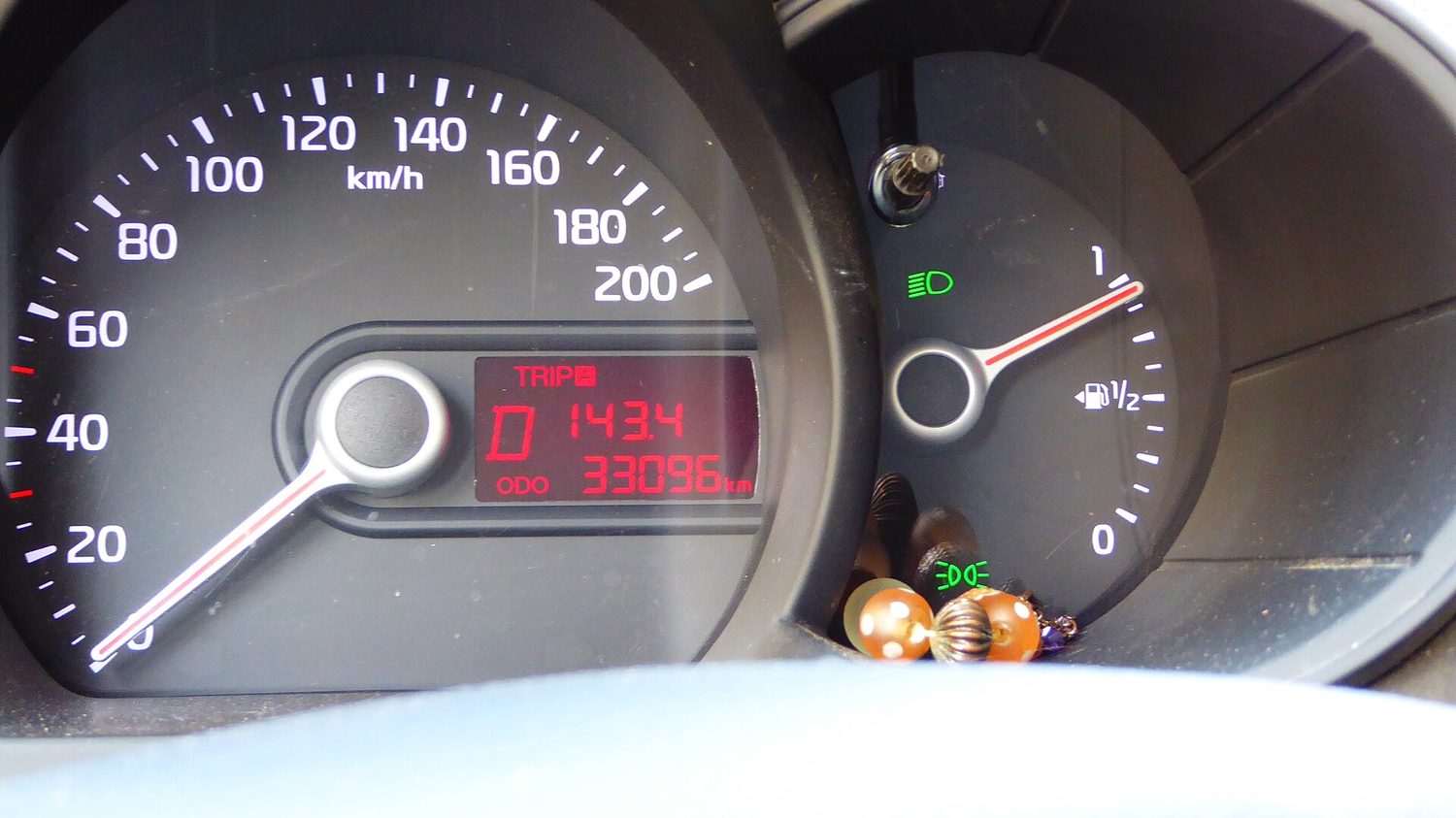
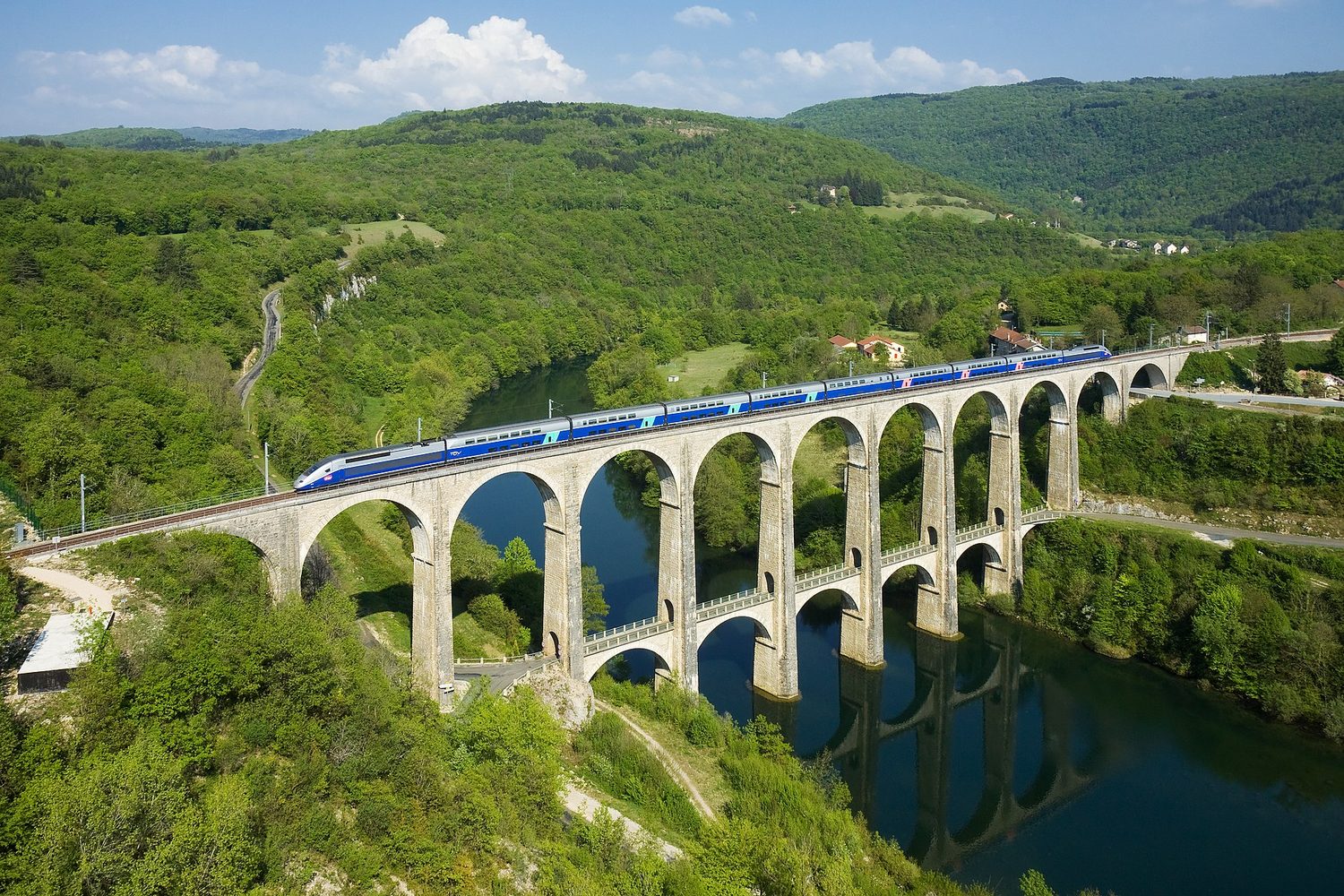
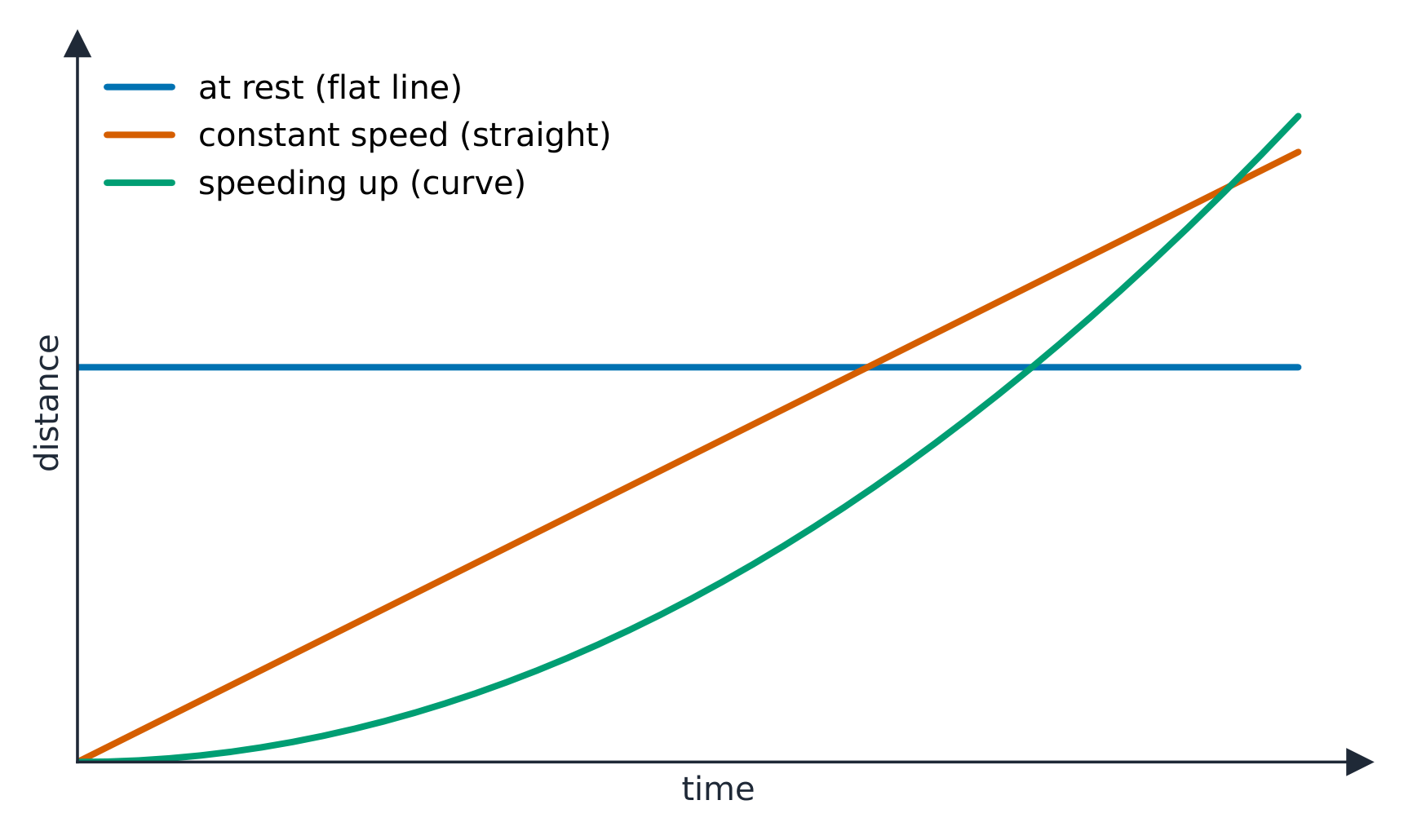
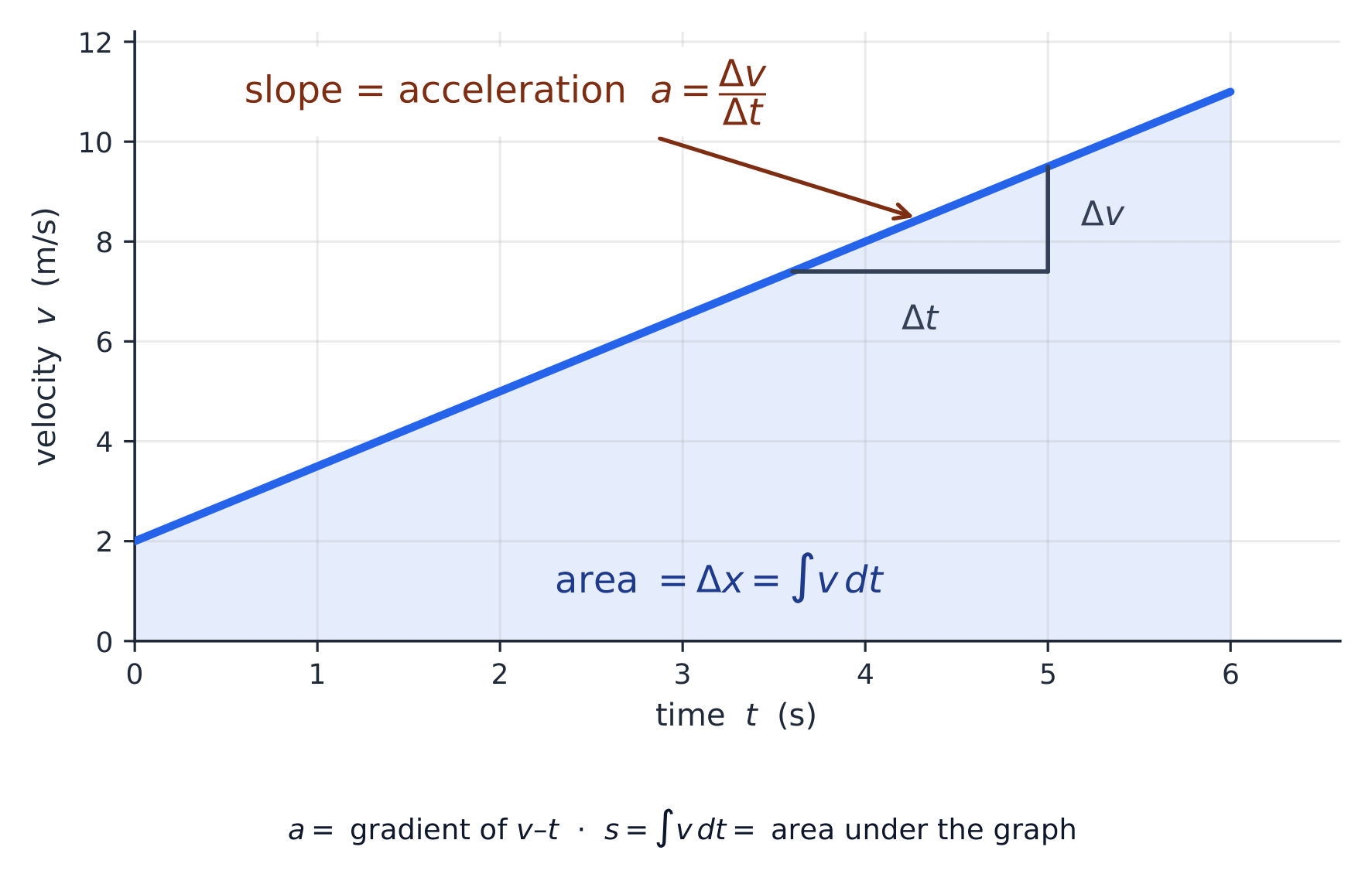
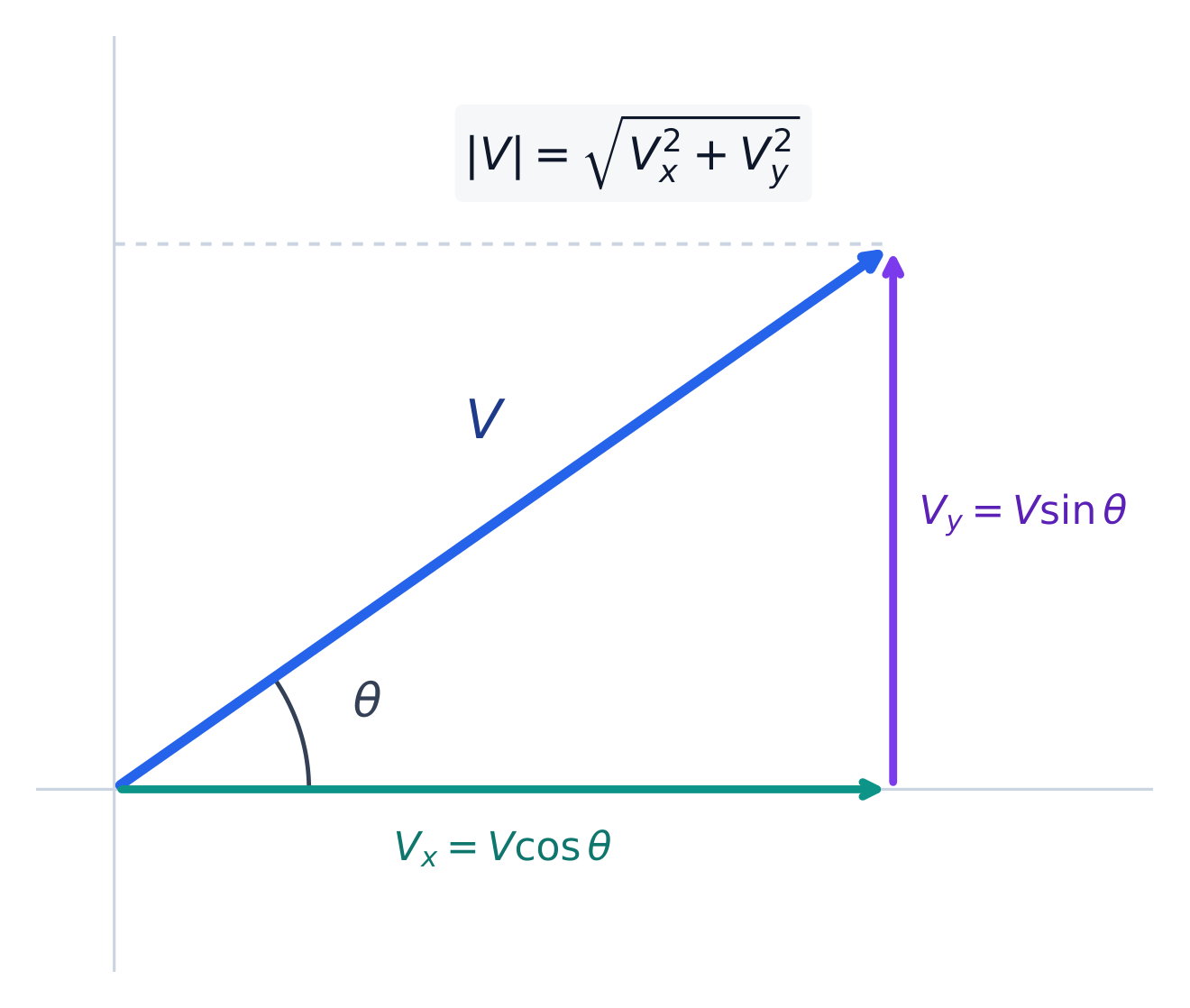
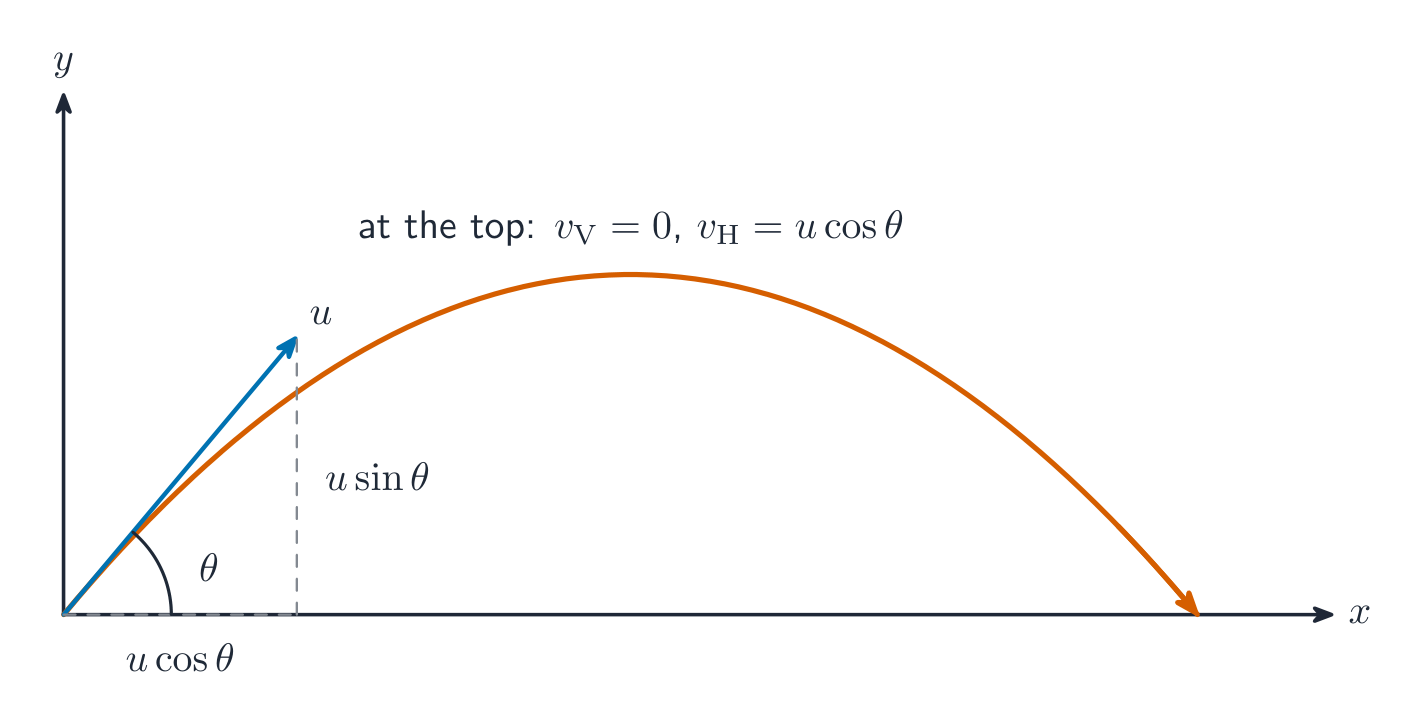
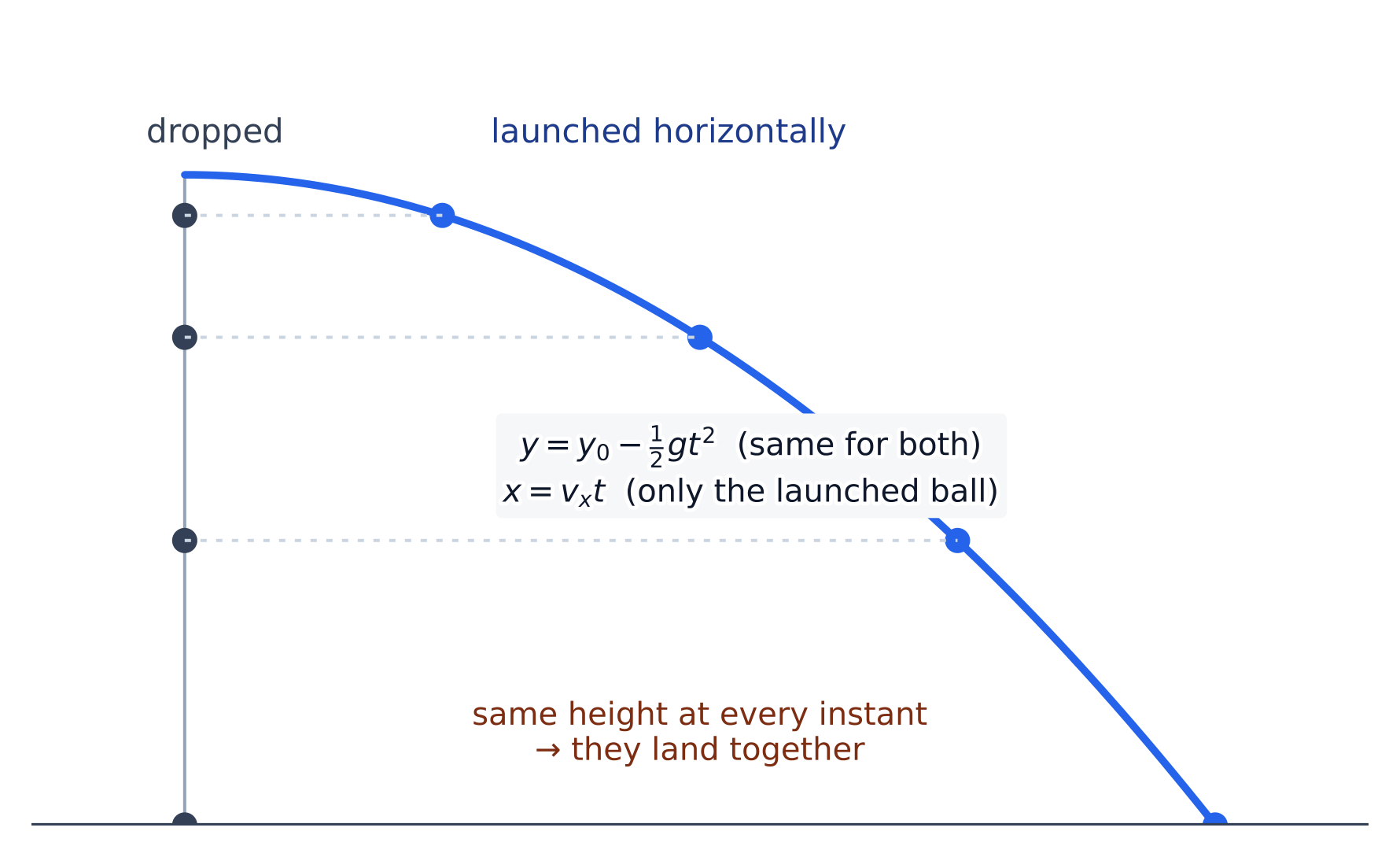

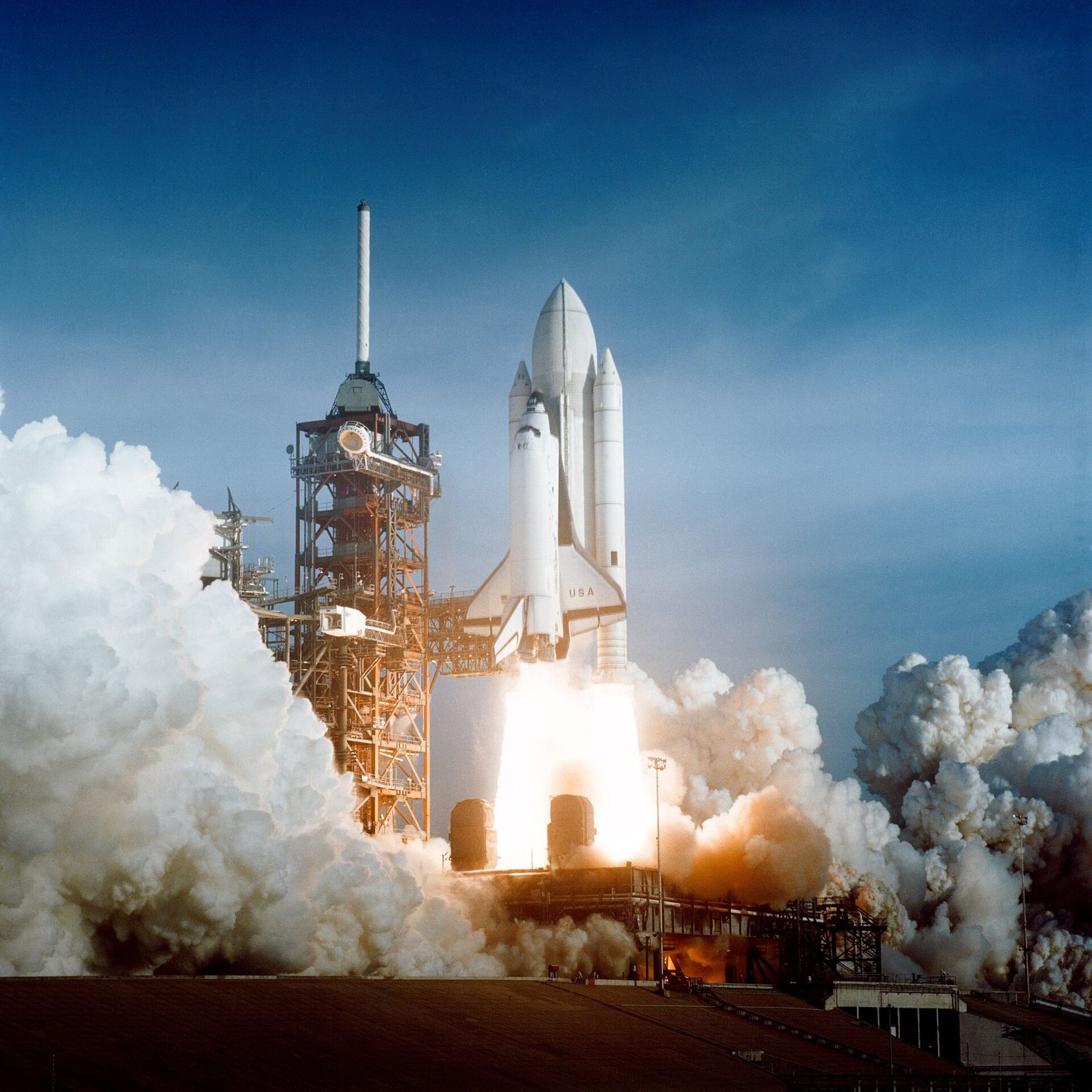
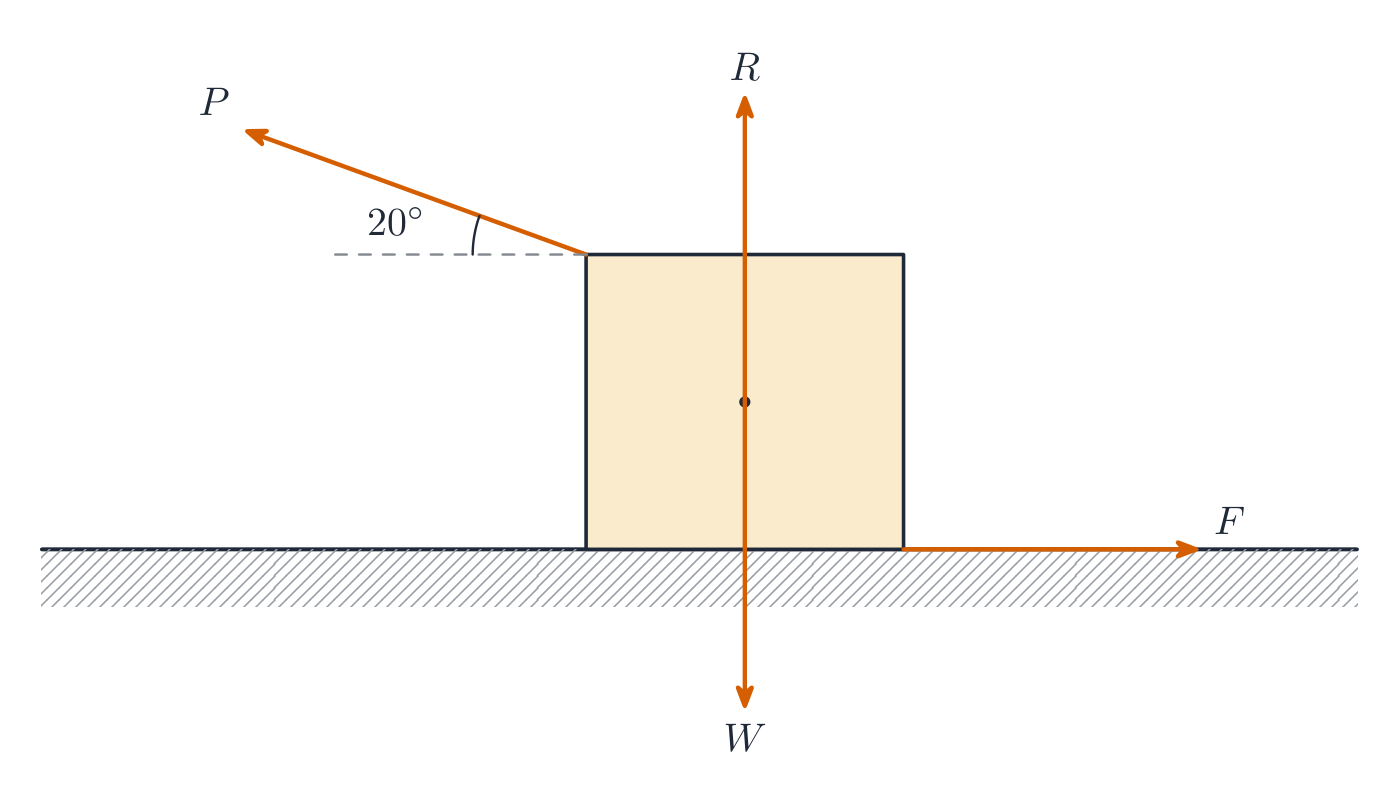
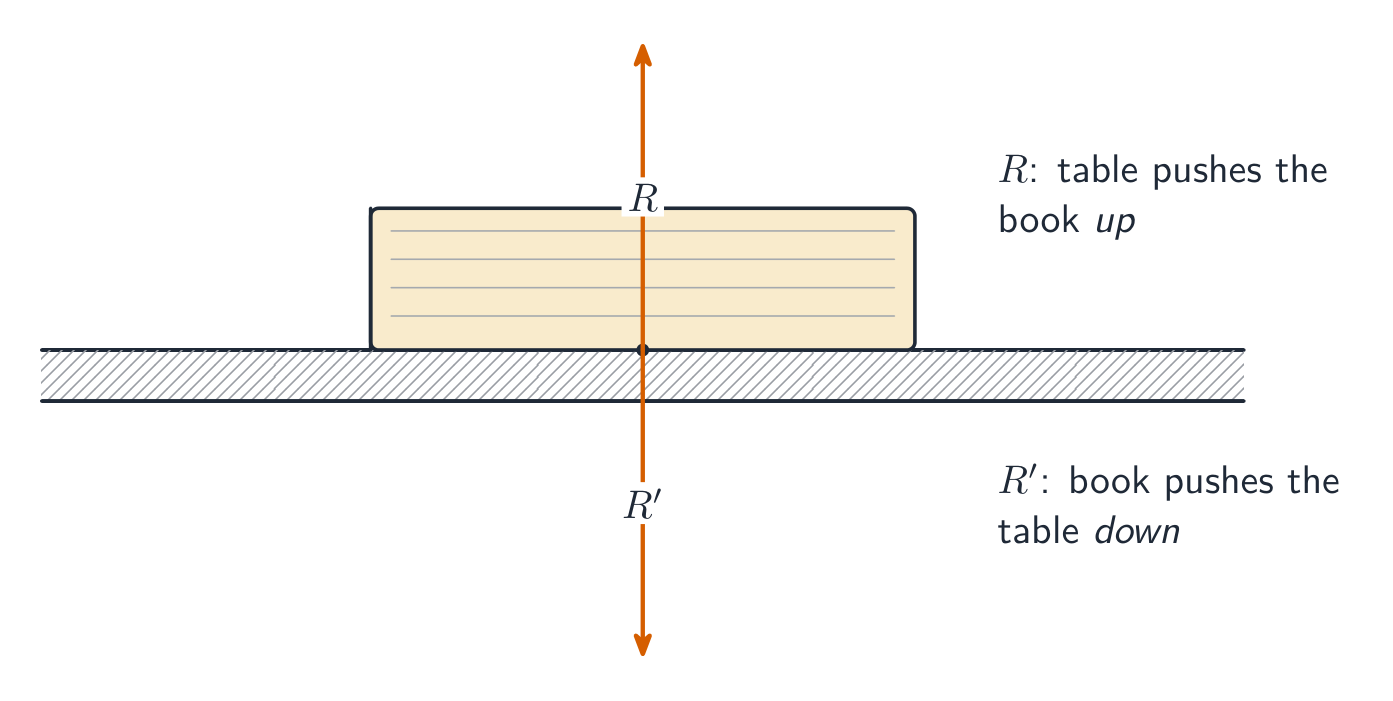
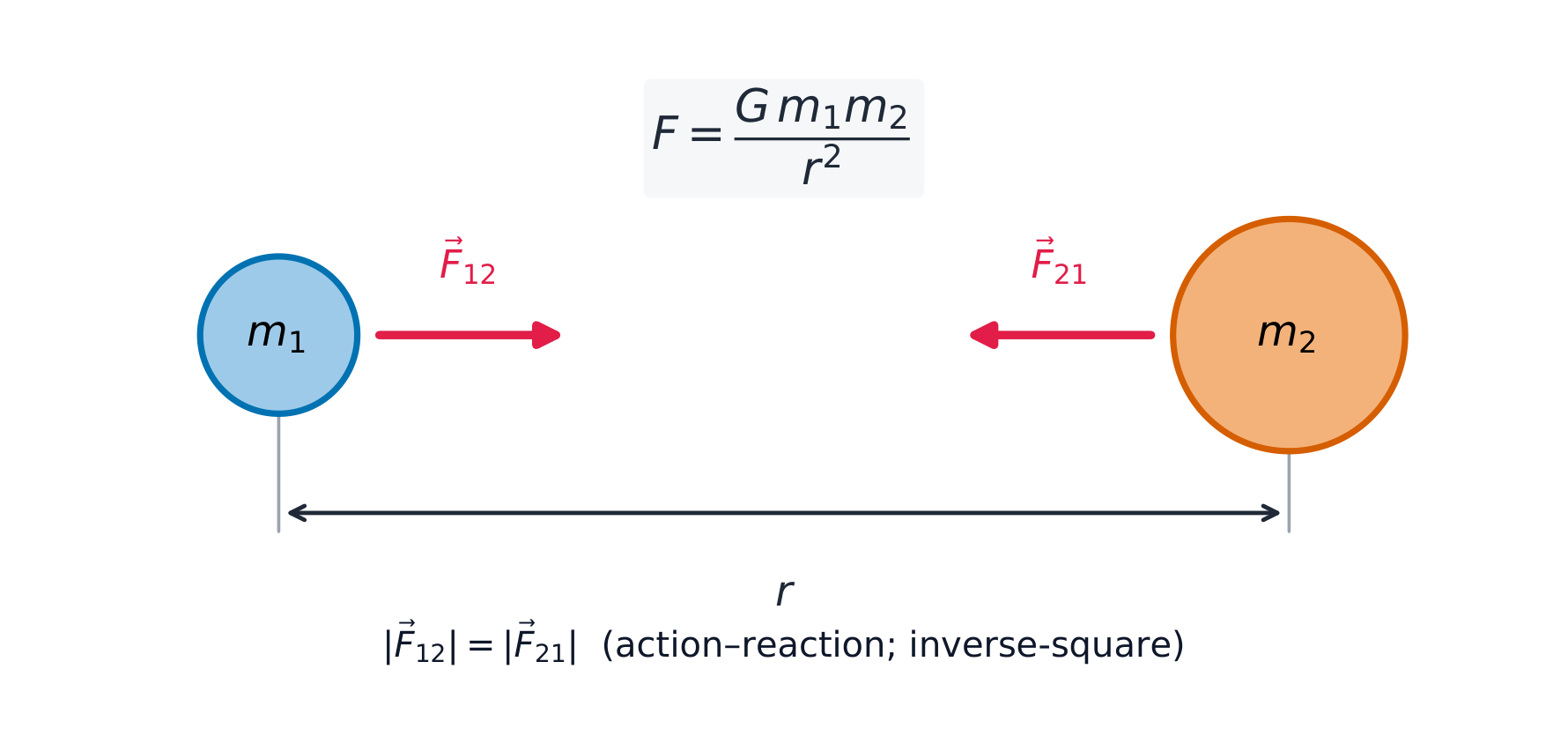
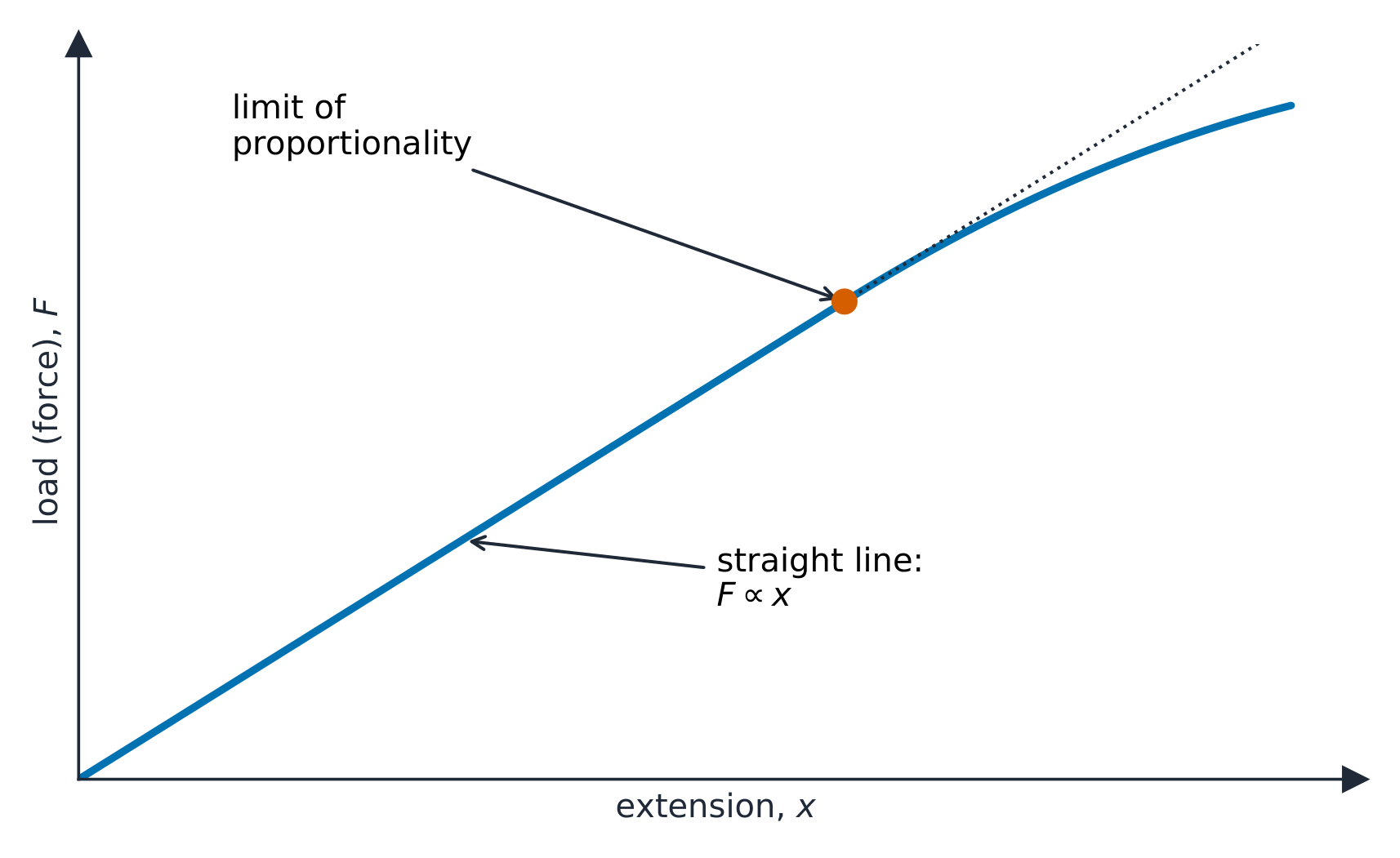
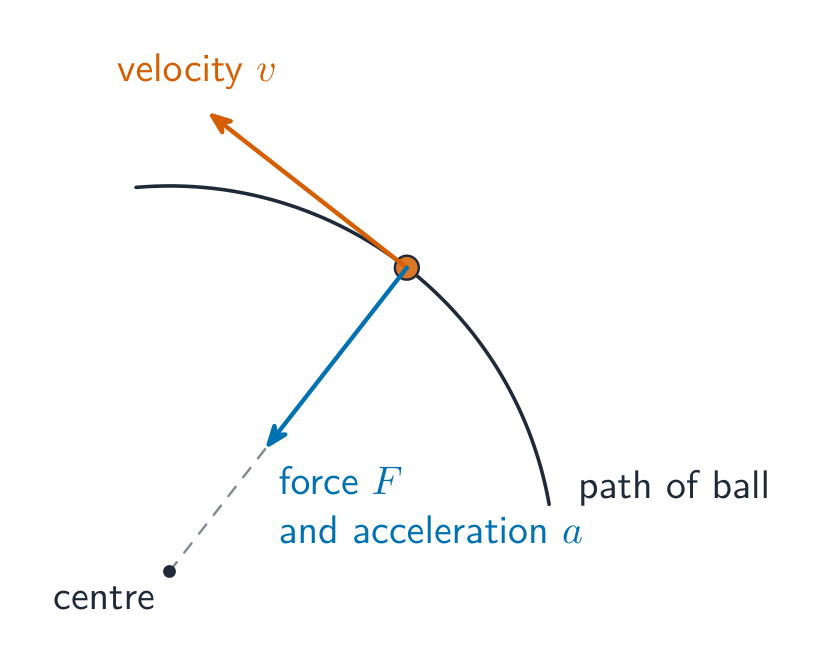
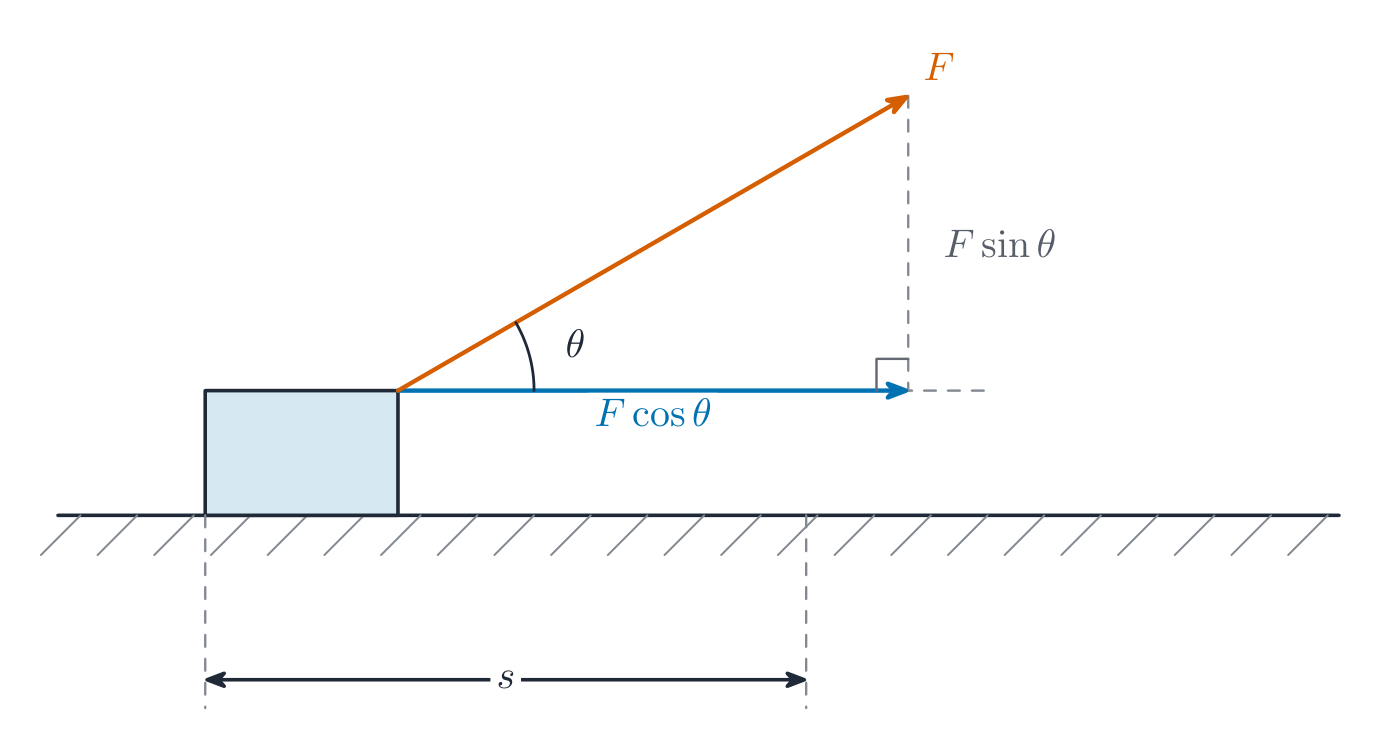
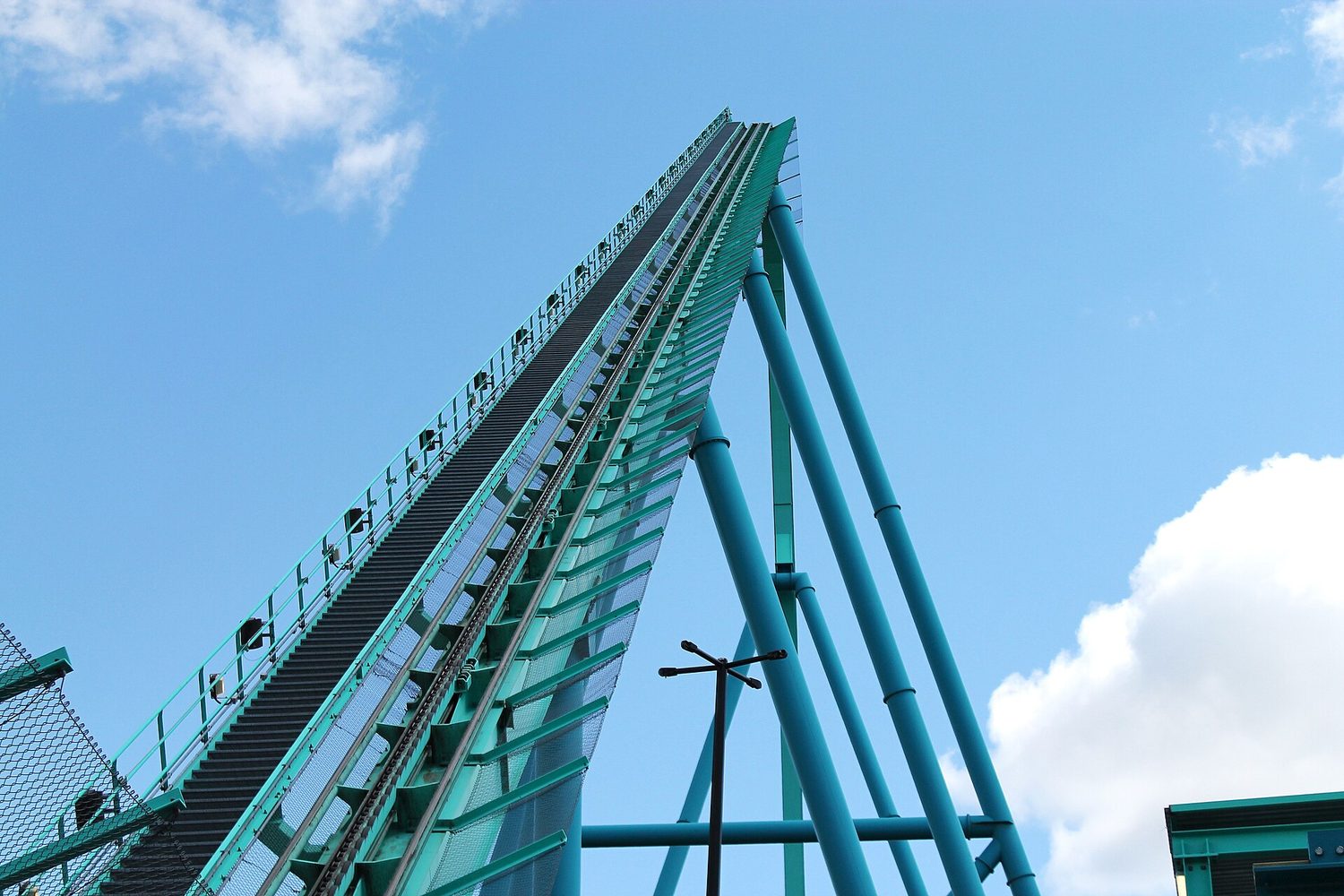
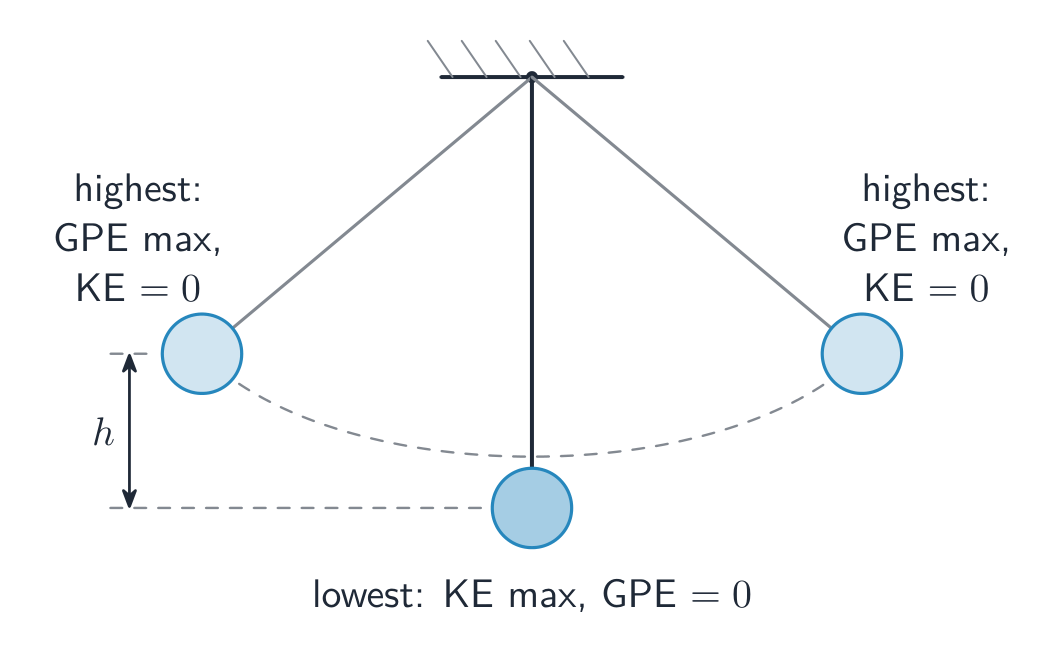
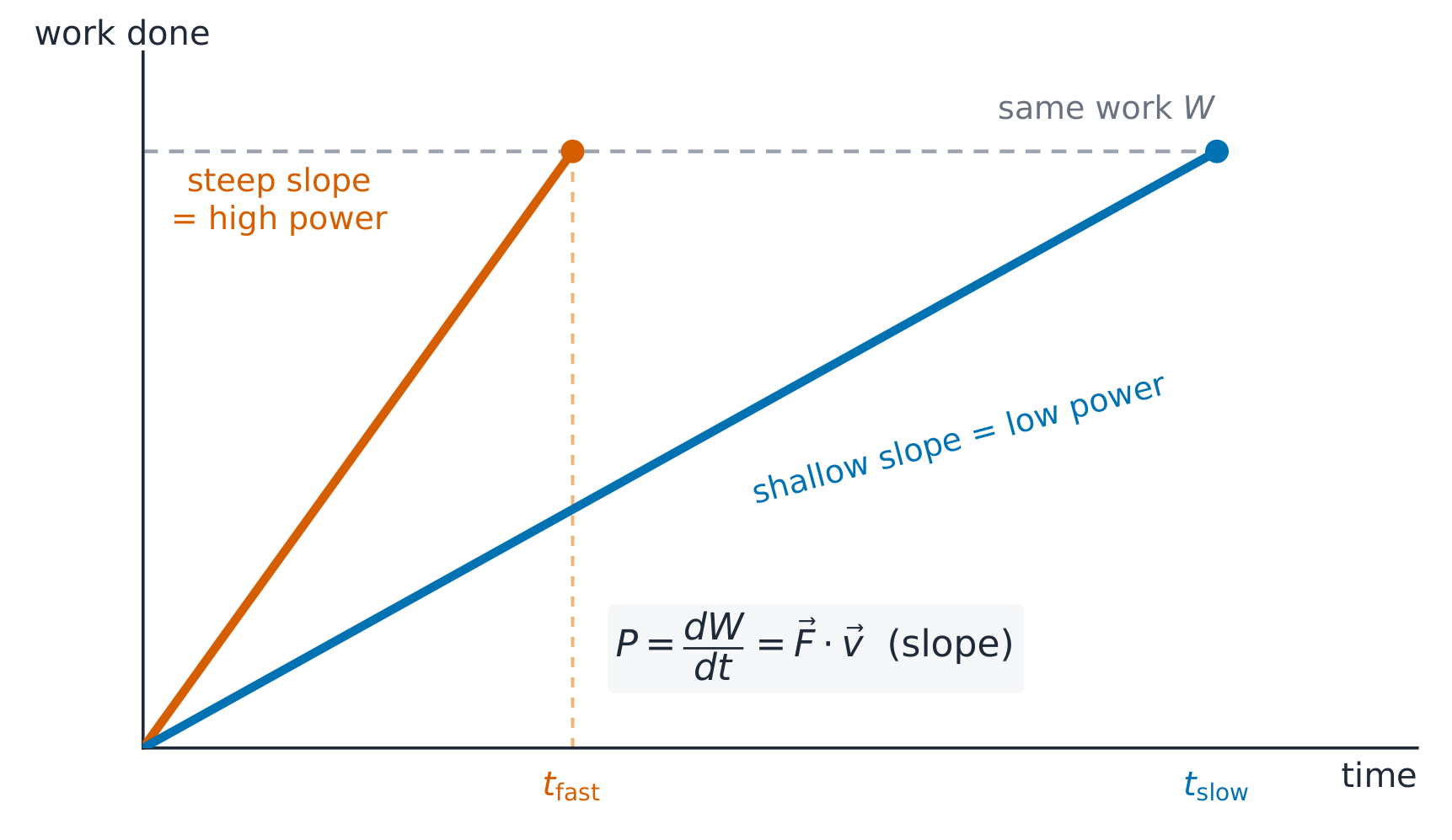
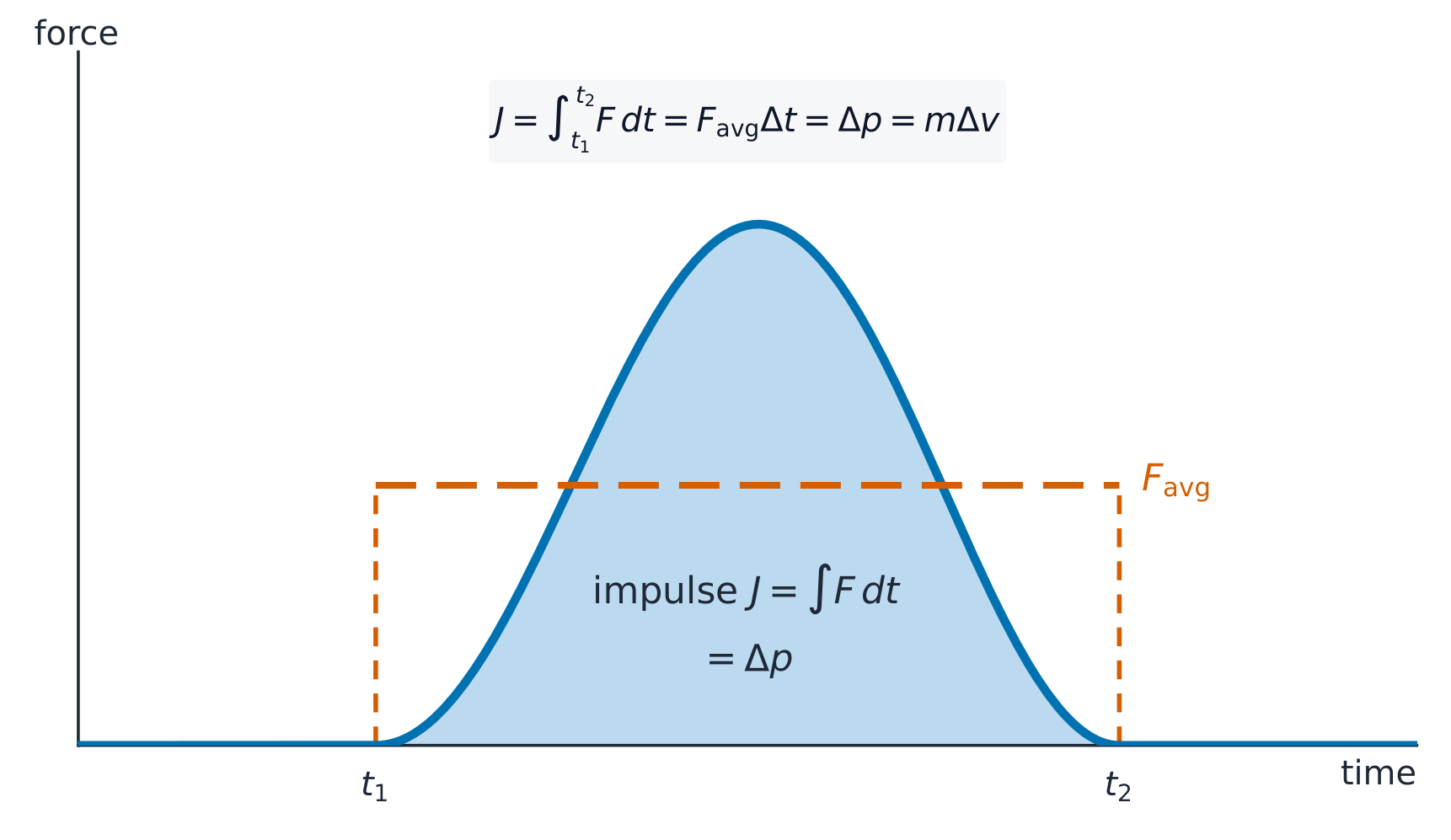
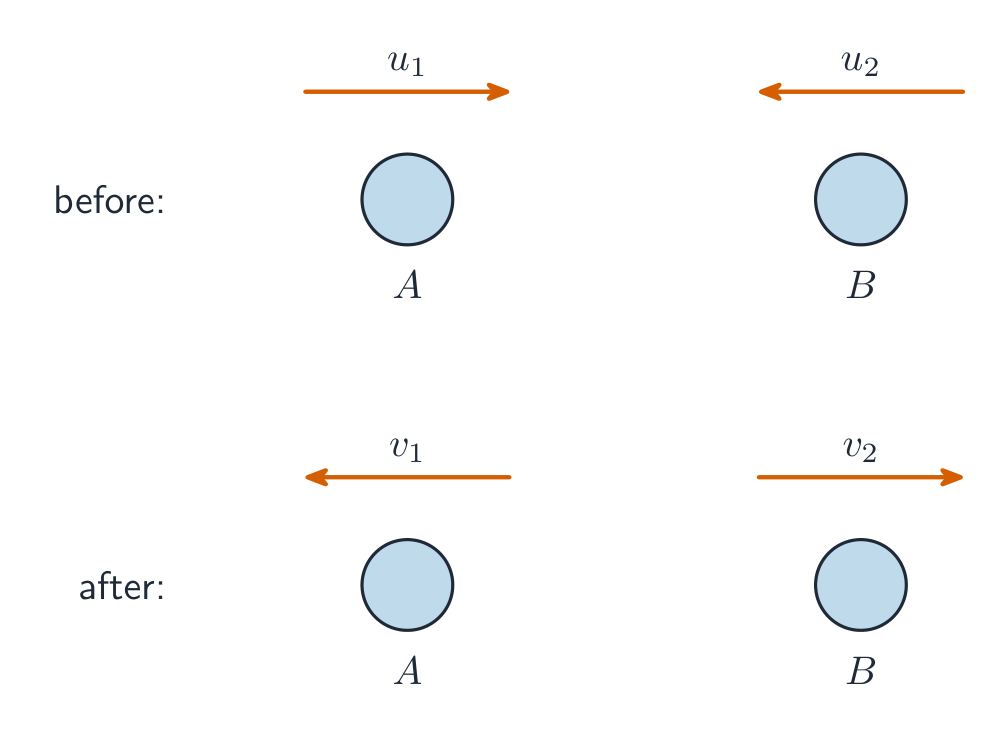
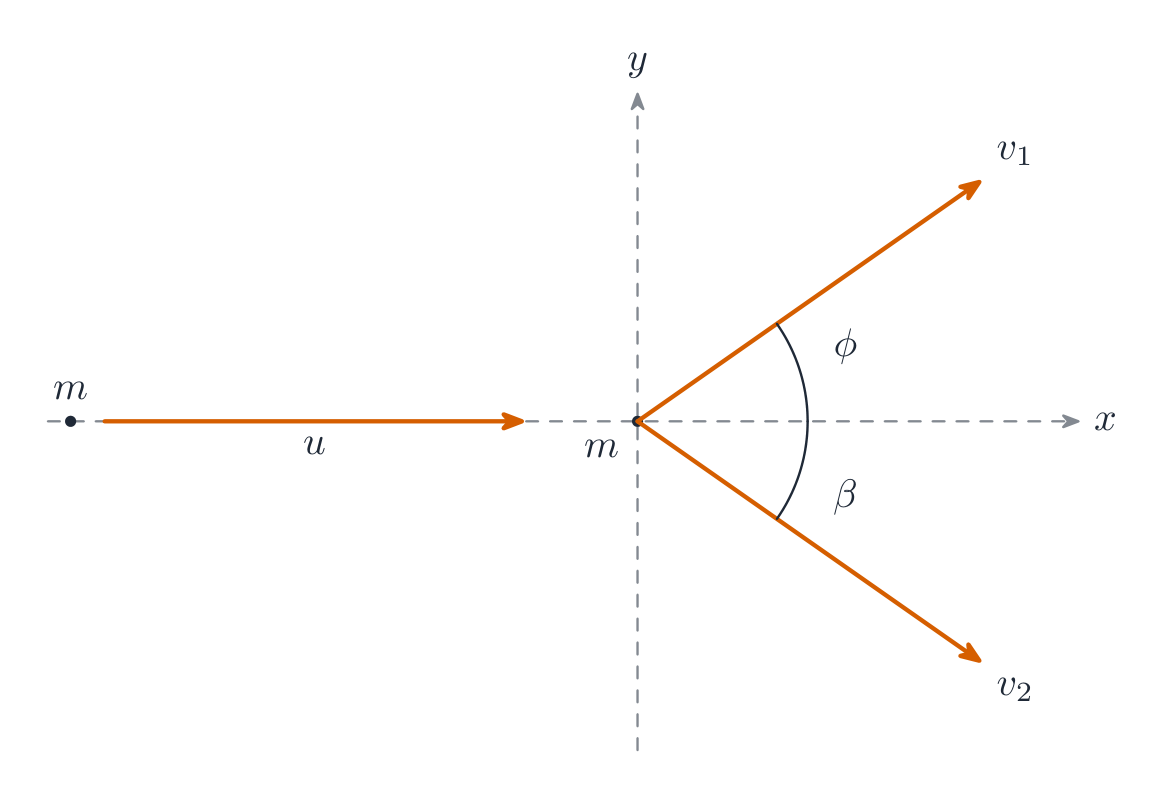
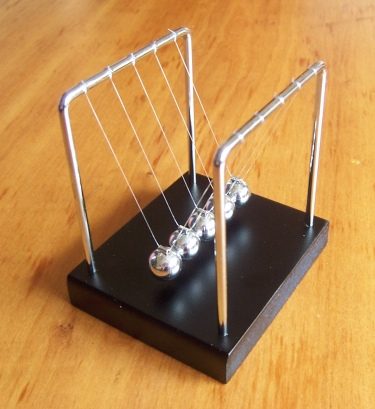

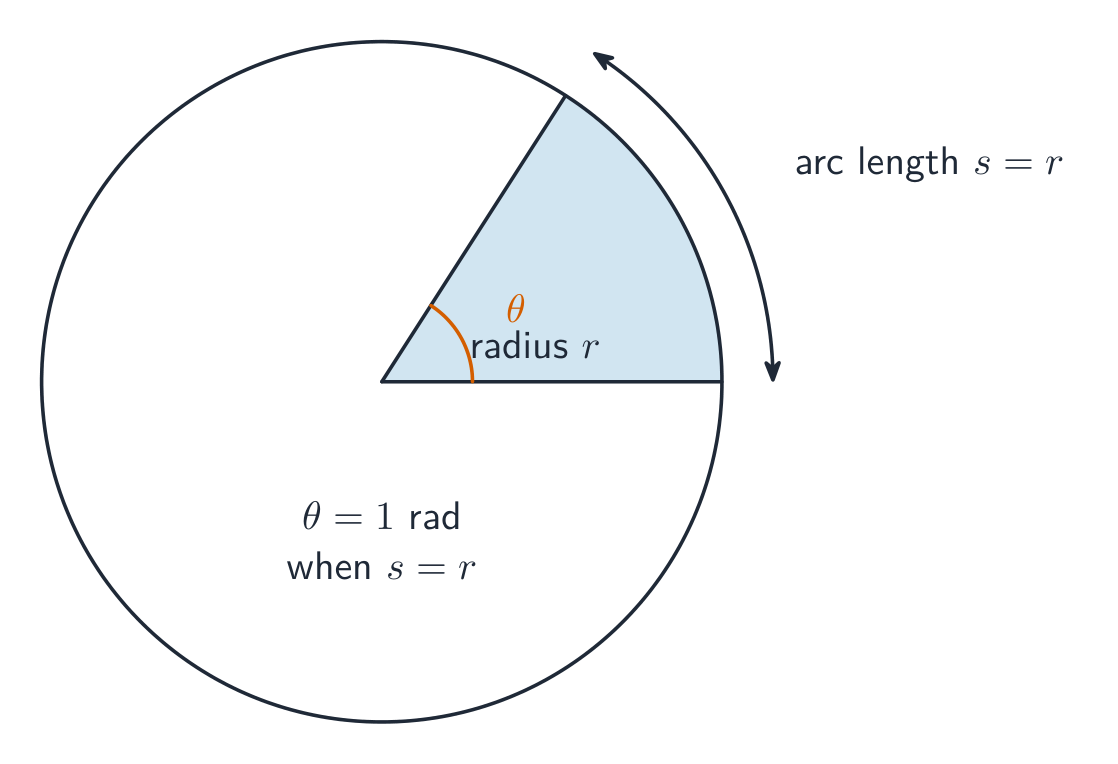
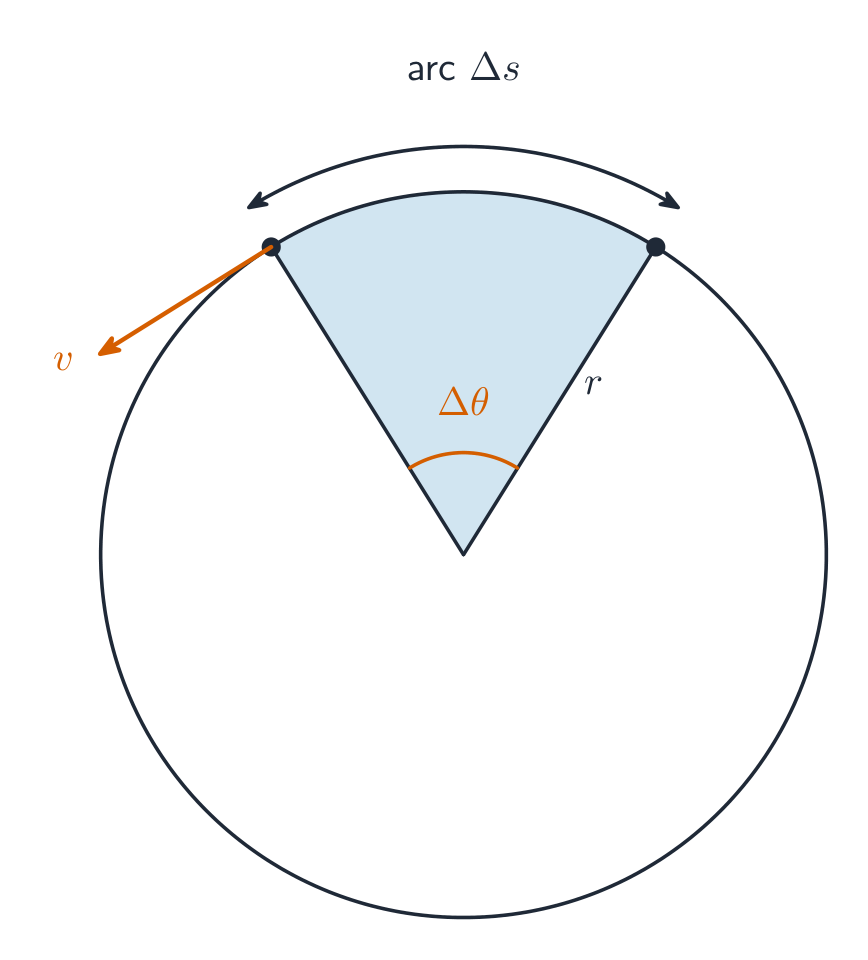
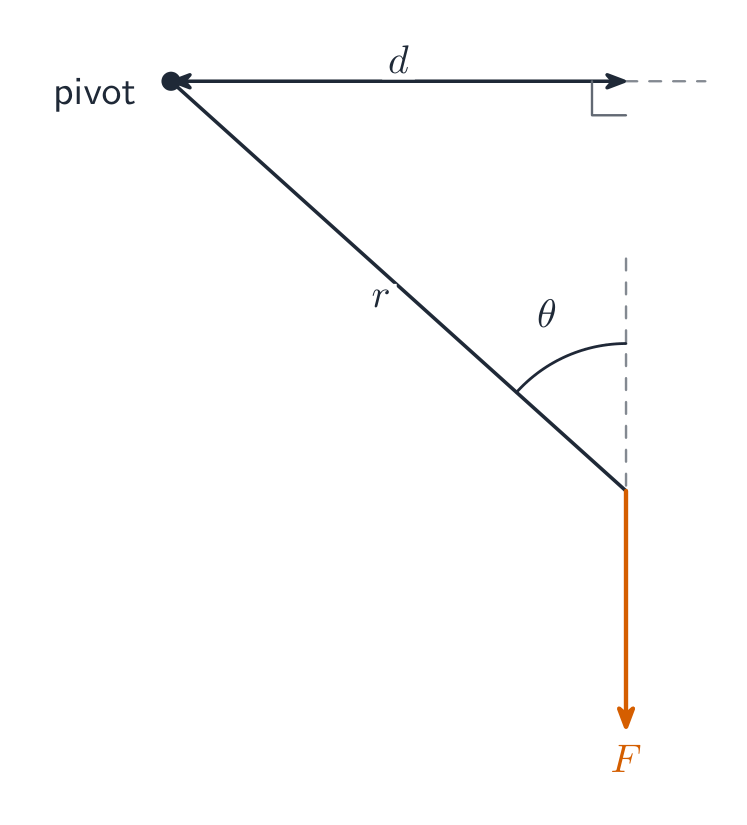
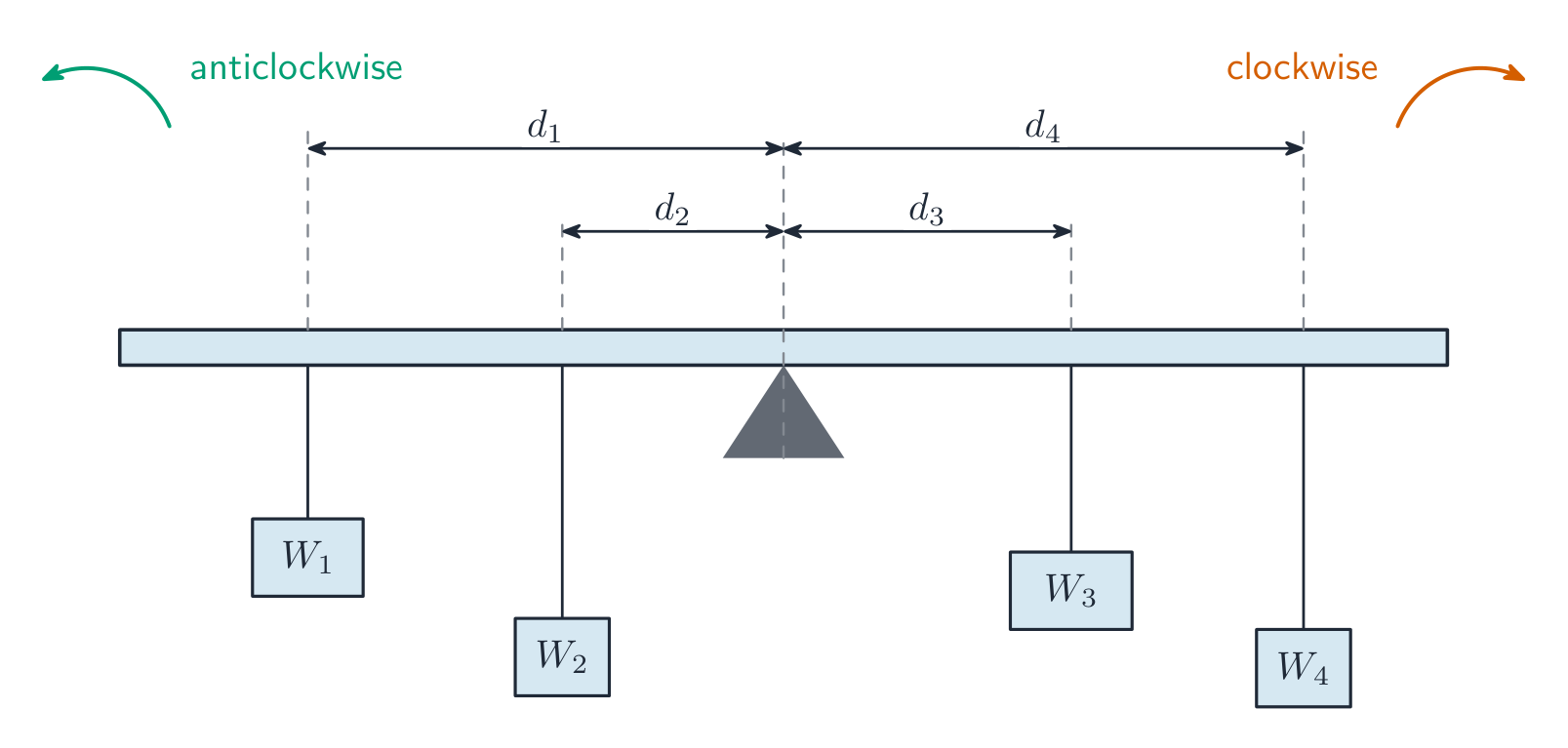
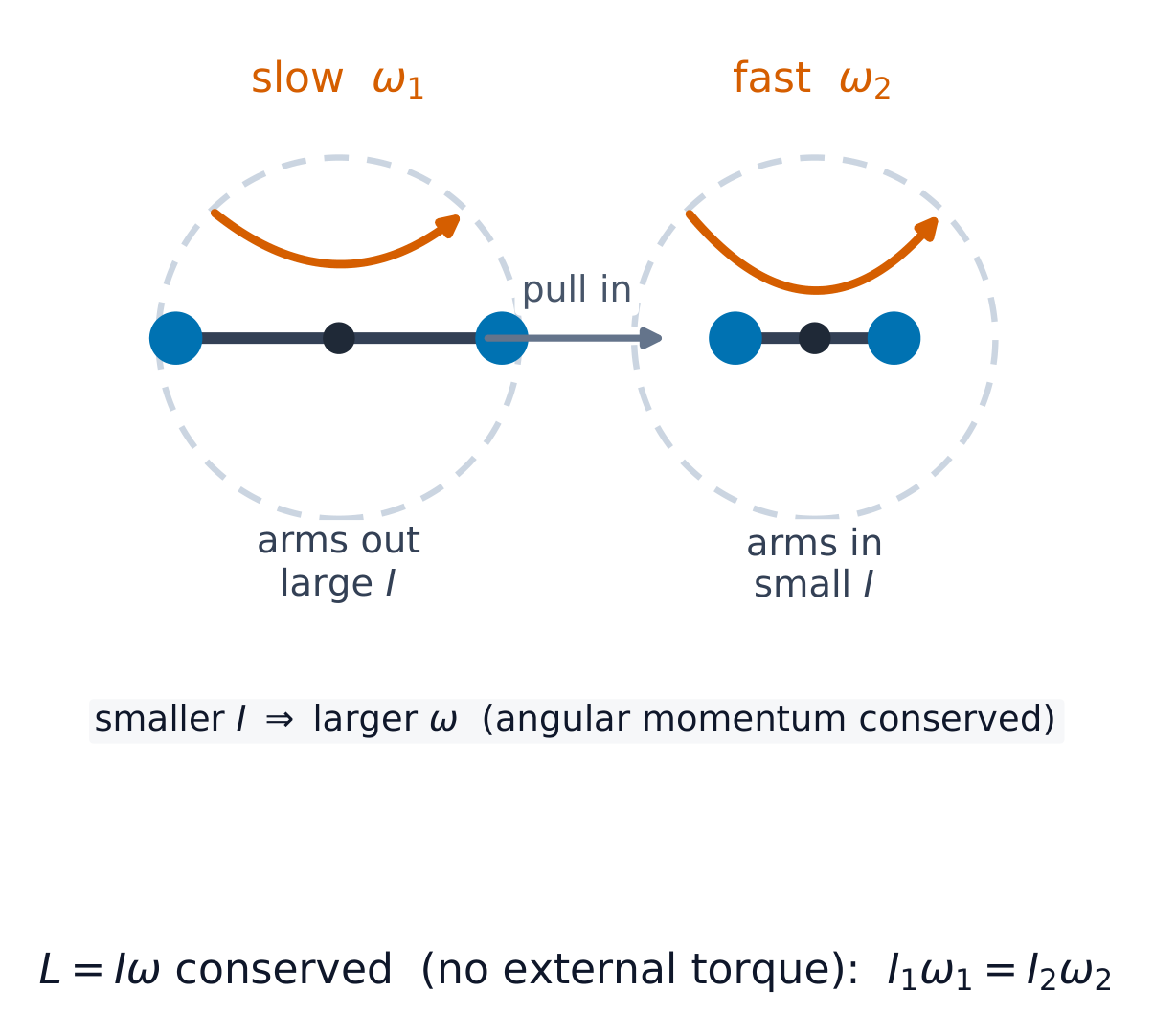
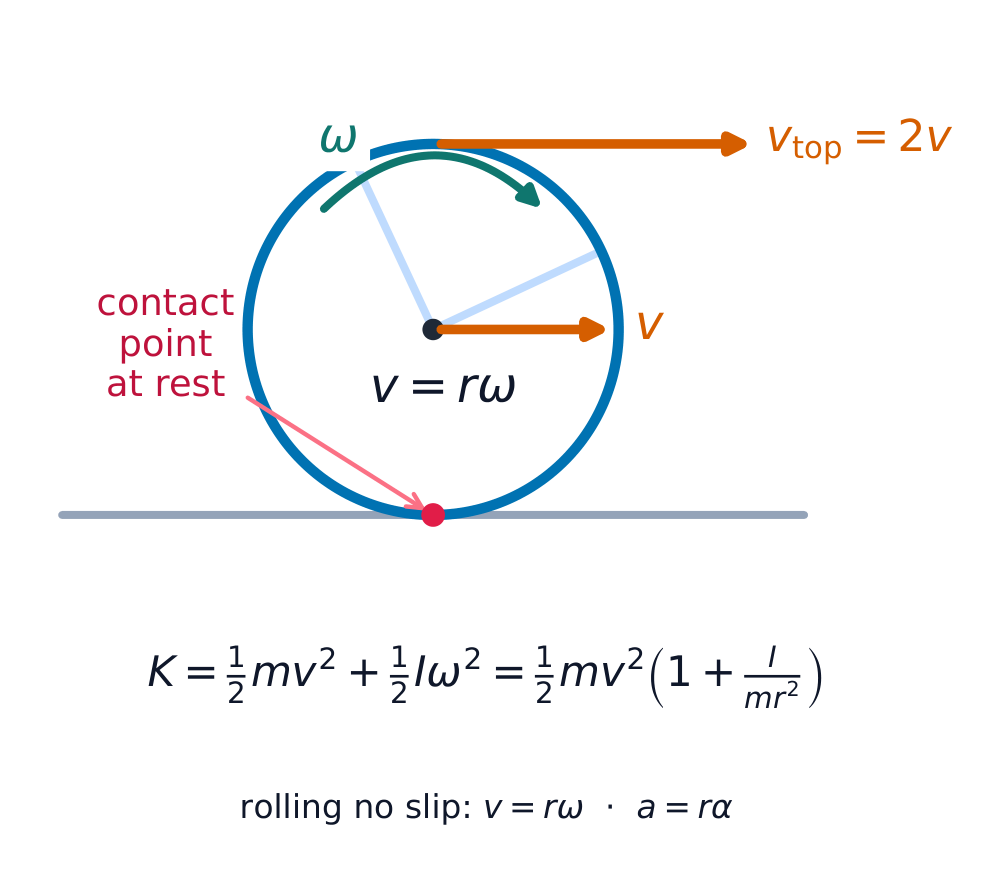
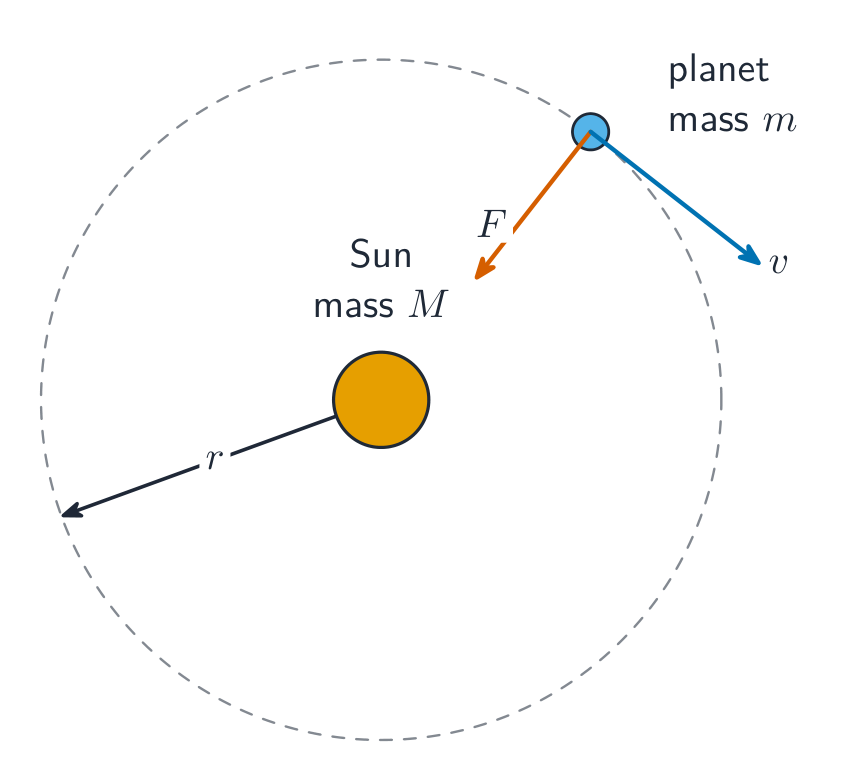
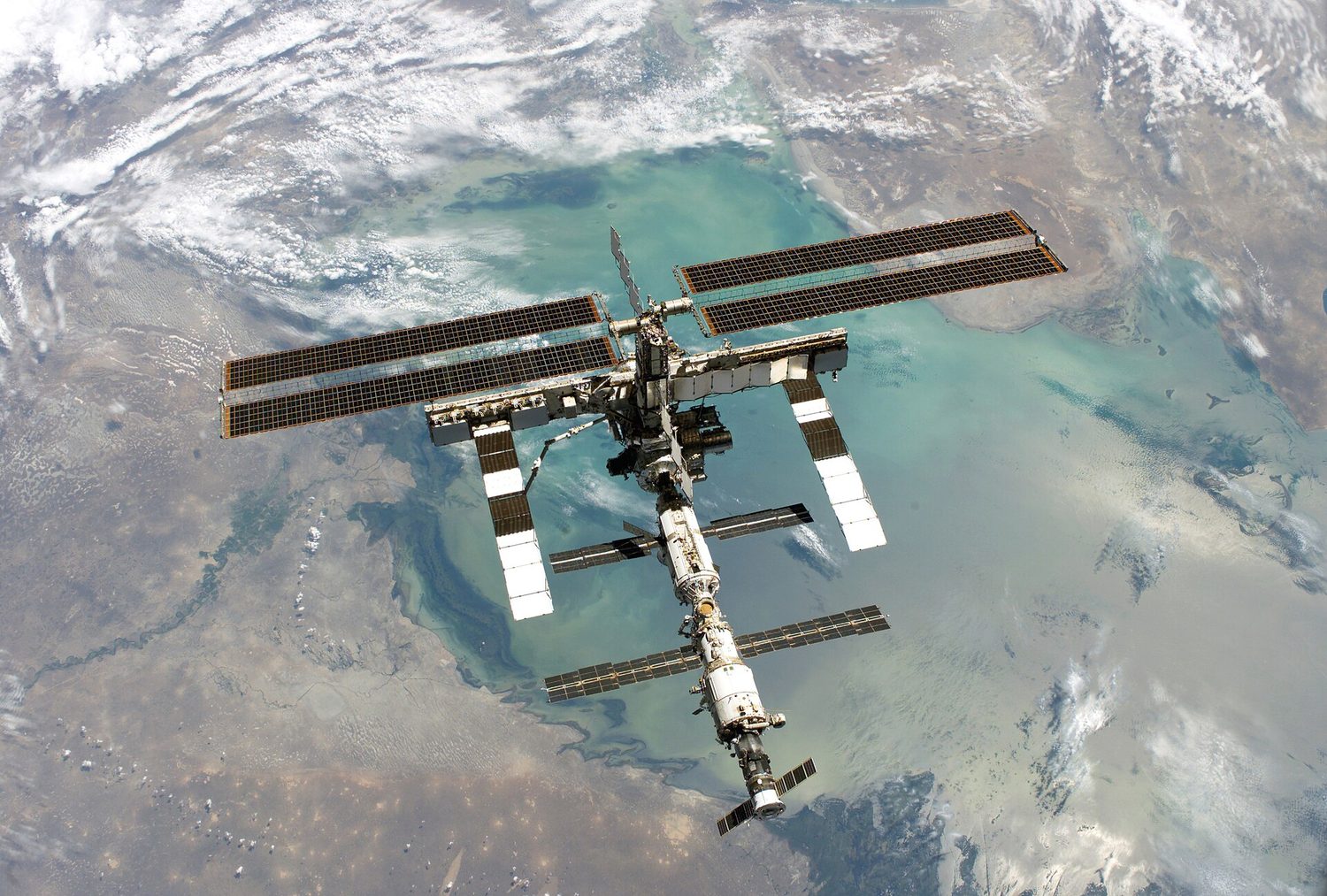
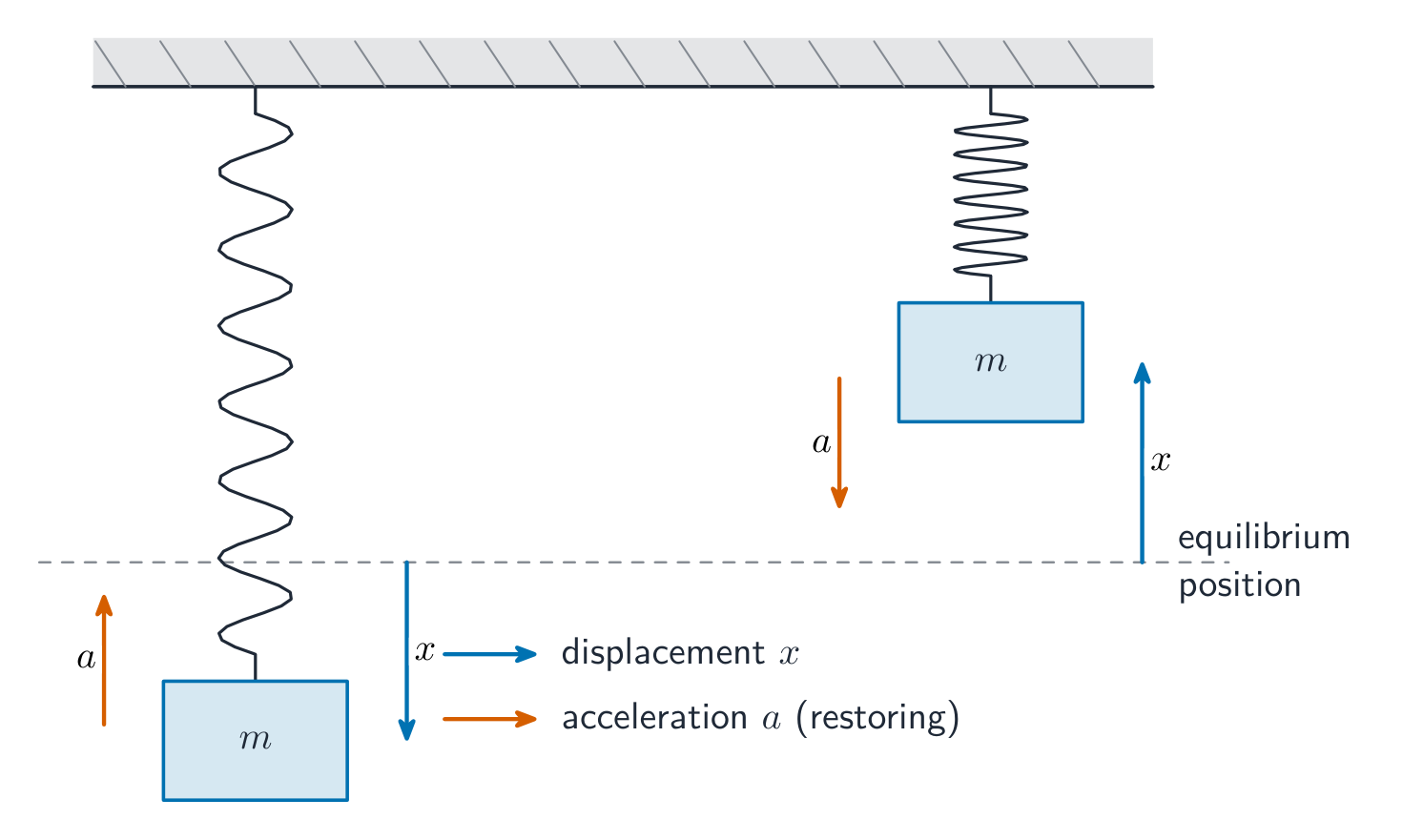
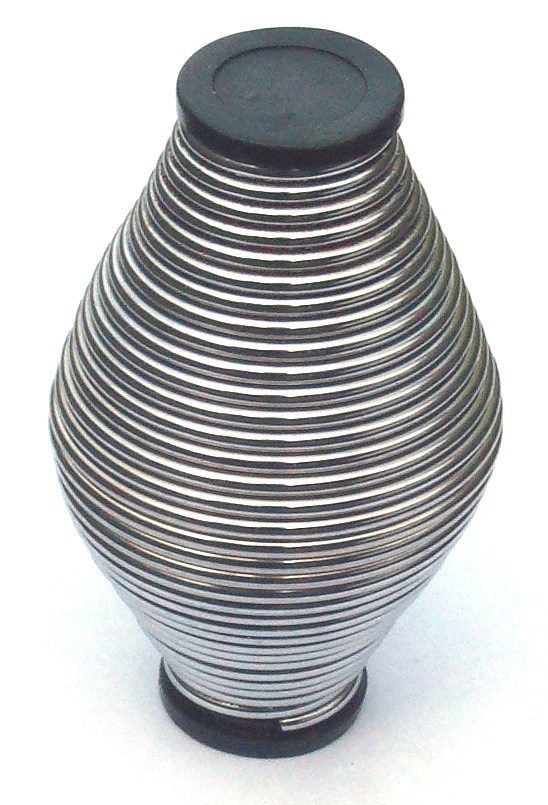
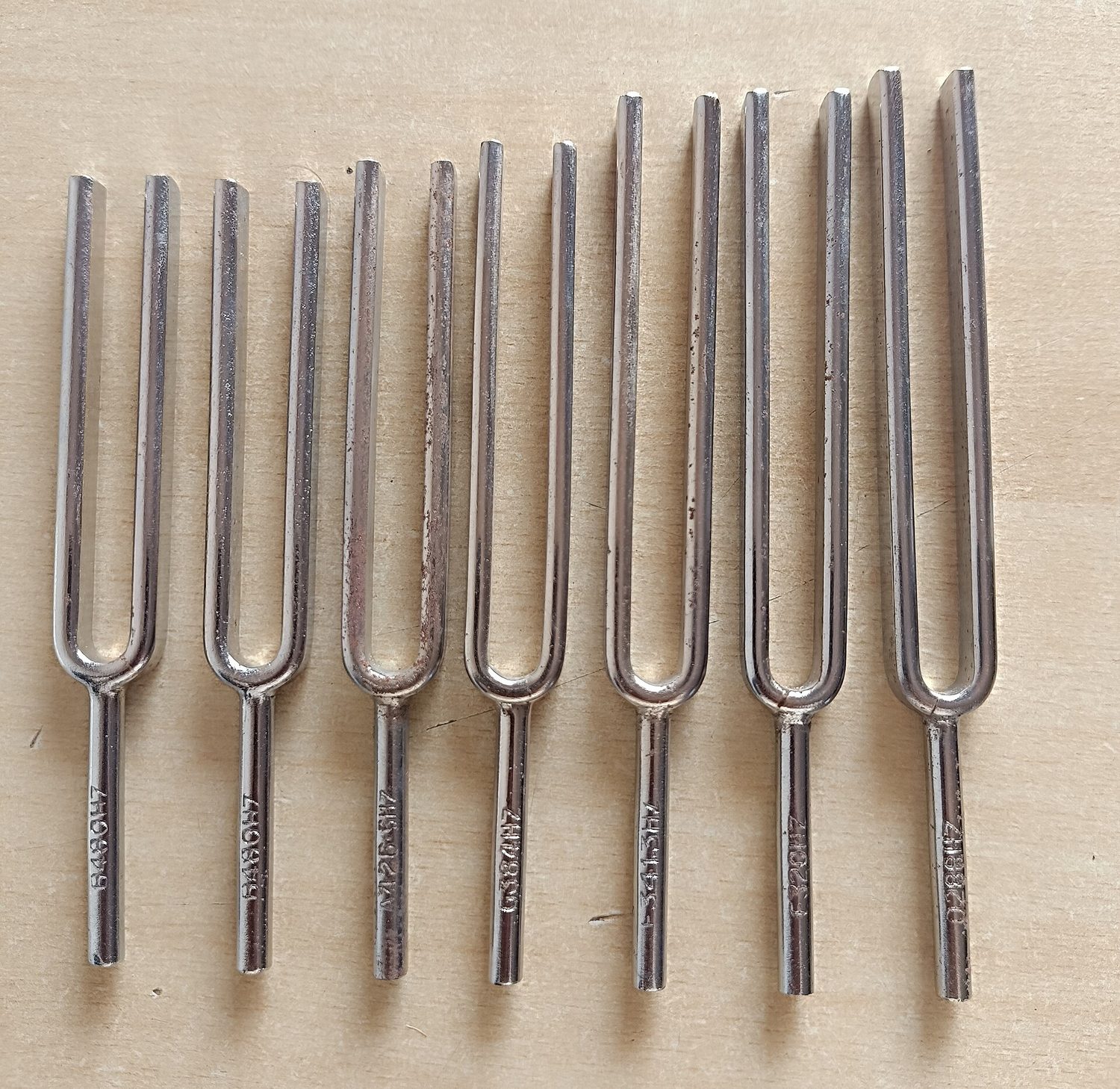
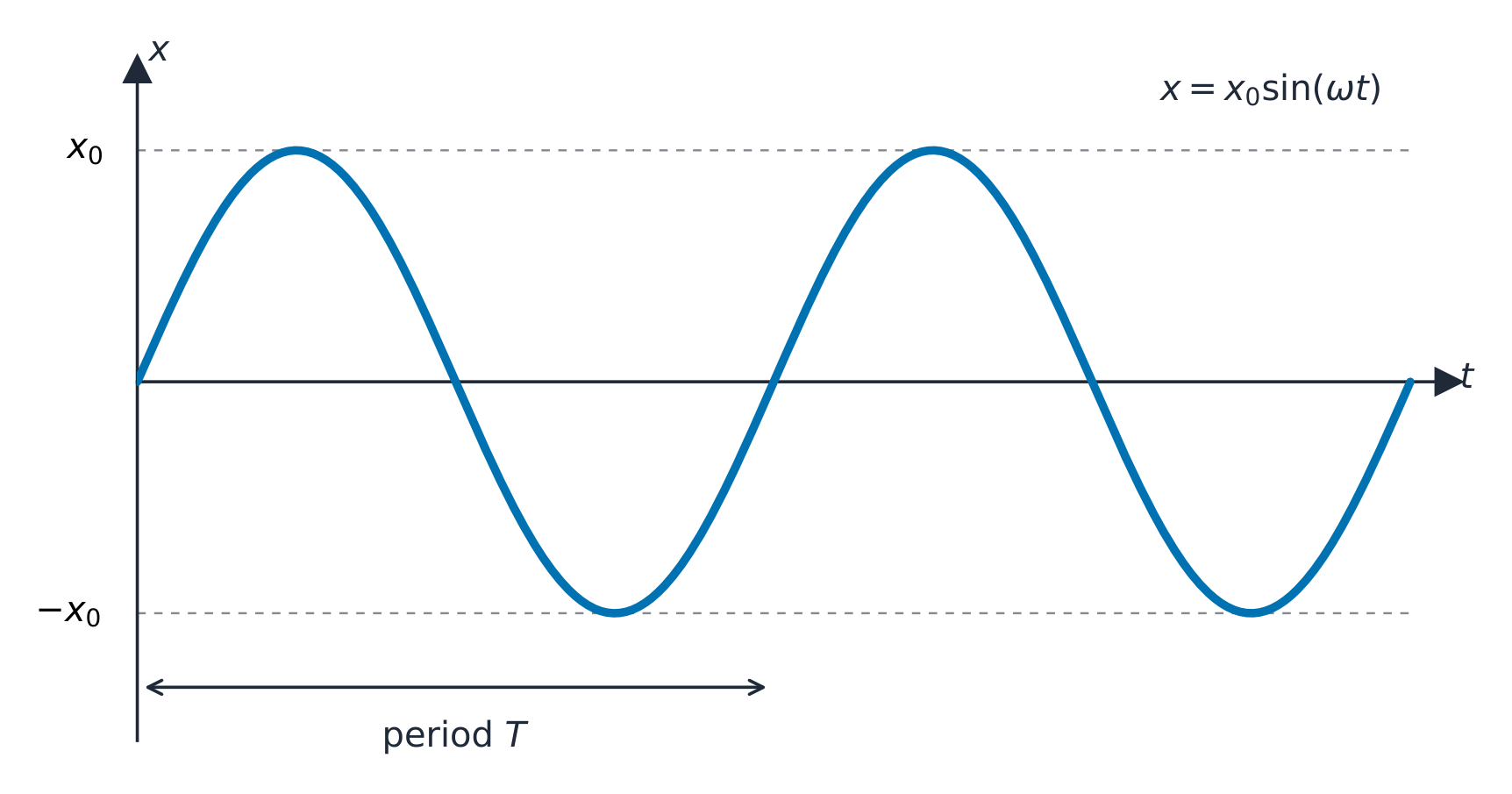
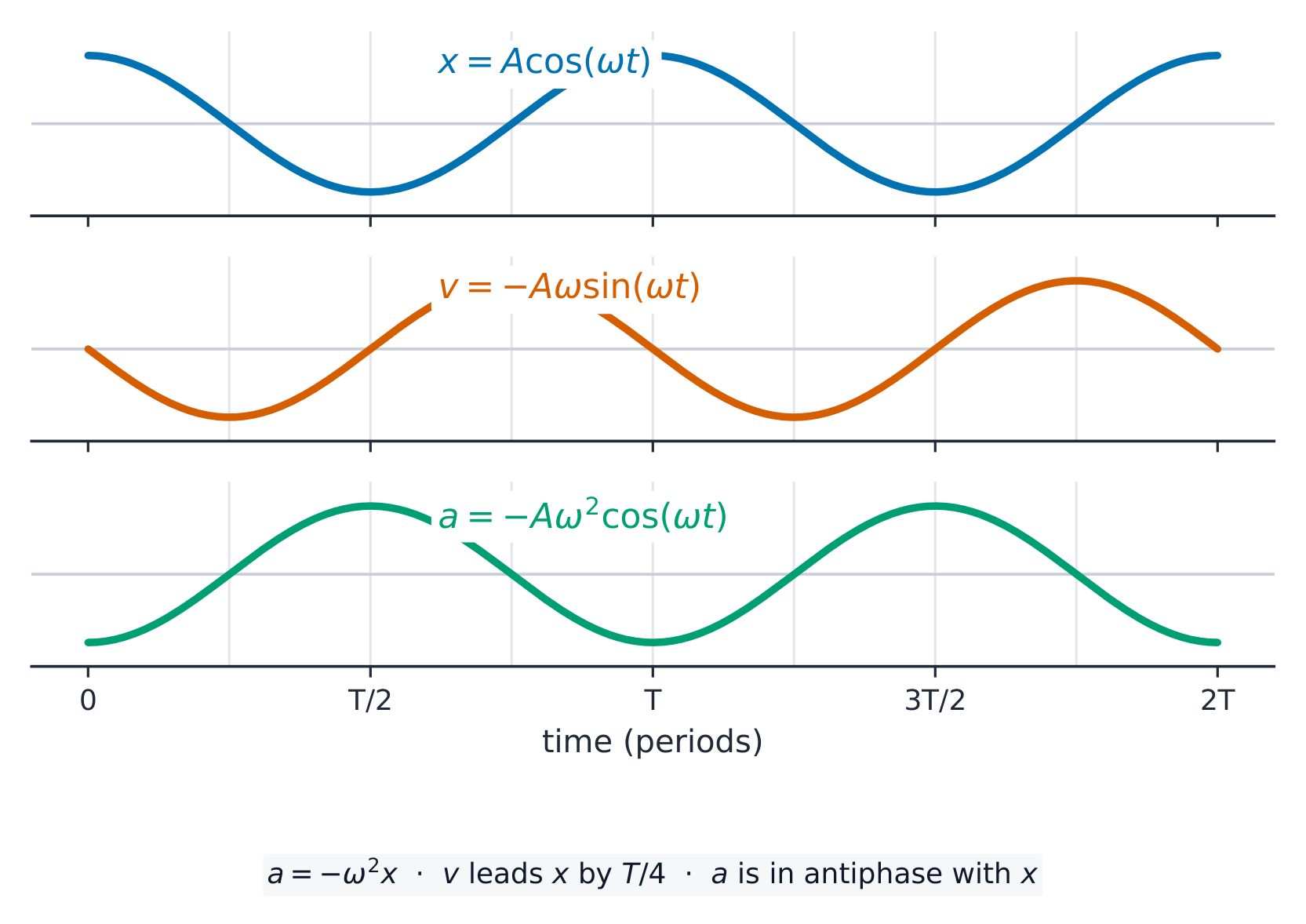 *היסחנות, מהירות ואצטות בתנודות הרמוניות פשוטות, כל אחת בשוני של רביע מחזור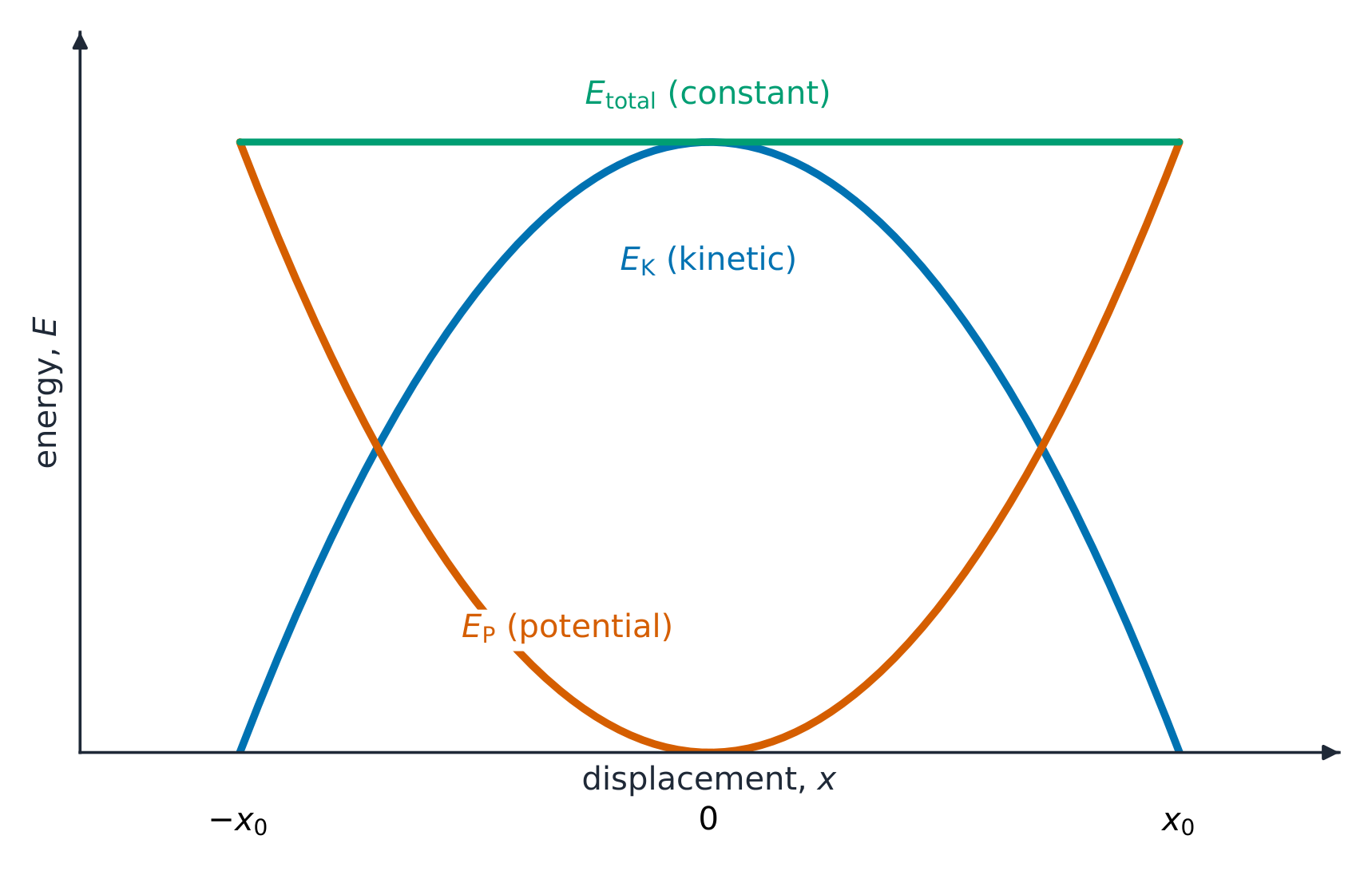
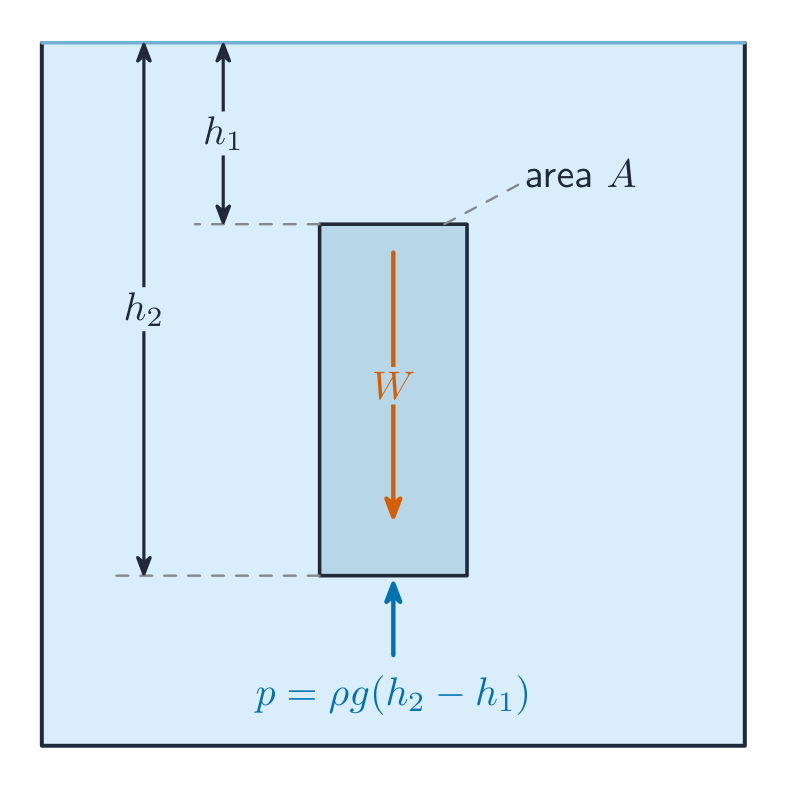 *משקל עמוד נוזל קובע את הלחץ הנוסף בעומק