Skip to content · ⁨דלג לתוכן⁩

Cold War and Contemporary Europe

AP European History · ⁨היסטוריה אירופאית - AP⁩ · Topic 9 · ⁨נושא 9⁩

Video lesson for this topic · ⁨שיעור וידאו לנושא זה⁩ Open the video page · ⁨פתח את עמוד הוידאו⁩
9:37

יחידה 9: המלחמה הקרה ואירופה המודרנית

יחידה זו מורכבת משני חלקים שצריך לשמור על קשר ביניהם. החלוקה, עד שנת 1991. והאינטגרציה, שהתרחשה במקביל לה ואף אחריה. הם אינם רציפיים…

English narration · English + 中文 subtitles burned in · ⁨קריאת קול באנגלית · תרגום אנגלי + סינית שרוף בתוך הסרטון⁩

9.1

Contextualizing Cold War and Contemporary Europe · ⁨הקשר היסטורי של מלחמת קרה ואירופה מודרנית⁩

Syllabus · ⁨סיילבוס⁩
English

9.1 Contextualizing Cold War and Contemporary Europe

Learning Objective Unit 9.A: Explain the context in which the Cold War developed, spread, and ended in Europe.

  • KC-4.1 Total war and political instability in the first half of the 20th century gave way to a polarized state order during the Cold War and eventually to efforts at transnational union.
    • KC-4.1.IV As World War II ended, a Cold War between the liberal democratic West and the communist East began, lasting nearly half a century.
  • KC-4.2 The stresses of economic collapse and total war engendered internal conflicts within European states and created conflicting conceptions of the relationship between the individual and the state, as demonstrated in the ideological battle between and among democracy, communism, and fascism.
  • KC-4.3 During the 20th century, diverse intellectual and cultural movements questioned the existence of objective knowledge, the ability of reason to arrive at truth, and the role of religion in determining moral standards.
    • KC-4.3.I.ii The experience of war intensified a sense of anxiety that permeated many facets of thought and culture, giving way by the century’s end to a plurality of intellectual frameworks.
  • KC-4.4 Demographic changes, economic growth, total war, disruptions of traditional social patterns, and competing definitions of freedom and justice altered the experiences of everyday life.
    • KC-4.4.III New voices gained prominence in political, intellectual, and social discourse.
עברית

9.1 הקשר היסטורי לאירופה במלחמת קר והתקופה המודרנית

מטרות לימוד ליחידה 9.A: הסבר את ההקשר שבו התפתחה, התפשטה והסתיימה מלחמת הקר באירופה.

  • KC-4.1 המלחמה הכוללת והאי-יציבות הפוליטית בחצי הראשון של המאה ה-20 החליפו סדר מדיני מקוטב בזמן המלחמה הקרה ולבסוף מאמצים לאיחוד חוצה-גבולות.
    • KC-4.1.IV כשהסתיימה מלחמת העולם השנייה, החלה מלחמת קר בין המערב הדמוקרטי-ליברלי לבין המזרח הקומוניסטי, שהייתה נמשכת כמעט חצי מאה.
  • KC-4.2 הלחצים שנובעים מכשל כלכלי ומלחמה כוללה יצרו סכסוכים פנימיים בתוך מדינות אירופאיות ויצרו תפיסות מתנגדות לגבי היחס בין הפרט למדינה, כפי שהוכח בשדה הקרב האידיאולוגי בין הדמוקרטיה, הקומוניזם והפשיזם.
  • KC-4.3 במהלך המאה ה-20, תנועות אינטלקטואליות ותרבותיות מגוונות ערערו על קיום ידע אובייקטיבי, יכולתו של הרצון להגיע לאמת, ועל התפקיד של הדת בקביעת סטנדרטים מוראליים.
    • KC-4.3.I.ii החוויה של המלחמה חיזקה תחושת חרדה שחלה בתוך היבועים הרבים של המחשבה והתרבות, שהפכה בסוף המאה לפלורליזם של מסגרות אינטלקטואליות.
  • KC-4.4 שינויים דמוגרפיים, צמיחה כלכלית, מלחמה כוללת, הפרעות בדפוסי חברה מסורתיים, והגדרות מתחרות לחופשה ולצדק שינו את חוויות היומיום.
    • KC-4.4.III קולות חדשים זכו לפרסום בדיסקורס הפוליטי, האינטלקטואלי והחברתי.
Source: College Board AP Course and Exam Description · ⁨מקור: תיאור הקורס והמבחן של College Board AP⁩

English

Unit 9 takes Europe from 1945 to the present. The same four key concepts as Unit 8 apply, but the emphasis shifts: a polarised state order, competing conceptions of the individual and the state, continued questioning of objective knowledge, and demographic and economic change reshaping everyday life.

The unit has two halves that must be held together - division until 1991, and integration running alongside and then beyond it.

עברית

היחידה 9 עוקבת אחר אירועים באירופה מהעשור 1945 ועד ימינו. אותו ארבעת המושגים המרכזיים כמו ביחידה 8 חלים גם כאן, אך הדגש משתנה: סדר מדיני מקוטב, תפיסות מתחרות של הפרט והמדינה, המשך בחקירה של ידע אובייקטיבי, ושינויים דמוגרפיים וכלכליים מעצבים את החיים היומיומיים.

לערכה ישנם שני חלקים שהיו מחוברים יחד - פירוד עד 1991, ואינטגרציה שהתרחשה במקביל ואף אחרי מכן.

Vocabulary · ⁨מילון מונחים⁩ Train · ⁨אימון⁩
English עברית
Marshall Plan/ˈmɑːʃl plæn/ תוכנית מרשל
United Nations/juːˈnaɪtɪd ˈneɪʃnz/ האומות המאוחדות
propaganda campaigns/ˌprɒpəˈɡændə kæmˈpeɪnz/ מסעות פרסום
covert actions/kəʊˈvɜːt ˈækʃnz/ פעולות סודיות
limited "hot wars"/ˈlɪmɪtɪd hɒt wɔːz/ "מלחמות חמות" מוגבלות
arms race/ɑːmz reɪs/ מירוץ חמושות
NATO/ˈneɪtəʊ/ נאט"ו
Iron Curtain/ˈaɪən ˈkɜːtn/ מסך ברזלי
central planning/ˈsentrəl ˈplænɪŋ/ תכנון מרכזי
increase in welfare benefits/ˈɪŋkriːs ɪn ˈwelfeə ˈbenɪfɪts/ עלייה בהטבות רווחה
economic stagnation/ˌiːkəˈnɒmɪk stæɡˈneɪʃn/ התייתקות כלכלית
welfare state/ˈwelfeə steɪt/ מדינת הרווחה
Mikhail Gorbachev's/ˈmɪkaɪl ˈɡɔːbəʃevz/ של מיחאל גורבצ'וב
perestroika/ˈperɪstrɔɪkə/ פרסטרויקה
glasnost/ˈɡlæsnɒst/ גלאסנות
decolonisation/dɪˌkɒlənaɪˈzeɪʃn/ התנתקות
European Union/ˌjʊərəˈpɪən ˈjuːnɪən/ האיחוד האירופי
migrant workers/ˈmaɪɡrənt ˈwɜːkəz/ עובדים מהגרים
altered Europe's religious makeup/ˈɒltəd ˈjʊərəps rɪˈlɪdʒəs ˈmeɪkʌp/ שינוי המבנה הדתי של אירופה
eluded consensus/ɪˈluːdɪd kənˈsensəs/ התחמקו מסכמת
both enthusiasm and criticism/bəʊθ enˈθjuːziæzəm ænd ˈkrɪtɪsɪzəm/ גם התלהבות וגם ביקורת
Green parties/ɡriːn ˈpɑːtiz/ מפלגות ירוקות
sustainable development/səˈsteɪnəbl dɪˈveləpmənt/ פיתוח בר קיימה
consumer culture/kənˈsuːmə ˈkʌltʃə/ תרבות צריכה
baby boom/ˈbeɪbi buːm/ תקופת הילודה הגבוהה
9.2

Rebuilding Europe · ⁨שיקום אירופה⁩

Syllabus · ⁨סיילבוס⁩
English

9.2 Rebuilding Europe

Thematic Focus (ECD): Economic and Commercial Developments — Economic development, especially the development of capitalism, played an important role in Europe’s history, often having significant social, political, and cultural effects.

Learning Objective Unit 9.B: Explain how economic developments resulted in economic, political, and cultural change in the period after World War II.

  • KC-4.2.IV.A Marshall Plan funds from the United States financed an extensive reconstruction of industry and infrastructure and stimulated an extended period of growth in Western and Central Europe, often referred to as an “economic miracle,” which increased the economic and cultural importance of consumerism.
עברית

9.2 שיקום אירופה

מיקוד נושא (ECD): פיתוחים כלכליים ומסחריים — פיתוח כלכלי, במיוחד פיתוח הקפיטליזם, שיחק תפקיד חשוב בהיסטוריה של אירופה, לעיתים קרובות עם השפעות חברתיות, פוליטיות ותרבותיות משמעותיות.

מטרות למידה ליחידה 9.B: הסבירו כיצד התפתחויות כלכליות הביאו לשינויים כלכליים, פוליטיים ותרבותיים בתקופה לאחר מלחמת העולם השנייה.

  • KC-4.2.IV.A מימון תוכנית מרשל מארצות הברית איפשר שיקום נרחב של תעשייה ותשתיות וגרם לתקופת צמיחה מוארכת במערב ובמרכז אירופה, המכונה לעיתים "המופע הכלכלי", שהגדיל את החשיבות הכלכלית והתרבותית של הצרכנות.

Source: College Board AP Course and Exam Description · ⁨מקור: תיאור הקורס והמבחן של College Board AP⁩

English

Marshall Plan 马歇尔计划 funds from the United States financed an extensive reconstruction of industry and infrastructure and stimulated an economic revival in Western Europe.

The Marshall Plan is examinable in two directions at once: it rebuilt Western Europe, and by being refused for the Soviet bloc it helped harden the division that defines the rest of the unit.

עברית

מימון מתוכנית מרשל מארצות הברית מימן שיקום נרחב של התעשייה והתשתיות וגרם לשגשוג כלכלי באירופה המערבית.

תוכנית מרשל נבחנת בשני כיוונים בו-זמנית: היא בנת את אירופה המערבית, ובגלל הדחייה שלה על ידי גוש ברית המועצות, תרמה לחיזוק הפירוד שמגדיר את שאר הערכה.

9.3

The Cold War · ⁨המלחמה הקרה⁩

Syllabus · ⁨סיילבוס⁩

9.3 The Cold War

Thematic FocusLearning ObjectiveHistorical Developments

INT
Interaction of Europe and the World — Motivated by a variety of factors, Europe’s interaction with the world led to political, economic, social, and cultural exchanges that influenced both European and non-European societies.

Unit 9.C
Explain the causes, events, and effects of the Cold War in the period following World War II.

  • KC-4.1.IV.A Despite efforts to maintain international cooperation through the newly created United Nations, deep-seated tensions between the USSR and the West led to the division of Europe, which was referred to in the West as the Iron Curtain.
  • KC-4.1.IV.B The Cold War played out on a global stage and involved propaganda campaigns; covert actions; limited “hot wars” in Asia, Africa, Latin America, and the Caribbean; and an arms race, with the threat of a nuclear war.

Illustrative examples:

  • Hot wars outside of Europe in which the United States and the USSR supported opposite sides:
    • Korean War
    • Vietnam War
    • Yom Kippur War
    • Soviet invasion of Afghanistan

Source: College Board AP Course and Exam Description · ⁨מקור: תיאור הקורס והמבחן של College Board AP⁩

English

Despite efforts to maintain international cooperation through the newly created United Nations 联合国, deep-seated tensions between the two blocs produced the Cold War.

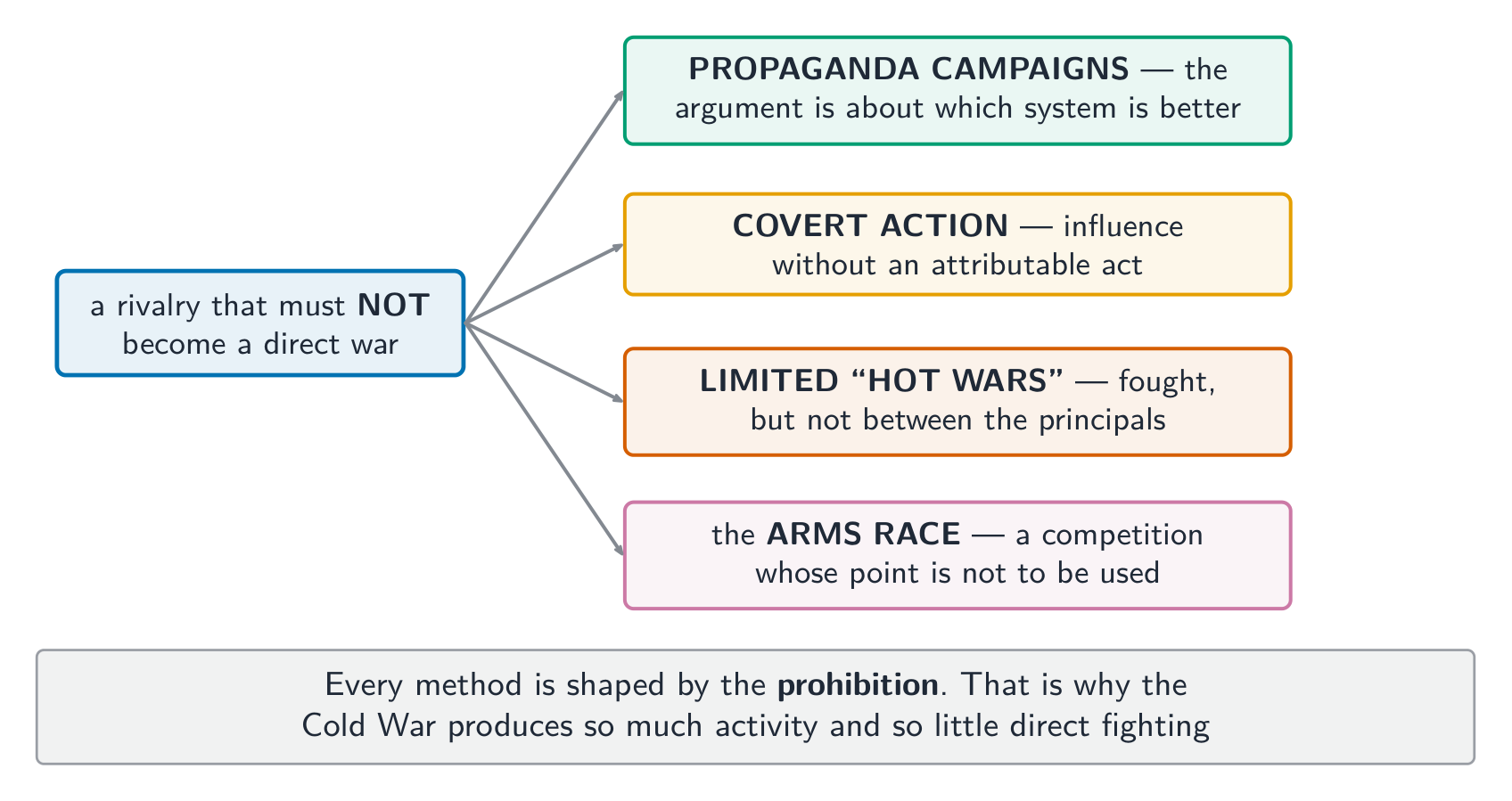
The CED lists how it was actually conducted, and the list is worth memorising because questions ask for methods:

  • propaganda campaigns 宣传战;
  • covert actions 秘密行动;
  • limited "hot wars" 有限热战 in other regions;
  • an arms race 军备竞赛.

Note what is absent: direct war between the principals. The methods list is the answer to "how could a conflict this intense produce no direct war".

עברית

למרות ניסיונות לשמור על שיתוף פעולה בינלאומי דרך ארגון האומות המאוחד החדש, מתחים עמוקים בין שני הגושים הביאו למלחמה קרה.

ה-CED מפרט כיצד המלחמה הקרה נעשת למעשה, והרשימה שווה לשינון מכיוון שהשאלות מבקשות שיטות:

  • מסעות פרופגנדה;
  • פעולות סתרתיות;
  • "מלחמות חמות" מוגבלות באזורים אחרים;
  • מרוץ חמושות.

שים לב להיעדר הדבר הבא: מלחמה ישירה בין הצדדים המרכזיים. רשימת השיטות هي התשובה לשאלה "איך could conflict this intense produce no direct war".

כל שיטה עוצבה על ידי איסור אחד: ללא מלחמה ישירה בין המדינים
9.4

Two Superpowers Emerge · ⁨שתי מעצמות עליות בולטות⁩

Syllabus · ⁨סיילבוס⁩
English

9.4 Two Super Powers Emerge

Thematic Focus (ECD): Economic and Commercial Developments — Economic development, especially the development of capitalism, played an important role in Europe’s history, often having significant social, political, and cultural effects.

Learning Objective Unit 9.D: Explain the economic and political consequences of the Cold War for Europe.

  • KC-4.1.IV.C The United States exerted a strong military, political, and economic influence in Western Europe, leading to the creation of world monetary and trade systems and geopolitical alliances, including NATO.
  • KC-4.1.IV.D Countries east of the Iron Curtain came under the military, political, and economic domination of the Soviet Union within the Council for Mutual Economic Assistance (COMECON) and the Warsaw Pact.
  • KC-4.2.V.A Central and Eastern European nations within the Soviet bloc followed an economic model based on central planning, extensive social welfare, and specialized production among bloc members. This brought with it the restriction of individual rights and freedoms, suppression of dissent, and constraint of emigration for the various populations within the Soviet bloc.
  • KC-4.2.V Eastern European nations were bound by their relationships with the Soviet Union, which oscillated between repression and limited reform, until the collapse of communist governments in Eastern Europe and the fall of the Soviet Union.
    • KC-4.2.V.B After 1956, Soviet leader Nikita Khrushchev’s de-Stalinization policies failed to meet their economic goals within the Soviet Union; combined with reactions to existing limitations on individual rights, this prompted revolts in Eastern Europe, which ended with a reimposition of Soviet rule and repressive totalitarian regimes.
  • KC-4.2.V.D.i The rise of new nationalisms in Central and Eastern Europe brought peaceful revolution in most countries but resulted in instability in some former Soviet republics.

Illustrative examples:

  • The world monetary and trade system:
    • International Monetary Fund (IMF)
    • World Bank
    • General Agreement on Tariffs and Trade (GATT)
    • World Trade Organization (WTO)
  • Revolts against Soviet control:
    • Prague Spring
    • Hungarian Revolt
עברית

9.4 שתי עוצמות על בולטות

מיקוד נושא (ECD): פיתוחים כלכליים ומסחריים — פיתוח כלכלי, במיוחד פיתוח הקפיטליזם, שיחק תפקיד חשוב בהיסטוריה של אירופה, לעיתים קרובות עם השפעות חברתיות, פוליטיות ותרבותיות משמעותיות.

מטרת לימוד יחידה 9.D: הסבר ההשלכות הכלכליות והפוליטיות של המלחמה הקרה עבור אירופה.

  • KC-4.1.IV.C ארצות הברית הפעילו השפעה צבאית, פוליטית וכלכלית חזקה באירופה המערבית, מה שהוביל ליצירת מערכות מטבע וסחר עולמיות ובריתות גיאופוליטיות, לרבות NATO.
  • KC-4.1.IV.D מדינות ממזרח למסך הברזל נכנסו לתחת הסיטוטציה הצבאית, הפוליטית והכלכלית של ברית המועצות בתוך המועצה לשיתוף פעולה כלכלי (COMECON) ובברית ורשה.
  • KC-4.2.V.A מדינות במזרח ומרכז אירופה בתוך הגוש הסובייטי נטו מודל כלכלי המבוסס על תכנון מרכזי, רמת אושר חברתי גבוהה וייצור ספציפי בין חברי הגוש. הדבר הביא להגבלת זכויות וחירויות פרטיות, לדכאת התנגדות ולעקבות הגירה של האוכלוסיות השונות בתוך הגוש הסובייטי.
  • KC-4.2.V מדינות באירופה המזרחית היו קשורות ביחסיהן עם ברית המועצות, שהתנודדו בין דיכוי לרפורמות מוגבלות, עד למפלת הממשלות הקומוניסטיות באירופה המזרחית ולנפילת ברית המועצות.
    • KC-4.2.V.B לאחר 1956, מדיניות ההסתלקות מסטלין של המנהיג הסובייטי ניקיטה חרושצ'ב לא עמדה ביעדיה הכלכליים בתוך ברית המועצות; בשילוב עם תגובות למגבלות הקיימות על זכויות פרט, הדבר גרם למרידות באירופה המזרחית, שהסתיימו בהשבת שלטון סובייטי ומשטר总itary טוטליטריים מדכאים.
  • KC-4.2.V.D.i עליית הלאומיות החדשה במזרח ומרכז אירופה הביאה למהפכה שלווה ברוב המדינות אך גרמה לחוסר יציבות בחלק מהרפובליקות הסובייטיות לשעבר.

דוגמאות מדגמיות:

  • מערכת המטבע והמסחר העולמית:
    • קרן המטבע הבינלאומית (IMF)
    • הבנק העולמי
    • הסכם הכללי לסחר במכסים (GATT)
    • ארגון הסחר העולמי (WTO)
  • מרידות נגד השלטון הסובייטי:
    • אביב פראג
    • המרד ההונגרי

Source: College Board AP Course and Exam Description · ⁨מקור: תיאור הקורס והמבחן של College Board AP⁩

English
  • The United States exerted strong military, political, and economic influence in Western Europe, leading to the creation of NATO 北约.
  • Countries east of the Iron Curtain 铁幕 came under the military, political, and economic domination of the Soviet Union.
  • Central and Eastern European nations within the Soviet bloc followed an economic model based on central planning 中央计划 and extensive social welfare provision.
  • Those nations' relationship with the Soviet Union oscillated between repression and reform - which is the CED's own phrase and a better answer than either alone.
  • The rise of new nationalisms in Central and Eastern Europe eventually brought peaceful revolution in most countries, but violent conflict in some.
עברית
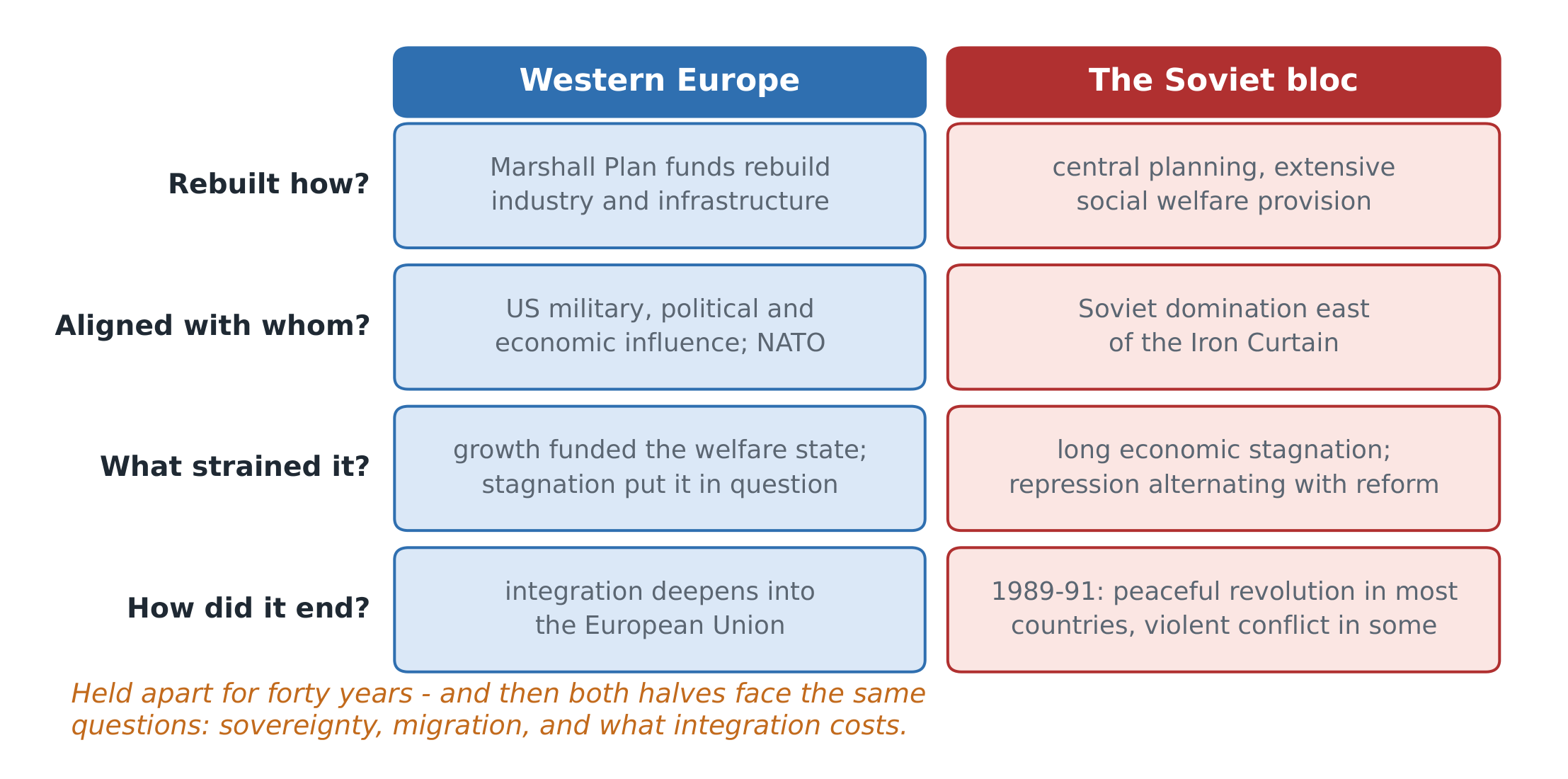
שתי אירופות בשורות זהות – ההשוואה שהיחידה נבנתה כדי לשאול
הפירוד נמשך ארבעים שנה, ולאחר מכן שני החלקים נתונות לאותן שאלות
  • ארצות הברית הפעילו השפעה צבאית, פוליטית וכלכלית חזקה באירופה המערבית, מה שהוביל ליצירת **נאט
  • מדינות במזרח המסך ברזלי נכנסו תחת השליטה הצבאית, הפוליטית והכלכלית של ברית המועצות.
  • מדינות במרכז ובמזרח אירופה בתוך המחסום הסובייטי הקימו מודל כלכלי המבוסס על תכנון מרכזי ומתן שירותי רווחה חברתית נרחבים.
  • היחסים בין מדינות אלו לבין ברית המועצות נועו בין דיכוי לרפורמה - ביטוי זה של CED הוא מדויק יותר מאשר כל אחד מהמונחים בנפרד.
  • עלייתם של לאומיות חדשה במרכז וברזע אירופה הביאה לבסוף למהפכה שלווה ברוב המדינות, אך לסכסוך אלים בחלקן.
9.5

Postwar Nationalism, Ethnic Conflict, and Atrocities · ⁨לאומיות לאחר המלחמה, סכסוך אתני ואבטלות⁩

Syllabus · ⁨סיילבוס⁩
English

9.5 Postwar Nationalism, Ethnic Conflict, and Atrocities

Thematic Focus (NEI): National and European Identity — Definitions and perceptions of regional, cultural, national, and European identity have developed and been challenged over time, with varied and often profound effects on the political, social, and cultural order in Europe.

Learning Objective Unit 9.E: Explain the causes and effects of mass atrocities in the period following World War II to the present.

  • KC-4.1.V Nationalist and separatist movements, along with ethnic conflict and ethnic cleansing, periodically disrupted the post-World War II peace.
    • KC-4.2.V.D.ii New nationalisms in central and eastern Europe resulted in war and genocide in the Balkans.

Illustrative examples:

  • Nationalist violence:
    • Ireland
    • Chechnya
  • Separatist movements:
    • Basque (ETA)
    • Flemish
  • Ethnic cleansing: §Bullet Bosnian Muslims
    • Albanian Muslims of Kosovo
עברית

9.5 לאומיות בתקופת המלחמה, סכסוכים אתניים וטבח

מיקוד נושאי (NEI): זהות לאומית ואירופאית — הגדרות וקליטות של זהות אזורית, תרבותית, לאומית ואירופאית התפתחו ונבדקו לאורך זמן, עם השפעות מגוונות ולעיתים עמוקות על הסדר הפוליטי, החברתי והתרבותי באירופה.

מטרות לימוד יחידה 9.E: הסבר על הגורמים וההשפעות של טבחים המוניים בתקופה שלאחר מלחמת העולם השנייה ועד היום.

  • KC-4.1.V תנועות לאומניות ושאיפת לפרדה, לצד סכסוכים אתניים וטיהור אתני, הפרו באופן תקופתי את השלום ששרר לאחר מלחמת העולם השנייה.
    • KC-4.2.V.D.ii לאומיות חדשה במרכז ובמזרח אירופה הביאה למלחמות ולגנוציד בבלקן.

דוגמאות מדגמיות:

  • אלימות לאומנית:
    • אירלנד
    • צ'צ'ניה
  • תנועות פרידה:
    • הבסקים (ETA)
    • הפלמיים
  • טיהור אתני: §מוסלמים בוסנים
    • מוסלמים אלבנים מקוסובו

Source: College Board AP Course and Exam Description · ⁨מקור: תיאור הקורס והמבחן של College Board AP⁩

English

Nationalist and separatist movements, along with ethnic conflict and ethnic cleansing, periodically disrupted the post-war order. The examinable point is that 1945 did not end the problem of nationalism in Europe; it suppressed it in some places and postponed it in others.

עברית

תנועות לאומניות והפרשיותיסטיות, לצד סכסוך אתני וטיהור אתני, הפרו באופן תקופתי את הסדר האחר-מלחמתי. הנקודה הנבחנת היא כי 1945 לא סיים את בעיית הלאומיות באירופה; הוא דיכא אותה במקומות מסוימים והעליה בשינה במקומות אחרים.

9.6

Contemporary Western Democracies · ⁨דמוקרטיות מערביות מודרניות⁩

Syllabus · ⁨סיילבוס⁩
English

9.6 Contemporary Western Democracies

Thematic Focus (ECD): Economic and Commercial Developments — Economic development, especially the development of capitalism, played an important role in Europe’s history, often having significant social, political, and cultural effects.

Learning Objective Unit 9.F: Explain state-based economic developments following World War II and the responses to these developments.

  • KC-4.2.IV Postwar economic growth supported an increase in welfare benefits; however, subsequent economic stagnation led to criticism and limitation of the welfare state.
    • KC-4.2.IV.B The expansion of cradle-to-grave social welfare programs in the aftermath of World War II, accompanied by high taxes, became a contentious domestic political issue as the budgets of European nations came under pressure in the late 20th century.
עברית

9.6 דמוקרטיית המערב המודרנית

מיקוד נושא (ECD): פיתוחים כלכליים ומסחריים — פיתוח כלכלי, במיוחד פיתוח הקפיטליזם, שיחק תפקיד חשוב בהיסטוריה של אירופה, לעיתים קרובות עם השפעות חברתיות, פוליטיות ותרבותיות משמעותיות.

מטרות לימוד יחידה 9.F: הסבר על התפתחויות כלכליות המדינתיות לאחר מלחמת העולם השנייה ומערכי ההתמודדות עם התפתחויות אלו.

  • KC-4.2.IV הצמיחה הכלכלית לאחר המלחמה תמכה בעליית מתנות הרווחה; עם זאת, התיישבות כלכלית שאחריה הביאה לביקורת ולהגבלת מדינת הרווחה.
    • KC-4.2.IV.B הרחבת תוכניות הרווחה החברתיות "מעריסה עד קבר" בסיומה של מלחמת העולם השנייה, בשילוב עם מיסים גבוהים, הפך לסוגיית פוליטיקה פנימית מחלוקת כשהתקציבים של מדינות אירופה נמצאו תחת לחץ בסוף המאה ה-20.

Source: College Board AP Course and Exam Description · ⁨מקור: תיאור הקורס והמבחן של College Board AP⁩

English

Postwar economic growth supported an increase in welfare benefits 福利待遇; subsequent economic stagnation 经济停滞 led to criticism and scaling back of the welfare state 福利国家.

Hold both halves. Growth funded the welfare state; the end of growth is what put it under argument - which is a causal claim, not just a sequence of events.

עברית

הצמיחה הכלכלית לאחר המלחמה תמכה בגידול בתשלומי רווחה; צמיחה כלכלית מאוחרת יותר הביאה לביקורת ולצמצום המדינת הרווחה.

החזיקו בשני החצאים. הצמיח מימן את מדינת הרווחה; סיום הצמיח הוא מה שהציב אותה במחלוקת - זהו טענה סיבתית, ולא רק רצף אירועים.

9.7

The Fall of Communism · ⁨נפילת הקומוניזם⁩

Syllabus · ⁨סיילבוס⁩
English

9.7 The Fall of Communism

Thematic Focus (SOP): States and Other Institutions of Power — European states and nations developed governmental and civil institutions from 1450 to the present to organize society and consolidate political power, with a variety of social, cultural, and economic effects.

Learning Objective Unit 9.G: Explain the causes and effects of the end of the Cold War.

  • KC-4.2.V.C Following a long period of economic stagnation, Mikhail Gorbachev’s internal reforms of perestroika and glasnost, designed to make the Soviet system more flexible, failed to stave off the collapse of the Soviet Union and the end of its hegemonic control over Eastern and Central European satellites.
  • KC-4.1.IV.E The collapse of the USSR in 1991 ended the Cold War and led to the establishment of capitalist economies throughout Eastern Europe. Germany was reunited, the Czechs and the Slovaks parted, Yugoslavia dissolved, and the European Union was enlarged through the admission of former Eastern bloc countries.

Illustrative examples:

  • Collapse of Soviet Union and satellites:
    • Fall of the Berlin Wall
    • Polish elections in 1989
עברית

9.7 נפילת הקומוניזם

מיקוד נושאי (SOP): מדינות ומוסדות כוח אחרים — מדינות ואומות אירופיות פיתחו מוסדות ממשליים ואזרחיים משנת 1450 ועד היום כדי לארגן את החברה ולחזק את הכוח הפוליטי, עם מגוון השפעות חברתיות, תרבותיות וכלכליות.

מטרות לימוד יחידה 9.G: הסבר על הגורמים וההשפעות של סיום המלחמה הקרה.

  • KC-4.2.V.C לאחר תקופה ארוכה של התיישבות כלכלית, הרפורמות הפנימיות של מיכאיל גורבצ'וב בתחומי הפרסטרויקה וגלאסנוסט, שהיו אמורות להפוך את המערכת הסובייטית לגמישה יותר, נכשלו לעצור את קריסת ברית המועצות ואת סיום שליטתו ההגמונית על האדמות הלוויין במזרח ובמרכז אירופה.
  • KC-4.1.IV.E קריסת ברית המועצות בשנת 1991 סימלה את סיום המלחמה הקרה והובילה לקום משקי כלכלה קפיטליסטית בכל רחבי מזרח אירופה. גרמניה אוחדה, הצ'כים והסלובקים התפצלו, יוגוסלביה התפרקה, האיחוד האירופי הורחב באמצעות קבלת מדינות מהבלוק המזרחי לשורותיו.

דוגמאות מדגמיות:

  • קריסת ברית המועצות והמדינות הלוויין שלה:
    • נפילת חומת ברלין
    • הבחירות בפולין ב-1989

Source: College Board AP Course and Exam Description · ⁨מקור: תיאור הקורס והמבחן של College Board AP⁩

English

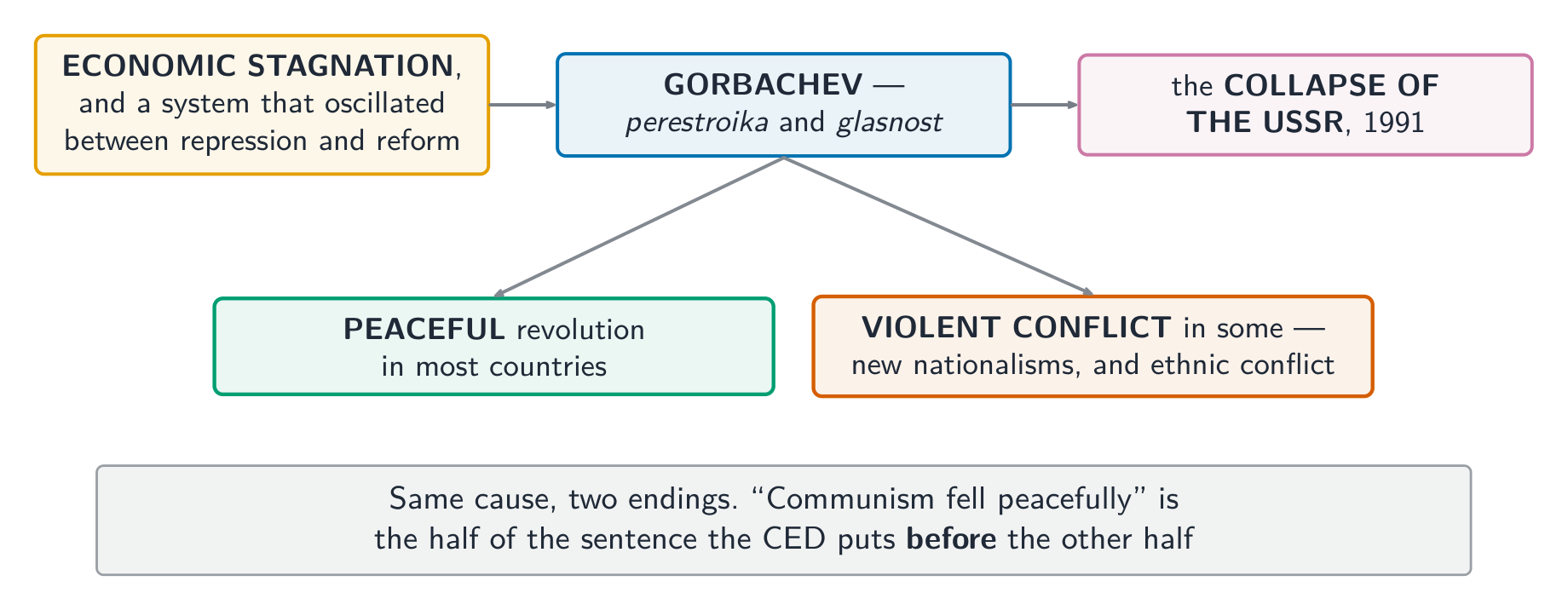
Following a long period of economic stagnation, Mikhail Gorbachev's 戈尔巴乔夫 internal reforms of perestroika 改革 and glasnost 开放 - despite being intended to strengthen the system - contributed to its collapse.

The collapse of the USSR in 1991 ended the Cold War and led to the establishment of capitalist economies throughout Eastern Europe.

The shape of the argument matters: reform intended to save a system helped end it. That is the kind of claim an evaluation question rewards.

עברית

לאחר תקופה ארוכה של התנגדות כלכלית, הרפורמות הפנימיות של מיחאל גורבצ'וב בפרוסטרקה ובגלאסנוסט - למרות שנועדו לחזק את המערכת - תרמו לקריסתה.

קריסת ברית המועצות ב-1991 סיימה את המלחמה הקרה והובילה להקמת כלכלות קפיטליסטיות בכל רחבי מזרח אירופה.

צורת הטענה חשובה: רפורמה שנועדה להציל מערכת עזרה לסיומה שלה. זו סוג הטענה ששאלת הערכה פרסמת.

אותו גורם, שני סיומות - CED מניסה 'שלום ברוב' לפני 'התעללות במעט'
Explore · ⁨חקור⁩

Trace the collapse, then split its ending · ⁨עקבו אחרי קריסת ההסכם, ולאחר מכן פיצלו את סיומו⁩

The CED pairs 'peaceful revolution in most countries' with 'violent conflict in some'. Students drop the second half. · ⁨ה-CED מציגה זוג: "מהפכה שלווה ברוב המדינות" לצד "סכסוך אלים בחלק מהמדינות". התלמידים מסירים את החלק השני.⁩

9.8

20th-Century Feminism · ⁨פמיניזם במאה ה-20⁩

Syllabus · ⁨סיילבוס⁩
English

9.8 20th-Century Feminism

Thematic Focus (SCD): Social Organization and Development — Economic, political, and cultural factors have influenced the form and status of family, class, and social groups in European history, which has, in turn, affected both the individual and society.

Learning Objective Unit 9.H: Explain how women’s roles and status developed and changed throughout the 20th and 21st centuries.

  • KC-4.4.II The lives of women were defined by family and work responsibilities, economic changes, and feminism.
    • KC-4.4.II.B In Western Europe through the efforts of feminists, and in Eastern Europe and the Soviet Union through government policy, women finally gained the vote, greater educational opportunities, and access to professional careers, even while continuing to face social inequalities.
    • KC-4.4.II.D New modes of marriage, partnership, motherhood, divorce, and reproduction gave women more options in their personal lives.
    • KC-4.4.II.E Women attained high political office and increased their representation in legislative bodies in many nations.

Illustrative examples:

  • Feminists and feminism: §Bullet Simone de Beauvoir
    • Second-wave feminism
  • New modes of managing reproduction:
    • Birth control pill
    • Scientific means of fertilization
  • Women who attained high political office:
    • Margaret Thatcher of Great Britain
    • Mary Robinson of Ireland
    • Édith Cresson of France
עברית

9.8 פמיניזם במאה ה-20

מיקוד נושאי (SCD): ארגון חברתי ופיתוח — גורמים כלכליים, פוליטיים ותרבותיים השפיעו על צורתו ומעמדה של המשפחה, הקבוצה החברתית והמעמדות בהיסטוריה האירופית, מה ששימש בתורו כגורם השפעה גם על הפרט וגם על החברה.

מטרות לימודיות ליחידה 9.H: הסבר כיצד תפקידיהן ומעמדן של נשים התפתחו ושנו לאורך המאה ה-20 וה-21.

  • KC-4.4.II חייהן של נשים נקבעו על ידי אחריות למשפחה ולעבודה, שינויים כלכליים ופמיניזם.
    • KC-4.4.II.B במערב אירופה בזכות מאמציהן של פמיניסטיות, ובמזרח אירופה ובברית המועצות בזכות מדיניות ממשלתית, נשים זכו לבסוף לזכות הבחירה, להזדמנויות חינוכיות רבות יותר ולאפשרות להיכנס לקריירות מקצועיות, גם אם הן המשיכו להתמודד עם אי-שוויון חברתי.
    • KC-4.4.II.D דגמים חדשים של נישואים, שיתופי חיים, אמונה, גירושין ורבייה נתנו לנשים אפשרויות נוספות בחייהן האישיים.
    • KC-4.4.II.E נשים הגיעו לתפקידים פוליטיים בכירים והגדילו את ייצוגן בגופי מחוקקים במדינות רבות.

דוגמאות מדגמיות:

  • פמיניסטיות ופמיניזם: §סימן סימון דה בואבואאר
    • פמיניזם בשלב השני
  • דגלים חדשים לניהול רבייה:
    • תרופת מניעת הריון
    • אמצעי מדעיים להפרה
  • נשים שהגיעו לתפקידים פוליטיים בכירים:
    • מרגרט תאצ'ר מבריטניה
    • מרי רובינסון מאירלנד
    • אדיט קרסון מצרפת

Source: College Board AP Course and Exam Description · ⁨מקור: תיאור הקורס והמבחן של College Board AP⁩

English

The lives of women were defined by family and work responsibilities, economic changes, and feminism. Across the century: expanding participation in paid work, especially during both wars; the extension of political rights; and organised movements that changed law and expectation in the postwar decades.

עברית

חיי הנשים היו מוגדרים על ידי אחריות משפחתיות ותעסוקתיות, שינויים כלכליים ופמיניזם. לאורך המאה: השתתפות מתרחבת בעבודה משוכתבת, במיוחד במהלך שתי המלחמות; הרחבת זכויות פוליטיות; ותנועות מאורגנות ששינו חוק וציפיות בעשורים שלאחר המלחמה.

9.9

Decolonization · ⁨התפשטות המושבות⁩

Syllabus · ⁨סיילבוס⁩
English

9.9 Decolonization

Thematic Focus (INT): Interaction of Europe and the World — Motivated by a variety of factors, Europe’s interaction with the world led to political, economic, social, and cultural exchanges that influenced both European and non-European societies.

Learning Objective Unit 9.I: Explain the various ways in which colonial groups around the world sought independence from colonizers in the 20th and 21st centuries.

  • KC-4.1.VI The process of decolonization occurred over the course of the century with varying degrees of cooperation, interference, or resistance from European imperialist states.
    • KC-4.1.VI.A At the end of World War I, U.S. President Woodrow Wilson’s principle of national self-determination raised expectations in the non-European world for new policies and freedoms.
    • KC-4.1.VI.C Despite indigenous nationalist movements, independence for many African and Asian territories was delayed until the mid- and even late 20th century by the imperial powers’ reluctance to relinquish control, threats of interference from other nations, unstable economic and political systems, and Cold War strategic alignments.

Illustrative examples:

  • Indigenous nationalist movements:
    • Indian National Congress
    • Algeria’s National Liberation Front (FLN)
    • Ho Chi Minh’s Viet Minh
    • Sukarno and Indonesian nationalism
עברית

9.9 עיקור

התמקדות נושאית (INT): אינטראקציה של אירופה עם העולם — בתמנוע מגורמים שונים, האינטראקציה של אירופה עם העולם הביאה להחלפות פוליטיים, כלכליים, חברתיים ותרבותיים שהשפיעו גם על החברות האירופאיות וגם על אלו שאינן אירופאיות.

מטרות לימודיות ליחידה 9.I: הסבר על הדרכים השונות שבהן קבוצות מושבתיות בכל העולם שאפו לעצמאות ממשתליטה במהלך המאה ה-20 וה-21.

  • KC-4.1.VI תהליך הפיצול התרחש לאורך המאה ברמות שונות של שיתוף פעולה, התערבות או התנגדות מצד מדינות אימפריאליות אירופאיות.
    • KC-4.1.VI.A בסיום מלחמת העולם הראשונה, עקרון ההגנה על האuto-determination הלאומי של נשיא ארצות הברית וודרו וילסון הרם ציפיות בעולם הלא-אירופאי למדיניות חדשה ולחירויות.
    • KC-4.1.VI.C למרות תנועות לאומניות מקומיות, עצמאותם של אזורים רבים באפריקה ובאסיה נדחתה עד אמצע ואף סוף המאה ה-20 בשל חוסר רצון של כוחות האימפריה לוותר על השליטה, איומי התערבות ממדינות אחרות, מערכות כלכליות ופוליטיות בלתי יציבות והתארגנויות אסטרטגיות במלח קרה.

דוגמאות מדגמיות:

  • תנועות לאומניות מקומיות:
    • הקונגרס הלאומי ההודי
    • חזית השחרור הלאומית של אלג'יריה (FLN)
    • וייט מינח של הו צ'י מין
    • סוקארנו והלאומיות האינדונזית

Source: College Board AP Course and Exam Description · ⁨מקור: תיאור הקורס והמבחן של College Board AP⁩

English

The process of decolonisation 去殖民化 occurred over the course of the century with varying degrees of cooperation, interference, or resistance from the European imperial powers.

The consequence for Europe itself is the part students omit: losing empire changed what a European state was, and it produced the migration examined two topics below.

עברית

תהליך התפשטות המושבות התרחש לאורך המאה עם דרגות משתנות של שיתוף פעולה, התערבות או התנגדות מצד כוחות האימפריאליים האירופיים.

התוצאה עבור אירופה עצמה היא החלק שסטודנטים נוטים לדלג: איבוד האימפריה שינה מהייתה מדינה אירופאית, ויצרה את ההגירה שנבחנת בשני הנושאים הבאים.

9.10

The European Union · ⁨האיחוד האירופי⁩

Syllabus · ⁨סיילבוס⁩

9.10 The European Union

Thematic FocusLearning ObjectiveHistorical Developments

NEI
National and European Identity — Definitions and perceptions of regional, cultural, national, and European identity have developed and been challenged over time, with varied and often profound effects on the political, social, and cultural order in Europe.

Unit 9.J
Explain how the formation and existence of the European Union influenced economic developments throughout the period following World War II to the present.

  • KC-4.4.IV European states began to set aside nationalist rivalries in favor of economic and political integration, forming a series of transnational unions that grew in size and scope over the second half of the 20th century.
    • KC-4.4.IV.A As the economic alliance known as the European Coal and Steel Community, envisioned as a means to spur postwar economic recovery, developed into the European Economic Community (EEC or Common Market) and the European Union (EU), Europe experienced increasing economic and political integration and efforts to establish a shared European identity.

Unit 9.K
Explain how the European Union affected national and European identity throughout the period following World War II to the present.

  • KC-4.4.IV.B EU member nations continue to balance questions of national sovereignty with the responsibilities of membership in an economic and political union.

Illustrative examples:

  • Challenges to national sovereignty within the EU:
    • The euro
    • European Parliament
    • Issue of remaining in the EU (e.g., Britain’s “Brexit”)
    • Free movement across borders

Source: College Board AP Course and Exam Description · ⁨מקור: תיאור הקורס והמבחן של College Board AP⁩

English

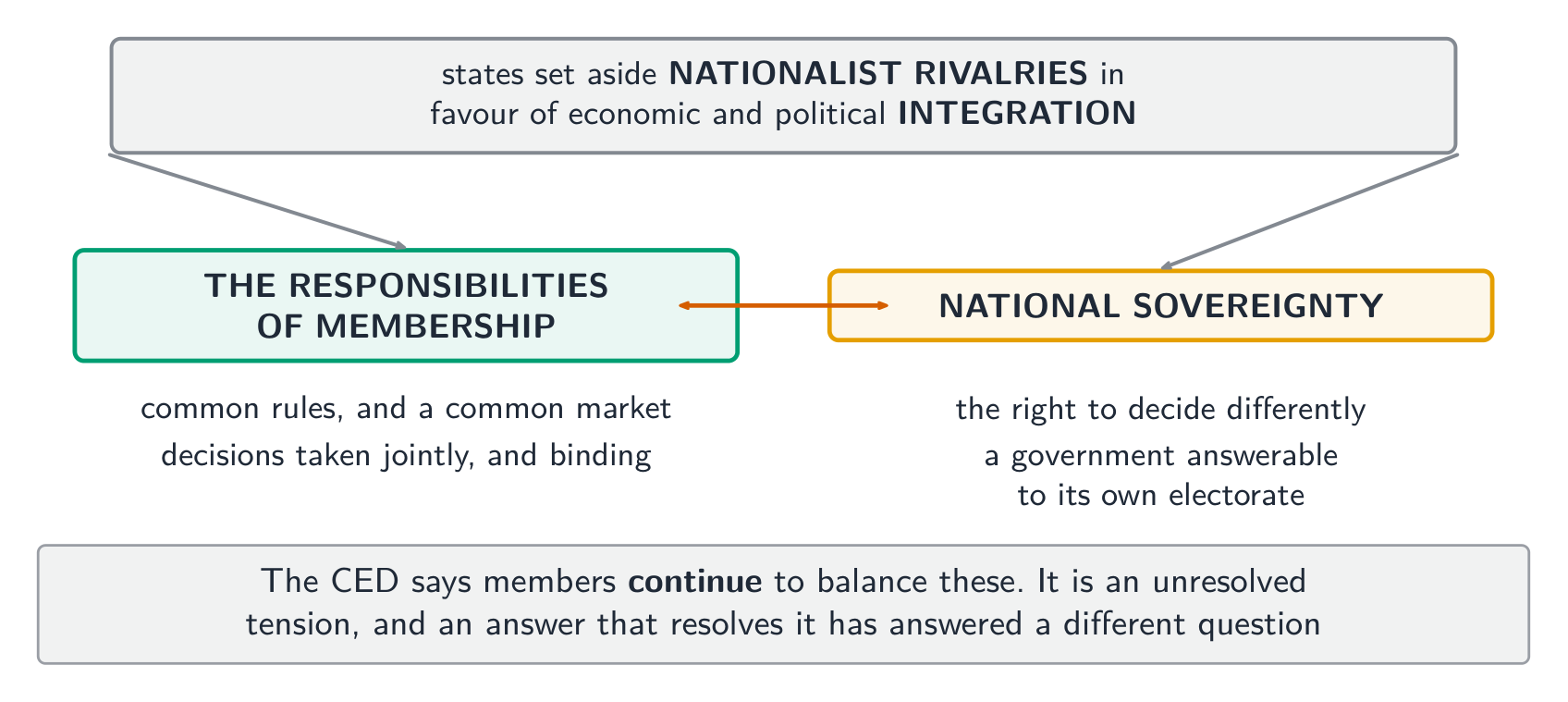
European states began to set aside nationalist rivalries in favour of economic and political integration, forming a series of institutions that became the European Union 欧盟.

And the tension the CED names explicitly: EU member nations continue to balance questions of national sovereignty against the responsibilities of membership in an international body. That balance is the examinable issue, not the institutional history.

עברית

מדינות אירופאיות התחילו לוותר על יריבות לאומניות לטובת אינטגרציה כלכלית ופוליטית, ומייסדות סדרה של מוסדות שהפכו לאיחוד האירופי.

ואת המתח ש-CED מציין במפורש: מדינות חברות באיחוד האירופי ממשיכות לשקול בין שאלות ריבונות לאומית לבין אחריות החברות בגוף בינלאומי. איזון זה הוא הנושא הנבחן, ולא ההיסטוריה המוסדית.

איזון פתוח - תשובה שמסיימת אותו היא למעשה עונה על שאלה אחרת
Explore · ⁨חקור⁩

Weigh membership against sovereignty · ⁨לשקול את החברות מול הריבונות⁩

The CED says members 'continue to balance' these — it is an unresolved tension, and an answer that resolves it has answered a different question. · ⁨ה-CED טוען שהחברים "ממשיכים לאזן" בין אלו — זוהי מתח שאינו פתור, ותשובה הפותרת אותו עונה על שאלה אחרת.⁩

9.11

Migration and Immigration · ⁨הגירה והגירה⁩

Syllabus · ⁨סיילבוס⁩
English

9.11 Migration and Immigration

Thematic Focus (SCD): Social Organization and Development — Economic, political, and cultural factors have influenced the form and status of family, class, and social groups in European history, which has, in turn, affected both the individual and society.

Learning Objective Unit 9.L: Explain the causes and effects of changes to migration within and immigration to Europe throughout the period following World War II to the present.

  • KC-4.3.III.C Increased immigration into Europe altered Europe’s religious makeup, causing debate and conflict over the role of religion in social and political life.
  • KC-4.4.III.D Because of the economic growth of the 1950s and 1960s, migrant workers from southern Europe, Asia, and Africa immigrated to western and central Europe; however, after the economic downturn of the 1970s, these workers and their families often became targets of anti-immigrant agitation and extreme nationalist political parties.

Illustrative examples:

  • Anti-immigration, conservative parties:
    • French National Front
    • Austrian Freedom Party
עברית

9.11 הגירה והגירה לתוך אירופה

מיקוד נושאי (SCD): ארגון חברתי ופיתוח — גורמים כלכליים, פוליטיים ותרבותיים השפיעו על צורתו ומעמדה של המשפחה, הקבוצה החברתית והמעמדות בהיסטוריה האירופית, מה ששימש בתורו כגורם השפעה גם על הפרט וגם על החברה.

מטרות למידה ליחידה 9.L: הסבר את הסיבות והתוצאות של שינויים בהגירה בתוך אירופה ובגירה לתוכה לאורך התקופה מאז מלחמת העולם השנייה ועד ימינו.

  • KC-4.3.III.C הגירה מוגברת לתוך אירופה שינתה את המבנה הדתי שלה, וגרמה לסכסוך ולוויכוחים בנוגע לתפקיד הדת בחיים החברתיים והפוליטיים.
  • KC-4.4.III.D בשל הצמיחה הכלכלית בשנות ה1950 ובשנות ה1960, עובדי הגירה מאירופה הדרומית, אסיה ואפריקה היגרו לאירופה המערבית ומרכזית; עם זאת, לאחר המרדף הכלכלי בשנות ה1970, עובדים אלו ומשפחותיהם הפכו לעיתים קרובות למטרות להסתת אנטי-מהגרים ולמפלגות פוליטיות לאומניות קיצוניות.

דוגמאות מדגמיות:

  • מפלגות שמאל-ימין אנטי-הגירה:
    • חזית לאומית צרפתית
    • המפלגה האוסטרית לחירות

Source: College Board AP Course and Exam Description · ⁨מקור: תיאור הקורס והמבחן של College Board AP⁩

English
  • Because of the economic growth of the 1950s and 1960s, migrant workers 外来劳工 from southern Europe, Asia, and Africa immigrated to northern and western Europe.
  • Increased immigration altered Europe's religious makeup 宗教构成, causing debate and conflict over the role of religion in public life.

Note the CED's own causal order: economic growth created labour demand, and migration followed it. The debates came afterwards.

עברית
  • בשל הצמיחה הכלכלית של העשורים 1950 ו1960, עובדי הגירה מדרום אירופה, אסיה ואפריקה עלו להתיישב בצפון ובמערב אירופה.
  • ההגירה המוגברת שינתה את הרכב הדתי של אירופה, וגרמה למחלוקות ומתחים בנוגע לתפקיד הדת בחיים הציבוריים.

שימו לב לסדר הסיבתי של CED עצמו: הצמיחה הכלכלית יצרה ביקוש לעבודה, וההגירה באה בעקבותיו. המחלוקות התרחשו לאחר מכן.

9.12 9.13

Technology and Globalization · ⁨טכנולוגיה וגלובליזציה⁩

Syllabus · ⁨סיילבוס⁩
English

9.12 Technology

Thematic Focus (TSI): Technological and Scientific Innovation — Scientific and technological innovations have increased efficiency, improved daily life, and shaped human development and interactions, having both intended and unintended consequences.

Learning Objective Unit 9.M: Explain how innovation and advances in technology influenced cultural and intellectual developments in the period 1914 to the present.

  • KC-4.3.II.B Medical theories and technologies extended life but posed social and moral questions that eluded consensus and crossed religious, political, and philosophical perspectives.

Illustrative examples:

  • Medical theories and technologies:
    • Birth control
    • Abortion
    • Fertility treatments
    • Genetic engineering
עברית

9.12 טכנולוגיה

מיקוד נושאי (TSI): חדשנות טכנולוגית ומדעית — חדשונות מדעיים וטכנולוגיים הגדילו את היעילות, שיפרו את החיים היומיומיים ועיצבו את הפיתוח והאינטראקציה האנושיים, עם תוצאות מתוכננות ולא מתוכננות.

מטרות למידה ליחידה 9.M: הסבר כיצד חדשנות והתקדמות בטכנולוגיה השפיעו על פיתוחים תרבותיים ואינטלקטואליים בתקופה שבין 1914 ועד ימינו.

  • KC-4.3.II.B תיאוריות וטכנולוגיות רפואיות האריכו חיים אך העלו שאלות חברתיות ומוסריות שלא הגיעו להסכמה וחתכו דרך זוויות ראייה דתיות, פוליטיות ופילוסופיות.

דוגמאות מדגמיות:

  • תיאוריות וטכנולוגיות רפואיות:
    • מניעת הריון
    • הפסקת הריון
    • טיפולי פריון
    • הנדסה גנטית
English

9.13 Globalization

Thematic Focus (TSI): Technological and Scientific Innovation — Scientific and technological innovations have increased efficiency, improved daily life, and shaped human development and interactions, having both intended and unintended consequences.

Learning Objective Unit 9.N: Explain the technological and cultural causes and consequences of increasing European globalization in the period from 1914 to the present.

  • KC-4.3.IV.C Increased imports of U.S. technology and popular culture after World War II generated both enthusiasm and criticism.
  • KC-4.4.I.D New communication and transportation technologies multiplied the connections across space and time, transforming daily life and contributing to the proliferation of ideas and to globalization.
  • KC-4.4.III.A Green parties in Western and Central Europe challenged consumerism, urged sustainable development, and, by the late 20th century, cautioned against globalization.

Illustrative examples:

  • New communication technologies:
    • Telephone
    • Radio
    • Television
    • Computer
    • Cell phone
    • Internet
עברית

9.13 גלובליזציה

מיקוד נושאי (TSI): חדשנות טכנולוגית ומדעית — חדשונות מדעיים וטכנולוגיים הגדילו את היעילות, שיפרו את החיים היומיומיים ועיצבו את הפיתוח והאינטראקציה האנושיים, עם תוצאות מתוכננות ולא מתוכננות.

מטרות למידה ליחידה 9.N: הסבר את הסיבות והתוצאות הטכנולוגיות והתרבותיות של הגלובליזציה האירופאית ההולכת וגוברת בתקופה שבין 1914 ועד ימינו.

  • KC-4.3.IV.C יבוא מוגבר של טכנולוגיה ותרבות פופולרית אמריקאית לאחר מלחמת העולם השנייה יצר גם חמדה וגם ביקורת.
  • KC-4.4.I.D טכנולוגיות תקשורת והובלה חדשות הכפילו את הקישורים בין מקומות וזמנים, שינו את החיים היומיומיים ותרומו לפריחת רעיונות ולגלובליזציה.
  • KC-4.4.III.A המפלגות הירוקות במערב ובמרכז אירופה התנגדו לצרכנות, דרשו פיתוח בר קיימה, ובסוף המאה ה-20, אזהרו מפני גלובליזציה.

דוגמאות מדגמיות:

  • טכנולוגיות תקשורת חדשות:
    • טלפון
    • רדיו
    • טלוויזיה
    • מחשב
    • טלפון נייד
    • אינטרנט

Source: College Board AP Course and Exam Description · ⁨מקור: תיאור הקורס והמבחן של College Board AP⁩

English
  • Medical theories and technologies extended life but posed social and moral questions that eluded consensus 未能形成共识.
  • Increased imports of US technology and popular culture after the war generated both enthusiasm and criticism 既受欢迎也遭批评.
  • New communication and transportation technologies multiplied connections across space and time, transforming daily life.
  • Green parties 绿党 in Western and Central Europe challenged consumerism and urged sustainable development 可持续发展.
עברית
  • תיאוריות וטכנולוגיות רפואיות האריכו חיים, אך העלו שאלות חברתיות ומוסריות שההימנעו מפסק דין מכונן.
  • ייבוא מוגבר של טכנולוגיה ותרבות פופולרית אמריקאית לאחר המלחמה יצר גם עניין וגם ביקורת.
  • טכנולוגיות תקשורת והובלה חדשות הכפילו את הקשרים במרחב ובזמן, ושנו את החיים היומיומיים.
  • המפלגות הירוקות במערב ובמרכז אירופה עמדו נגד צריכה יתר וקראו לפיתוח בר קיימה.
9.14

Culture, Arts, and Demographic Trends · ⁨תרבות, אמנות ומגמות דמוגרפיות⁩

Syllabus · ⁨סיילבוס⁩

9.14 20th- and 21st-Century Culture, Arts, and Demographic Trends

Thematic FocusLearning ObjectiveHistorical Developments

CID
Cultural and Intellectual Developments — The creation and transmission of knowledge, including the relationship between traditional sources of authority and the development of differing world views, had significant political, intellectual, economic, cultural, and social effects on European and world societies.

Unit 9.O
Explain how and why European culture changed from the period following World War II to the present.

  • KC-4.3.I.B The effects of world war and economic depression undermined this confidence in science and human reason, giving impetus to existentialism and producing postmodernism in the post-1945 period.
  • KC-4.3.III Organized religion continued to play a role in European social and cultural life despite the challenges of military and ideological conflict, modern secularism, and rapid social changes.
    • KC-4.3.III.A The challenges of totalitarianism and communism in central and eastern Europe brought mixed responses from the Christian churches.
    • KC-4.3.III.B Reform in the Catholic Church found expression in the Second Vatican Council, which redefined the church’s doctrine and practices and started to redefine its relations with other religious communities.
  • KC-4.3.IV During the 20th century, the arts were defined by experimentation, self-expression, subjectivity, and the increasing influence of the United States in both elite and popular culture.
    • KC-4.3.IV.A New movements in the visual arts, architecture, and music radically shifted existing aesthetic standards, explored subconscious and subjective states, and satirized Western society and its values.
    • KC-4.3.IV.B Throughout the century, a number of writers challenged traditional literary conventions, questioned Western values, and addressed controversial social and political issues.
  • KC-4.4.I.C Mass production, new food technologies, and industrial efficiency increased disposable income and created a consumer culture in which greater domestic comforts such as electricity, indoor plumbing, plastics, and synthetic fibers became available.
  • KC-4.4.II.C With economic recovery after World War II, the birth rate increased dramatically (the baby boom), often promoted by government policies.
  • KC-4.4.III.B Various movements, including women’s movements, political and social movements, gay and lesbian movements, and others, worked for expanded civil rights, in some cases obtaining the goals they sought, and in others facing strong opposition.
  • KC-4.4.III.C Intellectuals and youth reacted against perceived bourgeois materialism and decadence, most significantly with the revolts of 1968.

Illustrative examples:

  • Christian responses to totalitarianism:
    • Dietrich Bonhoeffer
    • Martin Niemöller
    • Pope John Paul II
    • Solidarity
  • New movements in the visual arts:
    • Cubism
    • Futurism
    • Dadaism
    • Surrealism
    • Abstract Expressionism
    • Pop Art
  • New architectural movements:
    • Bauhaus
    • Modernism
    • Postmodernism
  • New movements in music:
    • Igor Stravinsky
    • Arnold Schoenberg
    • Richard Strauss
  • Writers:
    • Franz Kafka
    • James Joyce
    • Erich Maria Remarque
    • Virginia Woolf
    • Jean-Paul Sartre
  • Government policies promoting population growth: §Bullet Neonatalism
    • Childcare facilities

Source: College Board AP Course and Exam Description · ⁨מקור: תיאור הקורס והמבחן של College Board AP⁩

English
  • The effects of world war and economic depression undermined confidence in science and human reason, giving impetus to new intellectual currents.
  • Organised religion continued to play a role in European social and cultural life despite these challenges - a continuity worth stating, because answers tend to assume simple secularisation.
  • The arts were defined by experimentation, self-expression, subjectivity, and increasing global influence.
  • Mass production, new food technologies, and industrial efficiency increased disposable income and created a consumer culture 消费文化.
  • With postwar recovery the birth rate rose dramatically - the baby boom 婴儿潮 - often promoted by government policy.
  • Various movements - women's movements, political and social movements, gay and lesbian movements - pressed for rights and recognition.
  • Intellectuals and youth reacted against perceived bourgeois materialism, most significantly in the movements of the later 1960s.
עברית
  • השפעות המלחמה העולמית והמשבר הכלכלי החלישו את האמון במדע ובשכל האנושי, ונתנו דחיפה לזרמים אינטלקטואליים חדשים.
  • דת מאורגנת המשיכה לשחק תפקיד בחיים החברתיים והתרבותיים האירופיים למרות אתגרים אלו - רציפות שיש להדגיש, שכן תשובות נוטות להניח סכולריזציה פשוטה.
  • האמנות הוגדרה על ידי ניסויים, ביטוי עצמי, סובייקטיביות והשפעה גלובלית הולכת וגוברת.
  • ייצור המוני, טכנולוגיות מזון חדשות ויעילות תעשייתית הרימו את ההכנסה הפנויה ויצרו תרבות צריכה.
  • עם ההתאוששות לאחר המלחמה, קצב הלידה עלה דרמטית - התפרצת התיקוקים - שרובתה לעיתים על ידי מדיניות ממשלתית.
  • תנועות שונות - **תנועת הנשים, תנועות פוליטיות וחברתיות, תנועות להט
  • אינטלקטואלים ונוער התנגדו לחומרניות הבורגזית הנראית, במיוחד בתנועות של העשורים המאוחרים 1960.
9.15

Continuity and Change in the 20th and 21st Centuries · ⁨רציפות ושינויים במאה ה-20 והמאה ה-21⁩

Syllabus · ⁨סיילבוס⁩
English

9.15 Continuity and Change in the 20th and 21st Centuries

Learning Objective Unit 9.P: Explain how the challenges of the 20th century influenced what it means to be European.

  • KC-4.1 Total war and political instability in the first half of the 20th century gave way to a polarized state order during the Cold War and eventually to efforts at transnational union.
    • KC-4.1.IV As World War II ended, a Cold War between the liberal democratic West and the communist East began, lasting nearly half a century.
    • KC-4.1.V Nationalist and separatist movements, along with ethnic conflict and ethnic cleansing, periodically disrupted the post-World War II peace.
  • KC-4.2 The stresses of economic collapse and total war engendered internal conflicts within European states and created conflicting conceptions of the relationship between the individual and the state, as demonstrated in the ideological battle between and among democracy, communism, and fascism.
  • KC-4.3 During the 20th century, diverse intellectual and cultural movements questioned the existence of objective knowledge, the ability of reason to arrive at truth, and the role of religion in determining moral standards.
    • KC-4.3.I.ii The experience of war intensified a sense of anxiety that permeated many facets of thought and culture, giving way by the century’s end to a plurality of intellectual frameworks.
  • KC-4.4 Demographic changes, economic growth, total war, disruptions of traditional social patterns, and competing definitions of freedom and justice altered the experiences of everyday life.
    • KC-4.4.III New voices gained prominence in political, intellectual, and social discourse.
עברית

9.15 רציפות ומעבר במאה ה-20 והמאה ה-21

מטרות למידה ליחידה 9.P: הסבירו כיצד אתגרי המאה ה-20 השפיעו על משמעות השייכות לאירופה.

  • KC-4.1 המלחמה הכוללת והאי-יציבות הפוליטית בחצי הראשון של המאה ה-20 החליפו סדר מדיני מקוטב בזמן המלחמה הקרה ולבסוף מאמצים לאיחוד חוצה-גבולות.
    • KC-4.1.IV כשהסתיימה מלחמת העולם השנייה, החלה מלחמת קר בין המערב הדמוקרטי-ליברלי לבין המזרח הקומוניסטי, שהייתה נמשכת כמעט חצי מאה.
    • KC-4.1.V תנועות לאומניות ופרוצדוריות, לצד עימותים etnics וטיהור אתני, הפרו באופן תקופתי את השלום לאחר מלחמת העולם השנייה.
  • KC-4.2 הלחצים שנובעים מכשל כלכלי ומלחמה כוללה יצרו סכסוכים פנימיים בתוך מדינות אירופאיות ויצרו תפיסות מתנגדות לגבי היחס בין הפרט למדינה, כפי שהוכח בשדה הקרב האידיאולוגי בין הדמוקרטיה, הקומוניזם והפשיזם.
  • KC-4.3 במהלך המאה ה-20, תנועות אינטלקטואליות ותרבותיות מגוונות ערערו על קיום ידע אובייקטיבי, יכולתו של הרצון להגיע לאמת, ועל התפקיד של הדת בקביעת סטנדרטים מוראליים.
    • KC-4.3.I.ii החוויה של המלחמה חיזקה תחושת חרדה שחלה בתוך היבועים הרבים של המחשבה והתרבות, שהפכה בסוף המאה לפלורליזם של מסגרות אינטלקטואליות.
  • KC-4.4 שינויים דמוגרפיים, צמיחה כלכלית, מלחמה כוללת, הפרעות בדפוסי חברה מסורתיים, והגדרות מתחרות לחופשה ולצדק שינו את חוויות היומיום.
    • KC-4.4.III קולות חדשים זכו לפרסום בדיסקורס הפוליטי, האינטלקטואלי והחברתי.
Source: College Board AP Course and Exam Description · ⁨מקור: תיאור הקורס והמבחן של College Board AP⁩

English

The unit's reasoning skill is continuity and change.

Worked example (a real AP exam question). AP European History short-answer questions here ask, for example, to "Explain one way in which European integration after 1945 represented a change from earlier European international relations." A full-mark answer states the change against what it replaced: "Before 1945 European states pursued national interest through competing alliances and, repeatedly, war. After 1945 states began to set aside those rivalries in favour of shared institutions, accepting binding common rules on trade and law - so a dispute between members became a matter for negotiation within an institution rather than a matter for the balance of power." Notice that a change claim needs the prior state of affairs to be named.

עברית

מיומנות הניתוח של היחידה היא רציפות ושינוי.

דוגמה מעודפת (שאלה אמיתית בבחינת AP). שאלות תשובה קצרה בהיסטוריה אירופאית של AP שואלות, לדוגמה, "הסבירו דרך אחת שבה האינטגרציה האירופאית לאחר 1945 ייצגה שינוי ביחסים הבינלאומיים האירופאים הקודמים." תשובה מלאה מציגה את השינוי כנגד מה שהיא החליפה: "לפני 1945, מדינות אירופאיות רדפו אחר האינטרס הלאומי באמצעות בריתות מתחרות, ובפעמים חוזרות, מלחמות. לאחר 1945, מדינות החלו לוותר על היריבויות הללו לטובת מוסדות משותפים, וקיבלו כללים מחיי משותפים בתחום המסחר והמשפט - כך שוויכוח בין חברים הפך לנושא למשא ומתן בתוך מוסד ולא נושא לאיזון כוחות." שימו לב שטענת שינוי דורשת מצב קיים קודם להיות מוגדר.

9.15

Exam tips · ⁨טיפים לבחינות⁩

English
  • The unit has two simultaneous stories - division until 1991 and integration throughout. Weak answers tell only one.
  • Memorise the Cold War's methods: propaganda, covert action, limited hot wars, arms race. The absence of direct war is the point.
  • "Oscillated between repression and reform" is the CED's phrase for the Soviet bloc. It beats either half alone.
  • Gorbachev's reforms were intended to strengthen the system. That irony is what an evaluation question is looking for.
  • The welfare state grew on growth and was questioned when growth stopped. State the causal link.
  • Migration followed labour demand created by the postwar boom. Get the causal order right before discussing the debates.
עברית
  • היחידה כוללת שתי סיפורים במקביל - חלוקה עד 1991 ואינטגרציה לאורך כל התקופה. תשובות חלשות מספרות רק故事 אחת.
  • לזכור את השיטות של המלחמה הקרה: פרופגנדה, פעולות סתרי, מלחמות חמות מוגבלות, תחרות נשק. העדר מלחמה ישירה הוא הנקודה המרכזית.
  • הביטוי "התנודד בין דיכוי ורפורמה" הוא ביטויו של CED עבור מחנה ברית המועצות. גישה זו עדיפה על כל אחד מהחצאים בנפרד.
  • הרפורמות של גורבצ'וב היו מיועדות לחזק את המערכת. הבריון הזה הוא בדיוק מה ששאלת הערכה מחפש.
  • מדינת הרווחה צמחה בשלב הצמיחה והופיעה כשאלה כאשר הצמיחה עצרה. ציין את הקשר הסיבתי.
  • ההגירה נבעה מביקשת העבודה שנוצרה כתוצאה מפריחת התקופה לאחר המלחמה. קבע את הסדר הסיבתי הנכון לפני שדנים במחלוקות.

Interactive lessons on this topic · ⁨שיעורים אינטראקטיביים בנושא זה⁩

Work through it step by step, with instant-check exercises. · ⁨לעבור על הדברים צעד אחר צעד, עם תרגילים לבדיקה מיידית.⁩

Past Papers · ⁨מבחני עבר⁩

More topics in AP European History · ⁨היסטוריה אירופאית - AP⁩ · ⁨נושאים נוספים בAP European History · ⁨היסטוריה אירופאית - AP⁩⁩

Log in or create account · ⁨היכנס או צור חשבון⁩

IGCSE, A-Level & AP