English
Enduring Understanding (RHS-1): Individuals write within a particular situation and make strategic writing choices based on that situation.
Learning Objective 1.A: Reading – Identify and describe components of the rhetorical situation: the exigence, audience, writer, purpose, context, and message.
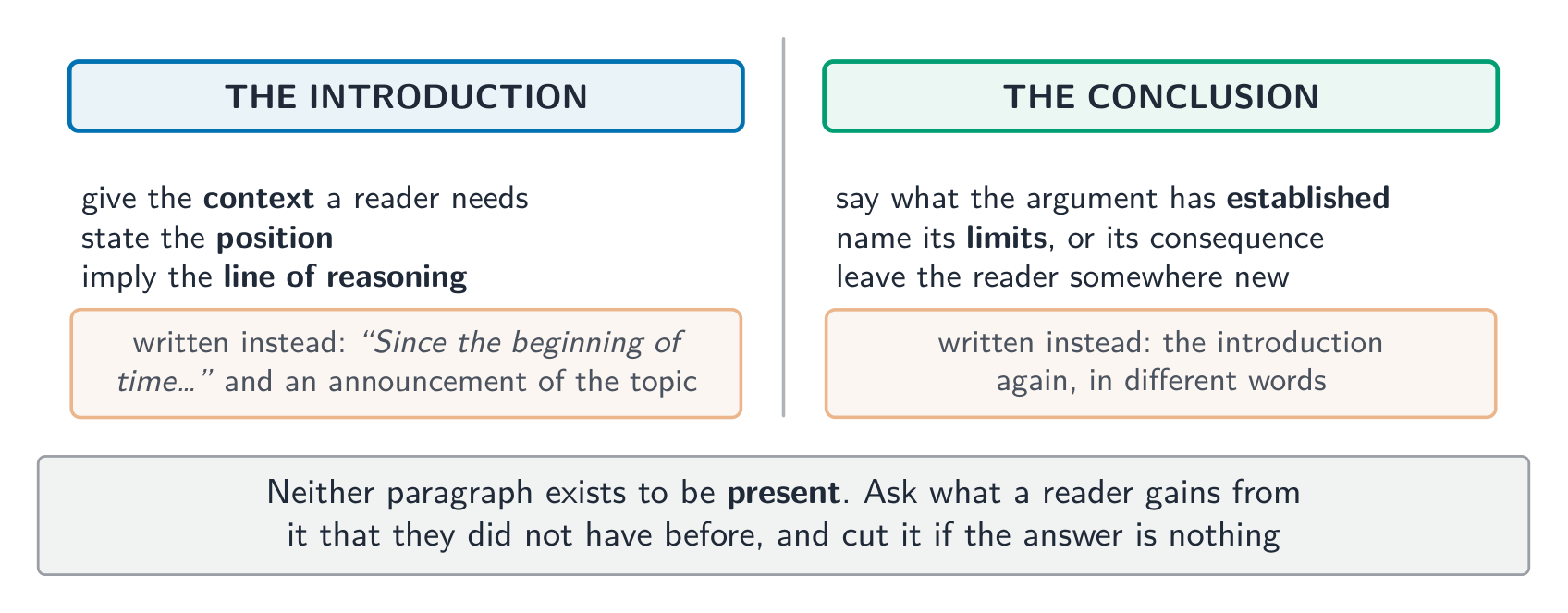
- RHS-1.I The introduction of an argument introduces the subject and/ or writer of the argument to the audience. An introduction may present the argument’s thesis. An introduction may orient, engage, and/or focus the audience by presenting quotations, intriguing statements, anecdotes, questions, statistics, data, contextualized information, or a scenario.
- RHS-1.J The conclusion of an argument brings the argument to a unified end. A conclusion may present the argument’s thesis. It may engage and/or focus the audience by explaining the significance of the argument within a broader context, making connections, calling the audience to act, suggesting a change in behavior or attitude, proposing a solution, leaving the audience with a compelling image, explaining implications, summarizing the argument, or connecting to the introduction.
עברית
הבנה מתמשכת (RHS-1): אנשים כותבים בתוך מצב רטורי ספציפי ועושים בחירות כתיבה אסטרטגיות על בסיס המצב הזה.
מטרות למידה 1.A: קריאה – זיהוי ותיאור רכיבי המצב הרטורי: הדרישה, הקהל, הכותב, המטרה, ההקשר וההודעה.
- RHS-1.I ההקדמה לארגומנט מציגה את נושא הארגומנט ו/או את הסופר שלו לקהל. הקדמה עשויה להציג את התזה של הארגומנט. הקדמה עשויה להנחות, להעניין ול/או להתמקד בקהל על ידי הצגת ציטטים, הצהרות מעניינות, אנוקדוטות, שאלות, סטטיסטיקות, נתונים, מידע ממוקם בהקשר, או תרחיש.
- RHS-1.J הסיום של ארגומנט מביא את הארגומנט לסוף מאוחד. סיום עשוי להציג את התזה של הארגומנט. הוא עשוי להעניין ול/או להתמקד בקהל על ידי הסבר החשיבות של הארגומנט בתוך הקשר רחב יותר, יצירת קשרים, קריאה לקהל לפעולה, הצעה לשינוי בהתנהגות או בגישה, הצעת פתרון, השארת הדמיון עם תמונה מרגשת, הסבר השלכות, סיכום הארגומנט, או חיבור להקדמה.