Skip to content · ⁨דלג לתוכן⁩
Subjects · ⁨נושאים⁩

AP English Language and Composition · ⁨שפה ואנגלית כתיבה יצירתית - AP⁩

Tips · ⁨טיפים⁩

AP English Language and Composition הוא קורס ברהטוריקה: כיצד סופרים משתמשים בשפה כדי לפעול על הקורא. התוכן הנדרש הוא סט של מיומנויות, הממוקמות תחת ארבעה רעיונות גדולים – המצב הרהטורי, טענות והוכחות, היגיון וארגון, וסגנון.

כל מיומנות מגיעה בחצי קריאה וחצי כתיבה. אתם לומדים להסביר כיצד סופר אחר בנה טענה, ואז לבנות טענה משלכם באמצעות אותה תנועה. שני החלקים מלמדים יחד במתכוונות.

המצב הרהטורי הוא הבסיס. חירום, קהל, סופר, מטרה, הקשר וההודעה מסבירים *למה* הטקסט עושה את הבחירות שהוא עושה – ו"הסופר משתמש בכלי זה" לא מייצר נקודות עד שתגידו מה הוא עושה עבור קהל זה.

הטקסטים הם ברובם פרוזה לא-פיקטיבית – מאמרים, נאומים, מכתבים, עיתונות. מכיוון שהמורים בוחרים את הטקסטים והנושאים שלהם, היחידות מוגדרות על ידי המיומנויות שהן פותחות ולא על ידי ספרים קבועים.

ההערות למטה עוקבות אחרי框架 של College Board יחידה אחר יחידה, עם כל מיומנות והידע החיוני מאחוריה.

  • 1

    Claims, Evidence, and the Rhetorical Situation · ⁨טענות, עדויות והמצב הרטורי⁩

    Watch lesson · ⁨צפה בשיעור⁩
    1.1

    The Rhetorical Situation · ⁨המצב הרטורי⁩

    Syllabus · ⁨סיילבוס⁩
    English

    Enduring Understanding (RHS-1): Individuals write within a particular situation and make strategic writing choices based on that situation.

    Learning Objective 1.A: Reading – Identify and describe components of the rhetorical situation: the exigence, audience, writer, purpose, context, and message.

    • RHS-1.A The rhetorical situation of a text collectively refers to the exigence, purpose, audience, writer, context, and message.
    • RHS-1.B The exigence is the part of a rhetorical situation that inspires, stimulates, provokes, or prompts writers to create a text.
    • RHS-1.C The purpose of a text is what the writer hopes to accomplish with it. Writers may have more than one purpose in a text.
    • RHS-1.D An audience of a text has shared as well as individual beliefs, values, needs, and backgrounds.
    • RHS-1.E Writers create texts within a particular context that includes the time, place, and occasion.
    עברית

    הבנה מתמשכת (RHS-1): אנשים כותבים בתוך מצב רטורי ספציפי ועושים בחירות כתיבה אסטרטגיות על בסיס המצב הזה.

    מטרות למידה 1.A: קריאה – זיהוי ותיאור רכיבי המצב הרטורי: הדרישה, הקהל, הכותב, המטרה, ההקשר וההודעה.

    • RHS-1.A המצב הרטורי של טקסט מתייחס באופן קולקטיבי לדרישה, למטרה, לקהל, לכותב, להקשר ולהודעה.
    • RHS-1.B הדרישה היא החלק במצב הרטורי שמעורר, מגרה, מעורר או מדריך כותבים ליצירת טקסט.
    • RHS-1.C המטרה של טקסט היא מה שהכותב מקווה להשיג באמצעותו. כותבים עשויים לשאוף למטרות רבות יותר בטקסט אחד.
    • RHS-1.D לקהל הטקסט ישנם אמונות, ערכים, צרכים ורקעים משותפים וגם אישיים.
    • RHS-1.E כותבים יוצרים טקסטים בתוך הקשר ספציפי הכולל זמן, מקום ואירוע.
    Source: College Board AP Course and Exam Description · ⁨מקור: תיאור הקורס והמבחן של College Board AP⁩

    English

    AP English Language is not a literature course. It is a course in how texts do work on readers, and Unit 1 installs the two ideas everything else is built on: the rhetorical situation and the claim-plus-evidence paragraph.

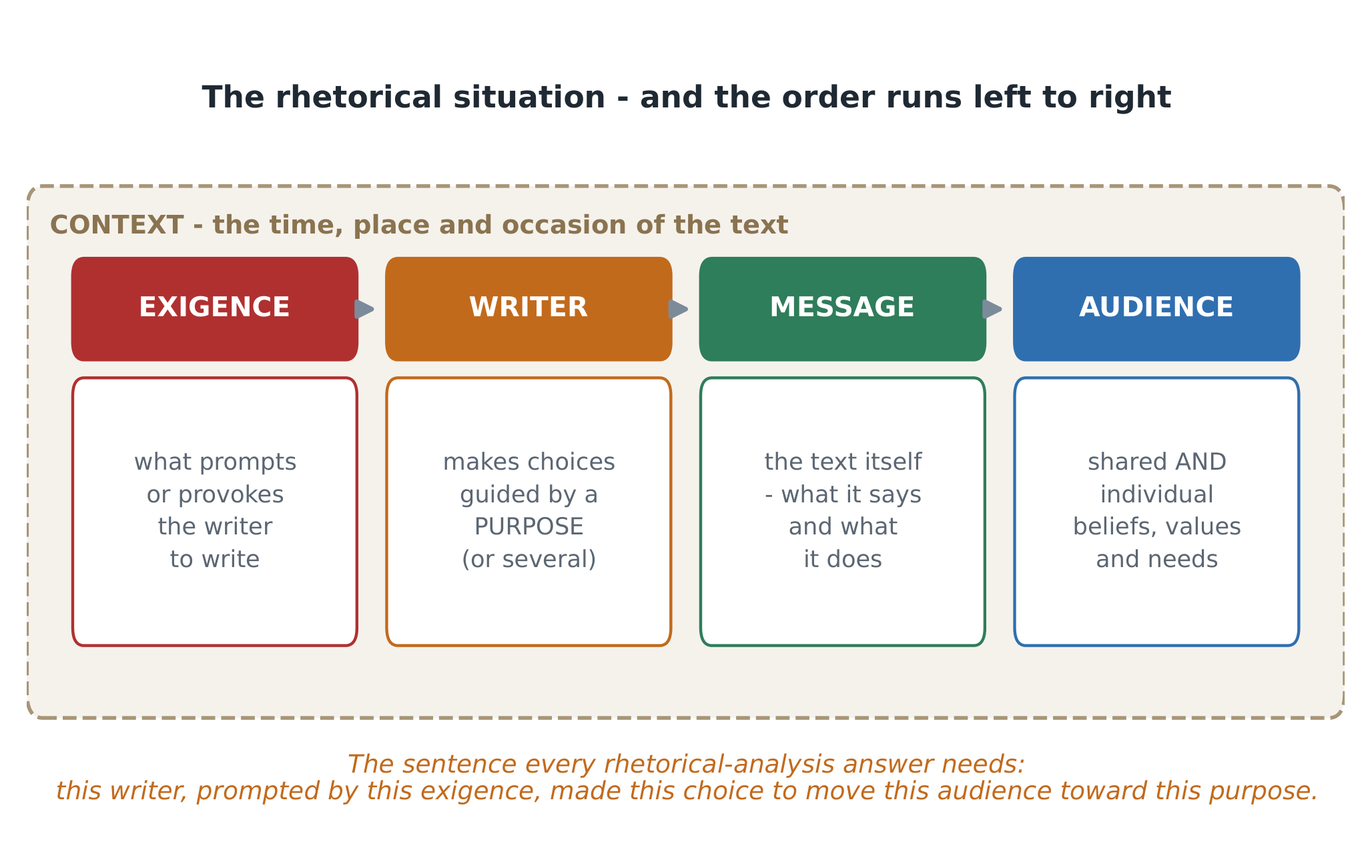
    The CED defines the rhetorical situation 修辞情境 as the exigence, purpose, audience, writer, context, and message taken together. Each has a precise meaning, and using them precisely is what separates a strong answer from a vague one:

    • The exigence 促因 is the part of the situation that inspires, stimulates, provokes, or prompts a writer to create a text. It is the reason this text exists now.
    • The purpose 目的 is what the writer hopes to accomplish. A text may have more than one purpose.
    • The audience 受众 has shared as well as individual beliefs, values, needs, and backgrounds - so "the audience" is never a single uniform thing.
    • The context 语境 includes the time, place, and occasion in which the text was created.
    • The message is what the text actually says and does.

    The most common weak answer in this course names a device and stops. The rhetorical situation is what turns a device into an argument: this writer, prompted by this exigence, made this choice to move this audience toward this purpose.

    עברית

    AP English Language אינו קורס ספרות. זהו קורס באיך טקסטים פועלים על קוראים, ויחידה 1 מציבה את שני הרעיונות שעליהם כל המבנה הבא בנוי: המצב הרטורי ופרק טענה ו加证据 (טענה-עדות).

    השישה רכיבים, מסודרים כך שהסדר הסיבתי גלוי
    הצורך המיידי מעורר את הכותב; ההקשר מקיף הכל - וכל שאלה על "בחירות" עונה מכאן

    ה-CED מגדיר את המצב הרטורי (修辞情境) כהצורך המיידי, המטרה, הקהל, הכותב, ההקשר וההודעה בשילוב יחד. לכל אחד מהם משמעות מדויקת, ושימוש בהם בצורה מדויקת הוא מה שמבדיל תשובה חזקה מתשובה מטושטשת:

    • הצורך המיידי (促因) הוא החלק במצב שמעורר, מעודד, מעורר או גורם לכותב ליצור טקסט. זהו הסיבה שקיים טקסט זה כעת.
    • המטרה (目的) היא מה שהכותב מקווה להשיג. לטקסט עשויה להיות יותר ממטרה אחת.
    • הקהל (受众) בעל אמונות, ערכים, צרכים ורקעים גם משותפים וגם אישיים - ולכן "הקהל" לעולם לא דבר אחיד ומאוחד.
    • ההקשר (语境) כולל את הזמן, המקום והאירוע שבהם נוצר הטקסט.
    • ה-הודעה היא מה שהטקסט באמת אומר ועושה.

    התשובה החלשה הנפוצה ביותר בקורס הזה מזהה מכשיר רטורי ועוצרת שם. המצב הרטורי הוא מה שממיר מכשיר לטיעון: הכותב הזה, שהופעל על ידי הצורך המיידי הזה, ביצע בחירה זו כדי להניע את הקהל הזה לכיוון המטרה הזאת.

    Vocabulary · ⁨מילון מונחים⁩ Train · ⁨אימון⁩
    English עברית
    rhetorical situation/reˈtɒrɪkl ˌsɪtʃuːˈeɪʃn/ מצב רטורי
    1.2

    Identifying Claims and Evidence · ⁨זיהוי טענות ועדויות⁩

    Syllabus · ⁨סיילבוס⁩
    English

    Enduring Understanding (CLE-1): Writers make claims about subjects, rely on evidence that supports the reasoning that justifies the claim, and often acknowledge or respond to other, possibly opposing, arguments.

    Learning Objective 3.A: Reading – Identify and explain claims and evidence within an argument.

    • CLE-1.A Writers convey their positions through one or more claims that require a defense.
    • CLE-1.B Writers defend their claims with evidence and/or reasoning.
    • CLE-1.C Types of evidence may include facts, anecdotes, analogies, statistics, examples, details, illustrations, expert opinions, personal observations, personal experiences, testimonies, or experiments.
    • CLE-1.D Effective claims provoke interest and require a defense, rather than simply stating an obvious, known fact that requires no defense or justification.
    • CLE-1.E Writers relate source material to their own argument by syntactically embedding particular quoted, paraphrased, or summarized information from one or more sources into their own ideas.
    עברית

    הבנה מתמשכת (CLE-1): כותבים מטילים טענות בנושאים, נסמכים על עדויות התומכות בלוגיקה המצדיקה את הטענה, ולעיתים קרובות מכירים או מגיבים לטענות אחרות, אולי מתנגדות.

    מטרות למידה 3.A: קריאה – זיהוי והסבר טענות ועדויות בתוך ארגומנט.

    • CLE-1.A כותבים מעבירים את עמדותיהם באמצעות טענה אחת או יותר הדורשות הגנה.
    • CLE-1.B כותבים מגנים על טענותיהם בעזרת עדויות ו/או לוגיקה.
    • CLE-1.C סוגי העדויות עשויים לכלול עובדות, אנקדוטות, אנלוגיות, סטטיסטיקות, דוגמאות, פרטים, איורים, דעות מומחים, תצפיות אישיות, ניסיון אישי, עדויות או ניסויים.
    • CLE-1.D טענות יעילות מעוררות עניין ודורשות הגנה, ולא פשוט מציגות עובדה ברורה ומכונה שאינה דורשת הגנה או הצדקה.
    • CLE-1.E כותבים מקשרים חומר ממקורות לטיעון שלהם על ידי השתלבות סינטקטית של מידע מצוטט, מופרפרז או מסוכך מהמקור (או המקורות) בתוך רעיונותיהם.

    Source: College Board AP Course and Exam Description · ⁨מקור: תיאור הקורס והמבחן של College Board AP⁩

    English
    • Writers convey their positions through one or more claims 主张 that require a defence.
    • Writers defend their claims with evidence and/or reasoning 证据与推理.
    • Types of evidence include facts, anecdotes, analogies, statistics, examples, details, illustrations, expert opinions, and personal experience - a deliberately wide list, because recognising an anecdote or an analogy as evidence is itself a skill.
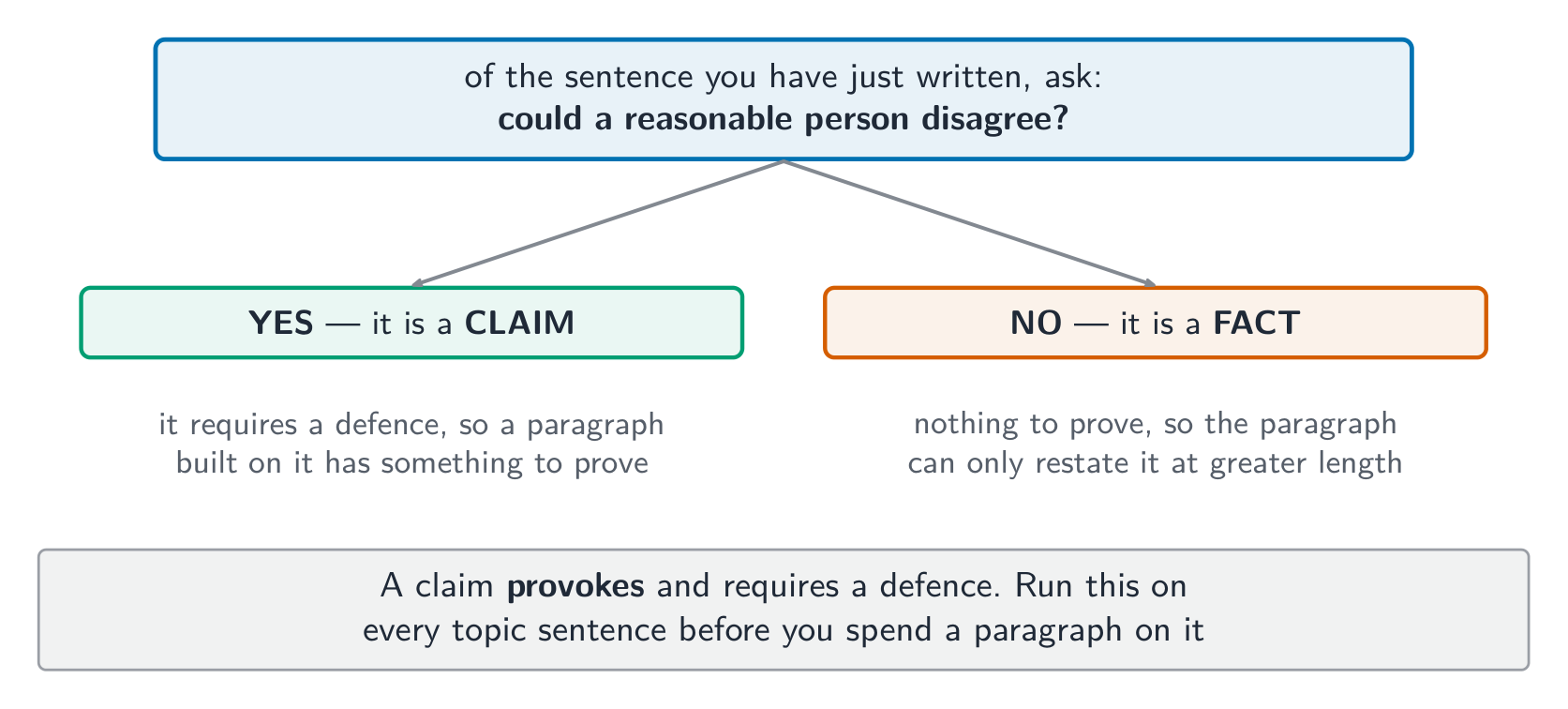
    • Effective claims provoke interest and require a defence, rather than stating an obvious, known fact that requires no proof.

    That fourth point is the most useful test you have. Ask of any sentence: could a reasonable person disagree? If not, it is not a claim - it is a fact, and building a paragraph on it produces writing with nothing to prove.

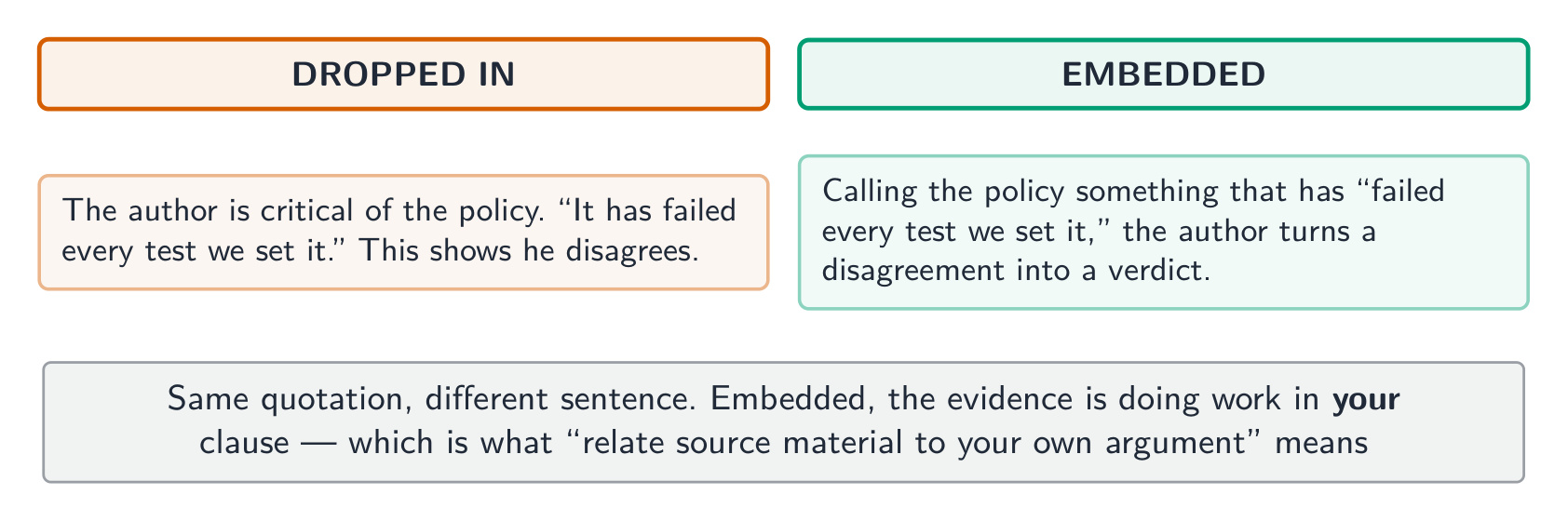
    Finally, writers relate source material to their own argument by syntactically embedding quoted, paraphrased, or summarised material into their own sentences. The evidence is not dropped in beside your sentence; it is built into it.

    עברית
    • כותבים מעבירים את עמדתם דרך טענה אחת או יותר הדורשות הגנה (主张).
    • כותבים מגנים על טענותיהם באמצעות עדויות ו/או הסברה (证据与推理).
    • סוגי העדויות כוללים עובדות, אנוקדוטות, אנלוגיות, סטטיסטיקות, דוגמאות, פרטים, הדמיות, דברי מומחים וחוויה אישית - רשימה רחבה במכוונות, כי זיהוי של אנוקדוטה או אנלוגיה כ עדות היא בעצמה מיומנות.
    • טענות יעילות מעוררות עניין ודורשות הגנה, במקום לנסח עובדה ברורה ומפורסמת שאינה דורשת הוכחה.

    הנקודה הרביעית הזו היא המבחן המועיל ביותר שלך. שאל כל משפט: האם אדם סביר יכול להתנגד? אם לא, זוהי לא טענה - זוהי עובדה, ובניית פרק עליה מייצרת כתיבה שאין בה דבר להוכיח.

    לבסוף, כותבים מקשרים חומר ממקורות לעמדתם עצמם על ידי השתלבות סינטקטית: הם משלבים חומר מצוטט, מופרפרז או מסוכך לתוך המשפטים שלהם. העדות אינה מוזרקת לצד המשפט שלך; היא בנויה בתוכו.

    המבחן היחיד שמבדיל בין טענה לעובדה: האם אדם סביר יכול להתנגד?
    אותה ציטוט שהוזרק לתוך המשפט, והוא שנשתלב - רק אחד מהם עובד במשפט שלך
    Explore · ⁨חקור⁩

    Claim or fact? Run the test on each sentence · ⁨טענה או עובדה? הרץ את המבחן על כל משפט⁩

    The test is one question: could a reasonable person disagree? If not, it is not a claim and a paragraph on it has nothing to prove. · ⁨המבחן הוא שאלה אחת: האם אדם סביר יכול להתפרש אחרת? אם לא, זוהי לא טענה והפרק עליה אינו צריך להוכיח דבר.⁩

    1.3

    Developing a Paragraph with Claim and Evidence · ⁨פיתוח פרק עם טענה ועדות⁩

    Syllabus · ⁨סיילבוס⁩
    English

    Enduring Understanding (CLE-1): Writers make claims about subjects, rely on evidence that supports the reasoning that justifies the claim, and often acknowledge or respond to other, possibly opposing, arguments.

    Learning Objective 4.A: Writing – Develop a paragraph that includes a claim and evidence supporting the claim.

    • CLE-1.A Writers convey their positions through one or more claims that require a defense.
    • CLE-1.B Writers defend their claims with evidence and/or reasoning.
    • CLE-1.C Types of evidence may include facts, anecdotes, analogies, statistics, examples, details, illustrations, expert opinions, personal observations, personal experiences, testimonies, or experiments.
    • CLE-1.D Effective claims provoke interest and require a defense, rather than simply stating an obvious, known fact that requires no defense or justification.
    • CLE-1.E Writers relate source material to their own argument by syntactically embedding particular quoted, paraphrased, or summarized information from one or more sources into their own ideas.
    עברית

    הבנה מתמשכת (CLE-1): כותבים מטילים טענות בנושאים, נסמכים על עדויות התומכות בלוגיקה המצדיקה את הטענה, ולעיתים קרובות מכירים או מגיבים לטענות אחרות, אולי מתנגדות.

    מטרות למידה 4.A: כתיבה – פתח פרק הכולל טענה ועדויות התומכות בטענה.

    • CLE-1.A כותבים מעבירים את עמדותיהם באמצעות טענה אחת או יותר הדורשות הגנה.
    • CLE-1.B כותבים מגנים על טענותיהם בעזרת עדויות ו/או לוגיקה.
    • CLE-1.C סוגי העדויות עשויים לכלול עובדות, אנקדוטות, אנלוגיות, סטטיסטיקות, דוגמאות, פרטים, איורים, דעות מומחים, תצפיות אישיות, ניסיון אישי, עדויות או ניסויים.
    • CLE-1.D טענות יעילות מעוררות עניין ודורשות הגנה, ולא פשוט מציגות עובדה ברורה ומכונה שאינה דורשת הגנה או הצדקה.
    • CLE-1.E כותבים מקשרים חומר ממקורות לטיעון שלהם על ידי השתלבות סינטקטית של מידע מצוטט, מופרפרז או מסוכך מהמקור (או המקורות) בתוך רעיונותיהם.

    Source: College Board AP Course and Exam Description · ⁨מקור: תיאור הקורס והמבחן של College Board AP⁩

    English

    Unit 1's writing objective is deliberately small: write one paragraph containing a claim and evidence that supports it. Everything later in the course is an elaboration of this.

    A working shape:

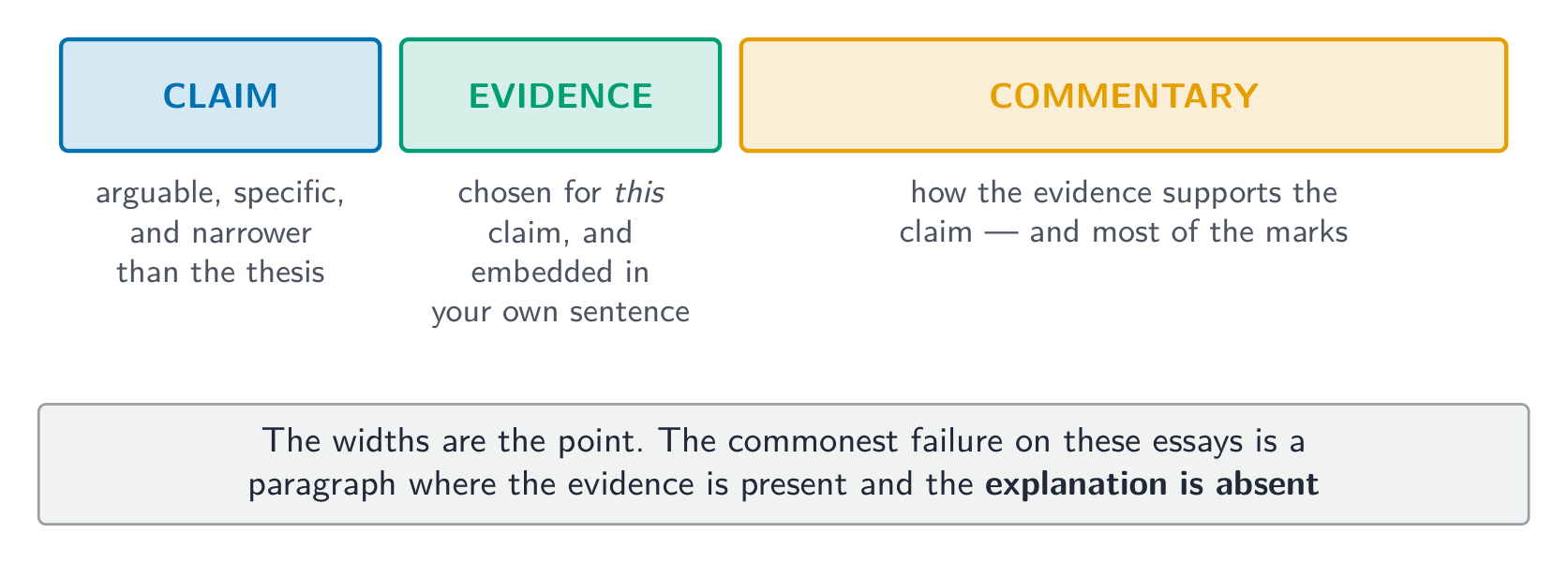
    1. A claim that requires defence - arguable, specific, and narrower than the whole thesis.
    2. Evidence chosen because it supports this claim, embedded syntactically rather than dropped in.
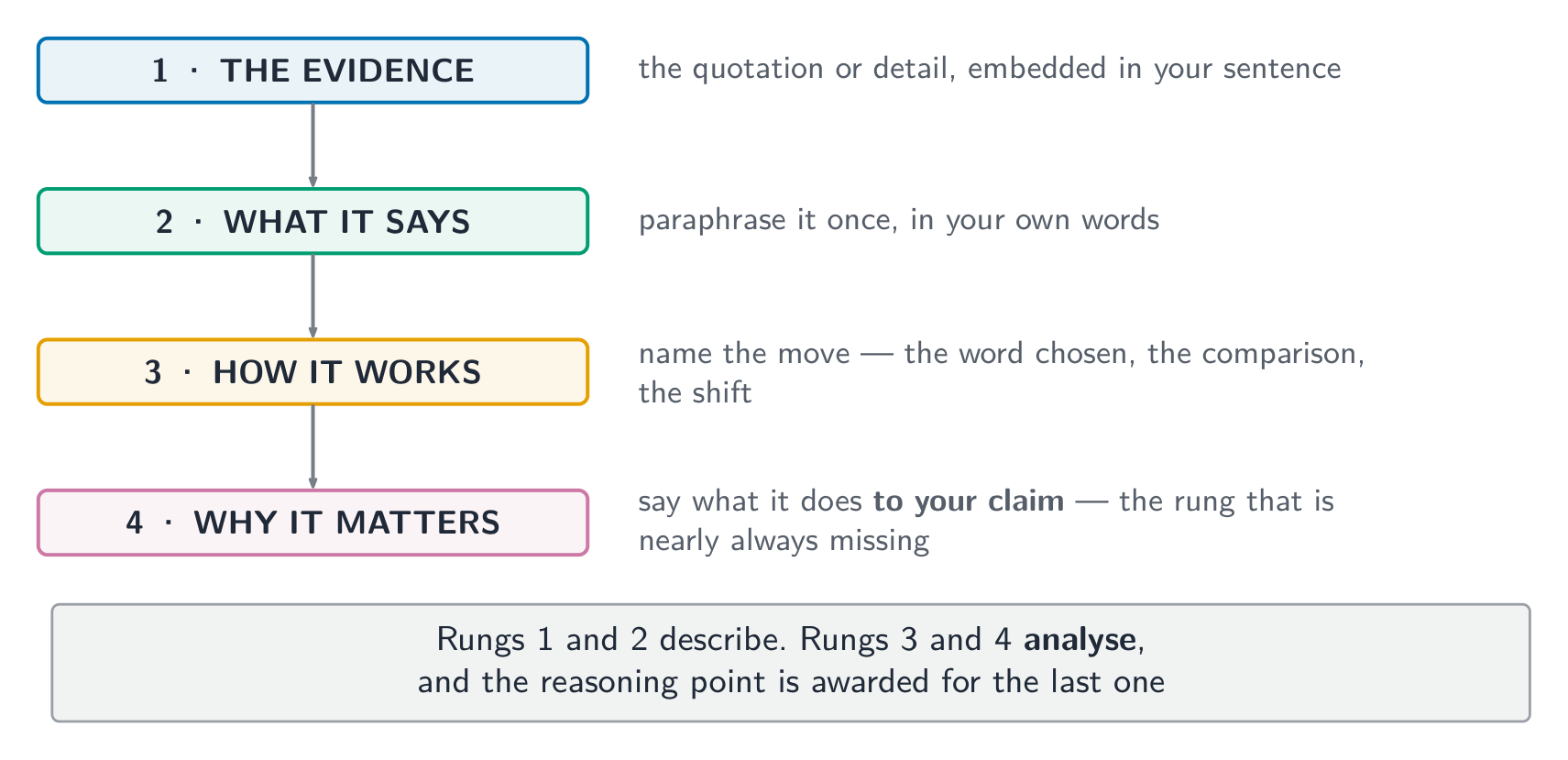
    3. Commentary explaining how the evidence supports the claim - the step students skip, and the one that carries most of the marks on the exam.

    The single most common failure on the AP Language essays is a paragraph in which the evidence is present and the explanation is absent. The reader can see the quotation; what they cannot see is why you think it proves your point.

    עברית

    המטר הכתובת של יחידה 1 היא מכוונת ומינימלית: כתוב פרק אחד המכיל טענה ועדות התומכות בה. כל ש其余 בחלק זה של הקורס הוא הרחבה של הדבר הזה.

    צורה עובדתית:

    1. טענה הדורשת הגנה - ניתנת לדיון, ספציפית וצרה יותר מהתזה כולה.
    2. הוכחה שנבחרה משום שהיא תומכת בטענה זו, ומשובצת בתוך המשפט ולא פשוט מוזרקת לתוך הטקסט.
    3. הערות המסבירות כיצד ההוכחה תומכת בטענה - השלב ש学生 (students) דוחים, והשלב שמכיל את רוב הנקודות במבחן.

    כשל אחד נפוץ ביותר במאמרים של מבחן AP Language הוא פרבגראף שבו ההוכחה קיימת אך ההסבר חסר. הקורא יכול לראות את הציטוט; מה שהוא לא יכול לראות הוא מדוע אתה חושב שהוא מוכיח את נקודתך.

    הפרבגראף המוצג ביחסים שצריך שיהיו לו - הרוחבים הם העיקר
    Explore · ⁨חקור⁩

    Build a paragraph in proportion · ⁨בניית פרקל יחסית מידות⁩

    The commonest failure on these essays is a paragraph where the evidence is present and the explanation is absent. · ⁨כישלון הנפוץ ביותר במאמרים אלו הוא פרק שבו העדפות קיימת אך ההסבר חסר.⁩

    1.3

    What the Exam Actually Asks · ⁨מה שהמבחן באמת שואל⁩

    English

    The free-response section has three questions, and they use the same skills in different arrangements:

    • Question 1, Synthesis 综合写作: you are given several sources and must build your own argument, using the sources as evidence rather than summarising them.
    • Question 2, Rhetorical Analysis 修辞分析: you are given one text and must explain the choices the writer makes and how those choices contribute to purpose - which is the rhetorical situation applied.
    • Question 3, Argument 论证写作: you are given a claim or a scenario and must argue a position, using evidence from your own knowledge and experience.

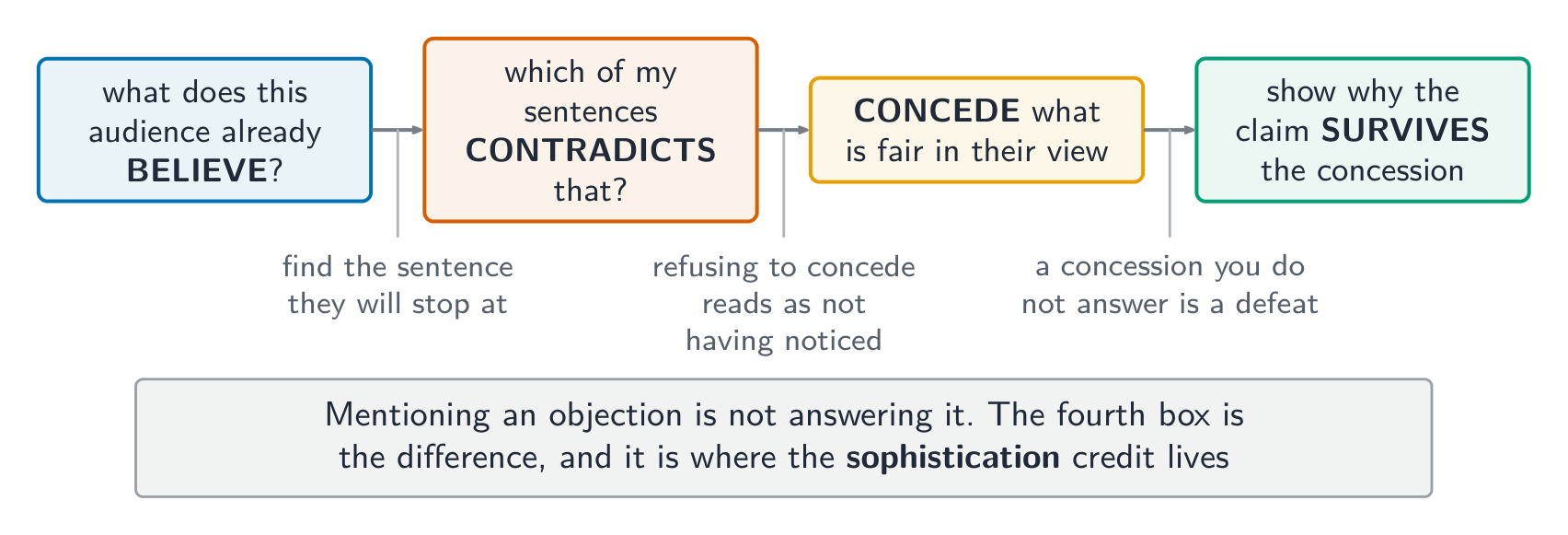
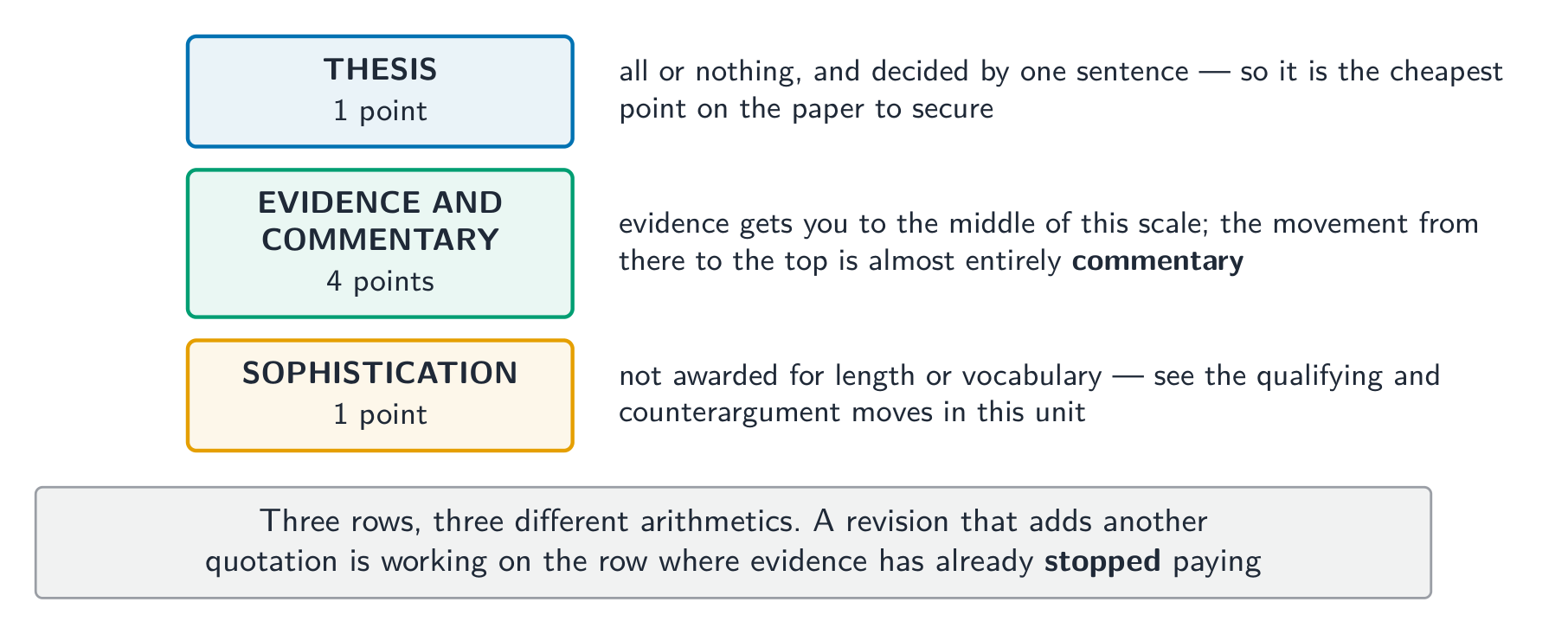
    All three are marked on a six-point rubric with the same three rows: thesis (1 point), evidence and commentary (4 points), and sophistication (1 point). Knowing that shape from Unit 1 tells you where the marks are: four of the six come from evidence and the commentary on it, so a plan that produces evidence without explanation caps you at low marks no matter how good the writing sounds.

    Worked example (a real AP exam task). A Rhetorical Analysis prompt asks you to "explain the writer's rhetorical choices" in a given passage. A row-scoring answer does not say "the writer uses a rhetorical question." It says: "Faced with an audience that already agrees on the problem but not on its urgency, the writer opens with a question rather than a statement, forcing readers to supply the answer themselves and so to feel the conclusion as their own rather than as one imposed on them." Notice what earns the points: the audience, the choice, and the effect on purpose - the rhetorical situation, used.

    עברית

    החלק הפתוח במבחן מכיל שלוש שאלות, והן דורשות את אותם מיומנויות בסידורים שונים:

    • שאלה 1, סינתזה 综合写作: נתונות לך מספר מקורות ועליך לבנות את הטיעון שלך, תוך שימוש במקורות כהוכחות ולא כסיכום שלהם.
    • שאלה 2, ניתוח רטורי 修辞分析: נתון לך טקסט אחד ועליך להסביר הבחירות שעשה הסופר וכיצד בחירות אלו תורמות למטרה - כלומר, יישום המצב הרטורי.
    • שאלה 3, טיעון 论证写作: נתונה לך טענה או תרחיש ועליך להגן על עמדה, תוך שימוש בהוכחות מתוך הידע והניסיון האישי שלך.

    כל שלוש השאלות מוקדמות לפי קריטריונים בעלי 6 נקודות עם אותו שלושה סעיפים: תזה (1 נקודה), הוכחה והערות (4 נקודות), ועומק/ביצוע מתקדם (1 נקודה). היכרות עם צורה זו מUnit 1 מראה לך איפה הנקודות נמצאות: ארבע מתוך שש הנקודות מגיעות מהוכחה וגם מההערות עליה, ולכן תוכנית שמייצרת הוכחה ללא הסבר תקבע לך גבול של נקודות נמוכות, ללא תלות באיכות הכתיבה.

    דוגמה מפורטת (משימה אמיתית ממבחן AP). מנחה לניתוח רטורי מבקש ממך ל"הסביר את הבחירות הרטוריות של הסופר" במקטע נתון. תשובה שקוראים בה based on rows (row-scoring) אינה אומרת "הסופר משתמש בשאלה רטורית." היא אומרת: "בפני קהל שאכן מאוחד לגבי הבעיה אך אינו מאוחד לגבי דחיפותה, הסופר פותח בשאלה ולא בהצהרה, מה שגורם לקוראים לספק את התשובה עצמם ולכן לחוש את המסקנה כשלהם ולא ככפייה עליהם." שים לב למה מרוויח בנקודות: הקהל, הבחירה, וההשפעה על המטרה - המצב הרטורי, בשימוש.

    1.3

    Exam tips · ⁨טיפים לבחינות⁩

    English
    • Learn the six components by name and use the names. Precision here is directly rewarded.
    • Exigence is not the same as purpose. Exigence is what prompted the text; purpose is what the writer wants to achieve.
    • Test every claim with could a reasonable person disagree? If not, it is a fact, not a claim.
    • Embed evidence in your own sentence. Dropped quotations read as unprocessed.
    • Four of six points are evidence and commentary. Write the commentary; it is where most lost marks live.
    • Never name a device without saying what it does to the audience. A device with no effect earns nothing.
    עברית
    • למד את השש המרכיבים בשמם ובשימוש בשמותיהם. דיוק כאן מוערך ישירות.
    • Exigence (הצורך החוצן) אינו אותו דבר כמו מטרה. Exigence הוא מה שהפעיל את הטקסט; מטרה היא מה שהסופר רוצה להשיג.
    • בדוק כל טענה בשאלה האם אדם סביר יכול להתנגד? אם לא, זהו עובדה ולא טענה.
    • השבץ הוכחה לתוך המשפט שלך. ציטוטים שמוזרקים ללא הקשר נקראים כלא מעובדים.
    • ארבע מתוך שש הנקודות הן הוכחה והערות. כתוב את ההערות; שם חיים רוב הנקודות האבודות.
    • לעולם אל תכנה מכשיר רטורי בלי לומר מה הוא עושה בקהל. מכשיר ללא השפעה אינו מרוויח כלום.
    Vocabulary · ⁨מילון מונחים⁩ Train · ⁨אימון⁩
    English עברית
    exigence/ˈeksɪdʒəns/ חובה או דחיפות
    purpose/ˈpɜːpəs/ מטרה
    audience/ˈɔːdɪəns/ קהל היעד
    context/ˈkɒntekst/ הקשר
    claims/kleɪmz/ טענות
    evidence and/or reasoning/ˈevɪdəns ænd ɔː ˈriːzənɪŋ/ עדויות ו/או הסברים לוגיים
    Question 1, Synthesis/ˈkwestʃn wɒn ˈsɪnθəsɪs/ שאלה 1, סינתזה
    Question 2, Rhetorical Analysis/ˈkwestʃn tuː reˈtɒrɪkl əˈnæləsɪs/ שאלה 2, ניתוח רטורי
    Question 3, Argument/ˈkwestʃn θriː ˈɑːɡjuːmənt/ שאלה 3, ארגומנטציה
  • 2

    Audience, Thesis, and Supporting Evidence · ⁨קהל יעד, טרופוס ועדויות תומכות⁩

    Watch lesson · ⁨צפה בשיעור⁩
    2.1

    Understanding an Audience's Beliefs and Needs

    Syllabus · ⁨סיילבוס⁩
    English

    Enduring Understanding (RHS-1): Individuals write within a particular situation and make strategic writing choices based on that situation.

    Learning Objective 1.B: Reading – Explain how an argument demonstrates understanding of an audience’s beliefs, values, or needs.

    • RHS-1.F Writers’ perceptions of an audience’s values, beliefs, needs, and background guide the choices they make.
    • RHS-1.G To achieve a purpose, writers make choices in an attempt to relate to an intended audience’s emotions and values.
    • RHS-1.H Arguments seek to persuade or motivate action through appeals—the modes of persuasion.
    עברית

    הבנה מתמשכת (RHS-1): אנשים כותבים בתוך מצב רטורי ספציפי ועושים בחירות כתיבה אסטרטגיות על בסיס המצב הזה.

    מטרות למידה 1.B: קריאה – הסבר כיצד טיעון מדגים הבנה של אמונות, ערכים או צרכים של הקהל.

    • RHS-1.F תפיסת הכותבים של ערכים, אמונות, צרכים ורקע הקהל מנחה את הבחירות שהם מבצעים.
    • RHS-1.G כדי להשיג מטרה, כותבים ביצוע בחירות במטרה ליצור קשר עם רגשות וערכים של קהל היעד.
    • RHS-1.H טיעונים שואפים לשכנע או לעורר פעולה באמצעות פניות – סוגי ההשכנעה.

    Source: College Board AP Course and Exam Description · ⁨מקור: תיאור הקורס והמבחן של College Board AP⁩

    Unit 1 established that a text has an audience. Unit 2 makes that audience the engine of every choice a writer makes.

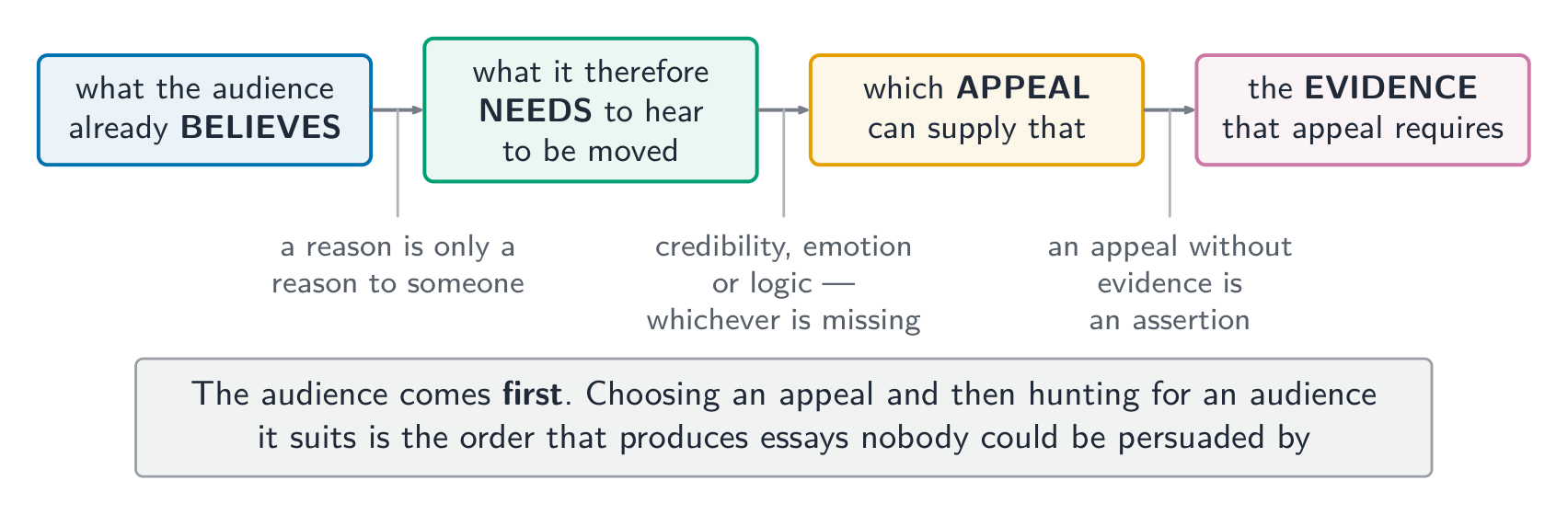
    • Writers' perceptions of an audience's values, beliefs, needs, and background guide the choices they make. Note the word perceptions: what steers the writing is the writer's picture of the audience, which may be accurate or not.
    • To achieve a purpose, writers make choices in an attempt to relate to an intended audience's emotions and values.
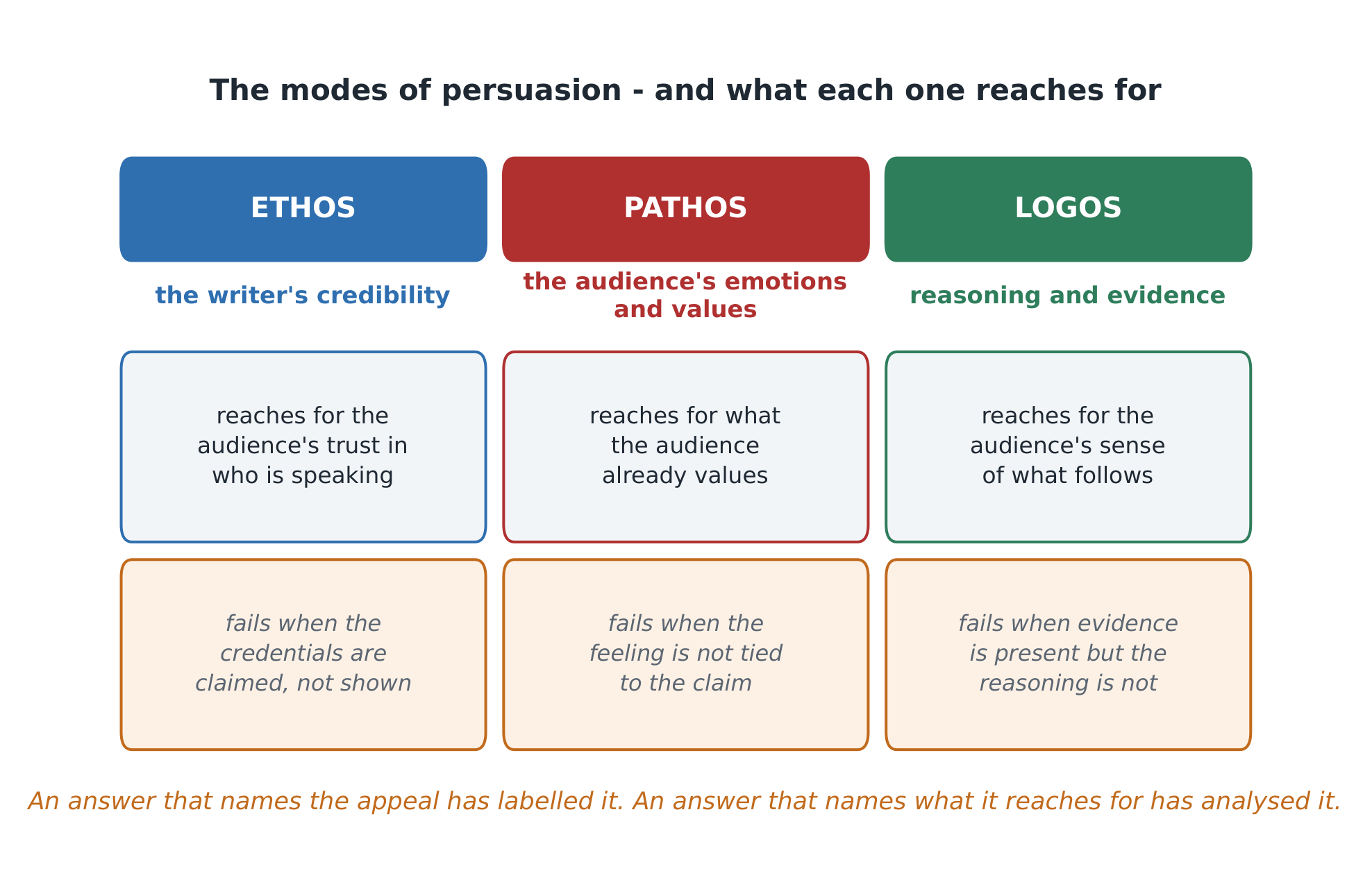
    • Arguments seek to persuade or motivate action through appeals 诉求 - the modes of persuasion 说服方式.
    Each appeal reaches for something different in the audience - and each can fail in its own way
    Naming the appeal is worth nothing on its own; naming what it reaches for is the analysis
    The audience comes first: what it believes determines what will count as a reason
    Explore · ⁨חקור⁩

    Start from the audience, not the appeal · ⁨מתחילים מהקהל היעד, ולא מהטענה⁩

    What the audience already believes determines what will count as a reason to them. · ⁨מה שהקהל היעד כבר מאמין קובע מה ייחשב עבורם כסיבה.⁩

    Vocabulary · ⁨מילון מונחים⁩ Train · ⁨אימון⁩
    English עברית
    appeals/əˈpiːlz/ פניות רטוריות
    modes of persuasion/məʊdz ɒv pəˈsweɪʒn/ סגנונות השכנעה
    2.2

    Writing for an Audience's Beliefs and Needs

    Syllabus · ⁨סיילבוס⁩
    English

    Enduring Understanding (RHS-1): Individuals write within a particular situation and make strategic writing choices based on that situation.

    Learning Objective 2.B: Writing – Demonstrate an understanding of an audience’s beliefs, values, or needs.

    • RHS-1.F Writers’ perceptions of an audience’s values, beliefs, needs, and background guide the choices they make.
    • RHS-1.G To achieve a purpose, writers make choices in an attempt to relate to an intended audience’s emotions and values.
    • RHS-1.H Arguments seek to persuade or motivate action through appeals—the modes of persuasion.
    עברית

    הבנה מתמשכת (RHS-1): אנשים כותבים בתוך מצב רטורי ספציפי ועושים בחירות כתיבה אסטרטגיות על בסיס המצב הזה.

    מטרות למידה 2.B: כתיבה – הדגמת הבנה של אמונות, ערכים או צרכי הקהל.

    • RHS-1.F תפיסת הכותבים של ערכים, אמונות, צרכים ורקע הקהל מנחה את הבחירות שהם מבצעים.
    • RHS-1.G כדי להשיג מטרה, כותבים ביצוע בחירות במטרה ליצור קשר עם רגשות וערכים של קהל היעד.
    • RHS-1.H טיעונים שואפים לשכנע או לעורר פעולה באמצעות פניות – סוגי ההשכנעה.

    Source: College Board AP Course and Exam Description · ⁨מקור: תיאור הקורס והמבחן של College Board AP⁩

    The same three statements now become a writing instruction. Before drafting, decide:

    • What does this audience already believe about the subject?
    • What do they need - information, reassurance, a reason to act?
    • What do they value, and which of those values can honestly be connected to my position?

    An argument that ignores these produces writing addressed to nobody. And the CED's framing gives you a useful test for your own drafts: if this paragraph would read identically to a completely different audience, it has not been shaped by one.

    2.3

    Identifying Claims and Evidence

    Syllabus · ⁨סיילבוס⁩
    English

    Enduring Understanding (CLE-1): Writers make claims about subjects, rely on evidence that supports the reasoning that justifies the claim, and often acknowledge or respond to other, possibly opposing, arguments.

    Learning Objective 3.A: Reading – Identify and explain claims and evidence within an argument.

    • CLE-1.F Writers use evidence strategically and purposefully to illustrate, clarify, set a mood, exemplify, associate, or amplify a point.
    • CLE-1.G Strategically selected evidence strengthens the validity and reasoning of the argument, relates to an audience’s emotions and values, and increases a writer’s credibility.
    • CLE-1.H An effective argument contains sufficient evidence; evidence is sufficient when its quantity and quality provide apt support for the argument.
    עברית

    הבנה מתמשכת (CLE-1): כותבים מטילים טענות בנושאים, נסמכים על עדויות התומכות בלוגיקה המצדיקה את הטענה, ולעיתים קרובות מכירים או מגיבים לטענות אחרות, אולי מתנגדות.

    מטרות למידה 3.A: קריאה – זיהוי והסבר טענות ועדויות בתוך ארגומנט.

    • CLE-1.F כותבים משתמשים בעדויות בצורה אסטרטגית ומטרתית כדי להמחיש, להבהיר, ליצור אווירה, לדגום, לקשר או להרחיב נקודה.
    • CLE-1.G בחירת עדויות אסטרטגית מחזקת את החוקיות וההסבר הטוען, מקשר אותן לרגשות ולערכים של הקהל, ומגבירה את האמינות של הכותב.
    • CLE-1.H טיעון יעיל מכיל עדויות מספיקות; עדויות נחשבות לספקיות כאשר הכמות והאיכות שלהן מספקות תמיכה מתאימה לטיעון.

    Source: College Board AP Course and Exam Description · ⁨מקור: תיאור הקורס והמבחן של College Board AP⁩

    Unit 2 deepens Unit 1's treatment of evidence with three claims about how evidence works:

    • Writers use evidence strategically and purposefully to illustrate, clarify, set a mood, exemplify, associate, or amplify. Evidence does a job, and naming that job is analysis.
    • Strategically selected evidence strengthens the validity and reasoning of the argument, relates to an audience's emotions and values, and helps establish the writer's credibility 可信度.
    • An effective argument contains sufficient evidence 充分的证据 - sufficient when its quantity and quality provide apt support for the line of reasoning.

    That third point is often misread as "more is better". Sufficiency is quantity and quality together: three well-chosen pieces of evidence that bear directly on the claim beat six that only touch it.

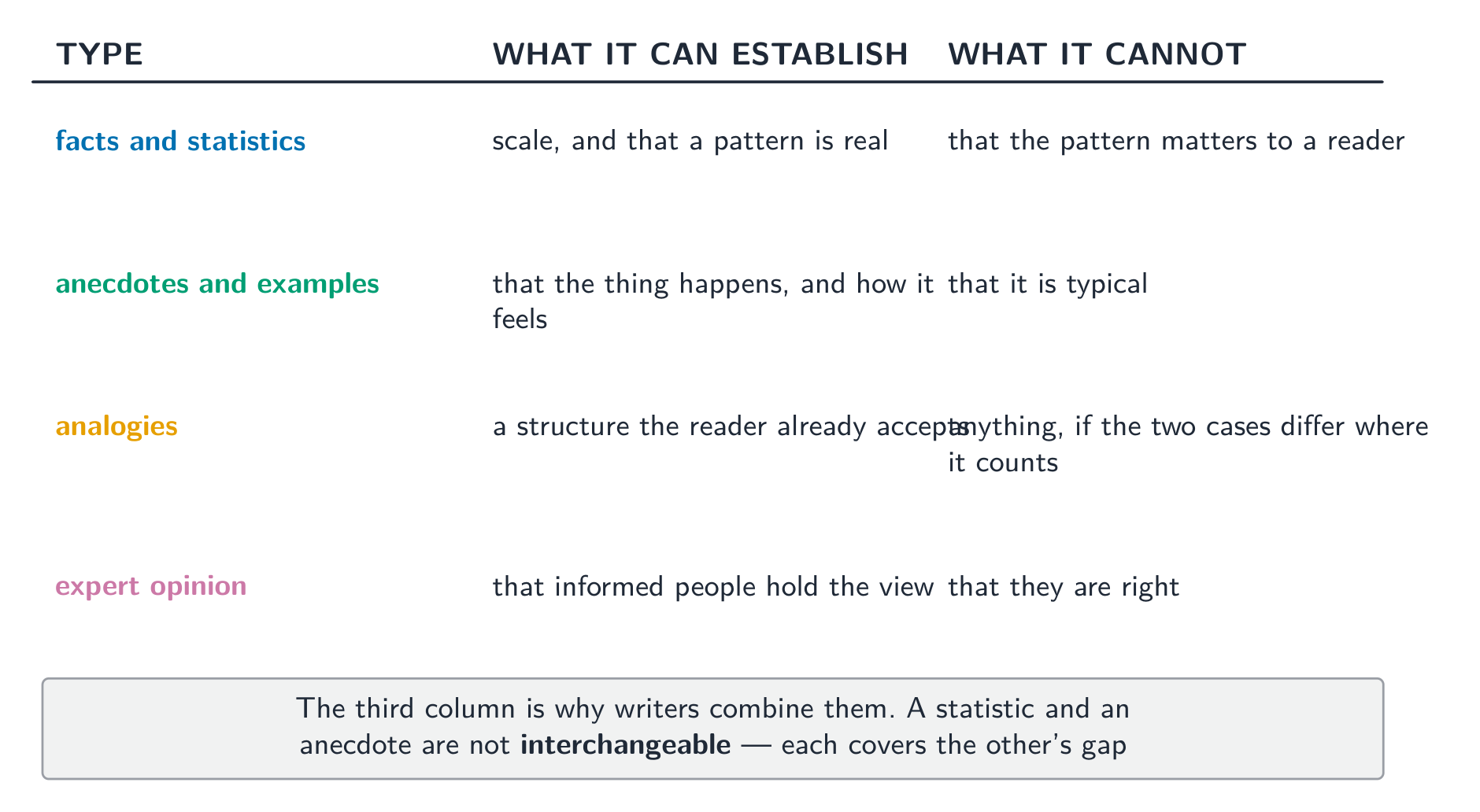
    Evidence types sorted by what each can and cannot establish
    Explore · ⁨חקור⁩

    Match each evidence type to what it cannot prove · ⁨התאם כל סוג עדפות למה שהוא אינו יכול להוכיח⁩

    A statistic and an anecdote are not interchangeable — each covers the other's gap. · ⁨סטטיסטיקה ואנקדוטה אינן תחליפות זו לזו — כל אחת מכסה את הפער של השנייה.⁩

    Vocabulary · ⁨מילון מונחים⁩ Train · ⁨אימון⁩
    English עברית
    credibility/ˌkredɪˈbɪlɪti/ אמינות
    sufficient evidence/səˈfɪʃənt ˈevɪdəns/ עדות מספקת
    2.4

    Developing a Paragraph with Claim and Evidence

    Syllabus · ⁨סיילבוס⁩
    English

    Enduring Understanding (CLE-1): Writers make claims about subjects, rely on evidence that supports the reasoning that justifies the claim, and often acknowledge or respond to other, possibly opposing, arguments.

    Learning Objective 4.A: Writing – Develop a paragraph that includes a claim and evidence supporting the claim.

    • CLE-1.F Writers use evidence strategically and purposefully to illustrate, clarify, set a mood, exemplify, associate, or amplify a point.
    • CLE-1.G Strategically selected evidence strengthens the validity and reasoning of the argument, relates to an audience’s emotions and values, and increases a writer’s credibility.
    • CLE-1.H An effective argument contains sufficient evidence; evidence is sufficient when its quantity and quality provide apt support for the argument.
    עברית

    הבנה מתמשכת (CLE-1): כותבים מטילים טענות בנושאים, נסמכים על עדויות התומכות בלוגיקה המצדיקה את הטענה, ולעיתים קרובות מכירים או מגיבים לטענות אחרות, אולי מתנגדות.

    מטרות למידה 4.A: כתיבה – פתח פרק הכולל טענה ועדויות התומכות בטענה.

    • CLE-1.F כותבים משתמשים בעדויות בצורה אסטרטגית ומטרתית כדי להמחיש, להבהיר, ליצור אווירה, לדגום, לקשר או להרחיב נקודה.
    • CLE-1.G בחירת עדויות אסטרטגית מחזקת את החוקיות וההסבר הטוען, מקשר אותן לרגשות ולערכים של הקהל, ומגבירה את האמינות של הכותב.
    • CLE-1.H טיעון יעיל מכיל עדויות מספיקות; עדויות נחשבות לספקיות כאשר הכמות והאיכות שלהן מספקות תמיכה מתאימה לטיעון.

    Source: College Board AP Course and Exam Description · ⁨מקור: תיאור הקורס והמבחן של College Board AP⁩

    Applying the above to your own writing, choose each piece of evidence for a stated reason. In practice this means being able to finish the sentence: I am using this piece because it ...

    • ... illustrates a claim that would otherwise stay abstract;
    • ... establishes my credibility on a subject where readers may doubt it;
    • ... connects my position to a value the audience already holds.

    Evidence chosen this way produces commentary almost automatically, because you already know what the evidence is doing. Evidence chosen because it was available produces the blank space where commentary should be.

    2.5

    Identifying the Overarching Thesis

    Syllabus · ⁨סיילבוס⁩
    English

    Enduring Understanding (CLE-1): Writers make claims about subjects, rely on evidence that supports the reasoning that justifies the claim, and often acknowledge or respond to other, possibly opposing, arguments.

    Learning Objective 3.B: Reading – Identify and describe the overarching thesis of an argument, and any indication it provides of the argument’s structure.

    • CLE-1.I A thesis is the main, overarching claim a writer is seeking to defend or prove by using reasoning supported by evidence.
    • CLE-1.J A writer’s thesis is not necessarily a single sentence or an explicit statement and may require a thorough reading of the text to identify, but when a thesis is directly expressed, it is called a thesis statement. [Note: While the texts you assign your students to analyze may not always contain obvious thesis statements, they should each have a thesis. It can be good practice for students to write a thesis statement for such texts. On the AP Exam, a clear communication of the thesis is required in students’ essays.]
    עברית

    הבנה מתמשכת (CLE-1): כותבים מטילים טענות בנושאים, נסמכים על עדויות התומכות בלוגיקה המצדיקה את הטענה, ולעיתים קרובות מכירים או מגיבים לטענות אחרות, אולי מתנגדות.

    מטרות למידה 3.B: קריאה – זיהוי ותיאור thesis כללי של טיעון, וכל רמז שמספק על מבנה הטיעון.

    • CLE-1.I thesis היא הטענה הראשית והכללית שהכותב שואף להגן עליה או להוכיחה באמצעות הסבר התומך בעדויות.
    • CLE-1.J טענתו של סופר אינה חייבת להיות משפט יחיד או הצהרה מפורשת, ועשוי לדרוש קריאה מעמיקה בטקסט כדי לזהות אותה, אך כאשר טענה מובעת במפורש, היא נקראת משפט טענה. [הערה: בעוד שטקסטים שתבחרו לתלמידים שלך לניתוח עשויים לא להכיל תמיד משפטי טענה ברורים, כל טקסט צריך להכיל טענה. זהו מנהג טוב לתלמידים לכתוב משפט טענה עבור טקסטים אלו. במבחן AP, דרישה להעברת טענה בצורה ברורה נדרשת במאמרים של התלמידים.]

    Source: College Board AP Course and Exam Description · ⁨מקור: תיאור הקורס והמבחן של College Board AP⁩

    • A thesis 论点 is the main, overarching claim a writer seeks to defend or prove by using reasoning supported by evidence.
    • A writer's thesis is not necessarily a single sentence or an explicit statement, and may require a thorough reading to identify.

    That second point matters for the reading side of the exam. On a rhetorical-analysis passage, the thesis may be distributed across the text or implied by its structure. Do not assume the first sentence of the second paragraph is the thesis because that is where you would put yours.

    Vocabulary · ⁨מילון מונחים⁩ Train · ⁨אימון⁩
    English עברית
    thesis/ˈθiːsɪs/ טוענה מרכזית
    2.6

    Writing a Thesis Statement

    Syllabus · ⁨סיילבוס⁩
    English

    Enduring Understanding (CLE-1): Writers make claims about subjects, rely on evidence that supports the reasoning that justifies the claim, and often acknowledge or respond to other, possibly opposing, arguments.

    Learning Objective 4.B: Writing – Write a thesis statement that requires proof or defense and that may preview the structure of the argument.

    • CLE-1.I A thesis is the main, overarching claim a writer is seeking to defend or prove by using reasoning supported by evidence.
    • CLE-1.J A writer’s thesis is not necessarily a single sentence or an explicit statement and may require a thorough reading of the text to identify, but when a thesis is directly expressed, it is called a thesis statement. [Note: While the texts you assign your students to analyze may not always contain obvious thesis statements, they should each have a thesis. It can be good practice for students to write a thesis statement for such texts. On the AP Exam, a clear communication of the thesis is required in students’ essays.]
    עברית

    הבנה מתמשכת (CLE-1): כותבים מטילים טענות בנושאים, נסמכים על עדויות התומכות בלוגיקה המצדיקה את הטענה, ולעיתים קרובות מכירים או מגיבים לטענות אחרות, אולי מתנגדות.

    מטרות למידה 4.B: כתיבה – כתבו משפט טענה הדורש הוכחה או הגנה ואשר עשוי להציג מראש את מבנה הטיעון.

    • CLE-1.I thesis היא הטענה הראשית והכללית שהכותב שואף להגן עליה או להוכיחה באמצעות הסבר התומך בעדויות.
    • CLE-1.J טענתו של סופר אינה חייבת להיות משפט יחיד או הצהרה מפורשת, ועשוי לדרוש קריאה מעמיקה בטקסט כדי לזהות אותה, אך כאשר טענה מובעת במפורש, היא נקראת משפט טענה. [הערה: בעוד שטקסטים שתבחרו לתלמידים שלך לניתוח עשויים לא להכיל תמיד משפטי טענה ברורים, כל טקסט צריך להכיל טענה. זהו מנהג טוב לתלמידים לכתוב משפט טענה עבור טקסטים אלו. במבחן AP, דרישה להעברת טענה בצורה ברורה נדרשת במאמרים של התלמידים.]

    Source: College Board AP Course and Exam Description · ⁨מקור: תיאור הקורס והמבחן של College Board AP⁩

    The writing objective is precise: write a thesis statement that requires proof or defence and that may preview the structure of the argument.

    Two independent requirements sit in that sentence:

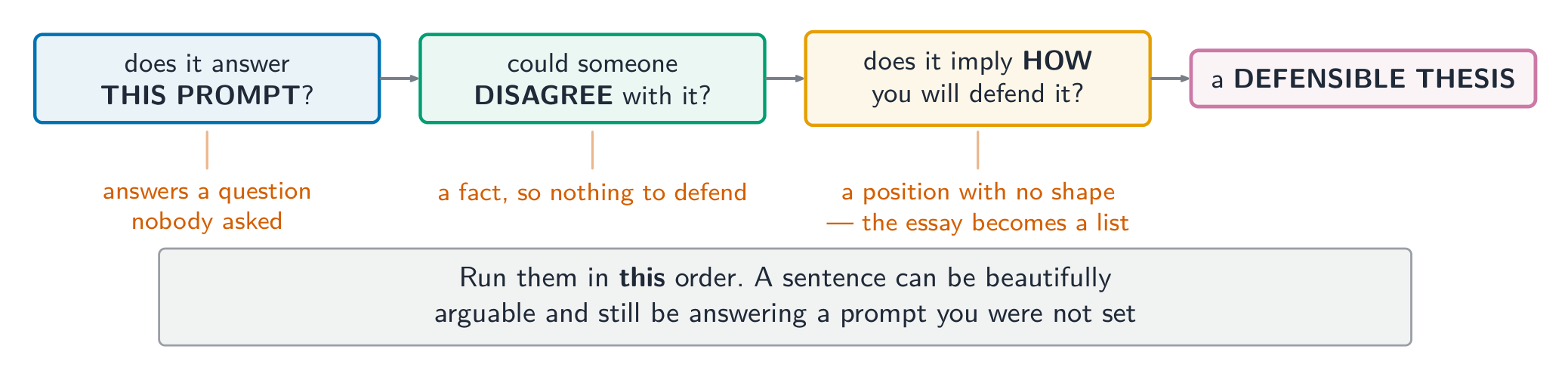
    • It must require defence. Apply the Unit 1 test again: could a reasonable person disagree? A thesis that states a fact cannot be defended, only repeated.
    • It may preview the structure - optional, but useful, because a thesis that names the lines of reasoning it will pursue gives the essay its shape.

    On the exam, the thesis point is one of six and it is the cheapest point on the rubric: a defensible thesis in response to the prompt earns it. A restatement of the prompt does not.

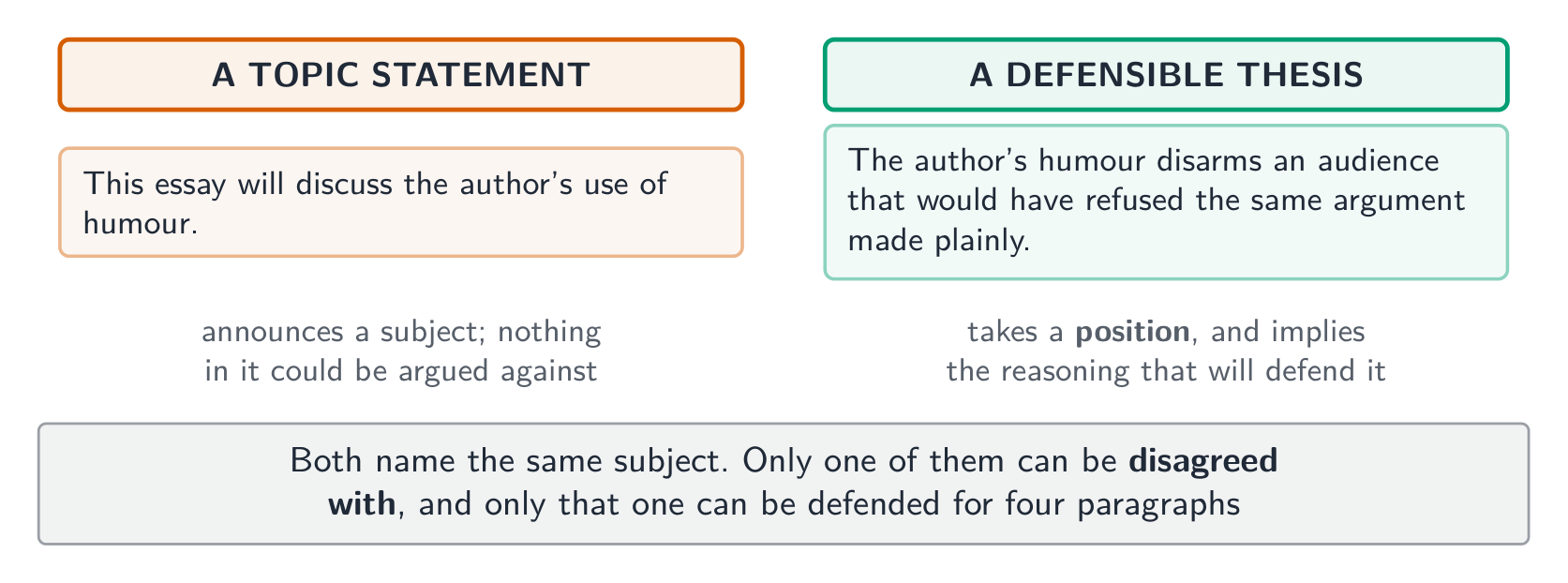
    Worked example (a real AP exam task). For a Question 3 argument prompt asking you to take a position on the value of a proposed practice, compare two openings. "There are many arguments both for and against this practice." - that earns nothing, because nobody could disagree with it. "Because the practice rewards visible effort rather than actual improvement, it produces the appearance of progress while removing the incentive to seek it." - that earns the point: it is arguable, specific, and it previews the reasoning the essay will develop.

    Same subject, and only one of them can be disagreed with
    2.6

    Exam tips

    • The audience drives everything. If a paragraph would read the same to any audience, it has not been shaped for one.
    • Name what evidence does - illustrate, clarify, associate, amplify. That is analysis; listing evidence is not.
    • Sufficiency is quantity and quality, not volume. Three apt pieces beat six loose ones.
    • A thesis in a passage may be implied or distributed. Read the whole text before deciding.
    • Your own thesis must be arguable. Restating the prompt earns zero of the six points.
    • Previewing your line of reasoning in the thesis is optional but makes the rest of the essay easier to organise.
  • 3

    Line of Reasoning and Methods of Development · ⁨קו רעיוני ומתודולוגיות לפיתוח⁩

    Watch lesson · ⁨צפה בשיעור⁩
    3.1

    Identifying Claims and Evidence · ⁨זיהוי טענות ועדויות⁩

    Syllabus · ⁨סיילבוס⁩
    English

    Enduring Understanding (CLE-1): Writers make claims about subjects, rely on evidence that supports the reasoning that justifies the claim, and often acknowledge or respond to other, possibly opposing, arguments.

    Learning Objective 3.A: Reading – Identify and explain claims and evidence within an argument.

    • CLE-1.K Effective use of evidence uses commentary to establish a logical relationship between the evidence and the claim it supports.
    • CLE-1.L Writers introduce source material by using commentary to properly integrate it into their line of reasoning.
    • CLE-1.M Synthesis requires consideration, explanation, and integration of others’ arguments into one’s own argument.
    • CLE-1.N Writers must acknowledge words, ideas, images, texts, and other intellectual property of others through attribution, citation, or reference.
    עברית

    הבנה מתמשכת (CLE-1): כותבים מטילים טענות בנושאים, נסמכים על עדויות התומכות בלוגיקה המצדיקה את הטענה, ולעיתים קרובות מכירים או מגיבים לטענות אחרות, אולי מתנגדות.

    מטרות למידה 3.A: קריאה – זיהוי והסבר טענות ועדויות בתוך ארגומנט.

    • CLE-1.K שימוש יעיל בממצאים משתמש בתגובה כדי לקיים קשר לוגי בין הממצא לבין הטענה שהוא תומך בה.
    • CLE-1.L סופרים מציגים חומר מקור על ידי שימוש בתגובה כדי לשלב אותו באופן תקין בקו ההסברה שלהם.
    • CLE-1.M סינתזה דורשת בחינה, הסבר ושילוב של טיעונים אחרים לטיעון האישי.
    • CLE-1.N סופרים חייבים להכיר במילים, רעיונות, תמונות, טקסטים וזכויות רוחניות אחרות של אחרים באמצעות ייחוס, ציטוט או הפניה.

    Source: College Board AP Course and Exam Description · ⁨מקור: תיאור הקורס והמבחן של College Board AP⁩

    English

    Unit 3 is where the course stops being about parts and starts being about structure. Its subject is the line of reasoning 推理线索 - the path an argument takes from where it starts to what it proves.

    First, four claims about how evidence gets into an argument properly:

    • Effective use of evidence uses commentary 评述 to establish a logical relationship between the evidence and the claim.
    • Writers introduce source material using commentary to integrate it into their line of reasoning - so commentary comes before as well as after.
    • Synthesis 综合 requires consideration, explanation, and integration of others' arguments into one's own. That is the exact skill Question 1 tests, and the word integration rules out a paragraph that simply summarises each source in turn.
    • Writers must acknowledge the words, ideas, images, and texts of others through attribution and citation 归属与引用.
    עברית

    יחידה 3 היא הנקודה שבה הקורס מפסיק לעסוק בחלקים ומתחיל לעסוק במבנה. נושא הדבר הוא קו ההיכרות 推理线索 - הדרך שהטיעון עובר מהנקודה שבה הוא מתחיל ועד למה שהוא מוכיח.

    תחילה, ארבע טענות לגבי האופן שבו עדות נכנסת באופן תקין לטיעון:

    • שימוש יעיל בעדות משתמש בתגובה 评述 כדי לקיים קשר לוגי בין העדות לבין הטיעון.
    • כותבים מציגים חומר ממקור באמצעות תגובה כדי לשלב אותו בקו ההיכרות שלהם - כך שתגובה מגיע גם לפני וגם אחרי.
    • שילוב 综合 דורש שיקול, הסבר ושילוב של טיעוני אחרים לתוך הטוען האישי. זו בדיוק המיומנות שמבחן שאלה 1 בודק, והמילה שילוב פוסלת פרק שמפשוט מסכם כל מקור בתורו.
    • כותבים חייבים להכיר במילים, רעיונות, תמונות וטקסטים של אחרים דרך יחס וציטוט 归属与引用.
    3.2

    Developing a Paragraph with Claim and Evidence · ⁨פיתוח פרק עם טענה ועדות⁩

    Syllabus · ⁨סיילבוס⁩
    English

    Enduring Understanding (CLE-1): Writers make claims about subjects, rely on evidence that supports the reasoning that justifies the claim, and often acknowledge or respond to other, possibly opposing, arguments.

    Learning Objective 4.A: Writing – Develop a paragraph that includes a claim and evidence supporting the claim.

    • CLE-1.K Effective use of evidence uses commentary to establish a logical relationship between the evidence and the claim it supports.
    • CLE-1.L Writers introduce source material by using commentary to properly integrate it into their line of reasoning.
    • CLE-1.M Synthesis requires consideration, explanation, and integration of others’ arguments into one’s own argument.
    • CLE-1.N Writers must acknowledge words, ideas, images, texts, and other intellectual property of others through attribution, citation, or reference.
    עברית

    הבנה מתמשכת (CLE-1): כותבים מטילים טענות בנושאים, נסמכים על עדויות התומכות בלוגיקה המצדיקה את הטענה, ולעיתים קרובות מכירים או מגיבים לטענות אחרות, אולי מתנגדות.

    מטרות למידה 4.A: כתיבה – פתח פרק הכולל טענה ועדויות התומכות בטענה.

    • CLE-1.K שימוש יעיל בממצאים משתמש בתגובה כדי לקיים קשר לוגי בין הממצא לבין הטענה שהוא תומך בה.
    • CLE-1.L סופרים מציגים חומר מקור על ידי שימוש בתגובה כדי לשלב אותו באופן תקין בקו ההסברה שלהם.
    • CLE-1.M סינתזה דורשת בחינה, הסבר ושילוב של טיעונים אחרים לטיעון האישי.
    • CLE-1.N סופרים חייבים להכיר במילים, רעיונות, תמונות, טקסטים וזכויות רוחניות אחרות של אחרים באמצעות ייחוס, ציטוט או הפניה.

    Source: College Board AP Course and Exam Description · ⁨מקור: תיאור הקורס והמבחן של College Board AP⁩

    English

    Applied to your own writing, the change from Unit 2 is that commentary now has two jobs, not one: it introduces the evidence into the reasoning, and it explains the relationship afterwards.

    A paragraph that does both reads: claim - a sentence positioning the evidence - the evidence, embedded - commentary establishing the logical relationship - the link onward. The sentence before the quotation is doing as much work as the one after it, and most students write neither.

    עברית

    באופן היישום לכתיבה שלך, השינוי ביחס ליחידה 2 הוא שתגובה כעת מבצעת שני משימות, ולא אחת: היא מציגה את העדות להיכרות, והיא מסבירה את הקשר לאחר מכן.

    פרק שמבצע את השניים קורא: הטיעון - משפט הממקם את העדות - העדות, משולבת - תגובה המקימה את הקשר הלוגי - הקישור המשך. המשפט לפני ההפניה עושה אותה כמות עבודה כמו זה שלאחריה, וכמעט כל הסטודנטים אינם כותבים אף אחד מהם.

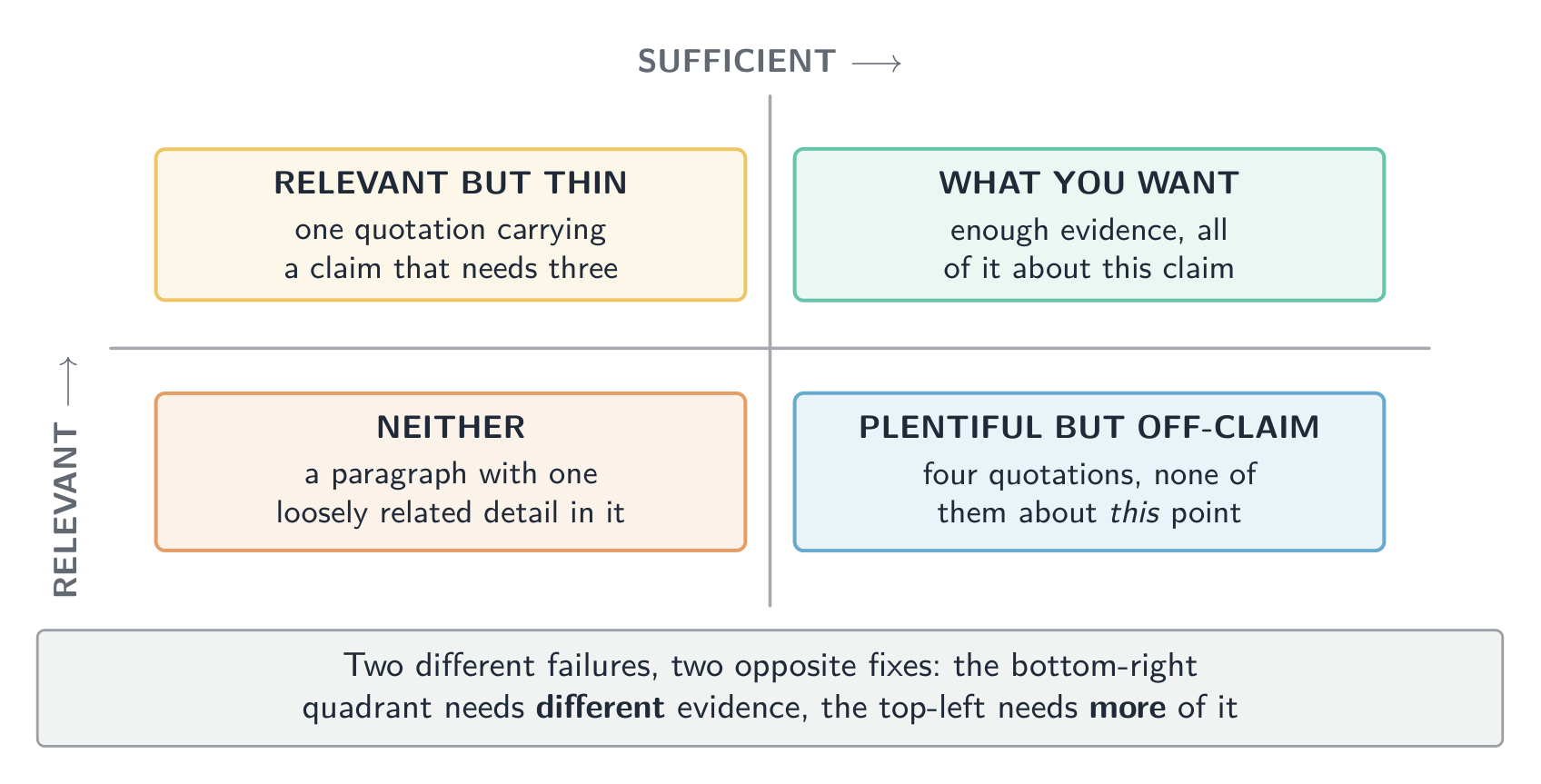
    המתאים והמספיק הם שתי כישלים שונים עם שתי פתרונות מנוגדים
    Explore · ⁨חקור⁩

    Diagnose the evidence problem · ⁨אבחן את בעיית העדויות⁩

    Relevant and sufficient are two different failures with two opposite fixes. · ⁨רלוונטיות ומספיקות הן שני סוגי כשל שונים עם שני פתרונות הפוכים.⁩

    3.3

    Describing the Line of Reasoning · ⁨תיאור קו ההיכרות⁩

    Syllabus · ⁨סיילבוס⁩
    English

    Enduring Understanding (REO-1): Writers guide understanding of a text’s lines of reasoning and claims through that text’s organization and integration of evidence.

    Learning Objective 5.A: Reading – Describe the line of reasoning and explain whether it supports an argument’s overarching thesis.

    • REO-1.A Writers may lead readers through a line of reasoning and then arrive at a thesis.
    • REO-1.B Writers may express a claim and then develop a line of reasoning to justify the claim.
    • REO-1.C Writers explain their reasoning through commentary that connects chosen evidence to a claim.
    • REO-1.D Commentary explains the significance and relevance of evidence in relation to the line of reasoning.
    • REO-1.E The sequence of paragraphs in a text reveals the argument’s line of reasoning.
    • REO-1.F Flaws in a line of reasoning may render an argument specious or illogical.
    עברית

    הבנה מתמשכת (REO-1): סופרים מדרכים את הבנת קווי ההסברה והטענות של טקסט דרך הארגון והשילוב של הממצאים בטקסט.

    מטרות למידה 5.A: קריאה – תארו את קו ההסברה והסבירו האם הוא תומך בטענת העל של הטיעון.

    • REO-1.A סופרים עשויים להוביל קוראים דרך קו הסברה ולאחר מכן להגיע לטענה.
    • REO-1.B סופרים עשויים להביע טענה ולאחר מכן לפתח קו הסברה כדי להצדיק את הטענה.
    • REO-1.C סופרים מסבירים את הסברה שלהם באמצעות תגובה המקשרת ממצאים שנבחרו לטענה.
    • REO-1.D תגובה מסבירה את החשיבות והרלוונטיות של הממצאים ביחס לקו ההסברה.
    • REO-1.E הרצף של הפרקים בטקסט חושף את קו ההסברה של הטיעון.
    • REO-1.F פגמים בקו ההסברה עשויים להפוך טיעון לספקולטיבי או בלוגי.

    Source: College Board AP Course and Exam Description · ⁨מקור: תיאור הקורס והמבחן של College Board AP⁩

    English

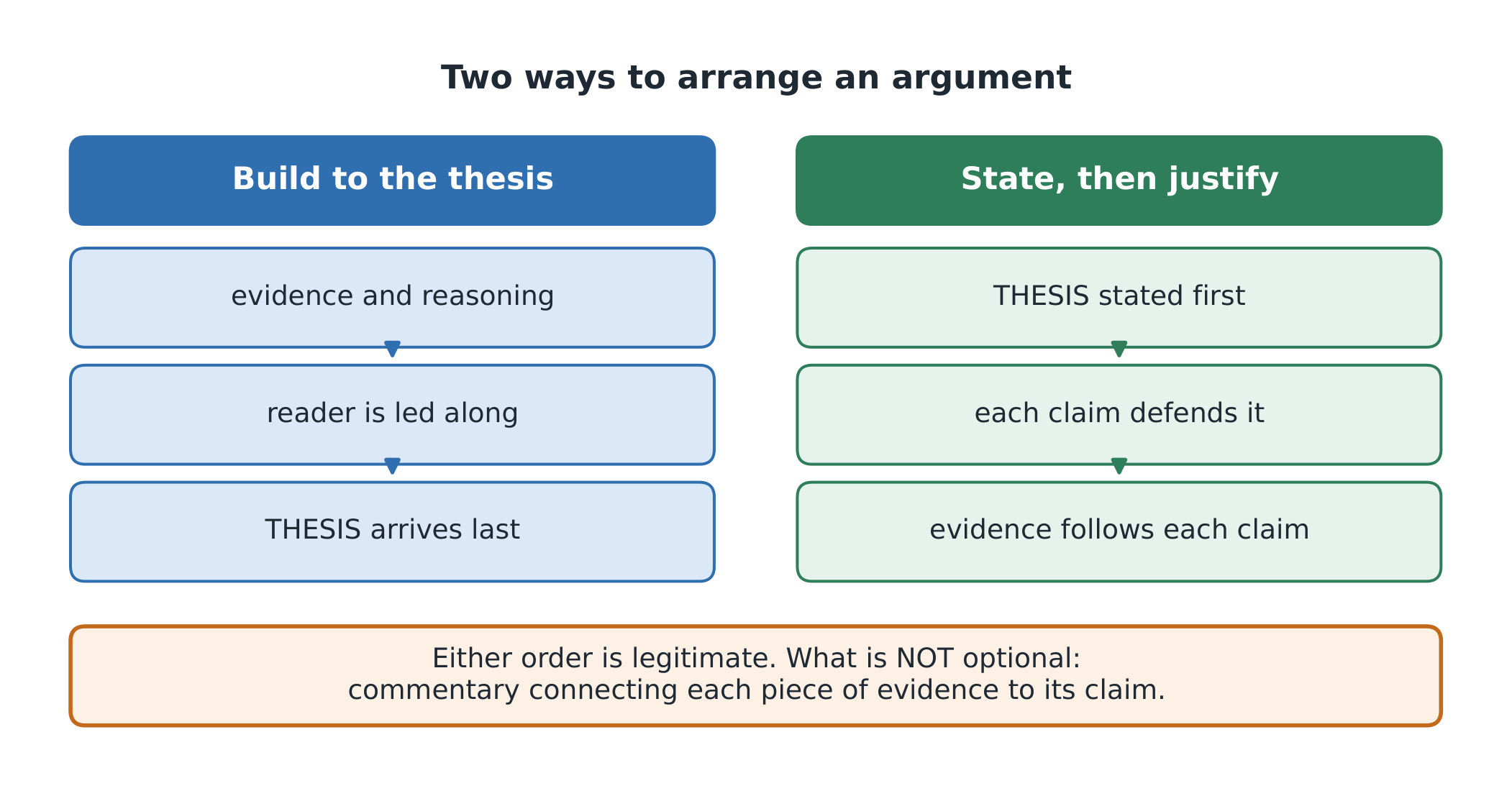
    The CED allows two arrangements, and both are valid:

    • Writers may lead readers through a line of reasoning and then arrive at a thesis - the argument builds to its claim.
    • Writers may express a claim and then develop a line of reasoning to justify it - the argument declares and then defends.

    Whichever order is used, the same requirements hold:

    • Writers explain their reasoning through commentary that connects chosen evidence to a claim.
    • Commentary explains the significance and relevance of evidence in relation to the line of reasoning.
    • The sequence of paragraphs in a text reveals the argument's line of reasoning - which is the practical tool for reading. To find a writer's reasoning, write one sentence per paragraph and read the list.
    • Flaws in a line of reasoning may render an argument specious or illogical.
    עברית
    שתי סדרים חוקיים, דרישה אחת - והדרישה היא התגובה
    הסדר הוא בחירה; רקמת הקישור אינה

    ה-CED מאפשר שני סידורים, ושניהם תקפים:

    • כותבים יכולים להוביל את הקוראים דרך קו היכרות ולאחר מכן להגיע לעיקר התיזה - הטיעון בונה את עצמו עד לטענתו.
    • כותבים יכולים לבטא טיעון ולאחר מכן לפתח קו היכרות כדי להצדיק אותו - הטיעון מכריז ולאחר מכן מגן על עצמו.

    לא משנה איזה סדר משמש, אותם דרישות מתקיימות:

    • כותבים מסבירים את ההיגיון שלהם דרך הערות המקשרות הוכחות נבחרות לטענה.
    • הערות מסבירות את החשיבות והרלוונטיות של ההוכחה בהקשר לקו ההיגיון.
    • הרצף של הפרקים בטקסט חושף את קו ההיכרות של הטיעון - שהוא הכלי המעשי לקריאה. למצוא את ההיכרות של הכותב, כתוב משפט אחד לכל פרק וקרא את הרשימה.
    • פגמים בקו ההיכרות עשויים להפוך את הטיעון לזויף או לא לוגי.
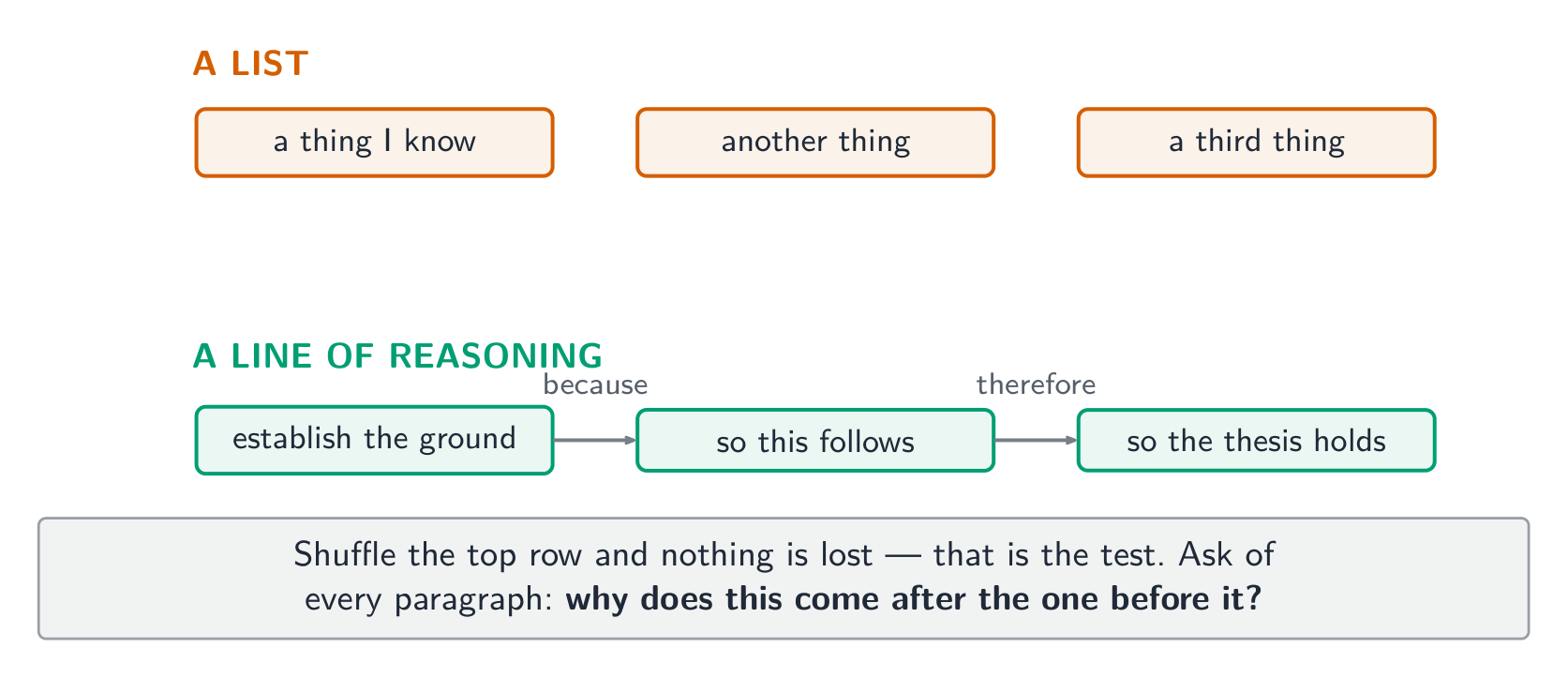
    מבחן ההחלפה: אם ניתן לשנות את סדר הפרקים ללא אובדן, מדובר ברשימה
    Vocabulary · ⁨מילון מונחים⁩ Train · ⁨אימון⁩
    English עברית
    line of reasoning/laɪn ɒv ˈriːzənɪŋ/ קו חשיבה
    3.4

    Developing a Line of Reasoning and Commentary · ⁨פיתוח קו טיעון ופירוש⁩

    Syllabus · ⁨סיילבוס⁩
    English

    Enduring Understanding (REO-1): Writers guide understanding of a text’s lines of reasoning and claims through that text’s organization and integration of evidence.

    Learning Objective 6.A: Writing – Develop a line of reasoning and commentary that explains it throughout an argument.

    • REO-1.A Writers may lead readers through a line of reasoning and then arrive at a thesis.
    • REO-1.B Writers may express a claim and then develop a line of reasoning to justify the claim.
    • REO-1.C Writers explain their reasoning through commentary that connects chosen evidence to a claim.
    • REO-1.D Commentary explains the significance and relevance of evidence in relation to the line of reasoning.
    • REO-1.E The sequence of paragraphs in a text reveals the argument’s line of reasoning.
    • REO-1.F Flaws in a line of reasoning may render an argument specious or illogical.
    עברית

    הבנה מתמשכת (REO-1): סופרים מדרכים את הבנת קווי ההסברה והטענות של טקסט דרך הארגון והשילוב של הממצאים בטקסט.

    מטרות למידה 6.A: כתיבה – פתחו קו הסברה ותגובה המסבירים אותו לאורך כל הטיעון.

    • REO-1.A סופרים עשויים להוביל קוראים דרך קו הסברה ולאחר מכן להגיע לטענה.
    • REO-1.B סופרים עשויים להביע טענה ולאחר מכן לפתח קו הסברה כדי להצדיק את הטענה.
    • REO-1.C סופרים מסבירים את הסברה שלהם באמצעות תגובה המקשרת ממצאים שנבחרו לטענה.
    • REO-1.D תגובה מסבירה את החשיבות והרלוונטיות של הממצאים ביחס לקו ההסברה.
    • REO-1.E הרצף של הפרקים בטקסט חושף את קו ההסברה של הטיעון.
    • REO-1.F פגמים בקו ההסברה עשויים להפוך טיעון לספקולטיבי או בלוגי.

    Source: College Board AP Course and Exam Description · ⁨מקור: תיאור הקורס והמבחן של College Board AP⁩

    English

    For your own essays, the useful discipline is to decide the order of your claims before writing any of them. An essay whose paragraphs could be shuffled without loss has no line of reasoning - it has a list.

    Test a draft by asking of each paragraph: why does this come after the one before it? If the only answer is "it is another thing I know about the topic", the structure is a list and the reasoning point is at risk.

    עברית

    במאמרים האישיים שלך, המשמעויות המועילות הן לקבוע את סדר הטענות לפני שכותבים אותן. מאמר שפרקים בו ניתן להחליף ללא אובדן אינו מכיל קו טיעון - הוא רשימה.

    בדוק גרסה ראשונית על ידי השאלה בכל פרק: למה זה בא אחרי הקודם לו? אם התשובה היחידה היא "זה עוד דבר שאני יודע בנושא", המבנה הוא רשימה והטיעון בסכנת סכנה.

    פירוש כארבע מדרגות - נקודת הטיעון מוענקת עבור האחרונה
    Explore · ⁨חקור⁩

    Climb the four rungs of commentary · ⁨להטפס על ארבע המדרגות של ההערות⁩

    'Explain your evidence' is unusable. Four questions, each answerable in a sentence, make it a procedure. · ⁨'הסבר את העובדות שלך' הוא בלתי שימושי. ארבעה שאלות, שתשובה לכל אחת נכתבת במשפט, הופכות זאת ל procedure.⁩

    Vocabulary · ⁨מילון מונחים⁩ Train · ⁨אימון⁩
    English עברית
    commentary/ˈkɒməntri/ תגובה
    Synthesis/ˈsɪnθəsɪs/ סינתזה
    attribution and citation/ətrɪˈbjuːʃn ænd saɪˈteɪʃn/ יחס הוצאה ומקורות
    Methods of development/ˈmeθədz ɒv dɪˈveləpmənt/ שיטות פיתוח
    narration/nəˈreɪʃn/ ספירה
    cause-effect/kɔːz ɪˈfekt/ סיבה-תוצאה
    3.5

    Recognizing Methods of Development · ⁨זיהוי שיטות פיתוח⁩

    Syllabus · ⁨סיילבוס⁩
    English

    Enduring Understanding (REO-1): Writers guide understanding of a text’s lines of reasoning and claims through that text’s organization and integration of evidence.

    Learning Objective 5.C: Reading – Recognize and explain the use of methods of development to accomplish a purpose.

    • REO-1.G Methods of development are common approaches writers frequently use to develop and organize the reasoning of their arguments. A method of development provides an audience with the means to trace a writer’s reasoning in an argument.
    • REO-1.H Some typical methods of development are narration, cause-effect, comparison-contrast, definition, and description.
    • REO-1.I When developing ideas through narration, writers offer details about real-life experiences and offer reflections and insights on the significance of those experiences.
    • REO-1.J When developing ideas through cause-effect, writers present a cause, assert effects or consequences of that cause, or present a series of causes and the subsequent effect(s).
    עברית

    הבנה מתמשכת (REO-1): סופרים מדרכים את הבנת קווי ההסברה והטענות של טקסט דרך הארגון והשילוב של הממצאים בטקסט.

    מטרות למידה 5.C: קריאה – לזהות ולהסביר את השימוש בשיטות פיתוח כדי להשגת מטרה.

    • REO-1.G שיטות פיתוח הן גישות נפוצות שסופרים משתמשים בהן לעיתים קרובות לפיתוח ולארגון ההיכרות של הארגומנט שלהם. שיטת פיתוח מספקת לקהל את האמצעים לעקוב אחר ההיכרות של הסופר בארגומנט.
    • REO-1.H חלק משיטות הפיתוח הנפוצות הן ניצול, סיבה-תוצאה, השוואה-ניגוד, הגדרה ותיאור.
    • REO-1.I כאשר מפתחים רעיונות באמצעות ניצול, סופרים מציעים פרטים על חוויות מהחיים האמיתיים ומציעים תפיסות ותובנות לגבי החשיבות של חוויות אלו.
    • REO-1.J כאשר מפתחים רעיונות באמצעות סיבה-תוצאה, סופרים מציגים סיבה, טוענים לתוצאות או consequences של הסיבה זו, או מציגים סדרה של סיבות והתוצאה(ות) הבאה(ות) אחריהן.

    Source: College Board AP Course and Exam Description · ⁨מקור: תיאור הקורס והמבחן של College Board AP⁩

    English

    Methods of development 展开方法 are common approaches writers use to develop and organise the reasoning of an argument. The CED's list: narration, cause-effect, comparison-contrast, definition, and description. This unit treats the first two.

    • Developing through narration 叙述: writers offer details about real-life experiences and reflections on them. The reflection is what makes narration an argument rather than a story - an anecdote with no reflection has supplied no reasoning.
    • Developing through cause-effect 因果: writers present a cause, then assert the effects or consequences of that cause - or begin from an effect and trace it back.
    עברית

    שיטות פיתוח 展开方法 הן גישה נפוצה שמשתמשים בה כותבים לפיתוח ולארגון הטיעון של ארגומנט. הרשימה של CED: סיפור, סיבה-תוצאה, השוואה-הבדל, הגדרה ותיאור. יחידה זו עוסקת בשתי הראשונות.

    • פיתוח דרך סיפור 叙述: כותבים מציעים פרטים על חוויות מהחיים האמיתיים ועל הרהורים לגביהן. ההרהור הוא מה שהופך את הסיפור לטיעון ולא לסטורי - אנקדוט ללא הרהור לא מספק טיעון.
    • פיתוח דרך סיבה-תוצאה 因果: כותבים מצגים סיבה, ואז טוענים את ההשלכות או התוצאות שלה - או מתחילים מתוצאה ועוקבים אחריה לאחור.
    3.6

    Using Methods of Development · ⁨שימוש בשיטות פיתוח⁩

    Syllabus · ⁨סיילבוס⁩
    English

    Enduring Understanding (REO-1): Writers guide understanding of a text’s lines of reasoning and claims through that text’s organization and integration of evidence.

    Learning Objective 6.C: Writing – Use appropriate methods of development to advance an argument.

    • REO-1.G Methods of development are common approaches writers frequently use to develop and organize the reasoning of their arguments. A method of development provides an audience with the means to trace a writer’s reasoning in an argument.
    • REO-1.H Some typical methods of development are narration, cause-effect, comparison-contrast, definition, and description.
    • REO-1.I When developing ideas through narration, writers offer details about real-life experiences and offer reflections and insights on the significance of those experiences.
    • REO-1.J When developing ideas through cause-effect, writers present a cause, assert effects or consequences of that cause, or present a series of causes and the subsequent effect(s).
    עברית

    הבנה מתמשכת (REO-1): סופרים מדרכים את הבנת קווי ההסברה והטענות של טקסט דרך הארגון והשילוב של הממצאים בטקסט.

    מטרות למידה 6.C: כתיבה – להשתמש בשיטות פיתוח מתאימות כדי לקדם ארגומנט.

    • REO-1.G שיטות פיתוח הן גישות נפוצות שסופרים משתמשים בהן לעיתים קרובות לפיתוח ולארגון ההיכרות של הארגומנט שלהם. שיטת פיתוח מספקת לקהל את האמצעים לעקוב אחר ההיכרות של הסופר בארגומנט.
    • REO-1.H חלק משיטות הפיתוח הנפוצות הן ניצול, סיבה-תוצאה, השוואה-ניגוד, הגדרה ותיאור.
    • REO-1.I כאשר מפתחים רעיונות באמצעות ניצול, סופרים מציעים פרטים על חוויות מהחיים האמיתיים ומציעים תפיסות ותובנות לגבי החשיבות של חוויות אלו.
    • REO-1.J כאשר מפתחים רעיונות באמצעות סיבה-תוצאה, סופרים מציגים סיבה, טוענים לתוצאות או consequences של הסיבה זו, או מציגים סדרה של סיבות והתוצאה(ות) הבאה(ות) אחריהן.

    Source: College Board AP Course and Exam Description · ⁨מקור: תיאור הקורס והמבחן של College Board AP⁩

    English

    Choosing a method is a rhetorical decision, not a stylistic one. Narration works when the audience needs to feel the situation before they will accept a claim about it. Cause-effect works when the audience already accepts the facts but not the connection between them.

    Worked example (a real AP exam task). On a Question 1 synthesis prompt, compare two paragraphs using the same two sources. The weak version: "Source A says X. Source C says Y. Both discuss the issue." That is summary in sequence - no claim, no integration, no reasoning. The strong version: "The strongest objection to the proposal is not that it fails but that it succeeds too narrowly: Source A's data show the intended outcome improving, while Source C's account of the same programme records the second-order costs that the measurement in Source A was never designed to capture." Here the sources are integrated into the writer's own claim, and the commentary establishes the logical relationship - which is what the four evidence-and-commentary points are awarded for.

    עברית

    בחירת שיטה היא החלטה רטורית, לא סגנונית. סיפור עובד כאשר הקהל צריך להרגיש את המצב לפני שהוא מקבל טענה עליו. סיבה-תוצאה עובד כאשר הקהל כבר מקבל את העובדות אך לא את הקשר ביניהן.

    דוגמה פתורה (משימת ביקום אמיתית). בשאלת סינתוז מס' 1, השוו שני פרקים המשתמשים באותם שני מקורות. הגרסה החלשה: "מקור A אומר X. מקור C אומר Y. שניהם דנים בנושא." זהו סיכום ברצף - אין טענה, אין אינטגרציה, אין טיעון. הגרסה החזקה: "ההתנגדות החזקה ביותר להצעה אינה that היא נכשלת אלא that היא מצליחה בצורה צרה מדי: הנתונים של מקור A מראים את השיפור בתוצאה הרצויה, בעוד שתיאורו של מקור C של אותו תוכנית מקליט את העלויות משניות שהמדידה במקור A מעולם לא נועדה לתפוס." כאן המקורות מושלב עם הטענה של הכותב עצמו, והפירוש מקיים את הקשר הלוגי - וזה בדיוק מה שעבורו מוענקות ארבע נקודות של הוכחה ופירוש.

    3.6

    Exam tips · ⁨טיפים לבחינות⁩

    English
    • Commentary has two jobs: introducing evidence into the reasoning, and explaining the relationship afterwards. Write both sentences.
    • Synthesis means integration, not summary in sequence. A paragraph per source is the classic low-scoring shape.
    • To find a writer's line of reasoning, summarise each paragraph in one sentence and read the list.
    • Ask of your own paragraphs: why does this one follow that one? No answer means no line of reasoning.
    • Narration needs reflection. An anecdote without it has told a story, not made an argument.
    • Choose a method of development for a rhetorical reason and be able to say what it is.
    עברית
    • לפירוש יש שתי מטרות: הכנסת הוכחה לטיעון, והסברת הקשר לאחר מכן. כתוב שתי המשפטים.
    • סינתוז משמעוה אינטגרציה, לא סיכום ברצף. פרק אחד למקור הוא הצורה הקלאסית שקולטת ציון נמוך.
    • כדי למצוא קו טיעון של כותב, סכם כל פרק במשפט אחד וקרא את הרשימה.
    • שאל את הפרקים שלך: למה זה בא אחרי זה? אין תשובה = אין קו טיעון.
    • סיפור צריך הרהור. אנקדוט ללא זה סיפר סיפור, לא עשה טיעון.
    • בחר שיטת פיתוח לסיבה רטורית ויכול להיות לומר מה היא.
  • 4

    Introductions, Conclusions, and Development · ⁨הקדמות, סיכומים ופיתוח⁩

    Watch lesson · ⁨צפה בשיעור⁩
    4.1

    Introductions and Conclusions in a Text · ⁨מבואות וסיכומים בטקסט⁩

    Syllabus · ⁨סיילבוס⁩
    English

    Enduring Understanding (RHS-1): Individuals write within a particular situation and make strategic writing choices based on that situation.

    Learning Objective 1.A: Reading – Identify and describe components of the rhetorical situation: the exigence, audience, writer, purpose, context, and message.

    • RHS-1.I The introduction of an argument introduces the subject and/ or writer of the argument to the audience. An introduction may present the argument’s thesis. An introduction may orient, engage, and/or focus the audience by presenting quotations, intriguing statements, anecdotes, questions, statistics, data, contextualized information, or a scenario.
    • RHS-1.J The conclusion of an argument brings the argument to a unified end. A conclusion may present the argument’s thesis. It may engage and/or focus the audience by explaining the significance of the argument within a broader context, making connections, calling the audience to act, suggesting a change in behavior or attitude, proposing a solution, leaving the audience with a compelling image, explaining implications, summarizing the argument, or connecting to the introduction.
    עברית

    הבנה מתמשכת (RHS-1): אנשים כותבים בתוך מצב רטורי ספציפי ועושים בחירות כתיבה אסטרטגיות על בסיס המצב הזה.

    מטרות למידה 1.A: קריאה – זיהוי ותיאור רכיבי המצב הרטורי: הדרישה, הקהל, הכותב, המטרה, ההקשר וההודעה.

    • RHS-1.I ההקדמה לארגומנט מציגה את נושא הארגומנט ו/או את הסופר שלו לקהל. הקדמה עשויה להציג את התזה של הארגומנט. הקדמה עשויה להנחות, להעניין ול/או להתמקד בקהל על ידי הצגת ציטטים, הצהרות מעניינות, אנוקדוטות, שאלות, סטטיסטיקות, נתונים, מידע ממוקם בהקשר, או תרחיש.
    • RHS-1.J הסיום של ארגומנט מביא את הארגומנט לסוף מאוחד. סיום עשוי להציג את התזה של הארגומנט. הוא עשוי להעניין ול/או להתמקד בקהל על ידי הסבר החשיבות של הארגומנט בתוך הקשר רחב יותר, יצירת קשרים, קריאה לקהל לפעולה, הצעה לשינוי בהתנהגות או בגישה, הצעת פתרון, השארת הדמיון עם תמונה מרגשת, הסבר השלכות, סיכום הארגומנט, או חיבור להקדמה.

    Source: College Board AP Course and Exam Description · ⁨מקור: תיאור הקורס והמבחן של College Board AP⁩

    English

    Unit 4 covers the two positions in a text where a writer's choices are most visible - the beginning and the end - and completes the CED's list of methods of development.

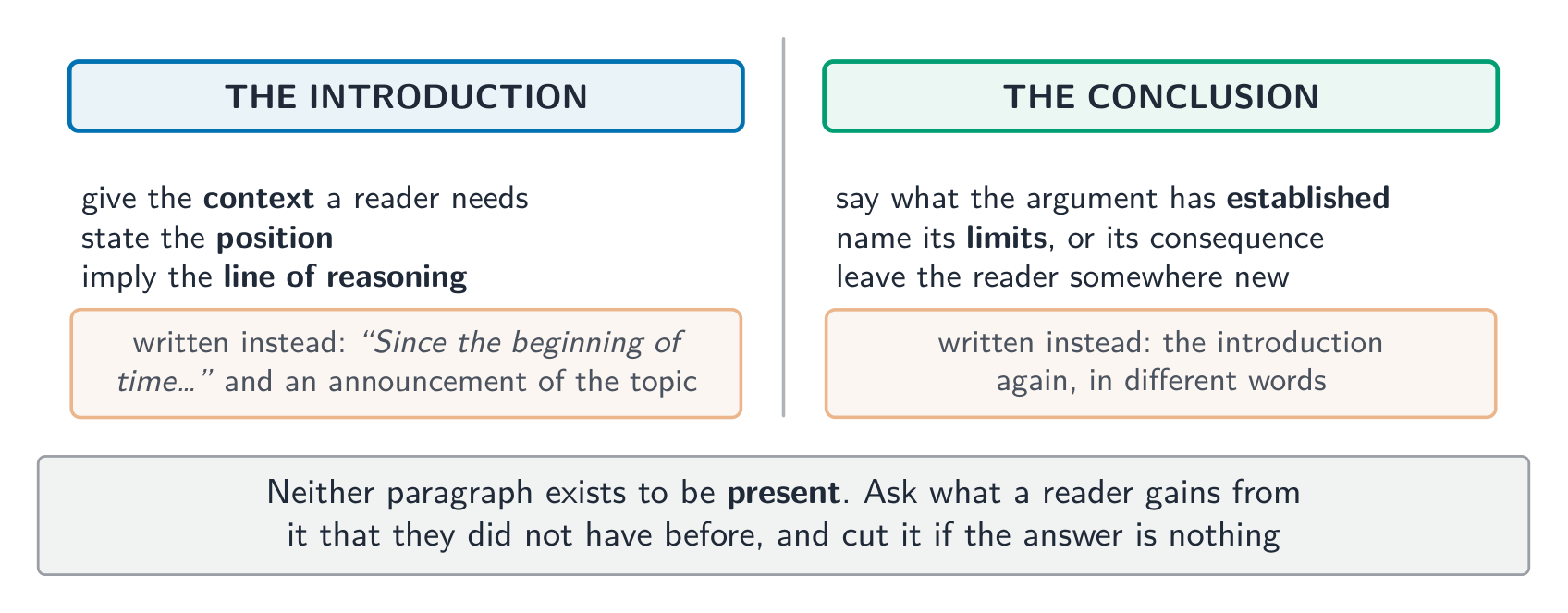
    • The introduction 引言 of an argument introduces the subject and/or the writer to the audience. It may orient the reader, establish the exigence and context, and gain attention.
    • The conclusion 结论 brings the argument to a unified end. It may present the argument's thesis, explain its significance, or situate the argument in a broader context.

    Note the verb in the second: unified. A conclusion is not a summary; it is the point at which the parts are shown to have been one argument.

    עברית

    יחידה 4 מכסה את שני המיקומים בטקסט שבהם בחירותיו של הכותב נראות ביותר - בתחילה ובסוף - ומשלים את רשימת שיטות הפיתוח של CED.

    • ה-מבוא 引言 של ארגומנט מציג את הנושא ו/או את הכותב לקהל. הוא עשוי ליישר את הקורא, לקבוע את העניין וההקשר, ולהשיג תשומת לב.
    • הסיכום brings the argument to a unified end. הוא עשוי להציג את האמפסה של הטענה, להסביר את חשיבותה או למקם אותה בהקשר רחב יותר.

    שים לב לפועל בשורה השנייה: unified. סיכום אינו תמצית; הוא הנקודה שבה מוצגת העובדה שהחלקים היו למעשה טענה אחת.

    Neither paragraph exists to be present - ask what a reader gains from it
    Vocabulary · ⁨מילון מונחים⁩ Train · ⁨אימון⁩
    English עברית
    introduction/ˌɪntrəˈdʌkʃn/ הקדמה
    conclusion/kənˈkluːʒn/ מסקנה
    comparison-contrast/kəmˈpærɪsn ˈkɒntræst/ השוואה והבדלה
    definition or description/ˌdefɪˈnɪʃn ɔː dɪˈskrɪpʃn/ הגדרה או תיאור
    4.2

    Writing Introductions and Conclusions · ⁨כתיבת פתיחות וסיכומים⁩

    Syllabus · ⁨סיילבוס⁩
    English

    Enduring Understanding (RHS-1): Individuals write within a particular situation and make strategic writing choices based on that situation.

    Learning Objective 2.A: Writing – Write introductions and conclusions appropriate to the purpose and context of the rhetorical situation.

    • RHS-1.I The introduction of an argument introduces the subject and/ or writer of the argument to the audience. An introduction may present the argument’s thesis. An introduction may orient, engage, and/or focus the audience by presenting quotations, intriguing statements, anecdotes, questions, statistics, data, contextualized information, or a scenario.
    • RHS-1.J The conclusion of an argument brings the argument to a unified end. A conclusion may present the argument’s thesis. It may engage and/or focus the audience by explaining the significance of the argument within a broader context, making connections, calling the audience to act, suggesting a change in behavior or attitude, proposing a solution, leaving the audience with a compelling image, explaining implications, summarizing the argument, or connecting to the introduction.
    עברית

    הבנה מתמשכת (RHS-1): אנשים כותבים בתוך מצב רטורי ספציפי ועושים בחירות כתיבה אסטרטגיות על בסיס המצב הזה.

    מטרות למידה 2.A: כתיבה – לכתוב הקדמות וסיומים המתאימים למטרה ולקontekst של המצב הרטורי.

    • RHS-1.I ההקדמה לארגומנט מציגה את נושא הארגומנט ו/או את הסופר שלו לקהל. הקדמה עשויה להציג את התזה של הארגומנט. הקדמה עשויה להנחות, להעניין ול/או להתמקד בקהל על ידי הצגת ציטטים, הצהרות מעניינות, אנוקדוטות, שאלות, סטטיסטיקות, נתונים, מידע ממוקם בהקשר, או תרחיש.
    • RHS-1.J הסיום של ארגומנט מביא את הארגומנט לסוף מאוחד. סיום עשוי להציג את התזה של הארגומנט. הוא עשוי להעניין ול/או להתמקד בקהל על ידי הסבר החשיבות של הארגומנט בתוך הקשר רחב יותר, יצירת קשרים, קריאה לקהל לפעולה, הצעה לשינוי בהתנהגות או בגישה, הצעת פתרון, השארת הדמיון עם תמונה מרגשת, הסבר השלכות, סיכום הארגומנט, או חיבור להקדמה.

    Source: College Board AP Course and Exam Description · ⁨מקור: תיאור הקורס והמבחן של College Board AP⁩

    English

    On the exam, both are worth writing well but neither is worth writing long. A useful discipline:

    • An introduction that positions the subject and states a defensible thesis in two or three sentences is complete. Everything else in a timed essay is better spent on evidence and commentary.
    • A conclusion that says what follows from the argument - its significance, or its wider implication - does more than one that restates the paragraphs.

    The weakest conclusion is the one that re-lists what the essay already said. The reader has just read it. Say instead what it means, or what it obliges.

    עברית

    במבחן, חשוב לכתוב היטב גם את השניים, אך אף אחד מהם לא דורש אורך רב. משיטה שימונית:

    • פתיחה שממקמת את הנושא ומגבירה אמפסה הגנתית בשתי או שלוש שורות היא שלמה. כל שאר התוכן במאמר בעל זמן מוגבל טוב יותר להקדיש לו להוכחות ולביקורת.
    • סיכום שמאומר מה נובע מהטענה – חשיבותה או השפעתה הרחבה – עושה יותר מאשר זה שמשתמש בחזרה על הפרטים.

    הסיכום החלש ביותר הוא זה שמפרט מחדש מה שהמאמר כבר אמר. הקורא קרא זאת עתה. במקום זאת, אמור מה המשמעות או מה ההשלכות.

    4.3

    Identifying the Overarching Thesis · ⁨זיהוי הטענה המרכזית⁩

    Syllabus · ⁨סיילבוס⁩
    English

    Enduring Understanding (CLE-1): Writers make claims about subjects, rely on evidence that supports the reasoning that justifies the claim, and often acknowledge or respond to other, possibly opposing, arguments.

    Learning Objective 3.B: Reading – Identify and describe the overarching thesis of an argument, and any indication it provides of the argument’s structure.

    • CLE-1.O A thesis statement may preview the line of reasoning of an argument. This is not to say that a thesis statement must list the points of an argument, aspects to be analyzed, or specific evidence to be used in an argument.
    עברית

    הבנה מתמשכת (CLE-1): כותבים מטילים טענות בנושאים, נסמכים על עדויות התומכות בלוגיקה המצדיקה את הטענה, ולעיתים קרובות מכירים או מגיבים לטענות אחרות, אולי מתנגדות.

    מטרות למידה 3.B: קריאה – זיהוי ותיאור thesis כללי של טיעון, וכל רמז שמספק על מבנה הטיעון.

    • CLE-1.O תזה עשויה לטמון מראש את קו ההיכרות של ארגומנט. דבר זה אינו אומר שתזה חייבת לרשום את נקודות הארגומנט, היבטים שיועדו להיות מנותחים, או ראיות ספציפיות שייستخدمו בארגומנט.

    Source: College Board AP Course and Exam Description · ⁨מקור: תיאור הקורס והמבחן של College Board AP⁩

    English

    The CED adds a precise refinement here: a thesis statement may preview the line of reasoning of an argument - and then, immediately, this is not to say that a thesis statement must list the reasons.

    That double statement is worth holding, because both errors are common. A thesis that previews nothing leaves the essay shapeless. A thesis mechanically listing three reasons is not required and often produces a rigid essay that cannot develop.

    עברית

    ה-CED מוסיף כאן דיוק מדויק: הצהרת אמפסה עשויה לחזות את קו הניסוח של הטענה – ואז, מיד, זה אינו אומר שהצהרת אמפסה חייבת לרשום את הסיבות.

    ההצהרה הכפולה הזו שווה לשמור עליה, כי שני השגיאות נפוצות. אמפסה שלא מחזירה דבר משאירה למאמר צורה ללא גבולות. אמפסה שמפרטת מכנית שלוש סיבות אינה נדרשת ולעיתים מייצרת מאמר קשיח שאינו יכול להתפתח.

    4.4

    Writing a Thesis Statement · ⁨כתיבת משפט טענה⁩

    Syllabus · ⁨סיילבוס⁩
    English

    Enduring Understanding (CLE-1): Writers make claims about subjects, rely on evidence that supports the reasoning that justifies the claim, and often acknowledge or respond to other, possibly opposing, arguments.

    Learning Objective 4.B: Writing – Write a thesis statement that requires proof or defense and that may preview the structure of the argument.

    • CLE-1.O A thesis statement may preview the line of reasoning of an argument. This is not to say that a thesis statement must list the points of an argument, aspects to be analyzed, or specific evidence to be used in an argument.
    עברית

    הבנה מתמשכת (CLE-1): כותבים מטילים טענות בנושאים, נסמכים על עדויות התומכות בלוגיקה המצדיקה את הטענה, ולעיתים קרובות מכירים או מגיבים לטענות אחרות, אולי מתנגדות.

    מטרות למידה 4.B: כתיבה – כתבו משפט טענה הדורש הוכחה או הגנה ואשר עשוי להציג מראש את מבנה הטיעון.

    • CLE-1.O תזה עשויה לטמון מראש את קו ההיכרות של ארגומנט. דבר זה אינו אומר שתזה חייבת לרשום את נקודות הארגומנט, היבטים שיועדו להיות מנותחים, או ראיות ספציפיות שייستخدمו בארגומנט.

    Source: College Board AP Course and Exam Description · ⁨מקור: תיאור הקורס והמבחן של College Board AP⁩

    English

    For your own writing, the practical version:

    • The thesis must be defensible. Non-negotiable, and it is the whole of the thesis point.
    • It may indicate the shape of the reasoning. Do it when the shape is genuinely load-bearing; do not do it as a formula.
    • It should be specific enough to constrain what follows. A thesis so broad that any paragraph could belong under it is not directing the essay.
    עברית

    לכתיבה שלך, הגרסה המעשית:

    • האמפסה חייבת להיות הגנתית. בלתי מתפשר, והיא מהות האמפסה עצמה.
    • היא עשויה להצביע על צורת הניסוח. עשה זאת כאשר הצורה באמת נושאת משקל; אל תעשה זאת כפורמולה.
    • היא צריכה להיות ספציפית מספיק כדי לקבוע מה יבוא לאחר מכן. אמפסה כה רחבה עד שכל פרט יכול להיכלל תחתיה אינה מכוונת את המאמר.
    Three questions, run in this order, before the essay is written
    Explore · ⁨חקור⁩

    Run the three thesis gates in order · ⁨הפעל את שלושת סנפירי הניסוח המרכזי בסדר⁩

    A sentence can be beautifully arguable and still answer a prompt you were not set — which is why the order matters. · ⁨משפט יכול להיות מעולה ומוסמך, אך עדיין לענות על שאלה שאינכם מתבקשים לענות עליה — ולכן הסדר חשוב.⁩

    4.5

    Recognizing Methods of Development · ⁨זיהוי שיטות פיתוח⁩

    Syllabus · ⁨סיילבוס⁩
    English

    Enduring Understanding (REO-1): Writers guide understanding of a text’s lines of reasoning and claims through that text’s organization and integration of evidence.

    Learning Objective 5.C: Reading – Recognize and explain the use of methods of development to accomplish a purpose.

    • REO-1.G Methods of development are common approaches writers frequently use to develop and organize the reasoning of their arguments. A method of development provides an audience with the means to trace a writer’s reasoning in an argument.
    • REO-1.K When developing ideas through comparison-contrast, writers present a category of comparison and then examine the similarities and/or differences between the objects of the comparison. When analyzing similarities and/or differences, like categories of comparison must be used.
    • REO-1.L When developing ideas through a definition or description, writers relate the characteristics, features, or sensory details of an object or idea, sometimes using examples or illustrations.
    עברית

    הבנה מתמשכת (REO-1): סופרים מדרכים את הבנת קווי ההסברה והטענות של טקסט דרך הארגון והשילוב של הממצאים בטקסט.

    מטרות למידה 5.C: קריאה – לזהות ולהסביר את השימוש בשיטות פיתוח כדי להשגת מטרה.

    • REO-1.G שיטות פיתוח הן גישות נפוצות שסופרים משתמשים בהן לעיתים קרובות לפיתוח ולארגון ההיכרות של הארגומנט שלהם. שיטת פיתוח מספקת לקהל את האמצעים לעקוב אחר ההיכרות של הסופר בארגומנט.
    • REO-1.K כאשר מפתחים רעיונות באמצעות השוואה-ניגוד, סופרים מציגים קטגוריית השוואה ואז בוחנים את הדמיונות ו/או ההבדלים בין אובייקטי ההשוואה. בעת ניתוח דמיונות ו/או הבדלים, יש להשתמש בקטגוריות השוואה כמו-מיניות.
    • REO-1.L כאשר מפתחים רעיונות באמצעות הגדרה או תיאור, סופרים מקשרים מאפיינים, תכונות או פרטים חושכיים של אובייקט או רעיון, לעיתים שימוש בדוגמאות או הדמיות.

    Source: College Board AP Course and Exam Description · ⁨מקור: תיאור הקורס והמבחן של College Board AP⁩

    English

    Unit 3 covered narration and cause-effect. Unit 4 adds the rest:

    • Developing through comparison-contrast 比较对照: writers present a category of comparison and then examine similarities and differences within it. The category is the part students omit - a comparison without a stated basis is two descriptions side by side.
    • Developing through definition or description 定义与描写: writers relate the characteristics, features, or sensory details of a subject.

    Definition is more powerful than it looks. An argument that turns on what a word means - what counts as success, as fairness, as progress - is an argument that has moved to the ground where it can actually be won.

    עברית
    The five methods, with the job each one is right for
    בחר את השיטה שהניסוח דורש, לא זו שהנושא מציע

    היחידה 3 עסקה בסיפוריות ובסיבה-תוצאה. היחידה 4 מוסיפה את שאר הדברים:

    • פיתוח דרך השוואה-הבדלה 比较对照: סופרים מציגים קטגוריית השוואה ואז בודקים דמיונות והבדלים בתוכה. הקטגוריה היא החלק שסטודנטים נוטים להשמיט – השוואה ללא בסיס מפורש היא שתי תיאורים לצד זה.
    • פיתוח דרך הגדרה או תיאור 定义与描写: סופרים מקשרים את המאפיינים, התכונות או הפרטים החושיים של הנושא.

    ההגדרה חזקה יותר ממה שהיא נראית. ארגומנט שמתמקד במשמעות של מילה - מה נחשב להצלחה, לצדק, להתקדמות - הוא ארגומנט שעבר לאזור שבו ניתן באמת לנצח.

    4.6

    Using Methods of Development · ⁨שימוש בשיטות פיתוח⁩

    Syllabus · ⁨סיילבוס⁩
    English

    Enduring Understanding (REO-1): Writers guide understanding of a text’s lines of reasoning and claims through that text’s organization and integration of evidence.

    Learning Objective 6.C: Writing – Use appropriate methods of development to advance an argument.

    • REO-1.G Methods of development are common approaches writers frequently use to develop and organize the reasoning of their arguments. A method of development provides an audience with the means to trace a writer’s reasoning in an argument.
    • REO-1.K When developing ideas through comparison-contrast, writers present a category of comparison and then examine the similarities and/or differences between the objects of the comparison. When analyzing similarities and/or differences, like categories of comparison must be used.
    • REO-1.L When developing ideas through a definition or description, writers relate the characteristics, features, or sensory details of an object or idea, sometimes using examples or illustrations.
    עברית

    הבנה מתמשכת (REO-1): סופרים מדרכים את הבנת קווי ההסברה והטענות של טקסט דרך הארגון והשילוב של הממצאים בטקסט.

    מטרות למידה 6.C: כתיבה – להשתמש בשיטות פיתוח מתאימות כדי לקדם ארגומנט.

    • REO-1.G שיטות פיתוח הן גישות נפוצות שסופרים משתמשים בהן לעיתים קרובות לפיתוח ולארגון ההיכרות של הארגומנט שלהם. שיטת פיתוח מספקת לקהל את האמצעים לעקוב אחר ההיכרות של הסופר בארגומנט.
    • REO-1.K כאשר מפתחים רעיונות באמצעות השוואה-ניגוד, סופרים מציגים קטגוריית השוואה ואז בוחנים את הדמיונות ו/או ההבדלים בין אובייקטי ההשוואה. בעת ניתוח דמיונות ו/או הבדלים, יש להשתמש בקטגוריות השוואה כמו-מיניות.
    • REO-1.L כאשר מפתחים רעיונות באמצעות הגדרה או תיאור, סופרים מקשרים מאפיינים, תכונות או פרטים חושכיים של אובייקט או רעיון, לעיתים שימוש בדוגמאות או הדמיות.

    Source: College Board AP Course and Exam Description · ⁨מקור: תיאור הקורס והמבחן של College Board AP⁩

    English

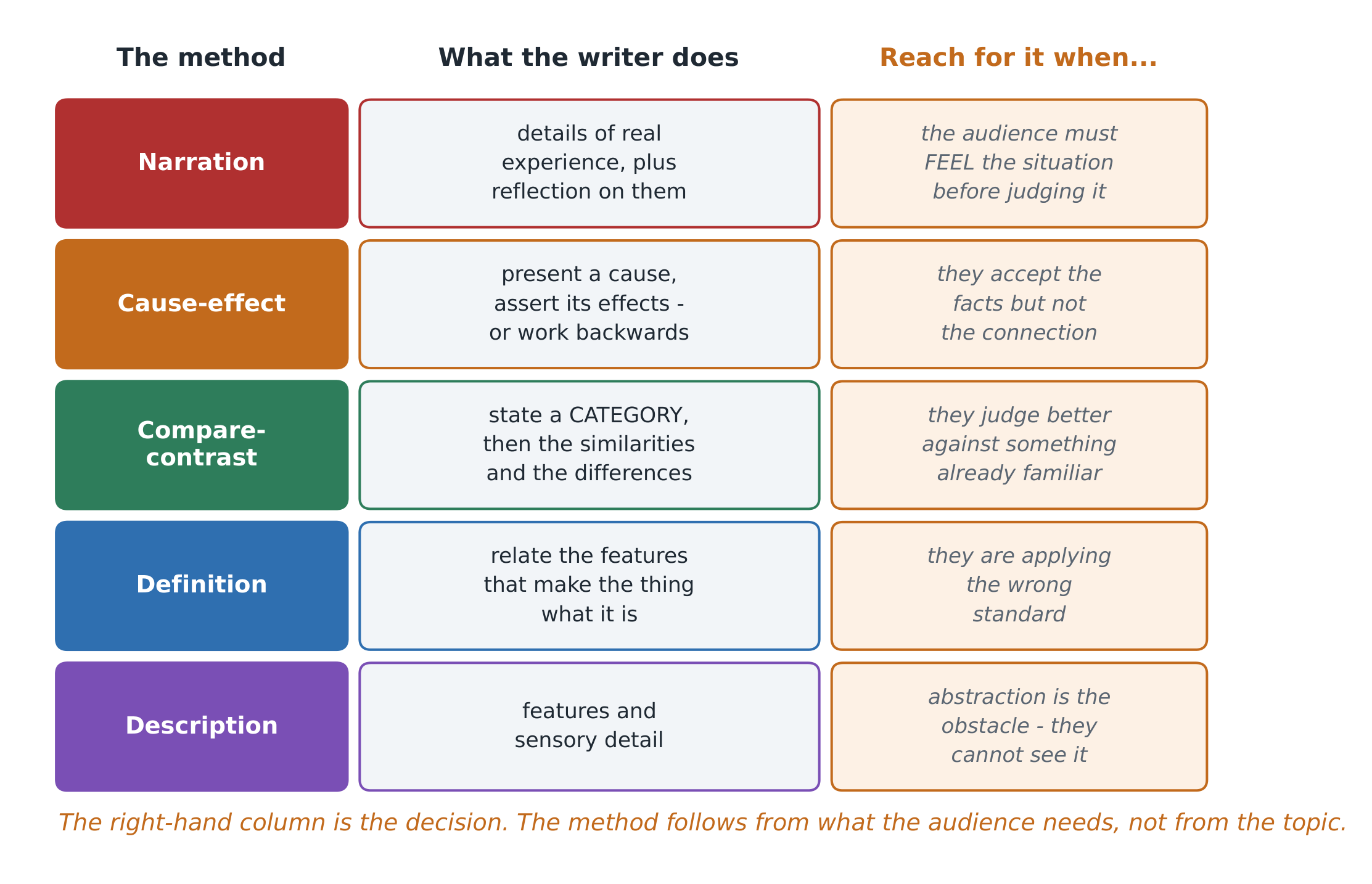
    The choice is rhetorical. Ask what the audience needs before they will accept your claim:

    • They need to see it, and abstraction is the obstacle: description.
    • They accept the facts but not the connection: cause-effect.
    • They are applying the wrong standard: definition.
    • They will judge better against something familiar: comparison-contrast.
    • They need to feel the situation: narration.

    Worked example (a real AP exam task). A Question 3 argument prompt asks you to take a position on whether a common practice is beneficial. A student who reaches for description writes a vivid paragraph nobody disputes. A student who reaches for definition writes: "Whether the practice is beneficial depends on what we count as benefit. If benefit means measurable short-term gain, the practice succeeds; if it means durable capability, the same evidence shows it failing." That paragraph has relocated the argument onto ground where the evidence actually decides something - which is the kind of move the sophistication point exists to reward.

    עברית

    הבחירה היא רטורית. שאל מה הקהל צריך כדי לקבל את הטענה שלך:

    • הם צריכים לראות את זה, וההשחזה היא המכשול: תיאור.
    • הם מקבלים את העובדות אך לא את הקשר: סיבה-תוצאה.
    • הם משתמשים בקריטריון הלא נכון: הגדרה.
    • הם יפסקו טוב יותר בהשוואה לדבר מוכר: השוואה-ניגוד.
    • הם צריכים להרגיש את המצב: סיפור/ניסוי.

    דוגמא פתורה (משימת בוחן AP אמיתית). שאלה 3 בארגומנט מבקשת ממך לקחת עמדה לגבי כך אם ת practice נפוצה היא מועילה. סטודנט שמסתמך על תיאור כותב פרגרף חי וצבעוני שאף אחד אינו טורד. סטודנט שמסתמך על הגדרה כותב: "האם הת practice מועילה תלויה במו שאנו מחשיבים לטובה. אם 'טובה' פירושה רווח קצר-טווח מדוד, הת practice מצליחה; אם היא פירושה יכולת מתמשכת, אותו דבר מראה שהיא נכשלה." הפרגרף הזה שינה את הארגומנט לאזור שבו העובדות בפועל מחליטות דבר מה - וזה בדיוק הסוג של צעד הנקודה על התפתחות מעריכה.

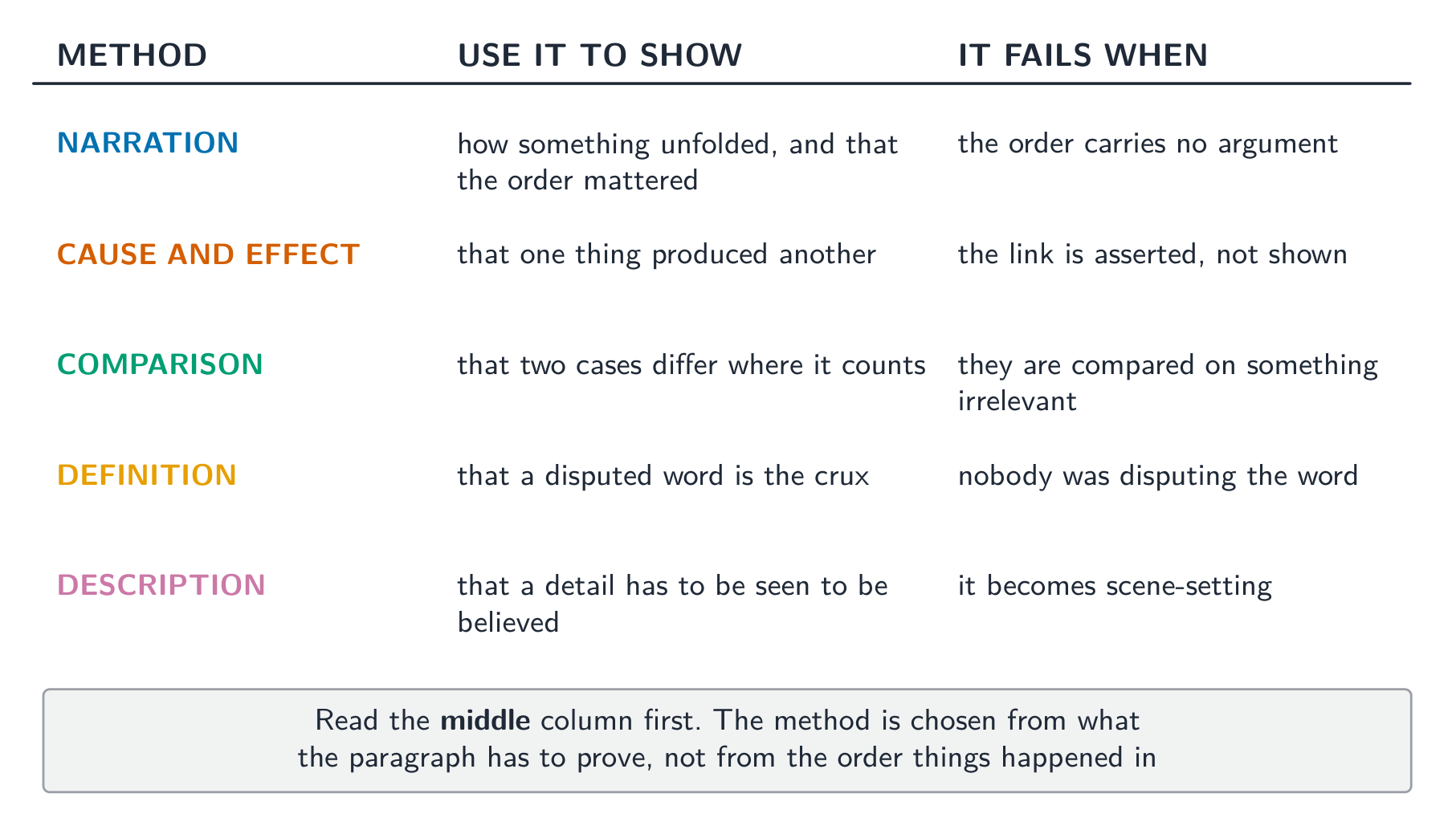
    קרא בעמודה האמצעית תחילה: השיטה נובעת מכך שהפרגרף צריך להוכיח
    Explore · ⁨חקור⁩

    Choose the method from the job · ⁨בחר את השיטה מתוך הנדרש⁩

    The method follows from what the paragraph has to prove, not from the order things happened in. · ⁨השיטה נובעת מכך שהפרק צריך להוכיח, ולא מהסדר הזמני של האירועים.⁩

    4.6

    Exam tips · ⁨טיפים לבחינות⁩

    English
    • Introductions should be short and load-bearing: position the subject, state a defensible thesis, move on.
    • A conclusion that restates earns least. Say what the argument means or obliges.
    • A thesis may preview the reasoning; it is not required to list reasons. Both errors are common.
    • Comparison needs a stated category. Without one you have written two descriptions, not a comparison.
    • Definition is the strongest move available in an argument essay whose terms are contestable.
    • Pick a method of development from what the audience needs, not from what the topic suggests.
    עברית
    • פתיחות צריכות להיות קצרות ונושאות מטען: הצג את הנושא, גיבש תזה הגנה, ומשיך.
    • סיכום שחוזר זוכה בחלקים הכי פחותים. אמור מה הארגומנט משמעות או מחייב.
    • תזה יכולה לעבור על ההיבטים; היא אינה חייבת לרשום את הסיבות. שני השגיאות נפוצות.
    • השוואה דורשת קטגוריית הצהרה. ללא אחת כתבת שני תיאורים, לא השוואה.
    • הגדרה היא הצעד החזק ביותר הזמין בארגומנט מאמר whose המונחים שנויים במחלוקת.
    • בחר שיטת פיתוח ממה שהקהל צריך, ולא ממה שהנושא מציע.
  • 5

    Organization, Coherence, and Style · ⁨ארגון, קוherencia וסגנון⁩

    Watch lesson · ⁨צפה בשיעור⁩
    5.1

    Describing the Line of Reasoning · ⁨תיאור קו ההיכרות⁩

    Syllabus · ⁨סיילבוס⁩
    English

    Enduring Understanding (REO-1): Writers guide understanding of a text’s lines of reasoning and claims through that text’s organization and integration of evidence.

    Learning Objective 5.A: Reading – Describe the line of reasoning and explain whether it supports an argument’s overarching thesis.

    • REO-1.M The body paragraphs of a written argument make claims, support them with evidence, and provide commentary that explains how the paragraph contributes to the reasoning of the argument.
    עברית

    הבנה מתמשכת (REO-1): סופרים מדרכים את הבנת קווי ההסברה והטענות של טקסט דרך הארגון והשילוב של הממצאים בטקסט.

    מטרות למידה 5.A: קריאה – תארו את קו ההסברה והסבירו האם הוא תומך בטענת העל של הטיעון.

    • REO-1.M הפרקים העיקריים של ארגון כתוב מציגים טענות, תומכים בהן בעדויות ומספקים פירוש המסביר כיצד הפרק תורם לקו ההיבט של הארגון.

    Source: College Board AP Course and Exam Description · ⁨מקור: תיאור הקורס והמבחן של College Board AP⁩

    English

    Unit 5 turns from what an argument contains to how it holds together. It has two subjects: coherence 连贯 and the beginnings of style 文体.

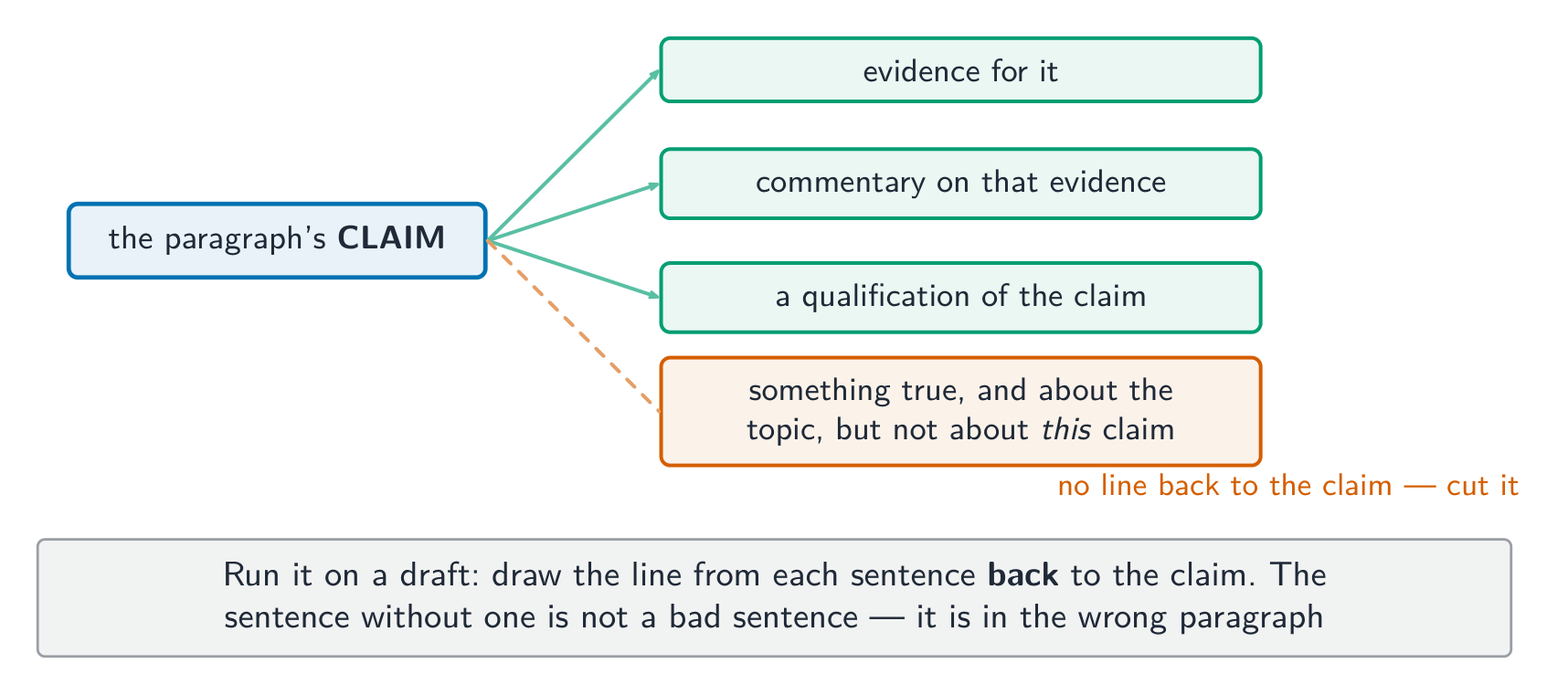
    The CED's statement of the body paragraph is exact and worth memorising: the body paragraphs of a written argument make claims, support them with evidence, and provide commentary that explains the relationship of the evidence to the claim.

    Three parts, in that order, in every body paragraph. When an AP essay loses evidence-and-commentary points, it is almost always because the third part is missing from paragraphs that have the first two.

    עברית

    יחידה 5 עוברת ממה ארגומנט מכיל לאיך הוא נתפס ביחד. יש לה שני נושאים: התאמה连贯 and the beginnings of סגנון文体.

    הצהרת CED לגוף הפרגרף היא מדויקת ושווה לשינון: פרגرافות הגוף של ארגומנט כתוב מעלים טענות, תומכות אותן בעובדות, ומספקות תגובה שהסבירה את הקשר בין העובדה לטענה.

    שלושה חלקים, בסדר זה, בכל פרגרף גוף. כאשר מאמר AP מאבד נקודות על עובדות ותגובות, זה כמעט תמיד כי החלק השלישי חסר בפרגرافות שיש בהן את שני הראשונים.

    5.2

    Developing a Line of Reasoning and Commentary · ⁨פיתוח קו טיעון ופירוש⁩

    Syllabus · ⁨סיילבוס⁩
    English

    Enduring Understanding (REO-1): Writers guide understanding of a text’s lines of reasoning and claims through that text’s organization and integration of evidence.

    Learning Objective 6.A: Writing – Develop a line of reasoning and commentary that explains it throughout an argument.

    • REO-1.M The body paragraphs of a written argument make claims, support them with evidence, and provide commentary that explains how the paragraph contributes to the reasoning of the argument.
    עברית

    הבנה מתמשכת (REO-1): סופרים מדרכים את הבנת קווי ההסברה והטענות של טקסט דרך הארגון והשילוב של הממצאים בטקסט.

    מטרות למידה 6.A: כתיבה – פתחו קו הסברה ותגובה המסבירים אותו לאורך כל הטיעון.

    • REO-1.M הפרקים העיקריים של ארגון כתוב מציגים טענות, תומכים בהן בעדויות ומספקים פירוש המסביר כיצד הפרק תורם לקו ההיבט של הארגון.

    Source: College Board AP Course and Exam Description · ⁨מקור: תיאור הקורס והמבחן של College Board AP⁩

    English

    Applied to your own writing: draft the claims first, as a list, before writing any paragraph. You then have the line of reasoning in front of you and can check that it moves.

    Then, for each claim, write the paragraph in its three parts deliberately. A useful habit under exam conditions is to make the commentary sentence begin with a word that forces a relationship - because, which means, so, the effect of this is - because those words cannot be followed by a restatement.

    עברית

    מיושם בכתיב שלך: ערוך את הטענות תחילה, כרשימה, לפני כתיבת כל פרגרף. אז יהיה לך קו ההיבטים מולך ותוכל לבדוק שהוא זז.

    אז, לכל טענה, כתוב את הפרגרף בשלושת החלקים באופן מכוון. הרגל מועילה בתנאי בוחן היא להפיק את משפט התגובה עם מילה שמונעת קשר - כי, שזה אומר, לכן, ההשפעה של זה היא - כי מילים אלו לא יכולות להיות מופעלות על ידי חזרה.

    5.3

    Organization, Unity, and Coherence · ⁨ארגון, יחידה וקוהרנטיות⁩

    Syllabus · ⁨סיילבוס⁩
    English

    Enduring Understanding (REO-1): Writers guide understanding of a text’s lines of reasoning and claims through that text’s organization and integration of evidence.

    Learning Objective 5.B: Reading – Explain how the organization of a text creates unity and coherence and reflects a line of reasoning.

    • REO-1.N Coherence occurs at different levels in a piece of writing. In a sentence, the idea in one clause logically links to an idea in the next. In a paragraph, the idea in one sentence logically links to an idea in the next. In a text, the ideas in one paragraph logically link to the ideas in the next.
    • REO-1.O Repetition, synonyms, pronoun references, and parallel structure may indicate or develop a relationship between elements of a text.
    • REO-1.P Transitional elements are words or other elements (phrases, clauses, sentences, or paragraphs) that assist in creating coherence among sentences, paragraphs, or sections in a text by showing relationships among ideas.
    • REO-1.Q Transitional elements can be used to introduce evidence or to indicate its relationship to other ideas or evidence in that paragraph or in the text as a whole.
    עברית

    הבנה מתמשכת (REO-1): סופרים מדרכים את הבנת קווי ההסברה והטענות של טקסט דרך הארגון והשילוב של הממצאים בטקסט.

    מטרות לימוד 5.B: קריאה – הסבר כיצד ארגון הטקסט יוצר אחידות והתאמה ומשקף קו היבט.

    • REO-1.N התאמה מתרחשת ברמות שונות בכתב. במשפט, הרעיון באחד מהחלקים קשור לוגית לרעיון בחלק הבא. בפסקה, הרעיון באחד המשפטים קשור לוגית לרעיון במשפט הבא. בטקסט, הרעיונות בפסקה אחת קשורים לוגית לרעיונות בפסקה הבאה.
    • REO-1.O חזרה, סינונימים, ייחוסים לפרונים ומבנה מקביל עשויים להצביע או לפתח קשר בין אלמנטים של הטקסט.
    • REO-1.P אלמנטים מעבר הם מילים או אלמנטים אחרים (ביטויים, חלקים, משפטים או פרקים) שמסייעים ביצירת התאמה בין משפטים, פרקים או חלקים בטקסט על ידי הצגת הקשרים בין רעיונות.
    • REO-1.Q ניתן להשתמש באלמנטים מעבר כדי להציג עדות או כדי לציין את הקשר שלה לרעיונות אחרים או לעדויות בפסקה זו או בטקסט כולו.

    Source: College Board AP Course and Exam Description · ⁨מקור: תיאור הקורס והמבחן של College Board AP⁩

    English

    Coherence occurs at different levels in a piece of writing:

    • In a sentence, the idea in one clause logically links to the idea in another.
    • In a paragraph, each sentence builds on the one before it.
    • Across the whole text, each paragraph relates to the line of reasoning.

    The CED then names the devices that create those links:

    • Repetition 重复, synonyms 同义词, pronoun references 代词指代, and parallel structure 平行结构 may indicate or develop a relationship between ideas.
    • Transitional elements 过渡成分 are words or other elements - phrases, clauses, sentences, or whole paragraphs - that assist in creating coherence.
    עברית
    הקוהרנטיות נבנית בשלושה רמות ובחמישה מכשירים שמום
    המכשירים נבחנים בשמם - והם מה שהשאלת "מבנה" שואלת בעצם

    הקוהרנטיות מתרחשת ברמות שונות בטקסט כתיבה:

    • ב-משפט, הרעיון באחד מהחלקים קשור לוגית לרעיון בחלק אחר.
    • ב-פרagraf, כל משפט בונה על הקודם לו.
    • ב-טקסט כולו, כל פרagraf מקושר לקו ההסבר.

    ה-CED מציין את המכשירים היוצרים קשרים אלו:

    • חזרה, סינונימים, יחוסים פרונומליים ומבנה מקביל עשויים להצביע על קשר בין רעיונות או לפתח אותו.
    • רכיבים מעבר הם מילים או רכיבים אחרים - ביטויים, חלקים, משפטים או פרagrafs שלמים - שמסייעים ביצירת קוהרנטיות.
    מבחן היחידה: למשוך קו מכל משפט אחורה לעיקר הטענה
    Vocabulary · ⁨מילון מונחים⁩ Train · ⁨אימון⁩
    English עברית
    coherence/kəʊˈhɪərəns/ רצף
    style/staɪl/ סגנון
    Repetition/ˌrepəˈtɪʃn/ חזרה
    synonyms/ˈsɪnənɪmz/ סינונימים
    pronoun references/ˈprəʊnaʊn ˈrefrənsɪz/ יחסים עם pronoun
    parallel structure/ˈpærəlel ˈstrʌktʃə/ מבנה מקביל
    Transitional elements/trænˈsɪʃənl ˈelɪmənts/ אלמנטים מעבר
    connotative and denotative meanings/kɒnəˈtætɪv ænd dɪˈnəʊtətɪv ˈmiːnɪŋz/ משמעות קונוטטיבית ודנוטיבית
    5.4

    Using Transitional Elements · ⁨שימוש ברכיבי מעבר⁩

    Syllabus · ⁨סיילבוס⁩
    English

    Enduring Understanding (REO-1): Writers guide understanding of a text’s lines of reasoning and claims through that text’s organization and integration of evidence.

    Learning Objective 6.B: Writing – Use transitional elements to guide the reader through the line of reasoning of an argument.

    • REO-1.N Coherence occurs at different levels in a piece of writing. In a sentence, the idea in one clause logically links to an idea in the next. In a paragraph, the idea in one sentence logically links to an idea in the next. In a text, the ideas in one paragraph logically link to the ideas in the next.
    • REO-1.O Repetition, synonyms, pronoun references, and parallel structure may indicate or develop a relationship between elements of a text.
    • REO-1.P Transitional elements are words or other elements (phrases, clauses, sentences, or paragraphs) that assist in creating coherence among sentences, paragraphs, or sections in a text by showing relationships among ideas.
    • REO-1.Q Transitional elements can be used to introduce evidence or to indicate its relationship to other ideas or evidence in that paragraph or in the text as a whole.
    עברית

    הבנה מתמשכת (REO-1): סופרים מדרכים את הבנת קווי ההסברה והטענות של טקסט דרך הארגון והשילוב של הממצאים בטקסט.

    מטרות לימוד 6.B: כתיבה – שימוש באלמנטים מעבר להנחיית הקורא דרך קו ההיבט של ארגון.

    • REO-1.N התאמה מתרחשת ברמות שונות בכתב. במשפט, הרעיון באחד מהחלקים קשור לוגית לרעיון בחלק הבא. בפסקה, הרעיון באחד המשפטים קשור לוגית לרעיון במשפט הבא. בטקסט, הרעיונות בפסקה אחת קשורים לוגית לרעיונות בפסקה הבאה.
    • REO-1.O חזרה, סינונימים, ייחוסים לפרונים ומבנה מקביל עשויים להצביע או לפתח קשר בין אלמנטים של הטקסט.
    • REO-1.P אלמנטים מעבר הם מילים או אלמנטים אחרים (ביטויים, חלקים, משפטים או פרקים) שמסייעים ביצירת התאמה בין משפטים, פרקים או חלקים בטקסט על ידי הצגת הקשרים בין רעיונות.
    • REO-1.Q ניתן להשתמש באלמנטים מעבר כדי להציג עדות או כדי לציין את הקשר שלה לרעיונות אחרים או לעדויות בפסקה זו או בטקסט כולו.

    Source: College Board AP Course and Exam Description · ⁨מקור: תיאור הקורס והמבחן של College Board AP⁩

    English

    Transitions have a second job the CED names explicitly: they introduce evidence or indicate its relationship to other ideas or evidence.

    That is the difference between decorative and functional transitions. Furthermore adds nothing - it says only "here is another sentence". Even in the cases where the effect is smallest tells the reader what relationship is coming. Choose transitions that carry information about the relationship, not ones that merely mark a boundary.

    Note also that a transitional element may be a whole paragraph. In a long argument, a short paragraph whose only job is to turn the reasoning is legitimate and often elegant.

    עברית

    למעברים יש משימה שנייה שה-CED מציין במפורש: הם מציגים הוכחה או מראים את הקשר שלה לרעיונות או להוכחות אחרות.

    זהו ההבדל בין מעברים דקורטיביים לבין מעברים פונקציונליים. Furthermore (בנוסף) אינו מוסיף דבר - הוא אומר רק "הנה משפט נוסף". Even in the cases where the effect is smallest (אף במקרים בהם האפקט הקטן ביותר) מסביר לקורא איזה קשר צפוי. בחרו מעברים המכילים מידע על הקשר, ולא רק אלו שמסמנים גבול.

    שימו לב גם כי רכיב מעבר עשוי להיות פרagraf שלם. בארגומנט ארוך, פרagraf קצר שמטרתו היחידה היא לסובב את ההסבר הוא חוקי ולעיתים אלגנטי.

    מעבר הוא הבטחה לגבי המשפט הבא - שבירה שלו היא טעות לוגית
    Explore · ⁨חקור⁩

    Match each transition to the promise it makes · ⁨התאימו כל קישור לתביעה שהוא מציע⁩

    A transition is a claim about how two ideas stand to each other. Breaking that promise is a reasoning error, not a style problem. · ⁨קישור הוא טענה לגבי היחס בין רעיונות. שבירה של תביעה זו היא שגיאה בהסקה, ולא בעיית סגנון.⁩

    5.5

    Word Choice, Comparisons, and Syntax · ⁨בחירת מילים, השוואות וסינטקס⁩

    Syllabus · ⁨סיילבוס⁩
    English

    Enduring Understanding (STL-1): The rhetorical situation informs the strategic stylistic choices that writers make.

    Learning Objective 7.A: Reading – Explain how word choice, comparisons, and syntax contribute to the specific tone or style of a text.

    • STL-1.A Words have both connotative and denotative meanings.
    • STL-1.B Descriptive words, such as adjectives and adverbs, not only qualify or modify the things they describe but also convey a perspective toward those things.
    • STL-1.C Precise word choice reduces confusion and may help the audience perceive the writer’s perspective.
    עברית

    הבנה מתמשכת (STL-1): המצב הרטורי מזהיר את הבחירות הסגנוניות האסטרטגיות שעושים הכותבים.

    מטרות לימוד 7.A: קריאה – הסבר כיצד בחירת מילים, השוואות וסינטקס תורמים לגוון או לסגנון ספציפי של הטקסט.

    • STL-1.A למילים יש גם משמעויות נלוות וגם משמעויות מילוליות.
    • STL-1.B מילים תיאוריות, כמו תארים ותוארים, לא רק מגדירות או משנות את הדברים שהן מתארות אלא גם מעבירות מבט כלפי הדברים הללו.
    • STL-1.C בחירת מילים מדויקת מצמצמת בלבול ועשויה לעזור לקהל להבין את מבט הכותב.

    Source: College Board AP Course and Exam Description · ⁨מקור: תיאור הקורס והמבחן של College Board AP⁩

    English

    Unit 5 opens the course's treatment of style with three claims about diction:

    • Words have both connotative and denotative meanings 内涵义与外延义. Denotation is what a word refers to; connotation is what it carries.
    • Descriptive words - adjectives and adverbs - not only qualify or modify what they describe but convey a perspective toward it.
    • Precise word choice reduces confusion and helps the audience perceive the writer's perspective.

    The second is the analytically useful one. When a rhetorical-analysis passage calls a policy ambitious rather than expensive, no fact has changed and the reader's disposition has. That is a rhetorical choice, and it is exactly what the question asks you to explain.

    עברית

    יחידה 5 פותחת את הטיפול של הקורס בסגנון עם שלוש טענות לגבי דיקציה:

    • למילים יש גם משמעויות קונוטטיביות וגם משמעויות דנוטטיביות. דנוטציה היא מה שמילה מציינת; קונוטציה היא מה שהיא נושאת.
    • מילים תיאוריות - תארים ותולשים - לא רק מספקות הגבלה או תיקון למה שהן מתארות אלא גם מבטאות גישה כלפי הדבר.
    • בחירת מילים מדויקת מפחיתה בלבול ועוזרת לקהל הקוראים לתפוס את נקודת המבט של המחבר.

    השני הוא זה שימושי באנליזה. כאשר תוכן לניתוח רטורי קורא למדיניות "מטימה" במקום "יקרה", לא שונה עובדה, אלא גישת הקורא. זו בחירה רטורית, והוא בדיוק מה שהשאלה מבקשת ממך להסביר.

    5.6

    Using Words and Syntax for Tone and Style · ⁨שימוש במילים ובסינטקס לעיצוב אווירה וסגנון⁩

    Syllabus · ⁨סיילבוס⁩
    English

    Enduring Understanding (STL-1): The rhetorical situation informs the strategic stylistic choices that writers make.

    Learning Objective 8.A: Writing – Strategically use words, comparisons, and syntax to convey a specific tone or style in an argument.

    • STL-1.A Words have both connotative and denotative meanings.
    • STL-1.B Descriptive words, such as adjectives and adverbs, not only qualify or modify the things they describe but also convey a perspective toward those things.
    • STL-1.C Precise word choice reduces confusion and may help the audience perceive the writer’s perspective.
    עברית

    הבנה מתמשכת (STL-1): המצב הרטורי מזהיר את הבחירות הסגנוניות האסטרטגיות שעושים הכותבים.

    מטרות לימוד 8.A: כתיבה – שימוש אסטרטגי במילים, השוואות וסינטקס להעברת גוון או סגנון ספציפי בארגון.

    • STL-1.A למילים יש גם משמעויות נלוות וגם משמעויות מילוליות.
    • STL-1.B מילים תיאוריות, כמו תארים ותוארים, לא רק מגדירות או משנות את הדברים שהן מתארות אלא גם מעבירות מבט כלפי הדברים הללו.
    • STL-1.C בחירת מילים מדויקת מצמצמת בלבול ועשויה לעזור לקהל להבין את מבט הכותב.

    Source: College Board AP Course and Exam Description · ⁨מקור: תיאור הקורס והמבחן של College Board AP⁩

    English

    For your own writing, precision is worth more than range. A concrete rule: prefer the word that is exactly right to the word that is impressive. Examiners reward control, and an inflated word used slightly wrongly reads as loss of control.

    Worked example (a real AP exam task). In a rhetorical-analysis passage a writer describes a proposal's supporters as "determined" in one paragraph and "unyielding" in the next. A low-scoring answer notes that the writer uses "strong diction". A scoring answer explains the shift: "Both words denote persistence, but 'determined' carries approval and 'unyielding' carries obstruction. By moving from one to the other without changing the facts described, the writer withdraws sympathy from the supporters while appearing only to continue describing them - so the audience's judgement shifts before any counter-argument is made." That is connotation, tone, and effect on audience in one move.

    עברית

    לכתיבה שלך, דיוק שווה יותר מגוון. כלל מעשי: העדיף את המילה שמדויקת לחלוטין על פני המילה המרשימה. בוחנים מעריכים שליטה, ומילה מופרזת שנבחרה מעט לא נכון מתפרשת כאובדן שליטה.

    דוגמה פותרת (משימת מבחן AP אמיתית). בתוכן לניתוח רטורי מחבר מתאר תומכי הצעה כ"נחוצים" בפסקה אחת וכ"עקשניים" בפסקה הבאה. תשובה שקבלה ציון נמוך מציינת שהמחבר משתמש ב"דקציה חזקה". תשובה שקבלה ציון גבוה מסבירה את השינוי: "שתי המילות מציגות עקשנות, אך 'נחוצים' מטענת אישור ו-'עקשניים' מטענת חסימה. על ידי מעבר מאחת לשנייה ללא שינוי העובדות המתוארות, המחבר מרחיק את הסימפתיה מהתומכים בעוד שנראה כאילו הוא פשוט ממשיך לתאר אותם - ולכן judgment הקהל משתנה לפני שכל טיעון נגדי מוצג." זו קונוטציה, אווירה ואפקט על הקהל בהפעלה אחת.

    נקבעו את השם, האפקט והסיכון – שבח לבד הוא רק תיאור
    Explore · ⁨חקור⁩

    Name the shape, the effect and the risk · ⁨שמו את הצורה, ההשפעה והסיכון⁩

    Analysis that only praises the effect is describing — and description does not earn commentary marks. · ⁨ניתוח שמחיין רק את ההשפעה מתאר — והתיאור אינו מייצר נקודות לניתוח.⁩

    5.6

    Exam tips · ⁨טיפים לבחינות⁩

    English
    • Every body paragraph: claim, evidence, commentary. Lost points are nearly always the third.
    • Draft your claims as a list first. It is the only way to see whether the reasoning moves.
    • Begin commentary with because, which means, so - words that cannot be followed by a restatement.
    • Know the coherence devices by name: repetition, synonyms, pronoun reference, parallel structure, transitions.
    • A transition should carry the relationship, not just mark a boundary. Furthermore usually carries nothing.
    • Connotation is where diction analysis lives. Same denotation, different disposition, is a rhetorical choice worth explaining.
    עברית
    • בכל פסקת גוף: טוענה, עדות, התعليق. נקודות שאבדו הן כמעט תמיד ההתعليق השלישי.
    • כתבו את ה-טענות שלכם כרשימה תחילה. זו הדרך היחידה לדעת אם ההסבר זורם.
    • התחיפו התעליק עם כי, שמעניין, ולכן – מילים שלא יכולות להיות בעקבותיהן חזרה של הטוענה.
    • הכירו את מכשירי הקoherence בשמם: חזרה, סינונימים, ייחוס עם פרונום, מקבילות, מעברים.
    • מעבר צריך לשאול את הקשר, לא רק לסמן גבול. Furthermore (עוד) בדרך כלל לא נושא כלום.
    • קונוטציה היא המקום שבו ניתוח הדקציה מתבצע. אותו משמעות בסיסית, גישה שונה, זו בחירה רטורית ששווה להסבר.
  • 6

    Evidence, Thesis, and Stylistic Choices · ⁨עדות, טוענה ובחירות סגנוניות⁩

    Watch lesson · ⁨צפה בשיעור⁩
    6.1

    Identifying Claims and Evidence · ⁨זיהוי טענות ועדויות⁩

    Syllabus · ⁨סיילבוס⁩
    English

    Enduring Understanding (CLE-1): Writers make claims about subjects, rely on evidence that supports the reasoning that justifies the claim, and often acknowledge or respond to other, possibly opposing, arguments.

    Learning Objective 3.A: Reading – Identify and explain claims and evidence within an argument.

    • CLE-1.P When synthesizing, writers draw upon arguments from multiple sources, strategically select the most relevant information, and combine apt and specific source material as part of their own argument.
    • CLE-1.Q A source provides information for an argument, and some sources are more reliable or credible than others.
    • CLE-1.R A position and a perspective are different. Sources may have the same position on a subject, yet each comes from a different perspective based on their background, interests, and expertise.
    • CLE-1.S When incorporating evidence or sources into an argument, the strongest arguments recognize and acknowledge the biases and limitations of the material and account for those limitations in their reasoning.
    • CLE-1.T The degree to which a source does or does not consider other positions reflects the degree to which that source is biased.
    עברית

    הבנה מתמשכת (CLE-1): כותבים מטילים טענות בנושאים, נסמכים על עדויות התומכות בלוגיקה המצדיקה את הטענה, ולעיתים קרובות מכירים או מגיבים לטענות אחרות, אולי מתנגדות.

    מטרות למידה 3.A: קריאה – זיהוי והסבר טענות ועדויות בתוך ארגומנט.

    • CLE-1.P בעת סינתזה, סופרים מתייחסים לטיעונים ממקורות שונים, בוחרים באופן אסטרטגי את המידע הרלוונטי ביותר ומשלב חומר מקור מתאים וספציפי כחלק מהטיעון האישי שלהם.
    • CLE-1.Q מקור מספק מידע לטיעון, וכמה שמקורות הם אמיתיים או אמינים יותר מאחרים.
    • CLE-1.R עמדה וזווית מבט הן דברים שונים. ייתכן שמקורות ישתמשו באותה עמדה בנושא כלשהו, אך כל אחד מהם מגיע מזווית מבט שונה על בסיס רקע, עניינים וניסיון.
    • CLE-1.S בעת השילוב של עדויות או מקורות בטיעון, הטיעונים החזקים ביותר מזהים ומכירים במגמות ובמגבלות של החומר ומחשבים מגבלות אלו בתוך ההסקות הלוגיות שלהם.
    • CLE-1.T המידה שבה מקור לוקח בחשבון או לא לוקח בחשבון עמדות אחרות משקפת את המידה שבה המקור נמצא במגמה.

    Source: College Board AP Course and Exam Description · ⁨מקור: תיאור הקורס והמבחן של College Board AP⁩

    English

    Unit 6 is the synthesis unit, and it contains the single sharpest distinction in the course.

    • When synthesising, writers draw on arguments from multiple sources, strategically select the most relevant information, and integrate it into their own argument.
    • A source provides information for an argument, and some sources are more reliable or credible than others.
    • A position and a perspective are different. Sources may hold the same position on a subject and yet each come from a different perspective.
    • The strongest arguments recognise and acknowledge the other positions that exist.
    • The degree to which a source considers other positions reflects the degree to which that source is credible - a test you can apply to any source on the exam.
    עברית

    יחידה 6 היא יחידת הסינתזה, והיא מכילה את ההבדל החד ביותר בקורס.

    • בזמן סינתזה, סופרים מתייחסים לטענות ממקורות מרובים, בחרים אסטרטגית את המידע הרלוונטי ביותר, ומשלבים אותו בטענה שלהם.
    • מקור ספק מידע עבור טיעון, ו-חלק ממקורות אמינים או אובייקטיביים יותר מאחרים.
    • עמדה ונקודת מבט הן שונות. מקורות עשויים לתמוך ב-אותה עמדה בנושא, אך כל אחד מגיע מ-נקודת מבט שונה.
    • הטיעונים החזקים ביותר מכירים ומעריכים את העמדות האחרות הקיימות.
    • המידה שבה מקור שוקל עמדות אחרות משקפת את המידה שבה המקור נחשב לאמין - מבחן שתוכלו להפעיל על כל מקור במבחן.
    ההבדל שעליו מבוססת שאלת הסינתזה
    שני מקורות יכולים להסכים ולא即便如此 לעשות עבודה לגמרי שונה בטענתכם
    הפועל מיקם את המקור לפני שהתעליק שלכם מתחיל
    Explore · ⁨חקור⁩

    Choose the attribution verb that positions the source · ⁨בחר בטיב המיוחס שמוקם את המקור⁩

    The verb commits you to something about the source's status, before your commentary starts, and costs no extra words. · ⁨הטיב מחייב אותך לגבי סטטוס המקור, לפני ההערכה שלך, וללא תוספת מילים.⁩

    Vocabulary · ⁨מילון מונחים⁩ Train · ⁨אימון⁩
    English עברית
    tone/təʊn/ טון
    shifts in tone/ʃɪfts ɪn təʊn/ שינויים בגוון
    6.2

    Developing a Paragraph with Claim and Evidence · ⁨פיתוח פרק עם טענה ועדות⁩

    Syllabus · ⁨סיילבוס⁩
    English

    Enduring Understanding (CLE-1): Writers make claims about subjects, rely on evidence that supports the reasoning that justifies the claim, and often acknowledge or respond to other, possibly opposing, arguments.

    Learning Objective 4.A: Writing – Develop a paragraph that includes a claim and evidence supporting the claim.

    • CLE-1.P When synthesizing, writers draw upon arguments from multiple sources, strategically select the most relevant information, and combine apt and specific source material as part of their own argument.
    • CLE-1.Q A source provides information for an argument, and some sources are more reliable or credible than others.
    • CLE-1.R A position and a perspective are different. Sources may have the same position on a subject, yet each comes from a different perspective based on their background, interests, and expertise.
    • CLE-1.S When incorporating evidence or sources into an argument, the strongest arguments recognize and acknowledge the biases and limitations of the material and account for those limitations in their reasoning.
    • CLE-1.T The degree to which a source does or does not consider other positions reflects the degree to which that source is biased.
    עברית

    הבנה מתמשכת (CLE-1): כותבים מטילים טענות בנושאים, נסמכים על עדויות התומכות בלוגיקה המצדיקה את הטענה, ולעיתים קרובות מכירים או מגיבים לטענות אחרות, אולי מתנגדות.

    מטרות למידה 4.A: כתיבה – פתח פרק הכולל טענה ועדויות התומכות בטענה.

    • CLE-1.P בעת סינתזה, סופרים מתייחסים לטיעונים ממקורות שונים, בוחרים באופן אסטרטגי את המידע הרלוונטי ביותר ומשלב חומר מקור מתאים וספציפי כחלק מהטיעון האישי שלהם.
    • CLE-1.Q מקור מספק מידע לטיעון, וכמה שמקורות הם אמיתיים או אמינים יותר מאחרים.
    • CLE-1.R עמדה וזווית מבט הן דברים שונים. ייתכן שמקורות ישתמשו באותה עמדה בנושא כלשהו, אך כל אחד מהם מגיע מזווית מבט שונה על בסיס רקע, עניינים וניסיון.
    • CLE-1.S בעת השילוב של עדויות או מקורות בטיעון, הטיעונים החזקים ביותר מזהים ומכירים במגמות ובמגבלות של החומר ומחשבים מגבלות אלו בתוך ההסקות הלוגיות שלהם.
    • CLE-1.T המידה שבה מקור לוקח בחשבון או לא לוקח בחשבון עמדות אחרות משקפת את המידה שבה המקור נמצא במגמה.

    Source: College Board AP Course and Exam Description · ⁨מקור: תיאור הקורס והמבחן של College Board AP⁩

    English

    The position-and-perspective distinction is what makes synthesis possible. If you sort the sources only by position, you get two piles - for and against - and a paragraph per pile. If you sort them by perspective, you can say things like:

    Both the economist and the teacher support the measure, but they support it for reasons that do not survive together: one values the measurable gain, the other the change in what students attempt.

    That sentence is synthesis. It uses two sources, is grounded in what each actually says, and produces a claim neither source makes.

    Also examinable: use the credibility test. A source that never acknowledges any other position is, by the CED's own standard, less credible - and saying so about a source is legitimate evidence in your essay.

    עברית

    ההבדל בין מיקום לבין פרספקטיבה הוא מה שמאפשר סינתזה. אם תסדרו את המקורות רק לפי מיקום, תקבלו שתי ערימות - לתומכים ולנגד - ופסקה אחת לכל ערימה. אם תסדרו אותם לפי פרספקטיבה, תוכלו לטעון דברים כמו:

    גם הכלכלן וגם המורה תומכים במדינה, אך הם תומכים בה מסיבות שאינן יכולות להתקיים יחד: אחד מעריך את הרווח הנמדד, והשני את השינוי בנסיונות התלמידים.

    משפט זה הוא סינתזה. הוא משתמש בשני מקורות, מבוסס על מה שהם אכן אומרים, ומייצר טענה שאף אחד מהמקורות לא מעלה.

    גם נבחן בבחינות: השתמשו במבחן האמינות. מקור שלא מאשר לעולם כל עמדה אחרת הוא, לפי סטנדרט ה-CED עצמו, פחות אמין - ואמירת זאת לגבי מקור היא עדות חוקית בערכון שלכם.

    שלושה צעדים הופכים מקור לעדויות - הצעד השלישי הוא שבו מתרחשת הסינתזה
    Explore · ⁨חקור⁩

    Turn a source into evidence in three moves · ⁨הפוך מקור למסמך הוכחה בשלושה צעדים⁩

    A synthesis essay is not a tour of the sources. The third move is where the synthesis happens, and it is the one most often missing. · ⁨מאמר סינתזה אינו סיור במקורות. השלב השלישי הוא שבו הסינתזה מתרחשת, והוא הרבה פעמים החסר ביותר.⁩

    6.3

    Identifying the Overarching Thesis · ⁨זיהוי הטענה המרכזית⁩

    Syllabus · ⁨סיילבוס⁩
    English

    Enduring Understanding (CLE-1): Writers make claims about subjects, rely on evidence that supports the reasoning that justifies the claim, and often acknowledge or respond to other, possibly opposing, arguments.

    Learning Objective 3.B: Reading – Identify and describe the overarching thesis of an argument, and any indication it provides of the argument’s structure.

    • CLE-1.U Consideration and use of new evidence may require revision of the thesis statement and/or changes to the line of reasoning.
    עברית

    הבנה מתמשכת (CLE-1): כותבים מטילים טענות בנושאים, נסמכים על עדויות התומכות בלוגיקה המצדיקה את הטענה, ולעיתים קרובות מכירים או מגיבים לטענות אחרות, אולי מתנגדות.

    מטרות למידה 3.B: קריאה – זיהוי ותיאור thesis כללי של טיעון, וכל רמז שמספק על מבנה הטיעון.

    • CLE-1.U התבוננות והשילוב של עדויות חדשות עשויים להצריך שינוי בטענת הטזה ו/או שינויים בקו הטיעון.

    Source: College Board AP Course and Exam Description · ⁨מקור: תיאור הקורס והמבחן של College Board AP⁩

    English

    A short but load-bearing point: consideration and use of new evidence may require revision of the thesis statement and/or changes to the line of reasoning.

    Reading a text, this means a writer's thesis may be responsive - shaped by the evidence rather than imposed on it. Look for where an argument turns.

    עברית

    נקודה קצרה אך נושאת משקל: ה consideration והשימוש בעדויות חדשות עשויים להחייב שינוי בניסוח ההשערה ו/או בשינוי בקו הטענות.

    בקריאת טקסט, הדבר מצביע על כך שההשערה של הסופר עשויה להיות תגובתית - מעוצבת על ידי העדויות ולא מופרצת עליהן. חפשו את הנקודות בהן הטענה משתנה.

    6.4

    Writing a Thesis Statement · ⁨כתיבת משפט טענה⁩

    Syllabus · ⁨סיילבוס⁩
    English

    Enduring Understanding (CLE-1): Writers make claims about subjects, rely on evidence that supports the reasoning that justifies the claim, and often acknowledge or respond to other, possibly opposing, arguments.

    Learning Objective 4.B: Writing – Write a thesis statement that requires proof or defense and that may preview the structure of the argument.

    • CLE-1.U Consideration and use of new evidence may require revision of the thesis statement and/or changes to the line of reasoning.
    עברית

    הבנה מתמשכת (CLE-1): כותבים מטילים טענות בנושאים, נסמכים על עדויות התומכות בלוגיקה המצדיקה את הטענה, ולעיתים קרובות מכירים או מגיבים לטענות אחרות, אולי מתנגדות.

    מטרות למידה 4.B: כתיבה – כתבו משפט טענה הדורש הוכחה או הגנה ואשר עשוי להציג מראש את מבנה הטיעון.

    • CLE-1.U התבוננות והשילוב של עדויות חדשות עשויים להצריך שינוי בטענת הטזה ו/או שינויים בקו הטיעון.

    Source: College Board AP Course and Exam Description · ⁨מקור: תיאור הקורס והמבחן של College Board AP⁩

    English

    Writing under time pressure, this is permission you should use. If, while drafting, you find the evidence does not support the thesis you began with, change the thesis, not the evidence. Examiners reward an argument that fits its evidence; there are no marks for having predicted your own conclusion.

    In practice, spend the first minutes reading sources and sketching claims before fixing the thesis. A thesis written after the evidence is nearly always better than one written before it.

    עברית

    כתיבה תחת לחץ זמן, זו הזכות שחובה להשתמש בה. אם, בזמן הכתיבה הראשונית, תמצאו שהעדויות אינן תומכות בהשערה שהתחלתם איתה, שנו את ההשערה, אל תשנו את העדויות. בוחנים מעריכים טענה המתאימה לעדויות שלה; אין נקודות על כך שתחזיתם את מסקנתכם העצמית.

    במעשה, הקדישו את הדקות הראשונות לקריאת המקורות ולשרטוט הטענות לפני קיבוע ההשערה. השערה שנכתבת לאחר העדויות היא כמעט תמיד טובה מזו שנכתבת לפנייה.

    6.5

    Word Choice, Comparisons, and Syntax · ⁨בחירת מילים, השוואות וסינטקס⁩

    Syllabus · ⁨סיילבוס⁩
    English

    Enduring Understanding (STL-1): The rhetorical situation informs the strategic stylistic choices that writers make.

    Learning Objective 7.A: Reading – Explain how word choice, comparisons, and syntax contribute to the specific tone or style of a text.

    • STL-1.D A writer’s tone is the writer’s attitude or feeling about a subject, conveyed through word choice and writing style.
    • STL-1.E Readers infer a writer’s tone from the writer’s word choice, and especially the positive, negative, or other connotations of those words.
    • STL-1.F A writer’s shifts in tone from one part of a text to another may suggest the writer’s qualification, refinement, or reconsideration of their perspective on a subject.
    עברית

    הבנה מתמשכת (STL-1): המצב הרטורי מזהיר את הבחירות הסגנוניות האסטרטגיות שעושים הכותבים.

    מטרות לימוד 7.A: קריאה – הסבר כיצד בחירת מילים, השוואות וסינטקס תורמים לגוון או לסגנון ספציפי של הטקסט.

    • STL-1.D הגוון של הסופר הוא העמדה או התחושה שלו לגבי נושא, המועברת באמצעות בחירת מילים וסגנון הכתיבה.
    • STL-1.E קוראים מסיקים גוון של סופר מתוך בחירת המילים שלו, ובמיוחד הקונוטציות החיוביות, השליליות או האחרות של מילים אלו.
    • STL-1.F מעברים בגוון של סופר מחלק אחד של הטקסט לחלק אחר עשויים להעיד על הסתייגות, מדויק או איחור במחשבתו של הסופר לגבי הנושא.

    Source: College Board AP Course and Exam Description · ⁨מקור: תיאור הקורס והמבחן של College Board AP⁩

    English
    • A writer's tone 语调 is the writer's attitude or feeling about a subject, conveyed through word choice and writing style.
    • Readers infer tone from word choice - especially from the positive, negative, or otherwise charged associations of the words chosen.
    • A writer's shifts in tone 语调转变 from one part of a text to another may suggest qualification, refinement, or a change in perspective.

    The third is the analytical gold. A tone shift is a visible event in a text: something changed at that point, and explaining what the writer wanted the reader to do differently after it is exactly the kind of answer that scores.

    עברית
    • הטון של סופר הוא העמדה או התחושה שלו כל respecto לנושא, המועברת באמצעות בחירת המילים וסגנון הכתיבה.
    • קוראים מסיקים טון מתוך בחירת המילים - במיוחד מתוך הקשרים חיוביים, שליליים או טעונים אחרים של המילים שנבחרו.
    • שינויים בטון של סופר מחלק אחד של הטקסט לשני עשויים להצביע על התחייבות, שכלול או שינוי בפרספקטיבה.

    השלישי הוא הזהב האנליטי. שינוי בטון הוא אירוע גלוי בטקסט: משהו השתנה בנקודה זו, והסבר על מה הסופר רצה מהקורא לעשות אחרת לאחר מכן הוא בדיוק סוג התשובה שמביאה נקודות.

    אותו משמעות דקדוקית, חמש פסקולים - הבחירה במילה היא האנליזה
    6.6

    Using Words and Syntax for Tone and Style · ⁨שימוש במילים ובסינטקס לעיצוב אווירה וסגנון⁩

    Syllabus · ⁨סיילבוס⁩
    English

    Enduring Understanding (STL-1): The rhetorical situation informs the strategic stylistic choices that writers make.

    Learning Objective 8.A: Writing – Strategically use words, comparisons, and syntax to convey a specific tone or style in an argument.

    • STL-1.D A writer’s tone is the writer’s attitude or feeling about a subject, conveyed through word choice and writing style.
    • STL-1.E Readers infer a writer’s tone from the writer’s word choice, and especially the positive, negative, or other connotations of those words.
    • STL-1.F A writer’s shifts in tone from one part of a text to another may suggest the writer’s qualification, refinement, or reconsideration of their perspective on a subject.
    עברית

    הבנה מתמשכת (STL-1): המצב הרטורי מזהיר את הבחירות הסגנוניות האסטרטגיות שעושים הכותבים.

    מטרות לימוד 8.A: כתיבה – שימוש אסטרטגי במילים, השוואות וסינטקס להעברת גוון או סגנון ספציפי בארגון.

    • STL-1.D הגוון של הסופר הוא העמדה או התחושה שלו לגבי נושא, המועברת באמצעות בחירת מילים וסגנון הכתיבה.
    • STL-1.E קוראים מסיקים גוון של סופר מתוך בחירת המילים שלו, ובמיוחד הקונוטציות החיוביות, השליליות או האחרות של מילים אלו.
    • STL-1.F מעברים בגוון של סופר מחלק אחד של הטקסט לחלק אחר עשויים להעיד על הסתייגות, מדויק או איחור במחשבתו של הסופר לגבי הנושא.

    Source: College Board AP Course and Exam Description · ⁨מקור: תיאור הקורס והמבחן של College Board AP⁩

    English

    In your own writing, tone should be consistent and controlled, and deliberately shifted only where the argument turns - for example when moving from stating your position to conceding part of an opposing one.

    Worked example (a real AP exam task). On a synthesis prompt, compare two uses of the same two sources. Weak: "Source B agrees with Source D that the policy should continue." That is position-sorting, and it produces nothing. Strong: "Sources B and D both defend the policy, but B defends it as an administrator measuring compliance while D defends it as a participant describing what it made possible - so the agreement is thinner than it appears, and the case rests on whether we are measuring the policy's operation or its effect." Same two sources, but the perspectives are doing the work, and the claim belongs to the writer.

    עברית

    בכתיבה שלך, הטון צריך להיות עקבי ומנושל, ומשתנה במכוונות רק כאשר הטענה משתנה - לדוגמה בעת מעבר מניסוח עמדתך למתן קיצוץ בחלק מעמדה נגדית.

    דוגמה עבודה (משימת ביקורת AP אמיתית). בפסקול סינתזה, השוו שני שימושים באותם שני מקורות. חלש: "מקור B מסכים עם מקור D כי המדינה צריכה להמשיך." זהו סידור לפי מיקום, והוא אינו מייצר כלום. חזק: "מקורות B ו-D שניהם מגנים על המדינה, אך B מגן עליה כמנהל המודד ציות בעוד D מגן עליה כמשתתף המתאר מה היא אפשרה - לכן ההסכמה דקה יותר ממה שנראה, והמקרה נשען על כך האם אנו מודדים את הפעולה של המדינה או את השפעתה." אותו שני מקורות, אך הפרספקטיבות עושות את העבודה, והטענה שייכת לסופר.

    6.6

    Exam tips · ⁨טיפים לבחינות⁩

    English
    • Position and perspective are different. This one distinction lifts most synthesis essays out of the middle band.
    • Sort sources by perspective, not by side. Sorting by side produces a paragraph per pile and no argument.
    • Use the CED's credibility test: a source that ignores all other positions is weaker, and you may say so.
    • If the evidence does not fit the thesis, change the thesis. There are no marks for consistency with your first idea.
    • A tone shift is a visible event. Say what changed and what the reader was meant to do after it.
    • Keep your own tone controlled. Shift it only where the argument genuinely turns.
    עברית
    • מיקום ופרספקטיבה הם שונים. הבדל זה יוצא את רוב ערכוני הסינתזה מהסרט החציוני.
    • סדרו מקורות לפי פרספקטיבה, לא לפי צד. סידור לפי צד מייצר פסקה אחת לכל ערימה ואין בו טענה.
    • השתמשו ב-מבחן האמינות של ה-CED: מקור שמתעלם מכל העמדות האחרות הוא חלש, וחובה להציג זאת.
    • אם העדויות לא מתאימות להשערה, שנו את ההשערה. אין נקודות לעקביות עם הרעיון הראשוני שלכם.
    • שינוי גוון הוא אירוע מורגש. ציין מה השתנה ומה קריא המיועד לעשות לאחריו.
    • שמור על הגוון האישי שלך תחת בקרה. שנה אותו רק כאשר הטיעון באמת משתנה.
  • 7

    Qualifying Arguments, Syntax, and Conventions · ⁨הקשחת טענות, סינטקס ומסורות כתיבה⁩

    Watch lesson · ⁨צפה בשיעור⁩
    7.1

    Introductions and Conclusions Revisited · ⁨מבואות וסיכומים נבדקו מחדש⁩

    Syllabus · ⁨סיילבוס⁩
    English

    Enduring Understanding (RHS-1): Individuals write within a particular situation and make strategic writing choices based on that situation.

    Learning Objective 1.A: Reading – Identify and describe components of the rhetorical situation: the exigence, audience, writer, purpose, context, and message.

    • RHS-1.I The introduction of an argument introduces the subject and/ or writer of the argument to the audience. An introduction may present the argument’s thesis. An introduction may orient, engage, and/or focus the audience by presenting quotations, intriguing statements, anecdotes, questions, statistics, data, contextualized information, or a scenario.
    • RHS-1.J The conclusion of an argument brings the argument to a unified end. A conclusion may present the argument’s thesis. It may engage and/or focus the audience by explaining the significance of the argument within a broader context, making connections, calling the audience to act, suggesting a change in behavior or attitude, proposing a solution, leaving the audience with a compelling image, explaining implications, summarizing the argument, or connecting to the introduction.
    עברית

    הבנה מתמשכת (RHS-1): אנשים כותבים בתוך מצב רטורי ספציפי ועושים בחירות כתיבה אסטרטגיות על בסיס המצב הזה.

    מטרות למידה 1.A: קריאה – זיהוי ותיאור רכיבי המצב הרטורי: הדרישה, הקהל, הכותב, המטרה, ההקשר וההודעה.

    • RHS-1.I ההקדמה לארגומנט מציגה את נושא הארגומנט ו/או את הסופר שלו לקהל. הקדמה עשויה להציג את התזה של הארגומנט. הקדמה עשויה להנחות, להעניין ול/או להתמקד בקהל על ידי הצגת ציטטים, הצהרות מעניינות, אנוקדוטות, שאלות, סטטיסטיקות, נתונים, מידע ממוקם בהקשר, או תרחיש.
    • RHS-1.J הסיום של ארגומנט מביא את הארגומנט לסוף מאוחד. סיום עשוי להציג את התזה של הארגומנט. הוא עשוי להעניין ול/או להתמקד בקהל על ידי הסבר החשיבות של הארגומנט בתוך הקשר רחב יותר, יצירת קשרים, קריאה לקהל לפעולה, הצעה לשינוי בהתנהגות או בגישה, הצעת פתרון, השארת הדמיון עם תמונה מרגשת, הסבר השלכות, סיכום הארגומנט, או חיבור להקדמה.

    Source: College Board AP Course and Exam Description · ⁨מקור: תיאור הקורס והמבחן של College Board AP⁩

    English

    Unit 7 returns to introductions and conclusions with more experience behind you, then moves to the two things that most separate competent writing from strong writing: qualification 限定 and sentence structure.

    On introductions and conclusions, the CED's statements are unchanged - the introduction introduces subject and writer to the audience; the conclusion brings the argument to a unified end and may present the thesis, explain its significance, or situate the argument in a broader context.

    עברית

    יחידה 7 חוזרת למבואות ולסיכומים עם ניסיון רב יותר מאחוריך, ולאחר מכן עוברת לשני הדברים המפרידים ביותר בין כתיבה מסוגלת לבין כתיבה מצוינת: הגבלה限定 ומבנה משפט.

    בנושא מבואות וסיכומים, ההצהרות של CED נותרו ללא שינוי - המבוא מציג את נושא הכתיבה והכותב לפני הקהל; הסיכום מביא את הטיעון לסיום מאוחד ומעל להציג את הטזיס, להסביר את חשיבותה, או למקם את הטיעון בהקשר רחב יותר.

    7.2

    Writing Introductions and Conclusions · ⁨כתיבת פתיחות וסיכומים⁩

    Syllabus · ⁨סיילבוס⁩
    English

    Enduring Understanding (RHS-1): Individuals write within a particular situation and make strategic writing choices based on that situation.

    Learning Objective 2.A: Writing – Write introductions and conclusions appropriate to the purpose and context of the rhetorical situation.

    • RHS-1.I The introduction of an argument introduces the subject and/ or writer of the argument to the audience. An introduction may present the argument’s thesis. An introduction may orient, engage, and/or focus the audience by presenting quotations, intriguing statements, anecdotes, questions, statistics, data, contextualized information, or a scenario.
    • RHS-1.J The conclusion of an argument brings the argument to a unified end. A conclusion may present the argument’s thesis. It may engage and/or focus the audience by explaining the significance of the argument within a broader context, making connections, calling the audience to act, suggesting a change in behavior or attitude, proposing a solution, leaving the audience with a compelling image, explaining implications, summarizing the argument, or connecting to the introduction.
    עברית

    הבנה מתמשכת (RHS-1): אנשים כותבים בתוך מצב רטורי ספציפי ועושים בחירות כתיבה אסטרטגיות על בסיס המצב הזה.

    מטרות למידה 2.A: כתיבה – לכתוב הקדמות וסיומים המתאימים למטרה ולקontekst של המצב הרטורי.

    • RHS-1.I ההקדמה לארגומנט מציגה את נושא הארגומנט ו/או את הסופר שלו לקהל. הקדמה עשויה להציג את התזה של הארגומנט. הקדמה עשויה להנחות, להעניין ול/או להתמקד בקהל על ידי הצגת ציטטים, הצהרות מעניינות, אנוקדוטות, שאלות, סטטיסטיקות, נתונים, מידע ממוקם בהקשר, או תרחיש.
    • RHS-1.J הסיום של ארגומנט מביא את הארגומנט לסוף מאוחד. סיום עשוי להציג את התזה של הארגומנט. הוא עשוי להעניין ול/או להתמקד בקהל על ידי הסבר החשיבות של הארגומנט בתוך הקשר רחב יותר, יצירת קשרים, קריאה לקהל לפעולה, הצעה לשינוי בהתנהגות או בגישה, הצעת פתרון, השארת הדמיון עם תמונה מרגשת, הסבר השלכות, סיכום הארגומנט, או חיבור להקדמה.

    Source: College Board AP Course and Exam Description · ⁨מקור: תיאור הקורס והמבחן של College Board AP⁩

    English

    At this stage the useful upgrade is to make the conclusion do the work the CED permits. A conclusion may:

    • Explain the significance of the argument - why it matters that this is true;
    • Situate it in a broader context - what larger question it belongs to;
    • Present the thesis in its final, now-earned form.

    The third is the strongest under exam conditions: restate the thesis in language you could not have used in the introduction, because the argument had not yet been made.

    עברית

    בשלב זה השיפור הרלוונטי הוא לגרום לסיכום לבצע את העבודה שה-CED מאפשרת לו. סיכום עשוי:

    • להסביר את החשיבות של הטיעון - מדוע חשוב שזה נכון;
    • למקם אותו בהקשר רחב יותר - לאילו שאלה גדולה הוא משתייך;
    • להציג את הטזיס בצורתו הסופית, שנרכשה כעת.

    השלישי הוא החזק ביותר בתנאי בדיקה: חזור על הטזיס בשפה שלא היית יכול להשתמש בה במבוא, מכיוון שהטיעון טרם הוצג.

    7.3

    How Claims Are Qualified · ⁨כיצד טענות מוגבלות⁩

    Syllabus · ⁨סיילבוס⁩
    English

    Enduring Understanding (CLE-1): Writers make claims about subjects, rely on evidence that supports the reasoning that justifies the claim, and often acknowledge or respond to other, possibly opposing, arguments.

    Learning Objective 3.C: Reading – Explain ways claims are qualified through modifiers, counterarguments, and alternative perspectives.

    • CLE-1.V A lack of understanding of the complexities of a subject or an issue can lead to oversimplification or generalizations.
    • CLE-1.W Because arguments are usually part of ongoing discourse, effective arguments often avoid expressing claims, reasoning, and evidence in absolute terms.
    • CLE-1.X Writers may strategically use words, phrases, and clauses as modifiers to qualify or limit the scope of an argument.
    עברית

    הבנה מתמשכת (CLE-1): כותבים מטילים טענות בנושאים, נסמכים על עדויות התומכות בלוגיקה המצדיקה את הטענה, ולעיתים קרובות מכירים או מגיבים לטענות אחרות, אולי מתנגדות.

    מטרות למידה 3.C: קריאה – הסבר על דרכים שבהן טענות מוסתגרות באמצעות תוספים, טיעונים נגדים וזוויות מבט חלופיות.

    • CLE-1.V חוסר הבנה של המורכבות של נושא או issue יכול להוביל לפישוט יתר או לכלליות.
    • CLE-1.W מכיוון שהטיעונים הם בדרך כלל חלק מדיסקורס מתמשך, טיעונים יעילים לעיתים קרובות נמנעים מביטוי טענות, הסקות ועדויות בצורה מוחלטת.
    • CLE-1.X כותבים יכולים להשתמש אסטרטגית במילים, ביטויים ובתחנות משפטיות כדי להקפיד או להגביל את היקף הטיעון.

    Source: College Board AP Course and Exam Description · ⁨מקור: תיאור הקורס והמבחן של College Board AP⁩

    English
    • A lack of understanding of the complexities of a subject can lead to oversimplification or generalisation 过度简化与以偏概全.
    • Because arguments are usually part of an ongoing discourse, effective arguments often avoid expressing claims in absolute terms.
    • Writers may strategically use words, phrases, and clauses as modifiers to qualify or limit the scope of an argument.

    This is counter-intuitive for many students, who assume that a stronger-sounding claim scores better. The opposite is true: an unqualified claim is easy to defeat with one counter-example, while a qualified claim survives it. Schools should ban phones invites a single exception. Schools should restrict phone use during instructional time, where the cost to attention is measurable does not.

    עברית
    • חוסר הבנה של המורכבות של נושא יכול להוביל להפשטה יתר או לכללה过度简化与以偏概全.
    • מכיוון שטיעונים הם בדרך כלל חלק מדיסקורס מתמשך, טיעונים יעילים לעיתים קרובות נמנעים מניסוח טענות בערך מוחלט.
    • כותבים עשויים להשתמש אסטרטגית במילים, ביטויים ובמשפטים כמודדים כדי להגביל או לצמצם את היקף הטיעון.

    זוהי תחושה הפוכה לאינטואיציה עבור许多学生, которые假设 stronger-sounding claim scores better. The opposite is true: an unqualified claim is easy to defeat with one counter-example, while a qualified claim survives it. Schools should ban phones invites a single exception. Schools should restrict phone use during instructional time, where the cost to attention is measurable does not.

    7.4

    Qualifying a Claim · ⁨הגבלת טענה⁩

    Syllabus · ⁨סיילבוס⁩
    English

    Enduring Understanding (CLE-1): Writers make claims about subjects, rely on evidence that supports the reasoning that justifies the claim, and often acknowledge or respond to other, possibly opposing, arguments.

    Learning Objective 4.C: Writing – Qualify a claim using modifiers, counterarguments, or alternative perspectives.

    • CLE-1.V A lack of understanding of the complexities of a subject or an issue can lead to oversimplification or generalizations.
    • CLE-1.W Because arguments are usually part of ongoing discourse, effective arguments often avoid expressing claims, reasoning, and evidence in absolute terms.
    • CLE-1.X Writers may strategically use words, phrases, and clauses as modifiers to qualify or limit the scope of an argument.
    עברית

    הבנה מתמשכת (CLE-1): כותבים מטילים טענות בנושאים, נסמכים על עדויות התומכות בלוגיקה המצדיקה את הטענה, ולעיתים קרובות מכירים או מגיבים לטענות אחרות, אולי מתנגדות.

    מטרת למידה 4.C: כתיבה – הקפד על טענה באמצעות תחנות משפטיות, טיעונים נגדיים או זוויות מבט חלופיות.

    • CLE-1.V חוסר הבנה של המורכבות של נושא או issue יכול להוביל לפישוט יתר או לכלליות.
    • CLE-1.W מכיוון שהטיעונים הם בדרך כלל חלק מדיסקורס מתמשך, טיעונים יעילים לעיתים קרובות נמנעים מביטוי טענות, הסקות ועדויות בצורה מוחלטת.
    • CLE-1.X כותבים יכולים להשתמש אסטרטגית במילים, ביטויים ובתחנות משפטיות כדי להקפיד או להגביל את היקף הטיעון.

    Source: College Board AP Course and Exam Description · ⁨מקור: תיאור הקורס והמבחן של College Board AP⁩

    English

    The tools are ordinary words used deliberately: in most cases, where X holds, for this population, unless, to the extent that. Each narrows the claim to the ground the evidence actually covers.

    Qualification is also what the sophistication point most often rewards. A student who states a position, then shows they know its limits and defends it anyway, has demonstrated exactly the control the rubric is looking for.

    עברית

    כלי העבודה הם מילים רגילות המשמשות במתודיות: ברוב המקרים, כאשר X מתקיים, עבור האוכלוסייה הזו, אלא אם כן, עד程度. כל אחד מהם מצמצם את הטענה לקרקע שהעדויות מכסות בפועל.

    הגבלה היא גם מה שהנקודה על התפתחות (sophistication point) מעניקה לרוב. סטודנט שמוצא עמדה, ואז מראה שהוא יודע את הגבולות שלה ומגן עליה בכל זאת, הראה בדיוק את הבקרה שהרובריק מחפש.

    טענה מוגבלת אינה טענה חלשה יותר - זו טענה שאתה יכול לתמוך בה לאורך כל המאמר
    Explore · ⁨חקור⁩

    Place each claim on the qualification scale · ⁨הנח כל טענה בקווי הספקנות⁩

    Each step left is stronger and easier to refute; each step right is safer and worth less. Aim for the scoped position. · ⁨כל צעד שמאל הוא חזק יותר וקל יותר להפרכה; כל צעד ימין הוא בטוח יותר אך פחות ערך. שאפת לעמדה המוגדרת היטב.⁩

    Vocabulary · ⁨מילון מונחים⁩ Train · ⁨אימון⁩
    English עברית
    qualification/ˌkwɒlɪfɪˈkeɪʃn/ הקשר/התאמה
    oversimplification or generalisation/ˌəʊvəˌsɪmplɪfɪˈkeɪʃn ɔː ˌdʒenərəlaɪˈzeɪʃn/ הפשטה יתר או כלליות
    7.5

    Clauses and Relationships Between Ideas · ⁨משפטים וקשרים בין רעיונות⁩

    Syllabus · ⁨סיילבוס⁩
    English

    Enduring Understanding (STL-1): The rhetorical situation informs the strategic stylistic choices that writers make.

    Learning Objective 7.B: Reading – Explain how writers create, combine, and place independent and dependent clauses to show relationships between and among ideas. (Note: Students should be able to read and analyze these complexities but are not expected to write with them on timed essays.)

    • STL-1.G Writers express ideas in sentences. Sentences are made up of clauses, at least one of which must be independent.
    • STL-1.H The arrangement of sentences in a text can emphasize particular ideas.
    • STL-1.I Subordination and coordination are used to express the intended relationship between ideas in a sentence.
    • STL-1.J Writers frequently use coordination to illustrate a balance or equality between ideas.
    • STL-1.K Writers frequently use subordination to illustrate an imbalance or inequality between ideas.
    • STL-1.L The arrangement of clauses, phrases, and words in a sentence can emphasize ideas.
    עברית

    הבנה מתמשכת (STL-1): המצב הרטורי מזהיר את הבחירות הסגנוניות האסטרטגיות שעושים הכותבים.

    מטרת למידה 7.B: קריאה – הסבר כיצד כותבים יוצרים, משלב ומניחים תחנות משפט עצמאיות ותלויות כדי להציג יחסים בין ובין רעיונות. (הערה: סטודנטים צריכים להיות מסוגלים לקרוא ולנתח מורכבויות אלו, אך לא מצופה שייכתבו אותן במבחנים עם מגבלת זמן).

    • STL-1.G כותבים מבטאים רעיונות בתחנות משפט. תחנות משפט מורכבות מתחנות משפט, לפחות אחת מהן חייבת להיות עצמאית.
    • STL-1.H סידור התחנות המשפט בטקסט יכול להדגיש רעיונות ספציפיים.
    • STL-1.I תלייה וסינכרון משמשים כדי לבטא את היחס המבוקש בין רעיונות בתוך תחנת משפט.
    • STL-1.J כותבים משמשים לעיתים קרובות סינכרון כדי להמחיש איזון או שוויון בין רעיונות.
    • STL-1.K כותבים משמשים לעיתים קרובות תלייה כדי להמחיש אי-איזון או אי-שוויון בין רעיונות.
    • STL-1.L סידור התחנות המשפט, הביטויים והמילים בתחנת משפט יכול להדגיש רעיונות.

    Source: College Board AP Course and Exam Description · ⁨מקור: תיאור הקורס והמבחן של College Board AP⁩

    English
    • Writers express ideas in sentences, made up of clauses, at least one of which must be independent 独立分句.
    • The arrangement of sentences in a text can emphasise particular ideas.
    • Subordination and coordination 从属与并列 express the intended relationship between ideas in a sentence.
    • Writers use coordination to illustrate balance or equality between ideas.
    • Writers use subordination to illustrate imbalance or inequality between ideas.
    • The arrangement of clauses, phrases, and words within a sentence can emphasise ideas.

    Those two middle statements make sentence structure analysable rather than decorative. The measure was expensive, and it worked treats cost and effect as equals. Although the measure was expensive, it worked subordinates the cost - it is still true, but it has been ranked below the result. Same facts, different argument.

    עברית
    שתי דרכים לחבר רעיונות, והן מייצגות משמעויות שונות
    ה-CED מסביר במפורש: קישור (coordination) מדגיש איזון, ופיסול (subordination) מדגיש אי-איזון
    • סופרים מבטאים רעיונות ב-משפטים, המורכבים מ-פרקי משפט, כאשר לפחות אחד מהם חייב להיות עצמאי独立分句.
    • הסדר של המשפטים בטקסט יכול להדגיש רעיונות מסוימים.
    • פיסול וקישור从属与并列 מבטאים את הקשר הרצוי בין רעיונות בתוך משפט.
    • סופרים משתמשים בקישור כדי להמחיש איזון או שוויון בין רעיונות.
    • סופרים משתמשים בפיסול כדי להמחיש אי-איזון או אי-שוויון בין רעיונות.
    • הסדר של פרקי משפט, ביטויים ומילים בתוך משפט יכול להדגיש רעיונות.

    שתי האמירות האמצעיות הללו הופכות את מבנה המשפט לניתן לניתוח ולא רק לקישוט. המידע היה יקר, והוא עבד מתייחס לעלות ולתוצאה כשווים. אף על פי שהמידע היה יקר, הוא עבד פוסל את העלות - היא עדיין נכונה, אך היא ממוקמת מתחת לתוצאה. אותם עובדים, אולם טיעון שונה.

    7.6

    Writing Clear Sentences · ⁨כתיבת משפטים ברורים⁩

    Syllabus · ⁨סיילבוס⁩
    English

    Enduring Understanding (STL-1): The rhetorical situation informs the strategic stylistic choices that writers make.

    Learning Objective 8.B: Writing – Write sentences that clearly convey ideas and arguments.

    • STL-1.G Writers express ideas in sentences. Sentences are made up of clauses, at least one of which must be independent.
    • STL-1.H The arrangement of sentences in a text can emphasize particular ideas.
    • STL-1.I Subordination and coordination are used to express the intended relationship between ideas in a sentence.
    • STL-1.J Writers frequently use coordination to illustrate a balance or equality between ideas.
    • STL-1.K Writers frequently use subordination to illustrate an imbalance or inequality between ideas.
    • STL-1.L The arrangement of clauses, phrases, and words in a sentence can emphasize ideas.
    עברית

    הבנה מתמשכת (STL-1): המצב הרטורי מזהיר את הבחירות הסגנוניות האסטרטגיות שעושים הכותבים.

    מטרת למידה 8.B: כתיבה – כתוב תחנות משפט המעבירות בצורה ברורה רעיונות וטיעונים.

    • STL-1.G כותבים מבטאים רעיונות בתחנות משפט. תחנות משפט מורכבות מתחנות משפט, לפחות אחת מהן חייבת להיות עצמאית.
    • STL-1.H סידור התחנות המשפט בטקסט יכול להדגיש רעיונות ספציפיים.
    • STL-1.I תלייה וסינכרון משמשים כדי לבטא את היחס המבוקש בין רעיונות בתוך תחנת משפט.
    • STL-1.J כותבים משמשים לעיתים קרובות סינכרון כדי להמחיש איזון או שוויון בין רעיונות.
    • STL-1.K כותבים משמשים לעיתים קרובות תלייה כדי להמחיש אי-איזון או אי-שוויון בין רעיונות.
    • STL-1.L סידור התחנות המשפט, הביטויים והמילים בתחנת משפט יכול להדגיש רעיונות.

    Source: College Board AP Course and Exam Description · ⁨מקור: תיאור הקורס והמבחן של College Board AP⁩

    English

    For your own writing: decide the relationship first, then choose the structure that expresses it. If two ideas genuinely carry equal weight, coordinate them. If one is a concession and the other your point, subordinate the concession - and put your point in the independent clause, where the emphasis falls.

    עברית

    לכתיבה שלך: החלט תחילה על הקשר, ואז בחר את המבנה שמביע אותו. אם שני רעיונות נושאים באמת משקל שווה, חבר אותם בקישור. אם אחד מהם הוא התנעה והשני הוא הנקודה המרכזית שלך, פסל את ההתנעה - והנח את הנקודה המרכזית בפרק המשפט העצמאי, שם חל הדגש.

    שלושת הפגמים האלו עוסקים במקום בו משפט מסתיים - הסימן הוא עבור התיקון
    Explore · ⁨חקור⁩

    Identify the sentence fault, then the repair · ⁨זיהו את שגיאת המשפט, ולאחר מכן את התיקון⁩

    All three faults are about where a sentence ends. Naming one is worth nothing — the mark is for the repair. · ⁨שלושת השגיאות נוגעות למיקום סיום המשפט. זיהוי אחד אינו שווה דבר — הנקודות ניתנות עבור התיקון.⁩

    7.7

    Grammar, Mechanics, and Clarity · ⁨דקדוק, מכניקה ובהירות⁩

    Syllabus · ⁨סיילבוס⁩
    English

    Enduring Understanding (STL-1): The rhetorical situation informs the strategic stylistic choices that writers make.

    Learning Objective 7.C: Reading – Explain how grammar and mechanics contribute to the clarity and effectiveness of an argument.

    • STL-1.M Grammar and mechanics that follow established conventions of language enable clear communication.
    • STL-1.N Writers use punctuation strategically to demonstrate the relationships among ideas in a sentence.
    • STL-1.O Punctuation (commas, colons, semicolons, dashes, hyphens, parentheses, quotation marks, or end marks) advances a writer’s purpose by clarifying, organizing, emphasizing, indicating purpose, supplementing information, or contributing to tone.
    • STL-1.P Some design features, such as italics or boldface, create emphasis.
    עברית

    הבנה מתמשכת (STL-1): המצב הרטורי מזהיר את הבחירות הסגנוניות האסטרטגיות שעושים הכותבים.

    מטרת למידה 7.C: קריאה – הסבר כיצד דקדוק ומכניקה תורמים לבהירות וליעילות של טיעון.

    • STL-1.M דקדוק ומכניקה הנאמנים לקונבנציות השפה המקובלות מאפשרים תקשורת ברורה.
    • STL-1.N כותבים משמשים פיסוק אסטרטגית כדי להראות את היחסים בין רעיונות בתוך תחנת משפט.
    • STL-1.O פיסוק (פסיקים, נקודת-פסיק, נקודת-פסיק, מקשיים, קו תחתון, סוגריים, סימני ציטוט או סימני סיום) מקדם את מטרת הכותב על ידי הבהרה, ארגון, הדגשה, הצגת מטרה, השלמת מידע או תרומה לגוון הטקסט.
    • STL-1.P מאפייני עיצוב מסוימים, כמו כתב מודגש או מוטה, יוצרים הדגשה.

    Source: College Board AP Course and Exam Description · ⁨מקור: תיאור הקורס והמבחן של College Board AP⁩

    English
    • Grammar and mechanics that follow established conventions enable clear communication.
    • Writers use punctuation strategically to demonstrate relationships among ideas.
    • Punctuation - commas, colons, semicolons, dashes, hyphens, parentheses, quotation marks, end marks - advances the argument.
    • Design features such as italics or boldface create emphasis.
    עברית
    • דקדוק ומכניקה הנfe following established conventions מאפשרים תקשורת ברורה.
    • סופרים משתמשים בניקוד באופן אסטרטגי כדי להראות קשרים בין רעיונות.
    • ניקוד - פסיקים, נקודתיים, נקודות-פסיקים, מקשים, קו-מרוחק, סוגריים, סימני הציטוט, סימני ניסוף - מעצים את הטוען.
    • תכונות עיצוביות כמו הטלית או הדגשה יוצרות דגש.
    7.8

    Conventions of Grammar and Mechanics · ⁨מוסכמות דקדוק ומכניקה⁩

    Syllabus · ⁨סיילבוס⁩
    English

    Enduring Understanding (STL-1): The rhetorical situation informs the strategic stylistic choices that writers make.

    Learning Objective 8.C: Use established conventions of grammar and mechanics to communicate clearly and effectively.

    • STL-1.M Grammar and mechanics that follow established conventions of language enable clear communication.
    • STL-1.N Writers use punctuation strategically to demonstrate the relationships among ideas in a sentence.
    • STL-1.O Punctuation (commas, colons, semicolons, dashes, hyphens, parentheses, quotation marks, or end marks) advances a writer’s purpose by clarifying, organizing, emphasizing, indicating purpose, supplementing information, or contributing to tone.
    • STL-1.P Some design features, such as italics or boldface, create emphasis.
    עברית

    הבנה מתמשכת (STL-1): המצב הרטורי מזהיר את הבחירות הסגנוניות האסטרטגיות שעושים הכותבים.

    מטרת הלמידה 8.C: שימוש בקונבנציות מקובלות של דקדוק ומכניקה כדי לתקשר בבירור וביעילות.

    • STL-1.M דקדוק ומכניקה הנאמנים לקונבנציות השפה המקובלות מאפשרים תקשורת ברורה.
    • STL-1.N כותבים משמשים פיסוק אסטרטגית כדי להראות את היחסים בין רעיונות בתוך תחנת משפט.
    • STL-1.O פיסוק (פסיקים, נקודת-פסיק, נקודת-פסיק, מקשיים, קו תחתון, סוגריים, סימני ציטוט או סימני סיום) מקדם את מטרת הכותב על ידי הבהרה, ארגון, הדגשה, הצגת מטרה, השלמת מידע או תרומה לגוון הטקסט.
    • STL-1.P מאפייני עיצוב מסוימים, כמו כתב מודגש או מוטה, יוצרים הדגשה.

    Source: College Board AP Course and Exam Description · ⁨מקור: תיאור הקורס והמבחן של College Board AP⁩

    English

    The examinable framing is that punctuation is argumentative, not merely correct. A colon promises that what follows explains what preceded. A semicolon asserts that two independent statements belong together. A dash interrupts, and the interruption is the point.

    Worked example (a real AP exam task). A rhetorical-analysis passage reads: "The programme was popular; it was also, by every measure the department itself proposed, ineffective." A low answer notes "the writer uses a semicolon". A scoring answer explains the structure: "The semicolon presents the two facts as equal and simultaneous rather than as a contrast, so the reader cannot dismiss the failure as an objection to popularity - both are simply true at once. The parenthetical 'by every measure the department itself proposed' then removes the department's escape route before the word 'ineffective' arrives." That is syntax analysed as argument.

    עברית

    המסגרת לבחינות היא שניקוד הוא טיעוני, ולא רק נכון. נקודתיים מבטיח שא what follows explains what preceded. נקודת-פסימה מאירה that two independent statements belong together. מקש מפריע, וההפריעה עצמה היא הנקודה.

    דוגמא פתורה (משימה אמיתית בבחינת AP). טקסט ניתוח רטורי קורא: "התוכנית הייתה פופולרית; היא גם, בכל המדדים שהמינהלה עצמה הציעה, לא יעילה." תשובה נמוכה ציינה "הסופר השתמש בנקודת-פסימה". תשובה שקיבלה ציון גבוהה הסבירה את המבנה: "הנקודת-פסימה מציגה את שני העובדות כשווים ומתרחשים בו-זמנית ולא כניגוד, כך שהקורא לא יכול לדחות את הכשל כהתנגדות לפופולריות - שניהם פשוט נכונים בו-זמנית. הסוגריים המקיפים 'בכל המדדים שהמינהלה עצמה הציעה' מנטרלים את נתיב המ escape של המינהלה לפני שהמילה 'לא יעילה' מגיעה." זהו אנליזה של סינטקסיס כטיעון.

    כל נקודה היא הבטחה לגבי חצי השני של המשפט
    Vocabulary · ⁨מילון מונחים⁩ Train · ⁨אימון⁩
    English עברית
    independent/ˌɪndɪˈpendənt/ בין-תלוי
    Subordination and coordination/ˌsʌbɔːdɪˈneɪʃn ænd kəʊˈɔːdɪneɪʃn/ תלות וסנכרון
    7.8

    Exam tips · ⁨טיפים לבחינות⁩

    English
    • Qualify your claims. An absolute claim is defeated by one counter-example; a qualified one is not.
    • Qualification is the most reliable route to the sophistication point.
    • Coordination = balance. Subordination = imbalance. The CED says so, and it makes syntax analysable.
    • Put your point in the independent clause. Concessions belong in the subordinate one.
    • Punctuation advances the argument. A colon explains, a semicolon joins as equals, a dash interrupts.
    • Never write "the writer uses a semicolon" without saying what relationship it asserts.
    עברית
    • הגדר את טענותיך. טענה מוחלטת מתבטלת על ידי דוגמה נגדית אחת; טענה מוגבלת לא כזו.
    • הגדרה היא הדרך האמינה ביותר לנקודת השכלה.
    • סיווג = איזון. תת-סיווג = אי-איזון. הכתיב如此这么说,וזה גורם לכך שהסינטקס ניתן לניתוח。
    • שכן את נקודתך במשפט העצמאי. הסכמות שייכות למשפט התת-סעיפי.
    • ניקוד מקדם את הטיעון. נקודתיים מסביר, פסק-פסק מחבר בשוויון, מקף מפריע.
    • לעולם אל תכתוב "הסופר משתמש בפסק-פסק" מבלי לומר אילו יחס הוא מאשר.
  • 8

    Audience, Tone, and Sentence Craft · ⁨קהל יעד, גוון ועיצוב המשפט⁩

    Watch lesson · ⁨צפה בשיעור⁩
    8.1

    Understanding an Audience's Beliefs and Needs · ⁨הבנת אמונות וצרכי הקהל⁩

    Syllabus · ⁨סיילבוס⁩
    English

    Enduring Understanding (RHS-1): Individuals write within a particular situation and make strategic writing choices based on that situation.

    Learning Objective 1.B: Reading – Explain how an argument demonstrates understanding of an audience’s beliefs, values, or needs.

    • RHS-1.K Writers may make comparisons (e.g., similes, metaphors, analogies, or anecdotes) in an attempt to relate to an audience. Effective comparisons must be shared and understood by the audience to advance the writer’s purpose.
    • RHS-1.L Writers’ choices regarding syntax and diction influence how the writer is perceived by an audience and may influence the degree to which an audience accepts an argument.
    • RHS-1.M Word choice may reflect writers’ biases and may affect their credibility with a particular audience.
    • RHS-1.N Because audiences are unique and dynamic, writers must consider the perspectives, contexts, and needs of the intended audience when making choices of evidence, organization, and language in an argument.
    עברית

    הבנה מתמשכת (RHS-1): אנשים כותבים בתוך מצב רטורי ספציפי ועושים בחירות כתיבה אסטרטגיות על בסיס המצב הזה.

    מטרות למידה 1.B: קריאה – הסבר כיצד טיעון מדגים הבנה של אמונות, ערכים או צרכים של הקהל.

    • RHS-1.K כותבים עשויים לבצע השוואות (למשל, סמיון, מטאפורה, אנלוגיה או אנוקדוט) בניסיון ליצור קשר עם הקהל. השוואות יעילות חייבות להיות משותפות ומובנות על ידי הקהל כדי לקדם את המטרה של הכותב.
    • RHS-1.L בחירותיו של הכותב בנוגע לסyntaxis ולמילון משפיעות על כך כיצד הכותב נתפס על ידי הקהל ועשויות להשפיע על מידת הקבלתו של הטיעון על ידי הקהל.
    • RHS-1.M בחירת המילים עשויה לשקף את העווכות של הכותבים ועשויה להשפיע על האמינות שלהם מול קהל יעד מסוים.
    • RHS-1.N מכיוון שקהלי היעד הם ייחודיים ודינמיים, כותבים חייבים לשקול את הזוויות, ההקשרים והצרכים של קהל היעד המתכוון בעת ביצוע בחירות של הוכחות, ארגון ושפה בטיעון.

    Source: College Board AP Course and Exam Description · ⁨מקור: תיאור הקורס והמבחן של College Board AP⁩

    English

    Unit 8 is the course's most advanced treatment of style 文体 - the point at which word choice, syntax, and audience stop being separate topics.

    • Writers may make comparisons - similes, metaphors, analogies, or anecdotes - in an attempt to relate to an audience.
    • Writers' choices regarding syntax and diction 句法与措辞 influence how the writer is perceived by an audience.
    • Word choice may reflect a writer's biases and may affect their credibility with a particular audience.
    • Because audiences are unique and dynamic, writers must consider the perspectives, contexts, and needs of the intended audience.

    The third point is worth dwelling on. Diction does not only characterise the subject - it characterises the writer. A reader who notices loaded word choice starts to discount everything that follows, which is why an unqualified vocabulary is a credibility risk, not a strength.

    עברית

    יחידה 8 היא הטיפול המדויק ביותר בקורס בסגנון - הנקודה שבה בחירת המילים, הסינטקס והקהל מפסיקים להיות נושאים נפרדים.

    • סופרים עשויים לבצע השוואות - הדמיות, מטפורות, אנלוגיות או אנודוטות - במטרה ליצור קשר עם הקהל.
    • בחירותיהם של סופרים בנוגע לסינטקס ולדיקציה משפיעות על כיצד הסופר נתפס על ידי הקהל.
    • בחירת מילים עשויה לשקף את שיפטי הסופר ועשויה להשפיע על אמינותו מול קהל ספציפי.
    • מכיוון שהקהלים הם ייחודיים ודינמיים, על הסופרים לקחת בחשבון אתהמגמות, ההקשרים והצרכים של הקהל המיועד.

    הנקודה השלישית שווה להעמקה. הדיקציה לא רק מאפיין את הנושא – היא מאפיין את הסופר. קורא שמשים לב לבחירת מילים טוענת מתחיל להקטין את כל מה שאחר כך, ומכאן שווקבולריה ללא הגדרה היא סיכון לאמינות, ולא חוזק.

    8.2

    Writing for an Audience's Beliefs and Needs · ⁨כתיבה למען אמונות וצרכי הקהל⁩

    Syllabus · ⁨סיילבוס⁩
    English

    Enduring Understanding (RHS-1): Individuals write within a particular situation and make strategic writing choices based on that situation.

    Learning Objective 2.B: Writing – Demonstrate an understanding of an audience’s beliefs, values, or needs.

    • RHS-1.K Writers may make comparisons (e.g., similes, metaphors, analogies, or anecdotes) in an attempt to relate to an audience. Effective comparisons must be shared and understood by the audience to advance the writer’s purpose.
    • RHS-1.L Writers’ choices regarding syntax and diction influence how the writer is perceived by an audience and may influence the degree to which an audience accepts an argument.
    • RHS-1.M Word choice may reflect writers’ biases and may affect their credibility with a particular audience.
    • RHS-1.N Because audiences are unique and dynamic, writers must consider the perspectives, contexts, and needs of the intended audience when making choices of evidence, organization, and language in an argument.
    עברית

    הבנה מתמשכת (RHS-1): אנשים כותבים בתוך מצב רטורי ספציפי ועושים בחירות כתיבה אסטרטגיות על בסיס המצב הזה.

    מטרות למידה 2.B: כתיבה – הדגמת הבנה של אמונות, ערכים או צרכי הקהל.

    • RHS-1.K כותבים עשויים לבצע השוואות (למשל, סמיון, מטאפורה, אנלוגיה או אנוקדוט) בניסיון ליצור קשר עם הקהל. השוואות יעילות חייבות להיות משותפות ומובנות על ידי הקהל כדי לקדם את המטרה של הכותב.
    • RHS-1.L בחירותיו של הכותב בנוגע לסyntaxis ולמילון משפיעות על כך כיצד הכותב נתפס על ידי הקהל ועשויות להשפיע על מידת הקבלתו של הטיעון על ידי הקהל.
    • RHS-1.M בחירת המילים עשויה לשקף את העווכות של הכותבים ועשויה להשפיע על האמינות שלהם מול קהל יעד מסוים.
    • RHS-1.N מכיוון שקהלי היעד הם ייחודיים ודינמיים, כותבים חייבים לשקול את הזוויות, ההקשרים והצרכים של קהל היעד המתכוון בעת ביצוע בחירות של הוכחות, ארגון ושפה בטיעון.

    Source: College Board AP Course and Exam Description · ⁨מקור: תיאור הקורס והמבחן של College Board AP⁩

    English

    The instruction here is that audiences are dynamic: they change as they read. An argument that has just conceded something is being read by a slightly different audience than the one that began the essay.

    Practically, this means the ordering of concession and claim matters. Concede before you press, and you address a reader who now believes you are fair. Press first and concede afterwards, and the concession reads as retreat.

    עברית

    ההנחיה כאן היא שהקהלים הם דינמיים: הם משתנים בעת קריאה. טיעון שעוד הסכים לדבר מה נקרא על ידי קהל מעט שונה מזה שהתחיל את המאמר.

    מעשייתית, הדבר אומר שסדר ההסכמה והטענה חשוב. הסכם לפני שאתה לוחץ, ותפנה לקורא שחושב כרגע שאתה הוגן. לחץ קודם והסכם לאחר כך, וההסכם נקרא כנסיגה.

    הזכרת התנגדות אינה מענה עליה – התיבה הרביעית היא ההבדל
    Explore · ⁨חקור⁩

    Anticipate where the reader will refuse · ⁨לצפות היכן הקורא יסרב⁩

    Mentioning an objection is not answering it. The fourth step is the difference, and it is where the sophistication credit lives. · ⁨הזכרת התנגדות אינה מענה עליה. השלב הרביעי הוא ההבדל, והוא שבו נמצאת האחריות לעסקת הפיתוח.⁩

    8.3

    Word Choice, Comparisons, and Syntax · ⁨בחירת מילים, השוואות וסינטקס⁩

    Syllabus · ⁨סיילבוס⁩
    English

    Enduring Understanding (STL-1): The rhetorical situation informs the strategic stylistic choices that writers make.

    Learning Objective 7.A: Reading – Explain how word choice, comparisons, and syntax contribute to the specific tone or style of a text.

    • STL-1.Q A writer’s style is made up of the mix of word choice, syntax, and conventions employed by that writer.
    • STL-1.R Writers may signal a complex or ironic perspective through stylistic choices. Irony may emerge from the differences between an argument and the readers’ expectations or values.
    עברית

    הבנה מתמשכת (STL-1): המצב הרטורי מזהיר את הבחירות הסגנוניות האסטרטגיות שעושים הכותבים.

    מטרות לימוד 7.A: קריאה – הסבר כיצד בחירת מילים, השוואות וסינטקס תורמים לגוון או לסגנון ספציפי של הטקסט.

    • STL-1.Q הסגנון של כותב מורכב מהמערך של בחירת מילים, סינטקס וקונבנציות הנעשות על ידי הכותב.
    • STL-1.R כותבים עשויים לרמז על זווית מורכבת או איירונית באמצעות בחירות סגנוניות. איירוניה עשויה לעלות מתוך הבדלים בין טיעון לבין ציפיות או ערכים של הקוראים.

    Source: College Board AP Course and Exam Description · ⁨מקור: תיאור הקורס והמבחן של College Board AP⁩

    English
    • A writer's style is the mix of word choice, syntax, and conventions employed by that writer. Style is a composite, which is why "the writer's style is formal" is not analysis - it names the result without any of the components.
    • Writers may signal a complex or ironic perspective through stylistic choices. Irony 反讽 may emerge from the difference between what is said and what is meant, or between what is expected and what occurs.

    Irony is the hardest thing on this exam for a second-language reader, because it cannot be looked up. The workable method is structural rather than intuitive: find a sentence whose literal content does not match its surroundings - excessive praise beside damaging evidence, calm register beside an outrageous fact - and the mismatch is the signal.

    עברית
    • הסגנון של סופר הוא השילוב של בחירת מילים, סינטקס ומסורות בהן משתמש אותו סופר. סגנון הוא קומפוזיט, ולכן "הסגנון של הסופר הוא רשמי" אינו ניתוח – זה שם לתוצאה ללא אף אחד מהרכיבים.
    • סופרים עשויים לסמן מגמה מורכבת או איירונית באמצעות בחירות סגנוניות. איירניה עשויה להופיע מההבדל בין מה שנאמר לבין מה שמתכוונים, או בין מה שצפוי לבין מה שקורה.
    האיירניה היא פערה, וניתוח פירושו שייחוס של שני צדדי הפער
    אמור מה המילים טוענות, אמור מה הכותב מתכוון אליו, והרווח בין השניים הוא הארגומנט

    אירוניה היא הדבר הקשה ביותר במבחן זה לקורא שפה זרה, כי אי אפשר לחפש אותה במילון. השיטה הפעילה היא מבנית ולא אינטואיטיבית: מצאו משפט whose תוכנון המילולי אינו תואם לסביבתו - שבח מופרז לצד עדות פוגעת, רשמה שקטה לצד עובדה מהומה - והאי-התאמה היא האות.

    Tone has two inputs, and most analyses name only one
    Vocabulary · ⁨מילון מונחים⁩ Train · ⁨אימון⁩
    English עברית
    Irony/ˈaɪrəni/ איירניה
    8.4

    Using Words and Syntax for Tone and Style · ⁨שימוש במילים ובסינטקס לעיצוב אווירה וסגנון⁩

    Syllabus · ⁨סיילבוס⁩
    English

    Enduring Understanding (STL-1): The rhetorical situation informs the strategic stylistic choices that writers make.

    Learning Objective 8.A: Writing – Strategically use words, comparisons, and syntax to convey a specific tone or style in an argument.

    • STL-1.Q A writer’s style is made up of the mix of word choice, syntax, and conventions employed by that writer.
    • STL-1.R Writers may signal a complex or ironic perspective through stylistic choices. Irony may emerge from the differences between an argument and the readers’ expectations or values.
    עברית

    הבנה מתמשכת (STL-1): המצב הרטורי מזהיר את הבחירות הסגנוניות האסטרטגיות שעושים הכותבים.

    מטרות לימוד 8.A: כתיבה – שימוש אסטרטגי במילים, השוואות וסינטקס להעברת גוון או סגנון ספציפי בארגון.

    • STL-1.Q הסגנון של כותב מורכב מהמערך של בחירת מילים, סינטקס וקונבנציות הנעשות על ידי הכותב.
    • STL-1.R כותבים עשויים לרמז על זווית מורכבת או איירונית באמצעות בחירות סגנוניות. איירוניה עשויה לעלות מתוך הבדלים בין טיעון לבין ציפיות או ערכים של הקוראים.

    Source: College Board AP Course and Exam Description · ⁨מקור: תיאור הקורס והמבחן של College Board AP⁩

    English

    For your own writing, the safest use of irony is none. What the sophistication point actually rewards is control: a consistent register, a vocabulary that is precise rather than inflated, and syntax that ranks ideas deliberately.

    עברית

    לכתיבה האישי שלך, השימוש הבטוח ביותר באירוניה הוא אף אחד. הנקודה על העמקת ( sophistication ) למעשה מעניקה שליטה: רשמה אחידה, אוצר מילים מדויק ולא מופרז, וסינטקס שמדרגת רעיונות בצורה מתודית.

    A tone word is a claim - if you cannot point at the third column, you have not made it
    Explore · ⁨חקור⁩

    Match each tone to the evidence for it · ⁨התאימו כל טון לעדן המתאים לו⁩

    A tone word is a claim like any other. If you cannot point at the evidence, you have not established it. · ⁨מילה המבטאת גוון היא טענה כמו כל טענה אחרת. אם אינך יכול להצביע על העדויות, לא הוכחת אותה.⁩

    8.5

    Clauses and Relationships Between Ideas · ⁨משפטים וקשרים בין רעיונות⁩

    Syllabus · ⁨סיילבוס⁩
    English

    Enduring Understanding (STL-1): The rhetorical situation informs the strategic stylistic choices that writers make.

    Learning Objective 7.B: Reading – Explain how writers create, combine, and place independent and dependent clauses to show relationships between and among ideas.

    • STL-1.S Modifiers—including words, phrases, or clauses—qualify, clarify, or specify information about the thing with which they are associated. To reduce ambiguity, modifiers should be placed closest to the word, phrase, or clause that they are meant to modify.
    • STL-1.T Parenthetical elements—though not essential to understanding what they are describing—interrupt sentences to provide additional information that may address an audience’s needs and/or advance a writer’s purpose.
    עברית

    הבנה מתמשכת (STL-1): המצב הרטורי מזהיר את הבחירות הסגנוניות האסטרטגיות שעושים הכותבים.

    מטרת הלמידה 7.B: קריאה – הסבר כיצד כותבים יוצרים, משלב ומניחים משפטים עצמאיים ותלויים כדי להציג קשרים בין ובין רעיונות.

    • STL-1.S תוספים—כולל מילים, ביטויים או משפטים—מקלים, מאירים או מדויקים מידע על הדבר שעמם הם קשורים. כדי להפחית מבוכה, תוספים חייבים להיות ממוקמים קרוב ביותר למילה, הביטוי או המשפט שהם אמורים לערוך.
    • STL-1.T אלמנטים בתוך סוגריים—אף שאינם חיוניים להבנת מה שהם מתארים—מפסיקים משפטים כדי לספק מידע נוסף שעשוי להתמודד עם צרכי הקהל ו/או לקדם את המטרה של הכותב.

    Source: College Board AP Course and Exam Description · ⁨מקור: תיאור הקורס והמבחן של College Board AP⁩

    English
    • Modifiers 修饰成分 - words, phrases, or clauses - qualify, clarify, or specify information about the thing they modify.
    • Parenthetical elements 插入成分 - though not essential to understanding what they describe - interrupt the sentence to add information, comment, or emphasis.

    Both are stylistically rich and analytically useful. A modifier is where a writer's judgement hides: the long-delayed report has evaluated the report while appearing only to identify it. A parenthetical is an aside the writer chose to make - and the choice to interrupt is itself an emphasis.

    עברית
    • Modifiers (修饰成分) - מילים, ביטויים או משפטים - מקדמים, מבהירים או מפרטים מידע על הדבר שהם מהווים את ה-MODIFIER.
    • Parenthetical elements (插入成分) - אף שאינם חיוניים להבנת מה שהם מתארים - מוצאים את המשפט כדי להוסיף מידע, התבוננות או דגש.

    שניהם עשירים סטיליסטית ושימושיים אנליטית. ה-MODIFIER הוא מקום שבו השפיטה של הסופר נסתרת: the long-delayed report (דו"ח שנדחה לאורך זמן) בעל ערך already evaluated את הדו"ח תוך看似 רק לזהות אותו. ה-PARENTHETICAL הוא הערה צדדית שהסופר בחר לעשות - והבחירה להוציא את המשפט היא עצמה דגש.

    Vocabulary · ⁨מילון מונחים⁩ Train · ⁨אימון⁩
    English עברית
    Parenthetical elements/pərənˈθetɪkl ˈelɪmənts/ אלמנטים סביעתיים
    8.6

    Writing Clear Sentences · ⁨כתיבת משפטים ברורים⁩

    Syllabus · ⁨סיילבוס⁩
    English

    Enduring Understanding (STL-1): The rhetorical situation informs the strategic stylistic choices that writers make.

    Learning Objective 8.B: Writing – Write sentences that clearly convey ideas and arguments.

    • STL-1.S Modifiers—including words, phrases, or clauses—qualify, clarify, or specify information about the thing with which they are associated. To reduce ambiguity, modifiers should be placed closest to the word, phrase, or clause that they are meant to modify.
    • STL-1.T Parenthetical elements—though not essential to understanding what they are describing—interrupt sentences to provide additional information that may address an audience’s needs and/or advance a writer’s purpose.
    עברית

    הבנה מתמשכת (STL-1): המצב הרטורי מזהיר את הבחירות הסגנוניות האסטרטגיות שעושים הכותבים.

    מטרת למידה 8.B: כתיבה – כתוב תחנות משפט המעבירות בצורה ברורה רעיונות וטיעונים.

    • STL-1.S תוספים—כולל מילים, ביטויים או משפטים—מקלים, מאירים או מדויקים מידע על הדבר שעמם הם קשורים. כדי להפחית מבוכה, תוספים חייבים להיות ממוקמים קרוב ביותר למילה, הביטוי או המשפט שהם אמורים לערוך.
    • STL-1.T אלמנטים בתוך סוגריים—אף שאינם חיוניים להבנת מה שהם מתארים—מפסיקים משפטים כדי לספק מידע נוסף שעשוי להתמודד עם צרכי הקהל ו/או לקדם את המטרה של הכותב.

    Source: College Board AP Course and Exam Description · ⁨מקור: תיאור הקורס והמבחן של College Board AP⁩

    English

    A concrete discipline: place modifiers next to what they modify, and use parentheticals sparingly. One well-placed interruption creates emphasis; three in a paragraph destroy it, because a reader cannot tell which interruption mattered.

    Worked example (a real AP exam task). A rhetorical-analysis passage says of a policy: "The results, such as they were, arrived exactly on schedule." A low answer says the writer "uses a parenthetical phrase". A scoring answer explains both parts: "The parenthetical 'such as they were' dismisses the results in four words, without offering an argument against them - and placing it before 'arrived exactly on schedule' means the praise for punctuality lands on results the reader has just been told to discount. The sentence appears to compliment the programme and in fact withdraws the only thing it could be complimented for." Modifier, parenthetical, irony, and effect on audience, all in one.

    עברית

    משחק קונקרטי: מקם MODIFIERS ליד מה שהם מהווים את, והשתמש ב-PARENTHETICALS בחסך. הפרעה אחת ממוקמת היטב יוצרת דגש; שלושה בהפרגרף מרוסים אותו, כי הקורא לא יכול לדעת איזה הפרעה הייתה חשובה.

    Worked example (a real AP exam task). A rhetorical-analysis passage says of a policy: "The results, such as they were, arrived exactly on schedule." A low answer says the writer "uses a parenthetical phrase". A scoring answer explains both parts: "The parenthetical 'such as they were' dismisses the results in four words, without offering an argument against them - and placing it before 'arrived exactly on schedule' means the praise for punctuality lands on results the reader has just been told to discount. The sentence appears to compliment the programme and in fact withdraws the only thing it could be complimented for." Modifier, parenthetical, irony, and effect on audience, all in one.

    Vocabulary · ⁨מילון מונחים⁩ Train · ⁨אימון⁩
    English עברית
    Modifiers/ˈmɒdɪfaɪəz/ תוארים
    8.6

    Exam tips · ⁨טיפים לבחינות⁩

    • Style is a composite - word choice, syntax, conventions. Naming the components is analysis; naming the result is not.
    • Loaded diction damages the writer's credibility. Say so; it is examinable.
    • Find irony structurally: a sentence whose literal content clashes with its surroundings.
    • Concede before you press. The audience that reads your claim will already have decided whether you are fair.
    • A modifier is where judgement hides. The long-delayed report has already evaluated it.
    • Use parentheticals sparingly in your own writing. Three in a paragraph cancel each other out.
    Vocabulary · ⁨מילון מונחים⁩ Train · ⁨אימון⁩
    English עברית
    style/staɪl/ סגנון
    syntax and diction/ˈsɪntæks ænd ˈdɪkʃn/ סינטקס ודיקציה
  • 9

    Refining Qualified Arguments · ⁨שיפור טענות מקושות⁩

    Watch lesson · ⁨צפה בשיעור⁩
    9.1

    How Claims Are Qualified · ⁨כיצד טענות מוגבלות⁩

    Syllabus · ⁨סיילבוס⁩
    English

    Enduring Understanding (CLE-1): Writers make claims about subjects, rely on evidence that supports the reasoning that justifies the claim, and often acknowledge or respond to other, possibly opposing, arguments.

    Learning Objective 3.C: Reading – Explain ways claims are qualified through modifiers, counterarguments, and alternative perspectives.

    • CLE-1.AA Writers enhance their credibility when they refute, rebut, or concede opposing arguments and contradictory evidence.
    • CLE-1.AB When writers concede, they accept all or a portion of a competing position or claim as correct, agree that the competing position or claim is correct under a different set of circumstances, or acknowledge the limitations of their own argument.
    • CLE-1.AC When writers rebut, they offer a contrasting perspective on an argument and its evidence or provide alternative evidence to propose that all or a portion of a competing position or claim is invalid.
    • CLE-1.AD When writers refute, they demonstrate, using evidence, that all or a portion of a competing position or claim is invalid.
    • CLE-1.AE Transitions may be used to introduce counterarguments.
    • CLE-1.AF Not all arguments explicitly address a counterargument.
    • CLE-1.Y Effectively entering into an ongoing conversation about a subject means engaging the positions that have already been considered and argued about.
    • CLE-1.Z Evidence and sources will either support, complement, or contradict a writer’s thesis.
    עברית

    הבנה מתמשכת (CLE-1): כותבים מטילים טענות בנושאים, נסמכים על עדויות התומכות בלוגיקה המצדיקה את הטענה, ולעיתים קרובות מכירים או מגיבים לטענות אחרות, אולי מתנגדות.

    מטרות למידה 3.C: קריאה – הסבר על דרכים שבהן טענות מוסתגרות באמצעות תוספים, טיעונים נגדים וזוויות מבט חלופיות.

    • CLE-1.AA כותבים מגברים את אמינותם כאשר הם מפרכים, שוכחים או מעידים טיעונים מנוגדים והוכחות סותרות.
    • CLE-1.AB כאשר כותבים מעידים, הם מקבלים כל או חלק ממיקום תחרותי או טענה כנכונה, מסכימים שמיקום תחרותי או טענה נכונים תחת סט תנאים אחר, או מודעים למגבלות הטיעון שלהם.
    • CLE-1.AC כאשר כותבים שוכחים, הם מציעים זווית מנוגדת לטיעון ולהוכחותיו או מספקים הוכחות חלופיות כדי להציע שכל או חלק ממיקום תחרותי או טענה אינם תקפים.
    • CLE-1.AD כאשר סופרים שוללים, הם מראים, באמצעות עובדות, שכל או חלק ממעמדה המתחרה או מהטענה אינם תקפים.
    • CLE-1.AE ניתן להשתמש במעברים כדי להקדים טיעונים נגדיים.
    • CLE-1.AF לא כל הטיעונים מתמודדים במפורש עם טיעון נגדי.
    • CLE-1.Y כניסה אפקטיבית לשיח正在进行的 על נושא מסוים פירושה התמודדות עם העמדות שנדונו ונעלו בהן דיון עד כה.
    • CLE-1.Z העובדות והמקורות יתמוכו, ישלבו או יסתרו את הטזת הסופר.

    Source: College Board AP Course and Exam Description · ⁨מקור: תיאור הקורס והמבחן של College Board AP⁩

    English

    Unit 9 is short and it is the course's final move: how to handle the arguments that oppose yours. Everything here is directly rewarded on the exam, and the three key verbs are constantly confused.

    The framing first:

    • Effectively entering an ongoing conversation about a subject means engaging the positions that have already been taken. An argument that ignores them is not participating in the discussion, only announcing into it.
    • Evidence and sources will either support, complement, or contradict 支持、补充或反驳 a writer's thesis. All three are usable - contradicting evidence is not a problem to be hidden but material to be handled.
    • Writers enhance their credibility when they refute, rebut, or concede opposing arguments and contradictory evidence.

    The three moves, in the CED's own definitions:

    • Concede 让步: writers accept all or a portion of a competing position or claim as correct, and agree that the opposing point has merit.
    • Rebut 反驳: writers offer a contrasting perspective on an argument and its evidence, or provide an alternative interpretation.
    • Refute 驳倒: writers demonstrate, using evidence, that all or a portion of a competing position or claim is incorrect.

    The distinction is what your evidence lets you do. Refuting requires evidence of error; if you do not have it, refuting is bluffing and a reader will see it. Rebutting requires only an alternative reading of the same facts, which is far more often available. Conceding requires honesty, and it costs nothing - the CED says explicitly that it enhances credibility.

    Two further points:

    • Transitions may be used to introduce counterarguments - and, as in Unit 5, the transition should signal the relationship. Critics argue announces one; the strongest objection to this is announces one and ranks it.
    • Not all arguments explicitly address a counterargument. True of texts you read, and worth noting when analysing - an argument that engages no opposition has told you something about its intended audience.
    עברית

    Unit 9 is short and it is the course's final move: how to handle the arguments that oppose yours. Everything here is directly rewarded on the exam, and the three key verbs are constantly confused.

    The framing first:

    • Effectively entering an ongoing conversation about a subject means engaging the positions that have already been taken. An argument that ignores them is not participating in the discussion, only announcing into it.
    • Evidence and sources will either support, complement, or contradict (支持、补充或反驳) a writer's thesis. All three are usable - contradicting evidence is not a problem to be hidden but material to be handled.
    • Writers enhance their credibility when they refute, rebut, or concede opposing arguments and contradictory evidence.
    שלושה תנועות שונות, שלושה קבלות שונות - והתלמידים בדרך כלל מבלבלים ביניהן
    Concede מקבל, rebut מאתגר, refute משקר. בחר את התנועה שהוכחה שלך יכולה לתמוך בה באמת

    שלושת התנועות, לפי ההגדרות של ה-CED עצמו:

    • Concede (מקבל): הכותבים מקבלים חלק או כולו עמדה מתחרה או טענה כנכונה, ומסכימים שהנקודה הנגדית יש לה ערך.
    • Rebut (מאתגר): הכותבים מציעים נקודת מבט נוגדת לגבי ארגומנט והוכחותיו, או מספקים פרשנות חלופית.
    • Refute (משקר): הכותבים מראים, באמצעות הוכחות, שחלק או כולו מעמדה מתחרה או טענה הוא שגוי.

    ההבדל טמון במה שההוכחות שלך מאפשרות לך לעשות. Refuting דורש הוכחת שגיאה; אם אין לך אותה, רפיאוט הוא פיקסייה והקורא יראה זאת. Rebutting דורש רק קריאה חלופית של אותם עובדות, וזו זמינה לעיתים קרובות יותר. Conceding דורש כנות, ואינו עולה כלום - ה-CED אומר במפורש שהוא מגביר את האמינות.

    שתי נקודות נוספות:

    • Transitions יכולים לשמש להקדמת ארגומנטים נגדיים - ובדיו כמו בUnit 5, ה-Transition צריך לסמן את הקשר. Critics argue (הבקרים טוענים) מכריזה על אחד; the strongest objection to this is (הבקרה החזקה ביותר לכך היא) מכריזה על אחד ומדרגת אותו.
    • לא כל הארגומנטים מתייחסים במפורש לארגומנט נגדי. נכון עבור הטקסטים שקוראים, ושווה לציין בעת ניתוח - ארגומנט שאינו מתמודד עם התנגדות אמר לך משהו על הקהל המיועד אליו.
    שלוש שורות, שלוש אריתמטיקות שונות - תתחדש בתנועה שעדיין משלמת
    Explore · ⁨חקור⁩

    Place the counterargument, and say what it signals · ⁨התמקם בטיעון הנגד, ואמור מה הוא מעיד⁩

    Position carries meaning: early it frames the essay, late it can read as a box being ticked. · ⁨למיקום יש משמעות: מוקדם הוא מסגיר את המאמר, מאוחר יותר עשוי לקרוא כאילו תוך כדי סימון תיבה.⁩

    Vocabulary · ⁨מילון מונחים⁩ Train · ⁨אימון⁩
    English עברית
    support, complement, or contradict/səˈpɔːt ˈkɒmplɪmənt ɔː ˌkɒntrəˈdɪkt/ תמיכה, השלמה או סירוב
    Concede/kənˈsiːd/ הכרה
    Rebut/rɪˈbʌt/ פיוט
    Refute/rɪˈfjuːt/ פירוק
    9.2

    Qualifying a Claim · ⁨הגבלת טענה⁩

    Syllabus · ⁨סיילבוס⁩
    English

    Enduring Understanding (CLE-1): Writers make claims about subjects, rely on evidence that supports the reasoning that justifies the claim, and often acknowledge or respond to other, possibly opposing, arguments.

    Learning Objective 4.C: Writing – Qualify a claim using modifiers, counterarguments, or alternative perspectives.

    • CLE-1.AA Writers enhance their credibility when they refute, rebut, or concede opposing arguments and contradictory evidence.
    • CLE-1.AB When writers concede, they accept all or a portion of a competing position or claim as correct, agree that the competing position or claim is correct under a different set of circumstances, or acknowledge the limitations of their own argument.
    • CLE-1.AC When writers rebut, they offer a contrasting perspective on an argument and its evidence or provide alternative evidence to propose that all or a portion of a competing position or claim is invalid.
    • CLE-1.AD When writers refute, they demonstrate, using evidence, that all or a portion of a competing position or claim is invalid.
    • CLE-1.AE Transitions may be used to introduce counterarguments.
    • CLE-1.AF Not all arguments explicitly address a counterargument.
    • CLE-1.Y Effectively entering into an ongoing conversation about a subject means engaging the positions that have already been considered and argued about.
    • CLE-1.Z Evidence and sources will either support, complement, or contradict a writer’s thesis.
    עברית

    הבנה מתמשכת (CLE-1): כותבים מטילים טענות בנושאים, נסמכים על עדויות התומכות בלוגיקה המצדיקה את הטענה, ולעיתים קרובות מכירים או מגיבים לטענות אחרות, אולי מתנגדות.

    מטרת למידה 4.C: כתיבה – הקפד על טענה באמצעות תחנות משפטיות, טיעונים נגדיים או זוויות מבט חלופיות.

    • CLE-1.AA כותבים מגברים את אמינותם כאשר הם מפרכים, שוכחים או מעידים טיעונים מנוגדים והוכחות סותרות.
    • CLE-1.AB כאשר כותבים מעידים, הם מקבלים כל או חלק ממיקום תחרותי או טענה כנכונה, מסכימים שמיקום תחרותי או טענה נכונים תחת סט תנאים אחר, או מודעים למגבלות הטיעון שלהם.
    • CLE-1.AC כאשר כותבים שוכחים, הם מציעים זווית מנוגדת לטיעון ולהוכחותיו או מספקים הוכחות חלופיות כדי להציע שכל או חלק ממיקום תחרותי או טענה אינם תקפים.
    • CLE-1.AD כאשר סופרים שוללים, הם מראים, באמצעות עובדות, שכל או חלק ממעמדה המתחרה או מהטענה אינם תקפים.
    • CLE-1.AE ניתן להשתמש במעברים כדי להקדים טיעונים נגדיים.
    • CLE-1.AF לא כל הטיעונים מתמודדים במפורש עם טיעון נגדי.
    • CLE-1.Y כניסה אפקטיבית לשיח正在进行的 על נושא מסוים פירושה התמודדות עם העמדות שנדונו ונעלו בהן דיון עד כה.
    • CLE-1.Z העובדות והמקורות יתמוכו, ישלבו או יסתרו את הטזת הסופר.

    Source: College Board AP Course and Exam Description · ⁨מקור: תיאור הקורס והמבחן של College Board AP⁩

    English

    For your own writing, the strongest and most reliable shape on Question 3 is:

    1. State your position, qualified to the ground your evidence covers.
    2. Concede the part of the opposing position that is genuinely correct.
    3. Rebut or refute the rest - rebut if you have an alternative reading, refute only if you have evidence of error.
    4. Show why your position survives the concession.

    Step 4 is the one most students omit, and it is where the sophistication point lives. Conceding and then not returning to your own argument reads as having changed your mind.

    Worked example (a real AP exam question). On a Question 3 argument prompt, compare two treatments of the same objection. Weak: "Some people disagree, but they are wrong." That names an opposing position without engaging it - it is neither concession, rebuttal, nor refutation. Strong: "The objection that the policy is too costly is correct as far as it goes: the direct expenditure is higher than any alternative considered. But cost is only decisive if the alternatives achieve the same result, and the same report shows they do not - so the comparison the objection depends on is not available." That paragraph concedes the cost, refutes the comparison with evidence, and returns to the writer's own position. Three moves, and every one of them is on the rubric.

    עברית

    לכתיבה שלך, הצורה החזקה והאמינה ביותר בשאלה 3 היא:

    1. הצג את עמדתך, מוגבלת למרחב שבו ההוכחות שלך תקפות.
    2. Concede את החלק בעמדה הנגדית שהוא באמת נכון.
    3. Rebut או refute את השאר - rebut אם יש לך קריאה חלופית, refute רק אם יש לך הוכחת שגיאה.
    4. הראה מדוע עמדתך נשארת לאחר המקצת.

    שלב 4 הוא זה שמרבית התלמידים מחמיצים, והוא שם שרוכזת נקודת ההתקדמות. Conceding ולא לחזור לארגומנט שלך נקרא כאילו שינית דעתך.

    Worked example (שאלה אמיתית בבחינת AP). בשאלת ארגומנט Type 3, השוו בין שני טיפולים באותה בקרה. חלש: "Some people disagree, but they are wrong." (חלק מהאנשים אינם מסכימים, אבל הם טועים.) זה מזכיר עמדה נגדית מבלי להתמודד איתה - זה לא concession, לא rebutal, ולא refutation. חזק: "The objection that the policy is too costly is correct as far as it goes: the direct expenditure is higher than any alternative considered. But cost is only decisive if the alternatives achieve the same result, and the same report shows they do not - so the comparison the objection depends on is not available." (הבקרה שהמדיניות יקרה מדי נכונה עד גובהה: ההוצאה הישירה גבוהה מכל חלופה שנבחנה. אך העלות קובעת רק אם החלופות מגיעות לתוצאה זהה, והדו"ח הזהה מראה שהן לא - כך שההשוואה עליה הבקרה סומכת אינה זמינה.) הפרק הזה concedes את העלות, refutes את ההשוואה בהוכחות, וחוזר לעמדת הכותב. שלוש תנועות, וכל אחת מהן מופיעה ברובריק.

    עמדה היא בחירה רטורית, לא מקום בתבנית
    כל פריט בצד ימין הוא תנועה שהוסברו elsewhere במסלול זה
    Explore · ⁨חקור⁩

    Sort what earns the sophistication point · ⁨לסנן מה שמייצר את נקודת הפיתוח⁩

    It rewards a specific set of moves, all taught elsewhere in this course. None of them is a matter of vocabulary. · ⁨זה מעניק תשלום עבור סט ספציפי של פעולות, כולן מוסברות במקום אחר בקורס זה. אף אחת מהן אינה עניין של מילון.⁩

    9.2

    Exam tips · ⁨טיפים לבחינות⁩

    English
    • Concede, rebut, refute are three different claims. Do not use the words interchangeably.
    • Refute only with evidence of error. Without it, rebut instead - an alternative interpretation is almost always available.
    • Conceding raises credibility, by the CED's own statement. It is not a weakness.
    • After conceding, come back. An unreturned concession reads as agreement with the other side.
    • Use a transition that ranks the counterargument: the strongest objection to this is beats some people say.
    • When analysing a text, notice when it addresses no counterargument. That absence tells you who it was written for.
    עברית
    • הסכמה, התנגדות, הפרכה הן שלוש טענות שונות. אל תשתמש במונחים האלו בהחלפה זה לזה.
    • הפרכה נעשית רק עם עדות לשגיאה. ללא זאת, התנגד במקום זאת - פרשנות חלופית זמינה כמעט תמיד.
    • הסכמה מעלה את האמינות, לפי ההצהרה עצמה של CED. זוהי אינה חולשה.
    • לאחר ההסכמה, חזור. הסכמה שלא חזרה עליה נקראת כאילו הסכמת לצד השני.
    • השתמש במעבר שמדרג את הארגומנט הנגדי: ההתנגדות החזקה ביותר לכך היא עדיף על חלק אנשים אומרים.
    • בעת ניתוח טקסט, שימו לב מתי הוא אינו מתייחס לארגומנט נגדי. היעדרו זה אומר לכם למי הוא נכתב.

Log in or create account · ⁨היכנס או צור חשבון⁩

IGCSE, A-Level & AP