חשוב על כל מה שאתה רוצה. טלפון טוב יותר. עוד זמן פנוי. עכשיו חשוב על מה שמציע העולם למעשה: כמות קבועה של אדמה, מספר קבוע של עובדים, ו…
English narration · English + 中文 subtitles burned in · קריאת קול באנגלית · תרגום אנגלי + סינית שרוף בתוך הסרטון
1.1
The fundamental economic problem · הבעיה הכלכלית היסודית
Syllabus · סיילבוס
English
explain the fundamental economic problem of scarcity arising from finite resources and unlimited wants
explain choice and opportunity cost for consumers, producers and governments
distinguish positive and normative statements in the context of choice
עברית
הסבר את הבעיה הכלכלית היסודית של מחסור הנובעת מ-משאבים סופיים ו-רצונות אינסופיים
הסבר בחירה ו-עלות הזדמנות עבור צרכנים, יצרנים וממשלות
הבדל בין ביטויים חיוביים ו-ביטויים נורמטיביים בהקשר של בחירה
Source: Cambridge International syllabus · מקור: הסיילבוס הבינלאומי של קמבריד'ג'
English
Economics starts with one big idea: scarcity 稀缺性. We never have enough to give everyone everything they want.
resources 资源 are the things we use to make goods and services. They are finite 有限的 — there is only a limited amount, so they are scarce 稀缺.
goods 物品 (things you can touch, like food) and services 服务 (work done for you, like a haircut) are what we make from resources.
human wants 欲望 are unlimited. People always want more.
Because wants are bigger than resources, this is called the economic problem 经济问题. Every society must answer three questions:
What to produce?
How to produce it?
For whom to produce it?
Choice and opportunity cost
Because resources are scarce, you must choose. Every choice means you give up something else.
opportunity cost 机会成本 — the next best alternative 替代选择 you give up when you make a decision.
Opportunity cost is faced by everyone:
consumers 消费者 (people who buy and use goods): buy a phone, and you give up the holiday that money could have paid for.
producers 生产者 and firms 企业 (the businesses that make goods): use a factory to make cars, and you give up the trucks it could have made.
governments 政府: spend tax money on hospitals, and you give up the schools that money could have built.
עברית
הכלכלה מתחילה ברעיון אחד גדול: מצוקה. לעולם אין לנו מספיק כדי לתת לכל אחד ממה שרוצים.
משאבים הם הדברים שאנחנו משמשים לייצור סחורות ושירותים. הם מוגבלים — יש כמות מוגבלת, ולכן הם מצומקים.
סחורות (דברים שאפשר לגעת בהם, כמו מזון) ו-שירותים (עבודה שנעשתה עבורכם, כמו גזירת שיער) הם מה שאנחנו מייצרים ממשאבים.
רצונות אנוניים הם אינסופיים. אנשים תמיד רוצים יותר.
מכיוון שרצונות גדלים מהמשאבים, זה נקרא ה-בעיה הכלכלית. כל חברה צריכה לענות על שלוש שאלות:
מה לייצר?
איך לייצר זאת?
למי לייצר זאת?
בחירה ועלות הזדמנות
מכיוון שמשאבים מצומקים, עליכם לבחור. כל בחירה פירושה שאתם מוותרים על דבר אחר.
עלות הזדמנות — האלטרנטיבה הטובה ביותר הבאה שהייתם מוותרים עליה כשאתם קובעים החלטה.
עלות הזדמנות נתונה לכל אחד:
צרכנים (אנשים הקונים ומשתמשים בסחורות): קונים טלפון, והייתם מוותרים על החופשה שהכסף היה יכול לממן.
מייצרים ו-חברות (העסקים המייצרים סחורות): משמשים מפעל לייצור מכוניות, והייתם מוותרים על המשאיות שהמפעל היה יכול לייצר.
ממשלות: מוציאות כסף ממסים על בתי חולים, והייתם מוותרים על בתי הספר שהכסף היה יכול לבנות.
1.2
Thinking like an economist · לחשוב כמו כלכלן
Syllabus · סיילבוס
English
explain economics as a social science and the use of the ceteris paribus assumption
distinguish positive and normative statements and the role of value judgements
distinguish microeconomics and macroeconomics
עברית
הסבר את הכלכלה כ-מדע חברתי ואת השימוש בהנחת קטריס פאריבוס
הבדל בין ביטויים חיוביים וביטויים נורמטיביים ובין התפקיד של שיפטים ערכיים
הבדל בין כלכלה מיקרוסקופית ו-כלכלה מקרוסקופית
Source: Cambridge International syllabus · מקור: הסיילבוס הבינלאומי של קמבריד'ג'
English
Economics as a social science
Economics is a social science 社会科学. It studies how people behave when they make choices. Like other sciences, it builds models 模型 (simple pictures of the real world) and tests them with data.
The real world is complex, so economists change one thing at a time and keep everything else fixed. This is the idea of ceteris paribus 其他条件不变 — a Latin phrase meaning "all other things stay the same". For example: "if the price of coffee rises, people buy less coffee, ceteris paribus".
Positive and normative statements
a positive statement 实证表述 is about fact. It can be tested as true or false. Example: "a higher price of petrol reduces the amount people buy."
a normative statement 规范表述 is about opinion. It says what should happen, and it cannot be tested as true or false. Example: "the government should make petrol cheaper."
Normative statements rest on a value judgement 价值判断 — a personal view about what is good or fair. Two people can agree on the facts and still disagree about what should be done.
Microeconomics and macroeconomics
microeconomics 微观经济学 studies single parts of the economy: one market, one firm, one consumer.
macroeconomics 宏观经济学 studies the whole economy together: total output 产出, jobs, and rising prices.
עברית
כלכלה כמדע חברתי
הכלכלה היא מדע חברתי. היא לומדת כיצד אנשים מתנהגים כאשר הם עושים בחירות. כמו מדעים אחרים, היא בונה מודלים (תמונות פשוטות של העולם האמיתי) ובוחנת אותם עם נתונים.
העולם האמיתי הוא מורכב, ולכן כלכלנים משנים דבר אחד בכל פעם ומשאירים את כל השאר קבוע. זו הרעיון של ceteris paribus — ביטוי לטיני שפירושו "הכל יתר נשאר אותו דבר". לדוגמה: "אם המחיר של קפה עולה, אנשים קונים פחות קפה, ceteris paribus".
טענות חיוביות ונורמטיביות
טענה חיובית עוסקת בעובדות. ניתן לבדוק האם היא נכונה או שגויה. דוגמה: "עליית מחיר הדלק מצמצמת את הכמות שאנשים קונים."
טענה נורמטיבית עוסקת בעמדה אישית. היא אומרת מה צריך לקרות, ואינה ניתנת לבדיקה כנכונה או שגויה. דוגמה: "הממשלה צריכה להוזיל את מחיר הדלק."
טענות נורמטיביות מתבססות על שיקום ערך — תפיסה אישית לגבי מה טוב או מה הוגן. שני אנשים יכולים להסכים על העובדות ולעודד להתנגד לגבי מה צריך לעשות.
טענה חיובית ניתנת לבדיקה; טענה נורמטיבית היא שיקום ערך
כלכלה מיקרו-כלכלה ומקרו-כלכלה
מיקרו-כלכלה לומדת חלקים בודדים בכלכלה: שוק אחד, חברה אחת, צרכן אחד.
מקרו-כלכלה לומדת את כלכלה כולה יחד: תוצר כולל, תעסוקה ועליית מחירים.
Explore · חקור
Economic method lab · מעבדת שיטה כלכלית
Classify statements by the role they play in economic reasoning. · סווגו את הטענות לפי התפקיד שיש להן במסקנה כלכלית.
define land, labour, capital and enterprise and their rewards (rent, wages, interest, profit)
explain division of labour and specialisation and their advantages and disadvantages
explain the mobility of factors of production
עברית
הגדר אדמה, עבודה, הון ומארגנות והתגמולים שלהם (שכר הארץ, שכר עבודה, ריבית, רווח), ⟦number⟧
הסבר על חלוקת העבודה והתמחות ועל היתרונות והחסרונות שלהם, ⟦number⟧
הסבר על ניידות גורמי הייצור, ⟦number⟧
Source: Cambridge International syllabus · מקור: הסיילבוס הבינלאומי של קמבריד'ג'
English
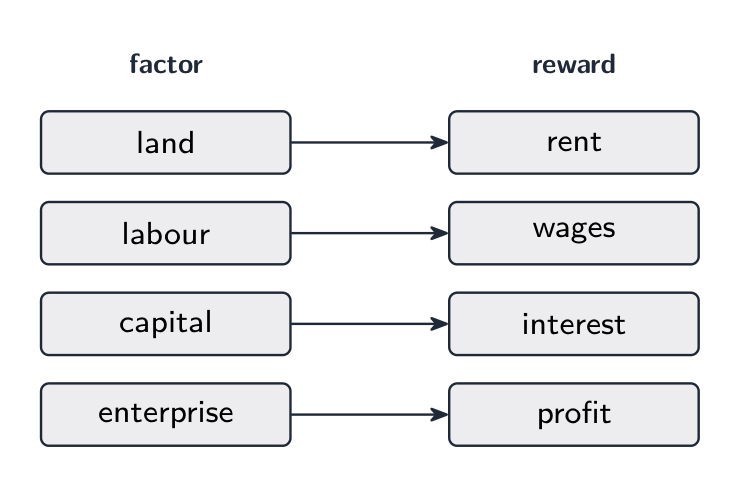
The factors of production 生产要素 are the four kinds of resource used to make goods and services. Each one earns a reward 报酬.
Factor
What it is
Its reward
land 土地
natural resources (fields, water, oil, minerals)
rent 地租
labour 劳动
human work, both physical and mental
wages 工资
capital 资本
man-made things used to produce, like machines, tools and factories
interest 利息
enterprise 企业家才能
the skill of bringing the other three together and taking the risk
profit 利润
Land includes some non-renewable resources 不可再生资源 (like oil and coal) that can run out. Enterprise is supplied by the entrepreneur 企业家, the person who has the business idea and risks their own money.
Specialisation and division of labour
specialisation 专业化 is when a worker, firm or country makes only the things it is best at, then trades for the rest.
Inside a workplace, specialisation leads to the division of labour 劳动分工: a big job is split into small tasks, and each worker 工人 does one task again and again.
Advantages
Disadvantages
workers get faster and better at one task
doing one task is boring, so workers may quit
less time wasted moving between jobs
if one worker is absent, the whole line can stop
output per worker rises, so costs fall
workers learn only one narrow skill
Mobility of factors
mobility 流动性 means how easily a factor can move to a new use.
occupational mobility 职业流动性 — how easily a factor moves from one job or use to another. A teacher who retrains as a nurse is occupationally mobile.
geographical mobility 地理流动性 — how easily a factor moves from one place to another. Land cannot move at all, so it has no geographical mobility.
Labour is often not very mobile. Family ties, the cost of housing, and missing skills all make it hard for workers to move.
עברית
גורמי הייצור הם ארבעה סוגי משאבים המשמשים ליצירת סחורות ושירותים. כל אחד מהם מניב תמורה.
ארבעת גורמי ההפקה והתמורה שכל אחד מהם מרוויח
גורם
מה זה
התמורה שלו
אדמה
משאבים טבעיים (שדות, מים, נפט, מינרלים)
שכירות
עבודה
מאמץ אנושי, גם פיזי וגם מנטלי
שכר
הון
חפצים מעשה ידי אדם המשמשים לייצור, כמו מכונות, כלים ומפעלים
ריבית
יזמות
המיומנות להכנס את השלושה האחרים יחד ולקחת סיכון
רווח
לאדמה משויכים גם משאבים לא מתחדשים (כמו נפט ופחם) שעלולים להיסחר. את היזמות מספקת היזם, האדם שיש לו את הרעיון לעסק ומסיכן כסף משלו.
מכרה נחושת פתוח: אדמה כוללת את המשאבים הטבעיים (מינרלים, נפט, מים) שהחברות חושות.
התמחות וחלוקת עבודה
התמחות היא מצב שבו עובד, חברה או מדינה מייצרים רק את הדברים בהם הם הטובים ביותר, ולאחר מכן סוחרים על שאר המוצרים.
בתוך מקום העבודה, ההתמחות מובילה ל-חלוקת עבודה: משימה גדולה מחולקת למשימות קטנות, וכל עובד מבצע משימה אחת שוב ושוב.
יתרונות
חסרונות
עובדים הופכים מהירים וטובים יותר במשימה אחת
ביצוע משימה אחת משעמם, ולכן עובדים עשויים להתפטר
פחות זמן אבוד במעבר בין תפקידים
אם עובד אחד נעדר, כל הקו יכול להיעצר
התפוקה לעובד עולה, ולכן העלויות יורדות
עובדים לומדים רק כשרון צר ואחד
קו הרכבה של מכונית: הון (מכונות ורובוטים) בשילוב עם חלוקת עבודה, כאשר כל עובד חוזר על משימה אחת.
ניידות גורמים
ניידות מתייחסת לכך עד כמה גורם יכול לעבור בקלות לשימוש חדש.
ניידות מקצועית — עד כמה גורם יכול לעבור בקלות מ-תפקיד או שימוש אחד לאחר. מורה שנכנס לקורס הכשרה מחדש כדי להיות אחות הוא בעל ניידות מקצועית.
ניידות גיאוגרפית — עד כמה גורם יכול לעבור בקלות מ-מקום אחד לאחר. קרקע אינה יכולה לזוז כלל, ולכן אין לה ניידות גיאוגרפית.
כוח העבודה לעיתים אינו מאוד נייד. קשרי משפחה, עלות דיור והיעדר כישורים כולם הופכים עבור עובדים את מעברם לקשה.
Explore · חקור
Factors of production lab · מעבדת גורמי ייצור
Sort real resources by the factor of production they represent. · מיינו את המשאבים האמיתיים לפי גורם הייצור ש הם מייצגים.
explain how resources are allocated in market, planned and mixed economic systems
explain the role of the price mechanism (signalling, incentive, rationing) in allocating resources
evaluate the advantages and disadvantages of each system
עברית
הסבר כיצד מוקצים משאבים במערכות כלכליות של שוק, תכנון ומעורבת, ⟦number⟧
הסבר על תפקיד מנגנון המחיר (הודעה, הזרקה, הקצאה) בהקצאת משאבים, ⟦number⟧
הערכת יתרונות וחסרונות של כל מערכת, ⟦number⟧
Source: Cambridge International syllabus · מקור: הסיילבוס הבינלאומי של קמבריד'ג'
English
An economic system is the way a country decides how to allocate 配置 (share out) its scarce resources. There are three types.
a market economy 市场经济 — firms and people own resources, and prices decide what is made. The government does little.
a planned economy 计划经济 (also called a command economy 指令经济) — the government owns resources and decides what is made, how, and for whom.
a mixed economy 混合经济 — a blend of the two. The private sector 私营部门 (firms and households) and the public sector 公共部门 (the government) both make decisions. Almost every real country is mixed.
The price mechanism
In a market economy, resources are guided by the price mechanism 价格机制. Prices do three jobs:
signalling 信号传递 — a price tells buyers and sellers where resources are wanted. A rising price says "this is wanted — make more".
incentive 激励 — a higher price rewards producers, so they want to supply more of that good.
rationing 配给 — when a good is scarce, a higher price shares it out to those who are willing and able to pay.
Comparing the systems
System
Strengths
Weaknesses
market
choice, low prices, strong incentive to work and invent
large gap between rich and poor; some goods not supplied
planned
smaller gap between rich and poor; key goods provided for all
weak incentive; shortages and surpluses; slow to change
mixed
tries to keep the good points of both
the right balance is hard to find
In practice no country sits at a pure extreme. China's economy, for instance, is officially a socialist market economy, where markets set most prices while the government guides key sectors and owns major enterprises. Every real system mixes the two and sits somewhere on the spectrum below.
עברית
מערכת כלכלית היא הדרך שבה מדימה מחליטה כיצד להקצות (לחלק) את המשאבים הנדירים שלה. ישנם שלושה סוגים.
כלכלת שוק — חברות ואנשים בבעלות משאבים, והמחירים קובעים מה מיוצר. הממשלה פועלת באופן מינימלי.
כלכלת תכנון (נקראת גם כלכלת פיקוד) — הממשלה בבעלות המשאבים ומחליטה מה מיוצר, איך, ומי.
כלכלת מעורבת — שילוב של השניים. המגזר הפרטי (חברות ובתי משפחה) והמגזר הציבורי (הממשלה) שניהם קובעים החלטות. כמעט כל מדימה אמיתית היא מעורבת.
מכניזם המחיר
בכלכלת שוק, המשאבים מופעלים על ידי מנגנון המחירים. למחירים יש שלוש פונקציות:
סימון — מחיר מעיד לקונים ולמוכרים היכן נדרשים משאבים. עליית מחיר אומרת "דרישה לכך — ייצרו יותר".
הנעה — מחיר גבוה עושה ריגול למוצרים, ולכן הם רוצים לספק יותר מהמוצר הזה.
חלוקה — כאשר מוצר מוגבל, מחיר גבוה מחלק אותו לאלו המוכנים ויכולים לשלם עליו.
בשוק, המחיר מבצע שלוש פונקציות בו-זמנית: הוא מסמן, מעניק הנעה ומחלק את המוצר המוגבל
השוואת מערכות
מערכת
יתרונות
חסרונות
שוק
בחירה, מחירים נמוכים, הנעה חזקה לעבודה ולהמצאה
פערים גדולים בין עשירים לעניים; חוסר אספקה של מוצרים מסוימים
תכנון
פערים קטנים יותר בין עשירים לעניים; אספקת מוצרים מרכזיים לכל האוכלוסייה
הנעה חלשה; מחסור ועודפים; איטות בשינוי
מעורבת
מנסה לשמור על היתרונות של שתי המערכות
קשה למצוא את האיזון הנכון
במעשה, אין אף מדינה בשוליים הטהורים. כלכלת סין, לדוגמה, היא באופן רשמי כלכלת שוק סוציאליסטית, בה שוק קובע את רוב המחירים בעוד שהממשלה מדריכה תחומים מרכזיים ובעלת בתי-חרושת גדולים. כל מערכת אמיתית מערבבת את שתי העקרונות ושוכנת במקום כלשהו בספקטרום למטה.
מערכות כלכליות יוצרות ספקטרום: שוק טהור בקצה אחד, תכנון ממשלתי מלא בקצה השני, וכלכלות מעורבות באמצע.
Production possibility curves · עקומי אפשרויות ייצור
Syllabus · סיילבוס
English
draw and interpret PPCs to show opportunity cost, scarcity, choice and efficiency
explain movements along and shifts of the PPC and constant versus increasing opportunity cost
relate the PPC to economic growth and the allocation between capital and consumer goods
עברית
ציור ופרשנות של PPCs להדגמת עלות הזדמנות, מחסור, בחירה ויעילות, ⟦number⟧
הסבר על תנועות לאורך ומעברים של ה-PPC ועלות הזדמנות קבועה לעומת עולה, ⟦number⟧
קשר בין ה-PPC לבין צמיחה כלכלית ובין הון לסחורות צריכה, ⟦number
Source: Cambridge International syllabus · מקור: הסיילבוס הבינלאומי של קמבריד'ג'
English
The PPF and opportunity cost
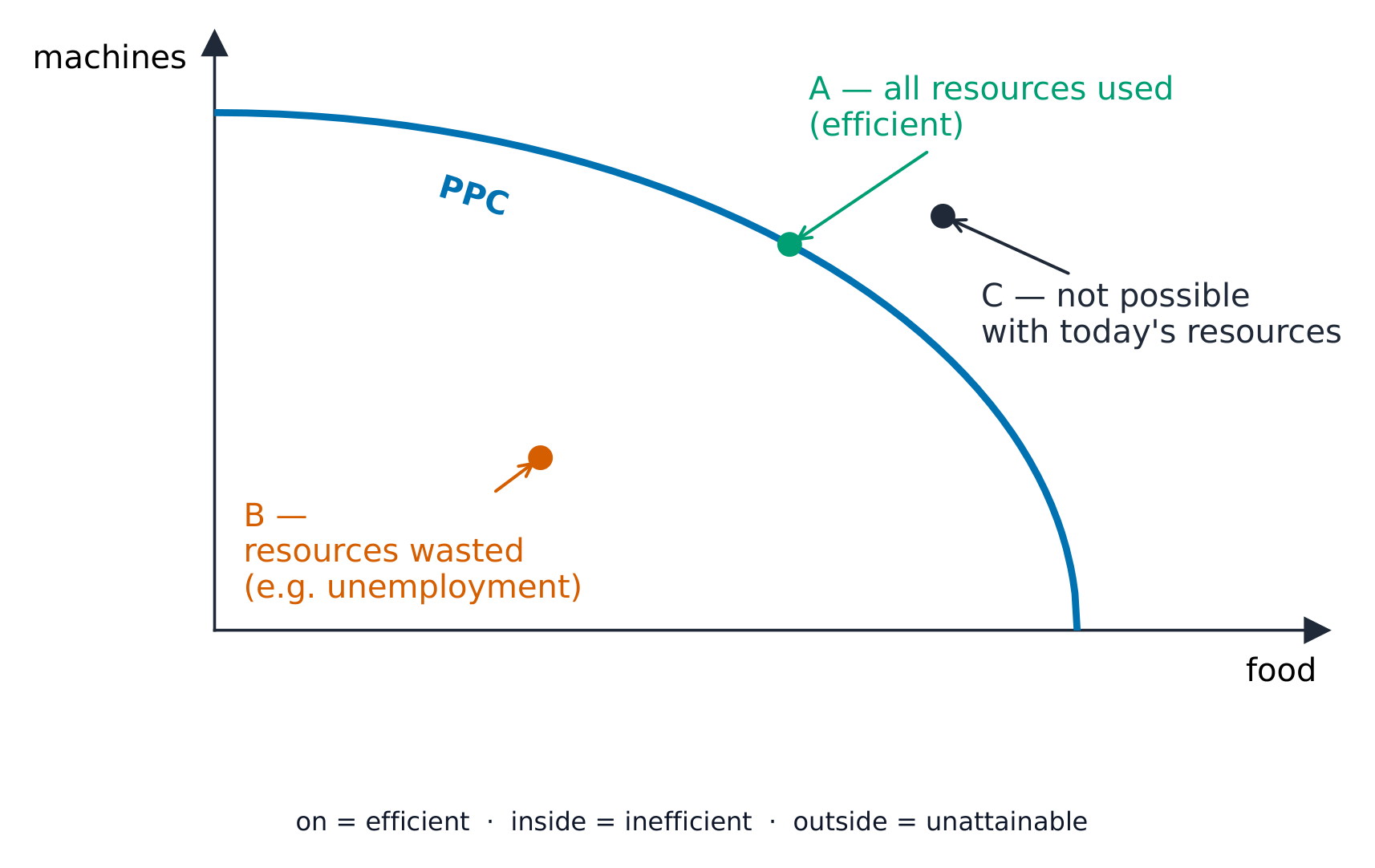
A production possibility curve 生产可能性曲线 (PPC) is a line showing the largest combinations of two goods an economy can make when all its resources are fully and well used.
Imagine an economy that makes only food and machines. The PPC is drawn with food on one axis and machines on the other.
a point on the curve: all resources are used with full efficiency 效率.
a point inside the curve: resources are wasted (for example, unemployment 失业 of workers). The economy could do better.
a point outside the curve: impossible today, because there are not enough resources. This shows scarcity.
Moving along the curve shows opportunity cost: to make more food, you must move resources away from machines, so you make fewer machines. This is the trade-off 取舍 between the two goods.
The shape of the curve shows how opportunity cost behaves:
a straight-line PPC means constant opportunity cost — each extra unit of food costs the same number of machines.
a curve that bows outwards means increasing opportunity cost — each extra unit of food costs more and more machines, because resources are not equally good at making both goods.
Shifts and growth
When the PPC moves outward (to the right), the economy can make more of both goods. This is economic growth 经济增长. It happens when there are more resources, or better ones (new technology 技术, a bigger or more skilled workforce). War or disaster can move the PPC inward — this is economic decline 经济衰退.
A country must also choose between two kinds of good now:
capital goods 资本品 — goods used to make other goods (machines, factories).
consumer goods 消费品 — goods people use directly (food, clothes).
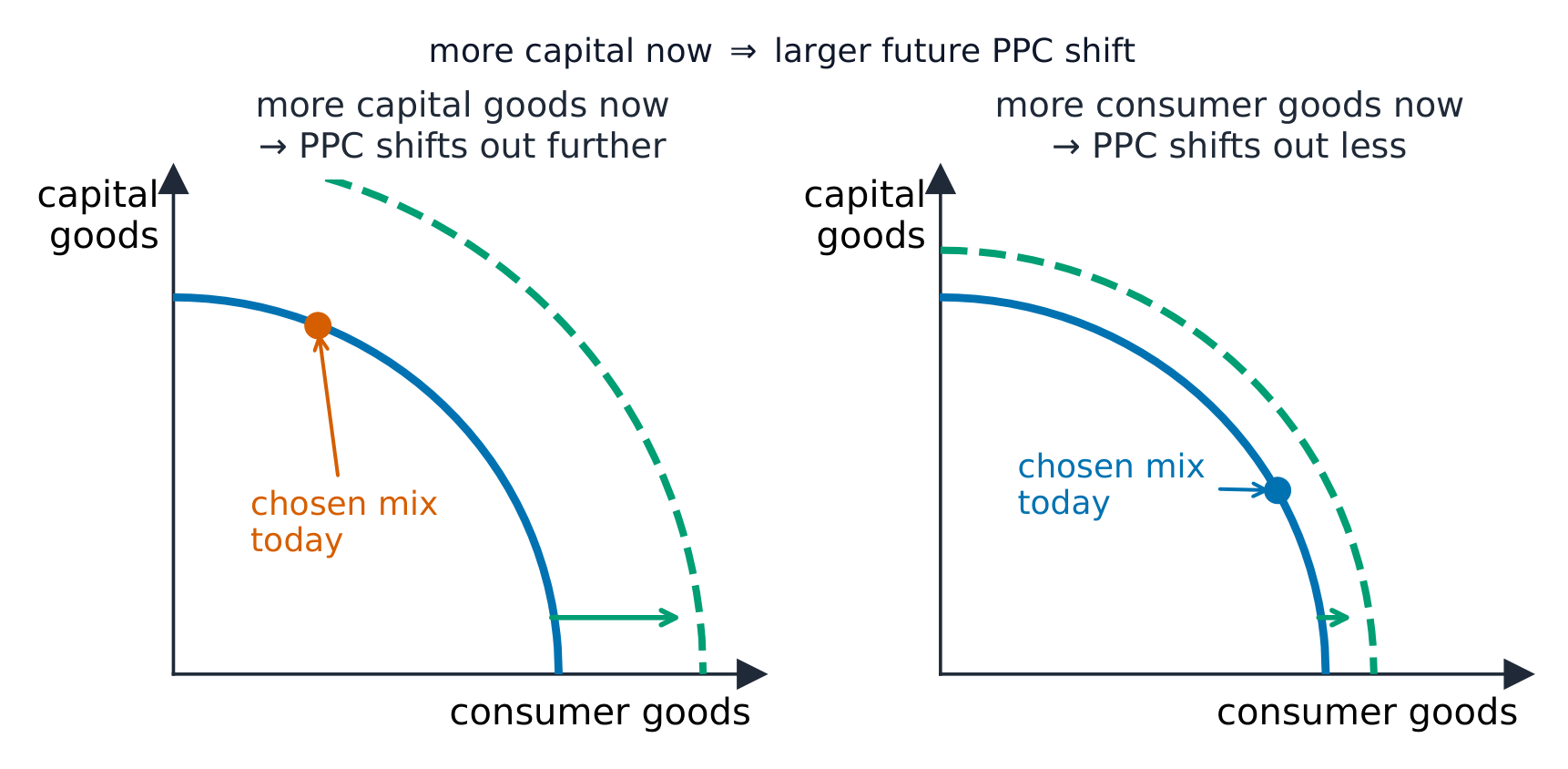
Making more capital goods today means fewer consumer goods today. But more capital goods help the economy grow faster, so the PPC shifts out by more in the future.
Worked example. Why is a production possibility curve usually drawn concave (bowed outwards) rather than as a straight line? A straight line would mean the opportunity cost of each extra unit stays constant. The curve bows out because factors of production are not perfectly substitutable - they are specialised. Starting from all-food production, the first factors moved into making cars are the ones least suited to farming, so very little food is given up for a lot of cars. Keep going and you must move factors that are increasingly good at farming and increasingly bad at making cars, so each extra car costs more and more food. That rising cost is increasing opportunity cost, and the bowed shape is simply its picture. A straight-line PPC is not wrong - it just assumes factors are perfectly substitutable, and naming that assumption is what earns the mark.
עברית
PPF והעלות ההקפנית
עקום אפשרויות ייצור (PPC) הוא קו המציג את הקומבינציות הגדולות ביותר של שני מוצרים שאפשר ליצר בכלכלה כשהמשאבים שלה מועסקים במלואם וביעילות.
דמיינו כלכלה שמייצרת רק מזון ומכונות. ה-PPC מצויר כאשר המזון הוא ציר אחד והמכונות הן הציר השני.
נקודה על העקום: כל המשאבים מועסקים ביעילות מלאה.
נקודה בתוך העקומה: משאבים מושחתים (למשל, אבטלה של עובדים). האוכלוסייה הייתה יכולה להצליח יותר.
נקודה מחוץ לעקומה: בלתי אפשרי היום, מכיוון שאין מספיק משאבים. הדבר ממחיש מחסור.
נקודה על העקומה משתמשת בכל המשאבים (יעילות); נקודה בתוך העקומה מציינת השחתה, כגון אבטלה; נקודה מחוץ לעקומה אינה אפשרית עדיין.
הזזה לאורך העקומה מראה עלות הזדמנות: כדי לייצר יותר מזון, יש להעביר משאבים מהייצור של מכונות, ולכן ייוצרו פחות מכונות. זהו ה-היתרונות בין שני המוצרים.
הצורה של העקומה מראה כיצד מתנהגת עלות ההזדמנות:
PPC בקו ישר מציין עלות הזדמנות קבועה — כל יחידה נוספת של מזון עולה באותו מספר מכונות.
עקומה שעקומה החוצה מציין עלות הזדמנות עולה — כל יחידה נוספת של מזון עולה越来越更多 מכונות, מכיוון שהמשאבים אינם שווים ביכולתם לייצר את שני המוצרים.
PPC בקו ישר מציין שכל יחידה נוספת של מזון עולה אותו דבר; PPC שעקום מציין שכל יחידה נוספת עולה越来越更多 מכונות.
שינויים וגידול
כשה-PPC זז החוצה (מימינה), האוכלוסייה יכולה לייצר יותר משני המוצרים. זהו גידול כלכלי. הוא מתרחש כאשר ישנם יותר משאבים, או טובים יותר (טכנולוגיה חדשה, כוח עבודה גדול יותר או בעל מיומנויות גבוהות יותר). מלחמה או אסון יכולים להזיז את ה-PPC פנימה — זהו ירידה כלכלית.
יותר משאבים או משאבים טובים יותר מזיזים את כל ה-PPC החוצה (גידול); מלחמה או אסון מזיזים אותו פנימה (ירידה).
מדינה חייבת לבחור גם בין שני סוגי מוצרים כעת:
מוצרי הון — מוצרים המשמשים ליצירת מוצרים אחרים (מכונות, מפעלים).
מוצרי צריכה — מוצרים שאנשים משתמשים בהם ישירות (מזון, בגדים).
ייצור יותר מוצרי הון היום פירושו פחות מוצרי צריכה היום. אך יותר מוצרי הון עוזרים לאוכלוסייה לגדול מהר יותר, ולכן ה-PPC יזוז החוצה יותר בעתיד.
בחירה במוצרי הון יותר היום פירושו פחות מוצרי צריכה עכשיו, אך ה-PPC העתידי יזוז החוצה יותר.
דוגמה פתורה. מדוע קשת אפשרויות הייצור מצוירת בדרך כלל קעורה (בולטת החוצה) ולא כקו ישר? קו ישר היה אומר שעלות ההזדמנות של כל יחידה נוספת נשארת קבועה. הקשת בולטת החוצה כי גורמי הייצור אינם תחליפים מושלמים - הם מיוחדים. בהתחלה מייצרים רק מזון, הגורמים הראשונים שנעברים לייצור מכוניות הם אלו הכי פחות מתאימים לחקלאות, ולכן מוותרים על מעט מאוד מזון כדי לקבל הרבה מכוניות. המשך לכך וחייבים להעביר גורמים שהולכים ומתאימים יותר לחקלאות ופחות לייצור מכוניות, ולכן כל מכונית נוספת עולה יותר ויותר מזון. עלייה זו בעלות היא עלות הזדמנות עולה, והצורה הבולטת היא פשוט הדמיה שלה. PPC קו ישר אינו שגוי - הוא פשוט מניח שגורמים הם תחליפים מושלמים, ושם הנחה זו הוא מה שמביא נקודה.
Explore · חקור
The production possibility frontier · קו האפשרויות הייצור
Producing more of one good means giving up some of the other — that trade-off is the opportunity cost, shown by the slope of the frontier. · ייצור יותר של מוצר אחד פירונו ויתור על חלק ממוצר אחר — הפיצוי הזה הוא עלות הזדמנות, המוצג על ידי השיפוע של קו האפשרויות.
Explore · חקור
Allocating scarce resources · הקצאת משאבים דלים
An economy can't have more of everything: making more of one good means giving up some of another — the frontier's slope is that opportunity cost. · כלכלה לא יכולה להפיק יותר מכל דבר: ייצור יותר של סחורה אחת פירונו ויתור על חלק מסחורה אחרת — שיפוע הגבול הוא ערך ההזדמנות.
Explore · חקור
The production possibility curve · עקום אפשרויות הייצור
Move along the curve. Producing more of one good means producing less of the other — the curve shows opportunity cost and scarcity. · תנוע לאורך העקומה. ייצור יותר של מוצר אחד פירושה ייצור פחות של האחר — העקומה מראה עלות הזדמנות ומחסור.
Types of goods and services · סוגי סחורות ושירותים
Syllabus · סיילבוס
English
distinguish free goods and economic (private) goods
explain the characteristics of public goods (non-rivalry, non-excludability) and the free-rider problem
explain merit and demerit goods and the role of information and value judgements
עברית
הבדלה בין סחורות חינמיות וסחורות כלכליות (פרטיות), ⟦number⟧
הסבר על מאפייני סחורות ציבוריות (אי-תחרותיות, אי-השלכה) ובעיית המשתמש החופשי, ⟦number⟧
הסבר על סחורות פנאי וסחורות פגיעות ותפקיד המידע וההערכות הערכיות, ⟦number⟧
Source: Cambridge International syllabus · מקור: הסיילבוס הבינלאומי של קמבריד'ג'
English
Free goods and economic goods
a free good 免费物品 has no opportunity cost. Its supply is unlimited, so it has no price (for example, air or sunlight).
an economic good 经济物品 (also called a private good 私人物品) is scarce. Making it has an opportunity cost, so it has a price.
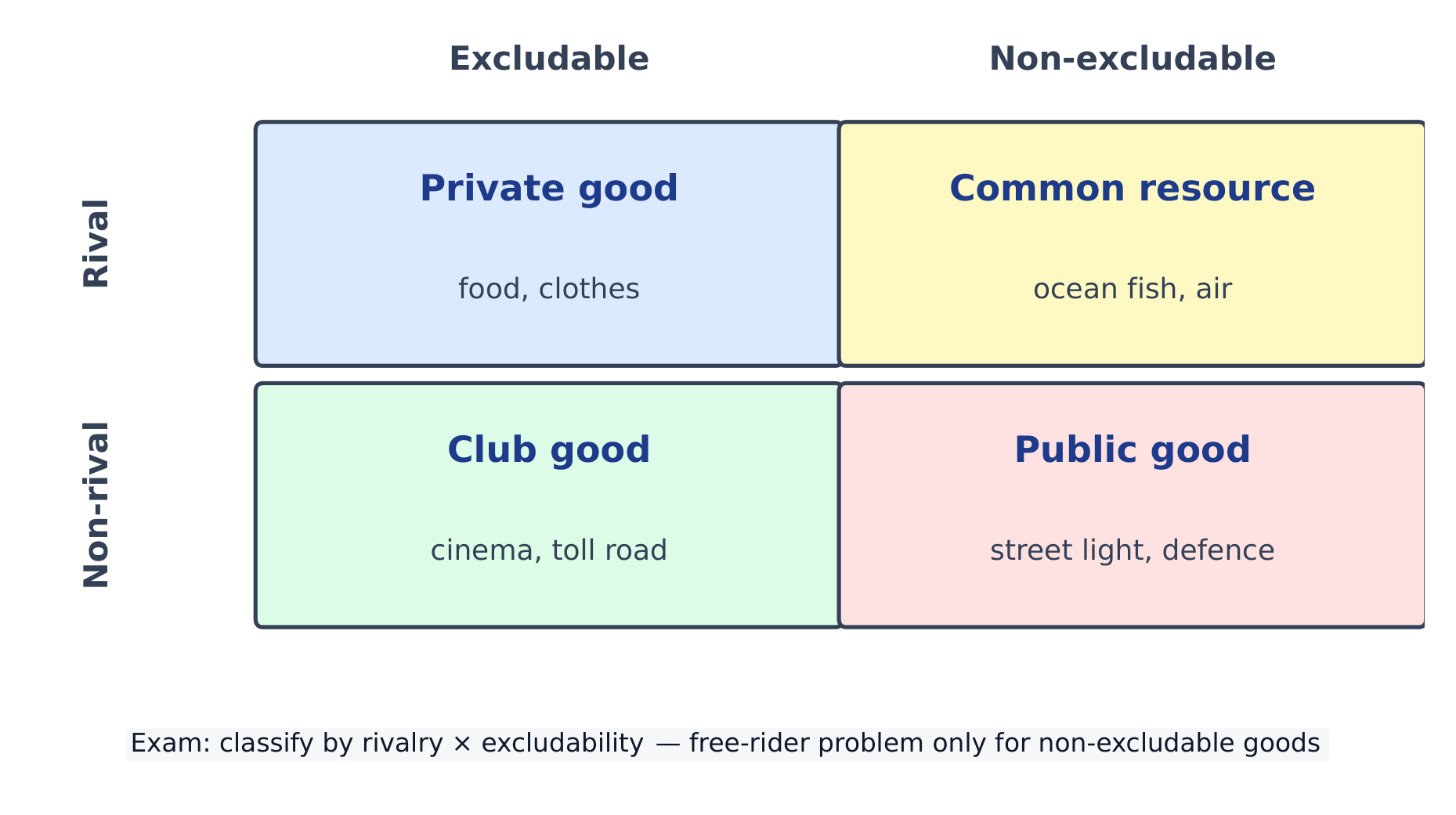
A private good has two features. It has rivalry 竞争性 (if I eat the apple, you cannot) and excludability 排他性 (the seller can stop you using it unless you pay).
Public goods
A public good 公共物品 is the opposite of a private good. It has two features:
non-rivalry 非竞争性 — one person using it does not reduce the amount left for others.
non-excludability 非排他性 — you cannot stop people who do not pay from using it.
Because of non-excludability, public goods suffer from the free-rider problem 搭便车问题: people enjoy the good without paying for it. So private firms cannot make a profit and will not supply it. The government must provide public goods instead — for example, street lighting and national defence 国防.
Merit and demerit goods
a merit good 优值品 is better for you (and for society) than you realise, so people buy too little of it. Examples: education and health care.
a demerit good 劣值品 is worse for you than you realise, so people buy too much of it. Examples: cigarettes and alcohol.
People misjudge these goods because of information failure 信息失灵 — they do not have, or do not use, the full facts about the benefit or harm.
Deciding what counts as a merit or demerit good is partly a value judgement, so people may disagree about which goods belong on each list.
עברית
סחורות חופשיות וסחורות כלכליות
סחורה חופשית אינה כרוכה בעלות הזדמנות. אספקתה אינסופית, ולכן אין לה מחיר (למשל, אוויר או אור שמש).
סחורה כלכלית (הנקראת גם סחורה פרטית) היא נדירה. יצירתה כרוכה בעלות הזדמנות, ולכן יש לה מחיר.
לסחורה פרטית יש שני מאפיינים. יש לה ריווליות (אם אני אוכל את התפוח, אתה לא תוכל) והפרדה (המוכר יכול למנוע ממך להשתמש בה אלא אם כן תשלם).
סחורה חופשית אין לה עלות הזדמנות ואין לה מחיר; סחורה כלכלית היא נדירה, ריוולית והפרדנית
סחורות ציבוריות
סחורה ציבורית היא ההפך מסחורה פרטית. יש לה שני מאפיינים:
אי-ריווליות – שימוש של אדם אחד בה לא מפחית את הכמות שנשארת לאחרים.
אי-הפרדה – אי אפשר למנוע מאנשים שלא משלמים להשתמש בה.
בגלל אי-הפרדה, סחורות ציבוריות סובלות מבעיית הרכבת החינם: אנשים נהנים מהסחורה ללא תשלום. לכן, חברות פרטיות לא יכולות להשיג רווח ולא יספקו אותה. הממשלה חייבת לספק סחורות ציבוריות במקום זאת – למשל, תאורת רחוב והגנה לאומית.
ריווליות והפרדה נותנות ארבעה סוגי סחורות: פרטית, מועדון, משאבים משותפים, וציבורית.
סחורות זכותיות וסחורות פסולתיות
סחורה זכותית טובה יותר עבורך (ועבור החברה) ממה שאתה מביט, כך שאנשים קונים מעט מדי ממנה. דוגמאות: חינוך וטיפול רפואי.
סחורה פסולתית רעה יותר עבורך ממה שאתה מביט, כך שאנשים קונים מעט מדי ממנה. דוגמאות: סיגריות ואלכוהול.
חינוך הוא סחורה זכותית קלאסית. הערך המלא שלה – תעסוקה טובה יותר וחברה מיומנת יותר – קל להעריך באופן שגוי, ולכן השארת עצמם אנשים קונים פחות ממנה ממה שהוא טוב עבורם או עבור המדינה. זהו הסיבה שהממשלות מספקות אותו ומסבסדות אותו
אנשים שוגים בהערכתם של סחורות אלו בשל כשל מידע — אין להם, או שהם אינם משתמשים, במידע המלא לגבי היתרון או הנזק.
החלטה על מה נחשב לסחורת יתרה או פגם היא חלקית שיפוט ערכי, ולכן אנשים עשויים להתחלוק בדעתם regarding איזה סחורות שייכות לכל רשימה.
Explore · חקור
Goods and services lab · מעבדת סחורות ושירותים
Classify examples by rivalry, excludability or whether they are services. · סווגו דוגמאות לפי התחרותיות, יכולת שילוח או אם מדובר בשירותים.
Pick one and the site follows you — notes, papers, videos and practice all open on it. · בחרו נושא אחד והאתר יעקוב אחריו — הערות, מסמכים, וידאו ותרגולים פתוחים בו.
Type to search notes, lessons, code, vocabulary and past-paper questions across every subject. · הקלד כדי לחפש הערות, שיעורים, קוד, אוצר מילים ושאלות מבחנים בכל הנושאים.