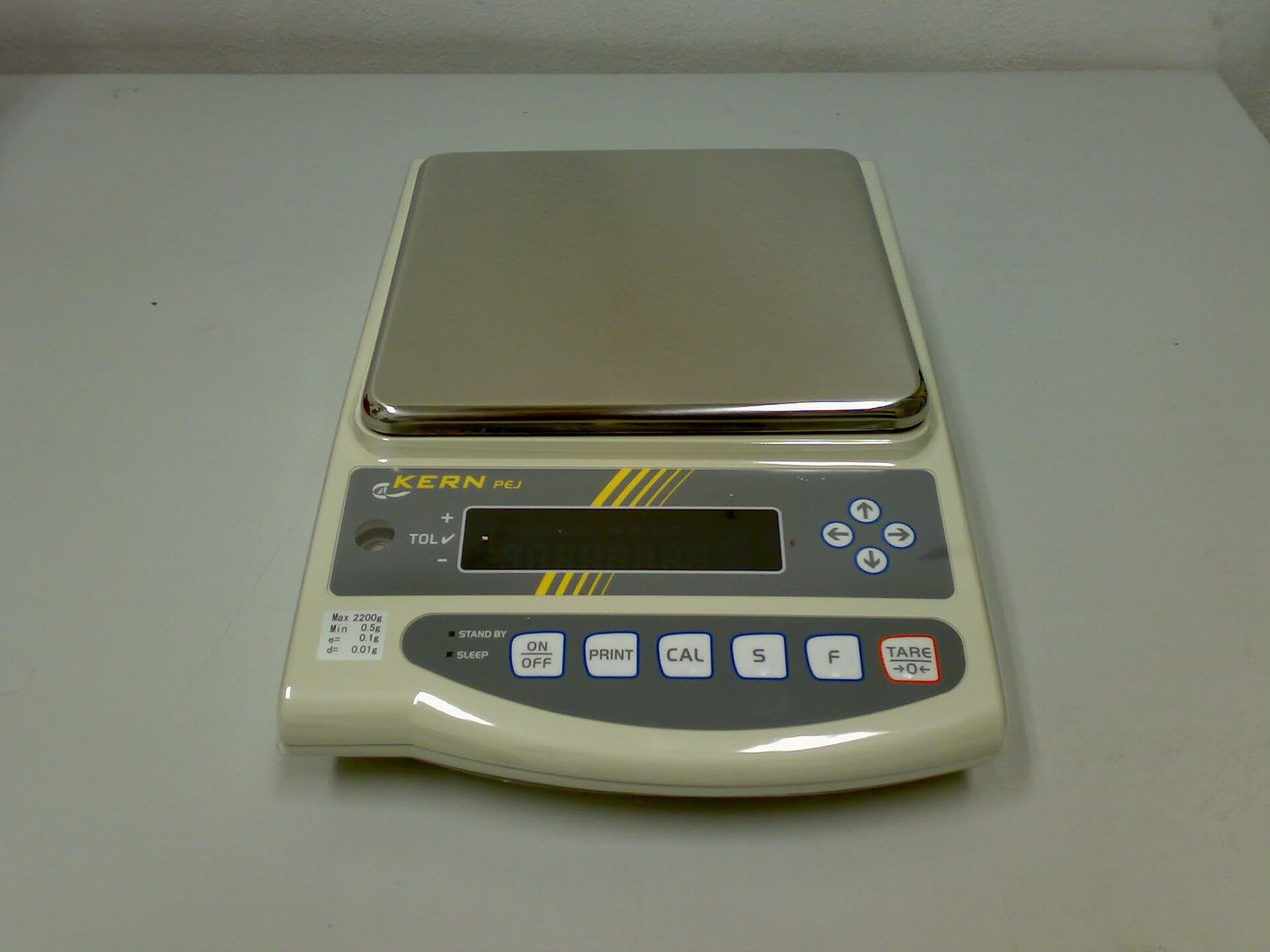
Here is a problem. A single teaspoon of water holds about two hundred thousand billion billion molecules. You could never count them — not in a lifetime, not…
English narration · English + 中文 subtitles burned in · קריאת קול באנגלית · תרגום אנגלי + סינית שרוף בתוך הסרטון
2.1
Relative masses of atoms and molecules · מסות יחסיות של אטומים ומולקולות
Syllabus · סיילבוס
English
define the unified atomic mass unit as one twelfth of the mass of a carbon-12 atom
define relative atomic mass, $A_r$, relative isotopic mass, relative molecular mass, $M_r$, and relative formula mass in terms of the unified atomic mass unit
עברית
להגדיר את היחידת המסה האטומית המאוחדת כשני עשרים ממסת אטום קרבון-12
להגדיר מסה אטומית יחסית, $A_r$, מסה איזוטופית יחסית, מסה מולקולרית יחסית, $M_r$, ומסה נוסחתית יחסית ביחס ליחידת המסה האטומית המאוחדת
Source: Cambridge International syllabus · מקור: הסיילבוס הבינלאומי של קמבריד'ג'
English
Atoms 原子 are far too light to weigh in grams, so we compare every mass to one standard. The standard is the unified atomic mass unit 统一原子质量单位 (symbol u), defined as exactly one twelfth of the mass of one carbon-12 atom.
Using this unit, we state masses as simple numbers:
the relative atomic mass 相对原子质量$A_r$ of an element is the average mass of its atoms compared with $\tfrac{1}{12}$ of a carbon-12 atom. It is an average over all the isotopes 同位素, weighted by how common each one is.
the relative isotopic mass 相对同位素质量 is the mass of one atom of a single isotope, compared with $\tfrac{1}{12}$ of a carbon-12 atom.
the relative molecular mass 相对分子质量$M_r$ of a molecule 分子 is the sum of the relative atomic masses of all its atoms.
the relative formula mass 相对式量 is the same idea for a substance that is not made of molecules (such as an ionic compound). Add up the relative atomic masses shown in the formula.
To find $A_r$ from isotope data, multiply each isotope mass by its percentage, add these up, and divide by 100.
Worked example. Chlorine is $75\%$${}^{35}\text{Cl}$ and $25\%$${}^{37}\text{Cl}$. Find its relative atomic mass.
אטומים קלים מדי כדי למדוד במיליגרם, ולכן אנו משווים כל מסה לסטנדרט אחד. הסטנדרט הוא יחידת המסה האטומית המאוחדת (סממן u), המוגדרת בדיוק כשישית ממסת אטום אחד של פחמן-12.
בשימוש ביחידה זו, אנו מביעים מסות כמספרים פשוטים:
המסה האטומית היחסית$A_r$ של יסוד היא המסה הממוצעת של אטומיו בהשוואה ל$\tfrac{1}{12}$ של אטום פחמן-12. זהו ממוצע על כל האיזוטופים, המשוקל לפי תדירות התפוצה של כל אחד מהם.
המסה האיזוטופית היחסית היא מסת אטום אחד של איזוטופ יחיד, בהשוואה ל$\tfrac{1}{12}$ של אטום פחמן-12.
המסה המולקולרית היחסית$M_r$ של מולקולה היא סכום המסה האטומית היחסית של כל אטומיה.
המסה הנוסחאתית היחסית היא אותה רעיון לחומר שאינו מורכב ממולקולות (כגון תרכובת יונית). חשב את סכום המסה האטומית היחסית המוצגת בנוסחה.
*המסה האטומית היחסית היא ממוצע משוקלל: שני האיזוטופים של כלור (75% ³⁵Cl, 25% ³⁷Cl) נמצאים בממוצע Aᵣ = 35.5
כדי למצוא $A_r$ ממידע איזוטופי, יש להכפיל את מסת כל איזוטופ באחוז שלו, לחבר תוצאות אלו זה לזה ולחלק ב-100.
דוגמה מפורטת. כלור הוא $75\%$${}^{35}\text{Cl}$ ו-$25\%$${}^{37}\text{Cl}$. מצאו את המסה האטומית היחסית שלו.
unified atomic mass unit/ˈjuːnɪfaɪd əˈtɒmɪk mæs ˈjuːnɪt/
יחידת מסה אטומית מאוחדת
relative atomic mass/ˈrelətɪv əˈtɒmɪk mæs/
מסה אטומית יחסית
isotope/ˈaɪsətəʊp/
איזוטופ
relative isotopic mass/ˈrelətɪv ˌaɪsəˈtɒpɪk mæs/
מסה איזוטופית יחסית
relative molecular mass/ˈrelətɪv məˈlekjʊlə mæs/
מסה מולקולרית יחסית
molecule/ˈmɒlɪkjuːl/
מולקולה
relative formula mass/ˈrelətɪv ˈfɔːmjʊlə mæs/
מסה נוסחתית יחסית
2.2
The mole and the Avogadro constant · המול והקבוע של אוגדרו
Syllabus · סיילבוס
English
define and use the term mole in terms of the Avogadro constant
עברית
להגדיר ולהשתמש במונח מול ביחס לקבוע אוגדרו
Source: Cambridge International syllabus · מקור: הסיילבוס הבינלאומי של קמבריד'ג'
English
Chemists count particles in groups called moles, just as we count eggs in dozens.
One mole 摩尔 (symbol mol) is the amount of substance that contains the same number of particles as there are atoms in exactly 12 g of carbon-12. That number is the Avogadro constant 阿伏伽德罗常量:
$$N_A = 6.02 \times 10^{23}\ \text{mol}^{-1}$$
So one mole of anything contains $6.02 \times 10^{23}$ particles. The particles may be atoms, molecules or ions 离子 — always say which.
The mass of one mole in grams equals the relative mass ($A_r$ or $M_r$). This is the molar mass 摩尔质量, with units $\text{g mol}^{-1}$. The key equation is:
$$n = \frac{m}{M}$$
where $n$ is the amount in moles, $m$ is the mass in grams, and $M$ is the molar mass.
Worked example. How many moles are in $8.0\ \text{g}$ of methane, $\text{CH}_4$? ($A_r$: C $= 12$, H $= 1$.)
The molar mass is $M = 12 + 4(1) = 16\ \text{g mol}^{-1}$, so
write formulas of ionic compounds from ionic charges and oxidation numbers (shown by a Roman numeral), including: (a) the prediction of ionic charge from the position of an element in the Periodic Table (b) recall of the names and formulas for the following ions: $\text{NO}_3^-$, $\text{CO}_3^{2-}$, $\text{SO}_4^{2-}$, $\text{OH}^-$, $\text{NH}_4^+$, $\text{Zn}^{2+}$, $\text{Ag}^+$, $\text{HCO}_3^-$, $\text{PO}_4^{3-}$
(a) write and construct equations (which should be balanced), including ionic equations (which should not include spectator ions) (b) use appropriate state symbols in equations
define and use the terms empirical and molecular formula
understand and use the terms anhydrous, hydrated and water of crystallisation
calculate empirical and molecular formulas, using given data
עברית
כתוב נוסחאות של תרכובות יוניות מהטענות היוניות וממספרים האוקסידציה (מוצגים על ידי מספר רומאי), כולל: (א) החזוי של הטענה היונית מהמיקום של אלמנט בטבלה המחזורית (ב) זכרון של שמות ונוסחאות של היונים הבאים: $\text{NO}_3^-$, $\text{CO}_3^{2-}$, $\text{SO}_4^{2-}$, $\text{OH}^-$, $\text{NH}_4^+$, $\text{Zn}^{2+}$, $\text{Ag}^+$, $\text{HCO}_3^-$, $\text{PO}_4^{3-}$
(א) כתיבה והקמת משוואות (שהן מאוזנות), כולל משוואות יוניות (שאינן מכילות יונים ספקטטוריים) (ב) שימוש בסמלי מצב מתאימים במשוואות
חישוב נוסחות אמפיריות ומולקולריות, באמצעות נתונים הנתונים
Source: Cambridge International syllabus · מקור: הסיילבוס הבינלאומי של קמבריד'ג'
English
A compound 化合物 is a substance made of two or more elements chemically joined.
Charges and formulas of ionic compounds
In an ionic compound 离子化合物 the total positive charge balances the total negative charge, so the compound is neutral overall.
You can predict the charge of many ions from the element's position in the Periodic Table:
Group
1
2
13
15
16
17
Usual ion charge
$+1$
$+2$
$+3$
$-3$
$-2$
$-1$
Hydrogen forms $\text{H}^+$, and the Group 18 noble gases do not normally form ions.
Some ions you must know by name and formula:
Name
Formula
nitrate
$\text{NO}_3^{-}$
carbonate
$\text{CO}_3^{2-}$
sulfate
$\text{SO}_4^{2-}$
hydroxide
$\text{OH}^{-}$
ammonium
$\text{NH}_4^{+}$
zinc
$\text{Zn}^{2+}$
silver
$\text{Ag}^{+}$
hydrogencarbonate
$\text{HCO}_3^{-}$
phosphate
$\text{PO}_4^{3-}$
For a metal that can have more than one charge, a Roman numeral shows the oxidation number 氧化数. For example, iron(II) is $\text{Fe}^{2+}$ and iron(III) is $\text{Fe}^{3+}$. To write a formula, balance the charges: iron(III) oxide is $\text{Fe}_2\text{O}_3$, because two $\text{Fe}^{3+}$ balance three $\text{O}^{2-}$.
Equations and state symbols
A chemical equation must be balanced 配平 — the same number of each kind of atom on both sides. Add state symbols 状态符号 to show the state of each species: (s) solid, (l) liquid, (g) gas, and (aq) aqueous 水溶液 (dissolved in water).
An ionic equation 离子方程式 shows only the ions and molecules that actually change. The ions that do not change are spectator ions 旁观离子, and you leave them out. For example, the reaction that forms silver chloride is:
The empirical formula 实验式 is the simplest whole-number ratio of the atoms of each element in a compound. The molecular formula 分子式 shows the actual number of atoms of each element in one molecule.
For example, ethane has empirical formula $\text{CH}_3$ but molecular formula $\text{C}_2\text{H}_6$.
Hydrated and anhydrous solids
Some solids hold water inside their crystals. This water is the water of crystallisation 结晶水. A solid that contains it is hydrated 水合的; the same solid with the water removed is anhydrous 无水的.
For example, hydrated copper(II) sulfate is $\text{CuSO}_4 \cdot 5\text{H}_2\text{O}$. Heating it drives off the water to leave anhydrous $\text{CuSO}_4$.
Calculating empirical and molecular formulas
To find the empirical formula from masses (or percentages by mass):
divide each element's mass by its $A_r$ to get the moles.
divide all the mole values by the smallest one.
round to the nearest whole numbers — that ratio is the empirical formula.
To get the molecular formula, you also need $M_r$. Find how many times the empirical formula mass fits into $M_r$, then multiply the formula by that number.
Worked example. A compound is $40.0\%$ carbon, $6.7\%$ hydrogen and $53.3\%$ oxygen by mass. Find its empirical formula. ($A_r$: C $= 12$, H $= 1$, O $= 16$.)
Take $100\ \text{g}$ and divide each mass by its $A_r$ to get moles: C $= 40.0/12 = 3.33$, H $= 6.7/1 = 6.7$, O $= 53.3/16 = 3.33$. Dividing through by the smallest ($3.33$) gives a ratio C : H : O $= 1 : 2 : 1$, so the empirical formula is $\text{CH}_2\text{O}$.
עברית
תרכובת היא חומר המורכב משני יסודות או יותר הקשורים כימית זה לזה.
מטענים ונוסחאות של תרכובות יוניות
בתרכובת יונית המטען החיובי הכולל מאזן את המטען השלילי הכולל, כך שהתרכובת ניטרלית בסך הכל.
ניתן לחזות את המטען של רבים מהיונים לפי מיקום היסוד בטבלה המחזורית:
קבוצה
1
2
13
15
16
17
מטען יוני רגיל
$+1$
$+2$
$+3$
$-3$
$-2$
$-1$
מימן יוצר $\text{H}^+$, וגזי האצילה מקבוצה 18 אינם יוצרים יונים באופן רגיל.
חלק מהיונים שחובה לדעת בשמם ובנוסחתם:
שם
נוסחה
ניטרט
$\text{NO}_3^{-}$
קרבונט
$\text{CO}_3^{2-}$
סולפט
$\text{SO}_4^{2-}$
הידרוקסיד
$\text{OH}^{-}$
אמוניום
$\text{NH}_4^{+}$
אבץ
$\text{Zn}^{2+}$
כסף
$\text{Ag}^{+}$
ביקרבונט
$\text{HCO}_3^{-}$
פוספט
$\text{PO}_4^{3-}$
למתכת שיכולה להיות למעלה ממטען אחד, מספר רומאי מציין את מספר החמצון. לדוגמה, ברזל(II) הוא $\text{Fe}^{2+}$ וברזל(III) הוא $\text{Fe}^{3+}$. כדי לכתוב נוסחה, יש לאזן את המטענים: חמצן ברזל(III) הוא $\text{Fe}_2\text{O}_3$, כי שני $\text{Fe}^{3+}$ מאזנים שלושה $\text{O}^{2-}$.
משוואות וסימני מצבים
משוואה כימית חייבת להיות מאוזנת — אותה כמות של כל סוג של אטום בשני האגפים. יש להוסיף סימני מצב כדי להציג את המצב של כל סוג: (s) מוצק, (l) נוזל, (g) גז, ו(aq) תמיסה מימית (מומס במים).
משוואה יונית מציגה רק את היונים והמולקולות שמשתנות בפועל. היונים שלא משתנים הם יוני צופים, ואנחנו משאירים אותם בחוץ. לדוגמה, התגובה שיוצרת כלוריד כסף היא:
הנוסחה האמפירית היא היחס השלם הפשוט ביותר של אטומי כל יסוד בתרכובת. הנוסחה המולקולרית מציגה את המספר האמיתי של אטומי כל יסוד במולקולה אחת.
לדוגמה, אתאן ישנו נוסחה אמפירית $\text{CH}_3$ אך נוסחה מולקולרית $\text{C}_2\text{H}_6$.
חומרים מוצקים הידראטיים ואנדרואים
חלק מהחומרים המוצקים כולמים מים בתוך הגבישים שלהם. מים אלו הם מי גביש. מוצק הכולל אותם הוא הידראטי; אותו מוצק ללא המים נקרא אנדרואי.
למשל, נחושת(II) סולפט הידראטית היא $\text{CuSO}_4 \cdot 5\text{H}_2\text{O}$. חימומה מגרשת את המים ומשאירה $\text{CuSO}_4$ אנדרואי.
חישוב נוסחה אמפירית ונוסחה מולקולרית
כדי למצוא את הנוסחה האמפירית מתוך מסות (או אחוזים במסה):
חלקו כל מסת יסוד ב-$A_r$ שלו כדי לקבל את הכמות בחומרים.
חלקו את כל ערכי הכמות בחומרים בערך הקטן ביותר.
עגרו למספר שלם הקרוב ביותר — יחס זה הוא הנוסחה האמפירית.
כדי לקבל את הנוסחה המולקולרית, יש צורך גם ב-$M_r$. מצאו כמה פעמים מסת הנוסחה האמפירית נכנסת לתוך $M_r$, ואז כפלו את הנוסחה במספר זה.
דוגמה מפורטת. תרכובת מכילה $40.0\%$ פחמן, $6.7\%$ מימן ו$53.3\%$ חמצן באחוזי מסה. מצאו את הנוסחה האמפירית שלה. ($A_r$: C $= 12$, H $= 1$, O $= 16$.)
קחו $100\ \text{g}$ וחלקו כל מסה ב-$A_r$ שלה כדי לקבל מולות: C $= 40.0/12 = 3.33$, H $= 6.7/1 = 6.7$, O $= 53.3/16 = 3.33$. חלוקה כולה על ידי הקטן ביותר ($3.33$) נותנת יחס C : H : O $= 1 : 2 : 1$, ולכן הנוסחה האמפירית היא $\text{CH}_2\text{O}$.
מתכון לנוסחה אמפירית: חלקו ב-Ar, חלקו בערך הקטן, קראו את היחס
Explore · חקור
Equation balancing route · דרך איזון משוואות
Follow atoms through a chemical equation so both sides match. · עקוב אחר האטומים במשוואה הכימית כך שהצדדים יתאימו זה לזה.
Reacting masses and volumes · מסות נגישות ונפחים
Syllabus · סיילבוס
English
perform calculations including use of the mole concept, involving: (a) reacting masses (from formulas and equations) including percentage yield calculations (b) volumes of gases (e.g. in the burning of hydrocarbons) (c) volumes and concentrations of solutions (d) limiting reagent and excess reagent (When performing calculations, candidates’ answers should reflect the number of significant figures given or asked for in the question. When rounding up or down, candidates should ensure that significant figures are neither lost unnecessarily nor used beyond what is justified (see also Mathematical requirements section).) (e) deduce stoichiometric relationships from calculations such as those in 2.4.1(a)–(d)
עברית
ביצוע חישובים הכוללים שימוש במושג המול, הכולל: (א) מסות מגיבות (מהנוסחאות והמשוואות) כולל חישוב אחוז התוצאה (ב) ערכי גזים (למשל בעריפת הידרוקרבונים) (ג) ערכים וריכוזים של תמיסות (ד) מגיב מגביל ומגיב עודף (בעת ביצוע החישובים, תשובות המועמדים צריכות לשקף את מספר הספרות המשמעותיות הנתון או הנדרש בשאלה. בעת עיגול כלפי מעלה או למטה, על המועמדים לוודא שהספרות המשמעותיות לא אובדו ללא צורך ולא שימשו מעבר לכך שיש הצדקה לכך (ראו גם סעיף דרישות מתמטיות).) (ה) מיצוי יחסים סטיכיומטריים מתוך חישובים כאלו אלו ב-2.4.1(א)–(ד)
Source: Cambridge International syllabus · מקור: הסיילבוס הבינלאומי של קמבריד'ג'
English
Reacting masses and percentage yield
The numbers in front of each species in a balanced equation give the mole ratio — this is the stoichiometry 化学计量. To find a reacting mass: change the known mass to moles, use the mole ratio to find the moles you want, then change back to mass.
Worked example. What mass of magnesium oxide forms when $4.8\ \text{g}$ of magnesium burns completely? $2\text{Mg} + \text{O}_2 \rightarrow 2\text{MgO}$. ($A_r$: Mg $= 24$, O $= 16$.)
Moles of Mg $= 4.8/24 = 0.20\ \text{mol}$. The ratio Mg : MgO is $1 : 1$, so $0.20\ \text{mol}$ of MgO forms. Its molar mass is $24 + 16 = 40\ \text{g mol}^{-1}$, so
$$m = nM = 0.20 \times 40 = 8.0\ \text{g}.$$
In real reactions you usually get less product than the maximum. The percentage yield 产率 compares the amount you actually made with the most you could make:
$$\text{percentage yield} = \frac{\text{actual amount of product}}{\text{maximum possible amount}} \times 100\%$$
Limiting and excess reagent
When two reactants are mixed, one usually runs out first. The limiting reagent 限量试剂 is the one that runs out — it decides how much product forms. The other is the excess reagent 过量试剂, because there is more than enough of it. Always base the calculation on the limiting reagent.
To find it: work out the moles of each reactant, divide each by its number in the equation, and the smallest result is the limiting reagent.
Volumes of gases
At the same temperature and pressure, equal volumes of any gases contain equal numbers of molecules. At room temperature and pressure (r.t.p.), one mole of any gas takes up $24.0\ \text{dm}^3$, so:
$$n = \frac{V}{24.0}\qquad (V \text{ in } \text{dm}^3 \text{ at r.t.p.})$$
This is used when burning hydrocarbons 碳氢化合物 (compounds of only carbon and hydrogen), where you compare gas volumes.
Volumes and concentrations of solutions
The concentration 浓度 of a solution is the amount of solute 溶质 in each cubic decimetre of solution 溶液, measured in $\text{mol dm}^{-3}$:
$$n = c \times V$$
where $c$ is the concentration and $V$ is the volume in $\text{dm}^3$. Remember that $1000\ \text{cm}^3 = 1\ \text{dm}^3$.
Worked example. In a titration, $25.0\ \text{cm}^3$ of sodium hydroxide solution is exactly neutralised by $20.0\ \text{cm}^3$ of $0.100\ \text{mol dm}^{-3}$ hydrochloric acid: $\text{NaOH} + \text{HCl} \rightarrow \text{NaCl} + \text{H}_2\text{O}$. Find the concentration of the sodium hydroxide.
Moles of HCl $= cV = 0.100 \times \dfrac{20.0}{1000} = 2.00 \times 10^{-3}\ \text{mol}$. The ratio is $1 : 1$, so there are $2.00 \times 10^{-3}\ \text{mol}$ of NaOH in $25.0\ \text{cm}^3$:
This is the basis of a titration 滴定, where you find an unknown concentration by reacting it with a solution whose concentration you already know.
Significant figures
Give your answer to a sensible number of significant figures 有效数字 — usually match the data in the question. Do not write more digits than the data supports, and do not round so early that you lose accuracy.
עברית
טיטרציה מוצאת נפחי תגובה בדיוק.
מסות נגישות ותפוקה באחוזים
המספרים לפני כל מין במשוואה מאוזנת נותנים את יחס החומרים — זהו ה-סטוכיומטריה. כדי למצוא מסת תגובה: שנו את המסה הידועה לכמות בחומרים, השתמשו ביחס החומרים כדי למצוא את הכמות בחומרים הרצויה, ולאחר מכן שנו חזרה למסה.
דוגמה מפורטת. מהי המסה של מגנזיום אוקסיד שנוצרה כאשר $4.8\ \text{g}$ של מגנזיום נשרף לחלוטין? $2\text{Mg} + \text{O}_2 \rightarrow 2\text{MgO}$. ($A_r$: Mg $= 24$, O $= 16$.)
מולות של Mg $= 4.8/24 = 0.20\ \text{mol}$. היחס Mg : MgO הוא $1 : 1$, ולכן $0.20\ \text{mol}$ של MgO נוצרים. המסה המולרית שלו היא $24 + 16 = 40\ \text{g mol}^{-1}$, ולכן
$$m = nM = 0.20 \times 40 = 8.0\ \text{g}.$$
גשר המול: מסה למול, יחס, ואז חזרה למסה
בראקציות בפועל בדרך כלל מתקבל פחות מוצר מהמקסימום האפשרי. התפוקה באחוזים משווה את הכמות שייצרת בעצם לכמות המקסימלית שהייתה אפשרית:
$$\text{percentage yield} = \frac{\text{actual amount of product}}{\text{maximum possible amount}} \times 100\%$$
חומר מגביל וחומר במעטף
כששני חומרי תגובה מעורבים, אחד מהם בדרך כלל נגמר קודם. חומר הגבול הוא זה שנגמר — הוא קובע כמה מוצר ייוצר. השני הוא חומר במעטף, כי יש ממנו יותר מכפי הנדרש. תמיד מבססים את החישוב על חומר הגבול.
כדי למצוא אותו: מחשבים את מספר המולים של כל חומר תגובה, מחלקים כל אחד במספרו במשוואה, והתוצאה הקטנה ביותר היא חומר הגבול.
חומר הגבול נגמר קודם וקובע כמה מוצר ייוצר; חומר התגובה שנותר הוא במעטף
נפחי גזים
באותה טמפרטורה ולחץ, נפחים שווים של כל הגזים מכילים מספרים שווים של מולקולות. בטמפרטורת החדר ולחץ (r.t.p.), מול אחד של כל גז תופס $24.0\ \text{dm}^3$, לכן:
$$n = \frac{V}{24.0}\qquad (V \text{ in } \text{dm}^3 \text{ at r.t.p.})$$
נפחים שווים של גזים באותה טמפרטורה ולחץ מכילים מספרים שווים של מולקולות, ללא קשר לסוג הגז
זה משמש בשריפת הידרוקربונים (תרכובות של פחמן ומימן בלבד), שבו משווים נפחי גזים.
נפחים וריכוזים של פתרונות
הריכוז של פתרון הוא כמות ה-ממס בכל דצימטר מעוקב של פתרון, שנמדד ב$\text{mol dm}^{-3}$:
$$n = c \times V$$
כאן $c$ הוא הריכוז ו$V$ הוא הנפח ב$\text{dm}^3$. זכרו ש$1000\ \text{cm}^3 = 1\ \text{dm}^3$.
דוגמה פתורה. בכימיה טיטרציה, $25.0\ \text{cm}^3$ של פתרון נתרן הידרוקסיד ניטרלו בדיוק $20.0\ \text{cm}^3$ של $0.100\ \text{mol dm}^{-3}$ חומצה הידרוכלורית: $\text{NaOH} + \text{HCl} \rightarrow \text{NaCl} + \text{H}_2\text{O}$. מצאו את ריכוז פתרון נתרן ההידרוקסיד.
מולי HCl $= cV = 0.100 \times \dfrac{20.0}{1000} = 2.00 \times 10^{-3}\ \text{mol}$. היחס הוא $1 : 1$, לכן יש $2.00 \times 10^{-3}\ \text{mol}$ של NaOH ב$25.0\ \text{cm}^3$:
זה הבסיס לטיטרציה, שבה מוצאים ריכוז לא ידוע על ידי ביצוע תגובה איתו עם פתרון whose concentration is known.
בטיטרציה, בירטה מוסיפה תמיסה בעלת ריכוז ידוע למערכת המכילה חומר לא ידוע במכל קונוס, עד שהאינדיקטור משנה צבע
ספרות משמעותיות
תן את התשובה בספרות משמעותיות משמעותיות סבירות — לרוב התאם את הנתונים בשאלה. אל תכתוב יותר ספרות מהנתונים מאפשרים, ואל תעגל כל כך מוקדם שאתה מאבד דיוק.
Explore · חקור
Reacting mass route · דרך חישוב מסת מגיבה
Follow a balanced equation from known mass to predicted product mass. · עקוב אחר משוואה מאוזנת ממסת ידועה למסת תוצר צפויה.
Explore · חקור
Gas volume lab · מעבדה לנפחי גזים
n = V / 24 dm3
Change gas volume and see moles scale at room conditions. · שנה נפח גז וראה כיצד המולות מתכווננות בתנאי חדר.
Convert volumes to $\text{dm}^3$before using concentration ($25.0\ \text{cm}^3 = 0.0250\ \text{dm}^3$); the missing $\div 1000$ is the most common titration error.
Use the balancing numbers as the mole ratio between species — never the $M_r$ values.
Empirical formula: divide each mass/percentage by $A_r$, then by the smallest, then scale to whole numbers; use $M_r$ to reach the molecular formula.
For gases at r.t.p. use $\text{volume} = \text{moles} \times 24\ \text{dm}^3$; quote the equation you use every time.
Give the answer to the same significant figures as the data (usually 3) and always include units.
עברית
המירו נפחים ל$\text{dm}^3$לפני השימוש בריכוז ($25.0\ \text{cm}^3 = 0.0250\ \text{dm}^3$); ה-$\div 1000$ החסר הוא הטעות הנפוצה ביותר בטיטרציה.
השתמש במספרי איזון כיחס מולרים בין מינים — לעולם לא ב$M_r$ הערכים.
נוסחה אמפירית: חלק כל מסה/אחוז ב$A_r$, ואז בחלק הקטן ביותר, ולאחר מכן בקנה מידה למספרים שלמים; השתמש ב$M_r$ כדי להגיע לנוסחה המולקולרית.
לגזים ב-T.R.P. השתמש ב$\text{volume} = \text{moles} \times 24\ \text{dm}^3$; ציין את המשוואה שבה משתמש בכל פעם.
תן את התשובה באותן ספרות משמעותיות כמו הנתונים (בדרך כלל 3) ותמיד כלול יחידות.
Interactive lessons on this topic · שיעורים אינטראקטיביים בנושא זה
Work through it step by step, with instant-check exercises. · לעבור על הדברים צעד אחר צעד, עם תרגילים לבדיקה מיידית.
Pick one and the site follows you — notes, papers, videos and practice all open on it. · בחרו נושא אחד והאתר יעקוב אחריו — הערות, מסמכים, וידאו ותרגולים פתוחים בו.
Type to search notes, lessons, code, vocabulary and past-paper questions across every subject. · הקלד כדי לחפש הערות, שיעורים, קוד, אוצר מילים ושאלות מבחנים בכל הנושאים.