Relative masses
Introduced| English | Meaning |
|---|---|
| atomic mass unit/əˈtɒmɪk mæs ˈjuːnɪt/ | A mass unit defined as one twelfth of the mass of an unbound carbon-12 atom at rest in its ground state. |
| relative atomic mass/ˈrelətɪv əˈtɒmɪk mæs/ | The weighted mean mass of an element's atoms relative to one twelfth of the mass of a carbon-12 atom. |
| relative isotopic mass/ˈrelətɪv ˌaɪsəˈtɒpɪk mæs/ | The mass of one isotope relative to 1/12 of carbon-12. |
| relative molecular mass/ˈrelətɪv məˈlekjʊlə mæs/ | The mass of a molecule relative to one twelfth of the mass of a carbon-12 atom, found by adding its atoms' relative atomic masses. |
| relative formula mass/ˈrelətɪv ˈfɔːmjʊlə mæs/ | The same idea for substances that aren't molecules (e. |
| ionic compound/aɪˈɒnɪk ˈkɒmpaʊnd/ | A substance made of positive and negative ions held together by electrostatic attraction. |
Weighing the unweighable
- Atoms are far too light to weigh in grams.
- So we compare every mass to one standard: carbon-12.
- This gives simple numbers for atoms, molecules and compounds.
Relative mass lab
relative atomic mass = weighted mean
Change isotope abundance and see the weighted mean move.
The weighted mean mass of an element's atoms, compared to carbon-12, is the relative ______ mass.
Difficulty 1/5 · 100 coins + a small bonus on first completion today
Ar (relative atomic mass) accounts for the abundance of each isotope.
The standard and $A_r$
- The unified atomic mass unit 原子质量单位 (u) is exactly $\tfrac{1}{12}$ of the mass of a carbon-12 atom.
- The relative atomic mass 相对原子质量 $A_r$ is the average mass of an element's atoms (over all isotopes, weighted by abundance), compared with $\tfrac{1}{12}$ of carbon-12.
- The relative isotopic mass 相对同位素质量 is the mass of one isotope, same comparison.
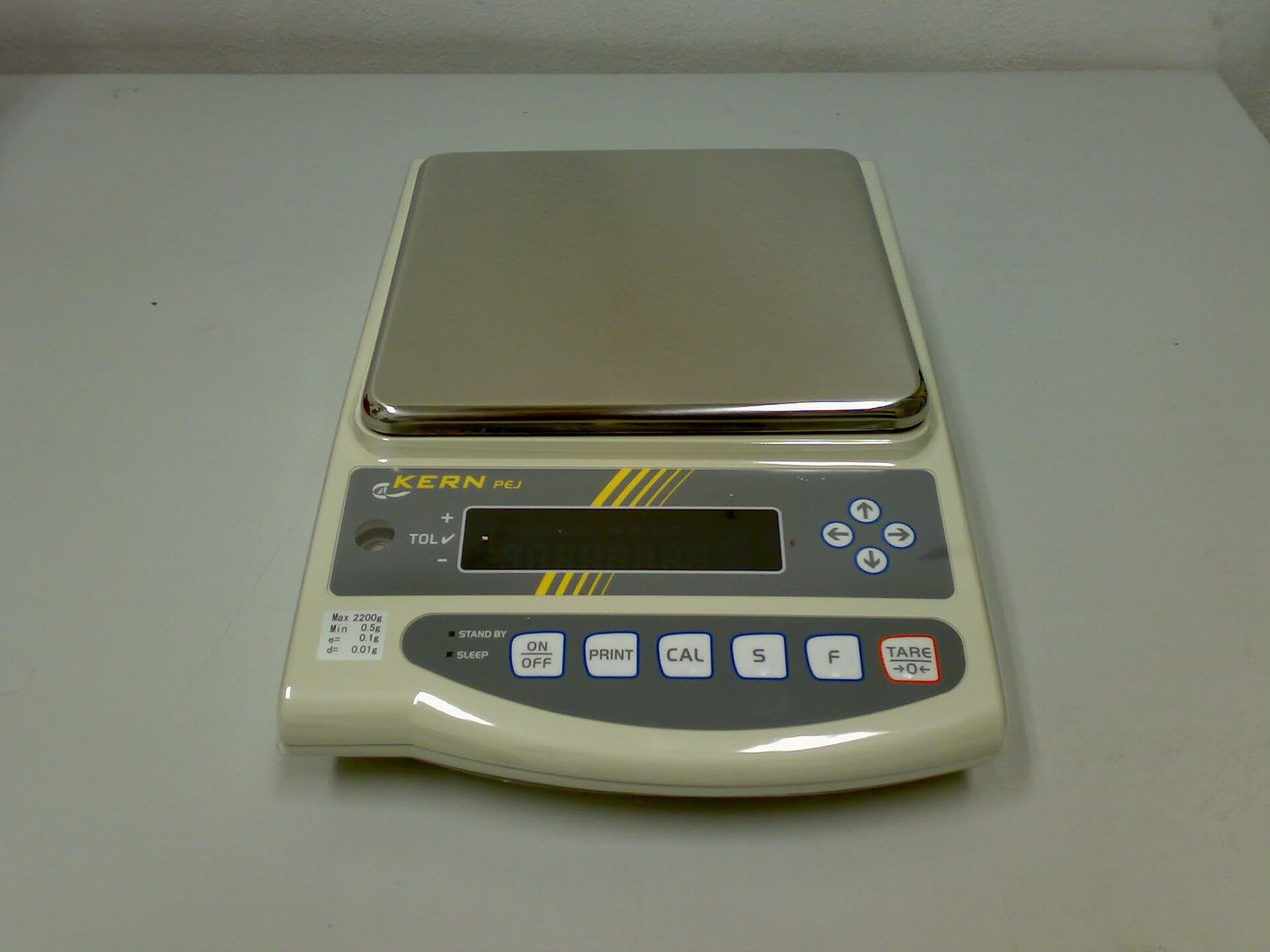
A laboratory balance measures mass for mole calculations
The relative atomic mass (Ar) of an element is:
Difficulty 1/5 · 100 coins + a small bonus on first completion today
Ar is the average over all isotopes (weighted by abundance), measured against 1/12 of a carbon-12 atom.
$M_r$ and formula mass
- The relative molecular mass 相对分子质量 $M_r$ is the sum of the $A_r$ of all atoms in a molecule.
- The relative formula mass 相对式量 is the same idea for substances that aren't molecules (e.g. ionic compounds 离子化合物) — add the $A_r$ shown in the formula.
- Example: $M_r(\text{CO}_2) = 12 + (2 \times 16) = 44$.
The relative molecular mass (Mr) is found by:
Difficulty 1/5 · 100 coins + a small bonus on first completion today
Mr is the sum of the Ar values of every atom in the molecule.
What is the Mr of CO₂? (Ar: C = 12, O = 16)
Difficulty 2/5 · 140 coins + a small bonus on first completion today
Mr = 12 + (2 × 16) = 44.
What is the Mr of water, H₂O? (Ar: H = 1, O = 16)
Difficulty 2/5 · 140 coins + a small bonus on first completion today
Mr = (2 × 1) + 16 = 18.
Match each term to its meaning.
Difficulty 2/5 · 140 coins + a small bonus on first completion today
All relative masses are compared to ¹/₁₂ of a carbon-12 atom; molecules use Mr, ionic compounds use formula mass.
Ionic compounds have a relative molecular mass because they are made of separate molecules.
Difficulty 1/5 · 100 coins + a small bonus on first completion today
False. An ionic compound is a giant lattice, not separate molecules, so we use relative formula mass: add the Ar values in its formula.
Keep your masses straight
- Relative atomic mass (Ar) is for atoms; relative molecular/formula mass (Mr) is the sum of the Ar values in a formula.
- Always read isotope data carefully — abundances must add up to 100%.
Worked examples
1. Chlorine is $75\%$ $^{35}\text{Cl}$ and $25\%$ $^{37}\text{Cl}$. $A_r = \dfrac{75 \times 35 + 25 \times 37}{100} = 35.5$.
2. $M_r$ of $\text{CaCO}_3 = 40.1 + 12.0 + 3 \times 16.0 = 100.1$.
You've got it
- masses are compared to $\tfrac{1}{12}$ of a carbon-12 atom (the unit u)
- $A_r$ = weighted average over isotopes; relative isotopic mass = one isotope
- $M_r$ = sum of $A_r$ of all atoms; formula mass = same for ionic compounds
- e.g. $M_r(\text{CO}_2) = 44$