חברה יכולה להיות רווחית ועדיין להיכשל. הנה איך. אתה מוכר מיליון לירות של מוצרים באמצעות הארכת אשראי במרץ. הרווח נראה מצוין. אך ה…
English narration · English + 中文 subtitles burned in · קריאת קול באנגלית · תרגום אנגלי + סינית שרוף בתוך הסרטון
5.1
Why a business needs finance · מדוע לעסק יש צורך בפיננסים
Syllabus · סיילבוס
English
explain the need for business finance (capital expenditure and revenue expenditure, working capital)
distinguish the meaning of cash and profit
עברית
הסבר על הצורך בהימון עסקי (הוצאות הון והוצאות הכנסה, הון עובד)
distinguish the meaning of cash and profit
Source: Cambridge International syllabus · מקור: הסיילבוס הבינלאומי של קמבריד'ג'
English
Business finance 企业资金 is the money a firm needs to start, run and grow. A new firm needs money to buy premises 经营场所 and equipment; a growing firm needs money for new projects; and every firm needs money to pay day-to-day bills.
עברית
פיננסים עסקיים הם הכסף שחברה צריכה כדי להתחיל, לתפעל ולהתרחב. חברה חדשה צריכה כסף לרכישת מקום וציוד; חברה גדלה צריכה כסף לפרויקטים חדשים; וחברות כלל צריכות כסף כדי לשלם חשבונות יומיומיים.
בנקים הם מקור חיצוני מרכזי לפיננסים, דרך הלוואות והנפקה.
Explore · חקור
Sources of finance lab · מעבדת מקורות מימון
Choose the best type of finance by time, risk and ownership. · בחרו את סוג המימון הטוב ביותר לפי זמן, סיכון ובעלות.
5.1
Capital and revenue expenditure · הוצאות הון והוצאות הכנסה
English
Spending falls into two types:
capital expenditure 资本性支出 — money spent on fixed assets 固定资产 that last a long time, such as machines, vehicles and buildings.
revenue expenditure 收益性支出 — money spent on day-to-day running, such as wages, rent and raw materials.
Here current assets 流动资产 are things that become cash within a year (cash, inventory, money owed by customers), and current liabilities 流动负债 are debts due within a year. Too little working capital is dangerous — the firm may not be able to pay its bills.
עברית
הון עובד הוא הכסף שיש לחברה לצרכיה היומיים. הוא מחושב מתוך מאזן חשבונות:
כאן נכסים זורמים הם נכסים שהופכים למזומן בתוך שנה (מזומן, מלאי, חובות לקוחות), וחובות זורמות הן חובות הנפדרות בתוך שנה. קיצוץ יתר בהון עובד מסוכן — החברה עשויה לא יכולה לשלם את חשباتיה.
המזומן הוא הון עובד: לחברות נדרשים נכסי בלוקלידציה מספיקים כדי לשלם חשבות שוטפות
Cash is not the same as profit · מזומן אינו זהה לרווח
English
This is a key idea.
profit 利润 is what is left when total costs are taken from total revenue over a period.
cash 现金 is the money the firm actually has right now to spend.
A firm can be profitable but still run out of cash — for example, if it sells goods but customers have not paid yet. Many firms fail not from low profit, but from running out of cash.
עברית
זו נקודת מרכזית.
רווח הוא מה שנותר לאחר חיסור העלויות הכוללות מההכנסות הכוללות במהלך תקופה.
מזומן הוא הכסף שיש לחברה בפועל כרגע להוצאה.
חברה יכולה להיות רווחית אך עדיין להיגמר לה המזומן — לדוגמה, אם היא מכרה סחורה אך הלקוחות טרם שילמו. חברות רבות נכשלות לא בגלל רווח נמוך, אלא בגלל גמר מזומן.
*הרווח והמזומן שונים: חברה עשויה להיראות רווחית על נייר אך אין לה מזומן לשלם חשבות — ולכן חברות רבות נכשלות
describe internal and external, short- and long-term sources of finance (retained profit, sale of assets, share capital, loans, debentures, overdraft, leasing, hire purchase, trade credit, venture capital, crowdfunding, microfinance)
explain the factors affecting the choice of source of finance
עברית
תיאור מקורות מימון פנימיים וחיצוניים, לטווח קצר וארוך (רווח מוחזק, מכירת נכסים, הון מניות, הלוואות, נכסי חובה, היפרטלת חשבון, השכרה, רכישה בהתקנות, הימון סחר, הימון סיכון, מימון קולקטיבי, מימון מיcro)
הסבר על הגורמים המשפיעים על בחירת מקור המימון
Source: Cambridge International syllabus · מקור: הסיילבוס הבינלאומי של קמבריד'ג'
English
Finance can come from inside the business (internal sources 内部来源) or from outside (external sources 外部来源). It can also be short-term 短期 (paid back within a year) or long-term 长期.
Source
Type
What it is
retained profit 留存利润
internal, long
profit kept in the business instead of paid out
sale of assets 出售资产
internal
selling items the firm no longer needs
share capital 股本
external, long
money raised by selling shares
loan 贷款
external, long
borrowed money repaid with interest
debenture 公司债券
external, long
a long-term loan certificate sold by a company
overdraft 透支
external, short
the bank lets the account go below zero for a short time
leasing 租赁
external
renting an asset instead of buying it
hire purchase 分期付款
external
buying an asset by paying in instalments
trade credit 商业信用
external, short
paying a supplier later (e.g. after 30 days)
venture capital 风险资本
external, long
money from investors into risky young firms
crowdfunding 众筹
external
small amounts raised from many people online
microfinance 小额信贷
external
small loans for people with little access to banks
עברית
בורסה: חברות ציבוריות מיימן עצמן על ידי מכירת מניות.
המימון יכול לבוא מפנים העסק (מקורות פנימיים) או מחוץ (מקורות חיצוניים). הוא יכול גם להיות טווח קצר (נפרסם בתוך שנה) או טווח ארוך.
מקור
סוג
מהו
רווח מוחזק
פנימי, ארוך
רווח שמותר בחברה במקום לפיזור
מכירת נכסים
פנימית
מכירת פריטים שהחברה אינה צריכה עוד
מניית בסיס
חיצוני, ארוך טווח
כסף שהתקבל ממכירת מניות
הלוואה
חיצוני, ארוך טווח
כסף שמקובל בהחזר עם ריבית
הנפקה
חיצונית, ארוכת טווח
תעודת הלוואה ארוכת טווח שנמכרת על ידי חברה
הנפקה
חיצונית, קצרת טווח
הבנק מאפשר לחשבון לצאת למינוס לזמן קצר
השכרה
חיצונית
השכרת נכס במקום לרכוש אותו
קנייה בתשלומים
חיצוני
רכישת נכס על ידי תשלום במטבעות
הטמעת עסקים
חיצוני, קצר-טווח
תשלום לספק באיחור (למשל לאחר 30 ימים)
הון סיכון
חיצוני, ארוך-טווח
כסף מהשקעות לחברות צעירות וסיכון גבוה
גיוס הון המוני
חיצוני
סכומים קטנים שנאספו ממספר רב של אנשים מקוונת
מימון מיקרו
חיצוני
הלוואות קטנות לאנשים עם גישה מוגבלת לבנקים
מקורות המימון מגיעים מתוך העסק (פנימיים) או מחוצה לו (חיצוניים)
Explore · חקור
Sources of finance lab · מעבדת מקורות מימון
Choose the best type of finance by time, risk and ownership. · בחרו את סוג המימון הטוב ביותר לפי זמן, סיכון ובעלות.
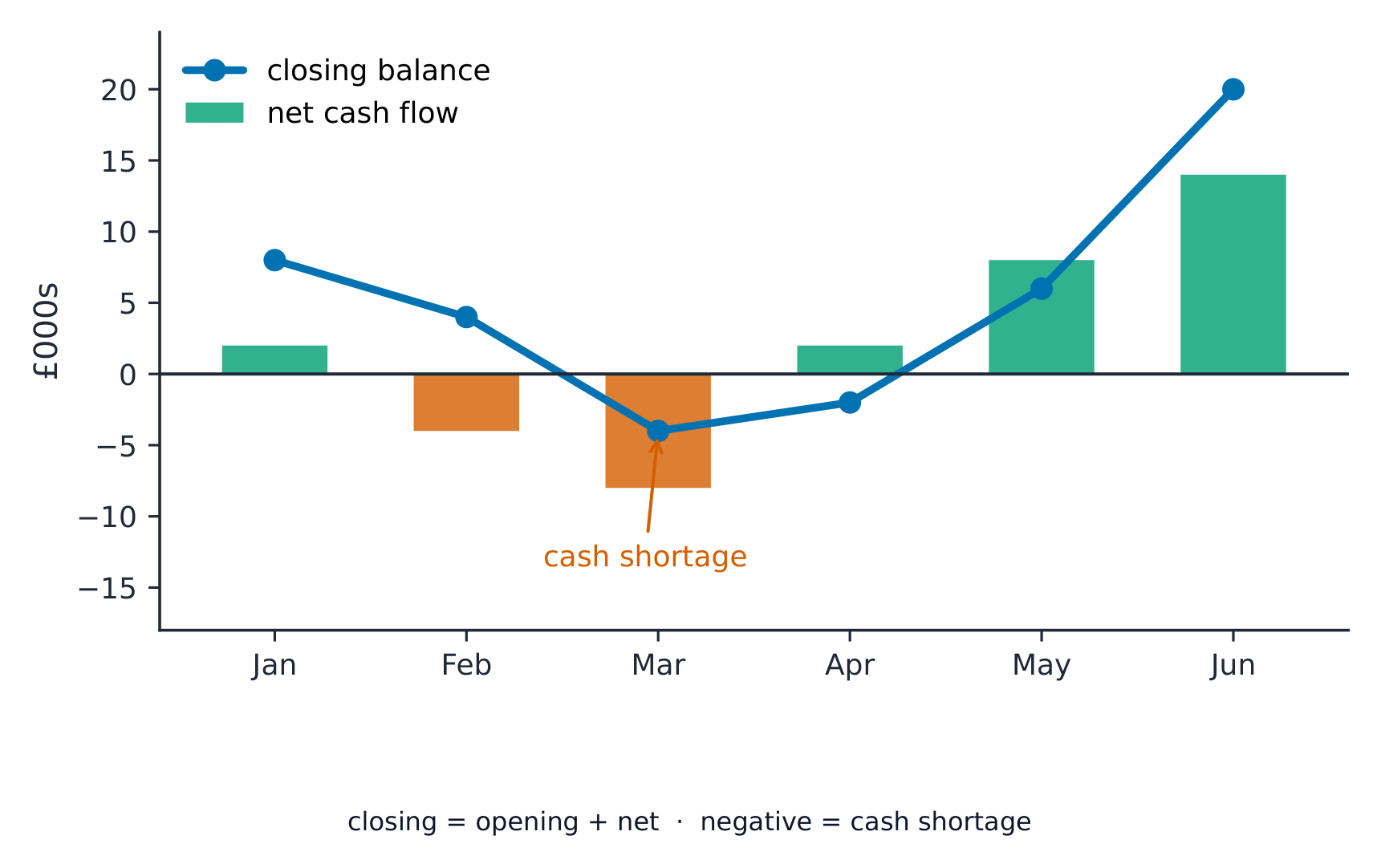
The opening balance 期初余额 is the cash at the start of the month. Adding net cash flow gives the closing balance 期末余额, which becomes next month's opening balance.
עברית
תחזית זרימת מזומן
תחזית זרימת מזומן חוזרת על מהלך המזומן הנכנס והיוצא בכל חודש. היא מסייעת לחברה לזהות מחסור במזומן בזמן.
זרמי מזומן נכנסים — כסף הנכנס, בעיקר מכירות.
זרמי מזומן יוצאים — כסף היוצא, כמו משכורות ודמי שכירות.
זרימת מזומן נטו — זרמי מזומן נכנסים פחות יוצאים לתקופה נתונה.
היציאה הפתיחה היא המזומן בתחילת החודש. חיבור זרימת המזומן הנטו נותן את היציאה הסופית, שמהפך להיציאת הפתיחה של החודש הבא.
תחזית זרימת מזומן עוקבת אחרי היציאה הסופית בכל חודש ומזהירה ממחסור בזמן
Explore · חקור
A cash-flow forecast · תחזית זרמי מזומן
A cash-flow forecast tracks money in and out each month — to spot a shortfall before it happens. · תחזית זרמי מזומן עוקבת אחר כסף הנכנס והיוצא בכל חודש — כדי לזהות מחסור לפני שהוא מתרחש.
Cash-flow problems and how to fix them · בעיות זרימת מזומן ואופן פתרונן
English
Common causes of cash-flow problems are: too many sales on credit, holding too much stock, buying too many assets at once, and overtrading 过度交易 (growing too fast for the cash available).
Ways to improve cash flow:
bring cash in sooner — ask customers to pay faster, or offer discounts for quick payment.
delay cash going out — agree longer trade credit with suppliers.
arrange an overdraft or short loan to cover a gap.
hold less stock to free up cash.
Good working capital management keeps enough cash to stay safe without holding so much that money sits idle.
עברית
גורמים נפוצים לבעיות זרימת מזומן הם: הרבה מכירות על חשבון, החזקת מלאי גבוהה מדי, רכישה של נכסים רבים בבת אחת, ומסחר יתר (צמיחה מהירה מדי ביחס למזומן הזמין).
דרכים לשפר את זרימת המזומן:
לקבל מזומן מוקדם יותר — לבקש מלקוחות לשלם מהר יותר, או להציע הנחות לתשלום מהיר.
Drag the monthly cash in, cash out and the one-off purchase — find the month that closes in the red, then fix it before it happens. · גרור את הזרם המזומנים החודשי, את ההוצאה והרכישה החד-פעמית — מצא את החודש שנסגר בצבע אדום, ואז תיקון לפני שהוא מתרחש.
5.4
Costs and how we classify them · עלויות ואופן סיווגן
Syllabus · סיילבוס
English
classify costs (fixed, variable, direct, indirect, marginal, average) and use cost information for decision-making
construct and interpret break-even analysis (break-even point, margin of safety, contribution) and explain its limitations
עברית
סיווג עלויות (קבועות, משתנות, ישירות, עקיפות, שוליות, ממוצעות) ושימוש במידע על עלויות לקבלת החלטות
בנייה ופרשנות של ניתוח נקודת איזון (נקודת איזון, גבול בטיחות, תרומה) והסבר על מגבלותיו
Source: Cambridge International syllabus · מקור: הסיילבוס הבינלאומי של קמבריד'ג'
English
Break-even analysis, built line by line
A cost 成本 is money the business spends to make its product. We sort costs in several ways:
fixed costs 固定成本 — costs that do not change with output, such as rent.
variable costs 可变成本 — costs that rise and fall with output, such as raw materials.
direct costs 直接成本 — costs clearly linked to one product, such as its materials.
indirect costs 间接成本 (overheads) — costs not linked to one product, such as manager salaries.
marginal cost 边际成本 — the cost of making one more unit.
average cost 平均成本 — the cost per unit, found by total cost ÷ number of units.
Cost information helps managers set prices, choose what to make, and control spending.
עברית
ניתוח נקודת השווי, נבנה שורה בשורה
עלות היא כסף שהעסק משלם כדי לייצר את המוצר שלו. אנו מחלקים עלויות למספר קטגוריות:
עלויות קבועות — עלויות שאינן משתנות בהתאם להיקף הייצור, כמו דמי שכירות.
עלויות משתנות — עלויות העולות ויורדות בהתאם להיקף הייצור, כמו חומרי גלם.
עלויות ישירות — עלויות הקשורות באופן ברור למוצר אחד, כמו החומרים שלו.
עלויות עקיפות (הוצאות כלליות) — עלויות שאינן קשורות למוצר ספציפי, כמו משכורות מנהלים.
עלות שולית — העלות של ייצור יחידה נוספת.
עלות ממוצעת — העלות ליחידה, שמחושבת על ידי חילוק העלות הכוללת במספר היחידות.
העלות הכוללת = עלות קבועה + עלות משתנה; רק העלות המשתנה עולה בהתאם להיקף הייצור
מידע על עלויות עוזר למנהלים לקבוע מחירים, לבחור מה לייצר ולשלוט בהוצאות.
Explore · חקור
Costs · עלויות
y = ax + b
Total cost = fixed cost (intercept) + variable cost per unit (gradient). · עלות כוללת = עלות קבועה (נקודת חיתוך) + עלות משתנה ליחידה (שיפוע).
Contribution 贡献 is how much each sale adds towards paying the fixed costs:
$$\text{contribution per unit} = \text{selling price} - \text{variable cost per unit}$$
Break-even 盈亏平衡 is the point where total revenue equals total costs, so profit is zero. The break-even point 盈亏平衡点 in units is:
$$\text{break-even point} = \frac{\text{fixed costs}}{\text{contribution per unit}}$$
The margin of safety 安全边际 is how far current sales are above the break-even point:
$$\text{margin of safety} = \text{actual output} - \text{break-even output}$$
Worked example. A product sells for £20 with a variable cost of £12 per unit. Fixed costs are £40,000, and the firm makes 6,000 units. Find the contribution per unit, the break-even output and the margin of safety.
A large margin of safety means sales can fall a lot before the firm makes a loss. Break-even analysis is quick and useful, but it has limitations 局限性: it assumes the selling price and costs stay the same, and that everything made is sold.
עברית
תרום הוא הכמות שכל מכירה מוסיפה לכיסוי העלויות הקבועות:
$$\text{contribution per unit} = \text{selling price} - \text{variable cost per unit}$$
נקודת השווי היא הנקודה שבה ההכנסה הכוללת שווה לעלויות הכוללות, ולכן הרווח הוא אפס. נקודת השווי בכמות יחידות היא:
$$\text{break-even point} = \frac{\text{fixed costs}}{\text{contribution per unit}}$$
נקודת השווי היא הנקודה שבה ההכנסה הכוללת שווה לעלות הכוללת — משמאל לה יש פסד, מימין לה יש רווח
הגנת הסחף (שולי הבטיחות) היא המרחק שבו המכירות הנוכחיות גבוהות מנקודת השווי:
$$\text{margin of safety} = \text{actual output} - \text{break-even output}$$
דוגמה מפורטת. מוצר נמכר ב-£20 ועלותו המשתנה היא £12 ליחידה. העלויות הקבועות הן £40,000, והחברה מייצרת 6,000 יחידות. מצאו את התרום ליחידה, את תפוקת נקודת השווי ואת הגנת הסחף.
שולי בטיחות גדולים משמעים שמכירות יכולות לצנוח משמעותית לפני שהחברה תפסיד. ניתוח נקודת השווי הוא מהיר ומועיל, אך יש לו מגבלות: הוא מניח שהמחיר והעלויות נשארים קבועים, וכי כל מה שיוצר נמכר.
Explore · חקור
Break-even chart · גrafic נקודת השווי
Add a revenue line to the fixed-cost and total-cost lines. Where revenue meets total cost is the break-even point; beyond it the firm makes a profit. · הוסיפו קו הכנסה לקווים של עלות קבועה ועלות כוללת. הנקודה בה הכנסה פוגעת בעלות כוללת היא נקודת השווי; מעבר לה, החברה מרוויחה.
Explore · חקור
Break-even analysis · ניתוח נקודת איזון
Break-even is where total revenue crosses total cost. · נקודת איזון היא הרגע שבו ההכנסה הכוללת חוצה את העלות הכוללת.
explain the purpose of budgets and types of budget (incremental, zero-based)
calculate and interpret variances (favourable and adverse) using variance analysis
עברית
הסבר על מטרת תקציבים ומיניהם (תקציב ריבוי, תקציב מבוסס אפס)
חישוב ופרשנות של סטיות (חיוביות ושליליות) באמצעות ניתוח סטיות
Source: Cambridge International syllabus · מקור: הסיילבוס הבינלאומי של קמבריד'ג'
English
A budget 预算 is a financial plan for the future — a target for income or spending. Budgets help a firm plan, control money, and check performance. Two types are:
incremental budget 增量预算 — last year's budget changed by a small amount.
zero-based budget 零基预算 — every cost must be explained from zero each year.
A variance 差异 is the difference between the budgeted figure and the actual figure:
Show that cash is not profit — a profitable firm can still fail from a cash-flow shortage.
For break-even: contribution per unit $=$ price $-$ variable cost; break-even $=$ fixed costs $\div$ contribution; margin of safety $=$ actual $-$ break-even output.
Match a source of finance to the need (short-term for cash flow, long-term or equity for assets) and to the type of business.
Calculate a variance and label it favourable or adverse (actual against budget).
עברית
להראות ש-מזומנים אינם רווח — חברה רווחית עשויה להפסד מחסר מזומנים.
עבור נקודת שיווי משקל: תרומה ליחידה $=$ מחיר $-$ עלות משתנה; נקודת שיווי משקל $=$ עלות קבועה $\div$ תרומה; מגן בטיחות $=$ פועל $-$ ייצור בנקודת שיווי משקל.
להתאים מקור מימון לצורך (קצר טווח למזומנים, ארוך טווח או הון עצמי לנכסים) ולסוג העסק.
לחשב הבדל ולסמן אותו כנוחון או פוגעני (פועל מול תקציב).
Interactive lessons on this topic · שיעורים אינטראקטיביים בנושא זה
Work through it step by step, with instant-check exercises. · לעבור על הדברים צעד אחר צעד, עם תרגילים לבדיקה מיידית.
Pick one and the site follows you — notes, papers, videos and practice all open on it. · בחרו נושא אחד והאתר יעקוב אחריו — הערות, מסמכים, וידאו ותרגולים פתוחים בו.
Type to search notes, lessons, code, vocabulary and past-paper questions across every subject. · הקלד כדי לחפש הערות, שיעורים, קוד, אוצר מילים ושאלות מבחנים בכל הנושאים.