Skip to content · ⁨דלג לתוכן⁩

Business and its environment · ⁨עסקים וסביבתם⁩

A-Level Business · ⁨תחום העסקים A-Level⁩ · Topic 1 · ⁨נושא 1⁩

Video lesson for this topic · ⁨שיעור וידאו לנושא זה⁩ Open the video page · ⁨פתח את עמוד הוידאו⁩
21:42

עסקים וסביבתם

הסתכלו על כוס קפה. שעועית הקפה בתוכה עולה几 סנט. החלב, הכוס, המכסה — כמה סנט נוספים. עם זאת, אנשים משלמים בשמחה שלושה דולרים עבורה. אז…

English narration · English + 中文 subtitles burned in · ⁨קריאת קול באנגלית · תרגום אנגלי + סינית שרוף בתוך הסרטון⁩

1.1

Why businesses exist · ⁨למה ישנם עסקים⁩

Syllabus · ⁨סיילבוס⁩
English
  1. explain the purpose of business activity, the concept of adding value and the role of the entrepreneur and intrapreneur
  2. explain the characteristics of successful entrepreneurs and the importance of enterprise to a country (business start-ups)
  3. explain the contents and purpose of a business plan
עברית
  1. הסבר את מטרת פעילות עסקית, מושג RI adding value ותפקודם של RI entrepreneur וRI intrapreneur
  2. הסבר את מאפייני עסקנים מצליחים וחשיבות RI enterprise למדינה (הקמת עסקים)
  3. הסבר על תוכן ומטרותיו של תכנית עסקית

Source: Cambridge International syllabus · ⁨מקור: הסיילבוס הבינלאומי של קמבריד'ג'⁩

English

People have needs 需要 (things you must have, like food and shelter) and wants 欲望 (things you would like, like a phone or a holiday). A business exists to meet these needs and wants by making goods 商品 and services 服务.

To do this, a business uses resources 资源. We sort resources into four factors of production 生产要素:

  • land 土地 — natural things, such as soil, water and minerals.
  • labour 劳动力 — the work done by people.
  • capital 资本 — the machines, tools, buildings and money used to produce.
  • enterprise 创业精神 — the skill of bringing the other three together and taking the risk 风险 to start a business.

Resources are scarce 稀缺 — there are not enough to meet everyone's wants. So every business must choose how to use them well.

עברית

לאנשים יש צרכים (דברים שחייבים להם, כמו מזון ומגורים) ורצונות (דברים שהייתם רוצים, כמו טלפון או חופשה). עסק קיים כדי לענות על צרכים אלו ועל רצונות אלו על ידי ייצור מוצרים ושירותים.

חנויות המתחרות לאורך רחוב ראשי
חנויות המתחרות ברחוב ראשי — השוק שבו עסק פועל.

כדי לעשות זאת, עסק משתמש במשאבים. אנו מחלקים משאבים לארבעה גורמי ייצור:

  • קרקע — דברים טבעיים, כגון אדמה, מים ומינרלים.
  • עבודה — העבודה המבוצעת על ידי אנשים.
  • הון — מכונות, כלים, מבנים וכסף המשמשים לייצור.
  • יזמות — המיומנות של היצגת שלושת הגורמים האחרים יחד ולקחת את הסיכון להקים עסק.
תרשים המראה קרקע, עבודה, הון ועסקיות כארבעה כניסים המשולבים על ידי עסק כדי לייצר מוצרים ושירותים
קרקע, עבודה, הון ויזמות הם ארבעת הגורמים שאותם עסק מאחד ליצירת מוצרים ושירותים

משאבים הם מדוללים — אין מספיק מהם כדי לענות על רצונותיהם של כולם. לכן, כל עסק חייב לבחור כיצד להשתמש בהם בצורה טובה.

Vocabulary · ⁨מילון מונחים⁩ Train · ⁨אימון⁩
English עברית
needs/niːdz/ זקוק / דורש
wants/wɒnts/ ביקוש
goods/ɡʊdz/ סחורות
services/ˈsɜːvɪsɪz/ שירותים
resources/rɪˈzɔːsɪz/ משאבים
factors of production/ˈfæktəz ɒv prəˈdʌkʃn/ גורמי ייצור
land/lænd/ אדמה
labour/ˈleɪbə/ עבודה
capital/ˈkæpɪtl/ הון
enterprise/ˈentəpraɪz/ עסק
risk/rɪsk/ סיכון
scarce/skeəs/ נדיר
adding value/ˈædɪŋ ˈvæljuː/ הוספת ערך
inputs/ˈɪnpʊts/ כניסות
branding/ˈbrændɪŋ/ מותגה
1.1

Adding value · ⁨הוספת ערך⁩

English

Adding value 增值 means the selling price of a product is higher than the cost of the inputs 投入 (the bought-in materials) used to make it.

$$\text{value added} = \text{selling price} - \text{cost of bought-in materials}$$

A business can add value by branding 品牌, better quality, good design, fast service, or convenience. More value added can mean more profit 利润, but only if costs stay under control.

עברית

הוספת ערך פירושה שהמחיר במכירה של מוצר גבוה יותר מעלות הקלטות (החומרים שנרכשו) המשמשות לייצורו.

$$\text{value added} = \text{selling price} - \text{cost of bought-in materials}$$
עמודה מצטברת המחולקת לעלות חומרים שנרכשו בחוץ בתחתית ולערך נוסף בחלק העליון, שיחד יוצרים את מחיר המכירה
הערך המוסף הוא מחיר המכירה פחות עלות החומרים הנרכשים

עסק יכול להוסיף ערך באמצעות מותג, איכות טובה יותר, עיצוב נאה, שירות מהיר או נוחות. הוספת ערך גדולה יותר יכולה להוביל לרווח גדול יותר, אך רק אם העלויות נשארות בשליטה.

Explore · ⁨חקור⁩

Value added lab · ⁨מעבדת הוספת ערך⁩

Change the bought-in cost, the selling price and other costs to see exactly where value added — and profit — come from. · ⁨שנה את עלות הרכישות, מחיר המכירה ועלויות נוספות כדי לראות בדיוק מאין מגיעה ההוספה בערך וברווח.⁩

1.1

Entrepreneurs and intrapreneurs · ⁨יזמים ואינטראפרנאורים⁩

English

An entrepreneur 企业家 is a person who takes the risk to set up and run a business. They have the idea, organise the factors of production, and make the decisions. If the business fails, they can lose their money.

An intrapreneur 内部创业者 is an employee inside a larger business who acts like an entrepreneur. They build new ideas, products or ways of working, using the company's resources.

Characteristics of successful entrepreneurs

Successful entrepreneurs are usually:

  • innovative 有创新精神的 — full of new ideas.
  • willing to take risks, but in a careful way.
  • hard-working and determined 有决心的 — they do not give up easily.
  • self-confident 自信的 and good at making decisions.
  • good leaders who can plan ahead and manage money.

Why enterprise matters to a country

When people start new businesses (business start-ups 初创企业), the whole country can gain:

  • new jobs are created, which lowers unemployment 失业.
  • more goods and services are made, which raises output 产出 (and the country's GDP 国内生产总值).
  • more competition 竞争, giving customers lower prices and more choice.
  • some firms grow and export 出口, bringing money into the country.
  • economic growth 经济增长 and a higher standard of living.
עברית

יזם הוא אדם הוקח סיכון להקים ולנהל עסק. יש לו את הרעיון, הוא מארגן את גורמי הייצור וקובע החלטות. אם העסק נכשל, הוא עלול לאבד את כספו.

אינטראפרנאור הוא עובד בתוך עסק גדול הפועל כמיני-יזם. הוא בונה רעיונות חדשים, מוצרים או דרכי עבודה חדשות, תוך שימוש במשאבי החברה.

מכונית מזון צבעונית עם שלט "פתוח" ותפריט, עם שני לקוחות הזמינים בחלון
מכונית המזון היא יזמות שניתן לראות. בעלים זיהה פער בשוק, הושקיע את חסכונותיו ברכב ובמלאי, וכיום נושא את הסיכון היומי בניהולו — זו תוכנתו של להיות יזם

מאפיינים של עסקים מוצלחים

עסקים מוצלחים הם בדרך כלל:

  • חדשניים — מלאי ברעיונות חדשים.
  • מוכנים לקחת סיכונים, אך בצורה זהירה.
  • עובדים קשה וחזקים — הם לא נסגרים בקלות.
  • מוטמין ועושה היטב בהחלטות.
  • מנהיגים טובים שיכולים לתכנן מראש ולנהל כסף.

מדוע עסקים חשובים למדינה

כאשר אנשים מקימים עסקים חדשים (הקמת עסק), כל המדינה יכולה להרוויח:

  • נוצרים תפקידים חדשים, מה שמוריד את האבטלה.
  • יוצרים יותר מוצרים ושירותים, מה שמגביר את התפוקה (וגם את ת"מ"ה של המדינה).
  • יותר תחרות, המניחה ללקוחות מחירים נמוכים ובחירה רבה יותר.
  • חלק מהחברות צומחות ויוצאות לשווקים חו
  • צמיחה כלכלית ורמת חיים גבוהה יותר.
Vocabulary · ⁨מילון מונחים⁩ Train · ⁨אימון⁩
English עברית
entrepreneur/ˌɒntrɪprəˈnjʊə/ יזם
intrapreneur/ˌɪntrəprəˈnjʊə/ א entrepreneurship פנימי (אינטרפרנר)
innovative/ˈɪnəveɪtɪv/ חדשני
determined/dɪˈtɜːmɪnd/ נחוש
self-confident/self ˈkɒnfɪdənt/ מוכן לעצמו
business start-ups/ˈbɪznəs stɑːt ʌps/ הקמת חברות סטארט-אפ
unemployment/ʌnemˈplɔɪmənt/ אבטלה
output/ˈaʊtpʊt/ תפוקה
GDP/ˌdʒiː diː ˈpiː/ תמ"ג (תוצר מקומי ברוטו)
competition/ˌkɒmpəˈtɪʃn/ תחרות
export/ˈekspɔːt/ ייצוא
economic growth/ˌiːkəˈnɒmɪk ɡrəʊθ/ צמיחה כלכלית
business plan/ˈbɪznəs plæn/ תוכנית עסקית
cash-flow forecast/kæʃ fləʊ ˈfɔːkæst/ תחזית מזומנים
finance/ˈfaɪnæns/ מימון
investor/ɪnˈvestə/ משקיע
primary sector/ˈpraɪməri ˈsektə/ המגזר הראשוני
secondary sector/ˈsekəndəri ˈsektə/ תחום משני
tertiary sector/ˈtɜːʃjəri ˈsektə/ תחום שלישי
quaternary sector/kwəˈtɜːnəri ˈsektə/ תחום הרביעי
raw materials/rɔː məˈtɪərɪəlz/ חומרי גלם
manufacture/ˌmænjuːˈfæktʃə/ ייצור
private sector/ˈpraɪvət ˈsektə/ המגזר הפרטי
public sector/ˈpʌblɪk ˈsektə/ המגזר הציבורי
sole trader/səʊl ˈtreɪdə/ עצמאי
partnership/ˈpɑːtnəʃɪp/ שותפות
deed of partnership/diːd ɒv ˈpɑːtnəʃɪp/ חברת שיתוף פעולה
private limited company/ˈpraɪvət ˈlɪmɪtɪd ˈkʌmpəni/ חברה מוגבלת פרטית
shares/ʃeəz/ מניות
shareholders/ˈʃeəhəʊldəz/ בעלי מניות
public limited company/ˈpʌblɪk ˈlɪmɪtɪd ˈkʌmpəni/ חברה מוגבלת ציבורית
stock exchange/stɒk eksˈtʃeɪndʒ/ בורסה
takeover/ˈteɪkəʊvə/ רכישה
franchise/ˈfræntʃaɪz/ זיכיון
franchisor/ˈfræntʃaɪzə/ מתן זיכיון
franchisee/ˈfræntʃɪsiː/ מקבל זיכיון
royalty/ˈrɔɪəlti/ דמי זיכיון
joint venture/dʒɔɪnt ˈventʃə/ מיזם משותף
social enterprise/ˈsəʊʃl ˈentəpraɪz/ ארגון חברתי
environmental/enˌvaɪrənˈmentl/ סביבתי
1.1

The business plan · ⁨תוכנית עסקית⁩

English

A business plan 商业计划书 is a written document that describes the business idea and how it will work. It usually contains:

Part of the plan What it covers
The idea the product, and what makes it different
The market target customers, market size, competitors
Marketing price, promotion and place
Operations how the product is made or delivered
Finance start-up costs, a cash-flow forecast 现金流量预测, expected profit
People the owners and key staff

A business plan is useful because it helps the owner:

  • get finance 融资 from a bank or an investor 投资者.
  • set clear goals and lower the risk of failure.
  • guide decisions as the business grows.
עברית

תוכנית עסקית היא מסמך כתוב המתאר את הרעיון העסקי ואופן פעולתו. היא מכילה בדרך כלל:

חלק בתוכנית מה הוא מכסה
הרעיון המוצר, ומה שונה בו
השוק לקוחות יעד, גודל השוק, מתחרים
שיווק מחיר, קידום ומיקום
פעולות כיצד המוצר מיוצר או מסופק
כספים עלויות הקמה, תזרים מזומנים, רווח צפוי
אנשים בעלי העסק והעובדים המרכזיים

תוכנית עסקית היא שימושית משום שהיא עוזרת לבעל העסק:

  • לקבל מימון מהבנק או ממשקיע.
  • לקבוע מטרות ברורות ולהפחית את הסיכון לכישלון.
  • להנחות החלטות כאשר העסק מתרחב.
1.2

Sectors of business activity · ⁨תחומי פעילות עסקית⁩

Syllabus · ⁨סיילבוס⁩
English
  1. explain the classification of business activity (primary, secondary, tertiary, quaternary sectors) and the private and public sectors
  2. describe the legal structure of business: sole trader, partnership, private and public limited company, franchise, joint venture, social enterprise
  3. explain limited and unlimited liability
עברית
  1. הסבר על סיווג פעילות עסקית (מגזר ראשוני, משני, שלישי, רביעי) והמגזר הפרטי והציבורי
  2. תיאור המבנה המשפטי של עסקים: עצמאי (בעל מלאכה), שותפות, חברה בע"מ פרטית וציבורית, רשת זכויות יתר, מיזם משותף, ארגון חברתי
  3. הסבר על אחריות מוגבלת ואין-מוגבלת

Source: Cambridge International syllabus · ⁨מקור: הסיילבוס הבינלאומי של קמבריד'ג'⁩

English

Every business works in one of four sectors:

Sector What it does Example
primary sector 第一产业 takes raw materials from nature farming, mining, fishing
secondary sector 第二产业 makes (manufactures) goods car factory, baker
tertiary sector 第三产业 provides services shops, banks, transport
quaternary sector 第四产业 knowledge and information services research, IT, consulting

Here raw materials 原材料 are the natural inputs a business starts with, and to manufacture 制造 means to make goods in large amounts. As a country develops, it usually moves from mostly primary work towards more tertiary and quaternary work.

עברית

כל עסק פועל באחד מארבעה תחומים:

תחום מה הוא עושה דוגמה
תחום ראשוני שואל חומרי גלם מטבע חקלאות, מכרות, דיג
תחום משני מייצר (מעבד) סחורות מפעל רכבים, אופה
תחום שלישי מספק שירותים חנויות, בנקים, תחבורה
תחום רביעי שירותי ידע ומידע מחקר, טכנולוגיה מידע, ייעוץ
ארבעה קופסאות בשורה — ראשוני, משני, שלישי, רביעי — מקושרות בחצים, עם דוגמה תחת כל אחת
הפעילות העסקית נעה מהתחום הראשוני ועד לתחום הרביעי

כאן חומרי גלם הם הקלטות טבעיות שאליהן עסק מתחיל, ולהיצר פירונו ליצור סחורות בכמויות גדולות. כאשר מדינה מתפתחת, היא נוטה לעבור מעבודות בעלות תחום ראשוני לעבודות בעלות תחום שלישי ורביעי.

Explore · ⁨חקור⁩

Classify business activity · ⁨מיון פעילות עסקית⁩

Sort real firms by the sector they mainly belong to. · ⁨סדרו חברות אמיתיות לפי המגזר שבו הן משתייכות בעיקר.⁩

1.2

Private and public sectors · ⁨תחום פרטי ותחום ציבורי⁩

English
  • The private sector 私营部门 is made up of businesses owned by private people. Their main aim is usually profit.
  • The public sector 公共部门 is made up of organisations owned by the government, such as state schools and public hospitals. Their aim is usually to provide a service, not to make profit.
עברית
  • התחום הפרטי מורכב מעסקים בבעלות פרטים. המטרה העיקרית שלהם היא בדרך כלל רווח.
  • התחום הציבורי מורכב מארגונים בבעלות הממשלה, כמו בתי ספר מדינתיים ובתי חולים ציבוריים. המטרה שלהם היא בדרך כלל לספק שירות ולא להרוויח.
1.2

Legal structures of business · ⁨מבנים משפטיים של עסקים⁩

English

A business must choose a legal form. The main ones are below.

  • A sole trader 个体经营者 is owned by one person. It is easy to set up and the owner keeps all the profit, but raising money is hard.
  • A partnership 合伙企业 is owned by two or more partners who share the work and profit. They often sign a deed of partnership 合伙协议 that sets out each partner's share.
  • A private limited company 私人有限公司 (Ltd) sells shares 股份 to a small group, such as family and friends. Its owners are shareholders 股东. Its shares are not sold to the public.
  • A public limited company 上市公司 (plc) sells its shares to the public on the stock exchange 证券交易所. It can raise large amounts of money, but it must follow more rules and faces the risk of a takeover 收购.
  • A franchise 特许经营 lets one firm use another firm's brand and business model. The franchisor 特许方 owns the brand; the franchisee 加盟方 pays a fee and a royalty 提成 to run a branch.
  • A joint venture 合资企业 is when two businesses join to run one project and share the costs and risks.
  • A social enterprise 社会企业 trades like a normal business but aims to do social or environmental 环境 good, and reinvests most of its profit.
עברית
מגדל מטה חברה מודרני
מטה חברת: העסקים נעים מעצמאים ועד לחברות ציבוריות ענקיות.

עסק חייב לבחור צורה משפטית. הבאות הן העיקריות.

  • עצמאי הוא בבעלות אדם אחד. הקמתו קלה והבעל שומר על כל ההון, אך גיוס הון קשה.
  • שותפות היא בבעלות שני שותפים או יותר המשתפים בעבודה וההון. הם לרוב חותמים על חוזק שותפות שמפרט את חלקם של כל שותף.
  • חברה בע"מ (Ltd) מוכרת מניות לקבוצה קטנה, כגון משפחה וחברים. הבעלים שלה הם מניות. המניות שלה אינן נמכרות לציבור.
  • חברה ציבורית (plc) מוכרת את מניותיה לציבור בבורסה. היא יכולה לגייס סכומי הון גדולים, אך עליה לעמוד בחוקים נוספים ולצאת בסיכון של התאמה.
  • זיכיון מאפשר לחברה אחת להשתמש במותג ובמודל העסקי של חברה אחרת. המזכין הוא בעל המותג; הזוכה משלם דמי רשיון ורוויאליות כדי להפעיל סניף.
  • מיזם משותף הוא כאשר שתי עסקים מצטרפים כדי להפעיל פרויקט אחד ולשתף בעלויות וסיכונים.
  • חברת מטרה חברתית עוסקת כמו עסק רגיל אך שואפת ליצור תועלת חברתית או סביבתית, ומשקיעה את רוב הרווח שלה מחדש.
עץ הממין מבני משפט עסקיים למי שלא הוסיפה (סוחר יחיד, שותפות) עם אחריות בלתי מוגבלת ולמי שהוסיפה (חברה פרטית, חברה ציבורית) עם אחריות מוגבלת
הצורות המשפטיות מחולקות לפי אחריות: לא-מעוגנות (בלתי מוגבלת) ומעוגנות (מוגבלת)
Explore · ⁨חקור⁩

Choose the ownership form · ⁨בחרו את צורת הבעלות⁩

Compare ownership, control and liability in real business types. · ⁨השוו בין בעלות, שליטה ואחריות במיזמים עסקיים אמיתיים.⁩

1.2

Limited and unlimited liability · ⁨אחריות מוגבלת ואחריות בלתי מוגבלת⁩

English

Liability 责任 means who must pay the business's debts 债务 if it cannot pay them itself.

  • limited liability 有限责任 — the owners can only lose the money they put in. Their personal things, like a house or car, are safe. Companies have limited liability.
  • unlimited liability 无限责任 — the owners are personally responsible for all the debts. They could lose personal things. Sole traders and most partnerships have unlimited liability.

A company is a separate legal identity 独立法人 — it can own things, owe money, and be taken to court in its own name, apart from its owners.

עברית

אחריות פירושה מי חייב לשלם את החובות של העסק אם אינו מסוגל לשלם אותן עצמו.

  • אחריות מוגבלת — הבעלים יכולים להפסיד רק את הכסף שהשקיעו. הדברים האישיים שלהם, כגון בית או רכב, בטוחים. לחברות יש אחריות מוגבלת.
  • אחריות בלתי מוגבלת — הבעלים אחראים אישית על כל החובות. הם עלולים להפסיד דברים אישיים. לעצמאים ולרוב השותפויות יש אחריות בלתי מוגבלת.

חברה היא זהות משפטית נפרדת — היא יכולה להיות בעלת דברים, להחזיק חובות ולהתפסק לדין בשמה היחיד, בנפרד מהבעלים שלה.

אחריות מוגבלת, לחברות, סיכון רק הכסף שהושקע בחברה בעוד נכסים אישיים נשארים בטוחים; אחריות בלתי מוגבלת, לסוחרים יחידים ולשותפויות, מסכנת גם את הבית והרכב האישיים של הבעלים
אחריות מוגבלת סיכנה רק את הכסף שהושקע; אחריות בלתי מוגבלת סיכנה גם את הדברים האישיים של הבעל
Vocabulary · ⁨מילון מונחים⁩ Train · ⁨אימון⁩
English עברית
liability/ˌlaɪəˈbɪlɪti/ חובה
debts/dets/ חובות
limited liability/ˈlɪmɪtɪd ˌlaɪəˈbɪlɪti/ 责任 מוגבלת
unlimited liability/ʌnˈlɪmɪtɪd ˌlaɪəˈbɪlɪti/ 责任 אינסופית
separate legal identity/ˈseprət ˈliːɡl aɪˈdentɪti/ זהות משפטית נפרדת
employees/emˈplɔɪiːz/ עובדים
revenue/ˈrevənjuː/ הכנסה
capital employed/ˈkæpɪtl emˈplɔɪd/ הון מועסק
1.3

The size of a business · ⁨גודל העסק⁩

Syllabus · ⁨סיילבוס⁩
English
  1. explain how the size of a business is measured and the significance of small businesses
  2. explain internal and external growth (mergers and takeovers — horizontal, vertical, conglomerate) and the reasons for and problems of growth
  3. explain economies and diseconomies of scale
עברית
  1. הסבר על אופן מדידת גודל העסק ועל חשיבותם של עסקים קטנים
  2. הסבר על צמיחה פנימית וחיצונית (מיזוגים ורכישות — אופקית, אנכית, קונגלומרט) ועל הסיבות והבעיות הקשורות לצמיחה
  3. הסבר על כלכלות היקף ודאגמות היקף

Source: Cambridge International syllabus · ⁨מקור: הסיילבוס הבינלאומי של קמבריד'ג'⁩

English
Economies of scale: average cost falls

There is no single best way to measure how big a business is. Common measures are:

  • the number of employees 员工.
  • revenue 营业收入 (also called sales turnover) — the value of what it sells.
  • capital employed 所用资本 — the total money invested in the business.
  • market share 市场份额 — the firm's sales as a percentage of the whole market.
  • market capitalisation 市值 — the total value of a company's shares (for a plc).

Different measures can give different answers, so it is best to use more than one.

Why small businesses matter

Small businesses create jobs, serve local communities 社区, give personal service, react quickly to change, bring new ideas, and supply parts and services to large firms.

עברית
חסכוניות בקנה מידה: עלות ממוצעת יורדת

אין דרך אחת טובה יותר למדוד את גודלו של עסק. המדדים הנפוצים הם:

  • מספר עובדים.
  • הכנסה (גם מכונה מחזור מכירות) — הערך של מה שנמכר.
  • הון מועסק — סך הכסף שהושקע בעסק.
  • נתח שוק — מכירות החברה כאחוז משוק כולו.
  • שווי שוק — הערך הכולל של מניות החברה (לחברת מניה ציבורית).

מדדים שונים יכולים לתת תשובות שונות, ולכן עדיף להשתמש ביותר ממדד אחד.

חמישה דרכים למדוד גודל עסק: מספר עובדים, הכנסה, הון מועסק, נתח שוק ושווי שוק
חמישה דרכים למדוד כמה עסק גדול; השתמשו יותר ממדד אחד

מדוע עסקים קטנים חשובים

עסקים קטנים יוצרים מקומות עבודה, משרתים קהילות מקומיות, מספקים שירות אישי, מגיבים במהירות לשינויים, מביאים רעיונות חדשים ומספקים חלקים ושירותים לחברות גדולות.

Explore · ⁨חקור⁩

Business case lab · ⁨מעבדת מקרה עסקי⁩

Classify real decisions so the main business concept becomes concrete. · ⁨מיינו החלטות אמיתיות כדי שהמושג המרכזי בעסק יהפוך למلمשי.⁩

Watch lesson · ⁨צפה בשיעור⁩
1.3

Business growth · ⁨צמיחת עסקים⁩

English

A business can grow in two ways.

Internal growth 内部增长 (organic growth) — the business grows by itself: selling more, opening new branches, or adding new products. It is slower but lower risk.

External growth 外部增长 — the business joins with another firm. This is called integration 整合, and it happens by:

  • a merger 合并 — two firms agree to join together as one.
  • a takeover — one firm buys control of another.

There are three types of integration:

  • horizontal integration 横向整合 — joining a firm at the same stage in the same industry (e.g. two car makers).
  • vertical integration 纵向整合 — joining a firm at a different stage in the same industry. Forward integration 前向整合 is towards the customer (e.g. buying a shop); backward integration 后向整合 is towards the supplier (e.g. buying a parts maker).
  • conglomerate integration 混合整合 — joining a firm in a completely different industry. This spreads risk, which is called diversification 多元化.

Firms grow to lower their costs, win a bigger market share and more market power 市场支配力, raise profit, and spread risk. But growth also brings problems: higher average costs, harder management and communication, different company cultures 企业文化 that may clash, and a need for a lot of finance.

עברית

עסק יכול לצמוח בשתי דרכים.

צמיחה פנימית (צמיחה אורגנית) — העסק צומח מעצמו: באמצעות מכירה מוגברת, פתיחת סניפים חדשים או הוספת מוצרים חדשים. זוהי צמיחה איטית יותר אך עם סיכון נמוך יותר.

צמיחה חיצונית — העסק מצטרף לחברה אחרת. תהליך זה נקרא שילוב, והוא מתרחש באמצעות:

  • מיזוג — שתי חברות מסכימות להתחדד כחברה אחת.
  • היזדקות — חברה אחת רוכשת שליטה בחברה אחרת.

קיימים שלושה סוגים של אינטגרציה:

  • אינטגרציה אופקית — מיזוג חברה באותה רמת תהליך באותו ענף (למשל, שתי יצרניות מכוניות).
  • אינטגרציה אנכית — מיזוג חברה ברמה שונה באותו ענף. אינטגרציה קדימה היא לכיוון הלקוח (למשל, רכישה של חנות); אינטגרציה אחורית היא לכיוון הספק (למשל, רכישה של יצרן חלקים).
  • אינטגרציה קונגלומרטית — מיזוג חברה בענף שונה לחלוטין. זאת מפזרת סיכון, מה שנקרא פיזור פעילות.
שלושה זוגות קטנים של חברות המדגימות אינטגרציה אופקית (אותה רמה), אינטגרציה אנכית (רמות שונות, אותו ענף) ואינטגרציה קונגלומרטית (ענפים שונים)
שלושת סוגי האינטגרציה כאשר חברה מצטרפת לחברה אחרת

חברות צומחות כדי להפחית עלויות, לזכות בשיתוק שוק גדול יותר וכוח שוק רב יותר, להעלות את הרווח ולפזר סיכונים. אך צמיחה מביאה גם בעיות: עלייה בעלויות ממוצעות, ניהול ותקשורת קשים יותר, תרבויות ארגוני שונות שעשויות להתנגש, וצורך בסימול כספיים משמעותיים.

Vocabulary · ⁨מילון מונחים⁩ Train · ⁨אימון⁩
English עברית
integration/ˌɪntɪˈɡreɪʃn/ אינטגרציה
merger/ˈmɜːdʒə/ מיזוג
horizontal integration/ˌhɒrɪˈzɒntl ˌɪntɪˈɡreɪʃn/ אינטגרציה אופקית
vertical integration/ˈvɜːtɪkl ˌɪntɪˈɡreɪʃn/ אינטגרציה אנכית
forward integration/ˈfɔːwəd ˌɪntɪˈɡreɪʃn/ אינטגרציה קדימה
backward integration/ˈbækwəd ˌɪntɪˈɡreɪʃn/ אינטגרציה אחורית
conglomerate integration/kənˈɡlɒməreɪt ˌɪntɪˈɡreɪʃn/ אינטגרציה קונגלומרטית
diversification/daɪˌvɜːsɪfɪˈkeɪʃn/ שיווק מגוון
market power/ˈmɑːkɪt ˈpaʊə/ כוח שוק
company culture/ˈkʌmpəni ˈkʌltʃə/ תרבות ארגונית
1.3

Economies and diseconomies of scale · ⁨כלכלות ומחיקת כלכלות בקנה מידה⁩

English

Economies of scale 规模经济 are the cost savings a business gets as it grows larger. The average cost 平均成本 of each unit falls as output rises. The main types are:

Type How it lowers cost
purchasing buying in bulk 大批量 earns discounts
technical large machines are more efficient
financial large firms borrow at lower interest 利息
managerial the firm can employ expert specialist managers
marketing advertising cost is spread over more units

Diseconomies of scale 规模不经济 happen when a firm grows too big and the average cost starts to rise again. The usual causes are:

  • communication 沟通 becomes slow and unclear.
  • the coordination 协调 of many departments is hard.
  • workers may feel unimportant and lose motivation 激励.

Worked example. A factory making 10,000 units has fixed costs of £200,000 and variable costs of £6 per unit. It expands to 50,000 units, and bulk buying cuts the variable cost to £5. Find the unit cost at each output and explain the fall. Unit cost = total cost ÷ output. At 10,000: total = 200,000 + (10,000 × 6) = £260,000, so the unit cost is 260,000 ÷ 10,000 = £26. At 50,000: total = 200,000 + (50,000 × 5) = £450,000, so the unit cost is 450,000 ÷ 50,000 = £9. Two economies of scale are at work: the fixed costs are spread over far more units (£20 down to £4 each), and purchasing economies cut the variable cost. Note that the fixed cost total does not change - only the fixed cost per unit falls. Writing "fixed costs fall" is the error that loses the mark.

עברית

כלכלות בקנה מידה הן החיסכון בעלויות שמקבל עסק כשהוא מתרחב. העלות הממוצעת ליחידה יורדת כשהתפוקה עולה. הסוגים העיקריים הם:

סוג כיצד הוא מפחית עלות
רכישות רכישה בכמויות גדולות מניבה הנחות
טכנית מכונות גדולות יעילות יותר
פיננסית חברות גדולות מקבלות הלוואות בתשלום ריבית נמוך יותר
ניהולית החברה יכולה להעסיק מנהלים מומחים וספציאליסטים
שיווק עלות הפרסום מפוזרת על מספר גדול יותר של יחידות

מחיקת כלכלות בקנה מידה מתרחשות כאשר חברה גדלה מדי והעלות הממוצעת מתחילה לעלות שוב. הגורמים הרגילים הם:

  • התקשורת הופכת לאיטית ולא ברורה.
  • הקואורדינציה בין מחלקות רבות היא קשה.
  • עובדים עשויים להרגיש שאינם חשובים ולהפוך ללא מנועים.
עקומת עלות ממוצעת בצורת U היורכת בצד השמאלי (כלכלות בקנה מידה), מגיעה לנקודה הנמוכה ביותר (קנה מידה אופטימלי), ואז עולה בצד הימני (מחיקת כלכלות בקנה מידה)
העלות הממוצעת ליחיד יורדת (מנועי סקאלה) ואז עולה (דיס-סקאלה) כשהחברה גדלה

דוגמה פתורה. מפעל המייצר 10,000 יחידות יש לו עלויות קבועות של £200,000 ועלויות משתנות של £6 לכל יחיד. הוא מרחיב את הייצור ל-50,000 יחידות, וקניית סיטונאית מצמצמת את העלות המשתנה ל-£5. חשב את העלות ליחיד בכל רמת תפוקה והסבר את הירידה. עלות ליחיד = עלות כוללת ÷ תפוקה. ב-10,000: הכולל = 200,000 + (10,000 × 6) = £260,000, ולכן העלות ליחיד היא 260,000 ÷ 10,000 = £26. ב-50,000: הכולל = 200,000 + (50,000 × 5) = £450,000, ולכן העלות ליחיד היא 450,000 ÷ 50,000 = £9. שני מנועי סקאלה פעילים כאן: העלויות הקבועות מתפשטות על מספר רב יותר של יחידות (£20 ירדו ל-£4 כל אחת), ומנועי רכישה מצמצמים את העלות המשתנה. שימו לב שהעלות הקבועה הכוללת אינה משתנה - רק העלות הקבועה ליחיד יורדת. כתיבת "העלויות הקבועות יורדות" היא טעות שתגרום לאובדן נקודות.

Explore · ⁨חקור⁩

Economies of scale · ⁨חיסכון בקנה מידה⁩

y = ax² + bx + c

Average cost falls then rises — economies, then diseconomies, of scale. · ⁨העלות הממוצעת יורדת ולאחר מכן עולה — כלכלות אידיאליות, ולאחר מכן דיסאידיאליות, של היקף.⁩

Vocabulary · ⁨מילון מונחים⁩ Train · ⁨אימון⁩
English עברית
economies of scale/ɪˈkɒnəmiz ɒv skeɪl/ חסכוני סקאלה
average cost/ˈævrɪdʒ kɒst/ עלות ממוצעת
bulk/bʌlk/ כמות גדולה / בלוקים
interest/ˈɪntrest/ ריבית
diseconomies of scale/ˌdɪsɪˈkɒnəmiz ɒv skeɪl/ אי-חסכוני סקאלה
communication/kəˌmjuːnɪˈkeɪʃn/ תקשורת
coordination/kəʊˈɔːdɪneɪʃn/ תיאום
motivation/ˌməʊtɪˈveɪʃn/ הנעה
mission statement/ˈmɪʃn ˈsteɪtmənt/ ניסוח משימה
1.4

Aims, objectives and mission · ⁨מטרות, אופקים ומשימה⁩

Syllabus · ⁨סיילבוס⁩
English
  1. explain the importance of, and influences on, business objectives (mission statement, aims, objectives, SMART objectives, strategy and tactics)
  2. explain objectives such as profit maximisation, growth, survival, social and ethical objectives and corporate social responsibility (CSR)
עברית
  1. הסבר על חשיבותן של מטרות עסקיות, וההשפעות עליהן (הצהרת משימה), מטרות כלליות, מטרות ספציפיות, מטרות SMART, אסטרטגיה וטקטיקות)
  2. הסבר על מטרות כגון מקסימום רווח, צמיחה, הישרדות, מטרות חברתיות ואתיות ואחריות חברתית לעסקים (CSR)

Source: Cambridge International syllabus · ⁨מקור: הסיילבוס הבינלאומי של קמבריד'ג'⁩

English

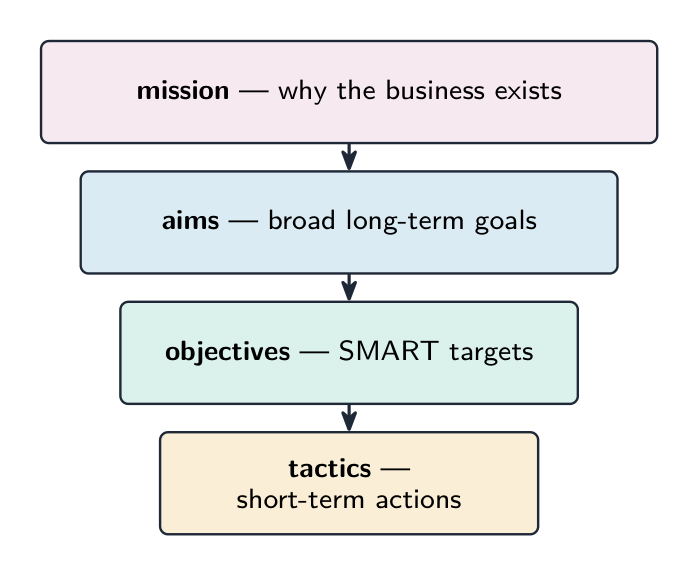
A mission statement 使命宣言 is a short sentence that says why the business exists and what it wants to be. It guides everyone in the firm.

From the mission come aims 目的 (broad, long-term goals), and then objectives 目标 (the specific targets that help reach the aims).

Good objectives are SMART — the first letters of:

  • Specific 具体的 — clear and exact.
  • Measurable 可衡量的 — you can check it with numbers.
  • Achievable 可实现的 — it is possible to reach.
  • Realistic 现实的 — sensible for the resources you have.
  • Time-bound 有时限的 — it has a deadline.

A strategy 战略 is the long-term plan to meet objectives. Tactics 策略 are the short-term actions that carry out the strategy. Objectives are shaped by the size and age of the firm, who owns it, the company culture, and conditions in the market.

עברית

ניסוח משימה הוא משפט קצר שמסביר מדוע החברה קיימת ומה היא שואפת להיות. הוא מנחה את כולם בחברה.

מן המשימה נובעים אופקים (מטרות רחבות לטווח ארוך), ולאחר מכן אופטימיות (היעדים הספציפיים שעוזרים להשגת האופקים).

היררכיה מלמעלה למטה: משימה רחבה מובילה לאופקים, ולאחר מכן לאופטימיות SMART ספציפיות, ולאחר מכן לטקטיקות לטווח קצר
היעדים הופכים צרים ומדויקים יותר במורד השרשרת: משימה רחבה הופכת לאופקים, ולאחר מכן לאופטימיות SMART, ולאחר מכן לטקטיקות יומיומיות

אופטימיות טובות הן SMART — האותיות הראשונות של:

  • ספציפי (Specific) — ברור ומדויק.
  • ניתן למדידה (Measurable) — ניתן לבדוק אותו באמצעות מספרים.
  • ניתן להשגה (Achievable) — אפשרי להגיע אליו.
  • ריאליסטי (Realistic) — הגיוני בהתאם למשאבים שלך.
  • בעל גבול זמן (Time-bound) — יש לו תאריך סיום.

אסטרטגיה היא התוכנית לטווח הארוך להשגת האופטימיות. טקטיקות הן הפעולות לטווח הקצר שמבצעות את האסטרטגיה. האופטימיות מעוצבות על ידי גודל וחברת החברה, בעליה, התרבות הארגונית והתנאים בשוק.

Explore · ⁨חקור⁩

Business objectives lab · ⁨מעבדת מטרות עסקיות⁩

Match business examples to the objective they reveal. · ⁨התאמו דוגמאות עסקיות למטרה שהן משקפות.⁩

Vocabulary · ⁨מילון מונחים⁩ Train · ⁨אימון⁩
English עברית
aims/eɪmz/ יעדים
objectives/ɒbˈdʒektɪvz/ מטרות
specific/spəˈsɪfɪk/ ספציפי
measurable/ˈmeʒərəbl/ ניתן למדידה
achievable/əˈtʃiːvəbl/ מתקבל
realistic/rɪəˈlɪstɪk/ מציאותי
time-bound/taɪm baʊnd/ מוגדר בזמן
strategy/ˈstrætədʒi/ אסטרטגיה
tactics/ˈtæktɪks/ טקטיקות
1.4

Types of business objective · ⁨סוגי אופטימיות עסקיות⁩

English
Objective What it means
profit maximisation 利润最大化 making the largest possible profit
growth getting bigger — more sales, more branches
survival 生存 staying in business, vital for new firms and in hard times
market share winning a larger share of the market
social and ethical 道德 objectives doing what is morally right, such as fair pay

Corporate social responsibility 企业社会责任 (CSR) is the idea that a business should act in the best interests of society and the environment, not just make profit. Examples are treating workers fairly, cutting pollution 污染, and helping the local community.

A firm's objectives can change over time. A new firm may aim to survive; later it may aim to grow; a large, safe firm may focus on profit or CSR.

עברית
אופטימיות מה זה אומר
מינימום רווח (profit maximisation) יצירת הרווח הגבוה ביותר האפשרי
צמיחה (growth) גדילה - מכירות רבות יותר, סניפים נוספים
הישרדות (survival) שמירה על פעילות העסק, קריטי לחברות חדשות ובזמנים קשים
חלק משוק (market share) זכייה בחלק שוק גדול יותר
מטרות חברתיות ואתיות ביצוע פעולות נכונות מוסרית, כמו תשלום הוגן
מבחן SMART למטרה טובה: ספציפי, נמדד, ניתן להשגה, ריאליסטי, קבוע בזמן
מטרות SMART: ספציפיות, נמדדות, ניתנות להשגה, ריאליות, מוגבלות בזמן

אחריות חברתית עסקית (CSR) היא העיקרון לפיו עסק צריך לפעול לטובת החברה והסביבה, ולא רק להרוויח רווח. דוגמאות הן טיפול הוגן בעובדים, הפחתת זיהום, ועזרה לקהילה המקומית.

מטרות של חברה עשויות להשתנות לאורך זמן. חברה חדשה עשויה לשאוף להישרדות; מאוחר יותר עשויה לשאוף לצמיחה; חברה גדולה ובטוחה עשויה להתמקד ברווח או ב-CPR.

Vocabulary · ⁨מילון מונחים⁩ Train · ⁨אימון⁩
English עברית
profit/ˈprɒfɪt/ רווח
market share/ˈmɑːkɪt ʃeə/ נתח שוק
market capitalisation/ˈmɑːkɪt ˌkæpɪtəlaɪˈzeɪʃn/ שוק ההון
communities/kəˈmjuːnɪtiz/ קהילות
internal growth/ɪnˈtɜːnl ɡrəʊθ/ גידול פנימי
external growth/ekˈstɜːnl ɡrəʊθ/ גידול חיצוני
profit maximisation/ˈprɒfɪt ˌmæksɪmaɪˈzeɪʃn/ מיזוג רווחים
survival/səˈvaɪvl/ הישרדות
ethical/ˈeθɪkl/ אתי
corporate social responsibility/ˈkɔːpərət ˈsəʊʃl rɪˌspɒnsəˈbɪlɪti/ אחריות חברתית לעסקים
pollution/pəˈluːʃn/ זיהום
1.5

Stakeholders · ⁨בעלי עניין⁩

Syllabus · ⁨סיילבוס⁩
English
  1. identify internal and external stakeholders and their objectives
  2. explain how and why the objectives of stakeholders may conflict and how conflicts can be managed
עברית
  1. זיהוי בעלי עניין פנימיים וחיצוניים והמטרות שלהם
  2. הסבר על אופן ולמה המטרות של בעלי עניין עשויות להתנגד זו לזו, וכיצד ניתן לנהל התנגדויות אלו

Source: Cambridge International syllabus · ⁨מקור: הסיילבוס הבינלאומי של קמבריד'ג'⁩

English

A stakeholder 利益相关者 is any person or group with an interest in a business and how well it does.

Internal stakeholders 内部利益相关者 are inside the business:

  • owners and shareholders — want profit and a good return.
  • managers 管理者 — want growth, job security and bonuses.
  • employees — want fair pay, safe work and job security.

External stakeholders 外部利益相关者 are outside the business:

Stakeholder Main objective
customers 顾客 good quality at a fair price
suppliers 供应商 regular orders, paid on time
lenders 贷款方 (banks) to be repaid with interest
the government tax, jobs, and that the firm obeys the law
local community jobs, but little pollution or noise
pressure groups 压力团体 to protect a cause, such as the environment

Why stakeholder objectives conflict

Stakeholders often want different things, so their objectives can conflict 冲突 (clash). For example:

  • owners want higher profit, but employees want higher pay — and higher pay lowers profit.
  • customers want low prices, but owners want a high profit margin.
  • the local community wants less pollution, but cutting pollution can raise costs.

How conflict can be managed

  • keep good communication with every group.
  • compromise 妥协 — give each group part of what it wants.
  • negotiation 谈判 — talk until the groups reach an agreement.
  • decide which stakeholders matter most for each decision, and act on that.
עברית

בעל עניין הוא כל אדם או קבוצה עם עניין בחברה ובביצועיה.

מפת בעלי עניין עם החברה במרכז, מוקפת על ידי בעלי עניין פנימיים (בעלים, מנהלים, עובדים) ובעלי עניין חיצוניים (לקוחות, ספקים, משקיעים, ממשלה, קהילה, קבוצות לחץ)
לכל בעלי העניין הפנימיים והחיצוניים יש עניין בעסק

בעלי עניין פנימיים נמצאים בתוך העסק:

  • בעלים ומניהלים — שואפים לרווח ולהשבה טובה.
  • מנהלים — שואפים לצמיחה, ביטחון תעסוקתי ובונוסים.
  • עובדים — שואפים לתשלום הוגן, עבודה בטוחה וביטחון תעסוקתי.

בעלי עניין חיצוניים נמצאים מחוץ לעסק:

בעל עניין מטרה ראשית
לקוחות איכות טובה במחיר הוגן
ספקים הזמנות קבועות, תשלום בזמן
משקיעים (בנקים) החזר עם ריבית
הממשלה מיסים, תעסוקה, ושמירת חוקי החברה על ידי החברה
הקהילה המקומית תעסוקה, אך מעט זיהום או רעש
קבוצות לחץ הגנה על נושא מסוים, כגון הסביבה

מדוע מטרות בעלי עניין עומדות בסתירה

לעיתים קרובות, בעלי העניין רוצים דברים שונים, ולכן המטרות שלהם עשויות להתנגש (להיכנס בסכסוך). לדוגמה:

  • בעלי עסקים רוצים רווח גבוה יותר, אך עובדים רוצים משכורת גבוהה יותר — ומשכורת גבוהה יותר מפחיתה את הרווח.
  • לקוחות רוצים מחירים נמוכים, אך בעלי עסקים רוצים מרווח רווח גבוה.
  • הקהילה המקומית רוצה פחות זיהום, אך הפחתת הזיהום עלולה להגדיל את העלויות.

כיצד ניתן לנהל סכסוך

  • לשמור על תקשורת טובה עם כל קבוצה.
  • פישור — לתת לכל קבוצה חלק ממה שהיא רוצה.
  • משא ומתן — לדבר עד שהקבוצות מגיעות להסכם.
  • לקבוע אילו בעלי עניין הם החשובים ביותר בכל החלטה, ולהגיב בהתאם לכך.
Explore · ⁨חקור⁩

Stakeholder interest lab · ⁨מעבדת עניין של בעלי עניין⁩

See how different stakeholders judge the same business decision. · ⁨ראו כיצד בעלי עניין שונים משפטים החלטת עסק אחת.⁩

Vocabulary · ⁨מילון מונחים⁩ Train · ⁨אימון⁩
English עברית
stakeholder/ˈsteɪkhəʊldə/ בעל עניין
internal stakeholders/ɪnˈtɜːnl ˈsteɪkhəʊldəz/ בעלי עניין פנימיים
external stakeholders/ekˈstɜːnl ˈsteɪkhəʊldəz/ בעלי עניין חיצוניים
managers/ˈmænɪdʒəz/ מנהלים
customers/ˈkʌstəməz/ לקוחות
suppliers/səˈplaɪəz/ ספקים
lenders/ˈlendəz/ מקבלי הלוואות
pressure groups/ˈpreʃə ɡruːps/ קבוצות לחץ
conflict/ˈkɒnflɪkt/ מחלוקת
compromise/ˈkɒmprəmaɪz/ התאמה
negotiation/nɪˌɡəʊʃɪˈeɪʃn/ משא ומתן
1.5

Exam tips · ⁨טיפים לבחינות⁩

English
  • Define added value $=$ selling price $-$ cost of bought-in inputs, and give a way to raise it (branding, quality, design).
  • Distinguish unlimited vs limited liability and link it to sole trader/partnership versus Ltd/plc.
  • Measure business size in more than one way (employees, revenue, capital employed, market share) — note each has limits.
  • Distinguish objectives (SMART, specific) from a mission (overall purpose).
  • In evaluation, use stakeholder conflicts (owners vs employees vs community) to argue both sides.
עברית
  • הגדר ערך מוסף $=$ מחיר מכירה $-$ עלות קניית כניסות, ותן דרך להעלאתו (מותג, איכות, עיצוב).
  • להבדיל בין אחריות בלתי מוגבלת לעומת אחריות מוגבלת ולקשר זאת לבעל מלאכה יחיד/שותפות מול Ltd/plc.
  • למדוד את גודל העסק במספר דרכים (עובדים, הכנסות, הון מופעל, נתח שוק) — תשמו לב שכל אחת מהן יש לה הגבלות.
  • להבדיל בין מטרות (SMART, ספציפיות) לבין משימה (מטרה כוללת).
  • בהערכה, השתמשו בסכסוכי בעלי עניין (בעלים מול עובדים מול קהילה) כדי להעלות את שני הצדדים.

Interactive lessons on this topic · ⁨שיעורים אינטראקטיביים בנושא זה⁩

Work through it step by step, with instant-check exercises. · ⁨לעבור על הדברים צעד אחר צעד, עם תרגילים לבדיקה מיידית.⁩

Past Papers · ⁨מבחני עבר⁩

More topics in A-Level Business · ⁨תחום העסקים A-Level⁩ · ⁨נושאים נוספים בA-Level Business · ⁨תחום העסקים A-Level⁩⁩

Log in or create account · ⁨היכנס או צור חשבון⁩

IGCSE, A-Level & AP