Skip to content · ⁨الانتقال إلى المحتوى⁩

Consequences of Industrialization · ⁨عواقب التصنيع⁩

AP World History: Modern · ⁨تاريخ العالم الحديث (AP)⁩ · Topic 6 · ⁨الموضوع 6⁩

Video lesson for this topic · ⁨درس فيديو لهذا الموضوع⁩ Open the video page · ⁨افتح صفحة الفيديو⁩
6:14

الوحدة 6: عواقب Industrialization (التصنيع)

هذه هي الوحدة الخاصة بعواقب التصنيع، من 1750 إلى 1900. تمييز واحد يحدد معظم الدرجات في هذه الوحدة، وهو سهل الصياغة و…

English narration · English + 中文 subtitles burned in · ⁨سرد باللغة الإنجليزية · ترجمة مدمجة بالإنجليزية + الصينية⁩

6.1

Justifying Empire · ⁨تبرير الإمبراطورية⁩

Syllabus · ⁨المنهج⁩
English

6.1 Rationales for Imperialism from1750 to 1900

Thematic Focus (CDI): Cultural Developments and Interactions — The development of ideas, beliefs, and religions illustrates how groups in society view themselves, and the interactions of societies and their beliefs often have political, social, and cultural implications.

Learning Objective Unit 6.A: Explain how ideologies contributed to the development of imperialism from 1750 to 1900.

  • KC-5.2.III A range of cultural, religious, and racial ideologies were used to justify imperialism, including Social Darwinism, nationalism, the concept of the civilizing mission, and the desire to religiously convert indigenous populations.
العربية

6.1 المبررات للاستعمار من 1750 إلى 1900

التركيز الموضوعي (CDI): التطورات والتفاعلات الثقافية — يعكس تطور الأفكار والمعتقدات والأديان كيف تنظر المجموعات في المجتمع إلى نفسها، وغالبًا ما يكون للتفاعلات بين المجتمعات ومعتقداتها عواقب سياسية واجتماعية وثقافية.

هدف التعلم الوحدة 6.A: اشرح كيف ساهمت الأيديولوجيات في تطور الاستعمار من 1750 إلى 1900.

  • KC-5.2.III تم استخدام طيف من الأيديولوجيات الثقافية والدينية والعرقية لتبرير الاستعمار، بما في ذلك داروينية اجتماعية، والوطنية، ومفهوم المهمة الحاضنة، والرغبة في تحويل السكان الأصليين دينيًا.
Source: College Board AP Course and Exam Description · ⁨المصدر: وصف دورة وامتحان College Board AP⁩

English

Unit 6 covers the consequences of industrialisation, 1750 to 1900: why industrial states expanded, how people resisted, how the world economy reorganised, and who moved.

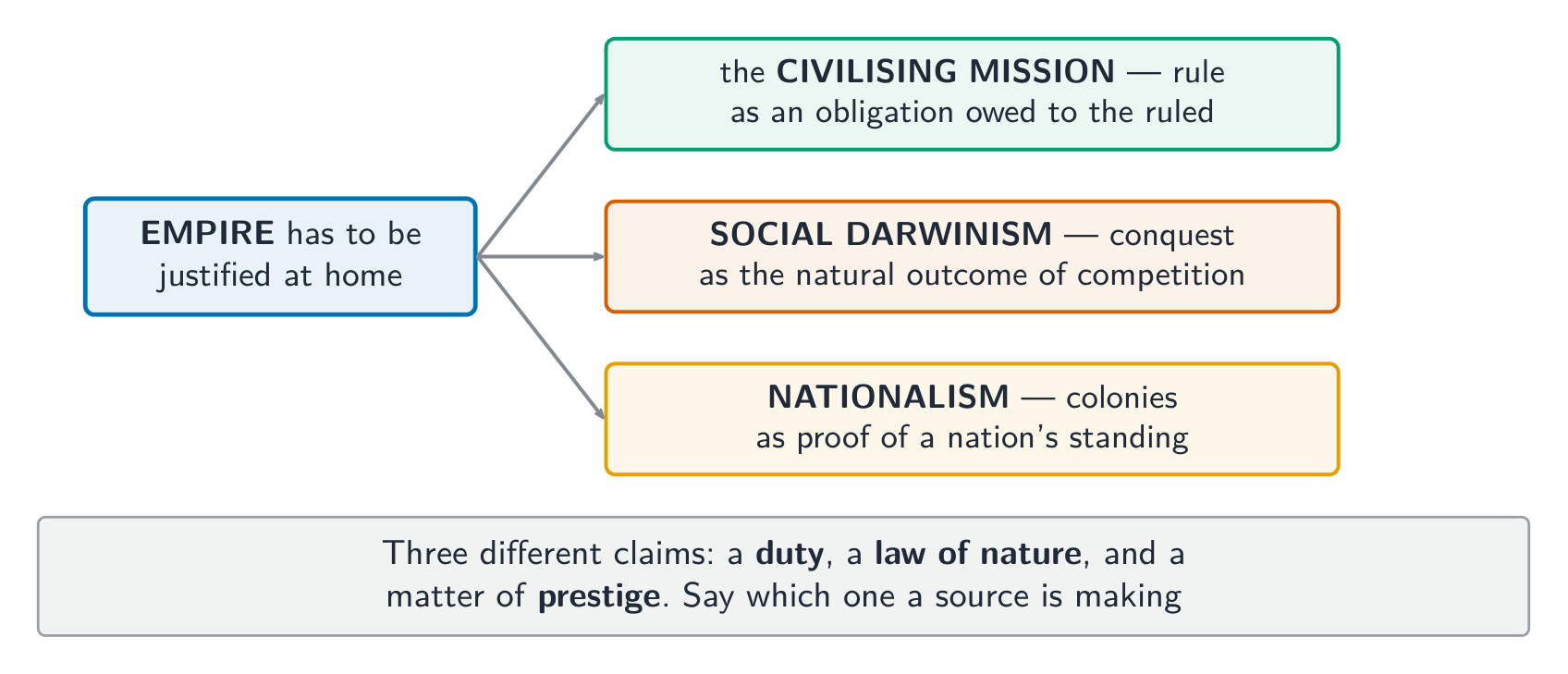
A range of cultural, religious, and racial ideologies were used to justify imperialism. The examinable ones are the civilising mission 文明教化使命, missionary activity, Social Darwinism 社会达尔文主义 applied to nations and peoples, and nationalism - the claim that colonies proved a state's greatness.

These are justifications, not causes. Naming them as ideology, and separating them from the economic and strategic motives in the next sections, is what a strong answer does.

العربية

تغطي الوحدة 6 نتائج Industrialisation، 1750 إلى 1900: لماذا توسعت الدول الصناعية، وكيف قاوم الناس، وكيف أعيد تنظيم الاقتصاد العالمي، ومن انتقل.

استُخدمت مجموعة من الأيدولوجيات الثقافية والدينية والعرقية لتبرير الاستعمار. تلك القابلة للفحص هي المهمة الحضارية، والنشاط التبشيري، وDarwinism الاجتماعي المطبق على الدول والشعوب، والقومية - ادعاء أن المستعمرات تثبت عظمة الدولة.

هذه تبريرات، وليست أسباباً. تسمية هذه الأيدولوجيات وفصلها عن الدوافع الاقتصادية والاستراتيجية في الأقسام التالية هو ما تفعله الإجابة القوية.

ثلاثة تبريرات يطرحون ثلاث ادعاءات مختلفة: واجب، قانون طبيعي، شهرة
Explore · ⁨استكشف⁩

Match each justification to the claim it makes · ⁨طابق كل تبرير بالادعاء الذي يطرحه⁩

They are not one bundle of ideas: a duty, a law of nature and a matter of prestige are three different arguments. · ⁨ليست مجموعة واحدة من الأفكار: واجب، وقانون طبيعة، ومسألة شرف هي ثلاث حجج مختلفة.⁩

6.2

State Expansion · ⁨توسع الدولة⁩

Syllabus · ⁨المنهج⁩
English

6.2 State Expansion from 1750 to 1900

Thematic Focus (GOV): Governance — A variety of internal and external factors contribute to state formation, expansion, and decline. Governments maintain order through a variety of administrative institutions, policies, and procedures, and governments obtain, retain, and exercise power in different ways and for different purposes.

Learning Objective Unit 6.B: Compare processes by which state power shifted in various parts of the world from 1750 to 1900.

  • KC-5.2.I.A Some states with existing colonies strengthened their control over those colonies and in some cases assumed direct control over colonies previously held by non-state entities.
  • KC-5.2.I.B European states as well as the United States and Japan acquired territories throughout Asia and the Pacific, while Spanish and Portuguese influence declined.
  • KC-5.2.I.C Many European states used both warfare and diplomacy to expand their empires in Africa.
  • KC-5.2.I.D Europeans established settler colonies in some parts of their empires.
  • KC-5.2.II.B The United States, Russia, and Japan expanded their land holdings by conquering and settling neighboring territories.

Illustrative examples:

  • Non-state to state colonial control:
    • Shift from the private ownership of the Congo by King Leopold II to the Belgium government
    • Shift from the Dutch East India Company to Dutch government control in Indonesia and Southeast Asia
  • European states that expanded empires in Africa:
    • Britain in West Africa
    • Belgium in the Congo
    • French in West Africa
  • Settler colonies established in empires:
    • New Zealand
العربية

6.2 توسع الدولة من 1750 إلى 1900

التركيز الموضوعي (GOV): الحكم — تساهم مجموعة متنوعة من العوامل الداخلية والخارجية في تشكيل الدولة وتوسعها وانهيارها. تحافظ الحكومات على النظام من خلال مجموعة متنوعة من المؤسسات والإجراءات والسياسات الإدارية، وتكتسب الحكومات وتحتفظ بالسلطة وتمارسها بطرق مختلفة ولأغراض مختلفة.

هدف التعلم الوحدة 6.B: قارن العمليات التي انتقلت خلالها سلطة الدولة في مختلف أنحاء العالم من 1750 إلى 1900.

  • KC-5.2.I.A عززت بعض الدول ذات المستعمرات القائمة سيطرتها على تلك المستعمرات وفي بعض الحالات تولت سيطرة مباشرة على مستعمرات كانت سابقًا تحت سيطرة كيانات غير دولية.
  • KC-5.2.I.B اكتسبت الدول الأوروبية بالإضافة إلى الولايات المتحدة واليابان أراضي في جميع أنحاء آسيا والمحيط الهادئ، بينما تراجع影响 الإسبانية والبرتغالية.
  • KC-5.2.I.C استخدمت العديد من الدول الأوروبية كلًا من الحرب والدبلوماسية لتوسيع إمبراطورياتها في أفريقيا.
  • KC-5.2.I.D أسس الأوروبيون مستعمرات استيطانية في بعض أجزاء إمبراطورياتهم.
  • KC-5.2.II.B توسعت الولايات المتحدة وروسيا واليابان في مساحاتها الأرضية عن طريق غزو واستيطان الأراضي المجاورة.

أمثلة توضيحية:

  • من سيطرة غير دولية إلى سيطرة دولة:
    • الانتقال من الملكية الخاصة لكونغو من قبل الملك ليوبولد الثاني إلى حكومة بلجيكا
    • الانتقال من شركة الهند الشرقية الهولندية إلى سيطرة الحكومة الهولندية في إندونيسيا وجنوب شرق آسيا
  • دول أوروبية وسعت إمبراطورياتها في أفريقيا:
    • بريطانيا في غرب أفريقيا
    • بلجيكا في الكونغو
    • فرنسا في غرب أفريقيا
  • مستعمرات استيطانية أقيمت في الإمبراطوريات:
    • نيوزيلندا

Source: College Board AP Course and Exam Description · ⁨المصدر: وصف دورة وامتحان College Board AP⁩

English

Expansion took several forms, and the CED distinguishes them:

  • Some states strengthened control over existing colonies, converting trading relationships into direct rule.
  • European states, the United States, and Japan acquired new territory, showing that imperialism was not only European.
  • Many European states used both warfare and diplomacy 战争与外交 to expand - conquest, but also treaties, protectorates, and partition agreements made in Europe.
  • Europeans established settler colonies 定居殖民地 in some places, which displaced Indigenous populations far more thoroughly than administrative rule.
  • The United States, Russia, and Japan expanded by taking contiguous land rather than overseas territory.
العربية

تم التوسع بأشكال متعددة، ويُميز CED بينها:

  • عززت بعض الدول سيطرتها على المستعمرات القائمة، محولة العلاقات التجارية إلى حكم مباشر.
  • الدول الأوروبية، الولايات المتحدة، واليابان اكتسبت أراضي جديدة، مما أظهر أن الاستعمار لم يكن أوروبياً فقط.
  • استخدمت العديد من الدول الأوروبية كلًا من الحرب والدبلوماسية للتوسع - الغزو، ولكن أيضًا المعاهدات، والحماية، واتفاقيات التقسيم المبرمة في أوروبا.
  • أسس الأوروبيون مستعمرات مستوطنة في بعض الأماكن، مما أدى إلى إزاحة السكان الأصليين بشكل أعمق بكثير من الحكم الإداري.
  • توسعت الولايات المتحدة وروسيا واليابان عن طريق استيلاءها على أراضي متجاورة بدلاً من الأراضي عبر البحار.
6.3

Resistance · ⁨المقاومة⁩

Syllabus · ⁨المنهج⁩
English

6.3 Indigenous Responses to State Expansion from 1750 to 1900

Thematic Focus (GOV): Governance — A variety of internal and external factors contribute to state formation, expansion, and decline. Governments maintain order through a variety of administrative institutions, policies, and procedures, and governments obtain, retain, and exercise power in different ways and for different purposes.

Learning Objective Unit 6.C: Explain how and why internal and external factors have influenced the process of state building from 1750 to 1900.

  • KC-5.3.III.D Increasing questions about political authority and growing nationalism contributed to anticolonial movements.
  • KC-5.2.II.C Anti-imperial resistance took various forms, including direct resistance within empires and the creation of new states on the peripheries.
  • KC-5.3.III.E Increasing discontent with imperial rule led to rebellions, some of which were influenced by religious ideas.

Illustrative examples:

  • Direct resistance:
    • Túpac Amaru II’s rebellion in Peru
    • Samory Touré’s military battles in West Africa
    • Yaa Asantewaa War in West Africa
    • 1857 rebellion in India
  • New states:
    • Establishment of independent states in the Balkans
    • Sokoto Caliphate in modern-day Nigeria
    • Cherokee Nation
    • Zulu Kingdom
  • Rebellions:
    • Ghost Dance in the U.S.
    • Xhosa Cattle-Killing Movement in Southern Africa
    • Mahdist wars in Sudan
العربية

6.3 ردود فعل الشعوب الأصلية على توسع الدولة من 1750 إلى 1900

التركيز الموضوعي (GOV): الحكم — تساهم مجموعة متنوعة من العوامل الداخلية والخارجية في تشكيل الدولة وتوسعها وانهيارها. تحافظ الحكومات على النظام من خلال مجموعة متنوعة من المؤسسات والإجراءات والسياسات الإدارية، وتكتسب الحكومات وتحتفظ بالسلطة وتمارسها بطرق مختلفة ولأغراض مختلفة.

هدف التعلم الوحدة 6.C: اشرح كيف ولماذا أثرت العوامل الداخلية والخارجية على عملية بناء الدولة من 1750 إلى 1900.

  • KC-5.3.III.D ساهمت الأسئلة المتزايدة حول السلطة السياسية والنمو الوطني في ظهور الحركات المناهضة للاستعمار.
  • KC-5.2.II.C اتخذت المقاومة المناهضة للاستعمار أشكالًا متنوعة، بما في ذلك المقاومة المباشرة داخل الإمبراطوريات وإنشاء دول جديدة على الهوامش.
  • KC-5.3.III.E أدى الاستياء المتزايد من الحكم الاستعماري إلى تمردات، بعضها تأثر بالأفكار الدينية.

أمثلة توضيحية:

  • مقاومة مباشرة:
    • تمرد تواباك أمارو الثاني في بيرو
    • المعارك العسكرية لساموري توريه في غرب أفريقيا
    • حرب يا آسانتيوا في غرب أفريقيا
    • تمرد عام 1857 في الهند
  • دول جديدة:
    • إنشاء دول مستقلة في البلقان
    • الخلافة الصوفية في نيجيريا الحديثة
    • أمة الشيراكي
    • مملكة الزولو
  • تمردات:
    • رقصة الأرواح في الولايات المتحدة
    • حركة قتل الماشية الخوسا في جنوب أفريقيا
    • حروب المهديين في السودان

Source: College Board AP Course and Exam Description · ⁨المصدر: وصف دورة وامتحان College Board AP⁩

English

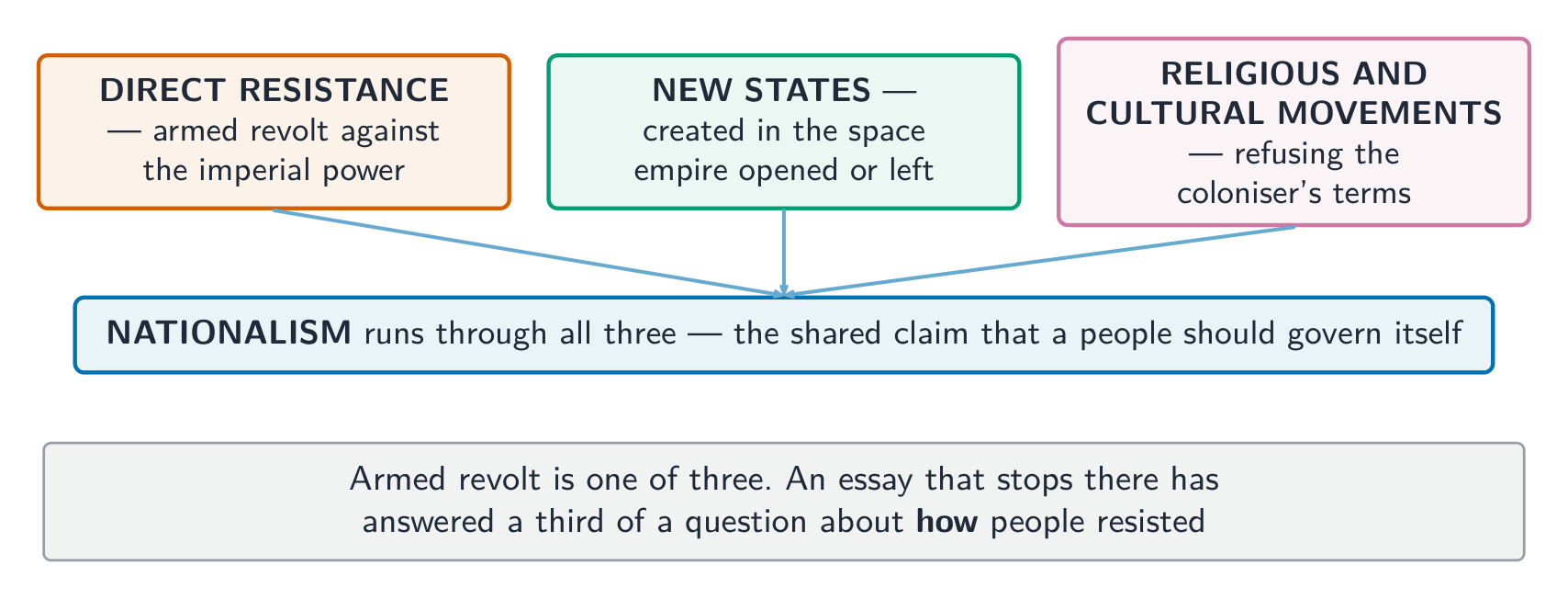
Anti-imperial resistance 抵抗 took various forms, and listing only armed revolt loses marks:

  • Direct resistance 直接抵抗 - armed rebellion against colonial authority.
  • Creation of new states 建立新国家 by leaders organising against imperial power.
  • Religious and cultural movements 宗教与文化运动 that reasserted local identity against colonial rule.

Increasing questions about political authority and growing nationalism in colonised regions led to rebellions, some of which were sustained enough to change imperial policy. The important point: resistance is continuous throughout the period, not a late reaction.

The examples the CED names, one per form

An essay needs a case, not a category. These are the ones the CED lists, sorted by the form of resistance they illustrate:

Case Where Form it illustrates
Samory Touré's 萨莫里·杜尔 military campaigns West Africa direct armed resistance, sustained for years against the French
Yaa Asantewaa War 雅阿·阿散蒂瓦战争 Asante, West Africa direct resistance led by a woman, in defence of a sacred symbol of sovereignty
Sokoto Caliphate 索科托哈里发国 modern-day Nigeria the creation of a NEW state, founded in a religious reform movement

The Congo shows how the argument about empire changed. The territory was first held as the private property of King Leopold II of Belgium rather than as a colony of Belgium at all; the atrocities of the rubber regime became an international scandal, and in 1908 ownership was transferred to the Belgian government. It is the clearest case in the unit of imperial practice being altered by publicity and criticism — useful evidence in any question about how empire was justified or challenged.

العربية

اتخذت المقاومة المضادة للاستعمار أشكالاً متنوعة، وذكر التمرد المسلح فقط يفقد الدرجات:

  • المقاومة المباشرة - تمرد مسلح ضد السلطة الاستعمارية.
  • إنشاء دول جديدة من قبل قادة ينظمون ضد القوة الاستعمارية.
  • الحركات الدينية والثقافية التي تعيد تأكيد الهوية المحلية ضد الحكم الاستعماري.

أدى التساؤل المتزايد حول السلطة السياسية ونمو القومية في المناطق المستعمرة إلى تمردات، بعضها استمر لفترة كافية لتغيير السياسة الإمبريالية. النقطة المهمة: المقاومة مستمرة طوال الفترة، وليست رداً متأخراً.

أخذت المقاومة ثلاثة أشكال، كان القومية تتخلل جميعها

الأمثلة التي تدرجها CED، مثال واحد لكل شكل

المقال يحتاج إلى حالة دراسية وليس مجرد فئة. هذه هي الحالات التي تدرجها CED، مرتبة حسب شكل المقاومة الذي تجسده:

الحالة الموقع الشكل الذي يجسده
حملات ساموري توريه العسكرية غرب أفريقيا مقاومة مسلحة مباشرة، استمرت لسنوات ضد الفرنسيين
حرب يا أسانتيفا أسانت، غرب أفريقيا مقاومة مباشرة يقودها رجل، للدفاع عن رمز مقدس للسيادة
خلافة صوكوتو نيجيريا الحديثة إنشاء دولة جديدة، تأسست في حركة إصلاح ديني

تُظهر الكونغو كيف تغير الجدل حول الإمبراطورية. تم احتلال المنطقة في البداية كممتلكات خاصة للملك ليوبولد الثاني بلجيكا بدلاً من كونها مستعمرة لبلجيكا على الإطلاق؛ وأصبحت مآسي نظام المطاط cause scandal دوليًا، وفي عام 1908 تم نقل الملكية إلى الحكومة البلجيكية. إنها أوضح حالة في الوحدة بأن الممارسة الإمبراطورية قد تُغيّر بواسطة الصحافة والنقد — وهو دليل مفيد في أي سؤال حول كيفية تبرير الإمبراطورية أو تحديها.

Vocabulary · ⁨مفردات⁩ Train · ⁨تدريب⁩
English العربية
civilising mission/ˈsɪvəlaɪzɪŋ ˈmɪʃn/ المهمة الحضارية
Social Darwinism/ˈsəʊʃl ˈdɑːwɪnɪzəm/ الدياروينيزمية الاجتماعية
warfare and diplomacy/ˈwɔːfeə ænd dɪˈpləʊməsi/ الحرب والدبلوماسية
settler colonies/ˈsetlə ˈkɒləniz/ مستعمرات المستوطنين
resistance/rɪˈzɪstəns/ المقاومة
Direct resistance/daɪˈrekt rɪˈzɪstəns/ المقاومة المباشرة
Creation of new states/kriːˈeɪʃn ɒv njuː steɪts/ إنشاء دول جديدة
Religious and cultural movements/rɪˈlɪdʒəs ænd ˈkʌltʃərəl ˈmuːvmənts/ الحركات الدينية والثقافية
Samory Touré's/ˈsæməri tʊəˈreɪz/ صموئيل توري
Yaa Asantewaa War/jɑː əˈsæntjuːɑː wɔː/ حرب يا أسانتيفا
Sokoto Caliphate/səˈkəʊtəʊ ˈkælɪfeɪt/ خلافة سوكوتو
raw materials/rɔː məˈtɪərɪəlz/ المواد الخام
food supplies/fuːd səˈplaɪz/ إمدادات الغذاء
cash crops/kæʃ krɒps/ المحاصيل النقدية
extractive industries/ekˈstræktɪv ˈɪndʌstriz/ الصناعات الاستخراجية
6.4 6.5

The Global Economy · ⁨الاقتصاد العالمي⁩

Syllabus · ⁨المنهج⁩
English

6.4 Global Economic Development from1750 to 1900

Thematic Focus (ENV): Humans and the Environments — The environment shapes human societies, and as populations grow and change, these populations in turn shape their environments.

Learning Objective Unit 6.D: Explain how various environmental factors contributed to the development of the global economy from 1750 to 1900.

  • KC-5.1.II.A The need for raw materials for factories and increased food supplies for the growing population in urban centers led to the growth of export economies around the world that specialized in commercial extraction of natural resources and the production of food and industrial crops. The profits from these raw materials were used to purchase finished goods.

Illustrative examples:

  • Resource export economies:
    • Cotton production in Egypt
    • Rubber extraction in the Amazon and the Congo basin
    • The palm oil trade in West Africa
    • The guano industries in Peru and Chile
    • Meat from Argentina and Uruguay
    • Diamonds from Africa
العربية

6.4 التنمية الاقتصادية العالمية من 1750 إلى 1900

التركيز الموضوعي (ENV): البشر والبيئات — البيئة تُشكّل المجتمعات البشرية، وكما تنمو السكان وتتغير، فإنها بدورها تُشكّل بيئاتها.

الهدف التعليمي للوحدة 6.د: اشرح كيف ساهمت عوامل بيئية متنوعة في تطور الاقتصاد العالمي من عام 1750 إلى 1900.

  • KC-5.1.II.A أدى الحاجة إلى المواد الخام للمصانع وزيادة إمدادات الغذاء للسكان المتزاين في المراكز الحضرية إلى نمو اقتصاديات التصدير حول العالم التي تخصصت في الاستخراج التجاري للموارد الطبيعية وإنتاج المحاصيل الغذائية والصناعية. استُخدمت أرباح هذه المواد الخام لشراء البضائع المصنعة.

أمثلة توضيحية:

  • اقتصاديات تصدير الموارد:
    • إنتاج القطن في مصر
    • استخراج المطاط في الأمازون وحوض الكونغو
    • تجارة زيت النخيل في غرب أفريقيا
    • صناعات الغنمو في بيرو وشيلي
    • اللحوم من الأرجنتين والأوروغواي
    • الألماس من أفريقيا
English

6.5 Economic Imperialism from 1750 to 1900

Thematic Focus (ECN): Economics Systems — As societies develop, they affect and are affected by the ways that they produce, exchange, and consume goods and services.

Learning Objective Unit 6.E: Explain how various economic factors contributed to the development of the global economy from 1750 to 1900.

  • KC-5.2.I.E Industrialized states and businesses within those states practiced economic imperialism primarily in Asia and Latin America.
  • KC-5.1.II.C Trade in some commodities was organized in a way that gave merchants and companies based in Europe and the U.S. a distinct economic advantage.

Illustrative examples:

  • Industrialized states practicing economic imperialism:
    • Britain and France expanding their influence in China through the Opium Wars
    • The construction of the Port of Buenos Aires with the support of British firms
  • Commodities that contributed to European and American economic advantage:
    • Opium produced in the Middle East or South Asia and exported to China
    • Cotton grown in South Asia and Egypt and exported to Great Britain and other European countries
    • Palm oil produced in sub-Saharan Africa and exported to European countries
    • Copper extracted in Chile
العربية

6.5 الإمبريالية الاقتصادية من 1750 إلى 1900

التركيز الموضوعي (ECN): أنظمة الاقتصاد — عندما تتطور المجتمعات، فإنها تؤثر وتتأثر بالطرق التي تنتج بها وتبادلها وتستهلك بها السلع والخدمات.

الهدف التعليمي للوحدة 6.هـ: اشرح كيف ساهمت عوامل اقتصادية متنوعة في تطور الاقتصاد العالمي من عام 1750 إلى 1900.

  • KC-5.2.I.E طبّقت الدول المصنّعة والشركات داخل تلك الدول الإمبريالية الاقتصادية بشكل أساسي في آسيا وأمريكا اللاتينية.
  • KC-5.1.II.C نُظّم التجارة في بعض السلع بطريقة منحت التجار والشركات القائمة في أوروبا والولايات المتحدة ميزة اقتصادية واضحة.

أمثلة توضيحية:

  • دول مصنّعة تطبّق الإمبريالية الاقتصادية:
    • بريطانيا وفرنسا توسّع نفوذها في الصين خلال حروب الأفيون
    • بناء ميناء بوينس آيرس بدعم من شركات بريطانية
  • سلع ساهمت في الميزة الاقتصادية الأوروبية والأمريكية:
    • الأفيون المُنتَج في الشرق الأوسط أو جنوب آسيا والمُصدَّر إلى الصين
    • القطن المزروع في جنوب آسيا ومصر والمُصدَّر إلى بريطانيا ودول أوروبية أخرى
    • زيت النخيل المُنتَج في أفريقيا جنوب الصحراء والمُصدَّر إلى الدول الأوروبية
    • النحاس المستخرج في شيلي

Source: College Board AP Course and Exam Description · ⁨المصدر: وصف دورة وامتحان College Board AP⁩

English

The need for raw materials 原材料 for factories and increased food supplies 粮食供应 for growing urban populations reorganised production across the world. Colonies and dependent regions were pushed toward cash crops 经济作物 and extractive industries 采掘业, often at the cost of food production for local use.

The commodities are worth knowing by name and origin, because a question usually supplies one and expects you to place it: cotton from Egypt and India, rubber from the Congo and the Amazon, palm oil from West Africa, sugar from the Caribbean, guano from Peru, and meat from Argentina and Uruguay — the last made possible by refrigerated shipping, which turned distant grassland into a supplier for European cities.

Economic imperialism 经济帝国主义 is the examinable distinction. Industrialised states and their businesses exercised control through investment, loans, and trade dominance without necessarily taking political control - so a region could be economically dominated while remaining formally independent.

Trade in some commodities was organised so that merchants and firms in industrialised states held disproportionate power 不成比例的权力 over producers, setting prices and terms.

العربية
الحالات الصناعية كانت بحاجة إلى مواد خام وأسواق؛ أعاد تنظيم المستعمرات لتزويدها
لم يتطلب الاستعمار الاقتصادي دائمًا سيطرة سياسية - ولهذا يجب التمييز بينهما

الحاجة إلى مواد خام للمصانع وازدياد إمدادات الغذاء للسكان الحضريين المتزايدة أعادت تنظيم الإنتاج عبر العالم. دُفعت المستعمرات والمناطق التابعة نحو المحاصيل النقدية والصناعات الاستخراجية، غالبًا على حساب إنتاج الغذاء للاستخدام المحلي.

من المهم معرفة هذه السلع بأسمائها ومواقعها، لأن السؤال عادة ما يورد واحدًا ويتوقع منك تحديد موقعه: القطن من مصر والهند، المطاط من الكونغو والأمازون، زيت النخيل من غرب أفريقيا، السكر من الكاريبي، غوانو من بيرو، واللحم من الأرجنتين وأوروغواي — مما جعله ممكناً بفضل الشحن المبرد، الذي حوّل السافانا البعيدة إلى مورد للمدن الأوروبية.

الاستعمار الاقتصادي هو التمييز المطلوب في الامتحان. مارست الدول الصناعية وشركاتها سيطرتها من خلال الاستثمار، والقروض، وهيمنة التجارة دونضرورةTaking political control - so a region could be economically dominated while remaining formally independent.

تم تنظيم التجارة في بعض السلع بحيث احتكر التجار والشركات في الدول الصناعية سلطة disproportionate على المنتجين، بتحديد الأسعار والشروط.

Vocabulary · ⁨مفردات⁩ Train · ⁨تدريب⁩
English العربية
Economic imperialism/ˌiːkəˈnɒmɪk ɪmˈpɪərɪəlɪzəm/ الإمبريالية الاقتصادية
disproportionate power/ˌdɪsprəˈpɔːʃənət ˈpaʊə/ سلطة غير متناسبة
modes of transportation/məʊdz ɒv trænspɔːˈteɪʃn/ وسائط النقل
temporary or seasonal/ˈtemprəri ɔː ˈsiːzənl/ مؤقت أو موسمي
coerced and semi-coerced labour/ˌkəʊˈɜːst ænd ˈsemi ˌkəʊˈɜːst ˈleɪbə/ العمل الإجباري وشبه الإجباري
indentured servitude/ˌɪnˈdentʃəd ˈsɜːvɪtjuːd/ العمل المؤجر
ethnic enclaves/ˈeθnɪk ˈeŋkleɪvz/ الأحياء العرقية
6.6

Migration · ⁨الهجرة⁩

Syllabus · ⁨المنهج⁩
English

6.6 Causes of Migration in an Interconnected World

Thematic Focus (ENV): Humans and the Environments — The environment shapes human societies, and as populations grow and change, these populations in turn shape their environments.

Thematic Focus (ECN): Economics Systems — As societies develop, they affect and are affected by the ways that they produce, exchange, and consume goods and services.

Learning Objective Unit 6.F: Explain how various environmental factors contributed to the development of varied patterns of migration from 1750 to 1900.

  • KC-5.4.I Migration in many cases was influenced by changes in demographics in both industrialized and unindustrialized societies that presented challenges to existing patterns of living.
  • KC-5.4.I.B Because of the nature of new modes of transportation, both internal and external migrants increasingly relocated to cities. This pattern contributed to the significant global urbanization of the 19th century. The new methods of transportation also allowed for many migrants to return, periodically or permanently, to their home societies.

Learning Objective Unit 6.G: Explain how various economic factors contributed to the development of varied patterns of migration from 1750 to 1900.

  • KC-5.4.II.A Many individuals chose freely to relocate, often in search of work.
  • KC-5.4.II.B The new global capitalist economy continued to rely on coerced and semicoerced labor migration, including enslavement Chinese and Indian indentured servitude, and convict labor.

Illustrative examples:

  • Return of migrants:
    • Japanese agricultural workers in the Pacific
    • Lebanese merchants in the Americas
    • Italian industrial workers in Argentina
  • (CONT’D) Migrants:
    • Irish to the United States
    • British engineers and geologists to South Asia and Africa
العربية

6.6 أسباب الهجرة في عالم مترابط

التركيز الموضوعي (ENV): البشر والبيئات — البيئة تُشكّل المجتمعات البشرية، وكما تنمو السكان وتتغير، فإنها بدورها تُشكّل بيئاتها.

التركيز الموضوعي (ECN): أنظمة الاقتصاد — عندما تتطور المجتمعات، فإنها تؤثر وتتأثر بالطرق التي تنتج بها وتبادلها وتستهلك بها السلع والخدمات.

الهدف التعليمي للوحدة 6.و: اشرح كيف ساهمت عوامل بيئية متنوعة في تطور أنماط هجرة متنوعة من عام 1750 إلى 1900.

  • KC-5.4.I تأثرت الهجرة في كثير من الحالات بالتغيرات الديموغرافية في كل من المجتمعات الصناعية وغير الصناعية، والتي طرحَتْ تحديات لأنماط الحياة القائمة.
  • KC-5.4.I.B بسبب طبيعة وسائل النقل الجديدة، انتقلت المهاجرون الداخليون والخارجون بشكل متزايد إلى المدن. ساهم هذا النمط في التحضر العالمي الكبير في 19th القرن. سمحت وسائل النقل الجديدة أيضاً للعديد من المهاجرين بالعودة، بشكل دوري أو دائم، إلى مجتمعاتهم الأصلية.

الهدف التعليمي للوحدة 6.ز: اشرح كيف ساهمت عوامل اقتصادية متنوعة في تطور أنماط هجرة متنوعة من عام 1750 إلى 1900.

  • KC-5.4.II.A اختار العديد من الأفراد بحرية الانتقال، غالبًا بحثًا عن العمل.
  • KC-5.4.II.B استمرت الاقتصاد الرأسمالي الجديد العالمي في الاعتماد على الهجرة العمالية المجبرة وشبه المجبرة، بما في ذلك العبودية، وخدمة العقود الصينية والهندية، وعمل السجناء.

أمثلة توضيحية:

  • عودة المهاجرين:
    • عمال زراعيون يابانيون في المحيط الهادئ
    • تاجرون لبنانيون في الأمريكتين
    • عمال صناعيون إيطاليون في الأرجنتين
  • (تكملة) المهاجرون:
    • الآيرلنديون إلى الولايات المتحدة
    • مهندسون وجيولوجيون بريطانيون إلى جنوب آسيا وأفريقيا

Source: College Board AP Course and Exam Description · ⁨المصدر: وصف دورة وامتحان College Board AP⁩

English

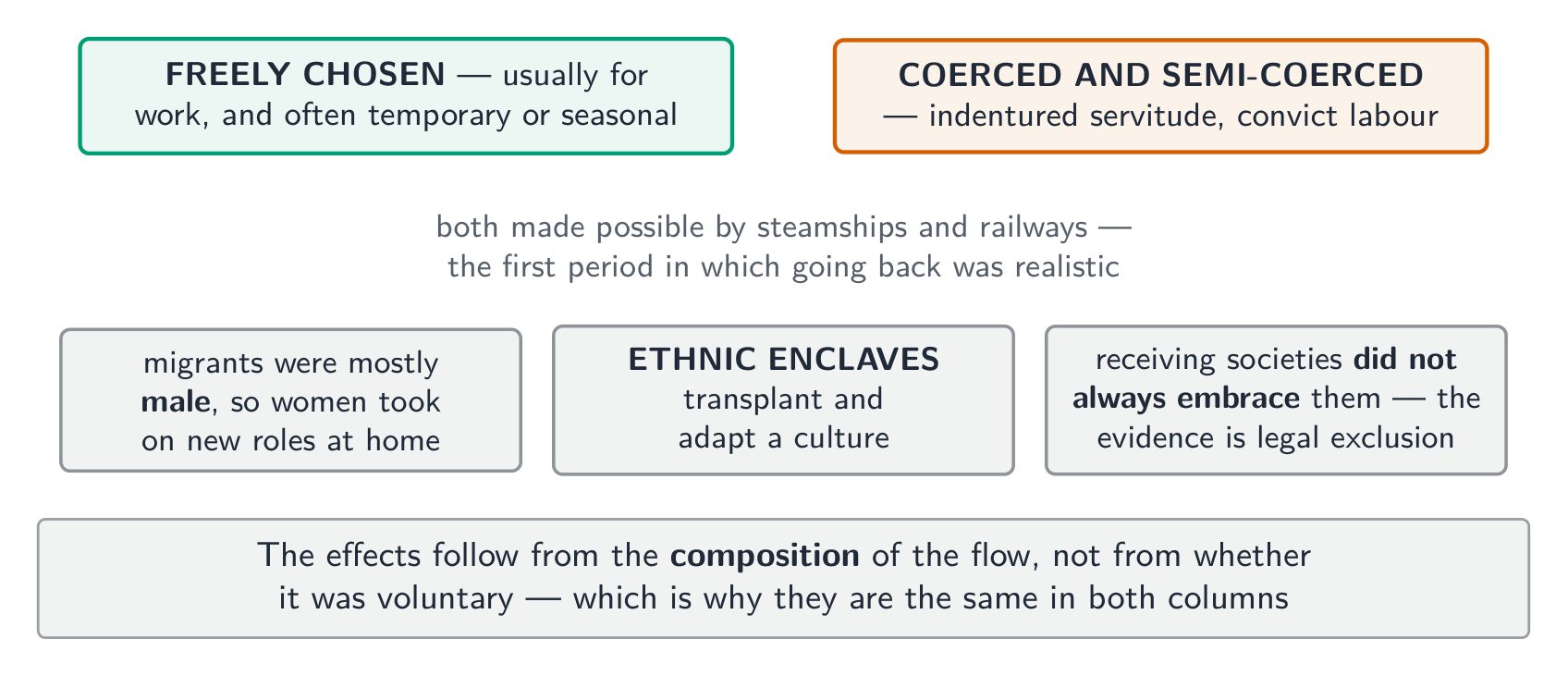
Migration in this period was shaped by demographic change in both sending and receiving societies, and by new modes of transportation 交通方式 - steamships and railways - which made long-distance and often temporary or seasonal 临时或季节性 movement possible for the first time.

Two kinds must be distinguished:

  • Many people chose freely to relocate, usually in search of work.
  • The global capitalist economy continued to rely on coerced and semi-coerced labour 强制与半强制劳动, including indentured servitude 契约劳工 and convict labour, after the legal end of the slave trade.
العربية

تشكلت الهجرة في هذه الفترة بسبب التغير الديموغرافي في كل من المجتمعات المُرسلة والمستقبلة، وبسبب وسائل نقل جديدة - السفن البخارية والسكك الحديدية - والتي مكّنت لأول مرة الحركة لمسافات طويلة وغالباً ما تكون مؤقتة أو موسمية.

يجب التمييز بين نوعين:

  • اختار العديد من الناس الت relocation بحرية، عادةً بحثًا عن عمل.
  • استمر الاقتصاد الرأسمالي العالمي في الاعتماد على العمل المجبر وشبه المجبر، بما في ذلك العبودية المتعاونة وعمل المدانين، بعد النهاية القانونية لتجارة العبودية.
6.7

Effects of Migration · ⁨آثار الهجرة⁩

Syllabus · ⁨المنهج⁩
English

6.7 Effects of Migration

Thematic Focus (SIO): Social Interactions and Organization — The process by which societies group their members and the norms that govern the interactions between these groups and between individuals influence political, economic, and cultural institutions and organization.

Learning Objective Unit 6.H: Explain how and why new patterns of migration affected society from 1750 to 1900.

  • KC-5.4.III.A Migrants tended to be male, leaving women to take on new roles in the home society that had been formerly occupied by men.
  • KC-5.4.III.B Migrants often created ethnic enclaves in different parts of the world that helped transplant their culture into new environments.
  • KC-5.4.III.C Receiving societies did not always embrace immigrants, as seen in the various degrees of ethnic and racial prejudice and the ways states attempted to regulate the increased flow of people across their borders.

Illustrative examples:

  • Migrant ethnic enclaves:
    • Chinese in Southeast Asia, the Caribbean, South America, and North America
    • Indians in East and Southern Africa, the Caribbean, and Southeast Asia
    • Irish in North America
    • Italians in North and South America
  • Regulation of immigrants:
    • Chinese Exclusion Act
    • White Australia policy
العربية

6.7 آثار الهجرة

التركيز الموضوعي (SIO): التفاعلات الاجتماعية والتنظيم — عملية تجميع المجتمعات لأعضائها والمعايير التي تحكم التفاعل بين هذه المجموعات وبين الأفراد تؤثر على المؤسسات والهيكل السياسي والاقتصادي والثقافي.

الهدف التعليمي للوحدة 6.ح: اشرح كيف ولماذا أثرت أنماط الهجرة الجديدة على المجتمع من عام 1750 إلى 1900.

  • KC-5.4.III.A كان المهاجرون يميلون إلى الذكور، مما ترك النساء يتحملن أدوارًا جديدة في المجتمع الأصلي كانت تشغلها الرجال سابقًا.
  • KC-5.4.III.B غالبًا ما أنشأ المهاجرون أحياءً عرقية في أجزاء مختلفة من العالم ساعدت في نقل ثقافتهم إلى بيئات جديدة.
  • KC-5.4.III.C لم تستقبل المجتمعات المضيفة المهاجرين دائمًا، كما يظهر في درجات التحيز العرقي والعنصري المختلفة وكيفية محاولة الدول تنظيم التدفق المتزايد للأشخاص عبر حدودها.

أمثلة توضيحية:

  • الأحياء العرقية للمهاجرين:
    • الصينيون في جنوب شرق آسيا، البحر الكاريبي، أمريكا الجنوبية، وأمريكا الشمالية
    • الهنود في شرق وجنوب أفريقيا، البحر الكاريبي، وجنوب شرق آسيا
    • الآيرلنديون في أمريكا الشمالية
    • الإيطاليون في أمريكا الشمالية والجنوبية
  • تنظيم المهاجرين:
    • قانون استبعاد الصينيين
    • سياسة أستراليا البيضاء

Source: College Board AP Course and Exam Description · ⁨المصدر: وصف دورة وامتحان College Board AP⁩

English

Three effects are named directly in the CED:

  • Migrants tended to be male, leaving women to take on new roles in the home societies they left.
  • Migrants created ethnic enclaves 族裔聚居区 in destination societies, transplanting and adapting their cultures.
  • Receiving societies did not always embrace immigrants, and the examinable evidence is legal exclusion - most clearly the restriction of Chinese and other Asian migration in several countries.
العربية

ثلاثة تأثيرات مذكورة صراحة في CED:

  • كان المهاجرون يميلون إلى أن يكونوا رجالاً، مما ترك النساء يتكبدن أدواراً جديدة في المجتمعات الأصلية التي تركنها.
  • أنشأ المهاجرون جماعات عرقية معزولة في المجتمعات المستقبلة، ناقلين ثقافاتهم وقامون بتكييفها.
  • لم تستقبل المجتمعات المستقبلة المهاجرين دائمًا، والدليل المطلوب في الامتحان هو الاستبعاد القانوني - أكثر وضوحًا في تقييد هجرة الصينيين والآسيويين الآخرين في عدة بلدان.
نوعان من الحركات، مجموعة واحدة من التأثيرات - تنبع من تركيب التدفق
Explore · ⁨استكشف⁩

Sort the two kinds of movement and their effects · ⁨رتِّب نوعي الحركة وتأثيراتهما⁩

The effects follow from the composition of the flow, not from whether it was voluntary — which is why they are the same on both sides. · ⁨تنبع التأثيرات من تركيب التدفق، لا من كونه طوعياً — ولهذا السبب متطابقة على كلا الجانبين.⁩

6.8

Causation in the Imperial Age · ⁨التسبب في العصر الإمبراطوري⁩

Syllabus · ⁨المنهج⁩
English

6.8 Causation in the Imperial Age

Learning Objective Unit 6.I: Explain the relative significance of the effects of imperialism from 1750 to 1900.

  • KC-5.1 The development of industrial capitalism led to increased standards of living for some, and to continued improvement in manufacturing methods that increased the availability, affordability, and variety of consumer goods.
  • KC-5.2 As states industrialized, they also expanded existing overseas empires and established new colonies and transoceanic relationships.
  • KC-5.3 The 18th century marked the beginning of an intense period of revolution and rebellion against existing governments, leading to the establishment of new nation-states around the world.
  • KC-5.4 As a result of the emergence of transoceanic empires and a global capitalist economy, migration patterns changed dramatically, and the numbers of migrants increased significantly.
العربية

6.8 التسبب في عصر الإمبريالية

الهدف التعليمي للوحدة 6.إ: اشرح الأهمية النسبية لآثار الإمبريالية من عام 1750 إلى 1900.

  • KC-5.1 أدى تطور الرأسمالية الصناعية إلى زيادة معايير المعيشة للبعض، واستمرار التحسين في أساليب التصنيع الذي زاد من التوافر والمتاح والتنوع في السلع الاستهلاكية.
  • KC-5.2 مع تصنّع الدول، توسعت أيضًا الإمبراطوريات الخارجية القائمة وأقامت مستعمرات جديدة وعلاقات عبر المحيطات.
  • KC-5.3 حدد 18th القرن بداية فترة مكثفة من الثورات والتمرد ضد الحكومات القائمة، مما أدى إلى إنشاء دول قومية جديدة حول العالم.
  • KC-5.4 نتيجة ظهور الإمبراطوريات عبر المحيطات واقتصاد رأسمالي عالمي، تغيرت أنماط الهجرة بشكل كبير، وزادت أعداد المهاجرين زيادة كبيرة.

Source: College Board AP Course and Exam Description · ⁨المصدر: وصف دورة وامتحان College Board AP⁩

English

The unit's reasoning skill is causation. The strongest chain: industrial production created demand for raw materials and markets, which drove expansion; expansion required justification, which ideology supplied; and both produced resistance and mass migration.

Worked example (a real AP exam question). AP World short-answer questions here ask, for example, to "Explain one way in which industrialisation contributed to imperialism" between 1750 and 1900. A full-mark answer traces the mechanism: "Industrial factories required raw materials such as cotton and rubber that could not be produced in Europe, so industrial states took political or economic control of regions that could supply them, reorganising those economies around export crops." Notice the shape: the mark is for the link, not for asserting that industrialisation and imperialism are connected.

العربية

مهارة التفكير المطلوبة في الوحدة هي التسبب. أقوى سلسلة: الإنتاج الصناعي خلق طلبًا على المواد الخام والأسواق، مما دفع التوسع؛ وتطلب التوسع تبريرًا، وفرته الأيديولوجيا؛ وكلاهما أنتج مقاومة وهجرة جماعية.

مثال محلول (سؤال حقيقي من امتحان AP). أسئلة الإجابة القصيرة في امتحانات AP World تطلب هنا، على سبيل المثال، "اشرح طريقة واحدة ساهمت بهاIndustrialisation toward imperialism" بين 1750 و1900. إجابة كاملة الدرجة تتبع الآلية: "كانت المصانع الصناعية تحتاج إلى مواد خام مثل القطن والمطاط التي لا يمكن إنتاجها في أوروبا، لذلك تولت الدول الصناعية سيطرة سياسية أو اقتصادية على المناطق التي يمكنها تزويدها، وإعادة تنظيم تلك الاقتصادات حول المحاصيل للتصدير." لاحظ الشكل: الدرجة تُعطى للـ الربط، وليس للإقرار بأن Industrialisation والإمبراطورية مرتبطتان.

6.8

Exam tips · ⁨نصائح للامتحان⁩

English
  • Separate justifications (civilising mission, Social Darwinism) from causes (raw materials, markets, strategy). Questions often ask for one and reward not confusing it with the other.
  • Economic imperialism works without political control; that distinction answers many questions on its own.
  • Give three kinds of resistance - direct, new states, religious and cultural movements.
  • Migration questions want the split between free and coerced or semi-coerced movement.
  • For effects, use the CED's own three: male migration changing home societies, ethnic enclaves, and exclusion laws.
  • Causation answers must trace a mechanism. Asserting a connection is not explaining one.
العربية
  • افصل بين التبريرات (المهمة الحضارية، داروينية اجتماعية) والأسباب (المواد الخام، الأسواق، الاستراتيجية). غالبًا ما يطلب السؤال أحدهما ويكافئ عدم الخلط بينه والآخر.
  • الاستعمار الاقتصادي يعمل بدون سيطرة سياسية؛ هذا التمييز يجيب عن许多 questions بمفرده.
  • قدم ثلاثة أنواع من المقاومة - المباشرة، الدويل الجديدة، والحركات الدينية والثقافية.
  • أسئلة الهجرة تريد التمييز بين الحركة الحرة والمجبرة أو شبه المجبرة.
  • بالنسبة للتأثيرات، استخدم الثلاثة الخاصة بـ CED: الهجرة الذكورية التي غيّرت المجتمعات الأصلية، الجماعات العرقية المعزولة، وقوانين الاستبعاد.
  • يجب أن تتبع إجابات التسبب آلية. الإقرار بوجود ارتباط لا يعني شرحه.

Interactive lessons on this topic · ⁨دروس تفاعلية حول هذا الموضوع⁩

Work through it step by step, with instant-check exercises. · ⁨ا-working عليه خطوة بخطوة، مع تمارين تحقق فوري.⁩

Past Papers · ⁨أوراق الامتحانات السابقة⁩

More topics in AP World History: Modern · ⁨تاريخ العالم الحديث (AP)⁩ · ⁨المزيد من المواضيع في AP World History: Modern · ⁨تاريخ العالم الحديث (AP)⁩⁩

Log in or create account · ⁨تسجيل الدخول أو إنشاء حساب⁩

IGCSE, A-Level & AP