Skip to content · ⁨الانتقال إلى المحتوى⁩

Collecting Data · ⁨جمع البيانات⁩

AP Statistics · ⁨AP الإحصاء⁩ · Topic 3 · ⁨الموضوع 3⁩

Video lesson for this topic · ⁨درس فيديو لهذا الموضوع⁩ Open the video page · ⁨افتح صفحة الفيديو⁩
7:31

جمع البيانات

استطلاع عبر الإنترنت يجمع ثلاثة آلاف رد. استبيان دقيق يسأل ألف شخص فقط. أيهما أقرب للحقيقة؟ الصغير، تقريباً كل…

English narration · English + 中文 subtitles burned in · ⁨سرد باللغة الإنجليزية · ترجمة مدمجة بالإنجليزية + الصينية⁩

3.1

Can We Trust the Data We Collected? · ⁨هل يمكننا الوثوق بالبيانات التي جمعناها؟⁩

Syllabus · ⁨المنهج⁩
English

Enduring Understanding (VAR-1): Given that variation may be random or not, conclusions are uncertain.

Learning Objective VAR-1.E: Identify questions to be answered about data collection methods. [Skill 1.A]

  • VAR-1.E.1 Methods for data collection that do not rely on chance result in untrustworthy conclusions.
العربية

الفهم الدائم (VAR-1): بما أن التباين قد يكون عشوائياً أو غير ذلك، فإن الاستنتاجات تكون غير مؤكدة.

هدف التعلم VAR-1.E: تحديد الأسئلة المراد الإجابة عنها حول طرق جمع البيانات. [مهارة 1.A]

  • VAR-1.E.1 تؤدي طرق جمع البيانات التي لا تعتمد على الحظ إلى استنتاجات غير موثوقة.
Source: College Board AP Course and Exam Description · ⁨المصدر: وصف دورة وامتحان College Board AP⁩

English

A conclusion is only as good as the data behind it. How data are collected decides what you may conclude – whether you can generalize to a population 总体, and whether you can claim cause and effect. Poorly collected data can be worse than none.

العربية

المستخلص بقدر جودة البيانات التي يستند إليها. كيفية جمع البيانات تحدد ما يمكنك استنتاجه – سواء كان بإمكانك تعميم النتائج على مجتمع إحصائي، أو ادعاء السببية والتأثير. البيانات السيئة قد تكون أسوأ من عدم وجود بيانات.

3.2

Observational Studies and Experiments · ⁨الدراسات الرصدية والتجارب⁩

Syllabus · ⁨المنهج⁩
English

Enduring Understanding (DAT-2): The way we collect data influences what we can and cannot say about a population.

Learning Objective DAT-2.A: Identify the type of a study. [Skill 1.C]

  • DAT-2.A.1 A population consists of all items or subjects of interest.
  • DAT-2.A.2 A sample selected for study is a subset of the population.
  • DAT-2.A.3 In an observational study, treatments are not imposed. Investigators examine data for a sample of individuals (retrospective) or follow a sample of individuals into the future collecting data (prospective) in order to investigate a topic of interest about the population. A sample survey is a type of observational study that collects data from a sample in an attempt to learn about the population from which the sample was taken.
  • DAT-2.A.4 In an experiment, different conditions (treatments) are assigned to experimental units (participants or subjects).

Learning Objective DAT-2.B: Identify appropriate generalizations and determinations based on observational studies. [Skill 4.A]

  • DAT-2.B.1 It is only appropriate to make generalizations about a population based on samples that are randomly selected or otherwise representative of that population.
  • DAT-2.B.2 A sample is only generalizable to the population from which the sample was selected.
  • DAT-2.B.3 It is not possible to determine causal relationships between variables using data collected in an observational study.
العربية

فهم دائم (DAT-2): طريقة جمعنا للبيانات تؤثر على ما يمكننا وما لا يمكننا قوله عن مجتمع.

هدف التعلم DAT-2.A: تحديد نوع الدراسة. [مهارة 1.C]

  • DAT-2.A.1 المجتمع يتكون من جميع العناصر أو الموضوعات محل الاهتمام.
  • DAT-2.A.2 العينة المختارة للدراسة هي جزء فرعي من المجتمع.
  • DAT-2.A.3 في الدراسة الرصدية، لا يتم فرض معالجات. يفحص الباحثون البيانات لعينة من الأفراد (دراسة استرجاعية) أو يتبعون عينة من الأفراد مستقبلاً لجمع البيانات (دراسة مستقبلية) للتحقيق في موضوع معين يتعلق بالمجتمع. المسح العيني هو نوع من الدراسات الرصدية يجمع البيانات من عينة بهدف التعرف على المجتمع الذي أُخذت منه العينة.
  • DAT-2.A.4 في التجربة، تُخصص ظروف مختلفة (معالجات) لوحدات التجريبية (المشاركين أو الموضوعين).

هدف التعلم DAT-2.B: تحديد تعميمات وتعيينات مناسبة بناءً على الدراسات الرصدية. [مهارة 4.A]

  • DAT-2.B.1 من المناسب فقط إجراء تعميمات حول مجتمع ما بناءً على عينات تم اختيارها عشوائياً أو أنها ممثلة لهذا المجتمع بطرق أخرى.
  • DAT-2.B.2 يمكن تعميم العينة فقط على المجتمع الذي تم اختيار العينة منه.
  • DAT-2.B.3 لا يمكن تحديد العلاقات السببية بين المتغيرات باستخدام البيانات المجمعة في دراسة رصدية.

Source: College Board AP Course and Exam Description · ⁨المصدر: وصف دورة وامتحان College Board AP⁩

English
  • In an observational study 观察性研究 you measure individuals without trying to influence them. It can show association, but not causation, because lurking variables may explain the link.
  • In an experiment 实验 you deliberately impose a treatment 处理 and compare responses. A well-designed experiment can establish cause and effect.
العربية
  • في الدراسة الرصدية تقيس الأفراد دون محاولة التأثير عليهم. يمكن أن تظهر الارتباط، لكنها لا تثبت السببية، لأن المتغيرات الخفية قد تفسر الرابط.
  • في التجربة تفرض عمداً علاجاً وتقارن الاستجابات. التجرة المصممة جيداً يمكنها إثبات السببية والتأثير.
Explore · ⁨استكشف⁩

Observational study or experiment? · ⁨دراسة رصدية أم تجربة؟⁩

In an experiment the researcher imposes a treatment (and can show cause); an observational study only records what already happens (and can show association, not cause). · ⁨في التجربة يقوم الباحث بـفرض معالجة (ويمكن إثبات السبب)؛ أما الدراسة الرصدية فتكتفي بتسجيل ما يحدث بالفعل (ويمكن إظهار الارتباط، لا السبب).⁩

3.3

Random Sampling · ⁨العين العشوائية⁩

Syllabus · ⁨المنهج⁩
English

Enduring Understanding (DAT-2): The way we collect data influences what we can and cannot say about a population.

Learning Objective DAT-2.C: Identify a sampling method, given a description of a study. [Skill 1.C]

  • DAT-2.C.1 When an item from a population can be selected only once, this is called sampling without replacement. When an item from the population can be selected more than once, this is called sampling with replacement.
  • DAT-2.C.2 A simple random sample (SRS) is a sample in which every group of a given size has an equal chance of being chosen. This method is the basis for many types of sampling mechanisms. A few examples of mechanisms used to obtain SRSs include numbering individuals and using a random number generator to select which ones to include in the sample, ignoring repeats, using a table of random numbers, or drawing a card from a deck without replacement.
  • DAT-2.C.3 A stratified random sample involves the division of a population into separate groups, called strata, based on shared attributes or characteristics (homogeneous grouping). Within each stratum a simple random sample is selected, and the selected units are combined to form the sample.
  • DAT-2.C.4 A cluster sample involves the division of a population into smaller groups, called clusters. Ideally, there is heterogeneity within each cluster, and clusters are similar to one another in their composition. A simple random sample of clusters is selected from the population to form the sample of clusters. Data are collected from all observations in the selected clusters.
  • DAT-2.C.5 A systematic random sample is a method in which sample members from a population are selected according to a random starting point and a fixed, periodic interval.
  • DAT-2.C.6 A census selects all items/subjects in a population.

Learning Objective DAT-2.D: Explain why a particular sampling method is or is not appropriate for a given situation. [Skill 1.C]

  • DAT-2.D.1 There are advantages and disadvantages for each sampling method depending upon the question that is to be answered and the population from which the sample will be drawn.
العربية

فهم دائم (DAT-2): طريقة جمعنا للبيانات تؤثر على ما يمكننا وما لا يمكننا قوله عن مجتمع.

هدف التعلم DAT-2.C: تحديد طريقة取样، بناءً على وصف الدراسة. [مهارة 1.C]

  • DAT-2.C.1 عندما يمكن اختيار عنصر واحد من المجتمع مرة واحدة فقط، يسمى هذا Sampling without replacement. عندما يمكن اختيار عنصر من المجتمع أكثر من مرة، يسمى هذا Sampling with replacement.
  • DAT-2.C.2 العينة العشوائية البسيطة (SRS) هي عينة يكون فيها لكل مجموعة بحجم معين فرصة متساوية للاختيار. هذه الطريقة هي الأساس للعديد من أنواع آليات取样. بعض أمثلة الآليات المستخدمة للحصول على SRSs تشمل ترقيم الأفراد واستخدام مولد الأرقام العشوائية لتحديد أيهم يجب تضمينهم في العينة، وتجاهل التكرارات،或使用随机数表,或从一副牌中抽取一张卡而不放回。
  • DAT-2.C.3 العينة العشوائية الطبقيّة تتضمن تقسيم المجتمع إلى مجموعات منفصلة تسمى طبقات، بناءً على سمات أو خصائص مشتركة (تجميع متجانس). داخل كل طبقة يتم اختيار عينة عشوائية بسيطة، وتُجمع الوحدات المختارة لتكوين العينة.
  • DAT-2.C.4 العينة العنقوديّة تتضمن تقسيم المجتمع إلى مجموعات أصغر تسمى عنقوديات. من المثالي أن يكون هناك تباين داخلي في كل عنقودية، وأن تكون العنقوديات متشابهة فيما بينها في تكوينها. يتم اختيار عينة عشوائية بسيطة من العنقوديات من المجتمع لتكوين عينة العنقوديات. يتم جمع البيانات من جميع الملاحظات في العنقوديات المختارة.
  • DAT-2.C.5 العينة العشوائية المنتظمة هي طريقة يتم فيها اختيار أفراد العينة من المجتمع وفقاً لنقطة بداية عشوائية وفاصل زمني ثابت ومتكرر.
  • DAT-2.C.6 التعداد العام يختار جميع العناصر/المواضيع في المجتمع.

الهدف التعليمي DAT-2.D: اشرح لماذا تكون طريقة عينات معينة مناسبة أو غير مناسبة لموقف محدد. [مهارة 1.C]

  • DAT-2.D.1 لكل طريقة عينات مزايا وعيوب اعتماداً على السؤال المراد الإجابة عليه والمجتمع الذي سيتم سحب العينة منه.

Source: College Board AP Course and Exam Description · ⁨المصدر: وصف دورة وامتحان College Board AP⁩

English

To learn about a population you take a sample 样本. Random sampling 随机抽样 protects against selection bias 偏差 and lets you generalize (it cannot fix undercoverage, nonresponse, or response bias — see below). Common designs:

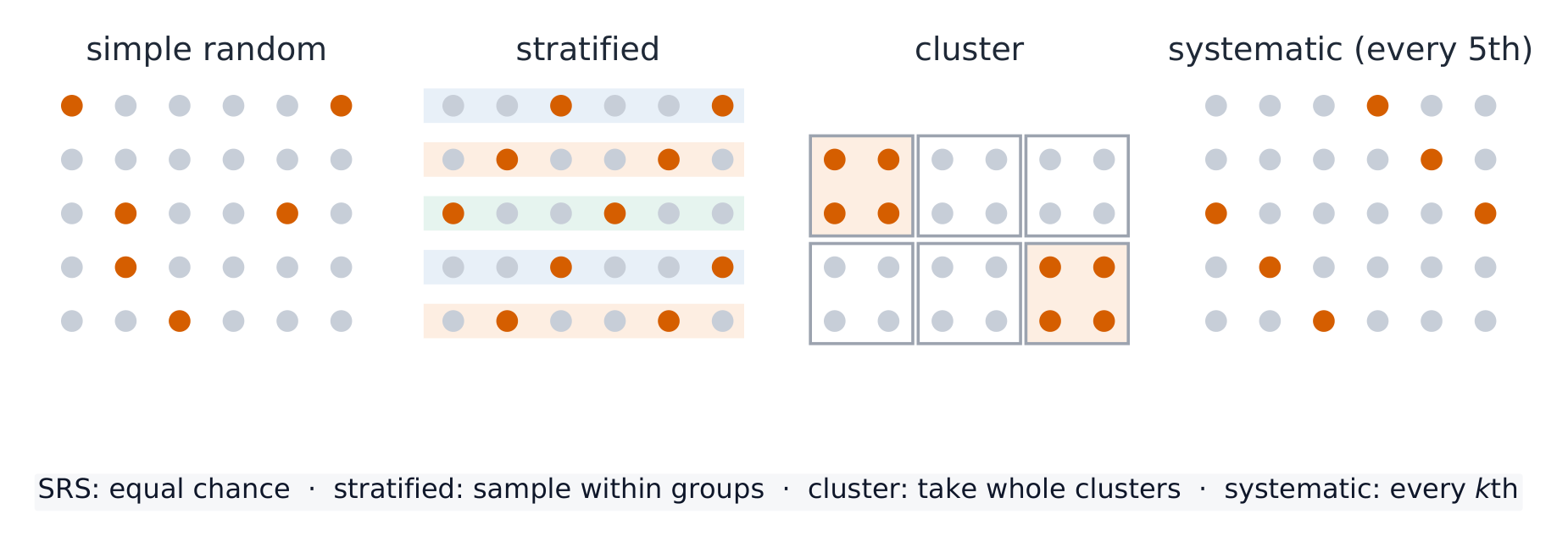
  • Simple random sample (SRS) 简单随机样本: every group of the chosen size is equally likely.
  • Stratified 分层: split the population into similar strata, then sample within each.
  • Cluster 整群: split into clusters, randomly choose whole clusters.
  • Systematic 系统: pick every $k$th individual from a random start.

A convenience sample 方便样本 or voluntary response sample is not random and is biased.

Worked example. To survey a school, an administrator lists all students by grade and randomly selects $20$ from each grade. This is a stratified sample – the grades are the strata – which guarantees every grade is represented, unlike an SRS that might by chance draw few from one grade.

العربية

لمعرفة مجتمع إحصائي تأخذ عينة. العينة العشوائية تحمي من التحيز في الاختيار وتسمح بالتعميم (لا يمكنها إصلاح التغطية الناقصة أو عدم الاستجابة أو تحيز الاستجابة – انظر أدناه). التصاميم الشائعة:

  • العينة العشوائية البسيطة (SRS): كل مجموعة بحجم الاختيار محتملة بالتساوي.
  • طبقات: تقسيم المجتمع إلى طبقات متشابهة، ثم أخذ عينات داخل كل طبقة.
  • عنقود: التقسيم إلى عناقيد، واختيار عناقيد كاملة عشوائياً.
  • منهجية: اختيار كل $k$ فرد بدءاً من نقطة عشوائية.
أربعة تصاميم للعينات العشوائية: من يتم اختياره، وكيف
أربعة تصاميم للعينة العشوائية: من يتم اختياره، وكيف

العينة المريحة أو عينة الاستجابة الطوعية ليست عشوائية ومحيّزة.

مثال محلول. لاستطلاع رأي في مدرسة، يقوم مسؤول بإدراج جميع الطلاب حسب الصفوف ثم يختار $20$ عشوائياً من كل صف. هذه عينة مقسّمة طبقاتاً – حيث تمثل الصفوف الطبقات – مما يضمن تمثيل كل صف على الأقل، بعكس العينة العشوائية البسيطة التي قد تسحب عدداً قليلاً عن طريق الخطأ من أحد الصفوف.

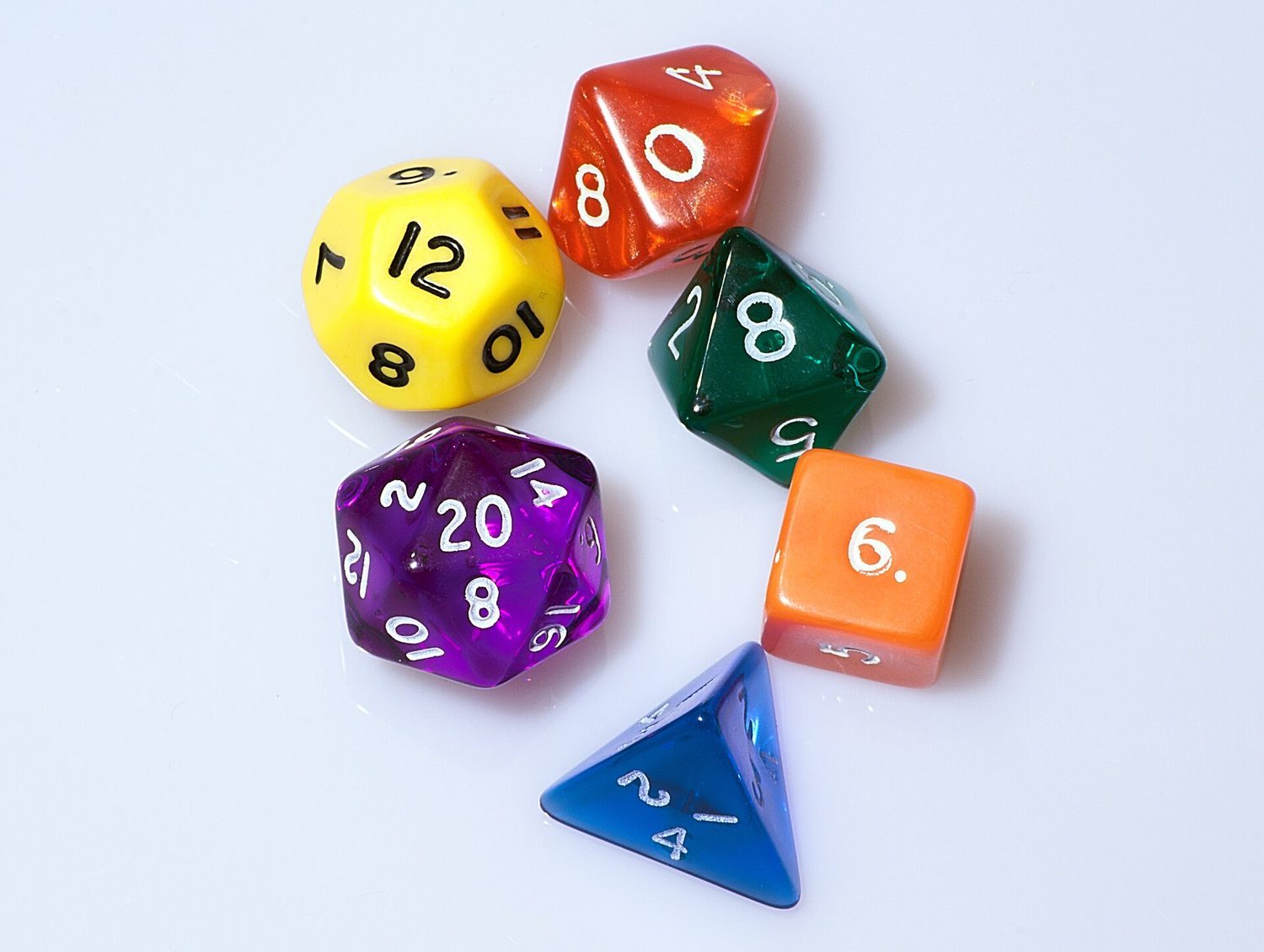
نتائج عشوائية: النرد يجعل كل وجه متساوي الاحتمال تحت ظروف عادلة
3.4

When Sampling Goes Wrong · ⁨عندما تفشل العينة⁩

Syllabus · ⁨المنهج⁩
English

Enduring Understanding (DAT-2): The way we collect data influences what we can and cannot say about a population.

Learning Objective DAT-2.E: Identify potential sources of bias in sampling methods. [Skill 1.C]

  • DAT-2.E.1 Bias occurs when certain responses are systematically favored over others.
  • DAT-2.E.2 When a sample is comprised entirely of volunteers or people who choose to participate, the sample will typically not be representative of the population (voluntary response bias).
  • DAT-2.E.3 When part of the population has a reduced chance of being included in the sample, the sample will typically not be representative of the population (undercoverage bias).
  • DAT-2.E.4 Individuals chosen for the sample for whom data cannot be obtained (or who refuse to respond) may differ from those for whom data can be obtained (nonresponse bias).
  • DAT-2.E.5 Problems in the data gathering instrument or process result in response bias. Examples include questions that are confusing or leading (question wording bias) and self-reported responses.
  • DAT-2.E.6 Non-random sampling methods (for example, samples chosen by convenience or voluntary response) introduce potential for bias because they do not use chance to select the individuals.
العربية

فهم دائم (DAT-2): طريقة جمعنا للبيانات تؤثر على ما يمكننا وما لا يمكننا قوله عن مجتمع.

الهدف التعليمي DAT-2.E: حدد المصادر المحتملة للتحيز في طرق العينات. [مهارة 1.C]

  • DAT-2.E.1 يحدث التحيز عندما يتم تفضيل استجابات معينة بشكل منهجي على أخرى.
  • DAT-2.E.2 عندما تتكون العينة بالكامل من المتطوعين أو الأشخاص الذين اختاروا المشاركة، عادةً ما لا تكون العينة ممثلة للمجتمع (تحيز الاستجابة الطوعية).
  • DAT-2.E.3 عندما يكون لدى جزء من المجتمع فرصة منخفضة للإدراج في العينة، عادةً ما لا تكون العينة ممثلة للمجتمع (تحيز التغطية الناقصة).
  • DAT-2.E.4 الأفراد المختارين للعينة الذين لا يمكن الحصول على بياناتهم (أو الذين يرفضون الاستجابة) قد يختلفون عن أولئك الذين يمكن الحصول على بياناتهم (تحيز عدم الاستجابة).
  • DAT-2.E.5 تؤدي المشاكل في أداة أو عملية جمع البيانات إلى تحيز الاستجابة. تشمل الأمثلة الأسئلة المربكة أو الموجهة (تحيز صياغة السؤال) والاستجابات ذاتية الإبلاغ.
  • DAT-2.E.6 طرق العينات غير العشوائية (على سبيل المثال، العينات المختارة بالراحة أو الاستجابة الطوعية) تُدخل احتمالية للتحيز لأنها لا تستخدم الحظ لاختيار الأفراد.

Source: College Board AP Course and Exam Description · ⁨المصدر: وصف دورة وامتحان College Board AP⁩

English

Bias makes estimates systematically miss the truth:

  • Undercoverage 覆盖不足: some groups are left out of the sampling frame.
  • Nonresponse 无回应: selected people do not answer.
  • Response bias 回应偏差: people answer inaccurately (bad wording, sensitive topics).

Bias is about a consistent error in one direction – increasing the sample size does not fix it.

العربية

التحيز يجعل التقديرات تبتعد بشكل منهجي عن الحقيقة:

  • عدم التغطية الكافية: تُستبعد بعض المجموعات من إطار العينة.
  • عدم الاستجابة: الأشخاص المختارون لا يجيبون.
  • تحيز الاستجابة: يجيب الناس بشكل غير دقيق (صياغة سيئة، مواضيع حساسة).

التحيز يتعلق بخطأ ثابت في اتجاه واحد – زيادة حجم العينة لا يحل المشكلة.

العينات المريحة تفوت المجتمع: يتسلل التحيز عند عدم كون الاختيار عشوائياً
Vocabulary · ⁨مفردات⁩ Train · ⁨تدريب⁩
English العربية
bias/ˈbaɪəs/ تحيزاً
Simple random sample (SRS)/ˈsɪmpl ˈrændəm ˈsæmpl/ العينة العشوائية البسيطة (SRS)
Stratified/ˈstrætɪfaɪd/ طبقي
Cluster/ˈklʌstə/ عنقود
Systematic/ˌsɪstəˈmætɪk/ نظامي
convenience sample/kənˈviːnɪəns ˈsæmpl/ عينة الملاءمة
Undercoverage/ˌʌndəˈkʌvərɪdʒ/ التغطية الناقصة
Nonresponse/ˌnɒnrɪˈspɒns/ عدم الاستجابة
Response bias/rɪˈspɒns ˈbaɪəs/ تحيز الاستجابة
control group/kənˈtrəʊl ɡruːp/ مجموعة الضبط
placebo/pləˈsiːbəʊ/ علاج وهمي
Random assignment/ˈrændəm əˈsaɪnmənt/ التعيين العشوائي
Replication/ˌreplɪˈkeɪʃn/ التكرار
Confounding/kənˈfaʊndɪŋ/ الارتباك
Blinding/ˈblaɪndɪŋ/ التعمية
single-blind/ˈsɪŋɡl blaɪnd/ أعمى أحادي
double-blind/ˈdʌbl blaɪnd/ أعمى مزدوج
Blocking/ˈblɒkɪŋ/ التصنيف
3.5

Designing an Experiment · ⁨تصميم التجربة⁩

Syllabus · ⁨المنهج⁩
English

Enduring Understanding (VAR-3): Well-designed experiments can establish evidence of causal relationships.

Learning Objective VAR-3.A: Identify the components of an experiment. [Skill 1.C]

  • VAR-3.A.1 The experimental units are the individuals (which may be people or other objects of study) that are assigned treatments. When experimental units consist of people, they are sometimes referred to as participants or subjects.
  • VAR-3.A.2 An explanatory variable (or factor) in an experiment is a variable whose levels are manipulated intentionally. The levels or combination of levels of the explanatory variable(s) are called treatments.
  • VAR-3.A.3 A response variable in an experiment is an outcome from the experimental units that is measured after the treatments have been administered.
  • VAR-3.A.4 A confounding variable in an experiment is a variable that is related to the explanatory variable and influences the response variable and may create a false perception of association between the two.

Learning Objective VAR-3.B: Describe elements of a well-designed experiment. [Skill 1.B]

  • VAR-3.B.1 A well-designed experiment should include the following:
    • a. Comparisons of at least two treatment groups, one of which could be a control group.
    • b. Random assignment/allocation of treatments to experimental units.
    • c. Replication (more than one experimental unit in each treatment group).
    • d. Control of potential confounding variables where appropriate.

Learning Objective VAR-3.C: Compare experimental designs and methods. [Skill 1.C]

  • VAR-3.C.1 In a completely randomized design, treatments are assigned to experimental units completely at random. Random assignment tends to balance the effects of uncontrolled (confounding) variables so that differences in responses can be attributed to the treatments.
  • VAR-3.C.2 Methods for randomly assigning treatments to experimental units in a completely randomized design include using a random number generator, a table of random values, drawing chips without replacement, etc.
  • VAR-3.C.3 In a single-blind experiment, subjects do not know which treatment they are receiving, but members of the research team do, or vice versa.
  • VAR-3.C.4 In a double-blind experiment neither the subjects nor the members of the research team who interact with them know which treatment a subject is receiving.
  • VAR-3.C.5 A control group is a collection of experimental units either not given a treatment of interest or given a treatment with an inactive substance (placebo) in order to determine if the treatment of interest has an effect.
  • VAR-3.C.6 The placebo effect occurs when experimental units have a response to a placebo.
  • VAR-3.C.7 For randomized complete block designs, treatments are assigned completely at random within each block.
  • VAR-3.C.8 Blocking ensures that at the beginning of the experiment the units within each block are similar to each other with respect to at least one blocking variable. A randomized block design helps to separate natural variability from differences due to the blocking variable.
  • VAR-3.C.9 A matched pairs design is a special case of a randomized block design. Using a blocking variable, subjects (whether they are people or not) are arranged in pairs matched on relevant factors. Matched pairs may be formed naturally or by the experimenter. Every pair receives both treatments by randomly assigning one treatment to one member of the pair and subsequently assigning the remaining treatment to the second member of the pair. Alternately, each subject may get both treatments.
العربية

الفهم الدائم (VAR-3): التجارب المصممة جيداً يمكنها إثبات أدلة على العلاقات السببية.

الهدف التعليمي VAR-3.A: حدد مكونات التجربة. [مهارة 1.C]

  • VAR-3.A.1 وحدات التجربة هم الأفراد (والذين قد يكونون أشخاصاً أو أجساماً أخرى قيد الدراسة) الذين يتم تعيينهم للتلقي المعالجات. عندما تتكون وحدات التجربة من أشخاص، يُشار إليها أحياناً بالمشاركين أو الموضوعات.
  • VAR-3.A.2 المتغير التوضيحي (أو العامل) في التجربة هو متغير مستوياته يتم التلاعب بها عمداً. تُسمى مستويات المتغير(ات) التوضيحية أو مجموعاتها بالمعالجات.
  • VAR-3.A.3 المتغير الاستجابة في التجربة هو نتيجة من وحدات التجربة يتم قياسها بعد تطبيق المعالجات.
  • VAR-3.A.4 المتغير المخلّ في التجربة هو متغير مرتبط بالمتغير التوضيحي ويؤثر على متغير الاستجابة وقد يخلق إدراكاً خاطئاً للارتباط بين الاثنين.

الهدف التعليمي VAR-3.B: صف عناصر التجربة المصممة جيداً. [مهارة 1.B]

  • VAR-3.B.1 يجب أن تتضمن التجربة المصممة جيداً ما يلي:
    • أ. مقارنة مجموعتين معالجتين على الأقل، إحداهما قد تكون مجموعة تحكم.
    • ب. التوزيع العشوائي/تخصيص المعالجات لوحدة التجربة.
    • ج. التكرار (أكثر من وحدة تجريبية واحدة في كل مجموعة معالجة).
    • د. التحكم في المتغيرات المخللة المحتملة حيثما كان ذلك مناسباً.

الهدف التعليمي VAR-3.C: قارن تصاميم التجارب وطرقها. [مهارة 1.C]

  • VAR-3.C.1 في التصميم العشوائي الكامل، يتم تخصيص المعالجات لوحدة التجربة تماماً عشوائياً. يميل التوزيع العشوائي إلى موازنة تأثيرات المتغيرات غير الخاضعة للتحكم (المخللة) بحيث يمكن نسب الفروقات في الاستجابات إلى المعالجات.
  • VAR-3.C.2 تشمل الطرق لتخصيص المعالجات عشوائياً لوحدة التجربة في التصميم العشوائي الكامل استخدام مولد الأرقام العشوائية، وجدول القيم العشوائية، وسحب الرقائق بدون إرجاع، إلخ.
  • VAR-3.C.3 في التجربة العمياء الواحدة، لا يعرف المشاركين أي معالجة يتلقونها، لكن أعضاء فريق البحث يفعلون، أو العكس صحيح.
  • VAR-3.C.4 في التجربة العمياء المزدوجة، لا يعرف المشاركون ولا أعضاء فريق البحث الذين يتفاعلون معهم أي معالجة يتلقها المشارك.
  • VAR-3.C.5 مجموعة التحكم هي مجموعة من وحدات التجربة إما غير مُعطاة معالجة مثيرة للاهتمام أو مُعطاة معالجة بمادة غير نشطة (دواء وهمي) لتحديد ما إذا كانت المعالجة المثيرة للاهتمام لها تأثير.
  • VAR-3.C.6 يحدث تأثير الدواء الوهمي عندما يكون لدى وحدات التجربة استجابة للدواء الوهمي.
  • VAR-3.C.7 بالنسبة لتصاميم الكتل العشوائية الكاملة، يتم تخصيص المعالجات تماماً عشوائياً داخل كل كتلة.
  • VAR-3.C.8 الضبط يضمن أنه في بداية التجربة تكون الوحدات داخل كل كتلة متشابهة فيما بينها فيما يتعلق بمتغير ضبط واحد على الأقل. يساعد التصميم العشوائي للكتل على فصل التباين الطبيعي عن الفروقات الناتجة عن متغير الضبط.
  • VAR-3.C.9 تصميم الأزواج المتطابقة هو حالة خاصة من تصميم الكتل العشوائية. باستخدام متغير تكتيل، يتم ترتيب الوحدات (سواء كانت أشخاصًا أو غيرهم) في أزواج متطابقة بناءً على عوامل ذات صلة. يمكن تكوين الأزواج المتطابقة بشكل طبيعي أو بواسطة الباحث. كل زوج يتلقى كلا المعاملتين عن طريق تعيين عشوائي معاملة واحدة لأحد أفراد الزوج ثم تعيين المعاملة المتبقية للفرع الثاني من الزوج. وبديلًا لذلك، قد تحصل كل وحدة على كلا المعاملتين.

Source: College Board AP Course and Exam Description · ⁨المصدر: وصف دورة وامتحان College Board AP⁩

English

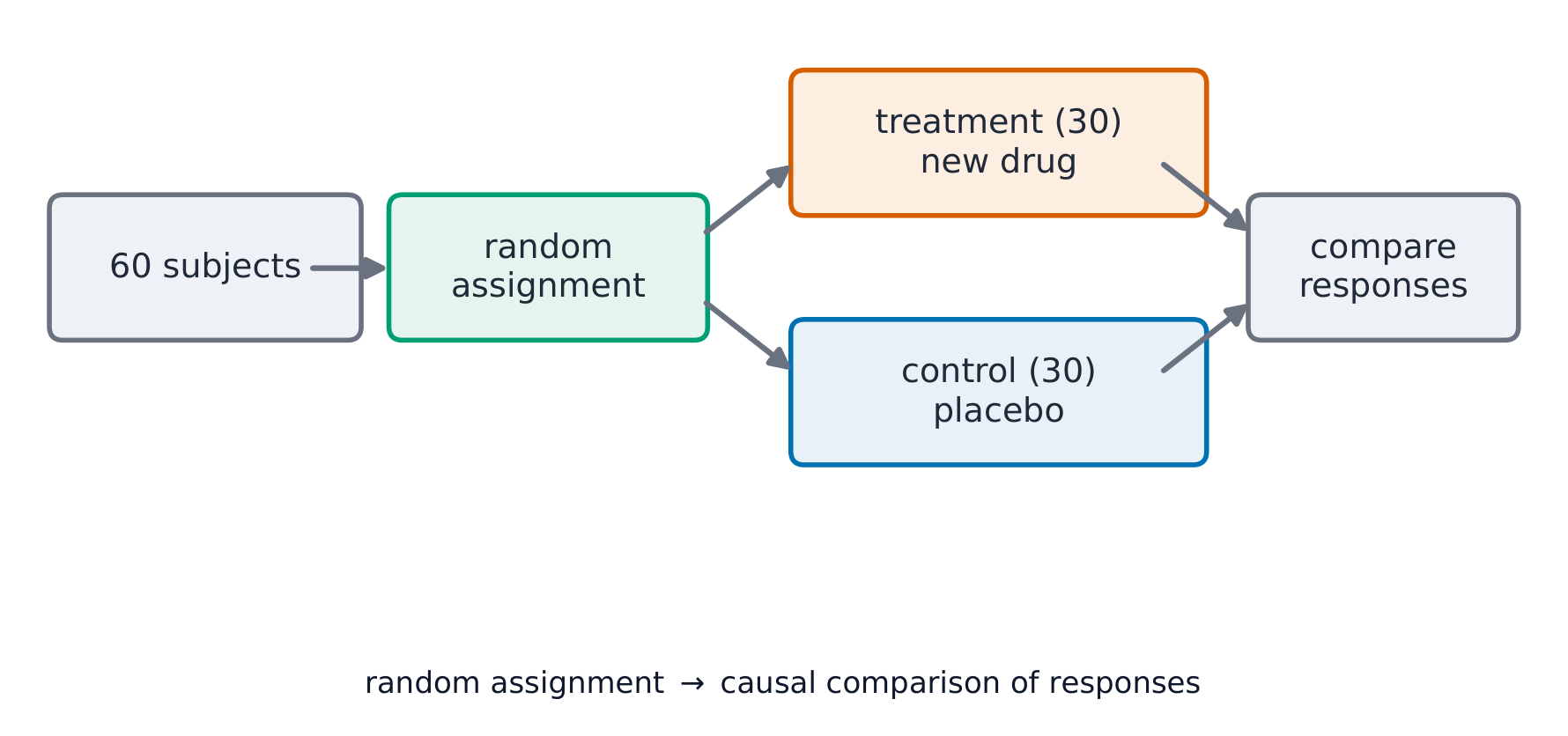
Good experiments follow three principles:

  • Comparison with a control group 对照组 (often a placebo 安慰剂).
  • Random assignment 随机分配 of subjects to treatments, to balance out other variables.
  • Replication 重复: enough subjects per treatment to see a real effect.

Confounding 混杂 occurs when another variable is tied to the treatment so their effects cannot be separated; random assignment guards against it. Blinding 盲法 hides who is getting which treatment to prevent expectation effects: in a single-blind 单盲 study only one side is kept unaware (usually the subjects, or only the people assessing the result), while in a double-blind 双盲 study neither the subjects nor the researchers who interact with them know, blocking both the placebo effect and biased assessment. Blocking 区组 groups similar subjects and randomizes within each block to reduce variability.

العربية

تتبع التجارب الجيدة ثلاث مبادئ:

  • المقارنة مع مجموعة تحكم (غالباً دواء وهمي).
  • التعيين العشوائي للموضوعات إلى المعالجات، لتوازن المتغيرات الأخرى.
  • التكرار: عدد كافٍ من الموضوعات لكل معالجة لرؤية تأثير حقيقي.
تجربة عشوائية تماماً تقارن بين مجموعة معالجة ومجموعة تحكم

يحدث التداخل عندما يرتبط متغير آخر بالمعالجة بحيث لا يمكن فصل تأثيراتها؛ protects التعيين العشوائي من ذلك. الإخفاء يخفي من يحصل على أي معالجة لمنع تأثيرات التوقع: في دراسة مفردة الإخفاء، طرف واحد فقط يُبقي مجهولاً (عادةً المشاركين، أو فقط الأشخاص الذين يقيسون النتيجة)، بينما في دراسة مزدوجة الإخفاء لا يعرف participants ولا الباحثون الذين يتفاعلون معهم، مما يحجب كل من تأثير الدواء الوهمي والتقييم المحيّز. الحجب يجمع موضوعات مشابهة ويوزع عشوائياً داخل كل حجب لتقليل التباين.

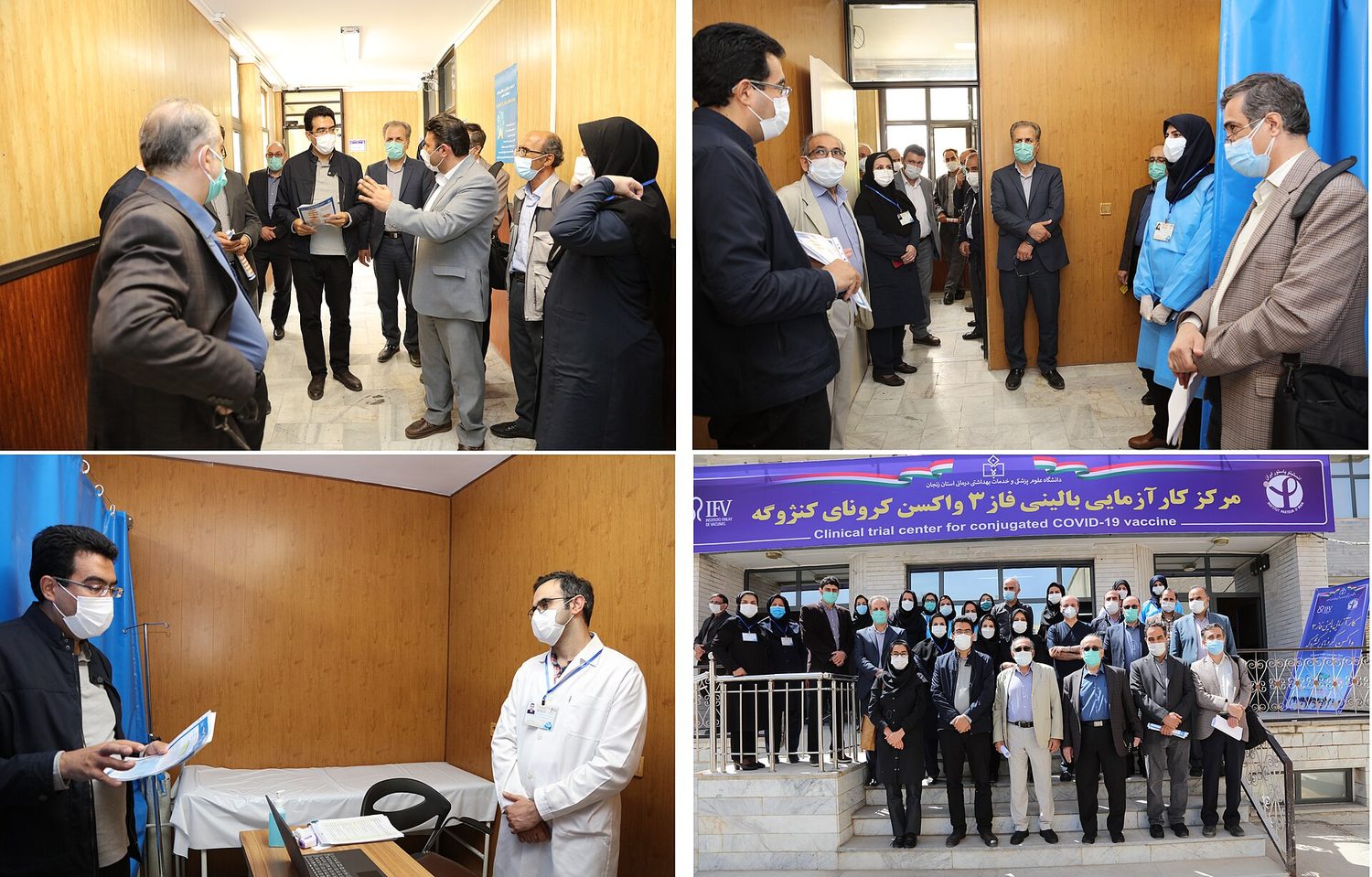
تجربة سريرية: يعزل التعيين العشوائي المعالجة عن التحكم
Vocabulary · ⁨مفردات⁩ Train · ⁨تدريب⁩
English العربية
population/ˌpɒpjʊˈleɪʃn/ السكان
observational study/ɒbzəˈveɪʃənl ˈstʌdi/ دراسة رصدية
experiment/ekˈsperɪmənt/ تجربة
treatment/ˈtriːtmənt/ العلاج
sample/ˈsæmpl/ العينة
Random sampling/ˈrændəm ˈsæmplɪŋ/ العينة العشوائية
3.6

Choosing the Right Design · ⁨اختيار التصميم المناسب⁩

Syllabus · ⁨المنهج⁩
English

Enduring Understanding (VAR-3): Well-designed experiments can establish evidence of causal relationships.

Learning Objective VAR-3.D: Explain why a particular experimental design is appropriate. [Skill 1.C]

  • VAR-3.D.1 There are advantages and disadvantages for each experimental design depending on the question of interest, the resources available, and the nature of the experimental units.
العربية

الفهم الدائم (VAR-3): التجارب المصممة جيداً يمكنها إثبات أدلة على العلاقات السببية.

هدف التعلم VAR-3.D: اشرح لماذا يكون تصميم تجريبي معين مناسبًا. [مهارة 1.C]

  • VAR-3.D.1 لكل تصميم تجريبي مزايا وعيوب تعتمد على السؤال المعني، والموارد المتاحة، وطبيعة الوحدات التجريبية.

Source: College Board AP Course and Exam Description · ⁨المصدر: وصف دورة وامتحان College Board AP⁩

English

Match the design to the goal: use a completely randomized design for uniform subjects; a randomized block design when a known variable (sex, age) affects the response; a matched-pairs design when each subject can serve as its own control. State how you would carry out the randomization.

العربية

طابق التصميم بالهدف: استخدم تصميماً عشوائياً تماماً لمواضيع موحدة؛ تصميماً عشوائياً محجوباً عندما يؤثر متغير معروف (مثل الجنس، العمر) على الاستجابة؛ تصميم الأزواج المتطابقة عندما يمكن لكل موضوع أن يكون سيطرة بنفسه. وضح كيفية إجراء التوزيع العشوائي.

3.7

What an Experiment Lets You Conclude · ⁨ما تسمح به التجربة استنتاجه⁩

Syllabus · ⁨المنهج⁩
English

Enduring Understanding (VAR-3): Well-designed experiments can establish evidence of causal relationships.

Learning Objective VAR-3.E: Interpret the results of a well-designed experiment. [Skill 4.B]

  • VAR-3.E.1 Statistical inference attributes conclusions based on data to the distribution from which the data were collected.
  • VAR-3.E.2 Random assignment of treatments to experimental units allows researchers to conclude that some observed changes are so large as to be unlikely to have occurred by chance. Such changes are said to be statistically significant.
  • VAR-3.E.3 Statistically significant differences between or among experimental treatment groups are evidence that the treatments caused the effect.
  • VAR-3.E.4 If the experimental units used in an experiment are representative of some larger group of units, the results of an experiment can be generalized to the larger group. Random selection of experimental units gives a better chance that the units will be representative.
العربية

الفهم الدائم (VAR-3): التجارب المصممة جيداً يمكنها إثبات أدلة على العلاقات السببية.

هدف التعلم VAR-3.E: فسّر نتائج تجربة مصممة جيدًا. [مهارة 4.B]

  • VAR-3.E.1 يُنسب الاستدلال الإحصائي النتائج المستندة إلى البيانات إلى التوزيع الذي جُمعت منه هذه البيانات.
  • VAR-3.E.2 يسمح التعيين العشوائي للمعاملات للوحدات التجريبية للباحثين بالاستنتاج بأن بعض التغيرات الملاحظة كبيرة جدًا بحيث يكون من غير المحتمل حدوثها بالصدفة. وتُسمى مثل هذه التغيرات ذات دلالة إحصائية.
  • VAR-3.E.3 الفروقات ذات الدلالة الإحصائية بين مجموعات معاملات تجريبية مختلفة هي دليل على أن المعاملات تسببت في التأثير.
  • VAR-3.E.4 إذا كانت الوحدات التجريبية المستخدمة في تجربة ما ممثلة لمجموعة أكبر منها، يمكن تعميم نتائج التجربة على المجموعة الأكبر. يعطي الاختيار العشوائي للوحدات التجريبية فرصة أفضل لأن تكون ممثلة.

Source: College Board AP Course and Exam Description · ⁨المصدر: وصف دورة وامتحان College Board AP⁩

English

Two questions decide the scope of a conclusion:

  • Random assignment used? Then a significant difference can be attributed to the treatment (causation) – for these subjects.
  • Random sampling from a population? Then results generalize to that population.

Only an experiment with random assignment supports a cause-and-effect claim; only random sampling supports generalization. Say exactly which you have.

Worked example. Researchers randomly assign $100$ volunteers to a new drug or a placebo, and the drug group improves significantly more. Because of the random assignment, the improvement can be attributed to the drug (causation) – but because the subjects were not randomly sampled, the conclusion applies only to these volunteers and does not automatically generalize to everyone.

العربية

سؤالان يحددان نطاق الاستنتاج:

  • هل تم استخدام التعيين العشوائي؟ إذاً يمكن نسب فرق كبير إلى المعالجة (السببية) – بالنسبة لهؤلاء المشاركين.
  • هل تم العينة العشوائية من مجتمع؟ إذاً تنطبق النتائج على ذلك المجتمع.

فقط تجربة بالتعيين العشوائي تدعم ادعاء السبب والنتيجة؛ فقط العينة العشوائية تدعم التعميم. قُل بالضبط ما لديك.

مثال محلول. قام الباحثون بتعيين $100$ متطوعين عشوائياً لعلاج جديد أو دواء وهمي، وتحسنت مجموعة العلاج بشكل ملحوظ أكثر. بسبب التعيين العشوائي، يمكن انتساب التحسن إلى العلاج (السببية) – ولكن بما أن المشاركين لم يتم اختيارهم عشوائياً، فإن الاستنتاج ينطبق فقط على هؤلاء المتطوعين ولا يتعمم تلقائياً للجميع.

3.7

Exam tips · ⁨نصائح للامتحان⁩

English
  • Distinguish an observational study (finds association) from an experiment (can show causation).
  • Good sampling is random (SRS, stratified, cluster) — beware bias (voluntary response, undercoverage, nonresponse).
  • Good experiments use control, randomization, and replication; blocking handles a known nuisance variable.
  • Only a randomized experiment supports a cause-and-effect conclusion.
  • Name the population, sample, and any confounding clearly.
العربية
  • ميّز بين الدراسة الرصدية (تجد ارتباطاً) والتجربة (يمكنها إظهار السببية).
  • العينة الجيدة عشوائية (SRS، مقسّمة طبقاتاً، عنقودية) – احذر من التحيز (الاستجابة الطوعية، عدم التغطية الكافية، عدم الاستجابة).
  • التجارب الجيدة تستخدم التحكم، والتوزيع العشوائي، والتكرار؛ الحجب يتعامل مع متغير مزعج معروف.
  • فقط التجربة العشوائية تدعم استنتاج السبب والنتيجة.
  • سمِّ المجتمع والعينة وأي متداخل بوضوح.

Interactive lessons on this topic · ⁨دروس تفاعلية حول هذا الموضوع⁩

Work through it step by step, with instant-check exercises. · ⁨ا-working عليه خطوة بخطوة، مع تمارين تحقق فوري.⁩

Past Papers · ⁨أوراق الامتحانات السابقة⁩

More topics in AP Statistics · ⁨AP الإحصاء⁩ · ⁨المزيد من المواضيع في AP Statistics · ⁨AP الإحصاء⁩⁩

Log in or create account · ⁨تسجيل الدخول أو إنشاء حساب⁩

IGCSE, A-Level & AP