Skip to content · ⁨الانتقال إلى المحتوى⁩

Cold War and Contemporary Europe · ⁨الحرب الباردة وأوروبا المعاصرة⁩

AP European History · ⁨تاريخ أوروبا (AP)⁩ · Topic 9 · ⁨الموضوع 9⁩

Video lesson for this topic · ⁨درس فيديو لهذا الموضوع⁩ Open the video page · ⁨افتح صفحة الفيديو⁩
9:37

الوحدة 9: الحرب الباردة وأوروبا المعاصرة

هذه الوحدة لها نصفان يجب إبقاؤهما معًا. الانقسام، حتى عام 1991. والاندماج، سار جنبًا إلى جنب معها ثم تجاوزها. هما ليسا متتاليين…

English narration · English + 中文 subtitles burned in · ⁨سرد باللغة الإنجليزية · ترجمة مدمجة بالإنجليزية + الصينية⁩

9.1

Contextualizing Cold War and Contemporary Europe · ⁨وضع الحرب الباردة وأوروبا المعاصرة في سياقها التاريخي⁩

Syllabus · ⁨المنهج⁩
English

9.1 Contextualizing Cold War and Contemporary Europe

Learning Objective Unit 9.A: Explain the context in which the Cold War developed, spread, and ended in Europe.

  • KC-4.1 Total war and political instability in the first half of the 20th century gave way to a polarized state order during the Cold War and eventually to efforts at transnational union.
    • KC-4.1.IV As World War II ended, a Cold War between the liberal democratic West and the communist East began, lasting nearly half a century.
  • KC-4.2 The stresses of economic collapse and total war engendered internal conflicts within European states and created conflicting conceptions of the relationship between the individual and the state, as demonstrated in the ideological battle between and among democracy, communism, and fascism.
  • KC-4.3 During the 20th century, diverse intellectual and cultural movements questioned the existence of objective knowledge, the ability of reason to arrive at truth, and the role of religion in determining moral standards.
    • KC-4.3.I.ii The experience of war intensified a sense of anxiety that permeated many facets of thought and culture, giving way by the century’s end to a plurality of intellectual frameworks.
  • KC-4.4 Demographic changes, economic growth, total war, disruptions of traditional social patterns, and competing definitions of freedom and justice altered the experiences of everyday life.
    • KC-4.4.III New voices gained prominence in political, intellectual, and social discourse.
العربية

9.1 وضع الحرب الباردة وأوروبا المعاصرة في سياقها التاريخي

هدف التعلم الوحدة 9.A: اشرح السياق الذي تطورت فيه الحرب الباردة وانتشرت وانتهت في أوروبا.

  • KC-4.1 حلت الحروب الشاملة وعدم الاستقرار السياسي في النصف الأول من 20th century بترتيب دولي قطبي خلال الحرب الباردة، وأدى ذلك في النهاية إلى محاولات التكتل عبر الحدود.
    • KC-4.1.IV مع انتهاء الحرب العالمية الثانية، بدأت حرب باردة بين الغرب الديمقراطي الليبرالي والشرق الشيوعي، استمرت nearly نصف قرن.
  • KC-4.2 أفرزت ضغوط انهيار الاقتصاد والحرب الشاملة نزاعات داخلية داخل الدول الأوروبية وولّدت تصورات متعارضة للعلاقة بين الفرد والدولة، كما تمCASE في المعركة الأيدولوجية بين الديمقراطية والشيوعية والفاشية.
  • KC-4.3 خلال 20th century، طرحت الحركات الفكرية والثقافية المتنوعة أسئلة حول وجود المعرفة الموضوعية، وقدرة العقل على الوصول إلى الحقيقة، ودور الدين في تحديد المعايير الأخلاقية.
    • KC-4.3.I.ii عززت تجربة الحرب شعورًا بالقلق انتشر في جوانب متعددة من الفكر والثقافة، لتُفسح مجالها في نهاية القرن لتعدد الأطر الفكرية.
  • KC-4.4 غيرت التغيرات الديموغرافية والنمو الاقتصادي والحرب الشاملة واضطراب الأنماط الاجتماعية التقليدية والتعاريف المتنافسة للحرية والعدالة تجارب الحياة اليومية.
    • KC-4.4.III اكتسبت أصوات جديدة بروزًا في الخطاب السياسي والفكري والاجتماعي.
Source: College Board AP Course and Exam Description · ⁨المصدر: وصف دورة وامتحان College Board AP⁩

English

Unit 9 takes Europe from 1945 to the present. The same four key concepts as Unit 8 apply, but the emphasis shifts: a polarised state order, competing conceptions of the individual and the state, continued questioning of objective knowledge, and demographic and economic change reshaping everyday life.

The unit has two halves that must be held together - division until 1991, and integration running alongside and then beyond it.

العربية

الوحدة 9 تأخذك من 1945 إلى الوقت الحالي. نفس المفاهيم الأربعة الرئيسية كما في الوحدة 8 تنطبق، لكن التركيز يتغير: نظام دولي قطبي، مفاهيم متنافسة عن الفرد والدولة، استمرار التشكيك في المعرفة الموضوعية، والتغيرات الديموغرافية والاقتصادية إعادة تشكيل الحياة اليومية.

تتكون الوحدة من نصفين يجب أن يتم الحفاظ عليهما معاً - الانقسام حتى 1991، والتكامل الذي سار جنباً إلى جنب وبعدها.

9.2

Rebuilding Europe · ⁨إعادة بناء أوروبا⁩

Syllabus · ⁨المنهج⁩
English

9.2 Rebuilding Europe

Thematic Focus (ECD): Economic and Commercial Developments — Economic development, especially the development of capitalism, played an important role in Europe’s history, often having significant social, political, and cultural effects.

Learning Objective Unit 9.B: Explain how economic developments resulted in economic, political, and cultural change in the period after World War II.

  • KC-4.2.IV.A Marshall Plan funds from the United States financed an extensive reconstruction of industry and infrastructure and stimulated an extended period of growth in Western and Central Europe, often referred to as an “economic miracle,” which increased the economic and cultural importance of consumerism.
العربية

9.2 إعادة بناء أوروبا

التركيز الموضوعي (ECD): التطورات الاقتصادية والتجارية — لعب التطور الاقتصادي، لا سيما تطور الرأسمالية، دورًا مهمًا في تاريخ أوروبا، وغالبًا ما كان له تأثيرات اجتماعية وسياسية وثقافية كبيرة.

هدف التعلم الوحدة 9.B: اشرح كيف أدّت التطورات الاقتصادية إلى تغييرات اقتصادية وسياسية وثقافية في الفترة التي تلا الحرب العالمية الثانية.

  • KC-4.2.IV.A مولّت أموال خطة مارشال الأمريكية إعادة بناء واسعة للصناعة والبنية التحتية حفزت فترة ممتدة من النمو في غرب وأوسط أوروبا، وهي ما يُعرف غالباً بـ "المعجزة الاقتصادية"، والتي زادت من الأهمية الاقتصادية والثقافية للاستهلاك.

Source: College Board AP Course and Exam Description · ⁨المصدر: وصف دورة وامتحان College Board AP⁩

English

Marshall Plan 马歇尔计划 funds from the United States financed an extensive reconstruction of industry and infrastructure and stimulated an economic revival in Western Europe.

The Marshall Plan is examinable in two directions at once: it rebuilt Western Europe, and by being refused for the Soviet bloc it helped harden the division that defines the rest of the unit.

العربية

خطة مارشال من الولايات المتحدة مولت إعادة بناء واسعة للقطاع الصناعي والبنية التحتية وحفزت انتعاشاً اقتصادياً في غرب أوروبا.

خطة مارشال قابلة للاختبار من اتجاهين في آن واحد: فقد أعادت بناء غرب أوروبا، وبكونها مرفوضة من قبل الكتلة السوفيتية ساعدت في ترسيخ الانقسام الذي يميز باقي الوحدة.

9.3

The Cold War · ⁨الحرب الباردة⁩

Syllabus · ⁨المنهج⁩
English

9.3 The Cold War

Thematic Focus (INT): Interaction of Europe and the World — Motivated by a variety of factors, Europe’s interaction with the world led to political, economic, social, and cultural exchanges that influenced both European and non-European societies.

Learning Objective Unit 9.C: Explain the causes, events, and effects of the Cold War in the period following World War II.

  • KC-4.1.IV.A Despite efforts to maintain international cooperation through the newly created United Nations, deep-seated tensions between the USSR and the West led to the division of Europe, which was referred to in the West as the Iron Curtain.
  • KC-4.1.IV.B The Cold War played out on a global stage and involved propaganda campaigns; covert actions; limited “hot wars” in Asia, Africa, Latin America, and the Caribbean; and an arms race, with the threat of a nuclear war.

Illustrative examples:

  • Hot wars outside of Europe in which the United States and the USSR supported opposite sides:
    • Korean War
    • Vietnam War
    • Yom Kippur War
    • Soviet invasion of Afghanistan
العربية

9.3 الحرب الباردة

**التركيز الموضوعي (INT): تفاعل أوروبا والعالم—أدى تفاعل أوروبا مع العالم، بدافع مجموعة متنوعة من العوامل، إلى تبادل سياسي واقتصادي واجتماعي وثقافي أثر في كل من المجتمعات الأوروبية وغير الأوروبية.

هدف التعلم الوحدة 9.C: اشرح أسباب وأحداث وآثار الحرب الباردة في الفترة التي تلا الحرب العالمية الثانية.

  • KC-4.1.IV.A على الرغم من الجهود المبذولة للحفاظ على التعاون الدولي من خلال الأمم المتحدة المنشأة حديثاً، إلا أن التوترات الجذرية بين الاتحاد السوفيتي والغرب أدى إلى انقسام أوروبا، والذي عُرف في الغرب باسم "الستارة الحديدية".
  • KC-4.1.IV.B دارت الحرب الباردة على مسرح عالمي وشملت حملات دعائية؛ أعمالاً سرية؛ "حروب ساخنة" محدودة في آسيا وأفريقيا وأمريكا اللاتينية وكاريبي؛ وسباقاً للأسلحة، مع تهديد بحرب نووية.

أمثلة توضيحية:

  • الحروب الساخنة خارج أوروبا حيث دعمت الولايات المتحدة والاتحاد السوفيتي أطرافاً متعاكسة:
    • حرب كوريا
    • حرب فيتنام
    • حرب يوم الغفران
    • الغزو السوفيتي لأفغانستان

Source: College Board AP Course and Exam Description · ⁨المصدر: وصف دورة وامتحان College Board AP⁩

English

Despite efforts to maintain international cooperation through the newly created United Nations 联合国, deep-seated tensions between the two blocs produced the Cold War.

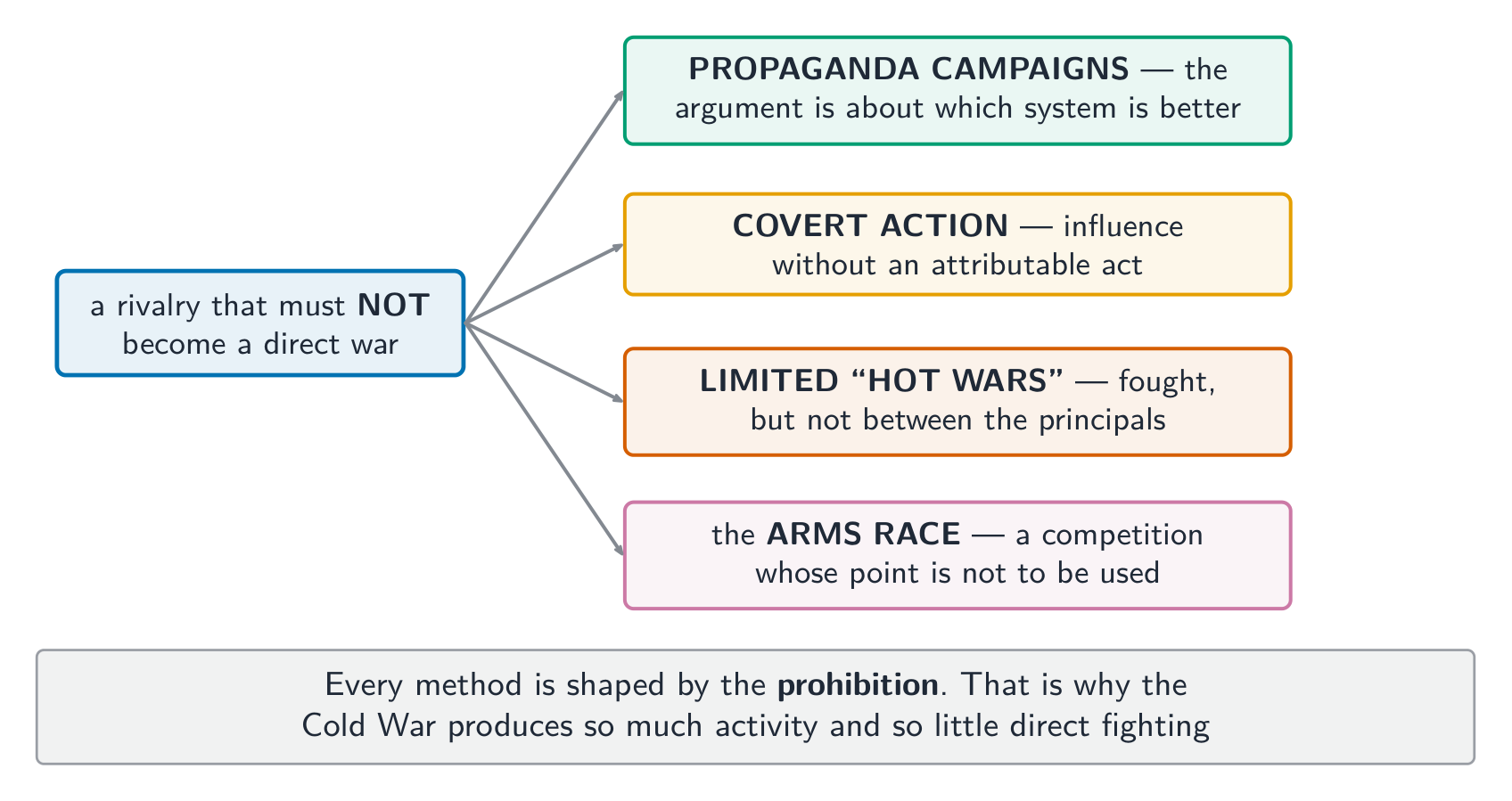
The CED lists how it was actually conducted, and the list is worth memorising because questions ask for methods:

  • propaganda campaigns 宣传战;
  • covert actions 秘密行动;
  • limited "hot wars" 有限热战 in other regions;
  • an arms race 军备竞赛.

Note what is absent: direct war between the principals. The methods list is the answer to "how could a conflict this intense produce no direct war".

العربية

على الرغم من محاولات الحفاظ على التعاون الدولي من خلال الأمم المتحدة التي أنشئت حديثاً، إلا أن التوترات العميقة بين الكتلتين أنتجت الحرب الباردة.

يوضح CED كيف تم تنفيذ ذلك فعلياً، والقائمة تستحق الحفظ لأن الأسئلة تطلب الأساليب:

  • حملات الدعاية;
  • أفعال سرية;
  • حروب "ساخنة" محدودة في مناطق أخرى;
  • سباق تسلح.

لاحظ الغائب: الحرب المباشرة بين الأطراف الرئيسية. قائمة الأساليب هي إجابة السؤال "كيف يمكن لصراع بهذا الشدة أن لا ينتج حرباً مباشرة؟"

شكل كل أسلوب بفرضية واحدة: عدم وجود حرب مباشرة بين الأطراف الرئيسية
9.4

Two Superpowers Emerge · ⁨ظهور قوتين عظميين⁩

Syllabus · ⁨المنهج⁩
English

9.4 Two Super Powers Emerge

Thematic Focus (ECD): Economic and Commercial Developments — Economic development, especially the development of capitalism, played an important role in Europe’s history, often having significant social, political, and cultural effects.

Learning Objective Unit 9.D: Explain the economic and political consequences of the Cold War for Europe.

  • KC-4.1.IV.C The United States exerted a strong military, political, and economic influence in Western Europe, leading to the creation of world monetary and trade systems and geopolitical alliances, including NATO.
  • KC-4.1.IV.D Countries east of the Iron Curtain came under the military, political, and economic domination of the Soviet Union within the Council for Mutual Economic Assistance (COMECON) and the Warsaw Pact.
  • KC-4.2.V.A Central and Eastern European nations within the Soviet bloc followed an economic model based on central planning, extensive social welfare, and specialized production among bloc members. This brought with it the restriction of individual rights and freedoms, suppression of dissent, and constraint of emigration for the various populations within the Soviet bloc.
  • KC-4.2.V Eastern European nations were bound by their relationships with the Soviet Union, which oscillated between repression and limited reform, until the collapse of communist governments in Eastern Europe and the fall of the Soviet Union.
    • KC-4.2.V.B After 1956, Soviet leader Nikita Khrushchev’s de-Stalinization policies failed to meet their economic goals within the Soviet Union; combined with reactions to existing limitations on individual rights, this prompted revolts in Eastern Europe, which ended with a reimposition of Soviet rule and repressive totalitarian regimes.
  • KC-4.2.V.D.i The rise of new nationalisms in Central and Eastern Europe brought peaceful revolution in most countries but resulted in instability in some former Soviet republics.

Illustrative examples:

  • The world monetary and trade system:
    • International Monetary Fund (IMF)
    • World Bank
    • General Agreement on Tariffs and Trade (GATT)
    • World Trade Organization (WTO)
  • Revolts against Soviet control:
    • Prague Spring
    • Hungarian Revolt
العربية

9.4 ظهور قوتين عظميين

التركيز الموضوعي (ECD): التطورات الاقتصادية والتجارية — لعب التطور الاقتصادي، لا سيما تطور الرأسمالية، دورًا مهمًا في تاريخ أوروبا، وغالبًا ما كان له تأثيرات اجتماعية وسياسية وثقافية كبيرة.

هدف التعلم الوحدة 9.D: اشرح الآثار الاقتصادية والسياسية للحرب الباردة على أوروبا.

  • KC-4.1.IV.C مارست الولايات المتحدة نفوذاً عسكرياً وسياسياً واقتصادياً قوياً في غرب أوروبا، مما أدى إلى إنشاء أنظمة نقدية وتجارية عالمية وتحالفات جيوسياسية، بما في ذلك حلف شمال الأطلسي (NATO).
  • KC-4.1.IV.D خضعت الدول الواقعة شرق الستارة الحديدية للسيطرة العسكرية والسياسية والاقتصادية للاتحاد السوفيتي ضمن مجلس التعاون الاقتصادي المتبادل (COMECON) وحلف وارسو.
  • KC-4.2.V.A اتبعت دول وسط وشرق أوروبا التابعة للمعسكر السوفيتي نموذجاً اقتصادياً قائماً على التخطيط المركزي، والرعاية الاجتماعية الواسعة، والإنتاج المتخصص بين أعضاء المعسكر. وقد رافق ذلك تقييد الحقوق والحريات الفردية، وقمع المعارضة، وتقييد الهجرة لمختلف populations داخل المعسكر السوفيتي.
  • KC-4.2.V كانت دول أوروبا الشرقية مرتبطة بعلاقاتها مع الاتحاد السوفيتي، والتي تتأرجح بين القمع والإصلاح المحدود، حتى انهيار الحكومات الشيوعية في أوروبا السوفيتية وسقوط الاتحاد السوفيتي.
    • KC-4.2.V.B بعد عام 1956، فشلت سياسات نيكيتا خروشيف لإزالة تأثير ستالين في تحقيق أهدافها الاقتصادية داخل الاتحاد السوفيتي؛ وبدمجها مع ردود الفعل تجاه القيود القائمة على الحقوق الفردية، هذا أثار ثورات في أوروبا الشرقية، والتي انتهت بإعادة فرض الحكم السوفيتي وأنظمة استبدادية قمعية.
  • KC-4.2.V.D.i أدى صعود القوميات الجديدة في وسط وشرق أوروبا إلى ثورة سلمية في معظم الدول، لكنها أدت إلى عدم الاستقرار في بعض الجمهوريات السوفيتية السابقة.

أمثلة توضيحية:

  • النظام النقدي والتجاري العالمي:
    • صندوق النقد الدولي (IMF)
    • البنك الدولي
    • اتفاقية الجمارك والتجارة العامة (GATT)
    • منظمة التجارة العالمية (WTO)
  • الثورات ضد السيطرة السوفيتية:
    • ربيع براغ
    • تمرد المجر

Source: College Board AP Course and Exam Description · ⁨المصدر: وصف دورة وامتحان College Board AP⁩

English
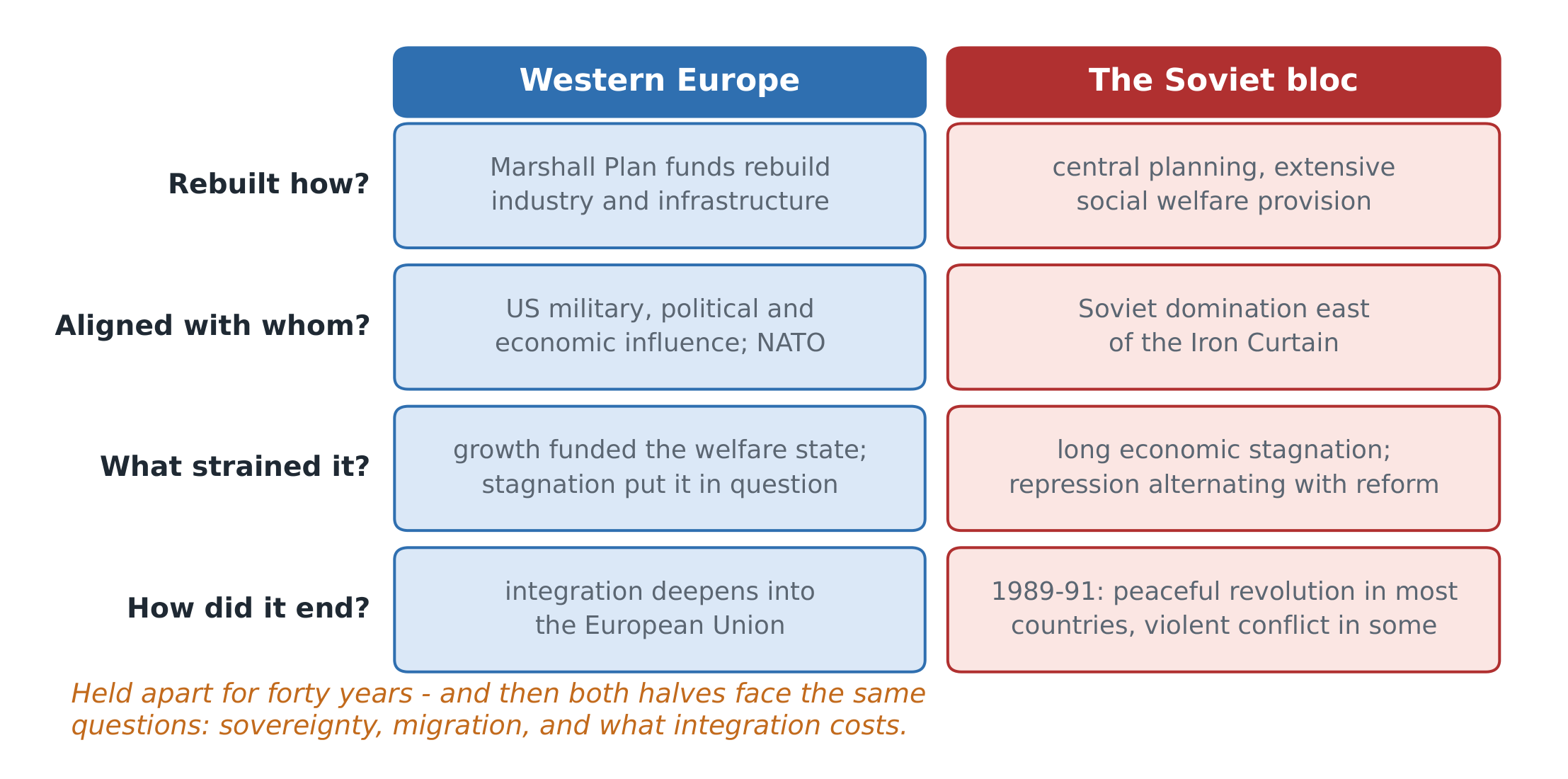
  • The United States exerted strong military, political, and economic influence in Western Europe, leading to the creation of NATO 北约.
  • Countries east of the Iron Curtain 铁幕 came under the military, political, and economic domination of the Soviet Union.
  • Central and Eastern European nations within the Soviet bloc followed an economic model based on central planning 中央计划 and extensive social welfare provision.
  • Those nations' relationship with the Soviet Union oscillated between repression and reform - which is the CED's own phrase and a better answer than either alone.
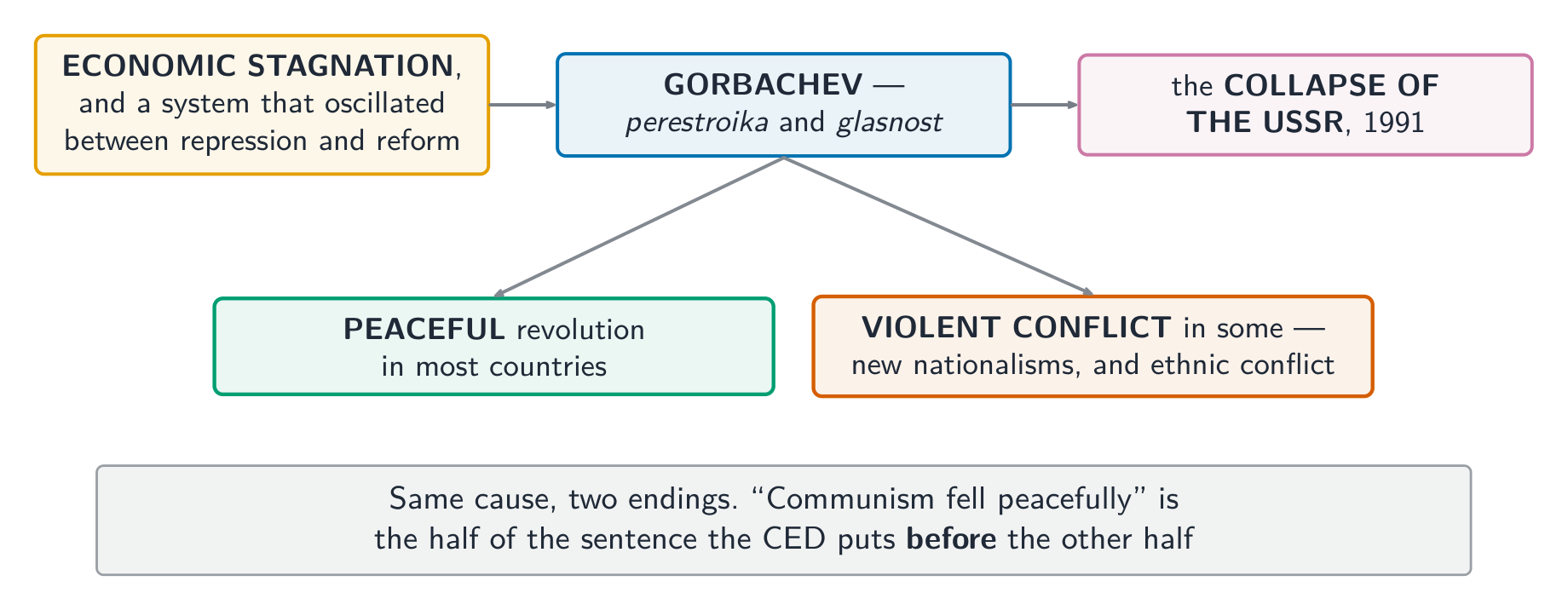
  • The rise of new nationalisms in Central and Eastern Europe eventually brought peaceful revolution in most countries, but violent conflict in some.
العربية
أوروبا اثنتان في نفس الصفوف - المقارنة التي صُممت الوحدة لطرحها
يدوم هذا التقسيم لأربعين عاماً، ثم يواجه كلا النصفين نفس الأسئلة
  • مارس الولايات المتحدة نفوذاً عسكرياً وسياسياً واقتصادياً قوياً في غرب أوروبا، مما أدى إلى إنشاء الناتو.
  • دخلت الدول الواقعة شرق السور الحديدي تحت الهيمنة العسكرية والسياسية والاقتصادية لـ الاتحاد السوفيتي.
  • اتبعت دول أوروبا الوسطى والشرقية ضمن الكتلة السوفيتية نموذجاً اقتصادياً قائماً على التخطيط المركزي وتوفير رفاهية اجتماعية واسعة النطاق.
  • كانت علاقة تلك الدول بالاتحاد السوفيتي تتذبذب بين القمع والإصلاح - وهي عبارة خاصة بـCED وتعتبر إجابة أفضل من أي منهما وحده.
  • أدت ظهور قومية جديدة في أوروبا الوسطى والشرقية في النهاية إلى ثورة سلمية في معظم الدول، لكن صراعاً عنيفاً في بعض الدول.
9.5

Postwar Nationalism, Ethnic Conflict, and Atrocities · ⁨القومية ما بعد الحرب، والصراع العرقي، والمذابح⁩

Syllabus · ⁨المنهج⁩
English

9.5 Postwar Nationalism, Ethnic Conflict, and Atrocities

Thematic Focus (NEI): National and European Identity — Definitions and perceptions of regional, cultural, national, and European identity have developed and been challenged over time, with varied and often profound effects on the political, social, and cultural order in Europe.

Learning Objective Unit 9.E: Explain the causes and effects of mass atrocities in the period following World War II to the present.

  • KC-4.1.V Nationalist and separatist movements, along with ethnic conflict and ethnic cleansing, periodically disrupted the post-World War II peace.
    • KC-4.2.V.D.ii New nationalisms in central and eastern Europe resulted in war and genocide in the Balkans.

Illustrative examples:

  • Nationalist violence:
    • Ireland
    • Chechnya
  • Separatist movements:
    • Basque (ETA)
    • Flemish
  • Ethnic cleansing: §Bullet Bosnian Muslims
    • Albanian Muslims of Kosovo
العربية

9.5 القومية ما بعد الحرب، والنزاعات العرقية، والجرائم الفظيعة

التركيز الموضوعي (NEI): الهوية الوطنية والأوروبية — تطورت تعريفات وإدراكات الهوية الإقليمية والثقافية والوطنية والأوروبية وتعرضت للتحدي مع مرور الوقت، مما كان له تأثيرات متنوعة وغالبًا ما تكون عميقة على النظام السياسي والاجتماعي والثقافي في أوروبا.

هدف التعلم الوحدة 9.E: اشرح أسباب ونتائج جرائم القتل الجماعي في الفترة التي أعقبت الحرب العالمية الثانية حتى الوقت الحاضر.

  • KC-4.1.V عطلت الحركات القومية والفصالية، جنباً إلى جانب النزاعات العرقية والتطهير العرقي، السلام الذي أعقب الحرب العالمية الثانية بشكل متكرر.
    • KC-4.2.V.D.ii نتجت القوميات الجديدة في وسط وشرق أوروبا عن حرب وإبادة جماعية في البلقان.

أمثلة توضيحية:

  • العنف القومي:
    • إيرلندا
    • الشيشان
  • الحركات الانفصالية:
    • الباسك (ETA)
    • الفلمنكية
  • التطهير العرقي: §قصف البوسنة للمسلمين
    • المسلمين الألبان من كوسوفو

Source: College Board AP Course and Exam Description · ⁨المصدر: وصف دورة وامتحان College Board AP⁩

English

Nationalist and separatist movements, along with ethnic conflict and ethnic cleansing, periodically disrupted the post-war order. The examinable point is that 1945 did not end the problem of nationalism in Europe; it suppressed it in some places and postponed it in others.

العربية

الحركات القومية والفصلية، بالإضافة إلى الصراع العرقي والتطهير العرقي، اضطرت النظام ما بعد الحرب بشكل متكرر. النقطة القابلة للاختبار هي أن عام 1945 لم ينهِ مشكلة القومية في أوروبا؛ بل قمعتها في بعض الأماكن وأجلتها في أماكن أخرى.

9.6

Contemporary Western Democracies · ⁨الديمقراطيات الغربية المعاصرة⁩

Syllabus · ⁨المنهج⁩
English

9.6 Contemporary Western Democracies

Thematic Focus (ECD): Economic and Commercial Developments — Economic development, especially the development of capitalism, played an important role in Europe’s history, often having significant social, political, and cultural effects.

Learning Objective Unit 9.F: Explain state-based economic developments following World War II and the responses to these developments.

  • KC-4.2.IV Postwar economic growth supported an increase in welfare benefits; however, subsequent economic stagnation led to criticism and limitation of the welfare state.
    • KC-4.2.IV.B The expansion of cradle-to-grave social welfare programs in the aftermath of World War II, accompanied by high taxes, became a contentious domestic political issue as the budgets of European nations came under pressure in the late 20th century.
العربية

9.6 الديمقراطيات الغربية المعاصرة

التركيز الموضوعي (ECD): التطورات الاقتصادية والتجارية — لعب التطور الاقتصادي، لا سيما تطور الرأسمالية، دورًا مهمًا في تاريخ أوروبا، وغالبًا ما كان له تأثيرات اجتماعية وسياسية وثقافية كبيرة.

هدف التعلم الوحدة 9.F: اشرح التطورات الاقتصادية القائمة على الدولة ما بعد الحرب العالمية الثانية وردود الفعل对这些 التطورات.

  • KC-4.2.IV دعم النمو الاقتصادي ما بعد الحرب زيادة في المنافع الاجتماعية؛ ومع ذلك، أدى ركود الاقتصاد اللاحق إلى انتقادات وتقييد دولة الرفاه.
    • KC-4.2.IV.B بات توسيع برامج الرعاية الاجتماعية "من المهد إلى القبر" في أعقاب الحرب العالمية الثانية، المصاحبة لارتفاع الضرائب، قضية سياسية داخلية مثيرة للجدل عندما تعرضت ميزانيات الدول الأوروبية لضغوط في أواخر 20th century.

Source: College Board AP Course and Exam Description · ⁨المصدر: وصف دورة وامتحان College Board AP⁩

English

Postwar economic growth supported an increase in welfare benefits 福利待遇; subsequent economic stagnation 经济停滞 led to criticism and scaling back of the welfare state 福利国家.

Hold both halves. Growth funded the welfare state; the end of growth is what put it under argument - which is a causal claim, not just a sequence of events.

العربية

دعم النمو الاقتصادي ما بعد الحرب زيادة المنافع الاجتماعية؛ بينما أدى التراكم الاقتصادي اللاحق إلى نقد وتقليص الدولة الرفاهية.

احتفظ بكلا النصفين. funding النمو للدولة الرفاهية؛ كان نهاية النمو هو ما وضعها تحت الجدل - وهو ادعاء سببي، وليس مجرد تسلسل للأحداث.

9.7

The Fall of Communism · ⁨سقوط الشيوعية⁩

Syllabus · ⁨المنهج⁩
English

9.7 The Fall of Communism

Thematic Focus (SOP): States and Other Institutions of Power — European states and nations developed governmental and civil institutions from 1450 to the present to organize society and consolidate political power, with a variety of social, cultural, and economic effects.

Learning Objective Unit 9.G: Explain the causes and effects of the end of the Cold War.

  • KC-4.2.V.C Following a long period of economic stagnation, Mikhail Gorbachev’s internal reforms of perestroika and glasnost, designed to make the Soviet system more flexible, failed to stave off the collapse of the Soviet Union and the end of its hegemonic control over Eastern and Central European satellites.
  • KC-4.1.IV.E The collapse of the USSR in 1991 ended the Cold War and led to the establishment of capitalist economies throughout Eastern Europe. Germany was reunited, the Czechs and the Slovaks parted, Yugoslavia dissolved, and the European Union was enlarged through the admission of former Eastern bloc countries.

Illustrative examples:

  • Collapse of Soviet Union and satellites:
    • Fall of the Berlin Wall
    • Polish elections in 1989
العربية

9.7 سقوط الشيوعية

التركيز الموضوعي (SOP): الدول والمؤسسات الأخرى للسلطة — طورت الدول الأوروبية والأمم مؤسسات حكومية ومدنية من عام 1450 إلى الوقت الحاضر لتنظيم المجتمع وتجميع السلطة السياسية، مع تأثيرات اجتماعية وثقافية واقتصادية متنوعة.

هدف التعلم الوحدة 9.G: اشرح أسباب ونتائج نهاية الحرب الباردة.

  • KC-4.2.V.C بعد فترة طويلة من الركود الاقتصادي، فشلت الإصلاحات الداخلية لميخائيل غورباتشوف المتمثلة في البيروستروكا والglasnost، والمصممة لجعل النظام السوفيتي أكثر مرونة، في صد انهيار الاتحاد السوفيتي ونهاية هيمنته على دويلات وسط وشرق أوروبا.
  • KC-4.1.IV.E أنهى انهيار الاتحاد السوفيتي عام 1991 الحرب الباردة وأدى إلى إنشاء اقتصادات رأسمالية في جميع أنحاء أوروبا الشرقية. تم إعادة توحيد ألمانيا، انفصل التشيكيون والسلوفاك، انحلت يوغوسلافيا، وتم توسيع الاتحاد الأوروبي من خلال قبول دول المعسكر الشرقي السابق.

أمثلة توضيحية:

  • انهيار الاتحاد السوفيتي والدويلات التابعة له:
    • سقوط جدار برلين
    • الانتخابات البولندية عام 1989

Source: College Board AP Course and Exam Description · ⁨المصدر: وصف دورة وامتحان College Board AP⁩

English

Following a long period of economic stagnation, Mikhail Gorbachev's 戈尔巴乔夫 internal reforms of perestroika 改革 and glasnost 开放 - despite being intended to strengthen the system - contributed to its collapse.

The collapse of the USSR in 1991 ended the Cold War and led to the establishment of capitalist economies throughout Eastern Europe.

The shape of the argument matters: reform intended to save a system helped end it. That is the kind of claim an evaluation question rewards.

العربية

بعد فترة طويلة من التراكم الاقتصادي، ساهمت الإصلاحات الداخلية لـ ميخائيل غورباتشوف الخاصة بـ البروستروكا والغلاسnost - على الرغم من أنها كانت تهدف إلى تقوية النظام - في انهياره.

أدى انهيار الاتحاد السوفيتي في عام 1991 إلى نهاية الحرب الباردة وإلى إنشاء اقتصادات رأسمالية في جميع أنحاء أوروبا الشرقية.

شكل الحجة مهم: الإصلاح المصمم لإنقاذ نظام ساعد في إنهائه. هذا هو النوع من الادعاء الذي تكافئه أسئلة التقييم.

نفس السبب، نهايتان - يضع CED 'سلمية في معظم' قبل 'عنيفة في بعض'
Explore · ⁨استكشف⁩

Trace the collapse, then split its ending · ⁨تتبع الانهيار، ثم تحليل نهاية كل جزء منه⁩

The CED pairs 'peaceful revolution in most countries' with 'violent conflict in some'. Students drop the second half. · ⁨ترتبط الـ CED 'الثورة السلمية في معظم الدول' بـ'الصراع المسلح في بعض الدول'. يترك الطلاب الجزء الثاني.⁩

9.8

20th-Century Feminism · ⁨20 النسوية في القرن⁩

Syllabus · ⁨المنهج⁩
English

9.8 20th-Century Feminism

Thematic Focus (SCD): Social Organization and Development — Economic, political, and cultural factors have influenced the form and status of family, class, and social groups in European history, which has, in turn, affected both the individual and society.

Learning Objective Unit 9.H: Explain how women’s roles and status developed and changed throughout the 20th and 21st centuries.

  • KC-4.4.II The lives of women were defined by family and work responsibilities, economic changes, and feminism.
    • KC-4.4.II.B In Western Europe through the efforts of feminists, and in Eastern Europe and the Soviet Union through government policy, women finally gained the vote, greater educational opportunities, and access to professional careers, even while continuing to face social inequalities.
    • KC-4.4.II.D New modes of marriage, partnership, motherhood, divorce, and reproduction gave women more options in their personal lives.
    • KC-4.4.II.E Women attained high political office and increased their representation in legislative bodies in many nations.

Illustrative examples:

  • Feminists and feminism: §Bullet Simone de Beauvoir
    • Second-wave feminism
  • New modes of managing reproduction:
    • Birth control pill
    • Scientific means of fertilization
  • Women who attained high political office:
    • Margaret Thatcher of Great Britain
    • Mary Robinson of Ireland
    • Édith Cresson of France
العربية

9.8 20th-Century Feminism

التركيز الموضوعي (SCD): التنظيم الاجتماعي والتنمية — أثرت العوامل الاقتصادية والسياسية والثقافية على شكل ومكانة الأسرة والطبقة والمجموعات الاجتماعية في تاريخ أوروبا، مما أثر بدوره على الفرد والمجتمع.

هدف التعلم الوحدة 9.H: اشرح كيف تطورت أدوار المرأة ومكانتها وتغيرت على طول القرنين 20 و 21.

  • KC-4.4.II كانت حياة النساء محددّة بمسؤوليات الأسرة والعمل، والتغيرات الاقتصادية، والنسوية.
    • KC-4.4.II.B في غرب أوروبا بفضل جهود النسويات، وفي شرق أوروبا والاتحاد السوفيتي بسبب سياسة الحكومة، حصلت النساء أخيراً على حق الاقتراع، وفرص تعليمية أكبر، والوصول إلى المسار المهني، حتى أثناء استمرارهن في مواجهة عدم المساواة الاجتماعية.
    • KC-4.4.II.D منح الأساليب الجديدة للزواج والشراكة والأمومة والطلاق والإنجاب النساء خيارات أكثر في حياتهن الشخصية.
    • KC-4.4.II.E حققت النساء مناصب سياسية رفيعة وزادتم تمثيلهن في الهيئات التشريعية في العديد من الدول.

أمثلة توضيحية:

  • النسويات والنسوية: §سيمون دي بوفوار
    • النسوية الموجة الثانية
  • أساليب جديدة لإدارة الإنجاب:
    • حبوب منع الحمل
    • الوسائل العلمية للتخصيب
  • النساء اللواتي حققن مناصب سياسية رفيعة:
    • مارجaret تاتشر من بريطانيا العظمى
    • ماري روبنسون من إيرلندا
    • إديث كريسون من فرنسا

Source: College Board AP Course and Exam Description · ⁨المصدر: وصف دورة وامتحان College Board AP⁩

English

The lives of women were defined by family and work responsibilities, economic changes, and feminism. Across the century: expanding participation in paid work, especially during both wars; the extension of political rights; and organised movements that changed law and expectation in the postwar decades.

العربية

تم تعريف حياة النساء بـ مسؤوليات الأسرة والعمل، والتغيرات الاقتصادية، والنسوية. عبر Century: توسع المشاركة في العمل المدفوع الأجر، لا سيما خلال الحربين؛ وتمديد الحقوق السياسية؛ والحركات المنظمة التي غيرت القانون والتوقعات في عقود ما بعد الحرب.

9.9

Decolonization · ⁨الاستعمار⁩

Syllabus · ⁨المنهج⁩

9.9 Decolonization

Thematic FocusLearning ObjectiveHistorical Developments

INT
Interaction of Europe and the World — Motivated by a variety of factors, Europe’s interaction with the world led to political, economic, social, and cultural exchanges that influenced both European and non-European societies.

Unit 9.I
Explain the various ways in which colonial groups around the world sought independence from colonizers in the 20th and 21st centuries.

  • KC-4.1.VI The process of decolonization occurred over the course of the century with varying degrees of cooperation, interference, or resistance from European imperialist states.
    • KC-4.1.VI.A At the end of World War I, U.S. President Woodrow Wilson’s principle of national self-determination raised expectations in the non-European world for new policies and freedoms.
    • KC-4.1.VI.C Despite indigenous nationalist movements, independence for many African and Asian territories was delayed until the mid- and even late 20th century by the imperial powers’ reluctance to relinquish control, threats of interference from other nations, unstable economic and political systems, and Cold War strategic alignments.

Illustrative examples:

  • Indigenous nationalist movements:
    • Indian National Congress
    • Algeria’s National Liberation Front (FLN)
    • Ho Chi Minh’s Viet Minh
    • Sukarno and Indonesian nationalism

Source: College Board AP Course and Exam Description · ⁨المصدر: وصف دورة وامتحان College Board AP⁩

English

The process of decolonisation 去殖民化 occurred over the course of the century with varying degrees of cooperation, interference, or resistance from the European imperial powers.

The consequence for Europe itself is the part students omit: losing empire changed what a European state was, and it produced the migration examined two topics below.

العربية

حدثت عملية إزالة الاستعمار على مدار Century مع درجات متفاوتة من التعاون أو التدخل أو المقاومة من قبل القوى الإمبراطورية الأوروبية.

النتيجة لأوروبا نفسها هي الجزء الذي يتجاهله الطلاب: فقدان الإمبراطورية غيّر ماهية الدولة الأوروبية، وأنتج الهجرة التي يتم فحصها في موضوعين أدناه.

9.10

The European Union · ⁨الاتحاد الأوروبي⁩

Syllabus · ⁨المنهج⁩
English

9.10 The European Union

Thematic Focus (ECD): Economic and Commercial Developments — Economic development, especially the development of capitalism, played an important role in Europe’s history, often having significant social, political, and cultural effects.

Thematic Focus (NEI): National and European Identity — Definitions and perceptions of regional, cultural, national, and European identity have developed and been challenged over time, with varied and often profound effects on the political, social, and cultural order in Europe.

Learning Objective Unit 9.J: Explain how the formation and existence of the European Union influenced economic developments throughout the period following World War II to the present.

  • KC-4.4.IV European states began to set aside nationalist rivalries in favor of economic and political integration, forming a series of transnational unions that grew in size and scope over the second half of the 20th century.
    • KC-4.4.IV.A As the economic alliance known as the European Coal and Steel Community, envisioned as a means to spur postwar economic recovery, developed into the European Economic Community (EEC or Common Market) and the European Union (EU), Europe experienced increasing economic and political integration and efforts to establish a shared European identity.

Learning Objective Unit 9.K: Explain how the European Union affected national and European identity throughout the period following World War II to the present.

  • KC-4.4.IV.B EU member nations continue to balance questions of national sovereignty with the responsibilities of membership in an economic and political union.

Illustrative examples:

  • Challenges to national sovereignty within the EU:
    • The euro
    • European Parliament
    • Issue of remaining in the EU (e.g., Britain’s “Brexit”)
    • Free movement across borders
العربية

9.10 الاتحاد الأوروبي

التركيز الموضوعي (ECD): التطورات الاقتصادية والتجارية — لعب التطور الاقتصادي، لا سيما تطور الرأسمالية، دورًا مهمًا في تاريخ أوروبا، وغالبًا ما كان له تأثيرات اجتماعية وسياسية وثقافية كبيرة.

التركيز الموضوعي (NEI): الهوية الوطنية والأوروبية — تطورت تعريفات وإدراكات الهوية الإقليمية والثقافية والوطنية والأوروبية وتعرضت للتحدي مع مرور الوقت، مما كان له تأثيرات متنوعة وغالبًا ما تكون عميقة على النظام السياسي والاجتماعي والثقافي في أوروبا.

هدف التعلم الوحدة 9.J: اشرح كيف أثرت تكوين الوجود الاتحادي الأوروبي على التطورات الاقتصادية طوال الفترة ما بعد الحرب العالمية الثانية حتى الآن.

  • KC-4.4.IV بدأت الدول الأوروبية في التخلي عن المنافسة القومية لصالح التكامل الاقتصادي والسياسي، مشكّلة سلسلة من الكتل عبر الحدود التي توسعت في حجمها ونطاقها خلال النصف الثاني من 20th century.
    • KC-4.4.IV.A مع تحول التحالف الاقتصادي المعروف باسم مجتمع الفحم والصلب الأوروبي، الذي صُمم كوسيلة لتحفيز التعافي الاقتصادي بعد الحرب، إلى.original Community (EEC) أو السوق المشتركة.original Union (EU)، شهدت أوروبا تكاملاً اقتصاديًا وسياسيًا متزايدًا ومحاولات لتكوين هوية أوروبية مشتركة.

هدف التعلم الوحدة 9.K: اشرح كيف أثر الاتحاد الأوروبي على الهوية الوطنية والأوروبية طوال الفترة ما بعد الحرب العالمية الثانية حتى الآن.

  • KC-4.4.IV.B تستمر دول الأعضاء في الاتحاد الأوروبي في الموازنة بين قضايا السيادة الوطنية ومسؤوليات الانضمام إلى اتحاد اقتصادي وسياسي.

أمثلة توضيحية:

  • تحديات السيادة الوطنية داخل الاتحاد الأوروبي:
    • اليورو
    • البرلمان الأوروبي
    • قضية البقاء في الاتحاد الأوروبي (مثل "بريكسيت" البريطاني)
    • حرية الحركة عبر الحدود

Source: College Board AP Course and Exam Description · ⁨المصدر: وصف دورة وامتحان College Board AP⁩

English

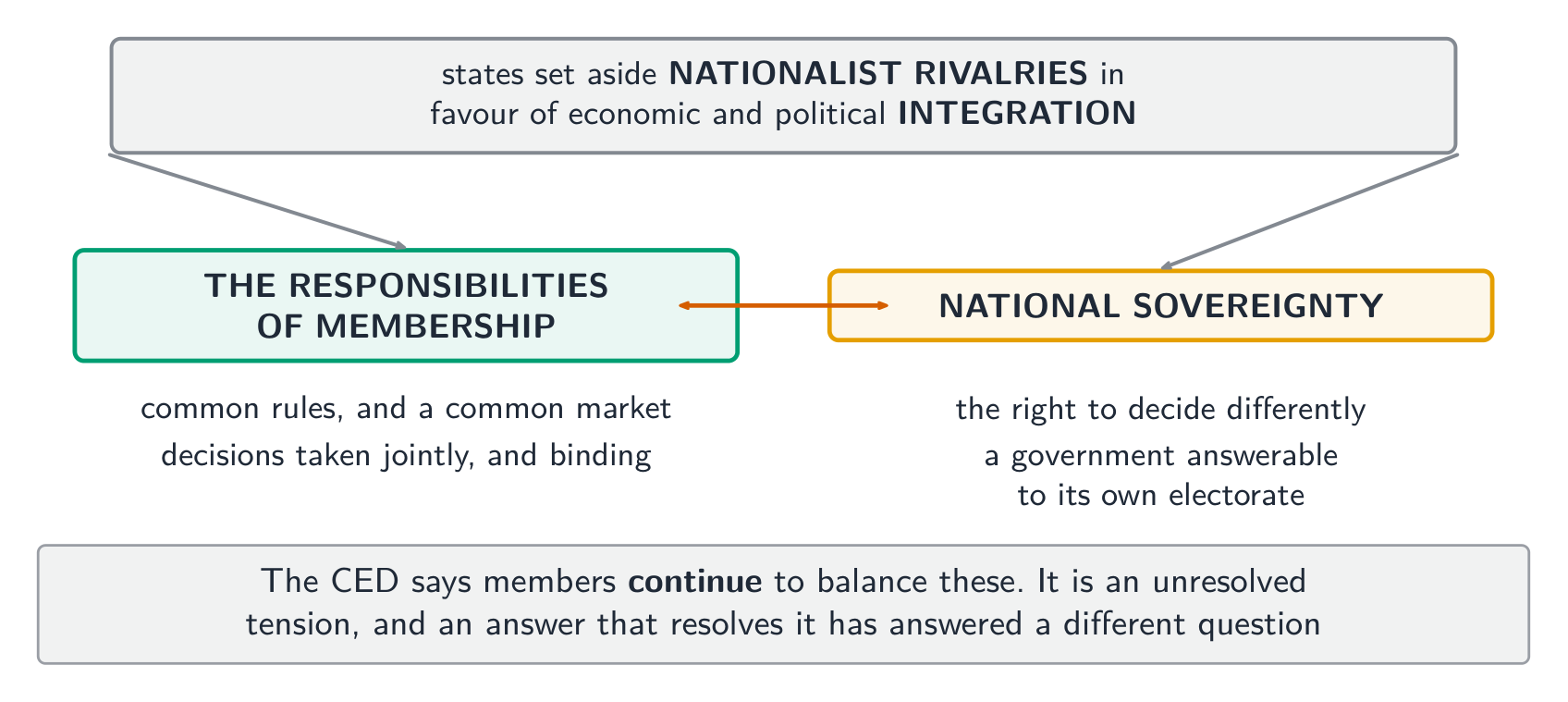
European states began to set aside nationalist rivalries in favour of economic and political integration, forming a series of institutions that became the European Union 欧盟.

And the tension the CED names explicitly: EU member nations continue to balance questions of national sovereignty against the responsibilities of membership in an international body. That balance is the examinable issue, not the institutional history.

العربية

بدأت الدول الأوروبية في تخفيف المنافسة القومية لصالح التكامل الاقتصادي والسياسي، مشكّلة سلسلة من المؤسسات أصبحت الاتحاد الأوروبي.

والتوتر الذي يحدده CED صراحة: تستمر دول الأعضاء في الاتحاد الأوروبي في موازنة مسائل السيادة الوطنية ضد مسؤوليات العضوية في هيئة دولية. هذه الموازنة هي Issue القابلة للاختبار، وليست التاريخ المؤسسي.

موازنة غير محلولة - إجابة تحلها أجابت عن سؤال مختلف
Explore · ⁨استكشف⁩

Weigh membership against sovereignty · ⁨موازنة العضوية مع السيادة⁩

The CED says members 'continue to balance' these — it is an unresolved tension, and an answer that resolves it has answered a different question. · ⁨تشير الـ CED إلى أن الأعضاء 'يستمرّون في الموازنة' بين هذين الأمرين — وهو توتر غير محلول، وإجابة تحل هذا التوتر تكون إجابة على سؤال مختلف.⁩

9.11

Migration and Immigration · ⁨الهجرة والاستيطان⁩

Syllabus · ⁨المنهج⁩
English

9.11 Migration and Immigration

Thematic Focus (SCD): Social Organization and Development — Economic, political, and cultural factors have influenced the form and status of family, class, and social groups in European history, which has, in turn, affected both the individual and society.

Learning Objective Unit 9.L: Explain the causes and effects of changes to migration within and immigration to Europe throughout the period following World War II to the present.

  • KC-4.3.III.C Increased immigration into Europe altered Europe’s religious makeup, causing debate and conflict over the role of religion in social and political life.
  • KC-4.4.III.D Because of the economic growth of the 1950s and 1960s, migrant workers from southern Europe, Asia, and Africa immigrated to western and central Europe; however, after the economic downturn of the 1970s, these workers and their families often became targets of anti-immigrant agitation and extreme nationalist political parties.

Illustrative examples:

  • Anti-immigration, conservative parties:
    • French National Front
    • Austrian Freedom Party
العربية

9.11 الهجرة والترحال

التركيز الموضوعي (SCD): التنظيم الاجتماعي والتنمية — أثرت العوامل الاقتصادية والسياسية والثقافية على شكل ومكانة الأسرة والطبقة والمجموعات الاجتماعية في تاريخ أوروبا، مما أثر بدوره على الفرد والمجتمع.

هدف التعلم الوحدة 9.L: اشرح أسباب وآثار التغييرات في الهجرة داخل أوروبا والهجرة إليها طوال الفترة ما بعد الحرب العالمية الثانية حتى الآن.

  • KC-4.3.III.C غيرت زيادة الهجرة إلى أوروبا التركيب الديني لأوروبا، مما أثار جدلًا وصراعًا حول دور الدين في الحياة الاجتماعية والسياسية.
  • KC-4.4.III.D بسبب النمو الاقتصادي في 1950s و1960s، هاجر العمال المهاجرون من جنوب أوروبا وآسيا وأفريقيا إلى غرب وأوروبا الوسطى؛ ومع ذلك، بعد الانكماش الاقتصادي في 1970s، أصبح هؤلاء العمال وعائلاتهم غالبًا هدفًا للتحريض المضاد للمهاجرين والأحزاب السياسية اليمينية المتطرفة.

أمثلة توضيحية:

  • الأحزاب المحافظة المعادة للهجرة:
    • الجبهة الوطنية الفرنسية
    • حزب الحرية النمساوي

Source: College Board AP Course and Exam Description · ⁨المصدر: وصف دورة وامتحان College Board AP⁩

English
  • Because of the economic growth of the 1950s and 1960s, migrant workers 外来劳工 from southern Europe, Asia, and Africa immigrated to northern and western Europe.
  • Increased immigration altered Europe's religious makeup 宗教构成, causing debate and conflict over the role of religion in public life.

Note the CED's own causal order: economic growth created labour demand, and migration followed it. The debates came afterwards.

العربية
  • بسبب النمو الاقتصادي في 1950s و 1960s، هاجر العاملون المهاجرون من جنوب أوروبا وآسيا وأفريقيا إلى أوروبا الشمالية والغربية.
  • غيّر زيادة الاستيطان التركيب الديني لأوروبا، مما تسبب في جدل وصراع حول دور الدين في الحياة العامة.

لاحظ الترتيب السببي الخاص بـCED نفسه: خلق النمو الاقتصادي طلباً على العمالة، وجاء الهجرة بعده. جاءت المناقشات لاحقاً.

9.12 9.13

Technology and Globalization · ⁨التكنولوجيا والعولمة⁩

Syllabus · ⁨المنهج⁩
English

9.12 Technology

Thematic Focus (TSI): Technological and Scientific Innovation — Scientific and technological innovations have increased efficiency, improved daily life, and shaped human development and interactions, having both intended and unintended consequences.

Learning Objective Unit 9.M: Explain how innovation and advances in technology influenced cultural and intellectual developments in the period 1914 to the present.

  • KC-4.3.II.B Medical theories and technologies extended life but posed social and moral questions that eluded consensus and crossed religious, political, and philosophical perspectives.

Illustrative examples:

  • Medical theories and technologies:
    • Birth control
    • Abortion
    • Fertility treatments
    • Genetic engineering
العربية

9.12 التكنولوجيا

التركيز الموضوعي (TSI): الابتكار التكنولوجي والعلمي — أدت الابتكارات العلمية والتكنولوجية إلى زيادة الكفاءة، وتحسين الحياة اليومية، وتشكيل التطور البشري والتفاعلات البشرية، ولها عواقب مقصودة وغير مقصودة.

هدف التعلم الوحدة 9.M: اشرح كيف أثرت الابتكارات والتطورات التكنولوجية على التطورات الثقافية والفكرية في الفترة من 1914 إلى الآن.

  • KC-4.3.II.B وسّعت النظريات والتكنولوجيا الطبية عمر الإنسان، لكنها طرحت أسئلة اجتماعية وأخلاقية لم تتوصل إلى إجماع عليها وعبرت عن اختلافات دينية وسياسية وفلسفية.

أمثلة توضيحية:

  • النظريات والتكنولوجيا الطبية:
    • منع الحمل
    • الإجهاض
    • علاجات الخصوبة
    • الهندسة الوراثية
English

9.13 Globalization

Thematic Focus (TSI): Technological and Scientific Innovation — Scientific and technological innovations have increased efficiency, improved daily life, and shaped human development and interactions, having both intended and unintended consequences.

Learning Objective Unit 9.N: Explain the technological and cultural causes and consequences of increasing European globalization in the period from 1914 to the present.

  • KC-4.3.IV.C Increased imports of U.S. technology and popular culture after World War II generated both enthusiasm and criticism.
  • KC-4.4.I.D New communication and transportation technologies multiplied the connections across space and time, transforming daily life and contributing to the proliferation of ideas and to globalization.
  • KC-4.4.III.A Green parties in Western and Central Europe challenged consumerism, urged sustainable development, and, by the late 20th century, cautioned against globalization.

Illustrative examples:

  • New communication technologies:
    • Telephone
    • Radio
    • Television
    • Computer
    • Cell phone
    • Internet
العربية

9.13 العولمة

التركيز الموضوعي (TSI): الابتكار التكنولوجي والعلمي — أدت الابتكارات العلمية والتكنولوجية إلى زيادة الكفاءة، وتحسين الحياة اليومية، وتشكيل التطور البشري والتفاعلات البشرية، ولها عواقب مقصودة وغير مقصودة.

هدف التعلم الوحدة 9.N: اشرح الأسباب والتداعيات التكنولوجية والثقافية لزيادة عولمة أوروبا في الفترة من 1914 إلى الآن.

  • KC-4.3.IV.C أدّت زيادة واردات التكنولوجيا والثقافة الشعبية الأمريكية بعد الحرب العالمية الثانية إلى كل من الحماس والنقد.
  • KC-4.4.I.D أدّت التقنيات الجديدة للاتصال والنقل إلى مضاعفة الروابط عبر الزمان والمكان، مما غيّر الحياة اليومية وساهم في انتشار الأفكار وفي العولمة.
  • KC-4.4.III.A تحدت الأحزاب الخضراء في غرب وأوروبا الوسطى الاستهلاكية، ودعت إلى التنمية المستدامة، وبحلول أواخر 20th century، حذّرت من العولمة.

أمثلة توضيحية:

  • تقنيات الاتصال الجديدة:
    • الهاتف
    • الراديو
    • التلفاز
    • الحاسوب
    • الهاتف المحمول
    • الإنترنت

Source: College Board AP Course and Exam Description · ⁨المصدر: وصف دورة وامتحان College Board AP⁩

English
  • Medical theories and technologies extended life but posed social and moral questions that eluded consensus 未能形成共识.
  • Increased imports of US technology and popular culture after the war generated both enthusiasm and criticism 既受欢迎也遭批评.
  • New communication and transportation technologies multiplied connections across space and time, transforming daily life.
  • Green parties 绿党 in Western and Central Europe challenged consumerism and urged sustainable development 可持续发展.
العربية
  • النظريات والتكنولوجيا الطبية مددت عمر الإنسان لكنها طرحت أسئلة اجتماعية وأخلاقية لم تصل إلى إجماع.
  • زادت استيرادات التكنولوجيا والثقافة الشعبية الأمريكية بعد الحرب مما أثار كل من الحماس والنقد.
  • مضخت تقنيات الاتصالات والنقل الجديدة الروابط عبر الزمان والمكان، محوّلة الحياة اليومية.
  • الأحزاب الخضراء في غرب وأوروبا الوسطى تحدى الاستهلاك ودعت إلى التنمية المستدامة.
9.14

Culture, Arts, and Demographic Trends · ⁨الثقافة، الفنون، والاتجاهات الديموغرافية⁩

Syllabus · ⁨المنهج⁩
English

9.14 20th- and 21st-Century Culture, Arts, and Demographic Trends

Thematic Focus (CID): Cultural and Intellectual Developments — The creation and transmission of knowledge, including the relationship between traditional sources of authority and the development of differing world views, had significant political, intellectual, economic, cultural, and social effects on European and world societies.

Learning Objective Unit 9.O: Explain how and why European culture changed from the period following World War II to the present.

  • KC-4.3.I.B The effects of world war and economic depression undermined this confidence in science and human reason, giving impetus to existentialism and producing postmodernism in the post-1945 period.
  • KC-4.3.III Organized religion continued to play a role in European social and cultural life despite the challenges of military and ideological conflict, modern secularism, and rapid social changes.
    • KC-4.3.III.A The challenges of totalitarianism and communism in central and eastern Europe brought mixed responses from the Christian churches.
    • KC-4.3.III.B Reform in the Catholic Church found expression in the Second Vatican Council, which redefined the church’s doctrine and practices and started to redefine its relations with other religious communities.
  • KC-4.3.IV During the 20th century, the arts were defined by experimentation, self-expression, subjectivity, and the increasing influence of the United States in both elite and popular culture.
    • KC-4.3.IV.A New movements in the visual arts, architecture, and music radically shifted existing aesthetic standards, explored subconscious and subjective states, and satirized Western society and its values.
    • KC-4.3.IV.B Throughout the century, a number of writers challenged traditional literary conventions, questioned Western values, and addressed controversial social and political issues.
  • KC-4.4.I.C Mass production, new food technologies, and industrial efficiency increased disposable income and created a consumer culture in which greater domestic comforts such as electricity, indoor plumbing, plastics, and synthetic fibers became available.
  • KC-4.4.II.C With economic recovery after World War II, the birth rate increased dramatically (the baby boom), often promoted by government policies.
  • KC-4.4.III.B Various movements, including women’s movements, political and social movements, gay and lesbian movements, and others, worked for expanded civil rights, in some cases obtaining the goals they sought, and in others facing strong opposition.
  • KC-4.4.III.C Intellectuals and youth reacted against perceived bourgeois materialism and decadence, most significantly with the revolts of 1968.

Illustrative examples:

  • Christian responses to totalitarianism:
    • Dietrich Bonhoeffer
    • Martin Niemöller
    • Pope John Paul II
    • Solidarity
  • New movements in the visual arts:
    • Cubism
    • Futurism
    • Dadaism
    • Surrealism
    • Abstract Expressionism
    • Pop Art
  • New architectural movements:
    • Bauhaus
    • Modernism
    • Postmodernism
  • New movements in music:
    • Igor Stravinsky
    • Arnold Schoenberg
    • Richard Strauss
  • Writers:
    • Franz Kafka
    • James Joyce
    • Erich Maria Remarque
    • Virginia Woolf
    • Jean-Paul Sartre
  • Government policies promoting population growth: §Bullet Neonatalism
    • Childcare facilities
العربية

9.14 20th- and 21st-Century Culture, Arts, and Demographic Trends

تركيز موضوعي (CID): التطورات الثقافية والفكرية — كان خلق المعرفة ونشرها، بما في ذلك العلاقة بين مصادر السلطة التقليدية وتطوير آلهة نظر مختلفة، له تأثيرات سياسية وفكرية واقتصادية وثقافية واجتماعية كبيرة على المجتمعات الأوروبية والعالمية.

هدف التعلم الوحدة 9.O: اشرح كيف ولماذا تغيرت الثقافة الأوروبية منذ فترة ما بعد الحرب العالمية الثانية حتى الآن.

  • KC-4.3.I.B أدّت آثار الحرب العالمية والأزمة الاقتصادية إلى إضعاف الثقة في العلم والعقل البشري، مما دفع بالوجودية إلى الأمام وأنتج(postmodernism) في الحقبة ما بعد عام 1945.
  • KC-4.3.III واصلت الديانات المنظمة لعبور دور في الحياة الاجتماعية والثقافية الأوروبية على الرغم من تحديات الصراعات العسكرية والأيديولوجية والعلمانية الحديثة والتغيرات الاجتماعية السريعة.
    • KC-4.3.III.A جلبت تحديات الاستبداد والشيوعية في أوروبا الوسطى والشرقية ردود فعل مختلطة من الكنائس المسيحية.
    • KC-4.3.III.B تجلّى الإصلاح في الكنيسة الكاثوليكية في المجمع البابوي الثاني، الذي أعاد صياغة عقيدة وممارسات الكنيسة وبدأ في إعادة تعريف علاقاتها مع المجتمعات الدينية الأخرى.
  • KC-4.3.IV خلال 20th century، اتسمت الفنون بالتجريبية والتعبير الذاتي والذاتية، وازداد تأثير الولايات المتحدة في كل من الثقافة النخبوية والشعبية.
    • KC-4.3.IV.A غيرت الحركات الجديدة في الفنون المرئية والعمارة والموسيقى المعايير الجمالية القائمة جذرياً، واستكشفت الحالات اللاواعية والذاتية، وسخرت من المجتمع الغربي وقيمه.
    • KC-4.3.IV.B طوال هذا القرن، تحدّى عدد من الكتاب التقاليد الأدبية التقليدية، وطعنوا في القيم الغربية، وتناولوا قضايا اجتماعية وسياسية مثيرة للجدل.
  • KC-4.4.I.C زادت الإنتاج الضخم وتقنيات الغذاء الجديدة والكفاءة الصناعية من الدخل القابل للإنفاق وخلقوا ثقافة استهلاكية أصبحت فيها راحة منزلية أكبر مثل الكهرباء والسباكة الداخلية وال بلاستيك والألياف الاصطناعية متاحة.
  • KC-4.4.II.C مع التعافي الاقتصادي بعد الحرب العالمية الثانية، ارتفعت معدل المواليد بشكل كبير (طفرة المواليد)، وغالباً ما تم الترويج لذلك من قبل سياسات حكومية.
  • KC-4.4.III.B عملت حركات متنوعة، بما في ذلك حركات المرأة والحركات السياسية والاجتماعية وحركات المثليين والمثليات وغيرها، من أجل توسيع الحقوق المدنية، وفي بعض الحالات حققت الأهداف التي سعت إليها، وفي حالات أخرى واجهت معارضة قوية.
  • KC-4.4.III.C رد المفكرون والشباب ضد المادية البرجوازية والفساد المُدرَك، لا سيما من خلال ثورات عام 1968.

أمثلة توضيحية:

  • ردود الفعل المسيحية تجاه الاستبداد:
    • ديتريش بونهوفر
    • مارتن نيمولر
    • بابا روما يوحنا بولس الثاني
    • solidity
  • حركات جديدة في الفنون المرئية:
    • التكعيبية
    • المستقبلية
    • الدادائية
    • السريالية
    • التعبير التجريدية
    • فن البوب
  • حركات معمارية جديدة:
    • باوهاوس
    • الحداثة
    • ما بعد الحداثة
  • حركات موسيقية جديدة:
    • إيغور سترافينسكي
    • أرنولد شونبرغ
    • ريتشارد شتراوس
  • كُتّاب:
    • فرانتز كافكا
    • جيمس جويس
    • إريك ماريا ريمارك
    • فيرجينيا وولف
    • جان بول سارتر
  • سياسات حكومية تعزز النمو السكاني: §ناتاليزم
    • مرافق رعاية الأطفال

Source: College Board AP Course and Exam Description · ⁨المصدر: وصف دورة وامتحان College Board AP⁩

English
  • The effects of world war and economic depression undermined confidence in science and human reason, giving impetus to new intellectual currents.
  • Organised religion continued to play a role in European social and cultural life despite these challenges - a continuity worth stating, because answers tend to assume simple secularisation.
  • The arts were defined by experimentation, self-expression, subjectivity, and increasing global influence.
  • Mass production, new food technologies, and industrial efficiency increased disposable income and created a consumer culture 消费文化.
  • With postwar recovery the birth rate rose dramatically - the baby boom 婴儿潮 - often promoted by government policy.
  • Various movements - women's movements, political and social movements, gay and lesbian movements - pressed for rights and recognition.
  • Intellectuals and youth reacted against perceived bourgeois materialism, most significantly in the movements of the later 1960s.
العربية
  • أدّت آثار الحرب العالمية والانهيار الاقتصادي إلى تقويض الثقة في العلم والعقل البشري، مما دفع عجلة ظهور تيارات فكرية جديدة.
  • استمرت الديانات organized في لعب دور في الحياة الاجتماعية والثقافية الأوروبية على الرغم من هذه التحديات - وهو استمرار يستحق التأكيد، لأن الإجابات تميل إلى افتراض علمانية بسيطة.
  • اتسمت الفنون بـ التجريب والتعبير عن الذات والموضوعية، وتزايد تأثيرها عالميًا.
  • الإنتاج الضخم، وتقنيات الغذاء الجديدة، والكفاءة الصناعية زادت الدخل المتاح وأوجدت ثقافة استهلاكية.
  • مع التعافي ما بعد الحرب ارتفع معدل المواليد بشكل كبير - الطفرة الديموغرافية (Baby Boom) - والتي روج لها غالبًا سياسات حكومية.
  • دفعت حركات متنوعة - حركات المرأة، والحركات السياسية والاجتماعية، وحركات المثليين ومثليات الجنس - نحو الحقوق والاعتراف بها.
  • رد المثقفون والشباب على المادية البرجوازية المُدركة، لا سيما في حركات أواخر 1960s.
Vocabulary · ⁨مفردات⁩ Train · ⁨تدريب⁩
English العربية
Marshall Plan/ˈmɑːʃl plæn/ خطة مارشال
United Nations/juːˈnaɪtɪd ˈneɪʃnz/ الأمم المتحدة
propaganda campaigns/ˌprɒpəˈɡændə kæmˈpeɪnz/ حملات الدعاية
covert actions/kəʊˈvɜːt ˈækʃnz/ عمليات سرية
limited "hot wars"/ˈlɪmɪtɪd hɒt wɔːz/ حروب 'ساخنة' محدودة
arms race/ɑːmz reɪs/ سباق التسلح
NATO/ˈneɪtəʊ/ الناتو
Iron Curtain/ˈaɪən ˈkɜːtn/ الستارة الحديدية
central planning/ˈsentrəl ˈplænɪŋ/ التخطيط المركزي
increase in welfare benefits/ˈɪŋkriːs ɪn ˈwelfeə ˈbenɪfɪts/ زيادة المساعدات الاجتماعية
economic stagnation/ˌiːkəˈnɒmɪk stæɡˈneɪʃn/ توقف اقتصادي
welfare state/ˈwelfeə steɪt/ دولة الرفاه
Mikhail Gorbachev's/ˈmɪkaɪl ˈɡɔːbəʃevz/ ميخائيل غورباتشوف
perestroika/ˈperɪstrɔɪkə/ البناء الجديد
glasnost/ˈɡlæsnɒst/ الشفافية
decolonisation/dɪˌkɒlənaɪˈzeɪʃn/ إزالة الاستعمار
European Union/ˌjʊərəˈpɪən ˈjuːnɪən/ الاتحاد الأوروبي
migrant workers/ˈmaɪɡrənt ˈwɜːkəz/ عمال مهاجرون
altered Europe's religious makeup/ˈɒltəd ˈjʊərəps rɪˈlɪdʒəs ˈmeɪkʌp/ غيّرت التركيبة الدينية لأوروبا
eluded consensus/ɪˈluːdɪd kənˈsensəs/ تجنب الإجماع
both enthusiasm and criticism/bəʊθ enˈθjuːziæzəm ænd ˈkrɪtɪsɪzəm/ فرحة ونقد معاً
Green parties/ɡriːn ˈpɑːtiz/ الأحزاب الخضراء
sustainable development/səˈsteɪnəbl dɪˈveləpmənt/ التنمية المستدامة
consumer culture/kənˈsuːmə ˈkʌltʃə/ ثقافة الاستهلاك
baby boom/ˈbeɪbi buːm/ طفرة المواليد
9.15

Continuity and Change in the 20th and 21st Centuries · ⁨الاستمرارية والتغير في 20th و 21st القرون⁩

Syllabus · ⁨المنهج⁩
English

9.15 Continuity and Change in the 20th and 21st Centuries

Learning ObjectiveReview: Unit 9 Key Concepts

Unit 9.P
Explain how the challenges of the 20th century influenced what it means to be European.

  • KC-4.1 Total war and political instability in the first half of the 20th century gave way to a polarized state order during the Cold War and eventually to efforts at transnational union.
    • KC-4.1.IV As World War II ended, a Cold War between the liberal democratic West and the communist East began, lasting nearly half a century.
    • KC-4.1.V Nationalist and separatist movements, along with ethnic conflict and ethnic cleansing, periodically disrupted the post-World War II peace.
  • KC-4.2 The stresses of economic collapse and total war engendered internal conflicts within European states and created conflicting conceptions of the relationship between the individual and the state, as demonstrated in the ideological battle between and among democracy, communism, and fascism.
  • KC-4.3 During the 20th century, diverse intellectual and cultural movements questioned the existence of objective knowledge, the ability of reason to arrive at truth, and the role of religion in determining moral standards.
    • KC-4.3.I.ii The experience of war intensified a sense of anxiety that permeated many facets of thought and culture, giving way by the century’s end to a plurality of intellectual frameworks.
  • KC-4.4 Demographic changes, economic growth, total war, disruptions of traditional social patterns, and competing definitions of freedom and justice altered the experiences of everyday life.
    • KC-4.4.III New voices gained prominence in political, intellectual, and social discourse.
العربية

9.15 Continuity and Change in the 20th and 21st Centuries

Learning ObjectiveReview: Unit 9 Key Concepts

Unit 9.P
اشرح كيف أثرت تحديات 20th century على مفهوم الانتماء الأوروبي.

  • KC-4.1 حلت الحروب الشاملة وعدم الاستقرار السياسي في النصف الأول من 20th century بترتيب دولي قطبي خلال الحرب الباردة، وأدى ذلك في النهاية إلى محاولات التكتل عبر الحدود.
    • KC-4.1.IV مع انتهاء الحرب العالمية الثانية، بدأت حرب باردة بين الغرب الديمقراطي الليبرالي والشرق الشيوعي، استمرت nearly نصف قرن.
    • KC-4.1.V قطّعت الحركات القومية والفصالية، بالإضافة إلى النزاعات العرقية والتطهير العرقي، السلام المتبوع بالحرب العالمية الثانية بشكل متكرر.
  • KC-4.2 أفرزت ضغوط انهيار الاقتصاد والحرب الشاملة نزاعات داخلية داخل الدول الأوروبية وولّدت تصورات متعارضة للعلاقة بين الفرد والدولة، كما تمCASE في المعركة الأيدولوجية بين الديمقراطية والشيوعية والفاشية.
  • KC-4.3 خلال 20th century، طرحت الحركات الفكرية والثقافية المتنوعة أسئلة حول وجود المعرفة الموضوعية، وقدرة العقل على الوصول إلى الحقيقة، ودور الدين في تحديد المعايير الأخلاقية.
    • KC-4.3.I.ii عززت تجربة الحرب شعورًا بالقلق انتشر في جوانب متعددة من الفكر والثقافة، لتُفسح مجالها في نهاية القرن لتعدد الأطر الفكرية.
  • KC-4.4 غيرت التغيرات الديموغرافية والنمو الاقتصادي والحرب الشاملة واضطراب الأنماط الاجتماعية التقليدية والتعاريف المتنافسة للحرية والعدالة تجارب الحياة اليومية.
    • KC-4.4.III اكتسبت أصوات جديدة بروزًا في الخطاب السياسي والفكري والاجتماعي.
Source: College Board AP Course and Exam Description · ⁨المصدر: وصف دورة وامتحان College Board AP⁩

English

The unit's reasoning skill is continuity and change.

Worked example (a real AP exam question). AP European History short-answer questions here ask, for example, to "Explain one way in which European integration after 1945 represented a change from earlier European international relations." A full-mark answer states the change against what it replaced: "Before 1945 European states pursued national interest through competing alliances and, repeatedly, war. After 1945 states began to set aside those rivalries in favour of shared institutions, accepting binding common rules on trade and law - so a dispute between members became a matter for negotiation within an institution rather than a matter for the balance of power." Notice that a change claim needs the prior state of affairs to be named.

العربية

مهارة التفكير في الوحدة هي الاستمرارية والتغير.

مثال محلول (سؤال حقيقي من امتحان AP). أسئلة الإجابة القصيرة في تاريخ أوروبا لـ AP تطلب هنا، على سبيل المثال: "اشرح طريقة واحدة تمثل فيها التكامل الأوروبي بعد عام 1945 تغييرًا عن العلاقات الدولية الأوروبية السابقة." إجابة كاملة تحصل على الدرجة الكاملة تذكر التغيير مقابل ما حلّه: "قبل عام 1945، سعت الدول الأوروبية لتحقيق مصالحها الوطنية من خلال تحالفات متنافسة، وبشكل متكرر، من خلال الحروب. بعد عام 1945، بدأت الدول بوضع تلك المنافسة جانباً لصالح مؤسسات مشتركة، وقبول قواعد ملزمة موحدة في التجارة والقانون - بحيث أصبح النزاع بين الأعضاء مسألة تفاوض داخل مؤسسة بدلاً من مسألة موازنة القوى." لاحظ أن ادعاء التغيير يتطلب ذكر الحالة السابقة للأشياء صراحةً.

9.15

Exam tips · ⁨نصائح للامتحان⁩

English
  • The unit has two simultaneous stories - division until 1991 and integration throughout. Weak answers tell only one.
  • Memorise the Cold War's methods: propaganda, covert action, limited hot wars, arms race. The absence of direct war is the point.
  • "Oscillated between repression and reform" is the CED's phrase for the Soviet bloc. It beats either half alone.
  • Gorbachev's reforms were intended to strengthen the system. That irony is what an evaluation question is looking for.
  • The welfare state grew on growth and was questioned when growth stopped. State the causal link.
  • Migration followed labour demand created by the postwar boom. Get the causal order right before discussing the debates.
العربية
  • يحتوي الوحدة على قصة متزامنتين - الانقسام حتى عام 1991 والتكامل طوال الفترة. الإجابات الضعيفة تروي قصة واحدة فقط.
  • احفظ طرق الحرب الباردة: الدعاية، والعمل السري، والحروب المحدودة الساخنة، وسباق التسلح. غياب الحرب المباشرة هو النقطة الأساسية.
  • phrase "تذبذبت بين القمع والإصلاح" هي عبارة CED الخاصة بالحلف السوفيتي. وهي أفضل من أي نصف منها بمفرده.
  • كانت إصلاحات غورباتشوف مقصودة لتقوية النظام. هذا التناقض هو ما تبحث عنه سؤال التقييم.
  • نمت الدولة الرعاة بناءً على النمو وظهرت عليها الشكوك عندما توقف النمو. اذكر الرابط السببي.
  • تبع الهجرة الطلب على العمالة الذي خلقه الازدهار ما بعد الحرب. حدد الترتيب السببي الصحيح قبل مناقشة النقاشات.

Interactive lessons on this topic · ⁨دروس تفاعلية حول هذا الموضوع⁩

Work through it step by step, with instant-check exercises. · ⁨ا-working عليه خطوة بخطوة، مع تمارين تحقق فوري.⁩

Past Papers · ⁨أوراق الامتحانات السابقة⁩

More topics in AP European History · ⁨تاريخ أوروبا (AP)⁩ · ⁨المزيد من المواضيع في AP European History · ⁨تاريخ أوروبا (AP)⁩⁩

Log in or create account · ⁨تسجيل الدخول أو إنشاء حساب⁩

IGCSE, A-Level & AP