English
7.1 Contextualizing 19th-Century Perspectives and Political Developments
Learning Objective Unit 7.A: Explain the context in which nationalistic and imperialistic sentiments developed in Europe from 1815 to 1914.
- KC-3.4 European states struggled to maintain international stability in an age of nationalism and revolutions.
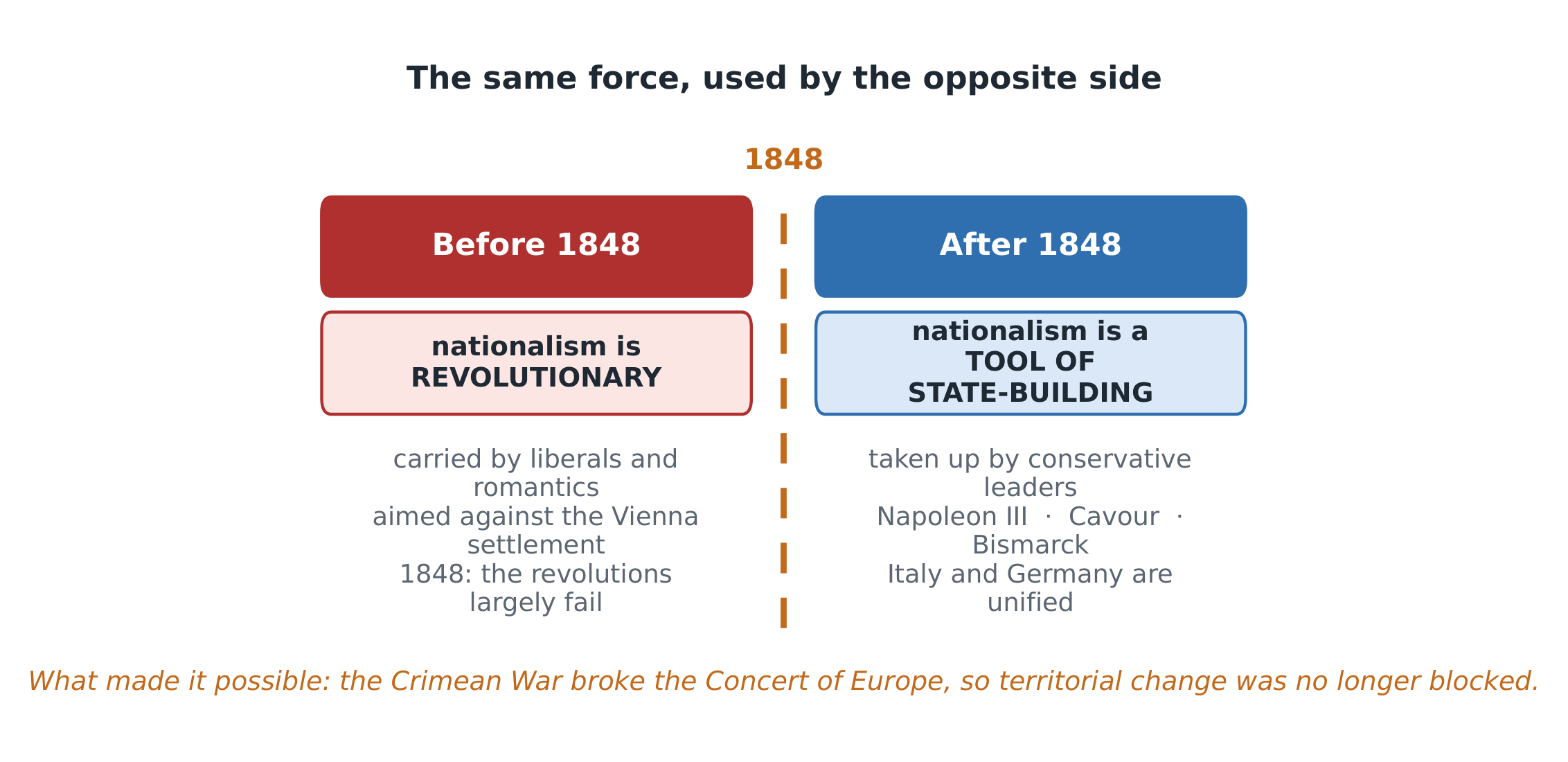
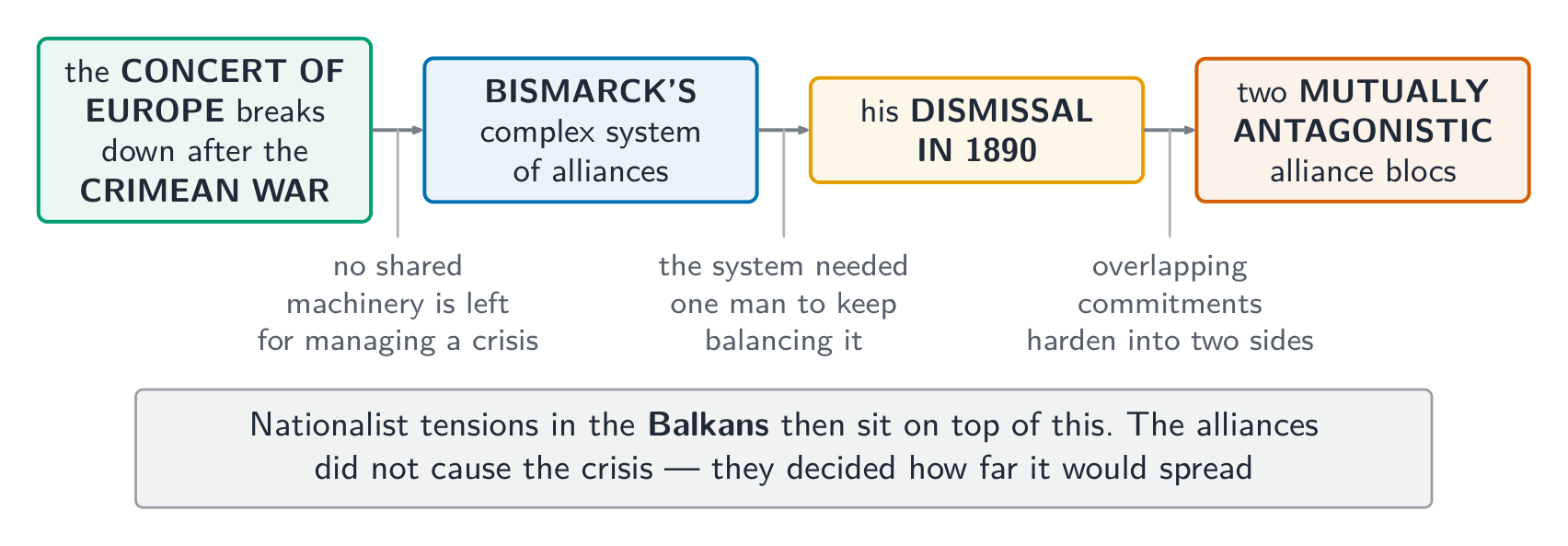
- KC-3.4.II The breakdown of the Concert of Europe opened the door for movements of national unification in Italy and Germany as well as liberal reforms elsewhere.
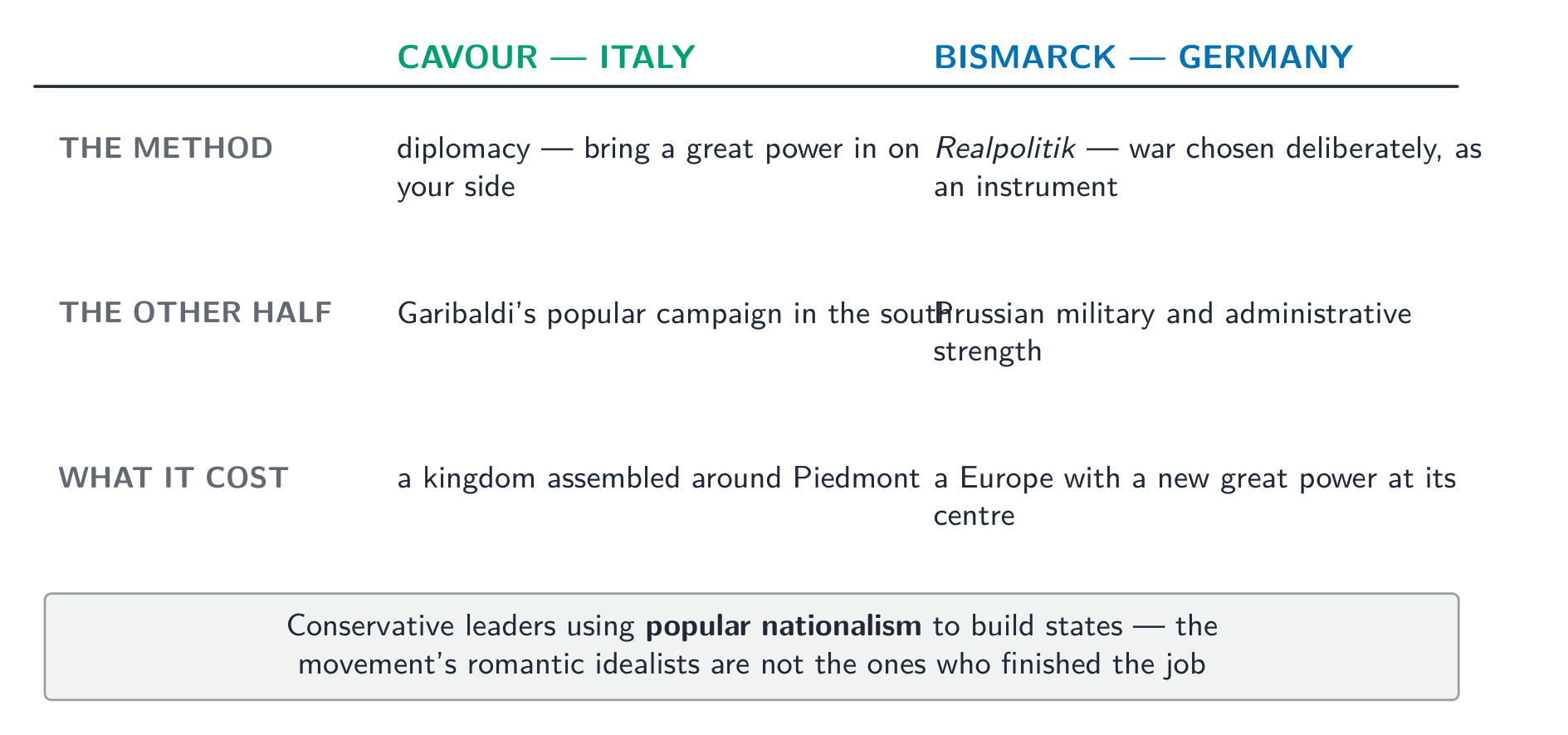
- KC-3.4.III The unification of Italy and Germany transformed the European balance of power and led to efforts to construct a new diplomatic order.
- KC-3.5 A variety of motives and methods led to the intensification of European global control and increased tensions among the Great Powers.
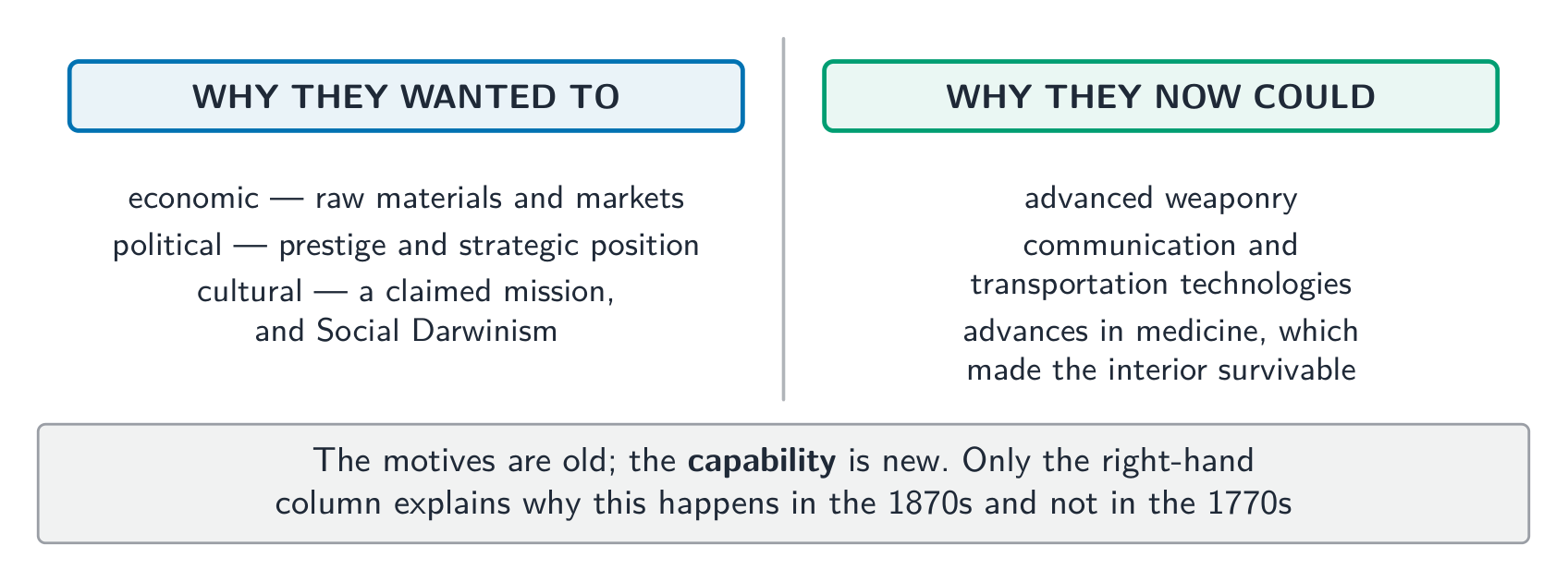
- KC-3.5.II Industrial and technological developments (e.g., the second industrial revolution) facilitated European control of global empires.
- KC-3.6 European ideas and culture expressed a tension between objectivity and scientific realism on one hand, and subjectivity and individual expression on the other.
- KC-3.6.II Following the revolutions of 1848, Europe turned toward a realist and materialist worldview.
العربية
7.1 سياق وجهات نظر القرن 19 والتطورات السياسية
هدف التعلم الوحدة 7.A: اشرح السياق الذي نشأت فيه المشاعر القومية والإمبريالية في أوروبا من عام 1815 إلى 1914.
- KC-3.4 تكافحت الدول الأوروبية للحفاظ على الاستقرار الدولي في عصر القومية والثورات.
- KC-3.4.II أدى انهيار نظام التناغم الأوروبي إلى فتح الباب أمام حركات توحيد الوطني في إيطاليا وألمانيا وكذلك الإصلاحات الليبرالية في أماكن أخرى.
- KC-3.4.III غيّر توحيد إيطاليا وألمانيا توازن القوى في أوروبا وأدى إلى محاولات بناء نظام دبلوماسي جديد.
- KC-3.5 أدت مجموعة متنوعة من الدوافع والأساليب إلى تشديد السيطرة العالمية الأوروبية وزيادة التوترات بين القوى العظمى.
- KC-3.5.II سهّلت التطورات الصناعية والتكنولوجية (مثل الثورة الصناعية الثانية) سيطرة أوروبا على الإمبراطوريات العالمية.
- KC-3.6 عبرت الأفكار والثقافة الأوروبية عن توتر بين الموضوعية والواقعية العلمية من جهة، والذاتية والتعبير الفردي من جهة أخرى.
- KC-3.6.II بعد ثورات عام 1848، توجهت أوروبا نحو رؤية واقعية ومادية للعالم.