Skip to content · ⁨الانتقال إلى المحتوى⁩

Land and Water Use · ⁨استخدام الأراضي والمياه⁩

AP Environmental Science · ⁨AP العلوم البيئية⁩ · Topic 5 · ⁨الموضوع 5⁩

Video lesson for this topic · ⁨درس فيديو لهذا الموضوع⁩ Open the video page · ⁨افتح صفحة الفيديو⁩
13:36

استخدام الأراضي والمياه

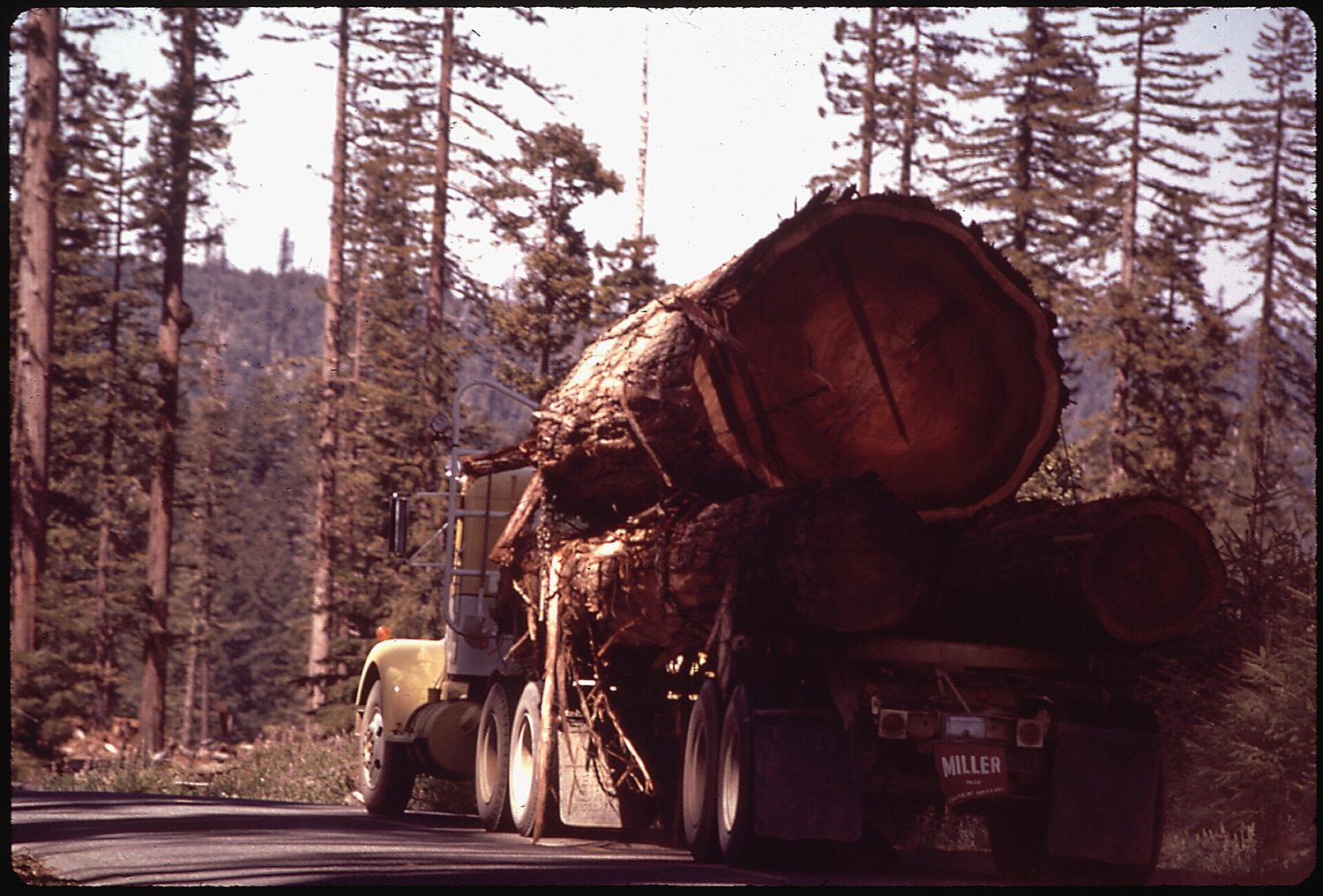
ثلاث أماكن عادية. شاحنة نقل خشب تحمل أشجارًا كانت تقف هنا صباح هذا اليوم. حفرة واسعة جدًا يمكن رؤيتها من الفضاء. مدينة تمتد عبر ال…

English narration · English + 中文 subtitles burned in · ⁨سرد باللغة الإنجليزية · ترجمة مدمجة بالإنجليزية + الصينية⁩

5.1

The Tragedy of the Commons · ⁨مأساة المشاع العام⁩

Syllabus · ⁨المنهج⁩
English

Enduring Understanding (EIN-2): When humans use natural resources, they alter natural systems.

Learning Objective EIN-2.A: Explain the concept of the tragedy of the commons.

  • EIN-2.A.1 The tragedy of the commons suggests that individuals will use shared resources in their own self-interest rather than in keeping with the common good, thereby depleting the resources.
العربية

الفهم الدائم (EIN-2): عندما يستخدم البشر الموارد الطبيعية، فإنهم يغيرون الأنظمة الطبيعية.

الهدف التعليمي EIN-2.A: اشرح مفهوم مأساة المشاعات.

  • EIN-2.A.1 تشير مأساة المشاعات إلى أن الأفراد سيستخدمون الموارد المشتركة لمصلحتهم الذاتية بدلاً من المصلحة العامة، مما يؤدي إلى استنزاف تلك الموارد.
Source: College Board AP Course and Exam Description · ⁨المصدر: وصف دورة وامتحان College Board AP⁩

English
The tragedy of the commons

The tragedy of the commons 公地悲剧: when a resource is shared and open to all (a fishery, the atmosphere, a pasture), each user takes as much as they can for private gain, and the shared resource is overused and degraded for everyone. Solutions require regulation, privatization, or cooperative management.

العربية
مأساة المشاع العام

مأساة المشاع العام: عندما يكون مورد مشتركًا ومتاحًا للجميع (مصيدة أسماك، الغلاف الجوي، مرعى)، يأخذ كل مستخدم قدر ما يمكنه من أجل مكسب خاص، ويتم استنزاف المورد المشترك وإهماله لجميع الناس. تتطلب الحلول التنظيم أو الخصخصة أو الإدارة التعاونية.

5.2

Clearcutting · ⁨القطع الشامل⁩

Syllabus · ⁨المنهج⁩
English

Enduring Understanding (EIN-2): When humans use natural resources, they alter natural systems.

Learning Objective EIN-2.B: Describe the effect of clearcutting on forests.

  • EIN-2.B.1 Clearcutting can be economically advantageous but leads to soil erosion, increased soil and stream temperatures, and flooding.
  • EIN-2.B.2 Forests contain trees that absorb pollutants and store carbon dioxide. The cutting and burning of trees releases carbon dioxide and contributes to climate change.
العربية

الفهم الدائم (EIN-2): عندما يستخدم البشر الموارد الطبيعية، فإنهم يغيرون الأنظمة الطبيعية.

هدف التعلم EIN-2.B: وصف تأثير القطع الكامل على الغابات.

  • EIN-2.B.1 يمكن أن يكون القطع الكامل مربحًا اقتصاديًا، ولكنه يؤدي إلى تآكل التربة، وارتفاع درجة حرارة التربة والمياه الجارية، والفيضانات.
  • EIN-2.B.2 تحتوي الغابات على أشجار تمتص الملوثات وتخزن ثاني أكسيد الكربون. يؤدي قطع وحرق الأشجار إلى إطلاق ثاني أكسيد الكربون والمساهمة في تغير المناخ.

Source: College Board AP Course and Exam Description · ⁨المصدر: وصف دورة وامتحان College Board AP⁩

English

Clearcutting 皆伐 removes all trees from an area at once. It is cheap and efficient but causes erosion 侵蚀, loss of habitat and biodiversity, flooding, and higher soil temperatures. Recovery is slow, and nearby streams suffer from sediment.

العربية

القطع الشامل يزيل جميع الأشجار من منطقة ما دفعة واحدة. إنه رخيص وفعال لكن يسبب التآسر، وفقدان الموائل والتنوع البيولوجي، والفيضانات، وارتفاع درجة حرارة التربة. التعافي بطيء، وتتأثر المجاري المائية القريبة بالرواسب.

منحدر جبلي حيث تم قطع شريط كامل من الغابة، تاركاً تربة بنية عارية بجانب أشجار خضراء واقفة
قطع شامل حديث: يتم إزالة كل شجرة في الشريط دفعة واحدة، تاركًا تربة عارية تتآسر وتغسل في المجاري المائية
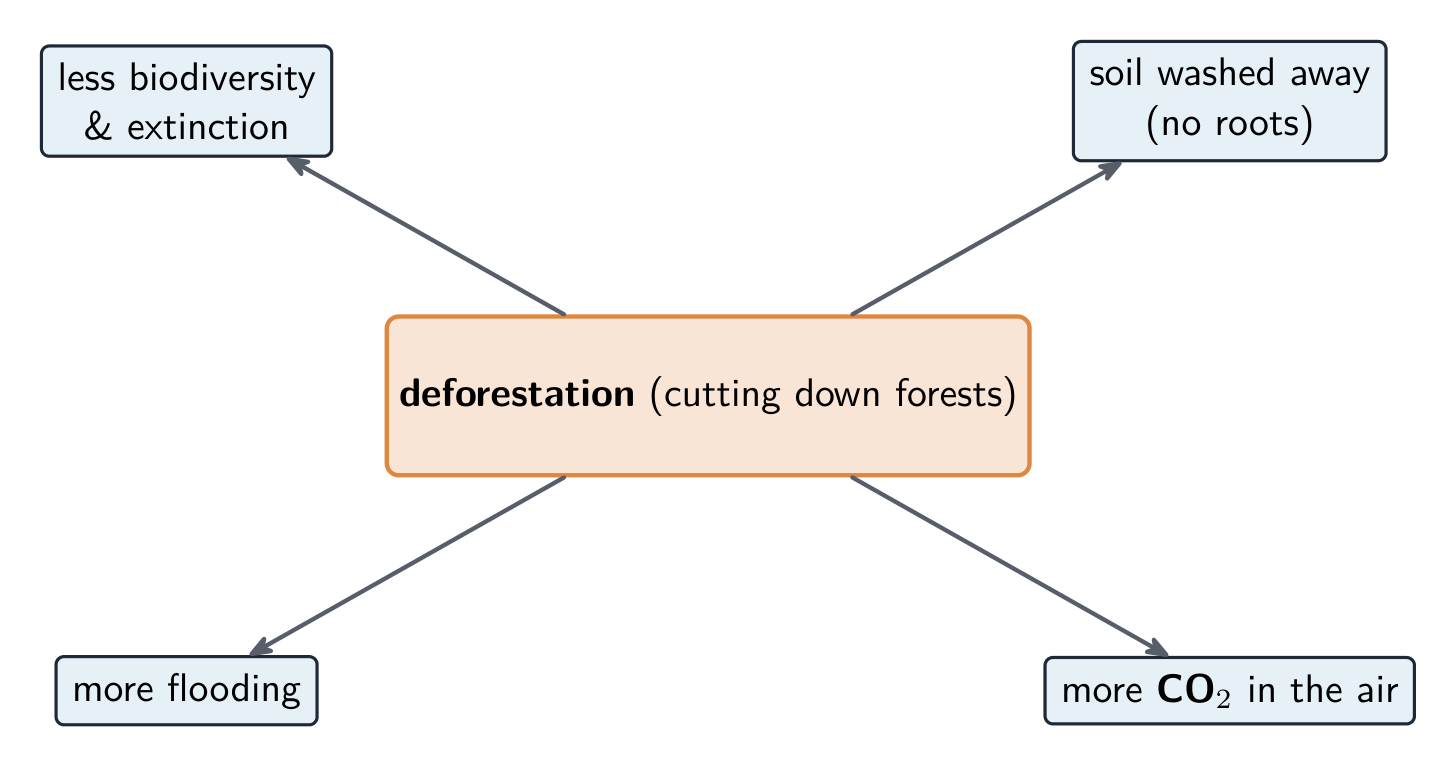
إزالة الغابات تقلل من التنوع البيولوجي وتسبب التعرية والفيضانات وارتفاع مستويات ثاني أكسيد الكربون 2
إزالة الغابات تقلل التنوع البيولوجي وتسبب تعرية التربة، الفيضانات، وارتفاع CO2
5.3

The Green Revolution · ⁨الثورة الخضراء⁩

Syllabus · ⁨المنهج⁩
English

Enduring Understanding (EIN-2): When humans use natural resources, they alter natural systems.

Learning Objective EIN-2.C: Describe changes in agricultural practices.

  • EIN-2.C.1 The Green Revolution started a shift to new agricultural strategies and practices in order to increase food production, with both positive and negative results. Some of these strategies and methods are mechanization, genetically modified organisms (GMOs), fertilization, irrigation, and the use of pesticides.
  • EIN-2.C.2 Mechanization of farming can increase profits and efficiency for farms. It can also increase reliance on fossil fuels.
العربية

الفهم الدائم (EIN-2): عندما يستخدم البشر الموارد الطبيعية، فإنهم يغيرون الأنظمة الطبيعية.

هدف التعلم EIN-2.C: وصف التغيرات في الممارسات الزراعية.

  • EIN-2.C.1 أطلقت الثورة الخضراء تحولاً نحو استراتيجيات وممارسات زراعية جديدة لزيادة الإنتاج الغذائي، مع نتائج إيجابية وسلبية. تشمل هذه الاستراتيجيات والأساليب الآلة، والكائنات المعدلة وراثياً (GMOs)، والتسميد، والري، واستخدام المبيدات.
  • EIN-2.C.2 يمكن أن تزيد آليّة الزراعة من أرباح وكفاءة المزارع. كما أنها قد تزيد الاعتماد على الوقود الأحفوري.

Source: College Board AP Course and Exam Description · ⁨المصدر: وصف دورة وامتحان College Board AP⁩

English

The Green Revolution 绿色革命 boosted crop yields with high-yield seeds, synthetic fertilizers 化肥, pesticides 农药, irrigation, and mechanization. It fed billions but brought costs: soil degradation, water pollution, high energy and water use, and loss of crop diversity (monoculture 单一栽培).

العربية

أثارت الثورة الخضراء إنتاجية المحاصيل باستخدام بذور عالية الإنتاجية، الأسمدة الصناعية، المبيدات الحشرية، الري، والميكانيكية. أذنت لآلاف الملايين لكنها جلبت تكاليف: تدهور التربة، وتلوث المياه، واستهلاك مرتفع للطاقة والمياه، وفقدان تنوع المحاصيل (زراعة أحادية).

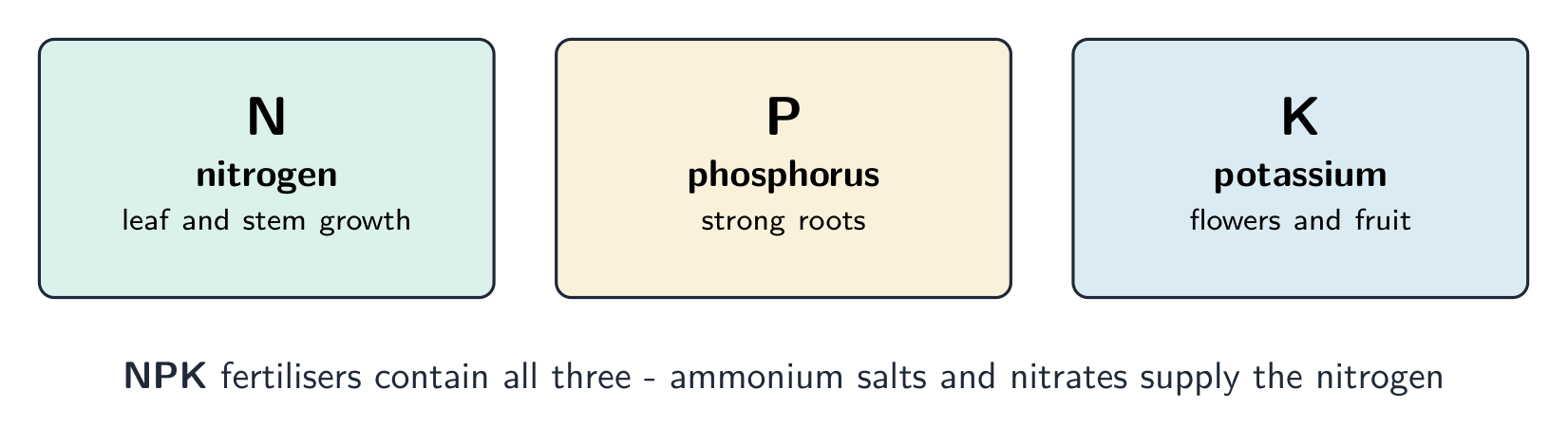
أسمدة NPK توفر العناصر الثلاثة التي تحتاجها النباتات أكثر من غيرها
أسمدة NPK تزود العناصر الثلاثة التي تحتاجها النباتات أكثر من غيرها
5.4

Impacts of Agricultural Practices · ⁨تأثيرات الممارسات الزراعية⁩

Syllabus · ⁨المنهج⁩
English

Enduring Understanding (EIN-2): When humans use natural resources, they alter natural systems.

Learning Objective EIN-2.D: Describe agricultural practices that cause environmental damage.

  • EIN-2.D.1 Agricultural practices that can cause environmental damage include tilling, slash-and-burn farming, and the use of fertilizers.
العربية

الفهم الدائم (EIN-2): عندما يستخدم البشر الموارد الطبيعية، فإنهم يغيرون الأنظمة الطبيعية.

هدف التعلم EIN-2.D: وصف الممارسات الزراعية التي تسبب ضررًا للبيئة.

  • EIN-2.D.1 تشمل الممارسات الزراعية التي قد تسبب ضررًا للبيئة المحارة، والزراعة بالحرق والتقطيع، واستخدام الأسمدة.

Source: College Board AP Course and Exam Description · ⁨المصدر: وصف دورة وامتحان College Board AP⁩

English

Practices such as tilling, monoculture, and heavy fertilizer/pesticide use cause erosion, soil salinization 土壤盐碱化, nutrient runoff (causing eutrophication 富营养化), and loss of biodiversity. Sustainable methods reduce these harms.

العربية

ممارسات مثل الحرث، الزراعة الأحادية، واستخدام الأسمدة/المبيدات الثقيل تسبب التآسر، تملح التربة، وتدفق المغذيات (يسبب الإثراء الغذائي)، وفقدان التنوع البيولوجي. تقلل الطرق المستدامة من هذه الأضرار.

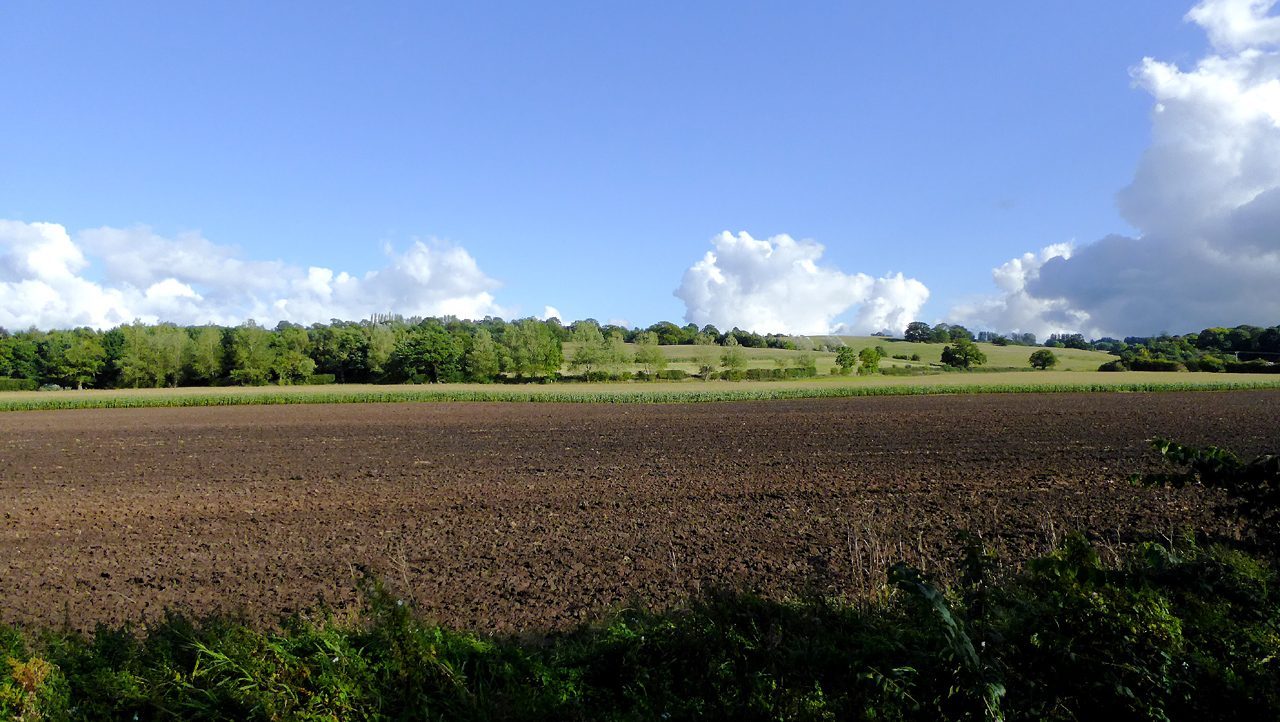
أراضي زراعية مكثفة: الحراثة والأسمدة والزراعة الأحادية ترفع الإنتاجية لكنها قد تسبب تآكل التربة وتلوث المياه
أراضي زراعية مكثفة: الحرث والأسمدة والزراعة الأحادية ترفع الإنتاجية لكن قد تتسبب في تآسر التربة وتلوث المياه
5.5

Irrigation Methods · ⁨طرق الري⁩

Syllabus · ⁨المنهج⁩
English

Enduring Understanding (EIN-2): When humans use natural resources, they alter natural systems.

Learning Objective EIN-2.E: Describe different methods of irrigation.

  • EIN-2.E.1 The largest human use of freshwater is for irrigation (70%).
  • EIN-2.E.2 Types of irrigation include drip irrigation, flood irrigation, furrow irrigation, drip irrigation, and spray irrigation.

Learning Objective EIN-2.F: Describe the benefits and drawbacks of different methods of irrigation.

  • EIN-2.F.1 Waterlogging occurs when too much water is left to sit in the soil, which raises the water table of groundwater and inhibits plants' ability to absorb oxygen through their roots.
  • EIN-2.F.2 Furrow irrigation involves cutting furrows between crop rows and filling them with water. This system is inexpensive, but about 1/3 of the water is lost to evaporation and runoff.
  • EIN-2.F.3 Flood irrigation involves flooding an agricultural field with water. This system sees about 20% of the water lost to evaporation and runoff. This can also lead to waterlogging of the soil.
  • EIN-2.F.4 Spray irrigation involves pumping ground water into spray nozzles across an agricultural field. This system is more efficient than flood and furrow irrigation, with only 1/4 or less of the water lost to evaporation or runoff. However, spray systems are more expensive than flood and furrow irrigation, and also requires energy to run.
  • EIN-2.F.5 Drip irrigation uses perforated hoses to release small amounts of water to plant roots. This system is the most efficient, with only about 5% of water lost to evaporation and runoff. However, this system is expensive and so is not often used.
  • EIN-2.F.6 Salinization occurs when the salts in groundwater remain in the soil after the water evaporates. Over time, salinization can make soil toxic to plants.
  • EIN-2.F.7 Aquifers can be severely depleted if overused for agricultural irrigation, as has happened to the Ogallala Aquifer in the central United States.
العربية

الفهم الدائم (EIN-2): عندما يستخدم البشر الموارد الطبيعية، فإنهم يغيرون الأنظمة الطبيعية.

هدف التعلم EIN-2.E: وصف طرق الري المختلفة.

  • EIN-2.E.1 الاستخدام البشري الأكبر للمياه العذبة هو للري (70%).
  • EIN-2.E.2 تشمل أنواع الري الري بالتنقيط، والري بالغمر، والري بالأخدود، والري بالتنقيط، والري بالرش.

هدف التعلم EIN-2.F: وصف مزايا وعيوب طرق الري المختلفة.

  • EIN-2.F.1 يحدث الغرق عندما يتبقى الكثير من الماء في التربة، مما يرفع مستوى سطح الماء الجوفي ويعيق قدرة النباتات على امتصاص الأكسجين عبر جذورها.
  • EIN-2.F.2 يتضمن الري بالأخدود قطع أخاديد بين صفوف المحاصيل وملئها بالماء. هذا النظام رخيص الثمن، لكن حوالي 1/3 من الماء يُفقَد بسبب التبخر والجريان السطحي.
  • EIN-2.F.3 يتضمن الري بالغمر غمر حقل زراعي بالماء. يفقد هذا النظام حوالي 20% من الماء بسبب التبخر والجريان السطحي. كما يمكن أن يؤدي إلى غرق التربة.
  • EIN-2.F.4 يتضمن الري بالرش ضخ المياه الجوفية إلى فوهات الرش عبر حقل زراعي. هذا النظام أكثر كفاءة من الري بالغمر والأخدود، حيث تُفقَد فقط 1/4 أو أقل من الماء بسبب التبخر أو الجريان السطحي. ومع ذلك، فإن أنظمة الرش أغث من الري بالغمر والأخدود، وتتطلب أيضًا طاقة للعمل.
  • EIN-2.F.5 يستخدم الري بالتنقيط خراطيم مثقوبة لإطلاق كميات صغيرة من الماء إلى جذور النباتات. هذا النظام الأكثر كفاءة، حيث تُفقَد حوالي 5% فقط من الماء بسبب التبخر والجريان السطحي. ومع ذلك، فإن هذا النظام مكلف وغير مستخدم غالبًا.
  • EIN-2.F.6 يحدث التملح عندما تبقى الأملاح في المياه الجوفية في التربة بعد تبخر الماء. بمرور الوقت، يمكن أن يجعل التملح التربة سامة للنباتات.
  • EIN-2.F.7 يمكن أن تُستنزف الطبقات المائية بشدة إذا تم استخدامها بشكل مفرط للري الزراعي، كما حدث للطبقة المائية أوقالالا في وسط الولايات المتحدة.

Source: College Board AP Course and Exam Description · ⁨المصدر: وصف دورة وامتحان College Board AP⁩

English

Irrigation 灌溉 supplies water to crops, and it is by far the largest human use of freshwater - about 70% of it worldwide, a figure the exam expects you to know. Drip irrigation is the most efficient (least evaporation); flood and spray methods waste more water and can cause waterlogging and salinization as evaporation leaves salts behind. Over-irrigation depletes aquifers 含水层 (underground stores of freshwater) faster than they refill.

العربية

الري يوفر الماء للمحاصيل، وهو أكبر استخدام بشري للمياه العذبة - حوالي 70% منه عالميًا، وهي رقمة يتوقع منك الامتحان معرفتها. ري النقطي هو الأكثر كفاءة (أقل تبخر)؛ طرق الفيضان والرش تهدر المزيد من الماء وقد تسبب الغمر المائي والملوحة لأن التبخر يترك الأملاح خلفه. الري الزائد يستنفذ المياه الجوفية (المخازن地下 للمياه العذبة) أسرع مما تعوضه.

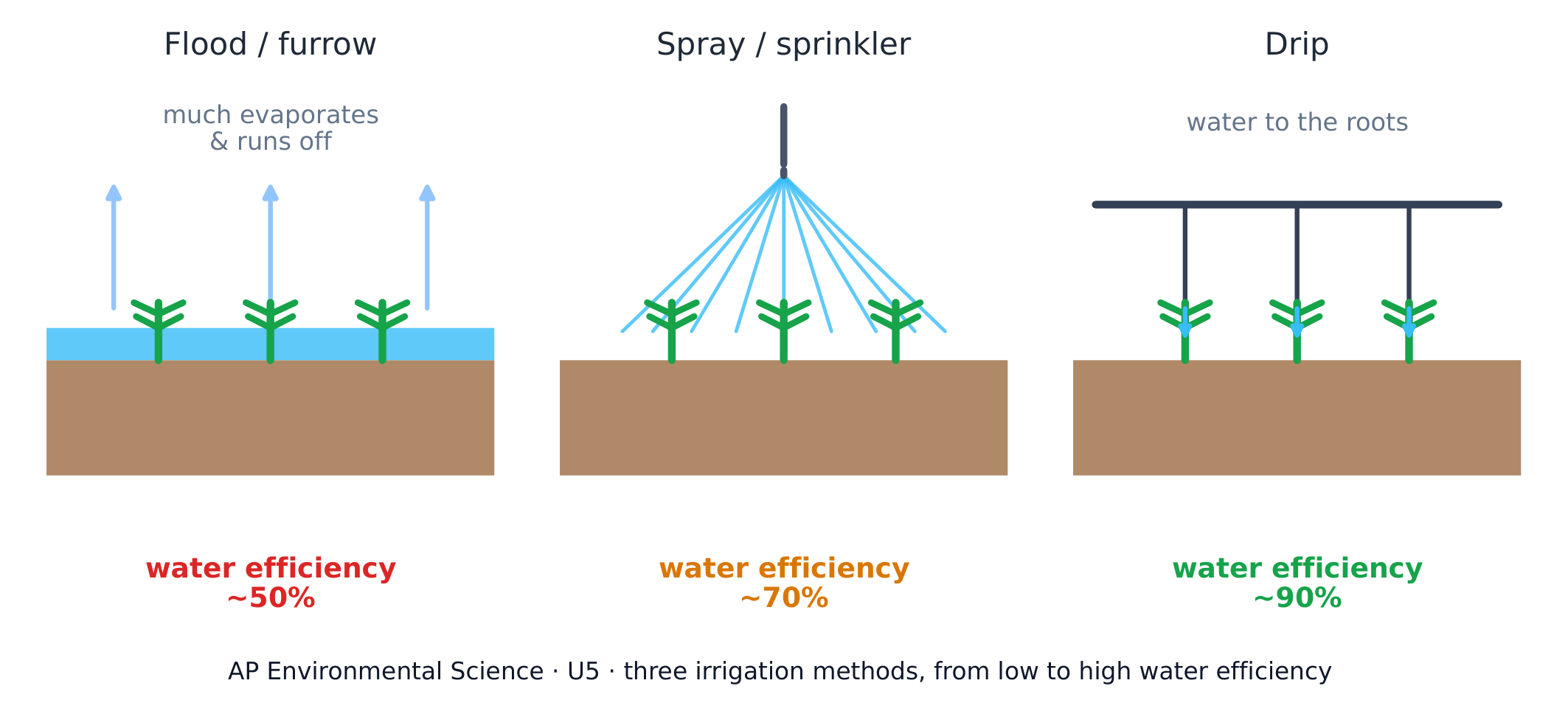
مقارنة طرق الري: الري بالتنقيط يسرب أقل كمية من الماء، بينما الغمر يستهلك الأكثر
مقارنة طرق الري: النقطي يهدر أقل ماء، والفيضان يهدر أكثر
Vocabulary · ⁨مفردات⁩ Train · ⁨تدريب⁩
English العربية
tragedy of the commons/ˈtrædʒədi ɒvðə ˈkɒmənz/ مأساة-commons (المشتركات)
Clearcutting/ˈklɪəkʌtɪŋ/ الإزالة الكاملة للقطع
erosion/ɪˈrəʊʒn/ التآكل
Green Revolution/ɡriːn ˌrevəˈluːʃn/ الثورة الخضراء
synthetic fertilizers/sɪnˈθetɪk ˈfɜːtəlaɪzəz/ الأسمدة الصناعية
pesticides/ˈpestɪsaɪdz/ المبيدات الحشرية
monoculture/ˈmɒnəʊkʌltʃə/ زراعة محصول واحد
soil salinization/sɔɪl ˌseɪlɪnaɪˈzeɪʃn/ تملح التربة
eutrophication/ˌjuːtrəfɪˈkeɪʃn/ التثري
Irrigation/ˌɪrɪˈɡeɪʃn/ الري
aquifers/ˈækwɪfəz/ المياه الجوفية
pesticide resistance/ˈpestɪsaɪd rɪˈzɪstəns/ مقاومة المبيدات
methane/ˈmiːθeɪn/ الميثان
Overgrazing/ˌəʊvəˈɡreɪzɪŋ/ الرعي الجائر
desertification/dɪˌzɜːtɪfɪˈkeɪʃn/ التصحّر
rotational grazing/rəʊˈteɪʃənl ˈɡreɪzɪŋ/ الرعي الدوار
Overfishing/ˌəʊvəˈfɪʃɪŋ/ الصيد الجائر
Mining/ˈmaɪnɪŋ/ التعدين
acid mine drainage/ˈæsɪd maɪn ˈdreɪnɪdʒ/ تصريف المناجم الحمضية
subsurface mining/ˈsʌbsəfɪs ˈmaɪnɪŋ/ التعدين تحت السطحي
Urbanization/ˌɜːbənaɪˈzeɪʃn/ التحضر
impervious surfaces/ɪmˈpɜːvɪəs ˈsɜːfɪsɪz/ الأسطح غير المنفذة
urban heat islands/ˈɜːbən hiːt ˈaɪləndz/ جزر الحرارة الحضرية
hydrologic cycle/ˌhaɪdrəˈlɒdʒɪk ˈsaɪkl/ الدورة الهيدرولوجية
saltwater intrusion/ˈsɒltwɔːtə ɪnˈtruːʒn/ تداخل المياه المالحة
ecological footprint/ˌekəˈlɒdʒɪkl ˈfʊtprɪnt/ البصمة البيئية
5.6

Pest Control Methods · ⁨طرق مكافحة الآفات⁩

Syllabus · ⁨المنهج⁩
English

Enduring Understanding (EIN-2): When humans use natural resources, they alter natural systems.

Learning Objective EIN-2.G: Describe the benefits and drawbacks of different methods of pest control.

  • EIN-2.G.1 One consequence of using common pest-control methods such as pesticides, herbicides, fungicides, rodenticides, and insecticides is that organisms can become resistant to them through artificial selection. Pest control decreases crop damage by pest and increases crop yields.
  • EIN-2.G.2 Crops can be genetically engineered to increase their resistance to pests and diseases. However, using genetically engineered crops in planting or other ways can lead to loss of genetic diversity of that particular crop.
العربية

الفهم الدائم (EIN-2): عندما يستخدم البشر الموارد الطبيعية، فإنهم يغيرون الأنظمة الطبيعية.

هدف التعلم EIN-2.G: وصف مزايا وعيوب طرق مكافحة الآفات المختلفة.

  • EIN-2.G.1 أحد عواقب استخدام طرق مكافحة الآفات الشائعة مثل المبيدات الكيميائية والمبيدات الحشرية والمبيدات الفطرية ومبيدات القوارض ومبيدات الحشرات هو أن الكائنات الحية يمكن أن تصبح مقاومة لها من خلال الانتقاء الاصطناعي. تقلل مكافحة الآفات من تلف المحاصيل بسبب الآفات وتزيد من إنتاجية المحاصيل.
  • EIN-2.G.2 يمكن هندسة المحاصيل وراثيًا لزيادة مقاومتها ضد الآفات والأمراض. ومع ذلك، يمكن أن يؤدي استخدام المحاصيل الهندسية وراثيًا في الزراعة أو غيرها من الطرق إلى فقدان التنوع الوراثي لذلك المحصول المحدد.

Source: College Board AP Course and Exam Description · ⁨المصدر: وصف دورة وامتحان College Board AP⁩

English

Pesticides kill pests and raise yields, but cause problems: they harm non-target species, pollute water, and drive pesticide resistance 抗药性 (survivors breed, so stronger doses are needed – the "pesticide treadmill").

العربية

المبيدات الحشرية تقتل الآفات وترفع الإنتاجية، لكنها تسبب مشاكل: تضر الكائنات غير المستهدفة، وتلوّث المياه، وتدفع نحو مقاومة المبيدات (الباقون يتوالدون، لذا نحتاج جرعات أقوى – "درج المبيدات").

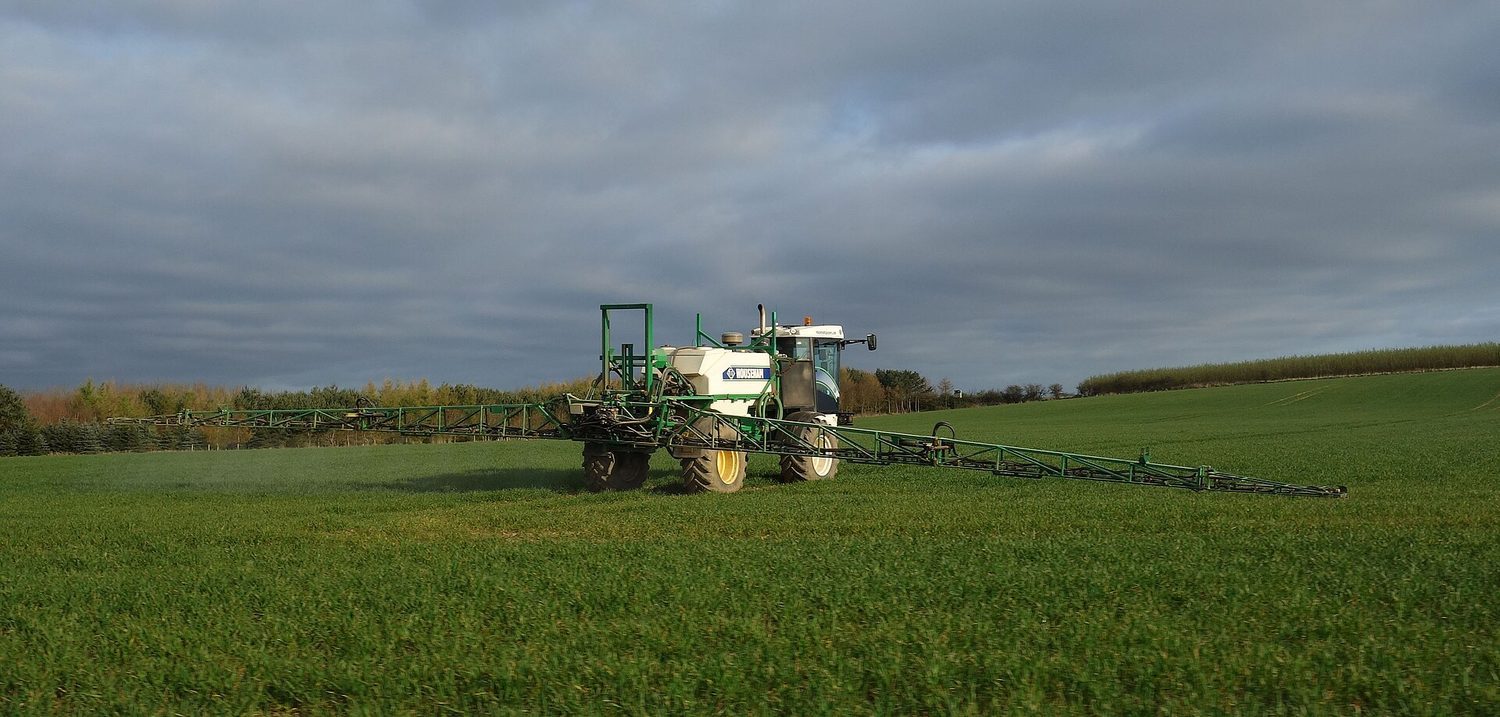
رش المبيدات الحشرية جواً: التحكم الكيميائي في الآفات يمكن أن يحمي المحاصيل لكنه يضر بالأنواع غير المستهدفة ويخلق آفاتاً مقاومة
رش المبيدات جويًا: مكافحة الآفات الكيميائية قد تحمي الإنتاجية لكنها تضر أيضًا بالكائنات غير المستهدفة وتخلق آفات مقاومة
5.7

Meat Production Methods · ⁨طرق إنتاج اللحوم⁩

Syllabus · ⁨المنهج⁩
English

Enduring Understanding (EIN-2): When humans use natural resources, they alter natural systems.

Learning Objective EIN-2.H: Identify different methods of meat production.

  • EIN-2.H.1 Methods of meat production include concentrated animal feeding operations (CAFOs), also called feedlots, and free-range grazing.

Learning Objective EIN-2.I: Describe the benefits and drawbacks of different methods of meat production.

  • EIN-2.I.1 Meat production is less efficient than agriculture; it takes approximately 20 times more land to produce the same amount of calories from meat as from plants.
  • EIN-2.I.2 Concentrated animal feeding operation (CAFOs) are used as a way to quickly get livestock ready for slaughter. They tend to be crowded, and animals are fed grains or feed that are not as suitable as grass. Additionally, feedlots generate a large amount of organic waste, which can contaminate ground and surface water. The use of feedlots are less expensive than other methods, which can keep costs to consumers down.
  • EIN-2.I.3 Free range grazing allows animals to graze on grass during their entire lifecycle. Meat from free range animals tends to be free from antibiotics and other chemicals used in feedlots. Organic waste from these animals acts as fertilizer. Free range grazing requires large areas of land and the meat produced is more expensive for consumers.
  • EIN-2.I.4 Overgrazing occurs when too many animals feed on a particular area of land. Overgrazing causes loss of vegetation, which leads to soil erosion.
  • EIN-2.I.5 Overgrazing can cause desertification. Desertification is the degradation of low precipitation regions toward being increasingly arid until they become deserts.
  • EIN-2.I.6 Less consumption of meat could reduce $\text{CO}_2$, methane, and $\text{N}_2\text{O}$ emissions; conserve water; reduce the use of antibiotics and growth hormones; and improve topsoil.
العربية

الفهم الدائم (EIN-2): عندما يستخدم البشر الموارد الطبيعية، فإنهم يغيرون الأنظمة الطبيعية.

هدف التعلم EIN-2.H: تحديد طرق إنتاج اللحوم المختلفة.

  • EIN-2.H.1 تشمل طرق إنتاج اللحوم عمليات تغذية الحيوانات المركزة (CAFOs)، المعروفة أيضًا باسم مرافق الإطعام، والرعي الحر.

هدف التعلم EIN-2.I: وصف مزايا وعيوب طرق إنتاج اللحوم المختلفة.

  • EIN-2.I.1 إنتاج اللحوم أقل كفاءة من الزراعة؛ حيث يتطلب الأمر مساحة تعادل تقريبًا 20 ضعف المساحة لإنتاج نفس كمية السعرات الحرارية من اللحوم مقارنةً بالنباتات.
  • EIN-2.I.2 تُستخدم عمليات إكثار وتسمين الحيوانات المكثفة (CAFOs) كطريقة لتسريع جاهزية الماشية للذبح. تميل هذه العمليات إلى الازدحام، وتُقدَّم للحيوانات الحبوب أو الأعلاف التي ليست مناسبة مثل العشب. علاوة على ذلك، تولّد مراعي التسمين كميات كبيرة من النفايات العضوية، والتي قد تتسبب في تلوث المياه الجوفية والسطحية. إن استخدام مراعي التسمين أقل تكلفة من الطرق الأخرى، مما قد يساعد في الحفاظ على انخفاض تكاليف المستهلكين.
  • EIN-2.I.3 يسمح الرعي الحر للحيوانات بالمرعى على العشب طوال دورة حياتها. تميل اللحوم القادمة من حيوانات الرعي الحر إلى أن تكون خالية من المضادات الحيوية والمواد الكيميائية الأخرى المستخدمة في مراعي التسمين. تعمل النفايات العضوية الناتجة عن هذه الحيوانات كأسمدة. يتطلب الرعي الحر مساحات واسعة من الأراضي، وتكون اللحوم المنتجة أغلى ثمنًا للمستهلكين.
  • EIN-2.I.4 يحدث الرعي المفرط عندما يتغذى عدد كبير جدًا من الحيوانات على منطقة معينة من الأرض. يؤدي الرعي المفرط إلى فقدان الغطاء النباتي، مما يسبب تآكل التربة.
  • EIN-2.I.5 يمكن أن يؤدي الرعي المفرط إلى التصحر. التصحر هو تدهور المناطق ذات الهطول المنخفض نحو حالة increasingly arid حتى تصبح صحاري.
  • EIN-2.I.6 يمكن أن يقلل الاستهلاك الأقل للحوم من انبعاثات $\text{CO}_2$، والميثان، وانبعاثات $\text{N}_2\text{O}$؛ ويحافظ على المياه؛ ويقلل من استخدام المضادات الحيوية وهرمونات النمو؛ ويحسن التربة السطحية.

Source: College Board AP Course and Exam Description · ⁨المصدر: وصف دورة وامتحان College Board AP⁩

English

Producing meat, especially in concentrated animal feeding operations (CAFOs), uses large amounts of land, water, feed, and energy, and generates waste and methane 甲烷 (a greenhouse gas). Meat is far less energy-efficient than plant food because of the 10% rule – higher trophic levels waste more energy.

Overgrazing 过度放牧 - letting livestock eat vegetation faster than it regrows - strips the soil of its protective cover. On dry land this can drive desertification 荒漠化: the degradation of low-precipitation regions until they become deserts. The sustainable answer is rotational grazing 轮牧, moving livestock regularly between pastures so no single area is grazed bare.

العربية

إنتاج اللحم، خاصة في وحدات تغذية الحيوانات المركزة (CAFOs)، يستخدم كميات كبيرة من الأراضي والماء والعلف والطاقة، وينتج نفايات والميثان (غاز دفيئة). اللحم أقل كفاءة في الطاقة بكثير من الطعام النباتي بسبب قاعدة الـ 10% – المستويات الغذائية الأعلى تهدر المزيد من الطاقة.

الرعي المفرط - السماح للماشية بأكل Vegetation أسرع مما ينمو - يفقد التربة غطاءها الواقي. على الأراضي الجافة قد يؤدي ذلك إلى التصحّر: تدهور المناطق منخفضة الهطول حتى تصبح صحارى. الإجابة المستدامة هي الرعي الدوار، نقل الماشية بانتظام بين المراعي بحيث لا تُرعى منطقة واحدة عارية تمامًا.

5.8

Impacts of Overfishing · ⁨تأثيرات الصيد الجائر⁩

Syllabus · ⁨المنهج⁩
English

Enduring Understanding (EIN-2): When humans use natural resources, they alter natural systems.

Learning Objective EIN-2.J: Describe causes of and problems related to overfishing.

  • EIN-2.J.1 Overfishing has led to the extreme scarcity of some fish species, which can lessen biodiversity in aquatic systems and harm people who depend on fishing for food and commerce.
العربية

الفهم الدائم (EIN-2): عندما يستخدم البشر الموارد الطبيعية، فإنهم يغيرون الأنظمة الطبيعية.

هدف التعلم EIN-2.J: وصف أسباب ومشاكل الصيد الجائر.

  • EIN-2.J.1 أدى الصيد الجائر إلى ندرة قصوى في بعض أنواع الأسماك، مما قد يقلل من التنوع البيولوجي في الأنظمة المائية ويضر بالأشخاص الذين يعتمدون على الصيد للحصول على الغذاء والتجارة.

Source: College Board AP Course and Exam Description · ⁨المصدر: وصف دورة وامتحان College Board AP⁩

English

Overfishing 过度捕捞 removes fish faster than they reproduce, collapsing populations (like cod). Bycatch (unwanted catch) and destructive methods (bottom trawling) damage ecosystems. It is a classic tragedy of the commons in the open ocean.

العربية

الصيد الجائر يزيل الأسماك أسرع مما تتكاثر، مما يؤدي إلى انهيار populations (مثل الباكالا). الصيد العرضي (الأسماك غير المرغوب فيها) والأساليب المدمرة (الجرّ القاعية) تدمر النظم البيئية. إنه مأساة المشاع الكلاسيكية في المحيط المفتوح.

Explore · ⁨استكشف⁩

Push a fish stock past its limit · ⁨ادفع مخزون الأسماك beyond حدّه⁩

A population grows toward its carrying capacity $K$, but harvesting faster than it can breed collapses the stock. Raise the pressure and watch the population crash. · ⁨تنمو السكان نحو الطاقة الاستيعابية $K$، لكن الاستغلال أسرع من التكاثر يدمر المخزون. زِد الضغط وشاهد السكان ينهارون.⁩

5.9

Impacts of Mining · ⁨تأثيرات التعدين⁩

Syllabus · ⁨المنهج⁩
English

Enduring Understanding (EIN-2): When humans use natural resources, they alter natural systems.

Learning Objective EIN-2.K: Describe natural resource extraction through mining.

  • EIN-2.K.1 As the more accessible ores are mined to depletion, mining operations are forced to access lower grade ores. Accessing these ores requires increased use of resources that can cause increased waste and pollution.
  • EIN-2.K.2 Surface mining is the removal of large portions of soil and rock, called overburden, in order to access the ore underneath. An example is strip mining, which removes the vegetation from an area, making the area more susceptible to erosion.

Learning Objective EIN-2.L: Describe ecological and economic impacts of natural resource extraction through mining.

  • EIN-2.L.1 Mining wastes include the soil and rocks that are moved to gain access to the ore and the waste, called slag and tailings that remain when the minerals have been removed from the ore. Mining helps to provide low cost energy and material necessary to make products. The mining of coal can destroy habitats, contaminate ground water, and release dust particles and methane.
  • EIN-2.L.2 As coal reserves get smaller, due to a lack of easily accessible reserves, it becomes necessary to access coal through subsurface mining, which is very expensive.
العربية

الفهم الدائم (EIN-2): عندما يستخدم البشر الموارد الطبيعية، فإنهم يغيرون الأنظمة الطبيعية.

هدف التعلم EIN-2.K: وصف استخراج الموارد الطبيعية عبر التعدين.

  • EIN-2.K.1 مع استنفاد خامات المعادن القابلة للوصول بسهولة، يُجبر عمال التعدين على الوصول إلى خامات ذات جودة أدنى. يتطلب الوصول إلى هذه الخامات زيادة استخدام الموارد الذي يمكن أن يؤدي إلى زيادة النفايات والتلوث.
  • EIN-2.K.2 التعدين السطحي هو إزالة أجزاء كبيرة من التربة والصخور، تُعرف بالحشوة، من أجل الوصول إلى الخام الموجود تحتها. مثال على ذلك التعدين الشريطي، الذي يزيل الغطاء النباتي من منطقة ما، مما يجعل المنطقة أكثر عرضة للتآكل.

هدف التعلم EIN-2.L: وصف الآثار البيئية والاقتصادية لاستخراج الموارد الطبيعية عبر التعدين.

  • EIN-2.L.1 تشمل نفايات التعدين التربة والصخور التي يتم نقلها للحصول على الخام، والنفايات المتبقية، المعروفة باسم الخبث والذيل، بعد إزالة المعادن من الخام. يساعد التعدين في توفير الطاقة والمواد منخفضة التكلفة اللازمة لتصنيع المنتجات. يمكن أن يؤدي التعدين بالفحم إلى تدمير الموائل، وتلويث المياه الجوفية، وإطلاق جسيمات الغبار والميثان.
  • EIN-2.L.2 مع تصاعد مخزون الفحم ونقصه بسبب عدم وجود مخزون قابل للوصول بسهولة، يصبح من الضروري الوصول إلى الفحم عبر التعدين تحت السطحي، وهو أمر مكلف للغاية.

Source: College Board AP Course and Exam Description · ⁨المصدر: وصف دورة وامتحان College Board AP⁩

English

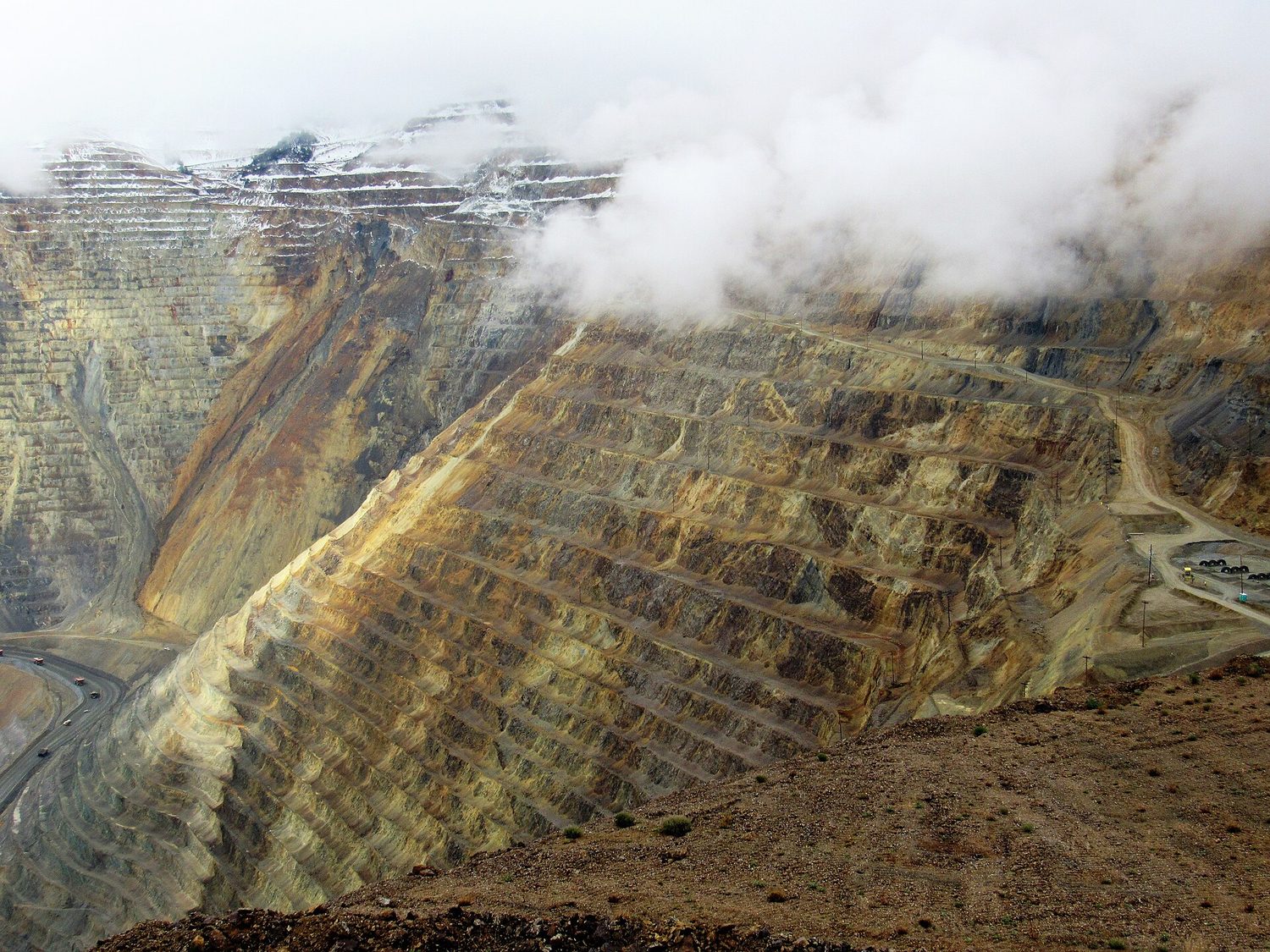
Mining 采矿 extracts minerals and fuels but disturbs land, especially surface (strip) mining and mountaintop removal. Impacts include habitat destruction, acid mine drainage 酸性矿山废水, and toxic tailings polluting water.

When the easily reached deposits are gone, mining moves underground to subsurface mining 地下开采, which is far more expensive and dangerous - the same pattern applies to coal as its accessible reserves shrink.

العربية

التعدين يستخرج المعادن والوقود لكن يزعج الأراضي، خاصة التعنيف السطحي (المدرجات) وإزالة قمم الجبال. تشمل التأثيرات تدمير الموائل، تصريف المناجم الحمضي، وذيول سامة تلوث المياه.

منجم مفتوح شاسع: لولب من المدرجات المقطوعة بعمق في الأرض، تمتد لمئات الكيلومترات
منجم مفتوح: تُقطع المدرجات عريضة وأعمق للوصول إلى الخام، مما يدمر الموائل ويكشف الصخور التي تلوث المياه

عندما تنتهي المخزون السهل الوصول إليه، ينتقل التعدين إلى التعدين تحت السطحي، وهو أكثر تكلفة وخطورة بكثير - ينطبق نفس النمط على الفحم مع انكماش احتياطياته المتاحة.

Vocabulary · ⁨مفردات⁩ Train · ⁨تدريب⁩
English العربية
open-pit mine/ˈəʊpən pɪt maɪn/ منجم مفتوح السطح
5.10

Impacts of Urbanization · ⁨تأثيرات التحضر⁩

Syllabus · ⁨المنهج⁩
English

Enduring Understanding (EIN-2): When humans use natural resources, they alter natural systems.

Learning Objective EIN-2.M: Describe the effects of urbanization on the environment.

  • EIN-2.M.1 Urbanization can lead to depletion of resources and saltwater intrusion in the hydrologic cycle.
  • EIN-2.M.2 Urbanization, through the burning of fossil fuels and landfills, affects the carbon cycle by increasing the amount of carbon dioxide in the atmosphere.
  • EIN-2.M.3 Impervious surfaces are human-made structures—such as roads, buildings, sidewalks, and parking lots—that do not allow water to reach the soil, leading to flooding.
  • EIN-2.M.4 Urban sprawl is the change in population distribution from high population density areas to low density suburbs that spread into rural lands, leading to potential environmental problems.
العربية

الفهم الدائم (EIN-2): عندما يستخدم البشر الموارد الطبيعية، فإنهم يغيرون الأنظمة الطبيعية.

الهدف التعليمي EIN-2.M: صف آثار التحضر على البيئة.

  • EIN-2.M.1 يمكن أن يؤدي التحضر إلى استنزاف الموارد وتسلل المياه المالحة في الدورة الهيدرولوجية.
  • EIN-2.M.2 يؤثر التحضر، من خلال حرق الوقود الأحفوري والمكبات، على دورة الكربون من خلال زيادة كمية ثاني أكسيد الكربون في الغلاف الجوي.
  • EIN-2.M.3 الأسطح غير المنفذة هي هياكل من صنع الإنسان—مثل الطرق والمباني والأرصفة ومواقف السيارات—لا تسمح للماء بالوصول إلى التربة، مما يؤدي إلى الفيضانات.
  • EIN-2.M.4 الانتشار الحضري هو تغير في توزيع السكان من المناطق ذات الكثافة السكانية العالية إلى الضواحي منخفضة الكثافة التي تمتد إلى الأراضي الريفية، مما يؤدي إلى مشاكل بيئية محتملة.

Source: College Board AP Course and Exam Description · ⁨المصدر: وصف دورة وامتحان College Board AP⁩

English

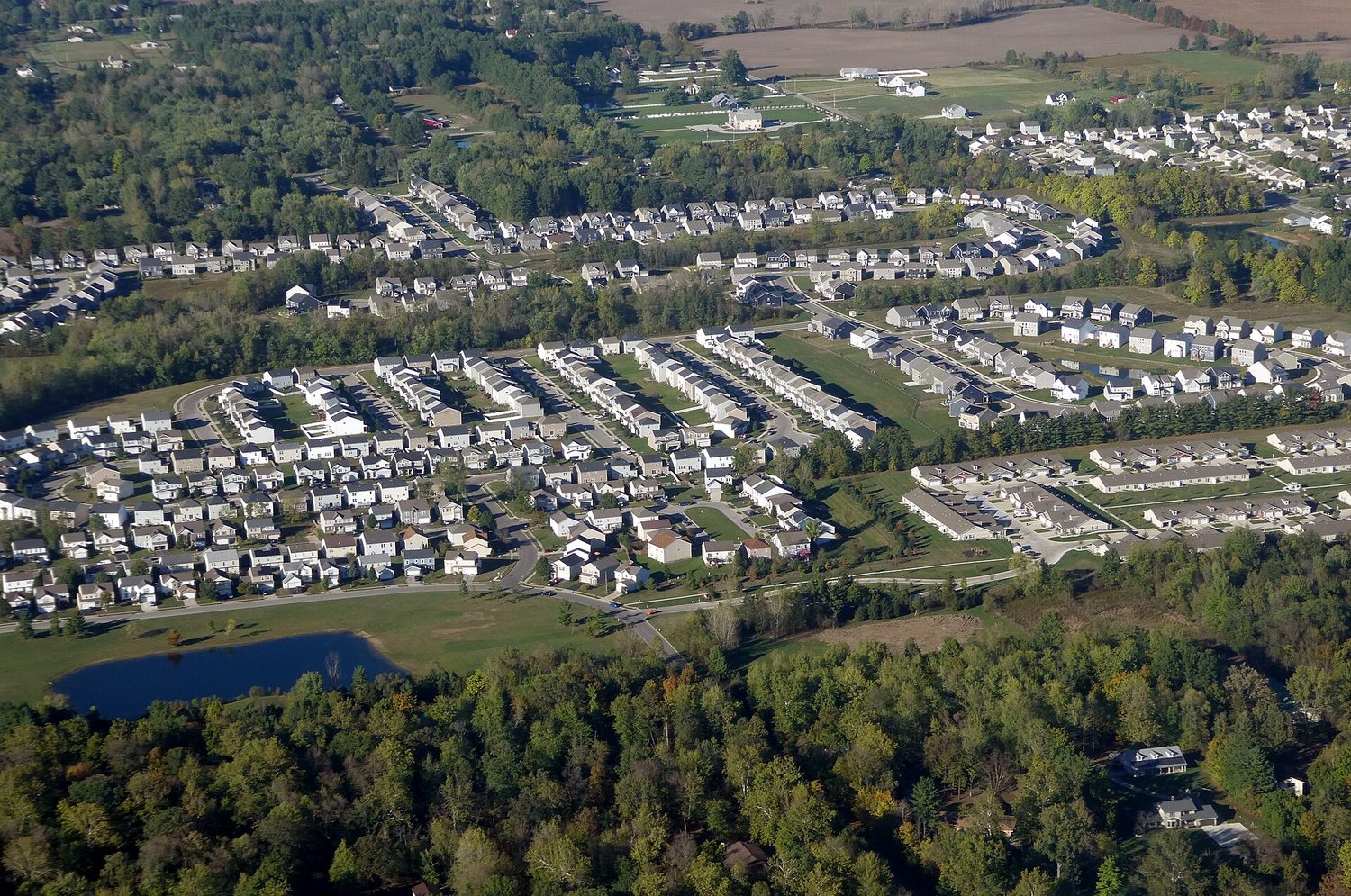
Urbanization 城市化 replaces natural land with impervious surfaces 不透水面 (roads, buildings), increasing runoff and flooding, creating urban heat islands 热岛, and generating pollution and waste. Urban sprawl consumes farmland and habitat. It also strains the hydrologic cycle 水循环: a dense city depletes local water, and heavy groundwater pumping near a coast draws seawater into the aquifer - saltwater intrusion 海水入侵 - which can ruin a freshwater supply.

العربية

التحضر يحل محل الأراضي الطبيعية بـالأسطح غير النافذة (الطرق والمباني)، مما يزيد الجريان السطحي والفيضانات، ويخلق جزر الحرارة الحضرية، وينتج التلوث والنفايات. الانتشار الحضري يستهلك الأراضي الزراعية والموائل. كما يضغط على الدورة الهيدرولوجية: المدينة الكثيفة تستنزف المياه المحلية، وضخ المياه الجوفية الثقيل بالقرب من الساحل يسحب مياه البحر إلى الخزان المائي - تداخل المياه المالحة - الذي يمكن أن يدمر إمدادات المياه العذبة.

منظر جوي لمنازل فردية منخفضة الكثافة تمتد حتى الأفق فوق الحقول السابقة
الانتشار الحضري: انتشار السكن فوق الأراضي الزراعية السابقة، مما يختم التربة بحيث تتدفق الأمطار بدلاً من امتصاصها
Vocabulary · ⁨مفردات⁩ Train · ⁨تدريب⁩
English العربية
urban sprawl/ˈɜːbən sprɔːl/ الانتشار الحضري
5.11

Ecological Footprints · ⁨البصمة البيئية⁩

Syllabus · ⁨المنهج⁩
English

Enduring Understanding (EIN-2): When humans use natural resources, they alter natural systems.

Learning Objective EIN-2.N: Explain the variables measured in an ecological footprint.

  • EIN-2.N.1 Ecological footprints compare resource demands and waste production required for an individual or a society.
العربية

الفهم الدائم (EIN-2): عندما يستخدم البشر الموارد الطبيعية، فإنهم يغيرون الأنظمة الطبيعية.

الهدف التعليمي EIN-2.N: اشرح المتغيرات المقاسة في البصمة البيئية.

  • EIN-2.N.1 تقارن البصمات البيئية بين طلبات الموارد وإنتاج النفايات المطلوب لفرد أو مجتمع.

Source: College Board AP Course and Exam Description · ⁨المصدر: وصف دورة وامتحان College Board AP⁩

English

An ecological footprint 生态足迹 measures the land and water a person or population needs to supply resources and absorb wastes. Wealthy, high-consumption nations have much larger footprints. If everyone's footprint exceeds Earth's capacity, resources are being used unsustainably.

Worked example. Earth provides roughly $1.6$ global hectares (gha) of biocapacity per person. If the average person's footprint is $2.7\ \text{gha}$, humanity is demanding about $\tfrac{2.7}{1.6}\approx1.7$ Earths – living beyond what the planet can renew. Worse, if everyone consumed like a high-income nation at $8\ \text{gha}$ per person, it would take $\tfrac{8}{1.6}=5$ Earths – exactly why footprint-per-person is the key sustainability yardstick.

العربية

البصمة البيئية تقيس الأرض والماء اللذين يحتاجهما شخص أو مجموعة لتزويد الموارد وامتصاص النفايات. الدول الغنية ذات الاستهلاك العالي لديها بصمات أكبر بكثير. إذا تجاوزت بصمة الجميع قدرة الأرض، يتم استخدام الموارد بشكل غير مستدام.

مثال محلول. توفر الأرض حوالي $1.6$ هكتار حيوي عالمي (gha) لكل شخص من القدرة الحيوية. إذا كانت بصمة الشخص المتوسط $2.7\ \text{gha}$، فإن البشرية تطلب ما يقارب $\tfrac{2.7}{1.6}\approx1.7$ كواكب أرض - تعيش بما يتجاوز ما يمكن للكوكب تجديده. الأسوأ، إذا استهلك الجميع مثل دول الدخل المرتفع بمعدل $8\ \text{gha}$ لكل شخص، فستحتاج $\tfrac{8}{1.6}=5$ كواكب أرض - وهذا بالضبط السبب في أن البصمة للفرد هي مقياس الاستدامة الرئيسي.

5.12

Introduction to Sustainability · ⁨مقدمة في الاستدامة⁩

Syllabus · ⁨المنهج⁩
English

Enduring Understanding (STB-1): Humans can mitigate their impact on land and water resources through sustainable use.

Learning Objective STB-1.A: Explain the concept of sustainability.

  • STB-1.A.1 Sustainability refers to humans living on Earth and their use of resources without depletion of the resources for future generations. Environmental indicators that can guide humans to sustainability include biological diversity, food production, average global surface temperatures and $\text{CO}_2$ concentrations, human population, and resource depletion.
  • STB-1.A.2 Sustainable yield is the amount of a renewable resource that can be taken without reducing the available supply.
العربية

الفهم الدائم (STB-1): يمكن للبشر تخفيف تأثيرهم على موارد الأرض والمياه من خلال الاستخدام المستدام.

الهدف التعليمي STB-1.A: اشرح مفهوم الاستدامة.

  • STB-1.A.1 يشير مصطلح الاستدامة إلى عيش البشر على الأرض واستخدامهم للموارد دون استنزافها للأجيال القادمة. وتشمل المؤشرات البيئية التي يمكن أن توجه البشر نحو الاستدامة: التنوع البيولوجي، والإنتاج الغذائي، ومتوسط درجات حرارة سطح العالم، وتركيزات $\text{CO}_2$، والسكان البشرية، واستنزاف الموارد.
  • STB-1.A.2 الإنتاج المستدام هو مقدار المورد المتجدد الذي يمكن أخذه دون تقليل الإمداد المتاح.

Source: College Board AP Course and Exam Description · ⁨المصدر: وصف دورة وامتحان College Board AP⁩

English

Sustainability 可持续性 means meeting present needs without harming future generations' ability to meet theirs. It balances environmental health, economic viability, and social equity, using resources no faster than they can be replaced.

العربية

الاستدامة تعني تلبية الاحتياجات الحالية دون الإضرار بقدرة الأجيال القادمة على تلبية احتياجاتها. وهي توازن بين الصحة البيئية والجدوى الاقتصادية والإنصاف الاجتماعي، باستخدام الموارد بسرعة لا تتجاوز قدرتها على الاستبدال.

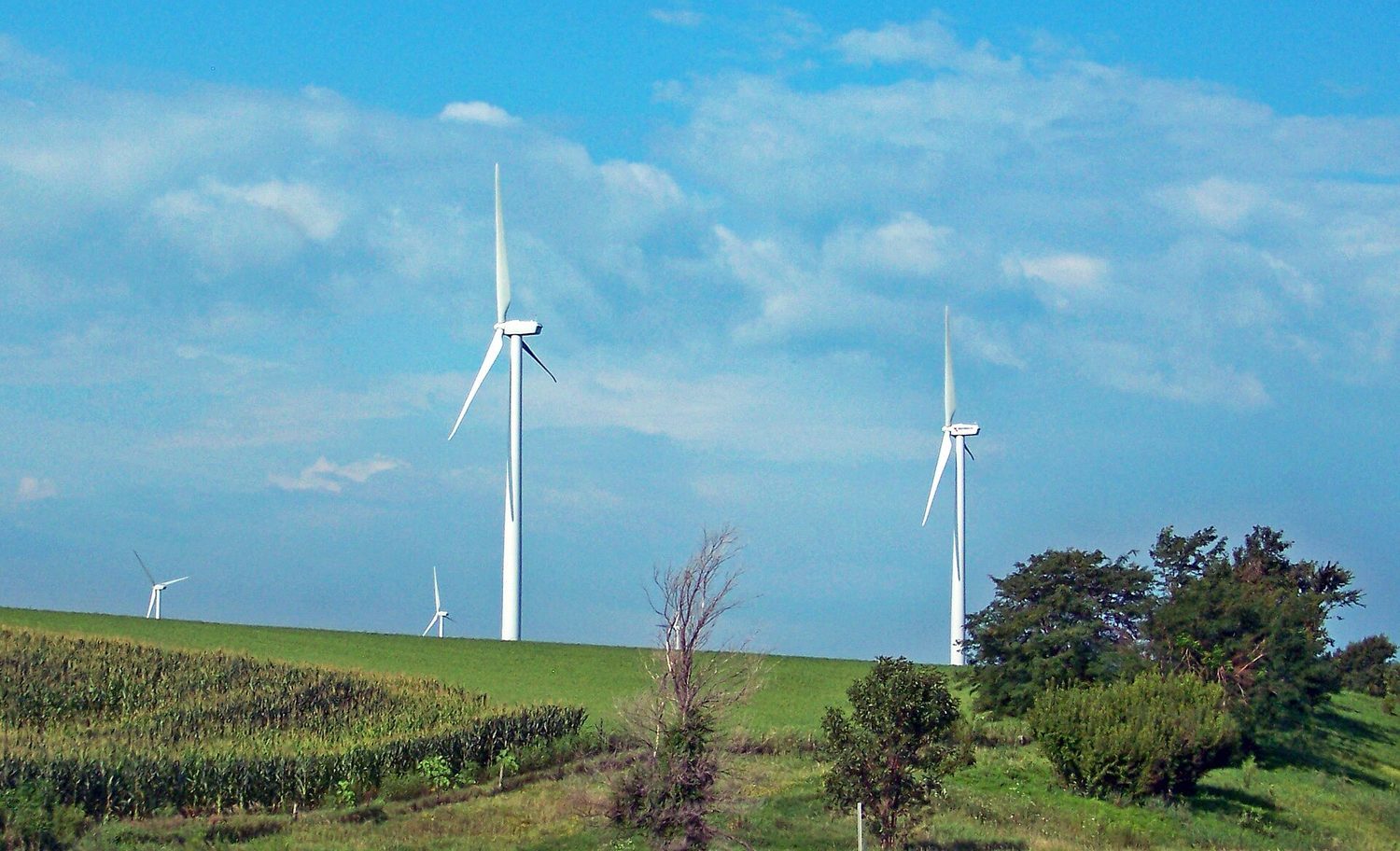
توربينات الرياح في الأراضي الزراعية: الاستخدام المستدام للموارد يلبي الاحتياجات الحالية دون حجب مستقبل الأجيال القادمة
Vocabulary · ⁨مفردات⁩ Train · ⁨تدريب⁩
English العربية
Sustainability/səˌsteɪnəˈbɪlɪti/ الاستدامة
permeable pavement/ˈpɜːməbl ˈpeɪvmənt/ الأرصفة النفاذة
green roofs/ɡriːn ruːfs/ الأسطح الخضراء
Integrated pest management/ˈɪntɪɡreɪtɪd pest ˈmænɪdʒmənt/ إدارة الآفات المتكاملة
crop rotation/krɒp rəʊˈteɪʃn/ تدوير المحاصيل
contour plowing/ˈkɒntʊə ˈplaʊɪŋ/ الحرث حسب الخطوط المستوية
terracing/ˈterɪsɪŋ/ درج التلال
Aquaculture/ˈækwəkʌltʃə/ الاستزراع المائي
selective cutting/sɪˈlektɪv ˈkʌtɪŋ/ القطع الانتقائي
reforestation/rɪˌfɒrɪˈsteɪʃn/ إعادة الغابة
prescribed burn/prɪˈskraɪbd bɜːn/ الحرق الموصى به
5.13

Methods to Reduce Urban Runoff · ⁨طرق تقليل الجريان السطحي الحضري⁩

Syllabus · ⁨المنهج⁩
English

Enduring Understanding (STB-1): Humans can mitigate their impact on land and water resources through sustainable use.

Learning Objective STB-1.B: Describe methods for mitigating problems related to urban runoff.

  • STB-1.B.1 Methods to increase water infiltration include replacing traditional pavement with permeable pavement, planting trees, increased use of public transportation, and building up, not out.
العربية

الفهم الدائم (STB-1): يمكن للبشر تخفيف تأثيرهم على موارد الأرض والمياه من خلال الاستخدام المستدام.

الهدف التعليمي STB-1.B: صف طرق التخفيف من المشاكل المتعلقة بجريان المياه السطحية الحضرية.

  • STB-1.B.1 تشمل طرق زيادة تسرب الماء: استبدال الرصف التقليدي بالرصف النفاذ، وزراعة الأشجار، وزيادة استخدام وسائل النقل العام، والبناء لأعلى وليس للخارج.

Source: College Board AP Course and Exam Description · ⁨المصدر: وصف دورة وامتحان College Board AP⁩

English

Reduce runoff with permeable pavement 透水路面, rain gardens and green roofs 绿色屋顶, retention ponds, and preserved vegetation. These let water soak in, filtering pollutants and recharging groundwater instead of flooding streams.

العربية

قلل الجريان السطحي باستخدام الأرصفة المنفذة وحدائق المطر والأسقف الخضراء وبرك الاحتجاز والأعشاب المحفوظة. تسمح هذه للمياه بالترشح، وتصفية الملوثات وإعادة شحن المياه الجوفية بدلاً من إحداث فيضانات في المجاري المائية.

5.14

Integrated Pest Management · ⁨الإدارة المتكاملة للآفات⁩

Syllabus · ⁨المنهج⁩
English

Enduring Understanding (STB-1): Humans can mitigate their impact on land and water resources through sustainable use.

Learning Objective STB-1.C: Describe integrated pest management.

  • STB-1.C.1 Integrated pest management (IPM) is a combination of methods used to effectively control pest species while minimizing the disruption to the environment. These methods include biological, physical, and limited chemical methods such as biocontrol, intercropping, crop rotation, and natural predators of the pests.

Learning Objective STB-1.D: Describe the benefits and drawbacks of integrated pest management (IPM).

  • STB-1.D.1 The use of integrated pest management (IPM) reduces the risk that pesticides pose to wildlife, water supplies, and human health.
  • STB-1.D.2 Integrated pest management (IPM) minimizes disruptions to the environment and threats to human health but can be complex and expensive.
العربية

الفهم الدائم (STB-1): يمكن للبشر تخفيف تأثيرهم على موارد الأرض والمياه من خلال الاستخدام المستدام.

الهدف التعليمي STB-1.C: صف الإدارة المدمجة للآفات.

  • STB-1.C.1 الإدارة المدمجة للآفات (IPM) هي مزيج من الطرق المستخدمة للسيطرة الفعالة على أنواع الآفات مع تقليل الاضطراب في البيئة. تشمل هذه الطرق الطرق البيولوجية والفيزيائية والكيميائية المحدودة مثل المكافحة الحيوية، والزراعة المختلطة، وتناوب المحاصيل، والمفترسات الطبيعية للآفات.

الهدف التعليمي STB-1.D: صف فوائد وعيوب الإدارة المدمجة للآفات (IPM).

  • STB-1.D.1 يقلل استخدام الإدارة المدمجة للآفات (IPM) من المخاطر التي تمثلها المبيدات على الحياة البرية ومصادر المياه والصحة البشرية.
  • STB-1.D.2 تقلل الإدارة المدمجة للآفات (IPM) من الاضطرابات في البيئة والتهديدات للصحة البشرية، لكنها قد تكون معقدة وباهظة الثمن.

Source: College Board AP Course and Exam Description · ⁨المصدر: وصف دورة وامتحان College Board AP⁩

English

Integrated pest management 综合虫害管理 (IPM) combines methods – biological controls (natural predators), crop rotation, limited targeted pesticides, and monitoring – to control pests with less chemical use, slowing resistance and protecting non-target species.

العربية

الإدارة المتكاملة للآفات (IPM) تجمع بين الطرق - التحكم البيولوجي (الافتراس الطبيعي)، وتناوب المحاصيل، ومبيدات مستهدفة محدودة، والمراقبة - للسيطرة على الآفات بـأقل استخدام كيميائي، مما يبطئ المقاومة ويحمي الأنواع غير المستهدفة.

5.15

Sustainable Agriculture · ⁨الزراعة المستدامة⁩

Syllabus · ⁨المنهج⁩
English

Enduring Understanding (STB-1): Humans can mitigate their impact on land and water resources through sustainable use.

Learning Objective STB-1.E: Describe sustainable agricultural and food production practices.

  • STB-1.E.1 The goal of soil conservation is to prevent soil erosion. Different methods of soil conservation include contour plowing, windbreaks, perennial crops, terracing, no-till agriculture, and strip cropping.
  • STB-1.E.2 Strategies to improve soil fertility include crop rotation and the addition of green manure and limestone.
  • STB-1.E.3 Rotational grazing is the regular rotation of livestock between different pastures in order to avoid overgrazing in a particular area.
العربية

الفهم الدائم (STB-1): يمكن للبشر تخفيف تأثيرهم على موارد الأرض والمياه من خلال الاستخدام المستدام.

الهدف التعليمي STB-1.E: صف ممارسات الإنتاج الزراعي والغذائي المستدام.

  • STB-1.E.1 الهدف من الحفاظ على التربة هو منع تآكل التربة. تشمل طرق الحفاظ على التربة: الحرث على خطوط الكنتور، والحواجز المضادة للرياح، والمحاصيل المعمرة، والتدرجات الزراعية، والزراعة بدون حرث، والزراعة الشريطية.
  • STB-1.E.2 تشمل استراتيجيات تحسين خصوبة التربة تناوب المحاصيل وإضافة الأسمدة الخضراء والطباشير.
  • STB-1.E.3 الرعي الدوار هو التناوب المنتظم للمواشي بين مراعي مختلفة لتجنب الرعي المفرط في منطقة معينة.

Source: College Board AP Course and Exam Description · ⁨المصدر: وصف دورة وامتحان College Board AP⁩

English

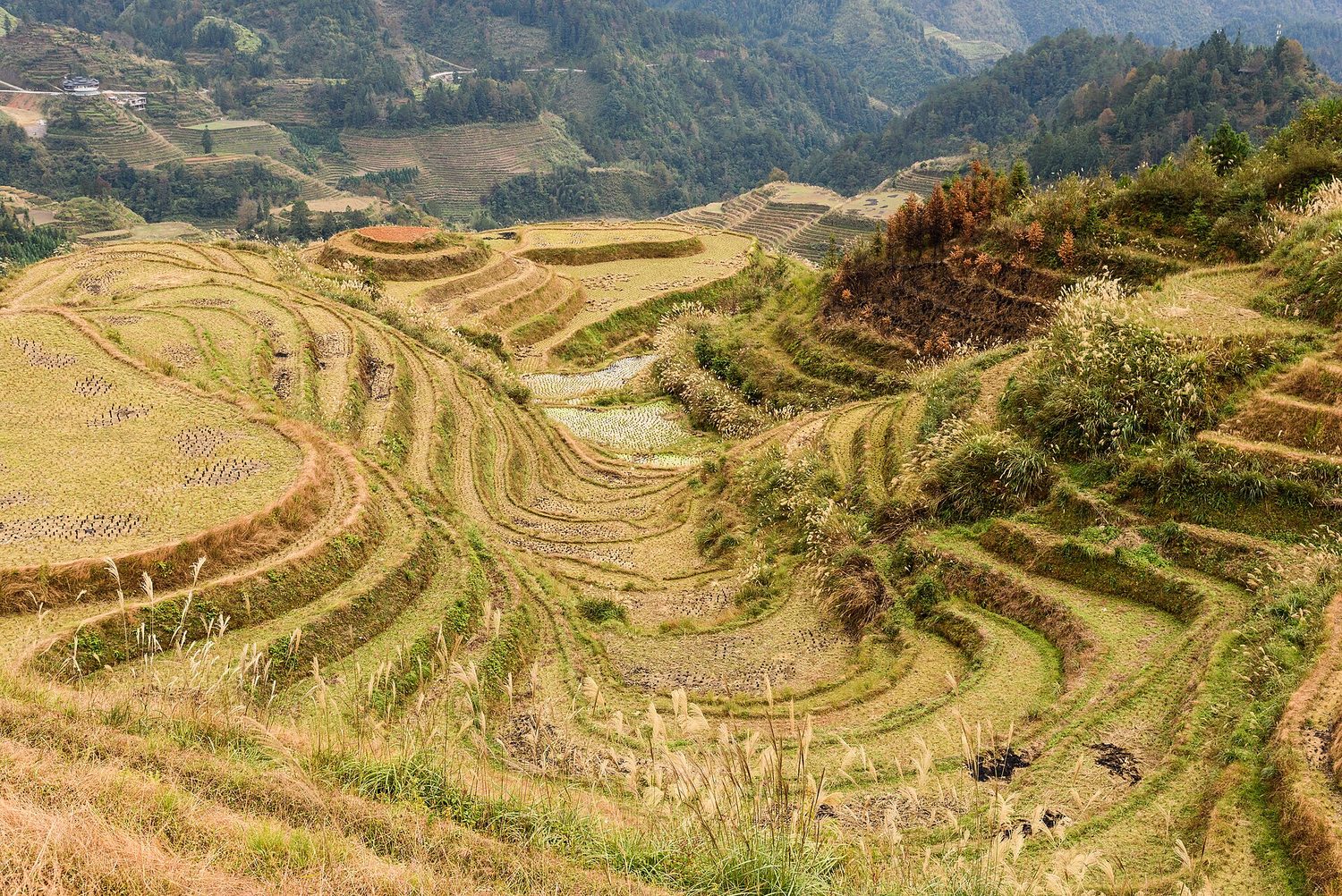
Sustainable farming protects soil and water: crop rotation 轮作, cover crops, contour plowing 等高耕作, terracing 梯田, reduced tillage, and agroforestry. These cut erosion, maintain fertility, and reduce chemical inputs.

العربية

الزراعة المستدامة تحمي التربة والمياه: تناوب المحاصيل، ومحاصيل التغطية، والحرث حسب الكنتورات، والترسيحات، والتقليل من الحرث، وزراعة الغابات. تقلل هذه التعرية، وتحافظ على خصوبة التربة، وتقلل المدخلات الكيميائية.

حقول أرز خضراء مصفوفة على شكل مدرجات منحنية مستوية تتبع كنتورات منحدر جبلي حاد
مدرجات الأرز تقسم المنحدر الحاد إلى مدرجات مستوية، بحيث تبقى الماء والتربة في مكانها بدلاً من التعرية نحو الأسفل
5.16

Aquaculture · ⁨الثروة السمكية⁩

Syllabus · ⁨المنهج⁩
English

Enduring Understanding (STB-1): Humans can mitigate their impact on land and water resources through sustainable use.

Learning Objective STB-1.F: Describe the benefits and drawbacks of aquaculture.

  • STB-1.F.1 Aquaculture has expanded because it is highly efficient, requires only small areas of water, and requires little fuel.
  • STB-1.F.2 Aquaculture can contaminate wastewater, and fish that escape may compete or breed with wild fish. The density of fish in aquaculture can lead to increases in disease incidences, which can be transmitted to wild fish.
العربية

الفهم الدائم (STB-1): يمكن للبشر تخفيف تأثيرهم على موارد الأرض والمياه من خلال الاستخدام المستدام.

هدف التعلم STB-1.F: وصف مزايا وعيوب تربية الأحي المائية.

  • STB-1.F.1 توسعت تربية الأحي المائية لأنها فعالة للغاية، وتحتاج إلى مساحات صغيرة من المياه، ولا تتطلب وقودًا كثيرًا.
  • STB-1.F.2 يمكن أن تلوث تربية الأحي المائية مياه الصرف، وقد تتنافس الأسماك التي تهرب أو تتزاوج مع الأسماك البرية. قد يؤدي كثافة الأسماك في تربية الأحي المائية إلى زيادة معدلات الأمراض، والتي يمكن أن تنتقل إلى الأسماك البرية.

Source: College Board AP Course and Exam Description · ⁨المصدر: وصف دورة وامتحان College Board AP⁩

English

Aquaculture 水产养殖 (fish farming) eases pressure on wild stocks and is efficient, but can pollute water with waste and antibiotics, spread disease to wild fish, and destroy habitat (like mangroves for shrimp farms).

العربية

الثروة السمكية (تربية الأسماك) تخفف الضغط على المخزون البري وهي فعالة، لكنها قد تلوث المياه بالنفايات والمضادات الحيوية، وتنتشر الأمراض للأسماك البرية، وتدمر الموائل (مثل غابات المانغروف لمزارع الجمبري).

5.17

Sustainable Forestry · ⁨الغاب المستدامة⁩

Syllabus · ⁨المنهج⁩
English

Enduring Understanding (STB-1): Humans can mitigate their impact on land and water resources through sustainable use.

Learning Objective STB-1.G: Describe methods for mitigating human impact on forests.

  • STB-1.G.1 Some of the methods for mitigating deforestation include reforestation, using and buying wood harvested by ecologically sustainable forestry techniques, and reusing wood.
  • STB-1.G.2 Methods to protect forests from pathogens and insects include integrated pest management (IPM) and the removal of affected trees.
  • STB-1.G.3 Prescribed burn is a method by which forests are set on fire under controlled conditions in order to reduce the occurrence of natural fires.
العربية

الفهم الدائم (STB-1): يمكن للبشر تخفيف تأثيرهم على موارد الأرض والمياه من خلال الاستخدام المستدام.

هدف التعلم STB-1.G: وصف طرق التخفيف من تأثير البشر على الغابات.

  • STB-1.G.1 تشمل بعض طرق الحد من إزالة الغابات إعادة التشجير، واستخدام وشراء الخشب المُقطَع بتقنيات غابات مستدامة بيئيًا، وإعادة استخدام الخشب.
  • STB-1.G.2 تشمل الطرق المستخدمة لحماية الغابات من الأمراض الحشرية والإفراط في الآفات الإدارة المتكاملة للآفات (IPM) وإزالة الأشجار المتضررة.
  • STB-1.G.3 حرق المخططات هو طريقة يتم فيها إشعال حرائق في الغابات تحت ظروف مضبوطة لتقليل حدوث الحرائق الطبيعية.

Source: College Board AP Course and Exam Description · ⁨المصدر: وصف دورة وامتحان College Board AP⁩

English

Sustainable forestry keeps forests productive: selective cutting 择伐 instead of clearcutting, replanting, leaving buffer strips along streams, and long rotation times. It maintains habitat, prevents erosion, and lets forests keep providing ecosystem services.

Forests also absorb pollutants and store carbon dioxide, so cutting and burning them releases $\text{CO}_2$ and worsens climate change. Ways to mitigate deforestation include reforestation 重新造林 (replanting), buying wood from ecologically sustainable forestry, and reusing wood. A separate tool is the prescribed burn 计划烧除: deliberately burning a forest under controlled conditions to clear fuel, so a later wildfire cannot grow catastrophic.

العربية

الغاب المستدامة تحافظ على إنتاجية الغابات: القطع الانتقائي بدلاً من القطع الشامل، وزراعة الأشجار، وترك أشرطة عازلة على طول المجاري المائية، وأوقات دوران طويلة. تحافظ على الموائل وتمنع التعرية وتسمح للغابات بالاستمرار في تقديم خدمات النظام البيئي.

الغابات تمتص الملوثات وتخزن ثاني أكسيد الكربون، لذا فإن قطعها وحرقها يحرر $\text{CO}_2$ ويزيد من تغير المناخ. طرق تخفيف إزالة الغابات تشمل إعادة التشجير (إعادة زراعة)، وشراء الخشب من غابات مستدامة بيئيًا، وإعادة استخدام الخشب. أداة منفصلة هي الحرق المنظم: حرق الغابة عمدًا تحت ظروف متحكم بها لت清除 الوقود، حتى لا تنمو حرائق الغابات اللاحقة بشكل كارثي.

5.17

Exam tips · ⁨نصائح للامتحان⁩

English
  • Explain the tragedy of the commons — shared, unowned resources get overused — and how rules/ownership prevent it.
  • Weigh the trade-offs of the green revolution, irrigation (salinisation, aquifer depletion), and mining/urbanisation.
  • Compute an ecological footprint in "number of Earths" (footprint ÷ biocapacity per person); it is measured per person.
  • List the harms of deforestation (erosion, flooding, lost habitat, more CO₂).
  • Define sustainability (meeting needs without harming future generations) and give sustainable methods (IPM, crop rotation, quotas).
العربية
  • اشرح مأساة-commons — الموارد المشتركة غير المملوكة تُستخدم بشكل مفرط — وكيفية منع القواعد/الملكية لذلك.
  • راجع مقايض الثورة الخضراء، والري (التملح، استنزاف الخزانات المائية)، والتعدين/التحضر.
  • احسب بصمة بيئية بـ"عدد الكواكب" (البصمة ÷ القدرة الحيوية للفرد); تقاس لكل فرد.
  • اذكر أضرار إزالة الغابات (التعرية، الفيضانات، فقدان الموائل، زيادة CO₂).
  • عرّف الاستدامة (تلبية الاحتياجات دون الإضرار بالأجيال القادمة) وأعطِ طرقًا مستدامة (الإدارة المتكاملة للآفات، تناوب المحاصيل، الحصص).

Interactive lessons on this topic · ⁨دروس تفاعلية حول هذا الموضوع⁩

Work through it step by step, with instant-check exercises. · ⁨ا-working عليه خطوة بخطوة، مع تمارين تحقق فوري.⁩

Past Papers · ⁨أوراق الامتحانات السابقة⁩

More topics in AP Environmental Science · ⁨AP العلوم البيئية⁩ · ⁨المزيد من المواضيع في AP Environmental Science · ⁨AP العلوم البيئية⁩⁩

Log in or create account · ⁨تسجيل الدخول أو إنشاء حساب⁩

IGCSE, A-Level & AP