Skip to content · ⁨الانتقال إلى المحتوى⁩

The Living World: Biodiversity · ⁨العالم الحي: التنوع البيولوجي⁩

AP Environmental Science · ⁨AP العلوم البيئية⁩ · Topic 2 · ⁨الموضوع 2⁩

Video lesson for this topic · ⁨درس فيديو لهذا الموضوع⁩ Open the video page · ⁨افتح صفحة الفيديو⁩
7:58

العالم الحي: التنوع البيولوجي

بركان يدفع جزيرة جديدة لأعلى من البحر. في البداية لا يوجد شيء عليها — صخرة عارية، لا تربة، لا حياة على الإطلاق. بعد خمسين عامًا، أصبحت خضراء. إذن كيف…

English narration · English + 中文 subtitles burned in · ⁨سرد باللغة الإنجليزية · ترجمة مدمجة بالإنجليزية + الصينية⁩

2.1

Introduction to Biodiversity · ⁨مقدمة في التنوع البيولوجي⁩

Syllabus · ⁨المنهج⁩
English

Enduring Understanding (ERT-2): Ecosystems have structure and diversity that change over time.

Learning Objective ERT-2.A: Explain levels of biodiversity and their importance to ecosystems.

  • ERT-2.A.1 Biodiversity in an ecosystem includes genetic, species, and habitat diversity.
  • ERT-2.A.2 The more genetically diverse a population is, the better it can respond to environmental stressors. Additionally, a population bottleneck can lead to a loss of genetic diversity.
  • ERT-2.A.3 Ecosystems that have a larger number of species are more likely to recover from disruptions.
  • ERT-2.A.4 Loss of habitat leads to a loss of specialist species, followed by a loss of generalist species. It also leads to reduced numbers of species that have large territorial requirements.
  • ERT-2.A.5 Species richness refers to the number of different species found in an ecosystem.
العربية

الفهم الدائم (ERT-2): تمتلك النظم البيئية بنية وتنوعًا يتغيران بمرور الوقت.

هدف التعلم ERT-2.A: اشرح مستويات التنوع البيولوجي وأهميتها للنظم البيئية.

  • ERT-2.A.1 يشمل التنوع البيولوجي في النظام البيئي التنوع الجيني والنوعي وتعدد الموائل.
  • ERT-2.A.2 كلما كان السكان أكثر تنوعًا جينيًا، كانت قدرتهم على الاستجابة للضغوط البيئية أفضل. بالإضافة إلى ذلك، يمكن أن يؤدي اختناق السكان إلى فقدان التنوع الجيني.
  • ERT-2.A.3 النظم البيئية التي تحتوي على عدد أكبر من الأنواع تكون أكثر احتمالية للاستعادة بعد الاضطرابات.
  • ERT-2.A.4 يؤدي فقدان الموائل إلى فقدان الأنواع المتخصصة، يليه فقدان الأنواع العامة. كما يؤدي إلى انخفاض أعداد الأنواع التي تتطلب مساحات إقليمية كبيرة.
  • ERT-2.A.5 يشير غنى الأنواع إلى عدد الأنواع المختلفة الموجودة في نظام بيئي معين.
Source: College Board AP Course and Exam Description · ⁨المصدر: وصف دورة وامتحان College Board AP⁩

English

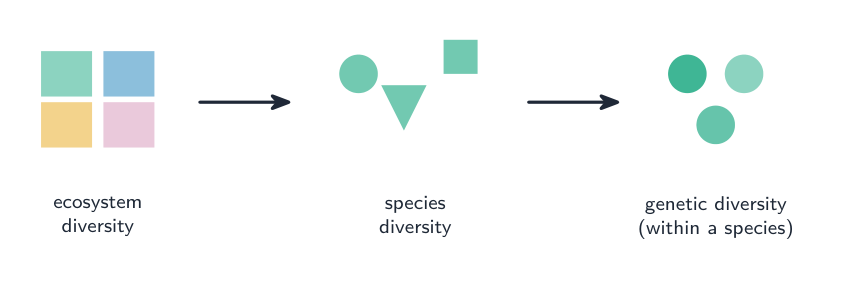
Biodiversity 生物多样性 is the variety of life, measured at three levels:

  • Genetic diversity – variety of genes within a species. More genetic variety means a population can better respond to environmental stressors 环境压力; a population bottleneck 种群瓶颈 (a sharp drop in numbers) throws that variety away and leaves the survivors vulnerable.
  • Species diversity – the number of species (species richness 物种丰富度) and how evenly individuals are spread among them.
  • Habitat diversity – the variety of habitats in a region.

More species-rich ecosystems are more resilient 有韧性的: they recover from disruption more readily, because varied species can fill roles when conditions change. Habitat loss removes species in a predictable order – specialist 特化 species (narrow needs) go first, then the hardier generalist 广适性 species, and species that need large territories decline as their range shrinks.

العربية

التنوع البيولوجي هو تنوع الحياة، يُقاس على ثلاثة مستويات:

  • التنوع الجيني – تنوع الجينات داخل نوع ما. كلما زادت التنوع الجيني، كان بإمكان Population (تجمع سكاني) الاستجابة بشكل أفضل لـ العوامل المجهدة البيئية؛ أما عنق الزجاجة السكانية (انخفاض حاد في الأعداد) فيستبعد هذا التنوع ويجعل الناجين عرضة للخطر.
  • التنوع النوعي – عدد الأنواع (ثراء الأنواع) وكيفية توزيع الأفراد بالتساوي بينها.
  • تنوع الموائل – تنوع الموائل في منطقة ما.

النظم البيئية الغنية بالأنواع أكثر مرونة: تستعيد عافيتها بسرعة من الاضطرابات، لأن التنوع النوعي يسمح بملء الأدوار عند تغير الظروف. يؤدي فقدان الموائل إلى اختفاء أنواع بترتيب متوقع – ت先去 الأنواع المتخصصة (ذات الاحتياجات الضيقة)، ثم الأنواع العامة الأكثر صلابة، وتتناقص الأنواع التي تحتاج إلى مساحات واسعة مع انكماش نطاقها.

التنوع البيولوجي له ثلاثة مستويات: جيني، نوعي، وبيئي
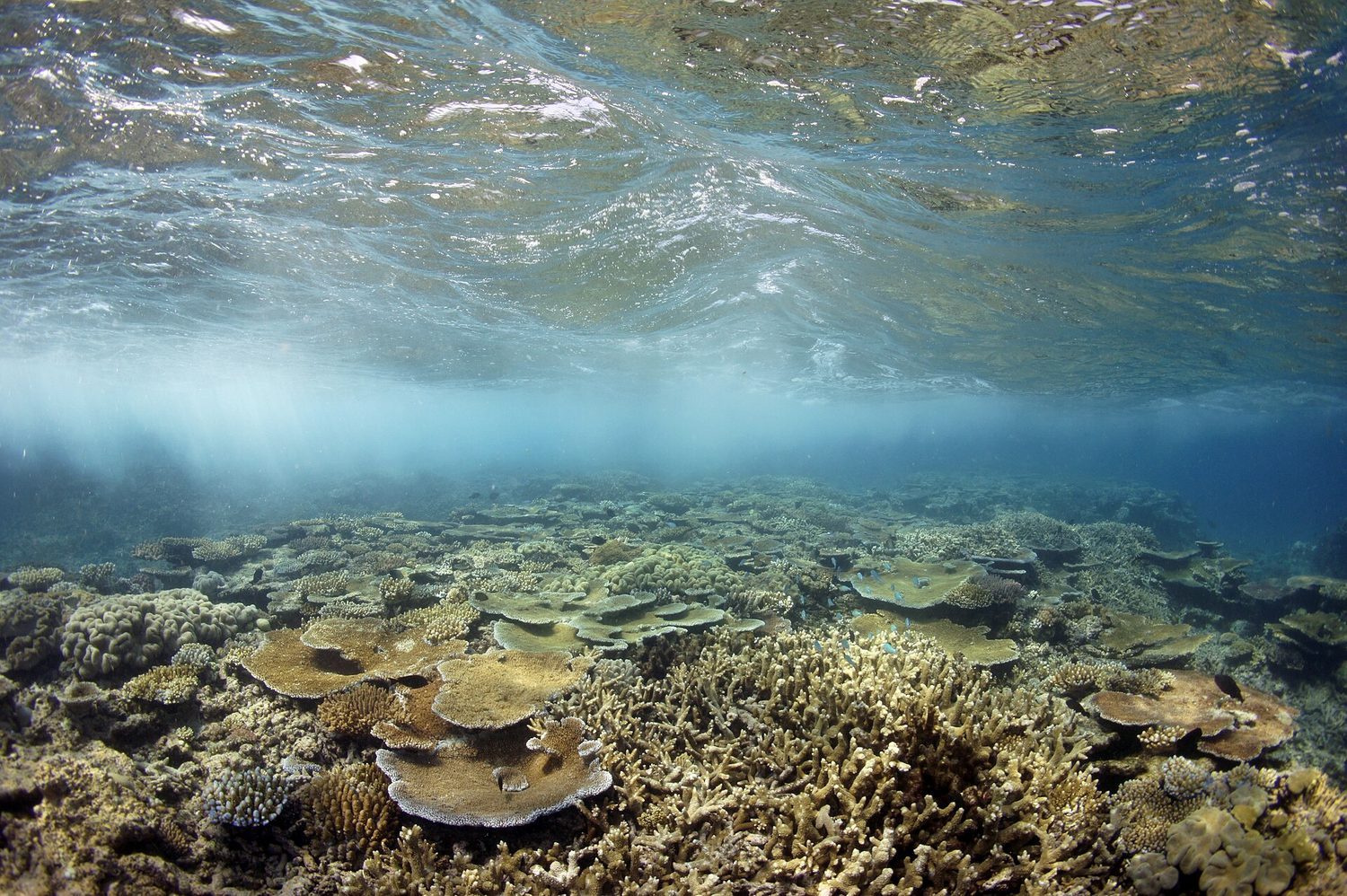
شعاب مرجانية: التنوع البيولوجي العالي يركز الأنواع والخدمات البيئية في مساحة صغيرة
شعاب مرجانية: التنوع البيولوجي العالي يركز الأنواع والخدمات ekosistem في مساحة صغيرة
Vocabulary · ⁨مفردات⁩ Train · ⁨تدريب⁩
English العربية
Biodiversity/ˌbaɪəʊdaɪˈvɜːsɪti/ التنوع البيولوجي
environmental stressors/enˌvaɪrənˈmentl ˈstresəz/ العواملdensifying البيئية
population bottleneck/ˌpɒpjʊˈleɪʃn ˈbɒtəlnek/ عنق الزجاجة السكاني
species richness/ˈspiːsiːz ˈrɪtʃnəs/ تنوع الأنواع
resilient/rɪˈsɪlɪənt/ مرن / قابل للتأهل
specialist/ˈspeʃəlɪst/ متخصص
generalist/ˈdʒenərəlɪst/ عام
Ecosystem services/ˈiːkəʊsɪstəm ˈsɜːvɪsɪz/ خدمات النظام البيئي
Anthropogenic/ˌænθrəpəˈdʒenɪk/ بشري المنشأ
2.2

Ecosystem Services · ⁨خدمات النظام البيئي⁩

Syllabus · ⁨المنهج⁩
English

Enduring Understanding (ERT-2): Ecosystems have structure and diversity that change over time.

Learning Objective ERT-2.B: Describe ecosystem services.

  • ERT-2.B.1 There are four categories of ecosystem services: provisioning, regulating, cultural, and supporting.

Learning Objective ERT-2.C: Describe the results of human disruptions to ecosystem services.

  • ERT-2.C.1 Anthropogenic activities can disrupt ecosystem services, potentially resulting in economic and ecological consequences.
العربية

الفهم الدائم (ERT-2): تمتلك النظم البيئية بنية وتنوعًا يتغيران بمرور الوقت.

هدف التعلم ERT-2.B: صف خدمات النظم البيئية.

  • ERT-2.B.1 هناك أربعة فئات لخدمات النظم البيئية: التزويدية، والتنظيمية، والثقافية، والداعمة.

هدف التعلم ERT-2.C: صف نتائج اضطراب البشر لخدمات النظم البيئية.

  • ERT-2.C.1 يمكن للنشاطات البشرية أن تعطل خدمات النظم البيئية، مما قد يؤدي إلى عواقب اقتصادية وبيئية.

Source: College Board AP Course and Exam Description · ⁨المصدر: وصف دورة وامتحان College Board AP⁩

English

Ecosystem services 生态系统服务 are the free benefits nature gives people, in four categories:

  • Provisioning – products: food, fresh water, timber, fibre.
  • Regulating – processes that keep conditions stable: climate regulation, water filtration, pollination, flood control.
  • Cultural – non-material value: recreation, beauty, spiritual and educational value.
  • Supporting – the services that make the others possible: nutrient cycling, soil formation, photosynthesis.

Anthropogenic 人为的 (human-caused) activities can disrupt these services, with real economic and ecological costs – for example, losing pollinators forces farmers to pay for pollination that bees once did for free.

العربية

خدمات النظام البيئي هي المنافع المجانية التي تقدمها الطبيعة للبشر، في أربعة فئات:

  • التزويدية – المنتجات: الغذاء، المياه العذبة، الأخشاب، الألياف.
  • التنظيمية – العمليات التي تحافظ على استقرار الظروف: تنظيم المناخ، تصفية المياه، التلقيح، التحكم في الفيضانات.
  • الثقافية – القيمة غير المادية: الترفيه، الجمال، القيمة الروحية والتعليمية.
  • الداعمة – الخدمات التي تجعل الأخرى ممكنة: دورة العناصر الغذائية، تكوين التربة، البناء الضوئي.

يمكن للنشاطات البشرية (المسبوبة بشرياً) أن تعطل هذه الخدمات، مما يكلف تكاليف اقتصادية و بيئية حقيقية – فعلى سبيل المثال، فقدان الملقحات يجبر المزارعين على دفع ثمن عملية التلقيح التي كانت تقوم بها النحل مجاناً.

2.3

Island Biogeography · ⁨جيوغرافيا الجزر⁩

Syllabus · ⁨المنهج⁩
English

Enduring Understanding (ERT-2): Ecosystems have structure and diversity that change over time.

Learning Objective ERT-2.D: Describe island biogeography.

  • ERT-2.D.1 Island biogeography is the study of the ecological relationships and distribution of organisms on islands, and of these organisms' community structures.
  • ERT-2.D.2 Islands have been colonized in the past by new species arriving from elsewhere.

Learning Objective ERT-2.E: Describe the role of island biogeography in evolution.

  • ERT-2.E.1 Many island species have evolved to be specialists versus generalists because of the limited resources, such as food and territory, on most islands. The long-term survival of specialists may be jeopardized if and when invasive species, typically generalists, are introduced and outcompete the specialists.
العربية

الفهم الدائم (ERT-2): تمتلك النظم البيئية بنية وتنوعًا يتغيران بمرور الوقت.

هدف التعلم ERT-2.D: صف جيوغرافيا الجزر البيئية.

  • ERT-2.D.1 جيوغرافيا الجزر البيئية هي دراسة العلاقات البيئية وتوزيع الكائنات الحية على الجزر، هيكلة مجتمعات هذه الكائنات.
  • ERT-2.D.2 تم استعمار الجزر في الماضي من قبل أنواع جديدة وصلت من أماكن أخرى.

هدف التعلم ERT-2.E: صف دور جيوغرافيا الجزر البيئية في التطور.

  • ERT-2.E.1 تطورت العديد من أنواع الجزر لتكون متخصصة بدلاً من عامة بسبب الموارد المحدودة، مثل الغذاء والأراضي، في معظم الجزر. قد يكون البقاء طويل الأمد للأنواع المتخصصة مهددًا إذا تم إدخال أنواع غازية، وهي عادةً أنواع عامة، وتنافسها.

Source: College Board AP Course and Exam Description · ⁨المصدر: وصف دورة وامتحان College Board AP⁩

English
Island biogeography

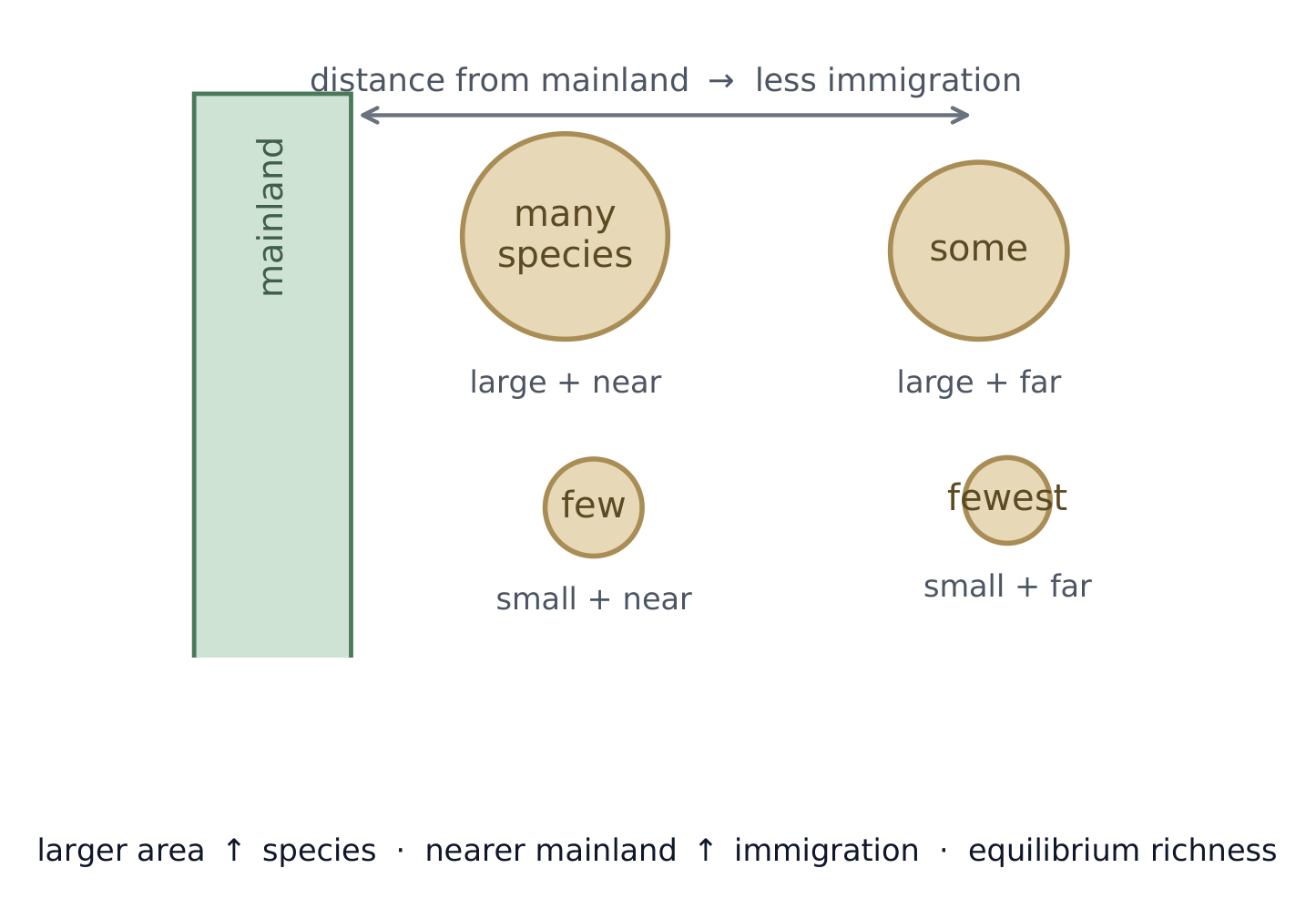
Island biogeography 岛屿生物地理学 studies how many species an island (or any isolated habitat patch) holds. The number settles at a balance between two rates:

  • Immigration of new species – higher for islands closer to the mainland.
  • Extinction of resident species – lower on larger islands.

So big, near islands hold the most species; small, remote ones the fewest. Isolation also drives evolution: island species often become specialists because resources are limited, and many are endemic 特有 – found nowhere else. That makes them fragile. When an invasive species 入侵物种 (usually a tough generalist) arrives, it can outcompete the specialists, which have nowhere else to go.

العربية
جيوغرافيا الجزر

تدرس جيوغرافيا الجزر عدد الأنواع التي تحتوي عليها جزيرة (أو أي رقعة موائل معزولة). يستقر العدد عند توازن بين معدلين:

  • الهجرة للأنواع الجديدة – أعلى للجزر الأقرب إلى اليابسة الرئيسية.
  • الانقراض للأنواع المستقرة – أقل في الجزر الكبرى.

لذلك، تحتفظ الجزر الكبيرة القريبة بأكثر الأنواع؛ بينما تحتوي الجزر الصغيرة البعيدة على الأقل. كما أن العزلة تقود التطور: غالباً ما تصبح أنواع الجزر متخصصة بسبب محدودية الموارد، والعديد منها محلي – لا يوجد في مكان آخر. وهذا يجعلها هشة. عندما يصل نوع غريب (عادةً ما يكون عاماً صلباً)، يمكنه منافسة المتخصصين الذين ليس لديهم去处 أخرى.

الجزر الأكبر والأقرب تحتوي على أنواع أكثر، مما يوازن بين الهجرة والانقراض
الجزر الأكبر والأقرب تحتوي على المزيد من الأنواع، متوازنة الهجرة مقابل الانقراض
Vocabulary · ⁨مفردات⁩ Train · ⁨تدريب⁩
English العربية
Island biogeography/ˈaɪlənd ˌbaɪəʊdʒɪˈɒɡrəfi/ بيوغرافيا الجزر
endemic/enˈdemɪk/ محلي
invasive species/ɪnˈveɪsɪv ˈspiːsiːz/ أنواع غازية
range of tolerance/reɪndʒ ɒv ˈtɒlərəns/ مدى التحمل
optimal range/ˈɒptɪml reɪndʒ/ النطاق الأمثل
zones of stress/zəʊnz ɒv stres/ مناطق الضغط
Ecological tolerance/ˌekəˈlɒdʒɪkl ˈtɒlərəns/ التحمل البيئي
Periodic/ˌpɪərɪˈɒdɪk/ دوري
Episodic/ˌepɪˈsɒdɪk/ متقطع
Random/ˈrændəm/ عشوائي
migration/maɪˈɡreɪʃn/ الهجرة
adaptation/ˌædæpˈteɪʃn/ تكيف
natural selection/ˈnætʃərəl sɪˈlekʃn/ الانتخاب الطبيعي
2.4

Ecological Tolerance · ⁨التحمل البيئي⁩

Syllabus · ⁨المنهج⁩
English

Enduring Understanding (ERT-2): Ecosystems have structure and diversity that change over time.

Learning Objective ERT-2.F: Describe ecological tolerance.

  • ERT-2.F.1 Ecological tolerance refers to the range of conditions, such as temperature, salinity, flow rate, and sunlight that an organism can endure before injury or death results.
  • ERT-2.F.2 Ecological tolerance can apply to individuals and to species.
العربية

الفهم الدائم (ERT-2): تمتلك النظم البيئية بنية وتنوعًا يتغيران بمرور الوقت.

هدف التعلم ERT-2.F: صف التحمل البيئي.

  • ERT-2.F.1 يشير التحمل البيئي إلى نطاق الظروف، مثل درجة الحرارة والملوحة ومعدل التدفق والضوء، التي يمكن للكائن الحي تحملها قبل حدوث إصابة أو الوفاة.
  • ERT-2.F.2 يمكن أن ينطبق التحمل البيئي على الأفراد وعلى الأنواع.

Source: College Board AP Course and Exam Description · ⁨المصدر: وصف دورة وامتحان College Board AP⁩

English

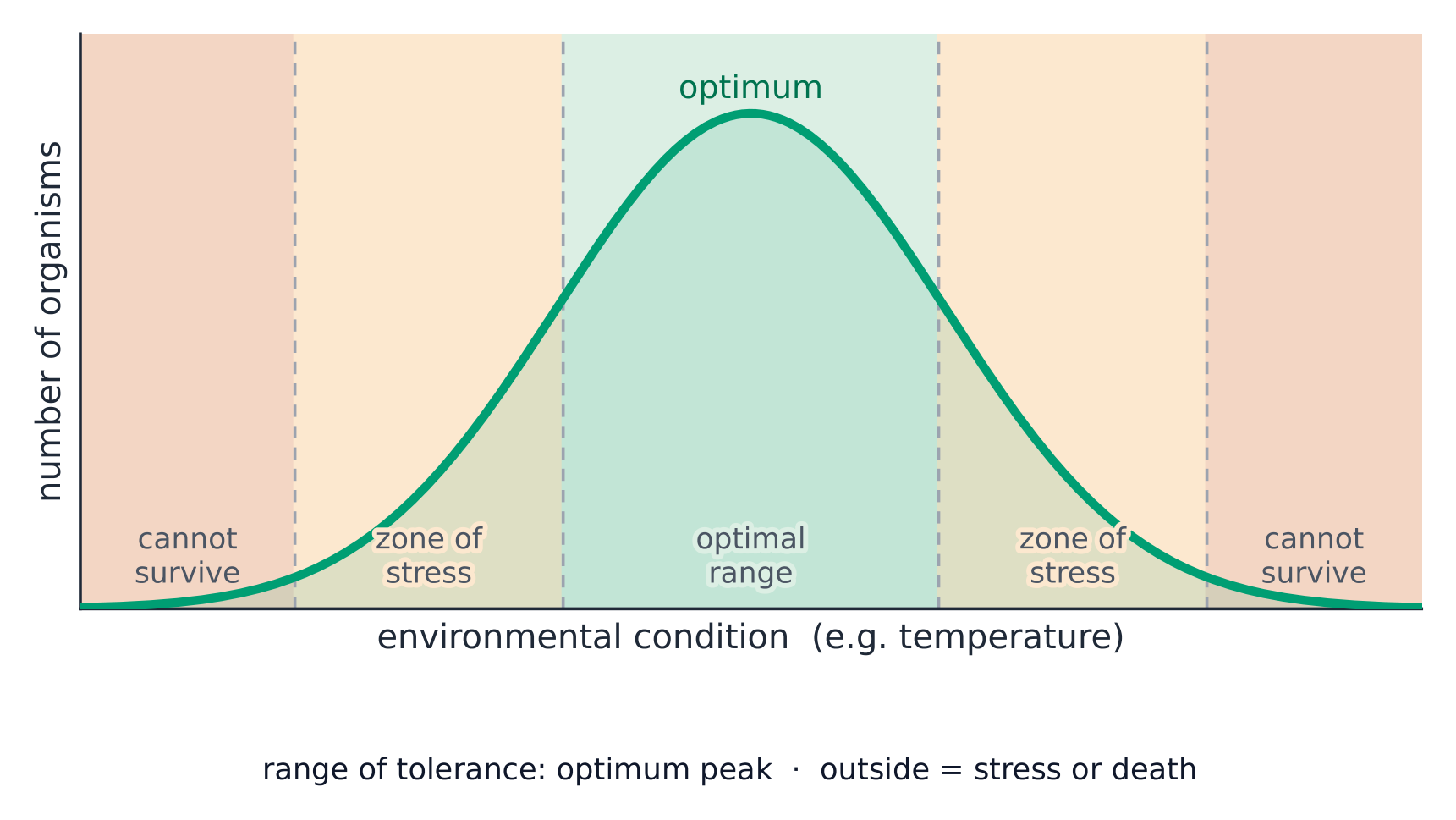
Every species has a range of tolerance 耐受范围 – the span of conditions (temperature, salinity, pH, sunlight) it can survive. Near the middle is an optimal range 最适范围 where individuals thrive; toward the edges are zones of stress 胁迫区 where they survive but struggle to grow or reproduce; beyond the limits they die. Ecological tolerance 生态耐受性 applies both to a single individual and to a whole species, and it decides where an organism can live and how it copes with change.

العربية

لكل نوع مدى تحمل – نطاق الظروف (درجة الحرارة، الملوحة، الحموضة، ضوء الشمس) التي يمكنه البقاء فيها. بالقرب من المنتصف يوجد مدى مثالي تزدهر فيه الأفراد؛ نحو الحواف توجد مناطق الإجهاد حيث يبقون على قيد الحياة لكنهم يواجهون صعوبة في النمو أو التكاثر؛ وخارج الحدود يموتون. ينطبق التحمل البيئي على الفرد الواحد وعلى النوع ككل، ويحدد أين يمكن للكائن الحي أن يعيش وكيف يتكيف مع التغيير.

في نطاقها الأمثل تزدهر النوع؛ عند الحدود يتعرض للإجهاد، ثم لا يستطيع البقاء على قيد الحياة
في المدى المثالي يزدهر النوع؛ نحو الحدود يتعرض للإجهاد، ثم لا يستطيع البقاء
2.5

Natural Disruptions to Ecosystems · ⁨الاضطرابات الطبيعية للنظم البيئية⁩

Syllabus · ⁨المنهج⁩
English

Enduring Understanding (ERT-2): Ecosystems have structure and diversity that change over time.

Learning Objective ERT-2.G: Explain how natural disruptions, both short- and long-term, impact an ecosystem.

  • ERT-2.G.1 Natural disruptions to ecosystems have environmental consequences that may, for a given occurrence, be as great as, or greater than, many human-made disruptions.
  • ERT-2.G.2 Earth system processes operate on a range of scales in terms of time. Processes can be periodic, episodic, or random.
  • ERT-2.G.3 Earth's climate has changed over geological time for many reasons.
  • ERT-2.G.4 Sea level has varied significantly as a result of changes in the amount of glacial ice on Earth over geological time.
  • ERT-2.G.5 Major environmental change or upheaval commonly results in large swathes of habitat changes.
  • ERT-2.G.6 Wildlife engages in both short- and long-term migration for a variety of reasons, including natural disruptions.
العربية

الفهم الدائم (ERT-2): تمتلك النظم البيئية بنية وتنوعًا يتغيران بمرور الوقت.

هدف التعلم ERT-2.G: اشرح كيف تؤثر الاضطرابات الطبيعية، قصيرة وطويلة الأمد، على النظام البيئي.

  • ERT-2.G.1 للاضطرابات الطبيعية تأثيرات بيئية قد تكون، بالنسبة لحدوث معين، مساوية أو أكبر من许多 الاضطرابات التي يسببها الإنسان.
  • ERT-2.G.2 تعمل عمليات نظام الأرض على نطاقات متنوعة من حيث الزمن. يمكن أن تكون العمليات دورية أو عرضية أو عشوائية.
  • ERT-2.G.3 تغير مناخ الأرض عبر الزمن الجيولوجي لأسباب عديدة.
  • ERT-2.G.4 تذبذبت مستويات سطح البحر بشكل كبير نتيجة لتغيرات كمية الجليد الجليدي على الأرض عبر الزمن الجيولوجي.
  • ERT-2.G.5 تؤدي التغييرات أو الاضطرابات البيئية الكبيرة عادةً إلى تغييرات واسعة النطاق في الموائل.
  • ERT-2.G.6 تقوم الحياة البرية بالهجرة قصيرة وطويلة الأمد لأسباب متعددة، بما في ذلك الاضطرابات الطبيعية.

Source: College Board AP Course and Exam Description · ⁨المصدر: وصف دورة وامتحان College Board AP⁩

English

Natural events disrupt ecosystems across every timescale, and a single natural event can rival or exceed a human-made one. Earth's processes come in three timing patterns:

  • Periodic 周期性 – regular cycles (seasons, tides).
  • Episodic 偶发性 – occasional, irregular events (fires, floods, volcanic eruptions).
  • Random 随机 – no pattern (a meteor strike).

Over geological time, Earth's climate has shifted for many reasons, and sea level has risen and fallen with the amount of glacial ice – each change reshaping large swaths of habitat. Wildlife responds by migration 迁徙, moving short or long distances to follow conditions.

العربية

تحدث الأحداث الطبيعية اضطراباً في النظم البيئية عبر جميع المقاييس الزمنية، ويمكن أن يقارن أو يتجاوز حدث طبيعي واحد حدثاً من صنع الإنسان. تأتي عمليات الأرض بثلاثة أنماط زمنية:

  • دورية – دورات منتظمة (المواسم، المد والجزر).
  • عُرضية – أحداث متفرقة وغير منتظمة (الحرائق، الفيضانات، الثورانات البركانية).
  • عشوائية – بدون نمط (اصطدام نيزك).

على مدى الزمن الجيولوجي، انتقل مناخ الأرض لأسباب عديدة، وارتفعت وانخفضت مستويات البحار مع كمية الجليد الجليدي – كل تغيير يعيد تشكيل مساحات شاسعة من الموائل. تستجيب الحياة البرية عن طريق الهجرة، حيث تتحرك لمسافات قصيرة أو طويلة لمتابعة الظروف.

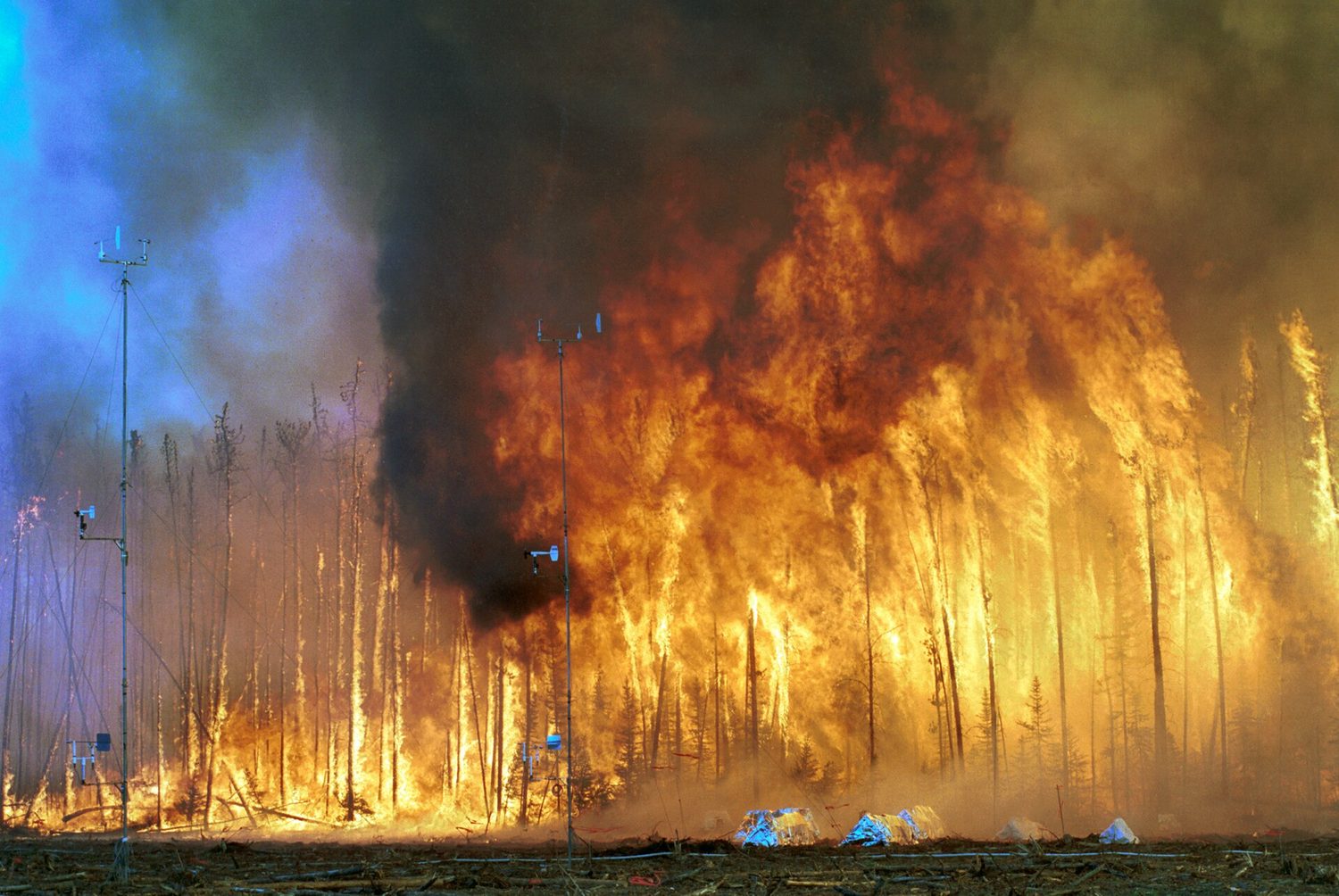
A wall of flame and smoke racing through the tops of a conifer forest
حريق تاجي يمر عبر غابة. الحريق اضطراب طبيعي عُرضي، والعديد من الأنواع متكيفة معه
2.6

Adaptations · ⁨التكيفات⁩

Syllabus · ⁨المنهج⁩
English

Enduring Understanding (ERT-2): Ecosystems have structure and diversity that change over time.

Learning Objective ERT-2.H: Describe how organisms adapt to their environment.

  • ERT-2.H.1 Organisms adapt to their environment over time, both in short- and long-term scales, via incremental changes at the genetic level.
  • ERT-2.H.2 Environmental changes, either sudden or gradual, may threaten a species' survival, requiring individuals to alter behaviors, move, or perish.
العربية

الفهم الدائم (ERT-2): تمتلك النظم البيئية بنية وتنوعًا يتغيران بمرور الوقت.

هدف التعلم ERT-2.H: صف كيف تتكيف الكائنات الحية مع بيئتها.

  • ERT-2.H.1 تتكيف الكائنات الحية مع بيئتها بمرور الوقت، على نطاقات قصيرة وطويلة الأمد، من خلال تغييرات تدريجية على المستوى الجيني.
  • ERT-2.H.2 التغيرات البيئية، سواء كانت مفاجئة أو تدريجية، قد تهدد بقاء نوع ما، مما يتطلب من الأفراد تغيير سلوكياتهم، أو الهجرة، أو الموت.

Source: College Board AP Course and Exam Description · ⁨المصدر: وصف دورة وامتحان College Board AP⁩

English

An adaptation 适应 is an inherited trait that improves survival and reproduction in an environment. Adaptations arise through natural selection 自然选择 – incremental genetic change accumulating over generations, not within a single lifetime. When the environment changes, individuals must alter their behaviour, move, or die; if change comes faster than a population can adapt, it declines. A periodic disturbance such as fire is often part of a healthy cycle, and many species are adapted to it (some pine cones open only in a fire's heat).

العربية

التكيف هو سمة موروثة تحسن البقاء والتكاثر في بيئة معينة. تنشأ التكيفات عبر الاختيار الطبيعي – تغيير جيني تدريجي يتراكم عبر الأجيال، وليس خلال حياة فرد واحدة. عندما تتغير البيئة، يجب على الأفراد تغيير سلوكهم، أو الانتقال، أو الموت؛ إذا جاء التغيير أسرع مما يمكن للتجمع أن يتكيف معه، فإنه يتراجع. غالباً ما يكون الاضطراب الدوري مثل الحريق جزءاً من دورة صحية، والعديد من الأنواع متكيفة ضدّه (بعض المخاريط الصنوبرية تفتح فقط في حرارة الحريق).

2.7

Ecological Succession · ⁨التعاقب البيئي⁩

Syllabus · ⁨المنهج⁩
English

Enduring Understanding (ERT-2): Ecosystems have structure and diversity that change over time.

Learning Objective ERT-2.I: Describe ecological succession.

  • ERT-2.I.1 There are two main types of ecological succession: primary and secondary succession.
  • ERT-2.I.2 A keystone species in an ecosystem is a species whose activities have a particularly significant role in determining community structure.
  • ERT-2.I.3 An indicator species is a plant or animal that, by its presence, abundance, scarcity, or chemical composition, demonstrates that some distinctive aspect of the character or quality of an ecosystem is present.

Learning Objective ERT-2.J: Describe the effect of ecological succession on ecosystems.

  • ERT-2.J.1 Pioneer members of an early successional species commonly move into unoccupied habitat and over time adapt to its particular conditions, which may result in the origin of new species.
  • ERT-2.J.2 Succession in a disturbed ecosystem will affect the total biomass, species richness, and net productivity over time.
العربية

الفهم الدائم (ERT-2): تمتلك النظم البيئية بنية وتنوعًا يتغيران بمرور الوقت.

هدف التعلم ERT-2.I: وصف التطور البيئي.

  • ERT-2.I.1 هناك نوعان رئيسيان من التطور البيئي: التطور الأولي والتطور الثانوي.
  • ERT-2.I.2 النوع المحوري في النظام البيئي هو نوع تكون له أنشطة دورًا بارزًا بشكل خاص في تحديد بنية المجتمع.
  • ERT-2.I.3 النوع المؤشر هو نبات أو حيوان يُظهر، من خلال وجوده أو توافره أو ندرة تركيبه الكيميائي، أن بعض الجوانب المميزة لطبيعة أو جودة النظام البيئي موجودة.

هدف التعلم ERT-2.J: وصف تأثير التطور البيئي على النظم البيئية.

  • ERT-2.J.1 الأعضاء الرواد من الأنواع المبكرة في التطور عادةً ما يستوطنون موائل غير مشغولة، ومع مرور الوقت يتكيفون مع ظروفها الخاصة، مما قد يؤدي إلى نشأة أنواع جديدة.
  • ERT-2.J.2 سيؤثر التطور في نظام بيئي مضطرب على إجمالي الكتلة الحيوية، وغنى الأنواع، والإنتاجية الصافية بمرور الوقت.

Source: College Board AP Course and Exam Description · ⁨المصدر: وصف دورة وامتحان College Board AP⁩

English
Ecological succession

Ecological succession 生态演替 is the gradual, orderly change in a community over time:

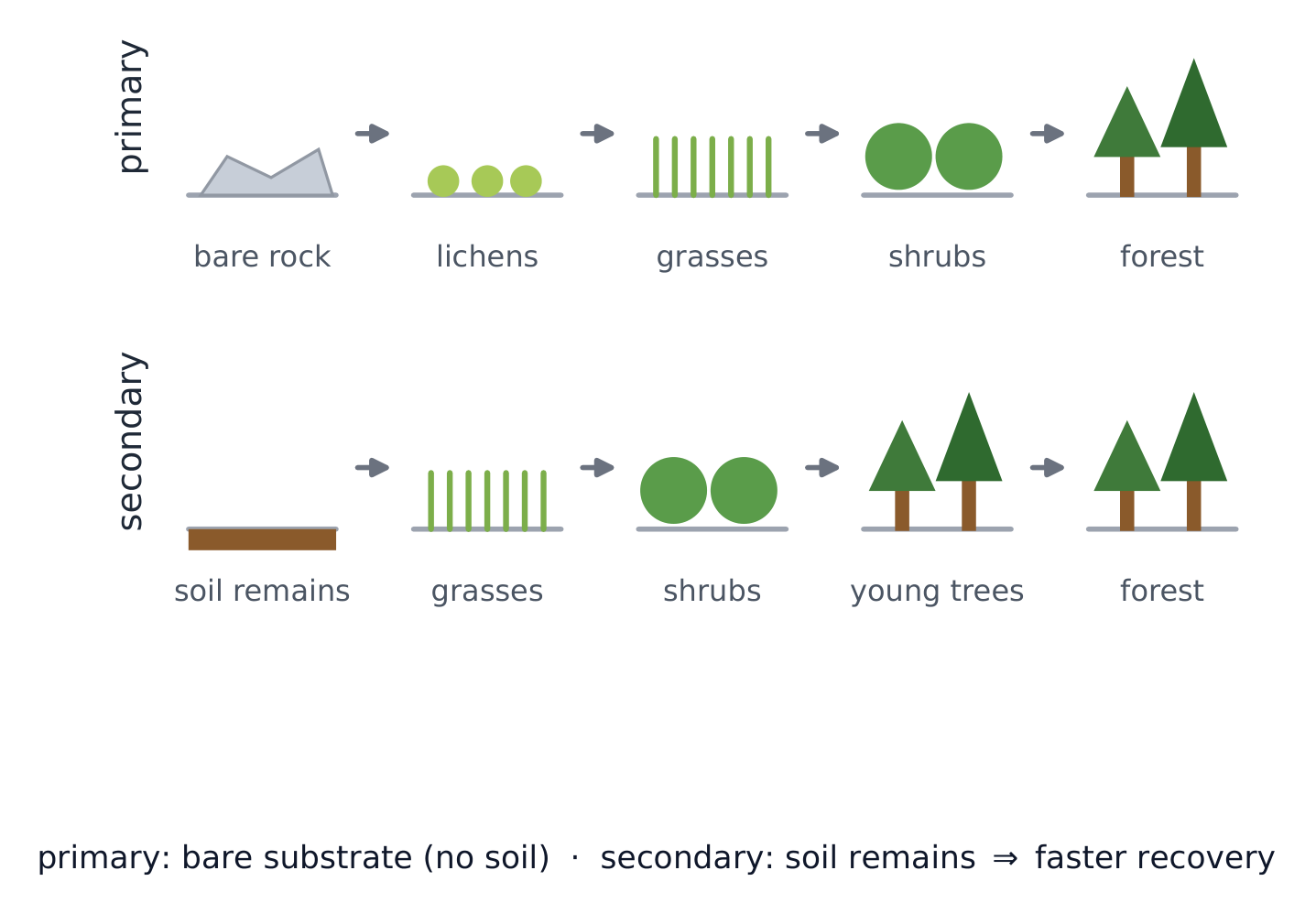
  • Primary succession 初级演替 starts on bare rock with no soil – after a glacier retreats or lava cools. Pioneer species 先锋物种 such as lichens 地衣 arrive first and slowly build soil. It is slow.
  • Secondary succession 次级演替 follows a disturbance that leaves the soil intact – after a fire or abandoned farming – so it is much faster.

Succession tends toward a relatively stable climax community 顶极群落. Two special roles shape a community out of proportion to their numbers: a keystone species 关键种, whose activities hold the community structure together (remove it and the community collapses – sea otters keeping urchins in check), and an indicator species 指示物种, whose presence or health signals the condition of the whole ecosystem (lichens vanish where the air is polluted).

Worked example. A pond holds 3 fish species with 5, 3, and 2 individuals ($N=10$). Simpson's Diversity Index $=1-\sum\left(\tfrac{n}{N}\right)^2 = 1-\left[(0.5)^2+(0.3)^2+(0.2)^2\right] = 1-0.38 = 0.62$. A value near 1 means high diversity; near 0 means one species dominates. Adding a fourth, evenly-sized species would push the index higher.

العربية
الاستقرار البيئي

التعاقب البيئي هو التغير التدريجي والمنظم في المجتمع بمرور الوقت:

  • التعاقب الأولي يبدأ على صخر عاري بدون تربة – بعد تراجع جليدي أو تبريد الحمم. تصل الأنواع الرائدة مثل الأشنات أولاً تبني التربة ببطء. وهو بطيء.

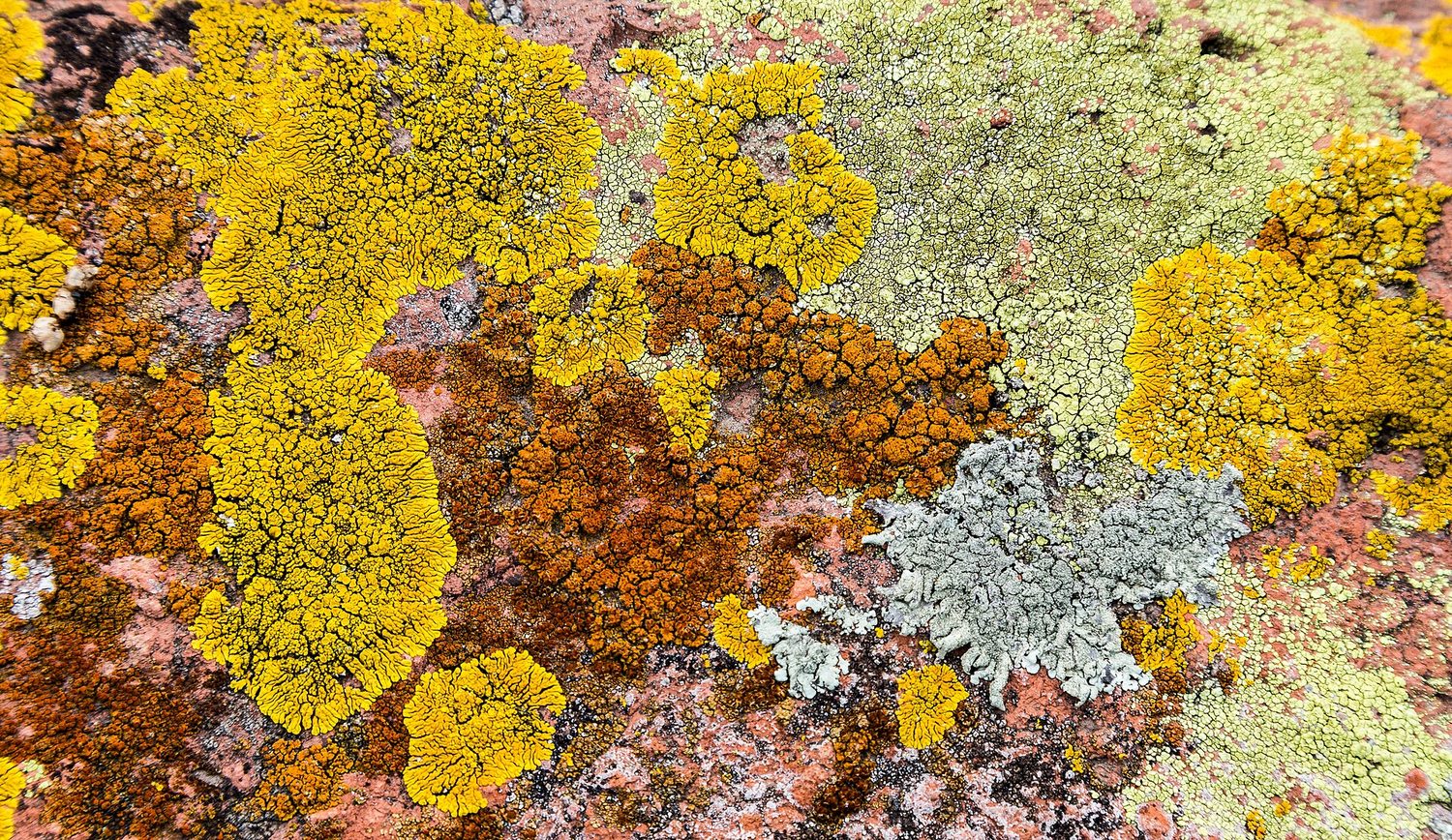
A rock surface covered in yellow, orange, and pale-green crusty patches of lichen أشنة تنمو مباشرة على صخر عاري. باعتبارها أنواعًا رائدة، تقوم بتفتيت الصخر ببطء وبناء أول طبقة رقيقة من التربة.

  • التتابع الثانوي يحدث بعد اضطراب يترك التربة سليمة – مثل الحرائق أو الأراضي الزراعية المهجورة – لذا فهو أسرع بكثير.

يميل التتابع نحو مجتمع ذروة مستقر نسبيًا. دوران خاصان يشكلان المجتمع بشكل غير متناسب مع أعدادهما: نوع محوري، whose activities hold the community structure together (remove it and the community collapses – sea otters keeping urchins in check)، ونوع مؤشر، whose presence or health signals the condition of the whole ecosystem (lichens vanish where the air is polluted).

التتابع الأولي يبني من صخر عاري؛ التابع الثانوي يعيد النمو من تربة متبقية

مثال محلل. بركة مائية تحتوي على 3 أنواع سمكية بأعداد 5 و3 و2 فردًا ($N=10$). مؤشر تنوع سيمبسون $=1-\sum\left(\tfrac{n}{N}\right)^2 = 1-\left[(0.5)^2+(0.3)^2+(0.2)^2\right] = 1-0.38 = 0.62$. القيمة القريبة من 1 تعني تنوعًا عاليًا؛ قريبة من 0 تعني هيمنة نوع واحد. إضافة نوع رابع بنفس الحجم ستدفع المؤشر لأعلى.

Vocabulary · ⁨مفردات⁩ Train · ⁨تدريب⁩
English العربية
Ecological succession/ˌekəˈlɒdʒɪkl səkˈseʃn/ التتابع البيئي
Primary succession/ˈpraɪməri səkˈseʃn/ التطور البيئي الابتدائي
Pioneer species/paɪəˈnɪə ˈspiːsiːz/ الأنواع الرائدة
lichens/ˈlaɪkənz/ الأشنات
Secondary succession/ˈsekəndəri səkˈseʃn/ التطور البيئي الثانوي
climax community/ˈklaɪmæks kəˈmjuːnɪti/ مجتمعة الذروة
keystone species/ˈkiːstəʊn ˈspiːsiːz/ النوع الأساسي
indicator species/ˈɪndɪkeɪtə ˈspiːsiːz/ أنواع الكائنات الدالة
2.7

Exam tips · ⁨نصائح للامتحان⁩

English
  • Describe biodiversity at three levels: genetic, species, and habitat, and link higher diversity to greater resilience.
  • Specialist species (narrow needs) are more vulnerable than generalists when a habitat changes.
  • Distinguish primary succession (bare rock, no soil, slow) from secondary (soil intact, faster).
  • Explain a keystone species (outsized effect) and an indicator species (signals ecosystem health).
  • Name the four ecosystem services (provisioning, regulating, cultural, supporting) with examples.
العربية
  • صف التنوع البيولوجي على ثلاثة مستويات: الجينية، والأنواع، والموائل، واربط التنوع الأعلى بـالمرونة الأكبر.
  • الأنواع المتخصصة (ذات الاحتياجات الضيقة) أكثر عرضة للخطر من الأنواع العامة عند تغير الموطن.
  • فرّق بين التتابع الأولي (صخر عاري، لا تربة، بطيء) والثانوي (تربة سليمة، أسرع).
  • اشرح النوع المحوري (تأثير كبير) والنوع المؤشر (يُشير لصحة النظام البيئي).
  • سمِّ خدمات النظام البيئي الأربعة (التزويدية، والتنظيمية، والثقافية، والداعمة) مع أمثلة.

Interactive lessons on this topic · ⁨دروس تفاعلية حول هذا الموضوع⁩

Work through it step by step, with instant-check exercises. · ⁨ا-working عليه خطوة بخطوة، مع تمارين تحقق فوري.⁩

Past Papers · ⁨أوراق الامتحانات السابقة⁩

More topics in AP Environmental Science · ⁨AP العلوم البيئية⁩ · ⁨المزيد من المواضيع في AP Environmental Science · ⁨AP العلوم البيئية⁩⁩

Log in or create account · ⁨تسجيل الدخول أو إنشاء حساب⁩

IGCSE, A-Level & AP