Skip to content · ⁨الانتقال إلى المحتوى⁩

Evidence, Thesis, and Stylistic Choices · ⁨الأدلة، الأطروحة والخيارات الأسلوبية⁩

AP English Language and Composition · ⁨اللغة الإنجليزية والتأليف (AP)⁩ · Topic 6 · ⁨الموضوع 6⁩

Video lesson for this topic · ⁨درس فيديو لهذا الموضوع⁩ Open the video page · ⁨افتح صفحة الفيديو⁩
5:21

الوحدة 6: الأدلة، الأطروحة، والاختيارات الأسلوبية

الوحدة 6 هي وحدة التوليف، وتحتوي على التمييز الأكثر حدة في المقرر. الموضع والمنظور مختلفان. قد تحمل المصادر…

English narration · English + 中文 subtitles burned in · ⁨سرد باللغة الإنجليزية · ترجمة مدمجة بالإنجليزية + الصينية⁩

6.1

Identifying Claims and Evidence · ⁨تحديد الادعاءات والأدلة⁩

Syllabus · ⁨المنهج⁩
English

Enduring Understanding (CLE-1): Writers make claims about subjects, rely on evidence that supports the reasoning that justifies the claim, and often acknowledge or respond to other, possibly opposing, arguments.

Learning Objective 3.A: Reading – Identify and explain claims and evidence within an argument.

  • CLE-1.P When synthesizing, writers draw upon arguments from multiple sources, strategically select the most relevant information, and combine apt and specific source material as part of their own argument.
  • CLE-1.Q A source provides information for an argument, and some sources are more reliable or credible than others.
  • CLE-1.R A position and a perspective are different. Sources may have the same position on a subject, yet each comes from a different perspective based on their background, interests, and expertise.
  • CLE-1.S When incorporating evidence or sources into an argument, the strongest arguments recognize and acknowledge the biases and limitations of the material and account for those limitations in their reasoning.
  • CLE-1.T The degree to which a source does or does not consider other positions reflects the degree to which that source is biased.
العربية

الفهم الدائم (CLE-1): يطرح الكُتّاب ادعاءات حول موضوعات معينة، ويعتمدون على أدلة تدعم البرهان الذي يبرر الادعاء، وغالبًا ما يعترفون بالرد على حجج أخرى، قد تكون معارضة.

الهدف التعليمي 3.A: القراءة - تحديد وشرح الادعاءات والأدلة داخل الحجة.

  • CLE-1.P عند التوليف، يستند الكُتّاب إلى حجج من مصادر متعددة، ويختارون معلومات ذات صلة بشكل استراتيجي، ويجمعون مواد مصدرية مناسبة ومحددة كجزء من حججتهم الخاصة.
  • CLE-1.Q يوفر المصدر معلومات لحجة معينة، وبعض المصادر أكثر موثوقية أو مصداقية من غيرها.
  • CLE-1.R الموضع والمنظور مختلفان. قد تكون للمصادر نفس الموضع حول موضوع ما، لكن كل منها يأتي من منظور مختلف بناءً على خلفيتها واهتماماتها وخبرتها.
  • CLE-1.S عند دمج الأدلة أو المصادر في الحجة، تتعرف الحجج الأقوى وتقر بميلها وتحدياتها وتضع هذه التحديات في الاعتبار في استدلالها.
  • CLE-1.T مدى مراعاة المصدر أو عدم مراعاته للوضع الأخرى يعكس درجة ميوله.
Source: College Board AP Course and Exam Description · ⁨المصدر: وصف دورة وامتحان College Board AP⁩

English

Unit 6 is the synthesis unit, and it contains the single sharpest distinction in the course.

  • When synthesising, writers draw on arguments from multiple sources, strategically select the most relevant information, and integrate it into their own argument.
  • A source provides information for an argument, and some sources are more reliable or credible than others.
  • A position and a perspective are different. Sources may hold the same position on a subject and yet each come from a different perspective.
  • The strongest arguments recognise and acknowledge the other positions that exist.
  • The degree to which a source considers other positions reflects the degree to which that source is credible - a test you can apply to any source on the exam.
العربية

وحدتي 6 هي وحدة التوليف، وتحتوي على التمييز الأكثر حدة في المقرر.

  • عند التركيب، يستند الكُتّاب إلى حجج من مصادر متعددة، ويختارون استراتيجيًا المعلومات الأكثر صلة، ويدمجونها في حجتهم الخاصة.
  • يوفر المصدر معلومات للحجة، وبعض المصادر أكثر موثوقية أو مصداقية من غيرها.
  • الموقف والمنظور مختلفان. قد تحتفظ المصادر بـ نفس الموقف تجاه موضوع معين ومع ذلك تأتي كل منها من منظور مختلف.
  • الحجج الأقوى تعترف وتقبل المواقف الأخرى الموجودة.
  • درجة اعتبار المصدر للمواقف الأخرى تعكس درجة مصداقيته - اختبار يمكنك تطبيقه على أي مصدر في الامتحان.
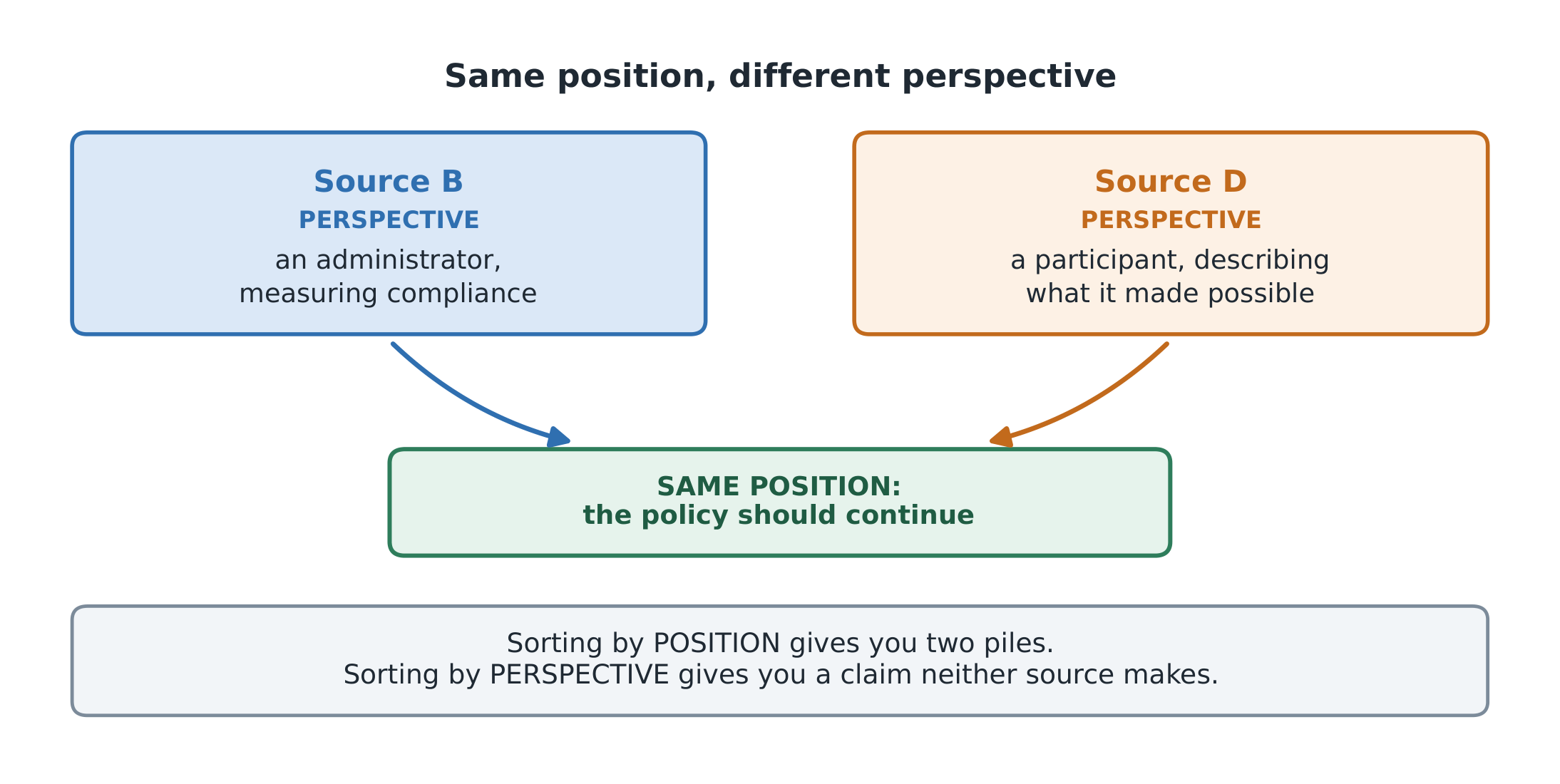
التمييز الذي مبني عليه سؤال التركيب
يمكن لمصدرين أن يتفقوا ولا يزالان يؤديان عملًا مختلفًا تمامًا في حجتك
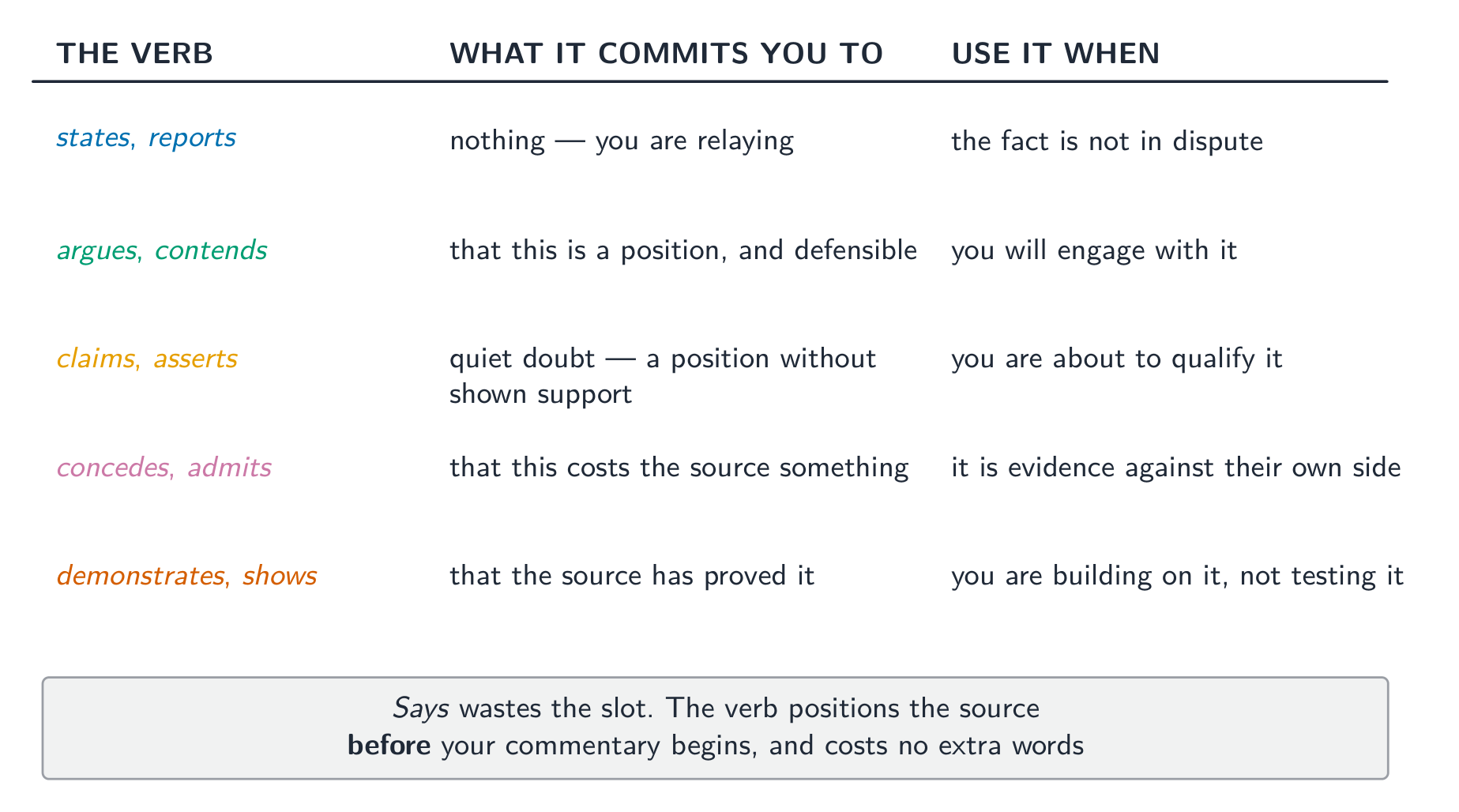
الفعل يوضع المصدر قبل أن يبدأ تعليقك
Explore · ⁨استكشف⁩

Choose the attribution verb that positions the source · ⁨اختر فعل النسب الذي يوضع المصدر فيه⁩

The verb commits you to something about the source's status, before your commentary starts, and costs no extra words. · ⁨الفعل يلتزمك بشيء عن وضع المصدر، قبل أن يبدأ تعليقك، ولا يكلف كلمات إضافية.⁩

6.2

Developing a Paragraph with Claim and Evidence · ⁨تطوير فقرة بالادعاء والدليل⁩

Syllabus · ⁨المنهج⁩
English

Enduring Understanding (CLE-1): Writers make claims about subjects, rely on evidence that supports the reasoning that justifies the claim, and often acknowledge or respond to other, possibly opposing, arguments.

Learning Objective 4.A: Writing – Develop a paragraph that includes a claim and evidence supporting the claim.

  • CLE-1.P When synthesizing, writers draw upon arguments from multiple sources, strategically select the most relevant information, and combine apt and specific source material as part of their own argument.
  • CLE-1.Q A source provides information for an argument, and some sources are more reliable or credible than others.
  • CLE-1.R A position and a perspective are different. Sources may have the same position on a subject, yet each comes from a different perspective based on their background, interests, and expertise.
  • CLE-1.S When incorporating evidence or sources into an argument, the strongest arguments recognize and acknowledge the biases and limitations of the material and account for those limitations in their reasoning.
  • CLE-1.T The degree to which a source does or does not consider other positions reflects the degree to which that source is biased.
العربية

الفهم الدائم (CLE-1): يطرح الكُتّاب ادعاءات حول موضوعات معينة، ويعتمدون على أدلة تدعم البرهان الذي يبرر الادعاء، وغالبًا ما يعترفون بالرد على حجج أخرى، قد تكون معارضة.

الهدف التعليمي 4.A: الكتابة - تطوير فقرة تتضمن ادعاءً وأدلة تدعم هذا الادعاء.

  • CLE-1.P عند التوليف، يستند الكُتّاب إلى حجج من مصادر متعددة، ويختارون معلومات ذات صلة بشكل استراتيجي، ويجمعون مواد مصدرية مناسبة ومحددة كجزء من حججتهم الخاصة.
  • CLE-1.Q يوفر المصدر معلومات لحجة معينة، وبعض المصادر أكثر موثوقية أو مصداقية من غيرها.
  • CLE-1.R الموضع والمنظور مختلفان. قد تكون للمصادر نفس الموضع حول موضوع ما، لكن كل منها يأتي من منظور مختلف بناءً على خلفيتها واهتماماتها وخبرتها.
  • CLE-1.S عند دمج الأدلة أو المصادر في الحجة، تتعرف الحجج الأقوى وتقر بميلها وتحدياتها وتضع هذه التحديات في الاعتبار في استدلالها.
  • CLE-1.T مدى مراعاة المصدر أو عدم مراعاته للوضع الأخرى يعكس درجة ميوله.
Source: College Board AP Course and Exam Description · ⁨المصدر: وصف دورة وامتحان College Board AP⁩

English

The position-and-perspective distinction is what makes synthesis possible. If you sort the sources only by position, you get two piles - for and against - and a paragraph per pile. If you sort them by perspective, you can say things like:

Both the economist and the teacher support the measure, but they support it for reasons that do not survive together: one values the measurable gain, the other the change in what students attempt.

That sentence is synthesis. It uses two sources, is grounded in what each actually says, and produces a claim neither source makes.

Also examinable: use the credibility test. A source that never acknowledges any other position is, by the CED's own standard, less credible - and saying so about a source is legitimate evidence in your essay.

العربية

إن التمييز بين الموقف والمنظور هو ما يجعل التركيب ممكنًا. إذا قمت بترتيب المصادر بناءً على الموضع فقط، فستحصل على مجموعتين - للدعم وللمعارضة - وفقرة لكل مجموعة. أما إذا رتبتها حسب المنظور، فيمكنك قول أشياء مثل:

يكلا الاقتصادي والمعلم يدعمان التدبير، لكنهما يدعمانه لأسباب لا تتوافق معًا: الأول يُقدّر المكاسب القابلة للقياس، والثاني التغيير فيما يحاوله الطلاب.

هذه الجملة هي تركيب. تستخدم مصدرين، ومبنية على ما يقولونه فعليًا، وتنتج ادعاءً لا يصوغه أي منهما على حدة.

أيضًا قابل للاختبار: استخدم اختبار المصداقية. المصدر الذي لا يعترف أبدًا بأي موقف آخر هو، وفق معايير CED نفسه، أقل مصداقية - وذكر ذلك بشأن مصدر يعتبر دليلاً مشروعيًا في مقالك.

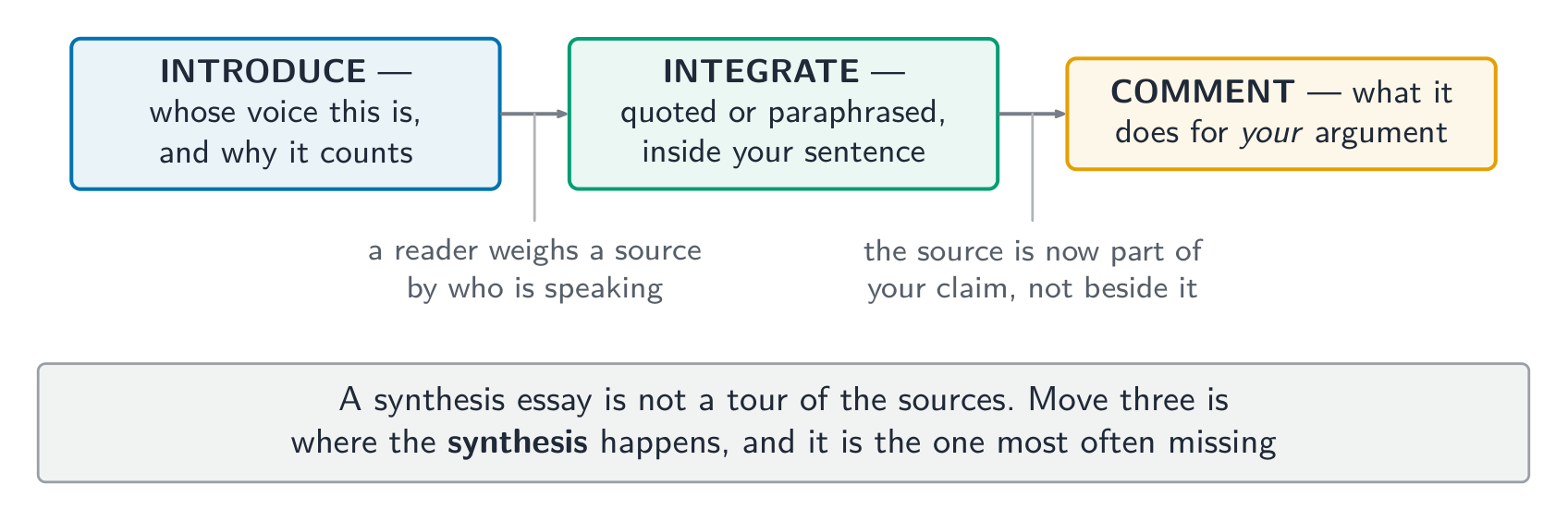
ثلاث خطوات تحول المصدر إلى دليل - الثالثة هي حيث يحدث التركيب
Explore · ⁨استكشف⁩

Turn a source into evidence in three moves · ⁨حوّل المصدر إلى دليل في ثلاث خطوات⁩

A synthesis essay is not a tour of the sources. The third move is where the synthesis happens, and it is the one most often missing. · ⁨مقال التركيب ليس جولة في المصادر. الحركة الثالثة هي حيث يحدث التركيب، وهي الأكثر غياباً.⁩

6.3

Identifying the Overarching Thesis · ⁨تحديد الأطروحة العامة⁩

Syllabus · ⁨المنهج⁩
English

Enduring Understanding (CLE-1): Writers make claims about subjects, rely on evidence that supports the reasoning that justifies the claim, and often acknowledge or respond to other, possibly opposing, arguments.

Learning Objective 3.B: Reading – Identify and describe the overarching thesis of an argument, and any indication it provides of the argument’s structure.

  • CLE-1.U Consideration and use of new evidence may require revision of the thesis statement and/or changes to the line of reasoning.
العربية

الفهم الدائم (CLE-1): يطرح الكُتّاب ادعاءات حول موضوعات معينة، ويعتمدون على أدلة تدعم البرهان الذي يبرر الادعاء، وغالبًا ما يعترفون بالرد على حجج أخرى، قد تكون معارضة.

الهدف التعليمي 3.B: القراءة - تحديد ووصف الأطروحة العامة للحجة، وأي مؤشرات تقدمها لبنية الحجة.

  • CLE-1.U قد يتطلب النظر في استخدام أدلة جديدة مراجعة العبارة الافتراضية و/أو تغييرات في خط الاستدلال.

Source: College Board AP Course and Exam Description · ⁨المصدر: وصف دورة وامتحان College Board AP⁩

English

A short but load-bearing point: consideration and use of new evidence may require revision of the thesis statement and/or changes to the line of reasoning.

Reading a text, this means a writer's thesis may be responsive - shaped by the evidence rather than imposed on it. Look for where an argument turns.

العربية

نقطة قصيرة لكنها محملة بالأهمية: اعتبار واستخدام أدلة جديدة قد يتطلب مراجعة عبارة الأطروحة و/أو تغييرات في خط المنهجية.

في قراءة النص، يعني هذا أن أطروحة الكاتب قد تكون استجابة - مُشكَّلة بواسطة الأدلة بدلاً من فرضها عليها. ابحث عن地方 حيث يتحول الحجاج.

6.4

Writing a Thesis Statement · ⁨كتابة جملة الأطروحة⁩

Syllabus · ⁨المنهج⁩
English

Enduring Understanding (CLE-1): Writers make claims about subjects, rely on evidence that supports the reasoning that justifies the claim, and often acknowledge or respond to other, possibly opposing, arguments.

Learning Objective 4.B: Writing – Write a thesis statement that requires proof or defense and that may preview the structure of the argument.

  • CLE-1.U Consideration and use of new evidence may require revision of the thesis statement and/or changes to the line of reasoning.
العربية

الفهم الدائم (CLE-1): يطرح الكُتّاب ادعاءات حول موضوعات معينة، ويعتمدون على أدلة تدعم البرهان الذي يبرر الادعاء، وغالبًا ما يعترفون بالرد على حجج أخرى، قد تكون معارضة.

الهدف التعليمي 4.B: الكتابة - كتابة عبارة أطروحة تتطلب إثباتًا أو دفاعًا، وقد تستعرض بنية الحجة.

  • CLE-1.U قد يتطلب النظر في استخدام أدلة جديدة مراجعة العبارة الافتراضية و/أو تغييرات في خط الاستدلال.

Source: College Board AP Course and Exam Description · ⁨المصدر: وصف دورة وامتحان College Board AP⁩

English

Writing under time pressure, this is permission you should use. If, while drafting, you find the evidence does not support the thesis you began with, change the thesis, not the evidence. Examiners reward an argument that fits its evidence; there are no marks for having predicted your own conclusion.

In practice, spend the first minutes reading sources and sketching claims before fixing the thesis. A thesis written after the evidence is nearly always better than one written before it.

العربية

في الكتابة تحت ضغط الوقت، هذه إجازة يجب أن تستفيد منها. إذا وجدت أثناء الصياغة أن الأدلة لا تدعم الأطروحة التي بدأت بها، غيّر الأطروحة، لا الأدلة. يقدر الممتحنون الحجاج الذي يتناسب مع أدلته؛ لا توجد نقاط للحصول على التنبؤ بمخرجك الخاص.

في التطبيق العملي، خصص الدقائق الأولى لقراءة المصادر ورسم خطوط ادعاءاتك قبل تثبيت الأطروحة. الأطروحة المكتوبة بعد الأدلة أفضل دائمًا من تلك المكتوبة قبلها.

6.5

Word Choice, Comparisons, and Syntax · ⁨اختيار الكلمات، المقارنات، والنحو⁩

Syllabus · ⁨المنهج⁩
English

Enduring Understanding (STL-1): The rhetorical situation informs the strategic stylistic choices that writers make.

Learning Objective 7.A: Reading – Explain how word choice, comparisons, and syntax contribute to the specific tone or style of a text.

  • STL-1.D A writer’s tone is the writer’s attitude or feeling about a subject, conveyed through word choice and writing style.
  • STL-1.E Readers infer a writer’s tone from the writer’s word choice, and especially the positive, negative, or other connotations of those words.
  • STL-1.F A writer’s shifts in tone from one part of a text to another may suggest the writer’s qualification, refinement, or reconsideration of their perspective on a subject.
العربية

الفهم الدائم (STL-1): informs (يُعلّم/يُحدد) الموقف البلاغي الاختيارات الأسلوبية الاستراتيجية التي يتخذها الكتاب.

الهدف التعليمي 7.A: القراءة – شرح كيف يساهم اختيار الكلمات والمقارنات والنحو في نبرة أو نمط محدد للنص.

  • STL-1.D نبرة الكاتب هي موقفه أو شعوره تجاه موضوع ما، يُعبّر عنه من خلال اختيار الكلمات ونمط الكتابة.
  • STL-1.E يستنتج القراء نبرة الكاتب من اختيار كلماته، وخاصة الدلالات الإيجابية أو السلبية أو غيرها لكلماته.
  • STL-1.F قد تشير تحولات نبرة الكاتب من جزء من النص إلى آخر إلى تقييد الكاتب أو ترقيته أو إعادة نظرته لمنظوره حول موضوع ما.

Source: College Board AP Course and Exam Description · ⁨المصدر: وصف دورة وامتحان College Board AP⁩

English
  • A writer's tone 语调 is the writer's attitude or feeling about a subject, conveyed through word choice and writing style.
  • Readers infer tone from word choice - especially from the positive, negative, or otherwise charged associations of the words chosen.
  • A writer's shifts in tone 语调转变 from one part of a text to another may suggest qualification, refinement, or a change in perspective.

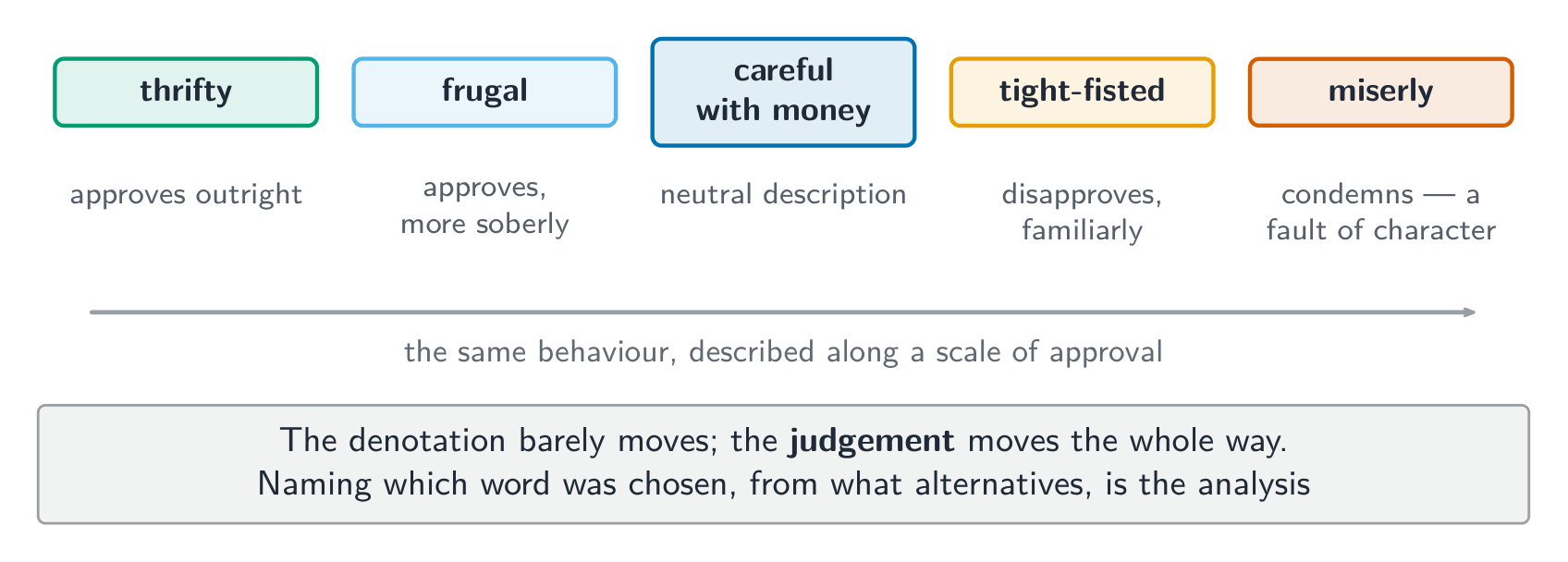
The third is the analytical gold. A tone shift is a visible event in a text: something changed at that point, and explaining what the writer wanted the reader to do differently after it is exactly the kind of answer that scores.

العربية
  • نبرة writer's tone للكاتب هي موقفه أو شعوره تجاه موضوع ما، يتم نقله عبر اختيار الكلمات وأسلوب الكتابة.
  • يستنتج القراء النبرة من اختيار الكلمات - خاصة من الارتباطات الإيجابية أو السلبية أو المشحونة الأخرى للكلمات المختارة.
  • تغيرات نبرة writer's tone الكاتبة من جزء من النص إلى آخر قد توحي بـ التقييد، أو الدقة، أو تغير المنظور.

الثالث هو الذهب التحليلي. تغير النبرة حدث مرئي في النص: شيء تغير في تلك النقطة، وشرح ما أراد الكاتب من القارئ فعله بشكل مختلف afterward هو بالضبط نوع الإجابة التي تحصل على نقاط.

نفس المعنى الصريح، خمسة أحكام - أي كلمة تم اختيارها هو التحليل
Vocabulary · ⁨مفردات⁩ Train · ⁨تدريب⁩
English العربية
tone/təʊn/ النبرة
shifts in tone/ʃɪfts ɪn təʊn/ تحولات النبرة
6.6

Using Words and Syntax for Tone and Style · ⁨استخدام الكلمات والتركيب النحوي لنبرة الأسلوب⁩

Syllabus · ⁨المنهج⁩
English

Enduring Understanding (STL-1): The rhetorical situation informs the strategic stylistic choices that writers make.

Learning Objective 8.A: Writing – Strategically use words, comparisons, and syntax to convey a specific tone or style in an argument.

  • STL-1.D A writer’s tone is the writer’s attitude or feeling about a subject, conveyed through word choice and writing style.
  • STL-1.E Readers infer a writer’s tone from the writer’s word choice, and especially the positive, negative, or other connotations of those words.
  • STL-1.F A writer’s shifts in tone from one part of a text to another may suggest the writer’s qualification, refinement, or reconsideration of their perspective on a subject.
العربية

الفهم الدائم (STL-1): informs (يُعلّم/يُحدد) الموقف البلاغي الاختيارات الأسلوبية الاستراتيجية التي يتخذها الكتاب.

الهدف التعليمي 8.أ: الكتابة – استخدام الكلمات والمقارنات والتركيب نحوياً بشكل استراتيجي لنقل نبرة أو نمط معين في الحجة.

  • STL-1.D نبرة الكاتب هي موقفه أو شعوره تجاه موضوع ما، يُعبّر عنه من خلال اختيار الكلمات ونمط الكتابة.
  • STL-1.E يستنتج القراء نبرة الكاتب من اختيار كلماته، وخاصة الدلالات الإيجابية أو السلبية أو غيرها لكلماته.
  • STL-1.F قد تشير تحولات نبرة الكاتب من جزء من النص إلى آخر إلى تقييد الكاتب أو ترقيته أو إعادة نظرته لمنظوره حول موضوع ما.

Source: College Board AP Course and Exam Description · ⁨المصدر: وصف دورة وامتحان College Board AP⁩

English

In your own writing, tone should be consistent and controlled, and deliberately shifted only where the argument turns - for example when moving from stating your position to conceding part of an opposing one.

Worked example (a real AP exam task). On a synthesis prompt, compare two uses of the same two sources. Weak: "Source B agrees with Source D that the policy should continue." That is position-sorting, and it produces nothing. Strong: "Sources B and D both defend the policy, but B defends it as an administrator measuring compliance while D defends it as a participant describing what it made possible - so the agreement is thinner than it appears, and the case rests on whether we are measuring the policy's operation or its effect." Same two sources, but the perspectives are doing the work, and the claim belongs to the writer.

العربية

في كتابتك الخاصة، يجب أن تكون النبرة متسقة ومُتحكَّم فيها، ويُتم تحريكها عمداً فقط حيث يتحول الحجاج - على سبيل المثال عند الانتقال من ذكر موقفك إلى القبول بجزء من موقف معارض.

مثال محلول (مهمة امتحان AP حقيقية). في سؤال التوليف، قارن بين استخدامين لنفس المصدرين. ضعيف: "المصدر B يتفق مع المصدر D على أن السياسة يجب أن تستمر." هذا مجرد تصنيف المواقف، ولا ينتج عنه شيء. قوي: "يُصمد كل من المصدرين B وD السياسة، لكن B يُصدها كمسؤول يقيس الامتثال بينما D يُصدها كparticipant يصف ما أمكنه - لذا فإن الاتفاق أرق مما يبدو، وتعتمد القضية على ما إذا كنا نقيس تشغيل السياسة أو تأثيرها." نفس المصدرين، لكن وجهات النظر هي التي تقوم بالعمل، والادعاء يعود للكاتب.

6.6

Exam tips · ⁨نصائح للامتحان⁩

English
  • Position and perspective are different. This one distinction lifts most synthesis essays out of the middle band.
  • Sort sources by perspective, not by side. Sorting by side produces a paragraph per pile and no argument.
  • Use the CED's credibility test: a source that ignores all other positions is weaker, and you may say so.
  • If the evidence does not fit the thesis, change the thesis. There are no marks for consistency with your first idea.
  • A tone shift is a visible event. Say what changed and what the reader was meant to do after it.
  • Keep your own tone controlled. Shift it only where the argument genuinely turns.
العربية
  • الموقف ووجهة النظر مختلفان. هذا التفريق الوحيد يرفع معظم مقالات التوليف عن الفئة الوسطى.
  • رتب المصادر حسب وجهة النظر، لا حسب الجانب. الرتبالجانب ينتج فقرة لكل مجموعة ولا ينتج حجة.
  • استخدم اختبار مصداقية CED: المصدر الذي يتجاهل جميع المواقف الأخرى هو أضعف، ويمكنك قول ذلك.
  • إذا لم يكن الدليل يناسب الأطروحة، غيّر الأطروحة. لا توجد درجات للتماسك مع فكرتك الأولى.
  • تغير النبرة هو حدث مرئي. قل ما تغير وما كان من المفترض أن يفعل القارئ بعده.
  • احتفظ بنبرتك الخاصة متحكمًا فيها. غيّرها فقط عندما تنعطف الحجة حقًا.

Interactive lessons on this topic · ⁨دروس تفاعلية حول هذا الموضوع⁩

Work through it step by step, with instant-check exercises. · ⁨ا-working عليه خطوة بخطوة، مع تمارين تحقق فوري.⁩

Past Papers · ⁨أوراق الامتحانات السابقة⁩

More topics in AP English Language and Composition · ⁨اللغة الإنجليزية والتأليف (AP)⁩ · ⁨المزيد من المواضيع في AP English Language and Composition · ⁨اللغة الإنجليزية والتأليف (AP)⁩⁩

Log in or create account · ⁨تسجيل الدخول أو إنشاء حساب⁩

IGCSE, A-Level & AP