Skip to content · ⁨الانتقال إلى المحتوى⁩
Subjects · ⁨المواد⁩

AP English Language and Composition · ⁨اللغة الإنجليزية والتأليف (AP)⁩

Tips

لغة إنجليزية AP والتأليف هو course في البلاغة: كيف يستخدم الكتاب اللغة للتعامل مع القارئ. محتواه الإلزامي هو مجموعة من المهارات، مجمعة تحت أربعة أفكار كبرى - الموقف البلاغي، الادعاءات والأدلة، الاستدلال والتنظيم، والنمط.

كل مهارة تأتي بنصفين: قراءة وكتابة. تتعلم شرح كيف بنا كاتب آخر حجة، ثم بناء واحدة بنفسك باستخدام نفس الحركة. يتم تدريس النصفين معًا عن قصد.

الموقف البلاغي هو الأساس. الحافز، الجمهور، الكاتب، الغرض، السياق والرسالة يشرحون *لماذا* يتخذ النص اختياراته - و"يستخدم الكاتب هذه الأداة" لا يمنح أي شيء حتى تقول ما تفعله تجاه ذلك الجمهور.

النصوص معظمها غير روائي - مقالات، خطابات، رسائل، صحافة. نظرًا لأن المعلمين يختارون نصوصهم ومواضيعهم الخاصة، فإن الوحدات تُعرف بالمهارات التي تطورها بدلاً من الكتب المحددة.

تتبع الملاحظات أدناه إطار College Board وحدة بوحدة، مع كل مهارة والمعرفة الأساسية وراءها.

  • 1

    Claims, Evidence, and the Rhetorical Situation · ⁨المزاعم والأدلة والموقف البلاغي⁩

    Watch lesson · ⁨شاهد الدرس⁩
    1.1

    The Rhetorical Situation · ⁨الوضع البلاغي⁩

    Syllabus · ⁨المنهج⁩
    English

    Enduring Understanding (RHS-1): Individuals write within a particular situation and make strategic writing choices based on that situation.

    Learning Objective 1.A: Reading – Identify and describe components of the rhetorical situation: the exigence, audience, writer, purpose, context, and message.

    • RHS-1.A The rhetorical situation of a text collectively refers to the exigence, purpose, audience, writer, context, and message.
    • RHS-1.B The exigence is the part of a rhetorical situation that inspires, stimulates, provokes, or prompts writers to create a text.
    • RHS-1.C The purpose of a text is what the writer hopes to accomplish with it. Writers may have more than one purpose in a text.
    • RHS-1.D An audience of a text has shared as well as individual beliefs, values, needs, and backgrounds.
    • RHS-1.E Writers create texts within a particular context that includes the time, place, and occasion.
    العربية

    الفهم الدائم (RHS-1): يكتب الأفراد ضمن موقف معين ويتخذون خيارات كتابة استراتيجية بناءً على ذلك الموقف.

    هدف التعلم 1.A: القراءة – حدد ووصف مكونات الموقف البلاغي: الاستعجال، الجمهور، الكاتب، الغرض، السياق، والرسالة.

    • RHS-1.A يشير الموقف البلاغي لنص ما جمعيًا إلى الاستعجال، والغرض، والجمهور، والكاتب، والسياق، والرسالة.
    • RHS-1.B المبرر هو الجزء من الموقف البلاغي الذي يُلهم، أو يحفز، أو يثير، أو يدفع الكُتّاب إلى إنشاء نص.
    • RHS-1.C الغرض من النص هو ما يتوقع الكاتب تحقيقه من خلاله. قد يكون للكاتب أكثر من غرض في النص الواحد.
    • RHS-1.D للجمهور Shared beliefs, values, needs, and backgrounds مشتركة وفردية.
    • RHS-1.E يكتب الكُتّاب النصوص ضمن سياق محدد يشمل الوقت والمكان والمناسبة.
    Source: College Board AP Course and Exam Description · ⁨المصدر: وصف دورة وامتحان College Board AP⁩

    English

    AP English Language is not a literature course. It is a course in how texts do work on readers, and Unit 1 installs the two ideas everything else is built on: the rhetorical situation and the claim-plus-evidence paragraph.

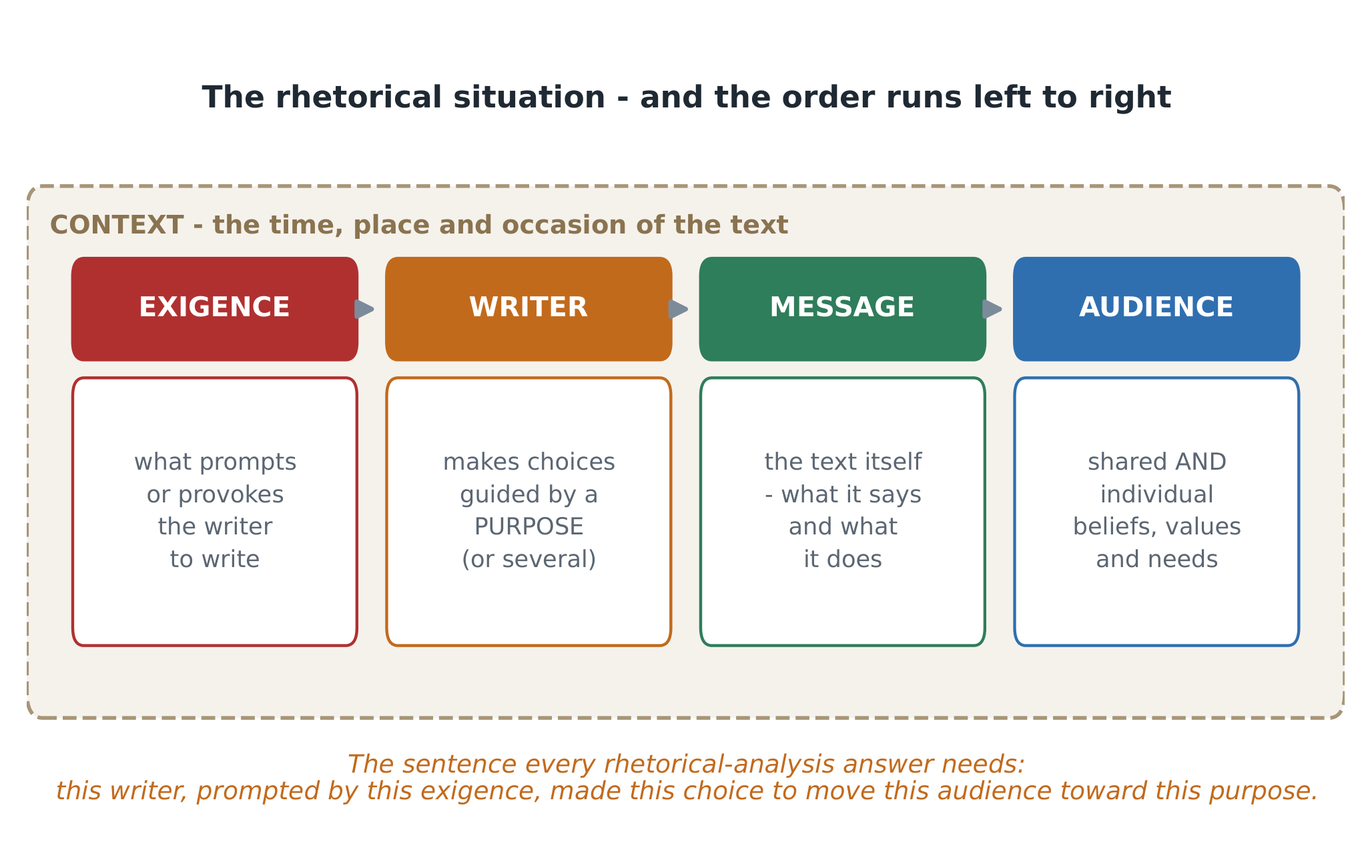
    The CED defines the rhetorical situation 修辞情境 as the exigence, purpose, audience, writer, context, and message taken together. Each has a precise meaning, and using them precisely is what separates a strong answer from a vague one:

    • The exigence 促因 is the part of the situation that inspires, stimulates, provokes, or prompts a writer to create a text. It is the reason this text exists now.
    • The purpose 目的 is what the writer hopes to accomplish. A text may have more than one purpose.
    • The audience 受众 has shared as well as individual beliefs, values, needs, and backgrounds - so "the audience" is never a single uniform thing.
    • The context 语境 includes the time, place, and occasion in which the text was created.
    • The message is what the text actually says and does.

    The most common weak answer in this course names a device and stops. The rhetorical situation is what turns a device into an argument: this writer, prompted by this exigence, made this choice to move this audience toward this purpose.

    العربية

    اللغة الإنجليزية AP ليست مادة أدبية. بل هي مادة عن كيفية تأثير النصوص على القراء، ووحدتي 1 تُرسّخان فكرتين يُبنى عليهما كل ما يلي: الموقف البلاغي والفقرة التي تتضمن ادعاءً وإثباتاً.

    المكونات الستة، مرتبة بحيث يظهر الترتيب السببي
    الاستغاثة تحفز الكاتب؛ السياق يحيط بكل شيء - وكل سؤال حول "الخيارات" يُجاب من هنا

    يعرف CED الـ الوضع البلاغي 修辞情境 بأنه الاستغاثة، والهدف، والجمهور، والكاتب، والسياق، والرسالة مأخوذة معاً. لكل منها معنى دقيق، والاستخدام الدقيق لها هو ما يفصل الإجابة القوية عن الإجابة الغامضة:

    • الـ استغاثة 促因 هي جزء الوضع الذي يُلهم، ويحفز، أو يثير، أو يحفز الكاتب لإنشاء نص. إنه السبب في وجود هذا النص الآن.
    • الـ الهدف 目的 هو ما يأمل الكاتب إنجازه. قد يكون للنص أكثر من هدف واحد.
    • الـ الجمهور 受众 يمتلك مشاركة في المعتقدات والقيم والاحتياجات والخلفيات بالإضافة إلى فردية، لذا فإن "الجمهور" ليس شيئاً واحداً موحداً أبداً.
    • الـ السياق 语境 يشمل الزمان والمكان والمناسبة التي تم فيها إنشاء النص.
    • الرسالة هي ما يقوله النص بالفعل وما يفعلونه.

    الإجابة الضعيفة الأكثر شيوعاً في هذه الدورة تسمى جهازاً وتتوقف. الوضع البلاغي هو ما يحول الجهاز إلى حجة: هذا الكاتب، مُحفز بواسطة هذه الاستغاثة، اتخذ هذا الخيار لتحريك هذا الجمهور نحو هذا الهدف.

    Vocabulary · ⁨مفردات⁩ Train · ⁨تدريب⁩
    English العربية
    rhetorical situation/reˈtɒrɪkl ˌsɪtʃuːˈeɪʃn/ الموقف البلاغي
    exigence/ˈeksɪdʒəns/ الدافع البلاغي
    purpose/ˈpɜːpəs/ الغرض
    audience/ˈɔːdɪəns/ الجمهور
    context/ˈkɒntekst/ سياقه
    claims/kleɪmz/ الادعاءات
    evidence and/or reasoning/ˈevɪdəns ænd ɔː ˈriːzənɪŋ/ الدليل و/أو البرهان
    Question 1, Synthesis/ˈkwestʃn wɒn ˈsɪnθəsɪs/ السؤال 1، التركيب
    Question 2, Rhetorical Analysis/ˈkwestʃn tuː reˈtɒrɪkl əˈnæləsɪs/ السؤال 2، التحليل البلاغي
    Question 3, Argument/ˈkwestʃn θriː ˈɑːɡjuːmənt/ السؤال 3، الحجة
    1.2

    Identifying Claims and Evidence · ⁨تحديد الادعاءات والأدلة⁩

    Syllabus · ⁨المنهج⁩
    English

    Enduring Understanding (CLE-1): Writers make claims about subjects, rely on evidence that supports the reasoning that justifies the claim, and often acknowledge or respond to other, possibly opposing, arguments.

    Learning Objective 3.A: Reading – Identify and explain claims and evidence within an argument.

    • CLE-1.A Writers convey their positions through one or more claims that require a defense.
    • CLE-1.B Writers defend their claims with evidence and/or reasoning.
    • CLE-1.C Types of evidence may include facts, anecdotes, analogies, statistics, examples, details, illustrations, expert opinions, personal observations, personal experiences, testimonies, or experiments.
    • CLE-1.D Effective claims provoke interest and require a defense, rather than simply stating an obvious, known fact that requires no defense or justification.
    • CLE-1.E Writers relate source material to their own argument by syntactically embedding particular quoted, paraphrased, or summarized information from one or more sources into their own ideas.
    العربية

    الفهم الدائم (CLE-1): يطرح الكُتّاب ادعاءات حول موضوعات معينة، ويعتمدون على أدلة تدعم البرهان الذي يبرر الادعاء، وغالبًا ما يعترفون بالرد على حجج أخرى، قد تكون معارضة.

    الهدف التعليمي 3.A: القراءة - تحديد وشرح الادعاءات والأدلة داخل الحجة.

    • CLE-1.A ينقل الكُتّاب مواقفهم من خلال ادعاء واحد أو أكثر يتطلب الدفاع عنه.
    • CLE-1.B يدافع الكُتّاب عن ادعاءاتهم بالأدلة و/أو البرهان.
    • CLE-1.C قد تشمل أنواع الأدلة: الحقائق، والقصص القصيرة، والتشبيهات، والإحصائيات، والأمثلة، والتفاصيل، والتمثيلات، وآراء الخبراء، والملاحظات الشخصية، والخبرات الشخصية، والشهادات، أو التجارب.
    • CLE-1.D الادعاءات الفعالة تثير الاهتمام وتتطلب دفاعًا، بدلاً من مجرد ذكر حقيقة واضحة ومعروفة لا تتطلب دفاعًا أو تبريرًا.
    • CLE-1.E يرتبط الكُتّاب بمواد المصدر بحججتهم الخاصة من خلال دمج معلومات مستقاة مباشرة أو مفسرة أو موجزة من مصدر أو أكثر بشكل نحوي داخل أفكارهم الخاصة.

    Source: College Board AP Course and Exam Description · ⁨المصدر: وصف دورة وامتحان College Board AP⁩

    English
    • Writers convey their positions through one or more claims 主张 that require a defence.
    • Writers defend their claims with evidence and/or reasoning 证据与推理.
    • Types of evidence include facts, anecdotes, analogies, statistics, examples, details, illustrations, expert opinions, and personal experience - a deliberately wide list, because recognising an anecdote or an analogy as evidence is itself a skill.
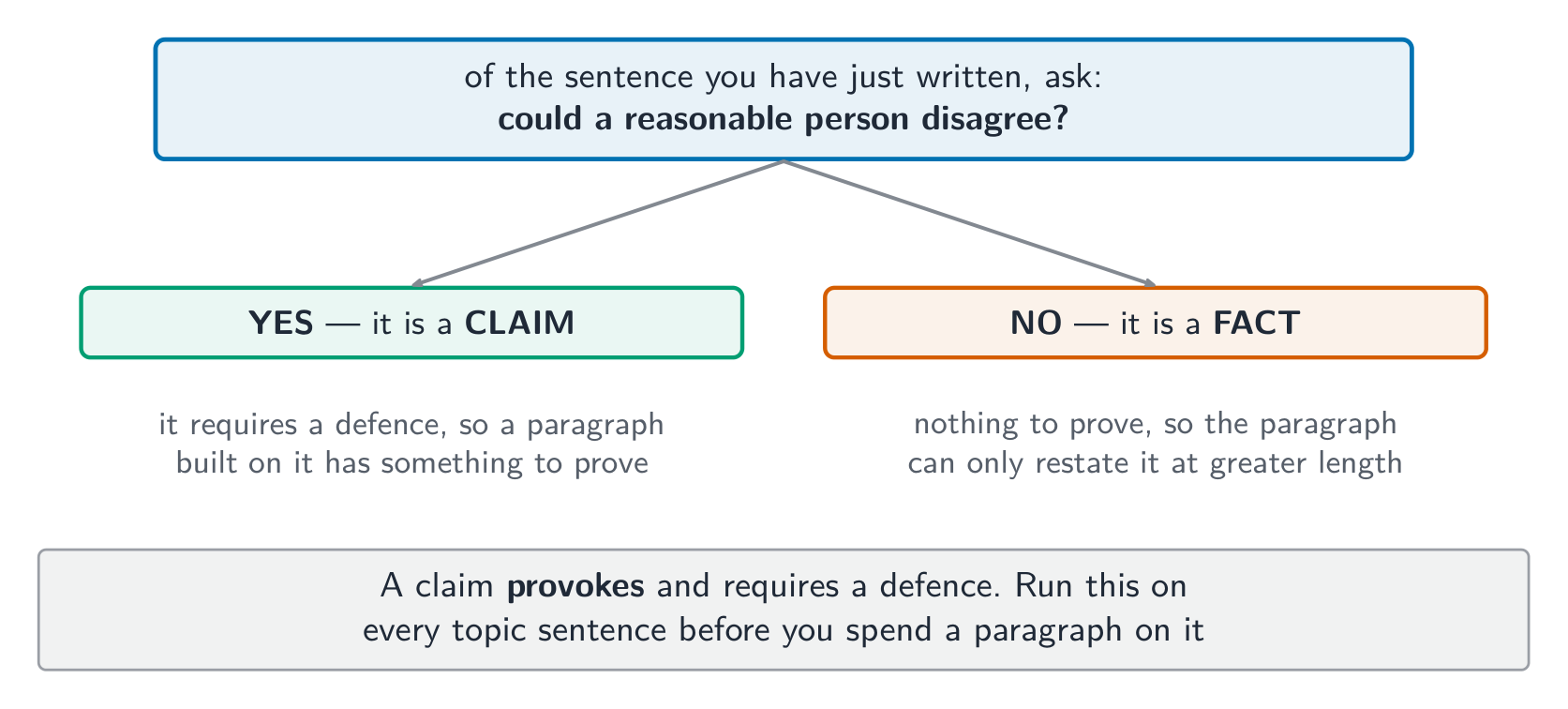
    • Effective claims provoke interest and require a defence, rather than stating an obvious, known fact that requires no proof.

    That fourth point is the most useful test you have. Ask of any sentence: could a reasonable person disagree? If not, it is not a claim - it is a fact, and building a paragraph on it produces writing with nothing to prove.

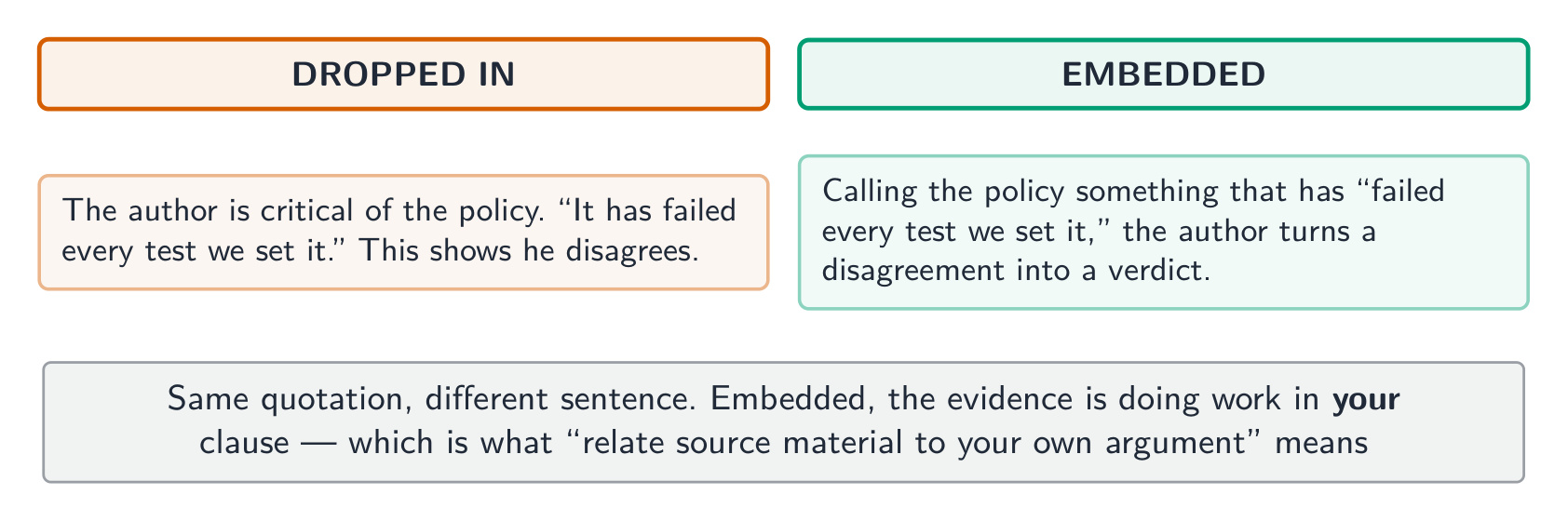
    Finally, writers relate source material to their own argument by syntactically embedding quoted, paraphrased, or summarised material into their own sentences. The evidence is not dropped in beside your sentence; it is built into it.

    العربية
    • ينقل الكُتّاب مواقفهم من خلال ادعاء واحد أو أكثر ادعاءات 主张 تتطلب دفاعاً.
    • يدافع الكُتّاب عن ادعاءاتهم باستخدام الأدلة و/أو الاستنتاج 证据与推理.
    • تشمل أنواع الأدلة الحقائق، والحكايات، والتشبيهات، والإحصائيات، والأمثلة، والتفاصيل، والتمثيلات، وآراء الخبراء، والخبرة الشخصية - قائمة واسعة عمدياً، لأن التعرف على الحكاية أو التشبيه كأدلة هو مهارة بحد ذاته.
    • الادعاءات الفعالة تثير الاهتمام وتتطلب دفاعاً، بدلاً من stating حقيقة واضحة ومعلومة تتطلب برهاناً.

    هذه النقطة الرابعة هي الاختبار الأكثر فائدة لديك. اسأل أي جملة: هل يمكن لشخص معقول أن يختلف؟ إذا لم يكن كذلك، فهي ليست ادعاء - بل هي حقيقة، وبناء فقرة عليها ينتج كتابة بلا ما يثبت.

    أخيراً، يرتبط الكُتّاب مواد المصدر بحججتهم الخاصة عن طريق الانغماس النحوي للمواد المقتبسة أو المعاد صياغتها أو المُختصرة في جملهم الخاصة. الأدلة لا تُسقط بجانب جملتك؛ بل تُبنى بداخلها.

    الاختبار الوحيد الذي يفصل بين الادعاء والحقيقة: هل يمكن لشخص معقول أن يختلف؟
    نفس الاقتباس مُسقط ومُندمج - واحد منهما فقط يعمل في جملتك
    Explore · ⁨استكشف⁩

    Claim or fact? Run the test on each sentence · ⁨ادعاء أم حقيقة؟ قم باختبار كل جملة⁩

    The test is one question: could a reasonable person disagree? If not, it is not a claim and a paragraph on it has nothing to prove. · ⁨الاختبار عبارة عن سؤال واحد: هل يمكن لشخص معقول أن يختلف؟ إذا لم يكن الأمر كذلك، فهو ليس ادعاءً وللفقرة الخاصة به ما لا يثبت.⁩

    1.3

    Developing a Paragraph with Claim and Evidence · ⁨تطوير فقرة بالادعاء والدليل⁩

    Syllabus · ⁨المنهج⁩
    English

    Enduring Understanding (CLE-1): Writers make claims about subjects, rely on evidence that supports the reasoning that justifies the claim, and often acknowledge or respond to other, possibly opposing, arguments.

    Learning Objective 4.A: Writing – Develop a paragraph that includes a claim and evidence supporting the claim.

    • CLE-1.A Writers convey their positions through one or more claims that require a defense.
    • CLE-1.B Writers defend their claims with evidence and/or reasoning.
    • CLE-1.C Types of evidence may include facts, anecdotes, analogies, statistics, examples, details, illustrations, expert opinions, personal observations, personal experiences, testimonies, or experiments.
    • CLE-1.D Effective claims provoke interest and require a defense, rather than simply stating an obvious, known fact that requires no defense or justification.
    • CLE-1.E Writers relate source material to their own argument by syntactically embedding particular quoted, paraphrased, or summarized information from one or more sources into their own ideas.
    العربية

    الفهم الدائم (CLE-1): يطرح الكُتّاب ادعاءات حول موضوعات معينة، ويعتمدون على أدلة تدعم البرهان الذي يبرر الادعاء، وغالبًا ما يعترفون بالرد على حجج أخرى، قد تكون معارضة.

    الهدف التعليمي 4.A: الكتابة - تطوير فقرة تتضمن ادعاءً وأدلة تدعم هذا الادعاء.

    • CLE-1.A ينقل الكُتّاب مواقفهم من خلال ادعاء واحد أو أكثر يتطلب الدفاع عنه.
    • CLE-1.B يدافع الكُتّاب عن ادعاءاتهم بالأدلة و/أو البرهان.
    • CLE-1.C قد تشمل أنواع الأدلة: الحقائق، والقصص القصيرة، والتشبيهات، والإحصائيات، والأمثلة، والتفاصيل، والتمثيلات، وآراء الخبراء، والملاحظات الشخصية، والخبرات الشخصية، والشهادات، أو التجارب.
    • CLE-1.D الادعاءات الفعالة تثير الاهتمام وتتطلب دفاعًا، بدلاً من مجرد ذكر حقيقة واضحة ومعروفة لا تتطلب دفاعًا أو تبريرًا.
    • CLE-1.E يرتبط الكُتّاب بمواد المصدر بحججتهم الخاصة من خلال دمج معلومات مستقاة مباشرة أو مفسرة أو موجزة من مصدر أو أكثر بشكل نحوي داخل أفكارهم الخاصة.

    Source: College Board AP Course and Exam Description · ⁨المصدر: وصف دورة وامتحان College Board AP⁩

    English

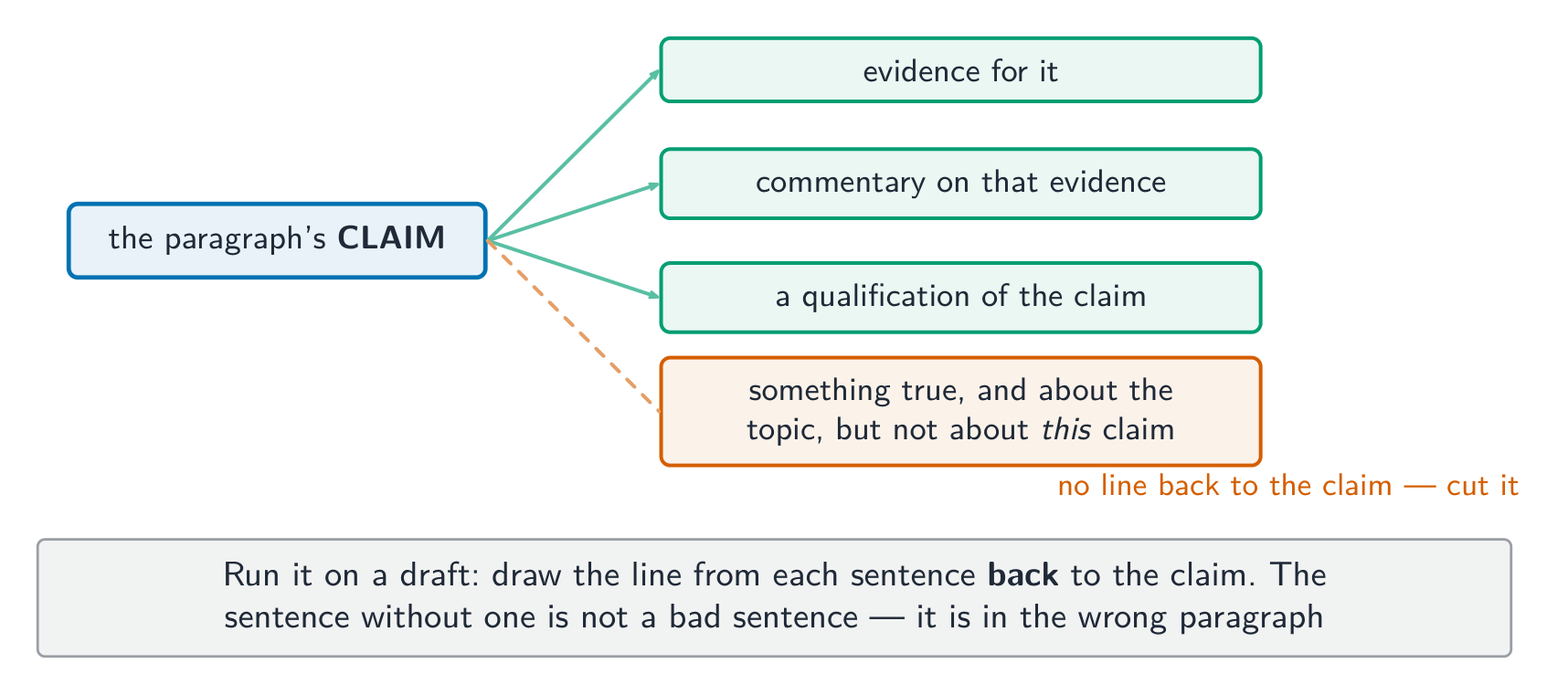
    Unit 1's writing objective is deliberately small: write one paragraph containing a claim and evidence that supports it. Everything later in the course is an elaboration of this.

    A working shape:

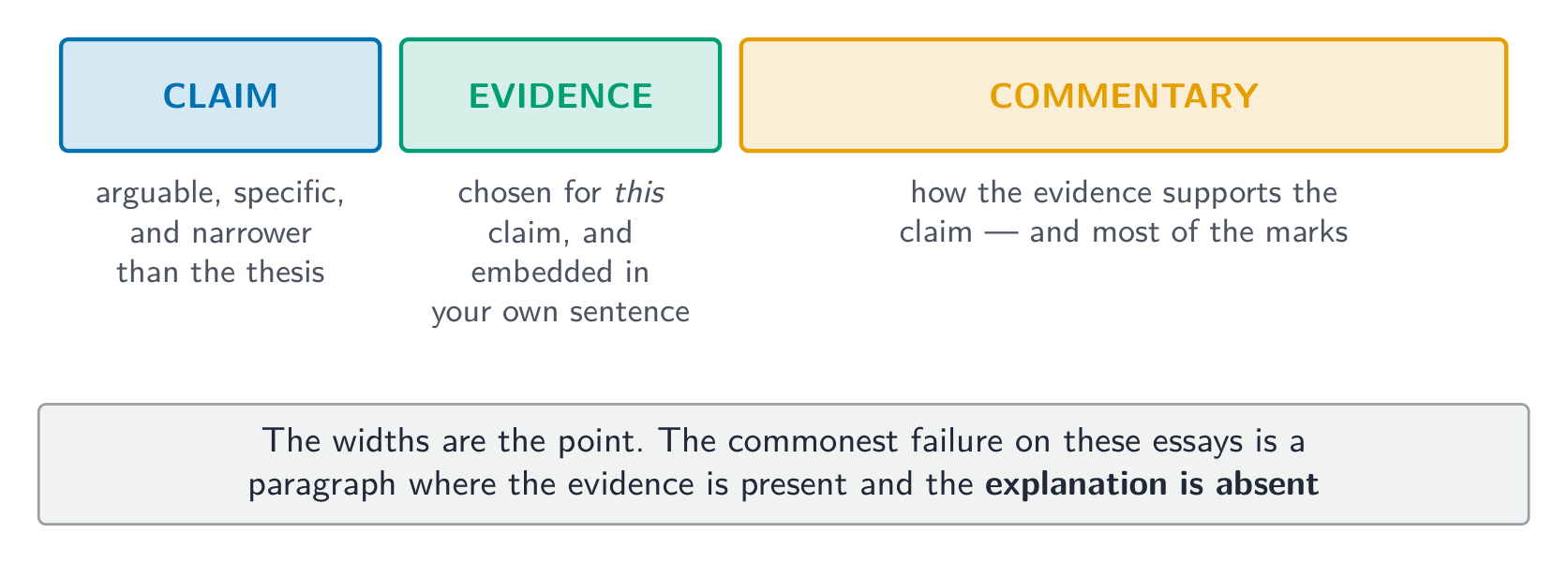
    1. A claim that requires defence - arguable, specific, and narrower than the whole thesis.
    2. Evidence chosen because it supports this claim, embedded syntactically rather than dropped in.
    3. Commentary explaining how the evidence supports the claim - the step students skip, and the one that carries most of the marks on the exam.

    The single most common failure on the AP Language essays is a paragraph in which the evidence is present and the explanation is absent. The reader can see the quotation; what they cannot see is why you think it proves your point.

    العربية

    الهدف الكتابي لوحدتي 1 صغير بقصد: اكتب فقرة واحدة تحتوي على ادعاء وإثبات يدعمه. كل ما يليه في المقرر هو تفصيل لهذا الهدف.

    شكل عامل:

    1. ادعاء يتطلب دفاعاً - قابل للنقاش، محدد، وأن أضيق من الأطروحة الكلية.
    2. الأدلة مختارة لأنها تدعم هذا الادعاء، مُندمجة نحواياً بدلاً من إسقاطها.
    3. التعليق الذي يوضح كيف يدعم الدليل الادعاء - وهو الخطوة التي يتخطاها الطلاب، والخطوة التي تحمل معظم الدرجات في الامتحان.

    الفشل الأكثر شيوعًا على level essays في AP Language هو فقرة تحتوي على الدليل لكن تفتقر إلى التفسير. يمكن للقارئ رؤية الاقتباس؛ لكنه لا يرى لماذا تعتقد أنه يثبت نقطتك.

    الفقرة مرسومة按比例 proportions she should have - the widths are the point
    Explore · ⁨استكشف⁩

    Build a paragraph in proportion · ⁨بناء فقرة متناسبة⁩

    The commonest failure on these essays is a paragraph where the evidence is present and the explanation is absent. · ⁨الفشل الأكثر شيوعاً في هذه المقالات هو فقرة حيث الأدلة موجودة والشرح غائب.⁩

    1.3

    What the Exam Actually Asks · ⁨ما يسأله الامتحان فعليًا⁩

    English

    The free-response section has three questions, and they use the same skills in different arrangements:

    • Question 1, Synthesis 综合写作: you are given several sources and must build your own argument, using the sources as evidence rather than summarising them.
    • Question 2, Rhetorical Analysis 修辞分析: you are given one text and must explain the choices the writer makes and how those choices contribute to purpose - which is the rhetorical situation applied.
    • Question 3, Argument 论证写作: you are given a claim or a scenario and must argue a position, using evidence from your own knowledge and experience.

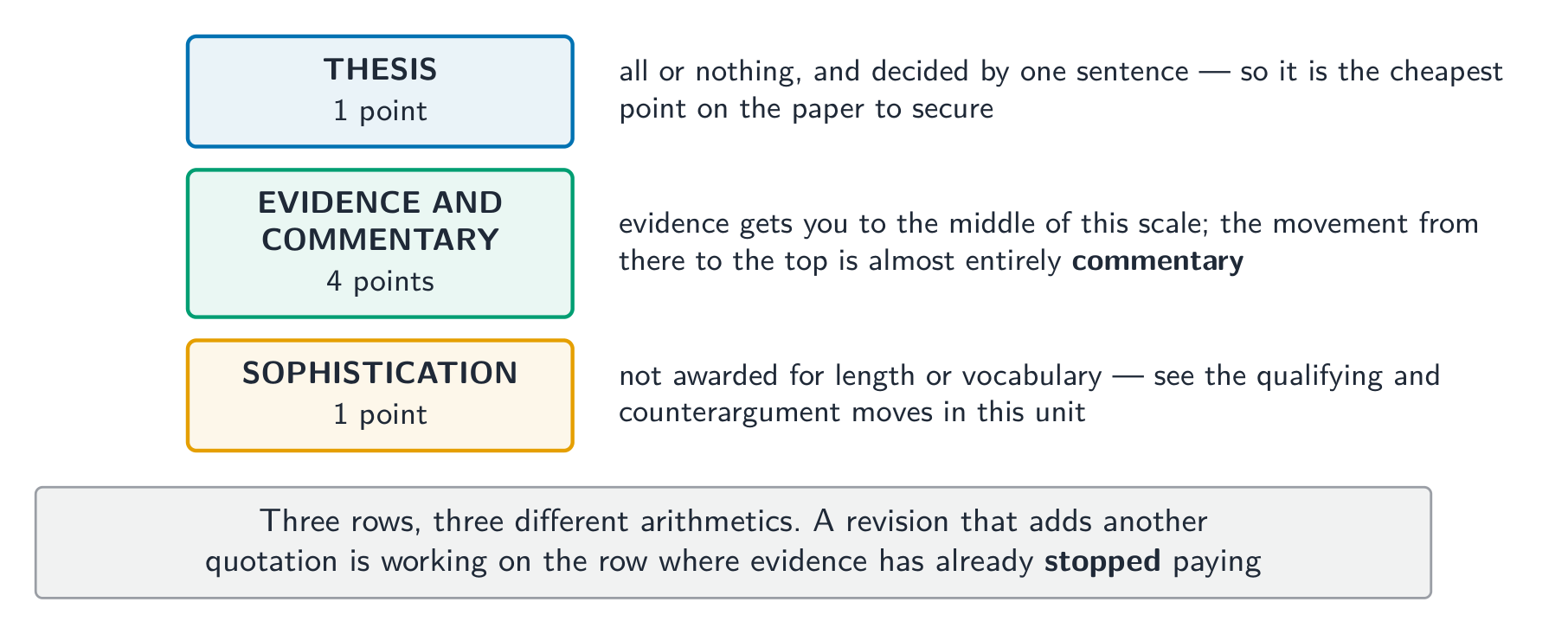
    All three are marked on a six-point rubric with the same three rows: thesis (1 point), evidence and commentary (4 points), and sophistication (1 point). Knowing that shape from Unit 1 tells you where the marks are: four of the six come from evidence and the commentary on it, so a plan that produces evidence without explanation caps you at low marks no matter how good the writing sounds.

    Worked example (a real AP exam task). A Rhetorical Analysis prompt asks you to "explain the writer's rhetorical choices" in a given passage. A row-scoring answer does not say "the writer uses a rhetorical question." It says: "Faced with an audience that already agrees on the problem but not on its urgency, the writer opens with a question rather than a statement, forcing readers to supply the answer themselves and so to feel the conclusion as their own rather than as one imposed on them." Notice what earns the points: the audience, the choice, and the effect on purpose - the rhetorical situation, used.

    العربية

    القسم المفتوح الإجابة يحتوي على ثلاث أسئلة، ويستخدم نفس المهارات بتخطيطات مختلفة:

    • السؤال 1، التوليف: Synthesis: يُعطى لك عدة مصادر ويجب أن تبني حججتك الخاصة، باستخدام المصادر كدليل بدلاً من تلخيصها.
    • السؤال 2، التحليل البلاغي: Rhetorical Analysis: يُعطى لك نص واحد ويجب أن تشرح الخيارات التي اتخذها الكاتب وكيف تساهم تلك الخيارات في الغرض - وهو تطبيق الموقف البلاغي.
    • السؤال 3، الحجة: Argument: يُعطى لك ادعاء أو سيناريو ويجب أن تدافع عن موقف باستخدام أدلة من معرفتك وخبراتك الخاصة.

    تُصنف الثلاثة جميعاً وفق مقياس تقييم من ست نقاط بثلاثة صفوف متطابقة: الفرضية (1 نقطة)، الإثبات والتعليق (4 نقاط)، والعمق (1 نقطة). معرفة هذا الشكل من وحدتي 1 يخبرك بمصدر الدرجات: أربعة من الست تأتي من الإثبات والتعليق عليه، لذا فإن خطة تنتج إثباتاً دون شرح تحدد حدك عند درجات منخفضة بغض النظر عن جودة الأسلوب.

    مثال محلول (مهمة امتحان AP حقيقية). يطلب سؤال تحليل بلاغي منك "شرح الخيارات البلاغية للكاتب" في مقطع معطى. إجابة تصنف بالصفوف لا تقول "يستخدم الكاتب سؤالاً بلاغيًا". بل تقول: "بصفتهم أمام جمهور موافق بالفعل على المشكلة لكن غير متفق على urgency، يبدأ الكاتب بسؤال بدلاً من جملة خبرية، مما يجبر القراء على تزويد الإجابة بأنفسهم وبالتالي الشعور بالنتيجة كتجربة شخصية لهم بدلاً من فرض عليها." لاحظ ما يحقق النقاط: الجمهور، الاختيار، والتأثير على الغرض - استخدام الموقف البلاغي.

    1.3

    Exam tips · ⁨نصائح للامتحان⁩

    English
    • Learn the six components by name and use the names. Precision here is directly rewarded.
    • Exigence is not the same as purpose. Exigence is what prompted the text; purpose is what the writer wants to achieve.
    • Test every claim with could a reasonable person disagree? If not, it is a fact, not a claim.
    • Embed evidence in your own sentence. Dropped quotations read as unprocessed.
    • Four of six points are evidence and commentary. Write the commentary; it is where most lost marks live.
    • Never name a device without saying what it does to the audience. A device with no effect earns nothing.
    العربية
    • احفظ المكونات الستة بأسمائها واستخدم الأسماء. الدقة هنا مجزية مباشرةً.
    • الإلحاح ليس هو نفسه الغرض. الإلحاح هو ما حرك النص؛ والغرض هو ما يريد الكاتب تحقيقه.
    • اختبر كل ادعاء بـ هل يمكن لشخص معقول أن يختلف؟ إذا لم يكن الأمر كذلك، فهو حقيقة وليس ادعاءً.
    • أدرج الدليل في جملتك الخاصة. الاقتباسات المنفصلة تُقرأ كمعالجة غير مكتملة.
    • أربعة من ستة نقاط هي للدليل والتعليق. اكتب التعليق؛ لأنه المكان الذي توجد فيه معظم الدرجات المفقودة.
    • لا تذكر جهاز بلاغي أبدًا دون قول ماذا يفعل بالجماهير. الجهاز الذي لا تأثير له لا يحقق أي شيء.
  • 2

    Audience, Thesis, and Supporting Evidence · ⁨الجمهور، الأطروحة والأدلة الداعمة⁩

    Watch lesson · ⁨شاهد الدرس⁩
    2.1

    Understanding an Audience's Beliefs and Needs · ⁨فهم معتقدات الجمهور واحتياجاته⁩

    Syllabus · ⁨المنهج⁩
    English

    Enduring Understanding (RHS-1): Individuals write within a particular situation and make strategic writing choices based on that situation.

    Learning Objective 1.B: Reading – Explain how an argument demonstrates understanding of an audience’s beliefs, values, or needs.

    • RHS-1.F Writers’ perceptions of an audience’s values, beliefs, needs, and background guide the choices they make.
    • RHS-1.G To achieve a purpose, writers make choices in an attempt to relate to an intended audience’s emotions and values.
    • RHS-1.H Arguments seek to persuade or motivate action through appeals—the modes of persuasion.
    العربية

    الفهم الدائم (RHS-1): يكتب الأفراد ضمن موقف معين ويتخذون خيارات كتابة استراتيجية بناءً على ذلك الموقف.

    الهدف التعليمي 1.B: القراءة - شرح كيف تُظهر الحجة فهمًا لمعتقدات الجمهور أو قيمه أو حاجاته.

    • RHS-1.F توجه تصورات الكُتّاب لقيم الجمهور ومعتقداته وحاجاته وخلفيتهم الخيارات التي يتخذونها.
    • RHS-1.G لتحقيق هدف معين، يتخذ الكُتّاب خيارات سعيًا منهم للتواصل مع مشاعر وقيم الجمهور المستهدف.
    • RHS-1.H تسعى الحجج إلى الإقناع أو تحفيز العمل من خلال الاستنادات - وهي أساليب الإقناع.

    Source: College Board AP Course and Exam Description · ⁨المصدر: وصف دورة وامتحان College Board AP⁩

    English

    Unit 1 established that a text has an audience. Unit 2 makes that audience the engine of every choice a writer makes.

    • Writers' perceptions of an audience's values, beliefs, needs, and background guide the choices they make. Note the word perceptions: what steers the writing is the writer's picture of the audience, which may be accurate or not.
    • To achieve a purpose, writers make choices in an attempt to relate to an intended audience's emotions and values.
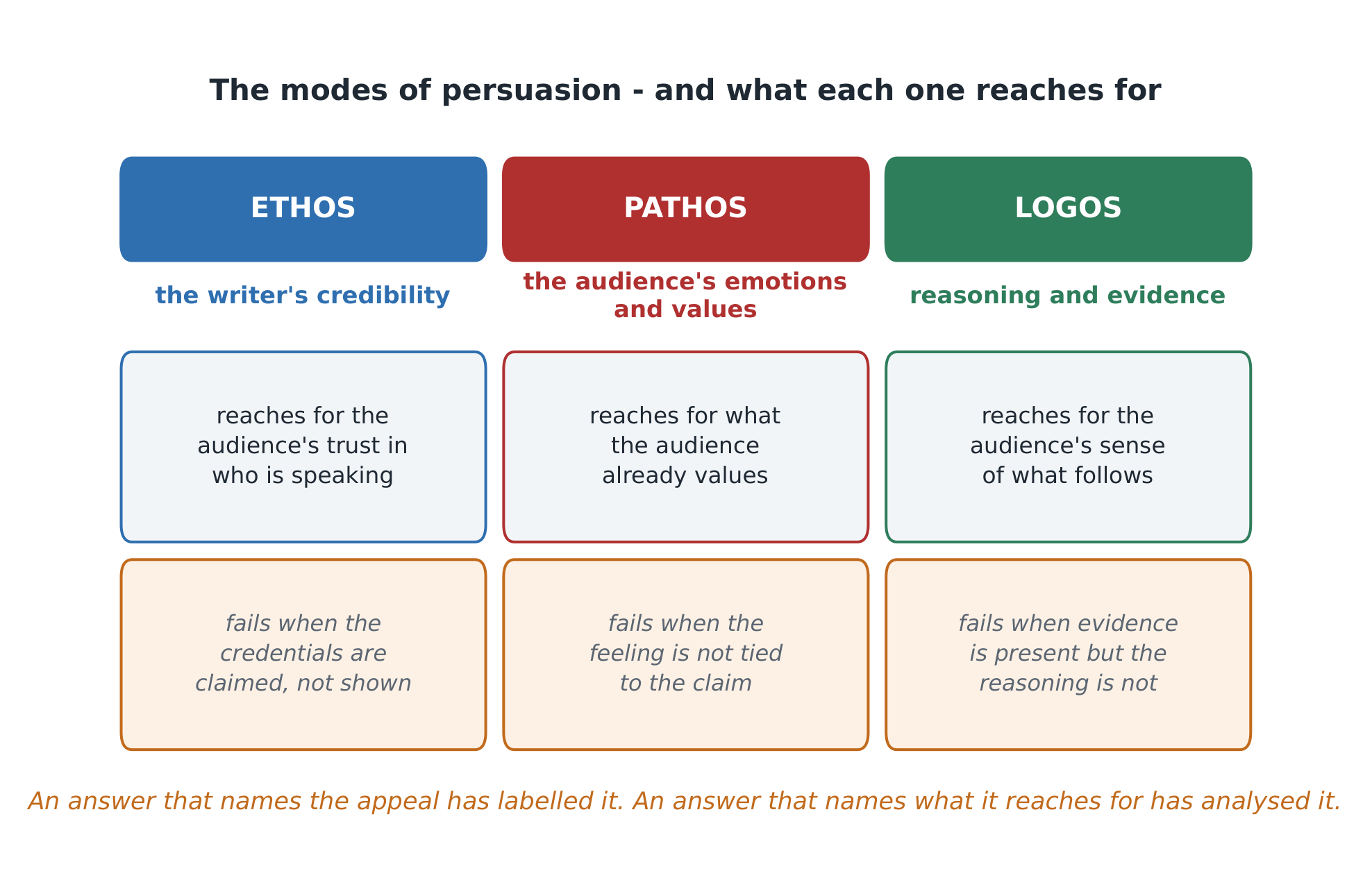
    • Arguments seek to persuade or motivate action through appeals 诉求 - the modes of persuasion 说服方式.
    العربية

    أقرت الوحدة 1 بأن للنص جمهورًا. وتجعل الوحدة 2 ذلك الجمهور هو المحرك لكل اختيار يقوم به الكاتب.

    • إدراك الكتاب لقيم الجمهور ومعتقداته وحاجاته وخلفيته يوجه الاختيارات التي يقومون بها. لاحظ كلمة إدراك: ما يوجه الكتابة هو صورة الكاتب للجمهور، والتي قد تكون دقيقة أو غير دقيقة.
    • لتحقيق غرض معين، يقوم الكتاب باختيار طرق لمحاولة الارتباط بعواطف وقيم الجمهور المستهدف.
    • تسعى الحجج إلى الإقناع أو تحفيز العمل من خلال المناديات Appeals - أساليب الإقناع Persuasion modes.
    كل منادٍ يستهدف شيئًا مختلفًا في الجمهور - وكل منها يمكن أن يفشل بطريقته الخاصة
    تسمية المناداة لا قيمة لها بمفردها؛ تسمية ما تستهدفه هو التحليل
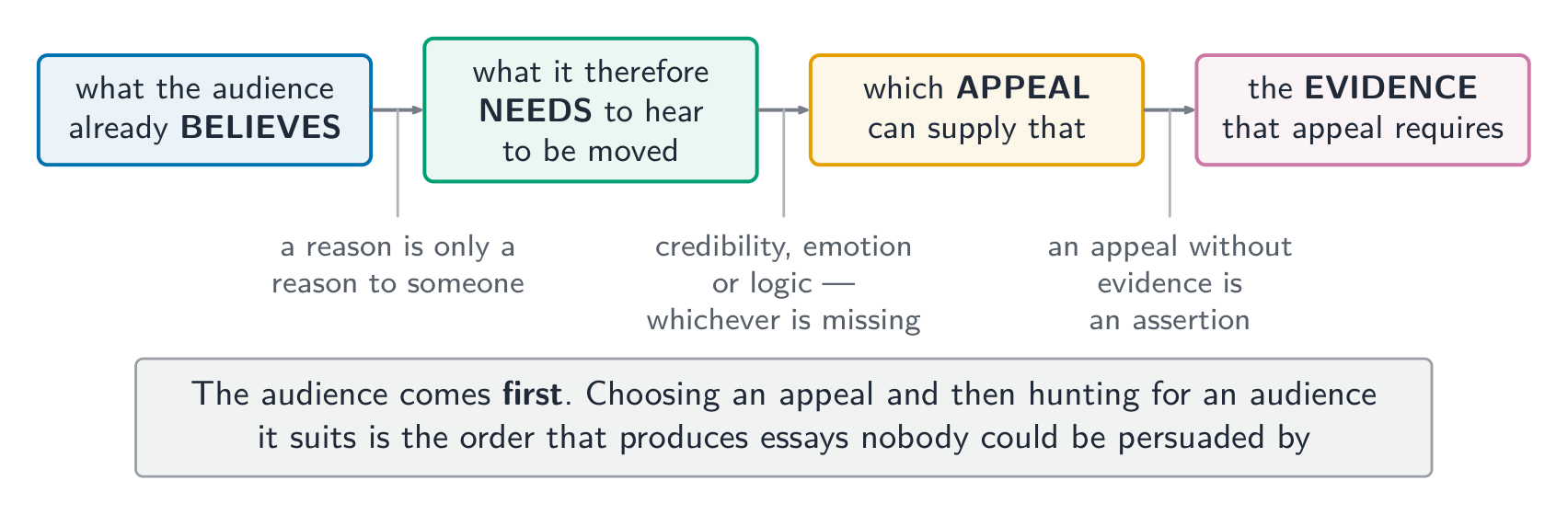
    الجمهور يأتي أولاً: ما يؤمن به يحدد ما سيُعد سببًا مقبولًا
    Explore · ⁨استكشف⁩

    Start from the audience, not the appeal · ⁨ابدأ من الجمهور، لا من الطمع⁩

    What the audience already believes determines what will count as a reason to them. · ⁨ما يؤمن به الجمهور بالفعل يحدد ما سيعتبره سبباً بالنسبة لهم.⁩

    Vocabulary · ⁨مفردات⁩ Train · ⁨تدريب⁩
    English العربية
    appeals/əˈpiːlz/ النداءات / الاستدعاءات
    modes of persuasion/məʊdz ɒv pəˈsweɪʒn/ أنماط الإقناع
    2.2

    Writing for an Audience's Beliefs and Needs · ⁨الكتابة لمعايير ومعتقدات الجمهور⁩

    Syllabus · ⁨المنهج⁩
    English

    Enduring Understanding (RHS-1): Individuals write within a particular situation and make strategic writing choices based on that situation.

    Learning Objective 2.B: Writing – Demonstrate an understanding of an audience’s beliefs, values, or needs.

    • RHS-1.F Writers’ perceptions of an audience’s values, beliefs, needs, and background guide the choices they make.
    • RHS-1.G To achieve a purpose, writers make choices in an attempt to relate to an intended audience’s emotions and values.
    • RHS-1.H Arguments seek to persuade or motivate action through appeals—the modes of persuasion.
    العربية

    الفهم الدائم (RHS-1): يكتب الأفراد ضمن موقف معين ويتخذون خيارات كتابة استراتيجية بناءً على ذلك الموقف.

    الهدف التعليمي 2.B: الكتابة - إظهار فهم لمعتقدات الجمهور أو قيمه أو حاجاته.

    • RHS-1.F توجه تصورات الكُتّاب لقيم الجمهور ومعتقداته وحاجاته وخلفيتهم الخيارات التي يتخذونها.
    • RHS-1.G لتحقيق هدف معين، يتخذ الكُتّاب خيارات سعيًا منهم للتواصل مع مشاعر وقيم الجمهور المستهدف.
    • RHS-1.H تسعى الحجج إلى الإقناع أو تحفيز العمل من خلال الاستنادات - وهي أساليب الإقناع.

    Source: College Board AP Course and Exam Description · ⁨المصدر: وصف دورة وامتحان College Board AP⁩

    English

    The same three statements now become a writing instruction. Before drafting, decide:

    • What does this audience already believe about the subject?
    • What do they need - information, reassurance, a reason to act?
    • What do they value, and which of those values can honestly be connected to my position?

    An argument that ignores these produces writing addressed to nobody. And the CED's framing gives you a useful test for your own drafts: if this paragraph would read identically to a completely different audience, it has not been shaped by one.

    العربية

    تتحول العبارات الثلاث نفسها الآن إلى تعليمات للكتابة. قبل المسودة، حدد:

    • ماذا يعتقد هذا الجمهور بالفعل حول الموضوع؟
    • ماذا يحتاجون - معلومات، طمأنينة، دافع للعمل؟
    • ماذا يقدرون، وأي من هذه القيم يمكن ربط موقعك بها بصدق؟

    الحجة التي تتجاهل هذه things ينتج عنها كتابة موجهة إلى أحد. وإطار عمل CED يمنحك اختبارًا مفيدًا لمسوداتك الخاصة: إذا كانت هذه الفقرة ستُقرأ بنفس الطريقة تماماً من قبل جمهور مختلف تمامًا، فهي لم تتشكل بناءً على جمهور محدد.

    2.3

    Identifying Claims and Evidence · ⁨تحديد الادعاءات والأدلة⁩

    Syllabus · ⁨المنهج⁩
    English

    Enduring Understanding (CLE-1): Writers make claims about subjects, rely on evidence that supports the reasoning that justifies the claim, and often acknowledge or respond to other, possibly opposing, arguments.

    Learning Objective 3.A: Reading – Identify and explain claims and evidence within an argument.

    • CLE-1.F Writers use evidence strategically and purposefully to illustrate, clarify, set a mood, exemplify, associate, or amplify a point.
    • CLE-1.G Strategically selected evidence strengthens the validity and reasoning of the argument, relates to an audience’s emotions and values, and increases a writer’s credibility.
    • CLE-1.H An effective argument contains sufficient evidence; evidence is sufficient when its quantity and quality provide apt support for the argument.
    العربية

    الفهم الدائم (CLE-1): يطرح الكُتّاب ادعاءات حول موضوعات معينة، ويعتمدون على أدلة تدعم البرهان الذي يبرر الادعاء، وغالبًا ما يعترفون بالرد على حجج أخرى، قد تكون معارضة.

    الهدف التعليمي 3.A: القراءة - تحديد وشرح الادعاءات والأدلة داخل الحجة.

    • CLE-1.F يستخدم الكُتّاب الأدلة بشكل استراتيجي وهادف لتوضيح، أو شرح، أو خلق جو، أو تمثيل، أو ارتباط، أو توضيح نقطة ما.
    • CLE-1.G تعزز الأدلة المختارة استراتيجيًا صحة الحجة وبرهانها، وترتبط بمشاعر وقيم الجمهور، وتزيد من مصداقية الكاتب.
    • CLE-1.H تحتوي الحجة الفعالة على أدلة كافية؛ تكون الأدلة كافية عندما يوفر حجمها وجودتها دعمًا مناسبًا للحجة.

    Source: College Board AP Course and Exam Description · ⁨المصدر: وصف دورة وامتحان College Board AP⁩

    English

    Unit 2 deepens Unit 1's treatment of evidence with three claims about how evidence works:

    • Writers use evidence strategically and purposefully to illustrate, clarify, set a mood, exemplify, associate, or amplify. Evidence does a job, and naming that job is analysis.
    • Strategically selected evidence strengthens the validity and reasoning of the argument, relates to an audience's emotions and values, and helps establish the writer's credibility 可信度.
    • An effective argument contains sufficient evidence 充分的证据 - sufficient when its quantity and quality provide apt support for the line of reasoning.

    That third point is often misread as "more is better". Sufficiency is quantity and quality together: three well-chosen pieces of evidence that bear directly on the claim beat six that only touch it.

    العربية

    تعمق الوحدة 2 معالجة الوحدة 1 للدليل بثلاثة ادعاءات حول كيف يعمل الدليل:

    • يستخدم الكتاب الأدلة استراتيجيًا وبغرض واضح لتوضيح، توضيح، خلق جو، تمثيل نموذج، ارتباط، أو تضخيم. الدليل يقوم بـ عمل، وتسمية ذلك العمل هو التحليل.
    • الأدلة المختارة استراتيجيًا تعزز صحة وحجج الحجة، ترتبط بـ عواطف وقيم الجمهور، وتساعد في تأسيس موثوقية الكاتب Credibility.
    • الحجة الفعالة تحتوي على أدلة كافية Sufficient evidence - كافية عندما يوفر كميتها وجودتها دعمًا مناسبًا لسير الحجة.

    غالبًا ما يُقرأ النقطة الثالثة بشكل خاطئ على أنها "الأكثر أفضل". الكفاية هي كمية وجودة معًا: ثلاثة قطع مختارة بعناية من الأدلة ذات الصلة المباشرة بالادعاء تفوق ستة فقط تلمسها بشكل عرضي.

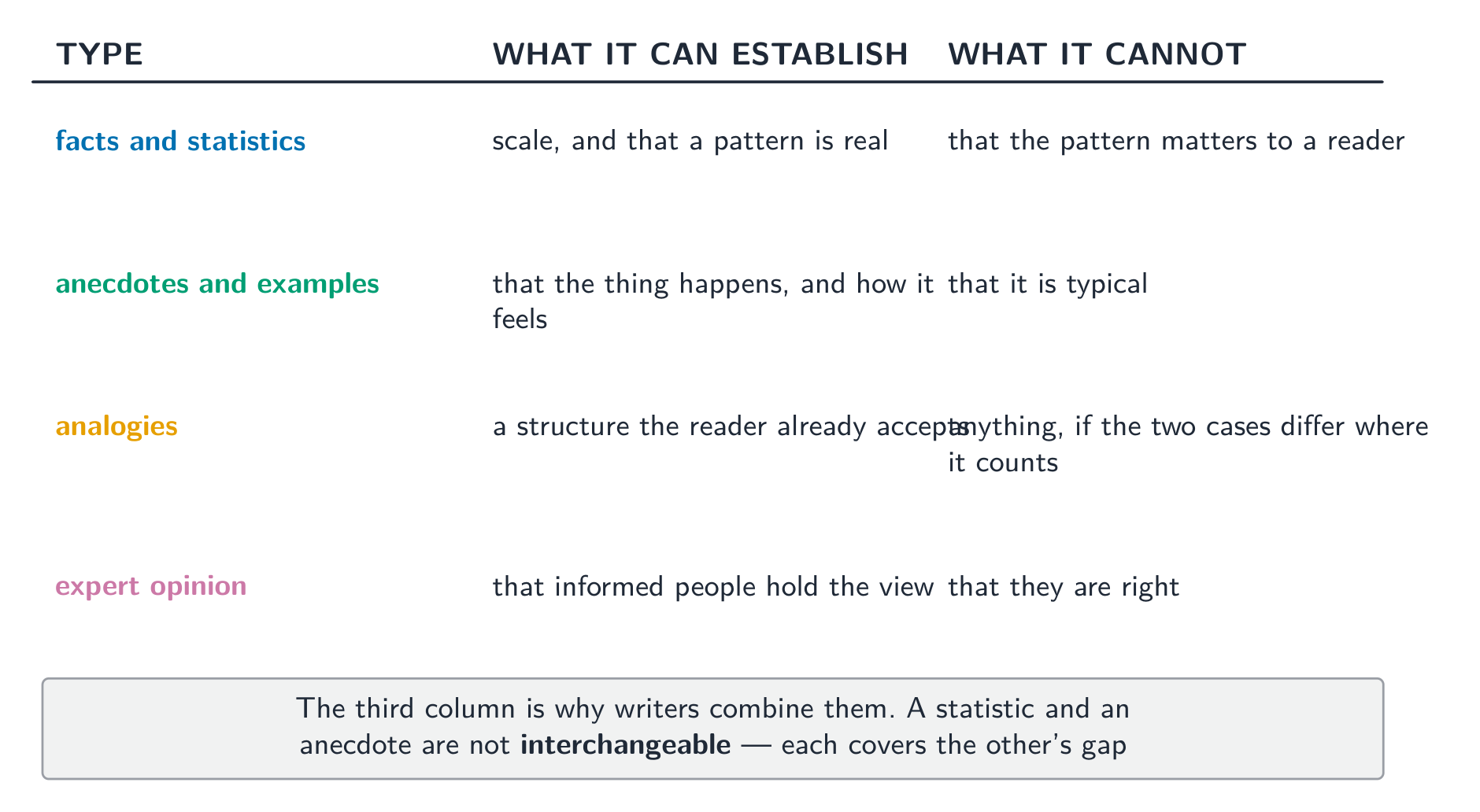
    أنواع الأدلة مرتبة حسب ما يمكن لكل نوع أن يثبت وما لا يستطيع إثباته
    Explore · ⁨استكشف⁩

    Match each evidence type to what it cannot prove · ⁨طابق كل نوع من الأدلة بما لا يمكنه إثباته⁩

    A statistic and an anecdote are not interchangeable — each covers the other's gap. · ⁨الإحصاء والحكاية ليستا قابلتين للتبادل — كل منهما يغطي فجأة الآخر.⁩

    Vocabulary · ⁨مفردات⁩ Train · ⁨تدريب⁩
    English العربية
    credibility/ˌkredɪˈbɪlɪti/ المصداقية
    sufficient evidence/səˈfɪʃənt ˈevɪdəns/ دليل كافٍ
    2.4

    Developing a Paragraph with Claim and Evidence · ⁨تطوير فقرة بالادعاء والدليل⁩

    Syllabus · ⁨المنهج⁩
    English

    Enduring Understanding (CLE-1): Writers make claims about subjects, rely on evidence that supports the reasoning that justifies the claim, and often acknowledge or respond to other, possibly opposing, arguments.

    Learning Objective 4.A: Writing – Develop a paragraph that includes a claim and evidence supporting the claim.

    • CLE-1.F Writers use evidence strategically and purposefully to illustrate, clarify, set a mood, exemplify, associate, or amplify a point.
    • CLE-1.G Strategically selected evidence strengthens the validity and reasoning of the argument, relates to an audience’s emotions and values, and increases a writer’s credibility.
    • CLE-1.H An effective argument contains sufficient evidence; evidence is sufficient when its quantity and quality provide apt support for the argument.
    العربية

    الفهم الدائم (CLE-1): يطرح الكُتّاب ادعاءات حول موضوعات معينة، ويعتمدون على أدلة تدعم البرهان الذي يبرر الادعاء، وغالبًا ما يعترفون بالرد على حجج أخرى، قد تكون معارضة.

    الهدف التعليمي 4.A: الكتابة - تطوير فقرة تتضمن ادعاءً وأدلة تدعم هذا الادعاء.

    • CLE-1.F يستخدم الكُتّاب الأدلة بشكل استراتيجي وهادف لتوضيح، أو شرح، أو خلق جو، أو تمثيل، أو ارتباط، أو توضيح نقطة ما.
    • CLE-1.G تعزز الأدلة المختارة استراتيجيًا صحة الحجة وبرهانها، وترتبط بمشاعر وقيم الجمهور، وتزيد من مصداقية الكاتب.
    • CLE-1.H تحتوي الحجة الفعالة على أدلة كافية؛ تكون الأدلة كافية عندما يوفر حجمها وجودتها دعمًا مناسبًا للحجة.

    Source: College Board AP Course and Exam Description · ⁨المصدر: وصف دورة وامتحان College Board AP⁩

    English

    Applying the above to your own writing, choose each piece of evidence for a stated reason. In practice this means being able to finish the sentence: I am using this piece because it ...

    • ... illustrates a claim that would otherwise stay abstract;
    • ... establishes my credibility on a subject where readers may doubt it;
    • ... connects my position to a value the audience already holds.

    Evidence chosen this way produces commentary almost automatically, because you already know what the evidence is doing. Evidence chosen because it was available produces the blank space where commentary should be.

    العربية

    بتطبيق ما سبق على كتابتك الخاصة، اختر كل قطعة دليل لسبب صريح. عمليًا يعني هذا القدرة على إكمال الجملة: أنا أستخدم هذه القطعة لأنها ...

    • ... توضح ادعاء كان سيبقى مجردًا لولا ذلك;
    • ... تؤسس لموثوقيتي في موضوع قد يشك فيه القراء في ذلك;
    • ... تربط موقعي بقيمة يحملها الجمهور بالفعل.

    الأدلة المختارة بهذه الطريقة تولّد تعليقاً (تعليقاً نقدياً) شبه تلقائي، لأنك تعرف بالفعل ما تقوم به هذه الأدلة. أما الأدلة المختارة لأنها كانت متاحة فقط فتترك فراغاً حيث يجب أن يكون التعليق.

    2.5

    Identifying the Overarching Thesis · ⁨تحديد الأطروحة العامة⁩

    Syllabus · ⁨المنهج⁩
    English

    Enduring Understanding (CLE-1): Writers make claims about subjects, rely on evidence that supports the reasoning that justifies the claim, and often acknowledge or respond to other, possibly opposing, arguments.

    Learning Objective 3.B: Reading – Identify and describe the overarching thesis of an argument, and any indication it provides of the argument’s structure.

    • CLE-1.I A thesis is the main, overarching claim a writer is seeking to defend or prove by using reasoning supported by evidence.
    • CLE-1.J A writer’s thesis is not necessarily a single sentence or an explicit statement and may require a thorough reading of the text to identify, but when a thesis is directly expressed, it is called a thesis statement. [Note: While the texts you assign your students to analyze may not always contain obvious thesis statements, they should each have a thesis. It can be good practice for students to write a thesis statement for such texts. On the AP Exam, a clear communication of the thesis is required in students’ essays.]
    العربية

    الفهم الدائم (CLE-1): يطرح الكُتّاب ادعاءات حول موضوعات معينة، ويعتمدون على أدلة تدعم البرهان الذي يبرر الادعاء، وغالبًا ما يعترفون بالرد على حجج أخرى، قد تكون معارضة.

    الهدف التعليمي 3.B: القراءة - تحديد ووصف الأطروحة العامة للحجة، وأي مؤشرات تقدمها لبنية الحجة.

    • CLE-1.I الأطروحة هي الادعاء الرئيسي والعام الذي يسعى الكاتب للدفاع عنه أو إثباته باستخدام برهان مدعوم بالأدلة.
    • CLE-1.J ليست أطروحة الكاتب بالضرورة جملة واحدة أو صيغة صريحة وقد تتطلب قراءة شاملة للنص لتحديدها، ولكن عندما تُعبّر عن الأطروحة بشكل مباشر، تُسمى عبارة الأطروحة. [ملاحظة: بينما قد لا تحتوي النصوص التي تكليف بها الطلاب للتحليل دائمًا على عبارات أطروحة واضحة، إلا أن كل منها يجب أن يحتوي على أطروحة. يمكن أن يكون من الجيد أن يكتب الطلاب عبارة أطروحة لهذه النصوص. في امتحان AP، مطلوب التواصل الواضح بالأطروحة في مقالات الطلاب.]

    Source: College Board AP Course and Exam Description · ⁨المصدر: وصف دورة وامتحان College Board AP⁩

    English
    • A thesis 论点 is the main, overarching claim a writer seeks to defend or prove by using reasoning supported by evidence.
    • A writer's thesis is not necessarily a single sentence or an explicit statement, and may require a thorough reading to identify.

    That second point matters for the reading side of the exam. On a rhetorical-analysis passage, the thesis may be distributed across the text or implied by its structure. Do not assume the first sentence of the second paragraph is the thesis because that is where you would put yours.

    العربية
    • الأطروحة هي الادعاء الرئيسي والشامل الذي يسعى الكاتب للدفاع عنه أو إثباته من خلال استخدام استدلالات مدعومة بالأدلة.
    • أطروحة الكاتب ليست بالضرورة جملة واحدة أو صراحةً نصية، وقد تتطلب قراءة شاملة لتحديدها.

    يُعدّ النقطة الثانية مهمة بالنسبة للجانب القرائي في الامتحان. في فقرة التحليل البلاغي، قد تكون الأطروحة موزعة عبر النص أو مستنتجة من بنيته. لا تفترض أن الجملة الأولى من الفقرة الثانية هي الأطروحة لمجرد أنها المكان الذي تضع فيه أنت أطروحتك.

    2.6

    Writing a Thesis Statement · ⁨كتابة جملة الأطروحة⁩

    Syllabus · ⁨المنهج⁩
    English

    Enduring Understanding (CLE-1): Writers make claims about subjects, rely on evidence that supports the reasoning that justifies the claim, and often acknowledge or respond to other, possibly opposing, arguments.

    Learning Objective 4.B: Writing – Write a thesis statement that requires proof or defense and that may preview the structure of the argument.

    • CLE-1.I A thesis is the main, overarching claim a writer is seeking to defend or prove by using reasoning supported by evidence.
    • CLE-1.J A writer’s thesis is not necessarily a single sentence or an explicit statement and may require a thorough reading of the text to identify, but when a thesis is directly expressed, it is called a thesis statement. [Note: While the texts you assign your students to analyze may not always contain obvious thesis statements, they should each have a thesis. It can be good practice for students to write a thesis statement for such texts. On the AP Exam, a clear communication of the thesis is required in students’ essays.]
    العربية

    الفهم الدائم (CLE-1): يطرح الكُتّاب ادعاءات حول موضوعات معينة، ويعتمدون على أدلة تدعم البرهان الذي يبرر الادعاء، وغالبًا ما يعترفون بالرد على حجج أخرى، قد تكون معارضة.

    الهدف التعليمي 4.B: الكتابة - كتابة عبارة أطروحة تتطلب إثباتًا أو دفاعًا، وقد تستعرض بنية الحجة.

    • CLE-1.I الأطروحة هي الادعاء الرئيسي والعام الذي يسعى الكاتب للدفاع عنه أو إثباته باستخدام برهان مدعوم بالأدلة.
    • CLE-1.J ليست أطروحة الكاتب بالضرورة جملة واحدة أو صيغة صريحة وقد تتطلب قراءة شاملة للنص لتحديدها، ولكن عندما تُعبّر عن الأطروحة بشكل مباشر، تُسمى عبارة الأطروحة. [ملاحظة: بينما قد لا تحتوي النصوص التي تكليف بها الطلاب للتحليل دائمًا على عبارات أطروحة واضحة، إلا أن كل منها يجب أن يحتوي على أطروحة. يمكن أن يكون من الجيد أن يكتب الطلاب عبارة أطروحة لهذه النصوص. في امتحان AP، مطلوب التواصل الواضح بالأطروحة في مقالات الطلاب.]

    Source: College Board AP Course and Exam Description · ⁨المصدر: وصف دورة وامتحان College Board AP⁩

    English

    The writing objective is precise: write a thesis statement that requires proof or defence and that may preview the structure of the argument.

    Two independent requirements sit in that sentence:

    • It must require defence. Apply the Unit 1 test again: could a reasonable person disagree? A thesis that states a fact cannot be defended, only repeated.
    • It may preview the structure - optional, but useful, because a thesis that names the lines of reasoning it will pursue gives the essay its shape.

    On the exam, the thesis point is one of six and it is the cheapest point on the rubric: a defensible thesis in response to the prompt earns it. A restatement of the prompt does not.

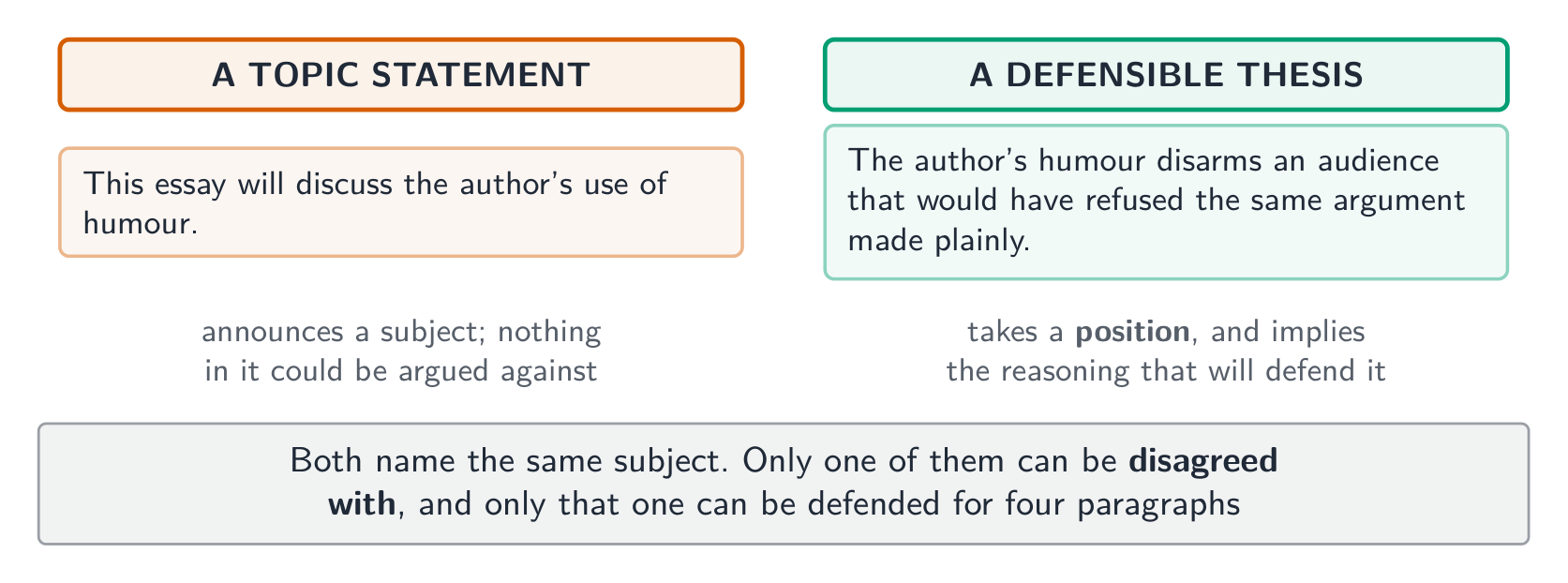
    Worked example (a real AP exam task). For a Question 3 argument prompt asking you to take a position on the value of a proposed practice, compare two openings. "There are many arguments both for and against this practice." - that earns nothing, because nobody could disagree with it. "Because the practice rewards visible effort rather than actual improvement, it produces the appearance of progress while removing the incentive to seek it." - that earns the point: it is arguable, specific, and it previews the reasoning the essay will develop.

    العربية

    الهدف الكتابي دقيق: اكتب جملة أطروحة تتطلب برهاناً أو دفاعاً وقد تمهد لبنية الحجة.

    في تلك الجملة شرطان مستقلان:

    • يجب أن تتطلب الدفاع. طبق اختبار الوحدة 1 مرة أخرى: هل يمكن لشخص معقول أن يختلف؟ الأطروحة التي تُفصّل حقيقة لا يمكن الدفاع عنها، بل يُعاد تكرارها فقط.
    • قد تمهد لبنية الحجة - وهو أمر اختياري ولكنه مفيد، لأن الأطروحة التي تسمي مسارات الاستدلال التي ستسلكها تمنح المقال شكله.

    في الامتحان، نقطة الأطروحة هي واحدة من الست نقاط، وهي أرخص نقطة في معايير التقييم: الأطروحة المدافعة عن نفسها استجابةً للمطلوب تكسبها. أما إعادة صياغة المطلوب فلا تكسبها.

    مثال محلل (سؤال حقيقي في امتحان AP). لسياق السؤال 3 الذي يطلب منك اتخاذ موقف بشأن قيمة ممارسة مقترحة، قارن بين مفتاحين. "هناك حجج كثيرة سواء لصالح أو ضد هذه الممارسة." - لا تحصل عليها لأن لا أحد يستطيع معارضتها. "بما أن الممارسة تكافئ الجهد الظاهر بدلاً من التحسن الفعلي، فهي تولد مظهر التقدم بينما تسحب الحافز للبحث عنه." - تحصل عليها: لأنها قابلة للنقاش، محددة، وتُقدّم الاستنتاج الذي سيطوّر به المقال.

    نفس الموضوع، وواحدة منهما فقط يمكن مخالفتها
    Vocabulary · ⁨مفردات⁩ Train · ⁨تدريب⁩
    English العربية
    thesis/ˈθiːsɪs/ رسالة البحث
    2.6

    Exam tips · ⁨نصائح للامتحان⁩

    English
    • The audience drives everything. If a paragraph would read the same to any audience, it has not been shaped for one.
    • Name what evidence does - illustrate, clarify, associate, amplify. That is analysis; listing evidence is not.
    • Sufficiency is quantity and quality, not volume. Three apt pieces beat six loose ones.
    • A thesis in a passage may be implied or distributed. Read the whole text before deciding.
    • Your own thesis must be arguable. Restating the prompt earns zero of the six points.
    • Previewing your line of reasoning in the thesis is optional but makes the rest of the essay easier to organise.
    العربية
    • الجمهور هو المحرك لكل شيء. إذا كانت الفقرة ستُقرأ بنفس الطريقة لأي جمهور، فهذا يعني أنها لم تُشكّل لجمهور معين.
    • سمِّ ماذا تفعل الأدلة - توضيح، توضيح، ارتباط، تضخيم. هذا تحليل؛ أما سرد الأدلة فهو ليس تحليلاً.
    • الكفاية هي الكمية والجودة، وليس الحجم. ثلاث قطع مناسبة أفضل من ستة غير مترابطة.
    • قد تكون الأطروحة في الفقرة مستنبطة أو موزعة. اقرأ النص كاملاً قبل اتخاذ القرار.
    • أطروحتك الخاصة يجب أن تكون قابلة للنقاش. إعادة صياغة المطلوب تكسب صفراً من النقاط الست.
    • تمهيد مسار استدلالك في الأطروحة اختيارية لكنها تسهل تنظيم باقي المقال.
  • 3

    Line of Reasoning and Methods of Development · ⁨خط التبرير وطرق التطوير⁩

    Watch lesson · ⁨شاهد الدرس⁩
    3.1

    Identifying Claims and Evidence

    Syllabus · ⁨المنهج⁩
    English

    Enduring Understanding (CLE-1): Writers make claims about subjects, rely on evidence that supports the reasoning that justifies the claim, and often acknowledge or respond to other, possibly opposing, arguments.

    Learning Objective 3.A: Reading – Identify and explain claims and evidence within an argument.

    • CLE-1.K Effective use of evidence uses commentary to establish a logical relationship between the evidence and the claim it supports.
    • CLE-1.L Writers introduce source material by using commentary to properly integrate it into their line of reasoning.
    • CLE-1.M Synthesis requires consideration, explanation, and integration of others’ arguments into one’s own argument.
    • CLE-1.N Writers must acknowledge words, ideas, images, texts, and other intellectual property of others through attribution, citation, or reference.
    العربية

    الفهم الدائم (CLE-1): يطرح الكُتّاب ادعاءات حول موضوعات معينة، ويعتمدون على أدلة تدعم البرهان الذي يبرر الادعاء، وغالبًا ما يعترفون بالرد على حجج أخرى، قد تكون معارضة.

    الهدف التعليمي 3.A: القراءة - تحديد وشرح الادعاءات والأدلة داخل الحجة.

    • CLE-1.K الاستخدام الفعال للأدلة يعتمد على التعليق لإقامة علاقة منطقية بين الدليل والادعاء الذي يدعمه.
    • CLE-1.L يقدم الكُتّاب مواد المصدر باستخدام التعليقات لدمجها بشكل صحيح في خط البرهان الخاص بهم.
    • CLE-1.M يتطلب التوليف النظر، والشرح، ودمج حجج الآخرين في حجة الكاتب الخاصة.
    • CLE-1.N يجب على الكُتّاب الاعتراف بكلمات الآخرين وأفكارهم وصورهم ونصوصهم وغير ذلك من الملكية الفكرية من خلال الإسناد، أو الاقتباس، أو الإشارة.

    Source: College Board AP Course and Exam Description · ⁨المصدر: وصف دورة وامتحان College Board AP⁩

    Unit 3 is where the course stops being about parts and starts being about structure. Its subject is the line of reasoning 推理线索 - the path an argument takes from where it starts to what it proves.

    First, four claims about how evidence gets into an argument properly:

    • Effective use of evidence uses commentary 评述 to establish a logical relationship between the evidence and the claim.
    • Writers introduce source material using commentary to integrate it into their line of reasoning - so commentary comes before as well as after.
    • Synthesis 综合 requires consideration, explanation, and integration of others' arguments into one's own. That is the exact skill Question 1 tests, and the word integration rules out a paragraph that simply summarises each source in turn.
    • Writers must acknowledge the words, ideas, images, and texts of others through attribution and citation 归属与引用.
    Vocabulary · ⁨مفردات⁩ Train · ⁨تدريب⁩
    English العربية
    line of reasoning/laɪn ɒv ˈriːzənɪŋ/ خط الحجة
    commentary/ˈkɒməntri/ تعليق
    Synthesis/ˈsɪnθəsɪs/ التكامل
    attribution and citation/ətrɪˈbjuːʃn ænd saɪˈteɪʃn/ النسبة والاستشهاد
    3.2

    Developing a Paragraph with Claim and Evidence

    Syllabus · ⁨المنهج⁩
    English

    Enduring Understanding (CLE-1): Writers make claims about subjects, rely on evidence that supports the reasoning that justifies the claim, and often acknowledge or respond to other, possibly opposing, arguments.

    Learning Objective 4.A: Writing – Develop a paragraph that includes a claim and evidence supporting the claim.

    • CLE-1.K Effective use of evidence uses commentary to establish a logical relationship between the evidence and the claim it supports.
    • CLE-1.L Writers introduce source material by using commentary to properly integrate it into their line of reasoning.
    • CLE-1.M Synthesis requires consideration, explanation, and integration of others’ arguments into one’s own argument.
    • CLE-1.N Writers must acknowledge words, ideas, images, texts, and other intellectual property of others through attribution, citation, or reference.
    العربية

    الفهم الدائم (CLE-1): يطرح الكُتّاب ادعاءات حول موضوعات معينة، ويعتمدون على أدلة تدعم البرهان الذي يبرر الادعاء، وغالبًا ما يعترفون بالرد على حجج أخرى، قد تكون معارضة.

    الهدف التعليمي 4.A: الكتابة - تطوير فقرة تتضمن ادعاءً وأدلة تدعم هذا الادعاء.

    • CLE-1.K الاستخدام الفعال للأدلة يعتمد على التعليق لإقامة علاقة منطقية بين الدليل والادعاء الذي يدعمه.
    • CLE-1.L يقدم الكُتّاب مواد المصدر باستخدام التعليقات لدمجها بشكل صحيح في خط البرهان الخاص بهم.
    • CLE-1.M يتطلب التوليف النظر، والشرح، ودمج حجج الآخرين في حجة الكاتب الخاصة.
    • CLE-1.N يجب على الكُتّاب الاعتراف بكلمات الآخرين وأفكارهم وصورهم ونصوصهم وغير ذلك من الملكية الفكرية من خلال الإسناد، أو الاقتباس، أو الإشارة.

    Source: College Board AP Course and Exam Description · ⁨المصدر: وصف دورة وامتحان College Board AP⁩

    Applied to your own writing, the change from Unit 2 is that commentary now has two jobs, not one: it introduces the evidence into the reasoning, and it explains the relationship afterwards.

    A paragraph that does both reads: claim - a sentence positioning the evidence - the evidence, embedded - commentary establishing the logical relationship - the link onward. The sentence before the quotation is doing as much work as the one after it, and most students write neither.

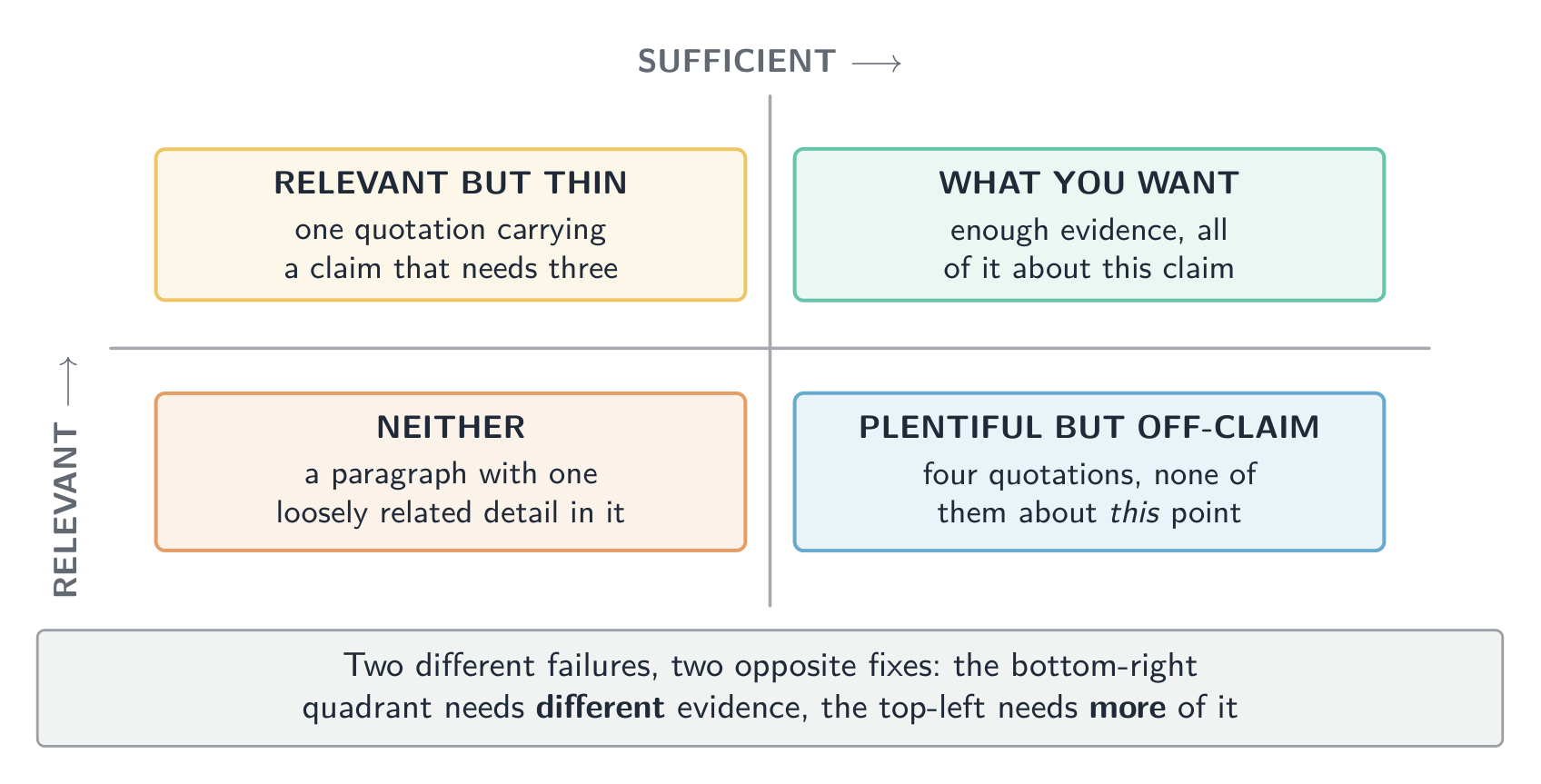
    Relevant and sufficient are two different failures with two opposite fixes
    Explore · ⁨استكشف⁩

    Diagnose the evidence problem · ⁨تشخيص مشكلة الأدلة⁩

    Relevant and sufficient are two different failures with two opposite fixes. · ⁨الملاءمة والكفاية هما فشلان مختلفان لهما إصلاحان متعاكسان.⁩

    3.3

    Describing the Line of Reasoning

    Syllabus · ⁨المنهج⁩
    English

    Enduring Understanding (REO-1): Writers guide understanding of a text’s lines of reasoning and claims through that text’s organization and integration of evidence.

    Learning Objective 5.A: Reading – Describe the line of reasoning and explain whether it supports an argument’s overarching thesis.

    • REO-1.A Writers may lead readers through a line of reasoning and then arrive at a thesis.
    • REO-1.B Writers may express a claim and then develop a line of reasoning to justify the claim.
    • REO-1.C Writers explain their reasoning through commentary that connects chosen evidence to a claim.
    • REO-1.D Commentary explains the significance and relevance of evidence in relation to the line of reasoning.
    • REO-1.E The sequence of paragraphs in a text reveals the argument’s line of reasoning.
    • REO-1.F Flaws in a line of reasoning may render an argument specious or illogical.
    العربية

    الفهم الدائم (REO-1): يرشد الكُتّاب فهم خطوط البرهان والادعاءات في النص من خلال تنظيمه ودمجه للأدلة.

    الهدف التعليمي 5.A: القراءة - وصف خط البرهان وشرح ما إذا كان يدعم الأطروحة العامة للحجة.

    • REO-1.A قد يقود الكُتّاب القراء عبر خط برهان ثم يصلون إلى أطروحة.
    • REO-1.B قد يعبر الكُتّاب عن ادعاء ثم يطورون خط برهان لتبرير هذا الادعاء.
    • REO-1.C يشرح الكُتّاب برهانهم من خلال تعليقات تربط الأدلة المختارة بالادعاء.
    • REO-1.D تشرح التعليقات أهمية الأدلة وارتباطها في سياق خط البرهان.
    • REO-1.E يكشف تسلسل الفقرات في النص عن خط استنتاج الحجة.
    • REO-1.F قد تؤدي العيوب في خط الاستنتاج إلى جعل الحجة باطلة أو غير منطقية.

    Source: College Board AP Course and Exam Description · ⁨المصدر: وصف دورة وامتحان College Board AP⁩

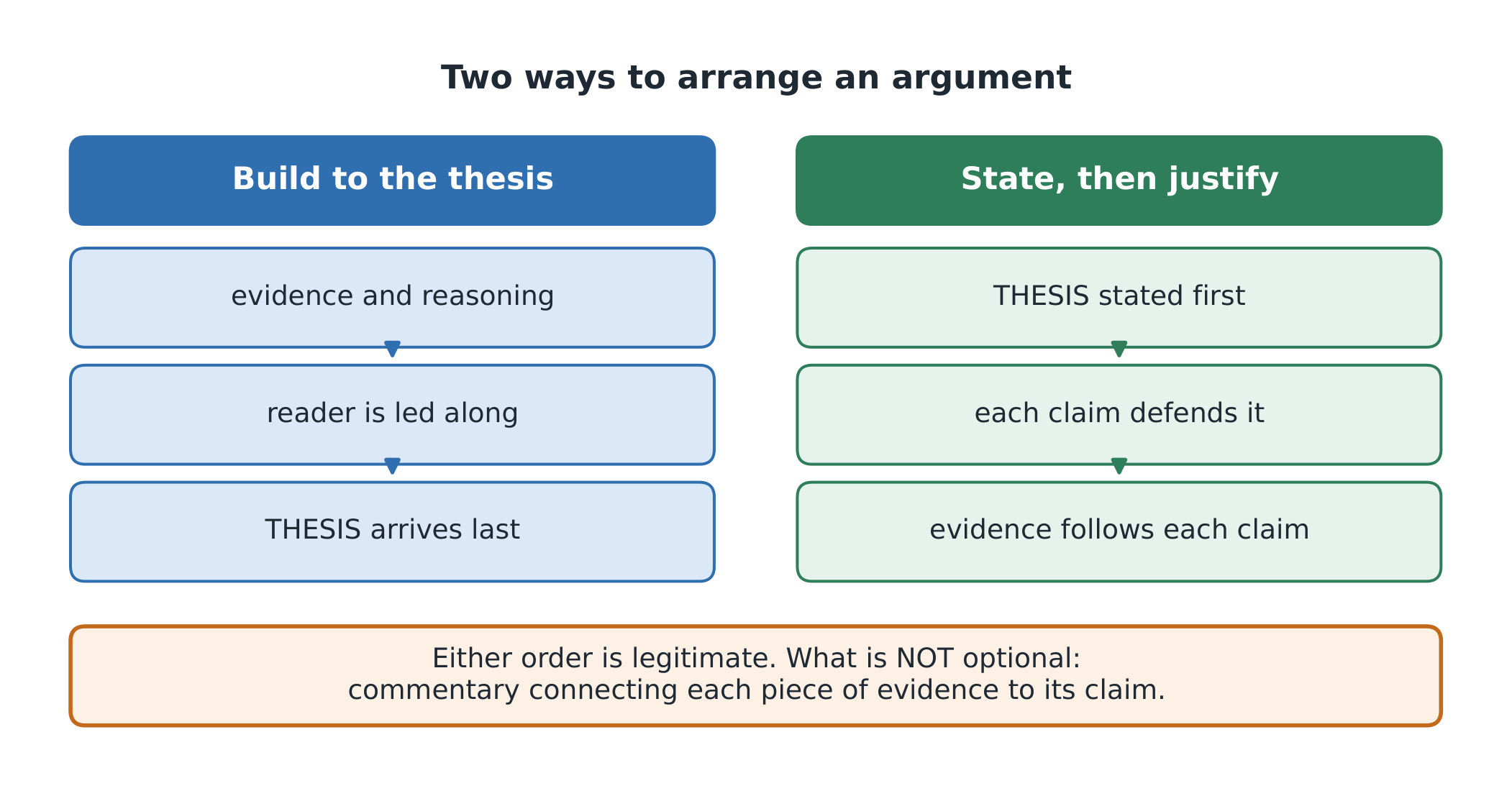
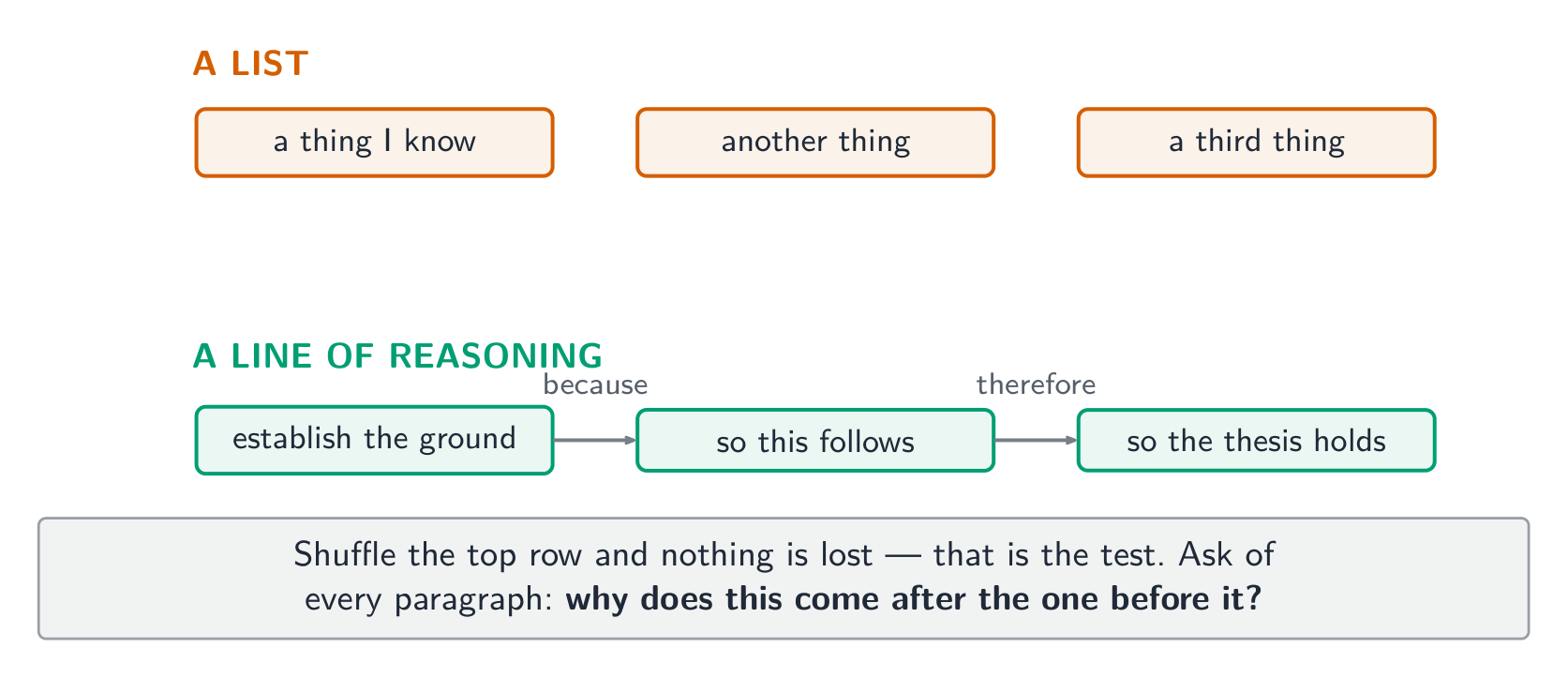
    Two legitimate orders, one requirement - and the requirement is the commentary
    The order is a choice; the connective tissue is not

    The CED allows two arrangements, and both are valid:

    • Writers may lead readers through a line of reasoning and then arrive at a thesis - the argument builds to its claim.
    • Writers may express a claim and then develop a line of reasoning to justify it - the argument declares and then defends.

    Whichever order is used, the same requirements hold:

    • Writers explain their reasoning through commentary that connects chosen evidence to a claim.
    • Commentary explains the significance and relevance of evidence in relation to the line of reasoning.
    • The sequence of paragraphs in a text reveals the argument's line of reasoning - which is the practical tool for reading. To find a writer's reasoning, write one sentence per paragraph and read the list.
    • Flaws in a line of reasoning may render an argument specious or illogical.
    The shuffle test: if the paragraphs can be reordered without loss, it is a list
    3.4

    Developing a Line of Reasoning and Commentary

    Syllabus · ⁨المنهج⁩
    English

    Enduring Understanding (REO-1): Writers guide understanding of a text’s lines of reasoning and claims through that text’s organization and integration of evidence.

    Learning Objective 6.A: Writing – Develop a line of reasoning and commentary that explains it throughout an argument.

    • REO-1.A Writers may lead readers through a line of reasoning and then arrive at a thesis.
    • REO-1.B Writers may express a claim and then develop a line of reasoning to justify the claim.
    • REO-1.C Writers explain their reasoning through commentary that connects chosen evidence to a claim.
    • REO-1.D Commentary explains the significance and relevance of evidence in relation to the line of reasoning.
    • REO-1.E The sequence of paragraphs in a text reveals the argument’s line of reasoning.
    • REO-1.F Flaws in a line of reasoning may render an argument specious or illogical.
    العربية

    الفهم الدائم (REO-1): يرشد الكُتّاب فهم خطوط البرهان والادعاءات في النص من خلال تنظيمه ودمجه للأدلة.

    الهدف التعليمي 6.A: الكتابة – تطوير خط استنتاج وتعليق يفسره على طول الحجة.

    • REO-1.A قد يقود الكُتّاب القراء عبر خط برهان ثم يصلون إلى أطروحة.
    • REO-1.B قد يعبر الكُتّاب عن ادعاء ثم يطورون خط برهان لتبرير هذا الادعاء.
    • REO-1.C يشرح الكُتّاب برهانهم من خلال تعليقات تربط الأدلة المختارة بالادعاء.
    • REO-1.D تشرح التعليقات أهمية الأدلة وارتباطها في سياق خط البرهان.
    • REO-1.E يكشف تسلسل الفقرات في النص عن خط استنتاج الحجة.
    • REO-1.F قد تؤدي العيوب في خط الاستنتاج إلى جعل الحجة باطلة أو غير منطقية.

    Source: College Board AP Course and Exam Description · ⁨المصدر: وصف دورة وامتحان College Board AP⁩

    For your own essays, the useful discipline is to decide the order of your claims before writing any of them. An essay whose paragraphs could be shuffled without loss has no line of reasoning - it has a list.

    Test a draft by asking of each paragraph: why does this come after the one before it? If the only answer is "it is another thing I know about the topic", the structure is a list and the reasoning point is at risk.

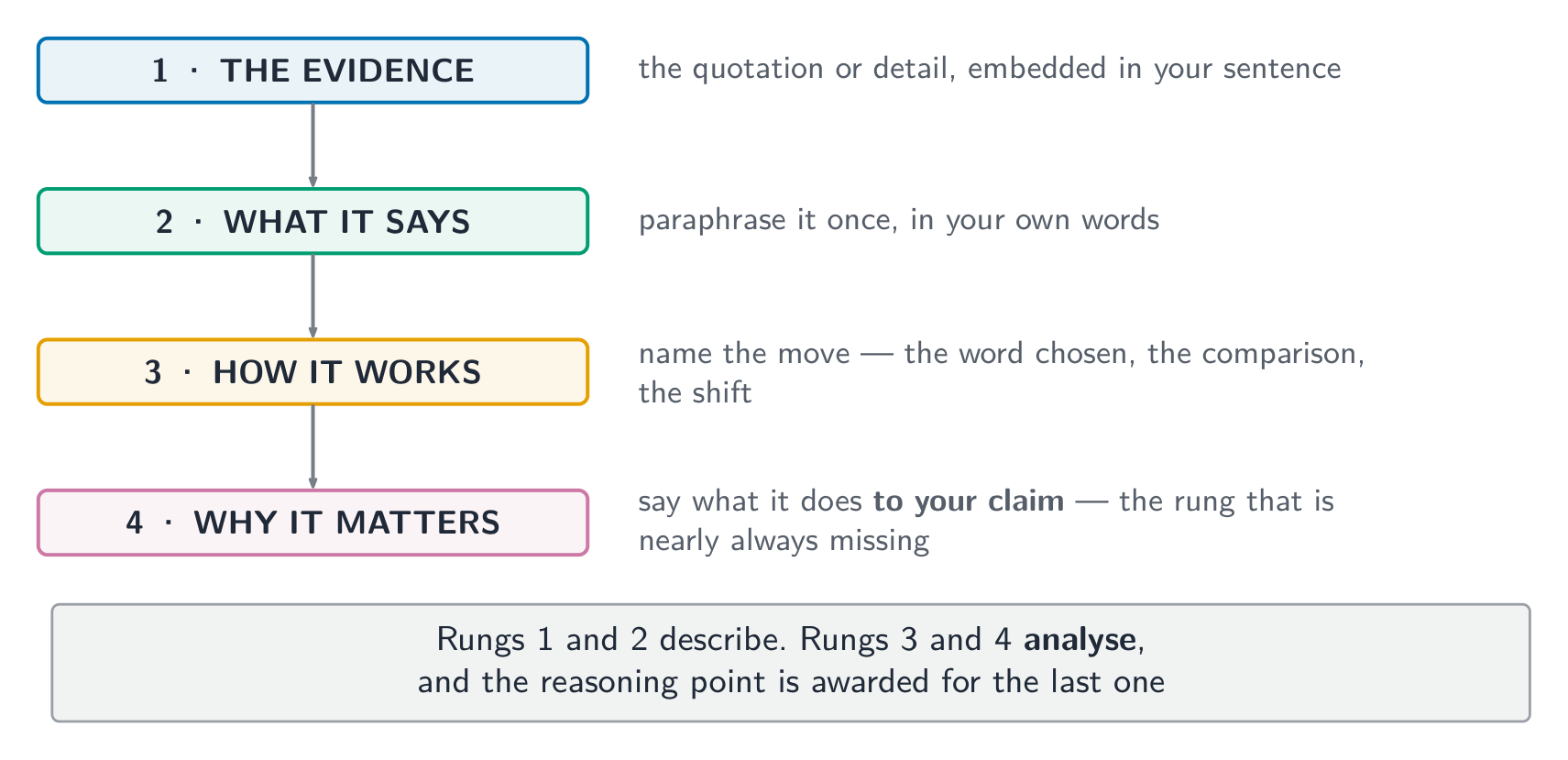
    Commentary as four rungs - the reasoning point is awarded for the last one
    Explore · ⁨استكشف⁩

    Climb the four rungs of commentary · ⁨اصعد درجات التعليق الأربع⁩

    'Explain your evidence' is unusable. Four questions, each answerable in a sentence, make it a procedure. · ⁨'اشرح أدلتك' أمر غير قابل للاستخدام. أربعة أسئلة، يُجاب عن كل منها بجملة، يجعلها إجراءً.⁩

    3.5

    Recognizing Methods of Development

    Syllabus · ⁨المنهج⁩
    English

    Enduring Understanding (REO-1): Writers guide understanding of a text’s lines of reasoning and claims through that text’s organization and integration of evidence.

    Learning Objective 5.C: Reading – Recognize and explain the use of methods of development to accomplish a purpose.

    • REO-1.G Methods of development are common approaches writers frequently use to develop and organize the reasoning of their arguments. A method of development provides an audience with the means to trace a writer’s reasoning in an argument.
    • REO-1.H Some typical methods of development are narration, cause-effect, comparison-contrast, definition, and description.
    • REO-1.I When developing ideas through narration, writers offer details about real-life experiences and offer reflections and insights on the significance of those experiences.
    • REO-1.J When developing ideas through cause-effect, writers present a cause, assert effects or consequences of that cause, or present a series of causes and the subsequent effect(s).
    العربية

    الفهم الدائم (REO-1): يرشد الكُتّاب فهم خطوط البرهان والادعاءات في النص من خلال تنظيمه ودمجه للأدلة.

    الهدف التعليمي 5.C: القراءة – التعرف على استخدام أساليب التطوير وشرحها لتحقيق غرض معين.

    • REO-1.G أساليب التطوير هي نهج شائع يستخدمه الكتاب بشكل متكرر لتطوير وتنظيم استنتاجاتهم الحجاجية. يوفر أسلوب التطوير للجمهور الوسائل لتتبع استنتاج الكاتب في الحجة.
    • REO-1.H تشمل بعض أساليب التطوير الشائعة السرد، السبب والنتيجة، المقارنة والتباين، التعريف، والوصف.
    • REO-1.I عند تطوير الأفكار من خلال السرد، يقدم الكتاب تفاصيل عن تجارب حقيقية ويقدم reflections (تأملات) ورؤى حول أهمية تلك التجارب.
    • REO-1.J عند تطوير الأفكار من خلال السبب والنتيجة، يقدم الكاتب سببًا، ويؤكد على نتائج أو عواقب ذلك السبب، أو يعرض سلسلة من الأسباب والعواقب اللاحقة.

    Source: College Board AP Course and Exam Description · ⁨المصدر: وصف دورة وامتحان College Board AP⁩

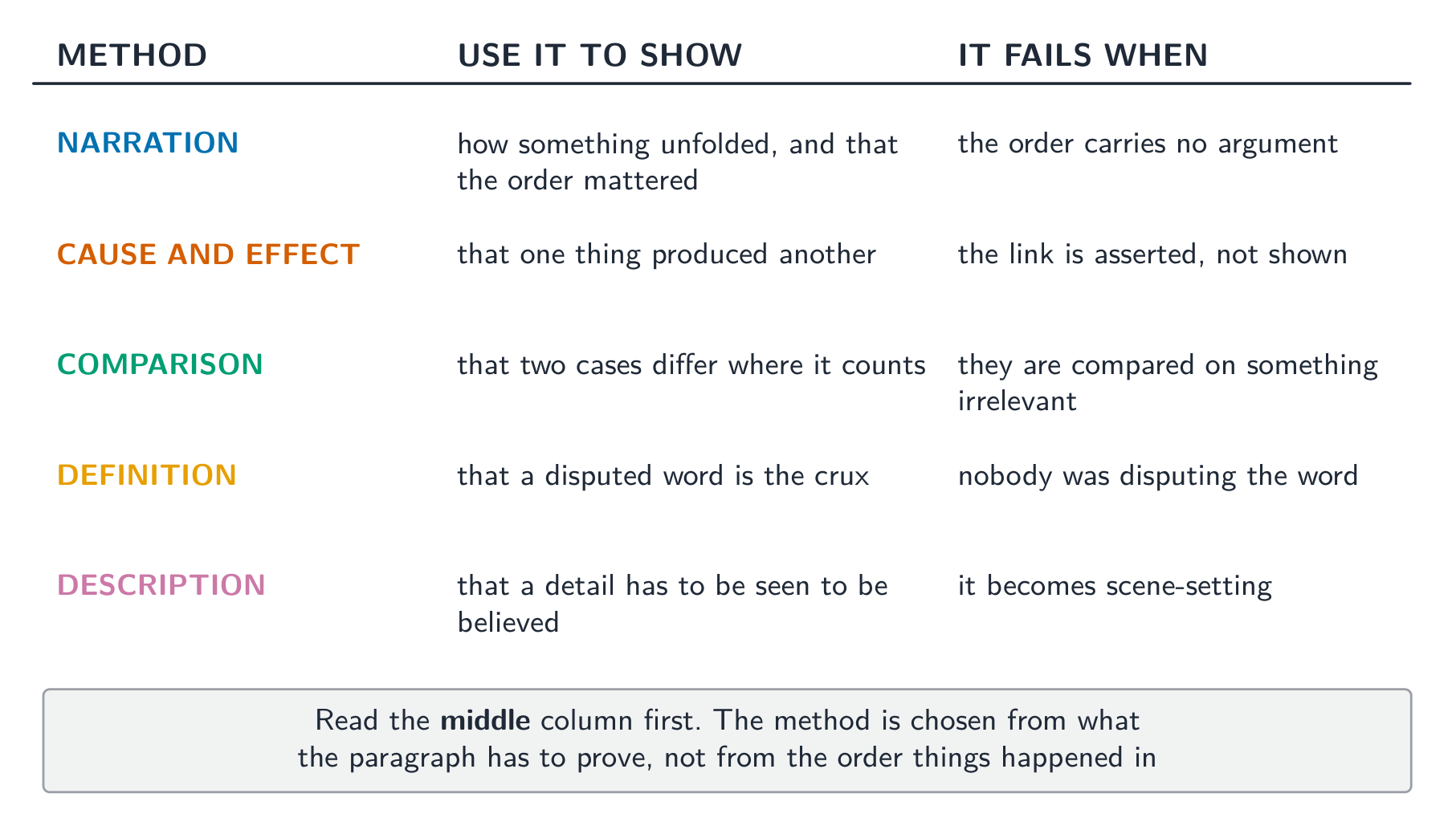
    Methods of development 展开方法 are common approaches writers use to develop and organise the reasoning of an argument. The CED's list: narration, cause-effect, comparison-contrast, definition, and description. This unit treats the first two.

    • Developing through narration 叙述: writers offer details about real-life experiences and reflections on them. The reflection is what makes narration an argument rather than a story - an anecdote with no reflection has supplied no reasoning.
    • Developing through cause-effect 因果: writers present a cause, then assert the effects or consequences of that cause - or begin from an effect and trace it back.
    Vocabulary · ⁨مفردات⁩ Train · ⁨تدريب⁩
    English العربية
    Methods of development/ˈmeθədz ɒv dɪˈveləpmənt/ طرق التطوير
    narration/nəˈreɪʃn/ السرد
    cause-effect/kɔːz ɪˈfekt/ سببية
    3.6

    Using Methods of Development

    Syllabus · ⁨المنهج⁩
    English

    Enduring Understanding (REO-1): Writers guide understanding of a text’s lines of reasoning and claims through that text’s organization and integration of evidence.

    Learning Objective 6.C: Writing – Use appropriate methods of development to advance an argument.

    • REO-1.G Methods of development are common approaches writers frequently use to develop and organize the reasoning of their arguments. A method of development provides an audience with the means to trace a writer’s reasoning in an argument.
    • REO-1.H Some typical methods of development are narration, cause-effect, comparison-contrast, definition, and description.
    • REO-1.I When developing ideas through narration, writers offer details about real-life experiences and offer reflections and insights on the significance of those experiences.
    • REO-1.J When developing ideas through cause-effect, writers present a cause, assert effects or consequences of that cause, or present a series of causes and the subsequent effect(s).
    العربية

    الفهم الدائم (REO-1): يرشد الكُتّاب فهم خطوط البرهان والادعاءات في النص من خلال تنظيمه ودمجه للأدلة.

    الهدف التعليمي 6.C: الكتابة – استخدام أساليب التطوير المناسبة لدعم الحجة.

    • REO-1.G أساليب التطوير هي نهج شائع يستخدمه الكتاب بشكل متكرر لتطوير وتنظيم استنتاجاتهم الحجاجية. يوفر أسلوب التطوير للجمهور الوسائل لتتبع استنتاج الكاتب في الحجة.
    • REO-1.H تشمل بعض أساليب التطوير الشائعة السرد، السبب والنتيجة، المقارنة والتباين، التعريف، والوصف.
    • REO-1.I عند تطوير الأفكار من خلال السرد، يقدم الكتاب تفاصيل عن تجارب حقيقية ويقدم reflections (تأملات) ورؤى حول أهمية تلك التجارب.
    • REO-1.J عند تطوير الأفكار من خلال السبب والنتيجة، يقدم الكاتب سببًا، ويؤكد على نتائج أو عواقب ذلك السبب، أو يعرض سلسلة من الأسباب والعواقب اللاحقة.

    Source: College Board AP Course and Exam Description · ⁨المصدر: وصف دورة وامتحان College Board AP⁩

    Choosing a method is a rhetorical decision, not a stylistic one. Narration works when the audience needs to feel the situation before they will accept a claim about it. Cause-effect works when the audience already accepts the facts but not the connection between them.

    Worked example (a real AP exam task). On a Question 1 synthesis prompt, compare two paragraphs using the same two sources. The weak version: "Source A says X. Source C says Y. Both discuss the issue." That is summary in sequence - no claim, no integration, no reasoning. The strong version: "The strongest objection to the proposal is not that it fails but that it succeeds too narrowly: Source A's data show the intended outcome improving, while Source C's account of the same programme records the second-order costs that the measurement in Source A was never designed to capture." Here the sources are integrated into the writer's own claim, and the commentary establishes the logical relationship - which is what the four evidence-and-commentary points are awarded for.

    3.6

    Exam tips

    • Commentary has two jobs: introducing evidence into the reasoning, and explaining the relationship afterwards. Write both sentences.
    • Synthesis means integration, not summary in sequence. A paragraph per source is the classic low-scoring shape.
    • To find a writer's line of reasoning, summarise each paragraph in one sentence and read the list.
    • Ask of your own paragraphs: why does this one follow that one? No answer means no line of reasoning.
    • Narration needs reflection. An anecdote without it has told a story, not made an argument.
    • Choose a method of development for a rhetorical reason and be able to say what it is.
  • 4

    Introductions, Conclusions, and Development · ⁨المقدمة والخاتمة والتطوير⁩

    Watch lesson · ⁨شاهد الدرس⁩
    4.1

    Introductions and Conclusions in a Text · ⁨المقدمة والخاتمة في النص⁩

    Syllabus · ⁨المنهج⁩
    English

    Enduring Understanding (RHS-1): Individuals write within a particular situation and make strategic writing choices based on that situation.

    Learning Objective 1.A: Reading – Identify and describe components of the rhetorical situation: the exigence, audience, writer, purpose, context, and message.

    • RHS-1.I The introduction of an argument introduces the subject and/ or writer of the argument to the audience. An introduction may present the argument’s thesis. An introduction may orient, engage, and/or focus the audience by presenting quotations, intriguing statements, anecdotes, questions, statistics, data, contextualized information, or a scenario.
    • RHS-1.J The conclusion of an argument brings the argument to a unified end. A conclusion may present the argument’s thesis. It may engage and/or focus the audience by explaining the significance of the argument within a broader context, making connections, calling the audience to act, suggesting a change in behavior or attitude, proposing a solution, leaving the audience with a compelling image, explaining implications, summarizing the argument, or connecting to the introduction.
    العربية

    الفهم الدائم (RHS-1): يكتب الأفراد ضمن موقف معين ويتخذون خيارات كتابة استراتيجية بناءً على ذلك الموقف.

    هدف التعلم 1.A: القراءة – حدد ووصف مكونات الموقف البلاغي: الاستعجال، الجمهور، الكاتب، الغرض، السياق، والرسالة.

    • RHS-1.I تمهد مقدمة الحجة للموضوع و/أو الكاتب للحجة لدى الجمهور. قد تقدم المقدمة أطروحة الحجة. قد توجه وتُشغِل وتُركّز الانتباه للجمهور من خلال تقديم اقتباسات، عبارات مثيرة، حكايات قصيرة، أسئلة، إحصائيات، بيانات، معلومات ذات سياق، أو سيناريو.
    • RHS-1.J تختتم خاتمة الحجة الحجة بنهاية موحدة. قد تقدم الخاتمة أطروحة الحجة. قد تُشغِل وتُركّز الانتباه للجمهور من خلال شرح أهمية الحجة في سياق أوسع، إجراء روابط، استدعاء الجمهور للتصرف، اقتراح تغيير في السلوك أو الموقف، تقديم حل، ترك انطباع مؤثر في ذهن القارئ، شرح التداعيات، تلخيص الحجة، أو الربط بالمقدمة.

    Source: College Board AP Course and Exam Description · ⁨المصدر: وصف دورة وامتحان College Board AP⁩

    English

    Unit 4 covers the two positions in a text where a writer's choices are most visible - the beginning and the end - and completes the CED's list of methods of development.

    • The introduction 引言 of an argument introduces the subject and/or the writer to the audience. It may orient the reader, establish the exigence and context, and gain attention.
    • The conclusion 结论 brings the argument to a unified end. It may present the argument's thesis, explain its significance, or situate the argument in a broader context.

    Note the verb in the second: unified. A conclusion is not a summary; it is the point at which the parts are shown to have been one argument.

    العربية

    تغطي الوحدة 4 الموضعين في النص حيث تكون خيارات الكاتب أكثر وضوحاً - البداية والنهاية - وتكمل قائمة CED لـ أساليب التطوير.

    • المقدمة 引言 للحجة تقدم الموضوع و/أو الكاتب للجمهور. قد توجه القارئ، وت确立了 الحاجة والسياق، وتحصل على الانتباه.
    • الخاتمة 结论 تُختتم الحجة بنهاية موحدة. قد تطرح أطروحة الحجة، وتفسر أهميتها، أو تضع الحجة في سياق أوسع.

    لاحظ الفعل في الثانية: موحدة. الخاتمة ليست تلخيصاً؛ إنها النقطة التي تُظهر أن الأجزاء كانت حجة واحدة.

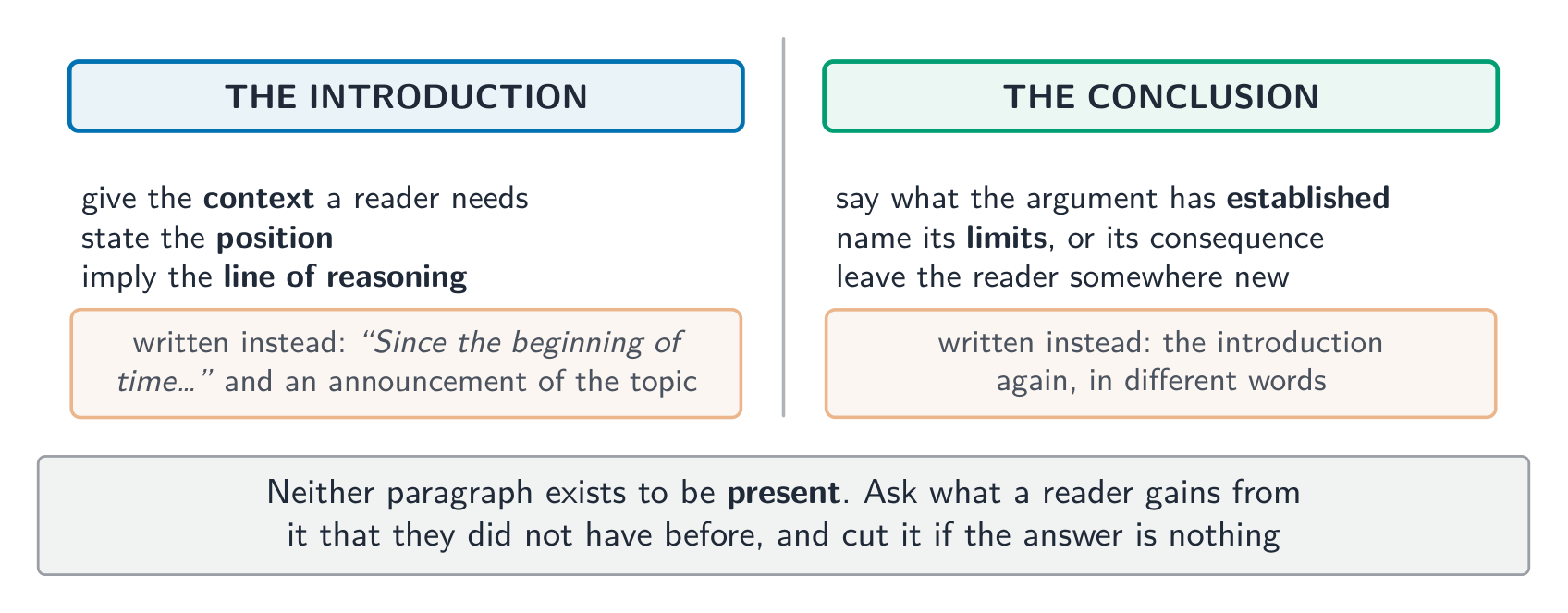
    لا توجد فقرة موجودة لتكون موجودة - اسأل ماذا يكسب القارئ منها
    Vocabulary · ⁨مفردات⁩ Train · ⁨تدريب⁩
    English العربية
    introduction/ˌɪntrəˈdʌkʃn/ الإطلاق
    conclusion/kənˈkluːʒn/ الاستنتاج
    comparison-contrast/kəmˈpærɪsn ˈkɒntræst/ مقارنة-تباين
    definition or description/ˌdefɪˈnɪʃn ɔː dɪˈskrɪpʃn/ تعريف أو وصف
    4.2

    Writing Introductions and Conclusions · ⁨كتابة المقدمات والخواتم⁩

    Syllabus · ⁨المنهج⁩
    English

    Enduring Understanding (RHS-1): Individuals write within a particular situation and make strategic writing choices based on that situation.

    Learning Objective 2.A: Writing – Write introductions and conclusions appropriate to the purpose and context of the rhetorical situation.

    • RHS-1.I The introduction of an argument introduces the subject and/ or writer of the argument to the audience. An introduction may present the argument’s thesis. An introduction may orient, engage, and/or focus the audience by presenting quotations, intriguing statements, anecdotes, questions, statistics, data, contextualized information, or a scenario.
    • RHS-1.J The conclusion of an argument brings the argument to a unified end. A conclusion may present the argument’s thesis. It may engage and/or focus the audience by explaining the significance of the argument within a broader context, making connections, calling the audience to act, suggesting a change in behavior or attitude, proposing a solution, leaving the audience with a compelling image, explaining implications, summarizing the argument, or connecting to the introduction.
    العربية

    الفهم الدائم (RHS-1): يكتب الأفراد ضمن موقف معين ويتخذون خيارات كتابة استراتيجية بناءً على ذلك الموقف.

    الهدف التعليمي 2.A: الكتابة – كتابة مقدمات وخواتم مناسبة للغرض وسياق الموقف البلاغي.

    • RHS-1.I تمهد مقدمة الحجة للموضوع و/أو الكاتب للحجة لدى الجمهور. قد تقدم المقدمة أطروحة الحجة. قد توجه وتُشغِل وتُركّز الانتباه للجمهور من خلال تقديم اقتباسات، عبارات مثيرة، حكايات قصيرة، أسئلة، إحصائيات، بيانات، معلومات ذات سياق، أو سيناريو.
    • RHS-1.J تختتم خاتمة الحجة الحجة بنهاية موحدة. قد تقدم الخاتمة أطروحة الحجة. قد تُشغِل وتُركّز الانتباه للجمهور من خلال شرح أهمية الحجة في سياق أوسع، إجراء روابط، استدعاء الجمهور للتصرف، اقتراح تغيير في السلوك أو الموقف، تقديم حل، ترك انطباع مؤثر في ذهن القارئ، شرح التداعيات، تلخيص الحجة، أو الربط بالمقدمة.

    Source: College Board AP Course and Exam Description · ⁨المصدر: وصف دورة وامتحان College Board AP⁩

    English

    On the exam, both are worth writing well but neither is worth writing long. A useful discipline:

    • An introduction that positions the subject and states a defensible thesis in two or three sentences is complete. Everything else in a timed essay is better spent on evidence and commentary.
    • A conclusion that says what follows from the argument - its significance, or its wider implication - does more than one that restates the paragraphs.

    The weakest conclusion is the one that re-lists what the essay already said. The reader has just read it. Say instead what it means, or what it obliges.

    العربية

    في الامتحان، كلاهما يستحق الكتابة بشكل جيد لكن neither is worth writing long. انضباط مفيد:

    • مقدمة تضع الموضوع وتطرح أطروحة قابلة للدفاع في جملتين أو ثلاث هي كافية. كل شيء آخر في مقالة ذات وقت محدود أفضل إن أمضيته على الأدلة والتعليق.
    • خاتمة تقول ما يتبع من الحجة - أهميتها أو عاقبتها الأوسع - تفعل أكثر مما تفعله خاتمة تعيد صياغة الفقرات.

    أضعف خاتمة هي التي تعيد سرد ما قالته المقالة بالفعل. لقد قرأ القارئ ذلك للتو. قل بدلاً من ذلك ما يعنيه، أو ما يلزم به.

    4.3

    Identifying the Overarching Thesis · ⁨تحديد الأطروحة العامة⁩

    Syllabus · ⁨المنهج⁩
    English

    Enduring Understanding (CLE-1): Writers make claims about subjects, rely on evidence that supports the reasoning that justifies the claim, and often acknowledge or respond to other, possibly opposing, arguments.

    Learning Objective 3.B: Reading – Identify and describe the overarching thesis of an argument, and any indication it provides of the argument’s structure.

    • CLE-1.O A thesis statement may preview the line of reasoning of an argument. This is not to say that a thesis statement must list the points of an argument, aspects to be analyzed, or specific evidence to be used in an argument.
    العربية

    الفهم الدائم (CLE-1): يطرح الكُتّاب ادعاءات حول موضوعات معينة، ويعتمدون على أدلة تدعم البرهان الذي يبرر الادعاء، وغالبًا ما يعترفون بالرد على حجج أخرى، قد تكون معارضة.

    الهدف التعليمي 3.B: القراءة - تحديد ووصف الأطروحة العامة للحجة، وأي مؤشرات تقدمها لبنية الحجة.

    • CLE-1.O قد تستعرض عبارة الأطروحة خط استنتاج الحجة. لا يعني هذا بالضرورة أن يجب على عبارة الأطروحة سرد نقاط الحجة، الجوانب التي سيتم تحليلها، أو الأدلة المحددة التي سيتم استخدامها في الحجة.

    Source: College Board AP Course and Exam Description · ⁨المصدر: وصف دورة وامتحان College Board AP⁩

    English

    The CED adds a precise refinement here: a thesis statement may preview the line of reasoning of an argument - and then, immediately, this is not to say that a thesis statement must list the reasons.

    That double statement is worth holding, because both errors are common. A thesis that previews nothing leaves the essay shapeless. A thesis mechanically listing three reasons is not required and often produces a rigid essay that cannot develop.

    العربية

    تضيف CED تحسينًا دقيقًا هنا: عبارة الأطروحة قد تستعرض خط استدلال الحجة - وبعدها مباشرة، هذا لا يعني أن عبارة الأطروحة يجب أن تذكر الأسباب.

    هذه العبارة المزدوجة تستحق الاحتفاظ بها، لأن كلا الخطأين شائع. أطروحة لا تستعرض شيئًا تترك شكل المقالة بلا حدود. أطروحة تذكر ثلاث أسباب بشكل ميكانيكي ليست مطلوبة وغالبًا ما تنتج مقالة جامدة لا يمكن تطويرها.

    4.4

    Writing a Thesis Statement · ⁨كتابة جملة الأطروحة⁩

    Syllabus · ⁨المنهج⁩
    English

    Enduring Understanding (CLE-1): Writers make claims about subjects, rely on evidence that supports the reasoning that justifies the claim, and often acknowledge or respond to other, possibly opposing, arguments.

    Learning Objective 4.B: Writing – Write a thesis statement that requires proof or defense and that may preview the structure of the argument.

    • CLE-1.O A thesis statement may preview the line of reasoning of an argument. This is not to say that a thesis statement must list the points of an argument, aspects to be analyzed, or specific evidence to be used in an argument.
    العربية

    الفهم الدائم (CLE-1): يطرح الكُتّاب ادعاءات حول موضوعات معينة، ويعتمدون على أدلة تدعم البرهان الذي يبرر الادعاء، وغالبًا ما يعترفون بالرد على حجج أخرى، قد تكون معارضة.

    الهدف التعليمي 4.B: الكتابة - كتابة عبارة أطروحة تتطلب إثباتًا أو دفاعًا، وقد تستعرض بنية الحجة.

    • CLE-1.O قد تستعرض عبارة الأطروحة خط استنتاج الحجة. لا يعني هذا بالضرورة أن يجب على عبارة الأطروحة سرد نقاط الحجة، الجوانب التي سيتم تحليلها، أو الأدلة المحددة التي سيتم استخدامها في الحجة.

    Source: College Board AP Course and Exam Description · ⁨المصدر: وصف دورة وامتحان College Board AP⁩

    English

    For your own writing, the practical version:

    • The thesis must be defensible. Non-negotiable, and it is the whole of the thesis point.
    • It may indicate the shape of the reasoning. Do it when the shape is genuinely load-bearing; do not do it as a formula.
    • It should be specific enough to constrain what follows. A thesis so broad that any paragraph could belong under it is not directing the essay.
    العربية

    لمكتبتك الخاصة، النسخة العملية:

    • الأطروحة يجب أن تكون قابلة للدفاع. أمر لا تقبل النقاش، وهي جوهر نقطة الأطروحة.
    • يمكن أن تشير إلى شكل الاستدلال. فعل ذلك عندما يكون الشكل يحمل الحمل فعليًا؛ لا تفعل ذلك كتطبيق قانوني.
    • يجب أن تكون محددة بما يكفي لتقيّد ما يليها. أطروحة واسعة لدرجة أن أي فقرة يمكن أن تنتمي تحتها لا توجه المقالة.
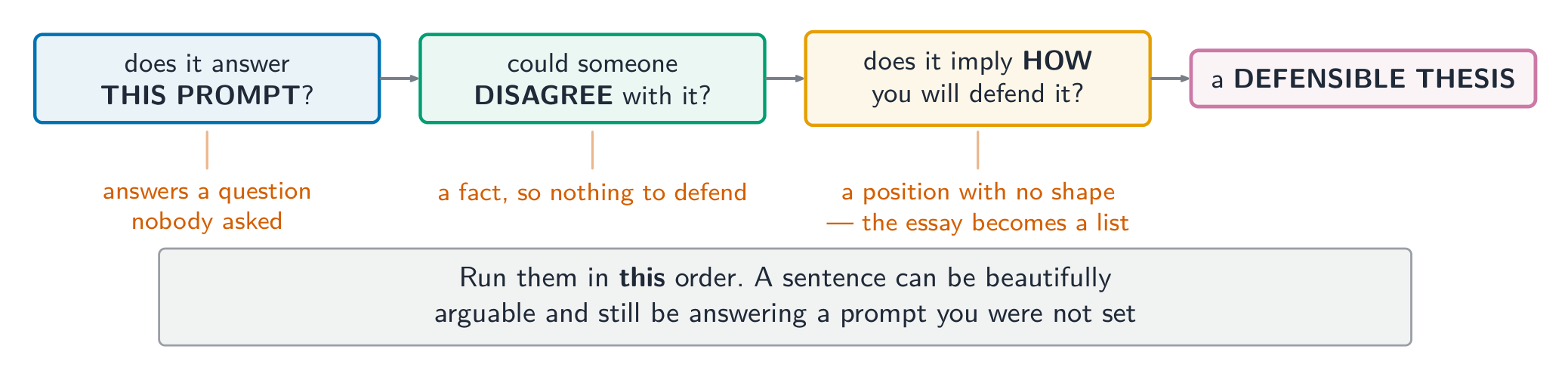
    ثلاثة أسئلة، تُطرح بهذا الترتيب قبل كتابة المقالة
    Explore · ⁨استكشف⁩

    Run the three thesis gates in order · ⁨مرر عبر بوابات الفرضية الثلاث بالترتيب⁩

    A sentence can be beautifully arguable and still answer a prompt you were not set — which is why the order matters. · ⁨يمكن للجملة أن تكون نقاشية بشكل جميل وما تزال تجيب على سؤال لم تُعطه — ولهذا فإن الترتيز مهم.⁩

    4.5

    Recognizing Methods of Development · ⁨التعرف على أساليب التطوير⁩

    Syllabus · ⁨المنهج⁩
    English

    Enduring Understanding (REO-1): Writers guide understanding of a text’s lines of reasoning and claims through that text’s organization and integration of evidence.

    Learning Objective 5.C: Reading – Recognize and explain the use of methods of development to accomplish a purpose.

    • REO-1.G Methods of development are common approaches writers frequently use to develop and organize the reasoning of their arguments. A method of development provides an audience with the means to trace a writer’s reasoning in an argument.
    • REO-1.K When developing ideas through comparison-contrast, writers present a category of comparison and then examine the similarities and/or differences between the objects of the comparison. When analyzing similarities and/or differences, like categories of comparison must be used.
    • REO-1.L When developing ideas through a definition or description, writers relate the characteristics, features, or sensory details of an object or idea, sometimes using examples or illustrations.
    العربية

    الفهم الدائم (REO-1): يرشد الكُتّاب فهم خطوط البرهان والادعاءات في النص من خلال تنظيمه ودمجه للأدلة.

    الهدف التعليمي 5.C: القراءة – التعرف على استخدام أساليب التطوير وشرحها لتحقيق غرض معين.

    • REO-1.G أساليب التطوير هي نهج شائع يستخدمه الكتاب بشكل متكرر لتطوير وتنظيم استنتاجاتهم الحجاجية. يوفر أسلوب التطوير للجمهور الوسائل لتتبع استنتاج الكاتب في الحجة.
    • REO-1.K عند تطوير الأفكار من خلال المقارنة والتباين، يقدم الكاتب فئة من الفئات للمقارنة ثم يفحص أوجه التشابه و/أو الاختلاف بين كائنات المقارنة. وعند تحليل أوجه التشابه و/أو الاختلاف، يجب استخدام فئات مقارنة مماثلة.
    • REO-1.L عند تطوير الأفكار من خلال التعريف أو الوصف، يرتبط الكاتب بخصائص أو ملامح أو تفاصيل حسية لكائن أو فكرة معينة، وأحيانًا باستخدام أمثلة أو توضيحات.

    Source: College Board AP Course and Exam Description · ⁨المصدر: وصف دورة وامتحان College Board AP⁩

    English

    Unit 3 covered narration and cause-effect. Unit 4 adds the rest:

    • Developing through comparison-contrast 比较对照: writers present a category of comparison and then examine similarities and differences within it. The category is the part students omit - a comparison without a stated basis is two descriptions side by side.
    • Developing through definition or description 定义与描写: writers relate the characteristics, features, or sensory details of a subject.

    Definition is more powerful than it looks. An argument that turns on what a word means - what counts as success, as fairness, as progress - is an argument that has moved to the ground where it can actually be won.

    العربية
    الأساليب الخمسة، مع الوظيفة المناسبة لكل واحد منها
    اختر الأسلوب الذي يحتاجه الاستدلال، وليس الأسلوب الذي يقترحه الموضوع

    غطت الوحدة 3 السرد والسبب والنتيجة. تضيف الوحدة 4 الباقي:

    • التطوير عبر المقارنة والتباين 比较对照: يقدم الكُتّاب فئة مقارنة ثم يفحصون أوجه التشابه والاختلاف داخلها. الفئة هي الجزء الذي يتركه الطلاب - المقارنة بدون أساس معلّن هي مجرد وصفين جنبًا إلى جنب.
    • التطور من خلال التعريف أو الوصف: يرتبط الكُتّاب الخصائص، الملامح، أو التفاصيل الحسية بموضوع ما.

    التعريف أقوى مما يبدو. الحجة التي تدور حول معنى كلمة - ما يُعد نجاحًا، أو عدلاً، أو تقدمًا - هي حجة انتقلت إلى الأرض التي يمكن كسبها فعليًا.

    4.6

    Using Methods of Development · ⁨استخدام أساليب التطوير⁩

    Syllabus · ⁨المنهج⁩
    English

    Enduring Understanding (REO-1): Writers guide understanding of a text’s lines of reasoning and claims through that text’s organization and integration of evidence.

    Learning Objective 6.C: Writing – Use appropriate methods of development to advance an argument.

    • REO-1.G Methods of development are common approaches writers frequently use to develop and organize the reasoning of their arguments. A method of development provides an audience with the means to trace a writer’s reasoning in an argument.
    • REO-1.K When developing ideas through comparison-contrast, writers present a category of comparison and then examine the similarities and/or differences between the objects of the comparison. When analyzing similarities and/or differences, like categories of comparison must be used.
    • REO-1.L When developing ideas through a definition or description, writers relate the characteristics, features, or sensory details of an object or idea, sometimes using examples or illustrations.
    العربية

    الفهم الدائم (REO-1): يرشد الكُتّاب فهم خطوط البرهان والادعاءات في النص من خلال تنظيمه ودمجه للأدلة.

    الهدف التعليمي 6.C: الكتابة – استخدام أساليب التطوير المناسبة لدعم الحجة.

    • REO-1.G أساليب التطوير هي نهج شائع يستخدمه الكتاب بشكل متكرر لتطوير وتنظيم استنتاجاتهم الحجاجية. يوفر أسلوب التطوير للجمهور الوسائل لتتبع استنتاج الكاتب في الحجة.
    • REO-1.K عند تطوير الأفكار من خلال المقارنة والتباين، يقدم الكاتب فئة من الفئات للمقارنة ثم يفحص أوجه التشابه و/أو الاختلاف بين كائنات المقارنة. وعند تحليل أوجه التشابه و/أو الاختلاف، يجب استخدام فئات مقارنة مماثلة.
    • REO-1.L عند تطوير الأفكار من خلال التعريف أو الوصف، يرتبط الكاتب بخصائص أو ملامح أو تفاصيل حسية لكائن أو فكرة معينة، وأحيانًا باستخدام أمثلة أو توضيحات.

    Source: College Board AP Course and Exam Description · ⁨المصدر: وصف دورة وامتحان College Board AP⁩

    English

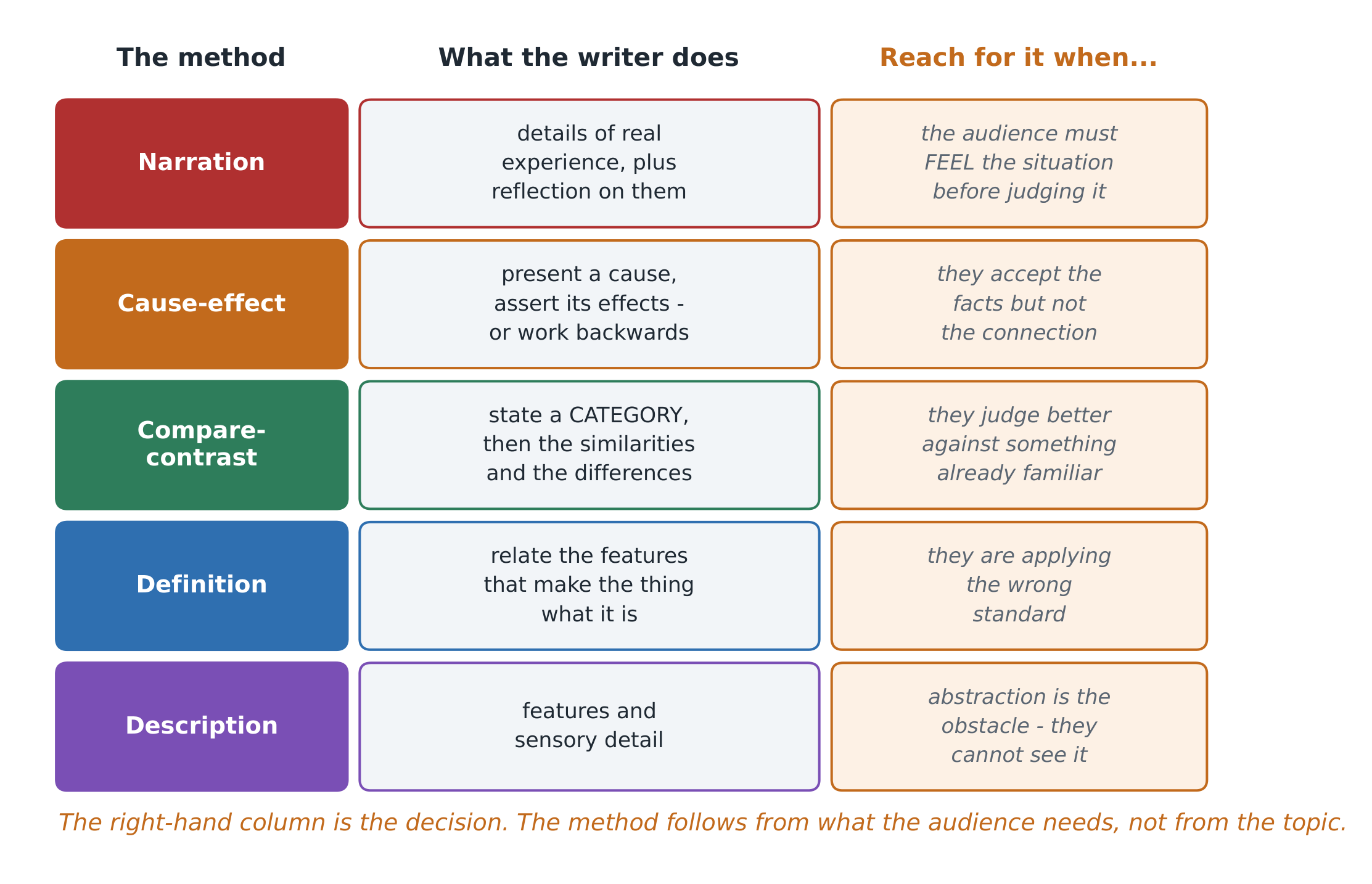
    The choice is rhetorical. Ask what the audience needs before they will accept your claim:

    • They need to see it, and abstraction is the obstacle: description.
    • They accept the facts but not the connection: cause-effect.
    • They are applying the wrong standard: definition.
    • They will judge better against something familiar: comparison-contrast.
    • They need to feel the situation: narration.

    Worked example (a real AP exam task). A Question 3 argument prompt asks you to take a position on whether a common practice is beneficial. A student who reaches for description writes a vivid paragraph nobody disputes. A student who reaches for definition writes: "Whether the practice is beneficial depends on what we count as benefit. If benefit means measurable short-term gain, the practice succeeds; if it means durable capability, the same evidence shows it failing." That paragraph has relocated the argument onto ground where the evidence actually decides something - which is the kind of move the sophistication point exists to reward.

    العربية

    الاختيار بلاغي. اسأل عن ما يحتاجه الجمهور قبل أن يقبل ادعاءك:

    • يحتاجون إلى رؤية الأمر، والانتزاع هو العائق: الوصف.
    • يقبلون الحقائق لكن لا يقبلون الارتباط: السبب والنتيجة.
    • هم يطبقون معيارًا خاطئًا: التعريف.
    • سيحكمون بشكل أفضل مقارنة بشيء مألوف: المقارنة والتباين.
    • يحتاجون إلى الشعور بالموقف: السرد.

    مثال محلول (مهمة امتحان AP حقيقية). يطلب سؤال 3 في الامتحان أخذ موقف بشأن ما إذا كانت ممارسة شائعة مفيدة. طالب يميل إلى الوصف يكتب فقرة مشوقة لا أحد يجادل فيها. طالب يميل إلى التعريف يكتب: «إذا كانت الممارسة مفيدة تعتمد على ما نعدّه منفعة. إذا كانت المنفعة تعني مكاسب قصيرة المدى قابلة للقياس، فإن الممارسة تنجح؛ أما إذا كانت تعني قدرات مستدامة، فإن نفس الأدلة تُظهر فشلها.» تلك الفقرة أعادت توجيه الحجة إلى أرض يحسم فيها الدليل فعلاً - وهو نوع الحركة الذي صُممت نقطة التميز لمكافأتها.

    اقرأ العمود الأوسط أولاً: المنهجية تستند إلى ما يجب أن تثبت الفقرة
    Explore · ⁨استكشف⁩

    Choose the method from the job · ⁨اختر الطريقة من المهمة⁩

    The method follows from what the paragraph has to prove, not from the order things happened in. · ⁨تتبع الطريقة مما يجب أن تثبت الفقرة، لا من ترتيب الأحداث.⁩

    4.6

    Exam tips · ⁨نصائح للامتحان⁩

    English
    • Introductions should be short and load-bearing: position the subject, state a defensible thesis, move on.
    • A conclusion that restates earns least. Say what the argument means or obliges.
    • A thesis may preview the reasoning; it is not required to list reasons. Both errors are common.
    • Comparison needs a stated category. Without one you have written two descriptions, not a comparison.
    • Definition is the strongest move available in an argument essay whose terms are contestable.
    • Pick a method of development from what the audience needs, not from what the topic suggests.
    العربية
    • المقدمة يجب أن تكون قصيرة ومحملة بالوظائف: ضع الموضوع، وادفع فرضية قابلة للدفاع، ثم انتقل.
    • الخاتمة التي تعيد الصياغة تحصل على أقل درجة. قل بما تعنيه الحجة أو ما تفرضه.
    • قد تعرض الفرضية المسار الاستنتاجي مسبقاً؛ وهي ليست ملزمة بتعداد الأسباب. كلا الخطأين شائعان.
    • المقارنة تحتاج إلى فئة مُعلنة. بدونها كتبت وصفين وليس مقارنة.
    • التعريف هو أقوى حركة متاحة في مقالة حجاجية يكون فيها مصطلحاتها محل جدل.
    • اختر منهج تطوير من ما يحتاجه الجمهور، لا من ما يوحي به الموضوع.
  • 5

    Organization, Coherence, and Style · ⁨التنظيم والتماسك والأسلوب⁩

    Watch lesson · ⁨شاهد الدرس⁩
    5.1

    Describing the Line of Reasoning · ⁨وصف مسار الاستدلال⁩

    Syllabus · ⁨المنهج⁩
    English

    Enduring Understanding (REO-1): Writers guide understanding of a text’s lines of reasoning and claims through that text’s organization and integration of evidence.

    Learning Objective 5.A: Reading – Describe the line of reasoning and explain whether it supports an argument’s overarching thesis.

    • REO-1.M The body paragraphs of a written argument make claims, support them with evidence, and provide commentary that explains how the paragraph contributes to the reasoning of the argument.
    العربية

    الفهم الدائم (REO-1): يرشد الكُتّاب فهم خطوط البرهان والادعاءات في النص من خلال تنظيمه ودمجه للأدلة.

    الهدف التعليمي 5.A: القراءة - وصف خط البرهان وشرح ما إذا كان يدعم الأطروحة العامة للحجة.

    • REO-1.M فقرات الجسم في الحجة المكتوبة ترفع ادعاءات، وتدعمها بالأدلة، وتقدم تعليقات تشرح كيف تساهم الفقرة في استنتاج الحجة.

    Source: College Board AP Course and Exam Description · ⁨المصدر: وصف دورة وامتحان College Board AP⁩

    English

    Unit 5 turns from what an argument contains to how it holds together. It has two subjects: coherence 连贯 and the beginnings of style 文体.

    The CED's statement of the body paragraph is exact and worth memorising: the body paragraphs of a written argument make claims, support them with evidence, and provide commentary that explains the relationship of the evidence to the claim.

    Three parts, in that order, in every body paragraph. When an AP essay loses evidence-and-commentary points, it is almost always because the third part is missing from paragraphs that have the first two.

    العربية

    الوحدة 5 تنتقل من ماذا تحتوي الحجة إلى كيف تتماسك. لها موضوعان: التماسك وبدايات النمط/الأسلوب.

    عبارة CED الخاصة بالفقرة الرئيسية دقيقة وتستحق الحفظ: الفقرات الرئيسية للحجة المكتوبة تطرح ادعاءات، وتدعمها بأدلة، وتقدم تعليقاً يشرح العلاقة بين الأدلة والادعاء.

    ثلاثة أجزاء، بنفس الترتيب، في كل فقرة رئيسية. عندما تفقد مقال AP نقاط الأدلة والتعليق، يكون السبب غالباً أن الجزء الثالث مفقود من فقرات تحتوي على الجزأين الأول والثاني.

    5.2

    Developing a Line of Reasoning and Commentary · ⁨تطوير مسار الاستدلال والتعليق⁩

    Syllabus · ⁨المنهج⁩
    English

    Enduring Understanding (REO-1): Writers guide understanding of a text’s lines of reasoning and claims through that text’s organization and integration of evidence.

    Learning Objective 6.A: Writing – Develop a line of reasoning and commentary that explains it throughout an argument.

    • REO-1.M The body paragraphs of a written argument make claims, support them with evidence, and provide commentary that explains how the paragraph contributes to the reasoning of the argument.
    العربية

    الفهم الدائم (REO-1): يرشد الكُتّاب فهم خطوط البرهان والادعاءات في النص من خلال تنظيمه ودمجه للأدلة.

    الهدف التعليمي 6.A: الكتابة – تطوير خط استنتاج وتعليق يفسره على طول الحجة.

    • REO-1.M فقرات الجسم في الحجة المكتوبة ترفع ادعاءات، وتدعمها بالأدلة، وتقدم تعليقات تشرح كيف تساهم الفقرة في استنتاج الحجة.

    Source: College Board AP Course and Exam Description · ⁨المصدر: وصف دورة وامتحان College Board AP⁩

    English

    Applied to your own writing: draft the claims first, as a list, before writing any paragraph. You then have the line of reasoning in front of you and can check that it moves.

    Then, for each claim, write the paragraph in its three parts deliberately. A useful habit under exam conditions is to make the commentary sentence begin with a word that forces a relationship - because, which means, so, the effect of this is - because those words cannot be followed by a restatement.

    العربية

    تطبيق ذلك على كتابتك الخاصة: صمم الادعاءات أولاً، على شكل قائمة، قبل كتابة أي فقرة. هكذا يكون خط الاستنتاج أمامك ويمكنك التحقق من تحركه.

    ثم، لكل ادعاء، اكتب الفقرة بجزائها الثلاثة بعناية. عادة مفيدة تحت ظروف الامتحان هي جعل جملة التعليق تبدأ بكلمة تجبر على إنشاء علاقة - لأن، وهو يعني، لذلك، هذا هو تأثير هذا - لأن تلك الكلمات لا يمكن أن يتبعها إعادة صياغة.

    5.3

    Organization, Unity, and Coherence · ⁨التنظيم، الوحدة، والتماسك⁩

    Syllabus · ⁨المنهج⁩
    English

    Enduring Understanding (REO-1): Writers guide understanding of a text’s lines of reasoning and claims through that text’s organization and integration of evidence.

    Learning Objective 5.B: Reading – Explain how the organization of a text creates unity and coherence and reflects a line of reasoning.

    • REO-1.N Coherence occurs at different levels in a piece of writing. In a sentence, the idea in one clause logically links to an idea in the next. In a paragraph, the idea in one sentence logically links to an idea in the next. In a text, the ideas in one paragraph logically link to the ideas in the next.
    • REO-1.O Repetition, synonyms, pronoun references, and parallel structure may indicate or develop a relationship between elements of a text.
    • REO-1.P Transitional elements are words or other elements (phrases, clauses, sentences, or paragraphs) that assist in creating coherence among sentences, paragraphs, or sections in a text by showing relationships among ideas.
    • REO-1.Q Transitional elements can be used to introduce evidence or to indicate its relationship to other ideas or evidence in that paragraph or in the text as a whole.
    العربية

    الفهم الدائم (REO-1): يرشد الكُتّاب فهم خطوط البرهان والادعاءات في النص من خلال تنظيمه ودمجه للأدلة.

    الهدف التعليمي 5.B: القراءة – شرح كيف يخلق تنظيم النص وحدة وترابط ويعكس خط استنتاج.

    • REO-1.N يحدث الترتيب المنطقي (Coherence) على مستويات مختلفة في قطعة الكتابة. في الجملة، ترتبط الفكرة في جملة جزئية منطقًا بفكرة في الجملة التالية. في الفقرة، ترتبط الفكرة في جملة ما منطقًا بفكرة في الجملة التالية. في النص، ترتبط الأفكار في فقرة ما منطقًا بأفكار في الفقرة التالية.
    • REO-1.O التكرار، المرادفات، إشارات الضمائر، والبنطاق المتوازي قد تشير إلى أو تطور علاقة بين عناصر النص.
    • REO-1.P العناصر الانتقالية هي كلمات أو عناصر أخرى (عبارات، جمل جزئية، جمل، أو فقرات) تساعد في خلق الترتيب المنطقي بين الجمل أو الفقرات أو الأقسام في النص من خلال إظهار العلاقات بين الأفكار.
    • REO-1.Q يمكن استخدام العناصر الانتقالية لتقديم أدلة أو لإشارة إلى علاقتها بأفكار أو أدلة أخرى في تلك الفقرة أو في النص ككل.

    Source: College Board AP Course and Exam Description · ⁨المصدر: وصف دورة وامتحان College Board AP⁩

    English

    Coherence occurs at different levels in a piece of writing:

    • In a sentence, the idea in one clause logically links to the idea in another.
    • In a paragraph, each sentence builds on the one before it.
    • Across the whole text, each paragraph relates to the line of reasoning.

    The CED then names the devices that create those links:

    • Repetition 重复, synonyms 同义词, pronoun references 代词指代, and parallel structure 平行结构 may indicate or develop a relationship between ideas.
    • Transitional elements 过渡成分 are words or other elements - phrases, clauses, sentences, or whole paragraphs - that assist in creating coherence.
    العربية
    التماسك يُبنى على ثلاثة مستويات، وخمس أدوات مسمَّاة
    الأدوات يتم اختبارها باسمها - وهي ما يسأله سؤال "البنية" حقاً

    يحدث التماسك على مستويات مختلفة في قطعة الكتابة:

    • في جملة، ترتبط فكرة في جملة فرعية منطقياً بفكرة في أخرى.
    • في فقرة، تبني كل جملة على التي تسبقها.
    • عبر النص بأكمله، ترتبط كل فقرة بخط الاستنتاج.

    يسمّي CED بعد ذلك الأدوات التي تخلق هذه الروابط:

    • التكرار، المرادفات، إشارات الضمائر، والبناء المتوازي قد تشير إلى أو تطور علاقة بين الأفكار.
    • العناصر الانتقالية هي كلمات أو عناصر أخرى - عبارات، جمل فرعية، جمل، أو فقرات كاملة - تساعد في خلق التماسك.
    اختبار الوحدة: ارسم خطاً من كل جملة zurück إلى الادعاء
    Vocabulary · ⁨مفردات⁩ Train · ⁨تدريب⁩
    English العربية
    coherence/kəʊˈhɪərəns/ التماسك
    style/staɪl/ العنق
    Repetition/ˌrepəˈtɪʃn/ التكرار
    synonyms/ˈsɪnənɪmz/ مرادفات
    pronoun references/ˈprəʊnaʊn ˈrefrənsɪz/ إشارات الضمائر
    parallel structure/ˈpærəlel ˈstrʌktʃə/ بنية متوازية
    Transitional elements/trænˈsɪʃənl ˈelɪmənts/ العناصر الانتقالية
    connotative and denotative meanings/kɒnəˈtætɪv ænd dɪˈnəʊtətɪv ˈmiːnɪŋz/ المعاني المجازية والحرفية
    5.4

    Using Transitional Elements · ⁨استخدام العناصر الانتقالية⁩

    Syllabus · ⁨المنهج⁩
    English

    Enduring Understanding (REO-1): Writers guide understanding of a text’s lines of reasoning and claims through that text’s organization and integration of evidence.

    Learning Objective 6.B: Writing – Use transitional elements to guide the reader through the line of reasoning of an argument.

    • REO-1.N Coherence occurs at different levels in a piece of writing. In a sentence, the idea in one clause logically links to an idea in the next. In a paragraph, the idea in one sentence logically links to an idea in the next. In a text, the ideas in one paragraph logically link to the ideas in the next.
    • REO-1.O Repetition, synonyms, pronoun references, and parallel structure may indicate or develop a relationship between elements of a text.
    • REO-1.P Transitional elements are words or other elements (phrases, clauses, sentences, or paragraphs) that assist in creating coherence among sentences, paragraphs, or sections in a text by showing relationships among ideas.
    • REO-1.Q Transitional elements can be used to introduce evidence or to indicate its relationship to other ideas or evidence in that paragraph or in the text as a whole.
    العربية

    الفهم الدائم (REO-1): يرشد الكُتّاب فهم خطوط البرهان والادعاءات في النص من خلال تنظيمه ودمجه للأدلة.

    الهدف التعليمي 6.B: الكتابة – استخدام العناصر الانتقالية لتوجيه القارئ عبر خط استنتاج الحجة.

    • REO-1.N يحدث الترتيب المنطقي (Coherence) على مستويات مختلفة في قطعة الكتابة. في الجملة، ترتبط الفكرة في جملة جزئية منطقًا بفكرة في الجملة التالية. في الفقرة، ترتبط الفكرة في جملة ما منطقًا بفكرة في الجملة التالية. في النص، ترتبط الأفكار في فقرة ما منطقًا بأفكار في الفقرة التالية.
    • REO-1.O التكرار، المرادفات، إشارات الضمائر، والبنطاق المتوازي قد تشير إلى أو تطور علاقة بين عناصر النص.
    • REO-1.P العناصر الانتقالية هي كلمات أو عناصر أخرى (عبارات، جمل جزئية، جمل، أو فقرات) تساعد في خلق الترتيب المنطقي بين الجمل أو الفقرات أو الأقسام في النص من خلال إظهار العلاقات بين الأفكار.
    • REO-1.Q يمكن استخدام العناصر الانتقالية لتقديم أدلة أو لإشارة إلى علاقتها بأفكار أو أدلة أخرى في تلك الفقرة أو في النص ككل.

    Source: College Board AP Course and Exam Description · ⁨المصدر: وصف دورة وامتحان College Board AP⁩

    English

    Transitions have a second job the CED names explicitly: they introduce evidence or indicate its relationship to other ideas or evidence.

    That is the difference between decorative and functional transitions. Furthermore adds nothing - it says only "here is another sentence". Even in the cases where the effect is smallest tells the reader what relationship is coming. Choose transitions that carry information about the relationship, not ones that merely mark a boundary.

    Note also that a transitional element may be a whole paragraph. In a long argument, a short paragraph whose only job is to turn the reasoning is legitimate and often elegant.

    العربية

    للانتقالات وظيفة ثانية يسميها CED صراحةً: وهي تقديم أدلة أو إشارة إلى علاقتها بأفكار أو أدلة أخرى.

    هذا هو الفرق بين الانتقالات الزخرفية والوظيفية. علاوة على ذلك لا يضيف شيئاً - يقول فقط "هنا جملة أخرى". حتى في الحالات التي يكون فيها التأثير smallest يخبر القارئ بما هي العلاقة القادمة. اختر انتقالات تحمل معلومات عن العلاقة، لا تلك التي تحدد حدوداً فقط.

    لاحظ أيضاً أن العنصر الانتقالي قد يكون فقرة كاملة. في حجة طويلة، فقرة قصيرة وظيفتها الوحيدة هي تحويل الاستنتاج مشروع وغالباً ما يكون أنيقاً.

    الانتقال وعدٌ بالجملة التالية - كسر هذا الوعد هو خطأ استنتاجي
    Explore · ⁨استكشف⁩

    Match each transition to the promise it makes · ⁨صلّ كل رابط بالوعود التي يُقدّمها⁩

    A transition is a claim about how two ideas stand to each other. Breaking that promise is a reasoning error, not a style problem. · ⁨الرابط هو ادعاء حول كيفية ارتباط فكرتين ببعضهما. كسر هذا الوعد هو خطأ في المنطق، وليس مشكلة في الأسلوب.⁩

    5.5

    Word Choice, Comparisons, and Syntax · ⁨اختيار الكلمات، المقارنات، والنحو⁩

    Syllabus · ⁨المنهج⁩
    English

    Enduring Understanding (STL-1): The rhetorical situation informs the strategic stylistic choices that writers make.

    Learning Objective 7.A: Reading – Explain how word choice, comparisons, and syntax contribute to the specific tone or style of a text.

    • STL-1.A Words have both connotative and denotative meanings.
    • STL-1.B Descriptive words, such as adjectives and adverbs, not only qualify or modify the things they describe but also convey a perspective toward those things.
    • STL-1.C Precise word choice reduces confusion and may help the audience perceive the writer’s perspective.
    العربية

    الفهم الدائم (STL-1): informs (يُعلّم/يُحدد) الموقف البلاغي الاختيارات الأسلوبية الاستراتيجية التي يتخذها الكتاب.

    الهدف التعليمي 7.A: القراءة – شرح كيف يساهم اختيار الكلمات والمقارنات والنحو في نبرة أو نمط محدد للنص.

    • STL-1.A للكلمات معانٍ دلالية وإيحائية.
    • STL-1.B الكلمات الوصفية، مثل الصفات والحروف الظرفية، لا تحدد فقط أو تعدل الأشياء التي تصفها فحسب، بل تنقل أيضًا منظورًا تجاه تلك الأشياء.
    • STL-1.C يقلل اختيار الكلمات الدقيق من الارتباك وقد يساعد الجمهور على إدراك منظور الكاتب.

    Source: College Board AP Course and Exam Description · ⁨المصدر: وصف دورة وامتحان College Board AP⁩

    English

    Unit 5 opens the course's treatment of style with three claims about diction:

    • Words have both connotative and denotative meanings 内涵义与外延义. Denotation is what a word refers to; connotation is what it carries.
    • Descriptive words - adjectives and adverbs - not only qualify or modify what they describe but convey a perspective toward it.
    • Precise word choice reduces confusion and helps the audience perceive the writer's perspective.

    The second is the analytically useful one. When a rhetorical-analysis passage calls a policy ambitious rather than expensive, no fact has changed and the reader's disposition has. That is a rhetorical choice, and it is exactly what the question asks you to explain.

    العربية

    تفتح الوحدة 5 معالجة النمط في الدورة بثلاثة ادعاءات حول الألفاظ:

    • للكلمات معانٍ إيحائية ودلالية. الدلالة هي ما يشير إليه الكلمة؛ الإيحاء هو ما تحمله.
    • الكلمات الوصفية - الصفات والظروف - لا تقوم فقط بترشيح أو تعديل ما تصفه بل تنقل منظوراً تجاهه.
    • اختيار الكلمات الدقيق يقلل من ارتباك الجمهور ويساعدهم على إدراك منظور الكاتب.

    الثاني هو الذي مفيد للتحليل. عندما يصف نص تحليل بلاغي سياسةً ما بأنها طموحة بدلاً من باهظة الثمن، لم يتغير أي واقع بل تغيرت نزعة القارئ. هذا اختيار بلاغي، وهو بالضبط ما يطلب منك السؤال شرحه.

    5.6

    Using Words and Syntax for Tone and Style · ⁨استخدام الكلمات والتركيب النحوي لنبرة الأسلوب⁩

    Syllabus · ⁨المنهج⁩
    English

    Enduring Understanding (STL-1): The rhetorical situation informs the strategic stylistic choices that writers make.

    Learning Objective 8.A: Writing – Strategically use words, comparisons, and syntax to convey a specific tone or style in an argument.

    • STL-1.A Words have both connotative and denotative meanings.
    • STL-1.B Descriptive words, such as adjectives and adverbs, not only qualify or modify the things they describe but also convey a perspective toward those things.
    • STL-1.C Precise word choice reduces confusion and may help the audience perceive the writer’s perspective.
    العربية

    الفهم الدائم (STL-1): informs (يُعلّم/يُحدد) الموقف البلاغي الاختيارات الأسلوبية الاستراتيجية التي يتخذها الكتاب.

    الهدف التعليمي 8.أ: الكتابة – استخدام الكلمات والمقارنات والتركيب نحوياً بشكل استراتيجي لنقل نبرة أو نمط معين في الحجة.

    • STL-1.A للكلمات معانٍ دلالية وإيحائية.
    • STL-1.B الكلمات الوصفية، مثل الصفات والحروف الظرفية، لا تحدد فقط أو تعدل الأشياء التي تصفها فحسب، بل تنقل أيضًا منظورًا تجاه تلك الأشياء.
    • STL-1.C يقلل اختيار الكلمات الدقيق من الارتباك وقد يساعد الجمهور على إدراك منظور الكاتب.

    Source: College Board AP Course and Exam Description · ⁨المصدر: وصف دورة وامتحان College Board AP⁩

    English

    For your own writing, precision is worth more than range. A concrete rule: prefer the word that is exactly right to the word that is impressive. Examiners reward control, and an inflated word used slightly wrongly reads as loss of control.

    Worked example (a real AP exam task). In a rhetorical-analysis passage a writer describes a proposal's supporters as "determined" in one paragraph and "unyielding" in the next. A low-scoring answer notes that the writer uses "strong diction". A scoring answer explains the shift: "Both words denote persistence, but 'determined' carries approval and 'unyielding' carries obstruction. By moving from one to the other without changing the facts described, the writer withdraws sympathy from the supporters while appearing only to continue describing them - so the audience's judgement shifts before any counter-argument is made." That is connotation, tone, and effect on audience in one move.

    العربية

    في كتابتك الخاصة، الدقة تفوق الواسع. قاعدة ملموسة: افضل الكلمة التي تنطبق بدقة على الكلمة التي تبدو مبهرة. الممتحنون يقدران التحكم اللغوي، والكلمة المتضخمة المستخدمة بشكل غير دقيق قليلاً تُقرأ كدلالة على فقدان السيطرة.

    مثال محلول (مهمة امتحان AP حقيقية). في نص تحليل بلاغي، وصف كاتب ما مؤيدي مقترح بأنهم "مُصممون" في فقرة و*"لا متنازلون"* في الفقرة التالية. الإجابة منخفضة الدرجة تكتفي بملاحظة أن الكاتب يستخدم "لفظًا قويًا". أما الإجابة الحاصلة على النقاط فتشرح التحول: "كلا الكلمتين تدلان على الاستمرارية، لكن 'مُصمم' يحمل موافقة بينما 'لا متنازل' يحمل عائقًا. ومن خلال الانتقال من الأولى إلى الثانية دون تغيير الحقائق الموصوفة، يسحب الكاتب تعاطفه من المؤدين بينما يبدو وكأنه يستمر فقط في وصفهم - مما يجعل حكم الجمهور يتحول قبل طرح أي حجة مضادة." هذا هو المعنى الضمني والنبرة والتأثير على الجمهور في حركة واحدة.

    سمّ الشكل، والتأثير، والمخاطر - المدح وحده هو وصف
    Explore · ⁨استكشف⁩

    Name the shape, the effect and the risk · ⁨سمّ الشكل والتأثير والمخاطر⁩

    Analysis that only praises the effect is describing — and description does not earn commentary marks. · ⁨التحليل الذي يمدح التأثير فقط هو وصف — والوصف لا يستحق علامات التعليق.⁩

    5.6

    Exam tips · ⁨نصائح للامتحان⁩

    English
    • Every body paragraph: claim, evidence, commentary. Lost points are nearly always the third.
    • Draft your claims as a list first. It is the only way to see whether the reasoning moves.
    • Begin commentary with because, which means, so - words that cannot be followed by a restatement.
    • Know the coherence devices by name: repetition, synonyms, pronoun reference, parallel structure, transitions.
    • A transition should carry the relationship, not just mark a boundary. Furthermore usually carries nothing.
    • Connotation is where diction analysis lives. Same denotation, different disposition, is a rhetorical choice worth explaining.
    العربية
    • كل فقرة موضوعية: ادعاء، دليل، تعليق. النقاط المفقودة تكون تقريبًا دائمًا في الثالثة.
    • صيغ ادعاءاتك كقائمة أولاً. إنه الطريقة الوحيدة لمعرفة ما إذا كان المنطق يتحرك.
    • ابدأ التعليق بـ لأن، يعني ذلك، لذا - كلمات لا يمكن أن يتبعها إعادة صياغة.
    • احفظ أدوات الترابط بأسمائها: التكرار، المرادفات، إشارات الضمائر، البنية الموازية، الانتقالات.
    • يجب أن تحمل الانتقال العلاقة، وليس مجرد تحديد حد فاصل. علاوة على ذلك عادةً ما لا تحمل شيئاً.
    • المعنى الضمني هو المكان الذي يوجد فيه تحليل المفردات. نفس المعنى الصريح، ونزعة مختلفة، هو اختيار بلاغي يستحق الشرح.
  • 6

    Evidence, Thesis, and Stylistic Choices · ⁨الأدلة، الأطروحة والخيارات الأسلوبية⁩

    Watch lesson · ⁨شاهد الدرس⁩
    6.1

    Identifying Claims and Evidence · ⁨تحديد الادعاءات والأدلة⁩

    Syllabus · ⁨المنهج⁩
    English

    Enduring Understanding (CLE-1): Writers make claims about subjects, rely on evidence that supports the reasoning that justifies the claim, and often acknowledge or respond to other, possibly opposing, arguments.

    Learning Objective 3.A: Reading – Identify and explain claims and evidence within an argument.

    • CLE-1.P When synthesizing, writers draw upon arguments from multiple sources, strategically select the most relevant information, and combine apt and specific source material as part of their own argument.
    • CLE-1.Q A source provides information for an argument, and some sources are more reliable or credible than others.
    • CLE-1.R A position and a perspective are different. Sources may have the same position on a subject, yet each comes from a different perspective based on their background, interests, and expertise.
    • CLE-1.S When incorporating evidence or sources into an argument, the strongest arguments recognize and acknowledge the biases and limitations of the material and account for those limitations in their reasoning.
    • CLE-1.T The degree to which a source does or does not consider other positions reflects the degree to which that source is biased.
    العربية

    الفهم الدائم (CLE-1): يطرح الكُتّاب ادعاءات حول موضوعات معينة، ويعتمدون على أدلة تدعم البرهان الذي يبرر الادعاء، وغالبًا ما يعترفون بالرد على حجج أخرى، قد تكون معارضة.

    الهدف التعليمي 3.A: القراءة - تحديد وشرح الادعاءات والأدلة داخل الحجة.

    • CLE-1.P عند التوليف، يستند الكُتّاب إلى حجج من مصادر متعددة، ويختارون معلومات ذات صلة بشكل استراتيجي، ويجمعون مواد مصدرية مناسبة ومحددة كجزء من حججتهم الخاصة.
    • CLE-1.Q يوفر المصدر معلومات لحجة معينة، وبعض المصادر أكثر موثوقية أو مصداقية من غيرها.
    • CLE-1.R الموضع والمنظور مختلفان. قد تكون للمصادر نفس الموضع حول موضوع ما، لكن كل منها يأتي من منظور مختلف بناءً على خلفيتها واهتماماتها وخبرتها.
    • CLE-1.S عند دمج الأدلة أو المصادر في الحجة، تتعرف الحجج الأقوى وتقر بميلها وتحدياتها وتضع هذه التحديات في الاعتبار في استدلالها.
    • CLE-1.T مدى مراعاة المصدر أو عدم مراعاته للوضع الأخرى يعكس درجة ميوله.

    Source: College Board AP Course and Exam Description · ⁨المصدر: وصف دورة وامتحان College Board AP⁩

    English

    Unit 6 is the synthesis unit, and it contains the single sharpest distinction in the course.

    • When synthesising, writers draw on arguments from multiple sources, strategically select the most relevant information, and integrate it into their own argument.
    • A source provides information for an argument, and some sources are more reliable or credible than others.
    • A position and a perspective are different. Sources may hold the same position on a subject and yet each come from a different perspective.
    • The strongest arguments recognise and acknowledge the other positions that exist.
    • The degree to which a source considers other positions reflects the degree to which that source is credible - a test you can apply to any source on the exam.
    العربية

    وحدتي 6 هي وحدة التوليف، وتحتوي على التمييز الأكثر حدة في المقرر.

    • عند التركيب، يستند الكُتّاب إلى حجج من مصادر متعددة، ويختارون استراتيجيًا المعلومات الأكثر صلة، ويدمجونها في حجتهم الخاصة.
    • يوفر المصدر معلومات للحجة، وبعض المصادر أكثر موثوقية أو مصداقية من غيرها.
    • الموقف والمنظور مختلفان. قد تحتفظ المصادر بـ نفس الموقف تجاه موضوع معين ومع ذلك تأتي كل منها من منظور مختلف.
    • الحجج الأقوى تعترف وتقبل المواقف الأخرى الموجودة.
    • درجة اعتبار المصدر للمواقف الأخرى تعكس درجة مصداقيته - اختبار يمكنك تطبيقه على أي مصدر في الامتحان.
    التمييز الذي مبني عليه سؤال التركيب
    يمكن لمصدرين أن يتفقوا ولا يزالان يؤديان عملًا مختلفًا تمامًا في حجتك
    الفعل يوضع المصدر قبل أن يبدأ تعليقك
    Explore · ⁨استكشف⁩

    Choose the attribution verb that positions the source · ⁨اختر فعل النسب الذي يوضع المصدر فيه⁩

    The verb commits you to something about the source's status, before your commentary starts, and costs no extra words. · ⁨الفعل يلتزمك بشيء عن وضع المصدر، قبل أن يبدأ تعليقك، ولا يكلف كلمات إضافية.⁩

    6.2

    Developing a Paragraph with Claim and Evidence · ⁨تطوير فقرة بالادعاء والدليل⁩

    Syllabus · ⁨المنهج⁩
    English

    Enduring Understanding (CLE-1): Writers make claims about subjects, rely on evidence that supports the reasoning that justifies the claim, and often acknowledge or respond to other, possibly opposing, arguments.

    Learning Objective 4.A: Writing – Develop a paragraph that includes a claim and evidence supporting the claim.

    • CLE-1.P When synthesizing, writers draw upon arguments from multiple sources, strategically select the most relevant information, and combine apt and specific source material as part of their own argument.
    • CLE-1.Q A source provides information for an argument, and some sources are more reliable or credible than others.
    • CLE-1.R A position and a perspective are different. Sources may have the same position on a subject, yet each comes from a different perspective based on their background, interests, and expertise.
    • CLE-1.S When incorporating evidence or sources into an argument, the strongest arguments recognize and acknowledge the biases and limitations of the material and account for those limitations in their reasoning.
    • CLE-1.T The degree to which a source does or does not consider other positions reflects the degree to which that source is biased.
    العربية

    الفهم الدائم (CLE-1): يطرح الكُتّاب ادعاءات حول موضوعات معينة، ويعتمدون على أدلة تدعم البرهان الذي يبرر الادعاء، وغالبًا ما يعترفون بالرد على حجج أخرى، قد تكون معارضة.

    الهدف التعليمي 4.A: الكتابة - تطوير فقرة تتضمن ادعاءً وأدلة تدعم هذا الادعاء.

    • CLE-1.P عند التوليف، يستند الكُتّاب إلى حجج من مصادر متعددة، ويختارون معلومات ذات صلة بشكل استراتيجي، ويجمعون مواد مصدرية مناسبة ومحددة كجزء من حججتهم الخاصة.
    • CLE-1.Q يوفر المصدر معلومات لحجة معينة، وبعض المصادر أكثر موثوقية أو مصداقية من غيرها.
    • CLE-1.R الموضع والمنظور مختلفان. قد تكون للمصادر نفس الموضع حول موضوع ما، لكن كل منها يأتي من منظور مختلف بناءً على خلفيتها واهتماماتها وخبرتها.
    • CLE-1.S عند دمج الأدلة أو المصادر في الحجة، تتعرف الحجج الأقوى وتقر بميلها وتحدياتها وتضع هذه التحديات في الاعتبار في استدلالها.
    • CLE-1.T مدى مراعاة المصدر أو عدم مراعاته للوضع الأخرى يعكس درجة ميوله.

    Source: College Board AP Course and Exam Description · ⁨المصدر: وصف دورة وامتحان College Board AP⁩

    English

    The position-and-perspective distinction is what makes synthesis possible. If you sort the sources only by position, you get two piles - for and against - and a paragraph per pile. If you sort them by perspective, you can say things like:

    Both the economist and the teacher support the measure, but they support it for reasons that do not survive together: one values the measurable gain, the other the change in what students attempt.

    That sentence is synthesis. It uses two sources, is grounded in what each actually says, and produces a claim neither source makes.

    Also examinable: use the credibility test. A source that never acknowledges any other position is, by the CED's own standard, less credible - and saying so about a source is legitimate evidence in your essay.

    العربية

    إن التمييز بين الموقف والمنظور هو ما يجعل التركيب ممكنًا. إذا قمت بترتيب المصادر بناءً على الموضع فقط، فستحصل على مجموعتين - للدعم وللمعارضة - وفقرة لكل مجموعة. أما إذا رتبتها حسب المنظور، فيمكنك قول أشياء مثل:

    يكلا الاقتصادي والمعلم يدعمان التدبير، لكنهما يدعمانه لأسباب لا تتوافق معًا: الأول يُقدّر المكاسب القابلة للقياس، والثاني التغيير فيما يحاوله الطلاب.

    هذه الجملة هي تركيب. تستخدم مصدرين، ومبنية على ما يقولونه فعليًا، وتنتج ادعاءً لا يصوغه أي منهما على حدة.

    أيضًا قابل للاختبار: استخدم اختبار المصداقية. المصدر الذي لا يعترف أبدًا بأي موقف آخر هو، وفق معايير CED نفسه، أقل مصداقية - وذكر ذلك بشأن مصدر يعتبر دليلاً مشروعيًا في مقالك.

    ثلاث خطوات تحول المصدر إلى دليل - الثالثة هي حيث يحدث التركيب
    Explore · ⁨استكشف⁩

    Turn a source into evidence in three moves · ⁨حوّل المصدر إلى دليل في ثلاث خطوات⁩

    A synthesis essay is not a tour of the sources. The third move is where the synthesis happens, and it is the one most often missing. · ⁨مقال التركيب ليس جولة في المصادر. الحركة الثالثة هي حيث يحدث التركيب، وهي الأكثر غياباً.⁩

    6.3

    Identifying the Overarching Thesis · ⁨تحديد الأطروحة العامة⁩

    Syllabus · ⁨المنهج⁩
    English

    Enduring Understanding (CLE-1): Writers make claims about subjects, rely on evidence that supports the reasoning that justifies the claim, and often acknowledge or respond to other, possibly opposing, arguments.

    Learning Objective 3.B: Reading – Identify and describe the overarching thesis of an argument, and any indication it provides of the argument’s structure.

    • CLE-1.U Consideration and use of new evidence may require revision of the thesis statement and/or changes to the line of reasoning.
    العربية

    الفهم الدائم (CLE-1): يطرح الكُتّاب ادعاءات حول موضوعات معينة، ويعتمدون على أدلة تدعم البرهان الذي يبرر الادعاء، وغالبًا ما يعترفون بالرد على حجج أخرى، قد تكون معارضة.

    الهدف التعليمي 3.B: القراءة - تحديد ووصف الأطروحة العامة للحجة، وأي مؤشرات تقدمها لبنية الحجة.

    • CLE-1.U قد يتطلب النظر في استخدام أدلة جديدة مراجعة العبارة الافتراضية و/أو تغييرات في خط الاستدلال.

    Source: College Board AP Course and Exam Description · ⁨المصدر: وصف دورة وامتحان College Board AP⁩

    English

    A short but load-bearing point: consideration and use of new evidence may require revision of the thesis statement and/or changes to the line of reasoning.

    Reading a text, this means a writer's thesis may be responsive - shaped by the evidence rather than imposed on it. Look for where an argument turns.

    العربية

    نقطة قصيرة لكنها محملة بالأهمية: اعتبار واستخدام أدلة جديدة قد يتطلب مراجعة عبارة الأطروحة و/أو تغييرات في خط المنهجية.

    في قراءة النص، يعني هذا أن أطروحة الكاتب قد تكون استجابة - مُشكَّلة بواسطة الأدلة بدلاً من فرضها عليها. ابحث عن地方 حيث يتحول الحجاج.

    6.4

    Writing a Thesis Statement · ⁨كتابة جملة الأطروحة⁩

    Syllabus · ⁨المنهج⁩
    English

    Enduring Understanding (CLE-1): Writers make claims about subjects, rely on evidence that supports the reasoning that justifies the claim, and often acknowledge or respond to other, possibly opposing, arguments.

    Learning Objective 4.B: Writing – Write a thesis statement that requires proof or defense and that may preview the structure of the argument.

    • CLE-1.U Consideration and use of new evidence may require revision of the thesis statement and/or changes to the line of reasoning.
    العربية

    الفهم الدائم (CLE-1): يطرح الكُتّاب ادعاءات حول موضوعات معينة، ويعتمدون على أدلة تدعم البرهان الذي يبرر الادعاء، وغالبًا ما يعترفون بالرد على حجج أخرى، قد تكون معارضة.

    الهدف التعليمي 4.B: الكتابة - كتابة عبارة أطروحة تتطلب إثباتًا أو دفاعًا، وقد تستعرض بنية الحجة.

    • CLE-1.U قد يتطلب النظر في استخدام أدلة جديدة مراجعة العبارة الافتراضية و/أو تغييرات في خط الاستدلال.

    Source: College Board AP Course and Exam Description · ⁨المصدر: وصف دورة وامتحان College Board AP⁩

    English

    Writing under time pressure, this is permission you should use. If, while drafting, you find the evidence does not support the thesis you began with, change the thesis, not the evidence. Examiners reward an argument that fits its evidence; there are no marks for having predicted your own conclusion.

    In practice, spend the first minutes reading sources and sketching claims before fixing the thesis. A thesis written after the evidence is nearly always better than one written before it.

    العربية

    في الكتابة تحت ضغط الوقت، هذه إجازة يجب أن تستفيد منها. إذا وجدت أثناء الصياغة أن الأدلة لا تدعم الأطروحة التي بدأت بها، غيّر الأطروحة، لا الأدلة. يقدر الممتحنون الحجاج الذي يتناسب مع أدلته؛ لا توجد نقاط للحصول على التنبؤ بمخرجك الخاص.

    في التطبيق العملي، خصص الدقائق الأولى لقراءة المصادر ورسم خطوط ادعاءاتك قبل تثبيت الأطروحة. الأطروحة المكتوبة بعد الأدلة أفضل دائمًا من تلك المكتوبة قبلها.

    6.5

    Word Choice, Comparisons, and Syntax · ⁨اختيار الكلمات، المقارنات، والنحو⁩

    Syllabus · ⁨المنهج⁩
    English

    Enduring Understanding (STL-1): The rhetorical situation informs the strategic stylistic choices that writers make.

    Learning Objective 7.A: Reading – Explain how word choice, comparisons, and syntax contribute to the specific tone or style of a text.

    • STL-1.D A writer’s tone is the writer’s attitude or feeling about a subject, conveyed through word choice and writing style.
    • STL-1.E Readers infer a writer’s tone from the writer’s word choice, and especially the positive, negative, or other connotations of those words.
    • STL-1.F A writer’s shifts in tone from one part of a text to another may suggest the writer’s qualification, refinement, or reconsideration of their perspective on a subject.
    العربية

    الفهم الدائم (STL-1): informs (يُعلّم/يُحدد) الموقف البلاغي الاختيارات الأسلوبية الاستراتيجية التي يتخذها الكتاب.

    الهدف التعليمي 7.A: القراءة – شرح كيف يساهم اختيار الكلمات والمقارنات والنحو في نبرة أو نمط محدد للنص.

    • STL-1.D نبرة الكاتب هي موقفه أو شعوره تجاه موضوع ما، يُعبّر عنه من خلال اختيار الكلمات ونمط الكتابة.
    • STL-1.E يستنتج القراء نبرة الكاتب من اختيار كلماته، وخاصة الدلالات الإيجابية أو السلبية أو غيرها لكلماته.
    • STL-1.F قد تشير تحولات نبرة الكاتب من جزء من النص إلى آخر إلى تقييد الكاتب أو ترقيته أو إعادة نظرته لمنظوره حول موضوع ما.

    Source: College Board AP Course and Exam Description · ⁨المصدر: وصف دورة وامتحان College Board AP⁩

    English
    • A writer's tone 语调 is the writer's attitude or feeling about a subject, conveyed through word choice and writing style.
    • Readers infer tone from word choice - especially from the positive, negative, or otherwise charged associations of the words chosen.
    • A writer's shifts in tone 语调转变 from one part of a text to another may suggest qualification, refinement, or a change in perspective.

    The third is the analytical gold. A tone shift is a visible event in a text: something changed at that point, and explaining what the writer wanted the reader to do differently after it is exactly the kind of answer that scores.

    العربية
    • نبرة writer's tone للكاتب هي موقفه أو شعوره تجاه موضوع ما، يتم نقله عبر اختيار الكلمات وأسلوب الكتابة.
    • يستنتج القراء النبرة من اختيار الكلمات - خاصة من الارتباطات الإيجابية أو السلبية أو المشحونة الأخرى للكلمات المختارة.
    • تغيرات نبرة writer's tone الكاتبة من جزء من النص إلى آخر قد توحي بـ التقييد، أو الدقة، أو تغير المنظور.

    الثالث هو الذهب التحليلي. تغير النبرة حدث مرئي في النص: شيء تغير في تلك النقطة، وشرح ما أراد الكاتب من القارئ فعله بشكل مختلف afterward هو بالضبط نوع الإجابة التي تحصل على نقاط.

    نفس المعنى الصريح، خمسة أحكام - أي كلمة تم اختيارها هو التحليل
    Vocabulary · ⁨مفردات⁩ Train · ⁨تدريب⁩
    English العربية
    tone/təʊn/ النبرة
    shifts in tone/ʃɪfts ɪn təʊn/ تحولات النبرة
    6.6

    Using Words and Syntax for Tone and Style · ⁨استخدام الكلمات والتركيب النحوي لنبرة الأسلوب⁩

    Syllabus · ⁨المنهج⁩
    English

    Enduring Understanding (STL-1): The rhetorical situation informs the strategic stylistic choices that writers make.

    Learning Objective 8.A: Writing – Strategically use words, comparisons, and syntax to convey a specific tone or style in an argument.

    • STL-1.D A writer’s tone is the writer’s attitude or feeling about a subject, conveyed through word choice and writing style.
    • STL-1.E Readers infer a writer’s tone from the writer’s word choice, and especially the positive, negative, or other connotations of those words.
    • STL-1.F A writer’s shifts in tone from one part of a text to another may suggest the writer’s qualification, refinement, or reconsideration of their perspective on a subject.
    العربية

    الفهم الدائم (STL-1): informs (يُعلّم/يُحدد) الموقف البلاغي الاختيارات الأسلوبية الاستراتيجية التي يتخذها الكتاب.

    الهدف التعليمي 8.أ: الكتابة – استخدام الكلمات والمقارنات والتركيب نحوياً بشكل استراتيجي لنقل نبرة أو نمط معين في الحجة.

    • STL-1.D نبرة الكاتب هي موقفه أو شعوره تجاه موضوع ما، يُعبّر عنه من خلال اختيار الكلمات ونمط الكتابة.
    • STL-1.E يستنتج القراء نبرة الكاتب من اختيار كلماته، وخاصة الدلالات الإيجابية أو السلبية أو غيرها لكلماته.
    • STL-1.F قد تشير تحولات نبرة الكاتب من جزء من النص إلى آخر إلى تقييد الكاتب أو ترقيته أو إعادة نظرته لمنظوره حول موضوع ما.

    Source: College Board AP Course and Exam Description · ⁨المصدر: وصف دورة وامتحان College Board AP⁩

    English

    In your own writing, tone should be consistent and controlled, and deliberately shifted only where the argument turns - for example when moving from stating your position to conceding part of an opposing one.

    Worked example (a real AP exam task). On a synthesis prompt, compare two uses of the same two sources. Weak: "Source B agrees with Source D that the policy should continue." That is position-sorting, and it produces nothing. Strong: "Sources B and D both defend the policy, but B defends it as an administrator measuring compliance while D defends it as a participant describing what it made possible - so the agreement is thinner than it appears, and the case rests on whether we are measuring the policy's operation or its effect." Same two sources, but the perspectives are doing the work, and the claim belongs to the writer.

    العربية

    في كتابتك الخاصة، يجب أن تكون النبرة متسقة ومُتحكَّم فيها، ويُتم تحريكها عمداً فقط حيث يتحول الحجاج - على سبيل المثال عند الانتقال من ذكر موقفك إلى القبول بجزء من موقف معارض.

    مثال محلول (مهمة امتحان AP حقيقية). في سؤال التوليف، قارن بين استخدامين لنفس المصدرين. ضعيف: "المصدر B يتفق مع المصدر D على أن السياسة يجب أن تستمر." هذا مجرد تصنيف المواقف، ولا ينتج عنه شيء. قوي: "يُصمد كل من المصدرين B وD السياسة، لكن B يُصدها كمسؤول يقيس الامتثال بينما D يُصدها كparticipant يصف ما أمكنه - لذا فإن الاتفاق أرق مما يبدو، وتعتمد القضية على ما إذا كنا نقيس تشغيل السياسة أو تأثيرها." نفس المصدرين، لكن وجهات النظر هي التي تقوم بالعمل، والادعاء يعود للكاتب.

    6.6

    Exam tips · ⁨نصائح للامتحان⁩

    English
    • Position and perspective are different. This one distinction lifts most synthesis essays out of the middle band.
    • Sort sources by perspective, not by side. Sorting by side produces a paragraph per pile and no argument.
    • Use the CED's credibility test: a source that ignores all other positions is weaker, and you may say so.
    • If the evidence does not fit the thesis, change the thesis. There are no marks for consistency with your first idea.
    • A tone shift is a visible event. Say what changed and what the reader was meant to do after it.
    • Keep your own tone controlled. Shift it only where the argument genuinely turns.
    العربية
    • الموقف ووجهة النظر مختلفان. هذا التفريق الوحيد يرفع معظم مقالات التوليف عن الفئة الوسطى.
    • رتب المصادر حسب وجهة النظر، لا حسب الجانب. الرتبالجانب ينتج فقرة لكل مجموعة ولا ينتج حجة.
    • استخدم اختبار مصداقية CED: المصدر الذي يتجاهل جميع المواقف الأخرى هو أضعف، ويمكنك قول ذلك.
    • إذا لم يكن الدليل يناسب الأطروحة، غيّر الأطروحة. لا توجد درجات للتماسك مع فكرتك الأولى.
    • تغير النبرة هو حدث مرئي. قل ما تغير وما كان من المفترض أن يفعل القارئ بعده.
    • احتفظ بنبرتك الخاصة متحكمًا فيها. غيّرها فقط عندما تنعطف الحجة حقًا.
  • 7

    Qualifying Arguments, Syntax, and Conventions · ⁨تقييد الحجج، النحو والقواعد⁩

    Watch lesson · ⁨شاهد الدرس⁩
    7.1

    Introductions and Conclusions Revisited · ⁨مقدمة وخاتمة مُعاد النظر فيها⁩

    Syllabus · ⁨المنهج⁩
    English

    Enduring Understanding (RHS-1): Individuals write within a particular situation and make strategic writing choices based on that situation.

    Learning Objective 1.A: Reading – Identify and describe components of the rhetorical situation: the exigence, audience, writer, purpose, context, and message.

    • RHS-1.I The introduction of an argument introduces the subject and/ or writer of the argument to the audience. An introduction may present the argument’s thesis. An introduction may orient, engage, and/or focus the audience by presenting quotations, intriguing statements, anecdotes, questions, statistics, data, contextualized information, or a scenario.
    • RHS-1.J The conclusion of an argument brings the argument to a unified end. A conclusion may present the argument’s thesis. It may engage and/or focus the audience by explaining the significance of the argument within a broader context, making connections, calling the audience to act, suggesting a change in behavior or attitude, proposing a solution, leaving the audience with a compelling image, explaining implications, summarizing the argument, or connecting to the introduction.
    العربية

    الفهم الدائم (RHS-1): يكتب الأفراد ضمن موقف معين ويتخذون خيارات كتابة استراتيجية بناءً على ذلك الموقف.

    هدف التعلم 1.A: القراءة – حدد ووصف مكونات الموقف البلاغي: الاستعجال، الجمهور، الكاتب، الغرض، السياق، والرسالة.

    • RHS-1.I تمهد مقدمة الحجة للموضوع و/أو الكاتب للحجة لدى الجمهور. قد تقدم المقدمة أطروحة الحجة. قد توجه وتُشغِل وتُركّز الانتباه للجمهور من خلال تقديم اقتباسات، عبارات مثيرة، حكايات قصيرة، أسئلة، إحصائيات، بيانات، معلومات ذات سياق، أو سيناريو.
    • RHS-1.J تختتم خاتمة الحجة الحجة بنهاية موحدة. قد تقدم الخاتمة أطروحة الحجة. قد تُشغِل وتُركّز الانتباه للجمهور من خلال شرح أهمية الحجة في سياق أوسع، إجراء روابط، استدعاء الجمهور للتصرف، اقتراح تغيير في السلوك أو الموقف، تقديم حل، ترك انطباع مؤثر في ذهن القارئ، شرح التداعيات، تلخيص الحجة، أو الربط بالمقدمة.

    Source: College Board AP Course and Exam Description · ⁨المصدر: وصف دورة وامتحان College Board AP⁩

    English

    Unit 7 returns to introductions and conclusions with more experience behind you, then moves to the two things that most separate competent writing from strong writing: qualification 限定 and sentence structure.

    On introductions and conclusions, the CED's statements are unchanged - the introduction introduces subject and writer to the audience; the conclusion brings the argument to a unified end and may present the thesis, explain its significance, or situate the argument in a broader context.

    العربية

    الوحدة 7 تعود إلى المقدمة والخاتمة مع خبرتك خلفك، ثم تنتقل إلى شيئين يفصلان أكثر عن الكتابة الكفء عن الكتابة القوية: التأهيل 限定 وبنية الجملة.

    على المقدمة والخاتمة، عبارات CED غير متغيرة - المقدمة تُقدم الموضوع والكاتب للجمهور؛ الخاتمة توصل الحجة إلى نهاية موحَدة وقد تُعرض الأطروحة، أو تشرح أهميتها، أو تضع الحجة في سياق أوسع.

    7.2

    Writing Introductions and Conclusions · ⁨كتابة المقدمات والخواتم⁩

    Syllabus · ⁨المنهج⁩
    English

    Enduring Understanding (RHS-1): Individuals write within a particular situation and make strategic writing choices based on that situation.

    Learning Objective 2.A: Writing – Write introductions and conclusions appropriate to the purpose and context of the rhetorical situation.

    • RHS-1.I The introduction of an argument introduces the subject and/ or writer of the argument to the audience. An introduction may present the argument’s thesis. An introduction may orient, engage, and/or focus the audience by presenting quotations, intriguing statements, anecdotes, questions, statistics, data, contextualized information, or a scenario.
    • RHS-1.J The conclusion of an argument brings the argument to a unified end. A conclusion may present the argument’s thesis. It may engage and/or focus the audience by explaining the significance of the argument within a broader context, making connections, calling the audience to act, suggesting a change in behavior or attitude, proposing a solution, leaving the audience with a compelling image, explaining implications, summarizing the argument, or connecting to the introduction.
    العربية

    الفهم الدائم (RHS-1): يكتب الأفراد ضمن موقف معين ويتخذون خيارات كتابة استراتيجية بناءً على ذلك الموقف.

    الهدف التعليمي 2.A: الكتابة – كتابة مقدمات وخواتم مناسبة للغرض وسياق الموقف البلاغي.

    • RHS-1.I تمهد مقدمة الحجة للموضوع و/أو الكاتب للحجة لدى الجمهور. قد تقدم المقدمة أطروحة الحجة. قد توجه وتُشغِل وتُركّز الانتباه للجمهور من خلال تقديم اقتباسات، عبارات مثيرة، حكايات قصيرة، أسئلة، إحصائيات، بيانات، معلومات ذات سياق، أو سيناريو.
    • RHS-1.J تختتم خاتمة الحجة الحجة بنهاية موحدة. قد تقدم الخاتمة أطروحة الحجة. قد تُشغِل وتُركّز الانتباه للجمهور من خلال شرح أهمية الحجة في سياق أوسع، إجراء روابط، استدعاء الجمهور للتصرف، اقتراح تغيير في السلوك أو الموقف، تقديم حل، ترك انطباع مؤثر في ذهن القارئ، شرح التداعيات، تلخيص الحجة، أو الربط بالمقدمة.

    Source: College Board AP Course and Exam Description · ⁨المصدر: وصف دورة وامتحان College Board AP⁩

    English

    At this stage the useful upgrade is to make the conclusion do the work the CED permits. A conclusion may:

    • Explain the significance of the argument - why it matters that this is true;
    • Situate it in a broader context - what larger question it belongs to;
    • Present the thesis in its final, now-earned form.

    The third is the strongest under exam conditions: restate the thesis in language you could not have used in the introduction, because the argument had not yet been made.

    العربية

    في هذه المرحلة، الترقية المفيدة هي جعل الخاتمة تقوم بالعمل الذي يسمح به CED. قد تحتوي الخاتمة على:

    • شرح أهمية الحجة - لماذا يهم أن يكون هذا صحيحًا؛
    • وضعها في سياق أوسع - ما السؤال الأكبر الذي تنتمي إليه؛
    • عرض الأطروحة بصيغتها النهائية التي استحققتها الآن.

    الثالث هو الأقوى تحت ظروف الامتحان: إعادة صياغة الأطروحة بلغة لم تكن تستطيع استخدامها في المقدمة، لأن الحجة لم تكن قد طرحت بعد.

    7.3

    How Claims Are Qualified · ⁨كيف يتم تأهيل الادعاءات⁩

    Syllabus · ⁨المنهج⁩
    English

    Enduring Understanding (CLE-1): Writers make claims about subjects, rely on evidence that supports the reasoning that justifies the claim, and often acknowledge or respond to other, possibly opposing, arguments.

    Learning Objective 3.C: Reading – Explain ways claims are qualified through modifiers, counterarguments, and alternative perspectives.

    • CLE-1.V A lack of understanding of the complexities of a subject or an issue can lead to oversimplification or generalizations.
    • CLE-1.W Because arguments are usually part of ongoing discourse, effective arguments often avoid expressing claims, reasoning, and evidence in absolute terms.
    • CLE-1.X Writers may strategically use words, phrases, and clauses as modifiers to qualify or limit the scope of an argument.
    العربية

    الفهم الدائم (CLE-1): يطرح الكُتّاب ادعاءات حول موضوعات معينة، ويعتمدون على أدلة تدعم البرهان الذي يبرر الادعاء، وغالبًا ما يعترفون بالرد على حجج أخرى، قد تكون معارضة.

    الهدف التعليمي 3.ب: القراءة – شرح طرق تقييد الادعاءات من خلال التعديلات والحجج المضادة والمنظورات البديلة.

    • CLE-1.V يمكن أن يؤدي عدم فهم تعقيدات موضوع أو قضية ما إلى التبسيط المفرط أو التعميمات.
    • CLE-1.W بما أن الحجج عادة ما تكون جزءاً من نقاش مستمر، فإن الحجج الفعالة غالباً ما تتجنب التعبير عن الادعاءات والاستدلال والأدلة بصيغة مطلقة.
    • CLE-1.X قد يستخدم الكُتّاب words, phrases, and clauses as modifiers to qualify or limit the scope of an argument strategically words, phrases, and clauses as modifiers to qualify or limit the scope of an argument strategically.

    Source: College Board AP Course and Exam Description · ⁨المصدر: وصف دورة وامتحان College Board AP⁩

    English
    • A lack of understanding of the complexities of a subject can lead to oversimplification or generalisation 过度简化与以偏概全.
    • Because arguments are usually part of an ongoing discourse, effective arguments often avoid expressing claims in absolute terms.
    • Writers may strategically use words, phrases, and clauses as modifiers to qualify or limit the scope of an argument.

    This is counter-intuitive for many students, who assume that a stronger-sounding claim scores better. The opposite is true: an unqualified claim is easy to defeat with one counter-example, while a qualified claim survives it. Schools should ban phones invites a single exception. Schools should restrict phone use during instructional time, where the cost to attention is measurable does not.

    العربية
    • عدم فهم تعقيدات موضوع ما يمكن أن يؤدي إلى التبسيط المفرط أو التعميم 过度简化与以偏概全.
    • نظرًا لأن الحجج عادة ما تكون جزءًا من حوار مستمر، غالبًا ما تتجنب الحجج الفعالة التعبير عن الادعاءات بأسلام مطلقة.
    • قد يستخدم الكاتبون words, phrases, and clauses as modifiers بشكل استراتيجي لـ تأهيل أو تقييد نطاق الحجة.

    هذا عكس الحدس للعديد من الطلاب، الذين يفترضون أن الادعاء الأكثر قوة صوتًا يحصل على درجة أفضل. العكس هو الصحيح: الادعاء غير المؤهل سهل هزيمته بمثال مضاد واحد، بينما الأدعاء المؤهل يقاومه. يجب على المدارس حظر الهواتف يستدعي استثناءً واحداً. يجب على المدارس تقييد استخدام الهواتف خلال وقت التعليم، حيث يكون تكلفة الانتباه قابلة للقياس لا يستدعي ذلك.

    7.4

    Qualifying a Claim · ⁨تأهيل الادعاء⁩

    Syllabus · ⁨المنهج⁩
    English

    Enduring Understanding (CLE-1): Writers make claims about subjects, rely on evidence that supports the reasoning that justifies the claim, and often acknowledge or respond to other, possibly opposing, arguments.

    Learning Objective 4.C: Writing – Qualify a claim using modifiers, counterarguments, or alternative perspectives.

    • CLE-1.V A lack of understanding of the complexities of a subject or an issue can lead to oversimplification or generalizations.
    • CLE-1.W Because arguments are usually part of ongoing discourse, effective arguments often avoid expressing claims, reasoning, and evidence in absolute terms.
    • CLE-1.X Writers may strategically use words, phrases, and clauses as modifiers to qualify or limit the scope of an argument.
    العربية

    الفهم الدائم (CLE-1): يطرح الكُتّاب ادعاءات حول موضوعات معينة، ويعتمدون على أدلة تدعم البرهان الذي يبرر الادعاء، وغالبًا ما يعترفون بالرد على حجج أخرى، قد تكون معارضة.

    الهدف التعليمي 4.ج: الكتابة – تقييد الادعاء باستخدام التعديلات أو الحجج المضادة أو المنظورات البديلة.

    • CLE-1.V يمكن أن يؤدي عدم فهم تعقيدات موضوع أو قضية ما إلى التبسيط المفرط أو التعميمات.
    • CLE-1.W بما أن الحجج عادة ما تكون جزءاً من نقاش مستمر، فإن الحجج الفعالة غالباً ما تتجنب التعبير عن الادعاءات والاستدلال والأدلة بصيغة مطلقة.
    • CLE-1.X قد يستخدم الكُتّاب words, phrases, and clauses as modifiers to qualify or limit the scope of an argument strategically words, phrases, and clauses as modifiers to qualify or limit the scope of an argument strategically.

    Source: College Board AP Course and Exam Description · ⁨المصدر: وصف دورة وامتحان College Board AP⁩

    English

    The tools are ordinary words used deliberately: in most cases, where X holds, for this population, unless, to the extent that. Each narrows the claim to the ground the evidence actually covers.

    Qualification is also what the sophistication point most often rewards. A student who states a position, then shows they know its limits and defends it anyway, has demonstrated exactly the control the rubric is looking for.

    العربية

    الأدوات هي كلمات عادية مستخدمة بعمد: في معظم الحالات، حيث تنطبق X، لهذه المجموعة السكانية، إلا إذا، بدرجة أن. كل منها يضيق الادعاء إلى الأرض التي يغطيها الدليل فعليًا.

    التأهيل هو أيضًا ما يكافئه نقطة النضج في الغالب. طالب يعلن موقفًا، ثم يظهر أنه يعرف حدوده ويصده رغم ذلك، قدDemonstrated exactly the control that rubric is looking for.

    الادعاء المؤهل ليس ادعاءً أضعف - إنه ادعاء يمكنك الثبات عليه طوال مقال
    Explore · ⁨استكشف⁩

    Place each claim on the qualification scale · ⁨ضع كل ادعاء على مقياس التقييد⁩

    Each step left is stronger and easier to refute; each step right is safer and worth less. Aim for the scoped position. · ⁨كل خطوة لليسار أقوى وأسهل في دحض؛ كل خطوة لليمين أكثر أماناً وأقل قيمة. استهدف الموضع المحدد النطاق.⁩

    Vocabulary · ⁨مفردات⁩ Train · ⁨تدريب⁩
    English العربية
    qualification/ˌkwɒlɪfɪˈkeɪʃn/ التقييد
    oversimplification or generalisation/ˌəʊvəˌsɪmplɪfɪˈkeɪʃn ɔː ˌdʒenərəlaɪˈzeɪʃn/ التبسيط المفرط أو التعميم
    independent/ˌɪndɪˈpendənt/ مستقلة
    Subordination and coordination/ˌsʌbɔːdɪˈneɪʃn ænd kəʊˈɔːdɪneɪʃn/ التبعية والتنسيق
    7.5

    Clauses and Relationships Between Ideas · ⁨الجمل والعلاقات بين الأفكار⁩

    Syllabus · ⁨المنهج⁩
    English

    Enduring Understanding (STL-1): The rhetorical situation informs the strategic stylistic choices that writers make.

    Learning Objective 7.B: Reading – Explain how writers create, combine, and place independent and dependent clauses to show relationships between and among ideas. (Note: Students should be able to read and analyze these complexities but are not expected to write with them on timed essays.)

    • STL-1.G Writers express ideas in sentences. Sentences are made up of clauses, at least one of which must be independent.
    • STL-1.H The arrangement of sentences in a text can emphasize particular ideas.
    • STL-1.I Subordination and coordination are used to express the intended relationship between ideas in a sentence.
    • STL-1.J Writers frequently use coordination to illustrate a balance or equality between ideas.
    • STL-1.K Writers frequently use subordination to illustrate an imbalance or inequality between ideas.
    • STL-1.L The arrangement of clauses, phrases, and words in a sentence can emphasize ideas.
    العربية

    الفهم الدائم (STL-1): informs (يُعلّم/يُحدد) الموقف البلاغي الاختيارات الأسلوبية الاستراتيجية التي يتخذها الكتاب.

    الهدف التعليمي 7.ب: القراءة – شرح كيف ينشئ الكُتّاب ويجمعون ويضعون الجمل المستقلة والجملة التابعة لإظهار العلاقات بين الأفكار وبينها. (ملاحظة: يجب أن يكون الطلاب قادرين على قراءة وتحليل هذه التعقيدات، لكن لا يُتوقع منهم كتابتها في اختبارات موقتة).

    • STL-1.G يعبر الكُتّاب عن أفكارهم في جمل. تتكون الجمل من جمل فرعية، يجب أن تكون واحدة على الأقل مستقلة.
    • STL-1.H يمكن أن يبرز ترتيب الجمل في نص أفكاراً معينة.
    • STL-1.I تُستخدم التبعية والتنسيق للتعبير عن العلاقة المقصودة بين الأفكار في الجملة.
    • STL-1.J يستخدم الكُتّاب غالباً التنسيق لتوضيح التوازن أو المساواة بين الأفكار.
    • STL-1.K يستخدم الكُتّاب غالباً التبعية لتوضيح عدم التوازن أو عدم المساواة بين الأفكار.
    • STL-1.L يمكن أن يبرز ترتيب الجمل الفرعية والعبارات والكلمات في جملة معينة الأفكار.

    Source: College Board AP Course and Exam Description · ⁨المصدر: وصف دورة وامتحان College Board AP⁩

    English
    • Writers express ideas in sentences, made up of clauses, at least one of which must be independent 独立分句.
    • The arrangement of sentences in a text can emphasise particular ideas.
    • Subordination and coordination 从属与并列 express the intended relationship between ideas in a sentence.
    • Writers use coordination to illustrate balance or equality between ideas.
    • Writers use subordination to illustrate imbalance or inequality between ideas.
    • The arrangement of clauses, phrases, and words within a sentence can emphasise ideas.

    Those two middle statements make sentence structure analysable rather than decorative. The measure was expensive, and it worked treats cost and effect as equals. Although the measure was expensive, it worked subordinates the cost - it is still true, but it has been ranked below the result. Same facts, different argument.

    العربية
    طريقتان لربط الأفكار، وهما تحملان معاني مختلفة
    CED صريحة: التنسيق يظهر التوازن، والتسلسل الهرمي يظهر عدم التوازن
    • يعبر الكاتبون عن الأفكار في جمل، تتكون من جمل فرعية، يجب أن يكون أحدها على الأقل جملة مستقلة 独立分句.
    • ترتيب الجمل في النص يمكن أن يركز على أفكار معينة.
    • التسلسل الهرمي والتنسيق 从属与并列 يعبران عن العلاقة المقصودة بين الأفكار في الجملة.
    • يستخدم الكتابون التنسيق لتوضيح التوازن أو المساواة بين الأفكار.
    • يستخدم الكتابون التسلسل الهرمي لتوضيح عدم التوازن أو عدم المساواة بين الأفكار.
    • ترتيب الجمل الفرعية والعبارات والكلمات داخل الجملة يمكن أن يركز على الأفكار.

    هاتان العبارتانmiddle statements تجعلان بنية الجملة قابلية للتحليل بدلاً من كونها زينة. كانت Maßnahme باهظة الثمن، وعملت تعامل التكلفة والنتيجة كمساويتين. على الرغم من أن Maßnahme كانت باهظة الثمن، إلا أنها عملت تخضع التكلفة - لا تزال صحيحة، لكنها تم تصنيفها أدنى من النتيجة. نفس الحقائق، حجة مختلفة.

    7.6

    Writing Clear Sentences · ⁨كتابة جمل واضحة⁩

    Syllabus · ⁨المنهج⁩
    English

    Enduring Understanding (STL-1): The rhetorical situation informs the strategic stylistic choices that writers make.

    Learning Objective 8.B: Writing – Write sentences that clearly convey ideas and arguments.

    • STL-1.G Writers express ideas in sentences. Sentences are made up of clauses, at least one of which must be independent.
    • STL-1.H The arrangement of sentences in a text can emphasize particular ideas.
    • STL-1.I Subordination and coordination are used to express the intended relationship between ideas in a sentence.
    • STL-1.J Writers frequently use coordination to illustrate a balance or equality between ideas.
    • STL-1.K Writers frequently use subordination to illustrate an imbalance or inequality between ideas.
    • STL-1.L The arrangement of clauses, phrases, and words in a sentence can emphasize ideas.
    العربية

    الفهم الدائم (STL-1): informs (يُعلّم/يُحدد) الموقف البلاغي الاختيارات الأسلوبية الاستراتيجية التي يتخذها الكتاب.

    الهدف التعليمي 8.ب: الكتابة – كتابة جمل تنقل الأفكار والحجج بوضوح.

    • STL-1.G يعبر الكُتّاب عن أفكارهم في جمل. تتكون الجمل من جمل فرعية، يجب أن تكون واحدة على الأقل مستقلة.
    • STL-1.H يمكن أن يبرز ترتيب الجمل في نص أفكاراً معينة.
    • STL-1.I تُستخدم التبعية والتنسيق للتعبير عن العلاقة المقصودة بين الأفكار في الجملة.
    • STL-1.J يستخدم الكُتّاب غالباً التنسيق لتوضيح التوازن أو المساواة بين الأفكار.
    • STL-1.K يستخدم الكُتّاب غالباً التبعية لتوضيح عدم التوازن أو عدم المساواة بين الأفكار.
    • STL-1.L يمكن أن يبرز ترتيب الجمل الفرعية والعبارات والكلمات في جملة معينة الأفكار.

    Source: College Board AP Course and Exam Description · ⁨المصدر: وصف دورة وامتحان College Board AP⁩

    English

    For your own writing: decide the relationship first, then choose the structure that expresses it. If two ideas genuinely carry equal weight, coordinate them. If one is a concession and the other your point, subordinate the concession - and put your point in the independent clause, where the emphasis falls.

    العربية

    لكتابتك الخاصة: حدد العلاقة أولاً، ثم اختر البنية التي تعبر عنها. إذا كانت الفكرتان تحملان وزناً متساوياً حقاً، قم بتنسيقهما. إذا كانت إحداهما تنازل والأخرى نقطتك، قم بتسلسل هرمي للتنازل - وضع نقطة في الجملة المستقلة، حيث يقع التركيز.

    جميع الأخطاء الثلاثة تتعلق بمكان انتهاء الجملة - الدرجة للإصلاح
    Explore · ⁨استكشف⁩

    Identify the sentence fault, then the repair · ⁨حدد العيب في الجملة، ثم الإصلاح⁩

    All three faults are about where a sentence ends. Naming one is worth nothing — the mark is for the repair. · ⁨جميع الأخطاء الثلاثة تتعلق بمكان انتهاء الجملة. تسمية واحد لا قيمة لها — الدرجة للإصلاح.⁩

    7.7

    Grammar, Mechanics, and Clarity · ⁨القواعد، الآليات، والوضوح⁩

    Syllabus · ⁨المنهج⁩
    English

    Enduring Understanding (STL-1): The rhetorical situation informs the strategic stylistic choices that writers make.

    Learning Objective 7.C: Reading – Explain how grammar and mechanics contribute to the clarity and effectiveness of an argument.

    • STL-1.M Grammar and mechanics that follow established conventions of language enable clear communication.
    • STL-1.N Writers use punctuation strategically to demonstrate the relationships among ideas in a sentence.
    • STL-1.O Punctuation (commas, colons, semicolons, dashes, hyphens, parentheses, quotation marks, or end marks) advances a writer’s purpose by clarifying, organizing, emphasizing, indicating purpose, supplementing information, or contributing to tone.
    • STL-1.P Some design features, such as italics or boldface, create emphasis.
    العربية

    الفهم الدائم (STL-1): informs (يُعلّم/يُحدد) الموقف البلاغي الاختيارات الأسلوبية الاستراتيجية التي يتخذها الكتاب.

    الهدف التعليمي 7.ج: القراءة – شرح كيف تساهم القواعد النحوية وآليات الكتابة في وضوح وفعالية الحجة.

    • STL-1.M القواعد النحوية وآليات الكتابة التي تتبع الأعراف اللغوية الراسخة تمكّن من التواصل الواضح.
    • STL-1.N يستخدم الكُتّاب علامات الترقيم بشكل استراتيجي لإظهار العلاقات بين الأفكار في الجملة.
    • STL-1.O علامات الترقيم (الفواصل، نقطتا الرأس، الفواصل المنقوطة، الشرطة المزدوجة، الشرطات، الأقواس، علامات الاقتباس، أو علامات النهاية) تعزز هدف الكاتب من خلال التوضيح والتنظيم والتأكيد وإشارة الغرض وإضافة المعلومات أو المساهمة في النبرة.
    • STL-1.P بعض الميزات التصميمية، مثل الخط المائل أو العريض، تخلق التأكيد.

    Source: College Board AP Course and Exam Description · ⁨المصدر: وصف دورة وامتحان College Board AP⁩

    English
    • Grammar and mechanics that follow established conventions enable clear communication.
    • Writers use punctuation strategically to demonstrate relationships among ideas.
    • Punctuation - commas, colons, semicolons, dashes, hyphens, parentheses, quotation marks, end marks - advances the argument.
    • Design features such as italics or boldface create emphasis.
    العربية
    • القواعد والآليات التي تتبع الأعراف المعتمدة تمكن التواصل الواضح.
    • يستخدم الكاتبون علامات الترقيم بشكل استراتيجي لإظهار العلاقات بين الأفكار.
    • علامات الترقيم - الفواصل، النقطتين الرأسيتين، الفاصلة المنقوطة، الشرائط، الشرطة القصيرة، الأقواس، علامات الاقتباس، علامات النهاية - تقدم الحجة.
    • خصائص التصميم مثل الخط المائل أو العريض تُحدث التأكيد.
    7.8

    Conventions of Grammar and Mechanics · ⁨قواعد اللغة وآليات الكتابة⁩

    Syllabus · ⁨المنهج⁩
    English

    Enduring Understanding (STL-1): The rhetorical situation informs the strategic stylistic choices that writers make.

    Learning Objective 8.C: Use established conventions of grammar and mechanics to communicate clearly and effectively.

    • STL-1.M Grammar and mechanics that follow established conventions of language enable clear communication.
    • STL-1.N Writers use punctuation strategically to demonstrate the relationships among ideas in a sentence.
    • STL-1.O Punctuation (commas, colons, semicolons, dashes, hyphens, parentheses, quotation marks, or end marks) advances a writer’s purpose by clarifying, organizing, emphasizing, indicating purpose, supplementing information, or contributing to tone.
    • STL-1.P Some design features, such as italics or boldface, create emphasis.
    العربية

    الفهم الدائم (STL-1): informs (يُعلّم/يُحدد) الموقف البلاغي الاختيارات الأسلوبية الاستراتيجية التي يتخذها الكتاب.

    الهدف التعليمي 8.ج: استخدام الأعراف الراسخة للقواعد النحوية وآليات الكتابة للتواصل بوضوح وفعالية.

    • STL-1.M القواعد النحوية وآليات الكتابة التي تتبع الأعراف اللغوية الراسخة تمكّن من التواصل الواضح.
    • STL-1.N يستخدم الكُتّاب علامات الترقيم بشكل استراتيجي لإظهار العلاقات بين الأفكار في الجملة.
    • STL-1.O علامات الترقيم (الفواصل، نقطتا الرأس، الفواصل المنقوطة، الشرطة المزدوجة، الشرطات، الأقواس، علامات الاقتباس، أو علامات النهاية) تعزز هدف الكاتب من خلال التوضيح والتنظيم والتأكيد وإشارة الغرض وإضافة المعلومات أو المساهمة في النبرة.
    • STL-1.P بعض الميزات التصميمية، مثل الخط المائل أو العريض، تخلق التأكيد.

    Source: College Board AP Course and Exam Description · ⁨المصدر: وصف دورة وامتحان College Board AP⁩

    English

    The examinable framing is that punctuation is argumentative, not merely correct. A colon promises that what follows explains what preceded. A semicolon asserts that two independent statements belong together. A dash interrupts, and the interruption is the point.

    Worked example (a real AP exam task). A rhetorical-analysis passage reads: "The programme was popular; it was also, by every measure the department itself proposed, ineffective." A low answer notes "the writer uses a semicolon". A scoring answer explains the structure: "The semicolon presents the two facts as equal and simultaneous rather than as a contrast, so the reader cannot dismiss the failure as an objection to popularity - both are simply true at once. The parenthetical 'by every measure the department itself proposed' then removes the department's escape route before the word 'ineffective' arrives." That is syntax analysed as argument.

    العربية

    الإطار القابل للامتحان هو أن علامات الترقيم حججية، وليست مجرد تصحيح. النقطتان الرأسيان توعد بأن ما يليهما يفسر ما سبقه. الفاصلة المنقوطة تثبت أن جملتين مستقلتين تنتميان معًا. الشارطة تقاطع، والقصد يكمن في هذا المقاطعة.

    مثال محلول (مهمة امتحان AP حقيقية). نص التحليل البلاغي يقول: "كان البرنامج محبوبًا؛ كان أيضًا، بأي مقياس اقترحه القسم نفسه، غير فعال." إجابة منخفضة تكتفي بـ "المستخدم استخدم فاصلة منقوطة". إجابة مرتفعة تشرح البنية: "تُقدم الفاصلة المنقوطة الحقيقتين كمتساويتين ومتزامنتين بدلاً من كونها تناقضًا، sehingga لا يمكن للقارئ استبعاد الفشل باعتراض على الشعبية - كلاهما صحيح ببساطة في آن واحد. ثم يستبعد القوس بين القوسين 'بأي مقياس اقترحه القسم نفسه' منفذ القسم قبل وصول كلمة 'غير فعال'." هذا نحو يُحلل كحجة.

    كل علامة هي وعد بالجزء الثاني من الجملة
    7.8

    Exam tips · ⁨نصائح للامتحان⁩

    English
    • Qualify your claims. An absolute claim is defeated by one counter-example; a qualified one is not.
    • Qualification is the most reliable route to the sophistication point.
    • Coordination = balance. Subordination = imbalance. The CED says so, and it makes syntax analysable.
    • Put your point in the independent clause. Concessions belong in the subordinate one.
    • Punctuation advances the argument. A colon explains, a semicolon joins as equals, a dash interrupts.
    • Never write "the writer uses a semicolon" without saying what relationship it asserts.
    العربية
    • حدّد ادعاءاتك. الادعاء المطلق يُهزم بمثال مضاد واحد؛ أما المحدد فلا.
    • التحديد هو المسار الأكثر موثوقية لتحقيق نقطة التقدم sophistication.
    • التنسيق = توازن. التراتب = عدم توازن. ينص CED على ذلك، ويجعل النحو قابلاً للتحليل.
    • ضع نقطتك في الجملة المستقلة. الاستثناءات تنتمي إلى الجملة التابعة.
    • علامات الترقيم تُقدّم الحجة. النقطتان الرأسيان تفسران، الفاصلة المنقوطة تربط كمساوية، والشارطة تقاطع.
    • لا تكتب أبدًا "المستخدم استخدم فاصلة منقوطة" دون ذكر العلاقة التي تؤكد عليها.
  • 8

    Audience, Tone, and Sentence Craft · ⁨الجمهور، النبرة وصياغة الجمل⁩

    Watch lesson · ⁨شاهد الدرس⁩
    8.1

    Understanding an Audience's Beliefs and Needs · ⁨فهم معتقدات الجمهور واحتياجاته⁩

    Syllabus · ⁨المنهج⁩
    English

    Enduring Understanding (RHS-1): Individuals write within a particular situation and make strategic writing choices based on that situation.

    Learning Objective 1.B: Reading – Explain how an argument demonstrates understanding of an audience’s beliefs, values, or needs.

    • RHS-1.K Writers may make comparisons (e.g., similes, metaphors, analogies, or anecdotes) in an attempt to relate to an audience. Effective comparisons must be shared and understood by the audience to advance the writer’s purpose.
    • RHS-1.L Writers’ choices regarding syntax and diction influence how the writer is perceived by an audience and may influence the degree to which an audience accepts an argument.
    • RHS-1.M Word choice may reflect writers’ biases and may affect their credibility with a particular audience.
    • RHS-1.N Because audiences are unique and dynamic, writers must consider the perspectives, contexts, and needs of the intended audience when making choices of evidence, organization, and language in an argument.
    العربية

    الفهم الدائم (RHS-1): يكتب الأفراد ضمن موقف معين ويتخذون خيارات كتابة استراتيجية بناءً على ذلك الموقف.

    الهدف التعليمي 1.B: القراءة - شرح كيف تُظهر الحجة فهمًا لمعتقدات الجمهور أو قيمه أو حاجاته.

    • RHS-1.K قد يقوم الكُتّاب بإجراء مقارنات (مثل التشبيهات، الاستعارات، التشبيهات التحليلية، أو القصص القصيرة) في محاولة للتواصل مع الجمهور. يجب أن تكون المقارنات الفعالة مشتركة ومفهومة من قبل الجمهور لتقدم هدف الكاتب.
    • RHS-1.L تؤثر خيارات الكتاب فيما يتعلق بالتركيب النحوي واختيار الكلمات على كيفية إدراك الجمهور للكاتب وقد تؤثر على درجة قبول الجمهور للحجة.
    • RHS-1.M قد يعكس اختيار الكلمات ميول الكُتّاب وقد يؤثر على مصداقيتهم أمام جمهور معين.
    • RHS-1.N بما أن الجمهور فريد وديناميكي، يجب على الكُتّاب النظر في المنظورات والسياقات والاحتياجات للجمهور المستهدف عند اتخاذ خيارات الأدلة والتنظيم واللغة في الحجة.

    Source: College Board AP Course and Exam Description · ⁨المصدر: وصف دورة وامتحان College Board AP⁩

    English

    Unit 8 is the course's most advanced treatment of style 文体 - the point at which word choice, syntax, and audience stop being separate topics.

    • Writers may make comparisons - similes, metaphors, analogies, or anecdotes - in an attempt to relate to an audience.
    • Writers' choices regarding syntax and diction 句法与措辞 influence how the writer is perceived by an audience.
    • Word choice may reflect a writer's biases and may affect their credibility with a particular audience.
    • Because audiences are unique and dynamic, writers must consider the perspectives, contexts, and needs of the intended audience.

    The third point is worth dwelling on. Diction does not only characterise the subject - it characterises the writer. A reader who notices loaded word choice starts to discount everything that follows, which is why an unqualified vocabulary is a credibility risk, not a strength.

    العربية

    وحدتي 8 هي المعالجة الأكثر تقدماً للمقرر لـ النمط 文体 - النقطة التي تتوقف فيها اختيار الكلمات والنحو والجمهور عن كونها مواضيع منفصلة.

    • قد يقوم المؤلفون بـ إجراء مقارنات - تشبيهات، استعارات، أوجه تشابه، أو حكايات شخصية - لمحاولة التواصل مع الجمهور.
    • تؤثر خيارات المؤلفين حول النحو والمفردات 句法与措辞 على كيف يُدرَك الكاتب من قِبل الجمهور.
    • قد يعكس اختيار الكلمات تحيزات الكاتب وقد يؤثر على مصداقيته لدى جمهور معين.
    • نظرًا لأن الجموع فريدة وديناميكية، يجب على الكتاب مراعاة وجهات النظر والسياقات والاحتياجات للجمهور المستهدف.

    النقطة الثالثة تستحق الوقوف عندها. المفردات لا تُصوّر الموضوع فحسب - بل تُصوّر الكاتب. القارئ الذي يلاحظ اختيار كلمات مُحمّلة يبدأ في التقليل من كل ما يأتي، ولهذا السبب فإن مفردات غير محددة هي خطر على المصداقية، وليس قوة.

    8.2

    Writing for an Audience's Beliefs and Needs · ⁨الكتابة لمعايير ومعتقدات الجمهور⁩

    Syllabus · ⁨المنهج⁩
    English

    Enduring Understanding (RHS-1): Individuals write within a particular situation and make strategic writing choices based on that situation.

    Learning Objective 2.B: Writing – Demonstrate an understanding of an audience’s beliefs, values, or needs.

    • RHS-1.K Writers may make comparisons (e.g., similes, metaphors, analogies, or anecdotes) in an attempt to relate to an audience. Effective comparisons must be shared and understood by the audience to advance the writer’s purpose.
    • RHS-1.L Writers’ choices regarding syntax and diction influence how the writer is perceived by an audience and may influence the degree to which an audience accepts an argument.
    • RHS-1.M Word choice may reflect writers’ biases and may affect their credibility with a particular audience.
    • RHS-1.N Because audiences are unique and dynamic, writers must consider the perspectives, contexts, and needs of the intended audience when making choices of evidence, organization, and language in an argument.
    العربية

    الفهم الدائم (RHS-1): يكتب الأفراد ضمن موقف معين ويتخذون خيارات كتابة استراتيجية بناءً على ذلك الموقف.

    الهدف التعليمي 2.B: الكتابة - إظهار فهم لمعتقدات الجمهور أو قيمه أو حاجاته.

    • RHS-1.K قد يقوم الكُتّاب بإجراء مقارنات (مثل التشبيهات، الاستعارات، التشبيهات التحليلية، أو القصص القصيرة) في محاولة للتواصل مع الجمهور. يجب أن تكون المقارنات الفعالة مشتركة ومفهومة من قبل الجمهور لتقدم هدف الكاتب.
    • RHS-1.L تؤثر خيارات الكتاب فيما يتعلق بالتركيب النحوي واختيار الكلمات على كيفية إدراك الجمهور للكاتب وقد تؤثر على درجة قبول الجمهور للحجة.
    • RHS-1.M قد يعكس اختيار الكلمات ميول الكُتّاب وقد يؤثر على مصداقيتهم أمام جمهور معين.
    • RHS-1.N بما أن الجمهور فريد وديناميكي، يجب على الكُتّاب النظر في المنظورات والسياقات والاحتياجات للجمهور المستهدف عند اتخاذ خيارات الأدلة والتنظيم واللغة في الحجة.

    Source: College Board AP Course and Exam Description · ⁨المصدر: وصف دورة وامتحان College Board AP⁩

    English

    The instruction here is that audiences are dynamic: they change as they read. An argument that has just conceded something is being read by a slightly different audience than the one that began the essay.

    Practically, this means the ordering of concession and claim matters. Concede before you press, and you address a reader who now believes you are fair. Press first and concede afterwards, and the concession reads as retreat.

    العربية

    التعليمات هنا تقول إن الجموع ديناميكية: يتغيرون أثناء القراءة. حجة منحى بها مؤخرًا تُقرأ من قِبل جمهور مختلف قليلاً عن ذلك الذي بدأ المقال.

    عمليًا، يعني هذا أن ترتيب الاستثناء والادعاء مهم. استثنِ قبل أن تطالب، وتعالج قارئًا يؤمن الآن أنك عادل. طالب أولًا واستثنِ لاحقًا، وتُقرأ الاستثناءة على أنها تراجع.

    ذكر معارضة ليس حلّها - الصندوق الرابع هو الفرق
    Explore · ⁨استكشف⁩

    Anticipate where the reader will refuse · ⁨توقع أين سيرفض القارئ⁩

    Mentioning an objection is not answering it. The fourth step is the difference, and it is where the sophistication credit lives. · ⁨ذكر اعتراض ليس رده. الخطوة الرابعة هي الفرق، وهي حيث resides ائتمانية التعقيد.⁩

    8.3

    Word Choice, Comparisons, and Syntax · ⁨اختيار الكلمات، المقارنات، والنحو⁩

    Syllabus · ⁨المنهج⁩
    English

    Enduring Understanding (STL-1): The rhetorical situation informs the strategic stylistic choices that writers make.

    Learning Objective 7.A: Reading – Explain how word choice, comparisons, and syntax contribute to the specific tone or style of a text.

    • STL-1.Q A writer’s style is made up of the mix of word choice, syntax, and conventions employed by that writer.
    • STL-1.R Writers may signal a complex or ironic perspective through stylistic choices. Irony may emerge from the differences between an argument and the readers’ expectations or values.
    العربية

    الفهم الدائم (STL-1): informs (يُعلّم/يُحدد) الموقف البلاغي الاختيارات الأسلوبية الاستراتيجية التي يتخذها الكتاب.

    الهدف التعليمي 7.A: القراءة – شرح كيف يساهم اختيار الكلمات والمقارنات والنحو في نبرة أو نمط محدد للنص.

    • STL-1.Q يتكون أسلوب الكاتب من مزيج من اختيار الكلمات، والتركيب النحوي، والممارسات التي يستخدمها ذلك الكاتب.
    • STL-1.R قد يرمز الكتاب إلى منظور معقد أو ساخر من خلال الاختيارات الأسلوبية. وقد يظهر السخرية من الفروقات بين الحجة وتوقعات القراء أو قيمهم.

    Source: College Board AP Course and Exam Description · ⁨المصدر: وصف دورة وامتحان College Board AP⁩

    English
    • A writer's style is the mix of word choice, syntax, and conventions employed by that writer. Style is a composite, which is why "the writer's style is formal" is not analysis - it names the result without any of the components.
    • Writers may signal a complex or ironic perspective through stylistic choices. Irony 反讽 may emerge from the difference between what is said and what is meant, or between what is expected and what occurs.

    Irony is the hardest thing on this exam for a second-language reader, because it cannot be looked up. The workable method is structural rather than intuitive: find a sentence whose literal content does not match its surroundings - excessive praise beside damaging evidence, calm register beside an outrageous fact - and the mismatch is the signal.

    العربية
    • نمط الكاتب هو مزيج اختيار الكلمات والنحو والقواعد الذي يستخدمه ذلك الكاتب. النمط هو تركيب composite، ولهذا فإن "نمط الكاتب رسمي" ليس تحليلًا - إنه يُسمّي النتيجة دون أي من المكونات.
    • قد يُشير المؤلفون إلى وجهة نظر معقدة أو ساخرة من خلال خيارات أسلوبية. السخرية 反讽 قد تنشأ من الفرق بين ما يُقال وما يُقصد، أو بين ما يُتوقع وما يحدث.
    السخرية هي فجوة، والتحليل يعني تسمية جانبيها
    قل ما تدعيه الكلمات، قل ما يقصده الكاتب، والفجوة هي الحجة

    السخرية أصعب شيء في هذا الامتحان لقارئ لغة ثانية، لأنها لا يمكن البحث عنها. الطريقة العملية هي هيكلية وليست حدسية: ابحث عن جملة يكون فيها المحتوى الحرفي لا يطابق محيطه - مجاملة مفرطة بجانب أدلة ضارة، نبرة هادئة بجانب حقيقة صادمة - وعدم التطابق هو الإشارة.

    النبرة لها مدخلان، ومعظم التحليلات تذكر أحدهما فقط
    Vocabulary · ⁨مفردات⁩ Train · ⁨تدريب⁩
    English العربية
    style/staɪl/ العنق
    syntax and diction/ˈsɪntæks ænd ˈdɪkʃn/ النحو والمفردات
    Irony/ˈaɪrəni/ السخرية
    Modifiers/ˈmɒdɪfaɪəz/ المُعدِّلات
    Parenthetical elements/pərənˈθetɪkl ˈelɪmənts/ العناصر القوسية
    8.4

    Using Words and Syntax for Tone and Style · ⁨استخدام الكلمات والتركيب النحوي لنبرة الأسلوب⁩

    Syllabus · ⁨المنهج⁩
    English

    Enduring Understanding (STL-1): The rhetorical situation informs the strategic stylistic choices that writers make.

    Learning Objective 8.A: Writing – Strategically use words, comparisons, and syntax to convey a specific tone or style in an argument.

    • STL-1.Q A writer’s style is made up of the mix of word choice, syntax, and conventions employed by that writer.
    • STL-1.R Writers may signal a complex or ironic perspective through stylistic choices. Irony may emerge from the differences between an argument and the readers’ expectations or values.
    العربية

    الفهم الدائم (STL-1): informs (يُعلّم/يُحدد) الموقف البلاغي الاختيارات الأسلوبية الاستراتيجية التي يتخذها الكتاب.

    الهدف التعليمي 8.أ: الكتابة – استخدام الكلمات والمقارنات والتركيب نحوياً بشكل استراتيجي لنقل نبرة أو نمط معين في الحجة.

    • STL-1.Q يتكون أسلوب الكاتب من مزيج من اختيار الكلمات، والتركيب النحوي، والممارسات التي يستخدمها ذلك الكاتب.
    • STL-1.R قد يرمز الكتاب إلى منظور معقد أو ساخر من خلال الاختيارات الأسلوبية. وقد يظهر السخرية من الفروقات بين الحجة وتوقعات القراء أو قيمهم.

    Source: College Board AP Course and Exam Description · ⁨المصدر: وصف دورة وامتحان College Board AP⁩

    English

    For your own writing, the safest use of irony is none. What the sophistication point actually rewards is control: a consistent register, a vocabulary that is precise rather than inflated, and syntax that ranks ideas deliberately.

    العربية

    بالنسبة لكتابتك الخاصة، آمن استخدام للسخرية هو لا شيء. ما تكافئه نقطة التقدم فعليًا هو السيطرة: نبرة متسقة، ومفردات دقيقة بدلاً من المتضخمة، ونحو يرتب الأفكار عمداً.

    كلمة النبرة هي ادعاء - إذا لم تتمكن من الإشارة إلى العمود الثالث، فلم تجعله
    Explore · ⁨استكشف⁩

    Match each tone to the evidence for it · ⁨صلّ كل نبرة بالأدلة عليها⁩

    A tone word is a claim like any other. If you cannot point at the evidence, you have not established it. · ⁨كلمة النبرة ادعاء كأي ادعاء آخر. إذا لم تتمكن من الإشارة إلى الأدلة، فلم تثبتها.⁩

    8.5

    Clauses and Relationships Between Ideas · ⁨الجمل والعلاقات بين الأفكار⁩

    Syllabus · ⁨المنهج⁩
    English

    Enduring Understanding (STL-1): The rhetorical situation informs the strategic stylistic choices that writers make.

    Learning Objective 7.B: Reading – Explain how writers create, combine, and place independent and dependent clauses to show relationships between and among ideas.

    • STL-1.S Modifiers—including words, phrases, or clauses—qualify, clarify, or specify information about the thing with which they are associated. To reduce ambiguity, modifiers should be placed closest to the word, phrase, or clause that they are meant to modify.
    • STL-1.T Parenthetical elements—though not essential to understanding what they are describing—interrupt sentences to provide additional information that may address an audience’s needs and/or advance a writer’s purpose.
    العربية

    الفهم الدائم (STL-1): informs (يُعلّم/يُحدد) الموقف البلاغي الاختيارات الأسلوبية الاستراتيجية التي يتخذها الكتاب.

    هدف التعلم 7.B: القراءة – اشرح كيف ينشئ الكتاب ويجمعون ويضعون الجمل المستقلة والجمل التابعة لإظهار العلاقات بين الأفكار وداخلها.

    • STL-1.S الصفات – بما في ذلك الكلمات أو العبارات أو الجمل – تحدد أو توضح أو تحدد المعلومات المتعلقة بالشيء المرتبط بها. ولتقليل الغموض، يجب وضع الصفات أقرب ما يمكن إلى الكلمة أو العبارة أو الجملة المقصودة وصفها.
    • STL-1.T العناصر المضافة بين قوسين – على الرغم من أنها ليست ضرورية لفهم ما تصفه – تقطع الجمل لتقديم معلومات إضافية قد تلبي حاجات الجمهور و/أو تعزز غرض الكاتب.

    Source: College Board AP Course and Exam Description · ⁨المصدر: وصف دورة وامتحان College Board AP⁩

    English
    • Modifiers 修饰成分 - words, phrases, or clauses - qualify, clarify, or specify information about the thing they modify.
    • Parenthetical elements 插入成分 - though not essential to understanding what they describe - interrupt the sentence to add information, comment, or emphasis.

    Both are stylistically rich and analytically useful. A modifier is where a writer's judgement hides: the long-delayed report has evaluated the report while appearing only to identify it. A parenthetical is an aside the writer chose to make - and the choice to interrupt is itself an emphasis.

    العربية
    • المُعدِّلات 修饰成分 - كلمات، عبارات، أو جمل - تُحدّد، تُوضّح، أو تُحدد المعلومات حول الشيء الذي تعدّله.
    • العناصر بين الأقواس 插入成分 - رغم أنها ليست ضرورية لفهم ما تصفه - تُقاطع الجملة لإضافة معلومات، أو تعليق، أو تأكيد.

    كلاهما غني بأسلوبياً ومفيد تحليلياً. المُعدّل هو حيث يختبئ حكم الكاتب: التقرير المؤجل الطويل قيّم التقرير بينما يبدو وكأنه يحدده فقط. العنصر بين الأقواس هو تفصيل جانبي اختاره الكاتب - واختيار المقاطعة هو بحد ذاته تأكيد.

    8.6

    Writing Clear Sentences · ⁨كتابة جمل واضحة⁩

    Syllabus · ⁨المنهج⁩
    English

    Enduring Understanding (STL-1): The rhetorical situation informs the strategic stylistic choices that writers make.

    Learning Objective 8.B: Writing – Write sentences that clearly convey ideas and arguments.

    • STL-1.S Modifiers—including words, phrases, or clauses—qualify, clarify, or specify information about the thing with which they are associated. To reduce ambiguity, modifiers should be placed closest to the word, phrase, or clause that they are meant to modify.
    • STL-1.T Parenthetical elements—though not essential to understanding what they are describing—interrupt sentences to provide additional information that may address an audience’s needs and/or advance a writer’s purpose.
    العربية

    الفهم الدائم (STL-1): informs (يُعلّم/يُحدد) الموقف البلاغي الاختيارات الأسلوبية الاستراتيجية التي يتخذها الكتاب.

    الهدف التعليمي 8.ب: الكتابة – كتابة جمل تنقل الأفكار والحجج بوضوح.

    • STL-1.S الصفات – بما في ذلك الكلمات أو العبارات أو الجمل – تحدد أو توضح أو تحدد المعلومات المتعلقة بالشيء المرتبط بها. ولتقليل الغموض، يجب وضع الصفات أقرب ما يمكن إلى الكلمة أو العبارة أو الجملة المقصودة وصفها.
    • STL-1.T العناصر المضافة بين قوسين – على الرغم من أنها ليست ضرورية لفهم ما تصفه – تقطع الجمل لتقديم معلومات إضافية قد تلبي حاجات الجمهور و/أو تعزز غرض الكاتب.

    Source: College Board AP Course and Exam Description · ⁨المصدر: وصف دورة وامتحان College Board AP⁩

    English

    A concrete discipline: place modifiers next to what they modify, and use parentheticals sparingly. One well-placed interruption creates emphasis; three in a paragraph destroy it, because a reader cannot tell which interruption mattered.

    Worked example (a real AP exam task). A rhetorical-analysis passage says of a policy: "The results, such as they were, arrived exactly on schedule." A low answer says the writer "uses a parenthetical phrase". A scoring answer explains both parts: "The parenthetical 'such as they were' dismisses the results in four words, without offering an argument against them - and placing it before 'arrived exactly on schedule' means the praise for punctuality lands on results the reader has just been told to discount. The sentence appears to compliment the programme and in fact withdraws the only thing it could be complimented for." Modifier, parenthetical, irony, and effect on audience, all in one.

    العربية

    تدقيق عملي: ضع المُعدِّلات بجانب ما تعدّله، واستخدم العناصر بين الأقواس بحذر. مقاطعة واحدة موضوعة جيداً تُحدث تأكيدًا؛ ثلاث في فقرة تدمرها، لأن القارئ لا يستطيع معرفة أي مقاطعة كانت مهمة.

    مثال محلل (سؤال حقيقي في امتحان AP). نص تحليل بلاغي يقول عن سياسة: "النتائج، قدر ما كانت، وصلت بالضبط في الموعد المحدد." إجابة منخفضة تقول إن الكاتب "يستخدم جملة بين قوسين". إجابة صحيحة تشرح الجزأين: "الكلمة بين القوسين 'قدر ما كانت' تتجاهل النتائج في أربع كلمات، دون تقديم حجة ضدها - ووضعها قبل 'وصلت بالضبط في الموعد المحدد' يعني أن الثناء على الدقة يقع على نتائج أخبر القارئ للتو بتقليل قيمتها. تبدو الجملة وكأنها تمدح البرنامج وفي الواقع تسحب الشيء الوحيد الذي يمكن مدحه فيه." تعديل، جملة بين قوسين، سخرية، وتأثير على الجمهور، كل ذلك في جملة واحدة.

    8.6

    Exam tips · ⁨نصائح للامتحان⁩

    English
    • Style is a composite - word choice, syntax, conventions. Naming the components is analysis; naming the result is not.
    • Loaded diction damages the writer's credibility. Say so; it is examinable.
    • Find irony structurally: a sentence whose literal content clashes with its surroundings.
    • Concede before you press. The audience that reads your claim will already have decided whether you are fair.
    • A modifier is where judgement hides. The long-delayed report has already evaluated it.
    • Use parentheticals sparingly in your own writing. Three in a paragraph cancel each other out.
    العربية
    • النمط أسلوب مركب - اختيار المفردات، التراكيب، والعادات اللغوية. تسمية المكونات هو تحليل؛ تسمية النتيجة ليس كذلك.
    • الكلمات الملوّنة تُضعف مصداقية الكاتب. قل هذا بوضوح؛ فهو موضوع اختباري.
    • ابحث عن السخرية هيكلياً: جملة يتعارض محتواها الحرفي مع سياغتها المحيطة.
    • اعترف قبل أن تتقدم بحجتك. القارئ الذي سيقرأ ادعائك قد قرر بالفعل ما إذا كنت عادلاً أم لا.
    • التعديل هو حيث يختبئ الحكم. التقرير الطويل الانتظار قد تم تقييمه مسبقاً.
    • استخدم العبارات بين القوسين بحذر في كتابتك الخاصة. ثلاث منها في فقرة واحدة تلغي بعضها البعض.
  • 9

    Refining Qualified Arguments · ⁨تحسين الحجج المقيّدة⁩

    Watch lesson · ⁨شاهد الدرس⁩
    9.1

    How Claims Are Qualified · ⁨كيف يتم تأهيل الادعاءات⁩

    Syllabus · ⁨المنهج⁩
    English

    Enduring Understanding (CLE-1): Writers make claims about subjects, rely on evidence that supports the reasoning that justifies the claim, and often acknowledge or respond to other, possibly opposing, arguments.

    Learning Objective 3.C: Reading – Explain ways claims are qualified through modifiers, counterarguments, and alternative perspectives.

    • CLE-1.AA Writers enhance their credibility when they refute, rebut, or concede opposing arguments and contradictory evidence.
    • CLE-1.AB When writers concede, they accept all or a portion of a competing position or claim as correct, agree that the competing position or claim is correct under a different set of circumstances, or acknowledge the limitations of their own argument.
    • CLE-1.AC When writers rebut, they offer a contrasting perspective on an argument and its evidence or provide alternative evidence to propose that all or a portion of a competing position or claim is invalid.
    • CLE-1.AD When writers refute, they demonstrate, using evidence, that all or a portion of a competing position or claim is invalid.
    • CLE-1.AE Transitions may be used to introduce counterarguments.
    • CLE-1.AF Not all arguments explicitly address a counterargument.
    • CLE-1.Y Effectively entering into an ongoing conversation about a subject means engaging the positions that have already been considered and argued about.
    • CLE-1.Z Evidence and sources will either support, complement, or contradict a writer’s thesis.
    العربية

    الفهم الدائم (CLE-1): يطرح الكُتّاب ادعاءات حول موضوعات معينة، ويعتمدون على أدلة تدعم البرهان الذي يبرر الادعاء، وغالبًا ما يعترفون بالرد على حجج أخرى، قد تكون معارضة.

    الهدف التعليمي 3.ب: القراءة – شرح طرق تقييد الادعاءات من خلال التعديلات والحجج المضادة والمنظورات البديلة.

    • CLE-1.AA يعزز الكتاب مصداقيتهم عندما يدحضون، أو يجيبوا، أو يتنازلوا عن الحجج والأدلة المضادة.
    • CLE-1.AB عندما يتنازل الكتاب، فإنهم يقبلون كل或部分 من موقف أو ادعاء منافس باعتباره صحيحاً، أو يتفقون على أن الموقف أو الادعاء المنافس صحيح تحت مجموعة مختلفة من الظروف، أو يعترفون بحدود حجتهم الخاصة.
    • CLE-1.AC عندما يجيب الكتاب، فإنهم يقدمون منظوراً متناقضاً حول حجة وأدلتها أو يقدمون أدلة بديلة لاقتراح أن كل或部分 من موقف أو ادعاء منافس غير صالح.
    • CLE-1.AD عندما يدحض الكتاب، فإنهم يثبتون، باستخدام الأدلة، أن كل或部分 من موقف أو ادعاء منافس غير صالح.
    • CLE-1.AE يمكن استخدام الانتقالات لتقديم حجج مضادة.
    • CLE-1.AF ليس كل الحجج تتناول صراحةً حججاً مضادة.
    • CLE-1.Y الانخراط بفعالية في نقاش مستمر حول موضوع ما يعني التعامل مع المواقف التي تم النظر فيها ومناقشتها بالفعل.
    • CLE-1.Z supporting sources will either support, complement, or contradict a writer’s thesis.

    Source: College Board AP Course and Exam Description · ⁨المصدر: وصف دورة وامتحان College Board AP⁩

    English

    Unit 9 is short and it is the course's final move: how to handle the arguments that oppose yours. Everything here is directly rewarded on the exam, and the three key verbs are constantly confused.

    The framing first:

    • Effectively entering an ongoing conversation about a subject means engaging the positions that have already been taken. An argument that ignores them is not participating in the discussion, only announcing into it.
    • Evidence and sources will either support, complement, or contradict 支持、补充或反驳 a writer's thesis. All three are usable - contradicting evidence is not a problem to be hidden but material to be handled.
    • Writers enhance their credibility when they refute, rebut, or concede opposing arguments and contradictory evidence.

    The three moves, in the CED's own definitions:

    • Concede 让步: writers accept all or a portion of a competing position or claim as correct, and agree that the opposing point has merit.
    • Rebut 反驳: writers offer a contrasting perspective on an argument and its evidence, or provide an alternative interpretation.
    • Refute 驳倒: writers demonstrate, using evidence, that all or a portion of a competing position or claim is incorrect.

    The distinction is what your evidence lets you do. Refuting requires evidence of error; if you do not have it, refuting is bluffing and a reader will see it. Rebutting requires only an alternative reading of the same facts, which is far more often available. Conceding requires honesty, and it costs nothing - the CED says explicitly that it enhances credibility.

    Two further points:

    • Transitions may be used to introduce counterarguments - and, as in Unit 5, the transition should signal the relationship. Critics argue announces one; the strongest objection to this is announces one and ranks it.
    • Not all arguments explicitly address a counterargument. True of texts you read, and worth noting when analysing - an argument that engages no opposition has told you something about its intended audience.
    العربية

    الوحدة 9 قصيرة وهي الحركة الأخيرة في هذا المقرر: كيفية التعامل مع الحجج المعاكسة لحججتك. كل ما هنا يُجزي مباشرة في الامتحان، والأفعال الرئيسية الثلاثة غالباً ما يتم الخلط بينها.

    إطار العمل أولاً:

    • الدخول الفعّال في نقاش جاري حول موضوع ما يعني التفاعل مع المواقف المتخذة مسبقاً. الحجة التي تتجاهلها ليست مشاركة في النقاش، بل إعلان فقط داخله.
    • الأدلة والمصادر إما تدعم، أو تكمل، أو تناقض أطروحة الكاتب. جميعها قابلة للاستخدام - الأدلة المناقضة ليست مشكلة لإخفائها بل مادة للتعامل معها.
    • يعزز الكتاب مصداقيتهم عندما يدحضون، أو يردون، أو يعترفون بالحجج والأدلة المناقضة.
    ثلاث حركات مختلفة، وثلاثة اعترافات مختلفة - والطلاب يخلطون بينها باستمرار
    الاعتراف يقبل، الرد يعارض، الإدحاض ينفي. اختر الذي تدعمه أدلتك فعلياً

    الحركات الثلاث،按照 CED's own definitions:

    • الاعتراف (Concede): يقبل الكاتب جزءاً أو كلياً من موقف تنافسي أو ادعاء كصحيح، ويوافق على أن النقطة المعارضة لها أصل في المنطق.
    • الرد (Rebut): يقدم الكاتب منظوراً متناقضاً للحجة وأدلتها، أو يقدم تفسيراً بديلاً.
    • الإدحاض (Refute): يُظهر الكاتب، باستخدام الأدلة، أن جزءاً أو كلياً من موقف تنافسي أو ادعاء غير صحيح.

    الفارق يكمن فيما تسمح لك به أدلتك. الإدحاض يتطلب أدلة على الخطأ; إذا لم تكن لديك، فالإدحاض يكون مجرد خدعة وسيلاحظها القارئ. الرد يتطلب فقط قراءة بديلة لنفس الحقائق، وهو ما يتوفر غالباً. الاعتراف يتطلب الصدق، ولا يكلف شيئاً - فالـCED يقول صراحة إنه يعزز المصداقية.

    نقطتان إضافيتان:

    • يمكن استخدام الجمل الانتقالية لتقديم حجج معاكسة - وكما في الوحدة 5، يجب أن تشير الجملة الانتقالية إلى العلاقة. يرى النقاد تعلن عنها; أقوى الاعتراض على هذا تعلن عنها وتصنفها.
    • ليست كل الحجج تعالج بشكل صريح حججاً معاكسة. صدق بالنسبة للنصوص التي تقرأها، ومهم ملاحظته عند التحليل - حجة لا تواجه أي معارضة تخبرك شيئا عن جمهورها المستهدف.
    ثلاثة صفوف، وثلاثة عمليات حسابية مختلفة - راجع العملية التي لا تزال تدفع ثمنها
    Explore · ⁨استكشف⁩

    Place the counterargument, and say what it signals · ⁨ضع الحجة المضادة، وقل ماذا تدل عليه⁩

    Position carries meaning: early it frames the essay, late it can read as a box being ticked. · ⁨الموضع يحمل معنى: مبكراً يُؤطر المقال، متأخراً قد يُقرأ كتعبئة مربع.⁩

    Vocabulary · ⁨مفردات⁩ Train · ⁨تدريب⁩
    English العربية
    support, complement, or contradict/səˈpɔːt ˈkɒmplɪmənt ɔː ˌkɒntrəˈdɪkt/ دعم، تكميل، أو تناقض
    Concede/kənˈsiːd/ الإقرار
    Rebut/rɪˈbʌt/ الرد
    Refute/rɪˈfjuːt/ الدحض
    9.2

    Qualifying a Claim · ⁨تأهيل الادعاء⁩

    Syllabus · ⁨المنهج⁩
    English

    Enduring Understanding (CLE-1): Writers make claims about subjects, rely on evidence that supports the reasoning that justifies the claim, and often acknowledge or respond to other, possibly opposing, arguments.

    Learning Objective 4.C: Writing – Qualify a claim using modifiers, counterarguments, or alternative perspectives.

    • CLE-1.AA Writers enhance their credibility when they refute, rebut, or concede opposing arguments and contradictory evidence.
    • CLE-1.AB When writers concede, they accept all or a portion of a competing position or claim as correct, agree that the competing position or claim is correct under a different set of circumstances, or acknowledge the limitations of their own argument.
    • CLE-1.AC When writers rebut, they offer a contrasting perspective on an argument and its evidence or provide alternative evidence to propose that all or a portion of a competing position or claim is invalid.
    • CLE-1.AD When writers refute, they demonstrate, using evidence, that all or a portion of a competing position or claim is invalid.
    • CLE-1.AE Transitions may be used to introduce counterarguments.
    • CLE-1.AF Not all arguments explicitly address a counterargument.
    • CLE-1.Y Effectively entering into an ongoing conversation about a subject means engaging the positions that have already been considered and argued about.
    • CLE-1.Z Evidence and sources will either support, complement, or contradict a writer’s thesis.
    العربية

    الفهم الدائم (CLE-1): يطرح الكُتّاب ادعاءات حول موضوعات معينة، ويعتمدون على أدلة تدعم البرهان الذي يبرر الادعاء، وغالبًا ما يعترفون بالرد على حجج أخرى، قد تكون معارضة.

    الهدف التعليمي 4.ج: الكتابة – تقييد الادعاء باستخدام التعديلات أو الحجج المضادة أو المنظورات البديلة.

    • CLE-1.AA يعزز الكتاب مصداقيتهم عندما يدحضون، أو يجيبوا، أو يتنازلوا عن الحجج والأدلة المضادة.
    • CLE-1.AB عندما يتنازل الكتاب، فإنهم يقبلون كل或部分 من موقف أو ادعاء منافس باعتباره صحيحاً، أو يتفقون على أن الموقف أو الادعاء المنافس صحيح تحت مجموعة مختلفة من الظروف، أو يعترفون بحدود حجتهم الخاصة.
    • CLE-1.AC عندما يجيب الكتاب، فإنهم يقدمون منظوراً متناقضاً حول حجة وأدلتها أو يقدمون أدلة بديلة لاقتراح أن كل或部分 من موقف أو ادعاء منافس غير صالح.
    • CLE-1.AD عندما يدحض الكتاب، فإنهم يثبتون، باستخدام الأدلة، أن كل或部分 من موقف أو ادعاء منافس غير صالح.
    • CLE-1.AE يمكن استخدام الانتقالات لتقديم حجج مضادة.
    • CLE-1.AF ليس كل الحجج تتناول صراحةً حججاً مضادة.
    • CLE-1.Y الانخراط بفعالية في نقاش مستمر حول موضوع ما يعني التعامل مع المواقف التي تم النظر فيها ومناقشتها بالفعل.
    • CLE-1.Z supporting sources will either support, complement, or contradict a writer’s thesis.

    Source: College Board AP Course and Exam Description · ⁨المصدر: وصف دورة وامتحان College Board AP⁩

    English

    For your own writing, the strongest and most reliable shape on Question 3 is:

    1. State your position, qualified to the ground your evidence covers.
    2. Concede the part of the opposing position that is genuinely correct.
    3. Rebut or refute the rest - rebut if you have an alternative reading, refute only if you have evidence of error.
    4. Show why your position survives the concession.

    Step 4 is the one most students omit, and it is where the sophistication point lives. Conceding and then not returning to your own argument reads as having changed your mind.

    Worked example (a real AP exam question). On a Question 3 argument prompt, compare two treatments of the same objection. Weak: "Some people disagree, but they are wrong." That names an opposing position without engaging it - it is neither concession, rebuttal, nor refutation. Strong: "The objection that the policy is too costly is correct as far as it goes: the direct expenditure is higher than any alternative considered. But cost is only decisive if the alternatives achieve the same result, and the same report shows they do not - so the comparison the objection depends on is not available." That paragraph concedes the cost, refutes the comparison with evidence, and returns to the writer's own position. Three moves, and every one of them is on the rubric.

    العربية

    لكتابة الخاصة بك، الشكل الأقوى والأكثر موثوقية في السؤال 3 هو:

    1. اذكر موقفك، مشروطاً بما تغطيه أدلتك.
    2. اعترف بالجزء من الموقف المعارض الذي هو صحيح حقاً.
    3. رد أو أضحِ على الباقي - رد إذا كانت لديك قراءة بديلة، إدحاض فقط إذا كانت لديك أدلة على الخطأ.
    4. بيّن لماذا يصمد موقفك أمام الاعتراف.

    الخطوة 4 هي التي يتجاهلها معظم الطلاب، وهي حيث يكمن نقطة التطور. الاعتراف ثم عدم العودة لحجتك يُقرأ على أنه تغيير للرأي.

    مثال محلل (سؤال حقيقي في امتحان AP). في سياق الجدال للسؤال 3، قارن بين تعاملين مع نفس الاعتراض. ضعيف: "بعض الناس يعترضون، لكنهم مخطئون." هذا يذكر موقعاً معارضاً دون الانخراط معه - فهو neither(rank) تنازل ولا رد ولا نفي. قوي: "الاعتراض بأن السياسة مكلفة للغاية صحيح إلى حد ما: الإنفاق المباشر أعلى من أي بديل تمConsidered. لكن التكلفة حاسمة فقط إذا حققت البدائل نفس النتيجة، ويوضح نفس التقرير أنهم لا يفعلون - لذا فإن المقارنة التي يعتمد عليها الاعتراض غير متاحة." هذه الفقرة تنازلت عن التكلفة، نفت المقارنة بالإثبات، وعادت إلى موقف الكاتب. ثلاث خطوات، وكل واحدة منها في المقياس.

    الموقف هو اختيار بلاغي وليس خانة قالب
    كل عنصر على اليمين هو حركة مُعلمة في مكان آخر من هذا المقرر
    Explore · ⁨استكشف⁩

    Sort what earns the sophistication point · ⁨رتّب ما يستحق نقطة التعقيد⁩

    It rewards a specific set of moves, all taught elsewhere in this course. None of them is a matter of vocabulary. · ⁨إنها تكافئ مجموعة محددة من الحركات، جميعها مُدرَّسة في مكان آخر من هذا المقرر. لا شيء منها مسألة مفردات.⁩

    9.2

    Exam tips · ⁨نصائح للامتحان⁩

    English
    • Concede, rebut, refute are three different claims. Do not use the words interchangeably.
    • Refute only with evidence of error. Without it, rebut instead - an alternative interpretation is almost always available.
    • Conceding raises credibility, by the CED's own statement. It is not a weakness.
    • After conceding, come back. An unreturned concession reads as agreement with the other side.
    • Use a transition that ranks the counterargument: the strongest objection to this is beats some people say.
    • When analysing a text, notice when it addresses no counterargument. That absence tells you who it was written for.
    العربية
    • الاعتراف، الرد، الإدحاض هي ثلاثة ادعاءات مختلفة. لا تستخدم الكلمات تبديلاً عن بعضها.
    • أضحِ فقط بأدلة على الخطأ. بدونها، ارد بدلاً من ذلك - التفسير البديل متاح تقريباً دائماً.
    • الاعتراف يرفع المصداقية، حسب تصريح الـCED نفسه. إنه ليس عيباً.
    • بعد الاعتراف، عد إلى موقفك. الاعتراف الذي لا يُعاد إليه يُقرأ على أنه اتفاق مع الطرف الآخر.
    • استخدم انتقالية ترتب الحجة المعارضة: أقوى اعتراض على هذا هو تفوق بعض الناس يقولون.
    • عند تحليل نص، لاحظ متى يتجاهل لا الحجة المعارضة. غياب ذلك يخبرك بمن كُتب النص له.

Log in or create account · ⁨تسجيل الدخول أو إنشاء حساب⁩

IGCSE, A-Level & AP