Skip to content · ⁨الانتقال إلى المحتوى⁩

Cell Communication and Cell Cycle · ⁨اتصال الخلية ودورة الخلية⁩

AP Biology · ⁨AP علم الأحياء⁩ · Topic 4 · ⁨الموضوع 4⁩

Video lesson for this topic · ⁨درس فيديو لهذا الموضوع⁩ Open the video page · ⁨افتح صفحة الفيديو⁩
7:34

اتصال الخلية ودورة الخلية

انظر عن قرب. هذه خلايا حقيقية، مصورة في منتصف الانقسام. داخل جسمك، يتم إنتاج ملايين الخلايا الجديدة كل ثانية — الجلد، الدم، الأمعاء…

English narration · English + 中文 subtitles burned in · ⁨سرد باللغة الإنجليزية · ترجمة مدمجة بالإنجليزية + الصينية⁩

4.1

Cell Communication · ⁨تواصل الخلايا⁩

Syllabus · ⁨المنهج⁩
English

Big Idea 3 — Information Storage and Transmission: Living systems store, retrieve, transmit, and respond to information essential to life processes.

Learning Objective 4.1.A: Describe the ways that cells can communicate with one another.

  • 4.1.A.1 Cells communicate with one another through direct contact with other cells or from a distance via chemical signaling.
    • Illustrative examples for 4.1.A.1:
      • Immune cells interact through cell-to-cell contact, antigen-presenting cells (APCs), helper T-cells, and killer T-cells.

Learning Objective 4.1.B: Explain how cells communicate with one another over short and long distances.

  • 4.1.B.1 Cells communicate over short distances by using local regulators that target cells in the vicinity of the signal-emitting cell.
    • Illustrative examples for 4.1.B.1:
      • Neurotransmitters
      • Plant immune response
      • Quorum sensing in bacteria
      • Morphogens in embryonic development
  • 4.1.B.2 Signals released by one cell type can travel long distances to target cells of another type.
    • Illustrative examples for 4.1.B.2:
      • Insulin
      • Human growth hormone
      • Thyroid hormones
      • Testosterone
      • Estrogen
العربية

الفكرة الكبرى 3 — تخزين المعلومات ونقلها: تخزن الأنظمة الحية وتسترجع وتُنتقل وتُرد على المعلومات الأساسية لعمليات الحياة.

هدف التعلم 4.1.A: وصف الطرق التي يمكن للخلايا من خلالها التواصل مع بعضها البعض.

  • 4.1.A.1 تتواصل الخلايا مع بعضها البعض عن طريق الاتصال المباشر مع خلايا أخرى أو عن بُعد عبر الإشارات الكيميائية.
    • أمثلة توضيحية لـ 4.1.A.1:
      • تتفاعل الخلايا المناعية من خلال الاتصال بالخلية، والخلايا المقدمة للمستضد (APCs)، وخلايا T المساعدة، وخلايا T القاتلة.

هدف التعلم 4.1.B: شرح كيفية تواصل الخلايا مع بعضها البعض على مسافات قصيرة وطويلة.

  • 4.1.B.1 تتواصل الخلايا على مسافات قصيرة باستخدام منظمات محلية تستهدف خلايا في محيط الخلية المنتجة للإشارة.
    • أمثلة توضيحية لـ 4.1.B.1:
      • النواقل العصبية
      • الاستجابة المناعية للنباتات
      • استشعار الكثافة البكتيرية (Quorum sensing)
      • المورفوجينات في التطور الجنيني
  • 4.1.B.2 يمكن للإشارات التي تفرزها نوع واحد من الخلايا أن تسافر لمسافات طويلة لتصل إلى خلايا مستهدفة من نوع آخر.
    • أمثلة توضيحية لـ 4.1.B.2:
      • الأنسولين
      • هرمون النمو البشري
      • هرمونات الغدة الدرقية
      • التستوستيرون
      • الإستروجين

Source: College Board AP Course and Exam Description · ⁨المصدر: وصف دورة وامتحان College Board AP⁩

English

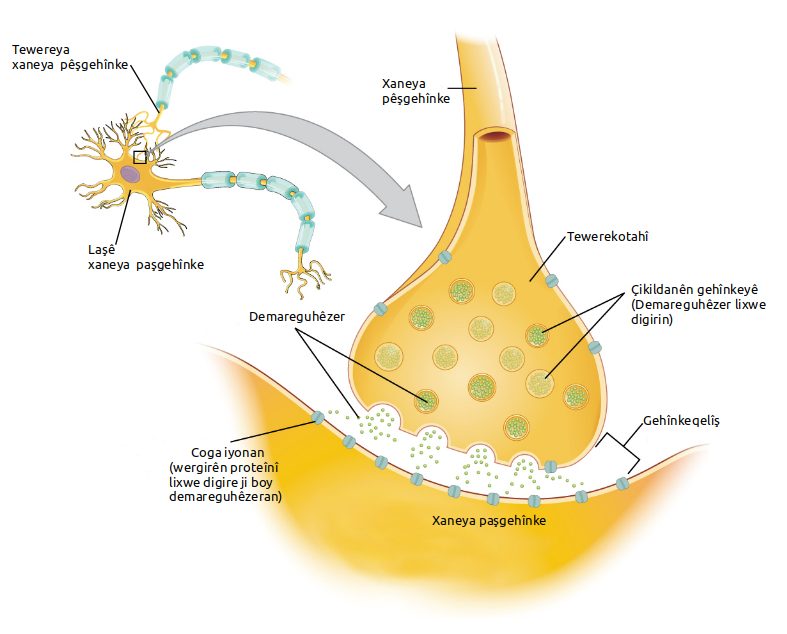
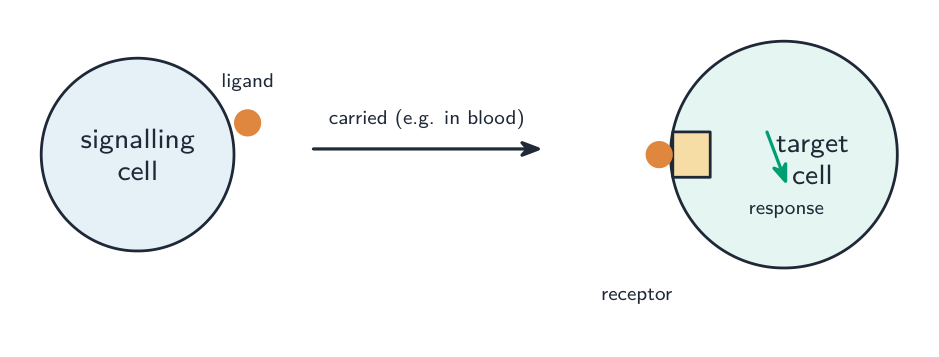
Cells coordinate by sending and receiving chemical signals 信号. A signaling cell releases a ligand 配体 that binds a receptor 受体 on a target cell. Signals travel over different ranges: direct contact (cell junctions), local signaling (nearby cells, like neurotransmitters), and long-distance signaling (hormones 激素 through the blood).

العربية

تنسق الخلايا من خلال إرسال واستقبال إشارات كيميائية. تطلق الخلية المرسلة رابطًا يرتبط بـمستقبل على خلية مستهدفة. تنتقل الإشارات عبر نطاقات مختلفة: الاتصال المباشر (وصلات خلوية)، والإشارة المحلية (خلايا مجاورة، مثل الناقلات العصبية)، والإشارة بعيدة المدى (هرمونات عبر الدم).

جزيء إشارة (ليغاند) يرتبط بمستقبل مطابق على الخلية المستهدفة
جزيء إشارة (رابط) يرتبط بمستقبل مطابق على الخلية المستهدفة
4.2

Introduction to Signal Transduction · ⁨مقدمة في نقل الإشارة⁩

Syllabus · ⁨المنهج⁩
English

Big Idea 3 — Information Storage and Transmission: Living systems store, retrieve, transmit, and respond to information essential to life processes.

Learning Objective 4.2.A: Describe the components of a signal transduction pathway.

  • 4.2.A.1 Signal transduction pathways link signal receptions with cellular responses.
  • 4.2.A.2 Many signal transduction pathways include protein modifications and involve phosphorylation cascades.

Learning Objective 4.2.B: Describe the role of components of a signal transduction pathway in producing a cellular response.

  • 4.2.B.1 Signaling begins with the recognition of a chemical messenger—a ligand—by a receptor protein in a target cell.
    • i. The ligand-binding domain of a receptor recognizes a specific chemical messenger, which can be a peptide (protein) or a small molecule.
    • ii. G protein-coupled receptors are an example of a receptor protein in eukaryotes.
    • iii. Receptors may be located on the surface of a target cell or in the cytoplasm or nucleus of the target cell.
  • 4.2.B.2 Signaling cascades relay signals from receptors to cell targets, often amplifying the incoming signals, resulting in the appropriate responses by the cell. Responses could include cell growth, secretion of molecules, or gene expression.
    • i. After the ligand binds, the intracellular domain of a receptor protein changes shape, initiating transduction of the signal.
    • ii. Enzymes and second messengers such as cyclic AMP (cAMP) relay and amplify the intracellular signal.
    • iii. Hormones are an example of a signaling messenger that can travel long distances in the bloodstream.
    • iv. The binding of ligands to ligand-gated channels can cause the channel to open or close.
العربية

الفكرة الكبرى 3 — تخزين المعلومات ونقلها: تخزن الأنظمة الحية وتسترجع وتُنتقل وتُرد على المعلومات الأساسية لعمليات الحياة.

هدف التعلم 4.2.A: وصف مكونات مسار نقل الإشارة.

  • 4.2.A.1 تربط مسارات نقل الإشارة بين استقبال الإشارات والاستجابات الخلوية.
  • 4.2.A.2 تتضمن العديد من مسارات نقلSignal تعديلات بروتينية وتشمل سلاسل الفسفرة.

هدف التعلم 4.2.B: وصف دور مكونات مسار نقل الإشارة في إنتاج استجابة خلوية.

  • 4.2.B.1 تبدأ الإشارة بالتعرف على رسول كيميائي - وهو ليغاند - بواسطة بروتين مستقبل في خلية مستهدفة.
    • i. يتعرف مجال ارتباط الليغاند في المستقبل على رسول كيميائي محدد، والذي يمكن أن يكون ببتيدا (بروتين) أو جزيئاً صغيراً.
    • ii. المستقبلات المرتبطة بالبروتين G هي مثال على بروتين مستقبل في حقيقيات النوى.
    • iii. قد تكون المستقبلات موجودة على سطح خلية مستهدفة أو في السيتوبلازم أو نواة الخلية المستهدفة.
  • 4.2.B.2 تنقل سلاسل الإشارة إشارات من المستقبلات إلى أهداف الخلية، وغالباً ما تضخم الإشارات الواردة، مما يؤدي إلى استجابات مناسبة من الخلية. قد تشمل الاستجابات نمو الخلية، أو إفراز الجزيئات، أو التعبير الجيني.
    • i. بعد ارتباط الليغاند، يتغير شكل المجال داخل الخلوي لببروتين المستقبل، مما يivicates تحويل الإشارة.
    • ii. تقوم الإنزيمات والرسائل الثانوية مثل AMP الحلقي (cAMP) بنقل وإيضاح الإشارة داخل الخلية.
    • iii. الهرمونات هي مثال على رسول إشارة يمكن أن يسافر لمسافات طويلة في مجرى الدم.
    • iv. يمكن أن يؤدي ارتباط الليغاندات بقنوات معتمدة على الليغاند إلى فتح القناة أو إغلاقها.

Source: College Board AP Course and Exam Description · ⁨المصدر: وصف دورة وامتحان College Board AP⁩

English

Signal transduction 信号转导 converts an outside signal into a cellular response in three stages: reception (ligand binds receptor), transduction (a relay of molecules inside the cell), and response (a change in the cell's activity, such as switching on a gene). Receptors are specific, so a cell only responds to signals it can receive.

العربية

نقل الإشارة يحول إشارة خارجية إلى استجابة خلوية عبر ثلاث مراحل: الاستقبال (ارتباط الرابط بالمستقبل)، والنقل (تسلسل من الجزيئات داخل الخلية)، والاستجابة (تغير في نشاط الخلية، مثل تشغيل جين معين). المستقبلات محددة، لذا تستجيب الخلية فقط للإشارات التي يمكنها استقبالها.

وصلة كيميائية: نقل الإشارة يمررسالة عبر فجوة باستخدام ليغاند ومستقبل
مشبك كيميائي: يمر نقل الإشارة رسالة عبر فجوة باستخدام رابط ومستقبل
4.3

Signal Transduction Pathways · ⁨مسارات نقل الإشارة⁩

Syllabus · ⁨المنهج⁩
English

Big Idea 3 — Information Storage and Transmission: Living systems store, retrieve, transmit, and respond to information essential to life processes.

Learning Objective 4.3.A: Describe the different types of cellular responses elicited by a signal transduction pathway.

  • 4.3.A.1 Signal transduction may result in changes in gene expressions and cell function, which may alter phenotype or result in programmed cell death (apoptosis).
    • Illustrative examples for 4.3.A.1:
      • Use of chemical messengers by microbes to communicate with other nearby cells and to regulate specific pathways in response to population density (quorum sensing)
      • Epinephrine stimulation of glycogen breakdown in mammals

Learning Objective 4.3.B: Explain how a change in the structure of any signaling molecule affects the activity of the signaling pathway.

  • 4.3.B.1 Changes in signal transduction pathways can alter cellular responses. Mutations in any domain of the receptor protein or in any component of the signaling pathway may affect the downstream components by altering the subsequent transduction of the signal.
    • Illustrative examples for 4.3.B.1:
      • Cytokines regulate gene expression to allow for cell replication and division.
      • Mating pheromones in yeast trigger mating gene expression.
      • Ethylene levels cause changes in the production of different enzymes allowing fruits to ripen.
      • HOX genes regulate animal body plans during embryonic development.
  • 4.3.B.2 Chemicals that interact with any component of the signaling pathway may activate or inhibit the pathway.
العربية

الفكرة الكبرى 3 — تخزين المعلومات ونقلها: تخزن الأنظمة الحية وتسترجع وتُنتقل وتُرد على المعلومات الأساسية لعمليات الحياة.

هدف التعلم 4.3.A: وصف أنواع الاستجابات الخلوية المختلفة التي تستحثها مسار نقل الإشارة.

  • 4.3.A.1 قد يؤدي نقل الإشارة إلى تغييرات في التعبير الجيني ووظيفة الخلية، والتي قد تغير النمط الظاهري أو تؤدي إلى موت الخلية المبرمج (apoptosis).
    • أمثلة توضيحية لـ 4.3.A.1:
      • استخدام الميكروبات للرسائل الكيميائية للتواصل مع خلايا قريبة أخرى ولتنظيم مسارات محددة استجابة لكثافة السكان (استشعار الكثافة)
      • تحفيز الأدرينالين لتحلل الجليكوجين في الثدييات

هدف التعلم 4.3.B: شرح كيف يؤثر التغيير في بنية أي جزيء إشارة على نشاط مسار الإشارة.

  • 4.3.B.1 يمكن أن تؤدي التغييرات في مسارات نقل الإشارة إلى تغيير الاستجابات الخلوية. قد تؤثر الطفرات في أي مجال من مجالات بروتين المستقبل أو في أي مكون من مكونات مسار الإشارة على المكونات اللاحقة عن طريق تغيير تحويل الإشارة اللاحق.
    • أمثلة توضيحية لـ 4.3.B.1:
      • تنظم السيتوكينات التعبير الجيني للسماح بتكاثر وانقسام الخلايا.
      • فيرومونات التزاوج في الخميرة تحفز التعبير الجيني للتزاوج.
      • مستويات الإيثيلين تسبب تغييرات في إنتاج إنزيمات مختلفة تسمح لنضوج الفواكه.
      • genes HOX تنظم خطط جسم الحيوانات أثناء التطور الجنيني.
  • 4.3.B.2 المواد الكيميائية التي تتفاعل مع أي مكون من مكونات مسار الإشارات يمكن أن تنشط أو تثبط المسار.

Source: College Board AP Course and Exam Description · ⁨المصدر: وصف دورة وامتحان College Board AP⁩

English

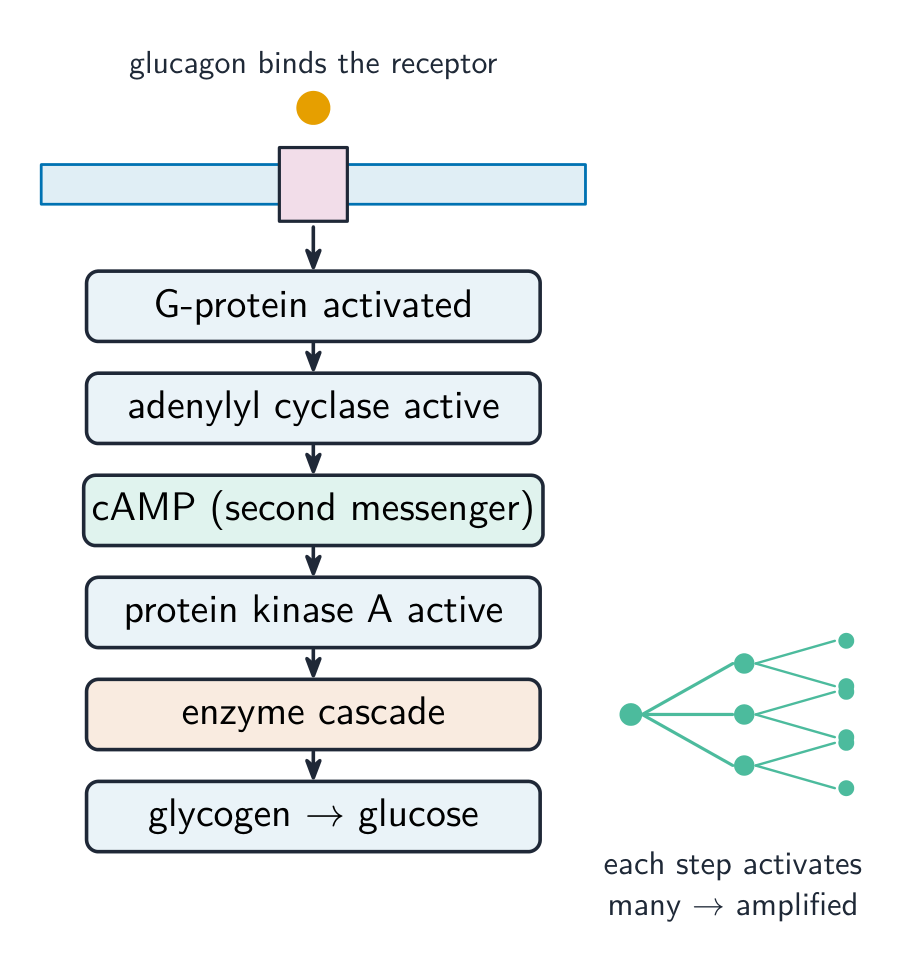
In the transduction stage, the signal passes through a pathway – often a cascade of proteins that activate one another, frequently amplifying the signal so a few ligands trigger a large response. Second messengers (like cyclic AMP or calcium ions) spread the signal quickly through the cell. A change in one step can alter the whole outcome.

العربية

في مرحلة النقل، تمر الإشارة عبر مسار — وغالبًا ما يكون سلسلة من البروتينات التي تُفعّل بعضها البعض، مما يؤدي غالبًا إلى تضخيم الإشارة بحيث يُحفّز عدد قليل من الروابط استجابة كبيرة. الرسائل الثانوية (مثل AMP الحلقي أو أيونات الكالسيوم) تنشر الإشارة بسرعة عبر الخلية. يمكن أن يغير تغير في خطوة واحدة النتيجة الكلية.

مسار إشارات يُضخّم الرسالة داخل الخلية
تضخم سلسلة الإشارات الرسالة داخل الخلية
4.4

Feedback · ⁨التغذية الراجعة⁩

Syllabus · ⁨المنهج⁩
English

Big Idea 2 — Energetics: Biological systems use energy and molecular building blocks to grow, reproduce, and maintain dynamic homeostasis.

Learning Objective 4.4.A: Explain how positive and negative feedback helps maintain homeostasis.

  • 4.4.A.1 Organisms use feedback mechanisms to maintain their internal environments in response to internal and external changes.
    • i. Negative feedback mechanisms maintain homeostasis by reducing the initial stimulus to regulate physiological processes. If a system is perturbed or disrupted, negative feedback mechanisms return the system back to its target set point. These processes operate at the molecular, cellular, and organismal levels.
      • Illustrative examples for 4.4.A.1.i:
        • Blood sugar regulation by insulin/glucagon
    • ii. Positive feedback mechanisms amplify responses and processes in biological organisms. The variable initiating the response is moved further away from the initial set point. Amplification occurs when the stimulus is further intensified, which, in turn, initiates an additional response that produces system change.
      • Illustrative examples for 4.4.A.1.ii:
        • Lactation in mammals
        • Onset of labor in childbirth
        • Ripening of fruit
العربية

الفكرة الكبرى 2 — الديناميكا الحرارية: تستخدم الأنظمة البيولوجية الطاقة والكتل البنائية الجزيئية للنمو والتكاثر والحفاظ على ديناميكية التوازن الداخلي.

هدف التعلم 4.4.A: اشرح كيف تساعد التغذية الراجعة الإيجابية والسلبية في الحفاظ على التوازن الداخلي.

  • 4.4.A.1 تستخدم الكائنات الحية آليات التغذية الراجعة للحفاظ على بيئاتها الداخلية استجابةً للتغيرات الداخلية والخارجية.
    • i. تحافظ آليات التغذية الراجعة السلبية على التوازن الداخلي عن طريق تقليل المحفز الأولي لتنظيم العمليات الفسيولوجية. إذا تم اضطراب النظام أو تعطله، فإن آليات التغذية الراجعة السلبية تعيد النظام إلى نقطة الضبط المستهدفة. تعمل هذه العمليات على المستويات الجزيئية والخلوية والكائنية.
      • أمثلة توضيحية لـ 4.4.A.1.i:
        • تنظيم سكر الدم بواسطة الإنسولين/الجلوكاجون
    • ii. تعمل آليات التغذية الراجعة الإيجابية على تضخيم الاستجابات والعمليات في الكائنات الحية. يتم إبعاد المتغير الذي يبدأ الاستجابة أكثر عن نقطة الضبط الأولية. يحدث التضخيم عندما يتم تكثيف المحفز بشكل أكبر، مما يؤدي بدوره إلى بدء استجابة إضافية تنتج تغييراً في النظام.
      • أمثلة توضيحية لـ 4.4.A.1.ii:
        • الرضاعة عند الثدييات
        • بداية المخاض في الولادة
        • نضج الفاكهة

Source: College Board AP Course and Exam Description · ⁨المصدر: وصف دورة وامتحان College Board AP⁩

English

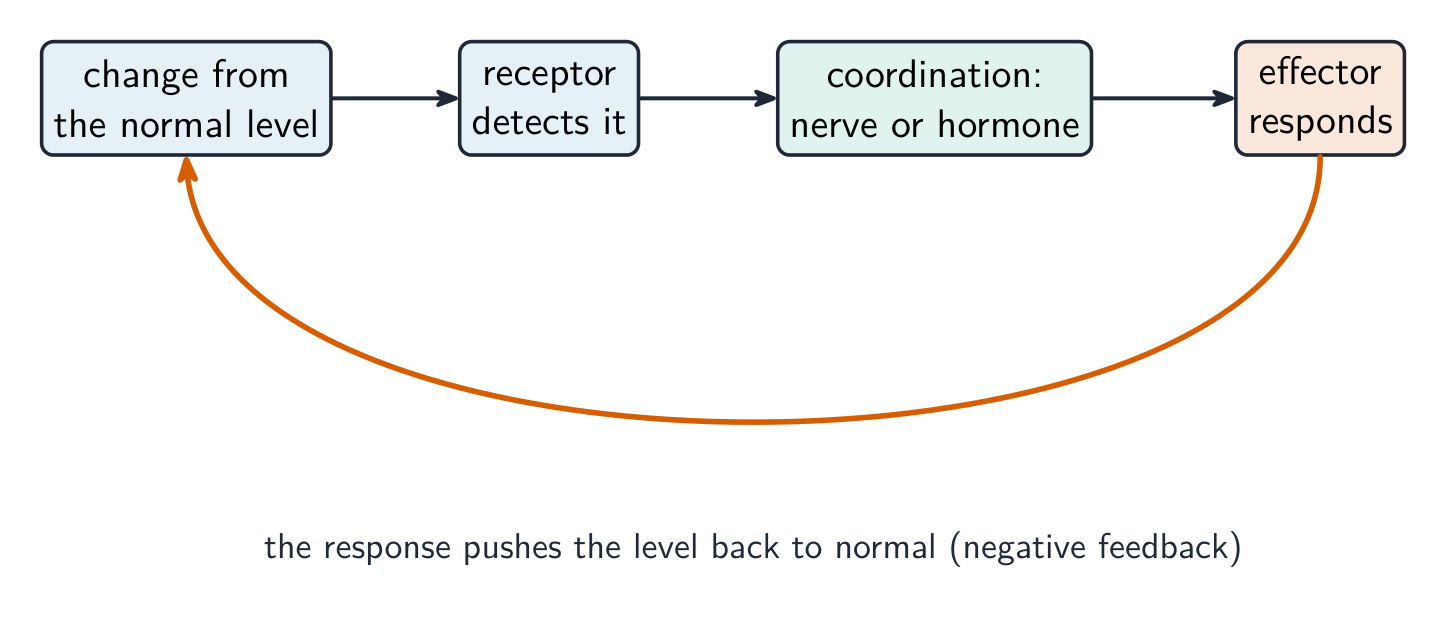
Feedback 反馈 keeps systems balanced:

  • Negative feedback 负反馈 counteracts a change to restore a set point (like a thermostat) – it maintains homeostasis 稳态.
  • Positive feedback 正反馈 amplifies a change to push a process to completion (like childbirth contractions or blood clotting).
العربية

التغذية الراجعة تحافظ على توازن الأنظمة:

التغذية الراجعة السالبة تكتشف وتصحح التغير
التغذية الراجعة السالبة تكشف عن التغير وتصححه
  • التغذية الراجعة السالبة تعاكس التغير لاستعادة نقطة ضبط (كمنظم الحرارة) — وتحافظ على التوازن الداخلي.
  • التغذية الراجعة الإيجابية تضخم التغير لدفع عملية ما إلى نهايتها (مثل انقباضات الولادة أو تخثر الدم).
Explore · ⁨استكشف⁩

Negative feedback keeps things steady · ⁨التغذية الراجعة السالبة تحافظ على الاستقرار⁩

Negative feedback senses a change and reverses it, holding a variable (like blood glucose) near a set point. Push it away and watch the system correct. · ⁨التغذية الراجعة السالبة تستشعر التغير وتعاكسه، مما يثبت متغيراً (مثل سكر الدم) قرب نقطة ضبط. ادفعه بعيداً وشاهد النظام يصحح.⁩

Vocabulary · ⁨مفردات⁩ Train · ⁨تدريب⁩
English العربية
signals/ˈsɪɡnlz/ الإشارات
ligand/ˈlɪɡænd/ ليجاند
receptor/rɪˈseptə/ مستقبل
hormones/ˈhɔːməʊnz/ هرمونات
Signal transduction/ˈsɪɡnl trænsˈdʌkʃn/ نقل الإشارة
Feedback/ˈfiːdbæk/ تغذية راجعة
Negative feedback/ˈneɡətɪv ˈfiːdbæk/ التغذية الراجعة السلبية
homeostasis/ˌhəʊmiːəˈstɑːsiz/ التوازن الداخلي
Positive feedback/ˈpɒzɪtɪv ˈfiːdbæk/ التغذية الراجعة الإيجابية
4.5

Cell Cycle · ⁨دورة الخلية⁩

Syllabus · ⁨المنهج⁩
English

Big Idea 3 — Information Storage and Transmission: Living systems store, retrieve, transmit, and respond to information essential to life processes.

Learning Objective 4.5.A: Describe the events that occur in the cell cycle.

  • 4.5.A.1 The cell cycle is a highly regulated series of events that controls the growth and reproduction of eukaryotic cells.
    • i. The cell cycle consists of sequential stages of interphase (G1, S, G2), mitosis, and cytokinesis.
    • ii. G1 phase: The cell is metabolically active, duplicating organelles and cytosolic components.
    • iii. S phase: DNA is in the form of chromatin and replicates to form two sister chromatids connected at a centromere.
    • iv. G2 phase: Protein synthesis occurs, ATP is produced in large quantities, and centrosomes replicate.
    • v. A cell can enter a stage (G0) in which it no longer divides, but it can reenter the cell cycle in response to appropriate cues.
    • vi. Nondividing cells may exit the cell cycle or be held at a particular stage in the cell cycle.

Learning Objective 4.5.B: Explain how mitosis results in the transmission of chromosomes from one generation of cells to the next.

  • 4.5.B.1 Mitosis is a process that ensures the transfer of a complete genome from a parent cell to two genetically identical daughter cells in eukaryotes.
    • i. Mitosis plays a role in growth, tissue repair, and asexual reproduction.
    • ii. Mitosis occurs in sequential steps (prophase, metaphase, anaphase, telophase) and alternates with interphase in the cell cycle.
    • iii. Prophase: Sister chromatids condense, mitotic spindle begins to form, and centrosomes move to opposite poles of the cell.
    • iv. Metaphase: Spindle fibers align chromosomes along the equator of the cell.
    • v. Anaphase: Paired sister chromatids separate as spindle fibers pull chromatids toward poles.
    • vi. Telophase: Mitotic spindle breaks down, a new nuclear envelope develops, and then the cytoplasm divides.
    • vii. Cytokinesis: A cleavage furrow forms in animal cells or a cell plate forms in plant cells, resulting in two new daughter cells.
العربية

الفكرة الكبرى 3 — تخزين المعلومات ونقلها: تخزن الأنظمة الحية وتسترجع وتُنتقل وتُرد على المعلومات الأساسية لعمليات الحياة.

هدف التعلم 4.5.A: صف الأحداث التي تحدث في دورة الخلية.

  • 4.5.A.1 دورة الخلية هي سلسلة منظمة بعناية من الأحداث تتحكم في نمو وتكاثر الخلايا حقيقية النواة.
    • i. تتكون دورة الخلية من مراحل متتالية وهي الطور البيني (G1، S، G2)، والانقسام المتساوي، وانقسام السيتوبلازم.
    • ii. الطور B1: تكون الخلية نشطة أيضياً، وتقوم بتضاعف العضيات والمكونات السيتوبلازمية.
    • iii. الطور S: يكون الحمض النووي على شكل كروماتين ويتضاعف لتكوين كروماتيدات شقيقة متصلة عند السنترومير.
    • iv. الطور G2: يحدث تركيب البروتين، وإنتاج ATP بكميات كبيرة، وتضاعف المريكزات.
    • v. يمكن للخلية الدخول في مرحلة (G0) لا تنقسم فيها بعد ذلك، لكنها يمكن أن تعود إلى دورة الخلية استجابةً لإشارات مناسبة.
    • vi. قد تخرج الخلايا غير المنقسمة من دورة الخلية أو تُحتجز عند مرحلة معينة فيها.

هدف التعلم 4.5.B: اشرح كيف يؤدي الانقسام المتساوي إلى نقل الكروموسومات من جيل من الخلايا إلى الجيل التالي.

  • 4.5.B.1 الانقسام المتساوي هو عملية تضمن نقل جينوم كامل من خلية أم إلى خليتين ابنتين متطابقتين وراثياً في حقيقيات النوى.
    • i. يلعب الانقسام المتساوي دوراً في النمو، وإصلاح الأنسجة، والتكاثر اللاجنسي.
    • ii. يحدث الانقسام المتساوي على خطوات متتالية (الطور التمهيدي، الاستوائي، الانفصالي، النهائي) ويتبادل مع الطور البيني في دورة الخلية.
    • iii. الطور التمهيدي: تكثف الكروماتيدات الشقيقة، ويبدأ تكوين المغزل الانقسامي، وتتحرك المريكزات إلى أقطاب الخلية المعاكسة.
    • iv. الطور الاستوائي: ترتبط ألياف المغزل الكروموسومات على طول استواء الخلية عند الصفيحة الاستوائية.
    • v. الطور الانفصالي: تنفصل الكروماتيدات الشقيقة المتجاورة بينما تسحب ألياف المغزل الكروماتيدات نحو الأقطاب.
    • vi. الطور النهائي: يتحلل المغزل الانقسامي، ويتطور غلاف نووي جديد، ثم ينقسم السيتوبلازم.
    • vii. انقسام السيتوبلازم: يتشكل تجعد انقساصي في الخلايا الحيوانية أو صفيحة خلوية في الخلايا النباتية، مما ينتج عنه خليتان ابنتان جديدتان.

Source: College Board AP Course and Exam Description · ⁨المصدر: وصف دورة وامتحان College Board AP⁩

English

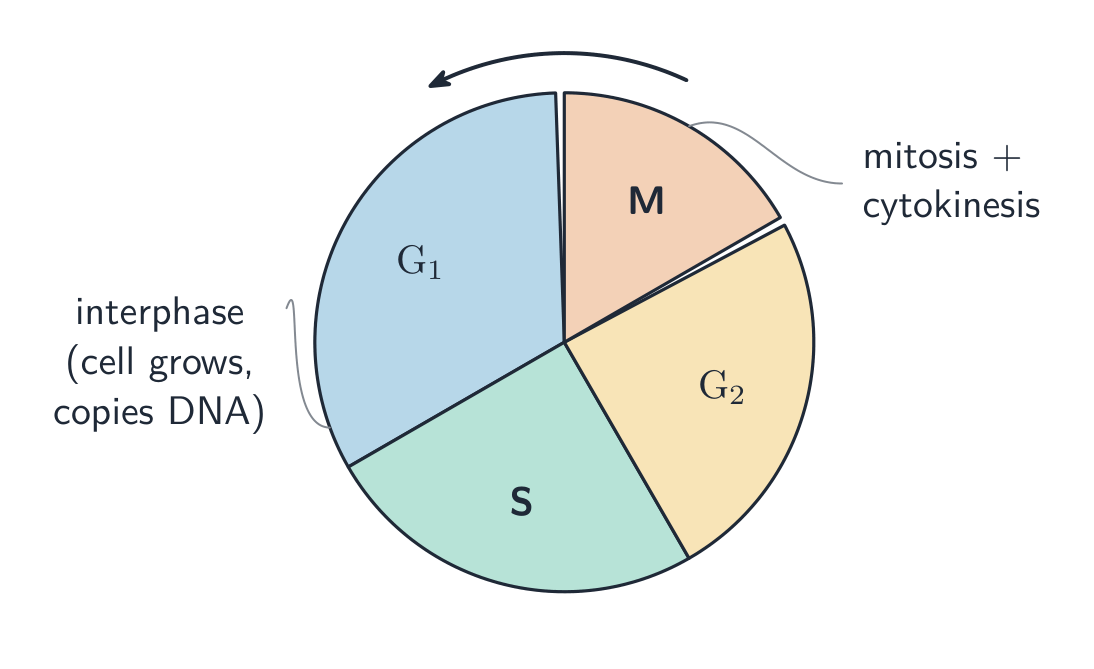
The cell cycle 细胞周期 is the life of a cell from one division to the next: interphase 间期 (G1 growth, S DNA replication, G2 preparation) followed by mitosis 有丝分裂 (M) and cytokinesis, which produce two identical daughter cells. Interphase takes most of the time; DNA is copied only in S phase.

العربية
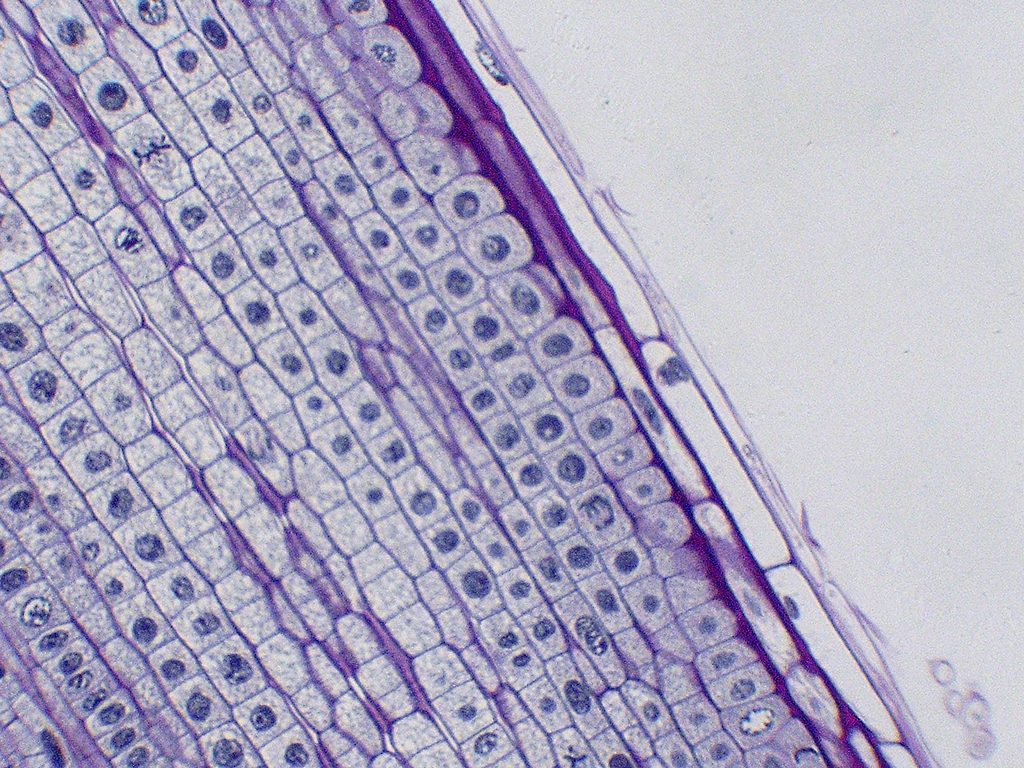
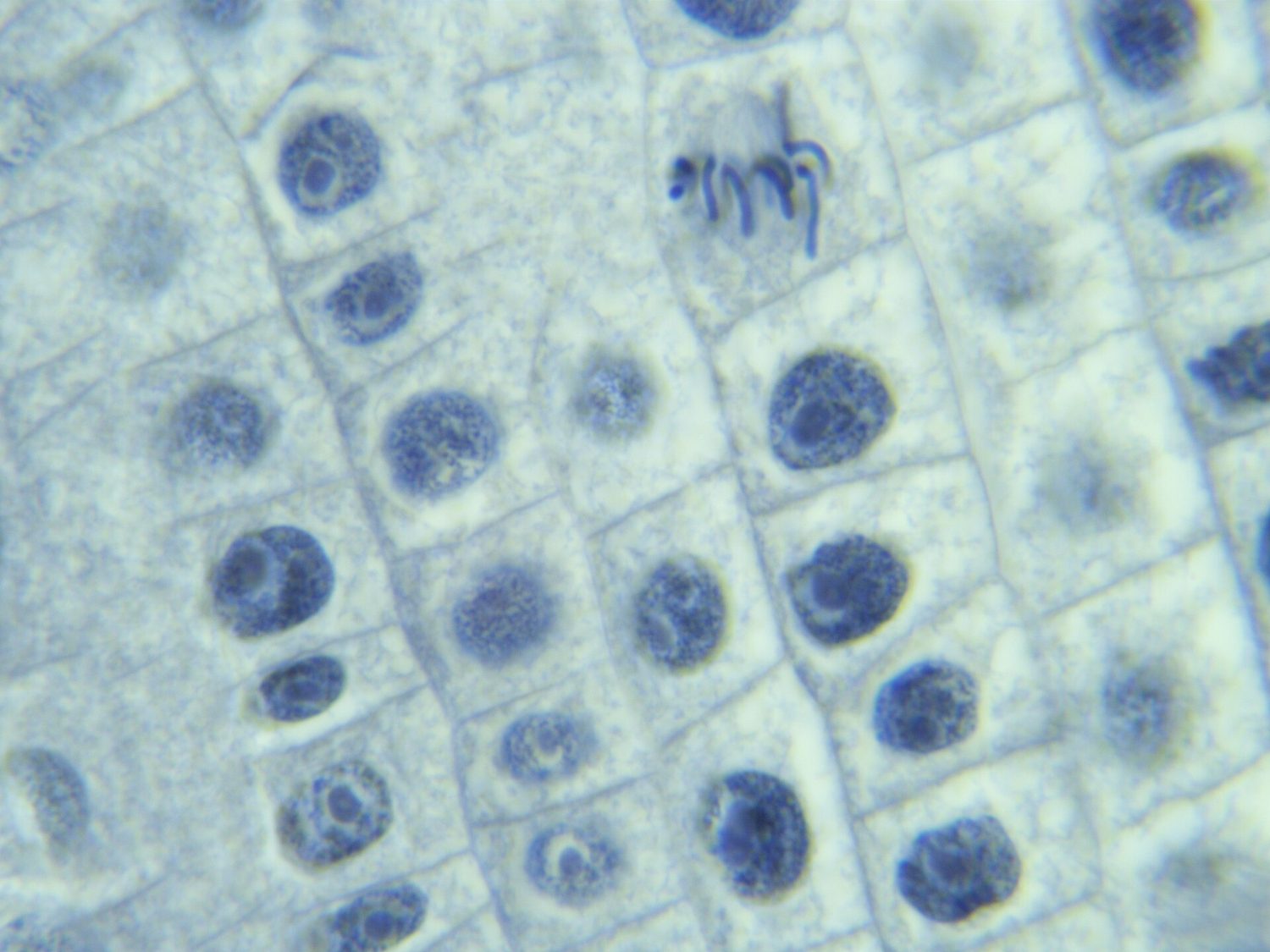
خلايا جذر البصل في مراحل مختلفة من الانقسام المتساوي (صورة مجهرية ضوئية)

دورة الخلية هي حياة الخلية من انقسام إلى آخر: الطور البيني (نمو G1، تضاعف DNA في الطور S، استعداد G2) يليه الانقسام المتساوي (M) وانقسام السيتوبلازم، اللذان ينتجان خليتين ابنتين متطابقتين. يستغرق الطور البيني معظم الوقت؛ يتم نسخ DNA فقط في الطور S.

دورة الخلية: الطور البيني، ثم الانقسام المتساوي وانقسام السيتوبلازم
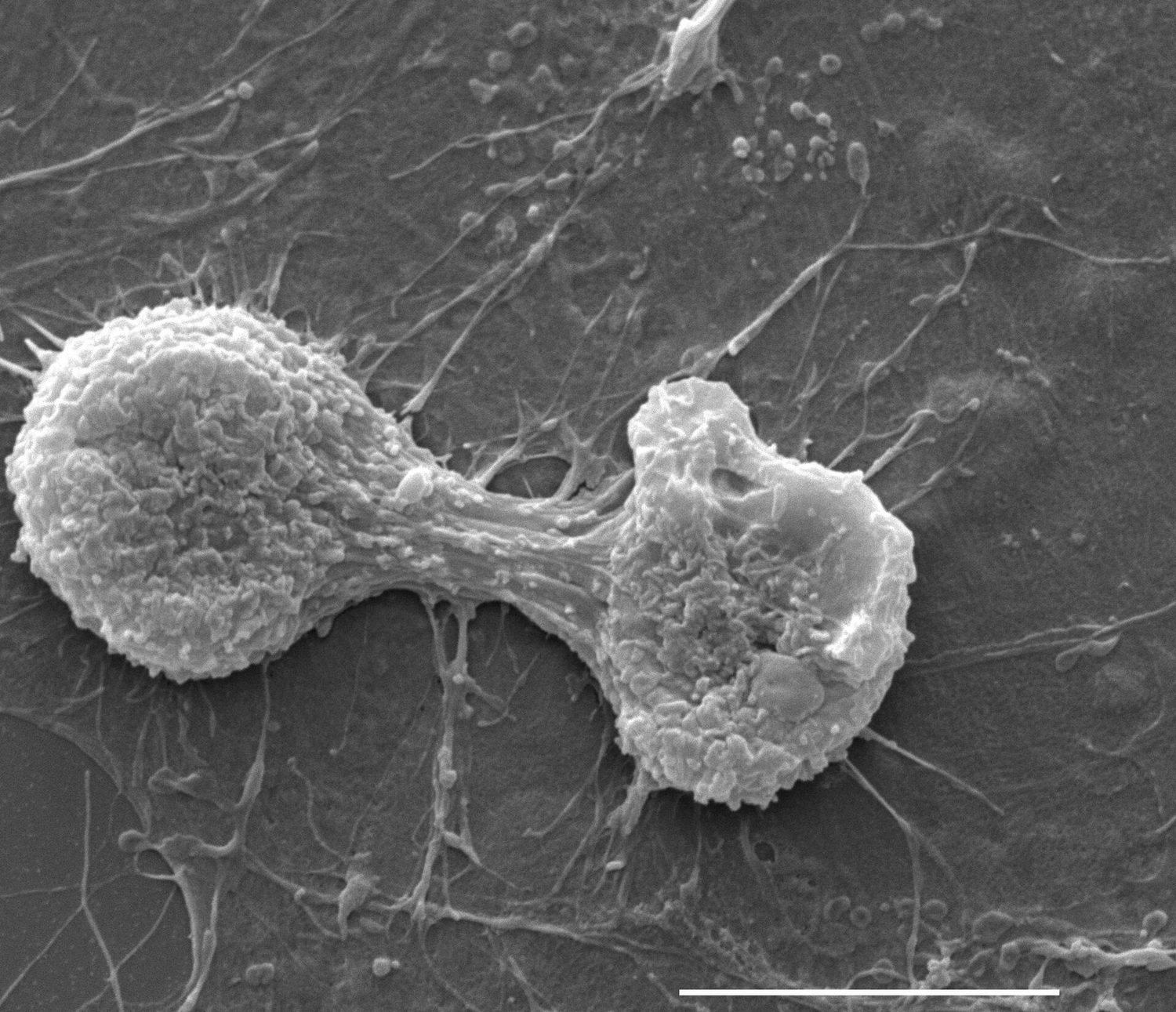
ليفوبلاست ينقسم: انقسام السيتوبلازم يقسم خلية واحدة إلى اثنتين بعد انتهاء الانقسام المتساوي
جذر البصل في طور الاستواء: الكروموسومات تصطف قبل انفصال الكروماتيدات الشقيقة
Explore · ⁨استكشف⁩

Step through the cell cycle · ⁨مرّ عبر دورة الخلية⁩

The cell cycle copies the DNA (S phase) then splits it evenly in mitosis, producing two identical cells. Step through the stages. · ⁨دورة الخلية تنسخ الـ DNA (طور S) ثم تقسمه بالتساوي في الانقسام المتساوي، منتجةً خليتين متطابقتين. مرّ بالمراحل.⁩

Vocabulary · ⁨مفردات⁩ Train · ⁨تدريب⁩
English العربية
cell cycle/sel ˈsaɪkl/ الدورة الخلوية
interphase/ˌɪntəˈfeɪz/ الطور البيني
mitosis/maɪˈtəʊsɪs/ الانقسام المتساوي
checkpoints/ˈtʃekpɔɪnts/ نقاط المراقبة
cancer/ˈkænsə/ السرطان
4.6

Regulation of Cell Cycle · ⁨تنظيم دورة الخلية⁩

Syllabus · ⁨المنهج⁩
English

Big Idea 3 — Information Storage and Transmission: Living systems store, retrieve, transmit, and respond to information essential to life processes.

Learning Objective 4.6.A: Describe the role of checkpoints in regulating the cell cycle.

  • 4.6.A.1 A number of internal controls or checkpoints regulate progression through the cell cycle.
  • 4.6.A.2 Interactions between cyclins and cyclin-dependent kinases control the cell cycle.
    • Exclusion statement: Knowledge of specific cyclin-CdK pairs or growth factors is beyond the scope of the AP Exam.

Learning Objective 4.6.B: Describe the effects of disruptions to the cell cycle on the cell or organism.

  • 4.6.B.1 Disruptions to the cell cycle may result in cancer or apoptosis (programmed cell death).
العربية

الفكرة الكبرى 3 — تخزين المعلومات ونقلها: تخزن الأنظمة الحية وتسترجع وتُنتقل وتُرد على المعلومات الأساسية لعمليات الحياة.

هدف التعلم 4.6.A: صف دور نقاط التفتيش في تنظيم دورة الخلية.

  • 4.6.A.1 عدد من التحكمات الداخلية أو نقاط التفتيش تنظم التقدم عبر دورة الخلية.
  • 4.6.A.2 التفاعلات بين السيكلينات والإنزيمات المرتبطة بالسيكلين تتحكم في دورة الخلية.
    • بيان استثناء: معرفة أزواج السيكلين-CdK المحددة أو عوامل النمو تقع خارج نطاق امتحان AP.

هدف التعلم 4.6.B: صف تأثيرات الاضطرابات في دورة الخلية على الخلية أو الكائن الحي.

  • 4.6.B.1 قد تؤدي الاضطرابات في دورة الخلية إلى السرطان أو الموت الخلوي المبرمج (Apoptosis).

Source: College Board AP Course and Exam Description · ⁨المصدر: وصف دورة وامتحان College Board AP⁩

English

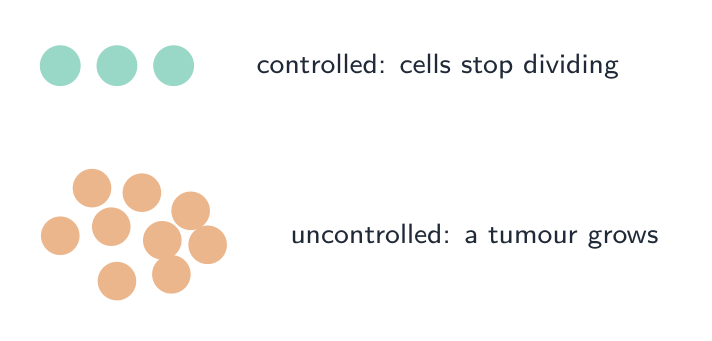
The cycle is controlled at checkpoints 检查点 that verify conditions before proceeding (Is the DNA intact? Are chromosomes attached?). Internal signals (cyclins and their kinases) and external signals drive the cycle forward. When this control fails – for example, a mutation that ignores a checkpoint – cells divide uncontrollably, which underlies cancer 癌症.

Worked example. Signal amplification in a cascade: one hormone activates one receptor, which switches on about 100 relay proteins, and each of those makes about 1,000 second-messenger molecules — so a single signal produces roughly $100 \times 1000 = 10^{5}$ product molecules. This is why a hormone concentration as low as $10^{-9}\,\text{M}$ can trigger a large cellular response.

العربية

تُتحكم الدورة عند نقاط تفتيش تتحقق من الظروف قبل المضي قدمًا (هل DNA سليم؟ هل الكروموسومات ملتصقة؟). الإشارات الداخلية (السايكلينات وكينازاتها) والإشارات الخارجية تدفع الدورة للأمام. عندما يفشل هذا التحكم – على سبيل المثال طفرة تتجاهل نقطة تفتيش – تنقسم الخلايا بشكل لا تحكم به، وهو ما يكمن underneath سرطان. ملاحظة: تم تصحيح الخطأ اللغوي في النص الأصلي 'underlies' إلى 'يكمن underneath' لتصبح جملة عربية صحيحة.

الانقسام غير المنضبط بسبب فشل نقاط التفتيش يشكل ورمًا

مثال محلول. تضخيم الإشارة في تسلسل هرموني: هرمون واحد يُفعّل مستقبلًا واحدًا، الذي يُشغل حوالي 100 بروتين وسيط، وكل واحد منها يُنتج حوالي 1,000 جزيء رسول ثانٍ — لذا فإن إشارة واحدة تُنتج تقريبًا $100 \times 1000 = 10^{5}$ جزيء منتج. وهذا هو السبب في أن تركيز هرمون منخفض قدره $10^{-9}\,\text{M}$ يمكن أن يحفز استجابة خلوية كبيرة.

4.6

Exam tips · ⁨نصائح للامتحان⁩

English
  • In signal transduction name the three stages: reception → transduction → response.
  • Negative feedback reverses a change to keep conditions steady (homeostasis); positive feedback amplifies a change to completion (childbirth, clotting).
  • Order the cell cycle: interphase (grow, copy DNA in S phase) then mitosis → two identical daughter cells.
  • The DNA is copied once, in S phase, so each daughter gets a full copy.
  • Failed checkpoints allow uncontrolled division → cancer.
العربية
  • في نقل الإشارة، سمِّ المراحل الثلاث: الاستقبال ← النقل ← الاستجابة.
  • التغذية الراجعة السلبية تعكس التغير للحفاظ على استقرار الظروف (الاستتباب)؛ التغذية الراجعة الإيجابية تضخم التغير حتى اكتماله (الولادة، التخثر).
  • رتب دورة الخلية: الطور البيني (النمو، نسخ DNA في الطور S) ثم الانقسام المتساوي → خليتان ابنتان متطابقتان.
  • يُنسخ DNA مرة واحدة، في الطور S، sehingga كل خلية ابنة تحصل على نسخة كاملة.
  • نقاط التفتيش الفاشلة تسمح بالانقسام غير المنضبط → سرطان.

Interactive lessons on this topic · ⁨دروس تفاعلية حول هذا الموضوع⁩

Work through it step by step, with instant-check exercises. · ⁨ا-working عليه خطوة بخطوة، مع تمارين تحقق فوري.⁩

Past Papers · ⁨أوراق الامتحانات السابقة⁩

More topics in AP Biology · ⁨AP علم الأحياء⁩ · ⁨المزيد من المواضيع في AP Biology · ⁨AP علم الأحياء⁩⁩

Log in or create account · ⁨تسجيل الدخول أو إنشاء حساب⁩

IGCSE, A-Level & AP