跳到主要内容

收集数据

AP 统计学 · 第 3 主题

训练
讲义 词汇表
3.1

统计学导论:我们收集的数据说的是真相吗?

大纲
Enduring UnderstandingLearning ObjectiveEssential Knowledge

VAR-1
Given that variation may be random or not, conclusions are uncertain.

VAR-1.E
Identify questions to be answered about data collection methods. [Skill 1.A]

  • VAR-1.E.1 Methods for data collection that do not rely on chance result in untrustworthy conclusions.

来源:美国大学理事会 AP 课程与考试说明

一个结论只和它背后的数据一样好。数据如何被收集决定你可以得出什么结论——你是否能推广到一个总体(population),以及你是否能宣称因果。差劲地收集的数据可能比没有更糟。

词汇表 训练
英文 中文 拼音
population 总体 zǒng tǐ
3.2

研究规划导论

大纲
Enduring UnderstandingLearning ObjectiveEssential Knowledge

DAT-2
The way we collect data influences what we can and cannot say about a population.

DAT-2.A
Identify the type of a study. [Skill 1.C]

  • DAT-2.A.1 A population consists of all items or subjects of interest.
  • DAT-2.A.2 A sample selected for study is a subset of the population.
  • DAT-2.A.3 In an observational study, treatments are not imposed. Investigators examine data for a sample of individuals (retrospective) or follow a sample of individuals into the future collecting data (prospective) in order to investigate a topic of interest about the population. A sample survey is a type of observational study that collects data from a sample in an attempt to learn about the population from which the sample was taken.
  • DAT-2.A.4 In an experiment, different conditions (treatments) are assigned to experimental units (participants or subjects).

DAT-2.B
Identify appropriate generalizations and determinations based on observational studies. [Skill 4.A]

  • DAT-2.B.1 It is only appropriate to make generalizations about a population based on samples that are randomly selected or otherwise representative of that population.
  • DAT-2.B.2 A sample is only generalizable to the population from which the sample was selected.
  • DAT-2.B.3 It is not possible to determine causal relationships between variables using data collected in an observational study.

来源:美国大学理事会 AP 课程与考试说明

  • 在一个观察性研究(observational study)里你测量个体而不试图影响他们。它能显示关联,但不是因果,因为潜伏变量可能解释这个联系。
  • 在一个实验(experiment)里你故意施加一个处理(treatment)并比较响应。一个设计良好的实验建立因果。
探索

Observational study or experiment?

In an experiment the researcher imposes a treatment (and can show cause); an observational study only records what already happens (and can show association, not cause).

词汇表 训练
英文 中文 拼音
observational study 观察性研究 guān chá xìng yán jiū
experiment 实验 shí yàn
treatment 处理 chǔ lǐ
3.3

随机抽样与数据收集

大纲
Enduring UnderstandingLearning ObjectiveEssential Knowledge

DAT-2
The way we collect data influences what we can and cannot say about a population.

DAT-2.C
Identify a sampling method, given a description of a study. [Skill 1.C]

  • DAT-2.C.1 When an item from a population can be selected only once, this is called sampling without replacement. When an item from the population can be selected more than once, this is called sampling with replacement.
  • DAT-2.C.2 A simple random sample (SRS) is a sample in which every group of a given size has an equal chance of being chosen. This method is the basis for many types of sampling mechanisms. A few examples of mechanisms used to obtain SRSs include numbering individuals and using a random number generator to select which ones to include in the sample, ignoring repeats, using a table of random numbers, or drawing a card from a deck without replacement.
  • DAT-2.C.3 A stratified random sample involves the division of a population into separate groups, called strata, based on shared attributes or characteristics (homogeneous grouping). Within each stratum a simple random sample is selected, and the selected units are combined to form the sample.
  • DAT-2.C.4 A cluster sample involves the division of a population into smaller groups, called clusters. Ideally, there is heterogeneity within each cluster, and clusters are similar to one another in their composition. A simple random sample of clusters is selected from the population to form the sample of clusters. Data are collected from all observations in the selected clusters.
  • DAT-2.C.5 A systematic random sample is a method in which sample members from a population are selected according to a random starting point and a fixed, periodic interval.
  • DAT-2.C.6 A census selects all items/subjects in a population.

DAT-2.D
Explain why a particular sampling method is or is not appropriate for a given situation. [Skill 1.C]

  • DAT-2.D.1 There are advantages and disadvantages for each sampling method depending upon the question that is to be answered and the population from which the sample will be drawn.

来源:美国大学理事会 AP 课程与考试说明

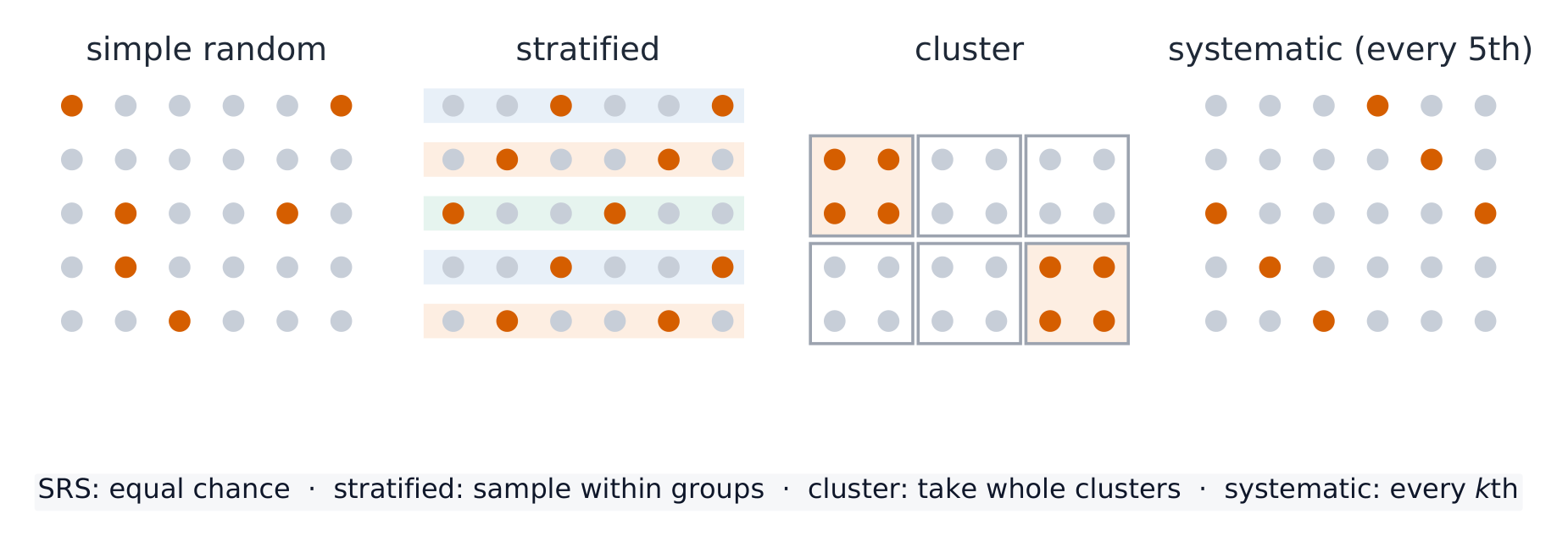
要了解一个总体你取一个样本(sample)。随机抽样(random sampling)防止选择偏差(bias)并让你能推广(它无法修复覆盖不足、无应答或应答偏差——见下文)。常见设计:

  • 简单随机样本(simple random sample,SRS):每个选定大小的组同等可能。
  • 分层(stratified):把总体分成相似的层,然后在每层内抽样。
  • 整群(cluster):分成群,随机选择整个群。
  • 系统(systematic):从一个随机起点挑每第 $k$ 个个体。
Four random sampling designs: who gets selected, and how
四种随机抽样设计:谁被选中,以及如何

一个方便样本(convenience sample)或自愿回应(voluntary response)样本是随机的而是有偏的。

Worked example. 要调查一所学校,一个管理员按年级列出所有学生并从每个年级随机选 $20$ 个。这是一个分层样本——年级是层——它保证每个年级被代表,不像一个 SRS 可能碰巧从一个年级抽到很少。
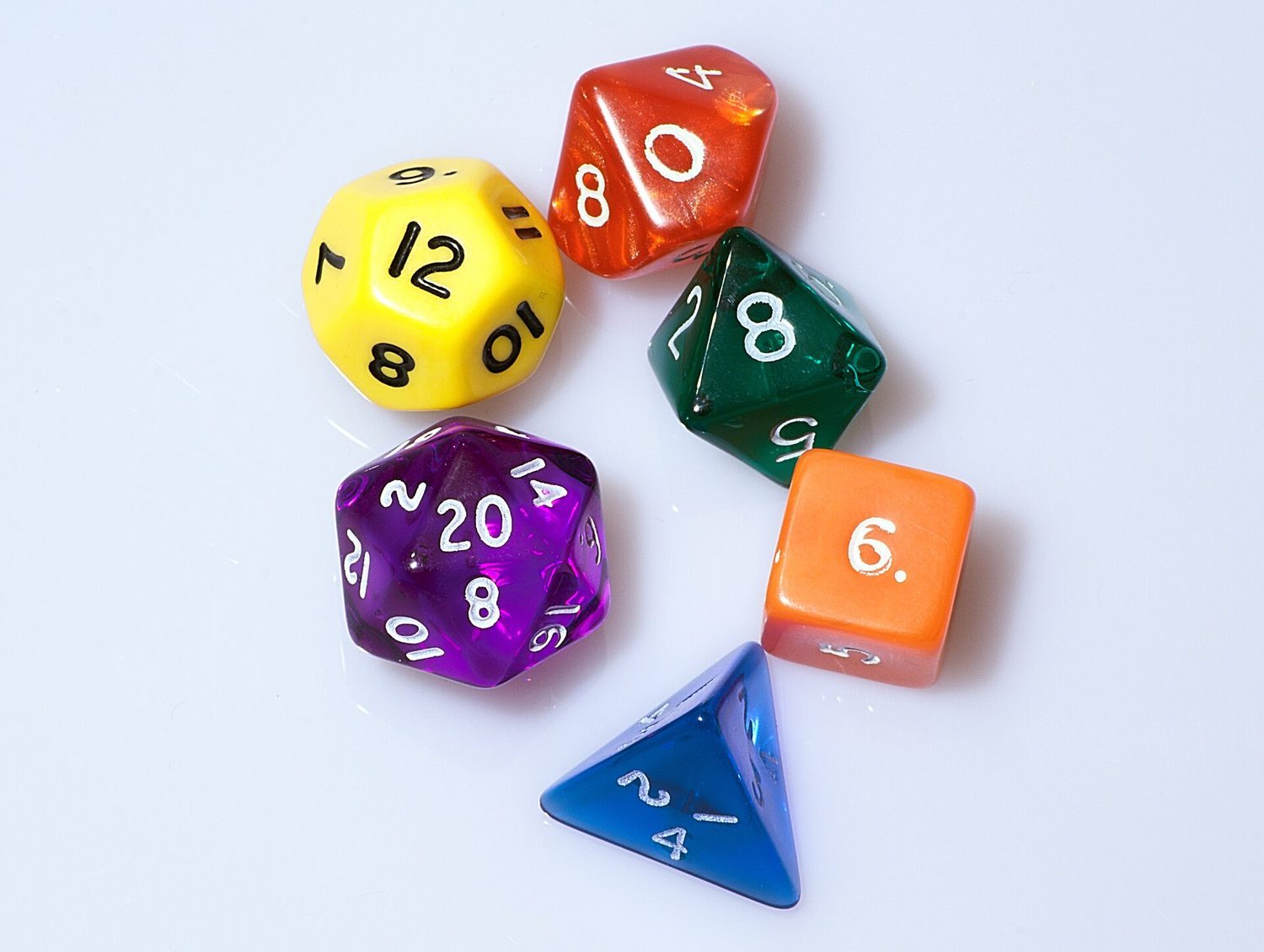
随机结果:在公平条件下骰子各面等可能
随机结果:在公平条件下骰子各面等可能
词汇表 训练
英文 中文 拼音
sample 样本 yàng běn
Random sampling 随机抽样 suí jī chōu yàng
bias 偏差 piān chā
Simple random sample (SRS) 简单随机样本 jiǎn dān suí jī yàng běn
Stratified 分层 fēn céng
Cluster 整群 zhěng qún
Systematic 系统 xì tǒng
convenience sample 方便样本 fāng biàn yàng běn
3.4

抽样的潜在问题

大纲
Enduring UnderstandingLearning ObjectiveEssential Knowledge

DAT-2
The way we collect data influences what we can and cannot say about a population.

DAT-2.E
Identify potential sources of bias in sampling methods. [Skill 1.C]

  • DAT-2.E.1 Bias occurs when certain responses are systematically favored over others.
  • DAT-2.E.2 When a sample is comprised entirely of volunteers or people who choose to participate, the sample will typically not be representative of the population (voluntary response bias).
  • DAT-2.E.3 When part of the population has a reduced chance of being included in the sample, the sample will typically not be representative of the population (undercoverage bias).
  • DAT-2.E.4 Individuals chosen for the sample for whom data cannot be obtained (or who refuse to respond) may differ from those for whom data can be obtained (nonresponse bias).
  • DAT-2.E.5 Problems in the data gathering instrument or process result in response bias. Examples include questions that are confusing or leading (question wording bias) and self-reported responses.
  • DAT-2.E.6 Non-random sampling methods (for example, samples chosen by convenience or voluntary response) introduce potential for bias because they do not use chance to select the individuals.

来源:美国大学理事会 AP 课程与考试说明

偏差使估计系统地错过真相:

  • 覆盖不足(undercoverage):一些组被排除在抽样框之外。
  • 无回应(nonresponse):被选中的人不回答。
  • 回应偏差(response bias):人们不准确地回答(措辞不好、敏感话题)。

偏差是关于一个方向上的一致的误差——增加样本量不修复它。

Convenience samples miss the population: bias creeps in when selection is not random
词汇表 训练
英文 中文 拼音
Undercoverage 覆盖不足 fù gài bù zú
Nonresponse 无回应 wú huí yìng
Response bias 回应偏差 huí yìng piān chā
3.5

实验设计导论

大纲
Enduring UnderstandingLearning ObjectiveEssential Knowledge

VAR-3
Well-designed experiments can establish evidence of causal relationships.

VAR-3.A
Identify the components of an experiment. [Skill 1.C]

  • VAR-3.A.1 The experimental units are the individuals (which may be people or other objects of study) that are assigned treatments. When experimental units consist of people, they are sometimes referred to as participants or subjects.
  • VAR-3.A.2 An explanatory variable (or factor) in an experiment is a variable whose levels are manipulated intentionally. The levels or combination of levels of the explanatory variable(s) are called treatments.
  • VAR-3.A.3 A response variable in an experiment is an outcome from the experimental units that is measured after the treatments have been administered.
  • VAR-3.A.4 A confounding variable in an experiment is a variable that is related to the explanatory variable and influences the response variable and may create a false perception of association between the two.

VAR-3.B
Describe elements of a well-designed experiment. [Skill 1.B]

  • VAR-3.B.1 A well-designed experiment should include the following:
    • a. Comparisons of at least two treatment groups, one of which could be a control group.
    • b. Random assignment/allocation of treatments to experimental units.
    • c. Replication (more than one experimental unit in each treatment group).
    • d. Control of potential confounding variables where appropriate.

VAR-3.C
Compare experimental designs and methods. [Skill 1.C]

  • VAR-3.C.1 In a completely randomized design, treatments are assigned to experimental units completely at random. Random assignment tends to balance the effects of uncontrolled (confounding) variables so that differences in responses can be attributed to the treatments.
  • VAR-3.C.2 Methods for randomly assigning treatments to experimental units in a completely randomized design include using a random number generator, a table of random values, drawing chips without replacement, etc.
  • VAR-3.C.3 In a single-blind experiment, subjects do not know which treatment they are receiving, but members of the research team do, or vice versa.
  • VAR-3.C.4 In a double-blind experiment neither the subjects nor the members of the research team who interact with them know which treatment a subject is receiving.
  • VAR-3.C.5 A control group is a collection of experimental units either not given a treatment of interest or given a treatment with an inactive substance (placebo) in order to determine if the treatment of interest has an effect.
  • VAR-3.C.6 The placebo effect occurs when experimental units have a response to a placebo.
  • VAR-3.C.7 For randomized complete block designs, treatments are assigned completely at random within each block.
  • VAR-3.C.8 Blocking ensures that at the beginning of the experiment the units within each block are similar to each other with respect to at least one blocking variable. A randomized block design helps to separate natural variability from differences due to the blocking variable.
  • VAR-3.C.9 A matched pairs design is a special case of a randomized block design. Using a blocking variable, subjects (whether they are people or not) are arranged in pairs matched on relevant factors. Matched pairs may be formed naturally or by the experimenter. Every pair receives both treatments by randomly assigning one treatment to one member of the pair and subsequently assigning the remaining treatment to the second member of the pair. Alternately, each subject may get both treatments.

来源:美国大学理事会 AP 课程与考试说明

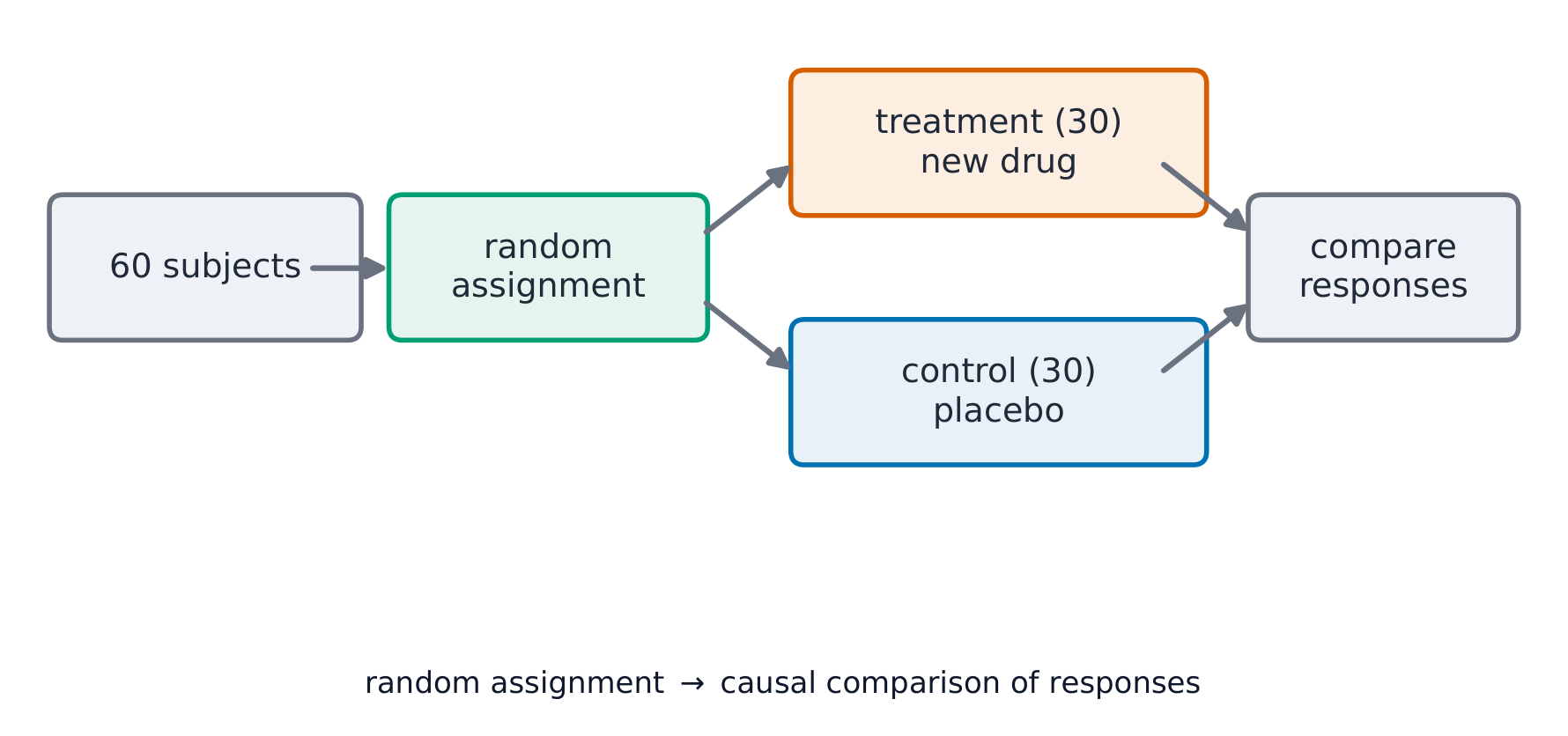
好的实验遵循三个原则:

  • 与一个对照组(control group)(常常是一个安慰剂(placebo))的比较(comparison)。
  • 受试者到处理的随机分配(random assignment),以平衡掉其他变量。
  • 重复(replication):每个处理足够的受试者以看到一个真实的效果。
A completely randomized experiment compares a treatment group with a control group
一个完全随机化实验把一个处理组与一个对照组比较

混杂(confounding)在另一个变量与处理绑定以致它们的效果不能被分开时出现;随机分配防范它。盲法(blinding)隐藏谁在接受哪种处理以防止预期效应:在一个单盲(single-blind)研究里只有一方被蒙在鼓里(通常是受试者,或只是评估结果的人),而在一个双盲(double-blind)研究里受试者和与他们互动的研究者都不知道,这同时挡住安慰剂效应和有偏的评估。区组(blocking)把相似的受试者分组并在每个区组内随机化以减少变异性。
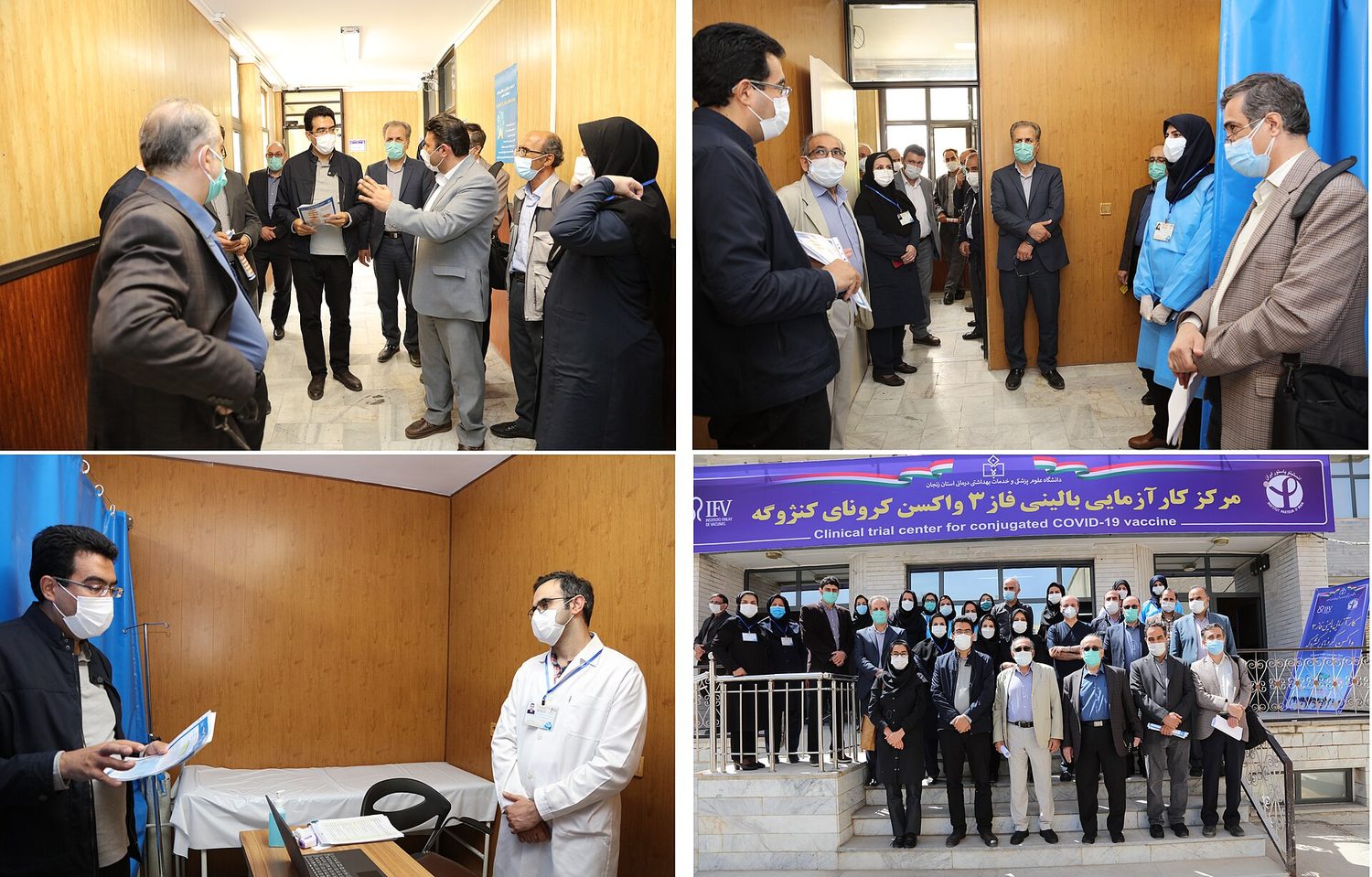
临床试验:随机分配区分处理组与对照组
临床试验:随机分配区分处理组与对照组
词汇表 训练
英文 中文 拼音
control group 对照组 duì zhào zǔ
placebo 安慰剂 ān wèi jì
Random assignment 随机分配 suí jī fēn pèi
Replication 重复 chóng fù
Confounding 混杂 hùn zá
Blinding 盲法 máng fǎ
single-blind 单盲 dān máng
double-blind 双盲 shuāng máng
Blocking 区组 qū zǔ
3.6

选择实验设计

大纲
Enduring UnderstandingLearning ObjectiveEssential Knowledge

VAR-3
Well-designed experiments can establish evidence of causal relationships.

VAR-3.D
Explain why a particular experimental design is appropriate. [Skill 1.C]

  • VAR-3.D.1 There are advantages and disadvantages for each experimental design depending on the question of interest, the resources available, and the nature of the experimental units.

来源:美国大学理事会 AP 课程与考试说明

把设计匹配到目标:对均匀的受试者用一个完全随机化设计;当一个已知变量(性别、年龄)影响响应时用一个随机区组设计;当每个受试者能充当它自己的对照时用一个配对设计。陈述你会如何执行随机化。

3.7

推断与实验

大纲
Enduring UnderstandingLearning ObjectiveEssential Knowledge

VAR-3
Well-designed experiments can establish evidence of causal relationships.

VAR-3.E
Interpret the results of a well-designed experiment. [Skill 4.B]

  • VAR-3.E.1 Statistical inference attributes conclusions based on data to the distribution from which the data were collected.
  • VAR-3.E.2 Random assignment of treatments to experimental units allows researchers to conclude that some observed changes are so large as to be unlikely to have occurred by chance. Such changes are said to be statistically significant.
  • VAR-3.E.3 Statistically significant differences between or among experimental treatment groups are evidence that the treatments caused the effect.
  • VAR-3.E.4 If the experimental units used in an experiment are representative of some larger group of units, the results of an experiment can be generalized to the larger group. Random selection of experimental units gives a better chance that the units will be representative.

来源:美国大学理事会 AP 课程与考试说明

两个问题决定一个结论的范围:

  • 用了随机分配?那么一个显著的差异能被归因于处理(因果)——对这些受试者。
  • 从一个总体的随机抽样?那么结果推广到那个总体。

只有一个带随机分配的实验支持一个因果宣称;只有随机抽样支持推广。准确地说你有哪个。

Worked example. 研究者把 $100$志愿者随机分配到一种新药或一个安慰剂,而药组改善得显著更多。因为随机分配,这个改善能被归因于药(因果)——但因为受试者不是随机抽样的,结论只适用于这些志愿者而不自动推广到每个人。

3.7

考试技巧

  • 区分一个观察性研究(找到关联)和一个实验(能显示因果)。
  • 好的抽样是随机的(SRS、分层、整群)——当心偏差(自愿回应、覆盖不足、无回应)。
  • 好的实验用对照、随机化和重复;区组处理一个已知的干扰变量。
  • 只有一个随机化实验支持一个因果结论。
  • 清楚地命名总体、样本和任何混杂。

本主题的互动课程

逐步学习,并即时检测练习。

AP 统计学历年真题

AP 统计学的更多主题

登录或创建账号

IGCSE, A-Level & AP