English
| Core | Supplement |
|---|---|
| 1 State that chromosomes are made of DNA, which contains genetic information in the form of genes | |
| 2 Define a gene as a length of DNA that codes for a protein | |
| 3 Define an allele as an alternative form of a gene | |
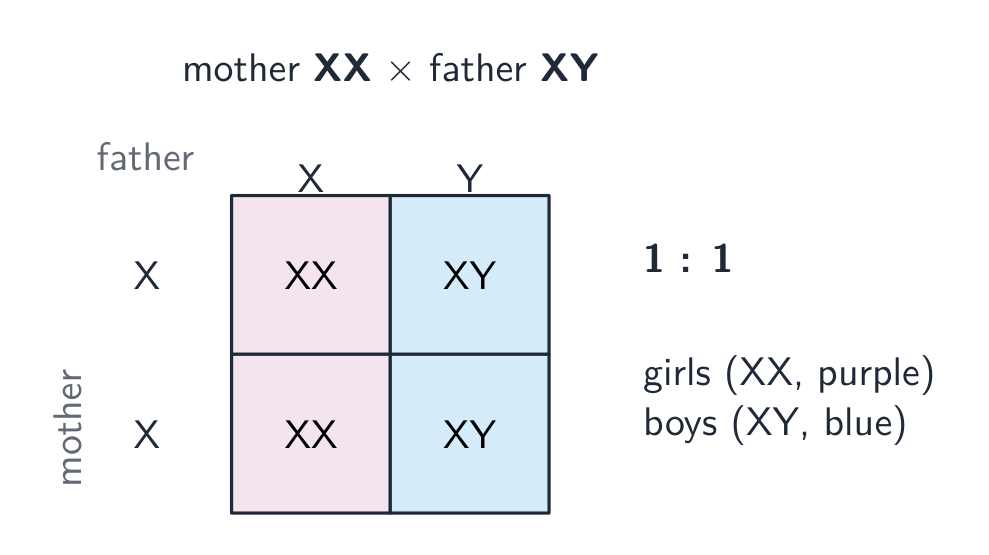
| 4 Describe the inheritance of sex in humans with reference to X and Y chromosomes | |
| 5 State that the sequence of bases in a gene determines the sequence of amino acids used to make a specific protein (knowledge of the details of nucleotide structure is not required) | |
| 6 Explain that different sequences of amino acids give different shapes to protein molecules | |
| 7 Explain that DNA controls cell function by controlling the production of proteins, including enzymes, membrane carriers and receptors for neurotransmitters | |
| 8 Explain how a protein is made, limited to: • the gene coding for the protein remains in the nucleus • messenger RNA (mRNA) is a copy of a gene • mRNA molecules are made in the nucleus and move to the cytoplasm • the mRNA passes through ribosomes • the ribosome assembles amino acids into protein molecules • the specific sequence of amino acids is determined by the sequence of bases in the mRNA (knowledge of the details of transcription or translation is not required) | |
| 9 Explain that most body cells in an organism contain the same genes, but many genes in a particular cell are not expressed because the cell only makes the specific proteins it needs | |
| 10 Describe a haploid nucleus as a nucleus containing a single set of chromosomes | |
| 11 Describe a diploid nucleus as a nucleus containing two sets of chromosomes | |
| 12 State that in a diploid cell, there is a pair of each type of chromosome and in a human diploid cell there are 23 pairs |
Tiếng Việt
| Cốt lõi | Bổ sung |
|---|---|
| 1 Nêu rằng nhiễm sắc thể được tạo từ DNA, chứa thông tin di truyền dưới dạng gen | |
| 2 Định nghĩa gen là một đoạn DNA mã hóa cho một protein | |
| 3 Định nghĩa allele là một dạng thay thế của một gen | |
| 4 Mô tả sự di truyền giới tính ở người với tham chiếu đến nhiễm sắc thể X và Y | |
| 5 Nêu rằng trình tự các base trong một gen quyết định trình tự các axit amin được sử dụng để tạo ra một protein cụ thể (không yêu cầu hiểu biết chi tiết về cấu trúc nucleotide) | |
| 6 Giải thích rằng các trình tự axit amin khác nhau tạo ra các hình dạng khác nhau cho phân tử protein | |
| 7 Giải thích rằng DNA kiểm soát chức năng tế bào bằng cách kiểm soát quá trình sản xuất protein, bao gồm enzyme, chất vận chuyển màng và thụ thể cho chất dẫn truyền thần kinh | |
| 8 Giải thích cách một protein được tạo thành, giới hạn ở: • gen mã hóa protein vẫn nằm trong nhân • ARN metavar (mRNA) là bản sao của một gen • các phân tử mRNA được tạo trong nhân và di chuyển ra cytoplasm • mRNA đi qua ribosome • ribosome lắp ráp các axit amin thành phân tử protein • trình tự cụ thể của axit amin được xác định bởi trình tự các base trong mRNA (không yêu cầu hiểu biết chi tiết về quá trình phiên mã hay dịch mã) | |
| 9 Giải thích rằng hầu hết các tế bào cơ thể trong một sinh vật đều chứa cùng các gen, nhưng nhiều gen trong một tế bào cụ thể không được biểu hiện vì tế bào chỉ sản xuất các protein cụ thể mà nó cần | |
| 10 Mô tả nhân đơn bội là nhân chứa một bộ nhiễm sắc thể duy nhất | |
| 11 Mô tả nhân lưỡng bội là nhân chứa hai bộ nhiễm sắc thể | |
| 12 Nêu rằng trong một tế bào lưỡng bội, có một cặp mỗi loại nhiễm sắc thể và trong tế bào lưỡng bội người có 23 cặp |