| Core | Supplement |
|---|---|
| 1 Describe variation as differences between individuals of the same species | |
| 2 State that continuous variation results in a range of phenotypes between two extremes; examples include body length and body mass | |
| 3 State that discontinuous variation results in a limited number of phenotypes with no intermediates; examples include ABO blood groups, seed shape in peas and seed colour in peas | |
| 4 State that discontinuous variation is usually caused by genes only and continuous variation is caused by both genes and the environment | |
| 5 Investigate and describe examples of continuous and discontinuous variation | |
| 6 Describe mutation as genetic change | 9 Describe gene mutation as a random change in the base sequence of DNA |
| 7 State that mutation is the way in which new alleles are formed | 10 State that mutation, meiosis, random mating and random fertilisation are sources of genetic variation in populations |
| 8 State that ionising radiation and some chemicals increase the rate of mutation |
Variation and selection
IGCSE Biology · Topic 18
 7:35
7:35
Variation and selection
In the year eighteen hundred, almost every peppered moth in England was pale. Fifty years later, in the smoky cities, almost every one was black. No moth…
English narration · English + 中文 subtitles burned in
18.1
Variation

Syllabus
Source: Cambridge International syllabus
Variation 变异 means the differences between individuals of the same species 物种. There are two types:
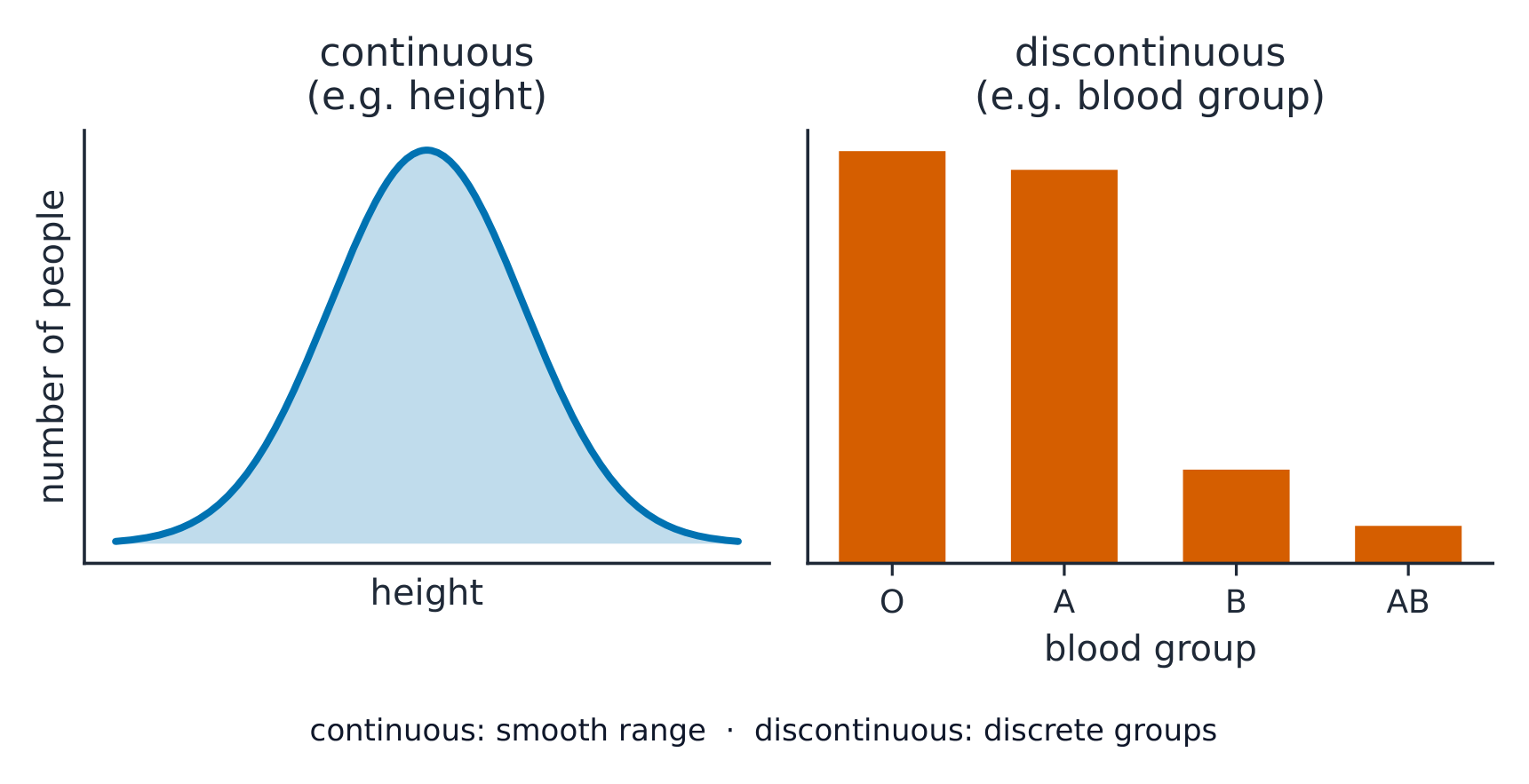
- continuous variation 连续变异 — a smooth range of phenotypes 表现型 between two extremes (for example body length and body mass).
- discontinuous variation 不连续变异 — a few separate phenotypes with nothing in between (for example ABO blood groups 血型, or seed shape in peas).
Discontinuous variation is usually caused by genes 基因 only. Continuous variation is caused by both genes and the environment 环境 — for example, your height depends on your genes and also on your diet.
Mutation
A mutation 突变 is a genetic change. Mutations are the way new alleles 等位基因 are made, so they are the original source of all variation. (Supplement) A gene mutation 基因突变 is a random change in the base sequence 碱基序列 of DNA.

Ionising radiation 电离辐射 (such as X-rays) and some chemicals raise the rate 速率 of mutation. (Supplement) Other sources of genetic variation are meiosis 减数分裂, random mating and random fertilisation 受精.
Explore
Variation lab
Classify examples of variation by pattern and cause.
Vocabulary
Train
| English |
|---|
| variation/ˌveərɪˈeɪʃn/ |
| species/ˈspiːsiːz/ |
| continuous variation/kənˈtɪnjuːəs ˌveərɪˈeɪʃn/ |
| phenotypes/ˈfenətaɪps/ |
| discontinuous variation/dɪskənˈtɪnjuːəs ˌveərɪˈeɪʃn/ |
| ABO blood groups/ˌeɪ biː ˈəʊ blʌd ɡruːps/ |
| genes/dʒiːnz/ |
| environment/enˈvaɪrənmənt/ |
| mutation/mjuːˈteɪʃn/ |
| alleles/əˈliːlz/ |
| gene mutation/dʒiːn mjuːˈteɪʃn/ |
| base sequence/beɪs ˈsiːkwəns/ |
| ionising radiation/ˈaɪənaɪzɪŋ ˌreɪdɪˈeɪʃn/ |
| rate/reɪt/ |
| meiosis/meɪˈəʊsɪs/ |
| fertilisation/ˌfɜːtɪlaɪˈzeɪʃn/ |
18.2
Adaptive features

Syllabus
| Core | Supplement |
|---|---|
| 1 Describe an adaptive feature as an inherited feature that helps an organism to survive and reproduce in its environment | |
| 2 Interpret images or other information about a species to describe its adaptive features | |
| 3 Explain the adaptive features of hydrophytes and xerophytes to their environments |
Source: Cambridge International syllabus
An adaptive feature 适应特征 is an inherited 遗传 feature that helps an organism to survive 生存 and reproduce 生殖 in its environment.
(Supplement)
- hydrophytes 水生植物 (water plants) have features such as air spaces to help them float, and stomata on the upper leaf surface.
- xerophytes 旱生植物 (desert plants) have features such as a thick waxy cuticle, few small stomata, and the ability to store water — all to reduce water loss.
Explore
Selection shapes adaptations
On a dark, sooty tree the better-camouflaged moths survive and breed, so the population shifts — adaptive features arise by natural selection.
Vocabulary
Train
| English |
|---|
| adaptive feature/əˈdæptɪv ˈfiːtʃə/ |
| inherited/ɪnˈherɪtɪd/ |
| survive/səˈvaɪv/ |
| reproduce/rɪprəˈdjuːs/ |
| hydrophytes/ˈhaɪdrəfaɪts/ |
| xerophytes/ˈzɪərəfaɪts/ |
18.3
Natural selection

Syllabus
| Core | Supplement |
|---|---|
| 1 Describe natural selection with reference to: (a) genetic variation within populations (b) production of many offspring (c) struggle for survival, including competition for resources (d) a greater chance of reproduction by individuals that are better adapted to the environment than others (e) these individuals pass on their alleles to the next generation | 4 Describe adaptation as the process, resulting from natural selection, by which populations become more suited to their environment over many generations |
| 5 Describe the development of strains of antibiotic resistant bacteria as an example of natural selection | |
| 2 Describe selective breeding with reference to: (a) selection by humans of individuals with desirable features (b) crossing these individuals to produce the next generation (c) selection of offspring showing the desirable features | |
| 3 Outline how selective breeding by artificial selection is carried out over many generations to improve crop plants and domesticated animals and apply this to given contexts | 6 Outline the differences between natural and artificial selection |
Source: Cambridge International syllabus
Natural selection 自然选择 explains how a species becomes better suited to its environment:
- there is genetic variation in a population (caused by mutation).
- organisms produce many offspring 后代 — more than can survive.
- there is a struggle to survive, with competition 竞争 for resources 资源 such as food and space.
- the individuals that are better adapted 适应 are more likely to survive and reproduce.
- they pass on their alleles, so the helpful alleles become more common in the next generation.

(Supplement) Over many generations this makes the population more suited to its environment; this process is called adaptation. A clear example is antibiotic 抗生素-resistant bacteria 细菌: a few bacteria carry a resistant 耐药 allele and survive the antibiotic, then multiply, until the whole population is resistant.
Worked example. A moth species is mostly pale. Soot darkens the tree trunks the moths rest on, and within a few decades most of the moths are dark. Explain by natural selection. Variation is already there: a few dark moths exist by chance, caused by mutation. On sooty bark the dark moths are better camouflaged, so birds eat fewer of them and they are more likely to survive. The survivors reproduce and pass the allele for dark colour to their offspring, so it becomes more common each generation until most moths are dark. Follow the chain: variation, survival, reproduction, the allele becomes more common. The moths did not turn dark in order to hide - the dark ones simply survived more often.
Explore
Natural selection
Individuals best suited to their environment survive and pass on their genes — so the population changes over time.
Explore
Natural selection
Run the generations: birds eat the moths that stand out, so the camouflaged ones survive and breed — the population shifts to match the forest.
Vocabulary
Train
| English |
|---|
| natural selection/ˈnætʃərəl sɪˈlekʃn/ |
| many offspring/ˈmeni ˈɒfsprɪŋ/ |
| competition/ˌkɒmpəˈtɪʃn/ |
| resources/rɪˈzɔːsɪz/ |
| adapted/əˈdæptɪd/ |
| antibiotic/ˌæntɪbaɪˈɒtɪk/ |
| bacteria/bækˈtɪərɪə/ |
| resistant/rɪˈzɪstənt/ |
18.3
Selective breeding

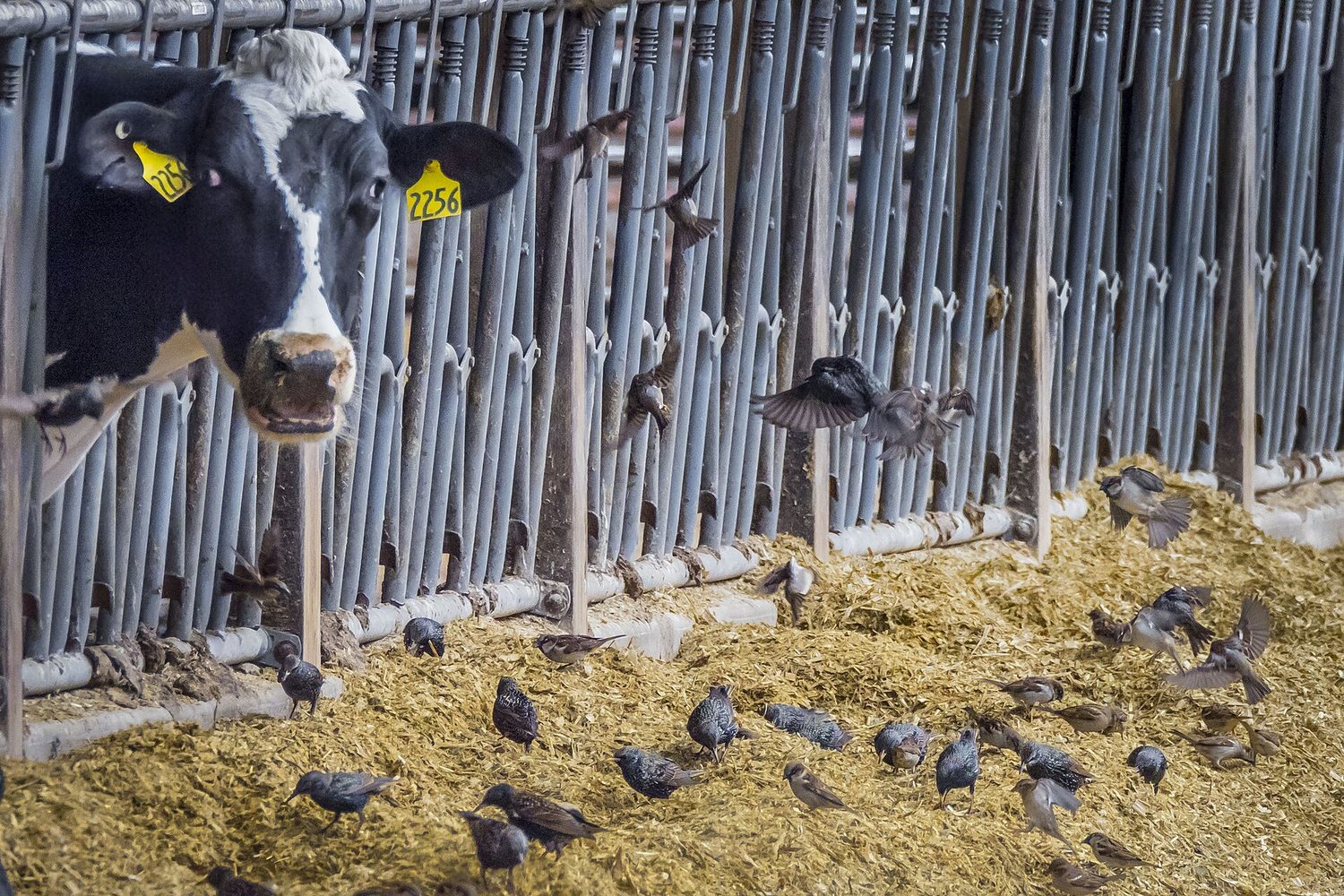
In selective breeding 选择育种 (also called artificial selection 人工选择), humans choose which organisms breed:
- choose the individuals that have the features you want.
- cross them to produce the next generation.
- choose the offspring that show those features, and repeat over many generations.
This is used to improve crops 农作物 (for example a higher yield) and farm animals (for example cows that give more milk).
(Supplement) The key difference: in natural selection the environment decides which individuals survive; in artificial selection humans decide.
Explore
Selective breeding
Humans choose which organisms breed, to develop a useful feature over many generations.
Vocabulary
Train
| English |
|---|
| selective breeding/sɪˈlektɪv ˈbriːdɪŋ/ |
| artificial selection/ˌɑːtɪˈfɪʃl sɪˈlekʃn/ |
| crops/krɒps/ |
18.3
Exam tips
- Continuous variation = a range (genes + environment); discontinuous = separate groups (genes only).
- Mutation makes new alleles — the source of all variation. Radiation and some chemicals raise the mutation rate.
- Natural selection: variation → too many offspring → struggle and competition → the best-adapted survive and reproduce → they pass on their alleles.
- Antibiotic resistance in bacteria is natural selection in action.
- Selective breeding (artificial selection): humans pick the parents; in natural selection, the environment "picks".
Interactive lessons on this topic
Work through it step by step, with instant-check exercises.