| Cốt lõi | Bổ sung |
|---|---|
| 1 Mô tả các đặc điểm của bề mặt trao đổi khí ở người, giới hạn ở: diện tích bề mặt lớn, bề mặt mỏng, cung cấp máu tốt và thông khí tốt với không khí | |
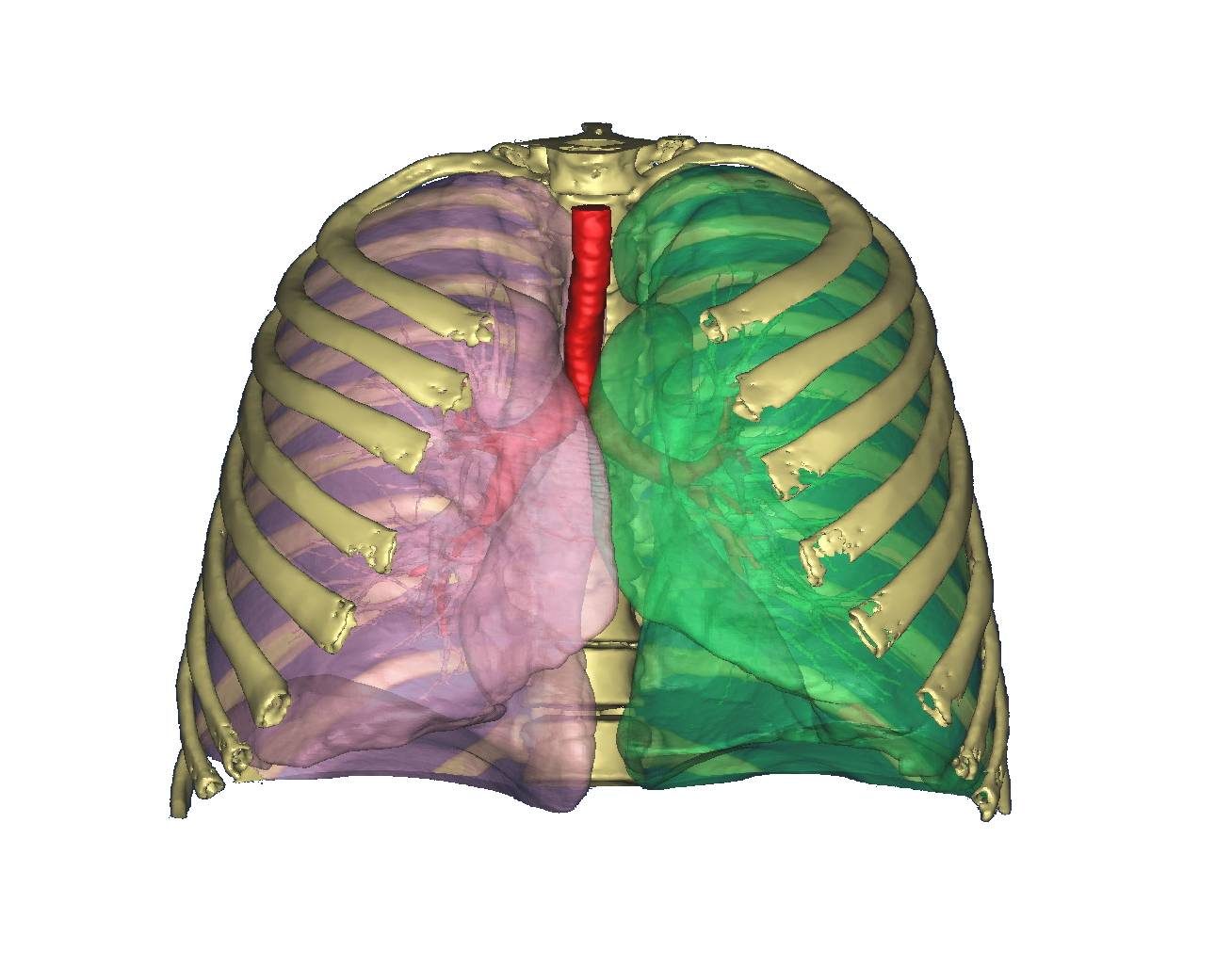
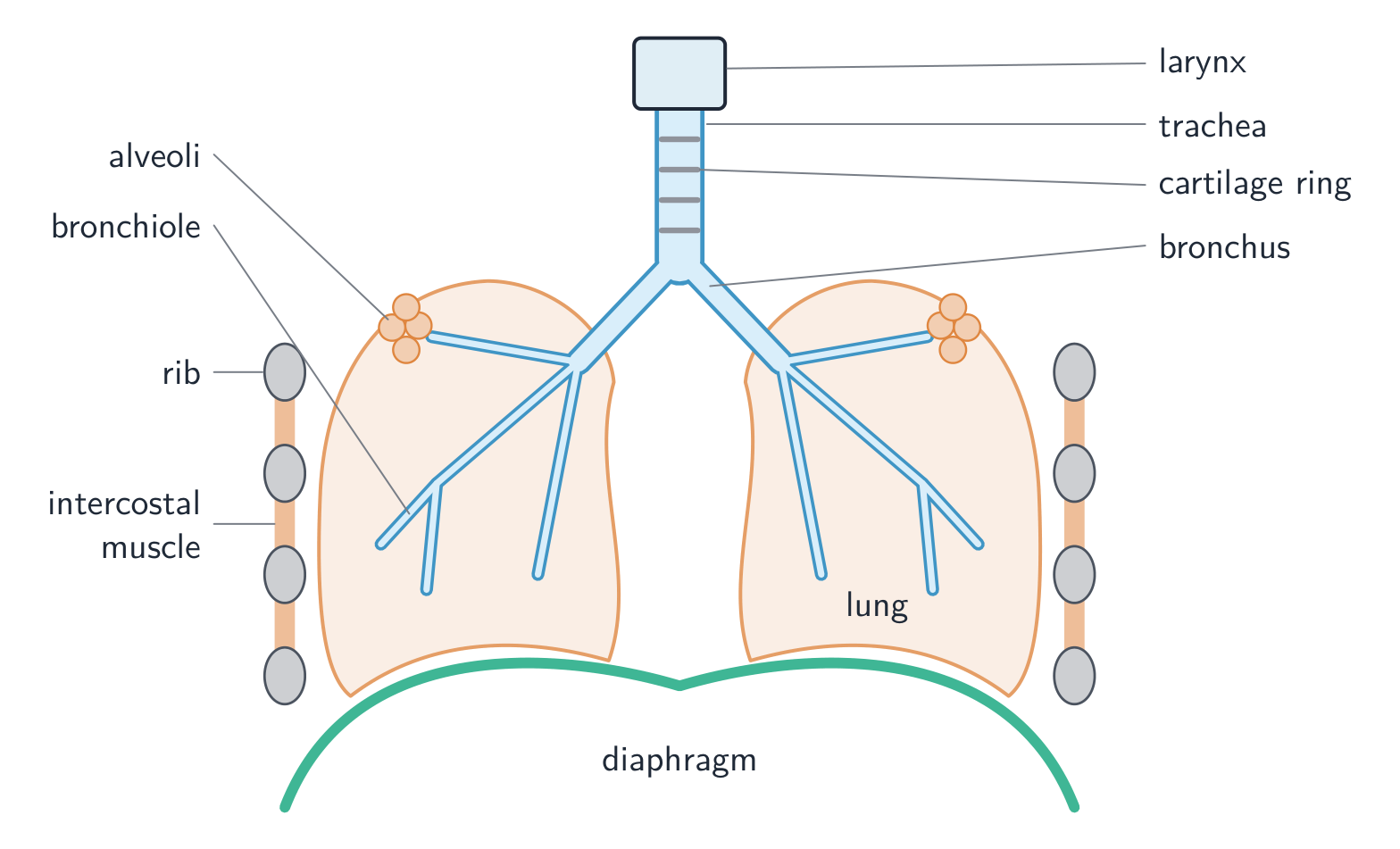
| 2 Xác định trong sơ đồ và hình ảnh các bộ phận sau của hệ hô hấp: phổi, cơ hoành, xương sườn, cơ liên sọ, thanh quản, khí quản, phế quản, phế nang nhỏ, phế nang và mạch mao mạch đi kèm | 6 Xác định trong sơ đồ và hình ảnh cơ liên sọ trong và ngoài |
| 7 Nêu chức năng của sụn trong khí quản | |
| 8 Giải thích vai trò của xương sườn, cơ liên sọ trong và ngoài và cơ hoành trong việc tạo ra sự thay đổi thể tích và áp suất trong lồng ngực dẫn đến thông khí của phổi | |
| 3 Điều tra sự khác biệt về thành phần giữa không khí hít vào và thở ra bằng cách sử dụng nước vôi trong như một bài kiểm tra carbon dioxide | 9 Giải thích sự khác biệt về thành phần giữa không khí hít vào và thở ra |
| 4 Mô tả sự khác biệt về thành phần giữa không khí hít vào và thở ra, giới hạn ở: oxy, carbon dioxide và hơi nước | |
| 5 Điều tra và mô tả tác động của hoạt động thể chất lên tần số và độ sâu của nhịp thở | 10 Giải thích mối liên hệ giữa hoạt động thể chất và tần số cũng như độ sâu của nhịp thở theo các aspects: nồng độ carbon dioxide tăng trong máu, điều này được não bộ phát hiện, dẫn đến tăng tần số và độ sâu lớn hơn của nhịp thở |
| 11 Giải thích vai trò của tế bào goblet, chất nhầy và tế bào lông rung trong việc bảo vệ hệ hô hấp khỏi mầm bệnh và hạt bụi |
Trao đổi khí ở người
Sinh học IGCSE · Chủ đề 11
 5:53
trao đổi khí ở người
Phổi của bạn sẽ phủ kín nửa sân tennis nếu trải phẳng ra. Chúng không phải là một túi lớn duy nhất — mà là hàng triệu túi nhỏ li ti, và đó chính là điểm mấu chốt.…
Thuyết minh tiếng Anh · Có thể chuyển đổi phụ đề tiếng Anh và tiếng Trung
11.1
Gas exchange surfaces
Chương trình
Nguồn: Chương trình Cambridge International
English
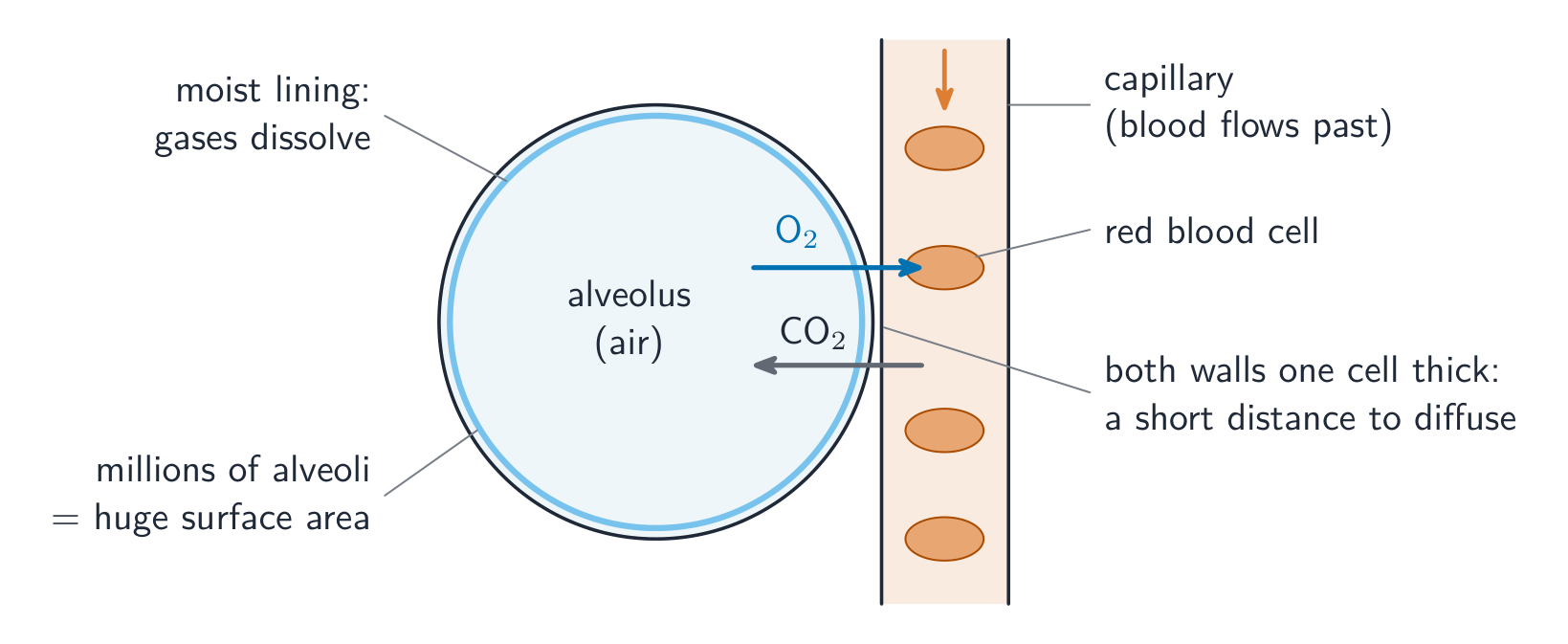
Gas exchange 气体交换 is how oxygen 氧气 gets into the blood and carbon dioxide 二氧化碳 gets out, by diffusion 扩散. A good gas exchange surface has four features:
- a large surface area 表面积 — so more gas can cross at once.
- a thin surface — so gases have only a short distance to diffuse.
- a good blood supply — to keep a steep difference in concentration.
- good ventilation 通气 with air — fresh air keeps the difference steep.
Khám phá
Một bề mặt trao đổi khí tốt
Nhấn vào phế nang để xem bốn đặc điểm khiến nó lý tưởng cho quá trình trao đổi: diện tích bề mặt lớn, thành mỏng, lớp lót ẩm và nguồn cung cấp máu tốt.
Từ vựng
Luyện tập
| English | Tiếng Việt |
|---|---|
| gas exchange/ɡæs eksˈtʃeɪndʒ/ | gas exchange: trao đổi khí |
| oxygen/ˈɒksɪdʒn/ | oxy |
| carbon dioxide/ˈkɑːbən daɪˈɒksaɪd/ | carbon dioxide: khí cacbonic |
| diffusion/dɪˈfjuːʒn/ | sự khuếch tán |
| surface area/ˈsɜːfɪs ˈeərɪə/ | diện tích bề mặt |
| ventilation/ˌventɪˈleɪʃn/ | ventilation: thông khí |
11.1
Hệ hô hấp
English
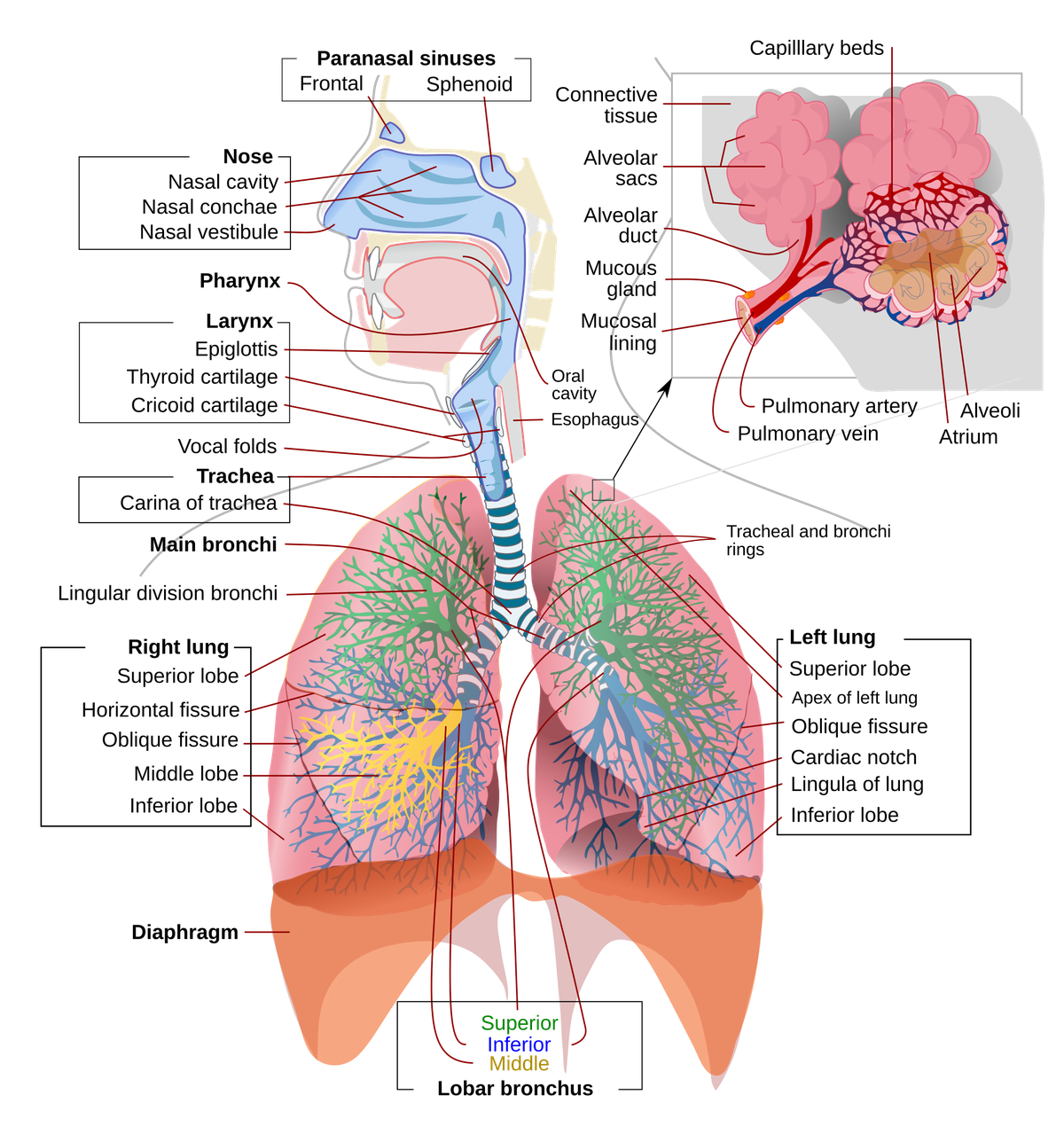
Air reaches the lungs through a series of tubes that branch and get narrower, like an upside-down tree. The table lists each part in the order air passes through it.
| Part | Job |
|---|---|
| larynx 喉 | the voice box, at the top of the windpipe |
| trachea 气管 | the windpipe; carries air towards the lungs |
| bronchi 支气管 | two tubes, one going to each lung |
| bronchioles 细支气管 | smaller branching tubes inside the lungs |
| alveoli 肺泡 | tiny air sacs where gas exchange happens; each is wrapped in capillaries 毛细血管 |
The alveoli make excellent gas exchange surfaces: there are millions of them (a huge surface area), each has a wall only one cell thick (a short distance), and each is surrounded by capillaries (a good blood supply).
The lungs sit in the chest, protected by the ribs 肋骨. Below them is a sheet of muscle, the diaphragm 膈肌. Between the ribs are the intercostal muscles 肋间肌. (Supplement) The trachea is held open by rings of cartilage 软骨, so it cannot collapse when you breathe in.
Từ vựng
Luyện tập
| English | Tiếng Việt |
|---|---|
| larynx/ˈlærɪŋks/ | họng |
| trachea/trəˈkɪə/ | khí quản |
| bronchi/ˈbrɒŋkaɪ/ | phế quản |
| bronchioles/ˈbrɒŋkɪəʊlz/ | phế quản nhỏ |
| alveoli/ˈælvɪɒli/ | alveoli: phế nang |
| capillaries/ˈkæpɪləriz/ | mao mạch |
| ribs/rɪbz/ | sườn |
| diaphragm/ˈdaɪəfræm/ | diaphragm: cơ hoành |
| intercostal muscles/ˌɪntəˈkɒstl ˈmʌslz/ | cơ liên sườn |
| cartilage/ˈkɑːtɪlɪdʒ/ | sụn |
11.1
Cách bạn thở (Supplement)
English
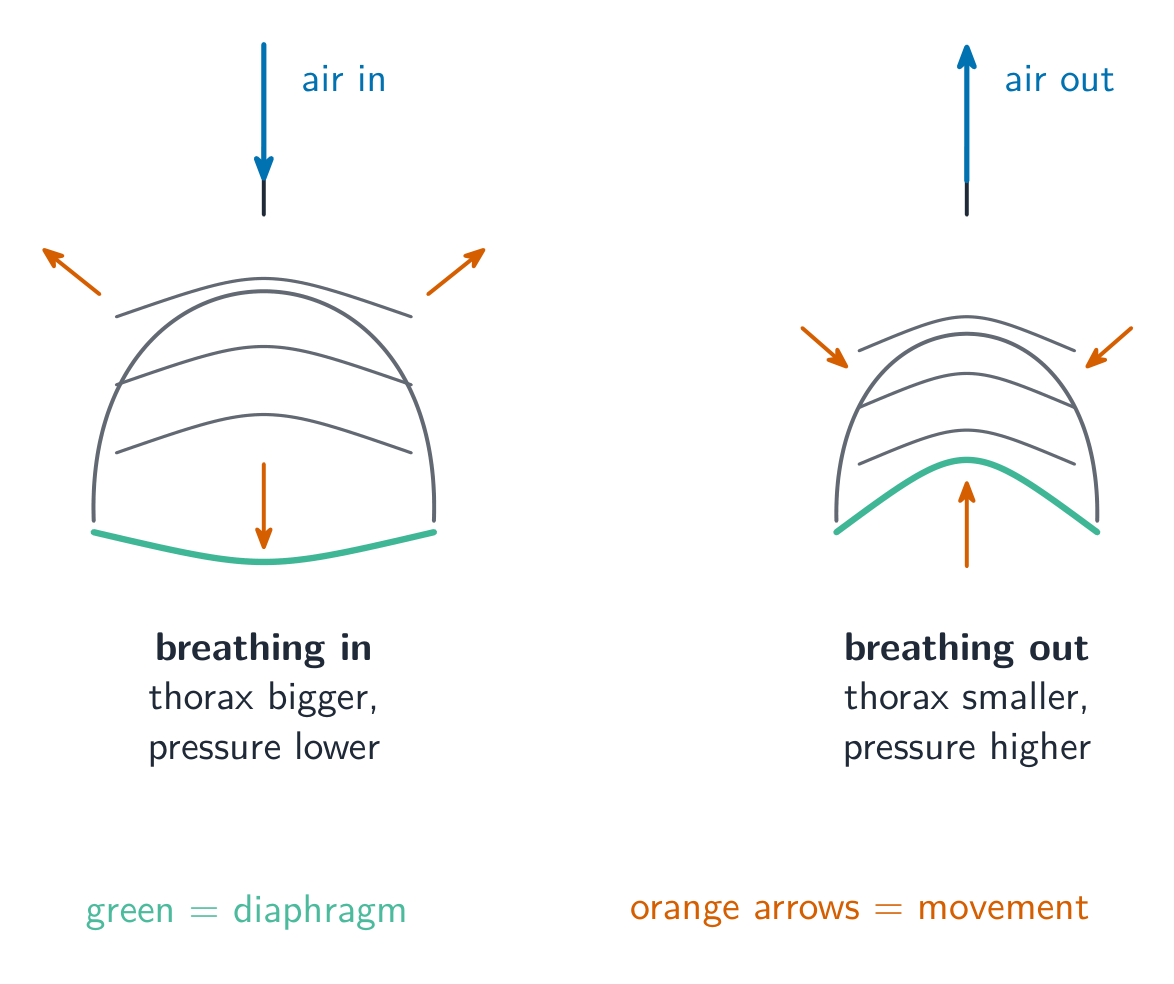
Breathing changes the volume and pressure 压力 inside the chest (the thorax 胸腔).
Breathing in (inhaling 吸气):
- the external intercostal muscles contract, pulling the ribs up and out.
- the diaphragm contracts and flattens (moves down).
- the thorax becomes bigger, so the pressure inside drops below the outside air pressure.
- air is pushed in.
Breathing out (exhaling 呼气) is the opposite: the muscles relax (and the internal intercostal muscles may contract), the thorax becomes smaller, the pressure rises, and air is pushed out.
Two sets of intercostal muscles. On a diagram, the external intercostal muscles 肋间外肌 are the outer layer between the ribs, and the internal intercostal muscles 肋间内肌 are the inner layer. They are antagonistic 拮抗: when one set contracts, the other relaxes.
| Breathing in | Breathing out (forced, as in exercise or coughing) | |
|---|---|---|
| external intercostal muscles | contract | relax |
| internal intercostal muscles | relax | contract, pulling the ribs down and in |
| ribs | move up and out | move down and in |
| diaphragm | contracts and flattens | relaxes and domes upwards |
| volume of thorax | increases | decreases |
| pressure in thorax | decreases (below air pressure) | increases (above air pressure) |
| air | moves in | moves out |
In quiet breathing out, the internal intercostals do little: the external intercostals and diaphragm simply relax, and the elastic lungs recoil. The internal intercostals contract only when you breathe out hard.
Worked example. Explain how the diaphragm and intercostal muscles cause air to enter the lungs. [4 marks] The external intercostal muscles contract, raising the ribs up and out; the diaphragm contracts and flattens. Both make the volume of the thorax larger, so the pressure inside falls below atmospheric pressure, and air moves into the lungs down the pressure difference. Each step is a mark: muscle → movement → volume → pressure → air.
Khám phá
Thở vào và thở ra
Hô hấp thay đổi thể tích lồng ngực, làm thay đổi áp suất và khiến không khí lưu thông vào hoặc ra.
Khám phá
Cơ chế hô hấp (thở)
Quan sát một nhịp thở — phân隔膜 dẹt xuống và xương sườn nâng lên, lồng ngực mở rộng, áp suất giảm, không khí流 vào. Giãn ra thì không khí bị đẩy ngược ra ngoài.
Từ vựng
Luyện tập
| English | Tiếng Việt |
|---|---|
| pressure/ˈpreʃə/ | áp suất |
| thorax/ˈθɔːræks/ | Ngực |
| inhaling/ɪnˈheɪlɪŋ/ | Hít thở |
| exhaling/eksˈheɪlɪŋ/ | Thở ra |
| external intercostal muscles/ekˈstɜːnl ˌɪntəˈkɒstl ˈmʌslz/ | external intercostal muscles |
| internal intercostal muscles/ɪnˈtɜːnl ˌɪntəˈkɒstl ˈmʌslz/ | internal intercostal muscles |
| antagonistic/ænˈtæɡənɪstɪk/ | Working in opposite pairs, as the iris muscles or the biceps and triceps do. |
11.1
Không khí hít vào và thở ra
English
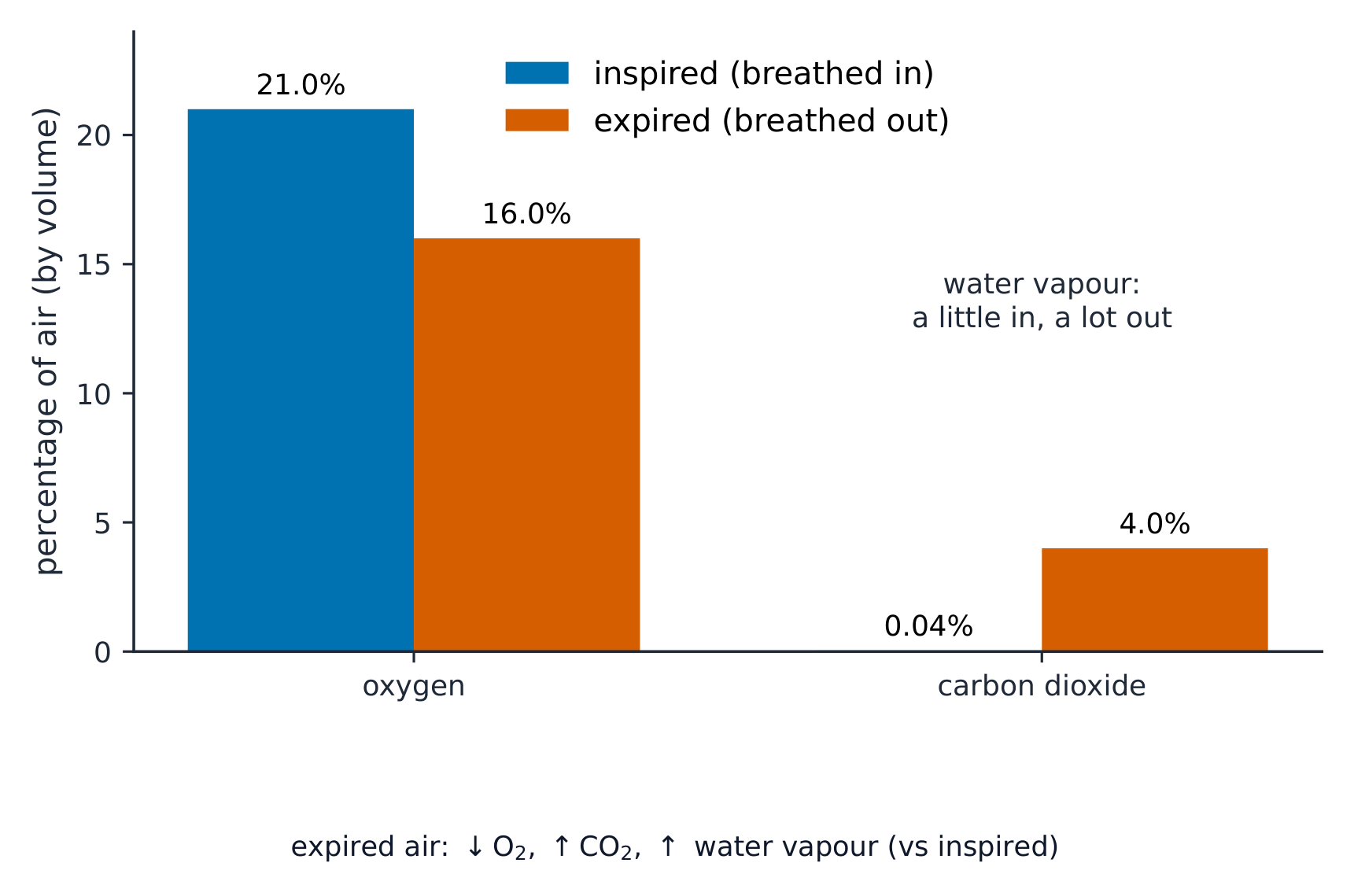
| Gas | Inspired air (breathed in) | Expired air (breathed out) |
|---|---|---|
| oxygen | about 21% | about 16% (less) |
| carbon dioxide | about 0.04% | about 4% (more) |
| water vapour 水蒸气 | a little | a lot (more) |
You can test for carbon dioxide with limewater 石灰水, which turns cloudy. Expired air turns limewater cloudy much faster than inspired air, showing it contains more carbon dioxide.
The investigation. Two boiling tubes each hold the same volume of limewater, joined to one mouthpiece by tubes arranged so that when you breathe in, air is drawn through tube A, and when you breathe out, air bubbles through tube B. After a few breaths, the limewater in B (expired air) turns milky, while A (inspired air) stays clear or turns cloudy only very slowly. Compare the time each takes to go cloudy, or the cloudiness after the same number of breaths. Breathe gently, and never suck limewater into your mouth.
(Supplement) Explaining the differences.
- Less oxygen in expired air: oxygen diffuses from the alveoli into the blood and is used by cells in aerobic respiration.
- More carbon dioxide: carbon dioxide made by respiration in the cells is carried by the blood to the lungs and diffuses into the alveoli.
- More water vapour: water evaporates from the moist lining of the alveoli into the air. (Water is also made by respiration.)
- Expired air is also warmer, because it is warmed by the body.
The nitrogen percentage hardly changes, because the body does not use nitrogen gas.
Từ vựng
Luyện tập
| English | Tiếng Việt |
|---|---|
| water vapour/ˈwɔːtə ˈveɪpə/ | hơi nước |
| limewater/ˈlaɪmwɔːtə/ | Nước vôi trong |
11.1
Hô hấp và vận động thể chất
English
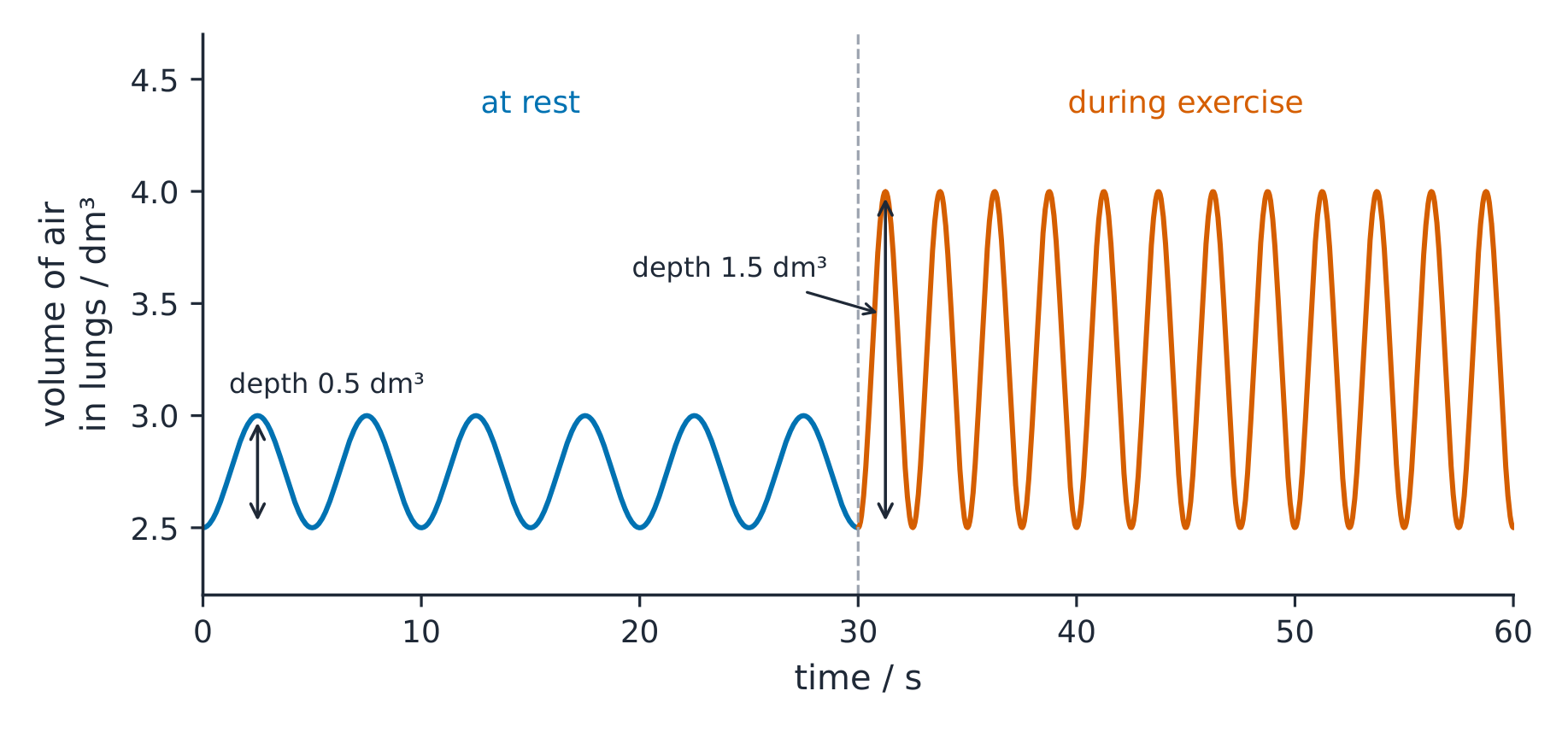
Reading a breathing trace. A machine called a spirometer 肺活量计 draws the volume of air in the lungs against time. Each peak is one breath. The rate is the number of peaks per minute. The depth is the height of one peak, from the bottom of a trough to the top of the next peak. In the trace above, at rest there are 6 peaks in 30 s, so the rate is 6 × 2 = 12 breaths per minute, with a depth of 0.5 dm³. During exercise there are 12 peaks in 30 s (24 per minute), each 1.5 dm³ deep.
Investigating physical activity. Count a student's breaths for one minute while they sit at rest (they should not know you are counting, as this changes their breathing). Then they exercise, for example stepping on and off a box for 2 minutes at a fixed pace, and you count their breaths for one minute straight afterwards. Keep counting each minute until the rate is back to the resting rate: this is the recovery time. Repeat with the same person and the same exercise, or with several people to compare. Controlled variables: the type, length and intensity of exercise, and the time the person rests beforehand.
During exercise your muscles respire faster and make more carbon dioxide. This raises the concentration 浓度 of carbon dioxide in the blood. (Supplement) Your brain 大脑 detects the rise and makes you breathe at a faster rate 速率 and a greater depth. This brings in more oxygen and removes the extra carbon dioxide quickly.
Worked example. At rest a person takes 12 breaths per minute, moving 500 cm³ of air per breath. During exercise this becomes 20 breaths per minute at 900 cm³ per breath. How much air passes through the lungs each minute in each case? Multiply the rate by the depth. At rest: 12 × 500 = 6000 cm³ per minute. During exercise: 20 × 900 = 18 000 cm³ per minute, three times as much. Exercise raises both the rate and the depth of breathing - an answer that changes only the rate throws away half the marks.
(Supplement) The full explanation. Muscles contract more → they need more energy → more aerobic respiration → more carbon dioxide made, which diffuses into the blood → the brain detects the higher carbon dioxide concentration → it sends impulses to the intercostal muscles and diaphragm → they contract faster and more strongly → breathing becomes faster and deeper → more carbon dioxide is removed and more oxygen taken in. Breathing stays fast for a while after exercise, to repay the oxygen debt (see Respiration).
Từ vựng
Luyện tập
| English | Tiếng Việt |
|---|---|
| spirometer/spɪˈrɒmɪtə/ | spirometer |
| concentration/ˌkɒnsənˈtreɪʃn/ | nồng độ |
| brain/breɪn/ | Não |
| rate/reɪt/ | Tốc độ |
11.1
Giữ đường thở sạch sẽ (Bổ sung)
English
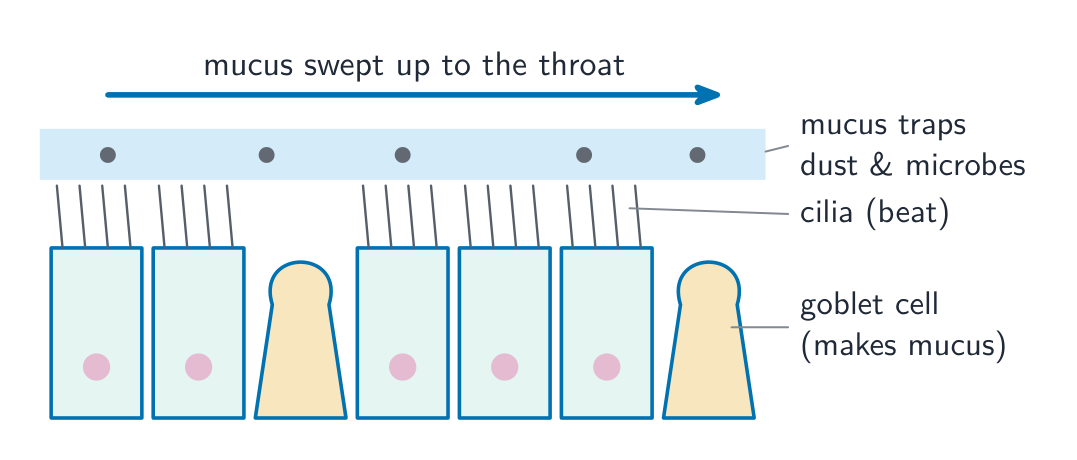
The airways are lined with two kinds of cell that trap and remove dirt:
- goblet cells 杯状细胞 make mucus 黏液, which traps pathogens 病原体 and dust particles 粒子.
- ciliated cells 纤毛细胞 have tiny hairs that sweep the mucus, with the trapped dirt, up to the throat, where it is swallowed.
Together they stop pathogens and particles reaching the alveoli, where they could cause infection or block gas exchange. Swallowed mucus goes to the stomach, where acid kills most of the pathogens. Tobacco smoke paralyses and damages the cilia, so mucus builds up in the airways; smokers cough to move it, and get more chest infections.
Common mistakes.
- Mixing up breathing and respiration. Breathing moves air in and out of the lungs; respiration is the chemical reaction in every cell that releases energy from glucose.
- Saying expired air contains no oxygen. It still has about 16% oxygen; only about a quarter of the oxygen breathed in is taken up.
- (Supplement) Getting the order wrong: "air comes in, so the chest gets bigger". The muscles make the chest bigger first; this lowers the pressure inside, and then air is pushed in.
- (Supplement) Saying the diaphragm moves up when you breathe in. It contracts and flattens (moves down); it moves up when it relaxes as you breathe out.
- (Supplement) Saying the brain detects a lack of oxygen during exercise. The brain detects the rise in carbon dioxide in the blood.
Từ vựng
Luyện tập
| English | Tiếng Việt |
|---|---|
| goblet cells/ˈɡɒblət selz/ | Tế bào caly |
| mucus/ˈmjuːkəs/ | niêm dịch |
| pathogens/ˈpæθədʒnz/ | mầm bệnh |
| particles/ˈpɑːtɪklz/ | hạt |
| ciliated cells/ˈsɪlɪeɪtɪd selz/ | tế bào có lông纤毛 |
11.1
Mẹo làm bài thi
English
- A gas exchange surface is large, thin, with a good blood supply and good ventilation.
- Air path: larynx → trachea → bronchi → bronchioles → alveoli.
- Breathing in: external intercostal muscles and diaphragm contract → thorax bigger → pressure lower → air in. Breathing out is the opposite.
- Expired air has less oxygen, more carbon dioxide and more water vapour. Limewater tests for carbon dioxide.
- Exercise → more carbon dioxide in the blood → brain → faster, deeper breathing.
- On a breathing trace, rate = peaks per minute; depth = height of one peak.
- (Supplement) Explain each difference in expired air with its cause: oxygen used in respiration, carbon dioxide made by respiration, water evaporating from the alveoli.
- (Supplement) External intercostals contract to breathe in; internal intercostals contract only for forced breathing out.
Bài học tương tác về chủ đề này
Làm theo từng bước, kèm theo bài tập kiểm tra ngay lập tức.