Skip to content · ⁨ข้ามไปยังเนื้อหา⁩

Automated and emerging technologies · ⁨เทคโนโลยีอัตโนมัติและเทคโนโลยีที่กำลังพัฒนา⁩

IGCSE Computer Science · ⁨Computer Science IGCSE⁩ · Topic 6 · ⁨หัวข้อ 6⁩

Video lesson for this topic · ⁨บทเรียนวิดีโอสำหรับหัวข้อนี้⁩ Open the video page · ⁨เปิดหน้าวิดีโอ⁩
10:22

ระบบอัตโนมัติ

จินตนาการถึงโรงเรือนกระจกตอนตีสาม ไม่มีใครอยู่เลย อากาศอุ่นขึ้นเล็กน้อย แล้วหน้าต่างจะเปิดออกเอง เมื่อผ่านไปหนึ่งชั่วโมง มันก็ปิดลง…

English narration · English + 中文 subtitles burned in · ⁨การบรรยายภาษาอังกฤษ · คำบรรยายภาษาอังกฤษ + 中文 ลอยตัวบนภาพ⁩

6.1

Automated systems · ⁨ระบบอัตโนมัติ⁩

Syllabus · ⁨หลักสูตร⁩
English
Candidates should be able to: Notes and guidance
1 Describe how sensors, microprocessors and actuators can be used in collaboration to create automated systems
2 Describe the advantages and disadvantages of an automated system used for a given scenario • Including scenarios from: – industry – transport – agriculture – weather – gaming – lighting – science
ไทย
ผู้เข้าสอบควรสามารถ: หมายเหตุและคำแนะนำ
1 อธิบายวิธีที่ เซ็นเซอร์, ไมโครโปรเซสเซอร์ และ แอค추เอเตอร์ สามารถทำงานร่วมกันเพื่อสร้าง ระบบอัตโนมัติ
2 อธิบายข้อดีและข้อเสียของระบบอัตโนมัติที่ใช้ในสถานการณ์ที่กำหนด • รวมถึงสถานการณ์จาก: – อุตสาหกรรม – การขนส่ง – การเกษตร – สภาพอากาศ – เกม – การให้แสงสว่าง – วิทยาศาสตร์

Source: Cambridge International syllabus · ⁨แหล่งที่มา: หลักสูตร Cambridge International⁩

English

An automated system 自动化系统 is a mix of software and hardware that senses and responds to data in its environment 环境, with no need for human intervention 人工干预. In other words, it works on its own.

Examples of automated systems:

  • a central heating 中央供暖 system;
  • a chemical process 化学过程 in a factory;
  • a greenhouse 温室 (for growing plants);
  • a car park barrier 停车场道闸.

Sensors, microprocessors and actuators

Three parts work together in an automated system.

Part Job
sensor 传感器 measures a physical quantity (such as temperature or light) and sends the data
microprocessor 微处理器 compares the data with stored values and makes decisions
actuator 执行器 receives a signal and causes movement or action (such as opening a valve)

The cycle works like this:

  1. The sensor sends data to the microprocessor.
  2. The microprocessor compares this data with stored values 存储值 and makes a decision.
  3. The microprocessor sends signals to the actuators to take action.

For example, in a greenhouse: a temperature sensor reads the heat; the microprocessor compares it with the wanted value; if it is too hot, the microprocessor signals an actuator to open a window.

The syllabus names many sensor types 传感器类型, each reading one physical quantity – for example an accelerometer 加速度计 (movement or tilt), a humidity 湿度 sensor (water in the air), and a proximity 接近 sensor (a nearby object):

Sensor Measures Typical use
temperature heat ovens, greenhouses, heating
light brightness automatic lights, cameras
pressure force on a surface alarm floor mats, touchscreens
infra-red / proximity a nearby object automatic doors, parking sensors
acoustic (sound) sound level noise monitors
humidity / moisture water in air or soil greenhouses, irrigation
gas a gas being present smoke and CO alarms
pH acidity pools, fish tanks
accelerometer movement or tilt phones, airbag triggers
magnetic field magnetism door contacts, compasses
flow / level fluid flow or depth pipes, tanks

To pick a sensor for a scenario, choose the one that reads the right physical quantity: a fish tank needs pH and temperature sensors; an automatic door needs an infra-red / proximity sensor.

Advantages and disadvantages

Automated systems are used in many situations, such as industry, transport, agriculture 农业 (farming), weather (gathering data), gaming and lighting.

Advantages Disadvantages
work all day and night, without rest cost a lot to buy and set up
faster and more consistent 一致的 than people can break down and need expert repair
can work in places unsafe for people may replace people's jobs
fewer human mistakes cannot easily react to a situation they were not built for

Worked example. Describe how an automatic greenhouse holds the temperature at 25 °C. A temperature sensor continuously measures the temperature and sends its reading, converted to digital by an ADC, to the microprocessor. The microprocessor compares the reading with the stored value of 25 °C. If the temperature is above it, the microprocessor signals an actuator to open a window or switch on a fan; if it is below, it switches on a heater. The whole loop then repeats continuously. Two marks nearly always sit on the words "compares with a stored (pre-set) value" and "the process repeats" - a description that stops at "the sensor tells the computer" leaves them behind.

ไทย

Automated system คือชุดรวมของ software และ hardware ที่รับรู้และตอบสนองต่อข้อมูลใน environment ของมัน โดยไม่ต้องมี human intervention. กล่าวคือ มันทำงานได้ด้วยตัวเอง

ตัวอย่างของระบบอัตโนมัติ:

  • ระบบทำความร้อนกลาง;
  • กระบวนการเคมีในโรงงาน;
  • greenhouse (สำหรับปลูกพืช);
  • car park barrier

Sensors, microprocessors และ actuators

สามส่วนนี้ทำงานร่วมกันในระบบอัตโนมัติ

ส่วน หน้าที่
sensor วัดปริมาณทางกายภาพ (เช่น อุณหภูมิหรือแสง)และส่งข้อมูล
microprocessor เปรียบเทียบข้อมูลกับค่าที่เก็บไว้และตัดสินใจ
actuator รับสัญญาณและทำให้เกิดการเคลื่อนไหวหรือการกระทำ (เช่น เปิดวาล์ว)

วงจรทำงานดังนี้:

  1. เซ็นเซอร์ส่งข้อมูลไปยังไมโครโปรเซสเซอร์
  2. ไมโครโปรเซสเซอร์เปรียบเทียบข้อมูลนี้กับ ค่าที่เก็บไว้ และตัดสินใจ
  3. ไมโครโปรเซสเซอร์ส่งสัญญาณไปยังแอคชูเอเตอร์เพื่อดำเนินการ

ตัวอย่างเช่น ในโรงเรือน: เซ็นเซอร์วัดอุณหภูมิ; ไมโครโปรเซสเซอร์เปรียบเทียบกับค่าที่ต้องการ; หากร้อนเกินไป ไมโครโปรเซสเซอร์จะสั่งให้แอคชูเอเตอร์เปิดหน้าต่าง

วงจรรอบ: เซ็นเซอร์อุณหภูมิส่งข้อมูลเข้าไมโครโปรเซสเซอร์ ซึ่งสั่งให้แอคชูเอเตอร์เปิดหน้าต่าง ทำให้โรงเรือนเย็นลง แล้วเซ็นเซอร์จะวัดอุณหภูมิอีกครั้ง
เซ็นเซอร์ส่งข้อมูลเข้าไมโครโปรเซสเซอร์ ซึ่งเปรียบเทียบค่าที่อ่านได้กับค่าที่เก็บไว้และสั่งให้แอคชูเอเตอร์ทำงาน; จากนั้นวงจรจะวนซ้ำ

หลักสูตรระบุชื่อ ประเภทของเซ็นเซอร์ หลายชนิด โดยแต่ละชนิดจะวัดปริมาณทางฟิสิกส์หนึ่งอย่าง – ตัวอย่างเช่น แอกเซลอโรมิเตอร์ (การเคลื่อนที่หรือการเอียง), เซ็นเซอร์ความชื้น (น้ำในอากาศ) และ เซ็นเซอร์ตรวจจับระยะใกล้ (วัตถุใกล้เคียง):

เซ็นเซอร์ วัด การใช้ทั่วไป
อุณหภูมิ ความร้อน เตาอบ, โรงเรือน, ระบบทำความร้อน
แสง ความสว่าง ไฟอัตโนมัติ, กล้องถ่ายรูป
ความดัน แรงกดทับบนพื้นผิว 铺垫กันลื่น, หน้าจอสัมผัส
อินฟราเรด / ตรวจจับระยะใกล้ วัตถุใกล้เคียง ประตูอัตโนมัติ, เซ็นเซอร์ถอยรถ
เสียง (อะคูสติก) ระดับเสียง เครื่องตรวจวัดเสียงรบกวน
ความชื้น / ความชื้นในดิน น้ำในอากาศหรือดิน โรงเรือน, ระบบชลประทาน
ก๊าซ การมีอยู่ของก๊าซ เครื่องเตือนควันและ CO
ค่า pH ความเป็นกรด-ด่าง สระว่ายน้ำ, อ่างเลี้ยงปลา
แอกเซลอโรมิเตอร์ การเคลื่อนที่หรือการเอียง โทรศัพท์มือถือ, ระบบเป่าถุงลม
สนามแม่เหล็ก แม่เหล็ก สวิตช์ประตู, เข็มทิศ
การไหล / ระดับ การไหลของของเหลวหรือความลึก ท่อ, ถังเก็บ

ในการเลือกเซ็นเซอร์สำหรับสถานการณ์ใด ๆ ให้เลือกชนิดที่วัด ปริมาณทางฟิสิกส์ที่เหมาะสม: อ่างเลี้ยงปลาต้องใช้เซ็นเซอร์ค่า pH และอุณหภูมิ; ประตูอัตโนมัติต้องใช้เซ็นเซอร์อินฟราเรด/ตรวจจับระยะใกล้

ข้อดีและข้อเสีย

ระบบอัตโนมัติถูกใช้ในหลายสถานการณ์ เช่น อุตสาหกรรม ขนส่ง การเกษตร (การทำนา) การพยากรณ์อากาศ (การเก็บข้อมูล) เกม และการไฟฟ้านั่ง

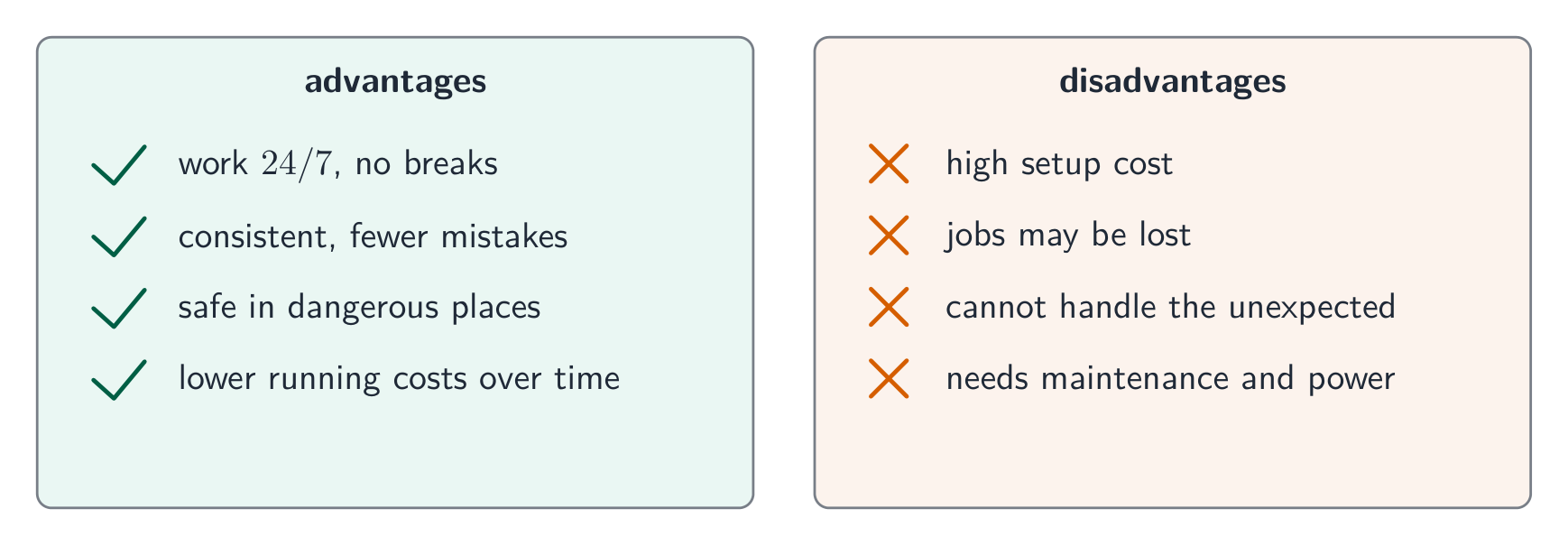
ข้อดีของระบบอัตโนมัติ เช่น การทำงาน 24/7 และความสม่ำเสมอ เมื่อเทียบกับข้อเสีย เช่น ค่าเริ่มต้นสูงและการสูญเสียงาน
ข้อดีและข้อเสียของระบบอัตโนมัติ
โดรนสี่ใบพัดสีขาวพร้อมกล้องขนาดเล็ก บินอยู่ในท้องฟ้าเหนือทะเล
โดรนกล้อง:它可以自己沿着预定路线飞行以收集数据
ข้อดี ข้อเสีย
ทำงานได้ทั้งกลางวันและกลางคืนโดยไม่หยุดพัก มีค่าใช้จ่ายสูงในการซื้อและติดตั้ง
รวดเร็วและ มีความสม่ำเสมอ มากกว่ามนุษย์ อาจเกิดข้อบกพร่องและต้องการการซ่อมแซมจากผู้เชี่ยวชาญ
สามารถทำงานในพื้นที่ที่ไม่ปลอดภัยสำหรับมนุษย์ อาจแทนที่ตำแหน่งงานของมนุษย์
มีข้อผิดพลาดจากมนุษย์น้อยกว่า ไม่สามารถตอบสนองต่อสถานการณ์ที่ไม่ได้ออกแบบมาเพื่อจัดการได้ง่าย

ตัวอย่างวิธีทำ. อธิบายว่าโรงเรือนอัตโนมัติรักษาอุณหภูมิที่ 25 °C ได้อย่างไร เซ็นเซอร์อุณหภูมิ จะวัดอุณหภูมิอย่างต่อเนื่องและส่งค่าที่อ่านได้ซึ่งแปลงเป็นดิจิทัลโดย ADC ไปยัง ไมโครโปรเซสเซอร์ ไมโครโปรเซสเซอร์จะ เปรียบเทียบ ค่าที่อ่านได้กับค่าที่เก็บไว้ที่ 25 °C หากอุณหภูมิสูงกว่านั้น ไมโครโปรเซสเซอร์จะสั่งให้ แอคชูเอเตอร์ เปิดหน้าต่างหรือเปิดพัดลม; หากต่ำกว่าจะเปิดเครื่องทำความร้อน ทั้งวงจรนี้จะ วนซ้ำอย่างต่อเนื่อง คะแนนเกือบสองคะแนนจะอยู่ที่คำว่า "เปรียบเทียบกับค่าที่เก็บไว้ (ตั้งค่าล่วงหน้า)" และ "กระบวนการวนซ้ำ" - คำอธิบายที่หยุดอยู่ที่ "เซ็นเซอร์บอกคอมพิวเตอร์" จะทำให้เสียคะแนนเหล่านี้ไป

Explore · ⁨สำรวจ⁩

An automated control loop · ⁨วงจรควบคุมอัตโนมัติ⁩

Tap round the loop. An automated system senses, compares against a target, then acts — and because the action changes what it senses, it keeps correcting itself with no human needed. · ⁨วนรอบที่ลูป ระบบอัตโนมัติจะรับรู้ เปรียบเทียบกับเป้าหมาย แล้วดำเนินการ — และเนื่องจากกระทำนั้นเปลี่ยนแปลงสิ่งที่มันรับรู้ มันจึงปรับแก้ตัวเองอย่างต่อเนื่องโดยไม่ต้องใช้มนุษย์⁩

Vocabulary · ⁨คำศัพท์⁩ Train · ⁨ฝึกฝน⁩
English ไทย
automated system/ˈɔːtəmeɪtɪd ˈsɪstəm/ ระบบอัตโนมัติ
environment/enˈvaɪrənmənt/ สิ่งแวดล้อม
human intervention/ˈhjuːmən ˌɪntəˈvenʃn/ การแทรกแซงของมนุษย์
greenhouse/ˈɡriːnhaʊs/ เรือนกระจก
car park barrier/kɑː pɑːk ˈbærɪə/ ประตูรั้วที่จอดรถ
sensor/ˈsensə/ sensor
microprocessor/ˌmaɪkrəʊˈprəʊsesə/ microprocessor
actuator/ˈæktʃuːeɪtə/ actuator
stored values/stɔːd ˈvæljuːz/ ค่าที่บันทึกไว้
sensor types/ˈsensə taɪps/ ประเภทเซ็นเซอร์
accelerometer/əkˌseləˈrɒmɪtə/ akselerometer
humidity/hjuːˈmɪdɪti/ ความชื้น
proximity/prɒkˈsɪmɪti/ ความใกล้ชิด (Proximity)
consistent/kənˈsɪstənt/ สอดคล้องกัน
Robotics/rəʊˈbɒtɪks/ หุ่นยนต์
robots/ˈrəʊbɒts/ หุ่นยนต์
physical structure/ˈfɪzɪkl ˈstrʌktʃə/ โครงสร้างทางกายภาพ
electrical components/ɪˈlektrɪkl kəmˈpəʊnənts/ ส่วนประกอบไฟฟ้า
programmable instructions/ˈprəʊɡrəməbl ɪnˈstrʌkʃnz/ คำสั่งที่ปรับแต่งได้
factory equipment/ˈfæktəri ɪˈkwɪpmənt/ อุปกรณ์โรงงาน
domestic appliances/dəˈmestɪk əˈplaɪənsɪz/ เครื่องใช้ในบ้าน
vacuum cleaner/ˈvækjuːm ˈkliːnə/ เครื่องดูดฝุ่น
lack of independent decision-making/læk ɒv ˌɪndɪˈpendənt dɪˈsɪʒn ˈmeɪkɪŋ/ การขาดการตัดสินใจอย่างอิสระ
Artificial intelligence/ˌɑːtɪˈfɪʃl ɪnˈtelɪdʒəns/ ปัญญาประดิษฐ์
simulation/ˌsɪmjʊˈleɪʃn/ การจำลอง
6.2

Robotics · ⁨หุ่นยนต์วิทยา⁩

Syllabus · ⁨หลักสูตร⁩
English
Candidates should be able to: Notes and guidance
1 Understand what is meant by robotics • Robotics is a branch of computer science that incorporates the design, construction and operation of robots • Examples include factory equipment, domestic robots and drones
2 Describe the characteristics of a robot • Including: – a mechanical structure or framework – electrical components, such as sensors, microprocessors and actuators – programmable
3 Understand the roles that robots can perform and describe the advantages and disadvantages of their use • Robots can be used in areas including: – industry – transport – agriculture – medicine – domestic settings – entertainment
ไทย
ผู้เข้าสอบควรสามารถ: หมายเหตุและคำแนะนำ
1 เข้าใจความหมายของ หุ่นยนต์ศาสตร์ (robotics) • หุ่นยนต์ศาสตร์เป็นสาขาหนึ่งของวิทยาการคอมพิวเตอร์ที่รวมการออกแบบ การสร้าง และการดำเนินงานของหุ่นยนต์ • ตัวอย่างได้แก่ อุปกรณ์ในโรงงาน หุ่นยนต์สำหรับใช้ในบ้าน และโดรน
2 อธิบายลักษณะของ หุ่นยนต์ • รวมถึง: – โครงสร้างหรือกรอบทางกล – ส่วนประกอบทางไฟฟ้า เช่น เซนเซอร์ ไมโครโปรเซสเซอร์ และอะกัวเตเตอร์ – สามารถโปรแกรมได้
3 เข้าใจบทบาทที่หุ่นยนต์สามารถปฏิบัติและอธิบายข้อดีและข้อเสียของการใช้งาน • หุ่นยนต์สามารถใช้ได้ในด้านต่างๆ ได้แก่: – อุตสาหกรรม – การขนส่ง – การเกษตร – การแพทย์ – สภาพแวดล้อมภายในบ้าน – ความบันเทิง

Source: Cambridge International syllabus · ⁨แหล่งที่มา: หลักสูตร Cambridge International⁩

English

Robotics 机器人技术 is the branch of technology that deals with the design, building and operation of robots 机器人.

A robot has these characteristics:

  • a physical structure 物理结构 (a mechanical 机械的 body, such as arms);
  • electrical components 电子元件 (motors, sensors and wiring);
  • programmable instructions 可编程指令 — it follows a program that can be changed.

What robots do

Robots can perform many roles, for example:

  • factory equipment 工厂设备 — building cars, welding, moving heavy parts;
  • domestic appliances 家用电器 — such as a robotic vacuum cleaner 吸尘器.
Advantages Disadvantages
do dull or dangerous jobs expensive to buy and maintain
work quickly and accurately can replace human workers
do not get tired or bored a robot has a lack of independent decision-making 缺乏独立决策 — it only does what it is programmed to do

A key limit of a robot is that it cannot think for itself. It cannot make its own choices when something unexpected happens.

ไทย

หุ่นยนต์วิทยา เป็นสาขาเทคโนโลยีที่เกี่ยวข้องกับการออกแบบ การสร้างและการดำเนินการของ หุ่นยนต์

หุ่นยนต์มีลักษณะดังนี้:

  • โครงสร้างทางกายภาพ (ตัวถังกลไก เช่น แขน);
  • ส่วนประกอบไฟฟ้า (มอเตอร์, เซ็นเซอร์ และสายไฟ);
  • คำสั่งที่เขียนโปรแกรมได้ – มันทำตามโปรแกรมที่สามารถเปลี่ยนแปลงได้

หุ่นยนต์ทำอะไรได้บ้าง

หุ่นยนต์สามารถทำหน้าที่ต่างๆ ได้หลายอย่าง ตัวอย่างเช่น:

  • อุปกรณ์โรงงาน – การผลิตรถยนต์, การเชื่อม, การย้ายชิ้นส่วนหนัก;
  • เครื่องใช้ในบ้าน – เช่น เครื่องดูดฝุ่นแบบหุ่นยนต์
แขนหุ่นยนต์สีขาวบนสายการผลิตในโรงงาน พร้อมด้วยสายเคเบิลและโครงโลหะรอบข้าง
แขนหุ่นยนต์อุตสาหกรรมfollowing a program and can be reprogrammed to do a new job.
เครื่องดูดฝุ่นหุ่นยนต์ทรงกลมแบนสีเทา viewed from above, with S, M and L buttons on top
หุ่นยนต์ดูดฝุ่น: หุ่นยนต์ในบ้านที่ขับเคลื่อนเองเพื่อทำความสะอาดพื้น
ข้อดี ข้อเสีย
ทำงานงานที่น่าเบื่อหรืออันตรายได้ มีค่าใช้จ่ายสูงในการซื้อและบำรุงรักษา
ทำงานได้อย่างรวดเร็วและแม่นยำ สามารถแทนที่แรงงานมนุษย์
ไม่เหนื่อยหรือเบื่อหน่าย หุ่นยนต์มี การขาดการตัดสินใจที่เป็นอิสระ – มันทำได้เฉพาะสิ่งที่ถูกโปรแกรมให้ทำเท่านั้น

ข้อจำกัดสำคัญของหุ่นยนต์คือมันไม่สามารถคิดได้ด้วยตัวเอง มันไม่สามารถตัดสินใจเองเมื่อเกิดเหตุการณ์ไม่คาดฝัน

Explore · ⁨สำรวจ⁩

Computing concept lab · ⁨ห้องปฏิบัติการแนวคิดการคำนวณ⁩

Classify concrete examples by the computing idea they demonstrate. · ⁨จัดกลุ่มตัวอย่างที่เป็นรูปธรรมตาม idea การคำนวณที่แสดงออก⁩

6.3

Artificial intelligence · ⁨ปัญญาประดิษฐ์⁩

Syllabus · ⁨หลักสูตร⁩
English
Candidates should be able to: Notes and guidance
1 Understand what is meant by artificial intelligence (AI) • AI is a branch of computer science dealing with the simulation of intelligent behaviours by computers
2 Describe the main characteristics of AI as the collection of data and the rules for using that data, the ability to reason, and it can include the ability to learn and adapt
3 Explain the basic operation and components of AI systems to simulate intelligent behaviour • Limited to: – expert systems – machine learning • Expert systems have a knowledge base, a rule base, an inference engine and an interface • Machine learning is when a program has the ability to automatically adapt its own processes and/or data
ไทย
ผู้เข้าสอบควรสามารถ: หมายเหตุและคำแนะนำ
1 เข้าใจความหมายของ อัจฉริยะประดิษฐ์ (AI) • อัจฉริยะประดิษฐ์เป็นสาขาหนึ่งของวิทยาการคอมพิวเตอร์ที่เกี่ยวข้องกับการจำลองพฤติกรรมที่มีปัญญาโดยคอมพิวเตอร์
2 อธิบายลักษณะหลักของ AI ในฐานะชุดข้อมูลและกฎเกณฑ์ในการใช้ข้อมูลนั้น ความสามารถในการให้เหตุผล และสามารถรวมถึงความสามารถในการเรียนรู้และปรับตัว
3 อธิบายการทำงานพื้นฐานและส่วนประกอบของระบบ AI เพื่อจำลองพฤติกรรมที่มีปัญญา •จำกัดเฉพาะ: – ระบบผู้เชี่ยวชาญ – การเรียนรู้ของเครื่อง • ระบบผู้เชี่ยวชาญมีฐานความรู้ ฐานกฎ เครื่องประมวลผลสรุป และอินเทอร์เฟซ • การเรียนรู้ของเครื่องคือการที่โปรแกรมมีความสามารถในการปรับกระบวนการและ/หรือข้อมูลของตนเองโดยอัตโนมัติ

Source: Cambridge International syllabus · ⁨แหล่งที่มา: หลักสูตร Cambridge International⁩

English

Artificial intelligence 人工智能 (AI) is the simulation 模拟 of human intelligence by computer systems. This means a computer doing tasks that normally need human thinking.

Characteristics of AI

AI systems usually have these features:

  • they collect data and the rules 规则 for using that data;
  • they have the ability to reason 推理 (work things out using the rules);
  • they have the ability to draw conclusions 得出结论, which may be approximate 近似的 (a best guess) or definite 确定的 (certain);
  • they have the ability to learn 学习 from data;
  • they have the ability to adapt 适应 — to change their behaviour as they get new data.

Examples of AI

  • expert systems 专家系统 — software that gives advice like a human expert (for example, helping a doctor with a diagnosis);
  • natural language processing 自然语言处理 — understanding human speech or text;
  • self-driving cars 自动驾驶汽车.

Inside an expert system

An expert system stores human expertise and reasons from it. It has four parts:

  • a knowledge base 知识库 – the stored facts about the subject;
  • a rule base 规则库 – the "if… then…" rules a human expert would apply;
  • an inference engine 推理引擎 – applies the rules to the facts to reach a conclusion;
  • a user interface 用户界面 – asks the user questions and shows the result.

The interface collects facts from the user; the inference engine runs the rule base against the knowledge base; and the system outputs a diagnosis or a probability – as used to help a doctor diagnose an illness or to find a car fault.

Machine learning

Machine learning 机器学习 is a program that improves its own performance from experience, without being explicitly reprogrammed. It finds patterns in data and adapts: a search engine gets better at ranking results, a voice assistant recognises spoken commands more accurately, and a robot vacuum gradually learns the layout of a room.

Narrow, general and strong AI

Type What it means
narrow AI 弱人工智能 can do only one task or a small set of tasks (for example, a chess program). All AI today is narrow AI.
general AI 通用人工智能 could do any task a human can do, switching between many different tasks.
strong AI 强人工智能 would think and be aware like a real human mind. This does not exist yet.
ไทย

ปัญญาประดิษฐ์ (AI) คือการ จำลอง อัจฉริยะของมนุษย์ด้วยระบบคอมพิวเตอร์ นั่นหมายถึงคอมพิวเตอร์ที่ทำหน้าที่通常需要การคิดของมนุษย์

ลักษณะของ AI

ระบบ AI มักจะมีคุณสมบัติดังนี้:

  • พวกเขา รวบรวมข้อมูล และ กฎเกณฑ์ ในการใช้ข้อมูลนั้น;
  • They have the ability to reason (work things out using the rules);
  • They have the ability to draw conclusions, which may be approximate (a best guess) or definite (certain);
  • They have the ability to learn from data;
  • They have the ability to adapt — to change their behaviour as they get new data.
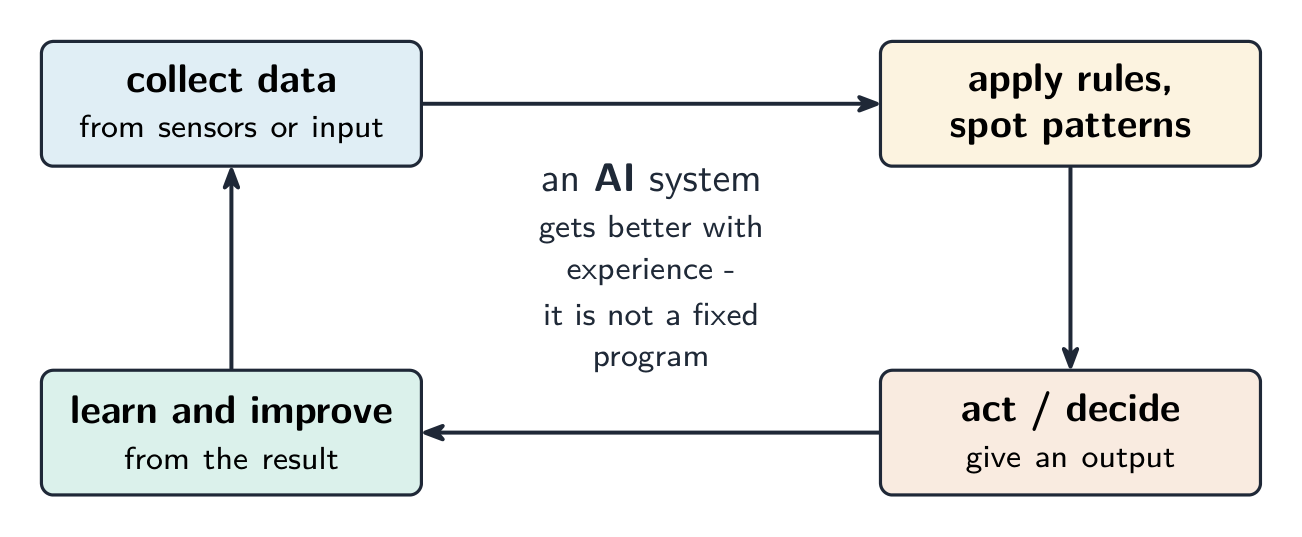
ระบบ AI ในรูปของวงจร: รวบรวมข้อมูล ใช้กฎเกณฑ์ ระบุรูปแบบ ทำตามการตัดสินใจ จากนั้นเรียนรู้และปรับปรุงจากผลลัพธ์ ก่อนที่จะรวบรวมข้อมูลเพิ่มเติม
ระบบ AI รวบรวมข้อมูล ใช้กฎเกณฑ์ ปฏิบัติการ จากนั้นเรียนรู้และปรับปรุง

Examples of AI

  • ระบบผู้เชี่ยวชาญ — ซอฟต์แวร์ที่ให้คำแนะนำเหมือนผู้เชี่ยวชาญมนุษย์ (เช่น ช่วยแพทย์ในการวินิจฉัย);
  • การประมวลผลภาษาธรรมชาติ — การเข้าใจภาษาพูดหรือข้อความของมนุษย์;
  • รถยนต์ไร้คนขับ.
รถไร้คนขับสีขาวคันเล็กบนถนน พร้อมเซ็นเซอร์หมุนอยู่ด้านบน
รถยนต์ไร้คนขับ: เซนเซอร์บนรถช่วยให้คอมพิวเตอร์ควบคุมพวงมาลัยได้โดยไม่ต้องมีคนขับ

ภายในระบบผู้เชี่ยวชาญ

ระบบผู้เชี่ยวชาญ เก็บความรู้ของผู้เชี่ยวชาญและใช้เหตุผลจากข้อมูลนั้น มีสี่ส่วน:

  • ฐานความรู้ – ข้อเท็จจริงที่เก็บไว้เกี่ยวกับหัวข้อนั้น;
  • ฐานกฎ – กฎแบบ "ถ้า… แล้ว…” ที่ผู้เชี่ยวชาญมนุษย์จะใช้;
  • เครื่องยนต์อนุมาน – นำกฎไปใช้กับข้อเท็จจริงเพื่อสรุปผลลัพธ์;
  • อินเทอร์เฟซผู้ใช้ – ถามคำถามผู้ใช้งานและแสดงผลคำตอบ.

อินเทอร์เฟซจะรวบรวมข้อเท็จจริงจากผู้ใช้; เครื่องยนต์อนุมานจะนำฐานกฎไปเปรียบเทียบกับฐานความรู้; และระบบจะแสดงการวินิจฉัยหรือความน่าจะเป็น – เช่น ใช้ช่วยแพทย์วินิจฉัยโรค หรือหาสาเหตุความผิดปกติในรถยนต์

การเรียนรู้ของเครื่อง

การเรียนรู้ของเครื่อง (Machine learning) คือโปรแกรมที่พัฒนาประสิทธิภาพของตนเองจาก ประสบการณ์ โดยไม่ต้องเขียนโค้ดใหม่อย่างชัดเจน มันค้นหาแพทเทิร์นในข้อมูลและปรับตัว:引擎การค้นหาจัดอันดับผลลัพธ์ได้ดีขึ้น, ผู้ช่วยเสียงจดจำคำสั่งพูดได้แม่นยำขึ้น, และหุ่นยนต์ดูดฝุ่นเรียนรู้รูปแบบห้องได้อย่างค่อยเป็นค่อยไป

อัจฉริยะประดิษฐ์แบบจำกัด, แบบทั่วไป และแบบเข้มแข็ง

ขั้นบันไดสามขั้น: อัจฉริยะประดิษฐ์เฉพาะด้าน (AI ทั้งหมดในปัจจุบัน), อัจฉริยะประดิษฐ์ทั่วไป, และอัจฉริยะประดิษฐ์ระดับสูง โดยอัจฉริยะประดิษฐ์ทั่วไปและอัจฉริยะประดิษฐ์ระดับสูงถูกกำหนดให้เป็นสิ่งที่ยังไม่มีอยู่จริง
อัจฉริยะประดิษฐ์แบบจำกัดทำเพียงงานเดียว (อัจฉริยะประดิษฐ์ทั้งหมดในปัจจุบัน); อัจฉริยะประดิษฐ์แบบทั่วไปอาจทำงานใดก็ได้ที่มนุษย์ทำได้; อัจฉริยะประดิษฐ์แบบเข้มแข็งจะมีสติ Awareness – ทั้งสองยังไม่เกิดขึ้น
ประเภท ความหมาย
อัจฉริยะประดิษฐ์แบบจำกัด ทำได้เฉพาะงานเดียวหรือกลุ่มงานเล็กๆ (เช่น โปรแกรมหมากรุก) อัจฉริยะประดิษฐ์ทั้งหมดในปัจจุบันคืออัจฉริยะประดิษฐ์แบบจำกัด
อัจฉริยะประดิษฐ์แบบทั่วไป สามารถทำงานใดก็ได้ที่มนุษย์ทำได้ สลับระหว่างงานที่หลากหลายหลายประเภท
อัจฉริยะประดิษฐ์แบบเข้มแข็ง จะคิดและมีสติ Awareness เหมือนสมองมนุษย์จริง สิ่งนี้ยังไม่มีอยู่จริง
Explore · ⁨สำรวจ⁩

Computing concept lab · ⁨ห้องปฏิบัติการแนวคิดการคำนวณ⁩

Classify concrete examples by the computing idea they demonstrate. · ⁨จัดกลุ่มตัวอย่างที่เป็นรูปธรรมตาม idea การคำนวณที่แสดงออก⁩

Vocabulary · ⁨คำศัพท์⁩ Train · ⁨ฝึกฝน⁩
English ไทย
rules/ruːlz/ กฎ
reason/ˈriːzn/ Reason
draw conclusions/drɔː kənˈkluːʒnz/ สรุปผล
approximate/əˈprɒksɪmət/ ประมาณค่า
definite/ˈdefɪnət/ แน่นอน / Definite
learn/lɜːn/ เรียนรู้
adapt/əˈdæpt/ ปรับตัว
expert systems/ˈekspɜːt ˈsɪstəmz/ ระบบผู้เชี่ยวชาญ
natural language processing/ˈnætʃərəl ˈlæŋɡwɪdʒ ˈprəʊsesɪŋ/ การประมวลผลภาษาธรรมชาติ
self-driving cars/self ˈdraɪvɪŋ kɑːz/ รถยนต์ไร้คนขับ
knowledge base/ˈnɒlɪdʒ beɪs/ ฐานความรู้
rule base/ruːl beɪs/ ฐานกฎ
inference engine/ˈɪnfərəns ˈendʒɪn/ เครื่องยนต์อนุมาน
user interface/ˈjuːzə ˈɪntəfeɪs/ อินเทอร์เฟซผู้ใช้
Machine learning/məˈʃiːn ˈlɜːnɪŋ/ Machine learning
narrow AI/ˈnærəʊ ˌeɪ ˈaɪ/ narrow AI
general AI/ˈdʒenərəl ˌeɪ ˈaɪ/ general AI
strong AI/strɒŋ ˌeɪ ˈaɪ/ strong AI
central heating/ˈsentrəl ˈhiːtɪŋ/ ระบบทำความร้อนส่วนกลาง
chemical process/ˈkemɪkl ˈprəʊses/ กระบวนการเคมี
agriculture/ˈæɡrɪkʌltʃə/ เกษตรกรรม
mechanical/mɪˈkænɪkl/ พลังงานกล
6.3

Exam tips · ⁨ข้อแนะนำสำหรับการสอบ⁩

English
  • Learn the control loop: a sensor measures a quantity → the microprocessor compares it with a stored value → an actuator takes action; then the loop repeats.
  • Do not confuse the parts: a sensor sends data in; an actuator causes movement out.
  • A robot follows programmable instructions and cannot make its own decisions when something unexpected happens.
  • AI simulates human thinking: it collects data and rules, reasons, draws conclusions, and can learn and adapt.
  • Know the AI levels: narrow (one task; all AI today), general (any human task), strong (self-aware; does not exist yet).
ไทย
  • เรียนรู้วงจรควบคุม: เซ็นเซอร์ วัดค่าหนึ่ง → ไมโครโปรเซสเซอร์ เปรียบเทียบกับค่าที่บันทึกไว้ → แอคชูเอเตอร์ ดำเนินการ; จากนั้นวนลูปซ้ำ
  • อย่าสับสนกับส่วนประกอบ: เซ็นเซอร์ ส่งข้อมูล เข้า; แอคชูเอเตอร์ ทำให้เกิดการเคลื่อนไหว ออก
  • หุ่นยนต์ปฏิบัติตาม คำสั่งที่เขียนโปรแกรมได้ และไม่สามารถตัดสินใจเองเมื่อเกิดเหตุการณ์ไม่คาดฝัน
  • AI จำลองการคิดของมนุษย์: รวบรวมข้อมูลและกฎ, ใช้เหตุผล, สรุปผล, และสามารถเรียนรู้และปรับตัวได้
  • รู้ระดับของ AI: แบบจำกัด (งานเดียว; อัจฉริยะประดิษฐ์ทั้งหมดในปัจจุบัน), แบบทั่วไป (งานใดก็ได้ที่มนุษย์ทำได้), แบบเข้มแข็ง (มีสติ Awareness; ยังไม่มีอยู่จริง).

Interactive lessons on this topic · ⁨บทเรียนเชิงโต้ตอบสำหรับหัวข้อนี้⁩

Work through it step by step, with instant-check exercises. · ⁨ทำทีละขั้นตอน พร้อมแบบฝึกหัดตรวจสอบผลทันที⁩

Past Papers · ⁨ข้อสอบย้อนหลัง⁩

More topics in IGCSE Computer Science · ⁨Computer Science IGCSE⁩ · ⁨หัวข้อเพิ่มเติมใน IGCSE Computer Science · ⁨Computer Science IGCSE⁩⁩

Log in or create account · ⁨เข้าสู่ระบบหรือสร้างบัญชี⁩

IGCSE, A-Level & AP