English
Learning Objective 13.1.A: Describe light as a ray.
- 13.1.A.1 A light ray is a straight line that is perpendicular to the wavefront of a light wave and points in the direction of travel of the wave.
- 13.1.A.1.i Light rays can be used to determine the behavior of light in geometric optics, where the wave nature of light can be neglected.
- 13.1.A.1.ii Rays are not sufficient to understand the spreading of light. In interference and diffraction, the wave nature of the light is important.
- 13.1.A.1.iii A laser is a common source of a single coherent, monochromatic beam of light that can be modeled as a ray. The wave nature of lasers will be considered in Unit 14.
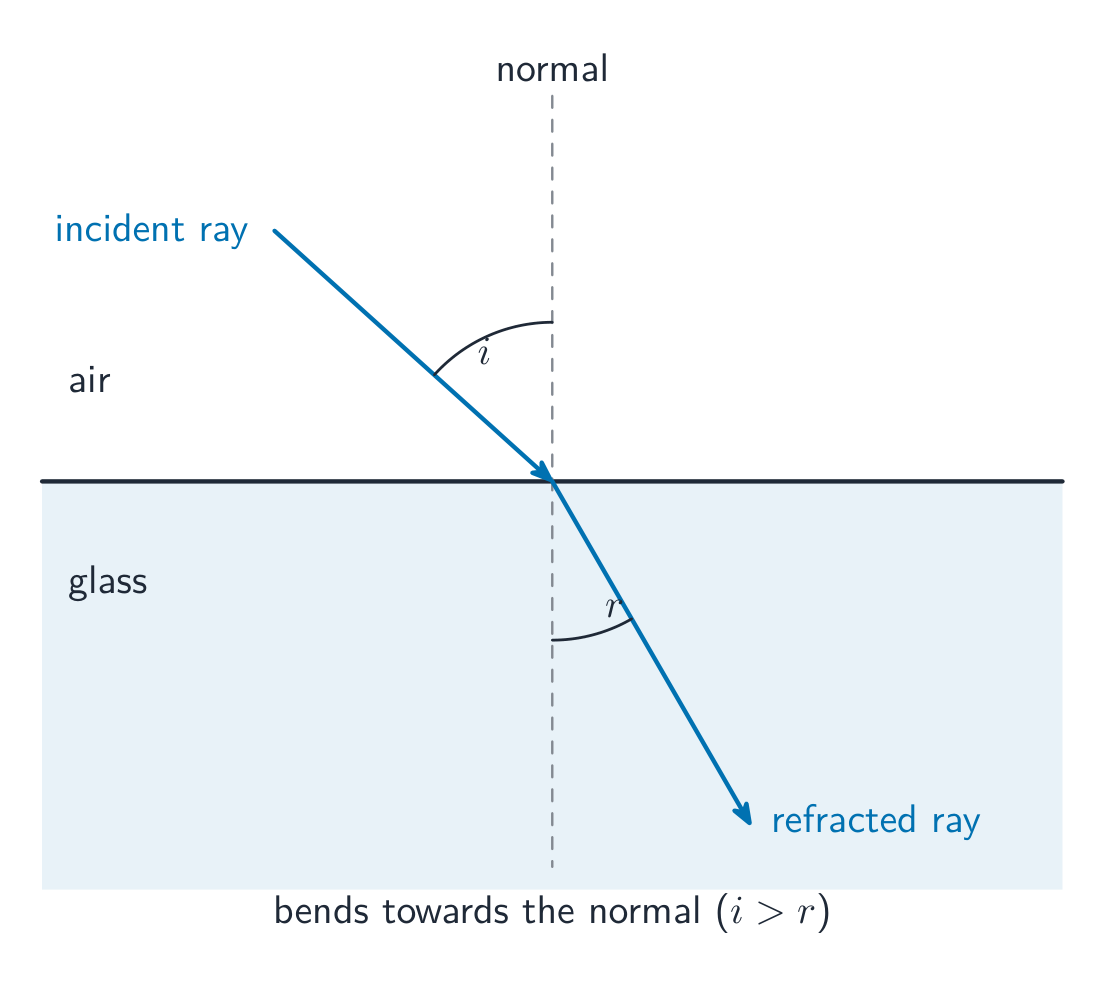
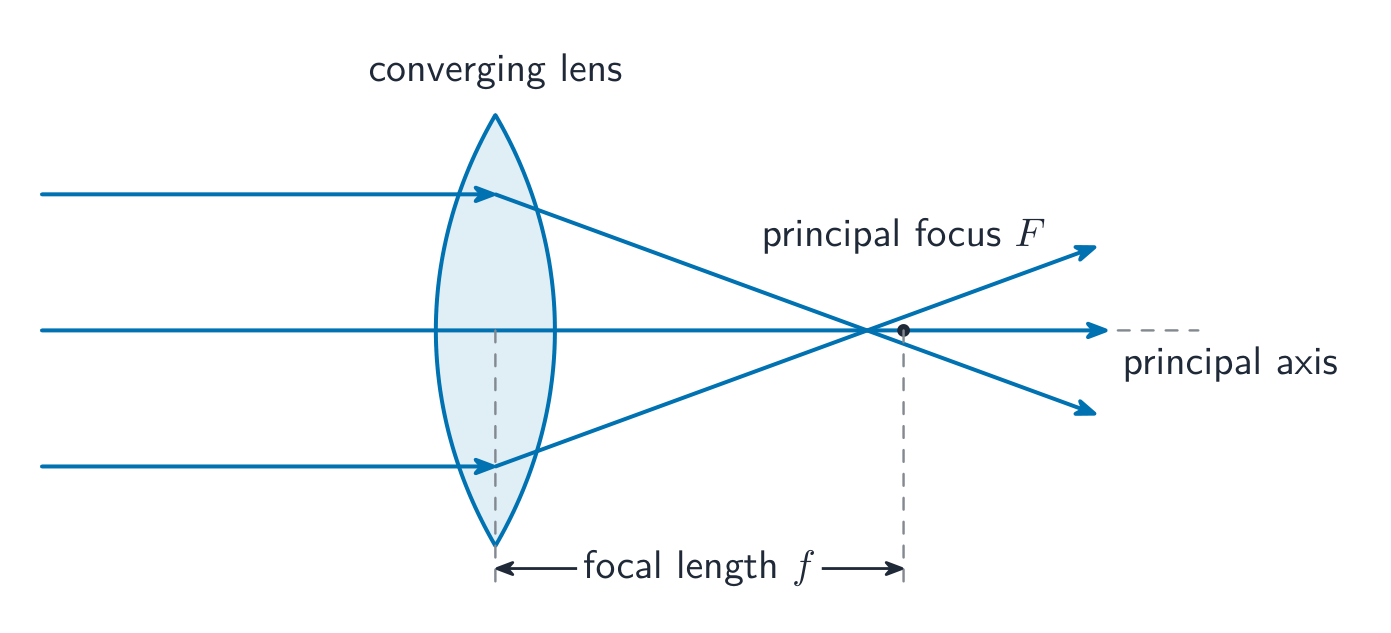
- 13.1.A.2 Ray diagrams depict the path of light before and after an interaction with matter.
Learning Objective 13.1.B: Describe the reflection of light from a surface.
- 13.1.B.1 Light that is incident on a surface can be reflected.
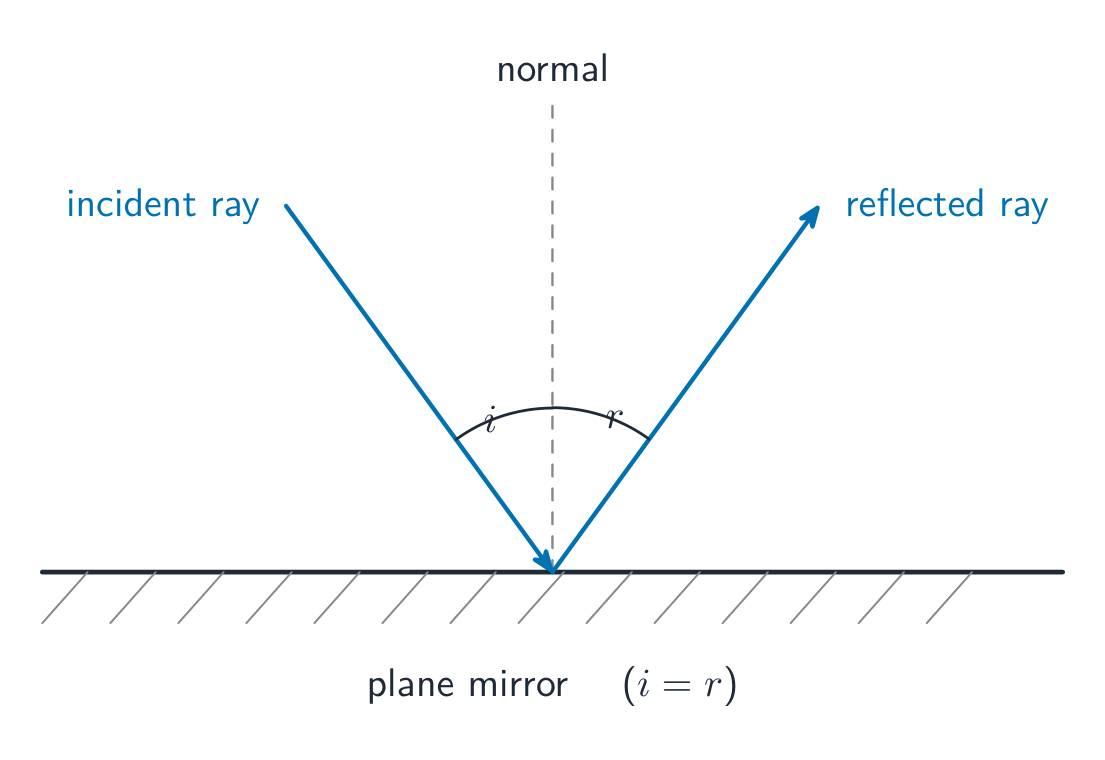
- 13.1.B.2 The law of reflection states that the angle between the incident ray and the normal (the line perpendicular to the surface) is equal to the angle between the reflected ray and the normal.
- Equation: $\theta_i = \theta_r$
- 13.1.B.3 Diffuse reflection is the reflection of light from a rough surface and results in light reflected in many different directions, because the line normal to the surface varies over the area over which the light is incident.
- 13.1.B.4 Specular reflection is the reflection of light from a smooth surface and results in light uniformly reflected from the surface, because the line normal to the surface has an approximately constant direction over the area the light strikes.
Русский
Цель обучения 13.1.A: Описать свет как луч.
- 13.1.A.1 Световой луч — это прямая линия, перпендикулярная волновому фронту световой волны и указывающая направление распространения волны.
- 13.1.A.1.i Световые лучи могут использоваться для определения поведения света в геометрической оптике, где волновой природой света можно пренебречь.
- 13.1.A.1.ii Лучей недостаточно для понимания распространения света. В интерференции и дифракции важна волновая природа света.
- 13.1.A.1.iii Лазер является распространенным источником одного когерентного монохроматического светового пучка, который можно моделировать как луч. Волновые свойства лазеров будут рассмотрены в Разделе 14.
- 13.1.A.2 Лучевые диаграммы изображают путь света до и после взаимодействия с веществом.
Цель обучения 13.1.B: Описать отражение света от поверхности.
- 13.1.B.1 Свет, падающий на поверхность, может отражаться.
- 13.1.B.2 Закон отражения гласит, что угол между падающим лучом и нормалью (линией, перпендикулярной поверхности) равен углу между отраженным лучом и нормалью.
- Уравнение: $\theta_i = \theta_r$
- 13.1.B.3 Рассеянное отражение — это отражение света от шероховатой поверхности, в результате которого свет отражается во многих различных направлениях, поскольку нормаль к поверхности меняется на площади, на которую падает свет.
- 13.1.B.4 Зеркальное отражение — это отражение света от гладкой поверхности, в результате которого свет равномерно отражается от поверхности, поскольку нормаль к поверхности имеет приблизительно постоянное направление на площади, на которую падает свет.