English
| Enduring Understanding | Learning Objective | Essential Knowledge |
|---|---|---|
RHS-1 | 1.B |
|
한국어
지속적 이해 (RHS-1): 개인들은 특정 situation within in writing within and make strategic choices based on that situation.
| Learning Objective | Essential Knowledge |
|---|---|
1.B |
|
AP English Language and Composition · AP 영어 어법 및 작문 · Topic 2 · 주제 2
 5:54
5:54
단원 2: 청중, 논제, 및 지지 증거
여기는你自己的 초안을 약 10초 만에 테스트할 수 있는 테스트입니다. 한 문단을 읽고 물어보세요: 완전히 다른 청중에게도 동일하게 읽힐 것인가?…
English narration · English + 中文 subtitles burned in · 영어 내레이션 · 영어 + 중국어 자막 burned-in
| Enduring Understanding | Learning Objective | Essential Knowledge |
|---|---|---|
RHS-1 | 1.B |
|
지속적 이해 (RHS-1): 개인들은 특정 situation within in writing within and make strategic choices based on that situation.
| Learning Objective | Essential Knowledge |
|---|---|
1.B |
|
Source: College Board AP Course and Exam Description · 출처: College Board AP Course and Exam Description
Unit 1 established that a text has an audience. Unit 2 makes that audience the engine of every choice a writer makes.
Unit 1에서는 텍스트에 수용자가 있음을 확인했습니다. Unit 2에서는 이 수용자를 저자가 내리는 모든 선택의 동력으로 삼습니다.
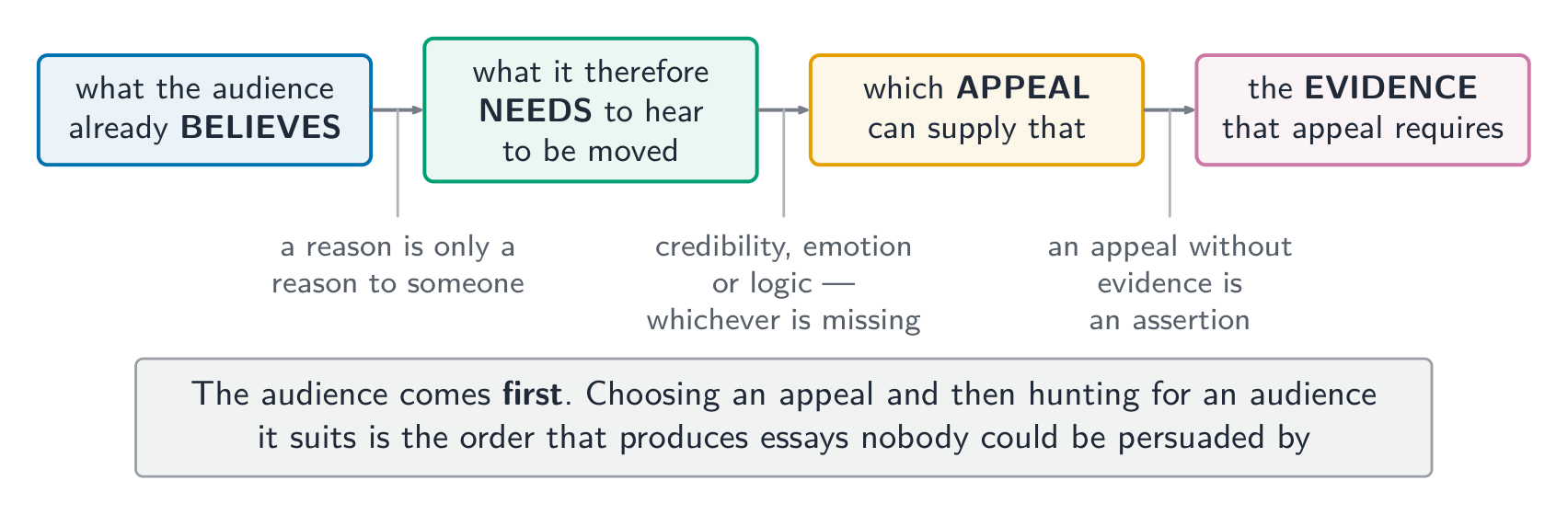
What the audience already believes determines what will count as a reason to them. · 청중이 이미 믿는 것이 그들에게 근거가 될 것을 결정함.
| English | 한국어 |
|---|---|
| appeals/əˈpiːlz/ | 호소 방식 |
| modes of persuasion/məʊdz ɒv pəˈsweɪʒn/ | 설득의 수법 |
| Enduring Understanding | Learning Objective | Essential Knowledge |
|---|---|---|
RHS-1 | 2.B |
|
지속적 이해 (RHS-1): 개인들은 특정 situation within in writing within and make strategic choices based on that situation.
| Learning Objective | Essential Knowledge |
|---|---|
2.B |
|
Source: College Board AP Course and Exam Description · 출처: College Board AP Course and Exam Description
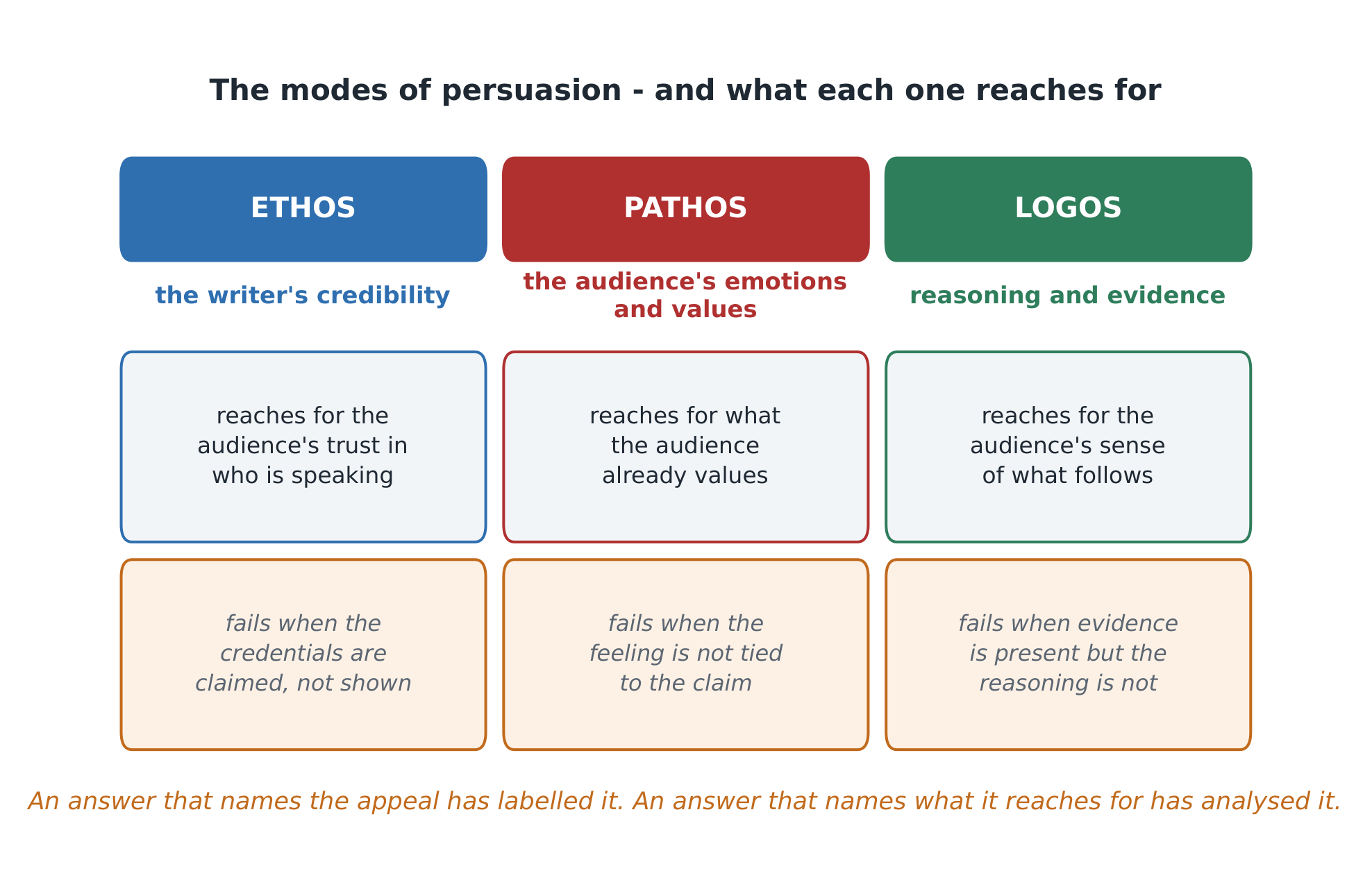
The same three statements now become a writing instruction. Before drafting, decide:
An argument that ignores these produces writing addressed to nobody. And the CED's framing gives you a useful test for your own drafts: if this paragraph would read identically to a completely different audience, it has not been shaped by one.
이전 세 가지 문장은 이제 작문 지침이 됩니다. 초안 작성 전에 다음을 결정하십시오:
이러한 요소를 무시하면 논증은 누구에게도指向하는 글이 됩니다. 또한 CED의 프레임워크는你自己的 초안에 유용한 테스트를 제공합니다: “이 문단이 완전히 다른 수용자에게 읽혀졌을 때 동일한 글로 보인다면, 그것은 특정 수용자에 의해 형성되지 않았습니다.”
| Enduring Understanding | Learning Objective | Essential Knowledge |
|---|---|---|
CLE-1 | 3.A |
|
| Enduring Understanding | Learning Objective | Essential Knowledge |
|---|---|---|
CLE-1 | 3.A |
|
Source: College Board AP Course and Exam Description · 출처: College Board AP Course and Exam Description
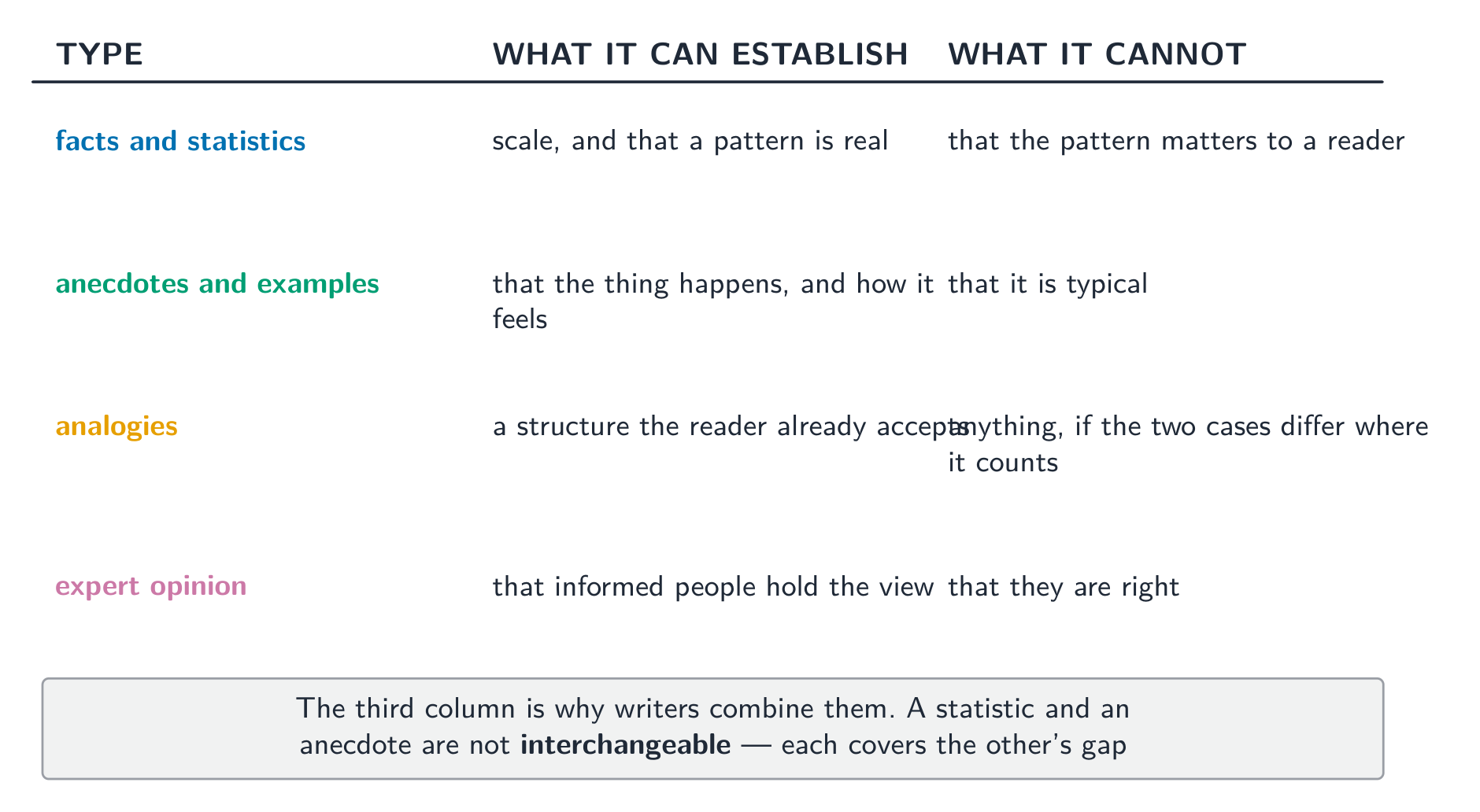
Unit 2 deepens Unit 1's treatment of evidence with three claims about how evidence works:
That third point is often misread as "more is better". Sufficiency is quantity and quality together: three well-chosen pieces of evidence that bear directly on the claim beat six that only touch it.
Unit 2는 Unit 1의 증거 다루기를 심화시키며, 증거가 어떻게 작동하는지에 대한 세 가지 주장을 제시합니다:
세 번째 점은 종종 “많을수록 좋다”로 오해받습니다. 충분성은 양 과 질이 동시에 만족될 때 성립합니다. 주장에 직접 관련되는 잘 선택된 증거 3개가, 단순히 관련만 되는 증거 6개보다 더 낫습니다.
A statistic and an anecdote are not interchangeable — each covers the other's gap. · 통계와 일화는 서로 교체할 수 없음 — 각각 다른 것의 공백을 메움.
| English | 한국어 |
|---|---|
| credibility/ˌkredɪˈbɪlɪti/ | 신뢰성 |
| sufficient evidence/səˈfɪʃənt ˈevɪdəns/ | 충분한 증거 |
| Enduring Understanding | Learning Objective | Essential Knowledge |
|---|---|---|
CLE-1 | 4.A |
|
| Enduring Understanding | Learning Objective | Essential Knowledge |
|---|---|---|
CLE-1 | 4.A |
|
Source: College Board AP Course and Exam Description · 출처: College Board AP Course and Exam Description
Applying the above to your own writing, choose each piece of evidence for a stated reason. In practice this means being able to finish the sentence: I am using this piece because it ...
Evidence chosen this way produces commentary almost automatically, because you already know what the evidence is doing. Evidence chosen because it was available produces the blank space where commentary should be.
위 내용을 YOUR OWN 글쓰기에 적용할 때, 각 증거를 명시된 이유로 선택하십시오. 실질적으로는 다음 문장을 완성할 수 있어야 함을 의미합니다: “나는 이 증거를 사용하는 이유는 ...” because it ...*
이렇게 선택된 증거는 논증 commentary가 거의 자동적으로 생성되게 합니다. 왜냐하면 증거가 무엇을 하고 있는지 이미 알고 있기 때문입니다. 단순히 사용 가능했기 때문에 선택된 증거는 commentary가 있어야 할 빈 공간만 남깁니다.
| Enduring Understanding | Learning Objective | Essential Knowledge |
|---|---|---|
CLE-1 | 3.B |
|
| Enduring Understanding | Learning Objective | Essential Knowledge |
|---|---|---|
CLE-1 | 3.B |
|
Source: College Board AP Course and Exam Description · 출처: College Board AP Course and Exam Description
That second point matters for the reading side of the exam. On a rhetorical-analysis passage, the thesis may be distributed across the text or implied by its structure. Do not assume the first sentence of the second paragraph is the thesis because that is where you would put yours.
그 두 번째 점은 시험의 독해 부분에도 중요합니다. 수사적 분석 passage에서는 서론(thesis)이 텍스트 전반에 걸쳐 분산되거나 구조에 의해 암시될 수 있습니다. 두 번째 문단의 첫 문장이 서론이라고 가정하지 마십시오. YOUR 서론이 들어갈 자리에 있을 뿐입니다.
| English | 한국어 |
|---|---|
| thesis/ˈθiːsɪs/ | 주장 |
| Enduring Understanding | Learning Objective | Essential Knowledge |
|---|---|---|
CLE-1 | 4.B |
|
| Enduring Understanding | Learning Objective | Essential Knowledge |
|---|---|---|
CLE-1 | 4.B |
|
Source: College Board AP Course and Exam Description · 출처: College Board AP Course and Exam Description
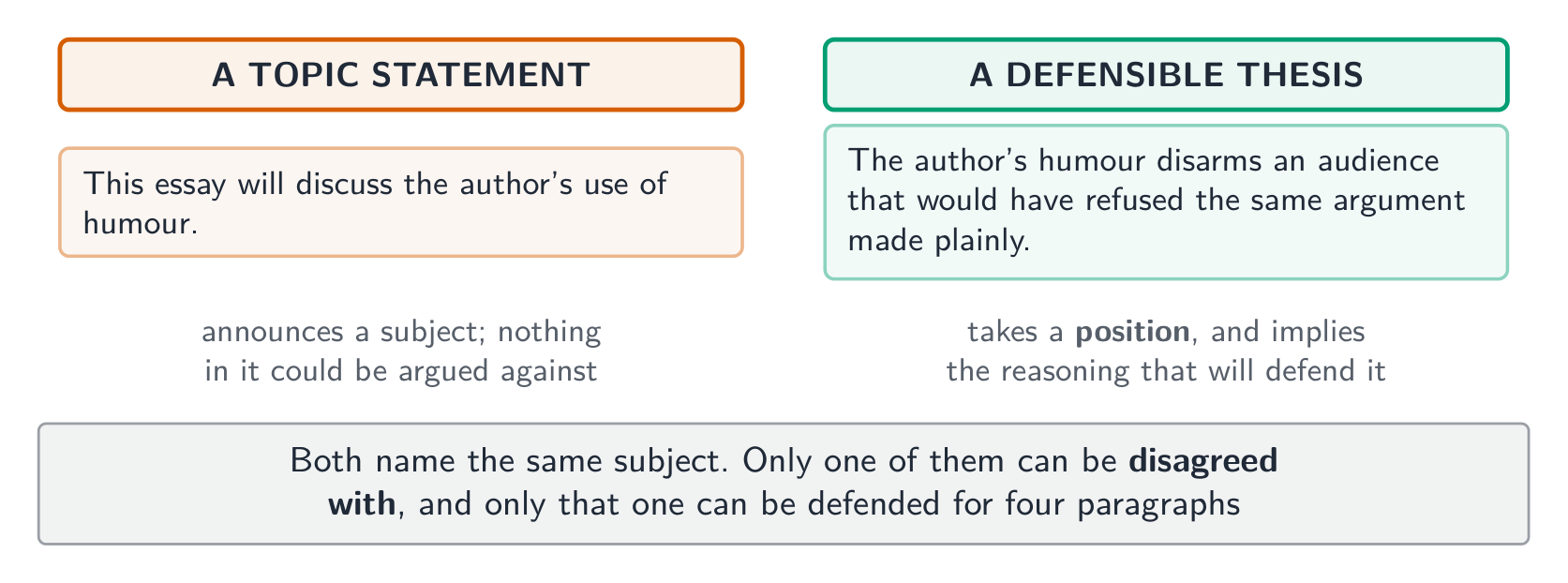
The writing objective is precise: write a thesis statement that requires proof or defence and that may preview the structure of the argument.
Two independent requirements sit in that sentence:
On the exam, the thesis point is one of six and it is the cheapest point on the rubric: a defensible thesis in response to the prompt earns it. A restatement of the prompt does not.
Worked example (a real AP exam task). For a Question 3 argument prompt asking you to take a position on the value of a proposed practice, compare two openings. "There are many arguments both for and against this practice." - that earns nothing, because nobody could disagree with it. "Because the practice rewards visible effort rather than actual improvement, it produces the appearance of progress while removing the incentive to seek it." - that earns the point: it is arguable, specific, and it previews the reasoning the essay will develop.
写作 목표는 구체적입니다: 증명이나 변명이 필요하며, 논증의 구조를 미리 제시할 수 있는 서론을 쓰십시오.
그 문장 안에 두 가지 독립된 요구 사항이 존재합니다:
시험에서 논제 주장은 6가지 중 하나이며, 평가 기준 중 가장 쉽게 얻을 수 있는 점수입니다. 제시된 질문에 대해 방어 가능한 논제 주장을 세우면 이 점을 획득할 수 있습니다. 단순히 제시된 질문을 재언어하는 것만으로는 이 점을 얻을 수 없습니다.
해설 예시 (실제 AP 시험 문제). 3번 추론형 문제에서 제안된 관행의 가치에 대한 입장을 취하라는 요청이 있을 때, 두 가지 서술문을 비교해 보십시오. "이 관행에는賛成와 반대의 많은 의견이 있다." - 이는 아무런 점수도 받을 수 없습니다. 왜냐하면 누구나 이를 부정할 수 없기 때문입니다. "이 관행은 실제 개선보다 가시적인 노력을 상으로 삼기 때문에 진전을 위장하게 만들며, 그 진전을 추구하려는 동기를 박탈한다." - 이 경우 점수를 획득합니다: 이는 논쟁의 여지가 있고 구체적이며, 에세이가 전개할 논리를 미리予告합니다.
Work through it step by step, with instant-check exercises. · 즉시 체크 기능 exercises를 통해 단계별로 진행하세요.
Loading subjects… · 과목 로드 중…