Skip to content · ⁨본문 바로가기⁩

Operations management (A Level) · ⁨운영 관리 (A-Level)⁩

A-Level Business · ⁨A-Level 비즈니스⁩ · Topic 9 · ⁨주제 9⁩

Video lesson for this topic · ⁨이 주제용 영상 수업⁩ Open the video page · ⁨영상 페이지 열기⁩
7:46

Operations management (A Level) · ⁨운영 관리 (A-Level)⁩

A company promised its new factory in a hundred and fifteen weeks. It opened thirty weeks late, at a huge cost in wages and rent. One task slipped in the…

English narration · English + 中文 subtitles burned in · ⁨영어 내레이션 · 영어 + 중국어 자막 burned-in⁩

9.1

Location and relocation · ⁨입지 및 이전⁩

Syllabus
English
  1. explain the factors influencing the location and relocation of a business (including international location)
  2. explain the optimum scale of operation and the significance of economies and diseconomies of scale
한국어
  1. 기업의 입지 및 **이전(재입지)**에 영향을 미치는 요인을 설명하시오(국제적 입지 포함)
  2. 최적 운영 규모와 规模의 economies 및 diseconomies(규모의 경제 및 비경제)의 의의를 설명하시오
Source: Cambridge International syllabus · ⁨출처: Cambridge International syllabus⁩

English

Where a business sits affects its costs, its sales and its staff. Choosing a place is called location 选址; moving to a new place is relocation 迁址.

Factors that influence the choice fall into two groups:

  • quantitative factors 定量因素 — things you can measure in money, such as rent, wages, transport costs and government grants.
  • qualitative factors 定性因素 — things that are harder to measure, such as the skills of local workers, nearness to customers or suppliers, and the owner's own wishes.

A firm picks the place where the benefits, money and non-money together, are greatest.

한국어

비즈니스가 위치한 곳은 비용, 매출, 직원에 영향을 미칩니다. 장소를 선택하는 것은 입지(location) 라고 하며, 새로운 장소로 옮기는 것은 이전(relocation) 입니다.

선택에 영향을 미치는 요인은 두 그룹으로 나뉩니다:

  • 정량적 요인(quantitative factors) — 임차료, 임금, 운송비, 정부 보조금 등 돈으로 측정 가능한 것들.
  • 정성적 요인(qualitative factors) — 현지 노동자의 기술, 고객이나 공급업체와의 근접성, 경영자의 개인적 의지 등 측정하기 어려운 것들.

기업은 혜택, 금전적 요소 및 비금전적 요소가 합쳐져 최대가 되는 장소를 선택합니다.

정량적 요인(임대료, 임금, 운송비, 보조금)과 정성적 요인(노동자 기술, 근접성, 경영자 의지)이 총 혜택이 가장 큰 입지 선택으로 통합되어 나타남
입지 결정은 금전적 요인과 측정하기 어려운 요인을 모두 고려한 후, 총 혜택이 가장 큰 장소를 선택합니다
Explore · ⁨탐색하기⁩

Location factor lab · ⁨위치 요인 실험실⁩

Classify why a business chooses one site over another. · ⁨비즈니스가 한 부지를 다른 곳보다 선호하는 이유를 분류하십시오.⁩

Vocabulary · ⁨어휘⁩ Train · ⁨연습하기⁩
English 한국어
location/ləʊˈkeɪʃn/ 위치
relocation/rɪləʊˈkeɪʃn/ 이동 확산
quantitative factors/ˈkwɒntɪteɪtɪv ˈfæktəz/ 정량적 요인
qualitative factors/ˈkwɒlɪteɪtɪv ˈfæktəz/ 정성적 요인
9.1

International location · ⁨국제 입지⁩

English

Many firms now locate abroad. Moving production to another country is offshoring 离岸外包. The reasons are often lower wages, nearness to new markets, fewer rules, or government help. The risks are longer supply lines, language and culture differences, and possible damage to the firm's image.

한국어

많은 기업이 현재 해외에 입지하고 있습니다. 생산을 다른 국가로 이전하는 것은 오프쇼어링(offshoring) 입니다. 이유는 주로 낮은 임금, 신규 시장과의 근접성, fewer rules, 또는 정부 지원 때문입니다. 위험으로는 긴 공급망, 언어 및 문화 차이, 그리고 기업의 이미지 손상 가능성이 있습니다.

Vocabulary · ⁨어휘⁩ Train · ⁨연습하기⁩
English 한국어
offshoring/ˈɒfʃərɪŋ/ 오프쇼링
9.1

The optimum scale of operation · ⁨최적 운영 규모⁩

English

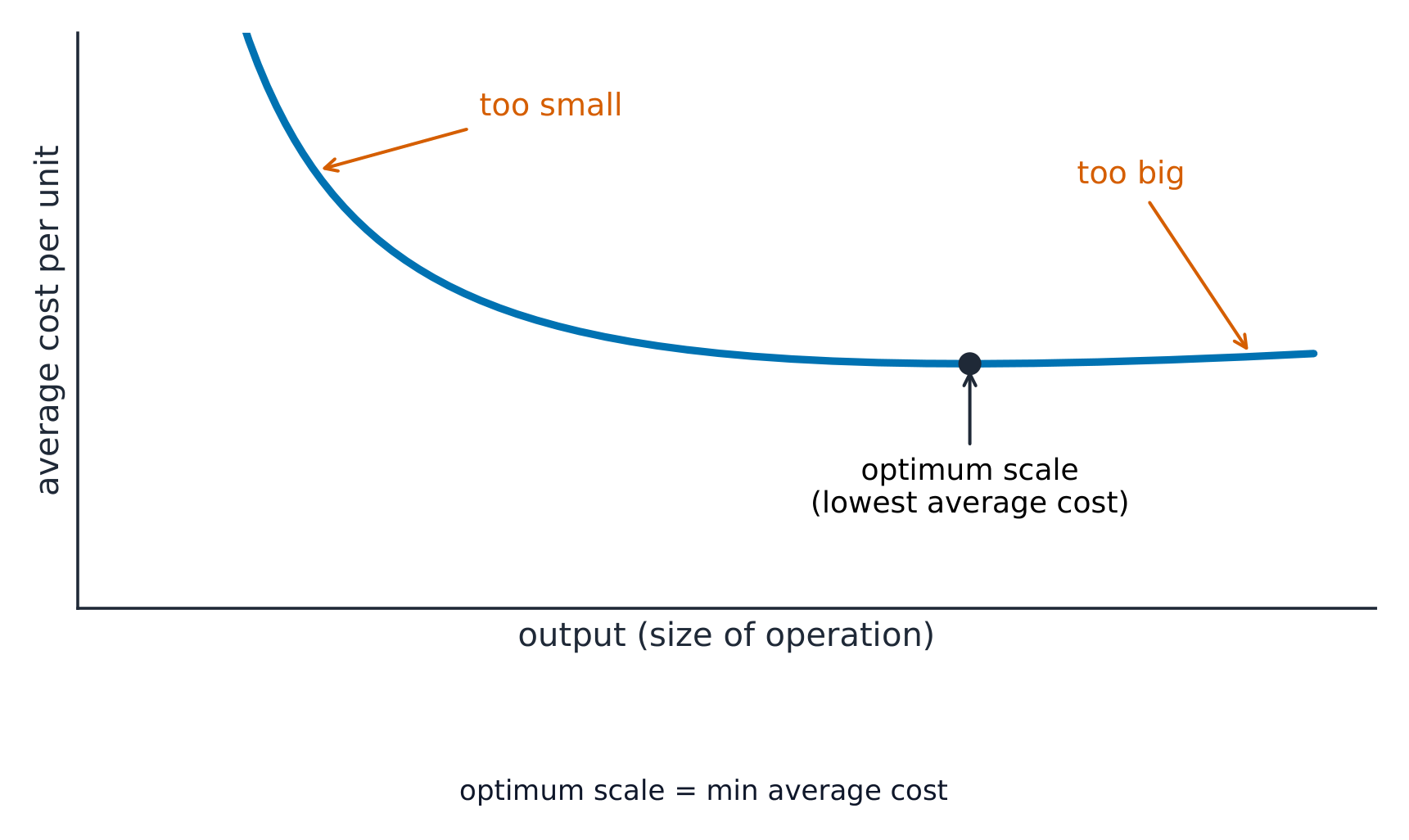
As a firm grows, its average cost first falls (from economies of scale) and later rises (from diseconomies of scale). The optimum scale 最优规模 is the size at which the average cost per unit is at its lowest.

  • economies of scale 规模经济 — cost savings from being larger (e.g. bulk buying).
  • diseconomies of scale 规模不经济 — rising average cost when a firm grows too big (e.g. poor communication).

A firm should try to grow up to its optimum scale, but not beyond it.

한국어

기업이 성장함에 따라 평균 비용은 먼저 하락(规模经济 economies of scale)하고 나중에 상승(规模不经济 diseconomies of scale)합니다. 최적 규모(optimum scale) 은 단위당 평균 비용이 최소가 되는 크기입니다.

  • 规模经济(economies of scale) — 규모 확대에 따른 비용 절감(예: 대량 구매).
  • 规模不经济(diseconomies of scale) — 기업이 너무 커질 때 평균 비용 상승(예:不好的 communication).

기업은 최적 규모까지 성장하려 하지만, 그 이상은 넘어선 안 됩니다.

U자형 평균 비용 곡선: 기업이 작을 때는 비용이 하락, 최적 규모에서 최저점에 도달, 너무 커지면 상승
최적 규모는 단위당 평균 비용이 가장 낮은 산출량(output)
Vocabulary · ⁨어휘⁩ Train · ⁨연습하기⁩
English 한국어
optimum scale/ˈɒptɪməm skeɪl/ 최적 규모
economies of scale/ɪˈkɒnəmiz ɒv skeɪl/ 규모의 경제
diseconomies of scale/ˌdɪsɪˈkɒnəmiz ɒv skeɪl/ 规模不经济(Diseconomies of scale)입니다
9.2

Why quality matters · ⁨품질의 중요성⁩

Syllabus
English
  1. explain the importance of quality and methods of managing quality (quality control, quality assurance, total quality management, benchmarking)
한국어
  1. 품질의 중요성과 품질 관리 방법(품질 관리, 품질 보증, 총체적 품질 관리, 벤치마킹)을 설명하시오

Source: Cambridge International syllabus · ⁨출처: Cambridge International syllabus⁩

English

Quality 质量 means how well a product meets the customer's needs. Good quality wins repeat custom, lets the firm charge more, protects its brand, and cuts the cost of waste and returns. Poor quality loses customers and damages the firm's name.

한국어

품질이란 제품이 고객의 요구사항을 얼마나 잘 충족시키는지를 의미합니다. 높은 품질은 재구매를 유도하고, 기업이 더 높은 가격을 책정할 수 있게 하며, 브랜드를 보호하고 폐기물 및 반품 비용을 절감합니다. 반면, 낮은 품질은 고객을 잃고 기업의 명성을 손상시킵니다.

Explore · ⁨탐색하기⁩

Leadership style lab · ⁨리더십 스타일 실험실⁩

Pick the management style that fits each situation. · ⁨각 상황에 맞는 관리 스타일을 선택하십시오.⁩

9.2

Methods of managing quality · ⁨품질 관리 방법⁩

English
Method How it works
quality control 质量控制 check finished products and remove the faulty ones at the end
quality assurance 质量保证 build quality into every stage, so faults are prevented, not just found
total quality management 全面质量管理 (TQM) every worker takes responsibility for quality, aiming for zero faults
benchmarking 标杆管理 compare the firm's methods with the best firms, and copy what they do well

Quality control finds faults late, after money is already spent. Quality assurance and TQM try to stop faults happening, which is usually cheaper in the long run.

한국어
방법 작동 원리
품질 관리(QC) 완제품을 점검하고 최종 단계에서 불량품을 제거함
품질 보증(QA) 모든 생산 단계에 품질을 내재시켜, 불량을 단순히 발견하는 것이 아니라 사전에 예방함
총체적 품질 관리 (TQM) 모든 직원이 품질에 대한 책임을 지며, 결함 제로를 목표로 함
벤치마킹 자사의 방법론을 최우선 기업과 비교하여, 그들이 잘하는 부분을 모방함

품질 통제는 이미 비용이 지출된 후인 늦은 시점에 결함을 발견합니다. 반면 품질 보증 및 TQM은 결함이 발생하지 않도록 미리 예방하며, 이는 장기적으로 더 비용 효율적입니다.

품질 통제는 검사원이 최종 단계에서 불량품만 확인하는 반면, 품질 보증은 모든 생산 단계를 통해 품질 검사를 내재화합니다
QC는 마지막 단계에서 검수함; QA는 모든 단계에 품질을 내재시킴
Vocabulary · ⁨어휘⁩ Train · ⁨연습하기⁩
English 한국어
quality/ˈkwɒlɪti/ 질(quality)
quality control/ˈkwɒlɪti kənˈtrəʊl/ 품질 관리
quality assurance/ˈkwɒlɪti əˈʃʊərəns/ 품질 보증
total quality management/ˈtəʊtl ˈkwɒlɪti ˈmænɪdʒmənt/ 전체 품질 관리
benchmarking/ˈbentʃmɑːkɪŋ/ 벤치마킹
lean production/liːn prəˈdʌkʃn/ 린 생산
waste/weɪst/ 폐기물
capacity management/kəˈpæsɪti ˈmænɪdʒmənt/ 용량 관리
technology/tekˈnɒlədʒi/ 기술
critical path analysis/ˈkrɪtɪkl pæθ əˈnæləsɪs/ 임계 경로 분석
nodes/nəʊdz/ 노드
earliest start time/ˈɜːlɪɪst stɑːt taɪm/ 최초 시작 시간
latest finish time/ˈleɪtɪst ˈfɪnɪʃ taɪm/ 최종 마감 시간
9.3

Operations strategy: lean production · ⁨운영 전략:リーン생산⁩

Syllabus
English
  1. explain operations decisions: lean production, capacity management, and the use of technology
  2. use critical path analysis (CPA) to plan and manage projects (EST, LFT, total float, critical path, minimum project duration)
한국어
  1. 운영 의사결정: 린 생산, 용량 관리 및 기술 활용을 설명하시오
  2. **임계 경로 분석(CPA)**을 사용하여 프로젝트 계획 및 관리(EST, LFT, 총 여유회차, 임계 경로, 최소 프로젝트 기간)를 하시오

Source: Cambridge International syllabus · ⁨출처: Cambridge International syllabus⁩

English

Lean production 精益生产 means making products with the least possible waste 浪费 — of time, materials, space and effort. Methods like just-in-time and continuous improvement cut waste, lower cost, and raise quality. Less money is tied up in stock, and problems are fixed quickly.

한국어
로봇 팔이 공장 생산 라인을 자동화하고 있음
공장 자동화 — A-Level 운영 과목에서는リーン생산, 기술 및 공급망을 다룹니다.

リーン생산이란 시간, 자재, 공간, 노력 등 가능한 한 적은 ** 낭비**로 제품을 제조하는 것을 의미합니다. Just-in-time 및 지속적 개선과 같은 기법은 낭비를 줄이고 비용을 절감하며 품질을 향상시킵니다. 재고에 묶이는 자본이 줄어들고 문제가 신속히 해결됩니다.

Explore · ⁨탐색하기⁩

SWOT strategy lab · ⁨SWOT 전략 실험실⁩

Sort strategy evidence into internal and external factors. · ⁨전략 증거를 내부 및 외부 요인으로 분류하십시오.⁩

9.3

Capacity management and technology · ⁨용량 관리 및 기술⁩

English

Capacity management 产能管理 means matching what the firm can produce to the demand it faces. If demand is higher than capacity, the firm may add shifts, hire staff or outsource; if demand is lower, it may cut output or find new orders. New technology 技术, such as automation and data systems, helps a firm produce more, to a higher standard, at a lower cost.

한국어

용량 관리란 기업의 생산 능력을 시장 수요에 맞추는 것입니다. 수요가 용량을 초과할 경우, 기업은-shift를 추가하거나 인력을 채용하거나 외부 위탁을 할 수 있으며, 수요가 낮을 경우 생산량을 줄이거나 신규 주문을 확보할 수 있습니다. 자동화 및 데이터 시스템과 같은 새로운 기술은 기업이 더 높은 수준으로 더 낮은 비용에 더 많은 물건을 생산할 수 있도록 돕습니다.

9.3

Critical path analysis · ⁨임계 경로 분석⁩

English

Critical path analysis 关键路径分析 (CPA) is a tool for planning a project made of many tasks. It draws the tasks as a network of arrows and nodes 节点 (circles), in the order they must happen. For each task it works out timings:

  • the earliest start time 最早开始时间 (EST) — the soonest a task can begin, once earlier tasks are done.
  • the latest finish time 最晚完成时间 (LFT) — the latest a task can finish without delaying the whole project.

From these comes the total float 总浮动时间 — the spare time a task has before it delays the project:

$$\text{total float} = \text{LFT} - \text{duration} - \text{EST}$$

The critical path 关键路径 is the chain of tasks with zero float. These tasks cannot be late, or the whole project is late. Adding up the times along this path gives the minimum project duration 最短项目工期 — the shortest time the project can take.

CPA helps managers find the tasks that matter most, order resources for the right time, and see where delays would hurt. But it is only as good as the time estimates it is built on.

Worked example. A task has an EST of 6 days, a duration of 4 days, and an LFT of 14 days. Find its total float, and say whether it lies on the critical path. Use the formula: total float = LFT − duration − EST = $14 - 4 - 6 =$ 4 days. So the task could start up to 4 days late, or overrun by 4 days, without delaying the project - and because its float is not zero, it is not on the critical path. Only tasks with zero float are critical. Two points carry the marks: float is the spare time on that task, so using it up makes the task critical; and shortening a non-critical task like this one does not shorten the project at all, because only the critical path sets the minimum project duration.

한국어

임계 경로 분석(CPA)은 여러 작업으로 구성된 프로젝트를 계획하기 위한 도구입니다.作業을 반드시 수행해야 하는 순서대로 화살표와 노드(원)의 네트워크로 그립니다. 각 작업에 대해 일정을 산출합니다:

  • 최초 시작 시간(EST) — 이전 작업이 완료된 후 작업이 시작될 수 있는 가장 빠른 시간입니다.
  • 최종 마감 시간(LFT) — 전체 프로젝트 지연 없이 작업이 마감될 수 있는 가장 늦은 시간입니다.

이로부터 총 여유 시간이 도출되는데, 이는 작업이 프로젝트를 지연시키기 전에 가질 수 있는 잔여 시간을 의미합니다:

$$\text{total float} = \text{LFT} - \text{duration} - \text{EST}$$

임계 경로는 여유 시간이 0인 작업들의 연결고리입니다. 이 작업들이 지연되면 전체 프로젝트가 지연됩니다. 이 경로를 따라 시간을 합산하면 최소 프로젝트 기간—프로젝트가 소요할 수 있는 가장 짧은 시간—을 구할 수 있습니다.

 labelled activity 화살표로 연결된 5개의 노드로 구성된 임계 경로 네트워크; 각 노드는 최초 시작 시간과 최종 마감 시간을 표시하며, 여유 시간이 0인 임계 경로 활동이 강조되어 있습니다
임계 경로는 여유 시간이 0인 활동의 연결고리로, 프로젝트의 총 기간을 결정합니다

CPA는 관리자가 가장 중요한 작업을 파악하고, 자원을 적절한 시기에 배분하며,何处延误会最严重来识别할 수 있게 도와줍니다. 그러나 그것은 기반이 되는 시간 추정치의 정확성에依存합니다.

**해설 예제.**某任务具有 EST 6일,工期为 4일, LFT가 14일인 경우를 가정합니다. 총 여유 시간을 구하고 해당 작업이 임계 경로에 포함되는지 설명하십시오. 공식을 사용하십시오: 총 여유 시간 = LFT −工期− EST = $14 - 4 - 6 =$ 4일. 따라서 해당 작업은 최대 4일 지연되거나 4일 초과하더라도 프로젝트를 지연시키지 않을 수 있습니다. 그리고 여유 시간이 0이 아니므로, 이 작업은 임계 경로에 속하지 않습니다. 오직 여유 시간이 0인 작업만이 임계 경로에 포함됩니다. 두 가지 포인트에서 점수를 부여합니다: 여유 시간은 해당 작업의 잔여 시간이므로 이를 소진하면 해당 작업이 임계 경로가 됩니다; 그리고 이러한 비임계 작업을 단축하더라도 전체 프로젝트 기간은 절단되지 않습니다. 왜냐하면 최소 프로젝트 기간은 오직 임계 경로에 의해 결정되기 때문입니다.

Explore · ⁨탐색하기⁩

Critical path analysis · ⁨임계 경로 분석(CPA)⁩

CPA finds the sequence of tasks that decides the shortest time a project can take. · ⁨CPA는 프로젝트 소요 시간을 결정하는 작업 순서를 찾음.⁩

Explore · ⁨탐색하기⁩

Find the critical path · ⁨임계 경로 찾기⁩

Drag the durations — the network rolls forward and back, the floats update, and the critical path jumps to whichever route is longest. · ⁨기간을 드래그하면 네트워크가 전방 및 후방 계산되어 슬랙이 업데이트되고, 임계 경로는 가장 긴 경로로 이동함.⁩

Vocabulary · ⁨어휘⁩ Train · ⁨연습하기⁩
English 한국어
total float/ˈtəʊtl fləʊt/ 총 슬래그
critical path/ˈkrɪtɪkl pæθ/ 이벤트:
minimum project duration/ˈmɪnɪməm ˈprɒdʒekt djʊəˈreɪʃn/ 최소 프로젝트 기간
9.3

Exam tips · ⁨시험 팁⁩

English
  • Compare quality methods: quality control (inspect at the end) versus quality assurance / TQM (build quality in at every stage).
  • Explain lean production (cutting waste — time, stock, defects) with a named method (kaizen, JIT).
  • On a critical path network, work out the EST/LFT, the float, and the critical activities (zero float) that set the minimum time.
한국어
  • 품질 관리 방법 비교: 품질 관리 (최종 검사) 대 품질 보증 / TQM (모든 단계에서 품질 내재화).
  • 린 생산 (폐기 감소 — 시간, 재고, 결함)을 명칭된 방법(카이젠, JIT)과 함께 설명.
  • 임계 경로 네트워크에서 EST/LFT, 여유 시간, 그리고 최소 시간을 결정하는 임계 활동(여유 시간 0)을 산출.

Interactive lessons on this topic · ⁨이 주제에 대한 인터랙티브 수업⁩

Work through it step by step, with instant-check exercises. · ⁨즉시 체크 기능 exercises를 통해 단계별로 진행하세요.⁩

Past Papers · ⁨과거 시험지⁩

More topics in A-Level Business · ⁨A-Level 비즈니스⁩ · ⁨A-Level Business · ⁨A-Level 비즈니스⁩ 내 추가 주제⁩

Log in or create account · ⁨로그인 또는 계정 만들기⁩

IGCSE, A-Level & AP