Five particles. whether是否 and whether or not (at the end…与否 both ask "whether or not" in formal writing; ……(of — literary)之…… is a literary (modifier / structural particle)的; (obviously)嘛 says something is obvious; and modal particle indicating…呗 gives a relaxed, shrugging answer. Notice the range: the first three are formal, the last two are spoken.
Particles
HSK 6 · Topic 5
 3:24
HSK 6 Grammar 5: 是否, 与否, 之, 嘛, 呗
In one afternoon, a form asks whether your phone number is still correct, and a friend writes that the next step is obvious. Writing and speech use different…
English explanations + Mandarin examples · captions follow the spoken text
5.1
At a glance
- 1. whether是否 – whether or not: please; to invite请to explain / to show说明you (polite)您whether是否to apply (for)申请过本project; item项目。
- 2. … whether or not (at the end…与否 – whether … or not: whether or not能否to win赢得competition比赛,to hinge on取决于usually; normally平时(modifier / structural particle)的to train训练。
- 3. Noun + (of — literary)之 + Noun – a literary (modifier / structural particle)的: he / him他to be / is是I / me我had better; best最好(modifier / structural particle)的friend朋友one of (sth)之一。
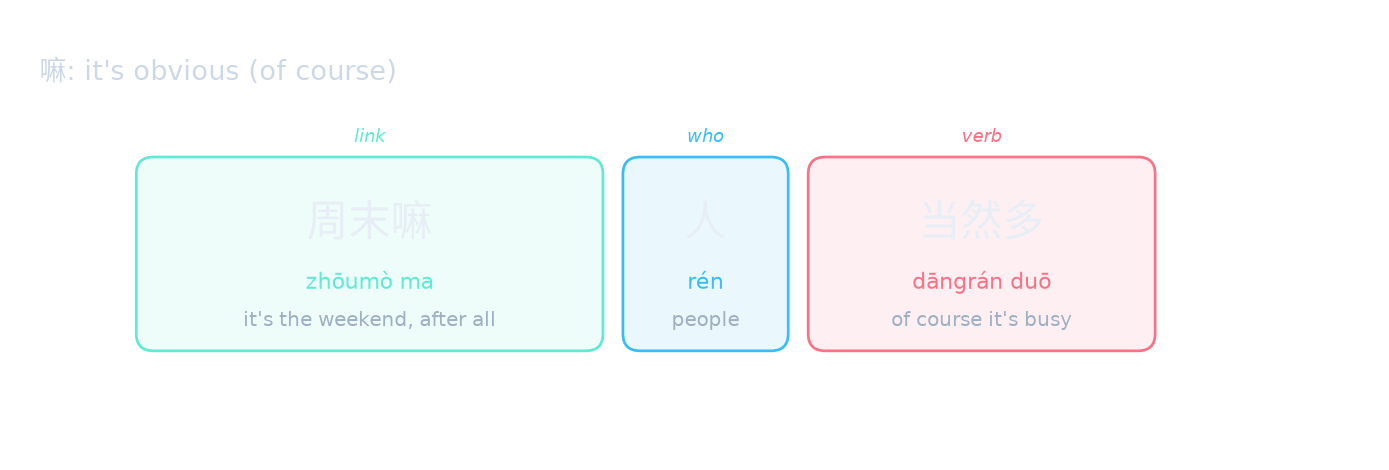
- 4. Statement + (obviously)嘛 – self-evident: weekend周末(obviously)嘛,person人of course当然many; much多。
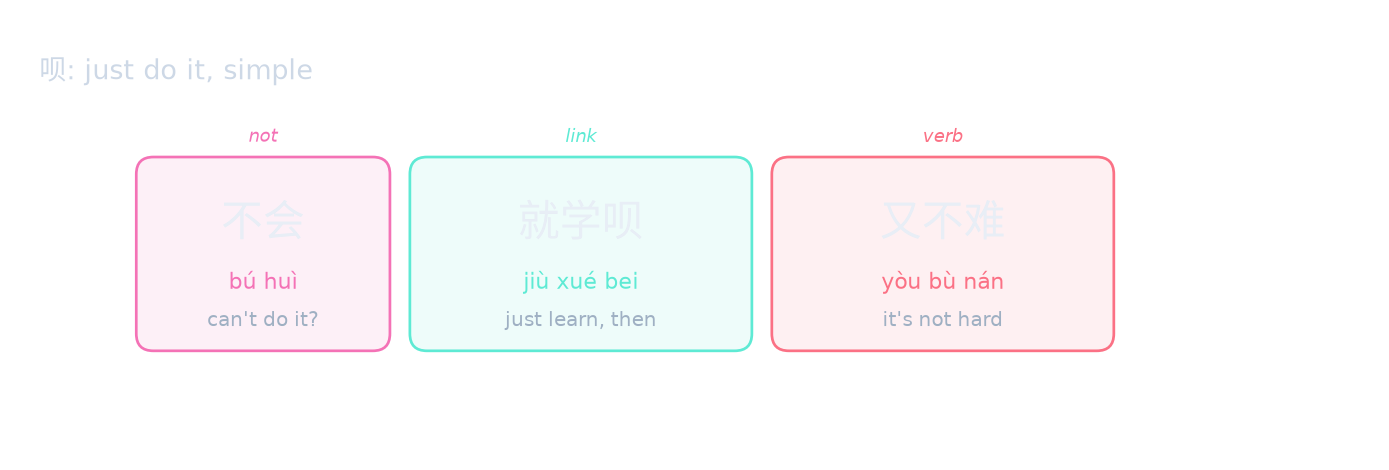
- 5. Sentence + modal particle indicating…呗 – a casual shrug: won't / can't不会to attend school就学modal particle indicating…呗,again又不难。
5.2
1. 是否 (whether or not)
Form: (subject) + whether是否 + verb / adjective
- please; to invite请to explain / to show说明you (polite)您whether是否to apply (for)申请过本project; item项目。 Qǐng shuōmíng nín shìfǒu shēnqǐngguo běn xiàngmù. – Please state whether you have applied for this programme before.
- you (polite)您whether是否to agree同意this这个plan方案? – Do you agree with this proposal?
- I / me我not不to know知道he / him他whether是否can / will会to come来。 – I don't know whether he'll come.
How it works. whether是否 shìfǒu "whether (or not)" is the formal is or isn't是不是. It goes before the verb, in direct questions and in reported ones (not不to know知道……whether是否……).
| Spoken | Formal |
|---|---|
| you你is or isn't是不是tired累(completed / change)了? | you (polite)您whether是否to need需要to help帮助? |
| can / be able to能cannot不能on time按时to complete完成 | whether or not能否on time按时to complete完成 |
Watch out
- No (yes/no ?)吗: wrong: you (polite)您whether是否to agree同意(yes/no ?)吗? → you (polite)您whether是否to agree同意?
- whether是否 already covers yes and no, so don't add not不 unless you mean it (whether是否not不to agree同意 asks whether you disagree).

5.3
2. … 与否 (whether … or not)
Form: issue / predicate + whether or not (at the end…与否 (+ to hinge on取决于 / relation / to affect关系to / arrive / (result: get)到 …)
- competition比赛to succeed; success成功whether or not (at the end…与否,to hinge on取决于usually; normally平时(modifier / structural particle)的to train训练。 Bǐsài chénggōng yǔfǒu, qǔjué yú píngshí de xùnliàn. – Whether the match goes well depends on everyday training.
- method方法correct正确whether or not (at the end…与否,relation / to affect关系to / arrive / (result: get)到result; as a result结果。 – Whether the method is right affects the result.
- no matter; regardless不管you你to like喜欢whether or not (at the end…与否,all / both都want / will / need要to complete完成。 – Whether you like it or not, you have to finish.
How it works. whether or not (at the end…与否 yǔfǒu "whether … or not" goes after the word in question and turns the phrase into a noun-like topic. It is formal and common with to hinge on取决于, relation / to affect关系to / arrive / (result: get)到, no matter; regardless不管 and no matter (what / how)无论.
| whether是否to succeed; success成功 | to succeed; success成功whether or not (at the end…与否 | to become / into成not不to succeed; success成功 |
|---|---|---|
| before the verb (formal) | after the word (formal topic) | spoken A-not-A |
Watch out
- wrong: whether or not (at the end…与否to succeed; success成功 → to succeed; success成功whether or not (at the end…与否.

5.4
3. Noun + 之 + Noun (a literary 的)
Form: modifier + (of — literary)之 + noun (literary (modifier / structural particle)的) · fixed (of — literary)之 phrases
- Xi'an, sub-provincial city…西安to be / is是China中国(modifier / structural particle)的ancient capital古都one of (sth)之一。 Xī'ān shì Zhōngguó de gǔdū zhī yī. – Xi'an is one of China's ancient capitals.
- 这是reason; cause原因one of (sth)之一。 – This is one of the reasons.
- friend朋友(after a noun) between之间should应该互相帮助。 – Friends should help each other.
- the whole year must be…一年之计在于春。 – The year's plans are made in spring.
How it works. (of — literary)之 zhī is the classical form of (modifier / structural particle)的. Today it lives on in fixed phrases, titles and four-character sayings rather than in free speech.
| Phrase | Meaning |
|---|---|
| ……one of (sth)之一 | one of … |
| ……(after a noun) between之间 | between … |
| ……before之前 / after之后 | before / after … |
| 成功之路 | the road to success |
| 中国之最 | China's greatest |
Watch out
- Don't replace everyday (modifier / structural particle)的 with (of — literary)之: wrong: 我之书 → I / me我(modifier / structural particle)的book书.

5.5
4. Statement + 嘛 (self-evident)
Form: reason / topic + (obviously)嘛,comment · statement + (obviously)嘛
- weekend周末(obviously)嘛,person人of course当然many; much多。 Zhōumò ma, rén dāngrán duō. – Well, it's the weekend; of course it's crowded.
- handmade; handicraft手工to do; to make做(modifier / structural particle)的(obviously)嘛,expensive贵a little一点儿degree / adjective linker很normal正常。 – It's handmade, after all, so it's normal for it to cost a bit more.
- hurry up / a bit faster快点儿(obviously)嘛! – Come on, hurry up!
How it works. (obviously)嘛 ma presents something as obvious, a reason the listener should accept. After a topic (weekend周末(obviously)嘛) it sets up an obvious explanation; at the end of a request it softly insists. It is casual.
| (yes/no ?)吗 | (obviously)嘛 | (suggestion)吧 | modal particle indicating…呗 |
|---|---|---|---|
| yes/no question | it's obvious | suggestion or guess | shrug: no big deal |
| you你to know知道(yes/no ?)吗? | you你to know知道(obviously)嘛 | to walk / to leave走(suggestion)吧 | won't / can't不会to attend school就学modal particle indicating…呗 |
Watch out
- Don't confuse (obviously)嘛 with (yes/no ?)吗 in writing.
- Leave (obviously)嘛 out of formal texts.
Vocabulary
Train
| 汉字 | Pinyin | English |
|---|---|---|
| 嘛 | ma | modal particle |
5.6
5. Sentence + 呗 (a casual shrug)
Form: sentence + modal particle indicating…呗 (often with then / just就)
- won't / can't不会to attend school就学modal particle indicating…呗,again又不难。 Bú huì jiù xué bei, yòu bù nán. – If you can't, just learn it; it isn't hard.
- not want to不想to go去then / just就don't别to go去modal particle indicating…呗。 – If you don't want to go, then don't.
- A: we / us我们to go去where哪儿to eat吃? B: as you like; casual随便modal particle indicating…呗。 – "Where shall we eat?" "Wherever, I don't mind."
How it works. modal particle indicating…呗 bei ends a statement with a shrug: the answer is simple, no big deal. It often follows a then / just就 clause (not不……then / just就……modal particle indicating…呗).
| (obviously)嘛 | modal particle indicating…呗 | (suggestion)吧 |
|---|---|---|
| explaining the obvious | shrugging it off | suggesting |
| weekend周末(obviously)嘛,人多 | 人多then / just就person人many; much多modal particle indicating…呗 | to walk / to leave走(suggestion)吧 |
Watch out
- It can sound careless or impatient: avoid it with teachers and in formal situations.
- modal particle indicating…呗 ends a statement, never a question.
5.7
Practice
Cover the teaching pages before you answer. The answers are at the end.
1. whether是否 (whether or not)
1. Complete (form): “Please state whether you need a receipt.” please; to invite请to explain / to show说明you (polite)您…………to need需要invoice发票。
2. Which is correct?
- A. you (polite)您to agree同意whether是否?
- B. whether是否you (polite)您to agree同意(yes/no ?)吗?
- C. you (polite)您whether是否to agree同意?
- D. you (polite)您whether是否to agree同意(yes/no ?)吗?
3. Build: “I don't know whether he'll come.”
Put in order: can / will会to come来。 / I / me我not不to know知道 / he / him他 / whether是否
4. True or false? is or isn't是不是 is the spoken equivalent of whether是否. If false, correct it.
5. The form asks a yes-or-no question about your previous applications. Use whether是否. Write your answer in Chinese, then say it aloud.
2. … whether or not (at the end…与否 (whether … or not)
6. Complete: “Whether it succeeds or not depends on training.” to succeed; success成功…………,to hinge on取决于to train训练。
7. Which word order is correct for whether是否?
- A. to succeed; success成功whether是否and / with与
- B. whether是否to succeed; success成功whether or not (at the end…与否
- C. to succeed; success成功whether是否
- D. whether是否to succeed; success成功
8. Build: “Whether you like it or not, you must finish.”
Put in order: , / all / both都want / will / need要 / no matter; regardless不管you你to like喜欢whether or not (at the end…与否 / to complete完成。
9. True or false? In speech, 喜不喜欢 is more natural than to like喜欢whether or not (at the end…与否. If false, correct it.
10. A coach explains what really decides a match. Use … whether or not (at the end…与否. Write your answer in Chinese, then say it aloud.
3. Noun + (of — literary)之 + Noun (a literary (modifier / structural particle)的)
11. Complete: “one of the reasons” reason; cause原因…………one / a一
12. Which sounds most natural in conversation?
- A. this这to be / is是I / me我(of — literary)之book书。
- B. this这to be / is是(of — literary)之I / me我book书。
- C. this这to be / is是book书(of — literary)之I / me我。
- D. this这to be / is是I / me我(modifier / structural particle)的book书。
13. Match each phrase to its meaning.
-
(1) (after a noun) between之间
-
(2) before之前
-
(3) after之后
-
(4) one of (sth)之一
-
A. one of
-
B. before
-
C. after
-
D. between
14. True or false? (of — literary)之 is common in titles and set phrases. If false, correct it.
15. You see a museum banner introducing a famous city. Use Noun + (of — literary)之 + Noun. Write your answer in Chinese, then say it aloud.
4. Statement + (obviously)嘛 (self-evident)
16. Complete: “It's handmade, after all – of course it's pricey.” handmade; handicraft手工to do; to make做(modifier / structural particle)的…………,expensive贵a little一点儿degree / adjective linker很normal正常。
17. Which is a yes/no question?
- A. you你to know知道(obviously)嘛。
- B. you你to know知道modal particle indicating…呗。
- C. you你to know知道(yes/no ?)吗?
- D. weekend周末(obviously)嘛。
18. Build: “It's the weekend – of course it's crowded.”
Put in order: weekend周末(obviously)嘛 / of course当然many; much多。 / , / person人
19. True or false? hurry up / a bit faster快点儿(obviously)嘛! is a soft, insistent urging. If false, correct it.
20. Your friend complains about the crowds at the shopping mall on a Saturday. Use Statement + (obviously)嘛. Write your answer in Chinese, then say it aloud.
5. Sentence + modal particle indicating…呗 (a casual shrug)
21. Shrug: “If you don't want to go, just don't.” not want to不想to go去then / just就don't别to go去…………。
22. In which situation is modal particle indicating…呗 least appropriate?
- A. Chatting with a close friend
- B. Replying to a classmate's text
- C. Answering a question from your teacher in class
- D. Joking with a sibling
23. Build: “If he's not coming, so be it.”
Put in order: modal particle indicating…呗。 / even if / (就算了) forget it就算(completed / change)了 / he / him他not不to come来
24. True or false? modal particle indicating…呗 can end a question. If false, correct it.
25. Your friend worries she doesn't know how to cook the dish for the party. Use Sentence + modal particle indicating…呗. Write your answer in Chinese, then say it aloud.
5.8
Mixed practice
These questions mix the patterns and use new situations.
26. Which sentence is correct?
- A. please; to invite请to confirm确认whether是否to participate参加(yes/no ?)吗。
- B. please; to invite请to confirm确认whether是否to participate参加。
- C. please; to invite请to confirm确认to participate参加whether是否(yes/no ?)吗。
27. Rewrite with whether or not (at the end…与否: this这个plan计划can / be able to能cannot不能to succeed; success成功,want / will / need要to look at; to watch; to read看everyone大家。
28. A friend asks what to do now that the shop is closed. Shrug with modal particle indicating…呗.
29. Find and fix the problem. A classmate writes please; to invite请to confirm确认whether是否to participate参加(yes/no ?)吗. Correct it.
30. Use it yourself. Ask whether a plan can work with whether是否, then say the same with whether or not (at the end…与否.
5.9
Answers and explanations
Mark your work, then correct each mistake in your own words.
1. whether是否 (whether or not)
1. whether是否
whether是否 + verb.
2. C. you (polite)您whether是否to agree同意?
whether是否 already makes the question; no (yes/no ?)吗.
3. I / me我not不to know知道he / him他whether是否can / will会to come来。
Embedded question with whether是否.
4. True.
True. whether是否 (“whether”) is formal and written: whether是否to participate参加. In speech the same meaning is expressed by the affirmative-negative form is or isn't是不是 (or to participate参加not不to participate参加).
5. Model answer: please; to invite请to explain / to show说明you (polite)您whether是否to apply (for)申请过本project; item项目。
Check your answer:
- whether是否 already makes it a question: you (polite)您whether是否to agree同意? ("Do you agree?"), not you (polite)您whether是否to agree同意(yes/no ?)吗?
- Do not add not不 after it: whether是否to agree同意, not whether是否not不to agree同意 (unless you really mean "whether you disagree").
2. … whether or not (at the end…与否 (whether … or not)
6. whether or not (at the end…与否
X whether or not (at the end…与否 = whether X or not.
7. D. whether是否to succeed; success成功
whether是否 goes before the verb; whether or not (at the end…与否 goes after.
8. no matter; regardless不管you你to like喜欢whether or not (at the end…与否,all / both都want / will / need要to complete完成。
no matter; regardless不管 X whether or not (at the end…与否,all / both都….
9. True.
True. whether or not (at the end…与否 (“or not”) is formal and written (to succeed; success成功whether or not (at the end…与否). In speech you use the affirmative-negative question: you你喜不喜欢?
10. Model answer: whether or not能否to win赢得competition比赛,to hinge on取决于usually; normally平时(modifier / structural particle)的to train训练。
Check your answer:
- whether or not (at the end…与否 follows the predicate or issue being considered. Two-syllable examples are common, but syllable count alone does not decide whether the phrase is grammatical.
- In speech, use A-not-A: to become / into成not不to succeed; success成功 / 喜不喜欢.
3. Noun + (of — literary)之 + Noun (a literary (modifier / structural particle)的)
11. (of — literary)之
one of (sth)之一 = one of.
12. D. this这to be / is是I / me我(modifier / structural particle)的book书。
(of — literary)之 is the classical, written equivalent of (modifier / structural particle)的. In conversation you say this这to be / is是I / me我(modifier / structural particle)的book书; (of — literary)之 survives mainly in titles and set phrases.
13. (1) D: (after a noun) between之间 = between; (2) B: before之前 = before; (3) C: after之后 = after; (4) A: one of (sth)之一 = one of
Fixed phrases with literary (of — literary)之.
14. True.
True. (of — literary)之 appears in titles, slogans and fixed expressions: 成功之路, the whole year must be…一年之计在于春. In ordinary sentences (modifier / structural particle)的 is used.
15. Model answer: Xi'an, sub-provincial city…西安to be / is是China中国(modifier / structural particle)的ancient capital古都one of (sth)之一,to have / there is有"world世界the four great四大ancient capital古都one of (sth)之一"之称。
Check your answer:
- Do not replace every (modifier / structural particle)的 with (of — literary)之 in speech; 我之书 sounds archaic. Say I / me我(modifier / structural particle)的book书.
- (of — literary)之 often sits between two-syllable words or in four-character set phrases: the whole year must be…一年之计在于春 – "Spring is the time to plan for the year."
4. Statement + (obviously)嘛 (self-evident)
16. (obviously)嘛
(obviously)嘛 presents the reason as obvious.
17. C. you你to know知道(yes/no ?)吗?
(yes/no ?)吗 asks; (obviously)嘛 states the obvious.
18. weekend周末(obviously)嘛,person人of course当然many; much多。
Topic + (obviously)嘛, then the comment.
19. True.
True. After a request, (obviously)嘛 makes it softer and slightly coaxing while still insistent: hurry up / a bit faster快点儿(obviously)嘛! “Come on, hurry up!”
20. Model answer: weekend周末(obviously)嘛,person人of course当然many; much多。
Check your answer:
- (yes/no ?)吗 asks a yes/no question; (obviously)嘛 states something obvious. you你to know知道(yes/no ?)吗? asks; you你to know知道(obviously)嘛 means "you know that, obviously".
- (obviously)嘛 is casual; leave it out of formal writing.
5. Sentence + modal particle indicating…呗 (a casual shrug)
21. modal particle indicating…呗
modal particle indicating…呗 = no big deal.
22. C. Answering a question from your teacher in class
modal particle indicating…呗 can sound careless with superiors.
23. he / him他not不to come来even if / (就算了) forget it就算(completed / change)了modal particle indicating…呗。
Sentence + modal particle indicating…呗.
24. False.
False. modal particle indicating…呗 ends a statement, often a suggestion or an “obviously” remark: won't / can't不会to attend school就学modal particle indicating…呗 “If you can't, just learn it.” It is not a question particle.
25. Model answer: won't / can't不会to attend school就学modal particle indicating…呗,again又不难。
Check your answer:
- modal particle indicating…呗 can sound careless or impatient; avoid it with teachers or in formal situations.
- It is a statement, never a question: no question mark.
Mixed practice
26. B. whether是否 already asks the question, so (yes/no ?)吗 is not used.
27. this这个plan计划to succeed; success成功whether or not (at the end…与否,want / will / need要to look at; to watch; to read看everyone大家。whether or not (at the end…与否 follows the word it questions.
28. tomorrow明天again / then / (再…也) however再to come来modal particle indicating…呗。modal particle indicating…呗 makes the answer sound easy and relaxed.
29. whether是否 already asks "whether or not", so drop (yes/no ?)吗: please; to invite请to confirm确认whether是否to participate参加.
30. Model answer. this这个plan计划whether是否feasible可行,还要to discuss讨论。this这个plan计划feasible可行whether or not (at the end…与否,还要to discuss讨论。
Review later. Tomorrow, write one formal question with whether是否.
Interactive lessons on this topic
Work through it step by step, with instant-check exercises.