English
| Core | Supplement |
|---|---|
| 1 Describe variation as differences between individuals of the same species | |
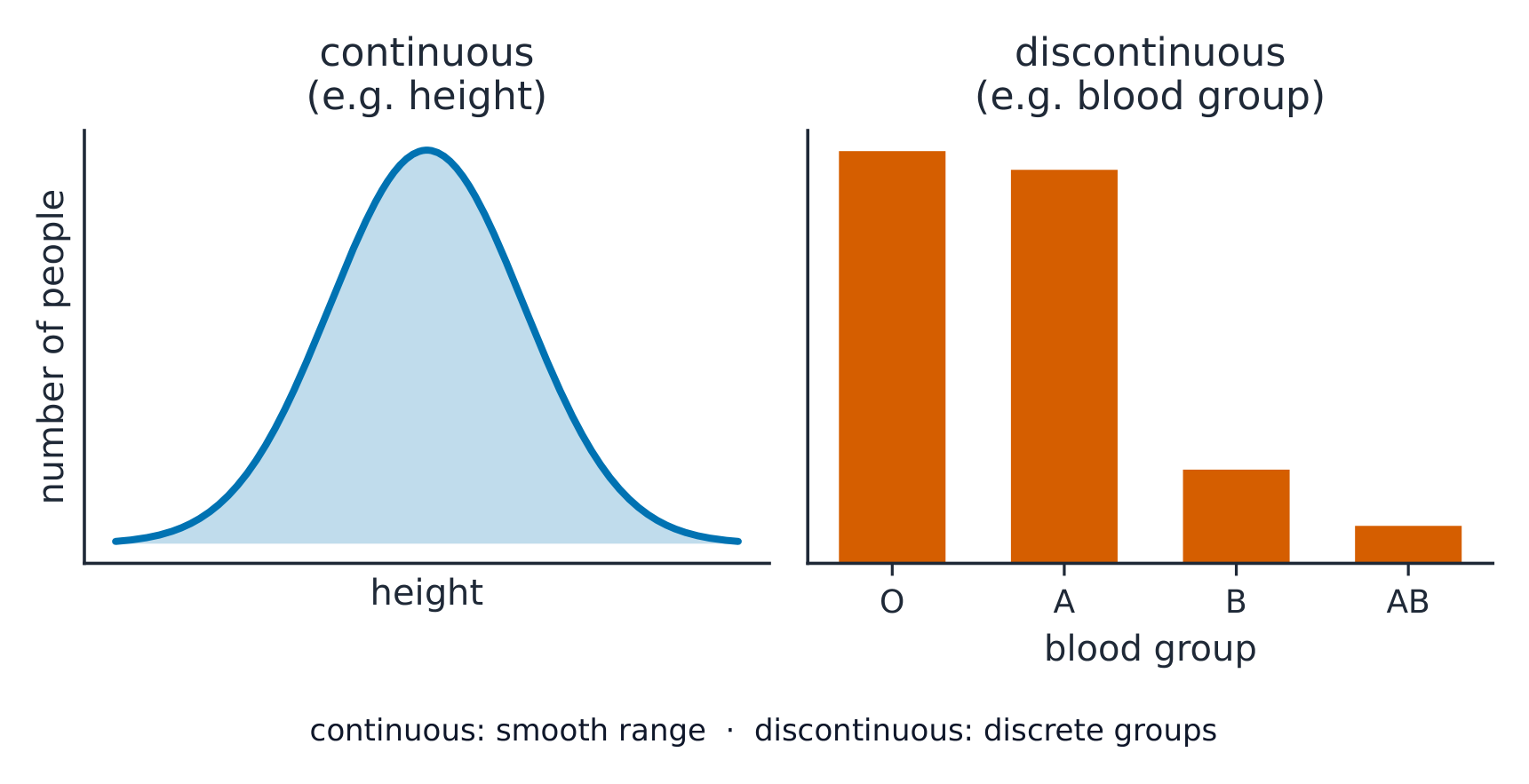
| 2 State that continuous variation results in a range of phenotypes between two extremes; examples include body length and body mass | |
| 3 State that discontinuous variation results in a limited number of phenotypes with no intermediates; examples include ABO blood groups, seed shape in peas and seed colour in peas | |
| 4 State that discontinuous variation is usually caused by genes only and continuous variation is caused by both genes and the environment | |
| 5 Investigate and describe examples of continuous and discontinuous variation | |
| 6 Describe mutation as genetic change | 9 Describe gene mutation as a random change in the base sequence of DNA |
| 7 State that mutation is the way in which new alleles are formed | 10 State that mutation, meiosis, random mating and random fertilisation are sources of genetic variation in populations |
| 8 State that ionising radiation and some chemicals increase the rate of mutation |
日本語
| コア | サプリメント |
|---|---|
| 1 変異とは、同一種の個体間の違いであることを説明する | |
| 2 連続的変異は2つの極端の間にある表現型の範囲をもたらすことを述べる;例として体長や体重がある | |
| 3 不連続的変異は中間形なく限られた数の表現型をもたらすことを述べる;例としてABO血液型、マメの種子形状、マメの種子色がある | |
| 4 不連続的変異は通常遺伝子のみによって引き起こされ、連続的変異は遺伝子と環境の両方によって引き起こされることを述べる | |
| 5 連続的変異および不連続的変異の例を調査・説明する | |
| 6 突然変異を遺伝的な変化として説明する | 9 遺伝子突然変異とはDNA塩基配列のランダムな変化であることを述べる |
| 7 突然変異が新しい対立遺伝子の形成方法であることを述べる | 10 突然変異、減数分裂、ランダム交尾、ランダム受精が集団内の遺伝的多様性の源であることを述べる |
| 8 イオン化放射線やある化学物質が突然変異の頻度を高めることを述べる |