Skip to content · ⁨コンテンツへスキップ⁩

The Global Tapestry · ⁨グローバルな織物⁩

AP World History: Modern · ⁨AP 世界史:近代⁩ · Topic 1 · ⁨トピック 1⁩

View Slides · ⁨查看幻灯片⁩ Train · ⁨練習する⁩
Video lesson for this topic · ⁨このトピックのビデオレッスン⁩ Open the video page · ⁨動画ページを開く⁩
7:53

Unit 1: 世界の織物

Unit 1では、頭の中に世界の6つの地域を一度に持つことを求められますが、学生たちはそれを6つの別々の物語を暗記しようとするため、その単位が…的感觉を与えます。

English narration · English + 中文 subtitles burned in · ⁨英語ナレーション・英語+中文字幕 burning-in⁩

1.1

Reading the World in 1200 · ⁨1200年の世界を読む⁩

Syllabus · ⁨シラバス⁩
English

1.1 Developments in East Asia from c. 1200 to c. 1450

Thematic Focus (GOV): Governance — A variety of internal and external factors contribute to state formation, expansion, and decline. Governments maintain order through a variety of administrative institutions, policies, and procedures, and governments obtain, retain, and exercise power in different ways and for different purposes.

Thematic Focus (CDI): Cultural Developments and Interactions — The development of ideas, beliefs, and religions illustrates how groups in society view themselves, and the interactions of societies and their beliefs often have political, social, and cultural implications.

Learning Objective Unit 1.A: Explain the systems of government employed by Chinese dynasties and how they developed over time.

  • KC-3.2.I.A Empires and states in Afro-Eurasia and the Americas demonstrated continuity, innovation, and diversity in the 13th century. This included the Song Dynasty of China, which utilized traditional methods of Confucianism and an imperial bureaucracy to maintain and justify its rule.

Learning Objective Unit 1.B: Explain the effects of Chinese cultural traditions on East Asia over time. THEMATIC FOCUS Economics Systems ECN As societies develop, they affect and are affected by the ways that they produce, exchange, and consume goods and services. LEARNING OBJECTIVE

  • KC-3.1.III.D.i Chinese cultural traditions continued, and they influenced neighboring regions.
  • KC-3.1.III.D.ii Buddhism and its core beliefs continued to shape societies in Asia and included a variety of branches, schools, and practices. HISTORICAL DEVELOPMENTS

Learning Objective Unit 1.C: Explain the effects of innovation on the Chinese economy over time.

  • KC-3.3.III.A.i The economy of Song China became increasingly commercialized while continuing to depend on free peasant and artisanal labor.
  • KC-3.1.I.D The economy of Song China flourished as a result of increased productive capacity, expanding trade networks, and innovations in agriculture and manufacturing.

Illustrative examples:

  • Cultural traditions:
    • Filial piety in East Asia
    • Influence of Neo-Confucianism and Buddhism in East Asia
    • Confucian traditions of both respect for and expected deference from women
    • Chinese literary and scholarly traditions and their spread to Heian Japan and Korea
  • Branches of Buddhism:
    • Theravada
    • Mahayana
    • Tibetan
  • Technological innovations:
    • Champa rice
    • Transportation innovations, like the Grand Canal expansion
    • Steel and iron production
    • Textiles and porcelains for export
日本語

1.1 東アジアにおける変化:c.1200年〜c.1450年

テーマの焦点(GOV): 統治 — 多様な内外的要因が国家の形成、拡大、衰退に寄与する。政府は多様な行政機関、政策、手続きを通じて秩序を維持し、異なる方法・目的で権力を獲得・保持・行使する。

テーマの焦点(CDI): 文化的発展と相互作用 — 思想、信仰、宗教の発展は、社会内の集団が自らをどのように認識しているかを示しており、社会やその信念の相互作用は政治的、社会的、文化的な影響を及ぼすことが往往ある。

学習目標 Unit 1.A: 中国王朝が採用した統治制度を説明し、それが時代とともにどのように発展したかを述べる。

  • KC-3.2.I.A アフロユーラシア大陸および美洲の帝国と国家は、13世紀において継続性、革新性、多様性を示した。これには、伝統的な儒教と帝制官僚制を用いて支配を維持・正当化しようとした中国の宋王朝も含まれる。

学習目標 Unit 1.B: 中国の文化伝統が長期的にわたって東アジアに与えた影響を説明する。 テーマの焦点 経済システム ECN 社会が発展するにつれて、商品やサービスの生産、交換、消費の方法に影響を与え、同時にそれらの方法の影響を受ける。 学習目標

  • KC-3.1.III.D.i 中国の文化伝統は継承され続け、近隣地域にも影響を与えた。
  • KC-3.1.III.D.ii ブッダ教とその核心的な信念は、アジアの社会に形作ることを続け、様々な宗派、学派、実践方法を含んでいた。 歴史的発展

学習目標 Unit 1.C: 革新が長期的にわたって中国経済に与えた影響を説明する。

  • KC-3.3.III.A.i 宋の中国经济は商業化が進む一方で、自由農民および手工業者労働への依存を続けた。
  • KC-3.1.I.D 宋の中国经济は、生産能力の向上、貿易ネットワークの拡大、農業および製造技術の革新により繁栄した。

具体例:

  • 文化伝統:
    • 東アジアにおける孝行
    • 東アジアにおける新儒教および仏教の影響
    • 女性に対する敬意と服従を求める儒教的伝統
    • 平安時代の日本および朝鮮へ広まった中国の文学および学問の伝統
  • ブッダ教の宗派:
    • 上座部
    • 大乗
    • チベット
  • 技術的革新:
    • チャンパ米
    • 交通革新(京杭大運河の拡張など)
    • 鉄鋼および鉄の生産
    • 輸出用の織物および磁器

Source: College Board AP Course and Exam Description · ⁨出典: College Board AP コースおよび試験説明書⁩

English

Unit 1 surveys the major regions of the world around 1200 to 1450, just before the great connecting networks of Unit 2. Its purpose is comparison: by the end you should be able to say how any two of these societies were governed, what held them together, and how they made their living.

Three questions apply everywhere, and answering them for each region is the whole unit:

  • How is the state organised? Who rules, through what officials, and paid for how?
  • What belief system shapes society? Religion supplies law, education, and legitimacy in every region here.
  • What is the economic base? Agriculture almost everywhere, but with very different labour systems and levels of trade.
日本語

第1単元は、第2単元の巨大な接続ネットワークが生まれる直前である1200年から1450年頃の世界の主要な地域を概観します。その目的は比較にあります:期末には、これらの社会のいかなる2つがどのように統治され、何によって結ばれ、いかにして生計を立てていたかを述べる能力を得ていてしかるべきです。

すべての地域に適用される3つの問いがあり、各地域についてこれらに答えることが単元の全体です:

  • 国家はどのように組織されているか? 誰が、どのような官僚を通じて、そしていかにして資金を調達して支配しているか。
  • どのような信仰体系が社会を形作っているか。 宗教は、この地域のあらゆる所において、法、教育、正当性を提供している。
  • 経済の基盤は何か。 ほぼあらゆる所で農業だが、労働体制や貿易のレベルは非常に異なる。
1.1

East Asia · ⁨東アジア⁩

Syllabus · ⁨シラバス⁩
English

1.1 Developments in East Asia from c. 1200 to c. 1450

Thematic Focus (GOV): Governance — A variety of internal and external factors contribute to state formation, expansion, and decline. Governments maintain order through a variety of administrative institutions, policies, and procedures, and governments obtain, retain, and exercise power in different ways and for different purposes.

Thematic Focus (CDI): Cultural Developments and Interactions — The development of ideas, beliefs, and religions illustrates how groups in society view themselves, and the interactions of societies and their beliefs often have political, social, and cultural implications.

Learning Objective Unit 1.A: Explain the systems of government employed by Chinese dynasties and how they developed over time.

  • KC-3.2.I.A Empires and states in Afro-Eurasia and the Americas demonstrated continuity, innovation, and diversity in the 13th century. This included the Song Dynasty of China, which utilized traditional methods of Confucianism and an imperial bureaucracy to maintain and justify its rule.

Learning Objective Unit 1.B: Explain the effects of Chinese cultural traditions on East Asia over time. THEMATIC FOCUS Economics Systems ECN As societies develop, they affect and are affected by the ways that they produce, exchange, and consume goods and services. LEARNING OBJECTIVE

  • KC-3.1.III.D.i Chinese cultural traditions continued, and they influenced neighboring regions.
  • KC-3.1.III.D.ii Buddhism and its core beliefs continued to shape societies in Asia and included a variety of branches, schools, and practices. HISTORICAL DEVELOPMENTS

Learning Objective Unit 1.C: Explain the effects of innovation on the Chinese economy over time.

  • KC-3.3.III.A.i The economy of Song China became increasingly commercialized while continuing to depend on free peasant and artisanal labor.
  • KC-3.1.I.D The economy of Song China flourished as a result of increased productive capacity, expanding trade networks, and innovations in agriculture and manufacturing.

Illustrative examples:

  • Cultural traditions:
    • Filial piety in East Asia
    • Influence of Neo-Confucianism and Buddhism in East Asia
    • Confucian traditions of both respect for and expected deference from women
    • Chinese literary and scholarly traditions and their spread to Heian Japan and Korea
  • Branches of Buddhism:
    • Theravada
    • Mahayana
    • Tibetan
  • Technological innovations:
    • Champa rice
    • Transportation innovations, like the Grand Canal expansion
    • Steel and iron production
    • Textiles and porcelains for export
日本語

1.1 東アジアにおける変化:c.1200年〜c.1450年

テーマの焦点(GOV): 統治 — 多様な内外的要因が国家の形成、拡大、衰退に寄与する。政府は多様な行政機関、政策、手続きを通じて秩序を維持し、異なる方法・目的で権力を獲得・保持・行使する。

テーマの焦点(CDI): 文化的発展と相互作用 — 思想、信仰、宗教の発展は、社会内の集団が自らをどのように認識しているかを示しており、社会やその信念の相互作用は政治的、社会的、文化的な影響を及ぼすことが往往ある。

学習目標 Unit 1.A: 中国王朝が採用した統治制度を説明し、それが時代とともにどのように発展したかを述べる。

  • KC-3.2.I.A アフロユーラシア大陸および美洲の帝国と国家は、13世紀において継続性、革新性、多様性を示した。これには、伝統的な儒教と帝制官僚制を用いて支配を維持・正当化しようとした中国の宋王朝も含まれる。

学習目標 Unit 1.B: 中国の文化伝統が長期的にわたって東アジアに与えた影響を説明する。 テーマの焦点 経済システム ECN 社会が発展するにつれて、商品やサービスの生産、交換、消費の方法に影響を与え、同時にそれらの方法の影響を受ける。 学習目標

  • KC-3.1.III.D.i 中国の文化伝統は継承され続け、近隣地域にも影響を与えた。
  • KC-3.1.III.D.ii ブッダ教とその核心的な信念は、アジアの社会に形作ることを続け、様々な宗派、学派、実践方法を含んでいた。 歴史的発展

学習目標 Unit 1.C: 革新が長期的にわたって中国経済に与えた影響を説明する。

  • KC-3.3.III.A.i 宋の中国经济は商業化が進む一方で、自由農民および手工業者労働への依存を続けた。
  • KC-3.1.I.D 宋の中国经济は、生産能力の向上、貿易ネットワークの拡大、農業および製造技術の革新により繁栄した。

具体例:

  • 文化伝統:
    • 東アジアにおける孝行
    • 東アジアにおける新儒教および仏教の影響
    • 女性に対する敬意と服従を求める儒教的伝統
    • 平安時代の日本および朝鮮へ広まった中国の文学および学問の伝統
  • ブッダ教の宗派:
    • 上座部
    • 大乗
    • チベット
  • 技術的革新:
    • チャンパ米
    • 交通革新(京杭大運河の拡張など)
    • 鉄鋼および鉄の生産
    • 輸出用の織物および磁器

Source: College Board AP Course and Exam Description · ⁨出典: College Board AP コースおよび試験説明書⁩

English

Song China 宋朝中国 is the unit's benchmark state. Its economy became increasingly commercialized 商业化 while remaining largely agrarian 农业为主, supported by rising productive capacity - Champa rice 占城稻, iron and steel production, and transport improvements such as the expanded Grand Canal 大运河.

Government ran through a bureaucracy 官僚体系 staffed by the civil service examination 科举制度, which recruited officials on merit and gave the state unusual administrative depth.

Chinese cultural traditions continued and influenced neighbouring regions - Korea, Japan, and Vietnam adopted writing, bureaucratic models, and belief systems. Neo-Confucianism 新儒学 shaped society, including filial piety 孝道 and the expectation of women's deference. Buddhism 佛教 continued to shape Asian societies and spread further, in forms including Theravada 上座部佛教, Mahayana 大乘佛教, and Tibetan 藏传佛教 Buddhism.

What Song China made, and why it matters later. The commercialised economy did not only feed itself: it produced textiles 纺织品, porcelains 瓷器 and iron for export, in workshops organised for volume rather than for a household's own use. Paper money and credit instruments circulated to pay for it. This is the supply side of the Indian Ocean trade you meet in the next unit — the demand for Chinese porcelain and silk is what put ships on those routes, so treat Song manufacturing as a cause of the trading world, not a detail about China.

Confucian expectations cut both ways for women. Neo-Confucianism held that women were owed respect within the family and were morally central to it, while also expecting deference 顺从 to father, husband and son. Both halves are in the CED, and a question asking about continuity and change in women's status wants the tension between them rather than one side alone; the spread of foot binding 缠足 among elite families in this period is the usual evidence for the restrictive half.

日本語

宋中国は単元の基準となる国家である。その経済は商業化が進む一方で、依然として主に農耕中心であり、生産能力の向上によって支えられた—チャンパ米、鉄鋼生産、および拡大された京杭大運河のような輸送網の改善などだ。

政府は文官試験によって構成された官僚制によって運営され、功績に基づいて官僚を登用し、国家に類例のない行政の深さを与えた。

中国の文化的伝統は継承され、周辺地域に影響を与えた—韓国、日本、ベトナムは文字、官僚モデル、信仰体系を採用した。新儒教は社会を形作り、孝行や女性の従順への期待を含んでいた。仏教もアジアの社会に影響を与え続け、さらに広まり、上座部仏教、大乗仏教、チベット仏教などの形態で普及した。

宋中国を一つの鎖として: 農業による利益が文官試験によって人員を賄う官僚制を支える

宋中国が製造したもの、およびそれが後に重要になった理由。商業化された経済は自給だけでなく、量産を目的とした工場で織物、磁器、輸出用の鉄を製造した。紙幣や信用手段が流通し、それらの支払いに使われた。これは次単元で触れるインド洋貿易の供給側である—中国の磁器や絹への需要が、これらの航路に船を出発させたのである。したがって、宋の製造業を中国についての詳細ではなく、交易世界の原因として扱うべきである。

儒教的な期待は女性に対して二面性を持っていた。新儒教は、女性が家庭内で敬意を受ける権利があり、道徳的に家庭の中心であると主張しつつも、父、夫、息子に対する従順を求めた。両方の側面はCEDに含まれており、女性の地位における継続と変化について問われる場合、片方だけではなく両者の間の緊張を答える必要がある;この時期の貴族家に見られた足包帯の普及は、制限的な側面を示す一般的な証拠である。

Explore · ⁨探索⁩

Build the Song engine · ⁨宋の動力系を構築せよ。⁩

Champa rice, the canal and the examination are one chain: agricultural gains pay for a bureaucracy that merit staffs. · ⁨チャンパ米、運河、試験制度は一つの連鎖:農業生産性の向上が、能力主義で人員を補充する官僚制を財源とする。⁩

1.2

Dar al-Islam · ⁨イスラム世界⁩

Syllabus · ⁨シラバス⁩
English

1.2 Developments in Dar al-Islam from c. 1200 to c. 1450

Thematic Focus (CDI): Cultural Developments and Interactions — The development of ideas, beliefs, and religions illustrates how groups in society view themselves, and the interactions of societies and their beliefs often have political, social, and cultural implications.

Learning Objective Unit 1.D: Explain how systems of belief and their practices affected society in the period from c. 1200 to c. 1450. THEMATIC FOCUS Governance GOV A variety of internal and external factors contribute to state formation, expansion, and decline. Governments maintain order through a variety of administrative institutions, policies, and procedures, and governments obtain, retain, and exercise power in different ways and for different purposes. LEARNING OBJECTIVE

  • KC-3.1.III.D.iii Islam, Judaism, Christianity, and the core beliefs and practices of these religions continued to shape societies in Africa and Asia. HISTORICAL DEVELOPMENTS

Learning Objective Unit 1.E: Explain the causes and effects of the rise of Islamic states over time.

  • KC-3.2.I As the Abbasid Caliphate fragmented, new Islamic political entities emerged, most of which were dominated by Turkic peoples. These states demonstrated continuity, innovation, and diversity.
  • KC-3.1.III.A Muslim rule continued to expand to many parts of Afro-Eurasia due to military expansion, and Islam subsequently expanded through the activities of merchants, missionaries, and Sufis. HISTORICAL DEVELOPMENTS

Learning Objective Unit 1.F: Explain the effects of intellectual innovation in Dar al-Islam.

  • KC-3.2.II.A.i Muslim states and empires encouraged significant intellectual innovations and transfers.

Illustrative examples:

  • New Islamic political entities:
    • Seljuk Empire
    • Mamluk sultanate of Egypt
    • Delhi sultanates (CONT’D) Innovations:
    • Advances in mathematics (Nasir al-Din al-Tusi)
    • Advances in literature ('A'ishah al-Ba'uniyyah)
    • Advances in medicine Transfers:
    • Preservation and commentaries on Greek moral and natural philosophy
    • House of Wisdom in Abbasid Bagdad
    • Scholarly and cultural transfers in Muslim and Christian Spain
日本語

1.2 イスラム世界における変化:c.1200年〜c.1450年

テーマの焦点(CDI): 文化的発展と相互作用 — 思想、信仰、宗教の発展は、社会内の集団が自らをどのように認識しているかを示しており、社会やその信念の相互作用は政治的、社会的、文化的な影響を及ぼすことが往往ある。

学習目標 Unit 1.D: c.1200年からc.1450年の間に、信仰体系およびその実践が社会に与えた影響を説明する。 テーマの焦点 統治 GOV 多様な内外的要因が国家の形成、拡大、衰退に寄与する。政府は多様な行政機関、政策、手続きを通じて秩序を維持し、異なる方法・目的で権力を獲得・保持・行使する。 学習目標

  • KC-3.1.III.D.iii イスラム教、ユダヤ教、キリスト教、およびこれらの宗教の核心的な信念と実践は、アフリカおよびアジアの社会に形作り続ける。 歴史的発展

学習目標 Unit 1.E: イスラム国家の台頭の原因および長期的な影響を説明する。

  • KC-3.2.I アッバース朝カリフ国が分裂するにつれて、新しいイスラム政治実体が出現したが、その多くはトルク系人種によって支配された。これらの国家は継続性、革新性、多様性を示した。
  • KC-3.1.III.A 軍事征服によるムスリム統治はアフロユーラシア大陆の多くの地域へと拡大し続け、イスラム教は後になって商人、宣教師、スーフィの活動を通じて広がった。 歴史的発展

学習目標 Unit 1.F: イスラム世界における知的革新の影響を説明する。

  • KC-3.2.II.A.i ムスリムの国家と帝国は、重要な知的革新および知の移転を奨励した。

具体例:

  • 新しいイスラム政治実体:
    • セルジューク朝帝国
    • エジプト・マムルーク・スルタン国
    • デリー・スルタン国(CONT’D) 革新:
    • 数学の進歩(ナーシール・アル・ディーン・アル・トゥーシー)
    • 文学の進歩(アィーシャ・アル・バウニヤ)
    • 医学の進歩 移転:
    • グレコローマンの倫理および自然哲学の保存および注釈
    • アッバース朝バグダードの知恵の家
    • ムスリムおよびキリスト教徒のスペインにおける学術的および文化的な交流

Source: College Board AP Course and Exam Description · ⁨出典: College Board AP コースおよび試験説明書⁩

English

As the Abbasid Caliphate 阿拔斯哈里发国 fragmented, new Islamic political entities emerged, most of them Turkic 突厥人 in origin - among them the Seljuk Empire 塞尔柱帝国, the Mamluk sultanate of Egypt 埃及马穆鲁克苏丹国, and the Delhi Sultanate 德里苏丹国.

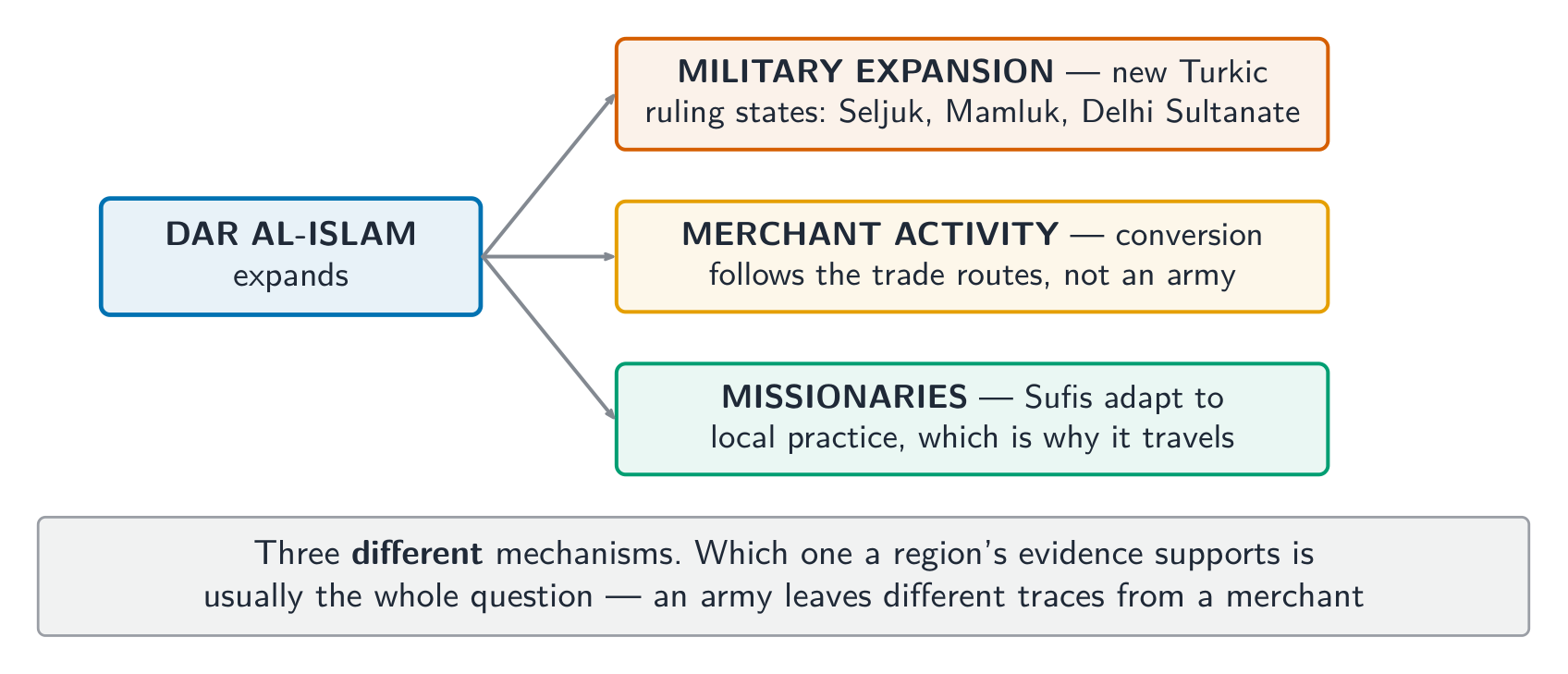
Muslim rule continued to expand across Afro-Eurasia through military expansion, merchant activity 商人活动, and the work of missionaries 传教士, especially Sufis 苏非派, whose adaptable practice helped Islam spread.

Muslim states encouraged significant intellectual innovations and transfers 智识创新与传播: advances in mathematics, medicine, and astronomy, gathered in the House of Wisdom 智慧宫 in Abbasid Baghdad, and the preservation and extension of Greek learning that later moved into Europe.

日本語

アッバース朝カリフ国が分裂する中、新しいイスラム政治実体が出現し、その多くはトルク系起源であった—其中包括セルジューク朝帝国、エジプトのマムルークス・スルタン国、デリー・スルタン国など。

イスラムの統治は軍事的拡大、商人の活動、特に適応的な実践によりイスラムを広めたスーフィ派宣教師の働きを通じて、アフリカ・ユーラシア大陸全体に拡大し続けた。

イスラム国家は重要な知的革新と伝播を促進した:アッバース朝バグダードの知恵の館に集められた数学、医学、天文学の進歩、および後からヨーロッパへ移ったギリシャ学問の保存と拡張。

3つの異なる拡大メカニズム—どの根拠が支持するかは通常問われる点
Explore · ⁨探索⁩

Match each expansion to its mechanism · ⁨それぞれの拡張とそれが用いたメカニズムを対応させよ⁩

Military expansion, merchant activity and Sufi missionaries leave different evidence — which one a region supports is usually the question. · ⁨軍事拡張、商人の活動、スーフィ宣教師は異なる痕跡を残す。ある地域がどの痕跡を支持しているかが問われるのが一般的だ。⁩

1.3

South and Southeast Asia · ⁨南アジアおよび東南アジア⁩

Syllabus · ⁨シラバス⁩
English

1.3 Developments in South and Southeast Asia from c. 1200 to c. 1450

Thematic Focus (CDI): Cultural Developments and Interactions — The development of ideas, beliefs, and religions illustrates how groups in society view themselves, and the interactions of societies and their beliefs often have political, social, and cultural implications.

Learning Objective Unit 1.G: Explain how the various belief systems and practices of South and Southeast Asia affected society over time. THEMATIC FOCUS Governance GOV A variety of internal and external factors contribute to state formation, expansion, and decline. Governments maintain order through a variety of administrative institutions, policies, and procedures, and governments obtain, retain, and exercise power in different ways and for different purposes. LEARNING OBJECTIVE

  • KC-3.1.III.D.iv Hinduism, Islam, and Buddhism, and their core beliefs and practices, continued to shape societies in South and Southeast Asia. HISTORICAL DEVELOPMENTS

Learning Objective Unit 1.H: Explain how and why various states of South and Southeast Asia developed and maintained power over time.

  • KC-3.2.I.B.i State formation and development demonstrated continuity, innovation, and diversity, including the new Hindu and Buddhist states that emerged in South and Southeast Asia.

Illustrative examples:

  • Beliefs and practices:
    • Bhakti movement
    • Sufism
    • Buddhist monasticism
  • Hindu/Buddhist states:
    • Vijayanagara Empire
    • Srivijaya Empire
    • Rajput kingdoms
    • Khmer Empire
    • Majapahit
    • Sukhothai kingdom
    • Sinhala dynasties
日本語

1.3 南アジアおよび東南アジアにおける変化:c.1200年〜c.1450年

テーマの焦点(CDI): 文化的発展と相互作用 — 思想、信仰、宗教の発展は、社会内の集団が自らをどのように認識しているかを示しており、社会やその信念の相互作用は政治的、社会的、文化的な影響を及ぼすことが往往ある。

学習目標 Unit 1.G: 南アジアおよび東南アジアの多様な信仰体系と実践が、長期的にわたって社会に与えた影響を説明する。 テーマの焦点 統治 GOV 多様な内外的要因が国家の形成、拡大、衰退に寄与する。政府は多様な行政機関、政策、手続きを通じて秩序を維持し、異なる方法・目的で権力を獲得・保持・行使する。 学習目標

  • KC-3.1.III.D.iv ヒンドゥー教、イスラム教、仏教、およびそれらの核心的な信念と実践は、南アジアおよび東南アジアの社会に形作り続ける。 歴史的発展

学習目標 Unit 1.H: 南アジアおよび東南アジアの多様な国家が、長期的にわたってどのようにそしてなぜ権力を獲得・維持したかを説明する。

  • KC-3.2.I.B.i 国家の形成と発展は、継続性、革新性、多様性を示し、南アジアおよび東南アジアに出現した新たなヒンドゥー教および仏教の国家も含まれる。

具体例:

  • 信仰と実践:
    • バクティ運動
    • スーフィズム
    • 仏教僧侶制度
  • ヒンドゥー教/仏教の国家:
    • ビジャヤナガル帝国
    • スリヴィジャヤ帝国
    • ラジプート王国
    • クメール帝国
    • マジャパヒト
    • スコータイ王国
    • シンハラー朝

Source: College Board AP Course and Exam Description · ⁨出典: College Board AP コースおよび試験説明書⁩

English

Hinduism 印度教, Islam, and Buddhism continued to shape the region, and their meeting produced new devotional forms - the bhakti movement 巴克提运动 in Hinduism and Sufism in Islam, both emphasising direct personal devotion.

State formation showed the unit's theme of continuity and diversity: the Delhi Sultanate ruled much of the north, Vijayanagara 维查耶纳伽尔 arose in the south, and in Southeast Asia the sea-based Majapahit 满者伯夷 and the land-based Khmer Empire 高棉帝国 organised power in different ways.

日本語

ヒンドゥー教、イスラム教、仏教がこの地域に影響を与え続け、それらの出会いが新しい崇拝の形を生み出した—ヒンドゥー教のバクティ運動とイスラム教のスーフィズムは、どちらも直接的个人的崇拝を強調している。

国家形成は単元のテーマである継続と多様性を示した:デリー・スルタン国が北の大部分を支配し、ヴィジャヤナガルが南部に台頭し、東南アジアでは海洋ベースのマジャパヒトと陸地ベースのクメール帝国が異なる形で権力を組織した。

1.4 1.5

The Americas and Africa · ⁨アメリカ大陸とアフリカ⁩

Syllabus · ⁨シラバス⁩
English

1.4 State Building in the Americas

Thematic Focus (GOV): Governance — A variety of internal and external factors contribute to state formation, expansion, and decline. Governments maintain order through a variety of administrative institutions, policies, and procedures, and governments obtain, retain, and exercise power in different ways and for different purposes.

Learning Objective Unit 1.I: Explain how and why states in the Americas developed and changed over time.

  • KC-3.2.I.D.i In the Americas, as in Afro-Eurasia, state systems demonstrated continuity, innovation, and diversity, and expanded in scope and reach.

Illustrative examples:

  • State systems in the Americas:
    • Maya city-states
    • Mexica
    • Inca
    • Chaco
    • Mesa Verde
    • Cahokia
日本語

1.4 アメリカにおける国家形成

テーマの焦点(GOV): 統治 — 多様な内外的要因が国家の形成、拡大、衰退に寄与する。政府は多様な行政機関、政策、手続きを通じて秩序を維持し、異なる方法・目的で権力を獲得・保持・行使する。

学習目標 Unit 1.I: アメリカの国家がどのようにして、またなぜ時間とともに発展・変化したかを説明せよ。

  • KC-3.2.I.D.i アメリカにおいて、アフリカ=ユーラシアと同様に、国家体制は継続性、革新性、多様性を示し、その範囲と影響力が拡大した。

具体例:

  • アメリカにおける国家体制:
    • マヤの都市国家
    • メシカ
    • インカ
    • チャコ
    • メサ・ベルデ
    • カホキア
English

1.5 State Building in Africa

Thematic Focus (GOV): Governance — A variety of internal and external factors contribute to state formation, expansion, and decline. Governments maintain order through a variety of administrative institutions, policies, and procedures, and governments obtain, retain, and exercise power in different ways and for different purposes.

Learning Objective Unit 1.J: Explain how and why states in Africa developed and changed over time.

  • KC-3.2.I.D.ii In Africa, as in Eurasia and the Americas, state systems demonstrated continuity, innovation, and diversity and expanded in scope and reach.

Illustrative examples:

  • State systems in Africa:
    • Great Zimbabwe
    • Ethiopia
    • Hausa kingdoms
日本語

1.5 アフリカにおける国家形成

テーマの焦点(GOV): 統治 — 多様な内外的要因が国家の形成、拡大、衰退に寄与する。政府は多様な行政機関、政策、手続きを通じて秩序を維持し、異なる方法・目的で権力を獲得・保持・行使する。

学習目標 Unit 1.J: アフリカの国家がどのようにして、またなぜ時間とともに発展・変化したかを説明せよ。

  • KC-3.2.I.D.ii アフリカにおいて、ユーラシアおよびアメリカと同様に、国家体制は継続性、革新性、多様性を示し、その範囲と影響力が拡大した。

具体例:

  • アフリカにおける国家体制:
    • グレート・ジンバブエ
    • エチオピア
    • ハウサ王国

Source: College Board AP Course and Exam Description · ⁨出典: College Board AP コースおよび試験説明書⁩

English

In the Americas, state systems showed continuity, innovation, and diversity: the Maya 玛雅 city-states, the Mexica 墨西加人 (Aztec) with tribute-based expansion, and the Inca 印加 with a centralised administration, labour obligation, and road system.

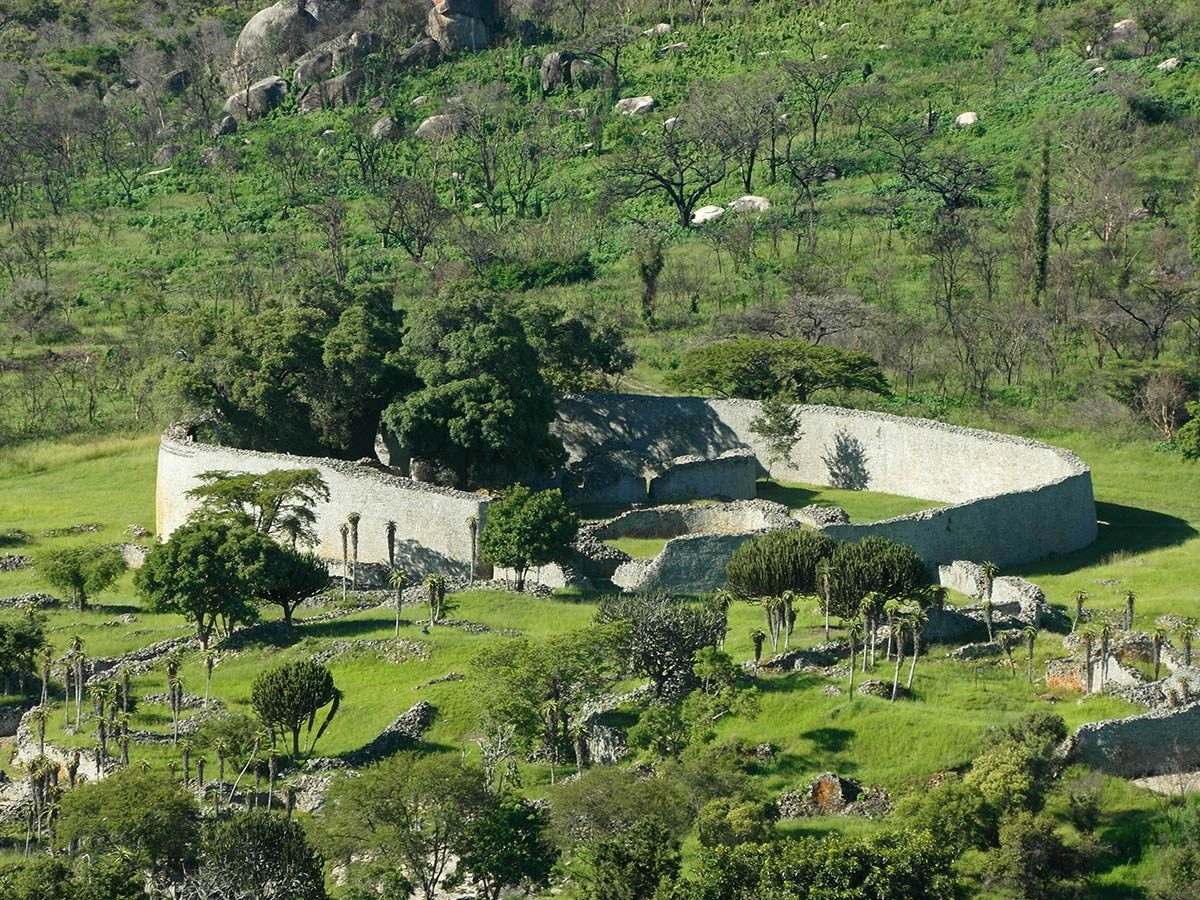
In Africa, state systems likewise varied: Great Zimbabwe 大津巴布韦 grew on gold and cattle, Ethiopia 埃塞俄比亚 was a long-established Christian kingdom, and the Hausa Kingdoms 豪萨城邦 sat on trans-Saharan trade routes.

日本語
6つの地域に対する同じ3つの問い—単元が構築する比較の枠組み
一つの枠組み、6つの地域:国家、信仰体系、経済基盤こそが比較問題が実際に問う内容である

アメリカ大陸では、国家システムに継続、革新、多様性が見られた:マヤの都市国家、貢納に基づく拡大を行うメシカ(アステカ)、中央集権的な行政、奉公義務、道路網を持つインカ。

アフリカでも国家システムは多様であった:グレート・ジンバブエは金と牛によって成長し、エチオピアは長年続くキリスト教王国であり、ハウサ王国群は横断サハラ貿易ルート上に位置していた。

グレート・ジンバブエの外壁—乾積石造り、および黄金貿易によって築かれた国家
Vocabulary · ⁨語彙⁩ Train · ⁨練習する⁩
English 日本語
Song China/sɒŋ ˈtʃaɪnə/ 宋王朝
commercialized/kəˈmɜːʃəlaɪzd/ 商業化された
agrarian/æˈɡreərɪən/ 農耕派
Champa rice/ˈtʃæmpə raɪs/ チャンパ米
Grand Canal/ɡrænd kəˈnæl/ 京杭大运河(大運河)
bureaucracy/bjʊəˈrɒkrəsi/ 官僚制
civil service examination/ˈsɪvl ˈsɜːvɪs eɡˌzæmɪˈneɪʃn/ 科挙
Neo-Confucianism/ˈniːəʊ kənˈfjuːʃɪənɪzəm/ 新儒教
filial piety/ˈfɪlɪəl ˈpaɪəti/ 孝行
Buddhism/ˈbʊdɪzəm/ 仏教
Theravada/ðəræˈvɑːdə/ 上座部仏教
Mahayana/ˌmæheɪˈɑːnə/ 大乗仏教
Tibetan/tɪˈbetn/ チベット仏教
textiles/ˈtekstaɪlz/ 織物
porcelains/ˈpɔːsɪlɪnz/ 磁器
deference/ˈdefrəns/ 敬遠
foot binding/fʊt ˈbaɪndɪŋ/ 纏足
Abbasid Caliphate/ˈæbeɪsɪd ˈkælɪfeɪt/ アッバース朝カリフ国
Turkic/ˈtɜːkɪk/ トルコ系
Seljuk Empire/ˈseldʒʌk ˈempaɪə/ セルジューク朝
Mamluk sultanate of Egypt/ˈmæmlʌk ˈsʌltəneɪt ɒv ˈiːdʒɪpt/ エジプトマムルークスルターン朝
Delhi Sultanate/ˈdeli ˈsʌltəneɪt/ デリースルターン朝
merchant activity/ˈmɜːtʃənt ækˈtɪvɪti/ 商人活動
missionaries/ˈmɪʃənəriz/ 宣教師
Sufis/ˈsjuːfiz/ スーフィー
intellectual innovations and transfers/ˌɪntəˈlektʃuːəl ˌɪnəˈveɪʃnz ænd ˈtrænsfɜːz/ 知的革新と移動
House of Wisdom/haʊs ɒv ˈwɪzdəm/ 知恵の家
Hinduism/ˈhɪndjuːɪzəm/ ヒンドゥー教
bhakti movement/ˈbʌkti ˈmuːvmənt/ ブクティ運動
Vijayanagara/ˌvɪdʒeɪˌænəˈɡɑːrə/ ヴィジャヤナガル
Majapahit/ˈmædʒəpæhɪt/ マジャパヒト
Khmer Empire/kmɪə ˈempaɪə/ クメール帝国
Maya/ˈmaɪə/ Maya
Mexica/ˈmeksɪkə/ メシカ
Inca/ˈɪŋkə/ インカ
Great Zimbabwe/ɡreɪt zɪmˈbɑːbwi/ グレート・ジンバブエ
Ethiopia/ˌiːθɪˈəʊpɪə/ エチオピア
Hausa Kingdoms/ˈhɔːsə ˈkɪŋdəmz/ ハウサ王国
politically fragmented/pəˈlɪtɪkli fræɡˈmentɪd/ 政治的に分裂している
feudalism/ˈfjuːdəlɪzəm/ 封建制度
Christianity/ˌkrɪstɪˈænɪti/ キリスト教
Judaism/ˈdʒuːdeɪɪzəm/ ユダヤ教
free and coerced labour/friː ænd ˌkəʊˈɜːst ˈleɪbə/ 自由労働と強制労働
serfdom/ˈsɜːfdəm/ 隷農奴制
comparison/kəmˈpærɪsn/ 比較
1.6

Europe · ⁨ヨーロッパ⁩

Syllabus · ⁨シラバス⁩
English

1.6 Developments in Europe from c. 1200 to c. 1450

Thematic Focus (CDI): Cultural Developments and Interactions — The development of ideas, beliefs, and religions illustrates how groups in society view themselves, and the interactions of societies and their beliefs often have political, social, and cultural implications.

Thematic Focus (SIO): Social Interactions and Organization — The process by which societies group their members and the norms that govern the interactions between these groups and between individuals influence political, economic, and cultural institutions and organization.

Learning Objective Unit 1.K: Explain how the beliefs and practices of the predominant religions in Europe affected European society. THEMATIC FOCUS Governance GOV A variety of internal and external factors contribute to state formation, expansion, and decline. Governments maintain order through a variety of administrative institutions, policies, and procedures, and governments obtain, retain, and exercise power in different ways and for different purposes. LEARNING OBJECTIVE

  • KC-3.1.III.D.v Christianity, Judaism, Islam, and the core beliefs and practices of these religions continued to shape societies in Europe. HISTORICAL DEVELOPMENTS

Learning Objective Unit 1.L: Explain the causes and consequences of political decentralization in Europe from c. 1200 to c. 1450.

  • KC-3.2.I.B.ii Europe was politically fragmented and characterized by decentralized monarchies, feudalism, and the manorial system.

Learning Objective Unit 1.M: Explain the effects of agriculture on social organization in Europe from c. 1200 to c. 1450.

  • KC-3.3.III.C Europe was largely an agricultural society dependent on free and coerced labor, including serfdom.
日本語

1.6 紀元1200年頃〜1450年頃のヨーロッパにおける変化

テーマの焦点(CDI): 文化的発展と相互作用 — 思想、信仰、宗教の発展は、社会内の集団が自らをどのように認識しているかを示しており、社会やその信念の相互作用は政治的、社会的、文化的な影響を及ぼすことが往往ある。

テーマ別焦点(SIO):社会的相互作用と組織化 — 社会が構成員をまとめ、これらの集団間および個人間の相互作用を支配する規範は、政治、経済、文化の制度や組織に影響を与える。

学習目標 Unit 1.K: ヨーロッパの支配的な宗教の信仰と実践がヨーロッパ社会に与えた影響を説明せよ。 テーマ別焦点 統治 GOV 内部および外部の多様な要因が国家の形成、拡大、衰退に寄与する。政府は多様な行政機関、政策、手続を通じて秩序を維持し、異なる方法および目的で権力を獲得、保持、行使する。 学習目標

  • KC-3.1.III.D.v キリスト教、ユダヤ教、イスラム教、およびこれらの宗教の核心的な信仰と実践は、ヨーロッパの社会を引き続き形作った。 歴史的発展

学習目標 Unit 1.L: 紀元1200年頃〜1450年頃のヨーロッパにおける政治的分権の原因および結果を説明せよ。

  • KC-3.2.I.B.ii ヨーロッパは政治上に分裂しており、分権的な君主制、封建制、領主制が特徴であった。

学習目標 Unit 1.M: 紀元1200年頃〜1450年頃のヨーロッパにおける農業が社会組織に与えた影響を説明せよ。

  • KC-3.3.III.C ヨーロッパは主に自由労働および強制労働(農奴制を含む)に依存する農業社会であった。

Source: College Board AP Course and Exam Description · ⁨出典: College Board AP コースおよび試験説明書⁩

English

Europe was politically fragmented 政治上分裂, characterised by decentralised monarchies and by feudalism 封建制度 - a system of land held in exchange for service. Monarchs slowly consolidated power, but nothing here approached the administrative reach of Song China.

Christianity 基督教, Judaism 犹太教, and Islam all shaped European society, with the Church supplying law, learning, and legitimacy.

Europe was largely agricultural, dependent on free and coerced labour 自由与强制劳动, including serfdom 农奴制.

日本語

ヨーロッパは政治上に分断されており、分散型君主制と封建制—サービス交換としての土地保有の体系で特徴づけられた。君主たちは徐々に権力を統合していったが、ここで宋中国のような行政の reach に匹敵するものはなかった。

キリスト教、ユダヤ教、イスラム教はすべてヨーロッパ社会に影響を与え、教会は法、学問、正当性を提供した。

ヨーロッパはほぼ農業中心であり、自由労働および強制労働に依存しており、其中包括農奴制。

1.7

Comparison in the Period · ⁨時代の比較⁩

Syllabus · ⁨シラバス⁩
English

1.7 Comparison in the Period from c. 1200 to c. 1450

Learning Objective Unit 1.N: Explain the similarities and differences in the processes of state formation from c. 1200 to c. 1450.

  • KC-3.2 State formation and development demonstrated continuity, innovation, and diversity in various regions.
    • KC-3.2.I As the Abbasid Caliphate fragmented, new Islamic political entities emerged, most of which were dominated by Turkic peoples. These states demonstrated continuity, innovation, and diversity.
    • KC-3.2.I.A Empires and states in Afro-Eurasia and the Americas demonstrated continuity, innovation, and diversity in the 13th century. This included the Song Dynasty of China, which utilized traditional methods of Confucianism and an imperial bureaucracy to maintain and justify its rule.
    • KC-3.2.I.B.i State formation and development demonstrated continuity, innovation, and diversity, including the new Hindu and Buddhist states that emerged in South and Southeast Asia.
    • KC-3.2.I.D.i In the Americas, as in Afro-Eurasia, state systems demonstrated continuity, innovation, and diversity, and expanded in scope and reach.
    • KC-3.2.I.D.ii In Africa, as in Eurasia and the Americas, state systems demonstrated continuity, innovation, and diversity, and expanded in scope and reach.
日本語

1.7 紀元1200年頃〜1450年頃における比較

学習目標 Unit 1.N: 紀元1200年頃〜1450年頃における国家形成のプロセスにおける類似点と相違点を説明せよ。

  • KC-3.2 国家の形成と発展は、さまざまな地域において継続性、革新性、多様性を示した。
    • KC-3.2.I アッバース朝が分裂するにつれて、新たなイスラム政治実体が出現したが、その多くはトルク系の人々に支配された。これらの国家は継続性、革新性、多様性を示した。
    • KC-3.2.I.A アフリカ=ユーラシアおよびアメリカの帝国と国家は、13世紀に継続性、革新性、多様性を示した。これには、中国の宋王朝が含まれ、儒教の伝統的手法および帝皇官僚制を用いて統治を維持・正当化した。
    • KC-3.2.I.B.i 国家の形成と発展は、継続性、革新性、多様性を示し、南アジアおよび東南アジアに出現した新たなヒンドゥー教および仏教の国家も含まれる。
    • KC-3.2.I.D.i アメリカにおいて、アフリカ=ユーラシアと同様に、国家体制は継続性、革新性、多様性を示し、その範囲と影響力が拡大した。
    • KC-3.2.I.D.ii アフリカにおいて、ユーラシアおよびアメリカと同様に、国家体制は継続性、革新性、多様性を示し、その範囲と影響力が拡大した。

Source: College Board AP Course and Exam Description · ⁨出典: College Board AP コースおよび試験説明書⁩

English

The unit's reasoning skill is comparison 比较. The productive comparisons are structural rather than evaluative:

  • Centralised administration (Song China, Inca) against fragmented or decentralised rule (Europe, post-Abbasid Islamic states).
  • Recruitment by examination against recruitment by birth.
  • States funded by tribute (Mexica) against states funded by taxation (Song China).

Worked example (a real AP exam question). AP World short-answer questions regularly ask students to "Identify one similarity" or "Explain one difference" between two regions in a period. A full-mark answer for this unit names the feature and applies it to both: "Both Song China and the Inca Empire used a centralised bureaucracy to govern a large territory, but Song China recruited officials through a competitive examination system while the Inca staffed administration through hereditary elites and a labour obligation." Notice the shape: a comparison must be one feature, two societies. Describing each society in turn and leaving the reader to infer the comparison does not earn the point.

日本語

単元の推論スキルは比較である。生産的な比較は評価的ではなく構造的である:

  • 中央集権的行政(宋の中国、インカ)と、分断的かつ分散的な統治(ヨーロッパ、アッバース朝以降のイスラム国家)との対比。
  • 試験による採用と、血統による採用との対比。
  • 貢納で財源を得る国家(メシカ)と、租税で財源を得る国家(宋の中国)との対比。

** worked example (実際のAP試験問題)。** AP世界史の短答式問題は、ある時期における二つの地域間での「類似点の一つを特定せよ」あるいは「相違点の一つを説明せよ」という設問を頻繁に出題する。この単元における満点答案は、特徴を名指し、両方に応用する:「宋の中国とインカ帝国はどちらも広大な領土を支配するために中央集権的な官僚制を用いたが、宋の中国は競争的な試験制度を通じて官僚を採用したのに対し、インカは世襲エリートおよび労働義務によって行政スタッフを補充した。」この形式に注意されたい:比較では一つの特徴、二つの社会である必要がある。それぞれの社会を順に記述し、読者に比較を推論させるだけでは、得点にはならない。

権威にとって何をしたかではなく、何を説いたかによって分類された信念体系
1.7

Exam tips · ⁨試験対策⁩

English
  • Learn each region through the same three questions - state, belief system, economy - so any comparison question already has a structure.
  • Song China is the benchmark: examination-based bureaucracy, commercialised agriculture, and cultural influence on neighbours.
  • For Dar al-Islam, remember the pattern is fragmentation into new states plus continued expansion by trade and Sufi missionaries.
  • Give a named state for the Americas and Africa. Mexica tribute, Inca labour obligation, Mali and Great Zimbabwe gold are the reliable examples.
  • Europe's distinguishing features are fragmentation, feudalism, and coerced agricultural labour.
  • Write comparisons as one feature across two societies, never as two separate descriptions.
日本語
  • どの地域も同じ三つの質問 - 国家、信念体系、経済 - を通して学び、これによりどの比較問題にもすでに構造があるようにする。
  • 宋の中国を基準とする:試験に基づく官僚制、商業化された農業、近隣への文化的影響。
  • ダル・アル=イスラームについては、パターンが新たな国家への分裂加上、交易とスーフィー宣教士による継続的な拡大であることを記憶に留めよ。
  • 南北アメリカとアフリカに対しては、具体的な国名を挙げる。メシカの貢納、インカの労働義務、** mali** および グレート・ジンバブエの金は信頼できる例である。
  • ヨーロッパの独自性は、分断、封建制、および強制労働による農業にある。
  • 比較は、二つの個別の記述としてではなく、二つの社会にまたがる一つの特徴として記述すること。

Interactive lessons on this topic · ⁨このトピックのインタラクティブ授業⁩

Work through it step by step, with instant-check exercises. · ⁨一歩ずつ進め、即時チェック付きの問題で学習します。⁩

Past Papers · ⁨過去問⁩

More topics in AP World History: Modern · ⁨AP 世界史:近代⁩ · ⁨AP World History: Modern · ⁨AP 世界史:近代⁩ の他のトピック⁩

Log in or create account · ⁨ログインまたはアカウント作成⁩

IGCSE, A-Level & AP