Skip to content · ⁨コンテンツへスキップ⁩

The Living World: Ecosystems · ⁨生物世界:生態系⁩

AP Environmental Science · Topic 1 · ⁨トピック 1⁩

View Slides · ⁨查看幻灯片⁩ Train · ⁨練習する⁩
Video lesson for this topic · ⁨このトピックのビデオレッスン⁩ Open the video page · ⁨動画ページを開く⁩
8:06

生物世界:生態系

草原を想像してください。どこを見ても草が地面を覆っています。ウサギや他の草食動物が一般的で、一日中見かけることができます。しかし、狩りをする大型猫科動物が…

English narration · English + 中文 subtitles burned in · ⁨英語ナレーション・英語+中文字幕 burning-in⁩

1.1

Introduction to Ecosystems · ⁨エコシステムへの導入⁩

Syllabus · ⁨シラバス⁩
English

Enduring Understanding (ERT-1): Ecosystems are the result of biotic and abiotic interactions.

Learning Objective ERT-1.A: Explain how the availability of resources influences species interactions.

  • ERT-1.A.1 In a predator-prey relationship, the predator is an organism that eats another organism (the prey).
  • ERT-1.A.2 Symbiosis is a close and long-term interaction between two species in an ecosystem. Types of symbiosis include mutualism, commensalism, and parasitism.
  • ERT-1.A.3 Competition can occur within or between species in an ecosystem where there are limited resources. Resource partitioning—using the resources in different ways, places, or at different times—can reduce the negative impact of competition on survival.
日本語

持続的理解 (ERT-1): エコシステムは生物的要因と非生物的要因の相互作用の結果である。

学習目標 ERT-1.A: 資源の入手可能性が種間相互作用にどのように影響するかを説明する。

  • ERT-1.A.1 捕食関係において、捕食者は他の生物(獲物)を摂食する生物である。
  • ERT-1.A.2 共生は、生態系内の2つの種の間で生じる密接かつ長期的な相互作用である。共生のタイプには相利共生、共棲、寄生が含まれる。
  • ERT-1.A.3 資源が限られている生態系では、種内または種間の競争が発生することがある。資源の分割——異なる方法、場所、あるいは異なる時間に資源を用いること——は、生存に対する競争の負の影響を軽減できる。
Source: College Board AP Course and Exam Description · ⁨出典: College Board AP コースおよび試験説明書⁩

English

An ecosystem 生态系统 is all the living things (biotic) and non-living things (abiotic) in an area, interacting together. Organisms depend on each other and on their physical environment, and interactions like predation 捕食, competition 竞争, and symbiosis 共生 (mutualism, commensalism, parasitism) shape the community.

日本語

エコシステムとは、ある地域内の生物(biotic)と非生物(abiotic)のすべてが相互に作用しているものである。生物は互いに依存し、物理環境にも依存しており、捕食、競争、共生(相利共生、共栖、寄生)のような相互作用がコミュニティを形成する。

Explore · ⁨探索⁩

Explore how a population grows

Change the growth rate $r$ and the carrying capacity $K$. Growth is fast when a population is small, then levels off as resources run short and the ecosystem fills up.

1.2

Terrestrial Biomes · ⁨陸上バイオーム⁩

Syllabus · ⁨シラバス⁩
English

Enduring Understanding (ERT-1): Ecosystems are the result of biotic and abiotic interactions.

Learning Objective ERT-1.B: Describe the global distribution and principal environmental aspects of terrestrial biomes.

  • ERT-1.B.1 A biome contains characteristic communities of plants and animals that result from, and are adapted to, its climate.
  • ERT-1.B.2 Major terrestrial biomes include taiga, temperate rainforests, temperate seasonal forests, tropical rainforests, shrubland, temperate grassland, savanna, desert, and tundra.
  • ERT-1.B.3 The global distribution of nonmineral terrestrial natural resources, such as water and trees for lumber, varies because of some combination of climate, geography, latitude and altitude, nutrient availability, and soil.
  • ERT-1.B.4 The worldwide distribution of biomes is dynamic; the distribution has changed in the past and may again shift as a result of global climate changes.
日本語

持続的理解 (ERT-1): エコシステムは生物的要因と非生物的要因の相互作用の結果である。

学習目標 ERT-1.B: 陸上生物帯の世界的な分布と主要な環境的要因について記述すること。

  • ERT-1.B.1 生物帯は、その気候によって形成され、それに適応した植物・動物の固有の群落を含む。
  • ERT-1.B.2 主な陸上生物帯には、針葉林、温帯常緑林、温帯落葉広葉樹林、熱帯雨林、低木地帯、温帯草原、サバンナ、砂漠、苔原が含まれる。
  • ERT-1.B.3 水や木材用樹木などの非鉱物性陸上天然資源の世界的な分布は、気候、地理、緯度と標高、養分利用可能性、土壌の組み合わせにより異なる。
  • ERT-1.B.4 生物帯の世界的な分布は動的であり、過去に変化しており、全球規模の気候変動の結果として再びシフトする可能性がある。

Source: College Board AP Course and Exam Description · ⁨出典: College Board AP コースおよび試験説明書⁩

English

A biome 生物群系 is a large region defined by its climate and characteristic life. Terrestrial biomes (deserts, grasslands, tropical rainforest, temperate forest, taiga, tundra) are determined mainly by temperature and precipitation 降水. Each has plants and animals adapted to those conditions.

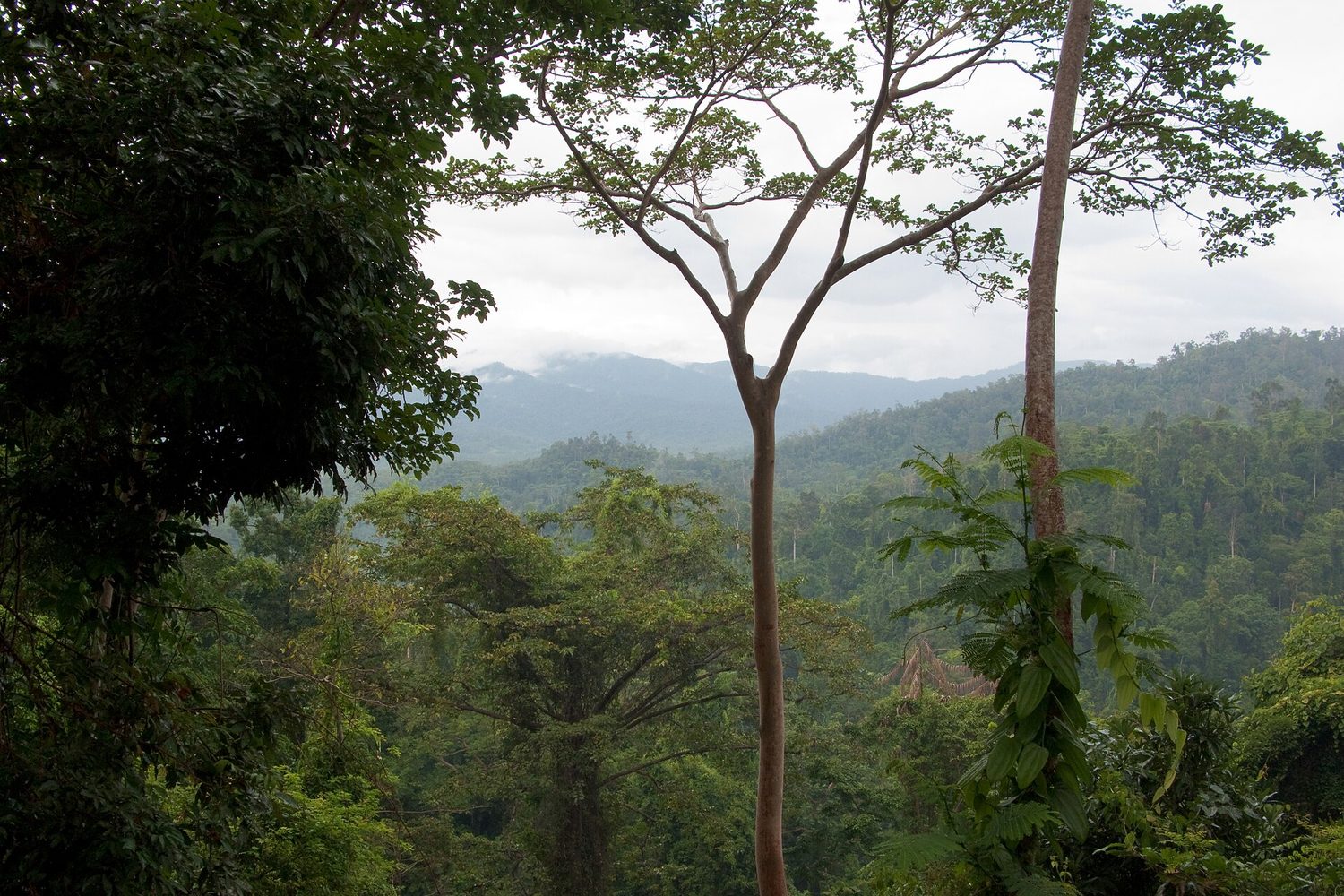
The two images below sit at opposite ends of the precipitation scale, which is why their life looks so different:

日本語

バイオームとは、気候と特徴的な生命によって定義される広大な地域である。陸上バイオーム(砂漠、草原、熱帯雨林、温帯森林、タイガ、ツンドラ)は主に気温と降水量によって決定される。それぞれに、その環境に適応した植物と動物が存在する。

以下の2つの画像は降水量スケールの両端に位置するため、その生物の姿が大きく異なる:

霧に包まれた熱帯雨林、急斜面に重層になった緑豊かな canopy
熱帯雨林:一年中暑く湿潤であり、重層になった植物群落と陸上バイオームの中で最も豊かな生物多様性をもたらす
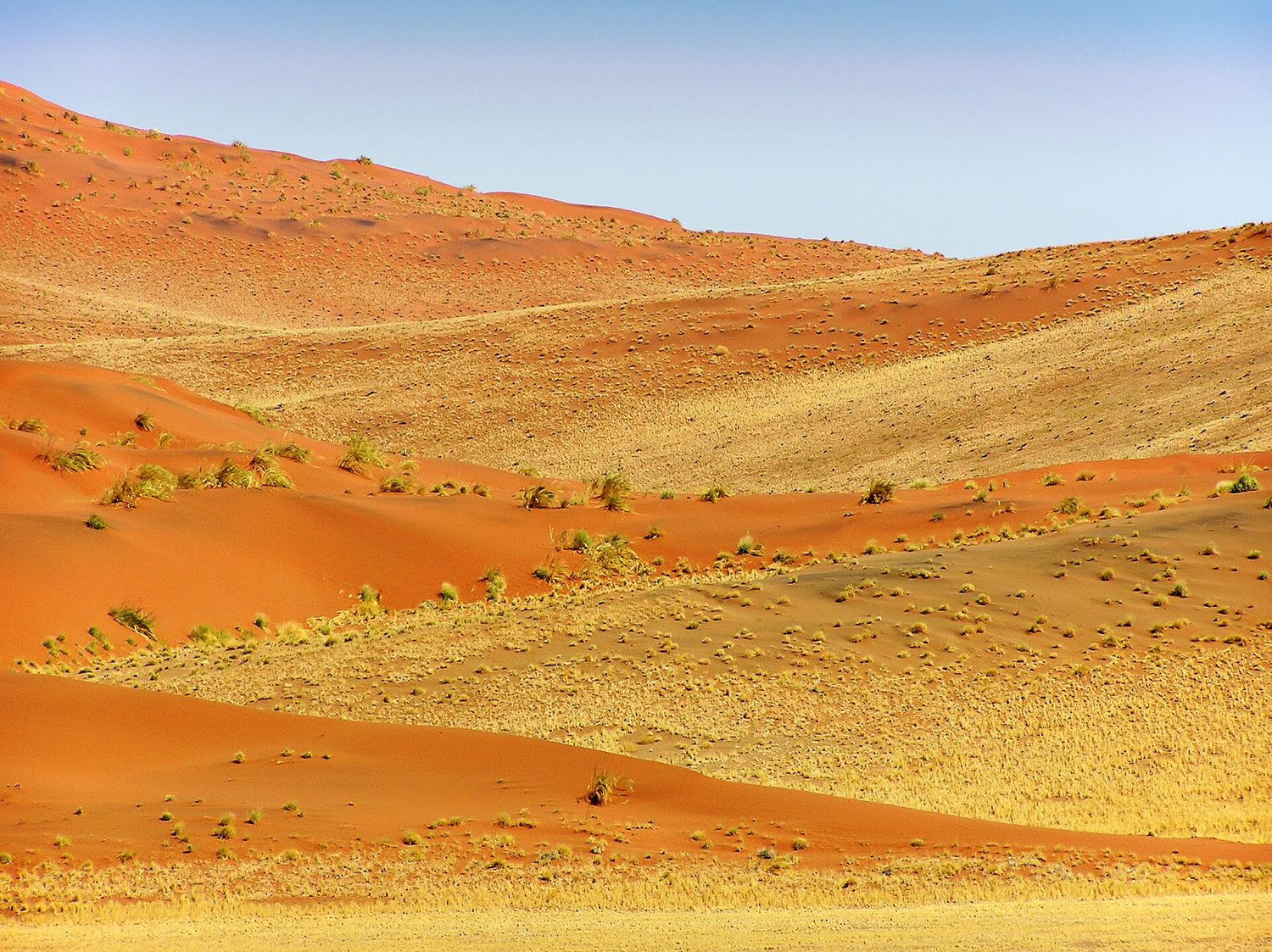
植物がほとんど生えていない裸の砂丘からなる乾燥した砂漠
砂漠: 降水量が極めて低いため、乾适应性のある希薄な生物のみが生息できる
Vocabulary · ⁨語彙⁩ Train · ⁨練習する⁩
English 日本語
ecosystem/ˈiːkəʊsɪstəm/ 生態系
predation/prɪˈdeɪʃn/ 捕食
competition/ˌkɒmpəˈtɪʃn/ 競争
symbiosis/ˌsɪmbaɪˈəʊsɪs/ 共生
biome/ˈbaɪəʊm/ 生物群系
temperature and precipitation/ˈtemprɪtʃə ænd prɪˌsɪpɪˈteɪʃn/ 温度と降水量
tropical rainforest/ˈtrɒpɪkl ˈreɪnfɒrɪst/ 熱帯雨林
desert/ˈdezət/ 砂漠
salinity/seɪˈlɪnɪti/ 塩分濃度
Estuaries/ˈestjuːəriz/ 河口
1.3

Aquatic Biomes · ⁨水生生物群系⁩

Syllabus · ⁨シラバス⁩
English

Enduring Understanding (ERT-1): Ecosystems are the result of biotic and abiotic interactions.

Learning Objective ERT-1.C: Describe the global distribution and principal environmental aspects of aquatic biomes.

  • ERT-1.C.1 Freshwater biomes include streams, rivers, ponds, and lakes. These freshwater biomes are a vital resource for drinking water.
  • ERT-1.C.2 Marine biomes include oceans, coral reefs, marshland, and estuaries. Algae in marine biomes supply a large portion of the Earth's oxygen, and also take in carbon dioxide from the atmosphere.
  • ERT-1.C.3 The global distribution of nonmineral marine natural resources, such as different types of fish, varies because of some combination of salinity, depth, turbidity, nutrient availability, and temperature.
日本語

持続的理解 (ERT-1): エコシステムは生物的要因と非生物的要因の相互作用の結果である。

学習目標 ERT-1.C: 水生生物帯の世界的な分布と主要な環境的要因について記述すること。

  • ERT-1.C.1 淡水生物帯には、川、河川、池、湖が含まれる。これらの淡水生物帯は飲料水にとって重要な資源である。
  • ERT-1.C.2 海洋生物帯には、海洋、サンゴ礁、湿地、河口域が含まれる。海洋生物帯の藻類は地球の酸素の大部分を提供し、大気中の二酸化炭素も取り込む。
  • ERT-1.C.3 魚の種類など、多様な魚類を含む非鉱物性海洋天然資源の世界的な分布は、塩分濃度、水深、濁度、養分利用可能性、温度の組み合わせにより異なる。

Source: College Board AP Course and Exam Description · ⁨出典: College Board AP コースおよび試験説明書⁩

English

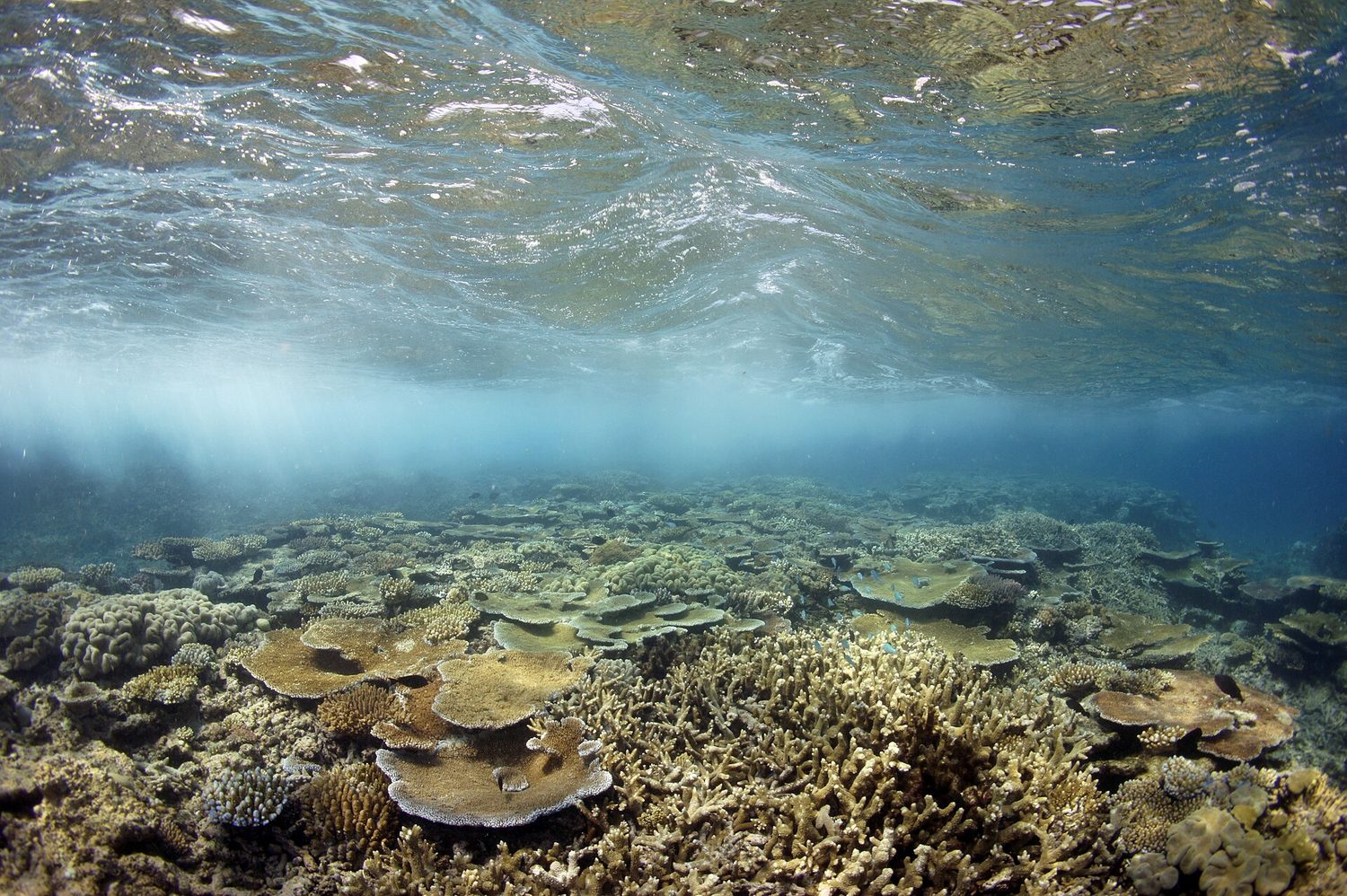
Aquatic biomes cover more of Earth than land. Freshwater (streams, lakes, wetlands) and marine (open ocean, coral reefs, estuaries) systems differ in salinity 盐度, sunlight, and nutrients. Estuaries 河口 (where rivers meet the sea) and coral reefs are especially productive and biodiverse.

日本語

水生生物群系は陸地よりも地球表面を広く占めています。淡水(川、湖、湿地)と海洋(開放海域、サンゴ礁、河口)システムは、塩分濃度、日光、養分の点で異なります。河口(川と海が合流する場所)やサンゴ礁は特に生産性が高く、多様な生物種が存在します。

海面直下にあるサンゴ礁の水中写真、サンゴに覆われている
サンゴ礁: 暖かく日光が差し込む浅い水場であるため、最も生産性が高く多様な生物種が存在する生物群系の一つです
Vocabulary · ⁨語彙⁩ Train · ⁨練習する⁩
English 日本語
coral reef/ˈkɒrəl riːf/ サンゴ礁
1.4

The Carbon Cycle · ⁨炭素サイクル⁩

Syllabus · ⁨シラバス⁩
English

Enduring Understanding (ERT-1): Ecosystems are the result of biotic and abiotic interactions.

Learning Objective ERT-1.D: Explain the steps and reservoir interactions in the carbon cycle.

  • ERT-1.D.1 The carbon cycle is the movement of atoms and molecules containing the element carbon between sources and sinks.
  • ERT-1.D.2 Some of the reservoirs in which carbon compounds occur in the carbon cycle hold those compounds for long periods of time, while some hold them for relatively short periods of time.
  • ERT-1.D.3 Carbon cycles between photosynthesis and cellular respiration in living things.
  • ERT-1.D.4 Plant and animal decomposition have led to the storage of carbon over millions of years. The burning of fossil fuels quickly moves that stored carbon into atmospheric carbon, in the form of carbon dioxide.
日本語

持続的理解 (ERT-1): エコシステムは生物的要因と非生物的要因の相互作用の結果である。

学習目標 ERT-1.D: 炭素循環の過程と貯留庫との相互作用について説明すること。

  • ERT-1.D.1 炭素循環とは、炭素元素を含む原子や分子が源と沈殿物の間を移動するプロセスである。
  • ERT-1.D.2 炭素循環に含まれる炭素化合物の貯留庫の中には、それらを長期に保持するものもあれば、比較的短期に保持するものもある。
  • ERT-1.D.3 生物体内では、炭素は光合成と細胞呼吸の間を循環する。
  • ERT-1.D.4 植物と動物の分解により、数百万年にわたり炭素が蓄積されてきた。化石燃料の燃焼により、この蓄積された炭素は二酸化炭素の形で大気中の炭素として急速に放出される。

Source: College Board AP Course and Exam Description · ⁨出典: College Board AP コースおよび試験説明書⁩

English
The carbon cycle

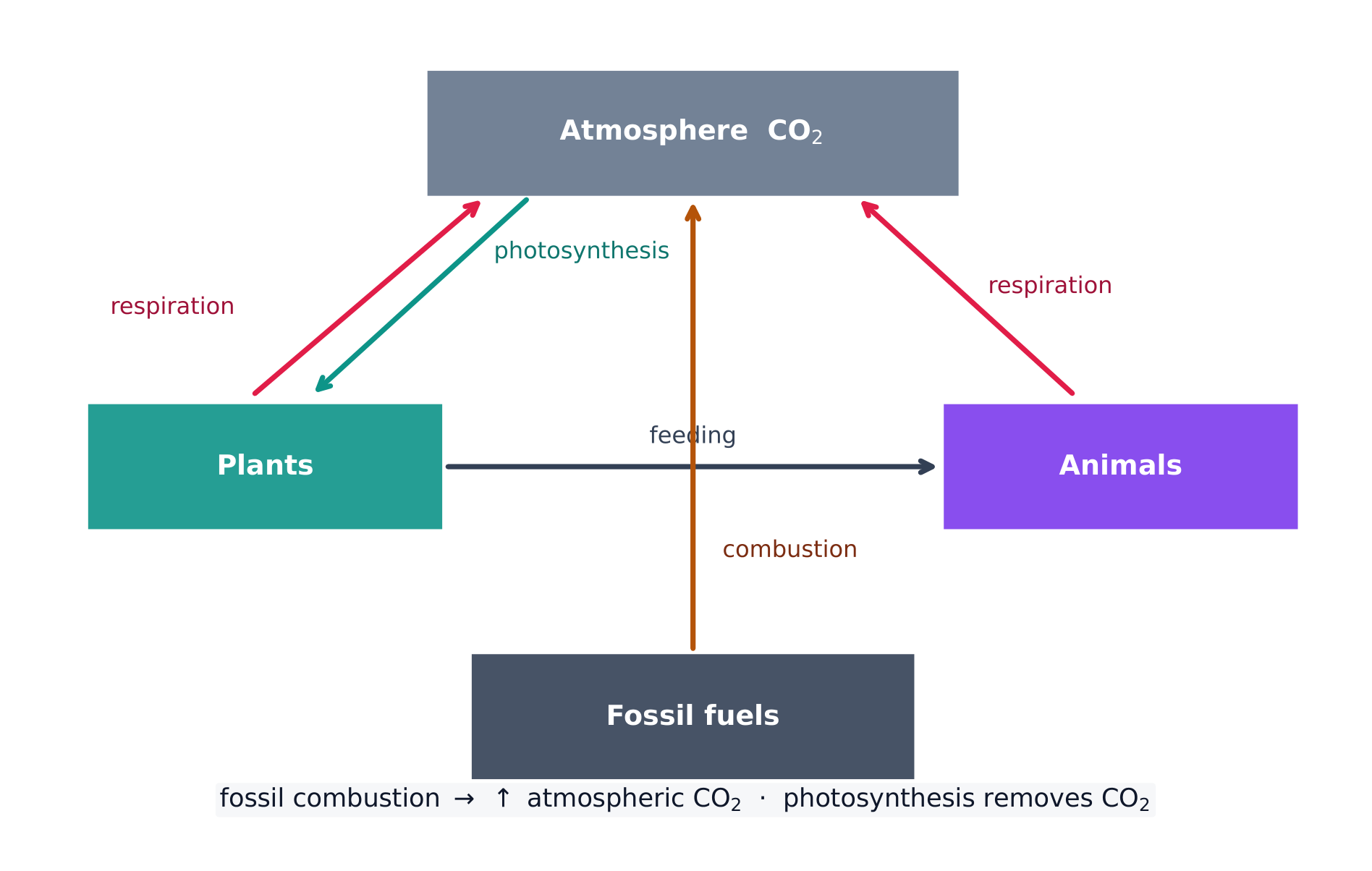
The carbon cycle 碳循环 moves carbon between the atmosphere, organisms, oceans, and rocks. Photosynthesis removes $\text{CO}_2$; respiration, decomposition, and burning fossil fuels 化石燃料 return it. Burning fossil fuels adds carbon far faster than natural processes remove it.

日本語
炭素循環

炭素循環は、大気、生物、海洋、岩石の間で炭素を移動させます。光合成によって $\text{CO}_2$ が取り除かれ、呼吸作用、分解、および化石燃料の燃焼によって再び大気へ戻されます。化石燃料の燃焼は、自然過程による除去よりも遥かに速く炭素を追加しています。

炭素循環:大気、生物、化石燃料の間で炭素を移動させる
Vocabulary · ⁨語彙⁩ Train · ⁨練習する⁩
English 日本語
carbon cycle/ˈkɑːbən ˈsaɪkl/ 炭素循環
fossil fuels/ˈfɒsl ˈfjuːəlz/ 化石燃料
1.5

The Nitrogen Cycle · ⁨窒素サイクル⁩

Syllabus · ⁨シラバス⁩
English

Enduring Understanding (ERT-1): Ecosystems are the result of biotic and abiotic interactions.

Learning Objective ERT-1.E: Explain the steps and reservoir interactions in the nitrogen cycle.

  • ERT-1.E.1 The nitrogen cycle is the movement of atoms and molecules containing the element nitrogen between sources and sinks.
  • ERT-1.E.2 Most of the reservoirs in which nitrogen compounds occur in the nitrogen cycle hold those compounds for relatively short periods of time.
  • ERT-1.E.3 Nitrogen fixation is the process in which atmospheric nitrogen is converted into a form of nitrogen (primarily ammonia) that is available for uptake by plants and that can be synthesized into plant tissue.
  • ERT-1.E.4 The atmosphere is the major reservoir of nitrogen.
日本語

持続的理解 (ERT-1): エコシステムは生物的要因と非生物的要因の相互作用の結果である。

学習目標 ERT-1.E: 窒素循環の過程と貯留庫との相互作用について説明すること。

  • ERT-1.E.1 窒素循環とは、窒素元素を含む原子や分子が源と沈殿物の間を移動するプロセスである。
  • ERT-1.E.2 窒素循環に含まれる窒素化合物の大多数の貯留庫は、それらを比較的短期間に保持する。
  • ERT-1.E.3 窒素固定とは、大気中の窒素を植物が吸収して植物組織に合成可能な形態(主にアンモニア)に変換するプロセスである。
  • ERT-1.E.4 大気は窒素の主要な貯留庫である。

Source: College Board AP Course and Exam Description · ⁨出典: College Board AP コースおよび試験説明書⁩

English
The nitrogen cycle

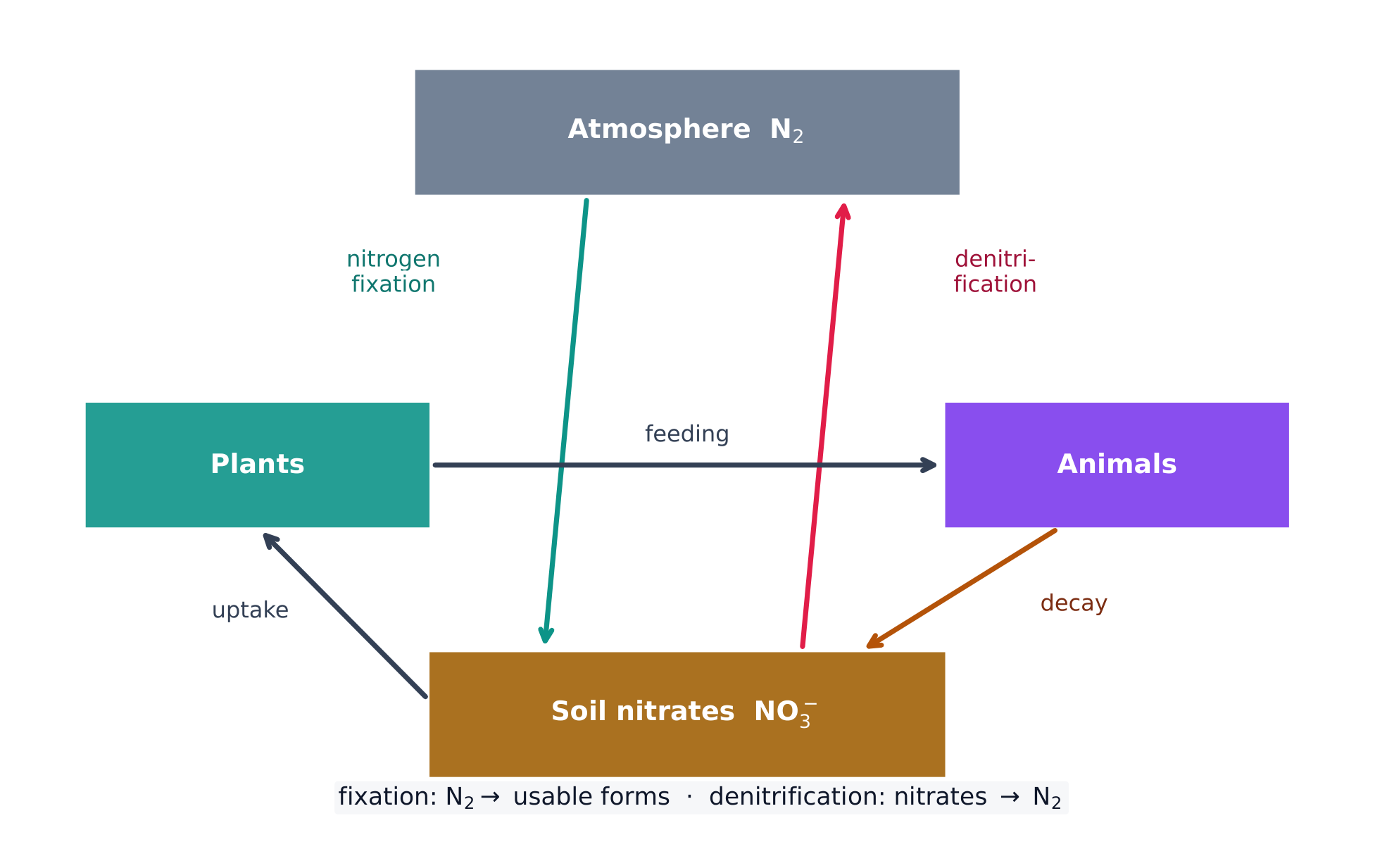
The nitrogen cycle 氮循环 makes nitrogen usable for life. Nitrogen fixation 固氮 (by bacteria) converts atmospheric $\text{N}_2$ to ammonia; nitrification and assimilation pass it through organisms; denitrification returns $\text{N}_2$ to the air. Fertilizer adds reactive nitrogen, which can pollute water.

日本語
窒素循環

窒素循環は、生命が利用可能な形に窒素を変換します。窒素固定(細菌によるもの)は、大気の $\text{N}_2$ をアンモニアに変換し、硝化作用と同化作用によって生物体内を通過します。脱窒作用によって $\text{N}_2$ が大気に戻されます。肥料は反応性の高い窒素を追加するため、水質汚染の原因となることがあります。

窒素循環:N は土壌の硝酸塩に固定され、食物連鎖を通じて伝わり、脱窒作用によって大気に戻される
窒素循環:N$_2$ は土壌の硝酸塩に固定され、食物連鎖を通じて伝わり、脱窒作用によって大気に戻される
Vocabulary · ⁨語彙⁩ Train · ⁨練習する⁩
English 日本語
nitrogen cycle/ˈnaɪtrədʒn ˈsaɪkl/ 窒素循環
Nitrogen fixation/ˈnaɪtrədʒn fɪkˈseɪʃn/ 窒素固定
1.6

The Phosphorus Cycle · ⁨ホウ素循環⁩

Syllabus · ⁨シラバス⁩
English

Enduring Understanding (ERT-1): Ecosystems are the result of biotic and abiotic interactions.

Learning Objective ERT-1.F: Explain the steps and reservoir interactions in the phosphorus cycle.

  • ERT-1.F.1 The phosphorus cycle is the movement of atoms and molecules containing the element phosphorus between sources and sinks.
  • ERT-1.F.2 The major reservoirs of phosphorus in the phosphorus cycle are rock and sediments that contain phosphorus-bearing minerals.
  • ERT-1.F.3 There is no atmospheric component in the phosphorus cycle, and the limitations this imposes on the return of phosphorus from the ocean to land make phosphorus naturally scarce in aquatic and many terrestrial ecosystems. In undisturbed ecosystems, phosphorus is the limiting factor in biological systems.
日本語

持続的理解 (ERT-1): エコシステムは生物的要因と非生物的要因の相互作用の結果である。

学習目標 ERT-1.F: リン循環の過程と貯留庫との相互作用について説明すること。

  • ERT-1.F.1 リン循環とは、リン元素を含む原子や分子が源と沈殿物の間を移動するプロセスである。
  • ERT-1.F.2 リン循環における主要な貯留庫は、リン含有鉱物を含む岩石と堆積物である。
  • ERT-1.F.3 リン循環には大気成分が存在せず、これが海洋から陸地へのリンの還元に制約をもたらしているため、リンは水生および多くの陸上生態系で自然に希少である。未攪乱された生態系において、リンは生物系における制限要因となる。

Source: College Board AP Course and Exam Description · ⁨出典: College Board AP コースおよび試験説明書⁩

English

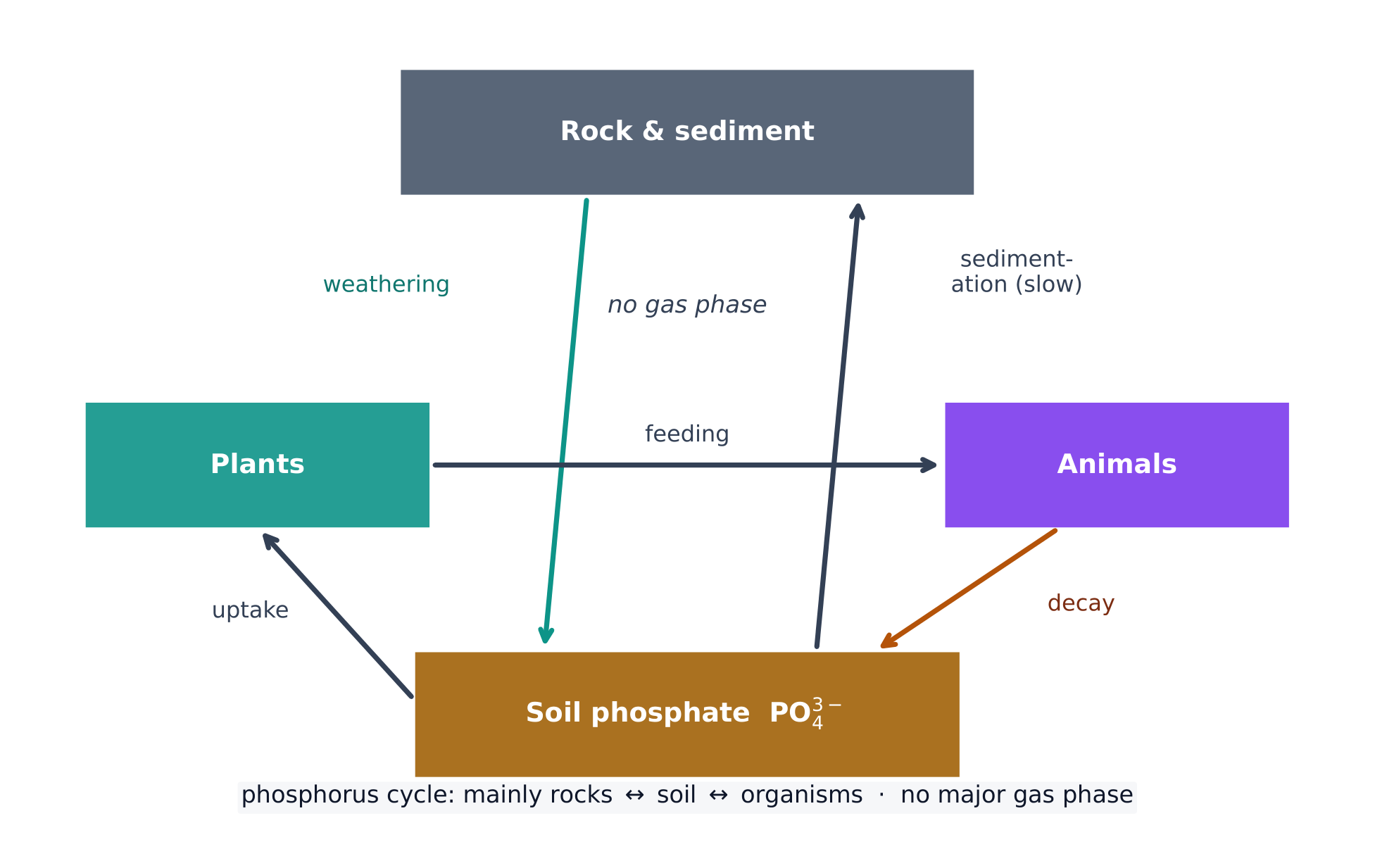
The phosphorus cycle 磷循环 has no atmospheric (gas) stage – phosphorus moves through rock, soil, water, and organisms. It is slow and often the limiting nutrient 限制性营养 for growth, so added phosphorus (fertilizer, detergents) can trigger algal blooms.

日本語

リン循環には大気(ガス)段階がありません。リンは岩石、土壌、水、生物を通じて移動します。このプロセスは遅く、成長における制限栄養素となることが多いため、追加されたリン(肥料、洗剤など)は藻類の爆発的増殖を引き起こすことがあります。

リン循環:岩石が風化して土壌のリン酸塩となり、ガス相なしでゆっくりと堆積して戻る
Vocabulary · ⁨語彙⁩ Train · ⁨練習する⁩
English 日本語
phosphorus cycle/ˈfɒsfɔːrəs ˈsaɪkl/ リン循环
limiting nutrient/ˈlɪmɪtɪŋ ˈnjuːtrɪənt/ 制限栄養素
1.7

The Hydrologic (Water) Cycle · ⁨水循環⁩

Syllabus · ⁨シラバス⁩
English

Enduring Understanding (ERT-1): Ecosystems are the result of biotic and abiotic interactions.

Learning Objective ERT-1.G: Explain the steps and reservoir interactions in the hydrologic cycle.

  • ERT-1.G.1 The hydrologic cycle, which is powered by the sun, is the movement of water in its various solid, liquid, and gaseous phases between sources and sinks.
  • ERT-1.G.2 The oceans are the primary reservoir of water at the Earth's surface, with ice caps and groundwater acting as much smaller reservoirs.
日本語

持続的理解 (ERT-1): エコシステムは生物的要因と非生物的要因の相互作用の結果である。

学習目標 ERT-1.G: 水循環の過程と貯留庫との相互作用について説明すること。

  • ERT-1.G.1 太陽によって駆動される水循環とは、固体、液体、気体の各相における水が、源と貯水池の間を移動する現象である。
  • ERT-1.G.2 海洋は地表における水の主要な貯水池であり、氷冠や地下水はより小さな貯水池として機能している。

Source: College Board AP Course and Exam Description · ⁨出典: College Board AP コースおよび試験説明書⁩

English
The hydrologic (water) cycle

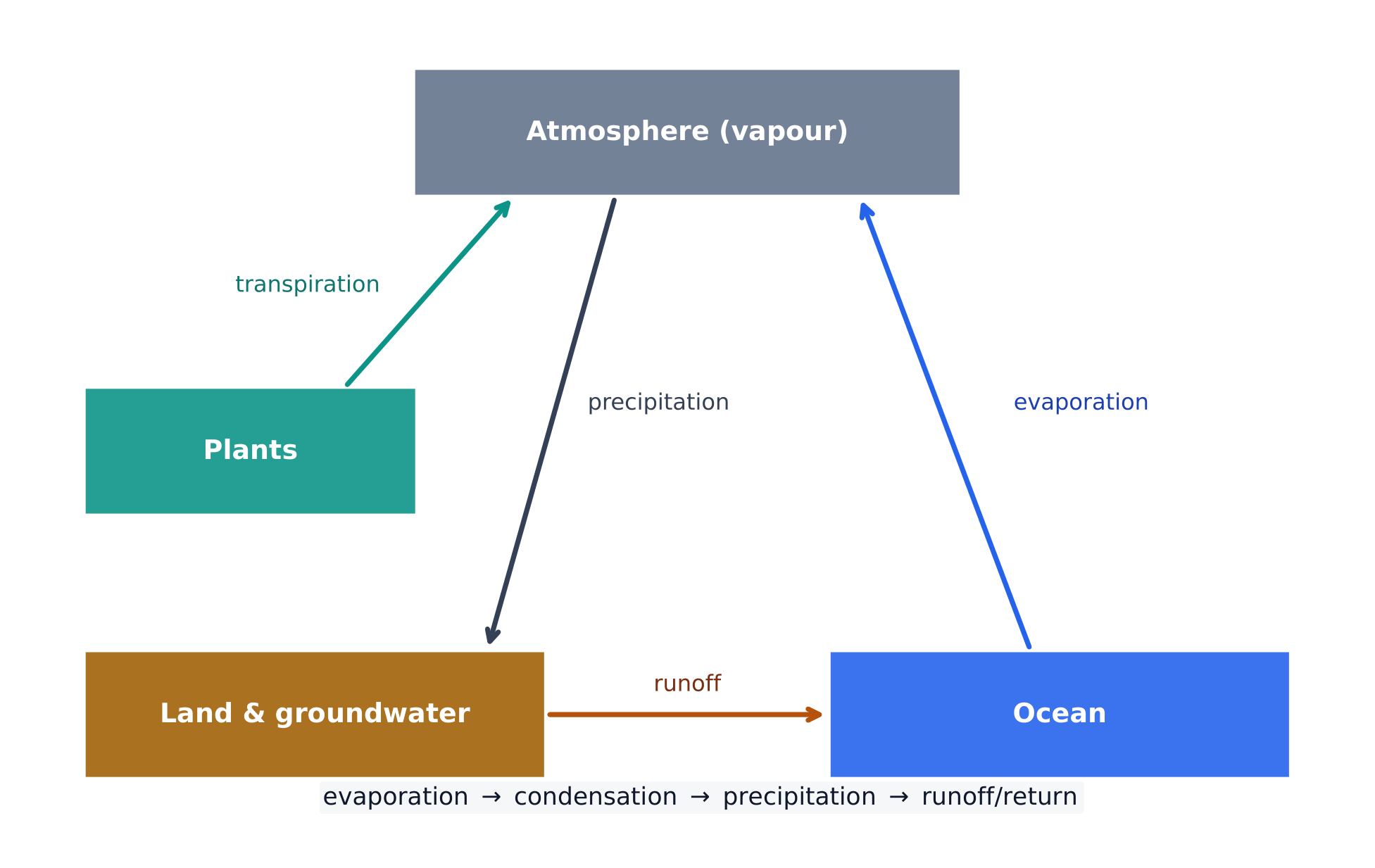
The water cycle 水循环 moves water by evaporation 蒸发, transpiration 蒸腾 (from plants), condensation, precipitation, and runoff. It distributes fresh water and shapes climate; human use and land changes can alter its flow.

日本語
水文循環(水循環)

水循環は、蒸発、蒸散(植物からの水分放出)、凝縮、降水、および地表流出によって水を移動させます。淡水を分配し、気候を形成しますが、人間の活動や土地の変化によりその流れが変わることもあります。

水循環:蒸発と蒸散によって水が大気に上げられ、降水と地表流出によって戻される
Vocabulary · ⁨語彙⁩ Train · ⁨練習する⁩
English 日本語
water cycle/ˈwɔːtə ˈsaɪkl/ 水循環
evaporation/ɪˌvæpəˈreɪʃn/ 蒸発
transpiration/trænspəˈreɪʃn/ 蒸散作用
Primary productivity/ˈpraɪməri ˌprɒdəkˈtɪvɪti/ 一次生産量
trophic levels/ˈtrəʊfɪk ˈlevlz/ 栄養段階
producers/prəˈdjuːsəz/ 生産者
primary, secondary, and tertiary consumers/ˈpraɪməri ˈsekəndəri ænd ˈtɜːʃjəri kənˈsuːməz/ 一次、二次、三次消費者
decomposers/ˌdiːkəmˈpəʊzəz/ 分解者
food chain/fuːd tʃeɪn/ 食物鎖
1.8

Primary Productivity · ⁨一次生産量⁩

Syllabus · ⁨シラバス⁩
English

Enduring Understanding (ENG-1): Energy can be converted from one form to another.

Learning Objective ENG-1.A: Explain how solar energy is acquired and transferred by living organisms.

  • ENG-1.A.1 Primary productivity is the rate at which solar energy (sunlight) is converted into organic compounds via photosynthesis over a unit of time.
  • ENG-1.A.2 Gross primary productivity is the total rate of photosynthesis in a given area.
  • ENG-1.A.3 Net primary productivity is the rate of energy storage by photosynthesizers in a given area, after subtracting the energy lost to respiration.
  • ENG-1.A.4 Productivity is measured in units of energy per unit area per unit time (e.g., $\text{kcal/m}^2\text{/yr}$).
  • ENG-1.A.5 Most red light is absorbed in the upper 1m of water, and blue light only penetrates deeper than 100m in the clearest water. This affects photosynthesis in aquatic ecosystems, whose photosynthesizers have adapted mechanisms to address the lack of visible light.
日本語

持続的理解 (ENG-1): エネルギーは一つの形から別の形へと変換されることができる。

学習目標 ENG-1.A: 生物が太陽エネルギーを取得し、伝達する方法を説明する。

  • ENG-1.A.1 一次生産性とは、単位時間あたりに光合成によって太陽エネルギー(日光)が有機化合物に変換される速度のことである。
  • ENG-1.A.2 総一次生産性は、特定の地域における光合成の総量である。
  • ENG-1.A.3 純一次生産性は、呼吸によるエネルギー損失を差し引いた後の、光合成生物が特定の地域に蓄積するエネルギーの速度である。
  • ENG-1.A.4 生産性は、単位面積・単位時間あたりのエネルギー単位で測定される(例:$\text{kcal/m}^2\text{/yr}$)。
  • ENG-1.A.5 赤色光の大部分は水中の上層1mで吸収され、青色光は最も澄んだ水でも100mより深い場所には届かない。これは水生生態系に影響を与え、これらの生態系の光合成生物は可視光の不足に対応するための適応機構を持っている。

Source: College Board AP Course and Exam Description · ⁨出典: College Board AP コースおよび試験説明書⁩

English

Primary productivity 初级生产力 is the rate at which producers capture energy (usually by photosynthesis). Gross primary productivity (GPP) is the total captured; net primary productivity (NPP) is what remains after the producers' own respiration – the energy available to the rest of the ecosystem. Warm, wet, sunlit systems (rainforests, reefs) are most productive.

Worked example. If producers in a grassland capture $20{,}000\ \text{kcal/m}^2/\text{yr}$ of energy (GPP) and burn $8{,}000\ \text{kcal/m}^2/\text{yr}$ in their own respiration, then $\text{NPP}=\text{GPP}-R=20{,}000-8{,}000=12{,}000\ \text{kcal/m}^2/\text{yr}$. Only that NPP – not the full GPP – is available to the consumers above.

日本語

一次生産量とは、生産者がエネルギーを捕獲する速度(通常は光合成によるもの)のことです。総一次生産量 (GPP) は捕獲されたエネルギーの総量であり、正味一次生産量 (NPP) は生産者の自身呼吸後の残存量であり、生態系全体の他の生物が利用できるエネルギーです。温暖で湿潤かつ日光の多いシステム(熱帯雨林、サンゴ礁)が最も生産性が高いです。

** worked example.** 草原の生産者が $20{,}000\ \text{kcal/m}^2/\text{yr}$ のエネルギー(GPP)を捕獲し、自身呼吸で $8{,}000\ \text{kcal/m}^2/\text{yr}$ を消費する場合、 $\text{NPP}=\text{GPP}-R=20{,}000-8{,}000=12{,}000\ \text{kcal/m}^2/\text{yr}$ となります。消費者が利用できるのは、GPP全体ではなく、このNPPのみです。

Explore · ⁨探索⁩

Explore GPP, respiration and NPP

The energy producers capture (GPP) splits into what they burn for their own respiration $R$ and what is left over as new biomass — $\text{NPP} = \text{GPP} - R$, and useful + wasted always equals the input.

1.9

Trophic Levels · ⁨栄養段階⁩

Syllabus · ⁨シラバス⁩
English

Enduring Understanding (ENG-1): Energy can be converted from one form to another.

Learning Objective ENG-1.B: Explain how energy flows and matter cycles through trophic levels.

  • ENG-1.B.1 All ecosystems depend on a continuous inflow of high-quality energy in order to maintain their structure and function of transferring matter between the environment and organisms via biogeochemical cycles.
  • ENG-1.B.2 Biogeochemical cycles are essential for life and each cycle demonstrates the conservation of matter.
  • ENG-1.B.3 In terrestrial and near-surface marine communities, energy flows from the sun to producers in the lowest trophic levels and then upward to higher trophic levels.
日本語

持続的理解 (ENG-1): エネルギーは一つの形から別の形へと変換されることができる。

学習目標 ENG-1.B: 栄養段階を介したエネルギーの流れと物質の循環を説明する。

  • ENG-1.B.1 すべての生態系は、環境と生物の間の物質転送を生物地質化学サイクルを通じて維持するために、高品質なエネルギーの継続的な流入が必要とする。
  • ENG-1.B.2 生物地質化学サイクルは生命にとって不可欠であり、各サイクルは物質保存の法則を示している。
  • ENG-1.B.3 陸上および表層海洋コミュニティでは、エネルギーは太陽から最低の栄養段階にある生産者を経由して、高い栄養段階へと上方へ流れる。

Source: College Board AP Course and Exam Description · ⁨出典: College Board AP コースおよび試験説明書⁩

English
Energy flow & the 10% rule

Organisms occupy trophic levels 营养级: producers 生产者 (make their own food), then primary, secondary, and tertiary consumers 消费者, with decomposers 分解者 recycling nutrients at every level. Each level depends on the energy captured below it.

日本語
エネルギーの流れと10%則

生物は栄養段階を占めます:生産者(自らの食糧を作る)、 primary consumers、secondary consumers、tertiary consumers、そして各段階で養分をリサイクルする分解者があります。各段階は、その下の段階で捕獲されたエネルギーに依存しています。

1.10

Energy Flow and the 10% Rule · ⁨エネルギーの流れと10%の法則⁩

Syllabus · ⁨シラバス⁩
English

Enduring Understanding (ENG-1): Energy can be converted from one form to another.

Learning Objective ENG-1.C: Determine how the energy decreases as it flows through ecosystems.

  • ENG-1.C.1 The 10% rule approximates that in the transfer of energy from one trophic level to the next, only about 10% of the energy is passed on.
  • ENG-1.C.2 The loss of energy that occurs when energy moves from lower to higher trophic levels can be explained through the laws of thermodynamics.
日本語

持続的理解 (ENG-1): エネルギーは一つの形から別の形へと変換されることができる。

学習目標 ENG-1.C: エネルギーが生態系を通じて流れるにつれてどのように減少するかを決定すること。

  • ENG-1.C.1 10%則は、エネルギーが栄養段階から次の栄養段階へ移動する際、約10%のエネルギーのみが受け継がれることを概算したものである。
  • ENG-1.C.2 低栄養段階から高栄養段階へのエネルギー移動に伴うエネルギーの損失は、熱力学の法則によって説明できる。

Source: College Board AP Course and Exam Description · ⁨出典: College Board AP コースおよび試験説明書⁩

English

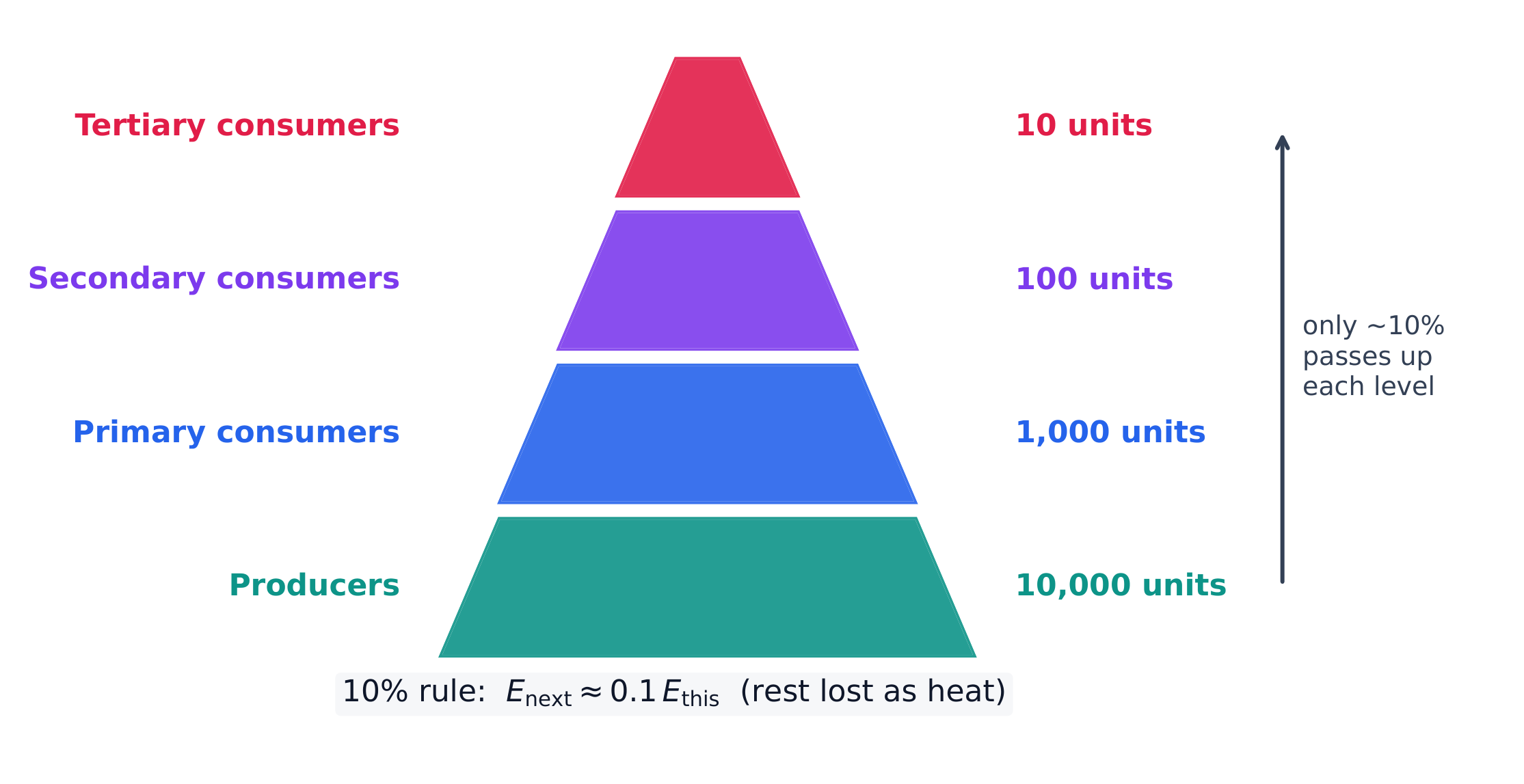
Energy flows one way through an ecosystem and is lost as heat at each transfer. The 10% rule: only about 10% of the energy at one trophic level passes to the next; the other 90% powers life processes and escapes as heat. This is why food chains are short and top predators are few.

Worked example. Continuing from $12{,}000\ \text{kcal/m}^2/\text{yr}$ of NPP at the producer level, the primary consumers receive about $10\%=1{,}200\ \text{kcal}$, secondary consumers $\approx120\ \text{kcal}$, and tertiary consumers only $\approx12\ \text{kcal}$. After three transfers the energy has shrunk a thousand-fold – the arithmetic reason a fourth or fifth trophic level rarely has enough to support it.

日本語

エネルギーは生態系内で一方向に流れ、各移動過程で熱として失われます。10%則によると、ある栄養段階のエネルギーのうち約10%だけが次の段階へ移り、残りの90%は生命活動を維持するために使われ、熱として逃げてしまいます。これが、食物鎖が短く、上位の捕食者が少ない理由です。

解題例。 NPP(純一次生産量)の生产者レベルにおける$12{,}000\ \text{kcal/m}^2/\text{yr}$から続き、一次消費者は約$10\%=1{,}200\ \text{kcal}$、二次消費者は$\approx120\ \text{kcal}$、三次消費者はわずか$\approx12\ \text{kcal}$を受け取ります。エネルギーが3回の移動で千倍に減少しているため、第四または第五の栄養段階がそれを支えるだけのエネルギーを持たないのが arithmetic(計算)上の理由です。

エネルギーピラミッド:エネルギーの約10%だけが次の栄養段階へ移る
Explore · ⁨探索⁩

Explore the 10% rule

Set the energy producers capture and the ecological efficiency, then watch only about a tenth pass to each level up — this is why the apex predator is left with so little and food chains stay short.

1.11

Food Chains and Food Webs · ⁨食物鎖と食物網⁩

Syllabus · ⁨シラバス⁩
English

Enduring Understanding (ENG-1): Energy can be converted from one form to another.

Learning Objective ENG-1.D: Describe food chains and food webs, and their constituent members by trophic level.

  • ENG-1.D.1 A food web is a model of an interlocking pattern of food chains that depicts the flow of energy and nutrients in two or more food chains.
  • ENG-1.D.2 Positive and negative feedback loops can each play a role in food webs. When one species is removed from or added to a specific food web, the rest of the food web can be affected.
日本語

持続的理解 (ENG-1): エネルギーは一つの形から別の形へと変換されることができる。

学習目標 ENG-1.D: 食物連鎖と食物網、およびそれらの構成要素である各栄養段階の生物について記述すること。

  • ENG-1.D.1 食物網とは、2つ以上の食物連鎖にわたってエネルギーや養分の流れを表す、食物連鎖が絡み合ったパターンのモデルである。
  • ENG-1.D.2 正のフィードバックループと負のフィードバックループは、どちらも食物網において役割を果たすことがある。特定の食物網からある種が除去されたり追加されたりすると、食物網の残りの部分に影響が及ぶことがある。

Source: College Board AP Course and Exam Description · ⁨出典: College Board AP コースおよび試験説明書⁩

English

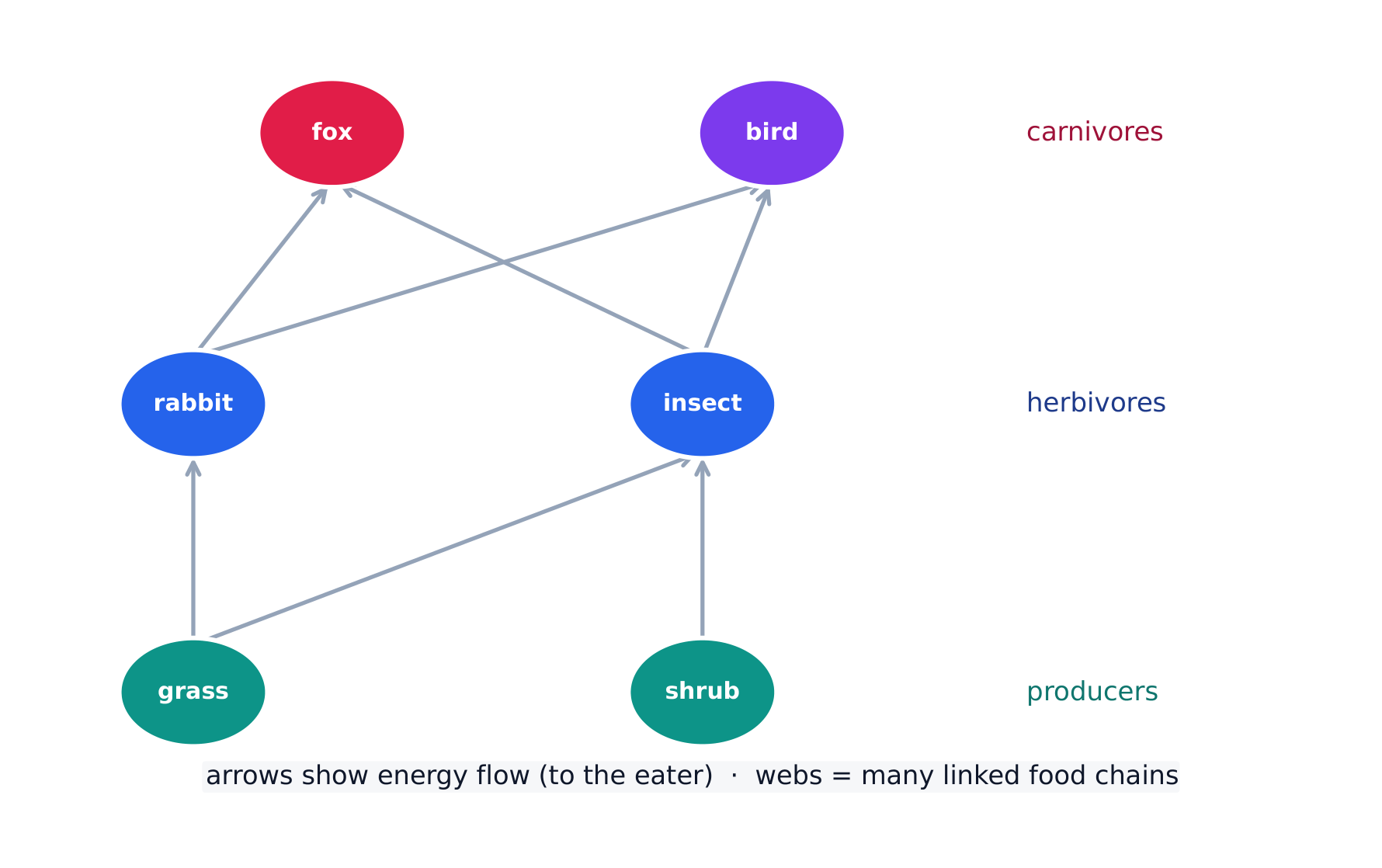
A food chain 食物链 is a single line of who-eats-whom; a food web 食物网 links many chains into a realistic picture of feeding relationships. Because species are interconnected, removing one (especially a keystone species 关键种) can disrupt the whole web.

日本語

食物鎖は「誰が誰を食べるか」の単一の連なりを示し、食物網は多くの食物鎖をつなぐことで、摂食関係の現実的な図景を提供します。生物種は相互に結びついているため、一つの種(特にキーストーン種)を取り除くと、網全体が乱れることがあります。

食物網は多くの食物鎖をつなぎ、矢印はエネルギーの流れの方向を示している
Vocabulary · ⁨語彙⁩ Train · ⁨練習する⁩
English 日本語
food web/fuːd web/ 食物網
keystone species/ˈkiːstəʊn ˈspiːsiːz/ キーストーン種
1.11

Exam tips · ⁨試験対策⁩

English
  • Remember energy flows and is lost (the 10% rule) while matter cycles (carbon, nitrogen, phosphorus, water).
  • Apply the 10% rule down a food chain and know NPP = GPP − respiration (only NPP is available to consumers).
  • Learn each biogeochemical cycle's stores and how humans disturb it (burning fossil fuels adds CO₂; fertiliser adds nitrogen/phosphorus).
  • Producers are most abundant because so little energy reaches the top.
  • Use correct units and show your arithmetic on the free-response math questions (no calculator — keep numbers round).
日本語
  • エネルギーは流れ失われる(10%則)ことを覚え、物質は循環する(炭素、窒素、リン、水)こと。
  • 食物鎖を下へ向かって10%則を適用し、NPP = GPP − 呼吸作用(消費者が利用できるのはNPPのみ)を知ること。
  • 各生化学循環の蓄積量と、人間がそれをどう撹乱するかを学ぶ(化石燃料の燃焼はCO₂を追加、肥料は窒素/リンを追加)。
  • 生産者は、エネルギーの頂点まで届く量が非常に少ないため、最も豊富である。
  • 自由記述式の計算問題では正しい単位を使用し、計算過程を示す(電卓不可 — 数字は丸い値で保つ)。

Interactive lessons on this topic · ⁨このトピックのインタラクティブ授業⁩

Work through it step by step, with instant-check exercises. · ⁨一歩ずつ進め、即時チェック付きの問題で学習します。⁩

Past Papers · ⁨過去問⁩

More topics in AP Environmental Science · ⁨AP Environmental Science の他のトピック⁩

Log in or create account · ⁨ログインまたはアカウント作成⁩

IGCSE, A-Level & AP