Skip to content · ⁨דלג לתוכן⁩
Subjects · ⁨נושאים⁩

IGCSE English · ⁨אנגלית IGCSE⁩

Tips · ⁨טיפים⁩

IGCSE English as a Second Language (0510) is assessed on four skills: reading, writing, listening and speaking. The writing topics here are organised by the text type the exam asks for — informal email, formal letter, report, article, review, essay — because each has its own conventions and is marked against them.

For a second-language candidate, marks are rarely lost on ideas. They are lost on register (an informal email written formally), structure (an article with no headline or paragraphs), and accuracy in a few repeated patterns — articles, tenses, prepositions.

Fixing your own five recurring errors is worth more than learning new vocabulary.

  • 1

    Reading skills · ⁨מיומנויות קריאה⁩

    Watch lesson · ⁨צפה בשיעור⁩
    1.1

    Reading for specific information · ⁨קריאה למידע ספציפי⁩

    Syllabus · ⁨סיילבוס⁩
    English
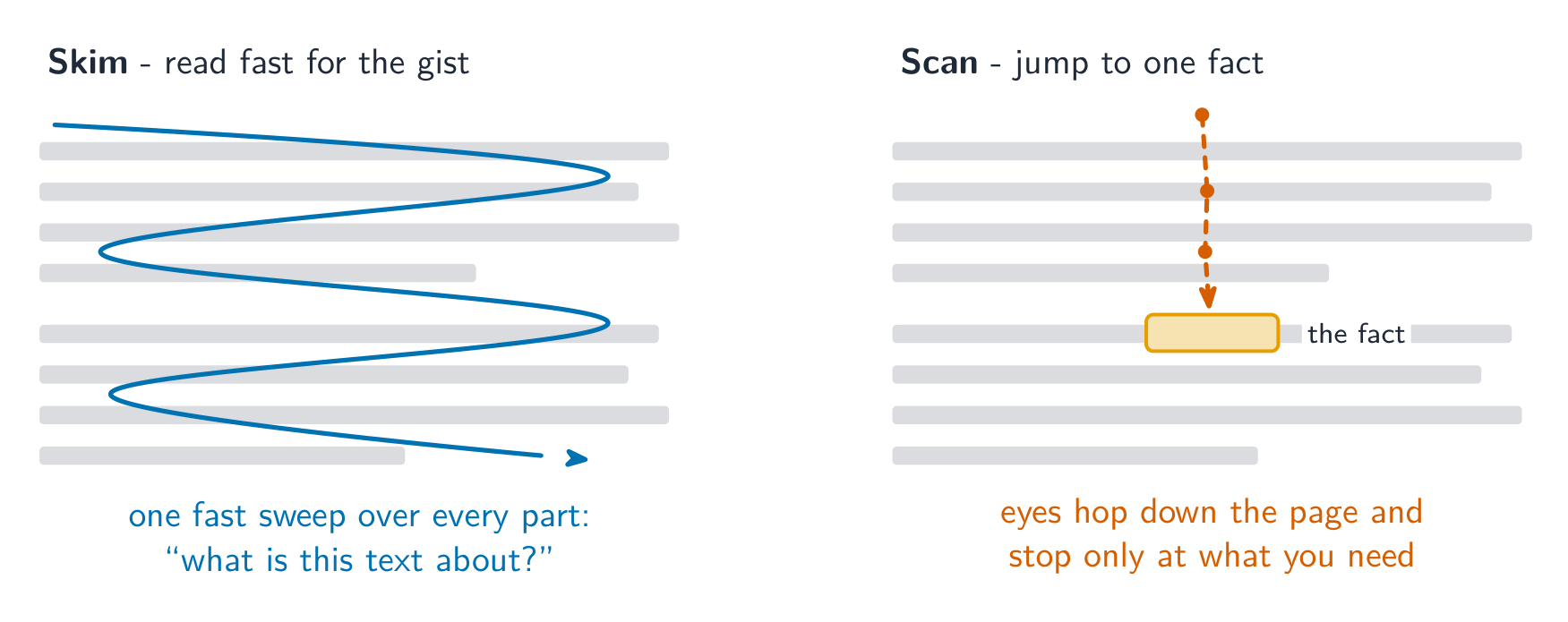
    1. skim a text quickly to get the general idea, then scan to locate specific facts, names, numbers, times and places
    2. answer short questions with a single word or short phrase, using the exact detail from the text
    3. predict what kind of information a question is asking for before reading the text closely
    עברית
    1. קריאה מהירה בטקסט לקבלת הרעיון הכללי, ולאחר מכן סריקה למציאת עובדות, שמות, מספרים, זמנים ומקומות ספציפיים.
    2. ענה בשאלות קצרות במילה אחת או ביטוי קצר, תוך שימוש בפרטים מדויקים מהטקסט
    3. נבא איזה סוג מידע שואלת השאלה לפני שקוראים את הטקסט בקפדנות
    Source: Cambridge International syllabus · ⁨מקור: הסיילבוס הבינלאומי של קמבריד'ג'⁩

    English

    In the exam you do not read every word slowly. You change your speed to fit your goal.

    Skim first, then scan

    • First skim 略读 the text. Read it fast to get the gist 大意 — the general idea. Look at the title, the first line of each paragraph 段落, and any pictures.
    • Then scan 扫读 to find one piece of information. Move your eyes quickly down the page. Do not read every word. Stop when you see what you need.
    • Use scanning for facts like names, numbers, dates, times and places.

    Match the question to the text

    • Read the question first. Decide what kind of answer it wants: a name? a number? a reason?
    • Predict 预测 the answer before you look. This helps your eyes find it faster.
    • Find the part of the text that talks about the same idea. The answer is usually there.

    Write short, exact answers

    • Here you write a single word or a short phrase 短语, not a full sentence.
    • Copy the exact word from the text when you can.
    • Answer only what the question asks. Extra words can lose the mark.
    עברית

    במבחן אינך קורא כל מילה לאט. אתה משנה את מהירות הקריאה בהתאם למטרה שלך.

    סקירה ראשונית, ולאחר מכן סינון

    • תחילה סקור את הטקסט. קרא אותו במהירות כדי לקבל את הרושם — הרעיון הכללי. הסתכל בכותרת, בשורה הראשונה של כל פרagraph ובכל תמונה.
    • לאחר מכן סנן כדי למצוא חתיכת מידע אחת. הזז את עיניך במהירות מטה בדף. אל תקרא כל מילה. עצור כשאתה רואה מה שאתה צריך.
    • השתמש בסינון לעובדות כמו שמות, מספרים, תאריכים, שעות ומקומות.
    שני בלוקי טקסט מושווים: סקירה היא מעבר מהיר אחד על כל שורה עבור הרושם, סינון קופץ מטה בדף ועוצר על עובדה מודגשת אחת
    קריאת סיכום עוברת על הכל לעיקר; סקירה קופצת ישירות לעובדה אחת
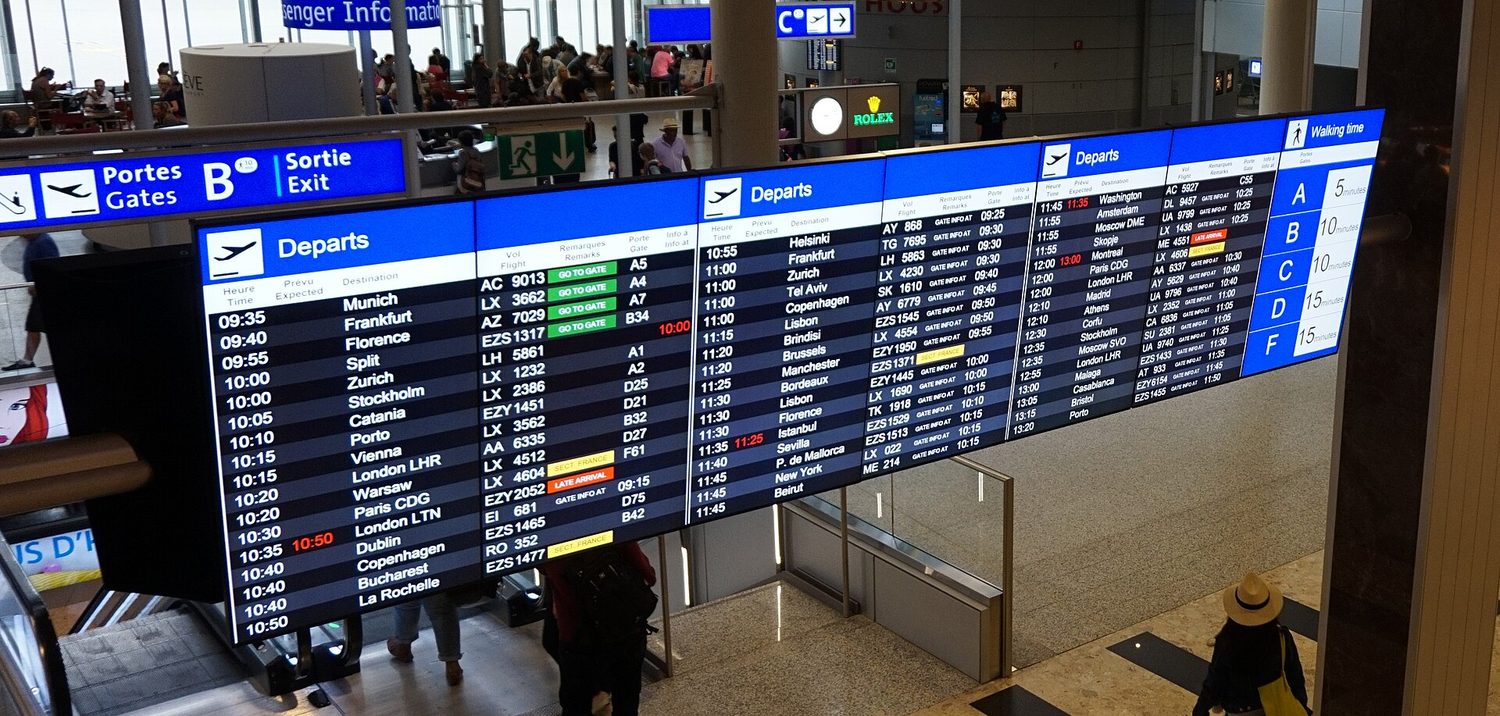
    לוח יציאות גדול בשדה תעופה המציין שעות רבות, יעדים ושערים
    לוח יציאות הוא טקסט אמיתי שתסנן: אינך קורא כל שורה — אתה קופץ ישירות לשעת יציאה או שעור אחד שאתה צריך

    התאם את השאלה לטקסט

    • קרא תחילה את השאלה. החלט איזה סוג תשובה היא מחפש: שם? מספר? סיבה?
    • חזה את התשובה לפני שאתה מסתכל. זה עוזר לעיניים שלך למצוא אותה מהר יותר.
    • מצאו את החלק בטקסט שמדבר על אותה רעיון. התשובה נמצאת בדרך כלל שם.

    כתבו תשובות קצרות ומדויקות

    • כאן כותבים מילה אחת או ביטוי קצר短语, ולא משפט שלם.
    • העתיקו את המילה המדויקת מהטקסט כאשר ניתן.
    • ענו רק על מה שהשאלה דורשת. מילים נוספות עלולות לגרום לאבדן נקודות.
    Vocabulary · ⁨מילון מונחים⁩ Train · ⁨אימון⁩
    English עברית
    skim/skɪm/ סקים (תרגום חלקי)
    gist/dʒɪst/ תוכן עיקרי
    paragraph/ˈpærəɡræf/ פראגרף
    scan/skæn/ סריקה
    predict/prɪˈdɪkt/ לנבא
    phrase/freɪz/ ביטוי
    multiple matching/ˈmʌltɪpl ˈmætʃɪŋ/ תאום מרובה
    paraphrase/ˈpærəfreɪz/ פרפרז
    1.2

    Connecting ideas across a text · ⁨חיבור רעיונות לאורך טקסט⁩

    Syllabus · ⁨סיילבוס⁩
    English
    1. follow how ideas, opinions and attitudes in a text connect to one another
    2. match each question to the section or short text that contains the relevant idea (multiple matching)
    3. recognise words and phrases that signal time, cause and effect, addition and contrast
    עברית
    1. עקוב אחר כך הרעיונות, הדעות והגישות בטקסט מקושרים זה לזה
    2. התאם כל שאלה לחלק או לטקסט קצר המכיל את הרעיון הרלוונטי (התאמות מרובות)
    3. זיהוי מילים וביטויים הממשים זמן, סיבה ותוצאה, הוספה והתנגדות

    Source: Cambridge International syllabus · ⁨מקור: הסיילבוס הבינלאומי של קמבריד'ג'⁩

    English

    A long text is not just a list of facts. The ideas link to each other, and you must follow how.

    Multiple matching

    • In a multiple matching 多项匹配 task you read several short texts, or several parts of one text.
    • Each question describes an idea. You choose the text or part that matches it.
    • The words in the question are usually different from the words in the text. Look for the same meaning, not the same words. This is called a paraphrase 改写.

    Signal words

    • Writers use small words to show how ideas connect. These are signal words 信号词.
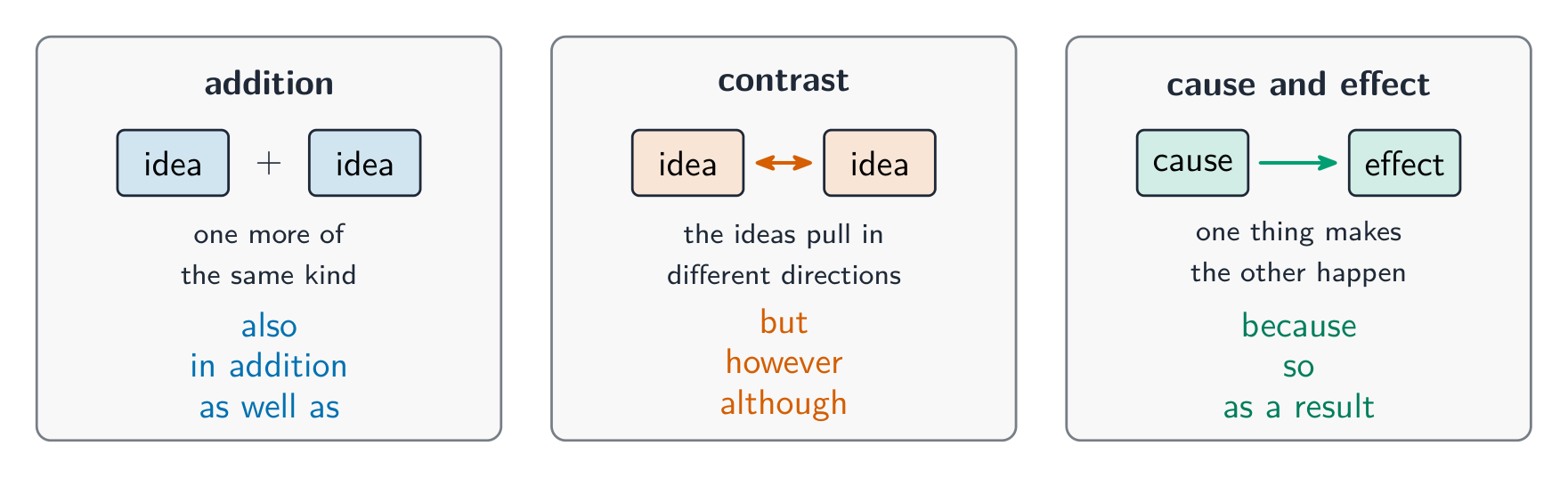
    • Some show addition 递进 (also, in addition, as well as). Some show contrast 对比 (but, however, although). Some show cause and effect 因果 (because, so, as a result).
    • When you notice these words, you can see how the writer's ideas fit together.
    עברית

    טקסט ארוך אינו סתם רשימת עובדות. הרעיונות מקושרים זה לזה, ועליכם לעקוב אחר כך.

    התאמה מרובה

    • במשימת התאמה מרובה多项匹配 קוראים מספר טקסטים קצרים, או חלקים שונים מאותו טקסט.
    • כל שאלה מתארת רעיון. תבחרו את הטקסט או החלק המתאים לו.
    • המילים בשאלה הן בדרך כלל שונות מהמילים בטקסט. חפשו את אותו משמעות, לא את אותן מילים. הדבר נקרא פריפראז改写.

    מילות סימן

    • מחברים משמשים מילים קטנות כדי להראות כיצד רעיונות מקושרים. אלו נקראות מילות סימן信号词.
    • חלקן מציגות הוספה递进 (גם, בנוסף, גם כן). חלקן מציגות ניגוד对比 (אבל, עם זאת, למרות). חלקן מציגות סיבה והש consequences因果 (כי, לכן, כתוצאה מכך).
    • כאשר מבחנים במילים אלו, ניתן לראות כיצד הרעיונות של המחבר משתלבים זה עם זה.
    שלושה כרטיסים: מילות הוספה מוסיפות רעיון נוסף מאותו סוג, מילות ניגוד מכוונות שני רעיונות לכיוונים שונים, מילות סיבה והש consequences מקשרות סיבה לתוצאה שלה
    שלוש משפחות המילים המנחות ומה הן עושות לרעיונות
    Vocabulary · ⁨מילון מונחים⁩ Train · ⁨אימון⁩
    English עברית
    signal words/ˈsɪɡnl wɜːdz/ מילים מחיינות
    addition/əˈdɪʃn/ תוספת
    contrast/ˈkɒntræst/ ניגודיות
    cause and effect/kɔːz ænd ɪˈfekt/ סיבה ותוצאה
    note-making/nəʊt ˈmeɪkɪŋ/ כתיבת הערות
    1.3

    Making notes and summaries · ⁨עריכת הערות וסיכומים⁩

    Syllabus · ⁨סיילבוס⁩
    English
    1. select only the relevant points from a text for a given purpose
    2. complete a set of brief notes under headings, using short phrases rather than full sentences
    3. leave out examples and repetition, keeping just the key information
    עברית
    1. בחר רק את הנקודות הרלוונטיות מטקסט למטרות נתונות
    2. השלם סדרת הערות קצרות תחת כותרות, תוך שימוש בביטויים קצרים ולא משפטים שלמים
    3. הימנע מהדגמאות ומהחזרות, ושמור רק על המידע המרכזי

    Source: Cambridge International syllabus · ⁨מקור: הסיילבוס הבינלאומי של קמבריד'ג'⁩

    English

    Sometimes you must take the main points out of a text and write them in a short form.

    Note-making

    • In a note-making 做笔记 task you complete notes under headings.
    • Write short notes, not full sentences. A word or a short phrase is enough.
    • Choose only the points that fit the heading. Leave out examples and extra detail.

    Summary skills

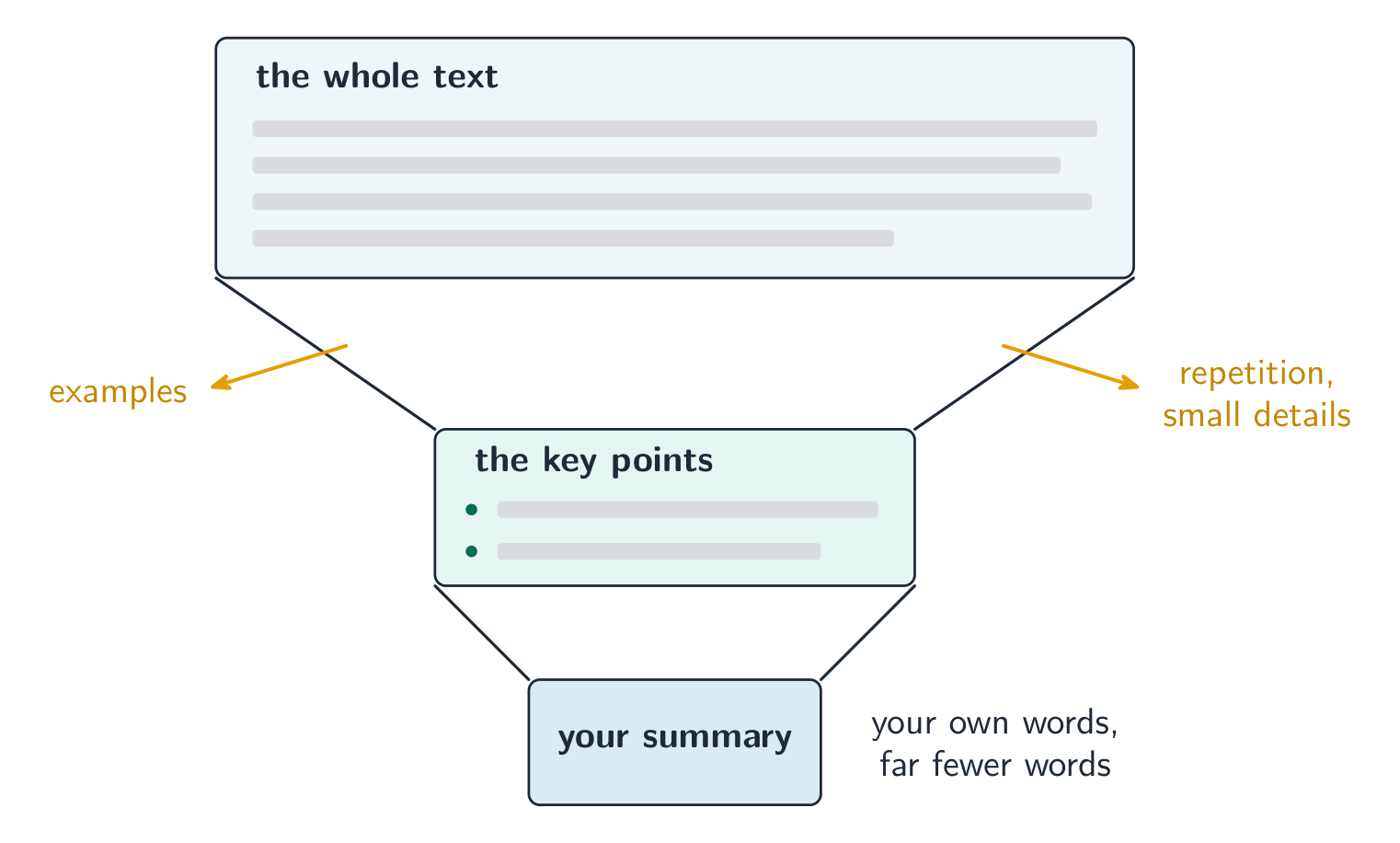
    • A summary 概括 gives only the most important ideas, in fewer words.
    • Find the key points. Ignore examples, repetition 重复 and small details.
    • Use your own words where you can. Do not copy whole sentences.
    עברית

    לעיתים יש לחלץ את הנקודות המרכזיות מתוך טקסט ולכתוב אותן בצורה קצרה.

    עריכת הערות

    • במשימת עריכת הערות做笔记 ממלאים הערות תחת כותרות.
    • כתוב הערות קצרות, לא משפטים שלמים. מילה או ביטוי קצר מספיקים.
    • בחר רק נקודות שמתאימות לכותרת. השאן דוגמאות ומידע נוסף.

    מיומנויות סיכום

    • סיכום 概括 נותן רק את הרעיונות החשובים ביותר, במילים פחותות.
    • מצא את הנקודות המרכזיות. התעלם מדוגמאות, חזרה 重复 ופרטים זעירים.
    • השתמש בשפה שלך ככל האפשר. אל תעתיק משפטים שלמים.
    שופך: כל הטקסט נכנס מלמעלה, דוגמאות וחזרה נדחסות הצידה, הנקודות המרכזיות נשארות, וסיכום קצר בשפה שלך יוצא למטה
    סיכום שומר רק על הנקודות המרכזיות, במילים שלך
    Vocabulary · ⁨מילון מונחים⁩ Train · ⁨אימון⁩
    English עברית
    summary/ˈsʌməri/ סיכום
    repetition/ˌrepəˈtɪʃn/ חזרה / חזרות
    inference/ˈɪnfərəns/ הסקה
    implies/ɪmˈplaɪz/ משמעות
    attitude/ˈætɪtjuːd/ גישה
    word choice/wɜːd tʃɔɪs/ בחירת מילים
    multiple-choice/ˈmʌltɪpl tʃɔɪs/ בחירה מרובה
    context/ˈkɒntekst/ הקשר
    1.4

    Reading between the lines · ⁨קריאה בין השורות⁩

    Syllabus · ⁨סיילבוס⁩
    English
    1. understand meaning that is implied but not directly stated
    2. work out a writer's opinion, attitude or feelings from the words and phrases they choose
    3. deduce the meaning of an unfamiliar word from the information around it
    4. answer multiple-choice questions about main ideas, details and attitudes
    עברית
    1. הבן משמעויות המושקעות אך לא מצוין באופן ישיר
    2. קבע דעת, גישה או רגשות של הכותב מתוך המילים והביטויים שהוא בוחר
    3. הסק את המשמעות של מילה לא מוכרת מתוך המידע המקיף אותה
    4. ענה בשאלות מבחן רבות-ברירה בנושא רעיונות מרכזיים, פרטים וגישות

    Source: Cambridge International syllabus · ⁨מקור: הסיילבוס הבינלאומי של קמבריד'ג'⁩

    English

    Some answers are not written directly in the text. You must work them out. This is called inference 推断.

    Implied meaning

    • Sometimes the writer implies 暗示 something without saying it openly. The meaning is there, but it is hidden.
    • Read the words around the idea. Ask: what does the writer want me to understand here?

    The writer's attitude

    • The writer's attitude 态度 is how they feel about the topic — for example, excited, worried, or unsure.
    • You find the attitude in the writer's word choice 用词. Strong or emotional words show feelings.
    • In a multiple-choice 选择题 question about attitude, read all the options. Choose the one that fits the whole text, not just one line.

    Unfamiliar words

    • You will meet words you do not know. Do not stop.
    • Use the context 语境 — the words around it — to guess the meaning of the new word.
    עברית

    אישה מחזיקה ערימה של ספרים ישנים, וקוראת אחד מהם בקפדנות קריאה מעמיקה: תשובה המבוססת על היסק נובעת מהמילים שבחר הכותב, ולא משפט שתוכל להעתיק,

    חלק מתשובות אינן כתובות באופן ישיר בטקסט. עליך לחשב אותן. דבר זה נקרא הסקה 推断.

    משמעות גלויה

    • לעיתים הכותב מייש 暗示 דבר ללא אמירתו במפורש. המשמעות קיימת, אך היא מוסתרת.
    • קרא את המילים סביב הרעיון. שאל: מה הכותב רוצה שאבין כאן?

    עמדת הכותב

    • עמדת 态度 הכותב היא תחושתו לגבי הנושא – לדוגמה, נרגש, מודאג או לא בטוח.
    • תמצא את העמדה בבחירת המילים של הכותב 用词. מילים חזקות או רגשיות מציגות תחושות.
    • בשאלת בחירה מרובה 选择题 על עמדה, קרא את כל האפשרויות. בחר את זו המתאימה לכל הטקסט, לא רק לשורה אחת.

    מילים לא מוכרות

    • תפגשו מילים שלא מכירים. אל תעצרו.
    • השתמש ב-הקשר 语境 – המילים הסביבו – כדי לנחש את משמעות המילה החדשה.
    1.4

    Exam tips · ⁨טיפים לבחינות⁩

    English
    • Read the question before the text. Underline the key word: a name? a number? a reason?
    • Answers usually come in the same order as the text, so do not hunt backwards for question 1.
    • Copy the exact word from the text when you can; a changed word can lose the mark.
    • Check how many answers the question wants: "Give TWO reasons" needs two, not one.
    • In multiple matching, the text usually does not repeat the question's words. Hunt for the same idea said differently.
    • Never leave an empty line. A guess can win a mark; a blank never can.
    עברית
    • קרא את השאלה לפני הטקסט. חבר קו תחת המילה המפתחית: שם? מספר? סיבה?
    • התשובות בדרך כלל מופיעות באותו סדר כמו בטקסט, לכן אל תחפש אחורה בשביל שאלה 1.
    • העתק את המילה המדויקת מהטקסט כשהאפשרות קיימת; מילה שנשנת עשויה להפסיד ניקוד.
    • בדוק כמה תשובות השאלה דורשת: "תן שתי סיבות" דורש שתיים, לא אחת.
    • בהתאמות מרובות, הטקסט בדרך כלל אינו חוזר על מילות השאלה. חפש את אותה רעיון הנאמרת בצורה אחרת.
    • לעולם אל תשאיר שורה ריקה. ניחוש יכול להשיג ניקוד; שורה ריקה לעולם לא יכולה.
  • 2

    Writing: purpose, audience and accuracy · ⁨כתיבה: מטרה, קהל יעד ומדויקות⁩

    Watch lesson · ⁨צפה בשיעור⁩
    2.1

    Purpose, audience and register · ⁨מטרה, קהל יעד ורגיסטר⁩

    Syllabus · ⁨סיילבוס⁩
    English
    1. identify the purpose of a piece of writing: to inform, to argue or to discuss
    2. think about the audience and how formal or informal the language should be
    3. choose a register and style that suit the purpose and the reader
    עברית
    1. זיהוי המטרה של כתבה: להעביר מידע, להעלות אורח דין או לדון בנושא
    2. לחשוב על הקהל ועל האם השפה צריכה להיות רשמית או לא רשמית
    3. לבחור רשטר וסגנון המתאימים למטרה ולקורא

    Source: Cambridge International syllabus · ⁨מקור: הסיילבוס הבינלאומי של קמבריד'ג'⁩

    English

    Before you write, ask two questions: why am I writing, and who will read it?

    Know your purpose

    • Every writing task has a purpose 目的: to inform 告知, to argue 论证, or to discuss 讨论.
    • The purpose decides what you write and how you write it.
    • The task tells you the purpose. Read it carefully and underline it.

    Know your audience

    • The audience 读者 is the person who will read your writing — a friend, a teacher, or an event organiser.
    • Write in a way that suits them. You write to a friend in a different way from a teacher.

    Choose the right register

    • Register 语域 means how formal 正式 or informal 非正式 your language is.
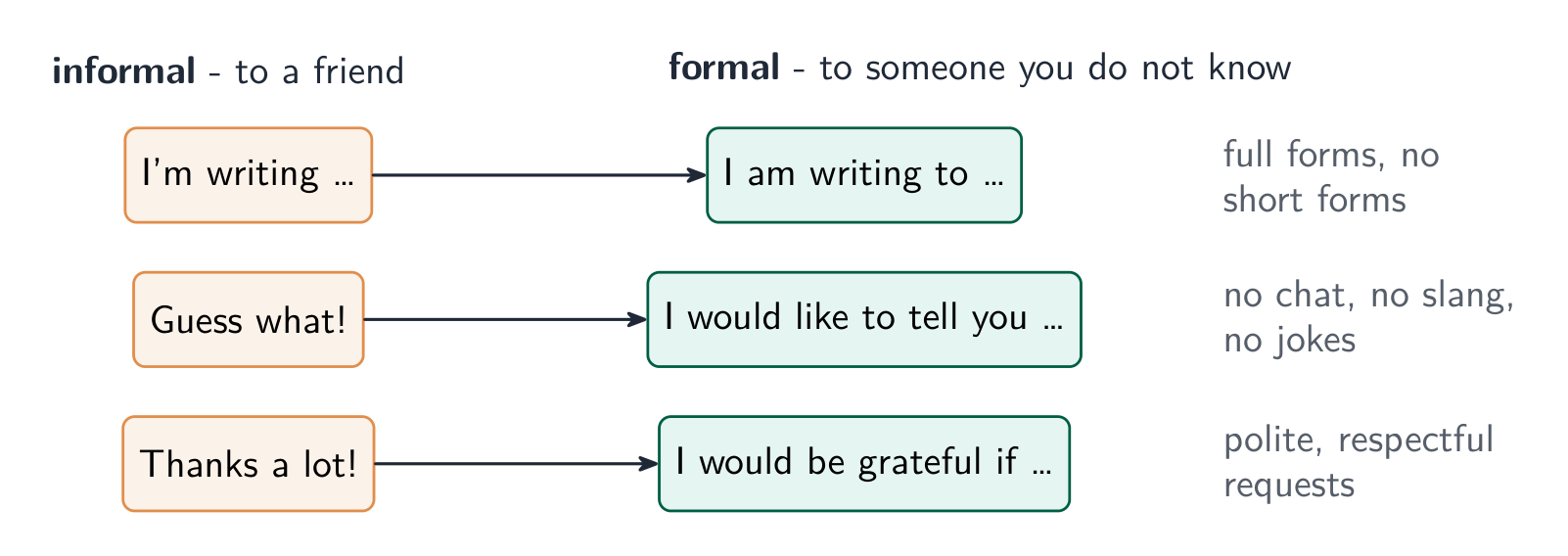
    • Use informal language for a friend: short forms (I'm, don't) and friendly words.
    • Use formal language for a teacher or a report: full forms (I am, do not) and polite words. No slang 俚语.
    עברית

    לפני שכתבת, שאל שתי שאלות: מדוע אני כותב, ומי יהיה הקורא?

    זיהוי המטרה שלך

    • לכל משימת כתיבה יש מטרה 目的: להעביר מידע 告知, להוכיח טענה 论证, או לדון בנושא 讨论.
    • המטרה קובעת מה תכתוב ואיך תכתוב זאת.
    • המשימה מציינת את המטרה. קרא אותה בקפידה וחבר קו תחתיה.

    זיהוי קהל היעד שלך

    • ה-קהל יעד 读者 הוא האדם שיقرأ את הכתיבה שלך — חבר, מורה, או מארגן אירוע.
    • כתוב בדרך המתאימה אליהם. כותבים לחבר בצורה שונה מזו שבה כותבים למורה.

    בחירת הרגיסטר הנכון

    • רגיסטר 语域 פירושו עד כמה השפה שלך פורמלית 正式 או לא-פורמלית 非正式.
    • השתמש בשפה לא-פורמלית עבור חבר: צורות מקוצרות (I'm, don't) ומילים ידידותיות.
    • השתמש בשפה פורמלית עבור מורה או דוח: צורות מלאות (I am, do not) ומילים מכובדות. ללא סלנג 俚语.
    תרשים זרימה: השאלות מדוע אני כותב ומי יקרא את הכתיבה מובילות למטרה ולקהל יעד, שקביעתם יחד קובעת בין רגיסטר לא-פורמלי לחבר לבין רגיסטר פורמלי למורה או לדוח
    Purpose and audience together decide how formal your writing should be
    כתיבה בשולחן עבודה: קבע את המטרה והקהל לפני שתארגן רעיונות בדף
    כתיבה בשולחן עבודה: קבע את המטרה והקהל לפני שתארגן רעיונות בדף
    Vocabulary · ⁨מילון מונחים⁩ Train · ⁨אימון⁩
    English עברית
    purpose/ˈpɜːpəs/ מטרה
    inform/ɪnˈfɔːm/ להעביר מידע
    argue/ˈɑːɡjuː/ לטעון
    discuss/dɪˈskʌs/ לדון
    audience/ˈɔːdɪəns/ קהל היעד
    register/ˈredʒɪstə/ רשמה
    formal/ˈfɔːml/ רשמי
    informal/ɪnˈfɔːml/ בלתי רשמי
    slang/slæŋ/ גיגית
    2.2

    Organising your ideas · ⁨ארגון הרעיונות שלך⁩

    Syllabus · ⁨סיילבוס⁩
    English
    1. plan what to include and the order in which to present it
    2. organise writing into clear paragraphs with a logical structure
    3. link ideas using devices for addition (in addition, moreover), contrast (however, although) and cause/effect (therefore, as a result)
    עברית
    1. לתכנן מה לכלול ואיך לסדר את ההצגה
    2. לארגן את הכתיבה בסעיפים ברורים עם מבנה לוגי
    3. לחבר בין רעיונות באמצעות כלי חיבור להוספה (in addition, moreover), ניגוד (however, although) וגורם/תוצאה (therefore, as a result)

    Source: Cambridge International syllabus · ⁨מקור: הסיילבוס הבינלאומי של קמבריד'ג'⁩

    English

    Good writing is not just correct. It is also easy to follow.

    Plan before you write

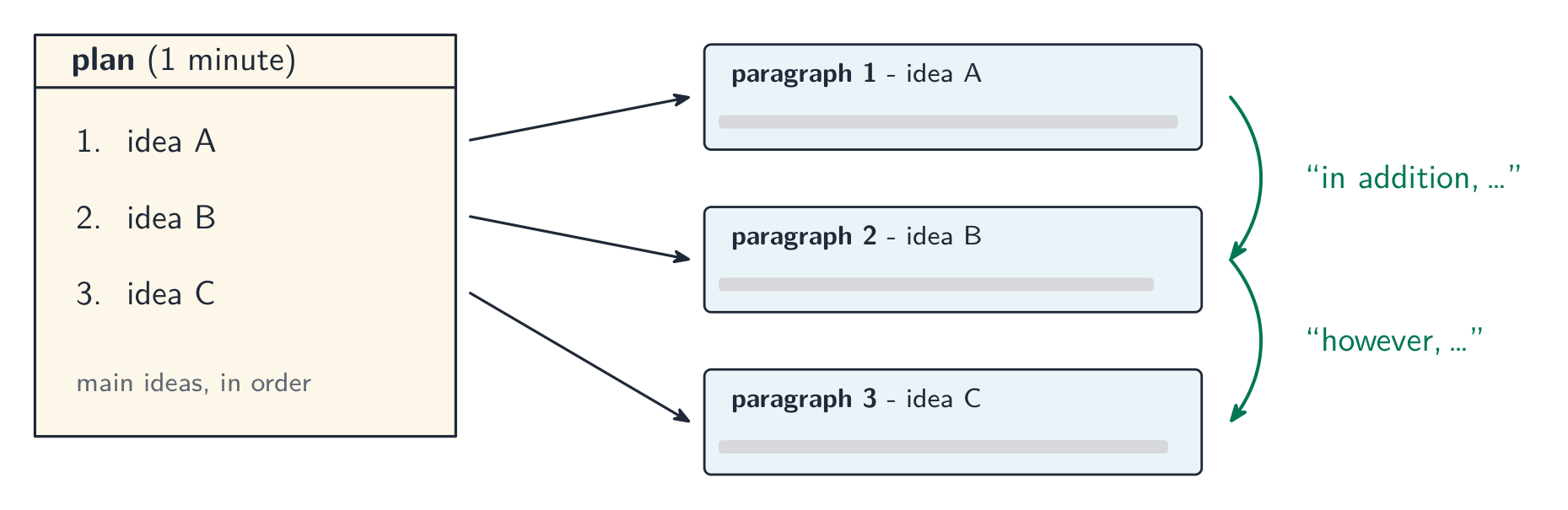
    • Spend one minute on a plan 计划. Write down your main ideas and put them in order.
    • A plan stops you from forgetting a point or repeating yourself.

    Use paragraphs

    • Put each main idea in its own paragraph 段落.
    • Start a new paragraph for a new idea. This makes your writing clear.

    Link your ideas

    • Use linking words 衔接词 to join your ideas smoothly.
    • For adding: in addition, also, as well as. For contrast: however, but, although. For results: so, therefore, as a result.
    עברית

    כתיבה טובה אינה רק נכונה. היא גם קלה לעקוב אחריה.

    תכנן לפני שאתה כותב

    • הקדש דקה אחת לתוכנית 计划. כתוב את הרעיונות המרכזיים שלך ומיין אותם בסדר.
    • תוכנית מונעת ממך לשכוח נקודה או לחזור על עצמך.
    תוכנית של דקה אחת עם שלושה רעיונות מסומנים הופכת לשלושה פסקאות, רעיון אחד בכל אחת, מחוברות באמצעות מילים מקשרות כמו in addition וhowever
    תכנית של דקה הופכת לפרקראפים: רעיון אחד בכל, מחוברים באמצעות מילים מקשרות

    השתמש בפסקאות

    • שמור כל רעיון מרכזי בפסקה משלו פסקה 段落.
    • התחל פסקה חדשה עבור רעיון חדש. כך הכתיבה שלך תהיה ברורה.

    חבר בין הרעיונות שלך

    • השתמש במילים מקשרות 衔接词 כדי לחבר בין הרעיונות שלך בצורה חלקה.
    • להוספה: in addition, also, as well as. לעניין ניגוד: however, but, although. לתוצאה: so, therefore, as a result.
    Vocabulary · ⁨מילון מונחים⁩ Train · ⁨אימון⁩
    English עברית
    plan/plæn/ לתכנן
    paragraph/ˈpærəɡræf/ פראגרף
    linking words/ˈlɪŋkɪŋ wɜːdz/ מילים מקשרות
    Watch lesson · ⁨צפה בשיעור⁩
    2.3

    Accuracy: grammar, vocabulary and checking · ⁨דיוק: דקדוק, מילית ובדיקה⁩

    Syllabus · ⁨סיילבוס⁩
    English
    1. use a range of grammatical structures: different verb forms and tenses, conditionals and varied sentence types
    2. use a range of vocabulary, including set phrases, collocations and synonyms to avoid repetition
    3. check your writing for accuracy in grammar, spelling and punctuation
    עברית
    1. השתמש במגוון מבנים דקדוקיים: צורות וזמני פעול שונים, משפטי תנאי ומגוון סוגי משפטים
    2. השתמש במגוון מילים, כולל ביטויים קבועים, קולוקציות וסינונימים כדי להימנע מחזרה
    3. בדוק את הכתיבה שלך מבחינת הדיוק בדקדוק, בכתיב ובניקוד

    Source: Cambridge International syllabus · ⁨מקור: הסיילבוס הבינלאומי של קמבריד'ג'⁩

    English

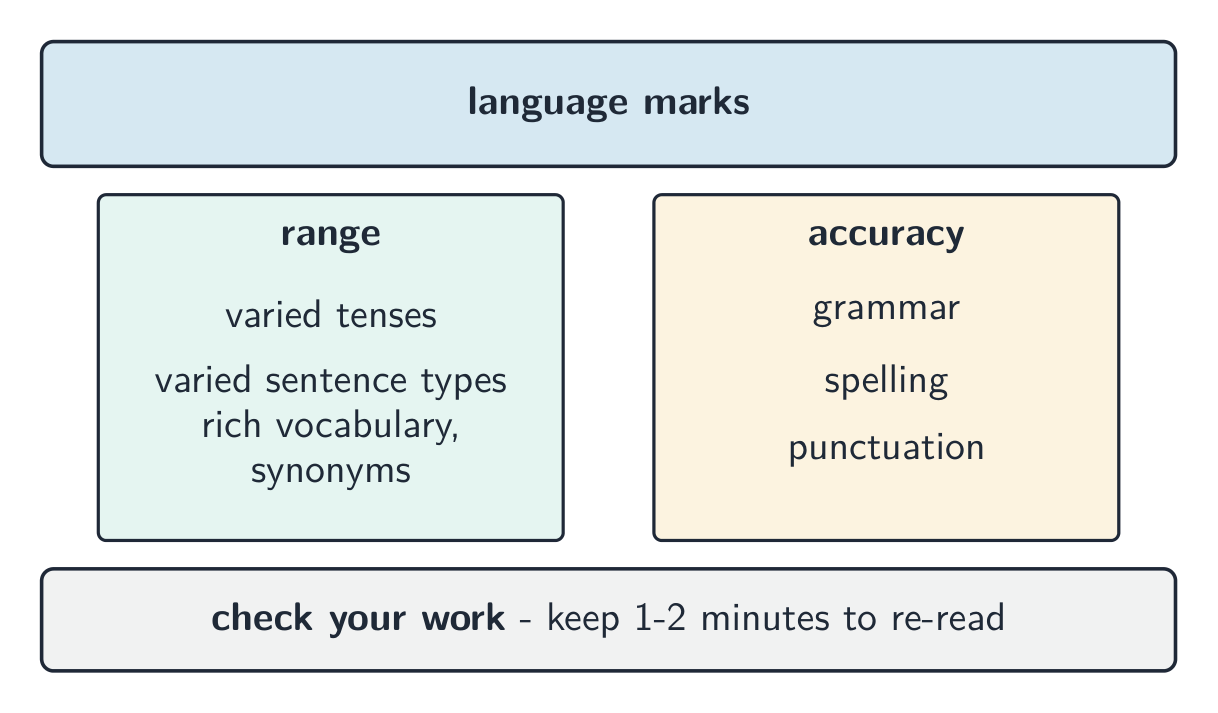
    Language marks come from range 多样性 and accuracy 准确性.

    Show a range

    • Use different tenses 时态 and sentence types. Do not write every sentence the same way.
    • Use a range of vocabulary 词汇. Choose a better word than the easy one, and use synonyms 同义词 to avoid repeating yourself.

    Be accurate

    • Check your grammar 语法, spelling 拼写 and punctuation 标点.
    • Common errors are subject–verb agreement, verb tenses, and missing capital letters.

    Check your work

    • Leave one or two minutes to read your work again.
    • Look for small mistakes you can fix quickly. Checking can save several marks.
    עברית

    ציונים בשפה מגיעים ממגוון 多样性 ודיוק 准确性.

    עמודים זוגיים המסומנים range וaccuracy נושאים גג המסומן language marks, ועומדים על בסיס שעליו כתוב check your work
    ציוני השפה מבוססים על שני עמודים: מגוון ודיוק

    הראה מגוון

    • השתמש בזמנים 时态 שונים ובסוגי משפט שונים. אל תכתוב כל משפט באותו אופן.
    • השתמש במגוון שלמילית 词汇. בחר מילה טובה מהמילה הפשוטה, והשתמש בסינונימים 同义词 כדי למנוע חזרה על עצמך.

    דיוק

    • בדוק את הדקדוק 语法, הכתיב 拼写 והניקוד 标点.
    • שגיאות נפוצות הן התאמה בין ערך לנושא, זמני פעלים וחירוג אותיות גדולות.

    בדוק את עבודתך

    • השאר דקה או שתיים לקריאה חוזרת של עבודתך.
    • חפש טעויות קטנות שניתן לתקן במהירות. בדיקה יכולה להציל מספר נקודות.
    Vocabulary · ⁨מילון מונחים⁩ Train · ⁨אימון⁩
    English עברית
    range/reɪndʒ/ טווח
    accuracy/ˈækjʊrəsi/ דיוק
    tenses/ˈtensɪz/ זמנים
    vocabulary/vəʊˈkæbjʊləri/ מילון
    synonyms/ˈsɪnənɪmz/ סינונימים
    grammar/ˈɡræmə/ דקדוק
    spelling/ˈspelɪŋ/ כתיב
    punctuation/ˌpʌŋktʃuːˈeɪʃn/ ניקוד
    2.3

    Exam tips · ⁨טיפים לבחינות⁩

    English
    • Before you write, say your job in one line: "an informal email to a friend, to invite him to a picnic".
    • Cover every content point in the task. Examiners tick each point; a missing one costs marks at once.
    • Learn what 120 to 160 words of your handwriting looks like, so you never count in the exam.
    • Save the last five minutes to check your usual errors: verb -s, past forms, a / an / the.
    • A short correct sentence beats a long broken one every time.
    עברית
    • לפני הכתיבה, סכם את המשימה בשורה אחת: "מייל לא-רשמי לחבר, להזמינו לפיקניק".
    • כסה כל נקודת תוכן במשימה. המתקנים מסמנים כל נקודה; נקודה שאינה מופיעה גורמת להפסדת נקודות מיד.
    • למד מה נראית 120 עד 160 מילים בכתיב יד שלך, כך שלא תצטרך לספור במהלך המבחן.
    • שמור על חמשת הדקות האחרונות לבדיקת הטעויות הרגילות שלך: s בפעלים, צורות עבר, a / an / the.
    • משפט קצר ונכון עדיף על משפט ארוך ומשובר בכל פעם.
  • 3

    Writing an informal email · ⁨כתיבת מייל אישי⁩

    Watch lesson · ⁨צפה בשיעור⁩
    3.1

    Why and to whom you write · ⁨למה ולמי כתובים⁩

    Syllabus · ⁨סיילבוס⁩
    English
    1. recognise that an informal email is written to a friend or relative
    2. respond to all of the prompts given in the task
    3. use a friendly, personal tone that suits the reader
    עברית
    1. זיהוי that an informal email is written to a friend or relative
    2. ענה על כל ההנחיות הנתונות במשימה
    3. השתמש בגוון ידידותי ואישי המתאים לקורא

    Source: Cambridge International syllabus · ⁨מקור: הסיילבוס הבינלאומי של קמבריד'ג'⁩

    English

    The first writing task asks you to write an informal email 非正式电子邮件 to a friend or a family member.

    Cover every prompt

    • The task gives you some prompts 提示 — short points you must write about.
    • You must cover every prompt. If you miss one, you lose content marks.
    • Tick each prompt as you write it, so you do not forget one.

    Use a friendly tone

    • An email to a friend is informal 非正式. Use a warm, friendly tone 语气.
    • Write as if you are talking to the person. Ask them questions too.
    עברית

    המשימה הראשונה בבקשה לכתוב מייל לא-רשמי 非正式电子邮件 לחבר או לחבר משפחה.

    כיסוי כל הנחיה

    • המשימה מספקת לך נחיות 提示 — נקודות קצרות עליהן עליך לכתוב.
    • עליך לכסות כל נחיה. אם פספסת אחת, תפסיד נקודות תוכן.
    • סמן כל נחיה בזמן הכתיבה כדי לא לשכוח אחת.

    שימוש בטון ידידותי

    • מייל לחבר הוא לא-רשמי 非正式. השתמש בטון חמים וידידותי 语气.
    • כתוב כאילו אתה מדבר עם האדם. שאל אותו גם שאלות.
    שלושה חברים מהבית ספר עם זרועות סביב אחד את השני, צוחקים
    זוהי המטרה של האימייל: מישהו שמכיר אותך כבר, אז כתוב כמו שאתה מדבר איתו

    כתיבה על מחשב נייד: אימיילים לא רשמיים עדיין דורשים מטרה ברורה, סדר וטון ידידותי *כתיבה על מחשב נייד: אימיילים לא רשמיים עדיין דורשים מטרה ברורה, סדר וטון ידידותי
    Vocabulary · ⁨מילון מונחים⁩ Train · ⁨אימון⁩
    English עברית
    informal email/ɪnˈfɔːml ˈiːmeɪl/ אימייל לא רשמי
    prompts/prɒmpts/ הנחיות/קריאות פעולה
    informal/ɪnˈfɔːml/ בלתי רשמי
    tone/təʊn/ טון
    greeting/ˈɡriːtɪŋ/ ברכה
    closing/ˈkləʊzɪŋ/ סיום
    paragraphs/ˈpærəɡræfz/ פסקאות
    short forms/ʃɔːt fɔːmz/ קיצורים
    developed/dɪˈveləpt/ פותח
    reason/ˈriːzn/ סיבה
    example/eɡˈzæmpl/ דוגמה
    detail/ˈdiːteɪl/ פרטים
    3.2

    How to build your email · ⁨איך לבנות את האימייל שלך⁩

    Syllabus · ⁨סיילבוס⁩
    English
    1. open and close an informal email appropriately (for example: Hi … / Write back soon …)
    2. organise the email into short paragraphs, with one main idea per paragraph
    3. use informal language: contractions, friendly phrases and questions to the reader
    עברית
    1. פתח וסגור מייל אינפורמלי באופן מתאים (למשל: Hi … / Write back soon …)
    2. ארגן את המייל לפסקאות קצרות, עם רעיון מרכזי אחד בכל פסקה
    3. השתמש בשפה לא-רשמית: חוסרים, ביטויים ידידותיים ושאלות למשפט הקורא

    Source: Cambridge International syllabus · ⁨מקור: הסיילבוס הבינלאומי של קמבריד'ג'⁩

    English

    A good email has a clear shape.

    Greeting and ending

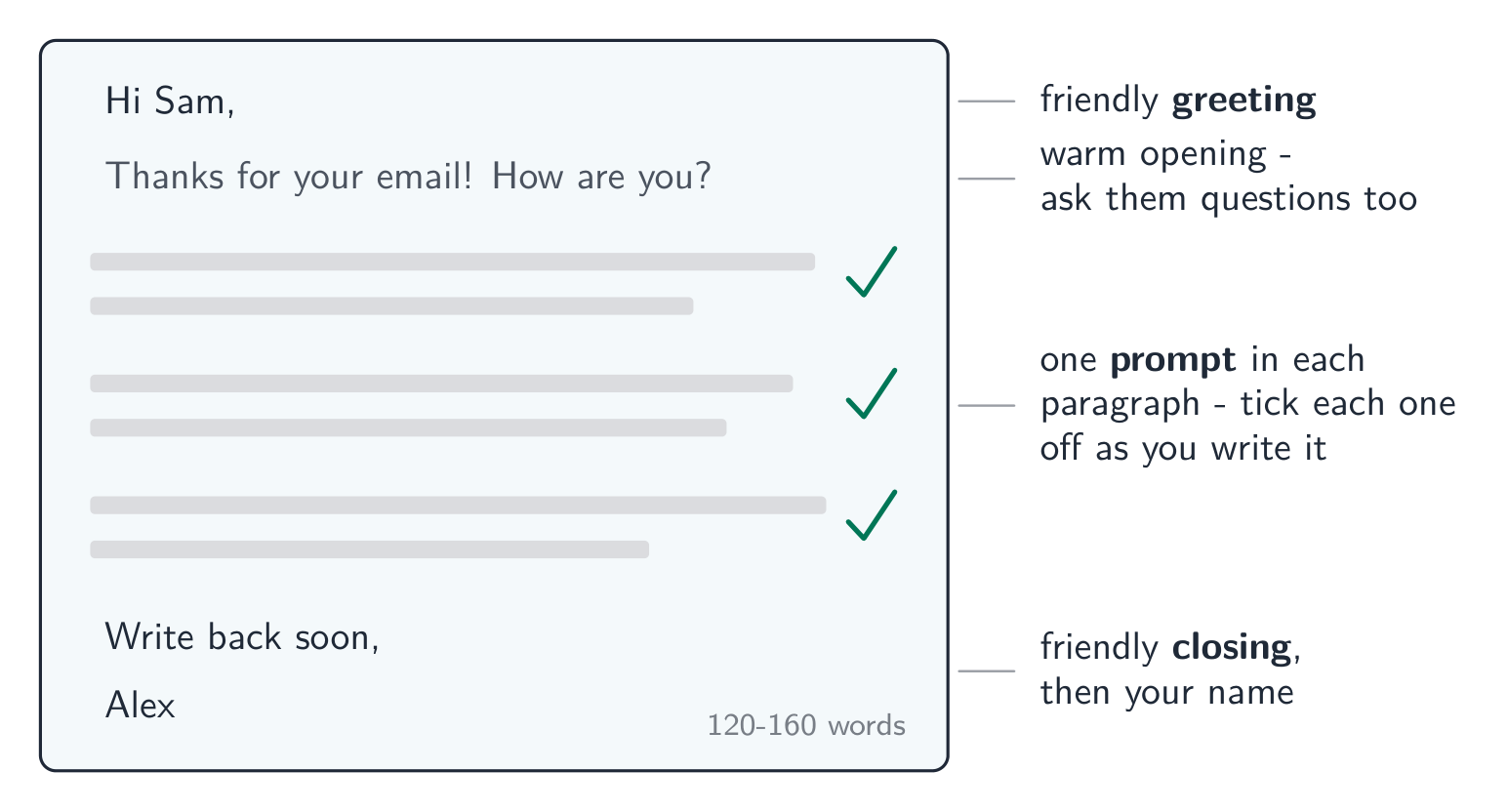
    • Start with a greeting 问候语: Hi Sam, or Dear Anna,
    • End with a friendly closing 结束语: Write back soon, or See you soon, then your name.

    Paragraphs

    • Use short paragraphs 段落. Put one main idea in each one.
    • Do not write one long block of text.

    Useful language

    • Informal language uses short forms 缩略形式: I'm, don't, can't.
    • Friendly phrases help: Guess what! / How are you? / I can't wait to…
    עברית

    אימייל טוב יש לו מבנה ברור.

    אימייל לא רשמי עם תוויות: ברכת פתיחה ידידותית, משפט פתיחה חמים, פסקה אחת מסומנת עבור כל נקודת כתיבה, סיום ידידותי ושם שלך, כ-120 עד 160 מילים
    מבנה של מכתב אלקטרוני לא רשמי טוב

    ברכה וסיום

    • התחל בברכת פתיחה: Hi Sam, או Dear Anna,
    • סיים בסיום ידידותי: Write back soon, או See you soon, ואז שמך.

    פסקאות

    • השתמש בפסקאות קצרות. שום פסקה צריכה להכיל רעיון מרכזי אחד.
    • אל תכתוב בלוק טקסט ארוך אחד.

    לשון שימושית

    • לשון לא רשמית משתמשת בקיצורים: I'm, don't, can't.
    • ביטויים ידידותיים עוזרים: Guess what! / How are you? / I can't wait to…
    3.3

    Making your email better · ⁨שיפור האימייל שלך⁩

    Syllabus · ⁨סיילבוס⁩
    English
    1. develop each idea with a reason, example or detail rather than just listing points
    2. vary your sentence openings and link ideas smoothly
    3. check the length (120–160 words), the tone and the accuracy before finishing
    עברית
    1. פתח כל רעיון עם סיבה, דוגמה או פרט נוסף ולא רק בהצגת נקודות
    2. מגוון פתיחות משפטים וקישור רעיונות בצורה חלקה
    3. בדוק את האורך (120–160 מילים), הגוון והדיוק לפני הסיום

    Source: Cambridge International syllabus · ⁨מקור: הסיילבוס הבינלאומי של קמבריד'ג'⁩

    English

    Content marks reward developed 展开的 ideas, not a list.

    Develop your ideas

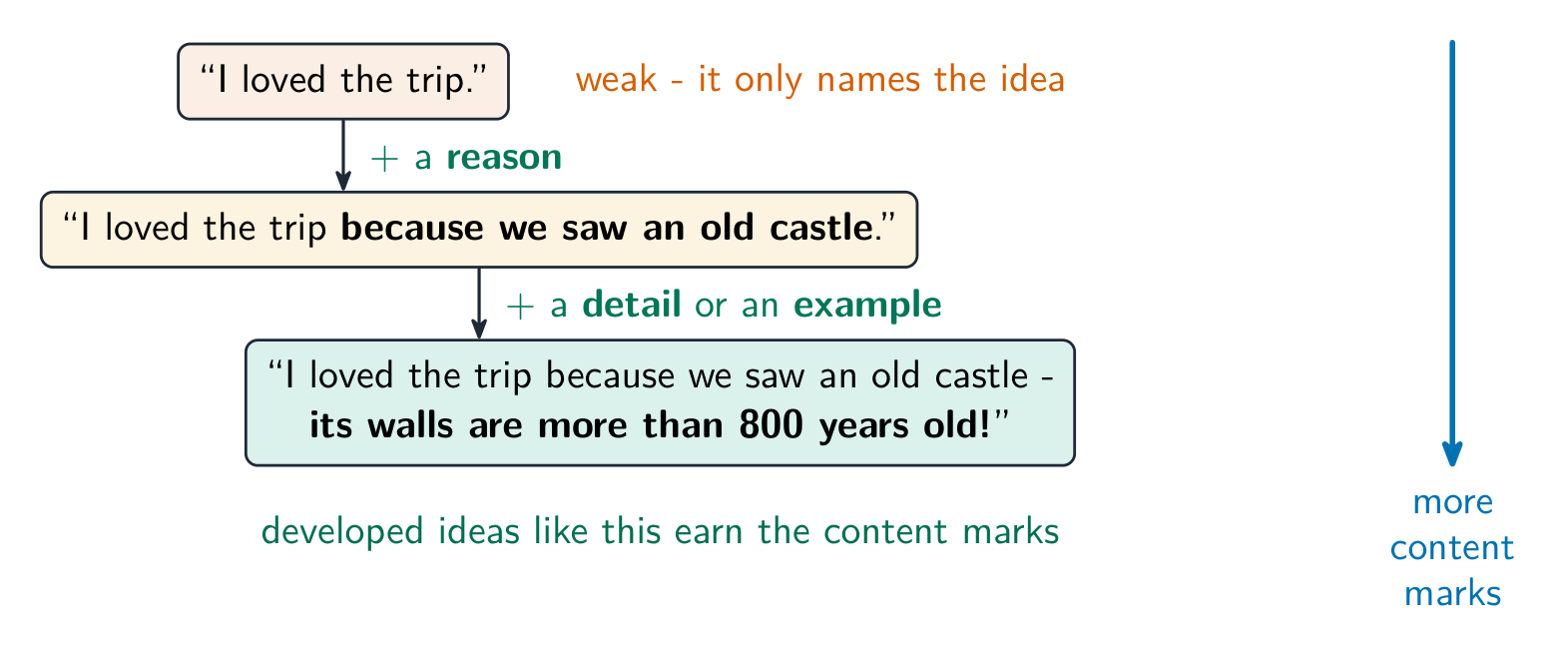
    • Do not just name an idea. Add a reason 原因, an example 例子, or a detail 细节.
    • "I loved the trip" is weak. "I loved the trip because we saw an old castle" is much better.

    Check before you finish

    • Count your words: aim for 120 to 160 words.
    • Check the tone is friendly, then fix small grammar and spelling mistakes.

    A model email

    See how the friendly tone and developed ideas work together.

    Hi Sam,

    Guess what — I finally visited the new science museum you told me about! I loved it, especially the space room, because you can sit in a real rocket seat and feel it shake. I went with my cousin, and we stayed until it closed.

    How about you? Have you been yet? We really should go together in the summer.

    Write back soon, Lin

    Notice the warm greeting, one developed idea with a reason, a question back to Sam, and a friendly closing. It reads like a real message to a friend — and it covers every prompt.

    עברית

    ציונים בתוכן מעריכים רעיונות מפותחים, ולא רשימה פשוטה.

    פיתוח רעיונות

    • אל תסתפק בשמירת הרעיון. הוסף סיבה, דוגמה, או פרט.
    • "I loved the trip" הוא חלש. "I loved the trip because we saw an old castle" הוא הרבה טוב יותר.
    משפט חלש צומח בשני שלבים: הוספת סיבה, ולאחר מכן הוספת פרט, ומכסה יותר נקודות תוכן בכל שלב
    כל סיבה או פרט נוספים מחזקים את הרעיון

    בדוק לפני סיום

    • ספור את המילים שלך: שואף ל-120 עד 160 מילים.
    • בדוק שהטון ידידותי, ואז תרץ טעויות קטנות בדקדוק ובאיות.

    דוגמת מייל

    התבונן כיצד הטון הידידותי והרעיונות המפותחים עובדים יחד.

    היי סם,

    תגלו מה — בסוף ביקרתי במוזיאון המדעים החדש שמידעת עלי! אהבתי אותו במיוחד, במיוחד חדר החלל, כי אפשר לשבת בכיסא רקטור אמיתי ולהרגיש שהוא רועד. הלכתי עם הבן-דוד שלי, ונשארנו עד לסגירה.

    איך אתה? היית שם כבר? אנחנו באמת צריכים ללכת יחד בקיץ.

    כתוב לי בהקדם, ליין

    שים לב לשליחה חמה, רעיון מפותח אחד עם סיבה, שאלה חוזרת לסם, וסיום ידידותי. זה נשמע כמו הודעה אמיתית לחבר — וגם מכסה כל פריט במשימה.

    3.3

    Exam tips · ⁨טיפים לבחינות⁩

    English
    • Open warmly: "Thanks for your email!" or "Great to hear from you!" sets the informal tone at once.
    • Use short forms (I'm, don't, can't). They are correct here and make you sound like a friend.
    • Give each prompt in the task its own short paragraph, and add one detail or reason to each.
    • Close like a friend: "Write back soon," plus your first name only, never a full name.
    • Keep the style informal from the first line to the last; one "Dear Sir" in the middle breaks the whole email.
    עברית
    • פתח בחום: "תודה על המייל שלך!" או "מחמד לשמוע ממך!" מקבעים את הטון האינטימי מיד.
    • השתמש בצורות מקוצרות (I'm, don't, can't). הן נכונות כאן וגורמות לך להשמיע כחבר.
    • תן לפריט בכל משימה פסקה קצרה משלה, והוסף לכל אחת פרט או סיבה.
    • סיים כמו חבר: "כתוב לי בהקדם," ועם שם המשפחה שלך בלבד, לעולם לא שם מלא.
    • שמור על הסגנון האינטימי מהשורה הראשונה ועד האחרונה; "Dear Sir" אחת באמצע מבטלת את כל המייל.
  • 4

    Writing a formal letter or email · ⁨כתיבת מכתב רשמי או מייל⁩

    Watch lesson · ⁨צפה בשיעור⁩
    4.1

    When to write formally · ⁨מתי לכתוב באופן רשמי⁩

    Syllabus · ⁨סיילבוס⁩
    English
    1. recognise when a task needs a formal or semi-formal response (for example, to a teacher or an event organiser)
    2. cover the purpose, format and audience information given in the task
    3. keep a polite, formal tone throughout
    עברית
    1. זיהוי when a task needs a formal or semi-formal response (for example, to a teacher or an event organiser)
    2. כיסוי the purpose, format and audience information given in the task
    3. שמירה על גוון מכובד ורשמי לאורך כל הטקסט

    Source: Cambridge International syllabus · ⁨מקור: הסיילבוס הבינלאומי של קמבריד'ג'⁩

    English

    The second writing task sometimes asks for a formal 正式 or semi-formal 半正式 letter or email.

    Spot a formal task

    • A formal task is written to someone you do not know well — a head teacher 校长, a manager 经理, or an event organiser 活动组织者.
    • The task tells you the format 格式, the purpose 目的 and the reader. Use all three.

    Keep a polite tone

    • Be polite 礼貌 and respectful. Do not use slang 俚语 or jokes.
    • Do not use short forms. Write "I am", not "I'm".
    עברית

    משימת הכתיבה השנייה לעיתים דורשת מכתב או מייל רשמי 正式 או סמי-רשמי 半正式.

    זיהוי משימה רשמית

    • משימה רשמית נכתבת למישהו שאינו מוכר לך היטב — ראש בית ספר 校长, מנהל 经理, או מארגן אירוע 活动组织者.
    • המשימה מציינת את הפורמט 格式, את המטרה 目的 ואת הקורא. השתמש בשלושה אלמנטים אלו.
    שולחן משרד מסודר עם מחשב, צמח ולוח שנה על הקיר, אין איש יושב בזה
    מכתב רשמי נקרא בשולחן כזה – על ידי מי שאינו מכיר אותך, והוא עסוק

    שמירה על גוון מכובד

    • היה מכובד 礼貌 ומכבד. אל תשתמש בשלנג 俚语 או בבדיחות.
    • אל תשתמש בקיצורים. כתוב "I am", לא "I'm".
    שלושה ביטויים לא-רשמיים הופכים לרשמיים: I'm writing הופך ל-I am writing to, Guess what הופך ל-I would like to tell you, Thanks a lot הופך ל-I would be grateful if
    המרת ביטויים ידידותיים לביטויים רשמיים
    מכתב רשמי: מבנה זהיר, גוון מכובד וסיבה ברורה לכתיבה
    מכתב רשמי: מבנה זהיר, גוון מכובד וסיבה ברורה לכתיבה
    Vocabulary · ⁨מילון מונחים⁩ Train · ⁨אימון⁩
    English עברית
    formal/ˈfɔːml/ רשמי
    semi-formal/ˈsemi ˈfɔːml/ סמי-רשמי
    head teacher/hed ˈtiːtʃə/ מנהל מוסד לימודים
    manager/ˈmænɪdʒə/ מנהל
    event organiser/ɪˈvent ˈɔːɡənaɪzə/ ארגון אירועים
    format/ˈfɔːmæt/ פורמט
    purpose/ˈpɜːpəs/ מטרה
    polite/pəˈlaɪt/ מוזג
    slang/slæŋ/ גיגית
    4.2

    Building a formal letter or email · ⁨בניית מכתב רשמי או מייל⁩

    Syllabus · ⁨סיילבוס⁩
    English
    1. open and close a formal letter or email appropriately (for example: Dear … / Yours sincerely …)
    2. organise your points into clear paragraphs with a beginning, middle and end
    3. use formal language and avoid contractions and slang
    עברית
    1. לפתוח ולסגור מכתב רשמי או מייל באופן מתאים (למשל: יקר … / בברכה …)
    2. לנסח את נקודותיך בפסקאות ברורות עם פתיחה, גוף וסיכום
    3. להשתמש בשפה רשמית ולהימנע מקיצורים ושפת סלנג

    Source: Cambridge International syllabus · ⁨מקור: הסיילבוס הבינלאומי של קמבריד'ג'⁩

    English

    A formal letter follows a clear order.

    Opening and closing

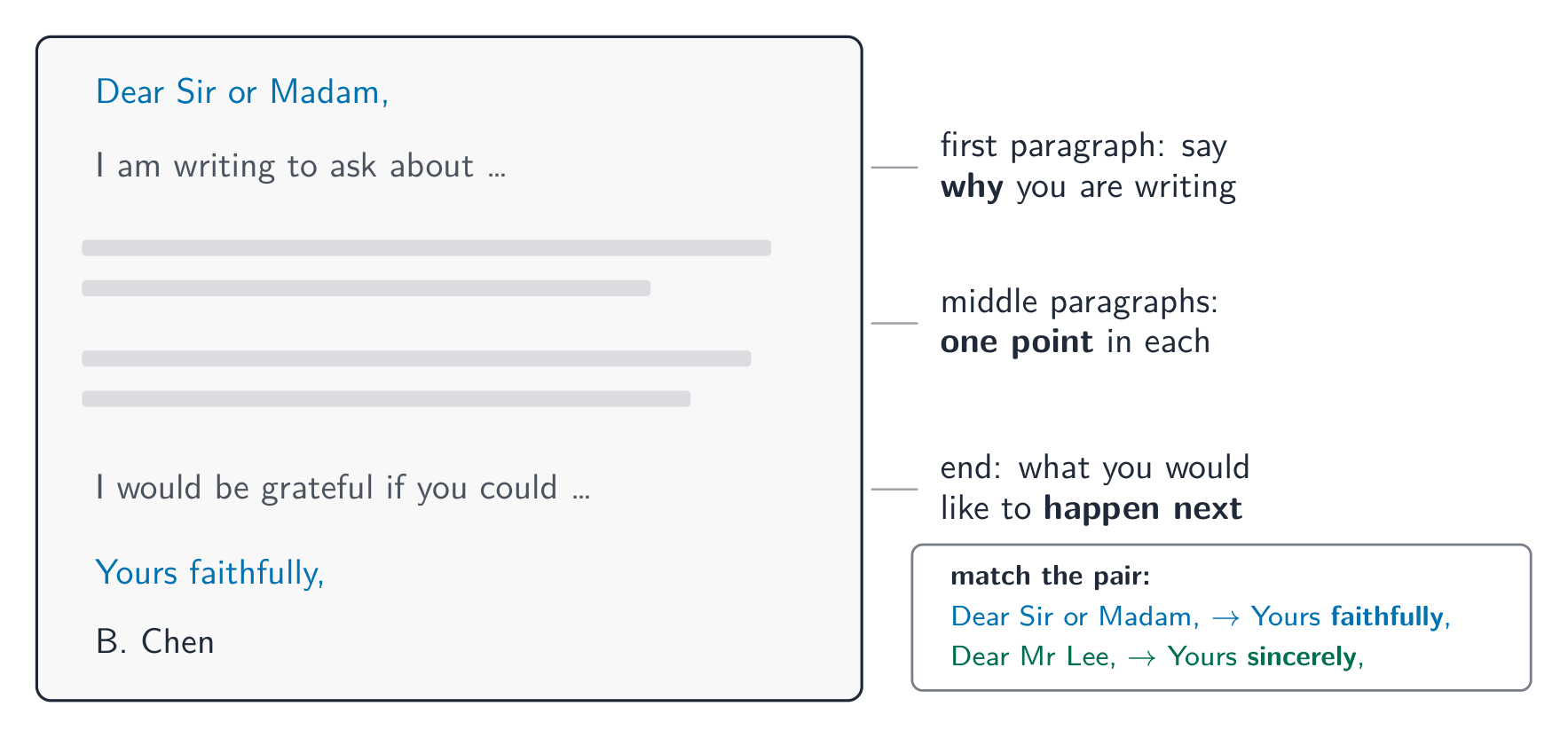
    • Open with Dear Sir/Madam, or Dear Mr Lee,
    • If you start with a name, close with Yours sincerely,. If you start with Sir/Madam, close with Yours faithfully,.

    Clear paragraphs

    • First paragraph: say why you are writing.
    • Middle paragraphs: give your points, one idea in each.
    • Last paragraph: say what you would like to happen next.

    Formal language

    • Use formal phrases: I would like to…, I am writing to…, I would be grateful 感激 if…
    • Keep sentences clear and complete. Check your grammar and spelling.

    A model formal letter

    See how a polite, complete opening sets the right tone.

    Dear Sir or Madam,

    I am writing to suggest an improvement to the town library. At present it closes at five o'clock, which is too early for students who finish school at four. I would be grateful if the council could consider opening it until seven in the evening on weekdays.

    Thank you for taking the time to read my letter.

    Yours faithfully, J. Chen

    Notice the Dear Sir or Madam / Yours faithfully pair, the clear first line stating the purpose, the polite request, and the complete sentences with no short forms.

    עברית

    מכתב רשמי עוקב אחרי סדר ברור.

    מכתב רשמי עם תוויות: הפרק הראשון אומר מדוע הכתב, הפרקים האמצעיים נותנים כל אחד נקודה אחת, הסוף אומר מה הוא רוצה שקיימה, ותיבה מראה ש-Dear Sir or Madam מתאים ל-Yours faithfully בעוד Dear Mr Lee מתאים ל-Yours sincerely
    צורת המכתב הרשמי - והברכה קובעת את סיום המכתב

    פתיחה וסיום

    • פתח ב-Dear Sir/Madam, או Dear Mr Lee,
    • אם התחלת בשם, סיים ב-Yours sincerely,. אם התחלת ב-Sir/Madam, סיים ב-Yours faithfully,.

    פרקים ברורים

    • הפרגרף הראשון: אמר מדוע אתה כותב.
    • פרקי האמצע: העלה נקודות, רעיון אחד בכל פרק.
    • הפרגרף האחרון: אמר מה תרצה שתקרה בהמשך.

    לשון רשמית

    • השתמש בביטויים רשמיים: I would like to…, I am writing to…, I would be grateful 感激 if…
    • שמור על משפטים ברורים ומלאים. בדוק את הדקדוק והכתיב שלך.

    דוגמה למכתב רשמי

    התבונן כיצד פתיחה מכובדת ומלאה קובעת את הטון הנכון.

    מר או גברת יקרים,

    אני כותב כדי להציע שיפור בספריות העיר. נכון לעתה היא סגורה בשעה חמש, שזה מוקדי מדי עבור תלמידים שמסיימים לימודים בשעה ארבע. הייתי מודה אם הוועדה תוכל לשקול לפתוח אותה עד השעה שבע בערב בימי חול.

    תודה לך שלקחת זמן לקרוא את המכתב שלי.

    בברכה, J. Chen

    שים לב לזוג מר או גברת יקרים / בברכה, השורה הראשונה המבהירה במפורש את המטרה, הבקשה המכובדת והמשפטים המלאים ללא קיצורים.

    Vocabulary · ⁨מילון מונחים⁩ Train · ⁨אימון⁩
    English עברית
    grateful/ˈɡreɪtfl/ תודהן
    4.2

    Exam tips · ⁨טיפים לבחינות⁩

    English
    • Match the greeting to the ending: Dear Mr Lee → Yours sincerely; Dear Sir or Madam → Yours faithfully.
    • Say why you are writing in the first line: "I am writing to apply for…" saves words and sounds formal.
    • Do not use short forms: write "I am" and "do not", never "I'm" or "don't".
    • One paragraph per point, and end by naming the action you hope for: "I would be grateful if…".
    • Stay polite even in a complaint: "I was disappointed to find…" wins marks; "This is terrible!" loses the tone.
    עברית
    • התאם את ההיכרות לסיום: מר לי → בברכה; מר או גברת יקרים → בברכה.
    • ציין מדוע אתה כותב בשורה הראשונה: "אני כותב כדי להתקבל…" חוסך מילים ונשמע רשמי.
    • אל תשתמש בקיצורים: כתוב "אני" ו"אינו", לעולם לא "אני'" או "לא'".
    • פרק אחד לכל נקודה, וגמר על ידי ציון הפעולה שתקווה: "הייתי מודה אם…".
    • שמור על כבוד גם בהצגת טענות: "התאכזבתי לגלות…" מביא נקודות; "זה נורא!" מאבד את הטון.
  • 5

    Writing a report · ⁨כתיבת דוח⁩

    Watch lesson · ⁨צפה בשיעור⁩
    5.1

    What a report is for · ⁨מה המטרה של דוח⁩

    Syllabus · ⁨סיילבוס⁩
    English
    1. recognise that a report is written for a superior or a group about an event, experience or situation
    2. give factual information clearly and add suggestions or recommendations
    3. use a neutral, factual tone
    עברית
    1. להבין שדוח נכתב למנהל עליון או לקבוצה לגבי אירוע, חוויה או מצב
    2. לתת מידע עובדתי בצורה ברורה ולהוסיף הצעות או המלצות
    3. להשתמש בגוון ניטרלי ועובדתי

    Source: Cambridge International syllabus · ⁨מקור: הסיילבוס הבינלאומי של קמבריד'ג'⁩

    English

    A report 报告 gives information to a person in charge — a teacher, a manager, or a club leader. They will act 行动 on what you write, so be clear and honest.

    Purpose and reader

    • A report describes an event 事件, an experience, or a situation 情况.
    • It gives facts 事实 clearly, then adds suggestions.
    • The reader wants useful information, not a story. Keep the tone factual 事实性的 and clear.

    Format

    • A report is usually semi-formal or formal.
    • A title at the top tells the reader what the report is about.
    עברית

    דוח 报告 מספק מידע לאדם batter responsibility — מורה, מנהל או מנהל מועדון. הם ינקוט בפעולה 行动 לפי מה שכתבת, ולכן הייה ברור ואמתני.

    מטרה וקורא

    • דוח מתאר אירוע 事件, חוויה או מצב 情况.
    • הוא מספק עובדות 事实 בבירור, ולאחר מכן מוסיף המלצות.
    • הקורא מחפש מידע שימושי, לא סיפור. שמור על טון עובדתי 事实性的 וברור.
    אותו אירוע מסופר בשתי דרכים: משפט סיפורי מלא בדעות个人 opinions נמחק, ומשפט עם עובדות ברורות ומספרים מקבל סימן צ'ק
    דו"ח מספק עובדות שיכול לנצל הקורא, ולא סיפור

    פורמט

    • דוח הוא בדרך כלל חצי-רשמי או רשמי.
    • כותרת בחלק העליון מסבירה לקורא על מה הדוח עוסק.
    דיון רשמי: דוחות מספקים עובדות ברורות כדי שקובעי החלטות יוכלו לפעול על בסיסם
    דיון רשמי: דוחות מספקים עובדות ברורות כדי שקובעי החלטות יוכלו לפעול על בסיסם
    דוח מארגן עובדות למטרות ברורה ולקורא מוגדר
    דוח מארגן עובדות למטרות ברורה ולקורא מוגדר
    Vocabulary · ⁨מילון מונחים⁩ Train · ⁨אימון⁩
    English עברית
    report/rɪˈpɔːt/ דוח
    act/ækt/ מעשה / פעולה
    event/ɪˈvent/ אירוע
    situation/ˌsɪtʃuːˈeɪʃn/ מצב
    facts/fækts/ עובדות
    factual/ˈfæktʃuːəl/ עובדתי
    headings/ˈhedɪŋz/ כותרות
    opinion/əˈpɪnɪən/ דעה
    recommendations/ˌrekəmenˈdeɪʃnz/ המלצות
    conclusion/kənˈkluːʒn/ מסקנה
    phrases/ˈfreɪzɪz/ ביטויים
    5.2

    How to organise a report · ⁨כיצד לארגן דוח⁩

    Syllabus · ⁨סיילבוס⁩
    English
    1. organise a report using short headings or clearly separated sections
    2. separate facts from your own opinions and recommendations
    3. end with a clear recommendation or conclusion
    עברית
    1. לארגן דוח באמצעות כותרות קצרות או חלקים מופרדים בבירור
    2. להפריד בין עובדות לבין הדעות וההמלצות שלך
    3. לסיים בהמלצה או מסקמה ברורה

    Source: Cambridge International syllabus · ⁨מקור: הסיילבוס הבינלאומי של קמבריד'ג'⁩

    English

    A clear shape helps the reader find information fast.

    Use headings

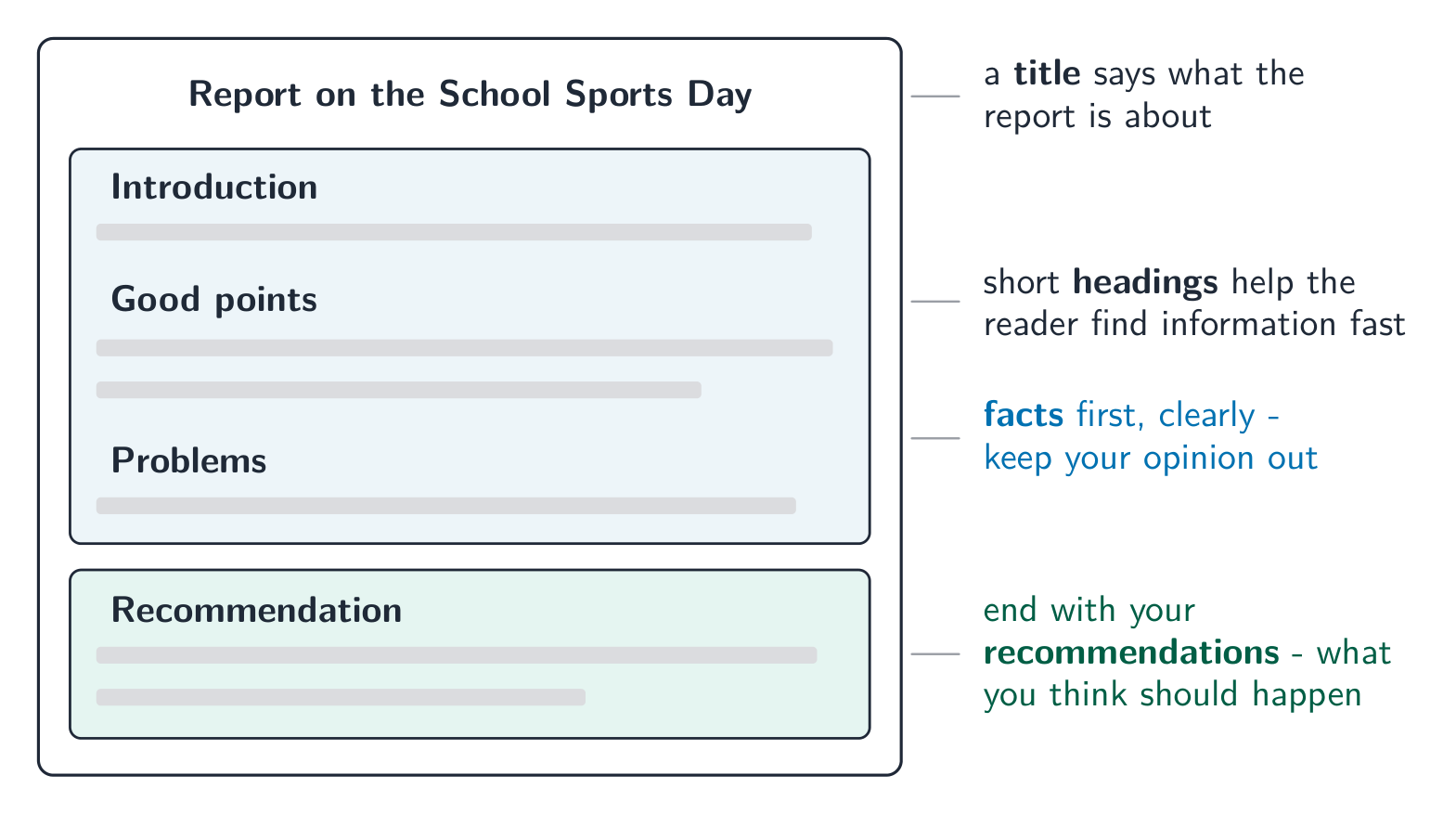
    • Break the report into sections with short headings 小标题.
    • For example: Introduction, Good points, Problems, Recommendation.

    Facts, then recommendations

    • First give the facts. Keep your opinion 观点 out of this part.
    • Then give your recommendations 建议 — what you think should happen.

    End clearly

    • Finish with a clear recommendation or conclusion 结论.
    • Make your advice easy to follow.

    Useful language

    Keep a few report phrases 短语 ready. They make your writing sound organised and grown-up.

    • To introduce: The aim 目的 of this report is to… / This report looks at…
    • To give facts: At present… / The main problem is… / Many students felt that…
    • To recommend: I recommend that… / It would help if… / The best solution 解决办法 is to…

    Notice these are calm and impersonal. A report avoids strong words like "amazing" or "terrible".

    A model report extract

    Read how facts and a recommendation sit under clear headings.

    Introduction This report looks at the school library and suggests ways to improve it.

    Good points The library is quiet, and it has a wide range of science books. It opens every day after school.

    Problems There are only two computers, and every table is full by four o'clock.

    Recommendation The school should add five computers and open a second study room in the evening.

    Each section is short. The first three give only facts; the last gives the advice. That split is what makes it a report, not a story.

    עברית

    מבנה ברור עוזר לקורא למצוא מידע במהירות.

    דוח עם כותרת וחלקים מעוצבים בכותרות: הקדמה, נקודות חיוביות, בעיות והמלצה; השלושת חלקים הראשונים מכילים רק עובדות, והאחרון מכיל את ההמלצות שלך
    הצורה של דו"ח: עובדות תחת כותרות ברורות, המלצות בסוף

    שימוש בכותרות

    • חלקו את הדוח לחלקים עם כותרות קצרות 小标题.
    • לדוגמה: הקדמה, נקודות חיוביות, בעיות, המלצה.

    עובדות, ולאחר מכן המלצות

    • תחילה ספק את העובדות. שמור את ה-דעה 观点 שלך מחוץ לחלק זה.
    • לאחר מכן ספק את ה-המלצות 建议 שלך — מה你认为 שצריך לקרות.

    סיום ברור

    • סיים בהמלצה ברורה או ב-מסקנה 结论.
    • גרום לייעוץ שלך להיות קל לעקוב אחריו.

    לשון שימושית

    הכינו מספר ביטויים מוכנים לדוח. הם גורמים לכתיבה שלך להיראות מאורגנת ומבוגרת.

    • להציג: The aim המטרה of this report is to… / This report looks at… (מטרת דוח זה היא… / דוח זה עוסק ב…)*
    • לתת עובדות: At present… / The main problem is… / Many students felt that… (נכון לעת… / הבעיה המרכזית היא… / תלמידים רבים הרגישו ש…)*
    • להמליץ: I recommend that… / It would help if… / The best solution הפתרון הטוב ביותר is to… (אני ממליץ ש… / יהיה טוב אם… / הפתרון הטוב ביותר הוא ל…)*

    שימו לב שביטויים אלו שקטים ואישיים. דוח נמנע ממילים חזקות כמו "amazing" (מופלא) או "terrible" (נורא).

    דוגמה לקטע מדוח

    קראו כיצד עובדות והמלצה מופיעות תחת כותרות ברורות.

    מבוא דוח זה עוסק בספריית בית הספר ומציע דרכים לשפר אותה.

    נקודות חיוביות הספרייה שקטה, ויש בה מגוון רחב של ספרי מדע. היא פתוחה כל יום לאחר שעות לימוד.

    בעיות יש רק מחשבים שניים, וככל השולחנות מלאים עד ארבעה בצהריים.

    המלצה בית הספר צריך להוסיף חמישה מחשבים ולפתוח חדר לימוד שני בערב.

    כל חלק קצר. שלושת החלקים הראשונים מציגים רק עובדות; האחרון מציג את הייעוץ. חלוקה זו היא מה שהופכת זאת לדוח ולא לסיפור.

    Vocabulary · ⁨מילון מונחים⁩ Train · ⁨אימון⁩
    English עברית
    aim/eɪm/ מטרה
    solution/səˈluːʃn/ פתרון
    5.2

    Exam tips · ⁨טיפים לבחינות⁩

    English
    • Start with To / From / Subject or a clear title. A report never opens with "Dear…".
    • Use the introduction to say what the report covers and why, in one or two lines.
    • Group the facts under short headings, and keep your opinion out of the findings.
    • Save opinions for the end: one clear recommendation, "I recommend…" plus one action.
    • Keep the style neutral and calm: no exclamation marks, no jokes, no chat.
    עברית
    • התחילו עם To / From / Subject (אליו / ממנו / נושא) או בכותרת ברורה. דוח מעולם לא פותח ב-"Dear…" (יקר/יקרה…).
    • השתמשו במבוא כדי לומר מה הדוח מכסה ולמה, בשורה אחת או שתיים.
    • סייגרו את העובדות תחת כותרות קצרות, ושמרו את דעתך מחוץ לממצאים.
    • שמרו על דעות לסוף: המלצה ברורה אחת, "I recommend…" (אני ממליץ…) PLUS פעולה אחת.
    • שמור על סגנון ניטרלי ורגוע: ללא סימני הקלטה, ללא בדיחות, ללא שיחה.
  • 6

    Writing an article · ⁨כתיבת מאמר⁩

    Watch lesson · ⁨צפה בשיעור⁩
    6.1

    What an article is for · ⁨מהו המטרה של מאמר⁩

    Syllabus · ⁨סיילבוס⁩
    English
    1. recognise that an article is written for a general audience to inform or entertain
    2. choose a title and an opening that catch the reader's interest
    3. keep the reader engaged with questions, examples and a clear point of view
    עברית
    1. להבין שמאמר נכתב לקהל רחב כדי להעניק מידע או להעניק בידור
    2. לבחור כותרת ופתח שמושכים את עניינו של הקורא
    3. לשמור על מעורבות הקורא באמצעות שאלות, דוגמאות ונקודת מבט ברורה

    Source: Cambridge International syllabus · ⁨מקור: הסיילבוס הבינלאומי של קמבריד'ג'⁩

    English

    An article 文章 is written for a magazine, a newspaper, or a website. Many people read it.

    Purpose

    • An article informs 告知 or entertains 娱乐 a general reader.
    • You usually give your own view on a topic, with reasons.

    Engage the reader

    • You must engage 吸引 the reader — make them want to keep reading.
    • A good title 标题 and a strong first line catch their interest 兴趣.
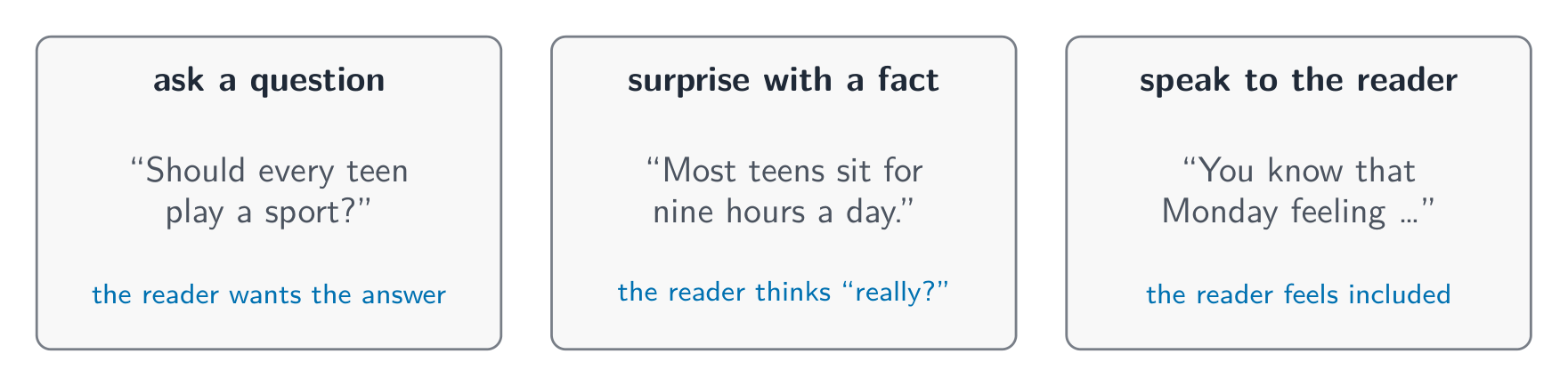
    • Ask the reader a question, or start with a surprising fact.
    עברית
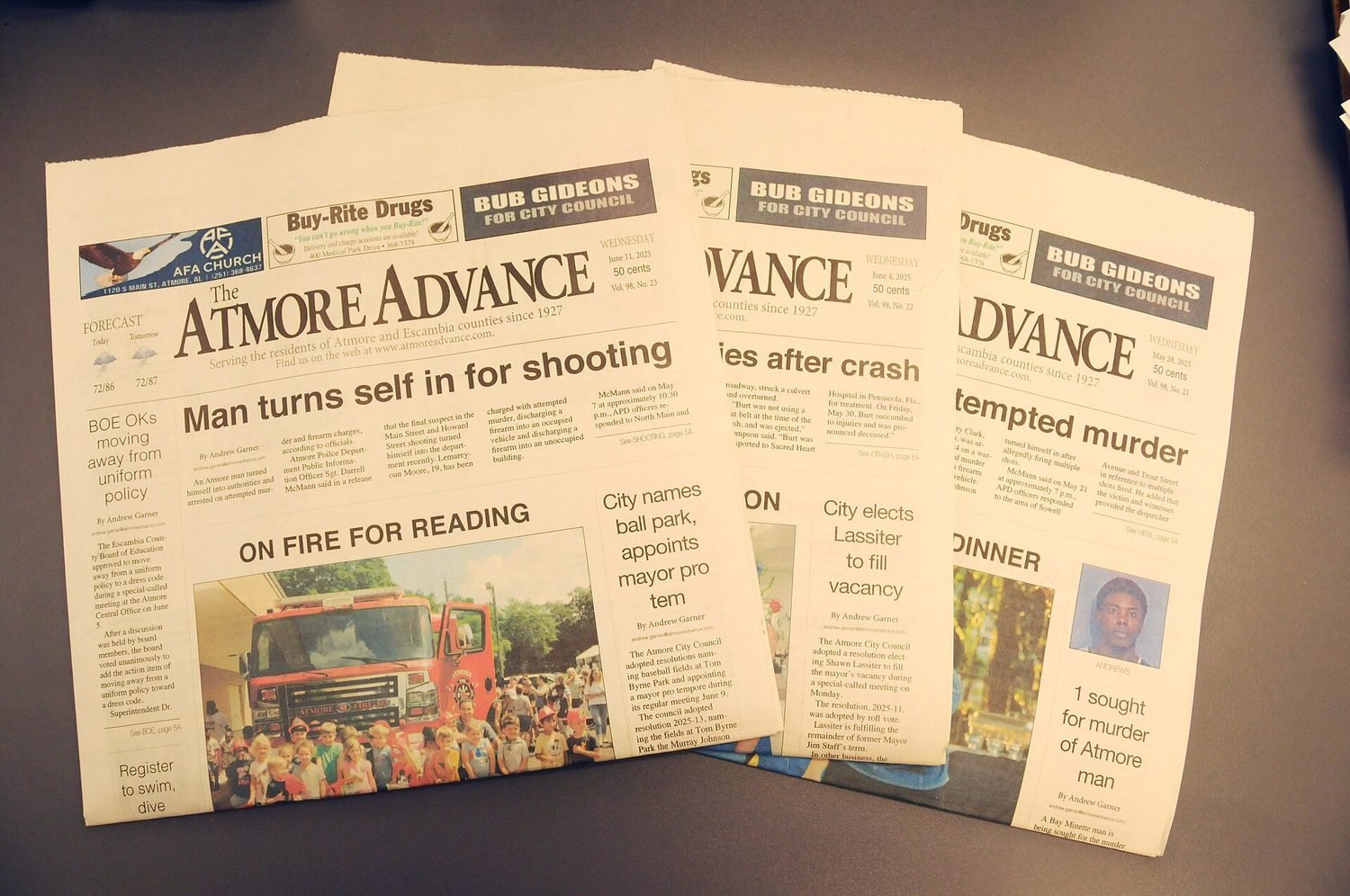
    מדף עיתונים מלא בעיתונים רבים שונים, דפי פתיחה מופנים החוצה
    מדף עיתונים: כל אחד מהם מתחרה על אותו קורא, ולכן מאמר חייב לפתוח בקרן吸引 (hook)

    מאמר 文章 נכתב למגזין, לעיתון או לאתר אינטרנט. אנשים רבים קוראים אותו.

    מטרה

    • מאמר מספק מידע 告知 או מעניין 娱乐 קורא כללי.
    • בדרך כלל אתה מעלה את观点 (הדעת) שלך בנושא, עם טענות.

    מעורר את הקורא

    • עליך למשוך 吸引 את הקורא — גרום לו להמשיך לקרוא.
    • כותרת טובה 标题 ופתיח חזק תופסים את העניין 兴趣 שלו.
    • שאל את הקורא שאלה, או התחל עם עובדה מפתיעה.
    שלוש פתיחות לדוגמה: שאל שאלה, הפתע בעובדה, או פנה ישירות לקורא
    שלושה דרכים למשוך את עניין הקורא בשורות הפתיחה שלך
    דף פתיחה של עיתון: מאמרים תופסים את הקורא, ואז מספקים מידע ומעניינים בזווית ברורה
    דף פתיחה של עיתון: מאמרים תופסים את הקורא, ואז מספקים מידע ומעניינים בזווית ברורה
    Vocabulary · ⁨מילון מונחים⁩ Train · ⁨אימון⁩
    English עברית
    article/ˈɑːtɪkl/ מאמר
    informs/ɪnˈfɔːmz/ מאפשר
    entertains/ˌentəˈteɪnz/ מבדר
    engage/enˈɡeɪdʒ/ מעורר עניין
    title/ˈtaɪtl/ כותרת
    interest/ˈɪntrest/ ריבית
    introduction/ˌɪntrəˈdʌkʃn/ הקדמה
    conclusion/kənˈkluːʒn/ מסקנה
    6.2

    Writing a lively article · ⁨כתיבת מאמר חיוני⁩

    Syllabus · ⁨סיילבוס⁩
    English
    1. organise the article into an introduction, development and conclusion
    2. use lively, varied language and a consistent tone
    3. address the reader directly where it suits the topic
    עברית
    1. לארגן את המאמר לתוכנית, פיתוח וסיכום
    2. להשתמש בשפה תוססת, מגוונת ובגוון אחיד
    3. לפנות ישירות לקורא כאשר זה מתאים לנושא

    Source: Cambridge International syllabus · ⁨מקור: הסיילבוס הבינלאומי של קמבריד'ג'⁩

    English

    An article should sound interesting, not flat.

    Structure

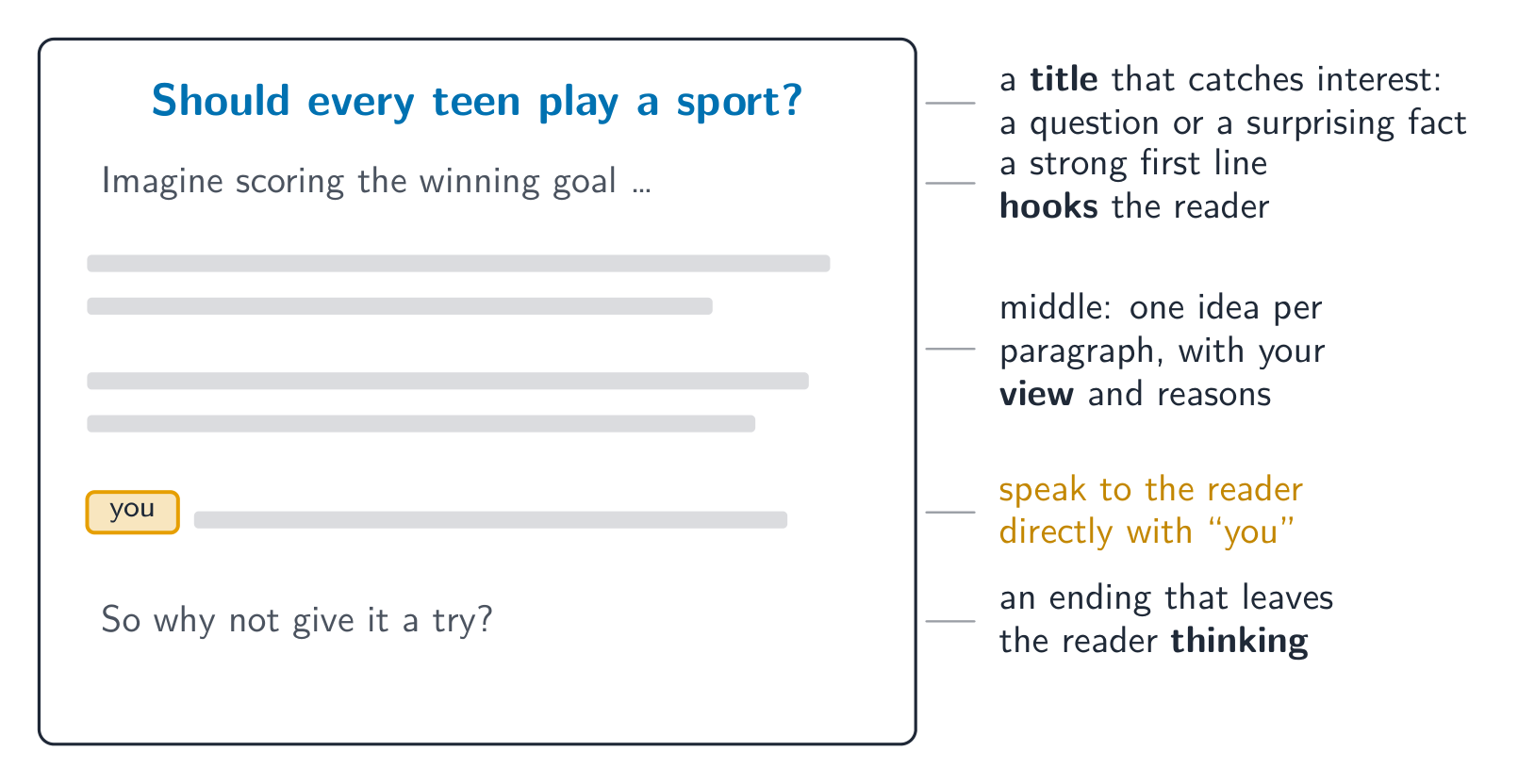
    • Begin with an introduction 引言 that names the topic.
    • Develop your points in the middle, one idea in each paragraph.
    • End with a short conclusion 结论 that leaves the reader thinking.

    Lively language

    • Use varied 多样的 words and sentence lengths to keep the energy up.
    • You can speak to the reader directly with "you".
    • Keep the tone friendly, but not too casual.

    Useful language

    A few flexible phrases 短语 let you hook the reader and glide between ideas.

    • To open with energy: Have you ever…? / Imagine you… / Last week, something odd happened to me.
    • To move between ideas: What's more… / On the other hand… / The truth is…
    • To speak to the reader: You might think… / We all know that… / Be honest —…
    • To end memorably: So next time you… / Perhaps the real question is…

    Vary how you open sentences. Ten sentences that all begin "I think" feel flat 平淡; mixing your openings keeps the reader awake.

    A model opening

    See how one opening hooks the reader, then points forward.

    Have you ever tried to sleep with a phone glowing beside your pillow? Most of us have — and most of us wake up tired. This article asks a simple question: could a good night's sleep be the cheapest way to feel happier?

    The question pulls the reader in, the honest detail keeps them, and the last line promises where the article is going. That is a lot of work for three sentences.

    עברית

    מאמר צריך להישמע מעניין, ולא שטוח.

    מאמר עם תוויות: שאלה ככותרת, פתיח חזק שתופס את הקורא, פרקי אמצע עם רעיון אחד בכל פרק הפונים לקורא יחד איתך, וסיום שהותיר את הקורא לחשוב
    צורת מאמר תוסס: למשוך את הקורא, לשמור עליו, ולהשאיר אותו חושב

    מבנה

    • התחל במقدمة 引言 שמונה את הנושא.
    • פתח את הנקודות שלך באמצע, רעיון אחד בכל פרק.
    • לסיים בפסקת סיכום קצרה that leaves the reader thinking.结论

    לשון חיה

    • השתמש במגוון词汇 varied words and sentence lengths to keep the energy up.
    • אפשר לפנות ישירות לקורא באמצעות "אתה".
    • שמור על גישה ידידותית, אך אל תהיה קליל מדי.

    לשון שימושית

    מספר ביטויים גמישים短语 let you hook the reader and glide between ideas.

    • להתחיל באנרגיה: האם פעם...? / דייקנו שאתה... / בשבוע שעבר, משהו מוזר קרה לי.
    • לעבור בין רעיונות: מעבר לכך... / מאידך... / האמת היא...*
    • לפנות לקורא: ייתכן שאתה חושב... / כולם יודעים ש... / תהיה כנה —...
    • להסתיים בצורה נשכחת: הפעם הבאה שאתה... / אולי השאלה האמיתית היא...*

    הגוון את פתיחות המשפטים. עשר משפאות שכולן מתחילות ב-"אני חושב" מרגיש שטוח平淡; מערבוב הפתיחות שומר על הקורא מעורר.

    דוגמה לפתיחה

    ראו איך פתיחה אחת תופסת את הקורא, ואז מצביעה קדימה.

    האם פעם ניסית להירדם עם טלפון זוהר לצד המזרן שלך? רובנו כן — ורובנו מתעוררים עייפים. מאמר זה שואל שאלה פשוטה: האם שינה טובה יכולה להיות הדרך הזולה ביותר להרגיש מאושר יותר?

    השאלה מושכת את הקורא לתוך הטקסט, הפרט הכנה שומר אותו, והשורה האחרונה מבטיחה לאן המאמר הולך. זה הרבה עבודה עבור שלוש משפאות.

    Vocabulary · ⁨מילון מונחים⁩ Train · ⁨אימון⁩
    English עברית
    varied/ˈveərid/ מגוון
    phrases/ˈfreɪzɪz/ ביטויים
    flat/flæt/ שטוח
    6.2

    Exam tips · ⁨טיפים לבחינות⁩

    English
    • Give the article a short, catchy title, then hook the reader with a question or surprise in the first lines.
    • Talk to the reader: "Have you ever…?" An article is the one formal task where personality wins marks.
    • One idea per paragraph, and make it real with a short example or a small story.
    • Numbers and small facts make an article feel true: "three out of five students…".
    • End with a line the reader remembers: a punchline, a question, or a call to act.
    עברית
    • תן למאמר כותרת קצרה ומשיכה, ולאחר מכן תופס את הקורא עם שאלה או הפתעה בשורות הראשונות.
    • דבר עם הקורא: "האם פעם...?" מאמר הוא התפקיד הרשמי היחיד שבו אישיות מביאה נקודות.
    • רעיון אחד בכל פרagraph, והפוך אותו למציאותי באמצעות דוגמה קצרה או סיפור קטן.
    • מספרים ועובדות קטנות גורמים למאמר להרגיש אמיתי: "שלושה מתוך חמש תלמידים...".
    • סיים בשורה שהקורא יזכור: קוקטייל, שאלה, או קריאה לפעולה.
  • 7

    Writing a review · ⁨כתיבת ביקורת⁩

    Watch lesson · ⁨צפה בשיעור⁩
    7.1

    What a review does · ⁨מה שמסקירה עושה⁩

    Syllabus · ⁨סיילבוס⁩
    English
    1. recognise that a review describes something you have experienced (a film, place or product) and gives your opinion
    2. balance description with personal opinion and reasons
    3. write for a general audience, for example of a magazine or website
    עברית
    1. לזהות שסקירה מתארת דבר שעברתם (סרט, מקום או מוצר) ומביעה את דעתכם
    2. לאזן בין תיאור לדעת אישית ולסיבות
    3. לכתוב לקהל רחב, למשל של מגזין או אתר

    Source: Cambridge International syllabus · ⁨מקור: הסיילבוס הבינלאומי של קמבריד'ג'⁩

    English

    A review 评论 tells readers about something you have tried — a film, a book, a restaurant, or a place. A good review helps the reader decide 决定 whether to try it too.

    Describe and judge

    • A review does two things: it describes 描述 the thing, and it gives your opinion 观点 of it.
    • Balance the two. Do not only describe, and do not only give opinions.
    • Describing answers "What is it like?" Judging answers "Is it any good?" Move between the two, sentence by sentence.

    Support your opinions

    • Give reasons for what you think. Say why it was good or bad.
    • Use examples 例子 from your experience to make your view believable 可信.
    • A weak review says "The food was nice." A strong review says "The soup was rich and warming, though the rice arrived cold." The detail is what convinces the reader.

    Useful language

    Learn a few phrases 短语 for each job. Then you never stare at a blank page.

    • To describe: It is set in… / The story follows… / The dish combines… / What stands out is…
    • To praise: The best part is… / I was impressed by… / It really succeeds in…
    • To criticise 批评 (gently): The one weakness is… / It could have been better if… / At times it feels slow.
    • To recommend: I would recommend it to… / It is well worth… / Don't miss…

    Mix praise and criticism so the review sounds fair 公正. A review that is all praise, or all complaint, is hard to trust.

    עברית

    ביקורת review מספרת לקוראים על משהו שניסיתם — סרט, ספר, מסעדה או מקום. ביקורה טובה עוזרת לקורא לחשוב decide אם כדאי לו גם לנסות.

    תיאור והערכה

    • ביקורה עושה שתי דברים: היא מתארת describe את הדבר, ונותנת את הדעה opinion שלך עליו.
    • שמרו על איזון בין השניים. אל תסתפקו בתיאור בלבד, ואל תגבו רק בדעות.
    • תיאור עונה לשאלה "מה זהcomo?". הערכה עונה לשאלה "האם זה טוב?". מעבר בין השניים, משפט אחר משפט.
    דעה יושבת כמו כיסא על שתי רגליים, רגל אחת היא סיבה והשנייה דוגמא
    דעה נשענת על טיעון ועל דוגמה

    לתמוך בדעותיכם

    • נתנו סיבות לדעתכם. אמרו למה זה היה טוב או רע.
    • השתמשו ב-דוגמאות examples מהניסיון שלכם כדי להפוך את דעתכם ל-אמינה believable.
    • ביקורה חלשה אומרת "האוכל היה נעים." ביקורה חזקה אומרת "המרק עשיר ומחמם, אף שהאורז הגיע קר.". הפרטים הם מה שמשכנע את הקורא.

    לשון שימושית

    למדו מספר ביטויים phrases לכל משימה. כך לעולם לא תסתכלו דוחה על דף ריק.

    • לתאר: "הסיפור מתרחש ב… / הסיפור עוקב אחר… / המנה משלב… / מה בולט הוא…"
    • להשבח: "החלק הטוב ביותר הוא… / התרשمت מ… / זה מצליח באמת ב…"
    • לבקר criticise (בעדינות): "החיסרון היחיד הוא… / זה יכול היה להיות טוב יותר אם… / לפעמים זה מרגיש איטי."
    • להמליץ: "המלצה שלי היא… / זה שווה לחלוטין… / אל תפספסו…"

    שלבו שבחים ובקשות כדי שהביקורה תשמע הוגנת fair. ביקורה שתהיה מלאה בשבחים או מלאה בתלונות קשה לסמוך עליה.

    קהל קהל בבית-תפאנו: ביקורות מתארות מה ראיתם, נותנות דעה ברורה ותומכות אותה בעדויות
    קהל קהל בבית-תפאנו: ביקורות מתארות מה ראיתם, נותנות דעה ברורה ותומכות אותה בעדויות
    Vocabulary · ⁨מילון מונחים⁩ Train · ⁨אימון⁩
    English עברית
    review/rɪˈvjuː/ סקירה
    decide/dɪˈsaɪd/ להחליט
    describes/dɪˈskraɪbz/ מתאר
    opinion/əˈpɪnɪən/ דעה
    examples/eɡˈzæmplz/ דוגמאות
    believable/bɪˈliːvəbl/ מאמין
    phrases/ˈfreɪzɪz/ ביטויים
    criticise/ˈkrɪtɪsaɪz/ לבקר
    fair/feə/ יריד
    evaluate/ɪˈvæljuːeɪt/ להעריך
    tone/təʊn/ טון
    recommendation/ˌrekəmenˈdeɪʃn/ המלצה
    breathtaking/ˈbreθteɪkɪŋ/ נושק נשימה
    7.2

    How to build a review · ⁨בניית ביקורה⁩

    Syllabus · ⁨סיילבוס⁩
    English
    1. introduce what is being reviewed, then describe and evaluate it
    2. support your opinions with specific details and examples
    3. end with a clear recommendation to the reader
    עברית
    1. להציג מה נסקר, ולאחר מכן לתאר ולבקר אותו
    2. לתמוך בדעותיכם בפרטים ספציפיים ובדוגמאות
    3. לסיים בהמלצה ברורה לקורא

    Source: Cambridge International syllabus · ⁨מקור: הסיילבוס הבינלאומי של קמבריד'ג'⁩

    English

    Readers want a clear, helpful review.

    Structure

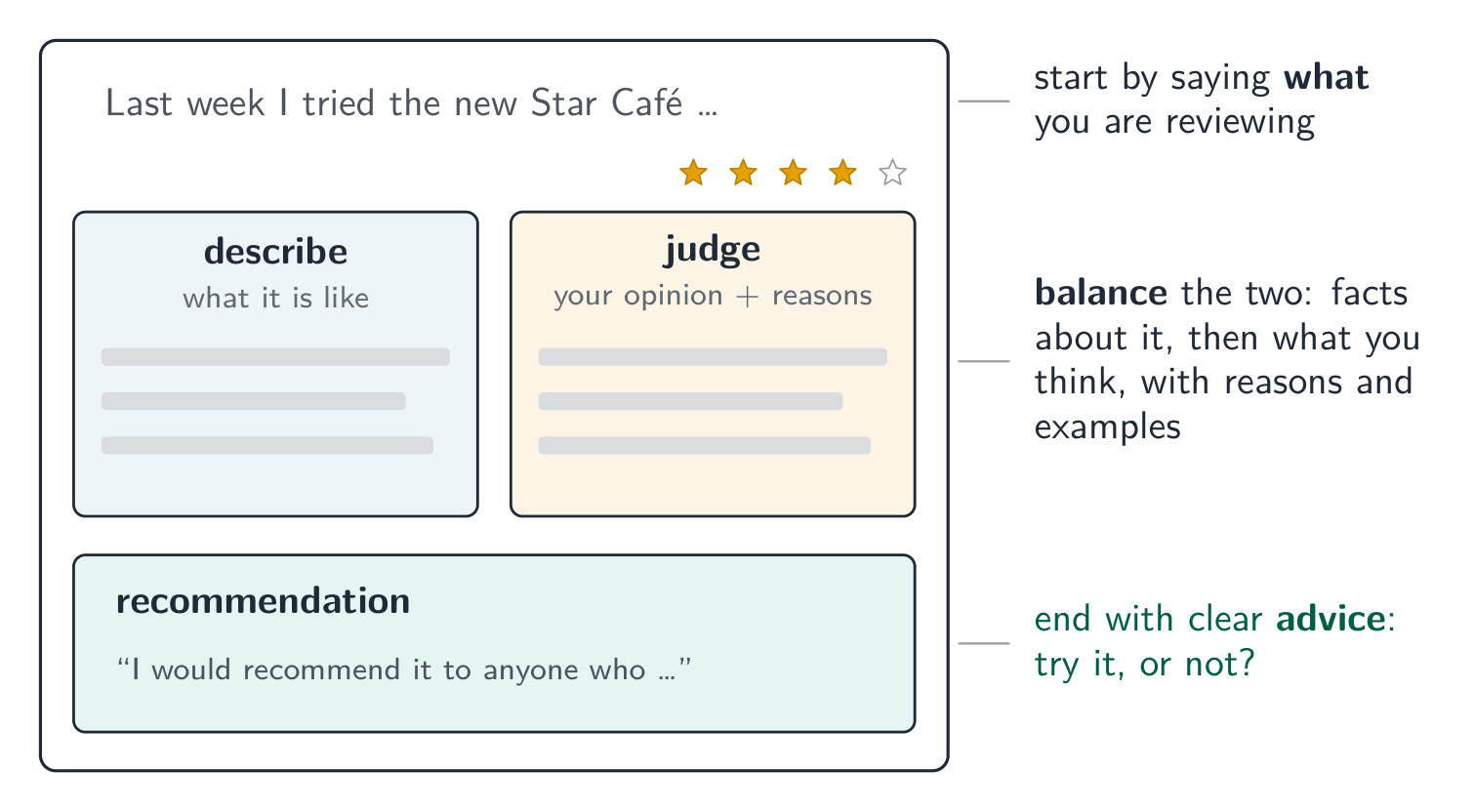
    • Start by saying what you are reviewing, and give the reader the basic facts.
    • In the middle, describe it and evaluate 评价 it — the good points and the weak points.
    • Write for a general reader, in a friendly but clear tone 语气.

    End with a recommendation

    • Finish with a recommendation 建议: do you advise the reader to try it or not?
    • Make your advice clear, for example: "I would recommend this film to anyone who likes adventure."
    • You can add a condition: "…as long as you don't mind a slow start." This sounds honest and grown-up.

    A model review

    Read this short review of a film. Notice how each sentence either describes or judges.

    Skyward is an adventure film about a girl who builds her own aircraft. The story is simple, but the flying scenes are breathtaking 惊人 and the young lead acts with real warmth. The middle drags a little, and a few jokes fall flat. Even so, it left the whole cinema smiling. I would recommend Skyward to any family looking for a bright, hopeful evening — just be ready for a slow first ten minutes.

    Count the moves: it names the film, describes it, praises it, admits two faults, and ends with a clear, honest recommendation. That is a complete review in five sentences.

    עברית

    קוראים מחפשים ביקורה ברורה ועוזרת.

    סקירה עם תוויות: קודם לכן ציין מה אתה בוחן, לאחר מכן שני עמודים מאוזנים לתיאור ולשפוט אותו, ומומלצות בסוף
    ביקורת מתארת ושופטת, ואז מסתיימת בהמלצה ברורה

    מבנה

    • התחל בציין מה אתה בוחן, ותן לקורא את העובדות הבסיסיות.
    • באמצע, תאר אותו וערך את 评价 — נקודות החוזק והנקודות החלשות.
    • כתוב לקורא כללי, בטון ידידותי אך ברור 语气.

    סיים במומלצות

    • סיים ב-מומלצות 建议: האם אתה ממליץ לקורא לנסות או לא?
    • הבהר את הייעוץ שלך, לדוגמה: *"אמליץ על הסרט הזה לכל מי שאוהב הרפתקאות.""
    • אפשר להוסיף תנאי: "…כל עוד אינך מצטער בהתחלה איטית." זה נשמע כנה ומבוגר.

    דגם של סקירה

    קרא את הסקירה הקצרה הזו על סרט. שים לב איך כל משפט או מתאר או שופט.

    Skyward הוא סרט הרפתקאות על בת-שיא בונה מטוס משלו. הסיפור פשוט, אבל סצנות הטיסה נושבות 惊人 והשחקן הראשי הצעיר משחק בחום אמיתי. האמצע מעט מושך, וכמה בדיחות לא מצליחות. עם זאת, הוא השאיר את כל בית הקולנוע מחייך. אמליץ על Skyward לכל משפחה המחפשסת ערב שמח ומאופק — רק תהיה מוכן לעשר הדקות הראשונות האיטיות.

    ספר את הצעדים: הוא מציין את שם הסרט, מתאר אותו, משבח אותו, מודה בשתי חולשות, ומסתיים במומלצות כנה וברורה. זוהי סקירה מלאה בחמישה משפטים.

    פנים של מסעדה אופנתית: תאורה נמוכה, מושבים בקבינה ושולחנות מעוצבים
    פנים של מסעדה: ציין מה היא, תאר אותה, שפוט את הטוב והחלש, ואז המלץ
    7.2

    Exam tips · ⁨טיפים לבחינות⁩

    English
    • Name what you are reviewing and your overall feeling in the first paragraph; do not keep it secret.
    • Do both jobs: describe it (what it is) and judge it (what is strong, what is weak).
    • Strong adjectives are the fuel of a review: gripping, delicious, disappointing, unforgettable.
    • Mention one weakness even in a good review; pure praise sounds like an advert.
    • Finish with a clear recommendation: who should try it, who should not, and why.
    עברית
    • ציין את מה שאתה בוחן ואת התחושה הכללית שלך בפסקה הראשונה; אל תשמור זאת בסוד.
    • בצע את שתי המשימות: תאר אותה (מה היא) ושפוט אותה (מה חזק, מה חלש).
    • תארים חזקים הם הדלק של סקירה: מרתק, טעים, מאכזב, בלתי נשכח.
    • ציין חולשה אחת גם בסקירה טובה; שבח טהור נשמע כמו פרסומת.
    • סיים במומלצות ברורה: מי צריך לנסות, מי לא, ולמה.
  • 8

    Writing an essay · ⁨כתיבת ערך⁩

    Watch lesson · ⁨צפה בשיעור⁩
    8.1

    Two kinds of essay · ⁨שני סוגי מאמרים⁩

    Syllabus · ⁨סיילבוס⁩
    English
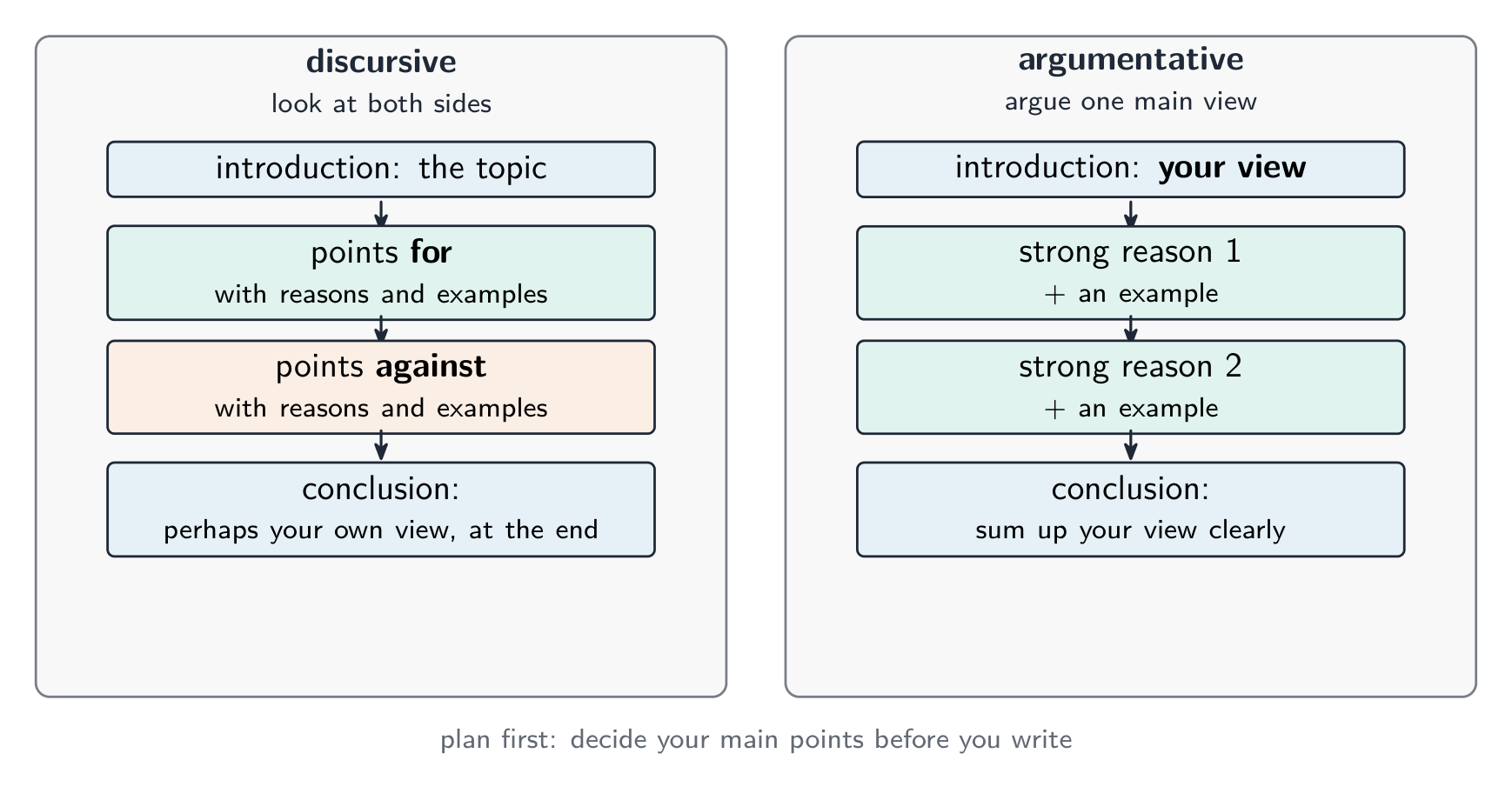
    1. tell the difference between a discursive essay (balanced, both sides) and an argumentative essay (one main view)
    2. plan the main points and the reasons or evidence for each
    3. keep a formal, organised style
    עברית
    1. להבין את ההבדל בין מאמר דיון-עמיקה (מאוזן, צדדים שניהם) לבין מאמר ארגומנטטיבי (דעה ראשית אחת)
    2. לתכנן את הנקודות המרכזיות ואת הסיבות או העדויות לכל אחד
    3. לשמור על סגנון פורמלי ומאורגן

    Source: Cambridge International syllabus · ⁨מקור: הסיילבוס הבינלאומי של קמבריד'ג'⁩

    English

    An essay 议论文 gives your ideas about a topic in an organised way.

    Discursive essays

    • A discursive 论述的 essay looks at both sides of a topic.
    • You give the points for and against, and perhaps your own view at the end.

    Argumentative essays

    • An argumentative 议论的 essay argues for one main view.
    • You give strong reasons and examples to support your opinion.

    Plan first

    • Decide your main points and the reasons for each, before you write.
    • A short plan keeps your essay organised.
    עברית

    מאמר ארגומנטי מציג את רעיונותיך בנושא בצורה מאורגנת.

    שני שלד מאמרים זה לצד זה: מאמר דיון עובר מהמבוא דרך נקודות בעד ונגד ועד לסיום שיכול להכיל את דעתך; מאמר ארגומנטי מציג את דעתך במבוא, מביא שתי טענות חזקות עם דוגמאות ומסכם את דעתך בסיום
    שתי צורות מאמר: דיון שוקלגן את שני הצדדים; ארגומנטטיבי טוען צד אחד

    מאמרי דיון

    • מאמר דיון בוחן את שני צדדי הנושא.
    • תביא את הנקודות בעד ונגד, ואולי גם את דעתך האישית בסוף.

    מאמרים ארגומנטטיביים

    • מאמר ארגומנטטיבי (议论的) טוען לטובת דעת מרכזית אחת.
    • מאמר ארגומנטי מגן על עמדה מרכזית אחת.

    תכנן קודם

    • קבע את הנקודות המרכזיות שלך ואת הסיבות לכל אחת, לפני שכתבת.
    • החלט על הנקודות המרכזיות ועל הסיבות לכל אחת מהן לפני שאתה כותב.
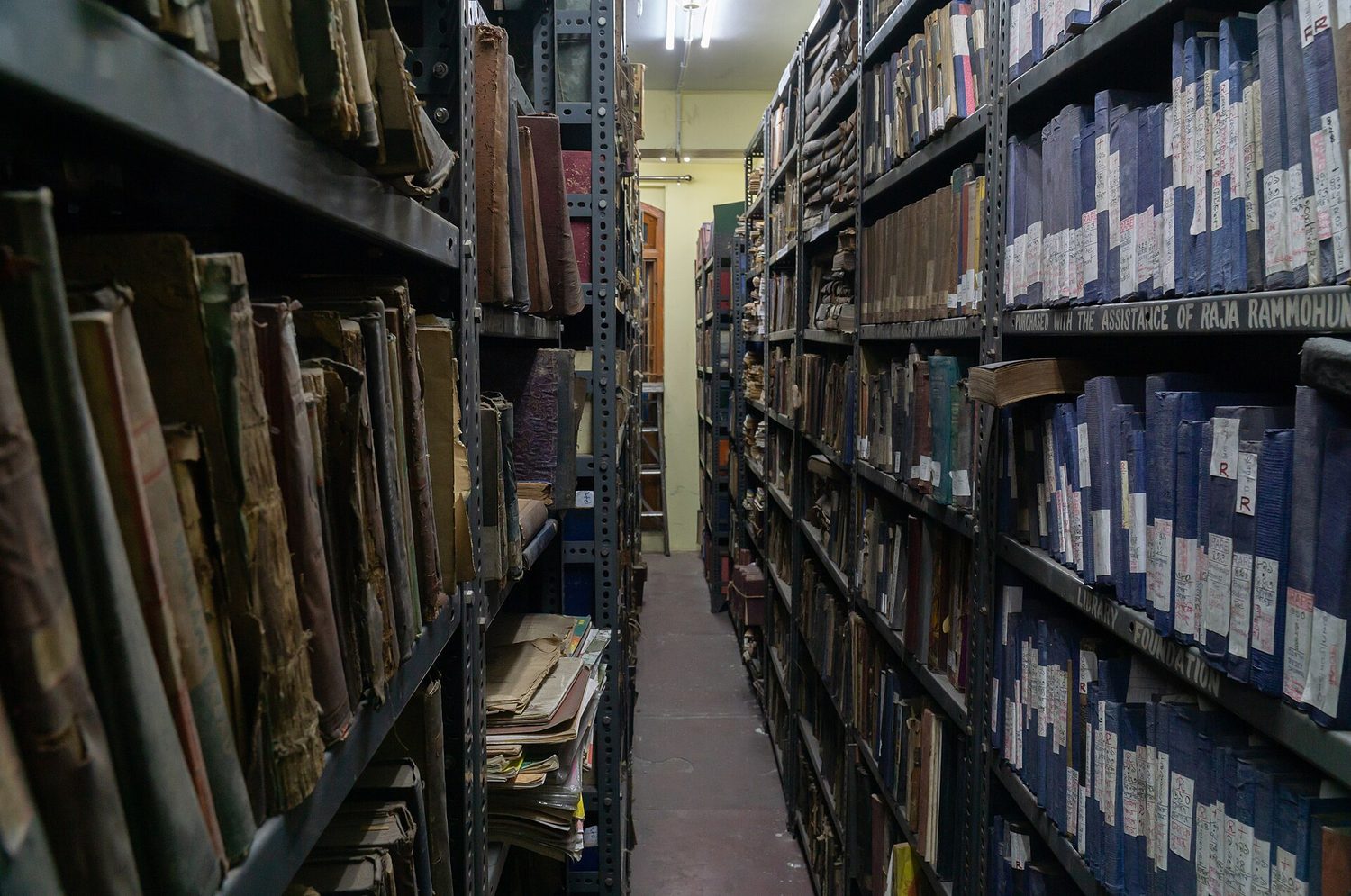
    חדר קריאה מלא בספרים: מאמרים דורשים קריאה זהירה, תכנון וארגון ארגומנטלי מבוסס
    חדר קריאה מלא בספרים: מאמרים דורשים קריאה זהירה, תכנון וארגון ארגומנלי מבוסס
    Vocabulary · ⁨מילון מונחים⁩ Train · ⁨אימון⁩
    English עברית
    essay/ˈeseɪ/ מאמר
    discursive/dɪˈskɜːsɪv/ דיוני
    argumentative/ˌɑːɡjuːˈmentətɪv/ ארגומנטטיבי
    introduction/ˌɪntrəˈdʌkʃn/ הקדמה
    8.2

    How to structure an essay · ⁨איך לבנות מאמר⁩

    Syllabus · ⁨סיילבוס⁩
    English
    1. introduce the topic and your approach in the introduction
    2. develop one main idea per paragraph in the body, with reasons and examples
    3. draw the ideas together in a clear conclusion
    עברית
    1. להציג את הנושא וגישתכם בהקדמה
    2. לפתח רעיון מרכזי אחד בכל פרשה בגוף, עם סיבות ודוגמאות
    3. להרכיב את הרעיונות במסקנה ברורה

    Source: Cambridge International syllabus · ⁨מקור: הסיילבוס הבינלאומי של קמבריד'ג'⁩

    English

    A clear shape makes your argument easy to follow.

    Introduction

    • The introduction 引言 names the topic and says how you will approach it.
    • Keep it short — two or three sentences.

    Body paragraphs

    • Put one main idea in each body 主体 paragraph.
    • Start the paragraph with the idea, then add reasons and examples.

    Conclusion

    • The conclusion 结论 brings your ideas together.
    • Do not add a new point here. Sum up your view clearly.

    Useful language

    Linking words 衔接词 signal your reader where the argument turns. They are the road signs of an essay.

    • To add a point: Firstly… / In addition… / Another reason is…
    • To show the other side: However… / On the other hand… / Some people argue that…
    • To give an example: For example… / For instance… / such as…
    • To conclude: In conclusion… / Overall… / Weighing both sides…

    Use them at the start of a sentence, and do not overuse one. Two or three well-placed links are enough for a paragraph.

    A model body paragraph

    Watch the three moves: idea, then reason, then example.

    Firstly, homework teaches students to work alone. In class, a teacher is always nearby to help. At home, a student must solve the problem by themselves — and that is where real learning happens. For example, a maths question that felt easy in the lesson can teach far more when you meet it again, alone, at your desk.

    The first sentence is the idea. The next two explain why. The last one makes it real with an example. Every body paragraph can follow this simple shape.

    עברית

    צורה ברורה עוזרת לקורא לעקוב בקלות אחרי הטענות שלך.

    הקדמה

    • ההקדמה (引言) מזהה את הנושא ואומרת כיצד תתקרב אליו.
    • המבוא מציין את הנושא ומסביר כיצד תתקרב אליו.

    פסקאות גוף

    • שמו רעיון מרכזי אחד בכל פסקת גוף.
    • התחל בפסקה עם הרעיון, ואז הוסף סיבות ודוגמאות.
    פסקת גוף אחת פתוחה לשלושה חלקים: הרעיון המרכזי כמשפט נושא, ולאחר מכן הסיבות מאחוריו, ולבסוף דוגמה שמייצרת אותו
    פרק גוף: הרעיון תחילה, לאחר מכן טיעונים, ואז דוגמה

    סיכום

    • ה-סיכום 结论 מסכם את רעיונותיך יחד.
    • אל תוסיף נקודה חדשה כאן. סכם את עמדתך בבירור.

    לשון שימושית

    מילים מקשרות 衔接词 מצביעות לקורא שלך היכן הארגומנט משתנה. הן הן שלטיות הדרכים של הערך.

    • להוסיף נקודה: ראשית… / בנוסף… / סיבה נוספת היא…
    • להציג צד שני: עם זאת… / מאידך… / אנשים מסוימים טוענים כי…
    • לתת דוגמה: למשל… / לדוגמה… / כגון…
    • לסיים: לסיכום… / בסך הכל… / במשקולת שתי הצדדים…

    השתמש בהן בתחילת משפט, אל תפרש אותן יותר מדי. שתי או שלוש קישורים ממוקמים היטב מספיקים לפסקה אחת.

    פסקת גוף דגם

    צפה בשלושת השלבים: רעיון, לאחר מכן סיבה, ולאחר מכן דוגמה.

    ראשית, שיעורי הבית מלמדים תלמידים לעבוד לבדם. בכיתה, המורה תמיד קרובה כדי לסייע. בבית, התלמיד חייב לפתור את הבעיה בעצמו — ושם מתרחש הלמידה האמיתית. למשל, שאלת מתמטיקה שהייתה קלה בשיעור יכולה ללמד הרבה יותר כאשר נתקלים בה שוב, לבד, על השולחן.

    המשפט הראשון הוא הרעיון. שני המשפטים הבאים מסבירים למה. המשפט האחרון מייצר אותו באמצעות דוגמה. כל פסקת גוף יכולה להיקלע לתבנית פשוטה זו.

    תכנן מבנה תחילה: נקודות ברורות, דוגמאות וסיכום מוצק
    תכנן מבנה תחילה: נקודות ברורות, דוגמאות וסיכום מוצק
    Vocabulary · ⁨מילון מונחים⁩ Train · ⁨אימון⁩
    English עברית
    body/ˈbɒdi/ גוף
    conclusion/kənˈkluːʒn/ מסקנה
    linking words/ˈlɪŋkɪŋ wɜːdz/ מילים מקשרות
    Watch lesson · ⁨צפה בשיעור⁩
    8.2

    Exam tips · ⁨טיפים לבחינות⁩

    English
    • Plan for three minutes before you write: your view, two reasons, one opposite view.
    • First paragraph introduces the question; each middle paragraph carries exactly one argument.
    • Signpost with linking words: First of all, However, On the other hand, In conclusion.
    • Give the other side one fair paragraph, then answer it. Balance shows thinking and earns marks.
    • The final paragraph states your opinion clearly. Do not sit on the fence.
    עברית
    • תכנן למשך שלוש דקות לפני הכתיבה: עמדתך, שתי סיבות, צד נגוד אחד.
    • הפסקה הראשונה מציגה את השאלה; כל פסקת אמצע מכילה בדיוק ארגומנט אחד.
    • סמן עם מילות קישור: קודם כל, עם זאת, מאידך, לסיכום.
    • תן לצד השני פסקה הוגנת אחת, ולאחר מכן ענה עליו. איזון מראה חשיבה ומביא נקודות.
    • הפסקה האחרונה מציגה את דעתך בצורה ברורה. אל תתמהה בין שתי העמדות.
  • 9

    Listening skills · ⁨מיומנויות האזנה⁩

    Watch lesson · ⁨צפה בשיעור⁩
    9.1

    Listening for facts · ⁨האזנה לעובדות⁩

    Syllabus · ⁨סיילבוס⁩
    English
    1. listen for specific facts and details: places, names, times, dates and directions
    2. predict what kind of information you will hear before you listen
    3. select the correct multiple-choice option based on what the speaker says
    עברית
    1. להאזין לעובדות ופרטים ספציפיים: מקומות, שמות, זמנים, תאריכים וכיוונים
    2. לחזות באיזה סוג מידע תשמעו לפני ההאזנה
    3. לבחור את האפשרות הנכונה בשאלת הבחירה הרב-ברירה על בסיס מה שהדובר אומר

    Source: Cambridge International syllabus · ⁨מקור: הסיילבוס הבינלאומי של קמבריד'ג'⁩

    English

    In the listening exam you hear each recording 录音 twice. Use both chances well.

    Predict before you listen

    • Read the question before the recording starts.
    • Predict 预测 what kind of answer you need: a place, a name, a number, a time?

    Catch the detail

    • Listen for specific 具体的 facts: places, names, dates, times and directions 方向.
    • The answers usually come in the same order as the questions.

    Use both playings

    • On the first listening, choose your answer.
    • On the second, check it. Do not change a right answer without a good reason.
    עברית

    במבחן ההאזנה אתה שומע כל רקורד twice. השתמש בשתי ההזדמנויות היטב.

    תחזית לפני ההאזנה

    • קרא את השאלה לפני שההקלטה מתחילה.
    • תחזית מה סוג התשובה הנדרש: מקום, שם, מספר, שעה?

    לוכד את הפרטים

    • הקשב לעובדות ספציפיים: מקומות, שמות, תאריכים, שעות וכיוונים.
    • התשובות בדרך כלל מופיעות באותו סדר כמו השאלות.

    השתמש בשתי ההשמעות

    • בהשמעה הראשונה, בחר את התשובה שלך.
    • בהשמעה השנייה, בדוק אותה. אל תשנה תשובה נכונה ללא סיבה טובה.
    ציר זמן: לפני הרקורד קרא את השאלות וחזה את סוג התשובה, בהשמעה הראשונה בחר את תשובותיך, בהשמעה השנייה בדוק ומלא רווחים; תשובות מגיעות בדרך כלל בסדר השאלות
    השתמש בשתי ההאזנות בצורה שונה: ענה קודם, ואז בדוק
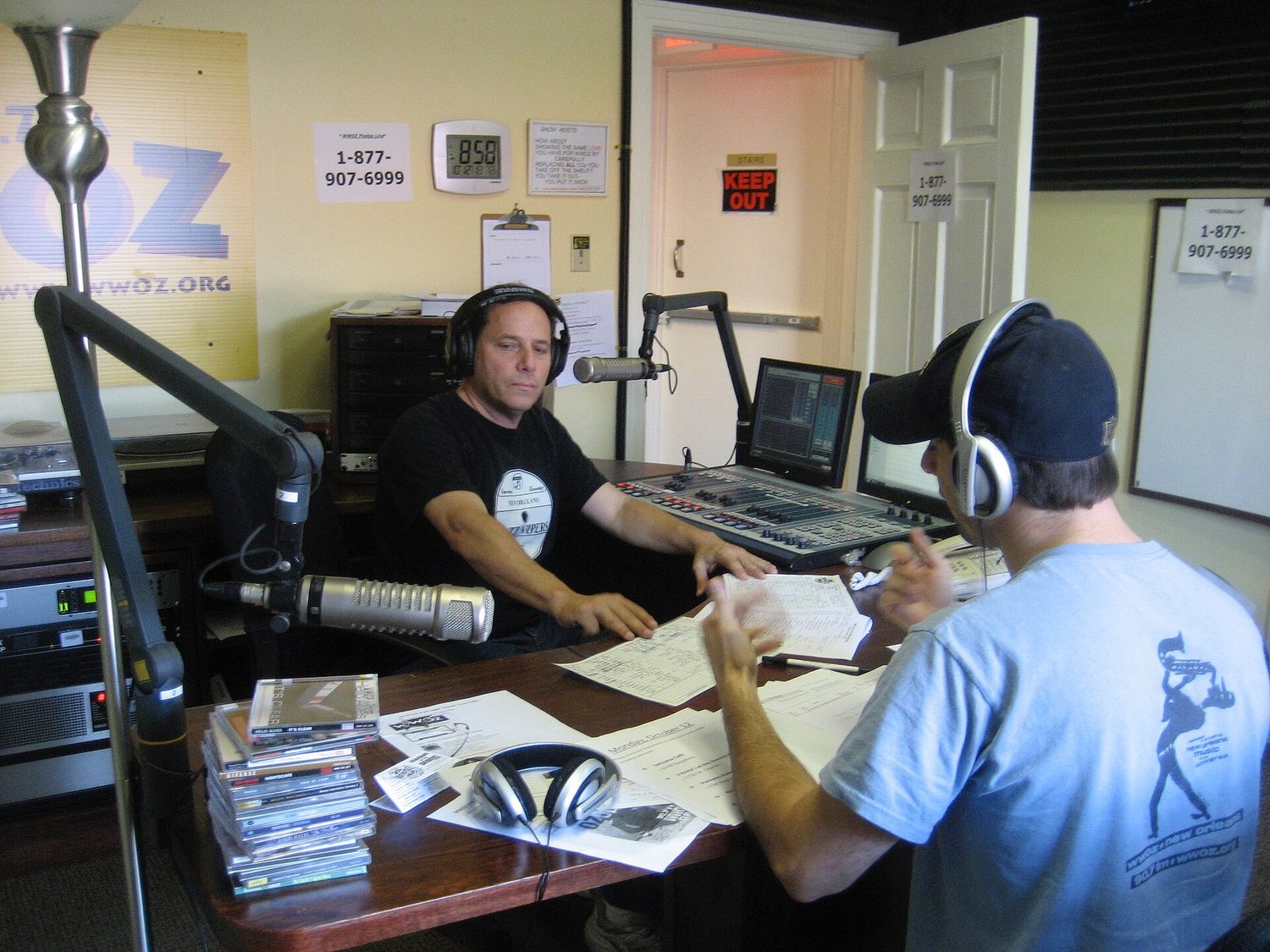
    סטודיו רדיו: מבחני האזנה דורשים מהכם לתפוס עובדות, עמדות ומשמעות משתמעת לאורך שתי הפעמות
    סטודיו רדיו: מבחני האזנה דורשים ממך ללוכד עובדות, גישות ומשמעות משתמעת לאורך שתי השמעות
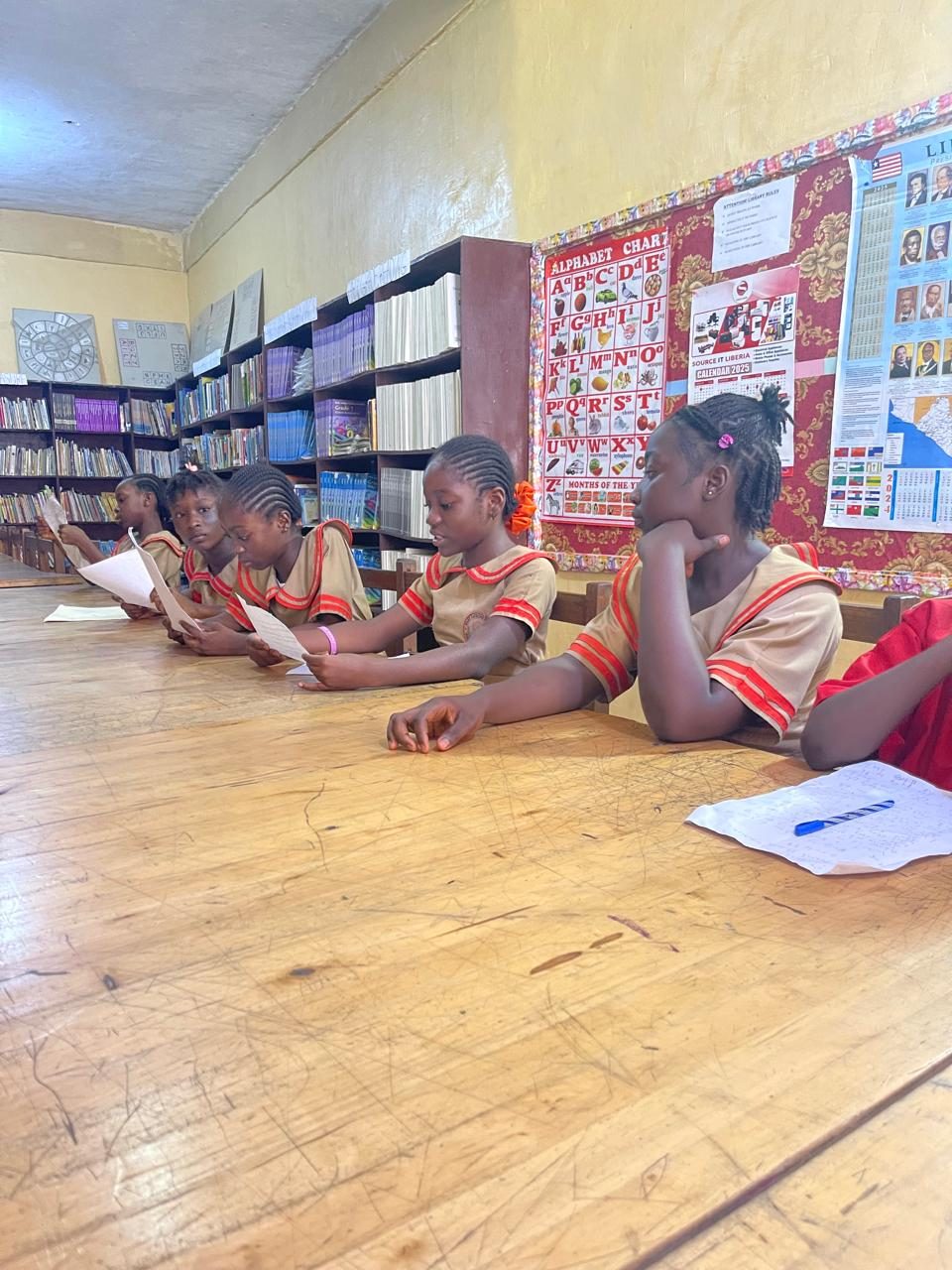
    האזנה קפדנית: לוכד עובדות, גישות ומה שמשתמע בלבד
    האזנה קפדנית: לוכד עובדות, גישות ומה שמשתמע בלבד
    Vocabulary · ⁨מילון מונחים⁩ Train · ⁨אימון⁩
    English עברית
    recording/rɪˈkɔːdɪŋ/ הקלטה
    predict/prɪˈdɪkt/ לנבא
    specific/spəˈsɪfɪk/ ספציפי
    directions/daɪˈrekʃnz/ הוראות
    opinion/əˈpɪnɪən/ דעה
    feelings/ˈfiːlɪŋz/ רגשות
    connect/kəˈnekt/ להתחבר / לקשר
    suggests/səˈdʒests/ מצעיד
    multiple-choice/ˈmʌltɪpl tʃɔɪs/ בחירה מרובה
    distractors/dɪˈstræktəz/ מפריעים (אופציות שגויות במבחן)
    attitude/ˈætɪtjuːd/ גישה
    9.2

    Hearing opinions and attitudes · ⁨שמיעת דעות וגישות⁩

    Syllabus · ⁨סיילבוס⁩
    English
    1. understand speakers' ideas, opinions, feelings and attitudes
    2. follow how ideas connect across a longer talk or conversation
    3. notice the language that speakers use to express how they feel
    עברית
    1. להבין את הרעיונות, הדעות, הרגשות והעמדות של המדברים
    2. לעקוב אחר האופן שבו רעיונות קשורים זה לזה לאורך שיחה או תחבורה ממושכת יותר
    3. להבחין בשפה שמשתמשים בה מדברים כדי לבטא את תחושותיהם

    Source: Cambridge International syllabus · ⁨מקור: הסיילבוס הבינלאומי של קמבריד'ג'⁩

    English

    Some questions ask how a speaker thinks or feels, not just what they say.

    Opinions and feelings

    • Listen for the speaker's opinion 观点 and feelings 感受.
    • Notice the words they choose. Strong words show strong feelings.

    Follow the connections

    • In a longer talk, ideas connect 连接. Follow how one point leads to the next.
    • Words like "but", "because" and "so" show how ideas link.
    עברית

    חלק מהשאלות שואלות כיצד הדובר חושב או מרגיש, ולא רק מה הוא אומר.

    דעות ותחושות

    • הקשב ל-דעה של הדובר ול-תחושות שלו.
    • שים לב למילים שהם בוחרים. מילים חזקות מבטאות רגשות חזקים.

    עקוב אחר הקשרים

    • בדיבור ארוך, רעיונות מתחברים 连接. עקוב אחר כך נקודה אחת מובילה לשנייה.
    • מילים כמו "אבל", "כי" ו"לכן" מראות איך רעיונות קשורים זה לזה.
    9.3

    Listening between the lines · ⁨האזנה מתחת לקווים⁩

    Syllabus · ⁨סיילבוס⁩
    English
    1. understand what is implied but not directly stated
    2. work out a speaker's overall intention or attitude
    3. deduce the meaning of an unfamiliar word from the words around it
    עברית
    1. להבין מהו המובן אך לא נאמר במפורש
    2. לחשוב על הכוונה הכללית או העמדה של המדבר
    3. להסיק את משמעותו של מילה זרה מתוך המילים המקיפות אותה

    Source: Cambridge International syllabus · ⁨מקור: הסיילבוס הבינלאומי של קמבריד'ג'⁩

    English

    Not every answer is said directly.

    Implied meaning

    • Sometimes a speaker suggests 暗示 something without saying it openly.
    • Think about what they really mean, not only the exact words.

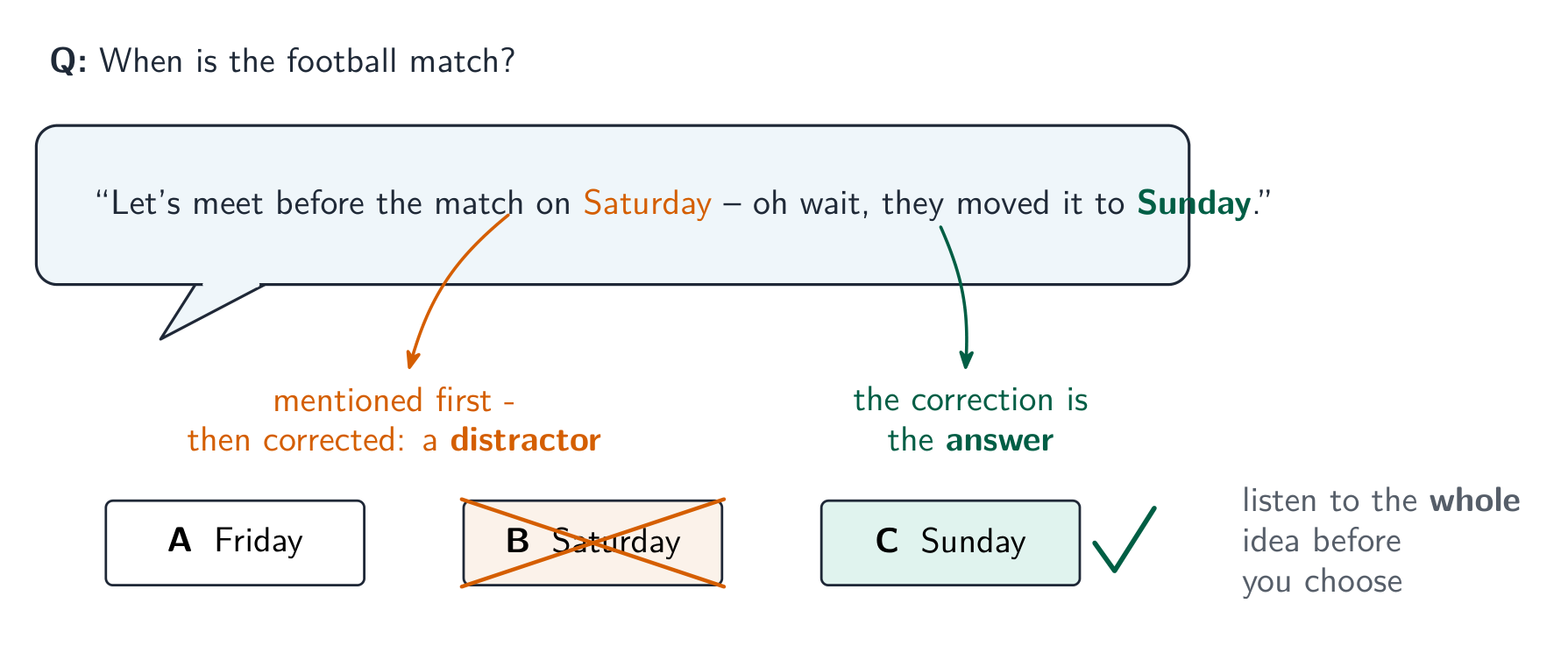
    Watch the distractors

    • In multiple-choice 选择题 questions, the wrong options are called distractors 干扰项.
    • A speaker may mention an option, then change their mind. Listen to the whole idea before you choose.

    Words that signal the answer

    Trained ears listen for small words that point to the answer.

    • A correction is coming: actually… / sorry, I mean… / on second thought… — the words after these usually hold the real answer, not the ones before.
    • The key point: the main thing is… / what matters is… / above all…
    • A feeling or attitude 态度: to be honest… / the trouble is… / I'm delighted that…
    • Order of steps: first… next… finally… — these help you follow a sequence.

    Catching one signal word can win you a mark. Note them down as you hear them.

    עברית

    לא כל התשובות נאמרות במפורש.

    משמעות גלויה

    • לעיתים קרובות דובר מציע 暗示 דבר כלשהו ללא הצהרה פומבית.
    • חשב על מה שהם באמת מתכוונים אליו, לא רק על המילים המדויקות.

    שימו לב למפגרים

    • בשאלות בחירה מרובה 选择题, האפשרויות השגויות נקראות מפגרים 干扰项.
    • דובר עשוי לציין אפשרות, ולאחר מכן לשנות את דעתו. האזן לכל הרעיון לפני שתבחר.
    דובר אומר שהמשחק הוא בשבת, ואז מתקן אותו ליום ראשון; שבת היא המפגר ומסומנת בקו, היום המתוקן ראשון הוא התשובה
    מפגר נזכר תחילה, ואז מתוקן - התיקון הוא התשובה

    מילים שמצביעות על התשובה

    אוזניים מאומנות מחפשות מילים קטנות שמצביעות על התשובה.

    • תיקון מתקרב: למעשה… / סליחה, התכוונתי ל… / בחשיבה נוספת… – המילים אחרי ביטויים אלו בדרך כלל מכילות את התשובה האמיתית, לא המילים שקדמו להם.
    • הנקודה המרכזית: הדבר העיקרי הוא… / מה שחשוב הוא… / מעל הכל…
    • רגש או גישה 态度: להגיד את האמת… / הבעיה היא… / אני מאושר/ת שה…
    • סדר של צעדים: תחילה… לאחר מכן… בסופו של דבר… – ביטויים אלו עוזרים לך לעקוב אחר הסדר.

    לכידת מילת סימן אחת יכולה להבטיח לך נקודה. הערה אותם בזמן שאתה שומע אותן.

    9.3

    Exam tips · ⁨טיפים לבחינות⁩

    English
    • Read the questions before the audio starts and underline the key words in each one.
    • You hear everything twice: answer what you can in round one, check and fill gaps in round two.
    • Speakers often correct themselves with numbers, days and spellings. The last version is the answer.
    • Missed one? Let it go and follow the next question; return to the gap in the second play.
    • Write something for every question. There is no penalty for a wrong guess.
    עברית
    • קרא את השאלות לפני שמתחיל הקלט ותסמן קו תחת המילים המפתחיות בכל אחת מהן.
    • תשמע הכל פעמיים: ענה על מה שתוכל במחזור הראשון, ובמחזור השני בדוק ומלא חורים.
    • הרואים לעיתים מתקנים את עצמם באמצעות מספרים, ימים וכתוביות. הגרסה האחרונה היא התשובה.
    • פספסת שאלה? אל תחזור עליה ועבור לשאלה הבאה; חזור לחור בנגן השני.
    • כתוב משהו לכל שאלה. אין עונש על ניחוש שגוי.
  • 10

    Speaking skills · ⁨מיומנויות דיבור⁩

    Watch lesson · ⁨צפה בשיעור⁩
    10.1

    Talking with the examiner · ⁨שיחה עם בוחן⁩

    Syllabus · ⁨סיילבוס⁩
    English
    1. take part in a conversation or interview, giving factual information and opinions
    2. respond to questions and develop your answers with reasons and examples
    3. use interactive skills: starting, responding, asking for clarification and taking turns
    עברית
    1. השתתף בשיחה או ראיון, ומספק מידע עובדתי ודעות
    2. ענה לשאלות והרחב את תשובותיך עם טיעונים ודוגמאות
    3. השתמש במיומנויות אינטראקטיביות: פתיחה, מענה, בקשה להבהרה וחילופי תור

    Source: Cambridge International syllabus · ⁨מקור: הסיילבוס הבינלאומי של קמבריד'ג'⁩

    English

    The speaking test is a friendly conversation 对话, not a test you fail by being nervous.

    Take part fully

    • Answer the question, then add more. A one-word answer is too short.
    • Give reasons and examples. Show what you can do with English.

    Interact well

    • Listen to the examiner and respond 回应 to what they say.
    • If you do not understand, it is fine to ask: "Sorry, could you repeat that?"
    • Take turns 轮流 naturally, as in a real conversation.
    עברית

    מבחן הדיבור הוא שיחה 对话 ידידותית, ולא מבחן שבו נכשלים בגלל לחץ.

    השתתף במלואו

    • ענה על השאלה, ואז הוסף עוד. תשובה של מילה אחת היא קצרה מדי.
    • תן סיבות והדוגמאות. הצג מה שאתה יכול לעשות באנגלית.
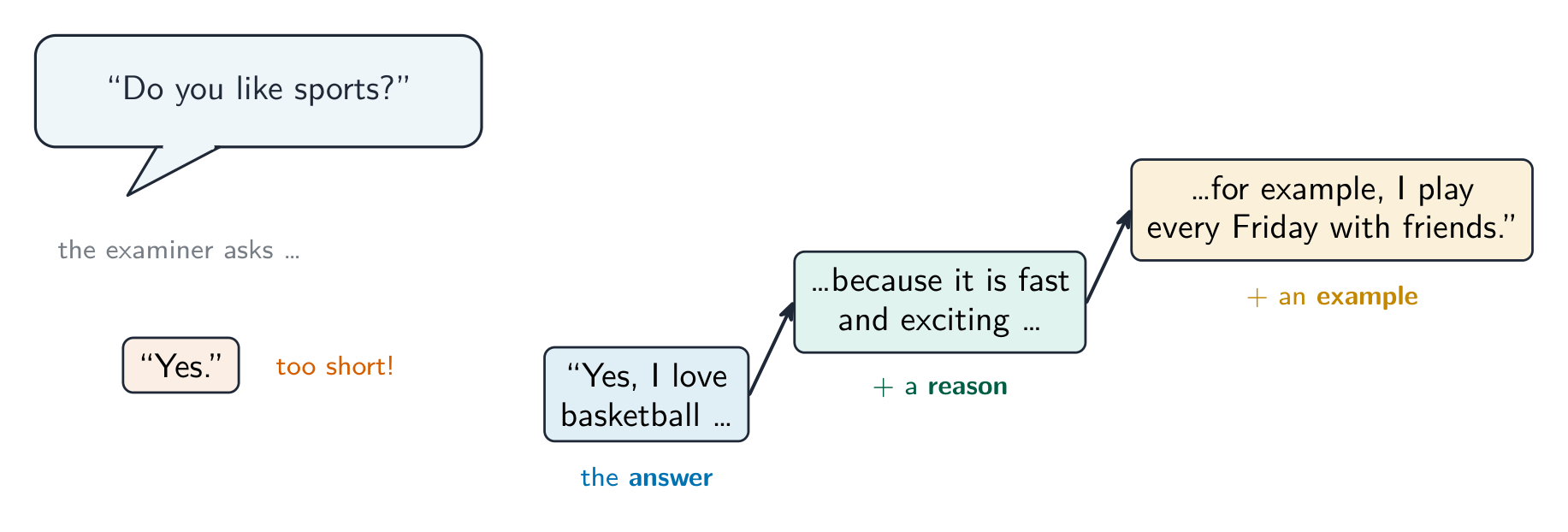
    הבוחן שואל "האם אתה אוהב ספורט"; התשובה "כן" לבדה היא קצרה מדי, אך תשובה בתוספת סיבה והדגמה עולה כמו מדרגות לסיבוב מלא
    ענו, ואז הוסיפו עוד: סיבה לדוגמה יוצרת תור מלא

    תפקדו היטב

    • הקשב לבוחן ותגב תגובה 回应 לדבריו.
    • אם לא הבנת, לא的问题 להשתמש: "סליחה, could you repeat that?"
    • קח תורות 轮流 טבעי, כפי שקורה בשיחה אמיתית.
    פיתוח תשובות בשיחה: הוסף סיבות, הדגמאות ודעת דעה קצרה
    פיתוח תשובות בשיחה: הוסף סיבות, הדגמאות ודעת דעה קצרה
    Vocabulary · ⁨מילון מונחים⁩ Train · ⁨אימון⁩
    English עברית
    conversation/kɒnvəˈseɪʃn/ שיח
    respond/rɪˈspɒnd/ להגיב
    turns/tɜːnz/ מתפנה / עובר ל
    develop/dɪˈveləp/ לפתח
    pronunciation/prəˌnʌnsɪˈeɪʃn/ הגייה
    intonation/ˌɪntəˈneɪʃn/ אינטונציה
    paraphrasing/ˈpærəfreɪzɪŋ/ פירוש מילולי
    phrases/ˈfreɪzɪz/ ביטויים
    politely/pəˈlaɪtli/ בדיplomacy / בעדינות
    revise/rɪˈvaɪz/ לחדש / לעיין מחדש
    interrupts/ˈɪntərʌpts/ הפרעות
    10.2

    Giving a short talk · ⁨נאום קצר⁩

    Syllabus · ⁨סיילבוס⁩
    English
    1. give a short talk that describes an event or explains and justifies an opinion
    2. expand your answers by giving examples, justifying, comparing and speculating
    3. speak with control of vocabulary, grammar, pronunciation and intonation
    עברית
    1. להעביר הרצאה קצרה המתאירה אירוע או מסבירה ומצדיקה דעת-סוכם
    2. להרחיב בתשובות על ידי מתן דוגמאות, הסבר, השוואה ותחזיות
    3. לדבר עם שליטה במילון, בדקדוק, בפונטיקה ובאינטונציה

    Source: Cambridge International syllabus · ⁨מקור: הסיילבוס הבינלאומי של קמבריד'ג'⁩

    English

    You may be asked to talk about a topic for a short time.

    Develop your ideas

    • Do not just list points. Develop 展开 each one with a reason or an example.
    • Use phrases like "for example", "that is why" and "I suppose" to extend your answers.

    Speak clearly

    • Speak with good pronunciation 发音 and natural intonation 语调.
    • Do not rush. It is better to speak clearly than quickly.
    • If you forget a word, say it another way. This is called paraphrasing 释义.

    Useful language

    Memorise a few phrases 短语 for each move. They keep you talking when your mind goes blank.

    • To give an opinion: In my opinion… / I'd say… / For me,…
    • To add detail: for example… / that's why… / what I mean is…
    • To buy thinking time: That's a good question… / Well, let me think… / I suppose…
    • To agree or disagree politely 礼貌: That's true, but… / I see what you mean, though…

    A short pause with "Let me think…" sounds far better than silence. It shows control, not panic.

    A model turn

    See how one student turns a plain question into a full, natural answer.

    Examiner: Do you enjoy studying at home?

    Student: In my opinion, home is better for some subjects. For example, I revise 复习 maths well at home because it is quiet and nobody interrupts 打断 me. But I suppose group work is easier at school, where I can ask my friends straight away. So really, it depends on the task.

    The student gives an opinion, backs it with an example, admits the other side, and finishes with a neat conclusion. That is a top-mark turn — and anyone can build it with these phrases.

    עברית

    ייתכן שתתבקש לדבר על נושא למשך זמן קצר.

    פיתוח רעיונות

    • אל תספור רק נקודות. פיתח 展开 כל אחת מהן עם סיבה או הדגמה.
    • השתמש בביטויים כמו "למשל", "ולכן" ו"אני מניח/ה" כדי להרחיב את תשובותיך.

    דבר בבירור

    • דבר עם פונטיקה טובה ו-אינטונציה טבעית.
    • אל תמהר. עדיף לדבר בבירור מאשר מהר.
    • אם שוכח מילה, אמור אותה באופן אחר. דבר זה נקרא פרפרז.

    לשון שימושית

    שינן כמה ביטויים לכל שלב. הם יעזרו לך לשמור על דיבור גם כשמוחך מתריק.

    • להביע דעת: לדעתי… / אני אומר… / בשבילי,…
    • להוסיף פרטים: למשל… / ולכן… / הכוונה שלי היא,…
    • לקנות זמן מחשבה: שאלה טובה… / אז, תן לי לחשוב… / אני מניח/ה,…
    • להסכים או להתנגד בעדינות: זה נכון, אבל… / אני מבין/ה את הנקודה שלך, למרות זאת…

    השהיה קצרה עם "תן לי לחשוב…" נשמעת הרבה טוב יותר משקט. זה מראה שליטה, לא פניקה.

    דוגמה לתגובה

    ראה כיצד סטודנט הופך שאלה פשוטה לתשובה מלאה וטבעית.

    בוחן: האם אתה נהנה ללמוד בבית?

    סטודנט: לדעתי, הבית טוב יותר לסוג מסוים של לימודים. למשל, אני חוזר על חשבון בבית היטב כי זה שקט ואף אחד לא מפריע לי. אבל אני מניח/ה שעבודה קבוצתית קלה יותר בבית הספר, שם我可以 immediately ask my friends. So really, it depends on the task.

    הסטודנט מבטע דעת, תומך בה בדוגמה, מכיר בצד השני ומסיים במסקנה מסודרת. זוהי תגובה מצוינת — והכל יכול לבנות אותה באמצעות הביטויים הללו.

    שיחה קצרה לחדר: תכנן נקודות ברורות, דבר בטבעיות וענה לשאלות המשלימות
    שיחה קצרה לחדר: תכנן נקודות ברורות, דבר בטבעיות וענה לשאלות המשלימות
    10.2

    Exam tips · ⁨טיפים לבחינות⁩

    English
    • The warm-up chat is not marked. Use it to relax and start talking, not to recite prepared lines.
    • Never say memorised speeches. The examiner stops them, and real conversation earns more.
    • Grow every answer: point, reason, example. "I like… because… for example…" fills a minute well.
    • If you miss a question, ask: "Could you say that again, please?" That is good English, not a fault.
    • Take each prompt on the card in order; every prompt can become a small topic of its own.
    עברית
    • השיחה הקיצונית אינה נמדדת. השתמש בה כדי להירגע ולהתחיל לדבר, ולא לקרוא טקסטים מוכנים.
    • לעולם אל תאמור נאומים שינוניים. הבוחן יעצור אותם, ושיחה אמיתית מייצרת ציון גבוה יותר.
    • הרחב כל תשובה: נקודה, סיבה, דוגמה. "אני אוהב… כי… לדוגמה…" ממלא דקה היטב.
    • אם פספסת שאלה, שאל: "תוכל לומר את זה שוב, בבקשה?" זו אנגלית טובה, לא טעות.
    • קח כל הנחייה בכרטיס בסדר; כל הנחייה יכולה להפוך לנושא קטן משלו.
  • 11

    Vocabulary and text types · ⁨מילון וסוגי טקסט⁩

    Watch lesson · ⁨צפה בשיעור⁩
    11.1

    Growing your vocabulary · ⁨הרחבת המילון שלך⁩

    Syllabus · ⁨סיילבוס⁩
    English
    1. learn new words together with their meaning, spelling and how they sound
    2. group vocabulary by topic and by everyday situation
    3. use set phrases, phrasal verbs and collocations naturally
    עברית
    1. ללמוד מילים חדשות יחד עם משמעותן, תרגום וצורה נכונה
    2. לסדר מילון לפי נושא ולפי מצבים יומיומיים
    3. להשתמש בביטויים קבועים, פראזאל-פירים וקולוקציות באופן טבעי

    Source: Cambridge International syllabus · ⁨מקור: הסיילבוס הבינלאומי של קמבריד'ג'⁩

    English

    A wide vocabulary 词汇 helps you in every part of the exam.

    Learn words well

    • Learn a new word with its meaning, its spelling, and how it sounds.
    • Keep a vocabulary notebook. Group words by topic, such as travel or health.

    Use natural phrases

    • Learn words that go together. These are called collocations 词语搭配, like "make a decision" or "heavy rain".
    • Learn set phrases 固定短语 and common phrasal verbs 短语动词, like "give up" or "look after".
    • Using natural phrases makes your English sound fluent 流利.
    עברית

    מילון רחב vocabulary 词汇 עוזר לך בכל חלק מהמבחן.

    למד מילים היטב

    • למד מילה חדשה עם המשמעות שלה, הכתיב שלה והצליל שלה.
    • שמור מחברת מילים. סדר מילים לפי נושאים, כמו מסע בדרך או בריאות.
    המילה decision במרכז, מחוברת לחמישה דברים שתופס עליו: המשמעות שלו, הכתיב והצליל, משפחת המילים, הקולוקציה make a decision, והקבוצה הנושאית שבו הוא מסודר
    ידע טוב במילה פירושו לדעת הכל

    השתמש בביטויים טבעיים

    • למד מילים שולכות יחד. אלו נקראות collocations 词语搭配, כמו "make a decision" או "heavy rain".
    • למד set phrases 固定短语 ו-phrasal verbs 短语动词 נפוצים, כמו "give up" או "look after".
    • השימוש בביטויים טבעיים גורם לאנגלית שלך להשמיע fluent 流利.
    הרחבת מילון: שימו לב למילים שימושיות בכל סוג טקסט ואימנו אותן בכתיבה האישית שלכם
    הרחבת מילון: שימו לב למילים שימושיות בכל סוג טקסט ואימנו אותן בכתיבה האישית שלכם
    Vocabulary · ⁨מילון מונחים⁩ Train · ⁨אימון⁩
    English עברית
    vocabulary/vəʊˈkæbjʊləri/ מילון
    collocations/ˌkɒləʊˈkeɪʃnz/ קולוקציות
    set phrases/set ˈfreɪzɪz/ ביטויים קבועים
    phrasal verbs/ˈfreɪzl vɜːbz/ פעלים פראזאליים
    fluent/ˈfluːənt/ שולט בשפה
    11.2

    Knowing your text types · ⁨הכרת סוגי הטקסט⁩

    Syllabus · ⁨סיילבוס⁩
    English
    1. recognise common text types: article, blog, email, essay, report, review, notice, leaflet and interview
    2. know the purpose and audience of each text type
    3. match the right style and format to each text type
    עברית
    1. זיהוי סוגי טקסט נפוצים: מאמר, בלוג, מייל, ערך, דוח, ביקורת, הודעה, עלון וראיון
    2. הכרת המטרה והקהל היעד של כל סוג טקסט
    3. התאמת הסגנון והפורמט הנכון לכל סוג טקסט

    Source: Cambridge International syllabus · ⁨מקור: הסיילבוס הבינלאומי של קמבריד'ג'⁩

    English

    Each writing task is a text type 文本类型 with its own rules.

    Common text types

    • An email is a message to one person; an article 文章 is for many readers; a report 报告 gives facts to a person in charge.
    • A blog 博客 is a personal, informal online post – like an article but more personal and casual, so it sits near the informal end of the formality scale.
    • A review 评论 gives an opinion about something you tried; an essay 议论文 argues a point of view.
    • A notice 通知 and a leaflet 传单 give short, clear information.

    Match style to type

    • Each text type has its own purpose, reader and tone.
    • Before you write, ask: what is this text type, and what style does it need?

    A vocabulary routine

    Turn new words into words you truly own with four steps:

    1. Meet it — when you find a new word, write it down with one example sentence.
    2. File it — put it in your notebook under a topic group (travel, health, school).
    3. Test it — cover the meaning and try to recall it the next day, then again a week later. This spaced review 间隔复习 fixes words in your memory far better than reading a list once.
    4. Use it — put the word into your own writing or speaking within a few days, before you forget it.

    Five words learned this way each day is over a thousand a year.

    עברית

    כל משימת כתיבה היא text type 文本类型 עם הכללים שלה.

    סוגי טקסט נפוצים

    • אימייל הוא הודעה לאדם אחד; article 文章 הוא עבור קוראים רבים; report 报告 נותן עובדות לאדם batter in charge.
    • blog 博客 הוא פוסט מקוון אישי, לא-רשמי – כמו מאמר אך יותר אישי וקז'ואל, כך שהוא נמצא בקצה ה-informal של סולם הרשמיות.
    • סקירה (review) מביעה דעת על משהו שניסית; מאמר (essay) טוען נקודת מבט.
    • הודעה (notice) ועלון (leaflet) מספקים מיד קצרה וברורה.

    התאם סגנון לסוג

    • לכל סוג טקסט יש מטרה, קורא וגוון משלו.
    • לפני הכתיבה, שאל: מה סוג הטקסט הזה, ואיזה סגנון הוא דורש?
    קו המעביר מסגנון לא-רשמי לרשמי: מייל לחבר יושב בקצה הלא-רשמי, מאמרים וסקירות באמצע, ודוחות, מכתבים רשמיים ומאמרים בקצה הרשמי, כל אחד עם הגוון המתאים לו
    כל סוג טקסט נמצא באיזהשהו מקום בקו שבין לאנטי-פורמלי לפורמלי

    שגרת אוצר מילים

    הפוך מילים חדשות למילים שממש שלך בעזרת ארבעה צעדים:

    1. פגוש אותן — כשמוצא מילה חדשה, כתוב אותה לצד משפט לדוגמה.
    2. ארגן אותן — הנח את המילה במחברת שלך תחת קבוצה נושאית (טיול, בריאות, בית ספר).
    3. בדוק אותן — הסתר את המשמעות והנסה להיזכר בה ביום שלאחר מכן, ואז שובafter שבוע. סקירה מפוזרת (spaced review) מעמיקה מילים בזיכרון הרבה יותר מכך שקוראים רשימה פעם אחת.
    4. שתמש בהן — השתמש במילה בכתיבה או בדיבור שלך בתוך מספר ימים, לפני שתשכח אותה.

    חמש מילים שנלמדו בדרך זו בכל יום הם יותר מאלף בשנה.

    Vocabulary · ⁨מילון מונחים⁩ Train · ⁨אימון⁩
    English עברית
    text type/tekst taɪp/ סוג טקסט
    article/ˈɑːtɪkl/ מאמר
    report/rɪˈpɔːt/ דוח
    blog/blɒɡ/ בלוג
    review/rɪˈvjuː/ סקירה
    essay/ˈeseɪ/ מאמר
    notice/ˈnəʊtɪs/ הערה
    leaflet/ˈliːflɪt/ עלון
    spaced review/speɪst rɪˈvjuː/ סקירה מרווחת
    11.2

    Exam tips · ⁨טיפים לבחינות⁩

    English
    • Learn words in families, one family per text type: email openers, report verbs, review adjectives.
    • In the writing exam, put the text type's fixed parts down first: greeting, title or headings. They are the easiest marks on the paper.
    • Keep a personal word list. Five new words a day beats fifty words once a month.
    • When a new word appears in the reading paper, guess it from the context and keep moving; never freeze on one word.
    עברית
    • למד מילים במשפחות, משפחה אחת לכל סוג טקסט: פתיחות למייל, פעלים בדוח, תוארים בסקירה.
    • בבחן הכתיבה, כתוב תחילה את החלקים הקבועים של סוג הטקסט: ברכה, כותרת או כותרות משנה. הם הציונים הקלים ביותר בדף הבחן.
    • שמור רשימת מילים אישית. חמש מילים חדשות ביום טובות מחמישים מילים פעם בחודש.
    • כאשר מילה חדשה מופיעה בבחן הקריאה, נסה להסיק את משמעותה מההקשר והמשך; לעולם אל תתקע על מילה אחת.

Log in or create account · ⁨היכנס או צור חשבון⁩

IGCSE, A-Level & AP