Skip to content · ⁨דלג לתוכן⁩

Globalization · ⁨גלובליזציה⁩

AP World History: Modern · ⁨היסטוריה עולמית: זמנים מודרניים - AP⁩ · Topic 9 · ⁨נושא 9⁩

Video lesson for this topic · ⁨שיעור וידאו לנושא זה⁩ Open the video page · ⁨פתח את עמוד הוידאו⁩
7:39

יחידה 9: גלובליזציה

הפעולה המרכזית של יחידה 9 היא הערכתית ולא מספרית. כמעט כל התפתחות שהיא מזכירה ייצרה יתרון ועלות, והשאלות מעודדות תשובות…

English narration · English + 中文 subtitles burned in · ⁨קריאת קול באנגלית · תרגום אנגלי + סינית שרוף בתוך הסרטון⁩

9.1

Advances in Technology and Exchange · ⁨התקדמות בטכנולוגיה ובחילופין⁩

Syllabus · ⁨סיילבוס⁩
English

9.1 Advances in Technology and Exchange After 1900

Thematic Focus (TEC): Technology and Innovation — Human adaptation and innovation have resulted in increased efficiency, comfort, and security, and technological advances have shaped human development and interactions with both intended and unintended consequences.

Learning Objective Unit 9.A: Explain how the development of new technologies changed the world from 1900 to present.

  • KC-6.1.I.A New modes of communication—including radio communication, cellular communication, and the internet—as well as transportation, including air travel and shipping containers, reduced the problem of geographic distance.
  • KC-6.1.I.D Energy technologies, including the use of petroleum and nuclear power, raised productivity and increased the production of material goods.
  • KC-6.1.III.B More effective forms of birth control gave women greater control over fertility, transformed reproductive practices, and contributed to declining rates of fertility in much of the world.
  • KC-6.1.I.B The Green Revolution and commercial agriculture increased productivity and sustained the earth’s growing population as it spread chemically and genetically modified forms of agriculture.
  • KC-6.1.I.C Medical innovations, including vaccines and antibiotics, increased the ability of humans to survive and live longer lives.
עברית

9.1 התקדמות בטכנולוגיה ובחילופין לאחר 1900

דגש נושא (TEC): טכנולוגיה וחדשנות — הסתגלות אנושית וחדשנות הובילו לשיפור היעילות, הנוחות והביטחון, והתקדמות טכנולוגית עיצבה את הפיתוח האנושי ואת האינטראקציות עם השלכות מתוכננות ולא מתוכננות.

מטרת למידה ליחידה 9.A: הסבר כיצד התפתחות טכנולוגיות חדשות שינתה את העולם מ-1900 ועד היום.

  • KC-6.1.I.A שיטות תקשורת חדשות – כולל תקשורת רדיו, תקשורת ניידת והאינטרנט – כמו גם תחבורה, כולל טיסות אוויר ומכולות משלוח, צמצמו את הבעיה של מרחק גיאוגרפי.
  • KC-6.1.I.D טכנולוגיות אנרגיה, כולל השימוש בפטרול ואנרגיה גרעינית, העלו את התפוקה והגדילו את ייצור הסחורות החומריות.
  • KC-6.1.III.B צורות יעילות יותר של מניעת הריון נתנו לנשים שליטה מוגברת על הלידה, שינו את הפרקטיקות הרפרודוקטיביות ותרמו לירידה בקצבי הלידה בבתי-האם העולם.
  • KC-6.1.I.B המהפכה הירוקה והחקלאות המסחרית הגדילו את התפוקה ושמרו על האוכלוסייה הגדלה של כדור הארץ כאשר היא התפשטה בכיוונים כימיים וגנטיים של חקלאות מודרנית.
  • KC-6.1.I.C חדשנות רפואית, כולל חיסונים ואנטיביוטיקה, הגבירו את יכולת האדם לשרוד ולהתאריך חיים ארוכים.

Source: College Board AP Course and Exam Description · ⁨מקור: תיאור הקורס והמבחן של College Board AP⁩

English

Unit 9 covers 1900 to the present, and its central move is evaluative rather than narrative: almost every development it names produced both a benefit and a cost, and questions reward answers that hold both.

The CED names the advances directly:

  • New modes of communication 通信方式 - radio, cellular technology, and the internet.
  • Energy technologies 能源技术, including the use of petroleum 石油 and nuclear power 核能.
  • Medical innovations 医学创新, including vaccines 疫苗 and antibiotics 抗生素, which increased lifespans 寿命.
  • The Green Revolution 绿色革命 and commercial agriculture, which increased the global food supply.
  • More effective forms of birth control 节育, which gave women greater control over fertility 生育, transformed reproductive practices, and contributed to declining fertility rates in industrialised states.

Note the last one carefully. It is a technological change with a demographic and a social consequence, which makes it unusually useful evidence in questions about the changing role of women.

עברית

יחידה 9 מכסה מ1900 ועד היום, והפעולה המרכזית שלה היא הערכתית ולא ספרתית: כמעט כל פיתוח שהיא מציין יצר גם יתרון וגם עלות, ושאלות מעריכות תשובות שמחזיקות בשתי הצדדים.

ה-CED מיינה את ההתקדמויות ישירות:

  • סוגי תקשורת חדשים - רדיו, טכנולוגיה ניידת, ואינטרנט.
  • טכנולוגיות אנרגיה, כולל השימוש בנפט ובאנרגיה גרעינית.
  • חדשנות רפואית, כולל חיסונים ואנטיביוטיקה, שהאריכו את תוחלת החיים.
  • המהפכה הירוקה וחקלאות מסחרית, שהגדילו את האספקה הגלובלית למזון.
  • צורות יעילות יותר של מניעת הריון, שנתנו לנשים שליטה רבה יותר על פיריון, שינו את השיטות הרפרודוקטיביות ותרמו לירידה בקצב הפיריון במדינות מפותחות.

שימו לב לזה. מדובר בשינוי טכנולוגי עם תוצאה דמוגרפית וגם חברתית, מה שהופך אותו להוכחה ייחודית ומועילה בשאלות על השינוי בתפקיד הנשים.

Vocabulary · ⁨מילון מונחים⁩ Train · ⁨אימון⁩
English עברית
New modes of communication/njuː məʊdz ɒv kəˌmjuːnɪˈkeɪʃn/ שיטות תקשורת חדשות
Energy technologies/ˈenədʒi tekˈnɒlədʒiz/ טכנולוגיות אנרגטיות
petroleum/pəˈtrəʊliːəm/ נפט
nuclear power/ˈnjuːklɪə ˈpaʊə/ אנרגיה גרעינית
Medical innovations/ˈmedɪkl ˌɪnəˈveɪʃnz/ חדשנות רפואית
vaccines/vækˈsiːnz/ חיסונים
antibiotics/ˌæntɪbaɪˈɒtɪks/ אנטיביוטיקה
increased lifespans/ɪnˈkriːst ˈlaɪfspænz/ הארכת תוחלת חיים
Green Revolution/ɡriːn ˌrevəˈluːʃn/ המהפכה הירוקה
birth control/bɜːθ kənˈtrəʊl/ מניעת הריון
fertility/fɜːˈtɪlɪti/ פריון
deforestation/diːˌfɒrɪˈsteɪʃn/ הכחדת יערות
desertification/dɪˌzɜːtɪfɪˈkeɪʃn/ מדבריות
decline in air quality/dɪˈklaɪn ɪn eə ˈkwɒlɪti/ ירידה באיכות האוויר
fresh water/freʃ ˈwɔːtə/ מים מתוקים
greenhouse gases/ˈɡriːnhaʊs ˈɡæsɪz/ גזי חממה
debates about climate change/dɪˈbeɪts əˈbaʊt ˈklaɪmət tʃeɪndʒ/ דיונים על שינויי האקלים
free-market economic policies/friː ˈmɑːkɪt ˌiːkəˈnɒmɪk ˈpɒlɪsiz/ מדיניות כלכלית של שוק חופשי
knowledge economies/ˈnɒlɪdʒ ɪˈkɒnəmiz/ כלכלות הידע
and regional trade agreements/ænd ˈriːdʒənl treɪd əˈɡriːmənts/ וסכמי סחר אזוריים
Rights-based discourses/raɪts beɪst ˈdɪskɔːsɪz/ דיסקורסים מבוססי זכויות
access to education/ˈækses tʊ ˌedʒuːˈkeɪʃn/ גישה לחינוך
global integration/ˈɡləʊbl ˌɪntɪˈɡreɪʃn/ אינטגרציה גלובלית
increasingly reflected global influence/ɪnˈkriːsɪŋli rɪˈflektɪd ˈɡləʊbl ˈɪnfluːəns/ שקפה越来越反映全球影响力 increasingly reflected global influence
Consumer culture/kənˈsuːmə ˈkʌltʃə/ תרבות הצריכה
Religious and traditionalist movements/rɪˈlɪdʒəs ænd trəˈdɪʃənəlɪst ˈmuːvmənts/ תנועות דתיות ומסורתיות
New international organisations/njuː ˌɪntəˈnæʃənl ˌɔːɡənaɪˈzeɪʃnz/ ארגונים בינלאומיים חדשים
United Nations/juːˈnaɪtɪd ˈneɪʃnz/ האומות המאוחדות
9.2

Technological Advances and Limitations: Disease · ⁨התקדמות טכנולוגית וגבולות: מחלות⁩

Syllabus · ⁨סיילבוס⁩
English

9.2 Technological Advances and Limitations After 1900: Disease

Thematic Focus (ENV): Humans and the Environments — The environment shapes human societies, and as populations grow and change, these populations in turn shape their environments.

Learning Objective Unit 9.B: Explain how environmental factors affected human populations over time.

  • KC-6.1.III Diseases, as well as medical and scientific developments, had significant effects on populations around the world.
  • KC-6.1.III.A Diseases associated with poverty persisted while other diseases emerged as new epidemics and threats to human populations, in some cases leading to social disruption. These outbreaks spurred technological and medical advances. Some diseases occurred at higher incidence merely because of increased longevity.

Illustrative examples:

  • Diseases associated with poverty: § Malaria § Tuberculosis § Cholera Emergent epidemic diseases: § 1918 influenza pandemic § Ebola § HIV/AIDS Diseases associated with increased longevity: § Heart disease § Alzheimer’s disease
עברית

9.2 התקדמויות טכנולוגיות ומגבלות לאחר 1900: מחלות

דגש נושאי (ENV): אנושים וסביבות — הסביבה מעצבת את המיזמים האנושיים, וככל שהאוכלוסיות גדלות ומשתנות, כך המיזמים הללו עוצבים בתורם את הסביבות שלהם.

מטרת למידה ליחידה 9.B: הסבר כיצד גורמים סביבתיים השפיעו על אוכלוסיות אנושיות לאורך הזמן.

  • KC-6.1.III מחלות, כמו גם התפתחויות רפואיות ומדעיות, היו בעלות השפעות משמעותיות על אוכלוסיות ברחבי העולם.
  • KC-6.1.III.A מחלות הקשורות לעוני המשיכו להתקיים בעוד שהתפתחו מחלות חדשות כמגפות ומאיימות על האוכלוסייה האנושית, ובמקרים מסוימים הדבר הוביל להפרעה חברתית. התפרצויות אלו זרזו פיתוחים טכנולוגיים ורפואיים. חלק מהמחלות התרחשו בתדירות גבוהה יותר רק בשל הגדלת צפיפות האוכלוסייה.

דוגמאות מדגמיות:

  • מחלות הקשורות לעוני: § מלריה § שחמת § קולירה מגפות מתפתחות: § תופעת הש flu של 1918 § אבולה § HIV/AIDS מחלות הקשורות לגישה לרפואה וליומיות: § מחלות לב § אל茨היימר

Source: College Board AP Course and Exam Description · ⁨מקור: תיאור הקורס והמבחן של College Board AP⁩

English

Diseases, as well as medical and scientific developments, had significant effects on populations across the century. The CED splits the effect in two:

  • Diseases associated with poverty persisted, while other diseases emerged as epidemics and pandemics.
  • Diseases associated with longer lifespans - conditions such as heart disease and neurological illnesses of old age - became more prominent precisely because medical advances extended life.

That second point is the unit's logic in miniature: the success of one intervention produced the conditions for a different problem. It is not a contradiction, and saying so is what makes an answer analytical.

עברית
כל התקדמות ביחידה זו מגיעה עם מחיר, והמבחן מעריך זיהוי של שניהם
לכן, שאלות ביחידה 9 מבקשות ממך לערך במקום לסדר

מחלות, לצד פיתוחים רפואיים ומדעיים, השפיעו משמעותית על האוכלוסיות לאורך המאה. ה-CED מחלק את ההשפעה לשתי תחומים:

  • מחלות הקשורות לעוני המשיכו להתקיים, בעוד שמחלות אחרות הופיעו כמגפות ופנדמיות.
  • מחלות הקשורות לתוחות חיים ארוכים יותר – מצבים כמו מחלות לב ומחלות נוירולוגיות בקשישות – הפכו בולטות במיוחד בגלל שהתקדמות רפואיה האריכה את החיים.

נקודה זו היא לוגית היחידה בצורת מיקרו: הצלחת התערבות אחת יצרה תנאים לבעיה שונה. זה אינו סתירה, והצהרה על כך הופכת תשובה לאנליטית.

9.3

Debates About the Environment · ⁨דיונים סביב הסביבה⁩

Syllabus · ⁨סיילבוס⁩
English

9.3 Technological Advances: Debates About the Environment After 1900

Thematic Focus (ENV): Humans and the Environments — The environment shapes human societies, and as populations grow and change, these populations in turn shape their environments.

Learning Objective Unit 9.C: Explain the causes and effects of environmental changes in the period from 1900 to present.

  • KC-6.1.II.A As human activity contributed to deforestation, desertification, a decline in air quality, and increased consumption of the world’s supply of fresh water, humans competed over these and other resources more intensely than ever before.
  • KC-6.1.II.B The release of greenhouse gases and pollutants into the atmosphere contributed to debates about the nature and causes of climate change.
עברית

9.3 פיתוחים טכנולוגיים: דיונים סביב הסביבה לאחר 1900

דגש נושאי (ENV): אנושים וסביבות — הסביבה מעצבת את המיזמים האנושיים, וככל שהאוכלוסיות גדלות ומשתנות, כך המיזמים הללו עוצבים בתורם את הסביבות שלהם.

מטרת הלמידה ליחידה 9.C: הסבר את הגורמים וההשפעות של שינויים בסביבה בתקופה שבין 1900 ועד היום.

  • KC-6.1.II.A כאשר פעילות אנושית תרמה לקיצוץ יערות, מדבור, ירידה באיכות האוויר ועלייה בצריכת אספקת המים המתוקים העולמית, האנושות התחרתה על משאבים אלו ועל משאבים אחרים באופן אינטנסיבי יותר מא ever before.
  • KC-6.1.II.B שחרור גזי החממה ומזיקים לאטמוספירה תרם לדיונים סביב טבע וגורמי השינוי האקלימי.

Source: College Board AP Course and Exam Description · ⁨מקור: תיאור הקורס והמבחן של College Board AP⁩

English

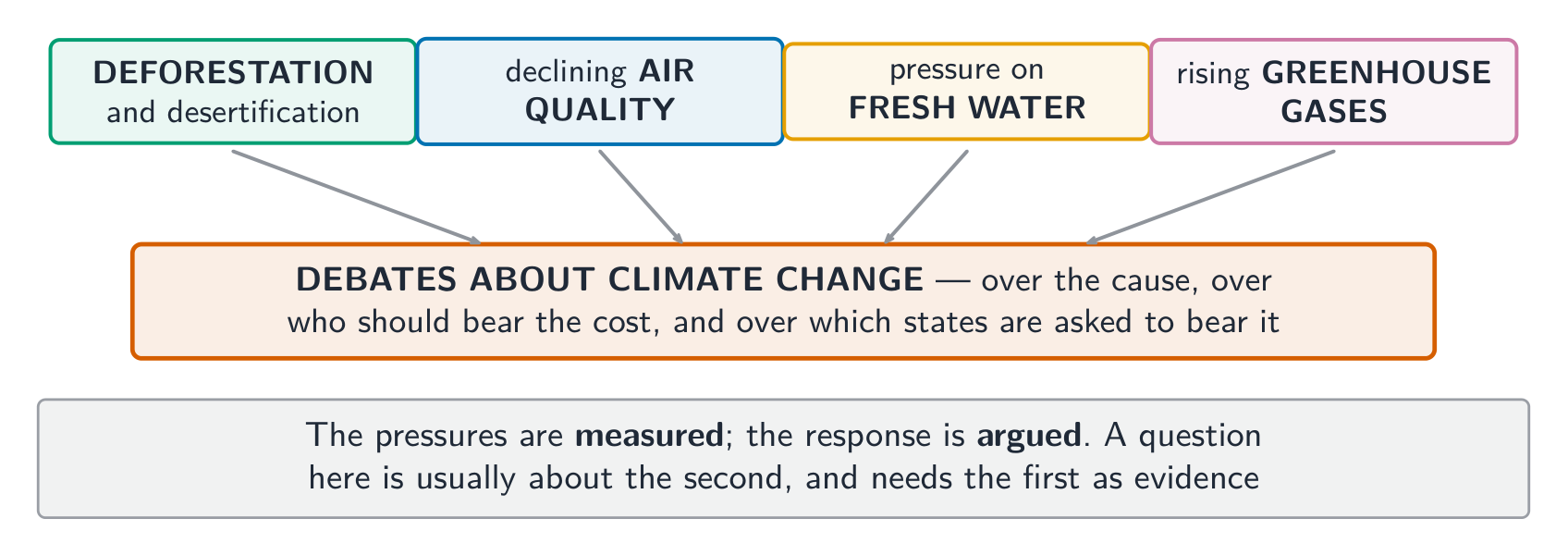
Human activity contributed to deforestation 森林砍伐, desertification 荒漠化, a decline in air quality 空气质量下降, and increased consumption of the world's supply of fresh water 淡水.

The release of greenhouse gases 温室气体 and pollutants into the atmosphere provoked debates about climate change 气候变化. The CED's word is debates - the examinable content is that the science and its policy implications became a subject of international argument, not a settled instruction.

עברית

פעילות אנושית תרמה להיעדר יערות, מדבור, ירידה באיכות האוויר, ולצמיחה בצריכת אספקת המים המתוקים של העולם.

שחרורם של גזי חממה וזיהומים לאטמוספירה גרם לדיונים סביב שינויי האקלים. המילה של ה-CED היא דיונים – תוכן הבחינה הוא שהמדע והשלכות המדיניות שלו הפכו לנושא למחלוקת בינלאומית, ולא להנחיה מוסכמת.

לחצים נמדדים; התגובה נדונה
Explore · ⁨חקור⁩

Separate what is measured from what is argued · ⁨הפרד בין מה שנמדד לבין מה שנ争论 (נטען)⁩

The pressures are measured; the response is argued. A question here is usually about the second and needs the first as evidence. · ⁨הלחצים נמדדים; התגובה נ争论 (נטענת). שאלה כאן היא בדרך כלל על השני וזקוקה לראשון כעדות.⁩

9.4

Economics in the Global Age · ⁨כלכלה בתקופה הגלובלית⁩

Syllabus · ⁨סיילבוס⁩

9.4 Economics in the Global Age

Thematic FocusLearning ObjectiveHistorical Developments

ECN
Economics Systems — As societies develop, they affect and are affected by the ways that they produce, exchange, and consume goods and services.

Unit 9.D
Explain the continuities and changes in the global economy from 1900 to present.

  • KC-6.3.I.D In a trend accelerated by the end of the Cold War, many governments encouraged free-market economic policies and promoted economic liberalization in the late 20th century.
  • KC-6.3.I.E In the late 20th century, revolutions in information and communications technology led to the growth of knowledge economies in some regions, while industrial production and manufacturing were increasingly situated in Asia and Latin America.
  • KC-6.3.II.B Changing economic institutions, multinational corporations, and regional trade agreements reflected the spread of principles and practices associated with free-market economics throughout the world.

Illustrative examples:

  • Governments’ increased encouragement of free-market policies: § The United States under Ronald Reagan § Britain under Margaret Thatcher § China under Deng Xiaoping § Chile under Augusto Pinochet Knowledge economies: § Finland § Japan § U.S. Asian production and manufacturing economies: § Vietnam
    • Bangladesh
  • Latin American production and manufacturing economies:
    • Mexico
    • Honduras
  • Economic institutions and regional trade agreements:
    • World Trade Organization (WTO)
    • North American Free Trade Agreement (NAFTA)
    • Association of Southeast Asian Nations (ASEAN)
  • Multinational corporations:
    • Nestlé
    • Nissan
    • Mahindra and Mahindra

Source: College Board AP Course and Exam Description · ⁨מקור: תיאור הקורס והמבחן של College Board AP⁩

English

Three developments define the period's economic history, and all three accelerated after 1990:

  • Many governments encouraged free-market economic policies 自由市场政策, a trend accelerated by the end of the Cold War.
  • Revolutions in information and communications technology led to the growth of knowledge economies 知识经济 in some regions, while other regions remained centred on agriculture or manufacturing.
  • Changing economic institutions, multinational corporations, and regional trade agreements 区域贸易协定 reshaped how production and trade were organised across borders.

The continuity worth naming: this is the same story as Unit 6's economic imperialism, in new institutional form. Firms in wealthy states again hold disproportionate influence over the terms on which producers elsewhere participate.

עברית

שלושה פיתוחים מגדירים את ההיסטוריה הכלכלית של תקופה זו, ושלושתם ציטוץ לאחר 1990:

  • ממשלות רבות קידמו מדיניות כלכלית של שוק חופשי, מגמה שהאיטצה עם סוף המלחמה הקרה.
  • מהפכות בטכנולוגיות מידע ותקשורת הביאו לצמיחת כלכלות ידע באזורים מסוימים, בעוד שאזורים אחרים נותרו מתמקדים בחקלאות או בתעשייה.
  • מוסדות כלכליים משתנים, חברות רב-לאומיות והסכמי סחר אזוריים עיצבו מחדש כיצד ייצור וסחר אורגנו מעבר לגבולות.

הרציפות שראוי לציין: זו אותה סיפורת של אימפריאליזם כלכלי מיחידה 6, בצורה מוסדית חדשה. חברות במדינות עשירות שוב מחזיקות בהשפעה בלתי פרופורציונלית על התנאים בהם מייצרים אחרים משתפים פעולה.

9.5

Calls for Reform and Responses · ⁨קריאות לרפורמה ותגובות⁩

Syllabus · ⁨סיילבוס⁩

9.5 Calls for Reform and Responses After 1900

Thematic FocusLearning ObjectiveHistorical Developments

SIO
Social Interactions and Organization — The process by which societies group their members and the norms that govern the interactions between these groups and between individuals influence political, economic, and cultural institutions and organization.

Unit 9.E
Explain how social categories, roles, and practices have been maintained and challenged over time.

  • KC-6.3.III.i Rights-based discourses challenged old assumptions about race, class, gender, and religion.
  • KC-6.3.III.ii In much of the world, access to education as well as participation in new political and professional roles became more inclusive in terms of race, class, gender, and religion.
  • KC-6.3.II.C Movements throughout the world protested the inequality of the environmental and economic consequences of global integration.

Illustrative examples:

  • Challenges to assumptions about race, class, gender, and religion:
    • The U.N. Universal Declaration of Human Rights, especially as it sought to protect the rights of children, women, and refugees
    • Global feminism movements
    • Negritude movement
    • Liberation theology in Latin America
  • Increased access to education and political and professional roles:
    • The right to vote and/ or to hold public office granted to women in the United States (1920), Brazil (1932), Turkey (1934), Japan (1945), India (1947), and Morocco (1963)
    • The rising rate of female literacy and the increasing numbers of women in higher education, in most parts of the world
    • The U.S. Civil Rights Act of 1965
    • The end of apartheid
    • Caste reservation in India
  • Environmental movements:
    • Greenpeace
    • Professor Wangari Maathai’s Green Belt Movement in Kenya
  • Economic movements:
    • World Fair Trade Organization

Source: College Board AP Course and Exam Description · ⁨מקור: תיאור הקורס והמבחן של College Board AP⁩

English

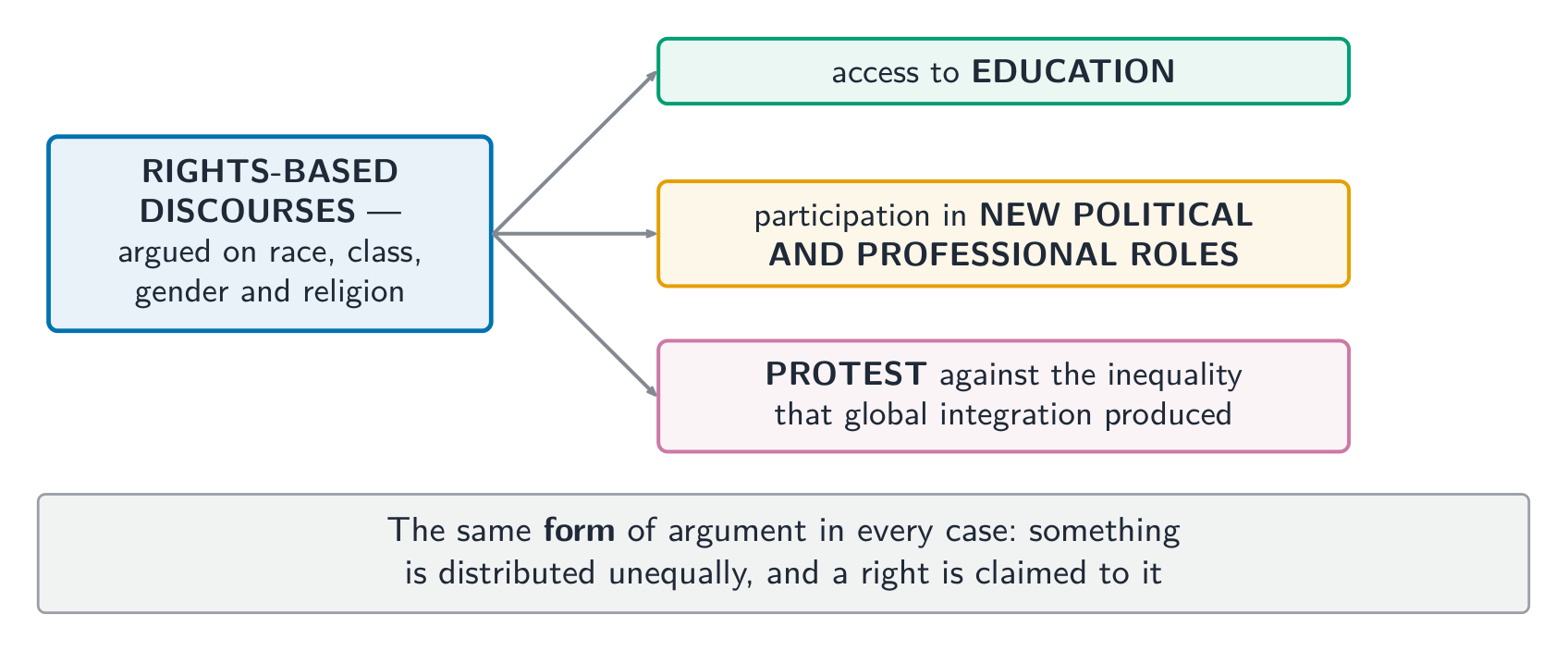
Rights-based discourses 权利话语 challenged old assumptions about race, class, gender, and religion. In much of the world, access to education 受教育机会 and participation in new political and professional roles became more inclusive - an uneven process, but a real one.

At the same time, movements throughout the world protested the inequality of the environmental and economic consequences of global integration 全球一体化. Both halves are examinable: greater inclusion, and organised objection to how the benefits were distributed.

עברית

ניסוחים המבוססים על זכויות אתגרו הנחות יסוד ישנות לגבי גזע, מעמד, מגדר ודת. ברוב העולם, גישה לחינוך והשתתפות בתפקידים פוליטיים ומקצועיים חדשים הפכו לפגיעים יותר – תהליך לא אחיד, אך אמיתי.

באותו זמן, תנועות בכל העולם מחו תנגדה לאי-שוויון בתוצאות הסביבתיות והכלכליות של השילוב הגלובלי. שני החלקים נבדקים: פגיעה מוגברת, וגם התנגדות מאורגנת לכך כיצד הרווחים חולקו.

צורה אחת של ניאום, שנאמרת על ידי קבוצות שונות מאוד
9.6

Globalized Culture · ⁨תרבות גלובלית⁩

Syllabus · ⁨סיילבוס⁩

9.6 Globalized Culture After 1900

Thematic FocusLearning ObjectiveHistorical Developments

CDI
Cultural Developments and Interactions — The development of ideas, beliefs, and religions illustrates how groups in society view themselves, and the interactions of societies and their beliefs often have political, social, and cultural implications.

Unit 9.F
Explain how and why globalization changed culture over time.

  • KC-6.3.IV.i Political and social changes of the 20th century led to changes in the arts and in the second half of the century, popular and consumer culture became more global.
  • KC-6.3.IV.ii Arts, entertainment, and popular culture increasingly reflected the influence of a globalized society.
  • KC-6.3.IV.iii Consumer culture became globalized and transcended national borders.

Illustrative examples:

  • Global culture:
    • Music: Reggae
    • Movies: Bollywood
    • Social media: Facebook, Twitter
    • Television: BBC
    • Sports: World Cup soccer, the Olympics
  • Global consumerism:
    • Online commerce: Alibaba, eBay
    • Global brands: Toyota, Coca-Cola

Source: College Board AP Course and Exam Description · ⁨מקור: תיאור הקורס והמבחן של College Board AP⁩

English

The CED makes three separate claims about culture, and they are not the same claim:

  • Political and social changes of the twentieth century led to changes in the arts and other forms of cultural expression.
  • Arts, entertainment, and popular culture increasingly reflected global influence 全球影响 - forms borrowed, adapted, and recombined across regions.
  • Consumer culture 消费文化 became globalised and transcended national borders.

The third is the strongest for essays because it is the most measurable: the same products, brands, and consumption patterns appearing across very different societies.

עברית

ה-CED טוען שלוש טענות נפרדות לגבי תרבות, והן אינן אותו דבר.

  • שינויים פוליטיים וחברתיים במאה העשראי הובילו לשינויים באמנות ובצורות ביטוי תרבותיות אחרות.
  • אמנות, בידור ותרבות עממית השתקפו יותר ויותר השפעות גלובליות - צורות שנלומו, הותאמו ונעבדו מחדש על פני אזורים שונים.
  • תרבות צריכה הפכה לגלובלית ועברה גבולות לאומיים.

השלישי הוא החזק ביותר לערכות כי הוא הנמדד ביותר: אותם מוצרים, מותגים ודפוסי צריכה המופיעים בחברות שונות מאוד.

9.7

Resistance to Globalization · ⁨התנגדות לגלובליזציה⁩

Syllabus · ⁨סיילבוס⁩

9.7 Resistance to Globalization After 1900

Thematic FocusLearning ObjectiveHistorical Developments

CDI
Cultural Developments and Interactions — The development of ideas, beliefs, and religions illustrates how groups in society view themselves, and the interactions of societies and their beliefs often have political, social, and cultural implications.

Unit 9.G
Explain the various responses to increasing globalization from 1900 to present.

  • KC-6.3.IV.iv Responses to rising cultural and economic globalization took a variety of forms.

Illustrative examples:

  • Responses to economic globalization:
    • Anti-IMF and anti-World Bank activism
    • Advent of locally developed social media (Weibo in China)

Source: College Board AP Course and Exam Description · ⁨מקור: תיאור הקורס והמבחן של College Board AP⁩

English

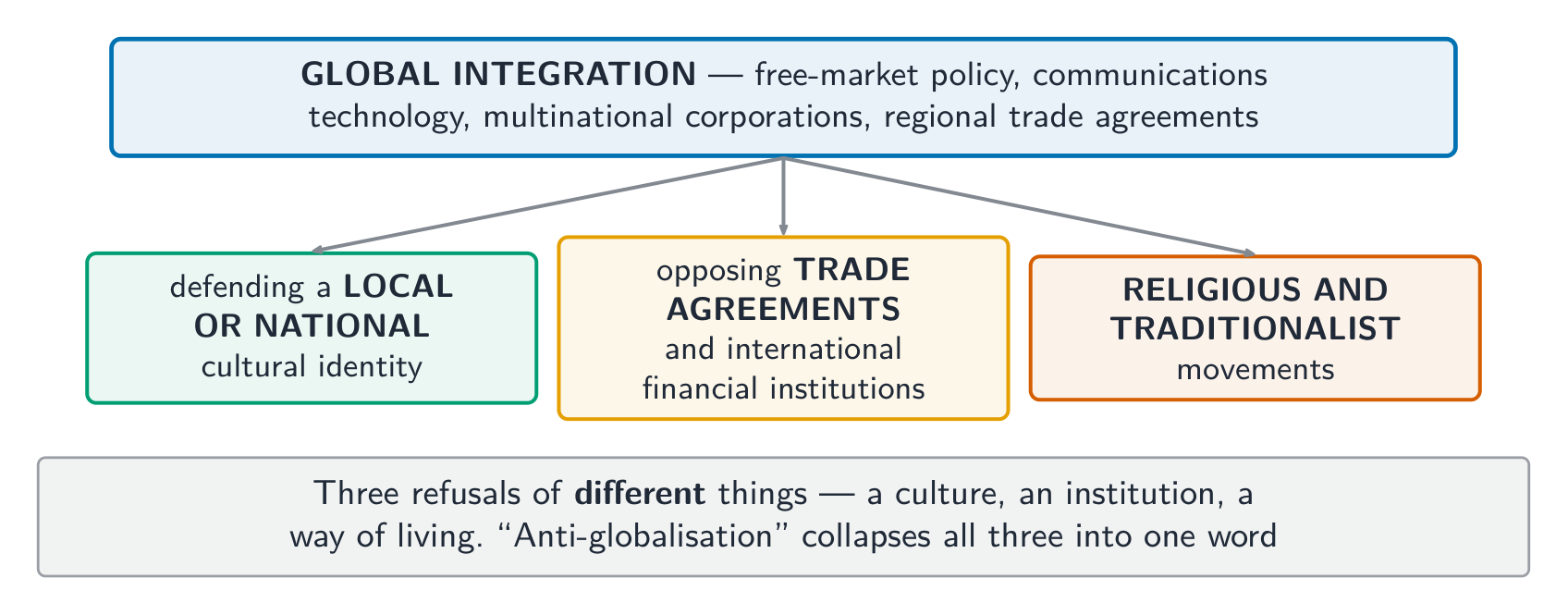
Responses to rising cultural and economic globalisation took a variety of forms. The CED deliberately leaves the category broad, and a good answer fills it with distinct kinds rather than repeating one:

  • Movements defending local or national cultural identity against homogenising influence.
  • Organised opposition to trade agreements and international financial institutions on economic grounds.
  • Religious and traditionalist movements 宗教与传统主义运动 rejecting the social changes that accompanied integration.
עברית

תגובות לגלובליזציה תרבותית וכלכלית עולה נטלו צורות מגוונות. ה-CED משאירה את הקטגוריה רחבה במכוון, ותשובה טובה ממלאת אותה בסוגים שונים ולא חוזרת על אותו סוג אחד:

  • תנועות להגנה על זהות תרבותית מקומית או לאומית מול השפעה מאחיינית.
  • התנגדות מאורגנת לסכמי מסחר ומוסדות פיננסיים בינלאומיים מטעמים כלכליים.
  • תנועות דתיות ומסורתניות המדחות את השינויים החברתיים שהיו伴随 בשיבוץ.
שלוש סירובים לשלושה דברים שונים - 'אנטי-גלובליזציה' מקבילה אותם למילה אחת
Explore · ⁨חקור⁩

Sort each refusal by what it defends · ⁨סדרו כל סירוב לפי מה שהוא מגן עליו⁩

'Anti-globalisation' collapses three refusals of three different things into one word. · ⁨'אנטי-גלובליזציה' מכנס שלושה סירובים לשלושה דברים שונים במילה אחת.⁩

9.8

Institutions in a Globalized World · ⁨מוסדות בעולם גלובלי⁩

Syllabus · ⁨סיילבוס⁩
English

9.8 Institutions Developing in a Globalized World

Thematic Focus (GOV): Governance — A variety of internal and external factors contribute to state formation, expansion, and decline. Governments maintain order through a variety of administrative institutions, policies, and procedures, and governments obtain, retain, and exercise power in different ways and for different purposes.

Learning Objective Unit 9.H: Explain how and why globalization changed international interactions among states.

  • KC-6.3.II.A New international organizations, including the United Nations, formed with the stated goal of maintaining world peace and facilitating international cooperation.
עברית

9.8 מוסדות הנמנים בעולם גלובלי

מיקוד נושא (GOV): שלטון — מגוון גורמים פנימיים וחיצוניים תורמים ליצירת מדינות, הרחבתן ונפילתן. ממשלות שומרות על סדר באמצעות מגוון מוסדות, מדיניות ונהלים מנהליים, וממשלות רוכשות, שומרות ומפעילות כוח בדרכים ובמטרות שונות.

מטרת הלמידה ליחידה 9.H: הסבר כיצד ולמה הגלובליזציה שינתה את האינטראקציה הבינלאומית בין מדינות.

  • KC-6.3.II.A ארגונים בינלאומיים חדשים, כולל האו

Source: College Board AP Course and Exam Description · ⁨מקור: תיאור הקורס והמבחן של College Board AP⁩

English

New international organisations 国际组织, including the United Nations 联合国, emerged to manage problems no single state could handle alone - security, health, refugees, trade, and the environment.

This closes the arc of the course: Unit 7 opened with the collapse of an order and unprecedented conflict; Unit 9 ends with the institutions built in response, and with the argument - still unresolved - about how much authority they should hold.

עברית

ארגונים בינלאומיים חדשים, כולל האומות המאוחדות, נוצרו כדי לנהל בעיות שאף מדינה בודדת לא יכולה להתמודד איתה לבד - ביטחון, בריאות, פליטים, מסחר וסביבה.

זהו הסיום של קשת הקורס: יחידה 7 נפתחה עם קריסת סדר ולחימה חסרת תקדים; יחידה 9 מסתיימת במוסדות שנבנו בתגובה, ובטענה - שעדיין אינה פתורה - לגבי כמה סמכות הם צריכים להחזיק.

9.9

Continuity and Change in a Globalized World · ⁨רציפות ושינויים בעולם גלובלי⁩

Syllabus · ⁨סיילבוס⁩
English

9.9 Continuity and Change in a Globalized World

Learning Objective Unit 9.I: Explain the extent to which science and technology brought change in the period from 1900 to the present.

  • KC-6.1 Rapid advances in science and technology altered the understanding of the universe and the natural world and led to advances in communication, transportation, industry, agriculture, and medicine.
    • KC-6.1.I.A New modes of communication— including radio communication, cellular communication, and the internet—as well as transportation, including air travel and shipping containers, reduced the problem of geographic distance.
    • KC-6.1.I.D Energy technologies, including the use of petroleum and nuclear power, raised productivity and increased the production of material goods.
    • KC-6.1.III.B More effective forms of birth control gave women greater control over fertility, transformed reproductive practices, and contributed to declining rates of fertility in much of the world.
    • KC-6.1.I.B The Green Revolution and commercial agriculture increased productivity and sustained the earth’s growing population as it spread chemically and genetically modified forms of agriculture.
    • KC-6.1.I.C Medical innovations, including vaccines and antibiotics, increased the ability of humans to survive and live longer lives.
  • KC-6.3.I States responded in a variety of ways to the economic challenges of the 20th century.
  • KC-6.3.III.i Rights-based discourses challenged old assumptions about race, class, gender, and religion.
  • KC-6.3.III.ii In much of the world, access to education as well as participation in new political and professional roles became more inclusive in terms of race, class, gender, and religion.
  • KC-6.3.IV.i Political and social changes of the 20th century led to changes in the arts and in the second half of the century, popular and consumer culture became more global.
  • KC-6.3.IV.ii Arts, entertainment, and popular culture increasingly reflected the influence of a globalized society.
  • KC-6.3.IV.iii Consumer culture became globalized and transcended national borders.
עברית

9.9 המשכיות ושינוי בעולם גלובלי

מטרת לימוד יחידה 9.I: להסביר עד כמה מדע וטכנולוגיה הביאו לשינוי בתקופה מ1900 ועד היום.

  • KC-6.1 התקדמויות מהירות במדע ובטכנולוגיה שינו את ההבנה של היקום והעולם הטבעי והובילו להתקדמויות בתקשורת, תחבורה, תעשייה, חקלאות ורפואה.
    • KC-6.1.I.A אמצעי תקשורת חדשים — כגון תקשורת רדיו, תקשורת ניידת והאינטרנט — ainsi que תחבורה, כולל טיסות אוויר ומכולות משלוח, צמצמו את בעיית המרחק הגיאוגרפי.
    • KC-6.1.I.D טכנולוגיות אנרגיה, כולל שימוש בנפט ובאנרגיה גרעינית, השיבו את הפריחה וגם את ייצור הסחורות החומריות.
    • KC-6.1.III.B צורות יעילות יותר של מניעת הריון נתנו לנשים שליטה גדולה יותר על פוריון, שינו את השימושים בהפלה ותרומו לירידה בקצבי הפוריון ברוב העולם.
    • KC-6.1.I.B המהפכה הירוקה והחקלאות המסחרית השיבו את הפריחה ושזיפו את האוכלוסייה העולמית הגוברת כאשר היא התפשטה בכיוונים כימיים וגנטיים בצורה חקלאית.
    • KC-6.1.I.C חדשות רפואיות, כולל חיסונים ואנטיביוטיקה, השיבו את היכולת של בני האדם לחיות ולהישאר בחיים לאורך זמן רב יותר.
  • KC-6.3.I המדינות הגיבו במגוון דרכים לאתגרים הכלכליים של המאה ה20.
  • KC-6.3.III.i דיבורים המבוססים על זכויות עוררו אתגרים להנחות יסוד ישנות לגבי גזע, מעמד, מגדר ודת.
  • KC-6.3.III.ii בחלק רב של העולם, הגישה לחינוך וגם השתתפות בתפקידים פוליטיים ומקצועיים חדשים הפכו ליותר כללית מבחינת גזע, מעמד, מגדר ודת.
  • KC-6.3.IV.i שינויים פוליטיים וחברתיים במאה ה-20 הביאו לשינויים באמנות ובחצי השני של המאה, תרבות פופולרית ותרבות צריכה הפכו לגלובליות יותר.
  • KC-6.3.IV.ii אמנות, בידור ותרבות פופולרית החלו לשקף increasingly את ההשפעה של חברה גלובלית.
  • KC-6.3.IV.iii תרבות הצריכה הפכה לגלובלית ועברה גבולות לאומיים.

Source: College Board AP Course and Exam Description · ⁨מקור: תיאור הקורס והמבחן של College Board AP⁩

English

The unit's reasoning skill is continuity and change, applied across the whole modern period.

Worked example (a real AP exam question). AP World short-answer questions here ask, for example, to "Explain one way in which technological developments after 1900 affected the world's population." A full-mark answer names the development and traces its effect: "Medical innovations such as vaccines and antibiotics reduced deaths from infectious disease, which increased average lifespans and contributed to rapid population growth, particularly in regions where these treatments were introduced faster than birth rates fell." Notice the mechanism: a reason the population changed, not the statement that it did.

עברית

מיומנות החשיבה של היחידה היא רציפות ושינוי, המיושמת לאורך כל התקופה המודרנית.

דוגמה מפורטת (שאלה אמיתית מבחן AP). שאלות תשובה קצרה ב-AP World ביקשו, לדוגמה, "הסבר אופן אחד שבו פיתוחים טכנולוגיים לאחר 1900 השפיעו על אוכלוסיית העולם." תשובה מלאה נקבעת לפיתוח ועוקבת אחר ההשפעה שלו: "חדשות רפואיות כמו חיסונים ואנטיביוטיקות הפחיתו את התמותה מחוליות, מה שהגדיל את תוחלת החיים הממוצעת ותרם לצמיחה דמוגרפית מהירה, במיוחד באזורים בהם טיפולים אלו הוכנסו מהר יותר מאשר קצב הלידה ירד." שמו לב למנגנון: סיבה למה האוכלוסייה השתנתרה, ולא רק הצהרה שהיא עשתה זאת.

9.9

Exam tips · ⁨טיפים לבחינות⁩

English
  • Unit 9 questions are evaluative. For almost every advance, name the benefit and the cost. That single habit lifts most answers here.
  • Birth control is technological, demographic, and social evidence at once - unusually flexible in questions about women's changing roles.
  • The rise of diseases of longer life is caused by medical success. Say that explicitly; it demonstrates causal reasoning.
  • On climate, the CED's word is debates. Write about the argument, not a verdict.
  • Connect the global economy back to Unit 6: the same asymmetry, new institutions. Cross-period links score well on essays.
  • For resistance to globalisation, give distinct kinds - cultural, economic, religious - not one kind three times.
עברית
  • שאלות יחידה 9 הן מערכות. לכל התקדמות, נקוב את היתרון וגם את העלות. הרגל זה בלבד מרים את רוב התשובות כאן.
  • בקרת ילודה היא עדות טכנולוגית, דמוגרפית וחברתית בו-זמנית - גמישה במיוחד בשאלות על שינוי תפקידי הנשים.
  • עליית מחלות הקשורות לחיים ארוכים נגרמת בהצלחה רפואית. אמור זאת במפורש; זה מדגיש חשיבה סיבתית.
  • בנושא האקלים, המילה של ה-CED היא דיונים. כתוב על הוויכוח, ולא על פסק דין.
  • קשר את הכלכלה הגלובלית חזרה ליחידה 6: אותה אי-סימטריות, מוסדות חדשים. קשרים בין-תקופתיים צוברים נקודות גבוהות במאמרים.
  • לגבי התנגדות לגלובליזציה, ספק סוגים שונים - תרבותי, כלכלי, דתי - ולא סוג אחד בשלוש הזדמנויות.

Interactive lessons on this topic · ⁨שיעורים אינטראקטיביים בנושא זה⁩

Work through it step by step, with instant-check exercises. · ⁨לעבור על הדברים צעד אחר צעד, עם תרגילים לבדיקה מיידית.⁩

Past Papers · ⁨מבחני עבר⁩

More topics in AP World History: Modern · ⁨היסטוריה עולמית: זמנים מודרניים - AP⁩ · ⁨נושאים נוספים בAP World History: Modern · ⁨היסטוריה עולמית: זמנים מודרניים - AP⁩⁩

Log in or create account · ⁨היכנס או צור חשבון⁩

IGCSE, A-Level & AP