Skip to content · ⁨דלג לתוכן⁩

Audience, Tone, and Sentence Craft · ⁨קהל יעד, גוון ועיצוב המשפט⁩

AP English Language and Composition · ⁨שפה ואנגלית כתיבה יצירתית - AP⁩ · Topic 8 · ⁨נושא 8⁩

Video lesson for this topic · ⁨שיעור וידאו לנושא זה⁩ Open the video page · ⁨פתח את עמוד הוידאו⁩
5:44

יחידה 8: קהל יעד, טון ועיצוב משפט

סגנון הכתיבה של סופר הוא השילוב של בחירת מילים, סינטקס וקונבנציות המשמשות אותו. הסגנון הוא תוצרת שילוב — ולכן phrases כמו "סגנון הכתיבה של הסופר רשמי"…

English narration · English + 中文 subtitles burned in · ⁨קריאת קול באנגלית · תרגום אנגלי + סינית שרוף בתוך הסרטון⁩

8.1

Understanding an Audience's Beliefs and Needs · ⁨הבנת אמונות וצרכי הקהל⁩

Syllabus · ⁨סיילבוס⁩
English

Enduring Understanding (RHS-1): Individuals write within a particular situation and make strategic writing choices based on that situation.

Learning Objective 1.B: Reading – Explain how an argument demonstrates understanding of an audience’s beliefs, values, or needs.

  • RHS-1.K Writers may make comparisons (e.g., similes, metaphors, analogies, or anecdotes) in an attempt to relate to an audience. Effective comparisons must be shared and understood by the audience to advance the writer’s purpose.
  • RHS-1.L Writers’ choices regarding syntax and diction influence how the writer is perceived by an audience and may influence the degree to which an audience accepts an argument.
  • RHS-1.M Word choice may reflect writers’ biases and may affect their credibility with a particular audience.
  • RHS-1.N Because audiences are unique and dynamic, writers must consider the perspectives, contexts, and needs of the intended audience when making choices of evidence, organization, and language in an argument.
עברית

הבנה מתמשכת (RHS-1): אנשים כותבים בתוך מצב רטורי ספציפי ועושים בחירות כתיבה אסטרטגיות על בסיס המצב הזה.

מטרות למידה 1.B: קריאה – הסבר כיצד טיעון מדגים הבנה של אמונות, ערכים או צרכים של הקהל.

  • RHS-1.K כותבים עשויים לבצע השוואות (למשל, סמיון, מטאפורה, אנלוגיה או אנוקדוט) בניסיון ליצור קשר עם הקהל. השוואות יעילות חייבות להיות משותפות ומובנות על ידי הקהל כדי לקדם את המטרה של הכותב.
  • RHS-1.L בחירותיו של הכותב בנוגע לסyntaxis ולמילון משפיעות על כך כיצד הכותב נתפס על ידי הקהל ועשויות להשפיע על מידת הקבלתו של הטיעון על ידי הקהל.
  • RHS-1.M בחירת המילים עשויה לשקף את העווכות של הכותבים ועשויה להשפיע על האמינות שלהם מול קהל יעד מסוים.
  • RHS-1.N מכיוון שקהלי היעד הם ייחודיים ודינמיים, כותבים חייבים לשקול את הזוויות, ההקשרים והצרכים של קהל היעד המתכוון בעת ביצוע בחירות של הוכחות, ארגון ושפה בטיעון.
Source: College Board AP Course and Exam Description · ⁨מקור: תיאור הקורס והמבחן של College Board AP⁩

English

Unit 8 is the course's most advanced treatment of style 文体 - the point at which word choice, syntax, and audience stop being separate topics.

  • Writers may make comparisons - similes, metaphors, analogies, or anecdotes - in an attempt to relate to an audience.
  • Writers' choices regarding syntax and diction 句法与措辞 influence how the writer is perceived by an audience.
  • Word choice may reflect a writer's biases and may affect their credibility with a particular audience.
  • Because audiences are unique and dynamic, writers must consider the perspectives, contexts, and needs of the intended audience.

The third point is worth dwelling on. Diction does not only characterise the subject - it characterises the writer. A reader who notices loaded word choice starts to discount everything that follows, which is why an unqualified vocabulary is a credibility risk, not a strength.

עברית

יחידה 8 היא הטיפול המדויק ביותר בקורס בסגנון - הנקודה שבה בחירת המילים, הסינטקס והקהל מפסיקים להיות נושאים נפרדים.

  • סופרים עשויים לבצע השוואות - הדמיות, מטפורות, אנלוגיות או אנודוטות - במטרה ליצור קשר עם הקהל.
  • בחירותיהם של סופרים בנוגע לסינטקס ולדיקציה משפיעות על כיצד הסופר נתפס על ידי הקהל.
  • בחירת מילים עשויה לשקף את שיפטי הסופר ועשויה להשפיע על אמינותו מול קהל ספציפי.
  • מכיוון שהקהלים הם ייחודיים ודינמיים, על הסופרים לקחת בחשבון אתהמגמות, ההקשרים והצרכים של הקהל המיועד.

הנקודה השלישית שווה להעמקה. הדיקציה לא רק מאפיין את הנושא – היא מאפיין את הסופר. קורא שמשים לב לבחירת מילים טוענת מתחיל להקטין את כל מה שאחר כך, ומכאן שווקבולריה ללא הגדרה היא סיכון לאמינות, ולא חוזק.

8.2

Writing for an Audience's Beliefs and Needs · ⁨כתיבה למען אמונות וצרכי הקהל⁩

Syllabus · ⁨סיילבוס⁩
English

Enduring Understanding (RHS-1): Individuals write within a particular situation and make strategic writing choices based on that situation.

Learning Objective 2.B: Writing – Demonstrate an understanding of an audience’s beliefs, values, or needs.

  • RHS-1.K Writers may make comparisons (e.g., similes, metaphors, analogies, or anecdotes) in an attempt to relate to an audience. Effective comparisons must be shared and understood by the audience to advance the writer’s purpose.
  • RHS-1.L Writers’ choices regarding syntax and diction influence how the writer is perceived by an audience and may influence the degree to which an audience accepts an argument.
  • RHS-1.M Word choice may reflect writers’ biases and may affect their credibility with a particular audience.
  • RHS-1.N Because audiences are unique and dynamic, writers must consider the perspectives, contexts, and needs of the intended audience when making choices of evidence, organization, and language in an argument.
עברית

הבנה מתמשכת (RHS-1): אנשים כותבים בתוך מצב רטורי ספציפי ועושים בחירות כתיבה אסטרטגיות על בסיס המצב הזה.

מטרות למידה 2.B: כתיבה – הדגמת הבנה של אמונות, ערכים או צרכי הקהל.

  • RHS-1.K כותבים עשויים לבצע השוואות (למשל, סמיון, מטאפורה, אנלוגיה או אנוקדוט) בניסיון ליצור קשר עם הקהל. השוואות יעילות חייבות להיות משותפות ומובנות על ידי הקהל כדי לקדם את המטרה של הכותב.
  • RHS-1.L בחירותיו של הכותב בנוגע לסyntaxis ולמילון משפיעות על כך כיצד הכותב נתפס על ידי הקהל ועשויות להשפיע על מידת הקבלתו של הטיעון על ידי הקהל.
  • RHS-1.M בחירת המילים עשויה לשקף את העווכות של הכותבים ועשויה להשפיע על האמינות שלהם מול קהל יעד מסוים.
  • RHS-1.N מכיוון שקהלי היעד הם ייחודיים ודינמיים, כותבים חייבים לשקול את הזוויות, ההקשרים והצרכים של קהל היעד המתכוון בעת ביצוע בחירות של הוכחות, ארגון ושפה בטיעון.
Source: College Board AP Course and Exam Description · ⁨מקור: תיאור הקורס והמבחן של College Board AP⁩

English

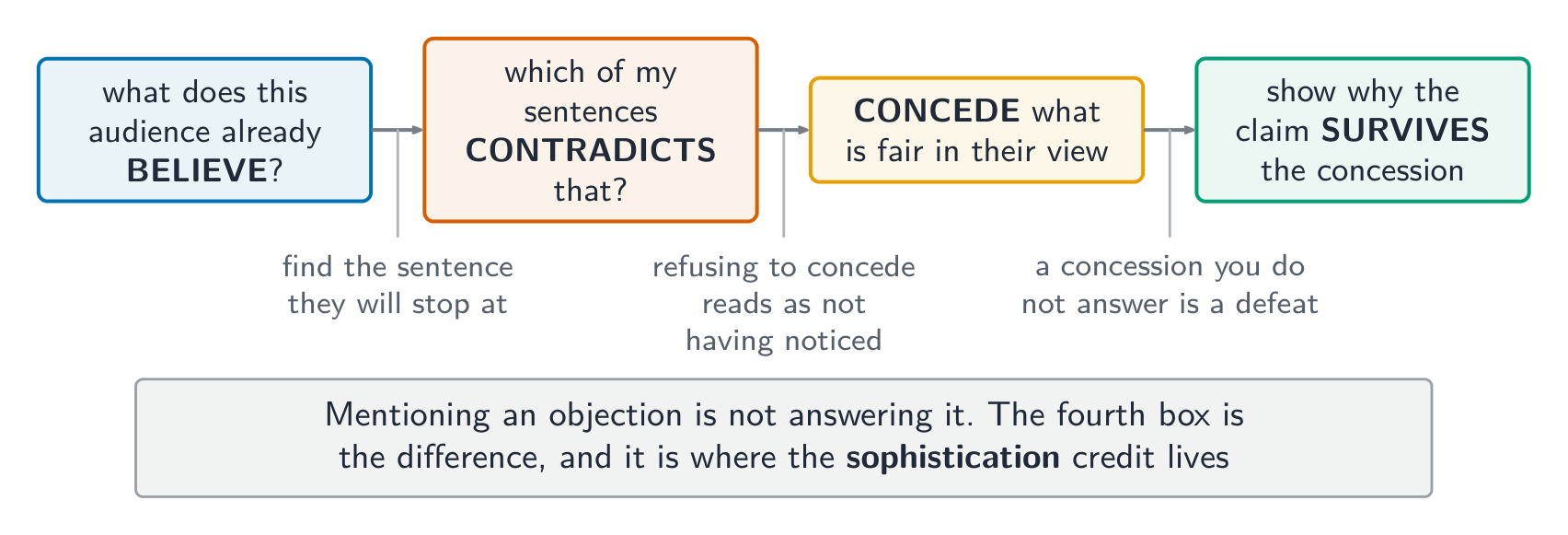
The instruction here is that audiences are dynamic: they change as they read. An argument that has just conceded something is being read by a slightly different audience than the one that began the essay.

Practically, this means the ordering of concession and claim matters. Concede before you press, and you address a reader who now believes you are fair. Press first and concede afterwards, and the concession reads as retreat.

עברית

ההנחיה כאן היא שהקהלים הם דינמיים: הם משתנים בעת קריאה. טיעון שעוד הסכים לדבר מה נקרא על ידי קהל מעט שונה מזה שהתחיל את המאמר.

מעשייתית, הדבר אומר שסדר ההסכמה והטענה חשוב. הסכם לפני שאתה לוחץ, ותפנה לקורא שחושב כרגע שאתה הוגן. לחץ קודם והסכם לאחר כך, וההסכם נקרא כנסיגה.

הזכרת התנגדות אינה מענה עליה – התיבה הרביעית היא ההבדל
Explore · ⁨חקור⁩

Anticipate where the reader will refuse · ⁨לצפות היכן הקורא יסרב⁩

Mentioning an objection is not answering it. The fourth step is the difference, and it is where the sophistication credit lives. · ⁨הזכרת התנגדות אינה מענה עליה. השלב הרביעי הוא ההבדל, והוא שבו נמצאת האחריות לעסקת הפיתוח.⁩

8.3

Word Choice, Comparisons, and Syntax · ⁨בחירת מילים, השוואות וסינטקס⁩

Syllabus · ⁨סיילבוס⁩
English

Enduring Understanding (STL-1): The rhetorical situation informs the strategic stylistic choices that writers make.

Learning Objective 7.A: Reading – Explain how word choice, comparisons, and syntax contribute to the specific tone or style of a text.

  • STL-1.Q A writer’s style is made up of the mix of word choice, syntax, and conventions employed by that writer.
  • STL-1.R Writers may signal a complex or ironic perspective through stylistic choices. Irony may emerge from the differences between an argument and the readers’ expectations or values.
עברית

הבנה מתמשכת (STL-1): המצב הרטורי מזהיר את הבחירות הסגנוניות האסטרטגיות שעושים הכותבים.

מטרות לימוד 7.A: קריאה – הסבר כיצד בחירת מילים, השוואות וסינטקס תורמים לגוון או לסגנון ספציפי של הטקסט.

  • STL-1.Q הסגנון של כותב מורכב מהמערך של בחירת מילים, סינטקס וקונבנציות הנעשות על ידי הכותב.
  • STL-1.R כותבים עשויים לרמז על זווית מורכבת או איירונית באמצעות בחירות סגנוניות. איירוניה עשויה לעלות מתוך הבדלים בין טיעון לבין ציפיות או ערכים של הקוראים.

Source: College Board AP Course and Exam Description · ⁨מקור: תיאור הקורס והמבחן של College Board AP⁩

English
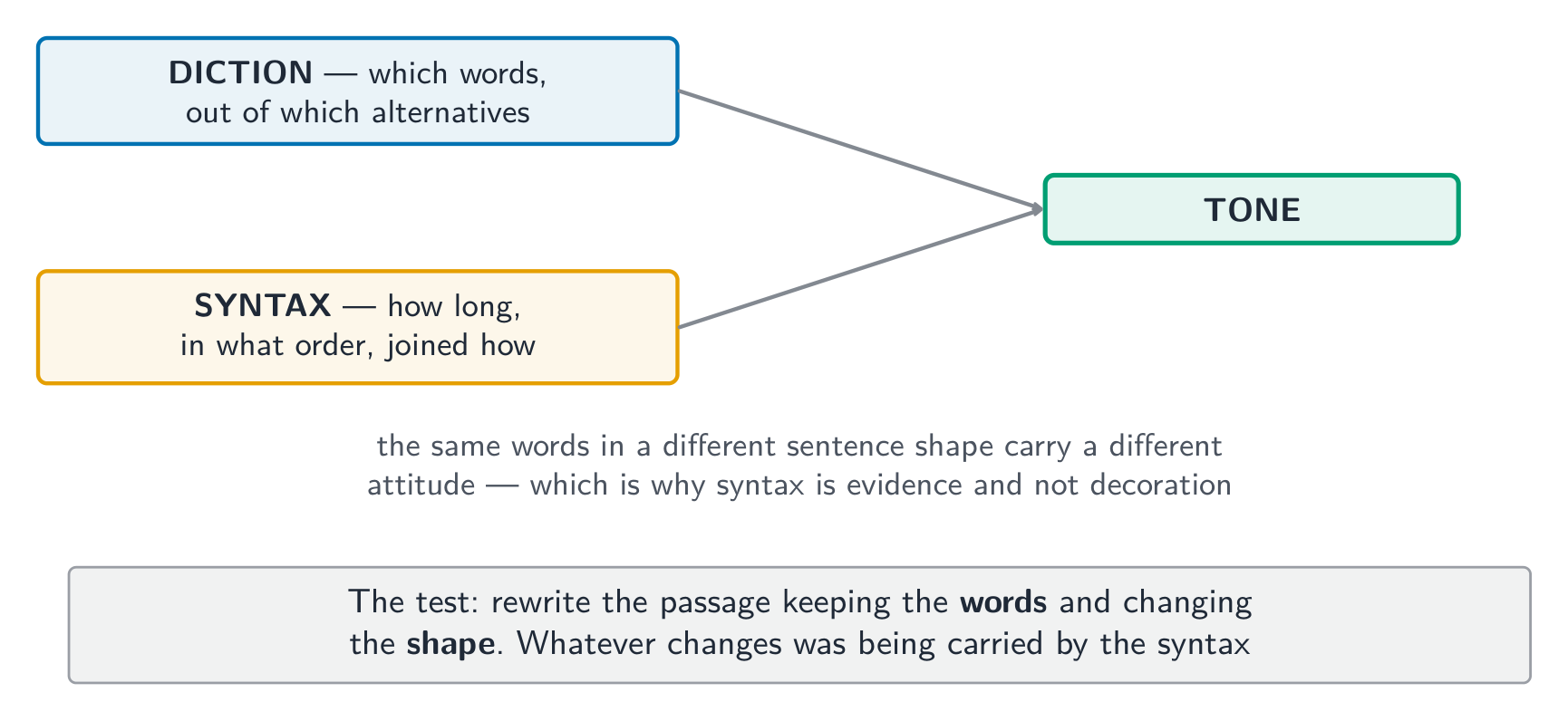
  • A writer's style is the mix of word choice, syntax, and conventions employed by that writer. Style is a composite, which is why "the writer's style is formal" is not analysis - it names the result without any of the components.
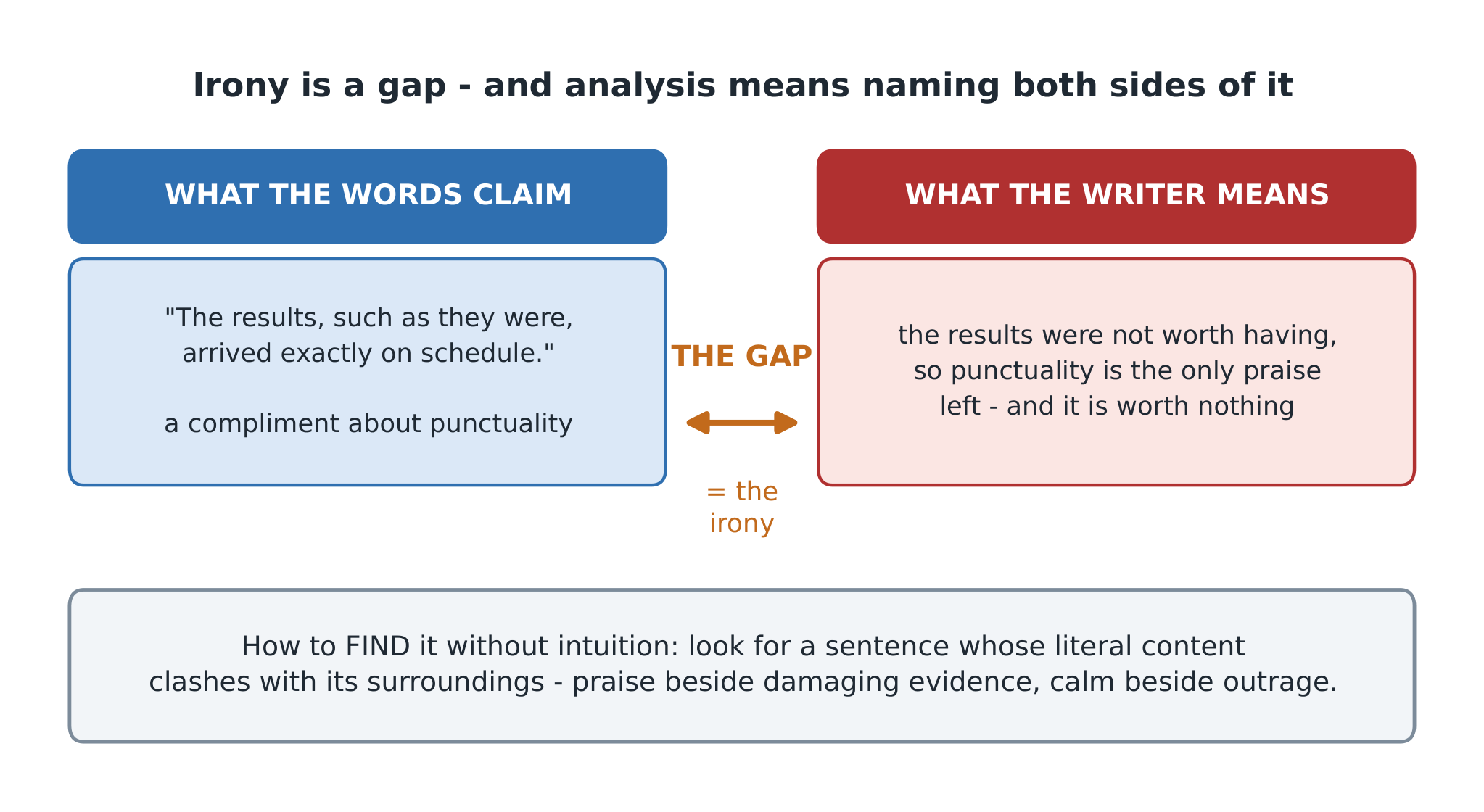
  • Writers may signal a complex or ironic perspective through stylistic choices. Irony 反讽 may emerge from the difference between what is said and what is meant, or between what is expected and what occurs.

Irony is the hardest thing on this exam for a second-language reader, because it cannot be looked up. The workable method is structural rather than intuitive: find a sentence whose literal content does not match its surroundings - excessive praise beside damaging evidence, calm register beside an outrageous fact - and the mismatch is the signal.

עברית
  • הסגנון של סופר הוא השילוב של בחירת מילים, סינטקס ומסורות בהן משתמש אותו סופר. סגנון הוא קומפוזיט, ולכן "הסגנון של הסופר הוא רשמי" אינו ניתוח – זה שם לתוצאה ללא אף אחד מהרכיבים.
  • סופרים עשויים לסמן מגמה מורכבת או איירונית באמצעות בחירות סגנוניות. איירניה עשויה להופיע מההבדל בין מה שנאמר לבין מה שמתכוונים, או בין מה שצפוי לבין מה שקורה.
האיירניה היא פערה, וניתוח פירושו שייחוס של שני צדדי הפער
אמור מה המילים טוענות, אמור מה הכותב מתכוון אליו, והרווח בין השניים הוא הארגומנט

אירוניה היא הדבר הקשה ביותר במבחן זה לקורא שפה זרה, כי אי אפשר לחפש אותה במילון. השיטה הפעילה היא מבנית ולא אינטואיטיבית: מצאו משפט whose תוכנון המילולי אינו תואם לסביבתו - שבח מופרז לצד עדות פוגעת, רשמה שקטה לצד עובדה מהומה - והאי-התאמה היא האות.

Tone has two inputs, and most analyses name only one
Vocabulary · ⁨מילון מונחים⁩ Train · ⁨אימון⁩
English עברית
Irony/ˈaɪrəni/ איירניה
8.4

Using Words and Syntax for Tone and Style · ⁨שימוש במילים ובסינטקס לעיצוב אווירה וסגנון⁩

Syllabus · ⁨סיילבוס⁩
English

Enduring Understanding (STL-1): The rhetorical situation informs the strategic stylistic choices that writers make.

Learning Objective 8.A: Writing – Strategically use words, comparisons, and syntax to convey a specific tone or style in an argument.

  • STL-1.Q A writer’s style is made up of the mix of word choice, syntax, and conventions employed by that writer.
  • STL-1.R Writers may signal a complex or ironic perspective through stylistic choices. Irony may emerge from the differences between an argument and the readers’ expectations or values.
עברית

הבנה מתמשכת (STL-1): המצב הרטורי מזהיר את הבחירות הסגנוניות האסטרטגיות שעושים הכותבים.

מטרות לימוד 8.A: כתיבה – שימוש אסטרטגי במילים, השוואות וסינטקס להעברת גוון או סגנון ספציפי בארגון.

  • STL-1.Q הסגנון של כותב מורכב מהמערך של בחירת מילים, סינטקס וקונבנציות הנעשות על ידי הכותב.
  • STL-1.R כותבים עשויים לרמז על זווית מורכבת או איירונית באמצעות בחירות סגנוניות. איירוניה עשויה לעלות מתוך הבדלים בין טיעון לבין ציפיות או ערכים של הקוראים.

Source: College Board AP Course and Exam Description · ⁨מקור: תיאור הקורס והמבחן של College Board AP⁩

English

For your own writing, the safest use of irony is none. What the sophistication point actually rewards is control: a consistent register, a vocabulary that is precise rather than inflated, and syntax that ranks ideas deliberately.

עברית

לכתיבה האישי שלך, השימוש הבטוח ביותר באירוניה הוא אף אחד. הנקודה על העמקת ( sophistication ) למעשה מעניקה שליטה: רשמה אחידה, אוצר מילים מדויק ולא מופרז, וסינטקס שמדרגת רעיונות בצורה מתודית.

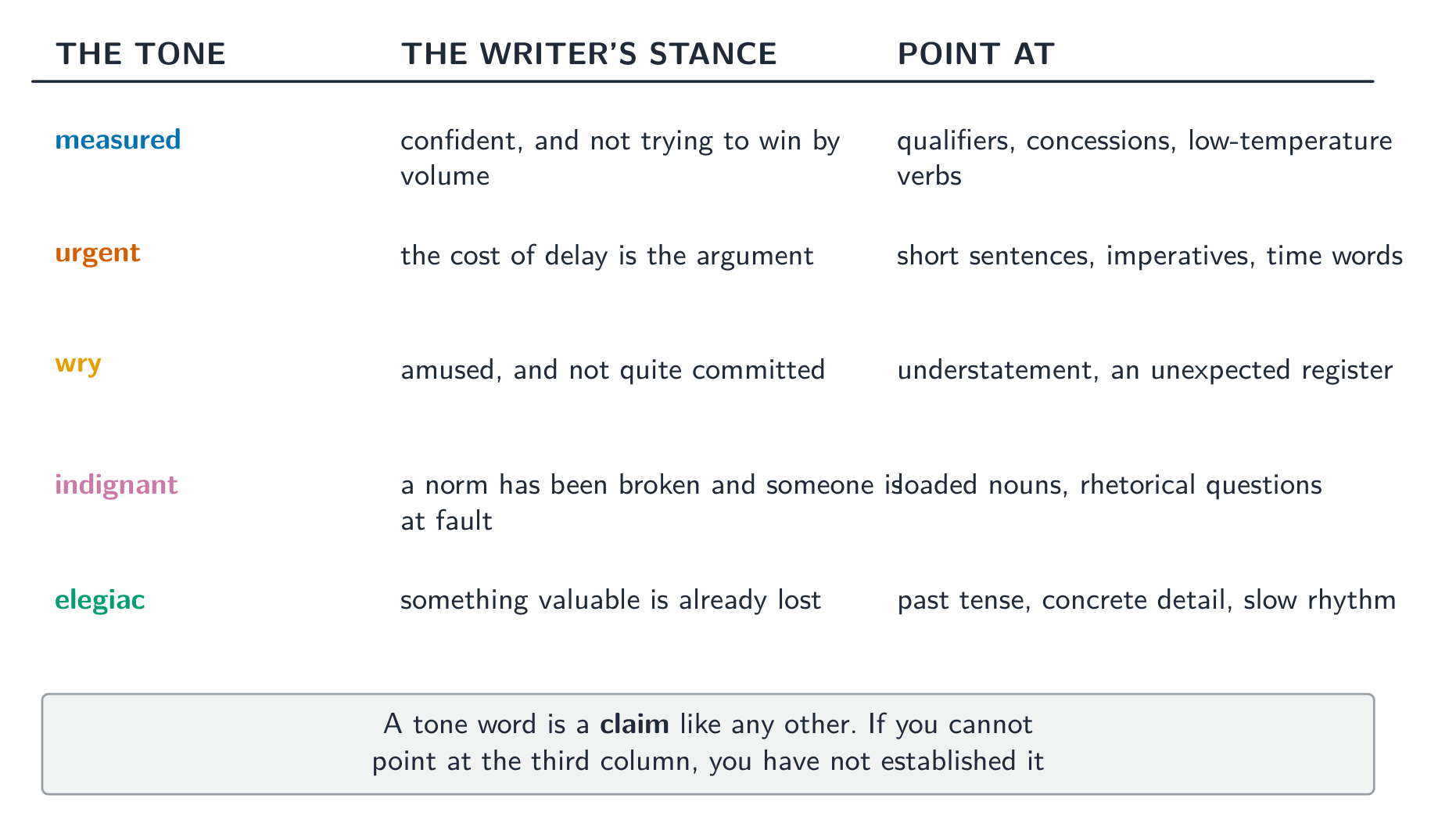
A tone word is a claim - if you cannot point at the third column, you have not made it
Explore · ⁨חקור⁩

Match each tone to the evidence for it · ⁨התאימו כל טון לעדן המתאים לו⁩

A tone word is a claim like any other. If you cannot point at the evidence, you have not established it. · ⁨מילה המבטאת גוון היא טענה כמו כל טענה אחרת. אם אינך יכול להצביע על העדויות, לא הוכחת אותה.⁩

8.5

Clauses and Relationships Between Ideas · ⁨משפטים וקשרים בין רעיונות⁩

Syllabus · ⁨סיילבוס⁩
English

Enduring Understanding (STL-1): The rhetorical situation informs the strategic stylistic choices that writers make.

Learning Objective 7.B: Reading – Explain how writers create, combine, and place independent and dependent clauses to show relationships between and among ideas.

  • STL-1.S Modifiers—including words, phrases, or clauses—qualify, clarify, or specify information about the thing with which they are associated. To reduce ambiguity, modifiers should be placed closest to the word, phrase, or clause that they are meant to modify.
  • STL-1.T Parenthetical elements—though not essential to understanding what they are describing—interrupt sentences to provide additional information that may address an audience’s needs and/or advance a writer’s purpose.
עברית

הבנה מתמשכת (STL-1): המצב הרטורי מזהיר את הבחירות הסגנוניות האסטרטגיות שעושים הכותבים.

מטרת הלמידה 7.B: קריאה – הסבר כיצד כותבים יוצרים, משלב ומניחים משפטים עצמאיים ותלויים כדי להציג קשרים בין ובין רעיונות.

  • STL-1.S תוספים—כולל מילים, ביטויים או משפטים—מקלים, מאירים או מדויקים מידע על הדבר שעמם הם קשורים. כדי להפחית מבוכה, תוספים חייבים להיות ממוקמים קרוב ביותר למילה, הביטוי או המשפט שהם אמורים לערוך.
  • STL-1.T אלמנטים בתוך סוגריים—אף שאינם חיוניים להבנת מה שהם מתארים—מפסיקים משפטים כדי לספק מידע נוסף שעשוי להתמודד עם צרכי הקהל ו/או לקדם את המטרה של הכותב.

Source: College Board AP Course and Exam Description · ⁨מקור: תיאור הקורס והמבחן של College Board AP⁩

English
  • Modifiers 修饰成分 - words, phrases, or clauses - qualify, clarify, or specify information about the thing they modify.
  • Parenthetical elements 插入成分 - though not essential to understanding what they describe - interrupt the sentence to add information, comment, or emphasis.

Both are stylistically rich and analytically useful. A modifier is where a writer's judgement hides: the long-delayed report has evaluated the report while appearing only to identify it. A parenthetical is an aside the writer chose to make - and the choice to interrupt is itself an emphasis.

עברית
  • Modifiers (修饰成分) - מילים, ביטויים או משפטים - מקדמים, מבהירים או מפרטים מידע על הדבר שהם מהווים את ה-MODIFIER.
  • Parenthetical elements (插入成分) - אף שאינם חיוניים להבנת מה שהם מתארים - מוצאים את המשפט כדי להוסיף מידע, התבוננות או דגש.

שניהם עשירים סטיליסטית ושימושיים אנליטית. ה-MODIFIER הוא מקום שבו השפיטה של הסופר נסתרת: the long-delayed report (דו"ח שנדחה לאורך זמן) בעל ערך already evaluated את הדו"ח תוך看似 רק לזהות אותו. ה-PARENTHETICAL הוא הערה צדדית שהסופר בחר לעשות - והבחירה להוציא את המשפט היא עצמה דגש.

Vocabulary · ⁨מילון מונחים⁩ Train · ⁨אימון⁩
English עברית
Parenthetical elements/pərənˈθetɪkl ˈelɪmənts/ אלמנטים סביעתיים
8.6

Writing Clear Sentences · ⁨כתיבת משפטים ברורים⁩

Syllabus · ⁨סיילבוס⁩
English

Enduring Understanding (STL-1): The rhetorical situation informs the strategic stylistic choices that writers make.

Learning Objective 8.B: Writing – Write sentences that clearly convey ideas and arguments.

  • STL-1.S Modifiers—including words, phrases, or clauses—qualify, clarify, or specify information about the thing with which they are associated. To reduce ambiguity, modifiers should be placed closest to the word, phrase, or clause that they are meant to modify.
  • STL-1.T Parenthetical elements—though not essential to understanding what they are describing—interrupt sentences to provide additional information that may address an audience’s needs and/or advance a writer’s purpose.
עברית

הבנה מתמשכת (STL-1): המצב הרטורי מזהיר את הבחירות הסגנוניות האסטרטגיות שעושים הכותבים.

מטרת למידה 8.B: כתיבה – כתוב תחנות משפט המעבירות בצורה ברורה רעיונות וטיעונים.

  • STL-1.S תוספים—כולל מילים, ביטויים או משפטים—מקלים, מאירים או מדויקים מידע על הדבר שעמם הם קשורים. כדי להפחית מבוכה, תוספים חייבים להיות ממוקמים קרוב ביותר למילה, הביטוי או המשפט שהם אמורים לערוך.
  • STL-1.T אלמנטים בתוך סוגריים—אף שאינם חיוניים להבנת מה שהם מתארים—מפסיקים משפטים כדי לספק מידע נוסף שעשוי להתמודד עם צרכי הקהל ו/או לקדם את המטרה של הכותב.

Source: College Board AP Course and Exam Description · ⁨מקור: תיאור הקורס והמבחן של College Board AP⁩

English

A concrete discipline: place modifiers next to what they modify, and use parentheticals sparingly. One well-placed interruption creates emphasis; three in a paragraph destroy it, because a reader cannot tell which interruption mattered.

Worked example (a real AP exam task). A rhetorical-analysis passage says of a policy: "The results, such as they were, arrived exactly on schedule." A low answer says the writer "uses a parenthetical phrase". A scoring answer explains both parts: "The parenthetical 'such as they were' dismisses the results in four words, without offering an argument against them - and placing it before 'arrived exactly on schedule' means the praise for punctuality lands on results the reader has just been told to discount. The sentence appears to compliment the programme and in fact withdraws the only thing it could be complimented for." Modifier, parenthetical, irony, and effect on audience, all in one.

עברית

משחק קונקרטי: מקם MODIFIERS ליד מה שהם מהווים את, והשתמש ב-PARENTHETICALS בחסך. הפרעה אחת ממוקמת היטב יוצרת דגש; שלושה בהפרגרף מרוסים אותו, כי הקורא לא יכול לדעת איזה הפרעה הייתה חשובה.

Worked example (a real AP exam task). A rhetorical-analysis passage says of a policy: "The results, such as they were, arrived exactly on schedule." A low answer says the writer "uses a parenthetical phrase". A scoring answer explains both parts: "The parenthetical 'such as they were' dismisses the results in four words, without offering an argument against them - and placing it before 'arrived exactly on schedule' means the praise for punctuality lands on results the reader has just been told to discount. The sentence appears to compliment the programme and in fact withdraws the only thing it could be complimented for." Modifier, parenthetical, irony, and effect on audience, all in one.

Vocabulary · ⁨מילון מונחים⁩ Train · ⁨אימון⁩
English עברית
Modifiers/ˈmɒdɪfaɪəz/ תוארים
8.6

Exam tips · ⁨טיפים לבחינות⁩

  • Style is a composite - word choice, syntax, conventions. Naming the components is analysis; naming the result is not.
  • Loaded diction damages the writer's credibility. Say so; it is examinable.
  • Find irony structurally: a sentence whose literal content clashes with its surroundings.
  • Concede before you press. The audience that reads your claim will already have decided whether you are fair.
  • A modifier is where judgement hides. The long-delayed report has already evaluated it.
  • Use parentheticals sparingly in your own writing. Three in a paragraph cancel each other out.
Vocabulary · ⁨מילון מונחים⁩ Train · ⁨אימון⁩
English עברית
style/staɪl/ סגנון
syntax and diction/ˈsɪntæks ænd ˈdɪkʃn/ סינטקס ודיקציה

Interactive lessons on this topic · ⁨שיעורים אינטראקטיביים בנושא זה⁩

Work through it step by step, with instant-check exercises. · ⁨לעבור על הדברים צעד אחר צעד, עם תרגילים לבדיקה מיידית.⁩

Past Papers · ⁨מבחני עבר⁩

More topics in AP English Language and Composition · ⁨שפה ואנגלית כתיבה יצירתית - AP⁩ · ⁨נושאים נוספים בAP English Language and Composition · ⁨שפה ואנגלית כתיבה יצירתית - AP⁩⁩

Log in or create account · ⁨היכנס או צור חשבון⁩

IGCSE, A-Level & AP