Skip to content · ⁨דלג לתוכן⁩

Qualifying Arguments, Syntax, and Conventions · ⁨הקשחת טענות, סינטקס ומסורות כתיבה⁩

AP English Language and Composition · ⁨שפה ואנגלית כתיבה יצירתית - AP⁩ · Topic 7 · ⁨נושא 7⁩

Video lesson for this topic · ⁨שיעור וידאו לנושא זה⁩ Open the video page · ⁨פתח את עמוד הוידאו⁩
6:19

יחידה 7: ארגומנטים מוקפדים, סינטקס וקונבנציות

רוב הסטודנטים סוברים שטענה חזקה נשמעת יותר מקבלת ציון גבוה. ההפך הוא הנכון, וקל להבין מדוע. טענה שאינה מוקפדת קלה לשבור באמצעות…

English narration · English + 中文 subtitles burned in · ⁨קריאת קול באנגלית · תרגום אנגלי + סינית שרוף בתוך הסרטון⁩

7.1

Introductions and Conclusions Revisited · ⁨מבואות וסיכומים נבדקו מחדש⁩

Syllabus · ⁨סיילבוס⁩
English

Enduring Understanding (RHS-1): Individuals write within a particular situation and make strategic writing choices based on that situation.

Learning Objective 1.A: Reading – Identify and describe components of the rhetorical situation: the exigence, audience, writer, purpose, context, and message.

  • RHS-1.I The introduction of an argument introduces the subject and/ or writer of the argument to the audience. An introduction may present the argument’s thesis. An introduction may orient, engage, and/or focus the audience by presenting quotations, intriguing statements, anecdotes, questions, statistics, data, contextualized information, or a scenario.
  • RHS-1.J The conclusion of an argument brings the argument to a unified end. A conclusion may present the argument’s thesis. It may engage and/or focus the audience by explaining the significance of the argument within a broader context, making connections, calling the audience to act, suggesting a change in behavior or attitude, proposing a solution, leaving the audience with a compelling image, explaining implications, summarizing the argument, or connecting to the introduction.
עברית

הבנה מתמשכת (RHS-1): אנשים כותבים בתוך מצב רטורי ספציפי ועושים בחירות כתיבה אסטרטגיות על בסיס המצב הזה.

מטרות למידה 1.A: קריאה – זיהוי ותיאור רכיבי המצב הרטורי: הדרישה, הקהל, הכותב, המטרה, ההקשר וההודעה.

  • RHS-1.I ההקדמה לארגומנט מציגה את נושא הארגומנט ו/או את הסופר שלו לקהל. הקדמה עשויה להציג את התזה של הארגומנט. הקדמה עשויה להנחות, להעניין ול/או להתמקד בקהל על ידי הצגת ציטטים, הצהרות מעניינות, אנוקדוטות, שאלות, סטטיסטיקות, נתונים, מידע ממוקם בהקשר, או תרחיש.
  • RHS-1.J הסיום של ארגומנט מביא את הארגומנט לסוף מאוחד. סיום עשוי להציג את התזה של הארגומנט. הוא עשוי להעניין ול/או להתמקד בקהל על ידי הסבר החשיבות של הארגומנט בתוך הקשר רחב יותר, יצירת קשרים, קריאה לקהל לפעולה, הצעה לשינוי בהתנהגות או בגישה, הצעת פתרון, השארת הדמיון עם תמונה מרגשת, הסבר השלכות, סיכום הארגומנט, או חיבור להקדמה.
Source: College Board AP Course and Exam Description · ⁨מקור: תיאור הקורס והמבחן של College Board AP⁩

English

Unit 7 returns to introductions and conclusions with more experience behind you, then moves to the two things that most separate competent writing from strong writing: qualification 限定 and sentence structure.

On introductions and conclusions, the CED's statements are unchanged - the introduction introduces subject and writer to the audience; the conclusion brings the argument to a unified end and may present the thesis, explain its significance, or situate the argument in a broader context.

עברית

יחידה 7 חוזרת למבואות ולסיכומים עם ניסיון רב יותר מאחוריך, ולאחר מכן עוברת לשני הדברים המפרידים ביותר בין כתיבה מסוגלת לבין כתיבה מצוינת: הגבלה限定 ומבנה משפט.

בנושא מבואות וסיכומים, ההצהרות של CED נותרו ללא שינוי - המבוא מציג את נושא הכתיבה והכותב לפני הקהל; הסיכום מביא את הטיעון לסיום מאוחד ומעל להציג את הטזיס, להסביר את חשיבותה, או למקם את הטיעון בהקשר רחב יותר.

7.2

Writing Introductions and Conclusions · ⁨כתיבת פתיחות וסיכומים⁩

Syllabus · ⁨סיילבוס⁩
English

Enduring Understanding (RHS-1): Individuals write within a particular situation and make strategic writing choices based on that situation.

Learning Objective 2.A: Writing – Write introductions and conclusions appropriate to the purpose and context of the rhetorical situation.

  • RHS-1.I The introduction of an argument introduces the subject and/ or writer of the argument to the audience. An introduction may present the argument’s thesis. An introduction may orient, engage, and/or focus the audience by presenting quotations, intriguing statements, anecdotes, questions, statistics, data, contextualized information, or a scenario.
  • RHS-1.J The conclusion of an argument brings the argument to a unified end. A conclusion may present the argument’s thesis. It may engage and/or focus the audience by explaining the significance of the argument within a broader context, making connections, calling the audience to act, suggesting a change in behavior or attitude, proposing a solution, leaving the audience with a compelling image, explaining implications, summarizing the argument, or connecting to the introduction.
עברית

הבנה מתמשכת (RHS-1): אנשים כותבים בתוך מצב רטורי ספציפי ועושים בחירות כתיבה אסטרטגיות על בסיס המצב הזה.

מטרות למידה 2.A: כתיבה – לכתוב הקדמות וסיומים המתאימים למטרה ולקontekst של המצב הרטורי.

  • RHS-1.I ההקדמה לארגומנט מציגה את נושא הארגומנט ו/או את הסופר שלו לקהל. הקדמה עשויה להציג את התזה של הארגומנט. הקדמה עשויה להנחות, להעניין ול/או להתמקד בקהל על ידי הצגת ציטטים, הצהרות מעניינות, אנוקדוטות, שאלות, סטטיסטיקות, נתונים, מידע ממוקם בהקשר, או תרחיש.
  • RHS-1.J הסיום של ארגומנט מביא את הארגומנט לסוף מאוחד. סיום עשוי להציג את התזה של הארגומנט. הוא עשוי להעניין ול/או להתמקד בקהל על ידי הסבר החשיבות של הארגומנט בתוך הקשר רחב יותר, יצירת קשרים, קריאה לקהל לפעולה, הצעה לשינוי בהתנהגות או בגישה, הצעת פתרון, השארת הדמיון עם תמונה מרגשת, הסבר השלכות, סיכום הארגומנט, או חיבור להקדמה.
Source: College Board AP Course and Exam Description · ⁨מקור: תיאור הקורס והמבחן של College Board AP⁩

English

At this stage the useful upgrade is to make the conclusion do the work the CED permits. A conclusion may:

  • Explain the significance of the argument - why it matters that this is true;
  • Situate it in a broader context - what larger question it belongs to;
  • Present the thesis in its final, now-earned form.

The third is the strongest under exam conditions: restate the thesis in language you could not have used in the introduction, because the argument had not yet been made.

עברית

בשלב זה השיפור הרלוונטי הוא לגרום לסיכום לבצע את העבודה שה-CED מאפשרת לו. סיכום עשוי:

  • להסביר את החשיבות של הטיעון - מדוע חשוב שזה נכון;
  • למקם אותו בהקשר רחב יותר - לאילו שאלה גדולה הוא משתייך;
  • להציג את הטזיס בצורתו הסופית, שנרכשה כעת.

השלישי הוא החזק ביותר בתנאי בדיקה: חזור על הטזיס בשפה שלא היית יכול להשתמש בה במבוא, מכיוון שהטיעון טרם הוצג.

7.3

How Claims Are Qualified · ⁨כיצד טענות מוגבלות⁩

Syllabus · ⁨סיילבוס⁩
English

Enduring Understanding (CLE-1): Writers make claims about subjects, rely on evidence that supports the reasoning that justifies the claim, and often acknowledge or respond to other, possibly opposing, arguments.

Learning Objective 3.C: Reading – Explain ways claims are qualified through modifiers, counterarguments, and alternative perspectives.

  • CLE-1.V A lack of understanding of the complexities of a subject or an issue can lead to oversimplification or generalizations.
  • CLE-1.W Because arguments are usually part of ongoing discourse, effective arguments often avoid expressing claims, reasoning, and evidence in absolute terms.
  • CLE-1.X Writers may strategically use words, phrases, and clauses as modifiers to qualify or limit the scope of an argument.
עברית

הבנה מתמשכת (CLE-1): כותבים מטילים טענות בנושאים, נסמכים על עדויות התומכות בלוגיקה המצדיקה את הטענה, ולעיתים קרובות מכירים או מגיבים לטענות אחרות, אולי מתנגדות.

מטרות למידה 3.C: קריאה – הסבר על דרכים שבהן טענות מוסתגרות באמצעות תוספים, טיעונים נגדים וזוויות מבט חלופיות.

  • CLE-1.V חוסר הבנה של המורכבות של נושא או issue יכול להוביל לפישוט יתר או לכלליות.
  • CLE-1.W מכיוון שהטיעונים הם בדרך כלל חלק מדיסקורס מתמשך, טיעונים יעילים לעיתים קרובות נמנעים מביטוי טענות, הסקות ועדויות בצורה מוחלטת.
  • CLE-1.X כותבים יכולים להשתמש אסטרטגית במילים, ביטויים ובתחנות משפטיות כדי להקפיד או להגביל את היקף הטיעון.

Source: College Board AP Course and Exam Description · ⁨מקור: תיאור הקורס והמבחן של College Board AP⁩

English
  • A lack of understanding of the complexities of a subject can lead to oversimplification or generalisation 过度简化与以偏概全.
  • Because arguments are usually part of an ongoing discourse, effective arguments often avoid expressing claims in absolute terms.
  • Writers may strategically use words, phrases, and clauses as modifiers to qualify or limit the scope of an argument.

This is counter-intuitive for many students, who assume that a stronger-sounding claim scores better. The opposite is true: an unqualified claim is easy to defeat with one counter-example, while a qualified claim survives it. Schools should ban phones invites a single exception. Schools should restrict phone use during instructional time, where the cost to attention is measurable does not.

עברית
  • חוסר הבנה של המורכבות של נושא יכול להוביל להפשטה יתר או לכללה过度简化与以偏概全.
  • מכיוון שטיעונים הם בדרך כלל חלק מדיסקורס מתמשך, טיעונים יעילים לעיתים קרובות נמנעים מניסוח טענות בערך מוחלט.
  • כותבים עשויים להשתמש אסטרטגית במילים, ביטויים ובמשפטים כמודדים כדי להגביל או לצמצם את היקף הטיעון.

זוהי תחושה הפוכה לאינטואיציה עבור许多学生, которые假设 stronger-sounding claim scores better. The opposite is true: an unqualified claim is easy to defeat with one counter-example, while a qualified claim survives it. Schools should ban phones invites a single exception. Schools should restrict phone use during instructional time, where the cost to attention is measurable does not.

7.4

Qualifying a Claim · ⁨הגבלת טענה⁩

Syllabus · ⁨סיילבוס⁩
English

Enduring Understanding (CLE-1): Writers make claims about subjects, rely on evidence that supports the reasoning that justifies the claim, and often acknowledge or respond to other, possibly opposing, arguments.

Learning Objective 4.C: Writing – Qualify a claim using modifiers, counterarguments, or alternative perspectives.

  • CLE-1.V A lack of understanding of the complexities of a subject or an issue can lead to oversimplification or generalizations.
  • CLE-1.W Because arguments are usually part of ongoing discourse, effective arguments often avoid expressing claims, reasoning, and evidence in absolute terms.
  • CLE-1.X Writers may strategically use words, phrases, and clauses as modifiers to qualify or limit the scope of an argument.
עברית

הבנה מתמשכת (CLE-1): כותבים מטילים טענות בנושאים, נסמכים על עדויות התומכות בלוגיקה המצדיקה את הטענה, ולעיתים קרובות מכירים או מגיבים לטענות אחרות, אולי מתנגדות.

מטרת למידה 4.C: כתיבה – הקפד על טענה באמצעות תחנות משפטיות, טיעונים נגדיים או זוויות מבט חלופיות.

  • CLE-1.V חוסר הבנה של המורכבות של נושא או issue יכול להוביל לפישוט יתר או לכלליות.
  • CLE-1.W מכיוון שהטיעונים הם בדרך כלל חלק מדיסקורס מתמשך, טיעונים יעילים לעיתים קרובות נמנעים מביטוי טענות, הסקות ועדויות בצורה מוחלטת.
  • CLE-1.X כותבים יכולים להשתמש אסטרטגית במילים, ביטויים ובתחנות משפטיות כדי להקפיד או להגביל את היקף הטיעון.

Source: College Board AP Course and Exam Description · ⁨מקור: תיאור הקורס והמבחן של College Board AP⁩

English

The tools are ordinary words used deliberately: in most cases, where X holds, for this population, unless, to the extent that. Each narrows the claim to the ground the evidence actually covers.

Qualification is also what the sophistication point most often rewards. A student who states a position, then shows they know its limits and defends it anyway, has demonstrated exactly the control the rubric is looking for.

עברית

כלי העבודה הם מילים רגילות המשמשות במתודיות: ברוב המקרים, כאשר X מתקיים, עבור האוכלוסייה הזו, אלא אם כן, עד程度. כל אחד מהם מצמצם את הטענה לקרקע שהעדויות מכסות בפועל.

הגבלה היא גם מה שהנקודה על התפתחות (sophistication point) מעניקה לרוב. סטודנט שמוצא עמדה, ואז מראה שהוא יודע את הגבולות שלה ומגן עליה בכל זאת, הראה בדיוק את הבקרה שהרובריק מחפש.

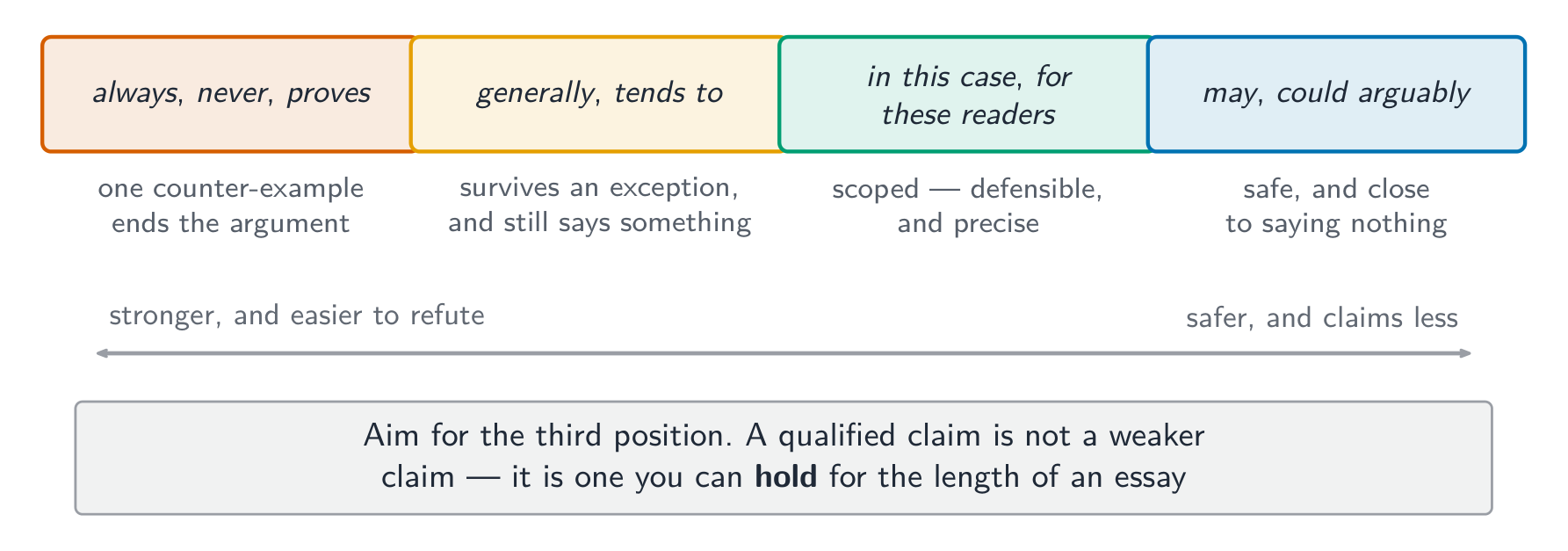
טענה מוגבלת אינה טענה חלשה יותר - זו טענה שאתה יכול לתמוך בה לאורך כל המאמר
Explore · ⁨חקור⁩

Place each claim on the qualification scale · ⁨הנח כל טענה בקווי הספקנות⁩

Each step left is stronger and easier to refute; each step right is safer and worth less. Aim for the scoped position. · ⁨כל צעד שמאל הוא חזק יותר וקל יותר להפרכה; כל צעד ימין הוא בטוח יותר אך פחות ערך. שאפת לעמדה המוגדרת היטב.⁩

Vocabulary · ⁨מילון מונחים⁩ Train · ⁨אימון⁩
English עברית
qualification/ˌkwɒlɪfɪˈkeɪʃn/ הקשר/התאמה
oversimplification or generalisation/ˌəʊvəˌsɪmplɪfɪˈkeɪʃn ɔː ˌdʒenərəlaɪˈzeɪʃn/ הפשטה יתר או כלליות
7.5

Clauses and Relationships Between Ideas · ⁨משפטים וקשרים בין רעיונות⁩

Syllabus · ⁨סיילבוס⁩
English

Enduring Understanding (STL-1): The rhetorical situation informs the strategic stylistic choices that writers make.

Learning Objective 7.B: Reading – Explain how writers create, combine, and place independent and dependent clauses to show relationships between and among ideas. (Note: Students should be able to read and analyze these complexities but are not expected to write with them on timed essays.)

  • STL-1.G Writers express ideas in sentences. Sentences are made up of clauses, at least one of which must be independent.
  • STL-1.H The arrangement of sentences in a text can emphasize particular ideas.
  • STL-1.I Subordination and coordination are used to express the intended relationship between ideas in a sentence.
  • STL-1.J Writers frequently use coordination to illustrate a balance or equality between ideas.
  • STL-1.K Writers frequently use subordination to illustrate an imbalance or inequality between ideas.
  • STL-1.L The arrangement of clauses, phrases, and words in a sentence can emphasize ideas.
עברית

הבנה מתמשכת (STL-1): המצב הרטורי מזהיר את הבחירות הסגנוניות האסטרטגיות שעושים הכותבים.

מטרת למידה 7.B: קריאה – הסבר כיצד כותבים יוצרים, משלב ומניחים תחנות משפט עצמאיות ותלויות כדי להציג יחסים בין ובין רעיונות. (הערה: סטודנטים צריכים להיות מסוגלים לקרוא ולנתח מורכבויות אלו, אך לא מצופה שייכתבו אותן במבחנים עם מגבלת זמן).

  • STL-1.G כותבים מבטאים רעיונות בתחנות משפט. תחנות משפט מורכבות מתחנות משפט, לפחות אחת מהן חייבת להיות עצמאית.
  • STL-1.H סידור התחנות המשפט בטקסט יכול להדגיש רעיונות ספציפיים.
  • STL-1.I תלייה וסינכרון משמשים כדי לבטא את היחס המבוקש בין רעיונות בתוך תחנת משפט.
  • STL-1.J כותבים משמשים לעיתים קרובות סינכרון כדי להמחיש איזון או שוויון בין רעיונות.
  • STL-1.K כותבים משמשים לעיתים קרובות תלייה כדי להמחיש אי-איזון או אי-שוויון בין רעיונות.
  • STL-1.L סידור התחנות המשפט, הביטויים והמילים בתחנת משפט יכול להדגיש רעיונות.

Source: College Board AP Course and Exam Description · ⁨מקור: תיאור הקורס והמבחן של College Board AP⁩

English
  • Writers express ideas in sentences, made up of clauses, at least one of which must be independent 独立分句.
  • The arrangement of sentences in a text can emphasise particular ideas.
  • Subordination and coordination 从属与并列 express the intended relationship between ideas in a sentence.
  • Writers use coordination to illustrate balance or equality between ideas.
  • Writers use subordination to illustrate imbalance or inequality between ideas.
  • The arrangement of clauses, phrases, and words within a sentence can emphasise ideas.

Those two middle statements make sentence structure analysable rather than decorative. The measure was expensive, and it worked treats cost and effect as equals. Although the measure was expensive, it worked subordinates the cost - it is still true, but it has been ranked below the result. Same facts, different argument.

עברית
שתי דרכים לחבר רעיונות, והן מייצגות משמעויות שונות
ה-CED מסביר במפורש: קישור (coordination) מדגיש איזון, ופיסול (subordination) מדגיש אי-איזון
  • סופרים מבטאים רעיונות ב-משפטים, המורכבים מ-פרקי משפט, כאשר לפחות אחד מהם חייב להיות עצמאי独立分句.
  • הסדר של המשפטים בטקסט יכול להדגיש רעיונות מסוימים.
  • פיסול וקישור从属与并列 מבטאים את הקשר הרצוי בין רעיונות בתוך משפט.
  • סופרים משתמשים בקישור כדי להמחיש איזון או שוויון בין רעיונות.
  • סופרים משתמשים בפיסול כדי להמחיש אי-איזון או אי-שוויון בין רעיונות.
  • הסדר של פרקי משפט, ביטויים ומילים בתוך משפט יכול להדגיש רעיונות.

שתי האמירות האמצעיות הללו הופכות את מבנה המשפט לניתן לניתוח ולא רק לקישוט. המידע היה יקר, והוא עבד מתייחס לעלות ולתוצאה כשווים. אף על פי שהמידע היה יקר, הוא עבד פוסל את העלות - היא עדיין נכונה, אך היא ממוקמת מתחת לתוצאה. אותם עובדים, אולם טיעון שונה.

7.6

Writing Clear Sentences · ⁨כתיבת משפטים ברורים⁩

Syllabus · ⁨סיילבוס⁩
English

Enduring Understanding (STL-1): The rhetorical situation informs the strategic stylistic choices that writers make.

Learning Objective 8.B: Writing – Write sentences that clearly convey ideas and arguments.

  • STL-1.G Writers express ideas in sentences. Sentences are made up of clauses, at least one of which must be independent.
  • STL-1.H The arrangement of sentences in a text can emphasize particular ideas.
  • STL-1.I Subordination and coordination are used to express the intended relationship between ideas in a sentence.
  • STL-1.J Writers frequently use coordination to illustrate a balance or equality between ideas.
  • STL-1.K Writers frequently use subordination to illustrate an imbalance or inequality between ideas.
  • STL-1.L The arrangement of clauses, phrases, and words in a sentence can emphasize ideas.
עברית

הבנה מתמשכת (STL-1): המצב הרטורי מזהיר את הבחירות הסגנוניות האסטרטגיות שעושים הכותבים.

מטרת למידה 8.B: כתיבה – כתוב תחנות משפט המעבירות בצורה ברורה רעיונות וטיעונים.

  • STL-1.G כותבים מבטאים רעיונות בתחנות משפט. תחנות משפט מורכבות מתחנות משפט, לפחות אחת מהן חייבת להיות עצמאית.
  • STL-1.H סידור התחנות המשפט בטקסט יכול להדגיש רעיונות ספציפיים.
  • STL-1.I תלייה וסינכרון משמשים כדי לבטא את היחס המבוקש בין רעיונות בתוך תחנת משפט.
  • STL-1.J כותבים משמשים לעיתים קרובות סינכרון כדי להמחיש איזון או שוויון בין רעיונות.
  • STL-1.K כותבים משמשים לעיתים קרובות תלייה כדי להמחיש אי-איזון או אי-שוויון בין רעיונות.
  • STL-1.L סידור התחנות המשפט, הביטויים והמילים בתחנת משפט יכול להדגיש רעיונות.

Source: College Board AP Course and Exam Description · ⁨מקור: תיאור הקורס והמבחן של College Board AP⁩

English

For your own writing: decide the relationship first, then choose the structure that expresses it. If two ideas genuinely carry equal weight, coordinate them. If one is a concession and the other your point, subordinate the concession - and put your point in the independent clause, where the emphasis falls.

עברית

לכתיבה שלך: החלט תחילה על הקשר, ואז בחר את המבנה שמביע אותו. אם שני רעיונות נושאים באמת משקל שווה, חבר אותם בקישור. אם אחד מהם הוא התנעה והשני הוא הנקודה המרכזית שלך, פסל את ההתנעה - והנח את הנקודה המרכזית בפרק המשפט העצמאי, שם חל הדגש.

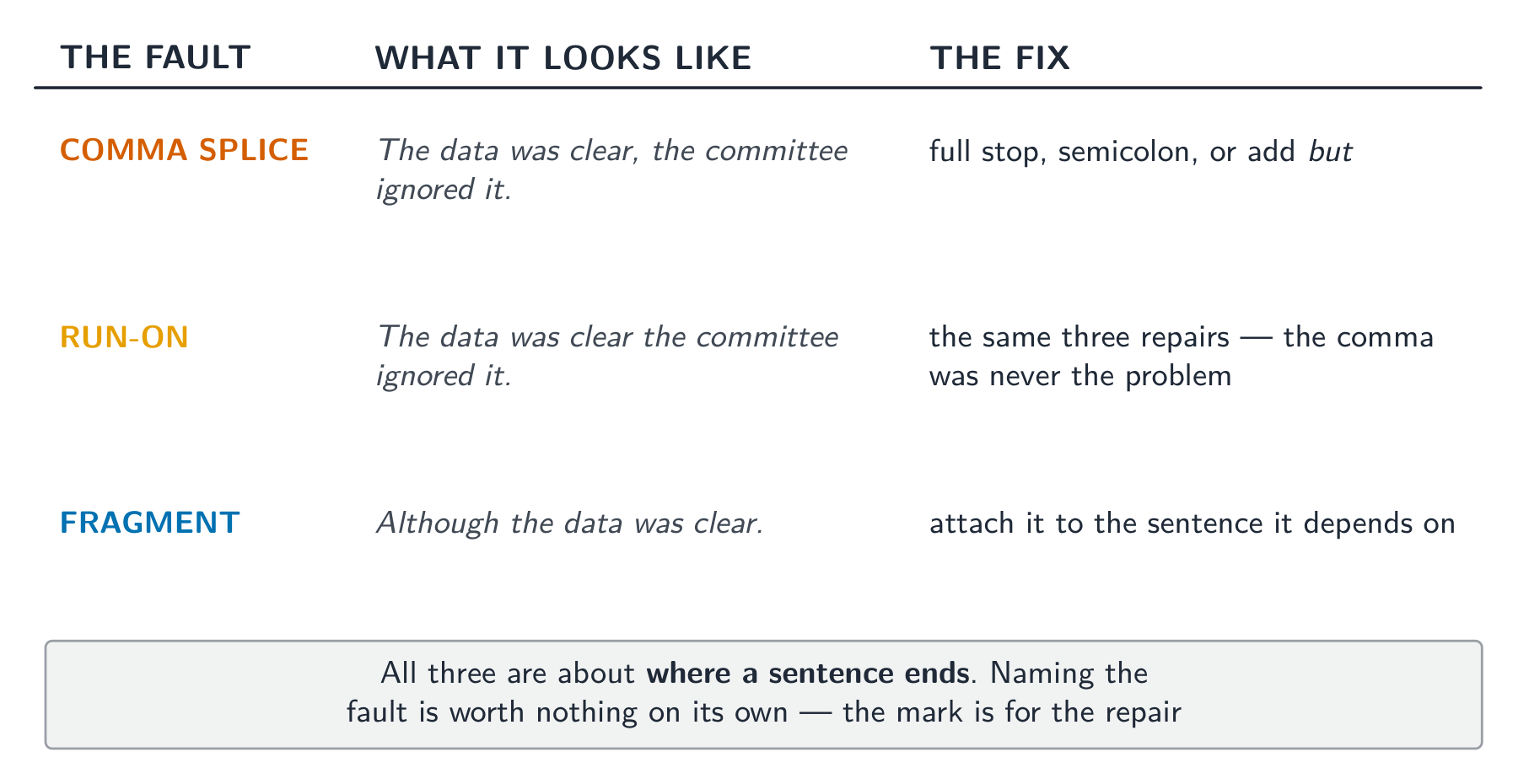
שלושת הפגמים האלו עוסקים במקום בו משפט מסתיים - הסימן הוא עבור התיקון
Explore · ⁨חקור⁩

Identify the sentence fault, then the repair · ⁨זיהו את שגיאת המשפט, ולאחר מכן את התיקון⁩

All three faults are about where a sentence ends. Naming one is worth nothing — the mark is for the repair. · ⁨שלושת השגיאות נוגעות למיקום סיום המשפט. זיהוי אחד אינו שווה דבר — הנקודות ניתנות עבור התיקון.⁩

7.7

Grammar, Mechanics, and Clarity · ⁨דקדוק, מכניקה ובהירות⁩

Syllabus · ⁨סיילבוס⁩
English

Enduring Understanding (STL-1): The rhetorical situation informs the strategic stylistic choices that writers make.

Learning Objective 7.C: Reading – Explain how grammar and mechanics contribute to the clarity and effectiveness of an argument.

  • STL-1.M Grammar and mechanics that follow established conventions of language enable clear communication.
  • STL-1.N Writers use punctuation strategically to demonstrate the relationships among ideas in a sentence.
  • STL-1.O Punctuation (commas, colons, semicolons, dashes, hyphens, parentheses, quotation marks, or end marks) advances a writer’s purpose by clarifying, organizing, emphasizing, indicating purpose, supplementing information, or contributing to tone.
  • STL-1.P Some design features, such as italics or boldface, create emphasis.
עברית

הבנה מתמשכת (STL-1): המצב הרטורי מזהיר את הבחירות הסגנוניות האסטרטגיות שעושים הכותבים.

מטרת למידה 7.C: קריאה – הסבר כיצד דקדוק ומכניקה תורמים לבהירות וליעילות של טיעון.

  • STL-1.M דקדוק ומכניקה הנאמנים לקונבנציות השפה המקובלות מאפשרים תקשורת ברורה.
  • STL-1.N כותבים משמשים פיסוק אסטרטגית כדי להראות את היחסים בין רעיונות בתוך תחנת משפט.
  • STL-1.O פיסוק (פסיקים, נקודת-פסיק, נקודת-פסיק, מקשיים, קו תחתון, סוגריים, סימני ציטוט או סימני סיום) מקדם את מטרת הכותב על ידי הבהרה, ארגון, הדגשה, הצגת מטרה, השלמת מידע או תרומה לגוון הטקסט.
  • STL-1.P מאפייני עיצוב מסוימים, כמו כתב מודגש או מוטה, יוצרים הדגשה.

Source: College Board AP Course and Exam Description · ⁨מקור: תיאור הקורס והמבחן של College Board AP⁩

English
  • Grammar and mechanics that follow established conventions enable clear communication.
  • Writers use punctuation strategically to demonstrate relationships among ideas.
  • Punctuation - commas, colons, semicolons, dashes, hyphens, parentheses, quotation marks, end marks - advances the argument.
  • Design features such as italics or boldface create emphasis.
עברית
  • דקדוק ומכניקה הנfe following established conventions מאפשרים תקשורת ברורה.
  • סופרים משתמשים בניקוד באופן אסטרטגי כדי להראות קשרים בין רעיונות.
  • ניקוד - פסיקים, נקודתיים, נקודות-פסיקים, מקשים, קו-מרוחק, סוגריים, סימני הציטוט, סימני ניסוף - מעצים את הטוען.
  • תכונות עיצוביות כמו הטלית או הדגשה יוצרות דגש.
7.8

Conventions of Grammar and Mechanics · ⁨מוסכמות דקדוק ומכניקה⁩

Syllabus · ⁨סיילבוס⁩
English

Enduring Understanding (STL-1): The rhetorical situation informs the strategic stylistic choices that writers make.

Learning Objective 8.C: Use established conventions of grammar and mechanics to communicate clearly and effectively.

  • STL-1.M Grammar and mechanics that follow established conventions of language enable clear communication.
  • STL-1.N Writers use punctuation strategically to demonstrate the relationships among ideas in a sentence.
  • STL-1.O Punctuation (commas, colons, semicolons, dashes, hyphens, parentheses, quotation marks, or end marks) advances a writer’s purpose by clarifying, organizing, emphasizing, indicating purpose, supplementing information, or contributing to tone.
  • STL-1.P Some design features, such as italics or boldface, create emphasis.
עברית

הבנה מתמשכת (STL-1): המצב הרטורי מזהיר את הבחירות הסגנוניות האסטרטגיות שעושים הכותבים.

מטרת הלמידה 8.C: שימוש בקונבנציות מקובלות של דקדוק ומכניקה כדי לתקשר בבירור וביעילות.

  • STL-1.M דקדוק ומכניקה הנאמנים לקונבנציות השפה המקובלות מאפשרים תקשורת ברורה.
  • STL-1.N כותבים משמשים פיסוק אסטרטגית כדי להראות את היחסים בין רעיונות בתוך תחנת משפט.
  • STL-1.O פיסוק (פסיקים, נקודת-פסיק, נקודת-פסיק, מקשיים, קו תחתון, סוגריים, סימני ציטוט או סימני סיום) מקדם את מטרת הכותב על ידי הבהרה, ארגון, הדגשה, הצגת מטרה, השלמת מידע או תרומה לגוון הטקסט.
  • STL-1.P מאפייני עיצוב מסוימים, כמו כתב מודגש או מוטה, יוצרים הדגשה.

Source: College Board AP Course and Exam Description · ⁨מקור: תיאור הקורס והמבחן של College Board AP⁩

English

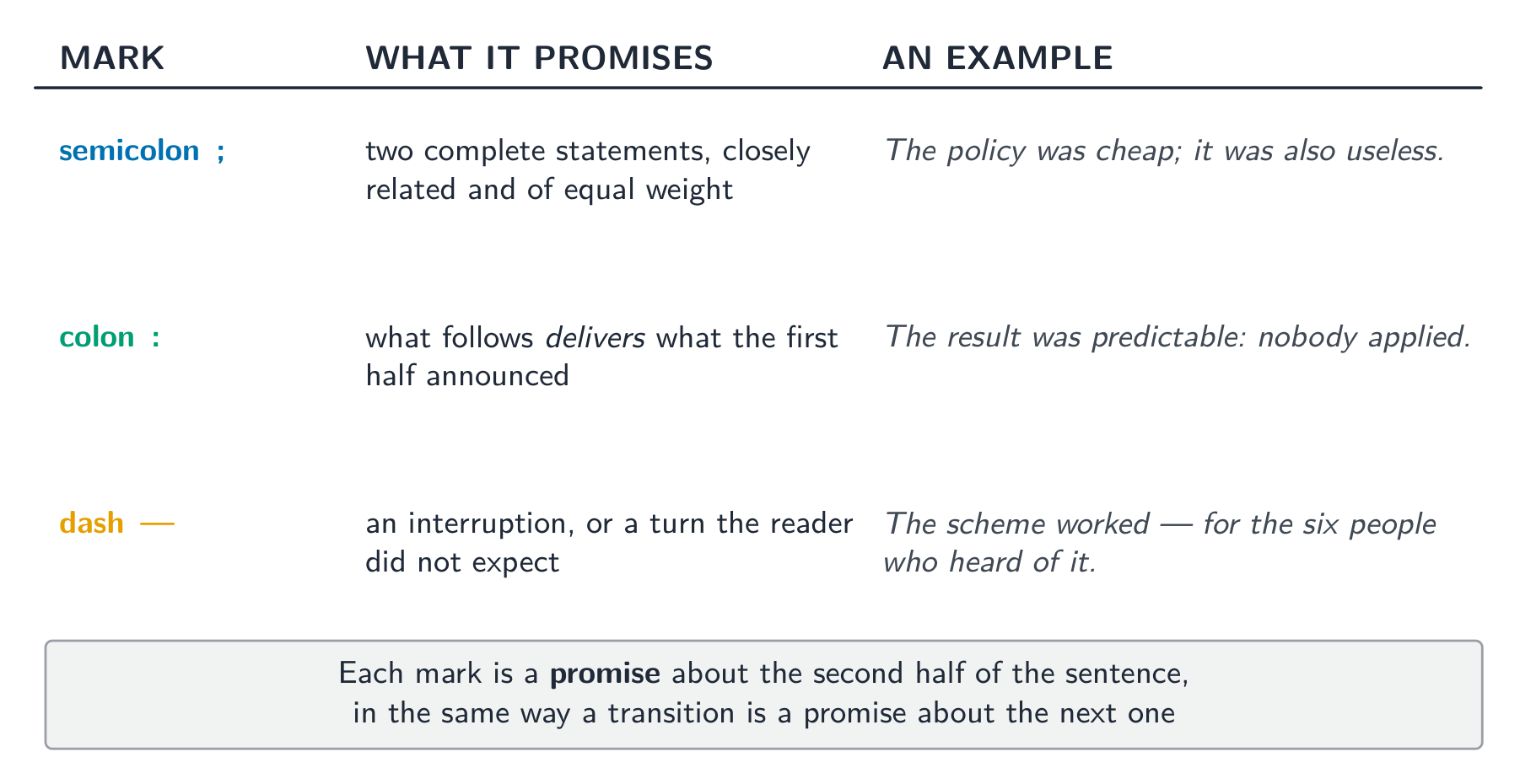
The examinable framing is that punctuation is argumentative, not merely correct. A colon promises that what follows explains what preceded. A semicolon asserts that two independent statements belong together. A dash interrupts, and the interruption is the point.

Worked example (a real AP exam task). A rhetorical-analysis passage reads: "The programme was popular; it was also, by every measure the department itself proposed, ineffective." A low answer notes "the writer uses a semicolon". A scoring answer explains the structure: "The semicolon presents the two facts as equal and simultaneous rather than as a contrast, so the reader cannot dismiss the failure as an objection to popularity - both are simply true at once. The parenthetical 'by every measure the department itself proposed' then removes the department's escape route before the word 'ineffective' arrives." That is syntax analysed as argument.

עברית

המסגרת לבחינות היא שניקוד הוא טיעוני, ולא רק נכון. נקודתיים מבטיח שא what follows explains what preceded. נקודת-פסימה מאירה that two independent statements belong together. מקש מפריע, וההפריעה עצמה היא הנקודה.

דוגמא פתורה (משימה אמיתית בבחינת AP). טקסט ניתוח רטורי קורא: "התוכנית הייתה פופולרית; היא גם, בכל המדדים שהמינהלה עצמה הציעה, לא יעילה." תשובה נמוכה ציינה "הסופר השתמש בנקודת-פסימה". תשובה שקיבלה ציון גבוהה הסבירה את המבנה: "הנקודת-פסימה מציגה את שני העובדות כשווים ומתרחשים בו-זמנית ולא כניגוד, כך שהקורא לא יכול לדחות את הכשל כהתנגדות לפופולריות - שניהם פשוט נכונים בו-זמנית. הסוגריים המקיפים 'בכל המדדים שהמינהלה עצמה הציעה' מנטרלים את נתיב המ escape של המינהלה לפני שהמילה 'לא יעילה' מגיעה." זהו אנליזה של סינטקסיס כטיעון.

כל נקודה היא הבטחה לגבי חצי השני של המשפט
Vocabulary · ⁨מילון מונחים⁩ Train · ⁨אימון⁩
English עברית
independent/ˌɪndɪˈpendənt/ בין-תלוי
Subordination and coordination/ˌsʌbɔːdɪˈneɪʃn ænd kəʊˈɔːdɪneɪʃn/ תלות וסנכרון
7.8

Exam tips · ⁨טיפים לבחינות⁩

English
  • Qualify your claims. An absolute claim is defeated by one counter-example; a qualified one is not.
  • Qualification is the most reliable route to the sophistication point.
  • Coordination = balance. Subordination = imbalance. The CED says so, and it makes syntax analysable.
  • Put your point in the independent clause. Concessions belong in the subordinate one.
  • Punctuation advances the argument. A colon explains, a semicolon joins as equals, a dash interrupts.
  • Never write "the writer uses a semicolon" without saying what relationship it asserts.
עברית
  • הגדר את טענותיך. טענה מוחלטת מתבטלת על ידי דוגמה נגדית אחת; טענה מוגבלת לא כזו.
  • הגדרה היא הדרך האמינה ביותר לנקודת השכלה.
  • סיווג = איזון. תת-סיווג = אי-איזון. הכתיב如此这么说,וזה גורם לכך שהסינטקס ניתן לניתוח。
  • שכן את נקודתך במשפט העצמאי. הסכמות שייכות למשפט התת-סעיפי.
  • ניקוד מקדם את הטיעון. נקודתיים מסביר, פסק-פסק מחבר בשוויון, מקף מפריע.
  • לעולם אל תכתוב "הסופר משתמש בפסק-פסק" מבלי לומר אילו יחס הוא מאשר.

Interactive lessons on this topic · ⁨שיעורים אינטראקטיביים בנושא זה⁩

Work through it step by step, with instant-check exercises. · ⁨לעבור על הדברים צעד אחר צעד, עם תרגילים לבדיקה מיידית.⁩

Past Papers · ⁨מבחני עבר⁩

More topics in AP English Language and Composition · ⁨שפה ואנגלית כתיבה יצירתית - AP⁩ · ⁨נושאים נוספים בAP English Language and Composition · ⁨שפה ואנגלית כתיבה יצירתית - AP⁩⁩

Log in or create account · ⁨היכנס או צור חשבון⁩

IGCSE, A-Level & AP