Skip to content · ⁨דלג לתוכן⁩

Organization, Coherence, and Style · ⁨ארגון, קוherencia וסגנון⁩

AP English Language and Composition · ⁨שפה ואנגלית כתיבה יצירתית - AP⁩ · Topic 5 · ⁨נושא 5⁩

Video lesson for this topic · ⁨שיעור וידאו לנושא זה⁩ Open the video page · ⁨פתח את עמוד הוידאו⁩
5:41

יחידה 5: ארגון, הרמוניה בסגנון

הניסוח של CED לגבי פרק גוף מדויק ועדיין שווה לשנן. פרקי הגוף של טיעון כתוב מציעים טענות, תומכים בהן בעדויות ו…

English narration · English + 中文 subtitles burned in · ⁨קריאת קול באנגלית · תרגום אנגלי + סינית שרוף בתוך הסרטון⁩

5.1

Describing the Line of Reasoning · ⁨תיאור קו ההיכרות⁩

Syllabus · ⁨סיילבוס⁩
English

Enduring Understanding (REO-1): Writers guide understanding of a text’s lines of reasoning and claims through that text’s organization and integration of evidence.

Learning Objective 5.A: Reading – Describe the line of reasoning and explain whether it supports an argument’s overarching thesis.

  • REO-1.M The body paragraphs of a written argument make claims, support them with evidence, and provide commentary that explains how the paragraph contributes to the reasoning of the argument.
עברית

הבנה מתמשכת (REO-1): סופרים מדרכים את הבנת קווי ההסברה והטענות של טקסט דרך הארגון והשילוב של הממצאים בטקסט.

מטרות למידה 5.A: קריאה – תארו את קו ההסברה והסבירו האם הוא תומך בטענת העל של הטיעון.

  • REO-1.M הפרקים העיקריים של ארגון כתוב מציגים טענות, תומכים בהן בעדויות ומספקים פירוש המסביר כיצד הפרק תורם לקו ההיבט של הארגון.

Source: College Board AP Course and Exam Description · ⁨מקור: תיאור הקורס והמבחן של College Board AP⁩

English

Unit 5 turns from what an argument contains to how it holds together. It has two subjects: coherence 连贯 and the beginnings of style 文体.

The CED's statement of the body paragraph is exact and worth memorising: the body paragraphs of a written argument make claims, support them with evidence, and provide commentary that explains the relationship of the evidence to the claim.

Three parts, in that order, in every body paragraph. When an AP essay loses evidence-and-commentary points, it is almost always because the third part is missing from paragraphs that have the first two.

עברית

יחידה 5 עוברת ממה ארגומנט מכיל לאיך הוא נתפס ביחד. יש לה שני נושאים: התאמה连贯 and the beginnings of סגנון文体.

הצהרת CED לגוף הפרגרף היא מדויקת ושווה לשינון: פרגرافות הגוף של ארגומנט כתוב מעלים טענות, תומכות אותן בעובדות, ומספקות תגובה שהסבירה את הקשר בין העובדה לטענה.

שלושה חלקים, בסדר זה, בכל פרגרף גוף. כאשר מאמר AP מאבד נקודות על עובדות ותגובות, זה כמעט תמיד כי החלק השלישי חסר בפרגرافות שיש בהן את שני הראשונים.

5.2

Developing a Line of Reasoning and Commentary · ⁨פיתוח קו טיעון ופירוש⁩

Syllabus · ⁨סיילבוס⁩
English

Enduring Understanding (REO-1): Writers guide understanding of a text’s lines of reasoning and claims through that text’s organization and integration of evidence.

Learning Objective 6.A: Writing – Develop a line of reasoning and commentary that explains it throughout an argument.

  • REO-1.M The body paragraphs of a written argument make claims, support them with evidence, and provide commentary that explains how the paragraph contributes to the reasoning of the argument.
עברית

הבנה מתמשכת (REO-1): סופרים מדרכים את הבנת קווי ההסברה והטענות של טקסט דרך הארגון והשילוב של הממצאים בטקסט.

מטרות למידה 6.A: כתיבה – פתחו קו הסברה ותגובה המסבירים אותו לאורך כל הטיעון.

  • REO-1.M הפרקים העיקריים של ארגון כתוב מציגים טענות, תומכים בהן בעדויות ומספקים פירוש המסביר כיצד הפרק תורם לקו ההיבט של הארגון.
Source: College Board AP Course and Exam Description · ⁨מקור: תיאור הקורס והמבחן של College Board AP⁩

English

Applied to your own writing: draft the claims first, as a list, before writing any paragraph. You then have the line of reasoning in front of you and can check that it moves.

Then, for each claim, write the paragraph in its three parts deliberately. A useful habit under exam conditions is to make the commentary sentence begin with a word that forces a relationship - because, which means, so, the effect of this is - because those words cannot be followed by a restatement.

עברית

מיושם בכתיב שלך: ערוך את הטענות תחילה, כרשימה, לפני כתיבת כל פרגרף. אז יהיה לך קו ההיבטים מולך ותוכל לבדוק שהוא זז.

אז, לכל טענה, כתוב את הפרגרף בשלושת החלקים באופן מכוון. הרגל מועילה בתנאי בוחן היא להפיק את משפט התגובה עם מילה שמונעת קשר - כי, שזה אומר, לכן, ההשפעה של זה היא - כי מילים אלו לא יכולות להיות מופעלות על ידי חזרה.

5.3

Organization, Unity, and Coherence · ⁨ארגון, יחידה וקוהרנטיות⁩

Syllabus · ⁨סיילבוס⁩
English

Enduring Understanding (REO-1): Writers guide understanding of a text’s lines of reasoning and claims through that text’s organization and integration of evidence.

Learning Objective 5.B: Reading – Explain how the organization of a text creates unity and coherence and reflects a line of reasoning.

  • REO-1.N Coherence occurs at different levels in a piece of writing. In a sentence, the idea in one clause logically links to an idea in the next. In a paragraph, the idea in one sentence logically links to an idea in the next. In a text, the ideas in one paragraph logically link to the ideas in the next.
  • REO-1.O Repetition, synonyms, pronoun references, and parallel structure may indicate or develop a relationship between elements of a text.
  • REO-1.P Transitional elements are words or other elements (phrases, clauses, sentences, or paragraphs) that assist in creating coherence among sentences, paragraphs, or sections in a text by showing relationships among ideas.
  • REO-1.Q Transitional elements can be used to introduce evidence or to indicate its relationship to other ideas or evidence in that paragraph or in the text as a whole.
עברית

הבנה מתמשכת (REO-1): סופרים מדרכים את הבנת קווי ההסברה והטענות של טקסט דרך הארגון והשילוב של הממצאים בטקסט.

מטרות לימוד 5.B: קריאה – הסבר כיצד ארגון הטקסט יוצר אחידות והתאמה ומשקף קו היבט.

  • REO-1.N התאמה מתרחשת ברמות שונות בכתב. במשפט, הרעיון באחד מהחלקים קשור לוגית לרעיון בחלק הבא. בפסקה, הרעיון באחד המשפטים קשור לוגית לרעיון במשפט הבא. בטקסט, הרעיונות בפסקה אחת קשורים לוגית לרעיונות בפסקה הבאה.
  • REO-1.O חזרה, סינונימים, ייחוסים לפרונים ומבנה מקביל עשויים להצביע או לפתח קשר בין אלמנטים של הטקסט.
  • REO-1.P אלמנטים מעבר הם מילים או אלמנטים אחרים (ביטויים, חלקים, משפטים או פרקים) שמסייעים ביצירת התאמה בין משפטים, פרקים או חלקים בטקסט על ידי הצגת הקשרים בין רעיונות.
  • REO-1.Q ניתן להשתמש באלמנטים מעבר כדי להציג עדות או כדי לציין את הקשר שלה לרעיונות אחרים או לעדויות בפסקה זו או בטקסט כולו.

Source: College Board AP Course and Exam Description · ⁨מקור: תיאור הקורס והמבחן של College Board AP⁩

English

Coherence occurs at different levels in a piece of writing:

  • In a sentence, the idea in one clause logically links to the idea in another.
  • In a paragraph, each sentence builds on the one before it.
  • Across the whole text, each paragraph relates to the line of reasoning.

The CED then names the devices that create those links:

  • Repetition 重复, synonyms 同义词, pronoun references 代词指代, and parallel structure 平行结构 may indicate or develop a relationship between ideas.
  • Transitional elements 过渡成分 are words or other elements - phrases, clauses, sentences, or whole paragraphs - that assist in creating coherence.
עברית
הקוהרנטיות נבנית בשלושה רמות ובחמישה מכשירים שמום
המכשירים נבחנים בשמם - והם מה שהשאלת "מבנה" שואלת בעצם

הקוהרנטיות מתרחשת ברמות שונות בטקסט כתיבה:

  • ב-משפט, הרעיון באחד מהחלקים קשור לוגית לרעיון בחלק אחר.
  • ב-פרagraf, כל משפט בונה על הקודם לו.
  • ב-טקסט כולו, כל פרagraf מקושר לקו ההסבר.

ה-CED מציין את המכשירים היוצרים קשרים אלו:

  • חזרה, סינונימים, יחוסים פרונומליים ומבנה מקביל עשויים להצביע על קשר בין רעיונות או לפתח אותו.
  • רכיבים מעבר הם מילים או רכיבים אחרים - ביטויים, חלקים, משפטים או פרagrafs שלמים - שמסייעים ביצירת קוהרנטיות.
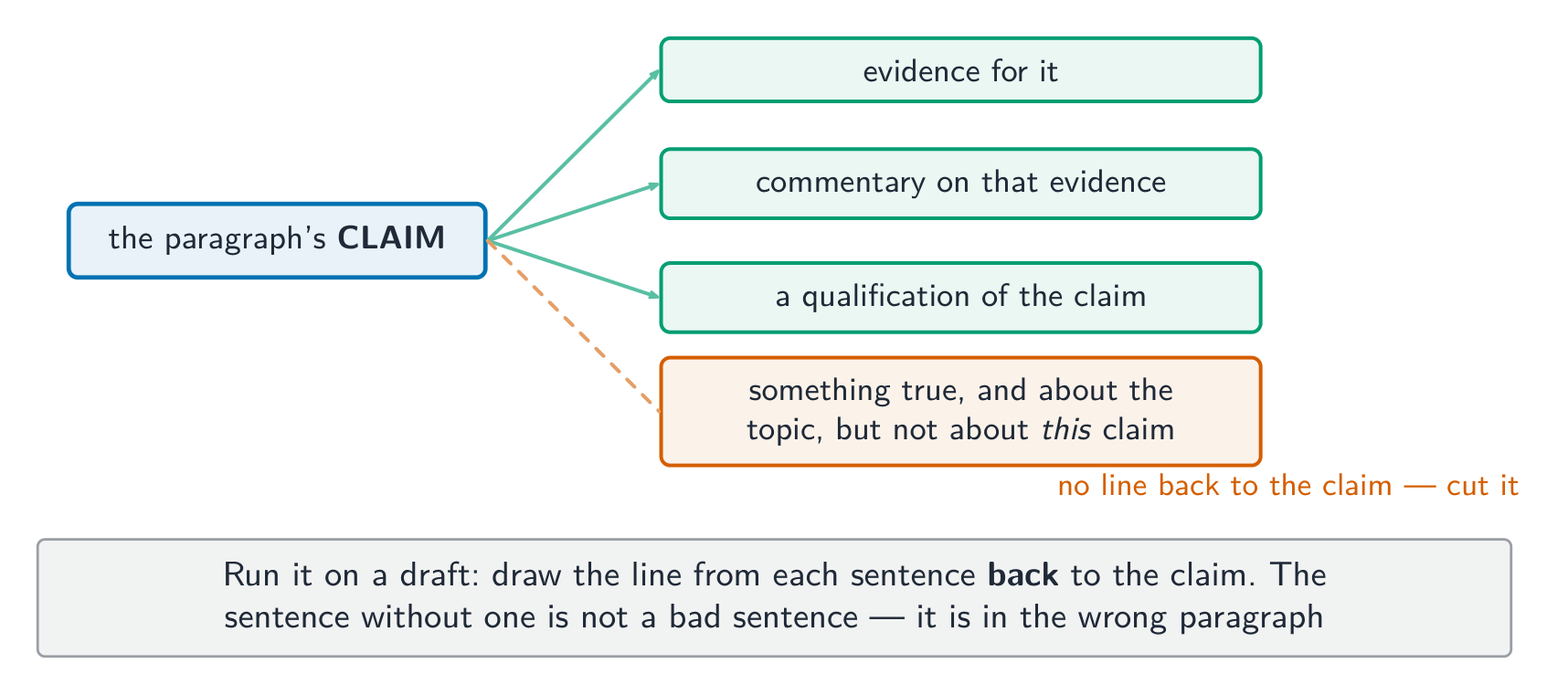
מבחן היחידה: למשוך קו מכל משפט אחורה לעיקר הטענה
Vocabulary · ⁨מילון מונחים⁩ Train · ⁨אימון⁩
English עברית
coherence/kəʊˈhɪərəns/ רצף
style/staɪl/ סגנון
Repetition/ˌrepəˈtɪʃn/ חזרה
synonyms/ˈsɪnənɪmz/ סינונימים
pronoun references/ˈprəʊnaʊn ˈrefrənsɪz/ יחסים עם pronoun
parallel structure/ˈpærəlel ˈstrʌktʃə/ מבנה מקביל
Transitional elements/trænˈsɪʃənl ˈelɪmənts/ אלמנטים מעבר
connotative and denotative meanings/kɒnəˈtætɪv ænd dɪˈnəʊtətɪv ˈmiːnɪŋz/ משמעות קונוטטיבית ודנוטיבית
5.4

Using Transitional Elements · ⁨שימוש ברכיבי מעבר⁩

Syllabus · ⁨סיילבוס⁩
English

Enduring Understanding (REO-1): Writers guide understanding of a text’s lines of reasoning and claims through that text’s organization and integration of evidence.

Learning Objective 6.B: Writing – Use transitional elements to guide the reader through the line of reasoning of an argument.

  • REO-1.N Coherence occurs at different levels in a piece of writing. In a sentence, the idea in one clause logically links to an idea in the next. In a paragraph, the idea in one sentence logically links to an idea in the next. In a text, the ideas in one paragraph logically link to the ideas in the next.
  • REO-1.O Repetition, synonyms, pronoun references, and parallel structure may indicate or develop a relationship between elements of a text.
  • REO-1.P Transitional elements are words or other elements (phrases, clauses, sentences, or paragraphs) that assist in creating coherence among sentences, paragraphs, or sections in a text by showing relationships among ideas.
  • REO-1.Q Transitional elements can be used to introduce evidence or to indicate its relationship to other ideas or evidence in that paragraph or in the text as a whole.
עברית

הבנה מתמשכת (REO-1): סופרים מדרכים את הבנת קווי ההסברה והטענות של טקסט דרך הארגון והשילוב של הממצאים בטקסט.

מטרות לימוד 6.B: כתיבה – שימוש באלמנטים מעבר להנחיית הקורא דרך קו ההיבט של ארגון.

  • REO-1.N התאמה מתרחשת ברמות שונות בכתב. במשפט, הרעיון באחד מהחלקים קשור לוגית לרעיון בחלק הבא. בפסקה, הרעיון באחד המשפטים קשור לוגית לרעיון במשפט הבא. בטקסט, הרעיונות בפסקה אחת קשורים לוגית לרעיונות בפסקה הבאה.
  • REO-1.O חזרה, סינונימים, ייחוסים לפרונים ומבנה מקביל עשויים להצביע או לפתח קשר בין אלמנטים של הטקסט.
  • REO-1.P אלמנטים מעבר הם מילים או אלמנטים אחרים (ביטויים, חלקים, משפטים או פרקים) שמסייעים ביצירת התאמה בין משפטים, פרקים או חלקים בטקסט על ידי הצגת הקשרים בין רעיונות.
  • REO-1.Q ניתן להשתמש באלמנטים מעבר כדי להציג עדות או כדי לציין את הקשר שלה לרעיונות אחרים או לעדויות בפסקה זו או בטקסט כולו.

Source: College Board AP Course and Exam Description · ⁨מקור: תיאור הקורס והמבחן של College Board AP⁩

English

Transitions have a second job the CED names explicitly: they introduce evidence or indicate its relationship to other ideas or evidence.

That is the difference between decorative and functional transitions. Furthermore adds nothing - it says only "here is another sentence". Even in the cases where the effect is smallest tells the reader what relationship is coming. Choose transitions that carry information about the relationship, not ones that merely mark a boundary.

Note also that a transitional element may be a whole paragraph. In a long argument, a short paragraph whose only job is to turn the reasoning is legitimate and often elegant.

עברית

למעברים יש משימה שנייה שה-CED מציין במפורש: הם מציגים הוכחה או מראים את הקשר שלה לרעיונות או להוכחות אחרות.

זהו ההבדל בין מעברים דקורטיביים לבין מעברים פונקציונליים. Furthermore (בנוסף) אינו מוסיף דבר - הוא אומר רק "הנה משפט נוסף". Even in the cases where the effect is smallest (אף במקרים בהם האפקט הקטן ביותר) מסביר לקורא איזה קשר צפוי. בחרו מעברים המכילים מידע על הקשר, ולא רק אלו שמסמנים גבול.

שימו לב גם כי רכיב מעבר עשוי להיות פרagraf שלם. בארגומנט ארוך, פרagraf קצר שמטרתו היחידה היא לסובב את ההסבר הוא חוקי ולעיתים אלגנטי.

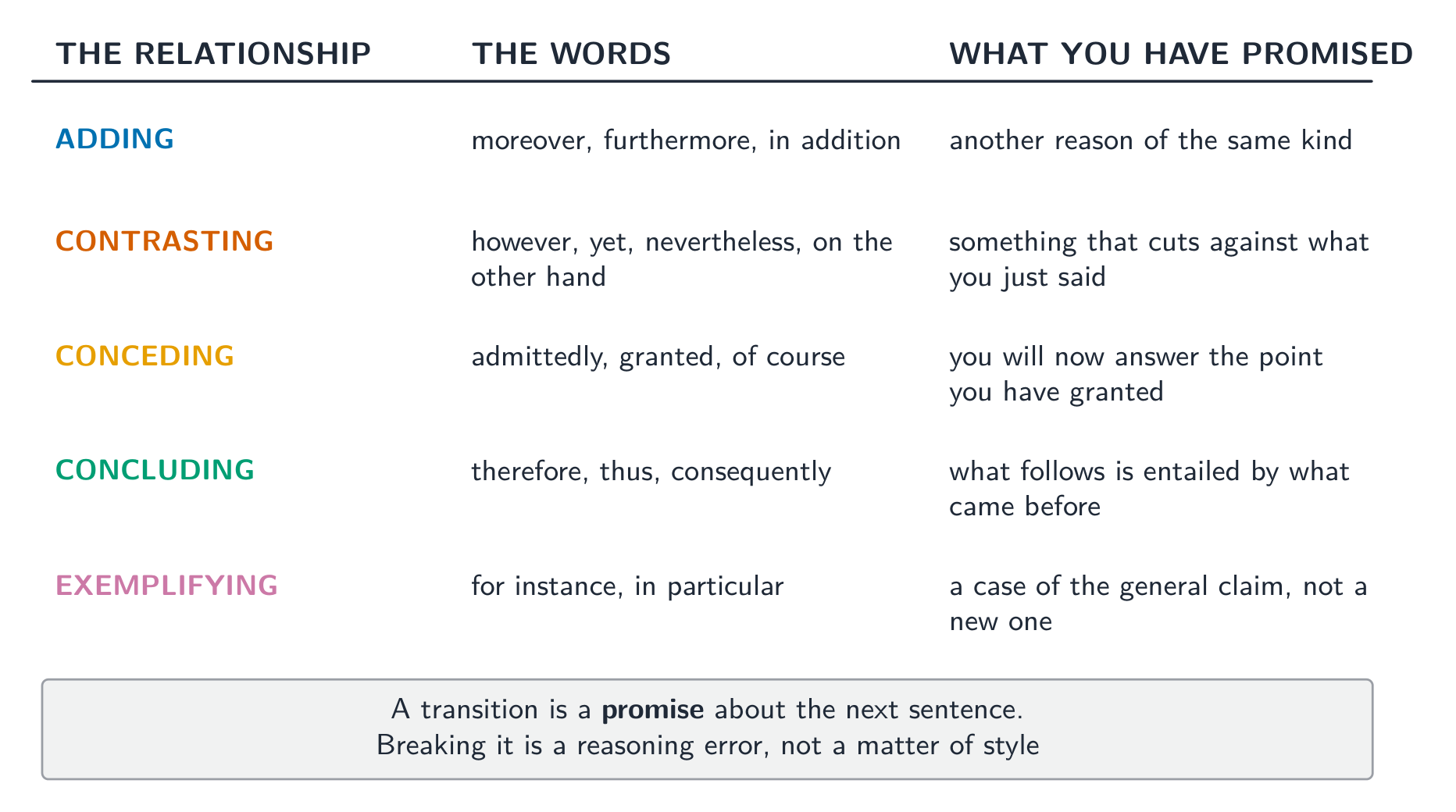
מעבר הוא הבטחה לגבי המשפט הבא - שבירה שלו היא טעות לוגית
Explore · ⁨חקור⁩

Match each transition to the promise it makes · ⁨התאימו כל קישור לתביעה שהוא מציע⁩

A transition is a claim about how two ideas stand to each other. Breaking that promise is a reasoning error, not a style problem. · ⁨קישור הוא טענה לגבי היחס בין רעיונות. שבירה של תביעה זו היא שגיאה בהסקה, ולא בעיית סגנון.⁩

5.5

Word Choice, Comparisons, and Syntax · ⁨בחירת מילים, השוואות וסינטקס⁩

Syllabus · ⁨סיילבוס⁩
English

Enduring Understanding (STL-1): The rhetorical situation informs the strategic stylistic choices that writers make.

Learning Objective 7.A: Reading – Explain how word choice, comparisons, and syntax contribute to the specific tone or style of a text.

  • STL-1.A Words have both connotative and denotative meanings.
  • STL-1.B Descriptive words, such as adjectives and adverbs, not only qualify or modify the things they describe but also convey a perspective toward those things.
  • STL-1.C Precise word choice reduces confusion and may help the audience perceive the writer’s perspective.
עברית

הבנה מתמשכת (STL-1): המצב הרטורי מזהיר את הבחירות הסגנוניות האסטרטגיות שעושים הכותבים.

מטרות לימוד 7.A: קריאה – הסבר כיצד בחירת מילים, השוואות וסינטקס תורמים לגוון או לסגנון ספציפי של הטקסט.

  • STL-1.A למילים יש גם משמעויות נלוות וגם משמעויות מילוליות.
  • STL-1.B מילים תיאוריות, כמו תארים ותוארים, לא רק מגדירות או משנות את הדברים שהן מתארות אלא גם מעבירות מבט כלפי הדברים הללו.
  • STL-1.C בחירת מילים מדויקת מצמצמת בלבול ועשויה לעזור לקהל להבין את מבט הכותב.

Source: College Board AP Course and Exam Description · ⁨מקור: תיאור הקורס והמבחן של College Board AP⁩

English

Unit 5 opens the course's treatment of style with three claims about diction:

  • Words have both connotative and denotative meanings 内涵义与外延义. Denotation is what a word refers to; connotation is what it carries.
  • Descriptive words - adjectives and adverbs - not only qualify or modify what they describe but convey a perspective toward it.
  • Precise word choice reduces confusion and helps the audience perceive the writer's perspective.

The second is the analytically useful one. When a rhetorical-analysis passage calls a policy ambitious rather than expensive, no fact has changed and the reader's disposition has. That is a rhetorical choice, and it is exactly what the question asks you to explain.

עברית

יחידה 5 פותחת את הטיפול של הקורס בסגנון עם שלוש טענות לגבי דיקציה:

  • למילים יש גם משמעויות קונוטטיביות וגם משמעויות דנוטטיביות. דנוטציה היא מה שמילה מציינת; קונוטציה היא מה שהיא נושאת.
  • מילים תיאוריות - תארים ותולשים - לא רק מספקות הגבלה או תיקון למה שהן מתארות אלא גם מבטאות גישה כלפי הדבר.
  • בחירת מילים מדויקת מפחיתה בלבול ועוזרת לקהל הקוראים לתפוס את נקודת המבט של המחבר.

השני הוא זה שימושי באנליזה. כאשר תוכן לניתוח רטורי קורא למדיניות "מטימה" במקום "יקרה", לא שונה עובדה, אלא גישת הקורא. זו בחירה רטורית, והוא בדיוק מה שהשאלה מבקשת ממך להסביר.

5.6

Using Words and Syntax for Tone and Style · ⁨שימוש במילים ובסינטקס לעיצוב אווירה וסגנון⁩

Syllabus · ⁨סיילבוס⁩
English

Enduring Understanding (STL-1): The rhetorical situation informs the strategic stylistic choices that writers make.

Learning Objective 8.A: Writing – Strategically use words, comparisons, and syntax to convey a specific tone or style in an argument.

  • STL-1.A Words have both connotative and denotative meanings.
  • STL-1.B Descriptive words, such as adjectives and adverbs, not only qualify or modify the things they describe but also convey a perspective toward those things.
  • STL-1.C Precise word choice reduces confusion and may help the audience perceive the writer’s perspective.
עברית

הבנה מתמשכת (STL-1): המצב הרטורי מזהיר את הבחירות הסגנוניות האסטרטגיות שעושים הכותבים.

מטרות לימוד 8.A: כתיבה – שימוש אסטרטגי במילים, השוואות וסינטקס להעברת גוון או סגנון ספציפי בארגון.

  • STL-1.A למילים יש גם משמעויות נלוות וגם משמעויות מילוליות.
  • STL-1.B מילים תיאוריות, כמו תארים ותוארים, לא רק מגדירות או משנות את הדברים שהן מתארות אלא גם מעבירות מבט כלפי הדברים הללו.
  • STL-1.C בחירת מילים מדויקת מצמצמת בלבול ועשויה לעזור לקהל להבין את מבט הכותב.

Source: College Board AP Course and Exam Description · ⁨מקור: תיאור הקורס והמבחן של College Board AP⁩

English

For your own writing, precision is worth more than range. A concrete rule: prefer the word that is exactly right to the word that is impressive. Examiners reward control, and an inflated word used slightly wrongly reads as loss of control.

Worked example (a real AP exam task). In a rhetorical-analysis passage a writer describes a proposal's supporters as "determined" in one paragraph and "unyielding" in the next. A low-scoring answer notes that the writer uses "strong diction". A scoring answer explains the shift: "Both words denote persistence, but 'determined' carries approval and 'unyielding' carries obstruction. By moving from one to the other without changing the facts described, the writer withdraws sympathy from the supporters while appearing only to continue describing them - so the audience's judgement shifts before any counter-argument is made." That is connotation, tone, and effect on audience in one move.

עברית

לכתיבה שלך, דיוק שווה יותר מגוון. כלל מעשי: העדיף את המילה שמדויקת לחלוטין על פני המילה המרשימה. בוחנים מעריכים שליטה, ומילה מופרזת שנבחרה מעט לא נכון מתפרשת כאובדן שליטה.

דוגמה פותרת (משימת מבחן AP אמיתית). בתוכן לניתוח רטורי מחבר מתאר תומכי הצעה כ"נחוצים" בפסקה אחת וכ"עקשניים" בפסקה הבאה. תשובה שקבלה ציון נמוך מציינת שהמחבר משתמש ב"דקציה חזקה". תשובה שקבלה ציון גבוה מסבירה את השינוי: "שתי המילות מציגות עקשנות, אך 'נחוצים' מטענת אישור ו-'עקשניים' מטענת חסימה. על ידי מעבר מאחת לשנייה ללא שינוי העובדות המתוארות, המחבר מרחיק את הסימפתיה מהתומכים בעוד שנראה כאילו הוא פשוט ממשיך לתאר אותם - ולכן judgment הקהל משתנה לפני שכל טיעון נגדי מוצג." זו קונוטציה, אווירה ואפקט על הקהל בהפעלה אחת.

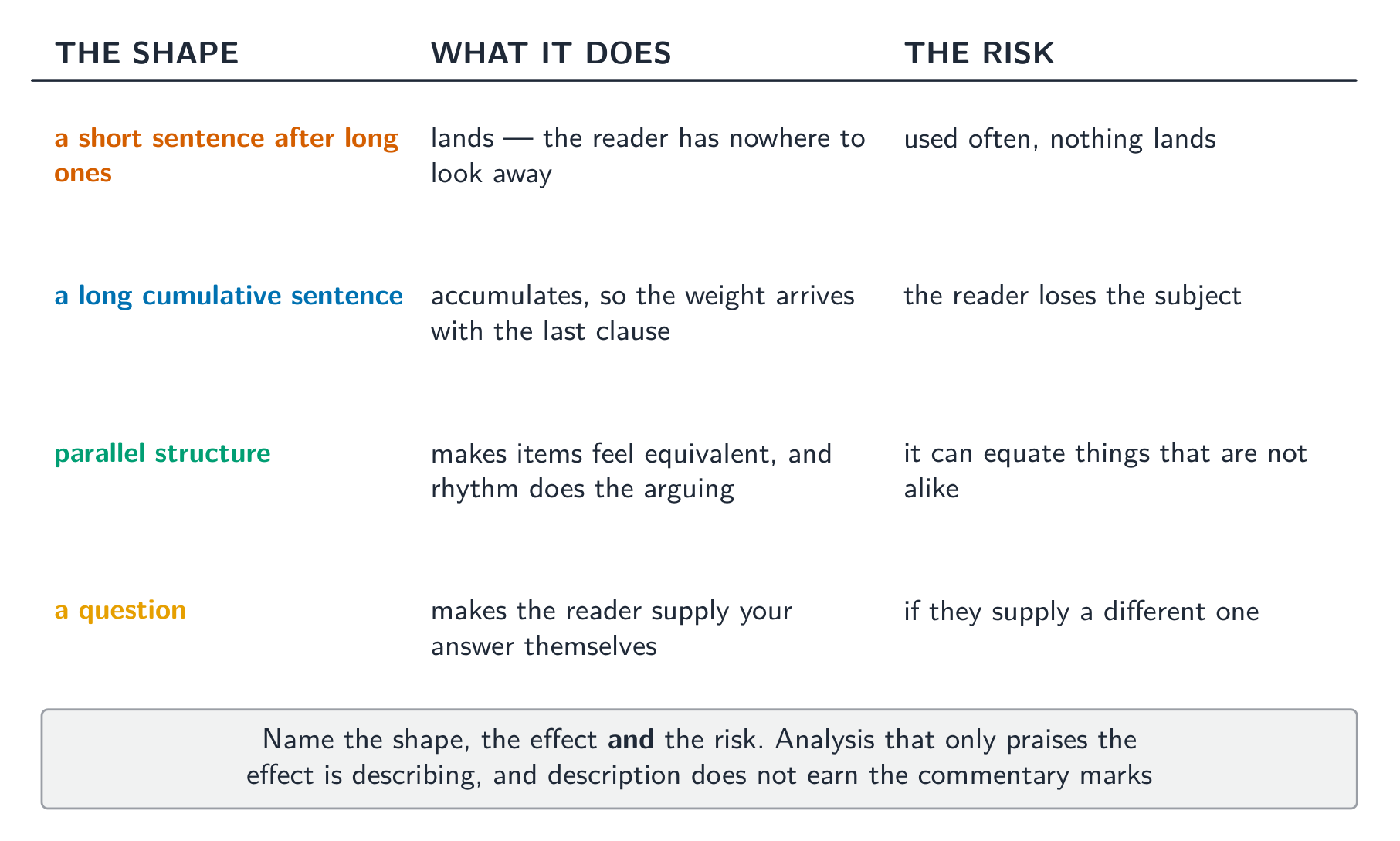
נקבעו את השם, האפקט והסיכון – שבח לבד הוא רק תיאור
Explore · ⁨חקור⁩

Name the shape, the effect and the risk · ⁨שמו את הצורה, ההשפעה והסיכון⁩

Analysis that only praises the effect is describing — and description does not earn commentary marks. · ⁨ניתוח שמחיין רק את ההשפעה מתאר — והתיאור אינו מייצר נקודות לניתוח.⁩

5.6

Exam tips · ⁨טיפים לבחינות⁩

English
  • Every body paragraph: claim, evidence, commentary. Lost points are nearly always the third.
  • Draft your claims as a list first. It is the only way to see whether the reasoning moves.
  • Begin commentary with because, which means, so - words that cannot be followed by a restatement.
  • Know the coherence devices by name: repetition, synonyms, pronoun reference, parallel structure, transitions.
  • A transition should carry the relationship, not just mark a boundary. Furthermore usually carries nothing.
  • Connotation is where diction analysis lives. Same denotation, different disposition, is a rhetorical choice worth explaining.
עברית
  • בכל פסקת גוף: טוענה, עדות, התعليق. נקודות שאבדו הן כמעט תמיד ההתعليق השלישי.
  • כתבו את ה-טענות שלכם כרשימה תחילה. זו הדרך היחידה לדעת אם ההסבר זורם.
  • התחיפו התעליק עם כי, שמעניין, ולכן – מילים שלא יכולות להיות בעקבותיהן חזרה של הטוענה.
  • הכירו את מכשירי הקoherence בשמם: חזרה, סינונימים, ייחוס עם פרונום, מקבילות, מעברים.
  • מעבר צריך לשאול את הקשר, לא רק לסמן גבול. Furthermore (עוד) בדרך כלל לא נושא כלום.
  • קונוטציה היא המקום שבו ניתוח הדקציה מתבצע. אותו משמעות בסיסית, גישה שונה, זו בחירה רטורית ששווה להסבר.

Interactive lessons on this topic · ⁨שיעורים אינטראקטיביים בנושא זה⁩

Work through it step by step, with instant-check exercises. · ⁨לעבור על הדברים צעד אחר צעד, עם תרגילים לבדיקה מיידית.⁩

Past Papers · ⁨מבחני עבר⁩

More topics in AP English Language and Composition · ⁨שפה ואנגלית כתיבה יצירתית - AP⁩ · ⁨נושאים נוספים בAP English Language and Composition · ⁨שפה ואנגלית כתיבה יצירתית - AP⁩⁩

Log in or create account · ⁨היכנס או צור חשבון⁩

IGCSE, A-Level & AP