Skip to content · ⁨דלג לתוכן⁩

Operations management (A Level) · ⁨ניהול תפעולי (A Level)⁩

A-Level Business · ⁨תחום העסקים A-Level⁩ · Topic 9 · ⁨נושא 9⁩

Video lesson for this topic · ⁨שיעור וידאו לנושא זה⁩ Open the video page · ⁨פתח את עמוד הוידאו⁩
7:46

Operations management (A Level) · ⁨ניהול תפעולי (A Level)⁩

A company promised its new factory in a hundred and fifteen weeks. It opened thirty weeks late, at a huge cost in wages and rent. One task slipped in the…

English narration · English + 中文 subtitles burned in · ⁨קריאת קול באנגלית · תרגום אנגלי + סינית שרוף בתוך הסרטון⁩

9.1

Location and relocation · ⁨מיקום והעתקה⁩

Syllabus · ⁨סיילבוס⁩
English
  1. explain the factors influencing the location and relocation of a business (including international location)
  2. explain the optimum scale of operation and the significance of economies and diseconomies of scale
עברית
  1. הסבר גורמים המשפיעים על מיקום והעברה של עסק (כולל מיקום בינלאומי)
  2. הסבר גודל הפעלה אופטימלי וחשיבות תחוסכי קנה מידה ותחוסכי נפח, והסבר משמעותם
Source: Cambridge International syllabus · ⁨מקור: הסיילבוס הבינלאומי של קמבריד'ג'⁩

English

Where a business sits affects its costs, its sales and its staff. Choosing a place is called location 选址; moving to a new place is relocation 迁址.

Factors that influence the choice fall into two groups:

  • quantitative factors 定量因素 — things you can measure in money, such as rent, wages, transport costs and government grants.
  • qualitative factors 定性因素 — things that are harder to measure, such as the skills of local workers, nearness to customers or suppliers, and the owner's own wishes.

A firm picks the place where the benefits, money and non-money together, are greatest.

עברית

מיקום העסק משפיע על העלויות, המכירות והעובדים שלו. בחירת מקום נקראת מיקום; מעבר למקום חדש הוא העתקה.

הגורמים המשפיעים על הבחירה מתחלקים לשתי קבוצות:

  • גורמים כמותיים — דברים שניתן למדוד בכסף, כמו שכר, שכירות, עלויות תחבורה ומענקים ממשלתיים.
  • גורמים איכותיים — דברים שקשה יותר למדוד, כמו מיומנויות של עובדים מקומיים, קרבה ללקוחות או לספקים, ורצונותיו של הבעלים.

חברה בוחרת את המקום שבו התועלת הכוללת (כסף וגם לא-כסף) היא הגדולה ביותר.

גורמים כמותיים (שכר, שכירות, תחבורה, מענקים) וגורמים איכותיים (מיומנויות עובדים, קרבה, רצונות בעלים) המשפיעים יחד על בחירת המיקום עם התועלת הכוללת הגדולה ביותר
החלטת המיקום שוקלת גם את גורמי הכסף וגם את הקשים למדידה, ולאחר כך בוחרת את המקום עם התועלת הכוללת הגדולה ביותר
Explore · ⁨חקור⁩

Location factor lab · ⁨מעבדת גורמי מיקום⁩

Classify why a business chooses one site over another. · ⁨סווג מדוע עסק בוחר באתר אחד על פני אחר.⁩

Vocabulary · ⁨מילון מונחים⁩ Train · ⁨אימון⁩
English עברית
location/ləʊˈkeɪʃn/ מיקום
relocation/rɪləʊˈkeɪʃn/ העברה למשרדי מטה או להגירה מקצועית
quantitative factors/ˈkwɒntɪteɪtɪv ˈfæktəz/ גורמים כמותיים
qualitative factors/ˈkwɒlɪteɪtɪv ˈfæktəz/ גורמים איכותיים
9.1

International location · ⁨מיקום בינלאומי⁩

English

Many firms now locate abroad. Moving production to another country is offshoring 离岸外包. The reasons are often lower wages, nearness to new markets, fewer rules, or government help. The risks are longer supply lines, language and culture differences, and possible damage to the firm's image.

עברית

חברות רבות ממוקמות כיום בחו"ל. העברת ייצור למדינה אחרת נקראת Offshoring. הסיבות הן לעיתים שכר נמוך יותר, קרבה לשווקים חדשים, פחות תקנות, או סיוע ממשלתי. הסיכונים הם אורך גדול יותר של שרשראות אספקה, הבדלי שפה ותרבות, ונזק אפשרי לתדמית החברה.

Vocabulary · ⁨מילון מונחים⁩ Train · ⁨אימון⁩
English עברית
offshoring/ˈɒfʃərɪŋ/ העברת פעילויות לחו"ל
9.1

The optimum scale of operation · ⁨הקנה מידה מיטבי⁩

English

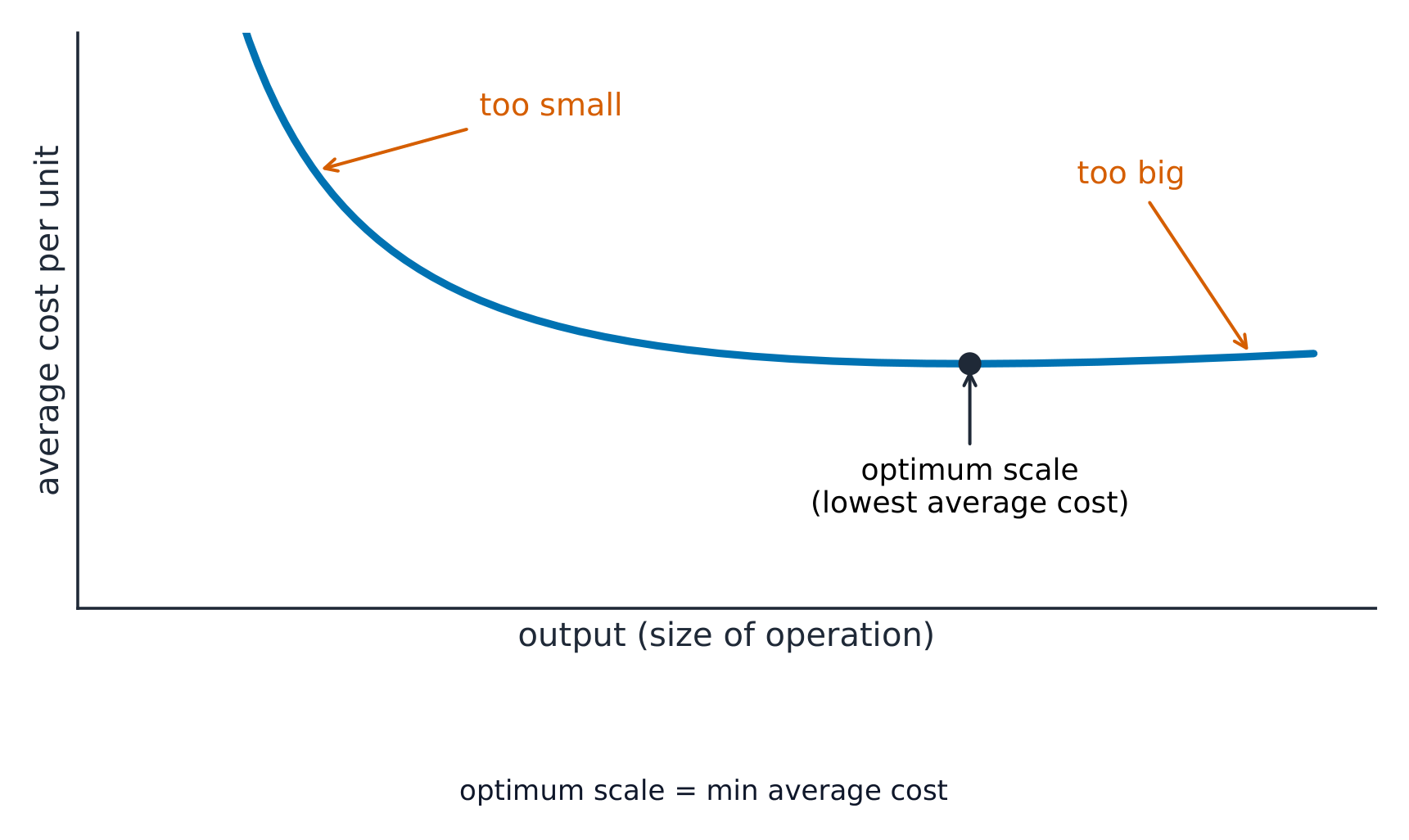
As a firm grows, its average cost first falls (from economies of scale) and later rises (from diseconomies of scale). The optimum scale 最优规模 is the size at which the average cost per unit is at its lowest.

  • economies of scale 规模经济 — cost savings from being larger (e.g. bulk buying).
  • diseconomies of scale 规模不经济 — rising average cost when a firm grows too big (e.g. poor communication).

A firm should try to grow up to its optimum scale, but not beyond it.

עברית

ככל שחברה גדלה, העלות הממוצעת שלה יורדת תחילה (בשל כלכלת היקף) ואחר כך עולה (בשל דיסכלואיה של היקף). הקנה המידה המיטבי הוא הגודל שבו העלות הממוצעת ליחידה נמצאת בנקודה הנמוכה ביותר.

  • כלכלת היקף — חיסכון בעלויות כתוצאה מגודל גדול יותר (למשל, קנייה בכמויות גדולות).
  • דיסכלואיה של היקף — עליית העלות הממוצעת כאשר חברה גדולה מדי (למשל, תקשורת לקויה).

חברה אמורה לנסות לצמוח עד להקנה המידה המיטבי שלה, אך לא מעבר לו.

עקומת עלות ממוצעת בצורת U: העלות יורדת כשהחברה קטנה מדי, מגיעה לנקודה הנמוכה ביותר בקנה מידה האופטימלי, ואז עולה כשהחברה גדולה מדי
הקנה מידה האופטימלי הוא הייצור שבו העלות הממוצעת ליחידה היא הנמוכה ביותר
Vocabulary · ⁨מילון מונחים⁩ Train · ⁨אימון⁩
English עברית
optimum scale/ˈɒptɪməm skeɪl/ קנה מידה מיטבי
economies of scale/ɪˈkɒnəmiz ɒv skeɪl/ חסכוני סקאלה
diseconomies of scale/ˌdɪsɪˈkɒnəmiz ɒv skeɪl/ אי-חסכוני סקאלה
9.2

Why quality matters · ⁨מדוע איכות חשובה⁩

Syllabus · ⁨סיילבוס⁩
English
  1. explain the importance of quality and methods of managing quality (quality control, quality assurance, total quality management, benchmarking)
עברית
  1. הסבר חשיבות האיכות ושיטות לניהול איכות (בקרת איכות, אבטחת איכות, ניהול איכות כולל, בידוק ערכים מובילים)

Source: Cambridge International syllabus · ⁨מקור: הסיילבוס הבינלאומי של קמבריד'ג'⁩

English

Quality 质量 means how well a product meets the customer's needs. Good quality wins repeat custom, lets the firm charge more, protects its brand, and cuts the cost of waste and returns. Poor quality loses customers and damages the firm's name.

עברית

איכות מתארת עד כמה מוצר עונה על צרכי הלקוח. איכות טובה מביאה לקנייה חוזרת, מאפשרת לחברה לגבות מחיר גבוה יותר, מגנה על המותג ומפחיתה את עלויות הפסולת וההחזרות. איכות רעה מאבדת לקוחות ופוגעת בשם הטוב של החברה.

Explore · ⁨חקור⁩

Leadership style lab · ⁨מעבדת סגנונות מנהיגות⁩

Pick the management style that fits each situation. · ⁨בחרו את סגנון הניהול המתאים לכל מצב.⁩

9.2

Methods of managing quality · ⁨שיטות ניהול איכות⁩

English
Method How it works
quality control 质量控制 check finished products and remove the faulty ones at the end
quality assurance 质量保证 build quality into every stage, so faults are prevented, not just found
total quality management 全面质量管理 (TQM) every worker takes responsibility for quality, aiming for zero faults
benchmarking 标杆管理 compare the firm's methods with the best firms, and copy what they do well

Quality control finds faults late, after money is already spent. Quality assurance and TQM try to stop faults happening, which is usually cheaper in the long run.

עברית
שיטה כיצד היא פועלת
בקרת איכות בדיקת מוצרים מוגמרים והסרת הפגומים בסוף התהליך
הבטחת איכות הקמת איכות בכל שלב, כך שפגמים נמנעים ולא רק נתגלים
ניהול איכות כולל (TQM) כל עובד נושא באחריות לאיכות, תוך שאיפה לאפס פגמים
בדיקת תקנים השוואת שיטות החברה עם החברות המובילות והעתקת דרכן המצוינות

בקרת איכות מזהה פגמים מאוחר, לאחר שהכסף כבר הושקע. הבטחת איכות וניהול איכות כולל שואפים למנוע פגמים מהולדתם, דבר שמבוססיית ארוכת טווח זול יותר.

בקרת איכות בודקת סחורה פגומה רק בסוף עם בודק, בעוד שהבטחת איכות מבנית בדיקת איכות בכל שלב ייצור
בדיקות בקרת איכות בסוף; הבטחת איכות בונה איכות בכל שלב
Vocabulary · ⁨מילון מונחים⁩ Train · ⁨אימון⁩
English עברית
quality/ˈkwɒlɪti/ איכות
quality control/ˈkwɒlɪti kənˈtrəʊl/ בקרת איכות
quality assurance/ˈkwɒlɪti əˈʃʊərəns/ בטיחות איכות
total quality management/ˈtəʊtl ˈkwɒlɪti ˈmænɪdʒmənt/ ניהול איכות כולל
benchmarking/ˈbentʃmɑːkɪŋ/ בדיקת ייחוס
lean production/liːn prəˈdʌkʃn/ ייצור רזה (Lean)
waste/weɪst/ שחיקה / פסולת
capacity management/kəˈpæsɪti ˈmænɪdʒmənt/ ניהול קיבולת
technology/tekˈnɒlədʒi/ טכנולוגיה
critical path analysis/ˈkrɪtɪkl pæθ əˈnæləsɪs/ ניתוח מסלול קריטי
nodes/nəʊdz/ צמתים
earliest start time/ˈɜːlɪɪst stɑːt taɪm/ זמן התחלה מוקדם ביותר
latest finish time/ˈleɪtɪst ˈfɪnɪʃ taɪm/ זמן סיום מאוחר ביותר
9.3

Operations strategy: lean production · ⁨אסטרטגיית פעילות: ייצור רזה⁩

Syllabus · ⁨סיילבוס⁩
English
  1. explain operations decisions: lean production, capacity management, and the use of technology
  2. use critical path analysis (CPA) to plan and manage projects (EST, LFT, total float, critical path, minimum project duration)
עברית
  1. הסבר החלטות תפעוליות: ייצור רזה, ניהול קיבולת והשתמשו בטכנולוגיה
  2. שימוש בניתוח מסלול קריטי (CPA) לתכנון ולניהול פרויקטים (EST, LFT, צוף כולל, מסלול קריטי, משך מינימלי לפרויקט)

Source: Cambridge International syllabus · ⁨מקור: הסיילבוס הבינלאומי של קמבריד'ג'⁩

English

Lean production 精益生产 means making products with the least possible waste 浪费 — of time, materials, space and effort. Methods like just-in-time and continuous improvement cut waste, lower cost, and raise quality. Less money is tied up in stock, and problems are fixed quickly.

עברית
זרועות רובוטיות המאטמות קו ייצור במפעל
אוטומציה במפעל — ניהול פעילויות ברמה A-Level עוסק בייצור רזה, טכנולוגיה ושרשרת אספקה.

ייצור רזה משמעותו ייצור מוצרים עם הכמות הקטנה האפשרית של פסולת – של זמן, חומרים, מקום ומאמץ. שיטות כמו " juste-in-time " ושיפור מתמיד מפחיתות פסולת, מצמצמות עלות ומעלות איכות. פחות כסף נעול במלאי, ובעיות מתוקנות במהירות.

Explore · ⁨חקור⁩

SWOT strategy lab · ⁨מעבדת אסטרטגיות SWOT⁩

Sort strategy evidence into internal and external factors. · ⁨מיינו עדויות לאסטרטגיה וסווגו אותן כגורמים פנימיים או חיצוניים.⁩

9.3

Capacity management and technology · ⁨ניהול קיבולת וטכנולוגיה⁩

English

Capacity management 产能管理 means matching what the firm can produce to the demand it faces. If demand is higher than capacity, the firm may add shifts, hire staff or outsource; if demand is lower, it may cut output or find new orders. New technology 技术, such as automation and data systems, helps a firm produce more, to a higher standard, at a lower cost.

עברית

ניהול קיבולת משמעות התאמת יכולת הייצור של החברה לביקושים המופנים אליה. אם הביקוש גבוה מהקיבולת, החברה עשויה להוסיף תורות, לשכור עובדים או להסתדר עם קבלן משנה; אם הביקוש נמוך, היא עשויה לצמצם ייצור או למצוא הזמנות חדשות. טכנולוגיה חדשה, כמו אוטומציה ומערכות מידע, עוזרת לחברה לייצר יותר, ברמה גבוהה יותר ובעלות נמוכה יותר.

9.3

Critical path analysis · ⁨ניתוח מסלול קריטי⁩

English

Critical path analysis 关键路径分析 (CPA) is a tool for planning a project made of many tasks. It draws the tasks as a network of arrows and nodes 节点 (circles), in the order they must happen. For each task it works out timings:

  • the earliest start time 最早开始时间 (EST) — the soonest a task can begin, once earlier tasks are done.
  • the latest finish time 最晚完成时间 (LFT) — the latest a task can finish without delaying the whole project.

From these comes the total float 总浮动时间 — the spare time a task has before it delays the project:

$$\text{total float} = \text{LFT} - \text{duration} - \text{EST}$$

The critical path 关键路径 is the chain of tasks with zero float. These tasks cannot be late, or the whole project is late. Adding up the times along this path gives the minimum project duration 最短项目工期 — the shortest time the project can take.

CPA helps managers find the tasks that matter most, order resources for the right time, and see where delays would hurt. But it is only as good as the time estimates it is built on.

Worked example. A task has an EST of 6 days, a duration of 4 days, and an LFT of 14 days. Find its total float, and say whether it lies on the critical path. Use the formula: total float = LFT − duration − EST = $14 - 4 - 6 =$ 4 days. So the task could start up to 4 days late, or overrun by 4 days, without delaying the project - and because its float is not zero, it is not on the critical path. Only tasks with zero float are critical. Two points carry the marks: float is the spare time on that task, so using it up makes the task critical; and shortening a non-critical task like this one does not shorten the project at all, because only the critical path sets the minimum project duration.

עברית

ניתוח מסלול קריטי (CPA) הוא כלי לתכנון פרויקט המורכב ממספר משימות. הוא מצייר את המשימות כרשת של חצים ונקודות (מעגלים), לפי הסדר שבו הן חייבות להתבצע. עבור כל משימה הוא מחשב תזמונים:

  • זמן התחלה מוקדם ביותר (EST) — הזמן המוקדם ביותר שבו משימה יכולה להתחיל, לאחר השלמת משימות קודמות.
  • זמן סיום מאוחר ביותר (LFT) — הזמן המאוחר ביותר שבו משימה יכולה להסתיים מבלי לעכב את הפרויקט כולו.

מכאן נגזר ה-צף כולל — זמן העודף שמשימה ישנה לפני שהיא תעכב את הפרויקט:

$$\text{total float} = \text{LFT} - \text{duration} - \text{EST}$$

המסלול הקריטי הוא שרשרת המשימות עם צף אפס. משימות אלו אינן יכולות להתעכב, או כל הפרויקט יתעכב. חיבור הזמנים לאורך מסלול זה נותן את משך הפרויקט המינימלי — הזמן הקצר ביותר שבו הפרויקט יכול לקיים.

רשת מסלול קריטי של חמישה נקודות מחוברות על ידי חצים עם פעילויות מסומנות; כל נקודה מציגה את זמן ההתחלה המוקדם ביותר ואת זמן הסיום המאוחר ביותר, והמסלול הקריטי של פעילויות בעלות צף אפס מדוגש
המסלול הקריטי הוא שרשרת הפעילויות עם צף אפס — הן קובעות את אורך הפרויקט

CPA עוזר למנהלים למצוא את המשימות החשובות ביותר, ליישר משאבים בזמן הנכון, ולראות היכן עיכובים יהיו מזיקים. אך הוא טוב רק במידה שהוא נבנה על בסיס הערכות הזמן.

דוגמה מופיעה. למשימה יש EST של 6 ימים, משך של 4 ימים, ו-LFT של 14 ימים. מצאו את הצף הכולל שלה, ואמרו האם היא נמצאת על המסלול הקריטי. השתמשו בנוסחה: צף כולל = LFT − משך − EST = $14 - 4 - 6 =$ 4 ימים. לכן, המשימה יכולה להתחיל עד 4 ימים מאוחר יותר, או להתעכב ב-4 ימים, מבלי לעכב את הפרויקט - וכיוון שצף שלה אינו אפס, היא אינה נמצאת על המסלול הקריטי. רק משימות עם צף אפס הן קריטיות. שתי נקודות נושאות נקודות: צף הוא זמן העודף ב-משימה זו, ולכן שימוש בו הופך את המשימה לקריטית; והקצרת משימה שאינה קריטית כמו זו אינה מקצרת את הפרויקט כלל, מכיוון רק המסלול הקריטי קובע את משך הפרויקט המינימלי.

Explore · ⁨חקור⁩

Critical path analysis · ⁨ניתוח מסלול קריטי⁩

CPA finds the sequence of tasks that decides the shortest time a project can take. · ⁨CPA מזהה את הרצף של משימות הקובע את הזמן הקצר ביותר שפרויקט יכול לקחת.⁩

Explore · ⁨חקור⁩

Find the critical path · ⁨מצאו את הדרך הקריטית⁩

Drag the durations — the network rolls forward and back, the floats update, and the critical path jumps to whichever route is longest. · ⁨גררו את משך הפעילות — הרשת תזוז קדימה ואחורה, הגמישות תתעדכן, והדרך הקריטית תקפוץ למסלול הארוך ביותר.⁩

Vocabulary · ⁨מילון מונחים⁩ Train · ⁨אימון⁩
English עברית
total float/ˈtəʊtl fləʊt/ צף כולל
critical path/ˈkrɪtɪkl pæθ/ המסלול הקריטי
minimum project duration/ˈmɪnɪməm ˈprɒdʒekt djʊəˈreɪʃn/ משך פרויקט מינימלי
9.3

Exam tips · ⁨טיפים לבחינות⁩

English
  • Compare quality methods: quality control (inspect at the end) versus quality assurance / TQM (build quality in at every stage).
  • Explain lean production (cutting waste — time, stock, defects) with a named method (kaizen, JIT).
  • On a critical path network, work out the EST/LFT, the float, and the critical activities (zero float) that set the minimum time.
עברית
  • השוו בין שיטות איכות: בקרת איכות (ביצוע בדיקות בסוף) מול אבטחת איכות / TQM (בניית איכות בכל שלב).
  • הסבירו ייצור רזה (צמצום פסולת – זמן, מלאי, תקלות) עם שיטה ספציפית (kaizen, JIT).
  • ברשת מסלול קריטי, חשבו את ה-EST/LFT, את הצף, ואת הפעילויות הקריטיות (צף אפס) שקובעות את הזמן המינימלי.

Interactive lessons on this topic · ⁨שיעורים אינטראקטיביים בנושא זה⁩

Work through it step by step, with instant-check exercises. · ⁨לעבור על הדברים צעד אחר צעד, עם תרגילים לבדיקה מיידית.⁩

Past Papers · ⁨מבחני עבר⁩

More topics in A-Level Business · ⁨תחום העסקים A-Level⁩ · ⁨נושאים נוספים בA-Level Business · ⁨תחום העסקים A-Level⁩⁩

Log in or create account · ⁨היכנס או צור חשבון⁩

IGCSE, A-Level & AP