Skip to content · ⁨דלג לתוכן⁩
Subjects · ⁨נושאים⁩

A-Level Business · ⁨תחום העסקים A-Level⁩

Tips · ⁨טיפים⁩

עסקים ברמת A-Level (9609) מכסה חמישה תחומים — עסקים וסביבתם, משאבי אנוש, שיווק, פעילות ופיננסים וחשבונאות — תחילה ברמת AS, ולאחר מכן שוב ברמת A2, שבה אתה בוחן את אותם חמישה תחומים אסטרטגית ולא תיאורית.

כמעט כל נקודה מעל הראשונה היא הקשרית. הסיפור הוא לא רק קישוט: תשובה על "עסק" תניב את נקודת הידע ותיעצר. אותה תשובה הקשורה לרווחיות, שוק או כוח העבודה של החברה הזו, תניב גם יישום וניתוח.

הסדרה הגבוהה ביותר תמיד דורשת החלטה עם נימוק, ולא רשימת יתרונות וחסרונות.

  • 1

    Business and its environment · ⁨עסקים וסביבתם⁩

    Watch lesson · ⁨צפה בשיעור⁩
    1.1

    Why businesses exist · ⁨למה ישנם עסקים⁩

    Syllabus · ⁨סיילבוס⁩
    English
    1. explain the purpose of business activity, the concept of adding value and the role of the entrepreneur and intrapreneur
    2. explain the characteristics of successful entrepreneurs and the importance of enterprise to a country (business start-ups)
    3. explain the contents and purpose of a business plan
    עברית
    1. הסבר את מטרת פעילות עסקית, מושג RI adding value ותפקודם של RI entrepreneur וRI intrapreneur
    2. הסבר את מאפייני עסקנים מצליחים וחשיבות RI enterprise למדינה (הקמת עסקים)
    3. הסבר על תוכן ומטרותיו של תכנית עסקית

    Source: Cambridge International syllabus · ⁨מקור: הסיילבוס הבינלאומי של קמבריד'ג'⁩

    English

    People have needs 需要 (things you must have, like food and shelter) and wants 欲望 (things you would like, like a phone or a holiday). A business exists to meet these needs and wants by making goods 商品 and services 服务.

    To do this, a business uses resources 资源. We sort resources into four factors of production 生产要素:

    • land 土地 — natural things, such as soil, water and minerals.
    • labour 劳动力 — the work done by people.
    • capital 资本 — the machines, tools, buildings and money used to produce.
    • enterprise 创业精神 — the skill of bringing the other three together and taking the risk 风险 to start a business.

    Resources are scarce 稀缺 — there are not enough to meet everyone's wants. So every business must choose how to use them well.

    עברית

    לאנשים יש צרכים (דברים שחייבים להם, כמו מזון ומגורים) ורצונות (דברים שהייתם רוצים, כמו טלפון או חופשה). עסק קיים כדי לענות על צרכים אלו ועל רצונות אלו על ידי ייצור מוצרים ושירותים.

    חנויות המתחרות לאורך רחוב ראשי
    חנויות המתחרות ברחוב ראשי — השוק שבו עסק פועל.

    כדי לעשות זאת, עסק משתמש במשאבים. אנו מחלקים משאבים לארבעה גורמי ייצור:

    • קרקע — דברים טבעיים, כגון אדמה, מים ומינרלים.
    • עבודה — העבודה המבוצעת על ידי אנשים.
    • הון — מכונות, כלים, מבנים וכסף המשמשים לייצור.
    • יזמות — המיומנות של היצגת שלושת הגורמים האחרים יחד ולקחת את הסיכון להקים עסק.
    תרשים המראה קרקע, עבודה, הון ועסקיות כארבעה כניסים המשולבים על ידי עסק כדי לייצר מוצרים ושירותים
    קרקע, עבודה, הון ויזמות הם ארבעת הגורמים שאותם עסק מאחד ליצירת מוצרים ושירותים

    משאבים הם מדוללים — אין מספיק מהם כדי לענות על רצונותיהם של כולם. לכן, כל עסק חייב לבחור כיצד להשתמש בהם בצורה טובה.

    Vocabulary · ⁨מילון מונחים⁩ Train · ⁨אימון⁩
    English עברית
    needs/niːdz/ זקוק / דורש
    wants/wɒnts/ ביקוש
    goods/ɡʊdz/ סחורות
    services/ˈsɜːvɪsɪz/ שירותים
    resources/rɪˈzɔːsɪz/ משאבים
    factors of production/ˈfæktəz ɒv prəˈdʌkʃn/ גורמי ייצור
    land/lænd/ אדמה
    labour/ˈleɪbə/ עבודה
    capital/ˈkæpɪtl/ הון
    enterprise/ˈentəpraɪz/ עסק
    risk/rɪsk/ סיכון
    scarce/skeəs/ נדיר
    adding value/ˈædɪŋ ˈvæljuː/ הוספת ערך
    inputs/ˈɪnpʊts/ כניסות
    branding/ˈbrændɪŋ/ מותגה
    1.1

    Adding value · ⁨הוספת ערך⁩

    English

    Adding value 增值 means the selling price of a product is higher than the cost of the inputs 投入 (the bought-in materials) used to make it.

    $$\text{value added} = \text{selling price} - \text{cost of bought-in materials}$$

    A business can add value by branding 品牌, better quality, good design, fast service, or convenience. More value added can mean more profit 利润, but only if costs stay under control.

    עברית

    הוספת ערך פירושה שהמחיר במכירה של מוצר גבוה יותר מעלות הקלטות (החומרים שנרכשו) המשמשות לייצורו.

    $$\text{value added} = \text{selling price} - \text{cost of bought-in materials}$$
    עמודה מצטברת המחולקת לעלות חומרים שנרכשו בחוץ בתחתית ולערך נוסף בחלק העליון, שיחד יוצרים את מחיר המכירה
    הערך המוסף הוא מחיר המכירה פחות עלות החומרים הנרכשים

    עסק יכול להוסיף ערך באמצעות מותג, איכות טובה יותר, עיצוב נאה, שירות מהיר או נוחות. הוספת ערך גדולה יותר יכולה להוביל לרווח גדול יותר, אך רק אם העלויות נשארות בשליטה.

    Explore · ⁨חקור⁩

    Value added lab · ⁨מעבדת הוספת ערך⁩

    Change the bought-in cost, the selling price and other costs to see exactly where value added — and profit — come from. · ⁨שנה את עלות הרכישות, מחיר המכירה ועלויות נוספות כדי לראות בדיוק מאין מגיעה ההוספה בערך וברווח.⁩

    1.1

    Entrepreneurs and intrapreneurs · ⁨יזמים ואינטראפרנאורים⁩

    English

    An entrepreneur 企业家 is a person who takes the risk to set up and run a business. They have the idea, organise the factors of production, and make the decisions. If the business fails, they can lose their money.

    An intrapreneur 内部创业者 is an employee inside a larger business who acts like an entrepreneur. They build new ideas, products or ways of working, using the company's resources.

    Characteristics of successful entrepreneurs

    Successful entrepreneurs are usually:

    • innovative 有创新精神的 — full of new ideas.
    • willing to take risks, but in a careful way.
    • hard-working and determined 有决心的 — they do not give up easily.
    • self-confident 自信的 and good at making decisions.
    • good leaders who can plan ahead and manage money.

    Why enterprise matters to a country

    When people start new businesses (business start-ups 初创企业), the whole country can gain:

    • new jobs are created, which lowers unemployment 失业.
    • more goods and services are made, which raises output 产出 (and the country's GDP 国内生产总值).
    • more competition 竞争, giving customers lower prices and more choice.
    • some firms grow and export 出口, bringing money into the country.
    • economic growth 经济增长 and a higher standard of living.
    עברית

    יזם הוא אדם הוקח סיכון להקים ולנהל עסק. יש לו את הרעיון, הוא מארגן את גורמי הייצור וקובע החלטות. אם העסק נכשל, הוא עלול לאבד את כספו.

    אינטראפרנאור הוא עובד בתוך עסק גדול הפועל כמיני-יזם. הוא בונה רעיונות חדשים, מוצרים או דרכי עבודה חדשות, תוך שימוש במשאבי החברה.

    מכונית מזון צבעונית עם שלט "פתוח" ותפריט, עם שני לקוחות הזמינים בחלון
    מכונית המזון היא יזמות שניתן לראות. בעלים זיהה פער בשוק, הושקיע את חסכונותיו ברכב ובמלאי, וכיום נושא את הסיכון היומי בניהולו — זו תוכנתו של להיות יזם

    מאפיינים של עסקים מוצלחים

    עסקים מוצלחים הם בדרך כלל:

    • חדשניים — מלאי ברעיונות חדשים.
    • מוכנים לקחת סיכונים, אך בצורה זהירה.
    • עובדים קשה וחזקים — הם לא נסגרים בקלות.
    • מוטמין ועושה היטב בהחלטות.
    • מנהיגים טובים שיכולים לתכנן מראש ולנהל כסף.

    מדוע עסקים חשובים למדינה

    כאשר אנשים מקימים עסקים חדשים (הקמת עסק), כל המדינה יכולה להרוויח:

    • נוצרים תפקידים חדשים, מה שמוריד את האבטלה.
    • יוצרים יותר מוצרים ושירותים, מה שמגביר את התפוקה (וגם את ת"מ"ה של המדינה).
    • יותר תחרות, המניחה ללקוחות מחירים נמוכים ובחירה רבה יותר.
    • חלק מהחברות צומחות ויוצאות לשווקים חו
    • צמיחה כלכלית ורמת חיים גבוהה יותר.
    Vocabulary · ⁨מילון מונחים⁩ Train · ⁨אימון⁩
    English עברית
    entrepreneur/ˌɒntrɪprəˈnjʊə/ יזם
    intrapreneur/ˌɪntrəprəˈnjʊə/ א entrepreneurship פנימי (אינטרפרנר)
    innovative/ˈɪnəveɪtɪv/ חדשני
    determined/dɪˈtɜːmɪnd/ נחוש
    self-confident/self ˈkɒnfɪdənt/ מוכן לעצמו
    business start-ups/ˈbɪznəs stɑːt ʌps/ הקמת חברות סטארט-אפ
    unemployment/ʌnemˈplɔɪmənt/ אבטלה
    output/ˈaʊtpʊt/ תפוקה
    GDP/ˌdʒiː diː ˈpiː/ תמ"ג (תוצר מקומי ברוטו)
    competition/ˌkɒmpəˈtɪʃn/ תחרות
    export/ˈekspɔːt/ ייצוא
    economic growth/ˌiːkəˈnɒmɪk ɡrəʊθ/ צמיחה כלכלית
    business plan/ˈbɪznəs plæn/ תוכנית עסקית
    cash-flow forecast/kæʃ fləʊ ˈfɔːkæst/ תחזית מזומנים
    finance/ˈfaɪnæns/ מימון
    investor/ɪnˈvestə/ משקיע
    primary sector/ˈpraɪməri ˈsektə/ המגזר הראשוני
    secondary sector/ˈsekəndəri ˈsektə/ תחום משני
    tertiary sector/ˈtɜːʃjəri ˈsektə/ תחום שלישי
    quaternary sector/kwəˈtɜːnəri ˈsektə/ תחום הרביעי
    raw materials/rɔː məˈtɪərɪəlz/ חומרי גלם
    manufacture/ˌmænjuːˈfæktʃə/ ייצור
    private sector/ˈpraɪvət ˈsektə/ המגזר הפרטי
    public sector/ˈpʌblɪk ˈsektə/ המגזר הציבורי
    sole trader/səʊl ˈtreɪdə/ עצמאי
    partnership/ˈpɑːtnəʃɪp/ שותפות
    deed of partnership/diːd ɒv ˈpɑːtnəʃɪp/ חברת שיתוף פעולה
    private limited company/ˈpraɪvət ˈlɪmɪtɪd ˈkʌmpəni/ חברה מוגבלת פרטית
    shares/ʃeəz/ מניות
    shareholders/ˈʃeəhəʊldəz/ בעלי מניות
    public limited company/ˈpʌblɪk ˈlɪmɪtɪd ˈkʌmpəni/ חברה מוגבלת ציבורית
    stock exchange/stɒk eksˈtʃeɪndʒ/ בורסה
    takeover/ˈteɪkəʊvə/ רכישה
    franchise/ˈfræntʃaɪz/ זיכיון
    franchisor/ˈfræntʃaɪzə/ מתן זיכיון
    franchisee/ˈfræntʃɪsiː/ מקבל זיכיון
    royalty/ˈrɔɪəlti/ דמי זיכיון
    joint venture/dʒɔɪnt ˈventʃə/ מיזם משותף
    social enterprise/ˈsəʊʃl ˈentəpraɪz/ ארגון חברתי
    environmental/enˌvaɪrənˈmentl/ סביבתי
    1.1

    The business plan · ⁨תוכנית עסקית⁩

    English

    A business plan 商业计划书 is a written document that describes the business idea and how it will work. It usually contains:

    Part of the plan What it covers
    The idea the product, and what makes it different
    The market target customers, market size, competitors
    Marketing price, promotion and place
    Operations how the product is made or delivered
    Finance start-up costs, a cash-flow forecast 现金流量预测, expected profit
    People the owners and key staff

    A business plan is useful because it helps the owner:

    • get finance 融资 from a bank or an investor 投资者.
    • set clear goals and lower the risk of failure.
    • guide decisions as the business grows.
    עברית

    תוכנית עסקית היא מסמך כתוב המתאר את הרעיון העסקי ואופן פעולתו. היא מכילה בדרך כלל:

    חלק בתוכנית מה הוא מכסה
    הרעיון המוצר, ומה שונה בו
    השוק לקוחות יעד, גודל השוק, מתחרים
    שיווק מחיר, קידום ומיקום
    פעולות כיצד המוצר מיוצר או מסופק
    כספים עלויות הקמה, תזרים מזומנים, רווח צפוי
    אנשים בעלי העסק והעובדים המרכזיים

    תוכנית עסקית היא שימושית משום שהיא עוזרת לבעל העסק:

    • לקבל מימון מהבנק או ממשקיע.
    • לקבוע מטרות ברורות ולהפחית את הסיכון לכישלון.
    • להנחות החלטות כאשר העסק מתרחב.
    1.2

    Sectors of business activity · ⁨תחומי פעילות עסקית⁩

    Syllabus · ⁨סיילבוס⁩
    English
    1. explain the classification of business activity (primary, secondary, tertiary, quaternary sectors) and the private and public sectors
    2. describe the legal structure of business: sole trader, partnership, private and public limited company, franchise, joint venture, social enterprise
    3. explain limited and unlimited liability
    עברית
    1. הסבר על סיווג פעילות עסקית (מגזר ראשוני, משני, שלישי, רביעי) והמגזר הפרטי והציבורי
    2. תיאור המבנה המשפטי של עסקים: עצמאי (בעל מלאכה), שותפות, חברה בע"מ פרטית וציבורית, רשת זכויות יתר, מיזם משותף, ארגון חברתי
    3. הסבר על אחריות מוגבלת ואין-מוגבלת

    Source: Cambridge International syllabus · ⁨מקור: הסיילבוס הבינלאומי של קמבריד'ג'⁩

    English

    Every business works in one of four sectors:

    Sector What it does Example
    primary sector 第一产业 takes raw materials from nature farming, mining, fishing
    secondary sector 第二产业 makes (manufactures) goods car factory, baker
    tertiary sector 第三产业 provides services shops, banks, transport
    quaternary sector 第四产业 knowledge and information services research, IT, consulting

    Here raw materials 原材料 are the natural inputs a business starts with, and to manufacture 制造 means to make goods in large amounts. As a country develops, it usually moves from mostly primary work towards more tertiary and quaternary work.

    עברית

    כל עסק פועל באחד מארבעה תחומים:

    תחום מה הוא עושה דוגמה
    תחום ראשוני שואל חומרי גלם מטבע חקלאות, מכרות, דיג
    תחום משני מייצר (מעבד) סחורות מפעל רכבים, אופה
    תחום שלישי מספק שירותים חנויות, בנקים, תחבורה
    תחום רביעי שירותי ידע ומידע מחקר, טכנולוגיה מידע, ייעוץ
    ארבעה קופסאות בשורה — ראשוני, משני, שלישי, רביעי — מקושרות בחצים, עם דוגמה תחת כל אחת
    הפעילות העסקית נעה מהתחום הראשוני ועד לתחום הרביעי

    כאן חומרי גלם הם הקלטות טבעיות שאליהן עסק מתחיל, ולהיצר פירונו ליצור סחורות בכמויות גדולות. כאשר מדינה מתפתחת, היא נוטה לעבור מעבודות בעלות תחום ראשוני לעבודות בעלות תחום שלישי ורביעי.

    Explore · ⁨חקור⁩

    Classify business activity · ⁨מיון פעילות עסקית⁩

    Sort real firms by the sector they mainly belong to. · ⁨סדרו חברות אמיתיות לפי המגזר שבו הן משתייכות בעיקר.⁩

    1.2

    Private and public sectors · ⁨תחום פרטי ותחום ציבורי⁩

    English
    • The private sector 私营部门 is made up of businesses owned by private people. Their main aim is usually profit.
    • The public sector 公共部门 is made up of organisations owned by the government, such as state schools and public hospitals. Their aim is usually to provide a service, not to make profit.
    עברית
    • התחום הפרטי מורכב מעסקים בבעלות פרטים. המטרה העיקרית שלהם היא בדרך כלל רווח.
    • התחום הציבורי מורכב מארגונים בבעלות הממשלה, כמו בתי ספר מדינתיים ובתי חולים ציבוריים. המטרה שלהם היא בדרך כלל לספק שירות ולא להרוויח.
    1.2

    Legal structures of business · ⁨מבנים משפטיים של עסקים⁩

    English

    A business must choose a legal form. The main ones are below.

    • A sole trader 个体经营者 is owned by one person. It is easy to set up and the owner keeps all the profit, but raising money is hard.
    • A partnership 合伙企业 is owned by two or more partners who share the work and profit. They often sign a deed of partnership 合伙协议 that sets out each partner's share.
    • A private limited company 私人有限公司 (Ltd) sells shares 股份 to a small group, such as family and friends. Its owners are shareholders 股东. Its shares are not sold to the public.
    • A public limited company 上市公司 (plc) sells its shares to the public on the stock exchange 证券交易所. It can raise large amounts of money, but it must follow more rules and faces the risk of a takeover 收购.
    • A franchise 特许经营 lets one firm use another firm's brand and business model. The franchisor 特许方 owns the brand; the franchisee 加盟方 pays a fee and a royalty 提成 to run a branch.
    • A joint venture 合资企业 is when two businesses join to run one project and share the costs and risks.
    • A social enterprise 社会企业 trades like a normal business but aims to do social or environmental 环境 good, and reinvests most of its profit.
    עברית
    מגדל מטה חברה מודרני
    מטה חברת: העסקים נעים מעצמאים ועד לחברות ציבוריות ענקיות.

    עסק חייב לבחור צורה משפטית. הבאות הן העיקריות.

    • עצמאי הוא בבעלות אדם אחד. הקמתו קלה והבעל שומר על כל ההון, אך גיוס הון קשה.
    • שותפות היא בבעלות שני שותפים או יותר המשתפים בעבודה וההון. הם לרוב חותמים על חוזק שותפות שמפרט את חלקם של כל שותף.
    • חברה בע"מ (Ltd) מוכרת מניות לקבוצה קטנה, כגון משפחה וחברים. הבעלים שלה הם מניות. המניות שלה אינן נמכרות לציבור.
    • חברה ציבורית (plc) מוכרת את מניותיה לציבור בבורסה. היא יכולה לגייס סכומי הון גדולים, אך עליה לעמוד בחוקים נוספים ולצאת בסיכון של התאמה.
    • זיכיון מאפשר לחברה אחת להשתמש במותג ובמודל העסקי של חברה אחרת. המזכין הוא בעל המותג; הזוכה משלם דמי רשיון ורוויאליות כדי להפעיל סניף.
    • מיזם משותף הוא כאשר שתי עסקים מצטרפים כדי להפעיל פרויקט אחד ולשתף בעלויות וסיכונים.
    • חברת מטרה חברתית עוסקת כמו עסק רגיל אך שואפת ליצור תועלת חברתית או סביבתית, ומשקיעה את רוב הרווח שלה מחדש.
    עץ הממין מבני משפט עסקיים למי שלא הוסיפה (סוחר יחיד, שותפות) עם אחריות בלתי מוגבלת ולמי שהוסיפה (חברה פרטית, חברה ציבורית) עם אחריות מוגבלת
    הצורות המשפטיות מחולקות לפי אחריות: לא-מעוגנות (בלתי מוגבלת) ומעוגנות (מוגבלת)
    Explore · ⁨חקור⁩

    Choose the ownership form · ⁨בחרו את צורת הבעלות⁩

    Compare ownership, control and liability in real business types. · ⁨השוו בין בעלות, שליטה ואחריות במיזמים עסקיים אמיתיים.⁩

    1.2

    Limited and unlimited liability · ⁨אחריות מוגבלת ואחריות בלתי מוגבלת⁩

    English

    Liability 责任 means who must pay the business's debts 债务 if it cannot pay them itself.

    • limited liability 有限责任 — the owners can only lose the money they put in. Their personal things, like a house or car, are safe. Companies have limited liability.
    • unlimited liability 无限责任 — the owners are personally responsible for all the debts. They could lose personal things. Sole traders and most partnerships have unlimited liability.

    A company is a separate legal identity 独立法人 — it can own things, owe money, and be taken to court in its own name, apart from its owners.

    עברית

    אחריות פירושה מי חייב לשלם את החובות של העסק אם אינו מסוגל לשלם אותן עצמו.

    • אחריות מוגבלת — הבעלים יכולים להפסיד רק את הכסף שהשקיעו. הדברים האישיים שלהם, כגון בית או רכב, בטוחים. לחברות יש אחריות מוגבלת.
    • אחריות בלתי מוגבלת — הבעלים אחראים אישית על כל החובות. הם עלולים להפסיד דברים אישיים. לעצמאים ולרוב השותפויות יש אחריות בלתי מוגבלת.

    חברה היא זהות משפטית נפרדת — היא יכולה להיות בעלת דברים, להחזיק חובות ולהתפסק לדין בשמה היחיד, בנפרד מהבעלים שלה.

    אחריות מוגבלת, לחברות, סיכון רק הכסף שהושקע בחברה בעוד נכסים אישיים נשארים בטוחים; אחריות בלתי מוגבלת, לסוחרים יחידים ולשותפויות, מסכנת גם את הבית והרכב האישיים של הבעלים
    אחריות מוגבלת סיכנה רק את הכסף שהושקע; אחריות בלתי מוגבלת סיכנה גם את הדברים האישיים של הבעל
    Vocabulary · ⁨מילון מונחים⁩ Train · ⁨אימון⁩
    English עברית
    liability/ˌlaɪəˈbɪlɪti/ חובה
    debts/dets/ חובות
    limited liability/ˈlɪmɪtɪd ˌlaɪəˈbɪlɪti/ 责任 מוגבלת
    unlimited liability/ʌnˈlɪmɪtɪd ˌlaɪəˈbɪlɪti/ 责任 אינסופית
    separate legal identity/ˈseprət ˈliːɡl aɪˈdentɪti/ זהות משפטית נפרדת
    employees/emˈplɔɪiːz/ עובדים
    revenue/ˈrevənjuː/ הכנסה
    capital employed/ˈkæpɪtl emˈplɔɪd/ הון מועסק
    1.3

    The size of a business · ⁨גודל העסק⁩

    Syllabus · ⁨סיילבוס⁩
    English
    1. explain how the size of a business is measured and the significance of small businesses
    2. explain internal and external growth (mergers and takeovers — horizontal, vertical, conglomerate) and the reasons for and problems of growth
    3. explain economies and diseconomies of scale
    עברית
    1. הסבר על אופן מדידת גודל העסק ועל חשיבותם של עסקים קטנים
    2. הסבר על צמיחה פנימית וחיצונית (מיזוגים ורכישות — אופקית, אנכית, קונגלומרט) ועל הסיבות והבעיות הקשורות לצמיחה
    3. הסבר על כלכלות היקף ודאגמות היקף

    Source: Cambridge International syllabus · ⁨מקור: הסיילבוס הבינלאומי של קמבריד'ג'⁩

    English
    Economies of scale: average cost falls

    There is no single best way to measure how big a business is. Common measures are:

    • the number of employees 员工.
    • revenue 营业收入 (also called sales turnover) — the value of what it sells.
    • capital employed 所用资本 — the total money invested in the business.
    • market share 市场份额 — the firm's sales as a percentage of the whole market.
    • market capitalisation 市值 — the total value of a company's shares (for a plc).

    Different measures can give different answers, so it is best to use more than one.

    Why small businesses matter

    Small businesses create jobs, serve local communities 社区, give personal service, react quickly to change, bring new ideas, and supply parts and services to large firms.

    עברית
    חסכוניות בקנה מידה: עלות ממוצעת יורדת

    אין דרך אחת טובה יותר למדוד את גודלו של עסק. המדדים הנפוצים הם:

    • מספר עובדים.
    • הכנסה (גם מכונה מחזור מכירות) — הערך של מה שנמכר.
    • הון מועסק — סך הכסף שהושקע בעסק.
    • נתח שוק — מכירות החברה כאחוז משוק כולו.
    • שווי שוק — הערך הכולל של מניות החברה (לחברת מניה ציבורית).

    מדדים שונים יכולים לתת תשובות שונות, ולכן עדיף להשתמש ביותר ממדד אחד.

    חמישה דרכים למדוד גודל עסק: מספר עובדים, הכנסה, הון מועסק, נתח שוק ושווי שוק
    חמישה דרכים למדוד כמה עסק גדול; השתמשו יותר ממדד אחד

    מדוע עסקים קטנים חשובים

    עסקים קטנים יוצרים מקומות עבודה, משרתים קהילות מקומיות, מספקים שירות אישי, מגיבים במהירות לשינויים, מביאים רעיונות חדשים ומספקים חלקים ושירותים לחברות גדולות.

    Explore · ⁨חקור⁩

    Business case lab · ⁨מעבדת מקרה עסקי⁩

    Classify real decisions so the main business concept becomes concrete. · ⁨מיינו החלטות אמיתיות כדי שהמושג המרכזי בעסק יהפוך למلمשי.⁩

    Watch lesson · ⁨צפה בשיעור⁩
    1.3

    Business growth · ⁨צמיחת עסקים⁩

    English

    A business can grow in two ways.

    Internal growth 内部增长 (organic growth) — the business grows by itself: selling more, opening new branches, or adding new products. It is slower but lower risk.

    External growth 外部增长 — the business joins with another firm. This is called integration 整合, and it happens by:

    • a merger 合并 — two firms agree to join together as one.
    • a takeover — one firm buys control of another.

    There are three types of integration:

    • horizontal integration 横向整合 — joining a firm at the same stage in the same industry (e.g. two car makers).
    • vertical integration 纵向整合 — joining a firm at a different stage in the same industry. Forward integration 前向整合 is towards the customer (e.g. buying a shop); backward integration 后向整合 is towards the supplier (e.g. buying a parts maker).
    • conglomerate integration 混合整合 — joining a firm in a completely different industry. This spreads risk, which is called diversification 多元化.

    Firms grow to lower their costs, win a bigger market share and more market power 市场支配力, raise profit, and spread risk. But growth also brings problems: higher average costs, harder management and communication, different company cultures 企业文化 that may clash, and a need for a lot of finance.

    עברית

    עסק יכול לצמוח בשתי דרכים.

    צמיחה פנימית (צמיחה אורגנית) — העסק צומח מעצמו: באמצעות מכירה מוגברת, פתיחת סניפים חדשים או הוספת מוצרים חדשים. זוהי צמיחה איטית יותר אך עם סיכון נמוך יותר.

    צמיחה חיצונית — העסק מצטרף לחברה אחרת. תהליך זה נקרא שילוב, והוא מתרחש באמצעות:

    • מיזוג — שתי חברות מסכימות להתחדד כחברה אחת.
    • היזדקות — חברה אחת רוכשת שליטה בחברה אחרת.

    קיימים שלושה סוגים של אינטגרציה:

    • אינטגרציה אופקית — מיזוג חברה באותה רמת תהליך באותו ענף (למשל, שתי יצרניות מכוניות).
    • אינטגרציה אנכית — מיזוג חברה ברמה שונה באותו ענף. אינטגרציה קדימה היא לכיוון הלקוח (למשל, רכישה של חנות); אינטגרציה אחורית היא לכיוון הספק (למשל, רכישה של יצרן חלקים).
    • אינטגרציה קונגלומרטית — מיזוג חברה בענף שונה לחלוטין. זאת מפזרת סיכון, מה שנקרא פיזור פעילות.
    שלושה זוגות קטנים של חברות המדגימות אינטגרציה אופקית (אותה רמה), אינטגרציה אנכית (רמות שונות, אותו ענף) ואינטגרציה קונגלומרטית (ענפים שונים)
    שלושת סוגי האינטגרציה כאשר חברה מצטרפת לחברה אחרת

    חברות צומחות כדי להפחית עלויות, לזכות בשיתוק שוק גדול יותר וכוח שוק רב יותר, להעלות את הרווח ולפזר סיכונים. אך צמיחה מביאה גם בעיות: עלייה בעלויות ממוצעות, ניהול ותקשורת קשים יותר, תרבויות ארגוני שונות שעשויות להתנגש, וצורך בסימול כספיים משמעותיים.

    Vocabulary · ⁨מילון מונחים⁩ Train · ⁨אימון⁩
    English עברית
    integration/ˌɪntɪˈɡreɪʃn/ אינטגרציה
    merger/ˈmɜːdʒə/ מיזוג
    horizontal integration/ˌhɒrɪˈzɒntl ˌɪntɪˈɡreɪʃn/ אינטגרציה אופקית
    vertical integration/ˈvɜːtɪkl ˌɪntɪˈɡreɪʃn/ אינטגרציה אנכית
    forward integration/ˈfɔːwəd ˌɪntɪˈɡreɪʃn/ אינטגרציה קדימה
    backward integration/ˈbækwəd ˌɪntɪˈɡreɪʃn/ אינטגרציה אחורית
    conglomerate integration/kənˈɡlɒməreɪt ˌɪntɪˈɡreɪʃn/ אינטגרציה קונגלומרטית
    diversification/daɪˌvɜːsɪfɪˈkeɪʃn/ שיווק מגוון
    market power/ˈmɑːkɪt ˈpaʊə/ כוח שוק
    company culture/ˈkʌmpəni ˈkʌltʃə/ תרבות ארגונית
    1.3

    Economies and diseconomies of scale · ⁨כלכלות ומחיקת כלכלות בקנה מידה⁩

    English

    Economies of scale 规模经济 are the cost savings a business gets as it grows larger. The average cost 平均成本 of each unit falls as output rises. The main types are:

    Type How it lowers cost
    purchasing buying in bulk 大批量 earns discounts
    technical large machines are more efficient
    financial large firms borrow at lower interest 利息
    managerial the firm can employ expert specialist managers
    marketing advertising cost is spread over more units

    Diseconomies of scale 规模不经济 happen when a firm grows too big and the average cost starts to rise again. The usual causes are:

    • communication 沟通 becomes slow and unclear.
    • the coordination 协调 of many departments is hard.
    • workers may feel unimportant and lose motivation 激励.

    Worked example. A factory making 10,000 units has fixed costs of £200,000 and variable costs of £6 per unit. It expands to 50,000 units, and bulk buying cuts the variable cost to £5. Find the unit cost at each output and explain the fall. Unit cost = total cost ÷ output. At 10,000: total = 200,000 + (10,000 × 6) = £260,000, so the unit cost is 260,000 ÷ 10,000 = £26. At 50,000: total = 200,000 + (50,000 × 5) = £450,000, so the unit cost is 450,000 ÷ 50,000 = £9. Two economies of scale are at work: the fixed costs are spread over far more units (£20 down to £4 each), and purchasing economies cut the variable cost. Note that the fixed cost total does not change - only the fixed cost per unit falls. Writing "fixed costs fall" is the error that loses the mark.

    עברית

    כלכלות בקנה מידה הן החיסכון בעלויות שמקבל עסק כשהוא מתרחב. העלות הממוצעת ליחידה יורדת כשהתפוקה עולה. הסוגים העיקריים הם:

    סוג כיצד הוא מפחית עלות
    רכישות רכישה בכמויות גדולות מניבה הנחות
    טכנית מכונות גדולות יעילות יותר
    פיננסית חברות גדולות מקבלות הלוואות בתשלום ריבית נמוך יותר
    ניהולית החברה יכולה להעסיק מנהלים מומחים וספציאליסטים
    שיווק עלות הפרסום מפוזרת על מספר גדול יותר של יחידות

    מחיקת כלכלות בקנה מידה מתרחשות כאשר חברה גדלה מדי והעלות הממוצעת מתחילה לעלות שוב. הגורמים הרגילים הם:

    • התקשורת הופכת לאיטית ולא ברורה.
    • הקואורדינציה בין מחלקות רבות היא קשה.
    • עובדים עשויים להרגיש שאינם חשובים ולהפוך ללא מנועים.
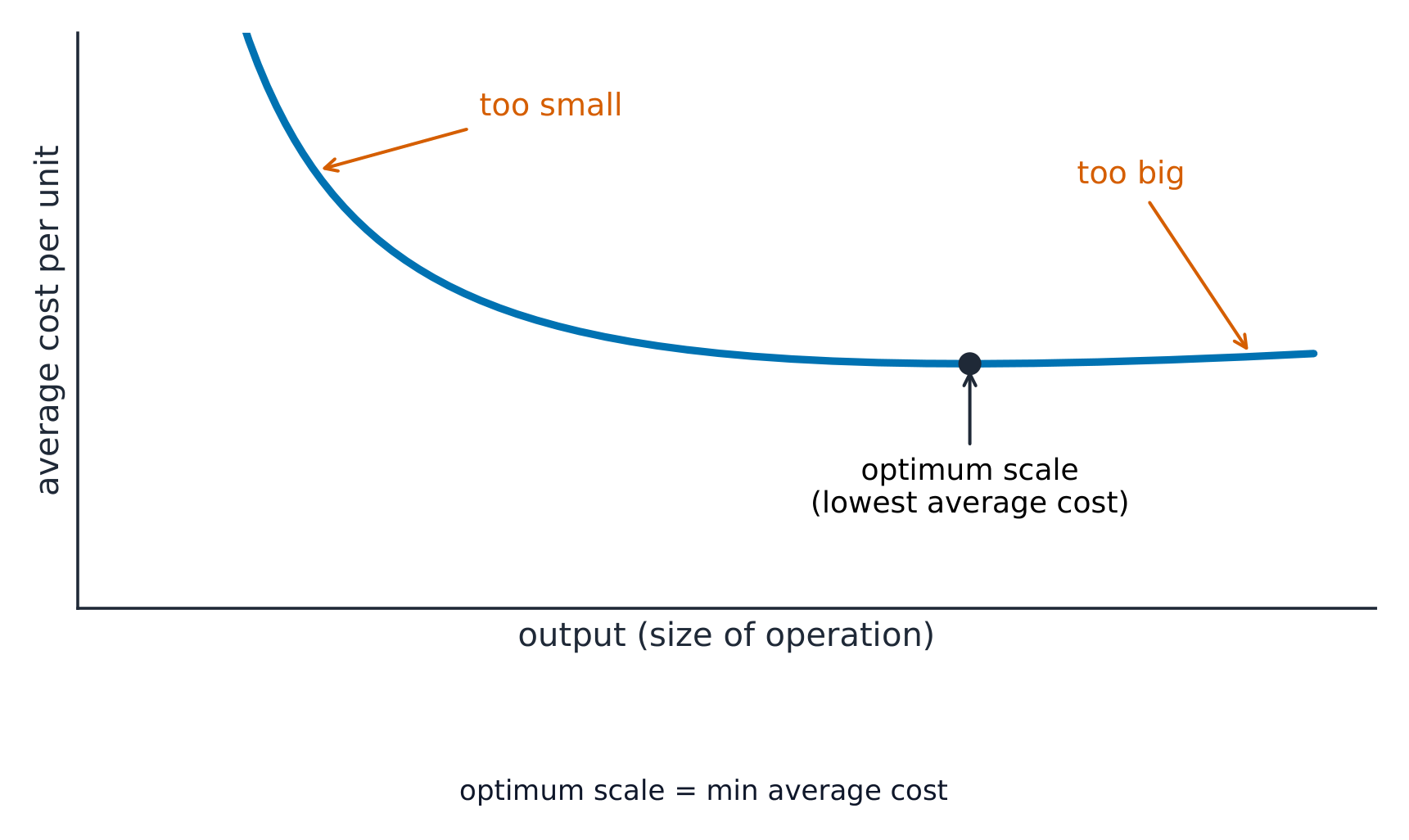
    עקומת עלות ממוצעת בצורת U היורכת בצד השמאלי (כלכלות בקנה מידה), מגיעה לנקודה הנמוכה ביותר (קנה מידה אופטימלי), ואז עולה בצד הימני (מחיקת כלכלות בקנה מידה)
    העלות הממוצעת ליחיד יורדת (מנועי סקאלה) ואז עולה (דיס-סקאלה) כשהחברה גדלה

    דוגמה פתורה. מפעל המייצר 10,000 יחידות יש לו עלויות קבועות של £200,000 ועלויות משתנות של £6 לכל יחיד. הוא מרחיב את הייצור ל-50,000 יחידות, וקניית סיטונאית מצמצמת את העלות המשתנה ל-£5. חשב את העלות ליחיד בכל רמת תפוקה והסבר את הירידה. עלות ליחיד = עלות כוללת ÷ תפוקה. ב-10,000: הכולל = 200,000 + (10,000 × 6) = £260,000, ולכן העלות ליחיד היא 260,000 ÷ 10,000 = £26. ב-50,000: הכולל = 200,000 + (50,000 × 5) = £450,000, ולכן העלות ליחיד היא 450,000 ÷ 50,000 = £9. שני מנועי סקאלה פעילים כאן: העלויות הקבועות מתפשטות על מספר רב יותר של יחידות (£20 ירדו ל-£4 כל אחת), ומנועי רכישה מצמצמים את העלות המשתנה. שימו לב שהעלות הקבועה הכוללת אינה משתנה - רק העלות הקבועה ליחיד יורדת. כתיבת "העלויות הקבועות יורדות" היא טעות שתגרום לאובדן נקודות.

    Explore · ⁨חקור⁩

    Economies of scale · ⁨חיסכון בקנה מידה⁩

    y = ax² + bx + c

    Average cost falls then rises — economies, then diseconomies, of scale. · ⁨העלות הממוצעת יורדת ולאחר מכן עולה — כלכלות אידיאליות, ולאחר מכן דיסאידיאליות, של היקף.⁩

    Vocabulary · ⁨מילון מונחים⁩ Train · ⁨אימון⁩
    English עברית
    economies of scale/ɪˈkɒnəmiz ɒv skeɪl/ חסכוני סקאלה
    average cost/ˈævrɪdʒ kɒst/ עלות ממוצעת
    bulk/bʌlk/ כמות גדולה / בלוקים
    interest/ˈɪntrest/ ריבית
    diseconomies of scale/ˌdɪsɪˈkɒnəmiz ɒv skeɪl/ אי-חסכוני סקאלה
    communication/kəˌmjuːnɪˈkeɪʃn/ תקשורת
    coordination/kəʊˈɔːdɪneɪʃn/ תיאום
    motivation/ˌməʊtɪˈveɪʃn/ הנעה
    mission statement/ˈmɪʃn ˈsteɪtmənt/ ניסוח משימה
    1.4

    Aims, objectives and mission · ⁨מטרות, אופקים ומשימה⁩

    Syllabus · ⁨סיילבוס⁩
    English
    1. explain the importance of, and influences on, business objectives (mission statement, aims, objectives, SMART objectives, strategy and tactics)
    2. explain objectives such as profit maximisation, growth, survival, social and ethical objectives and corporate social responsibility (CSR)
    עברית
    1. הסבר על חשיבותן של מטרות עסקיות, וההשפעות עליהן (הצהרת משימה), מטרות כלליות, מטרות ספציפיות, מטרות SMART, אסטרטגיה וטקטיקות)
    2. הסבר על מטרות כגון מקסימום רווח, צמיחה, הישרדות, מטרות חברתיות ואתיות ואחריות חברתית לעסקים (CSR)

    Source: Cambridge International syllabus · ⁨מקור: הסיילבוס הבינלאומי של קמבריד'ג'⁩

    English

    A mission statement 使命宣言 is a short sentence that says why the business exists and what it wants to be. It guides everyone in the firm.

    From the mission come aims 目的 (broad, long-term goals), and then objectives 目标 (the specific targets that help reach the aims).

    Good objectives are SMART — the first letters of:

    • Specific 具体的 — clear and exact.
    • Measurable 可衡量的 — you can check it with numbers.
    • Achievable 可实现的 — it is possible to reach.
    • Realistic 现实的 — sensible for the resources you have.
    • Time-bound 有时限的 — it has a deadline.

    A strategy 战略 is the long-term plan to meet objectives. Tactics 策略 are the short-term actions that carry out the strategy. Objectives are shaped by the size and age of the firm, who owns it, the company culture, and conditions in the market.

    עברית

    ניסוח משימה הוא משפט קצר שמסביר מדוע החברה קיימת ומה היא שואפת להיות. הוא מנחה את כולם בחברה.

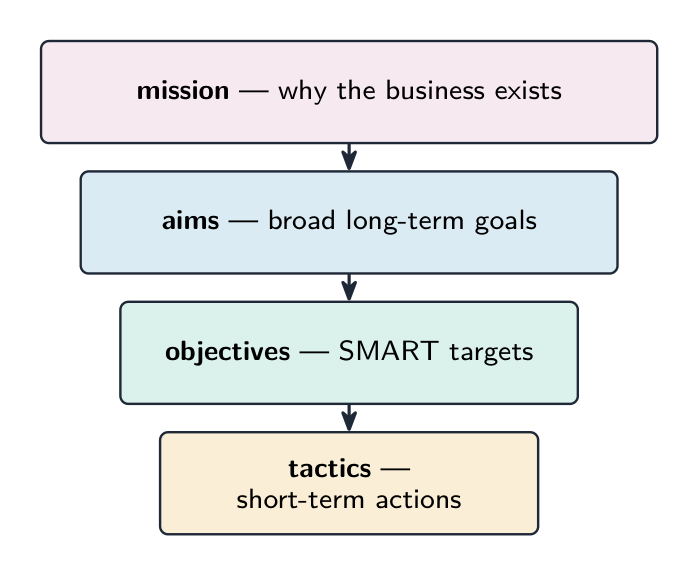
    מן המשימה נובעים אופקים (מטרות רחבות לטווח ארוך), ולאחר מכן אופטימיות (היעדים הספציפיים שעוזרים להשגת האופקים).

    היררכיה מלמעלה למטה: משימה רחבה מובילה לאופקים, ולאחר מכן לאופטימיות SMART ספציפיות, ולאחר מכן לטקטיקות לטווח קצר
    היעדים הופכים צרים ומדויקים יותר במורד השרשרת: משימה רחבה הופכת לאופקים, ולאחר מכן לאופטימיות SMART, ולאחר מכן לטקטיקות יומיומיות

    אופטימיות טובות הן SMART — האותיות הראשונות של:

    • ספציפי (Specific) — ברור ומדויק.
    • ניתן למדידה (Measurable) — ניתן לבדוק אותו באמצעות מספרים.
    • ניתן להשגה (Achievable) — אפשרי להגיע אליו.
    • ריאליסטי (Realistic) — הגיוני בהתאם למשאבים שלך.
    • בעל גבול זמן (Time-bound) — יש לו תאריך סיום.

    אסטרטגיה היא התוכנית לטווח הארוך להשגת האופטימיות. טקטיקות הן הפעולות לטווח הקצר שמבצעות את האסטרטגיה. האופטימיות מעוצבות על ידי גודל וחברת החברה, בעליה, התרבות הארגונית והתנאים בשוק.

    Explore · ⁨חקור⁩

    Business objectives lab · ⁨מעבדת מטרות עסקיות⁩

    Match business examples to the objective they reveal. · ⁨התאמו דוגמאות עסקיות למטרה שהן משקפות.⁩

    Vocabulary · ⁨מילון מונחים⁩ Train · ⁨אימון⁩
    English עברית
    aims/eɪmz/ יעדים
    objectives/ɒbˈdʒektɪvz/ מטרות
    specific/spəˈsɪfɪk/ ספציפי
    measurable/ˈmeʒərəbl/ ניתן למדידה
    achievable/əˈtʃiːvəbl/ מתקבל
    realistic/rɪəˈlɪstɪk/ מציאותי
    time-bound/taɪm baʊnd/ מוגדר בזמן
    strategy/ˈstrætədʒi/ אסטרטגיה
    tactics/ˈtæktɪks/ טקטיקות
    1.4

    Types of business objective · ⁨סוגי אופטימיות עסקיות⁩

    English
    Objective What it means
    profit maximisation 利润最大化 making the largest possible profit
    growth getting bigger — more sales, more branches
    survival 生存 staying in business, vital for new firms and in hard times
    market share winning a larger share of the market
    social and ethical 道德 objectives doing what is morally right, such as fair pay

    Corporate social responsibility 企业社会责任 (CSR) is the idea that a business should act in the best interests of society and the environment, not just make profit. Examples are treating workers fairly, cutting pollution 污染, and helping the local community.

    A firm's objectives can change over time. A new firm may aim to survive; later it may aim to grow; a large, safe firm may focus on profit or CSR.

    עברית
    אופטימיות מה זה אומר
    מינימום רווח (profit maximisation) יצירת הרווח הגבוה ביותר האפשרי
    צמיחה (growth) גדילה - מכירות רבות יותר, סניפים נוספים
    הישרדות (survival) שמירה על פעילות העסק, קריטי לחברות חדשות ובזמנים קשים
    חלק משוק (market share) זכייה בחלק שוק גדול יותר
    מטרות חברתיות ואתיות ביצוע פעולות נכונות מוסרית, כמו תשלום הוגן
    מבחן SMART למטרה טובה: ספציפי, נמדד, ניתן להשגה, ריאליסטי, קבוע בזמן
    מטרות SMART: ספציפיות, נמדדות, ניתנות להשגה, ריאליות, מוגבלות בזמן

    אחריות חברתית עסקית (CSR) היא העיקרון לפיו עסק צריך לפעול לטובת החברה והסביבה, ולא רק להרוויח רווח. דוגמאות הן טיפול הוגן בעובדים, הפחתת זיהום, ועזרה לקהילה המקומית.

    מטרות של חברה עשויות להשתנות לאורך זמן. חברה חדשה עשויה לשאוף להישרדות; מאוחר יותר עשויה לשאוף לצמיחה; חברה גדולה ובטוחה עשויה להתמקד ברווח או ב-CPR.

    Vocabulary · ⁨מילון מונחים⁩ Train · ⁨אימון⁩
    English עברית
    profit/ˈprɒfɪt/ רווח
    market share/ˈmɑːkɪt ʃeə/ נתח שוק
    market capitalisation/ˈmɑːkɪt ˌkæpɪtəlaɪˈzeɪʃn/ שוק ההון
    communities/kəˈmjuːnɪtiz/ קהילות
    internal growth/ɪnˈtɜːnl ɡrəʊθ/ גידול פנימי
    external growth/ekˈstɜːnl ɡrəʊθ/ גידול חיצוני
    profit maximisation/ˈprɒfɪt ˌmæksɪmaɪˈzeɪʃn/ מיזוג רווחים
    survival/səˈvaɪvl/ הישרדות
    ethical/ˈeθɪkl/ אתי
    corporate social responsibility/ˈkɔːpərət ˈsəʊʃl rɪˌspɒnsəˈbɪlɪti/ אחריות חברתית לעסקים
    pollution/pəˈluːʃn/ זיהום
    1.5

    Stakeholders · ⁨בעלי עניין⁩

    Syllabus · ⁨סיילבוס⁩
    English
    1. identify internal and external stakeholders and their objectives
    2. explain how and why the objectives of stakeholders may conflict and how conflicts can be managed
    עברית
    1. זיהוי בעלי עניין פנימיים וחיצוניים והמטרות שלהם
    2. הסבר על אופן ולמה המטרות של בעלי עניין עשויות להתנגד זו לזו, וכיצד ניתן לנהל התנגדויות אלו

    Source: Cambridge International syllabus · ⁨מקור: הסיילבוס הבינלאומי של קמבריד'ג'⁩

    English

    A stakeholder 利益相关者 is any person or group with an interest in a business and how well it does.

    Internal stakeholders 内部利益相关者 are inside the business:

    • owners and shareholders — want profit and a good return.
    • managers 管理者 — want growth, job security and bonuses.
    • employees — want fair pay, safe work and job security.

    External stakeholders 外部利益相关者 are outside the business:

    Stakeholder Main objective
    customers 顾客 good quality at a fair price
    suppliers 供应商 regular orders, paid on time
    lenders 贷款方 (banks) to be repaid with interest
    the government tax, jobs, and that the firm obeys the law
    local community jobs, but little pollution or noise
    pressure groups 压力团体 to protect a cause, such as the environment

    Why stakeholder objectives conflict

    Stakeholders often want different things, so their objectives can conflict 冲突 (clash). For example:

    • owners want higher profit, but employees want higher pay — and higher pay lowers profit.
    • customers want low prices, but owners want a high profit margin.
    • the local community wants less pollution, but cutting pollution can raise costs.

    How conflict can be managed

    • keep good communication with every group.
    • compromise 妥协 — give each group part of what it wants.
    • negotiation 谈判 — talk until the groups reach an agreement.
    • decide which stakeholders matter most for each decision, and act on that.
    עברית

    בעל עניין הוא כל אדם או קבוצה עם עניין בחברה ובביצועיה.

    מפת בעלי עניין עם החברה במרכז, מוקפת על ידי בעלי עניין פנימיים (בעלים, מנהלים, עובדים) ובעלי עניין חיצוניים (לקוחות, ספקים, משקיעים, ממשלה, קהילה, קבוצות לחץ)
    לכל בעלי העניין הפנימיים והחיצוניים יש עניין בעסק

    בעלי עניין פנימיים נמצאים בתוך העסק:

    • בעלים ומניהלים — שואפים לרווח ולהשבה טובה.
    • מנהלים — שואפים לצמיחה, ביטחון תעסוקתי ובונוסים.
    • עובדים — שואפים לתשלום הוגן, עבודה בטוחה וביטחון תעסוקתי.

    בעלי עניין חיצוניים נמצאים מחוץ לעסק:

    בעל עניין מטרה ראשית
    לקוחות איכות טובה במחיר הוגן
    ספקים הזמנות קבועות, תשלום בזמן
    משקיעים (בנקים) החזר עם ריבית
    הממשלה מיסים, תעסוקה, ושמירת חוקי החברה על ידי החברה
    הקהילה המקומית תעסוקה, אך מעט זיהום או רעש
    קבוצות לחץ הגנה על נושא מסוים, כגון הסביבה

    מדוע מטרות בעלי עניין עומדות בסתירה

    לעיתים קרובות, בעלי העניין רוצים דברים שונים, ולכן המטרות שלהם עשויות להתנגש (להיכנס בסכסוך). לדוגמה:

    • בעלי עסקים רוצים רווח גבוה יותר, אך עובדים רוצים משכורת גבוהה יותר — ומשכורת גבוהה יותר מפחיתה את הרווח.
    • לקוחות רוצים מחירים נמוכים, אך בעלי עסקים רוצים מרווח רווח גבוה.
    • הקהילה המקומית רוצה פחות זיהום, אך הפחתת הזיהום עלולה להגדיל את העלויות.

    כיצד ניתן לנהל סכסוך

    • לשמור על תקשורת טובה עם כל קבוצה.
    • פישור — לתת לכל קבוצה חלק ממה שהיא רוצה.
    • משא ומתן — לדבר עד שהקבוצות מגיעות להסכם.
    • לקבוע אילו בעלי עניין הם החשובים ביותר בכל החלטה, ולהגיב בהתאם לכך.
    Explore · ⁨חקור⁩

    Stakeholder interest lab · ⁨מעבדת עניין של בעלי עניין⁩

    See how different stakeholders judge the same business decision. · ⁨ראו כיצד בעלי עניין שונים משפטים החלטת עסק אחת.⁩

    Vocabulary · ⁨מילון מונחים⁩ Train · ⁨אימון⁩
    English עברית
    stakeholder/ˈsteɪkhəʊldə/ בעל עניין
    internal stakeholders/ɪnˈtɜːnl ˈsteɪkhəʊldəz/ בעלי עניין פנימיים
    external stakeholders/ekˈstɜːnl ˈsteɪkhəʊldəz/ בעלי עניין חיצוניים
    managers/ˈmænɪdʒəz/ מנהלים
    customers/ˈkʌstəməz/ לקוחות
    suppliers/səˈplaɪəz/ ספקים
    lenders/ˈlendəz/ מקבלי הלוואות
    pressure groups/ˈpreʃə ɡruːps/ קבוצות לחץ
    conflict/ˈkɒnflɪkt/ מחלוקת
    compromise/ˈkɒmprəmaɪz/ התאמה
    negotiation/nɪˌɡəʊʃɪˈeɪʃn/ משא ומתן
    1.5

    Exam tips · ⁨טיפים לבחינות⁩

    English
    • Define added value $=$ selling price $-$ cost of bought-in inputs, and give a way to raise it (branding, quality, design).
    • Distinguish unlimited vs limited liability and link it to sole trader/partnership versus Ltd/plc.
    • Measure business size in more than one way (employees, revenue, capital employed, market share) — note each has limits.
    • Distinguish objectives (SMART, specific) from a mission (overall purpose).
    • In evaluation, use stakeholder conflicts (owners vs employees vs community) to argue both sides.
    עברית
    • הגדר ערך מוסף $=$ מחיר מכירה $-$ עלות קניית כניסות, ותן דרך להעלאתו (מותג, איכות, עיצוב).
    • להבדיל בין אחריות בלתי מוגבלת לעומת אחריות מוגבלת ולקשר זאת לבעל מלאכה יחיד/שותפות מול Ltd/plc.
    • למדוד את גודל העסק במספר דרכים (עובדים, הכנסות, הון מופעל, נתח שוק) — תשמו לב שכל אחת מהן יש לה הגבלות.
    • להבדיל בין מטרות (SMART, ספציפיות) לבין משימה (מטרה כוללת).
    • בהערכה, השתמשו בסכסוכי בעלי עניין (בעלים מול עובדים מול קהילה) כדי להעלות את שני הצדדים.
  • 2

    Human resource management · ⁨ניהול משאבי אנוש⁩

    Watch lesson · ⁨צפה בשיעור⁩
    2.1

    What human resource management does · ⁨מה עושה ניהול משאבי אנוש⁩

    Syllabus · ⁨סיילבוס⁩
    English
    1. explain the purpose and roles of human resource management (HRM): workforce planning, recruitment and selection, training and development
    2. explain redundancy and dismissal, employer/employee rights and the management of change in HR
    3. calculate and interpret labour turnover and labour productivity
    עברית
    1. הסבר את המטרות והתפקידים של ניהול משאבי אנוש (HRM): תכנון כוח עבודה, גיוס ובחירה, **הדרכה ופיתוח
    2. הסבר פיטורים ופיטורי עובדים, זכויות מעסיק/עובד וניהול שינויים ב-HR
    3. חשב ופרש תדירות מעבר ותפוקת עבודה

    Source: Cambridge International syllabus · ⁨מקור: הסיילבוס הבינלאומי של קמבריד'ג'⁩

    English

    Human resource management 人力资源管理 (HRM) is the part of a business that looks after its people. Good HRM makes sure the firm has enough staff, with the right skills, who are well trained and motivated.

    The main roles of HRM are:

    • workforce planning 人力规划 — working out how many staff, and what skills, the business will need in the future.
    • recruitment 招聘 and selection 甄选 — finding people to apply for jobs, then choosing the best.
    • training 培训 and development 培养 — improving staff skills now and helping them grow for the future.
    עברית

    ניהול משאבי אנוש (HRM) הוא החלק בעסק שמטפל באנשים שלו. ניהול משאבי אנוש טוב מבטיח שהחברה תהיה לה מספיק עובדים, עם המיומנויות הנכונות, שנמצאים בהכשרה טובה ומוטבים.

    מנהלים בישיבת עסקים סביב שולחן
    מנהלים מתכננים וארגונים את כוח העבודה — ליבה של ניהול משאבי אנוש.

    התפקידים המרכזיים של ניהול משאבי אנוש הם:

    • תכנון כוח עבודה — לחשב כמה עובדים ואל מיומנויות העסק יזדקק בעתיד.
    • גיוס ובחירה — מציאת מועמדים לתפקידים, ולאחר מכן בחירת המתאים ביותר.
    • הדרכה ופיתוח — שיפור כישורי העובדים הנוכחיים ועזרה להם לצמוח לעתיד.
    Explore · ⁨חקור⁩

    Human resources decision lab · ⁨מעבדת החלטות משאבי אנוש⁩

    Classify HR actions by the job they do inside the workforce. · ⁨מיינות פעולות משאבי אנוש לפי התפקידן בתוך הכוח האדם.⁩

    Vocabulary · ⁨מילון מונחים⁩ Train · ⁨אימון⁩
    English עברית
    management/ˈmænɪdʒmənt/ ניהול
    planning/ˈplænɪŋ/ תכנון
    organising/ˈɔːɡənaɪzɪŋ/ ארגון
    commanding/kəˈmændɪŋ/ פקודות
    coordinating/kəʊˈɔːdɪneɪtɪŋ/ קואורדינציה
    controlling/kənˈtrəʊlɪŋ/ בקרה
    roles/rəʊlz/ תפקידים
    2.1

    Workforce planning, recruitment and selection · ⁨תכנון עובדים, גיוס ובחירה⁩

    English

    Workforce planning looks at the firm's plans, then at the staff it already has, to find the gap. The gap may be filled by hiring, training, or moving staff.

    To recruit, the firm first writes:

    • a job description 职位描述 — the title, duties and tasks of the job.
    • a person specification 人员规格 — the skills, qualifications 资格 and qualities the right person should have.

    The firm can recruit from inside or outside:

    • internal recruitment 内部招聘 — filling the job with someone who already works there. It is cheaper and faster, and the person is known, but no new ideas come in.
    • external recruitment 外部招聘 — hiring someone from outside. It brings new skills and ideas, but costs more and is slower.

    Selection methods include reading application forms and CVs, interviews 面试, tests, and group tasks.

    עברית

    תכנון עובדים בודק את התוכניות של החברה, ולאחר מכן את הצוות הקיים, כדי לזהות את הפער. הפער יכול למלא על ידי גיוס, הדרכה או העברת עובדים.

    גיוס: כתיבת תיאור תפקיד ומפרט אישיות, גיוס פנימי או חיצוני, ולאחר מכן בחירת המועמד הטוב ביותר
    גיוס: לתאר את התפקיד, לפרסם, ולאחר מכן לבחור את המועמד הטוב ביותר

    כדי לגייס, החברה תחילה כותבת:

    • תיאור תפקיד — הכינוי, התפקידים והמשימות של התפקיד.
    • מפרט אישיות — הכישורים, הסמכות והתכונות שהאדם המתאים צריך להיות בעל.

    לחברה יש אפשרות לגייס מפנים או מחוץ לחברה:

    • גיוס פנימי — מילוי התפקיד על ידי מי שעובד כבר בה. זה זול ומהיר יותר, והאדם מוכר, אך לא נכנסים רעיונות חדשים.
    • גיוס חיצוני — גיוס אדם מבחוץ. זה מביא כישורים ורעיונות חדשים, אך עולה יותר וארוך יותר.

    שיטות הבחירה כוללות קריאת טופסי בקשה וCVs, ראיונות, מבחנים ומשימות קבוצתיות.

    אישה צעירה עונה לשאלות בראיון עבודה
    בחירה: הראיון הוא השלב שרוב המועמדים עוברים בו, והוא הנבדק ביותר במבחן
    Vocabulary · ⁨מילון מונחים⁩ Train · ⁨אימון⁩
    English עברית
    human resource management/ˈhjuːmən rɪˈzɔːs ˈmænɪdʒmənt/ ניהול משאבי אנוש
    workforce planning/ˈwɜːkfɔːs ˈplænɪŋ/ תכנון כוח אדם
    recruitment/rɪˈkruːtmənt/ גיוס
    selection/sɪˈlekʃn/ בחירה
    2.1

    Training and development · ⁨הדרכה ופיתוח⁩

    English

    Training improves the skills staff need to do their jobs well. Common types are:

    • induction training 入职培训 — given to new staff so they learn how the firm works.
    • on-the-job training 在岗培训 — learning while doing the real job.
    • off-the-job training 脱产培训 — learning away from the workplace, such as a course.

    Training costs time and money, but it raises quality, productivity 生产率 and motivation, and helps keep staff.

    עברית

    ההדרכה משפרת את הכישורים שהצוות צריך כדי לבצע את עבודתם היטב. סוגים נפוצים הם:

    שלושה סוגי הדרכה: הכשרה ראשונית לעובדים חדשים, הדרכה בעבודה בזמן ביצוע, והדרכה מחוץ לעבודה הרחוקה מהמקום
    שלושה סוגי הכשרות: כניסה לתפקיד, למידה בעבודה ולמידה מחוץ לעבודה
    • הדרכה ראשונית — נתנת לעובדים חדשים כדי שילמדו כיצד החברה עובדת.
    • הדרכה בעבודה — למידה בזמן ביצוע התפקיד האמיתי.
    • הדרכה מחוץ לעבודה — למידה הרחוקה מהמקום העבודה, כמו קורס.

    האימונים דורשים זמן וכסף, אך הם משפרים איכות, תפוקה ותמריצות, ועוזרים לשמור על עובדים.

    Vocabulary · ⁨מילון מונחים⁩ Train · ⁨אימון⁩
    English עברית
    training/ˈtreɪnɪŋ/ הדרכה
    development/dɪˈveləpmənt/ פיתוח
    job description/dʒɒb dɪˈskrɪpʃn/ תיאור תפקיד
    person specification/ˈpɜːsn ˌspesɪfɪˈkeɪʃn/ מפרט אישי
    qualifications/ˌkwɒlɪfɪˈkeɪʃnz/ תעודות לימודים
    internal recruitment/ɪnˈtɜːnl rɪˈkruːtmənt/ גיוס פנימי
    external recruitment/ekˈstɜːnl rɪˈkruːtmənt/ גיוס חיצוני
    interviews/ˈɪntəvjuːz/ ראיונות
    induction training/ɪnˈdʌkʃn ˈtreɪnɪŋ/ הדרכה בהתאמה אישית
    on-the-job training/ɒnðə dʒɒb ˈtreɪnɪŋ/ הדרכה בתפקיד
    off-the-job training/ɒf ðə dʒɒb ˈtreɪnɪŋ/ הדרכה מחוץ למקום העבודה
    2.1

    Ending employment · ⁨סיום תעסוקה⁩

    English

    Sometimes a worker has to leave.

    • redundancy 裁员 happens when the job itself is no longer needed — for example, when a machine replaces it. It is not the worker's fault.
    • dismissal 解雇 happens when a worker is made to leave because of poor work or bad behaviour.
    עברית

    לעיתים עובד חייב להתפטר.

    • פיטורים מתרחשים כאשר התפקיד עצמו אינו נדרש יותר — למשל, כאשר מכונה מחליפה אותו. זה לא אשמת העובד.
    • התפטרות מתרחשת כאשר עובד מוותר על תפקידו בשל ביצועים לקויים או התנהגות לא ראויה.
    2.1

    Rights and managing change · ⁨זכויות וניהול שינוי⁩

    English

    Both sides have rights and duties. The employer 雇主 must follow the law on pay, safety, working hours and unfair dismissal. The employee 雇员 must work as agreed and follow safe, fair rules. These rights 权利 protect both sides.

    Businesses change often — new technology, new markets, or restructuring 重组. The management of change 变革管理 in HR means planning the change, explaining it clearly, training staff for new roles, and listening to worries, so staff accept the change instead of resisting it.

    עברית

    לשני הצדדים ישנן זכויות ומחויבויות. המעסיק חייב לפתוח בחוקי השכר, בטיחות, שעות עבודה והתפטרות לא הוגנת. העובד חייב לעבוד כפי שהוסכם ולפתוח בכללים בטוחים והוגנים. זכויות אלו מגנות על שני הצדדים.

    עסקים משתנים לעיתים קרובות — טכנולוגיה חדשה, שווקים חדשים או ארגון מחדש. ניהול השינוי במשאבי אנוש פירונו לתכנן את השינוי, להסביר אותו באופן ברור, לאמן את העובדים לתפקידים חדשים ולהקשיב לדאגות, כדי שעובדים יקבלו את השינוי במקום להתנגד לו.

    2.1

    Measuring the workforce · ⁨מדידת כוח העבודה⁩

    English

    Two simple measures help managers judge how the workforce is doing.

    Labour turnover 员工流失率 shows the percentage of staff who leave in a year:

    $$\text{labour turnover} = \frac{\text{number of staff leaving}}{\text{average number employed}} \times 100\%$$

    High labour turnover can mean low pay, poor motivation or weak management. It raises the cost of recruiting and training.

    Worked example. A firm employs $200$ people on average, and $30$ leave during the year. Find its labour turnover.

    $$\text{labour turnover} = \frac{30}{200} \times 100\% = 15\%.$$

    Labour productivity 劳动生产率 shows the output made by each worker:

    $$\text{labour productivity} = \frac{\text{total output}}{\text{number of employees}}$$

    Higher labour productivity lowers the cost of each unit, so the firm can compete better.

    Worked example. A team of $8$ workers makes $2400$ units in a week. Find the labour productivity.

    $$\text{labour productivity} = \frac{2400}{8} = 300 \text{ units per worker per week}.$$
    עברית

    שתי מדדים פשוטים עוזרים למנהלים להעריך כיצד כוח העבודה מבצע.

    תנודת עובדים מראה את אחוז העובדים המתפטרים בשנה:

    $$\text{labour turnover} = \frac{\text{number of staff leaving}}{\text{average number employed}} \times 100\%$$

    תנודת עובדים גבוהה עשויה להעיד על שכר נמוך, תמריצות לקויה או ניהול חלש. היא מעלה את עלויות הגיוס והאימונים.

    דוגמה מפורטת. חברת המשרתים $200$ אנשים בממוצע, ו-$30$ מתפטרים במהלך השנה. מצאו את תנודת העובדים שלה.

    $$\text{labour turnover} = \frac{30}{200} \times 100\% = 15\%.$$

    תפוקת עובדים מראה את הייצור שנוצר על ידי כל עובד:

    $$\text{labour productivity} = \frac{\text{total output}}{\text{number of employees}}$$

    תפוקת עובדים גבוהה מפחיתה את עלות כל יחידה, כך שהחברה יכולה להתחרות טוב יותר.

    דוגמה מפורטת. צוות של $8$ עובדים מייצר $2400$ יחידות בשבוע. מצאו את תפוקת העובדים.

    $$\text{labour productivity} = \frac{2400}{8} = 300 \text{ units per worker per week}.$$
    Vocabulary · ⁨מילון מונחים⁩ Train · ⁨אימון⁩
    English עברית
    productivity/ˌprɒdəkˈtɪvɪti/ תפוקה
    redundancy/rɪˈdʌndənsi/ חוסר תלות
    dismissal/dɪˈsmɪsl/ פיטורים
    employer/emˈplɔɪə/ מעסיק
    employee/emˈplɔɪiː/ עובד
    rights/raɪts/ זכויות
    restructuring/rɪˈstrʌktʃərɪŋ/ ארגון מחדש
    management of change/ˈmænɪdʒmənt ɒv tʃeɪndʒ/ ניהול שינוי
    labour turnover/ˈleɪbə ˈtɜːnəʊvə/ תנודת כוח עבודה
    labour productivity/ˈleɪbə ˌprɒdəkˈtɪvɪti/ תפוקת עבודה
    motivation/ˌməʊtɪˈveɪʃn/ הנעה
    scientific management/saɪənˈtɪfɪk ˈmænɪdʒmənt/ ניהול מדעי
    piece rate/piːs reɪt/ תעריף יחידה
    human relations/ˈhjuːmən rɪˈleɪʃnz/ יחסים אנושיים
    hierarchy of needs/ˈhaɪərɑːki ɒv niːdz/ היררכיה של צרכים
    two-factor theory/tuː ˈfæktə ˈθɪəri/ תיאוריית שני הגורמים
    achievement/əˈtʃiːvmənt/ הישגיות
    expectancy theory/ekˈspektənsi ˈθɪəri/ תיאוריית הציפיות
    physiological needs/ˌfɪzɪəˈlɒdʒɪkl niːdz/ צרכים פיזיולוגיים
    esteem needs/eˈstiːm niːdz/ צרכי הערכה
    recognition/ˌrekəɡˈnɪʃn/ הכרה
    self-actualisation/self ˌæktʃuːəlaɪˈzeɪʃn/ התאבדות עצמית
    hygiene factors/ˈhaɪdʒiːn ˈfæktəz/ גורמי היגיינה
    2.2

    Why motivation matters · ⁨למה תמריצות חשובה⁩

    Syllabus · ⁨סיילבוס⁩
    English
    1. explain the importance of motivation and the main motivation theories (Taylor, Mayo, Maslow, Herzberg, McClelland, Vroom)
    2. explain financial motivators (wages, salary, piece rate, commission, bonus, profit sharing, performance-related pay, fringe benefits)
    3. explain non-financial motivators (job enrichment, job rotation, job enlargement, empowerment, teamworking)
    עברית
    1. הסבר את חשיבות המוטיבציה ותאוריות המotivation המרכזיות (טיילור, מייאו, מסלו, הרצברג, מקלנד, ברום)
    2. הסבר מotivators פיננסיים (שכר, תשלום לפי יחידה, עמלה, בונוס, שתפות ברווחים, תשלום הקשור לביצועים, תועלות נלוות)
    3. הסבר מotivators לא פיננסיים (עיבוד תפקיד, סיבוב תפקיד, הרחבת תפקיד, הענקת סמכות, עבודת צוות)

    Source: Cambridge International syllabus · ⁨מקור: הסיילבוס הבינלאומי של קמבריד'ג'⁩

    English

    Motivation 激励 is the desire to work hard and do a good job. Motivated staff produce more and better work, take fewer days off, stay longer, and give better service. So motivation lowers costs and raises quality.

    עברית

    תמריצות היא הרצון לעבוד קשה ולעשות עבודה טובה. עובדים ממוטיבים מייצרים יותר ועבודה טובה יותר, לוקחים פחות ימי חופשה, נשארים זמן רב יותר, ומספקים שירות טוב יותר. לכן, תמריצות מפחיתה עלויות ומשפרת איכות.

    Watch lesson · ⁨צפה בשיעור⁩
    2.2

    Theories of motivation · ⁨תיאוריות תמריצות⁩

    English

    Several thinkers tried to explain what motivates people. You should know the main idea of each.

    Thinker Main idea
    Taylor scientific management 科学管理 — workers are mainly motivated by money. Pay them per unit made (piece rate 计件工资) and they work harder.
    Mayo human relations 人际关系 — workers are also motivated by attention, teamwork and feeling part of a group.
    Maslow hierarchy of needs 需求层次 — people meet needs in order, from low to high (see below).
    Herzberg two-factor theory 双因素理论 — some things cause unhappiness if missing, others truly motivate (see below).
    McClelland people are driven by three needs in different amounts: achievement 成就, power and affiliation (belonging).
    Vroom expectancy theory 期望理论 — people work hard only if they believe the effort will lead to a reward they want.

    Maslow's hierarchy of needs

    Maslow said people try to meet lower needs first, then move up:

    1. physiological needs 生理需求 — food, water, rest (met by pay).
    2. safety needs — a safe job and workplace.
    3. social needs — friendship and being part of a team.
    4. esteem needs 尊重需求 — respect and recognition 认可.
    5. self-actualisation 自我实现 — reaching your full potential.

    Herzberg's two factors

    • hygiene factors 保健因素 — things like pay, conditions and rules. If they are poor, staff are unhappy; but fixing them does not truly motivate.
    • motivators 激励因素 — things like achievement, responsibility and recognition. These give real, lasting motivation.
    עברית
    היררכית הצרכים של מסלו כמצע בעל חמישה שלבים
    היררכיית הצרכים של מסלו, עם דוגמאות מהעבודה בכל רמה.

    חשיבה מספר ניסתה להסביר מה מניע את האנשים. עליך לדעת את הרעיון המרכזי של כל אחד מהם.

    חושב רעיון מרכזי
    טיילור ניהול מדעי — העובדים מונעים בעיקר על ידי כסף. לשלם להם לפי יחידת תוצרת (תעריף ביחידה) ולעודד אותם לעבוד קשה יותר.
    מייו יחסים אנושיים — העובדים מונעים גם על ידי תשומת לב, עבודה צוותית ותחושת שייכות לקבוצה.
    מסלו היררכיית צרכים — אנשים סוברים צרכים בסדר, מהנמוך לגבוה (ראה למטה).
    הרצברג תיאוריית שני הגורמים — ישנם דברים הגורמים לאי-שביעות רצון אם הם חסרים, וישנם אחרים שמניעים באמת (ראה למטה).
    מקלנד אנשים מונעים על ידי שלושה צרכים בכמויות שונות: השגה, כוח והיבדלות (שייכות).
    ברום תיאוריית הציפיות — אנשים עובדים קשה רק אם הם מאמינים שהמאמץ יוביל לתגמול שרצוי להם.

    היררכיית הצרכים של מסלו

    מסלו אמר שאנשים מנסים לספק צרכים נמוכים תחילה, ואז עולים:

    1. צרכים פיזיולוגיים — אוכל, מים ומנוחה (מוספקים על ידי משכורת).
    2. צרכי בטיחות — עבודה בטוחה ומקום עבודה בטוח.
    3. צרכים חברתיים — חברות והיות חלק מצוות.
    4. צרכי ממשלתיים — כבוד והכרה.
    5. התאוששות עצמית — השגת הפוטנציאל המלא שלך.
    פירמידה בעלת חמישה שלבים של צרכי מסלו, רחבה ביותר בתחתית (פיזיולוגיים) ועד לראש (התאוששות עצמית), עם חץ המראה שהצרכים הנמוכים מסופקים תחילה
    היררכיית צרכים של מסלו: אנשים מקיימים צרכים נמוכים לפני גבוהים

    שני גורמי הרצברג

    • גורמי היגיינה — דברים כמו משכורת, תנאי עבודה וחוקים. אם הם גרועים, העובדים לא מאושרים; אך תיקונם אינו מעודד באמת.
    • מניעים — דברים כמו השגה, אחריות והערכה. אלו מעניקים מניעה אמיתית ומתמשכת.
    תרשים הרצברג: גורמי היגיינה (שכר, תנאי עבודה) מונעים רק אי-שביעות רצון בקרב העובדים, בעוד שמעוררים (הישגים, הכרה) מספקים מוטיבציה אמיתית ועמידה
    גורמי היגיינה מונעים אי-שביעות רצון; רק מעוררים מספקים מוטיבציה אמיתית ועמידה
    Explore · ⁨חקור⁩

    Maslow's hierarchy of needs · ⁨היררכית הצרכים של מסלו⁩

    Maslow said people are motivated by needs in order — satisfy the lower ones first, then they aim higher. · ⁨מסלו טען שגורמי מוטיבציה אצל אנשים מסודרים לפי רמות: יש לספק תחילה את הצרכים הנמוכים יותר, ואז השאיפה היא לגבהות.⁩

    2.2

    Financial motivators · ⁨מעוררים פיננסיים⁩

    English

    Financial motivators 经济激励 are rewards paid in money:

    • wages 工资 — pay by the hour or week, often for manual work 体力劳动.
    • salary 薪水 — a fixed yearly amount, paid monthly.
    • piece rate — pay for each unit made.
    • commission 佣金 — pay based on how much you sell.
    • bonus 奖金 — an extra payment for good results.
    • profit sharing 利润分享 — staff get a share of the firm's profit.
    • performance-related pay 绩效工资 — extra pay for those who meet targets.
    • fringe benefits 附加福利 — non-cash extras, such as a company car or health care.
    עברית

    מעוררים פיננסיים הם פרסים המושלמים בכסף:

    • שכר — תשלום לפי שעה או שבוע, לעיתים קרובות עבור עבודת יד.
    • משכורת — סכום שנתי קבוע, המשולם בחודשי.
    • תשלום לפי יחידה — תשלום על כל יחידה המיוצרת.
    • עמלה — תשלום הנתון לכמות המכירות.
    • בונוס — תוספת תשלום על ביצועים טובים.
    • שתפות ברווח — העובדים מקבלים חלק מהרווח של החברה.
    • תשלום הקשור לביצועים — תוספת תשלום עבור אלו שעומדים במטרות.
    • זכויות נלוות — תוספות שאינן כספיות, כמו רכב חברה או טיפול רפואי.
    Explore · ⁨חקור⁩

    Motivation methods lab · ⁨מעבדת שיטות מוטיבציה⁩

    Compare financial and non-financial ways to raise effort. · ⁨השוו בין דרכים פיננסיות ולא-פיננסיות להגברת מאמץ.⁩

    2.2

    Non-financial motivators · ⁨מעוררים לא פיננסיים⁩

    English

    Non-financial motivators 非经济激励 reward staff without extra money, by making work more interesting and giving more control:

    • job enrichment 工作丰富化 — giving more challenging tasks and responsibility.
    • job rotation 工作轮换 — moving between different tasks to reduce boredom.
    • job enlargement 工作扩大化 — adding more tasks at the same level.
    • empowerment 授权 — letting staff make their own decisions about their work.
    • teamworking 团队合作 — organising staff into teams that share goals.
    עברית

    מעוררים לא פיננסיים משמרים את העובדים ללא תוספת כסף, על ידי הפכת העבודה למעניינת יותר ומתן שליטה גדולה יותר:

    • עושר תפקיד — מתן משימות מאתגרות יותר ואחריות רבה יותר.
    • סיבוב תפקידים — מעבר בין משימות שונות כדי להקטין שעמום.
    • הרחבת תפקיד — הוספת משימות נוספות באותה רמה.
    • הענקת סמכות — האפשרת לעובדים לקבל החלטות עצמאיות לגבי עבודתם.
    • עבודה צוותית — ארגון העובדים לצוותים השותפים במטרות משותפות.
    מפת חשבון המפרדת דרכים לעורר מוטיבציה בקרב העובדים לתוך פרסים פיננסיים (שכר, תשלום לפי יחידה, בונוס) ומתודולוגיות לא פיננסיות (עושר תפקיד, סיבוב, הענקת סמכות, עבודה צוותית)
    המניעים הם פיננסיים (כסף) או לא פיננסיים (עבודה טובה ומלאה יותר)
    Vocabulary · ⁨מילון מונחים⁩ Train · ⁨אימון⁩
    English עברית
    motivators/ˈməʊtɪveɪtəz/ מניעים
    financial motivators/faɪˈnænʃl ˈməʊtɪveɪtəz/ מוטיבטורים פיננסיים
    wages/ˈweɪdʒɪz/ שכר
    manual work/ˈmænjuːəl wɜːk/ עבודת יד
    salary/ˈsæləri/ שכר בסיס
    commission/kəˈmɪʃn/ עמלה
    bonus/ˈbəʊnəs/ בונוס
    profit sharing/ˈprɒfɪt ˈʃeərɪŋ/ חלוקת רווחים
    performance-related pay/pəˈfɔːməns rɪˈleɪtɪd peɪ/ תמורה הקשורה לביצועים
    fringe benefits/frɪndʒ ˈbenɪfɪts/ טובות נוספות
    non-financial motivators/nɒn faɪˈnænʃl ˈməʊtɪveɪtəz/ מוטיבטורים לא פיננסיים
    job enrichment/dʒɒb enˈrɪtʃmənt/ עושר תפקידים
    job rotation/dʒɒb rəʊˈteɪʃn/ סיבוב תפקידים
    job enlargement/dʒɒb enˈlɑːdʒmənt/ הרחבת תפקיד
    empowerment/emˈpaʊəmənt/ העצמה
    teamworking/ˈtiːmwɜːkɪŋ/ עבודה בצוות
    2.3

    Management and its functions · ⁨ניהול ותפקידיו⁩

    Syllabus · ⁨סיילבוס⁩
    English
    1. explain the role and functions of management (Fayol, Mintzberg)
    2. explain leadership versus management and the importance of effective management
    עברית
    1. הסבר את התפקיד והפונקציות של ניהול (פאול, מינטצברג)
    2. הסבר נהיגה לעומת ניהול וחשיבות הניהול היעיל

    Source: Cambridge International syllabus · ⁨מקור: הסיילבוס הבינלאומי של קמבריד'ג'⁩

    English

    Management 管理 means getting work done through other people to reach the firm's objectives.

    Fayol said managers carry out five functions:

    Function What the manager does
    planning 计划 set objectives and decide how to reach them
    organising 组织 arrange people and resources
    commanding 指挥 give clear instructions and guidance
    coordinating 协调 make sure all parts work together
    controlling 控制 check results against the plan and correct problems

    Mintzberg said managers also play ten roles 角色 in three groups: interpersonal (working with people), informational (sharing information), and decisional (making decisions). This shows that real management is busy and varied, not just the five neat functions.

    עברית

    ניהול הוא ביצוע עבודה על ידי אחרים כדי להשיג את המטרות של החברה.

    פאול אמר שהמנהלים מבצעים חמישה תפקידים:

    תפקיד מה המנהל עושה
    תכנון קביעת מטרות והחלטה כיצד להגיע אליהן
    ארגון סידור אנשים ומשאבים
    פקודות מתן הוראות והנחות ברורות
    קואורדינציה ויסוח שכל החלקים עובדים יחד
    בקרה בדיקת התוצאות מול התוכנית ותיקון בעיות
    מחזור חמישת תפקידי הניהול של פאול — תכנון, ארגון, פקודות, קואורדינציה, בקרה — מסודרים בטבעת סביב המילה ניהול
    חמישת הפונקציות של פאיול בניהול יוצרות מחזור חוזר

    מינטזברג אמר שמנהלים ממלאים גם עשר תפקידים בשלושה קבוצות: איש-יחסיים (עבודה עם אנשים), מידעיים (שיתוף מידע) וקבלת החלטות (קבלת החלטות). זה מראה שהניהול האמיתי עמוס ומגוון, ולא רק החמישה תפקידים הסדורים.

    Explore · ⁨חקור⁩

    Leadership style lab · ⁨מעבדת סגנונות מנהיגות⁩

    Pick the management style that fits each situation. · ⁨בחרו את סגנון הניהול המתאים לכל מצב.⁩

    2.3

    Leadership versus management · ⁨ניהוג לעומת ניהול⁩

    English

    Leadership 领导 and management are not the same.

    • a manager plans, organises and controls the day-to-day work.
    • a leader sets a vision 愿景, inspires people, and guides change.

    The best managers are also good leaders. Effective management matters because it raises productivity, keeps good staff, helps the firm adapt to change, and turns plans into real results.

    עברית

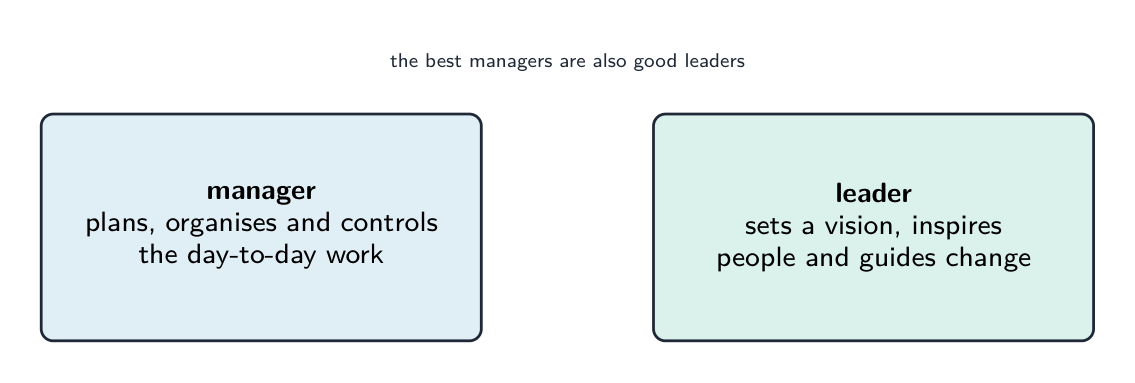
    ניהוג וניהול אינם אותו דבר.

    • המנהל מתכנן, מארגן ובוקר את העבודה היומיומית.
    • המנהיג מטמיע חזון, מעורר השראה באנשים ומנחה שינוי.
    שתי קופסאות: מנהל המתכנן, מארגן ובוקר את העבודה היומיומית, ומנהיג שמטמיע חזון, מעורר השראה ואנשים ומנחה שינוי
    המנהל מנהל את העבודה היומיומית; המנהיג קובע כיוון ומעורר השראה — הטובים ביותר עושים את שניהם

    המנהלים הטובים ביותר הם גם מנהיגים מצוינים. ניהול יעיל חשוב כי הוא מגביר פרודוקטיביות, שומר על עובדים טובים, עוזר לחברה להתאים לשינוי, וממיר תוכניות לתוצאות אמיתיות.

    Vocabulary · ⁨מילון מונחים⁩ Train · ⁨אימון⁩
    English עברית
    leadership/ˈliːdəʃɪp/ מנהיגות
    vision/ˈvɪʒn/ ראייה
    2.3

    Exam tips · ⁨טיפים לבחינות⁩

    English
    • Calculate and interpret labour turnover and labour productivity; high turnover raises recruitment and training costs.
    • Link a motivation theory to a method: Maslow (needs), Herzberg (hygiene vs motivators), Taylor (pay).
    • Distinguish financial (piece rate, bonus) from non-financial (job enrichment, empowerment) motivators.
    • Distinguish leadership from management and match a style (autocratic, democratic, laissez-faire) to the situation.
    עברית
    • לחשב ולפרש תנודת כוח עבודה ופרודוקטיביות כוח עבודה; תנודת גבוהה מעלה עלויות גיוס והדרכה.
    • לקשר תיאוריית מוטיבציה לשיטה: מסלו (צרכים), הרץברג (היגיינה מול מוטיביקציה), טיילור (תשלום).
    • להבדיל בין מוטיבים פיננסיים (תשלום לפי יחידות, בונוס) לבין מוטיבים לא פיננסיים (עשוי עבודה, מעניקות סמכות).
    • להבדיל בין ניהול ל leadership ולתרגם סגנון (אוטוקרטורי, דמוקרטי, לאס-ז'פאר) למצב מתאים.
  • 3

    Marketing · ⁨שיווק⁩

    Watch lesson · ⁨צפה בשיעור⁩
    3.1

    The role of marketing · ⁨תפקיד השיווק⁩

    Syllabus · ⁨סיילבוס⁩
    English
    1. explain the role of marketing, market and product orientation, and customer relationship marketing (CRM)
    2. explain market size, market growth and market share, mass and niche markets and market segmentation
    3. explain demand and supply and the concept of elasticity (price, income, cross) and its usefulness
    עברית
    1. הסבר את תפקיד השיווק, כוון שוק ומוצר, ו-שיווק קשרי לקוחות (CRM)
    2. הסבר גודל שוק, צמיחת שוק ונתח שוק, שווקים המוניים ונישים ופיצול שוק
    3. הסבר ביקוש והיצע וקונספט אלסטיות (מחיר, הכנסה, צולבת) וחשיבותו

    Source: Cambridge International syllabus · ⁨מקור: הסיילבוס הבינלאומי של קמבריד'ג'⁩

    English
    Elastic vs inelastic demand
    Demand shifts right: P and Q rise

    Marketing 市场营销 is the job of finding out what customers want, then making and selling products that meet those wants at a profit. Good marketing links the business to its market 市场 (all the buyers and sellers of a product).

    A business can be:

    • product-orientated 产品导向 — it focuses on the product first and hopes customers will buy it. This suits new or technical products.
    • market-orientated 市场导向 — it finds out what customers want first, then makes it. This lowers the risk of failure.

    Customer relationship marketing 客户关系营销 (CRM) means building long-term links with customers so they come back again. Keeping a customer is cheaper than finding a new one.

    עברית
    ביקוש אלסטי לעומת אי-אלסטי
    הזזה של הביקוש ימינה: P ו-Q עולים

    שיווק הוא המשימה של גילוי מה הלקוחות רוצים, ולאחר כך יצירה ומכירת מוצרים העונים על הצרכים האלה ברווח. שיווק טוב מקשר את העסק ל-שוק שלו (כל הקונים והמוכרים של מוצר).

    עסק יכול להיות:

    • מוצר-ממוקד — הוא מתמקד במוצר קודם ומקווה שהלקוחות יקנו אותו. זה מתאים למוצרים חדשים או טכניים.
    • שוק-ממוקד — הוא מגלה מה הלקוחות רוצים קודם, ואז מייצר זאת. זה מפחית את הסיכון לכישלון.

    שיווק יחסים עם לקוחות (CRM) פירונו בניית קשרים ארוכי טווח עם לקוחות כך שיחזרו שוב. שמירת לקוח קטנה יותר במחיר מאשר מציאת לקוח חדש.

    Explore · ⁨חקור⁩

    Marketing mix lab · ⁨מעבדת ערכת שיווק⁩

    See which part of the marketing mix changes in each real decision. · ⁨ראו איזה חלק מערכת השיווק משתנה בכל החלטה אמיתית.⁩

    Vocabulary · ⁨מילון מונחים⁩ Train · ⁨אימון⁩
    English עברית
    demand/dɪˈmænd/ ביקוש
    supply/səˈplaɪ/ היצע
    elasticity/ɪlæˈstɪsɪti/ אלסטיות
    price elasticity of demand/praɪs ɪlæˈstɪsɪti ɒv dɪˈmænd/ אלסטיות מחיר של הביקוש
    price elastic/praɪs ɪˈlæstɪk/ אלסטיות מחיר
    price inelastic/praɪs ɪnɪˈlæstɪk/ אי-אלסטיות מחיר
    income elasticity of demand/ˈɪŋkʌm ɪlæˈstɪsɪti ɒv dɪˈmænd/ אלסטיות הכנסה של ביקוש
    cross elasticity of demand/krɒs ɪlæˈstɪsɪti ɒv dɪˈmænd/ אלסטיות צולבת בביקוש
    substitutes/ˈsʌbstɪtjuːts/ החלפות
    complements/ˈkɒmplɪmənts/ משלימים
    Watch lesson · ⁨צפה בשיעור⁩
    3.1

    Market size, growth and share · ⁨גודל שוק, צמיחה וחלק בשוק⁩

    English
    • market size 市场规模 — the total sales of all firms in a market, by value or by number of units.
    • market growth 市场增长 — how fast the market is getting bigger, shown as a percentage.
    • market share 市场份额 — one firm's sales as a percentage of the total market:
    $$\text{market share} = \frac{\text{firm's sales}}{\text{total market sales}} \times 100\%$$

    A rising market share is a sign of strong marketing.

    Worked example. A firm sells £4 million of goods in a market worth £50 million in total. Find its market share.

    $$\text{market share} = \frac{4}{50} \times 100\% = 8\%.$$

    If the whole market grows but the firm's sales stay at £4 million, its market share falls — so a firm can sell the same amount yet lose ground to faster-growing rivals.

    עברית
    • גודל שוק — הסך הכל של המכירות של כל החברות בשוק, לפי ערך או לפי מספר יחידות.
    • צמיחת שוק — כמה השוק גדל מהר, מוצג כאחוז.
    • חלק בשוק — מכירות חברה אחת כאחוז מהשוק הכולל:
    $$\text{market share} = \frac{\text{firm's sales}}{\text{total market sales}} \times 100\%$$

    חלק בשוק עולה הוא סימן לשיווק חזק.

    דוגמה פותרת. חברה מוכרת £4 מיליון של סחורות בשוק בעל ערך כולל של £50 מיליון. מצאו את חלקה בשוק.

    $$\text{market share} = \frac{4}{50} \times 100\% = 8\%.$$

    אם כל השוק גדל אך מכירות החברה נשארות ב-£4 מיליון, חלקה בשוק יורד — ולכן חברה יכולה למכור אותה כמות אך לאבד אדמה בפני מתחרים עם קצב צמיחה מהיר יותר.

    Vocabulary · ⁨מילון מונחים⁩ Train · ⁨אימון⁩
    English עברית
    market/ˈmɑːkɪt/ שוק
    product-orientated/ˈprɒdʌkt ˈɔːrɪənteɪtɪd/ מתמקד במוצר
    market-orientated/ˈmɑːkɪt ˈɔːrɪənteɪtɪd/ מתמקד בשוק
    customer relationship marketing/ˈkʌstəmə rɪˈleɪʃənʃɪp ˈmɑːkɪtɪŋ/ שיווק קשרי לקוחות
    market size/ˈmɑːkɪt saɪz/ גודל השוק
    market growth/ˈmɑːkɪt ɡrəʊθ/ צמיחת שוק
    market share/ˈmɑːkɪt ʃeə/ נתח שוק
    mass market/mæs ˈmɑːkɪt/ שוק המונים
    niche market/niːʃ ˈmɑːkɪt/ שוק נישה
    market segmentation/ˈmɑːkɪt ˌseɡmənˈteɪʃn/ פיצול שוק
    segments/ˈseɡmənts/ קטגוריות / קבוצות
    3.1

    Mass and niche markets · ⁨שווקים המוניים ושוקי נישה⁩

    English
    • a mass market 大众市场 is large, with products aimed at most buyers (e.g. soft drinks). Sales are high, but competition is strong.
    • a niche market 利基市场 is a small part of a market with special needs (e.g. left-handed tools). Competition is weaker, but sales are smaller.
    עברית
    • שווק הומני הוא גדול, עם מוצרים המיועדים לרוב הקונים (למשל: משקאות גזוזים). המכירות גבוהות, אך התחרות חזקה.
    • שוק נישה הוא חלק קטן בשוק בעל צרכים מיוחדים (למשל: כלים לימין-ידנים). התחרות חלשה יותר, אך המכירות נמוכות יותר.
    שווק הומני מיועד לרוב הקונים; שוק נישה משרת קבוצה קטנה עם צרכים מיוחדים
    שוק המון מכוון לכל; ניקה משרת קבוצה קטנה וממוקדת
    3.1

    Market segmentation · ⁨חלוקת שוק⁩

    English

    Market segmentation 市场细分 means splitting a market into groups (segments 细分市场) of buyers who are alike. Common ways to segment are by age, income, gender, location, and lifestyle. Segmentation lets a firm aim the right product and message at each group, which raises sales and cuts waste.

    עברית
    מוצרי סוכריות של מותגים שונים רבים מסודרים על מדף בסופרמרקט
    מרחב על המדף הוא החלטת שיווק: לחלק, למקם, ולאחר מכן לקבוע מחיר ולקדם

    חלוקת שוק פירוטה חלוקת שוק לקבוצות (סקטורים) של קונים דומים. דרכים נפוצות לחלוקה הן לפי גיל, הכנסה, מגדר, מיקום ואורח חיים. חלוקת השוק מאפשרת לחברה להתמקד במוצר וב mesage הנכון לכל קבוצה, מה שמגביר את המכירות ומפחית בזבוז.

    שוק המחולק לסקטורים לפי גיל, הכנסה ואורח חיים, כך שכל קבוצה מקבלת את המוצר המתאים לה
    חלוקת שוק לקטעים לפי גיל, הכנסה ואורח חיים
    3.1

    Demand, supply and elasticity · ⁨ביקוש, הצעה אלסטיות⁩

    English

    Demand 需求 is how much of a product buyers will buy at each price. Supply 供给 is how much sellers will offer at each price. Usually, when price falls, demand rises.

    Elasticity 弹性 measures how strongly demand reacts to a change. You should know three types.

    Price elasticity of demand 需求价格弹性 (PED) measures how demand reacts to a price change:

    $$\text{PED} = \frac{\%\ \text{change in quantity demanded}}{\%\ \text{change in price}}$$
    • if PED is greater than 1, demand is price elastic 富有弹性 — a small price cut raises sales a lot, so lowering price can raise revenue.
    • if PED is less than 1, demand is price inelastic 缺乏弹性 — demand changes little, so raising price can raise revenue.

    Income elasticity of demand 需求收入弹性 (YED) measures how demand reacts to a change in customers' income. Luxury goods react strongly; basic goods react weakly.

    Cross elasticity of demand 需求交叉弹性 (XED) measures how the demand for one product reacts to a price change of another. It is positive for substitutes 替代品 (e.g. tea and coffee) and negative for complements 互补品 (e.g. cars and fuel).

    Elasticity is useful because it helps a firm predict how a price change will affect sales and revenue.

    עברית

    ביקוש הוא כמות המוצר שקונים יקנו בכל מחיר. הצעה היא כמות המוצר שהמוכרים יציעו בכל מחיר. לרוב, כאשר המחיר יורד, הביקוש עולה.

    קו ביקוש יורד וקו אספקה עולה, נפגשים בשיווי המשקל שבו נקבעת מחיר השוק *ההצעה והביקוש נפגשים במחיר שוק האיזון

    אלסטיות מודדת עד כמה הביקוש מגיב לשינוי. עליך לדעת שלושה סוגים.

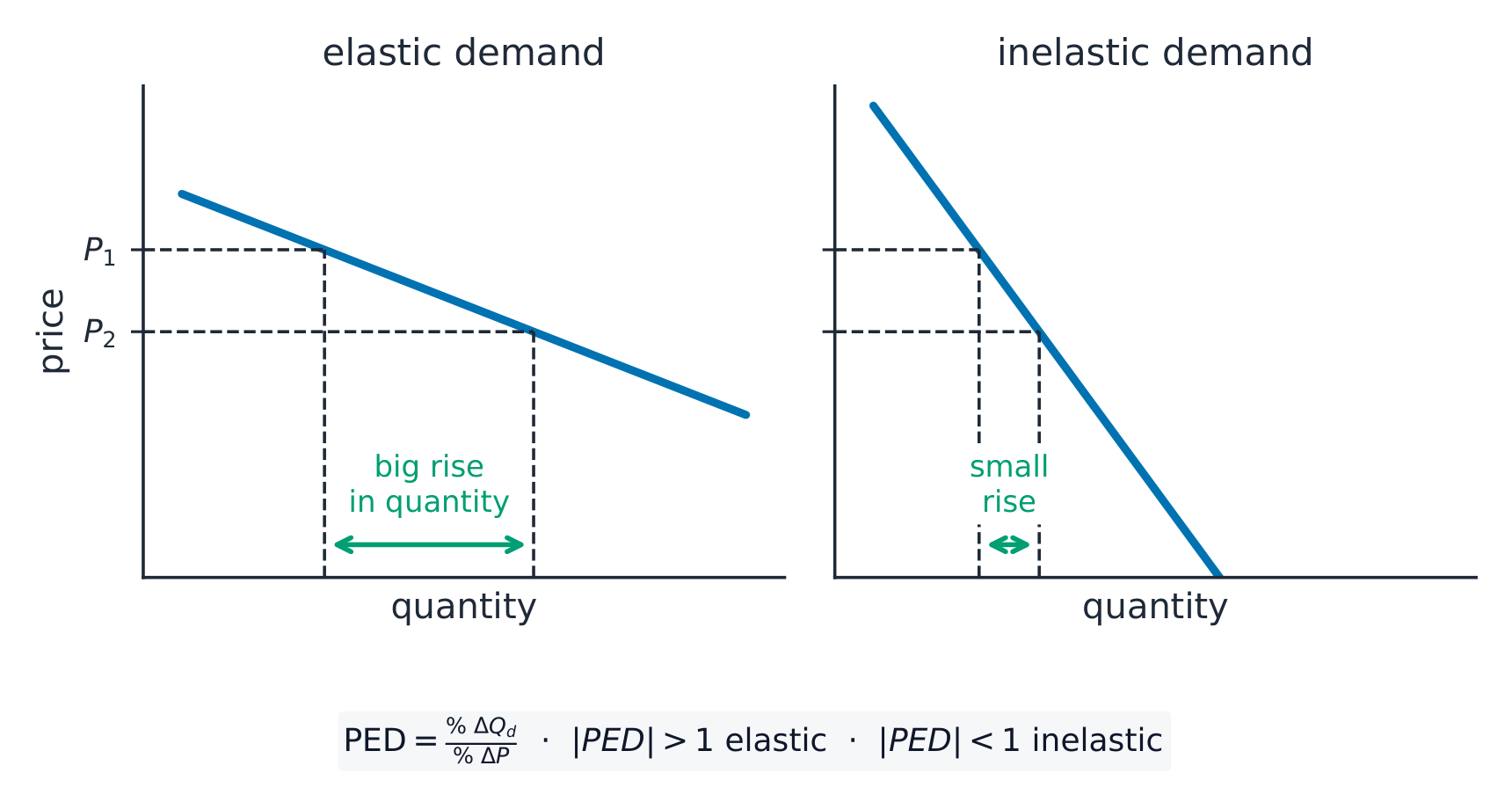
    אלסטיות מחיר של ביקוש (PED) מודדת עד כמה הביקוש מגיב לשינוי במחיר:

    $$\text{PED} = \frac{\%\ \text{change in quantity demanded}}{\%\ \text{change in price}}$$
    • אם PED גדול מ-1, הביקוש אלסטי למחיר — הורדת מחיר קטנה מעלה את המכירות הרבה, ולכן הורדת מחיר יכולה להגדיל את ההכנסה.
    • אם PED קטן מ-1, הביקוש אינאלסטי למחיר — הביקוש משתנה מעט, ולכן העלאת מחיר יכולה להגדיל את ההכנסה.

    שני קווי ביקוש: קו אלסטי שטוח שבו ירידת מחיר מביאה לעלייה גדולה בכמות, וקו אלסטי תלול שבו אותה ירידת מחיר מביאה רק לעלייה קטנה *אותה ירידת מחיר מעלה את הכמות הרבה כשהביקוש אלסטי, מעט כשהוא אינאלסטי

    אלסטיות הכנסה של ביקוש (YED) מודדת עד כמה הביקוש מגיב לשינוי בהכנסת הקונים. מוצרי יוקרה מגיבים בחוזקה; מוצרי בסיס מגיבים בחולשה.

    גמישות מחירית צולבת (XED) מודדת כיצד הביקוש למוצר אחד מגיב לשינוי במחיר של מוצר אחר. היא חיובית עבור תחליפים (למשל, תה וקפה) ושלילית עבור משלים (למשל, רכבים ואבטן).

    גמישות שימושית מכיוון שהיא עוזרת לחברה לתקף כיצד שינוי במחיר ישפיע על מכירות והכנסות.

    Explore · ⁨חקור⁩

    Demand, supply & elasticity · ⁨ביקוש, הצעה ואלסטיות⁩

    Price is set where demand meets supply. · ⁨המחיר נקבע שם שבו ביקוש פוגש את היצע.⁩

    Explore · ⁨חקור⁩

    Demand and supply · ⁨ביקוש והיצע⁩

    Shift the curves to see how price is set in a market — and how elasticity decides how much quantity responds. · ⁨זז את העקומות כדי לראות איך מחיר נקבע בשוק — ואיך אלסטיות קובעת כמה הכמות מגיבה.⁩

    Vocabulary · ⁨מילון מונחים⁩ Train · ⁨אימון⁩
    English עברית
    price/praɪs/ מחיר
    3.2

    Market research · ⁨מחקר שוק⁩

    Syllabus · ⁨סיילבוס⁩
    English
    1. distinguish primary and secondary market research and qualitative and quantitative data
    2. explain sampling methods and the reliability of data; present and interpret market research findings
    עברית
    1. הבדל בין מחקר שוק ראשוני ומשני ובין נתונים איכותניים וכמותיים
    2. הסבר שיטות דגימה ואמינות הנתונים; הצגת ופרשנות ממצאי מחקר השוק

    Source: Cambridge International syllabus · ⁨מקור: הסיילבוס הבינלאומי של קמבריד'ג'⁩

    English

    Market research 市场调研 is collecting and studying information about customers, competitors 竞争对手 and the market.

    • primary research 一手调研 — new information you collect yourself, by surveys, interviews or observation. It fits your exact needs, but costs more and takes time.
    • secondary research 二手调研 — information that already exists, such as reports, websites and sales records. It is cheap and quick, but may be old or not exactly right.

    Data can be:

    • quantitative data 定量数据 — facts in numbers (e.g. "60% buy weekly"). Easy to compare.
    • qualitative data 定性数据 — opinions and reasons (e.g. "why people like the brand"). Gives deeper understanding.

    Sampling and reliability

    A sample 样本 is the small group of people asked, chosen to stand for the whole market. Sampling 抽样 methods include:

    • random sampling 随机抽样 — everyone has an equal chance of being picked.
    • quota sampling 配额抽样 — set numbers from each group are asked.
    • stratified sampling 分层抽样 — the sample copies the make-up of the whole market.

    A larger, well-chosen sample gives more reliable 可靠的 results. Poor sampling can cause bias 偏差, which makes the findings wrong. Results are often shown in tables and charts, then read carefully to guide decisions.

    עברית

    מחקר שוק הוא איסוף וניתוח מידע על לקוחות, מתחרים ושוק.

    • מחקר ראשוני — מידע חדש שאוסף בעצמך, באמצעות סקרים,ראיונות או התבוננות. זה מתאים בדיוק לצרכים שלך, אך דורש יותר כסף ולוקח זמן.
    • מחקר משני — מידע קיים כבר, כמו דוחות, אתרי אינטרנט ורישומי מכירות. זה זול ומהיר, אך עשוי להיות ישן או לא מדויק לחלוטין.

    נתונים יכולים להיות:

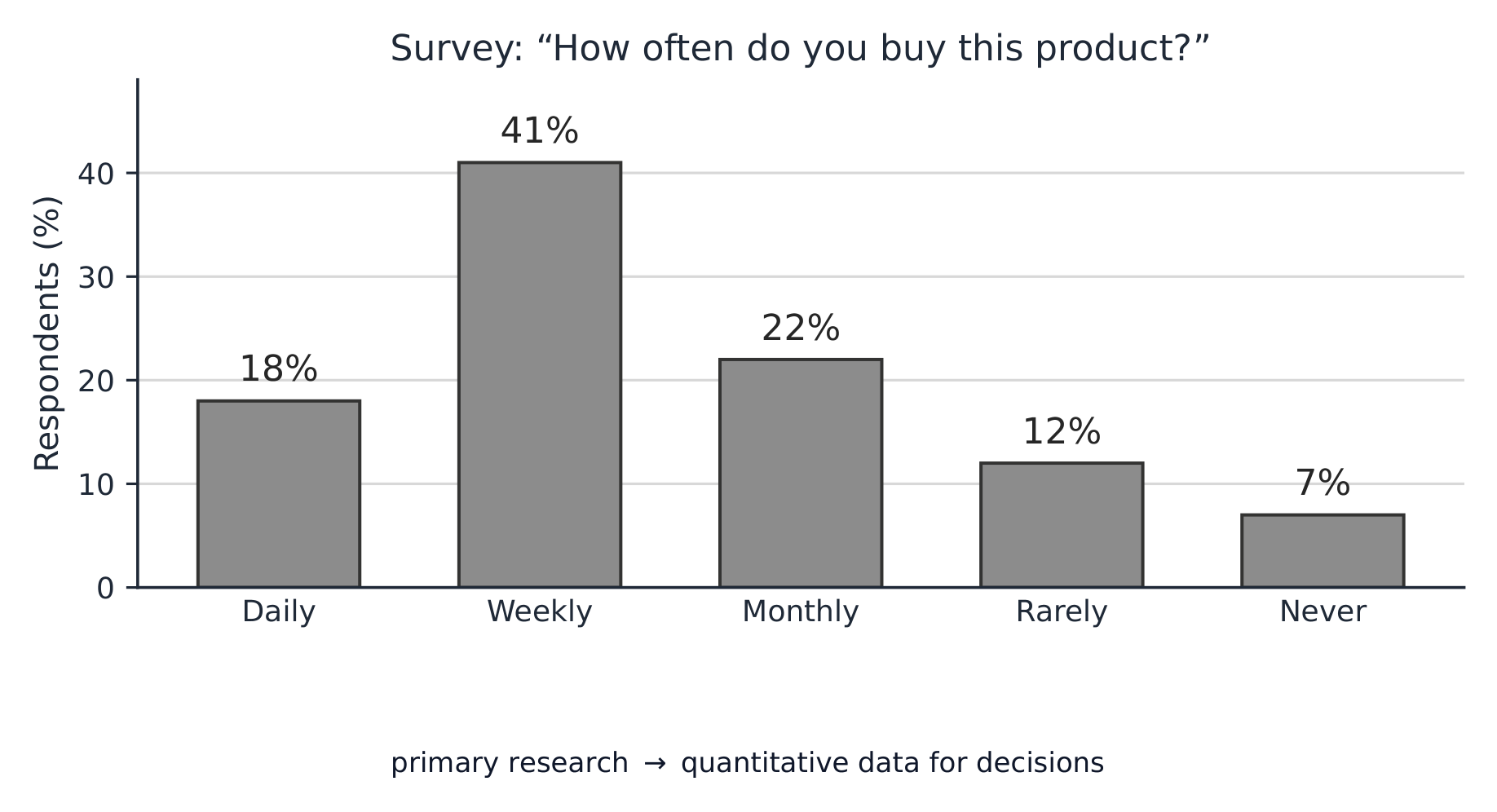
    • נתונים כמותיים — עובדות המופיעות במספרים (למשל, "60% קונים בשבוע"). קל להשוות ביניהם.
    • נתונים איכותיים — דעות וסיבות (למשל, "מדוע אנשים אוהבים את המותג"). נותנים הבנה מעמיקה יותר.

    דגימה ואמינות

    דוגמה היא קבוצה קטנה של אנשים שנשאלו, הנבחרים כדי לייצג את כל השוק. שיטות דגימה כוללות:

    • דגימה אקראית — לכל אחד מהאנשים יש סיכוי שווה לבחירה.
    • דגימת קוואות — מספרים קבועים מכל קבוצה נשאלים.
    • דגימה שכבתית — הדוגמה משקפת את ההרכב של כלל השוק.

    דוגמה גדולה ומבחרת היטב נותנת תוצאות אמינות יותר. דגימה גרועה עלולה לגרום לטיית, שגורמת לממצאים להיות שגויים. תוצאות מוצגות לעיתים קרובות בטבלאות וגרפים, ולאחר מכן נקראות בקפידה כדי להנחות החלטות.

    גרף עמודים לסקר: מחקר ראשוני מייצר נתונים כמותיים להחלטות
    מחקר ראשוני → נתונים כמותיים המנחים החלטות שיווקיות
    Explore · ⁨חקור⁩

    Market research cycle · ⁨מחזור מחקר שוק⁩

    Follow how a business turns customer data into a marketing decision. · ⁨עקוב אחר כך העסק הופך נתוני לקוחות להחלטת שיווק.⁩

    Vocabulary · ⁨מילון מונחים⁩ Train · ⁨אימון⁩
    English עברית
    market research/ˈmɑːkɪt rɪˈsɜːtʃ/ מחקר שוק
    competitors/kəmˈpetɪtəz/ מתחרים
    primary research/ˈpraɪməri rɪˈsɜːtʃ/ מחקר ראשוני
    secondary research/ˈsekəndəri rɪˈsɜːtʃ/ מחקר משני
    quantitative data/ˈkwɒntɪteɪtɪv ˈdeɪtə/ נתונים כמותיים
    qualitative data/ˈkwɒlɪteɪtɪv ˈdeɪtə/ נתונים איכותניים
    sample/ˈsæmpl/ דוגמה
    sampling/ˈsæmplɪŋ/ דגימה/הדמייה
    random sampling/ˈrændəm ˈsæmplɪŋ/ דגימה אקראית
    quota sampling/ˈkwəʊtə ˈsæmplɪŋ/ דגימה בתקן (Quota Sampling)
    stratified sampling/ˈstrætɪfaɪd ˈsæmplɪŋ/ דגימה שכבתית
    reliable/rɪˈlaɪəbl/ אמין
    bias/ˈbaɪəs/ שיפוטיות
    3.3

    The marketing mix · ⁨תערובת השיווק⁩

    Syllabus · ⁨סיילבוס⁩
    English
    1. explain the elements of the marketing mix (product, price, place, promotion) and their integration
    2. product: product development, the product life cycle, the product portfolio (Boston Matrix), branding
    3. price: pricing methods and strategies (cost-plus, penetration, skimming, competitive, price discrimination, dynamic, psychological)
    4. place and promotion: distribution channels, above- and below-the-line promotion, and digital/e-commerce marketing
    עברית
    1. הסבר רכיבי ערכת השיווק (מוצר, מחיר, מיקום, קידום) ושילובם
    2. מוצר: פיתוח מוצרים, מחזור חיי המוצר, תיק המוצרים (מטריצת בוסטון), מותגות
    3. מחיר: שיטות ואסטרטגיות קביעת מחירים (מחיר-עלות, חדירה, הישרדות/היפרדה, תחרותי, היבדל במחירים, דינמי, פסיכולוגי)
    4. מיקום וקידום: ערוצי הפצה, קידום מעל הקו ותחת הקו, ושיווק דיגיטלי/מסחר אלקטרוני

    Source: Cambridge International syllabus · ⁨מקור: הסיילבוס הבינלאומי של קמבריד'ג'⁩

    English
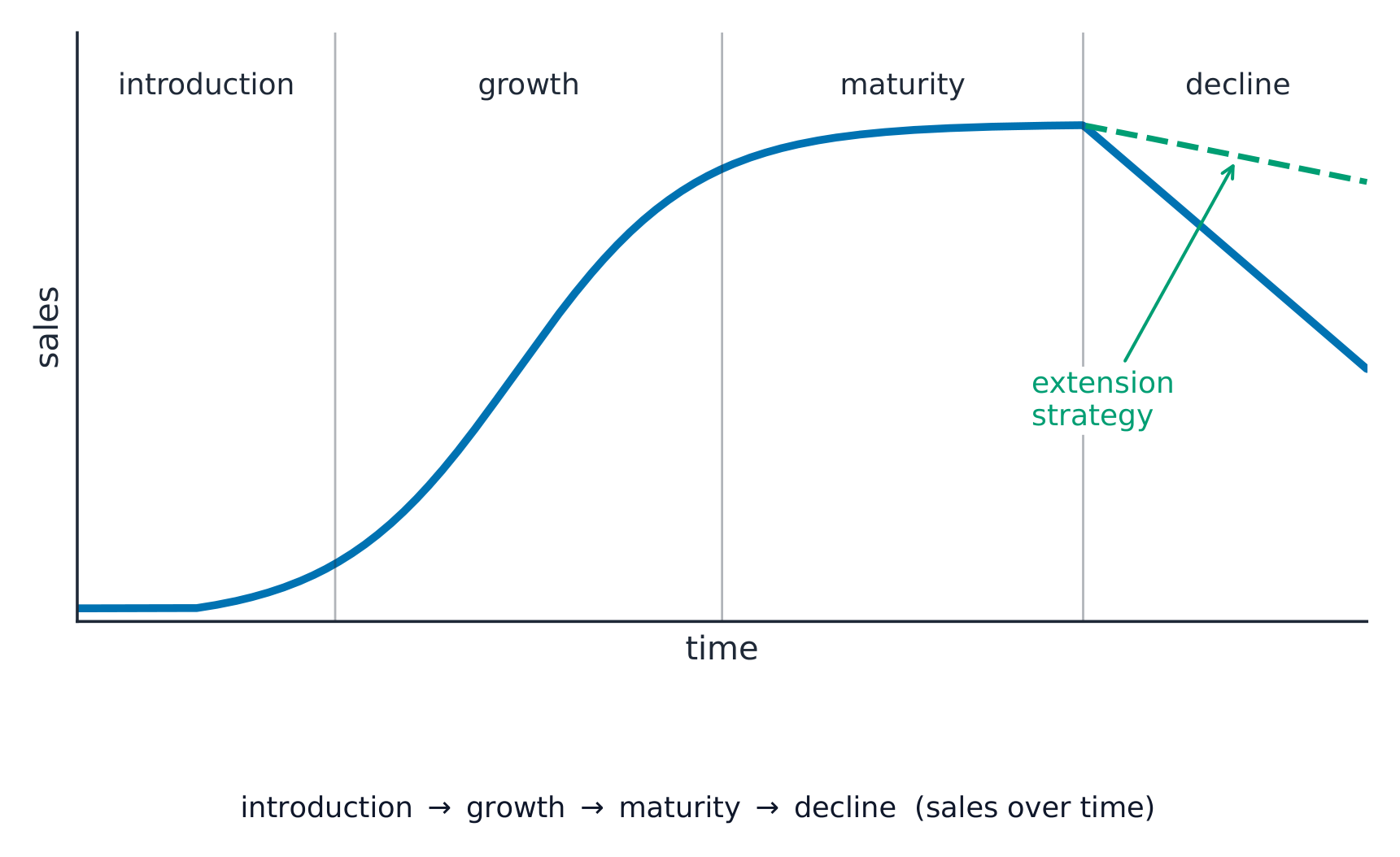
    The product life cycle

    The marketing mix 营销组合 is the set of choices a firm makes to sell a product. It is often called the 4Ps:

    P Question it answers
    product 产品 what are we selling?
    price 价格 how much do we charge?
    place 渠道 where and how do customers buy it?
    promotion 促销 how do we tell customers about it?

    The four parts must work together. For example, a high price needs high quality and a good image. Making the parts fit each other is called integration 整合.

    עברית
    מחזור חיי המוצר
    תצוגת חנות קמעונאית מותגית צבעונית
    חלון תצוגה של חנות מותג — המיתוג והמיקום עוזרים למכור את המוצר.

    הקומפלקס השיווקי הוא סט הבחירות שמבצע חברה כדי למכור מוצר. הוא מכונה לעיתים קרובות ה-4Ps:

    P שאלה שהיא עונה עליה
    מוצר (product) מה אנו מוכרים?
    מחיר (price) כמה אנו גובים?
    מיקום (place) היכן וכיצד לקוחות רוכשים אותו?
    קידום (promotion) איך אנו משדרים ללקוחות עליו?
    המיקס השיווקי במרכז עם ארבעת ה-P סביבו — Product (מה אנחנו מוכרים), Price (כמה), Place (איפה לקנות) ו-Promotion (איך אנחנו מגיעים ללקוחות)
    שילוב המרקטמינג כולל את ארבעת ה-Ps

    ארבעת החלקים חייבים לפעול יחד. לדוגמה, מחיר גבוה דורש איכות גבוהה ותדמית טובה. התאמת החלקים זה לזה נקראת אינטגרציה.

    Vocabulary · ⁨מילון מונחים⁩ Train · ⁨אימון⁩
    English עברית
    marketing/ˈmɑːkɪtɪŋ/ שיווק
    marketing mix/ˈmɑːkɪtɪŋ mɪks/ ערך שיווקי
    product/ˈprɒdʌkt/ מוצר
    place/pleɪs/ מיקום / מקום
    promotion/prəˈməʊʃn/ קידום מכירות
    integration/ˌɪntɪˈɡreɪʃn/ אינטגרציה
    product development/ˈprɒdʌkt dɪˈveləpmənt/ פיתוח מוצר
    product life cycle/ˈprɒdʌkt laɪf ˈsaɪkl/ מחזור חיים של מוצר
    introduction/ˌɪntrəˈdʌkʃn/ הקדמה
    growth/ɡrəʊθ/ צמיחה
    maturity/məˈtʃʊərɪti/ בגרות
    decline/dɪˈklaɪn/ ירידה
    extension strategies/ekˈstenʃn ˈstrætədʒiz/ אסטרטגיות הרחבה
    product portfolio/ˈprɒdʌkt pɔːtˈfəʊlɪəʊ/ תיק מוצרים
    branding/ˈbrændɪŋ/ מותגה
    loyalty/ˈlɔɪəlti/ נאמנות
    cost-plus pricing/kɒst plʌs ˈpraɪsɪŋ/ קביעת מחיר לפי עלות פלוס
    penetration pricing/ˌpenɪˈtreɪʃn ˈpraɪsɪŋ/ מחיר חדירה
    price skimming/praɪs ˈskɪmɪŋ/ מחיר גלידה
    competitive pricing/kəmˈpetɪtɪv ˈpraɪsɪŋ/ מחיר תחרותי
    price discrimination/praɪs dɪˌskrɪmɪˈneɪʃn/ הבחנת מחירים
    dynamic pricing/daɪˈnæmɪk ˈpraɪsɪŋ/ מחיר דינמי
    psychological pricing/saɪkəˈlɒdʒɪkl ˈpraɪsɪŋ/ מחיר פסיכולוגי
    Watch lesson · ⁨צפה בשיעור⁩
    3.3

    Product · ⁨מוצר⁩

    English

    A good product is the heart of the mix.

    Product development 产品开发 is the work of designing and improving products to meet customer needs and beat rivals.

    The product life cycle

    The product life cycle 产品生命周期 shows the sales of a product over time, in four stages:

    1. introduction 引入期 — launch; low sales, high promotion cost.
    2. growth 成长期 — sales rise quickly.
    3. maturity 成熟期 — sales reach their peak and level off.
    4. decline 衰退期 — sales fall as tastes change.

    To keep sales up in maturity, firms use extension strategies 延长策略, such as new packaging, new uses, or selling in new markets.

    The product portfolio (Boston Matrix)

    The product portfolio 产品组合 is the full range of products a firm sells. The Boston Matrix 波士顿矩阵 sorts products by market share and market growth:

    High market growth Low market growth
    High share stars 明星产品 cash cows 现金牛
    Low share question marks 问题产品 dogs 瘦狗产品

    Stars need investment but may become cash cows. Cash cows bring steady profit. Question marks are risky. Dogs are usually dropped.

    Branding

    Branding 品牌 gives a product a name, design and image that customers recognise. A strong brand builds loyalty 忠诚度, lets the firm charge more, and makes new products easier to launch.

    עברית

    מוצר טוב הוא לב הקומפלקס.

    פיתוח מוצרים הוא העבודה בעיצוב ובשיפור מוצרים כדי לענות על צרכי הלקוחות ולהתחרות ביריבים.

    מחזור חיי המוצר

    מחזור חיי המוצר מציג את המכירות של מוצר לאורך זמן, בארבעה שלבים:

    1. הקדמה — השקה; מכירות נמוכות ועלות קידום גבוהה.
    2. צמיחה — מכירות עולות במהירות.
    3. בשלות — מכירות מגיעות לשיא ומתייצבות.
    4. ירידה — מכירות יורדות כאשר הטעמים משתנים.
    עקומת מחזור חיים של מכירות לאורך זמן העולה דרך הכנסה וגידול, מתחלקת בהבגרות ויורדת בקריסה, עם קו מרווח-אסטרטגיה המחזיק את המכירות
    מכירות מוצר לאורך ארבעה שלבי מחזור החיים שלו, עם אסטרטגיית הרחבה בשלב הבגרות

    כדי לשמור על מכירות בשלב הבגרות, חברות משתמשות באסטרטגיות הרחבה, כגון אריזות חדשות, שימושים חדשים או מכירה בשווקים חדשים.

    תיק המוצרים (מטריצת בוסטון)

    תיק המוצרים הוא מגוון מלא של מוצרים שמכירה חברה. מטריצת בוסטון מסדרת מוצרים לפי נתח שוק וגודל צמיחת השוק:

    צמיחת שוק גבוהה צמיחת שוק נמוכה
    נתח גבוה כוכבים פרות מזומנים
    נתח נמוך סימני שאלה כלבים
    מטריצת בוסטון: רשת דו-שניתית; כוכבים (נתח גבוה, צמיחה גבוה), סימני שאלה (נתח נמוך, צמיחה גבוה), פרות מזומנים (נתח גבוה, צמיחה נמוכה) וכלבים (נתח נמוך, צמיחה נמוכה)
    מטריצת בוסטון מסדרת מוצרים לפי נתח שוק וגודל צמיחת השוק

    לכוכבים יש להשקיע אך הם עשויים להפוך לפרות מזומנים. פרות מזומנים מיינות רווח יציב. סימני שאלה הם מסוכנים. כלבים בדרך כלל מושלמים מהתיק.

    מיתוג

    מיתוג מעניק למוצר שם, עיצוב ותדמית שהלקוחות מזהים. מיתוג חזק בונה נאמנות, מאפשר לחברה לגבות מחיר גבוה יותר ומקל על השקת מוצרים חדשים.

    Explore · ⁨חקור⁩

    The product life cycle · ⁨מחזור חיי המוצר⁩

    Most products pass through four sales stages over time — from launch to decline. · ⁨רוב המוצרים עוברים ארבעה שלבי מכירה לאורך זמן — מהשקה ועד נפילה.⁩

    Explore · ⁨חקור⁩

    Balance the product portfolio · ⁨איזון תיק המוצרים⁩

    Pick a product and drag its market share and growth — it re-classifies live, and Play walks one product through its whole life across the matrix. · ⁨בחר מוצר וגרור את נתח השוק והצמיחה שלו — הוא יוחדש מחדש בזמן אמת, והמשחק יעבור על מוצר אחד לאורך כל מחזור חייו במטריצה.⁩

    Vocabulary · ⁨מילון מונחים⁩ Train · ⁨אימון⁩
    English עברית
    Boston Matrix/ˈbɒstn ˈmeɪtrɪks/ מטריקס בוסטון
    stars/stɑːz/ כוכבים
    cash cows/kæʃ kaʊz/ פרות חלב
    question marks/ˈkwestʃn mɑːks/ סימני שאלה
    dogs/dɒɡz/ כלבים
    3.3

    Price · ⁨מחיר⁩

    English

    Choosing a price is a key decision. The main methods and strategies are:

    Method / strategy How it works
    cost-plus pricing 成本加成定价 add a fixed profit margin to the unit cost
    penetration pricing 渗透定价 set a low price to enter a market and win share
    price skimming 撇脂定价 set a high price first for a new, special product, then lower it
    competitive pricing 竞争定价 set a price close to rivals' prices
    price discrimination 价格歧视 charge different prices to different groups (e.g. peak vs off-peak)
    dynamic pricing 动态定价 change the price often as demand changes
    psychological pricing 心理定价 use prices like $9.99 that feel lower

    The best price depends on costs, competitors, the product's life-cycle stage, and how price elastic demand is.

    עברית

    בחירת מחיר היא החלטה מרכזית. השיטות והאסטרטגיות העיקריות הן:

    שיטה / אסטרטגיה כיצד זה עובד
    קביעת מחיר על בסיס עלות הוספת שולי רווח קבוע לעלות היחידה
    קביעת מחיר חדירה קביעת מחיר נמוכ כדי להיכנס לשוק ולזכות בנתח
    קפיסת מחירים קביעת מחיר גבוהה בהתחלה עבור מוצר חדש ומיוחד, ולאחר מכן הפחתתו
    קביעת מחיר תחרותית קביעת מחיר קרובה למחיריה של התחרות
    הבחנת מחירים גביית מחירים שונים מקבוצות שונות (למשל, שעות שיא מול שעות שיא נמוכות)
    מחיר דינמי שינוי המחיר לעיתים קרובות בהתאם לשינויים בביקוש
    מחירה פסיכולוגית שימוש במחירים כמו $9.99 שמרגישים נמוכים יותר

    המחיר הטוב ביותר תלוי בעלויות, בתחרות, בשלב מחזור החיים של המוצר ובגמישות הביקוש למחיר.

    גרף מחיר לאורך זמן: מחיר חדירה מתחיל נמוך כדי לזכות בחלק מהשוק, בעוד שמחיר שפיכה מתחיל גבוה למוצר חדש ולאחר מכן יורד לאורך הזמן
    שתי אסטרטגיות השקה לאורך זמן: מחיר חדירה קובע מחיר נמוך כדי לזכות בחלק מהשוק; שפיכה קובעת מחיר גבוה תחילה, ואז מפחיתה אותו
    Explore · ⁨חקור⁩

    Marketing mix lab · ⁨מעבדת ערכת שיווק⁩

    See which part of the marketing mix changes in each real decision. · ⁨ראו איזה חלק מערכת השיווק משתנה בכל החלטה אמיתית.⁩

    3.3

    Place and promotion · ⁨מקום וקידום⁩

    English

    Place is how the product reaches the customer, through a distribution channel 分销渠道. A short channel (maker → customer) gives more control; a longer channel (maker → wholesaler 批发商 → shop → customer) reaches more buyers.

    Promotion tells customers about a product and persuades them to buy. It is split into:

    • above-the-line promotion 大众媒体广告 — paid advertising 广告 in mass media, such as TV and online ads, aimed at a wide audience.
    • below-the-line promotion 直接促销 — targeted methods the firm controls, such as discounts, free samples and direct mail.

    Digital marketing 数字营销 and e-commerce 电子商务 (buying and selling online) now play a huge role. They let small firms reach world markets cheaply, target adverts to the right people, and sell at any time of day.

    עברית
    מסכי פרסומת ענקים בצומת עמוס
    פרסום על מסכי ענק — הקידום הוא חלק מערכות השיווק.

    מקום הוא האופן שבו המוצר מגיע לצרכן, דרך ערוך הפצה. ערוך קצר (יצרן → צרכן) מעניק שליטה רבה יותר; ערוך ארוך יותר (יצרן → צירף/סיטונאי → חנות → צרכן) מגיע לקהל רחב יותר.

    ערוך הפצה קצר מיצרן ישירות לצרכן, וערוך ארוך מיצרן דרך צירף ומכיר לצרכן
    ערוך קצר מעניק שליטה רבה יותר; ערוך ארוך יותר מגיע לקהל רחב יותר

    קידום משדרע על מוצר לצרכנים ומשכנע אותם לרכוש אותו. הוא מחולק ל:

    • קידום מעל הקו — פרסום ממומן בתקשורת המונית, כגון פרסום בטלוויזיה ובאינטרנט, המכוון לקהל רחב.
    • קידום מתחת לקו — שיטות ממוקדות שהחברה שולטת בהן, כגון הנחות, דגימות חינם ושליחה ישירה.

    שיווק דיגיטלי ו-מסחר אלקטרוני (קנייה ומכירה באינטרנט) ממלאים כיום תפקיד עצום. הם מאפשרים לחברות קטנות להגיע לשוקים עולמיים בעלות נמוכה, למקד פרסומות לקהל היעד המתאים ולמכור בכל עת.

    Vocabulary · ⁨מילון מונחים⁩ Train · ⁨אימון⁩
    English עברית
    distribution channel/ˌdɪstrɪˈbjuːʃn ˈtʃænl/ ערוץ חלוקה
    wholesaler/ˈhəʊlseɪlə/ סיטונאי
    above-the-line promotion/əˈbʌv ðə laɪn prəˈməʊʃn/ קידום מעל הקו
    advertising/ˈædvətaɪzɪŋ/ פרסום
    below-the-line promotion/bɪˈləʊ ðə laɪn prəˈməʊʃn/ קידום מתחת לקו
    digital marketing/ˈdɪdʒɪtl ˈmɑːkɪtɪŋ/ שיווק דיגיטלי
    e-commerce/iː ˈkɒmɜːs/ מסחר אלקטרוני
    3.3

    Exam tips · ⁨טיפים לבחינות⁩

    English
    • Calculate market share and market growth as percentages; a firm can grow yet lose share in a faster-growing market.
    • Use price elasticity of demand to decide pricing: raise price when demand is inelastic (revenue rises), cut it when elastic.
    • Distinguish primary vs secondary and quantitative vs qualitative research, and comment on sampling reliability.
    • Treat the marketing mix (4Ps) as a coordinated set — each P should support the others.
    עברית
    • לחשב את חלק בשוק ואת צמיחת השוק כאחוזים; חברת יכולה לגדול אך לאבד חלק בשוק בצמיחה מהירה יותר.
    • להשתמש בגמישות מחירית של ביקוש לקביעת מחירים: להעלות מחיר כאשר הביקוש אינו אלסטי (ההכנסה עולה), ולהפחית אותו כאשר הביקוש אלסטי.
    • להבחין בין מחקר ראשוני לראשוני ובין מחקר כמותי לכמותי, ולנתח את אמינות הדגימה.
    • להתנהל עם ערך השיווק (4Ps) כסט מותאם — כל P צריך לתמון באחרים.
  • 4

    Operations management · ⁨ניהול תפעולי⁩

    Watch lesson · ⁨צפה בשיעור⁩
    4.1

    What operations management does · ⁨מה עושה ניהול פעילות⁩

    Syllabus · ⁨סיילבוס⁩
    English
    1. explain operations as the transformation of inputs into outputs and the concept of adding value
    2. explain productivity, efficiency, capital- and labour-intensive operations and methods of production (job, batch, flow, mass customisation)
    3. explain sustainability of operations and the use of technology in operations
    עברית
    1. הסבר פעילות כהמרת קלט לתפוקה וקונספט יצירת ערך
    2. הסבר תפוקה, יעילות, פעילויות אינטנסיביות בראשי הון ובעבודה ושיטות ייצור (עבודה, ** batches**, זרימה, התאמה אישית המונית)
    3. הסבר הישרות פעילות והשתמש בטכנולוגיה בפעילות

    Source: Cambridge International syllabus · ⁨מקור: הסיילבוס הבינלאומי של קמבריד'ג'⁩

    English

    Operations 运营 is the part of a business that makes the product. Operations management 运营管理 is the job of turning inputs 投入 into outputs 产出 well.

    This is the transformation process 转化过程:

    • inputs — raw materials, labour, machines and money.
    • process — the work that changes the inputs.
    • outputs — finished goods and services for the customer.

    Good operations add value 增值: the output is worth more than the inputs used to make it. Using raw materials 原材料 (the basic materials a business starts with) well is a big part of this.

    עברית

    פעולות הן החלק בעסק שמייצר את המוצר. ניהול פעולות הוא התפקיד להפוך קלט לתפוקה בצורה טובה.

    מחסן הפצה גדול
    מרכז הפצה: ניהול פעולות ממיר קלט למוצרים מוגמרים המוכנים לצרכנים.

    זוהי תהליך ההמרה:

    • קלט — חומרי גלם, עבודה, מכונות וכסף.
    • תהליך — העבודה שמבצעת שינוי בקלט.
    • תפוקה — מוצרים מוגמרים ושירותים לצרכן.
    תרשים זרימה: קלט (חומרים, כוח עבודה, מכונות, כסף) נכנס לתהליך המשנה אותם ויוצא כתוצרים (מוצרים מוגמרים ושירותים), תוך יצירת ערך מוסף
    פעולות ממירות קלט לתפוקה, תוך יצירת ערך נוסף במהלך התהליך

    פעולות טובות יוצרות ערך נוסף: התפוקה שווה יותר מהקלט שהושקע בהפקתה. שימוש טוב בחומרי גלם (החומרים הבסיסיים מהם מתחיל עסק) הוא חלק משמעותי מכך.

    Explore · ⁨חקור⁩

    Operations: input → output · ⁨פעילות: קלט → פלט⁩

    Operations management turns inputs into finished goods or services through a transformation process. · ⁨ניהול פעילות ממיר קלט למצרכים מוגמרים או לשירותים באמצעות תהליך המרה.⁩

    Vocabulary · ⁨מילון מונחים⁩ Train · ⁨אימון⁩
    English עברית
    operations/ˌɒpəˈreɪʃnz/ פעולות
    operations management/ˌɒpəˈreɪʃnz ˈmænɪdʒmənt/ ניהול תפעולי
    inputs/ˈɪnpʊts/ כניסות
    outputs/ˈaʊtpʊts/ פלטות
    transformation process/trænsfɔːˈmeɪʃn ˈprəʊses/ תהליך המרה
    adding value/ˈædɪŋ ˈvæljuː/ הוספת ערך
    raw materials/rɔː məˈtɪərɪəlz/ חומרי גלם
    4.1

    Productivity and efficiency · ⁨פרודוקטיביות ויעילות⁩

    English

    Productivity 生产率 measures how much output you get from your inputs:

    $$\text{productivity} = \frac{\text{output}}{\text{input used}}$$

    Efficiency 效率 means making products with as little waste of time, materials and money as possible. Higher productivity and efficiency lower the cost of each unit, so the firm can charge less or earn more.

    Worked example. A factory of $20$ workers makes $800$ units in a day. Find the output per worker.

    $$\text{productivity} = \frac{800}{20} = 40 \text{ units per worker per day}.$$

    If training raised output to $1000$ units with the same $20$ workers, productivity would rise to $50$ units each — the same staff cost now spread over more units, so each unit is cheaper to make.

    עברית

    פרודוקטיביות מדדת כמה תפוקה תקבל מהקלט שלך:

    $$\text{productivity} = \frac{\text{output}}{\text{input used}}$$

    יעילות פירונית ייצור מוצרים עם פחות בזבוז אפשרי של זמן, חומרים וכסף. פרודוקטיביות ויעילות גבוהות מפחיתות את עלות כל יחידה, כך שהחברה יכולה לקבל מחיר נמוך יותר או להרוויח יותר.

    דוגמה מפורטת. מפעל עם $20$ עובדים מייצר $800$ יחידות ביום. מצאו את התפוקה לעובד.

    $$\text{productivity} = \frac{800}{20} = 40 \text{ units per worker per day}.$$

    אם הכשרה הרמה את התפוקה ל$1000$ יחידות עם אותם $20$ עובדים, הפרודוקטיביות תעלה ל$50$ יחידות לכל עובד — אותו עלות שכר חלוקה עכשיו על מספר רב יותר של יחידות, ולכן כל יחידה זולה יותר להפקה.

    קו הרכבה: פרודוקטיביות היא תפוקה לעובד (או לשעה) — עלייה בפרודוקטיביות מפחיתה עלויות ליחידה
    קו הרכבה: פרודוקטיביות היא תפוקה לעובד (או לשעה) — עלייה בפרודוקטיביות מקצרת עלות ליחידה
    Vocabulary · ⁨מילון מונחים⁩ Train · ⁨אימון⁩
    English עברית
    productivity/ˌprɒdəkˈtɪvɪti/ תפוקה
    efficiency/ɪˈfɪʃənsi/ יעילות
    capital-intensive/ˈkæpɪtl ɪnˈtensɪv/ אינטנסיבי הון
    labour-intensive/ˈleɪbə ɪnˈtensɪv/ אינטנסיבי עבודה
    job production/dʒɒb prəˈdʌkʃn/ ייצור מלאכתי
    batch production/bætʃ prəˈdʌkʃn/ ייצור חבלי
    flow production/fləʊ prəˈdʌkʃn/ ייצור זרימי
    mass customisation/mæs ˌkʌstəmaɪˈzeɪʃn/ התאמה אישית המונית
    sustainability/səˌsteɪnəˈbɪlɪti/ שימור עסקים
    technology/tekˈnɒlədʒi/ טכנולוגיה
    automation/ˌɔːtəˈmeɪʃn/ אוטומציה
    4.1

    Capital- and labour-intensive operations · ⁨פעולות אינטנסיביות בון ועבודת אדם⁩

    English
    • a capital-intensive 资本密集型 operation uses mostly machines (e.g. a car factory). It has high set-up costs but low cost per unit, and is good for large amounts.
    • a labour-intensive 劳动密集型 operation uses mostly people (e.g. a hair salon). It is flexible and good for personal service, but quality can vary.
    עברית
    • פעולה אינטנסיבית בון משתמשת בעיקר במכונות (למשל, מפעל רכבים). יש לה עלויות הקמה גבוהות אך עלות ליחידה נמוכה, והיא מתאימה לכמויות גדולות.
    • פעולה אינטנסיבית בעבודת אדם משתמשת בעיקר באנשים (למשל, סלון יופי). היא גמישה ומתאימה לשירות אישי, אך האיכות עשויה להשתנות.
    רובוטים במפעל: ייצור אינטנסיבי-הון משתמש במכונות רבות יותר ביחס לעבודה
    רובוטים במפעל: ייצור אינטנסיבי-הון משתמש במכונות רבות יותר ביחס לעבודה
    4.1

    Methods of production · ⁨שיטות ייצור⁩

    English

    A firm chooses how to organise production to suit its product and demand.

    Method What it is Best for
    job production 单件生产 making one unique item at a time a wedding cake, a bridge
    batch production 批量生产 making a group of the same item, then switching bread in flavours
    flow production 流水线生产 making items non-stop on a line bottled drinks, cars
    mass customisation 大规模定制 a flow line that still lets customers choose options cars with chosen colours

    Job production is flexible but costly per unit. Flow production has a low unit cost but needs high, steady demand.

    עברית

    חברה בוחרת כיצד לארגן את הייצור בהתאם למוצר ולביקוש.

    קו הרכבת רכבים בתוך מפעל: חלק-רכבים בסדר לאורך קו זז, עם ציוד תלוי בגג
    קו הרכבה לרכב: ייצור זרימי של יחידות זהות, שלב אחר לאחר שלב
    שיטה מה זה מתאים ביותר ל
    ייצור לפי הזמנה ייצור פריט ייחודי אחד בכל פעם עוגת חתונה, גשר
    ייצור בחבילות ייצור קבוצה מאותו פריט, ולאחר מכן מעבר לייצור אחר לחם בטעמים שונים
    ייצור זורם ייצור פריטים ברציפות על קו משקאות בבקבוקים, מכוניות
    התאמה אישית המונית קו זורם שמאפשר ללקוחות לבחור אפשרויות מכוניות בצבעים שנבחרו
    שלוש שיטות ייצור: Job (פריט ייחודי אחד), Batch (להקה שמיוצרת ואז מתבצע מעבר) ו-Flow (פריטים הנעים ברציפות לאורך קו)
    שלוש שיטות הייצור

    ייצור לפי הזמנה הוא גמיש אך יקר ליחידה. ייצור זורם בעל עלות יחידה נמוכה אך דורש ביקוש גבוה ויציב.

    Explore · ⁨חקור⁩

    Methods of production · ⁨שיטות ייצור⁩

    Firms choose how to produce depending on the product and the order size. · ⁨חברות בוחרות כיצד לייצר בהתאם למוצר ולגודל ההזמנה.⁩

    4.1

    Sustainability and technology · ⁨קיימות וטכנולוגיה⁩

    English

    Sustainability 可持续性 means meeting today's needs without harming the future or the planet. Sustainable operations cut waste, use less energy, recycle, and use materials that can be replaced.

    Technology 技术 is widely used in operations. Automation 自动化 (machines and robots doing tasks) raises output, improves quality and lowers cost, but it has a high set-up cost and can replace jobs.

    עברית

    קיימות פירונו ספק הצרכים של היום מבלי לפגוע בעתיד או בכדור הארץ. הפעלה קיימת מצמצמת פסולת, משתמשת בפחות אנרגיה, מחזירה למחזור ומשתמשת בחומרים הניתנים להחלפה.

    טכנולוגיה משמשת באופן נרחב בפעילות. אוטומציה (מכונות ורובוטים performing משימות) מגבירה תפוקה, משפרת איכות ומפחיתה עלות, אך יש לה עלות הקמה גבוהה ועלולה להחליף תפקדים.

    4.2

    Inventory and why it matters · ⁨מלאי ולמה זה חשוב⁩

    Syllabus · ⁨סיילבוס⁩
    English
    1. explain the purpose of inventory and the costs of holding inventory
    2. interpret inventory control charts (re-order level, buffer inventory, lead time) and explain just-in-time (JIT) and just-in-case approaches
    עברית
    1. הסבר מטרת מלאי ועלויות אחזקת המלאי
    2. פרשנות גרפים לניהול מלאי (רמת הזמנה מחדש, מלאי ביטחון, זמן אספקה) והסבר גישות Just-in-time (JIT) וJust-in-case

    Source: Cambridge International syllabus · ⁨מקור: הסיילבוס הבינלאומי של קמבריד'ג'⁩

    English
    Stock control: the sawtooth chart

    Inventory 库存 (stock) is the goods a business holds: raw materials, part-finished goods, and finished goods waiting to be sold.

    A firm holds inventory so it can keep producing and meet customer orders quickly. But holding inventory has costs:

    • holding costs 持有成本 — storage, insurance, and money tied up in stock.
    • the risk that goods go out of date or are damaged.

    Holding too little stock is also risky: the firm may run out and lose sales.

    עברית
    בקרת מלאי: הגרף השן-מסור

    מלאי (מלאי) הם הסחורות שהחברה מחזיקה: חומרי גלם, מוצרים למחצה, ומוצרים מוגמרים הממתינים למכירה.

    חברה מחזיקה מלאי כדי שתוכל להמשיך לייצר ולהיענות להזמנות לקוחות במהירות. אך אחזקת מלאי כרוכה בעלויות:

    • עלויות אחסנה — עלויות לאחסון, ביטוח והון קשור במלאי.
    • הסיכון שהסחורה תתבשל או תיפגע.

    החזקת מלאי נמוך מדי היא גם כן מסוכנת: החברה עשויה להיתקל בנכד וליאבד מכירות.

    Explore · ⁨חקור⁩

    Leadership style lab · ⁨מעבדת סגנונות מנהיגות⁩

    Pick the management style that fits each situation. · ⁨בחרו את סגנון הניהול המתאים לכל מצב.⁩

    4.2

    Inventory control charts · ⁨גרפים לניהול מלאי⁩

    English

    An inventory control chart 库存控制图 shows how stock rises when an order arrives and falls as it is used. Key terms:

    • re-order level 再订货水平 — the stock level at which a new order is placed.
    • lead time 交货周期 — the time between placing an order and receiving it.
    • buffer inventory 缓冲库存 — a minimum "safety" stock kept in case of delays or extra demand.
    • maximum inventory 最大库存 — the most stock the firm wants to hold.
    עברית

    גרף ניהול מלאי מראה כיצד המלאי עולה כאשר הזמנה מגיעה ויריד כאשר היא משתמשת. מונחים מרכזיים:

    • נקודת הזמנה מחדש — רמת המלאי שבה מוגשת הזמנה חדשה.
    • זמן אספקה — השוני בין העתקת ההזמנה לקבלתה.
    • מלאי ביטחון — רמות מינימליות של "ביטחון" שנשמרות במקרה של עיכובים או ביקוש מוגבר.
    • מקסימום מלאי — הכמות הגבוהה ביותר של מלאי שהחברה מעוניין להחזיק.
    גרף ניהול מלאי: המלאי יורד בהדרגה כאשר הוא משתמש, הזמנה מוגשת בנקודת ההזמנה מחדש, ואחרי זמן האספקה המלאי קופץ חזרה למקסימום שלו, לעולם לא יורד מתחת למלאי הביטחון
    המלאי נגמר, ולאחר מכן מחודש כאשר הזמנה חדשה מגיעה לאחר זמן האספקה
    Vocabulary · ⁨מילון מונחים⁩ Train · ⁨אימון⁩
    English עברית
    inventory/ˈɪnvəntri/ מלאי מלאכותי
    holding costs/ˈhəʊldɪŋ kɒsts/ עלויות אחסנה
    inventory control chart/ˈɪnvəntri kənˈtrəʊl tʃɑːt/ גרף בקרת מלאי
    re-order level/riː ˈɔːdə ˈlevl/ רמת הזמנה מחדש
    lead time/liːd taɪm/ זמן הובלה
    buffer inventory/ˈbʌfə ˈɪnvəntri/ מלאי ביטחון
    maximum inventory/ˈmæksɪməm ˈɪnvəntri/ מלאי מקסימלי
    4.2

    Just-in-time and just-in-case · ⁨Just-in-time ו-Just-in-case⁩

    English

    There are two main ways to manage stock.

    • just-in-time 准时制 (JIT) — stock arrives only as it is needed, so almost no inventory is held. This cuts holding costs and waste, but a late delivery can stop production.
    • just-in-case 备货制 — extra stock is held in case of problems. This is safer but costs more to store.
    עברית

    ישנם שני דרכים עיקריות לניהול מלאי.

    • Just-in-time (JIT) — המלאי מגיע רק כאשר הוא נדרש, ולכן כמעט אין מלאי שמחזיקים. זה מקטין עלויות אחסנה ובזבוז, אך משלוח מאוחר יכול לעצור את הייצור.
    • Just-in-case — מלאי נוסף מוחזק במקרה של בעיות. זה בטוח יותר אך עולה יותר באחסון.
    שתי חנויות צמודות: אחת כמעט ריקה עבור just-in-time, ושנייה כמעט מלאה עבור just-in-case
    Just-in-time מחזיק כמעט אף מלאי (עלות נמוכה, אך סיכון במקרה של משלוח מאוחר); Just-in-case שומר על מלאי ביטחון (בטוח יותר, אך דורש יותר באחסון)
    Vocabulary · ⁨מילון מונחים⁩ Train · ⁨אימון⁩
    English עברית
    just-in-time/dʒʌst ɪn taɪm/ בזמן אמת
    just-in-case/dʒʌst ɪn keɪs/ לכל אירוע
    4.3

    Capacity utilisation · ⁨ניצול קיבולת⁩

    Syllabus · ⁨סיילבוס⁩
    English
    1. calculate and interpret capacity utilisation and explain the problems of under- and over-utilisation
    2. explain outsourcing and its benefits and drawbacks
    עברית
    1. חישוב ופרשנות ניצול קיבולת והסבר בעיות של ניצול נמוך וגבוה מדי
    2. הסבר הקצאה והיתרונות והחסרונות שלה

    Source: Cambridge International syllabus · ⁨מקור: הסיילבוס הבינלאומי של קמבריד'ג'⁩

    English

    Capacity 产能 is the most a business can produce with its current resources. Capacity utilisation 产能利用率 shows how much of that capacity is being used:

    $$\text{capacity utilisation} = \frac{\text{actual output}}{\text{maximum possible output}} \times 100\%$$
    • under-utilisation 产能利用不足 (a low figure) means resources sit idle, so the fixed cost spread over each unit is high.
    • over-utilisation 产能过度利用 (very close to 100%) leaves no time for repairs, can tire staff, and may lower quality.

    Most firms aim for a high but not full level, around 85–90%.

    Worked example. A factory can make $5000$ units a week but currently makes $4000$. Find its capacity utilisation.

    $$\text{capacity utilisation} = \frac{4000}{5000} \times 100\% = 80\%.$$

    This leaves $20\%$ spare. Winning an order for another $500$ units a week would lift utilisation to $90\%$, spreading the fixed costs over more units without needing new machines.

    עברית

    קיבולת היא המקסימום שחברה יכולה לייצר עם המשאבים הנוכחיים שלה. ניצול קיבולת מראה כמה מהקיבולת הזו מנוצלת:

    תפוקה בפועל ממלאת את רוב הקיבולת המקסימלית, ומשאירה מעט עודף
    ניצול קיבולת: כמות התפוקה המרבית המשמשת
    $$\text{capacity utilisation} = \frac{\text{actual output}}{\text{maximum possible output}} \times 100\%$$
    • שימוש לא יעיל (מספר נמוך) פירונו משאבים עומדים ללא שימוש, ולכן העלות הקבועה המפוזרת על כל יחידה היא גבוהה.
    • שימוש מוגזם (קרוב מאוד ל-100%) אישיר זמן לתיקונים, יכול לעייף את העובדים ועלול להוריד את האיכות.

    רוב החברות שואפות לרמת שימוש גבוהה אך לא מלאה, בסביבות 85–90%.

    דוגמה מופת. מפעל יכול לייצר $5000$ יחידות בשבוע אך כרגע מייצר רק $4000$. מצאו את רמת הניצול של היכולת הייצורית שלו.

    $$\text{capacity utilisation} = \frac{4000}{5000} \times 100\% = 80\%.$$

    נותרו לו $20\%$ יחידות נוספות. קבלת הזמנה נוספת ל-$500$ יחידות בשבוע תעלה את רמת הניצול ל-$90\%$, ותפזר את העלויות הקבועות על יותר יחידות מבלי צורך ברכישת מכונות חדשות.

    Explore · ⁨חקור⁩

    Capacity utilisation lab · ⁨מעבדת ניצול קיבולת⁩

    utilisation = output / capacity · ⁨ניצול = תפוקה / קיבולת⁩

    Change output and see how close the firm is to full capacity. · ⁨שנה את התפוקה וראה כמה החברה קרובה לניצול מלא של הקיבולת.⁩

    Vocabulary · ⁨מילון מונחים⁩ Train · ⁨אימון⁩
    English עברית
    capacity/kəˈpæsɪti/ קיבולת
    capacity utilisation/kəˈpæsɪti ˌjuːtɪlaɪˈzeɪʃn/ ניצול קיבולת
    under-utilisation/ˈʌndə ˌjuːtɪlaɪˈzeɪʃn/ שימוש לא יעיל
    over-utilisation/ˈəʊvə ˌjuːtɪlaɪˈzeɪʃn/ שימוש מוגזם
    outsourcing/aʊtˈsɔːsɪŋ/ העברת פעילות מחוץ לחברה
    supplier/səˈplaɪə/ ספק
    4.3

    Outsourcing · ⁨התגבשות⁩

    English

    Outsourcing 外包 means paying another firm (a supplier 供应商) to do work the business used to do itself, such as cleaning, IT or making parts.

    Benefits: it can be cheaper, lets the firm focus on what it does best, and adds flexibility. Drawbacks: less control over quality, possible delays, and the risk of sharing secrets with another firm.

    עברית

    התגבשות פירונו השכרת חברה אחרת (ספק) לבצע עבודה שהייתה נעשתה בעבר על ידי העסק עצמו, כמו ניקיון, טכנולוגיה מידע או ייצור חלקים.

    יתרונות: עשויה להיות זולה יותר, מאפשרת לחברה להתמקד במה שהיא עושה הכי טוב, ומוסיפה גמישות. חסרונות: שליטה מוגבלת יותר על האיכות, אפשרות לעיכובים, וסיכון לשיתוף סודות עם חברה אחרת.

    4.3

    Exam tips · ⁨טיפים לבחינות⁩

    English
    • Calculate capacity utilisation and productivity; high utilisation spreads fixed costs but leaves no slack for breakdowns or new orders.
    • Read an inventory control chart (re-order level, lead time, buffer stock, maximum stock).
    • Compare JIT vs JIC (low holding cost but delivery risk vs security of supply but higher cost).
    • Match the production method (job, batch, flow) to the product and the size of the order.
    עברית
    • לחשב את רמת הניצול של היכולת הייצורית ואת הפרודוקטיביות; ניצול גבוה מפזר עלויות קבועות אך אישיר מרווח בטחון לקריעות או להזמנות חדשות.
    • לקרוא טבלת בקרה במלאי (רמת הזמנה מחודשת, זמן אספקה, מלאי ביטחון, מלאי מקסימלי).
    • להשוות בין JIT ל-JIC (עלות אחסון נמוכה אך סיכון באספקה מול ביטחון אספקה אך עלות גבוהה יותר).
    • להתאים את שיטת הייצור (עבודת מלאכה, אצווה, זרימה) למוצר ולגודל ההזמנה.
  • 5

    Finance and accounting · ⁨פיננסים וחשבונאות⁩

    Watch lesson · ⁨צפה בשיעור⁩
    5.1

    Why a business needs finance · ⁨מדוע לעסק יש צורך בפיננסים⁩

    Syllabus · ⁨סיילבוס⁩
    English
    1. explain the need for business finance (capital expenditure and revenue expenditure, working capital)
    2. distinguish the meaning of cash and profit
    עברית
    1. הסבר על הצורך בהימון עסקי (הוצאות הון והוצאות הכנסה, הון עובד)
    2. distinguish the meaning of cash and profit

    Source: Cambridge International syllabus · ⁨מקור: הסיילבוס הבינלאומי של קמבריד'ג'⁩

    English

    Business finance 企业资金 is the money a firm needs to start, run and grow. A new firm needs money to buy premises 经营场所 and equipment; a growing firm needs money for new projects; and every firm needs money to pay day-to-day bills.

    עברית

    פיננסים עסקיים הם הכסף שחברה צריכה כדי להתחיל, לתפעל ולהתרחב. חברה חדשה צריכה כסף לרכישת מקום וציוד; חברה גדלה צריכה כסף לפרויקטים חדשים; וחברות כלל צריכות כסף כדי לשלם חשבונות יומיומיים.

    מבנה סניף בנק מודרני
    בנקים הם מקור חיצוני מרכזי לפיננסים, דרך הלוואות והנפקה.
    Explore · ⁨חקור⁩

    Sources of finance lab · ⁨מעבדת מקורות מימון⁩

    Choose the best type of finance by time, risk and ownership. · ⁨בחרו את סוג המימון הטוב ביותר לפי זמן, סיכון ובעלות.⁩

    5.1

    Capital and revenue expenditure · ⁨הוצאות הון והוצאות הכנסה⁩

    English

    Spending falls into two types:

    • capital expenditure 资本性支出 — money spent on fixed assets 固定资产 that last a long time, such as machines, vehicles and buildings.
    • revenue expenditure 收益性支出 — money spent on day-to-day running, such as wages, rent and raw materials.
    עברית

    הוצאות מתחלקות לשני סוגים:

    הוצאות הון רוכשות נכסים קבועים בעלי חיי מדף ארוכים; הוצאות הכנסה משלמות על עלויות תפעול יומיומיות
    הוצאות הון רוכשות נכסים קבועים; הוצאות הכנסה מכסות עלויות תפעול
    • הוצאות הון — כסף הנשקע ב-נכסים קבועים בעלי חיי מדף ארוכים, כמו מכונות, רכבים ובניינים.
    • הוצאות תפעול — כסף הנוהל על פעילות שוטפת, כמו משכורות, שכירות וחומרי גלם.
    5.1

    Working capital · ⁨הון עובד⁩

    English

    Working capital 营运资本 is the money a firm has for its daily needs. It is found from the balance sheet 资产负债表:

    $$\text{working capital} = \text{current assets} - \text{current liabilities}$$

    Here current assets 流动资产 are things that become cash within a year (cash, inventory, money owed by customers), and current liabilities 流动负债 are debts due within a year. Too little working capital is dangerous — the firm may not be able to pay its bills.

    עברית

    הון עובד הוא הכסף שיש לחברה לצרכיה היומיים. הוא מחושב מתוך מאזן חשבונות:

    $$\text{working capital} = \text{current assets} - \text{current liabilities}$$

    כאן נכסים זורמים הם נכסים שהופכים למזומן בתוך שנה (מזומן, מלאי, חובות לקוחות), וחובות זורמות הן חובות הנפדרות בתוך שנה. קיצוץ יתר בהון עובד מסוכן — החברה עשויה לא יכולה לשלם את חשباتיה.

    המזומן הוא הון עובד: לחברות נדרשים נכסי בלוקלידציה מספיקים כדי לשלם חשבות שוטפות
    המזומן הוא הון עובד: לחברות נדרשים נכסי בלוקלידציה מספיקים כדי לשלם חשבות שוטפות
    Vocabulary · ⁨מילון מונחים⁩ Train · ⁨אימון⁩
    English עברית
    business finance/ˈbɪznəs ˈfaɪnæns/ הימון עסקי
    premises/ˈpremɪsɪz/ מתקנים
    capital expenditure/ˈkæpɪtl ekˈspendɪtʃə/ הוצאות הון
    fixed assets/fɪkst ˈæsets/ נכסי קבועים
    revenue expenditure/ˈrevənjuː ekˈspendɪtʃə/ הוצאות תפעוליות
    working capital/ˈwɜːkɪŋ ˈkæpɪtl/ הון עובד
    balance sheet/ˈbæləns ʃiːt/ מצב כספי
    current assets/ˈkʌrənt ˈæsets/ נכסים זורמים
    current liabilities/ˈkʌrənt ˌlaɪəˈbɪlɪtiz/ חובות זורמות
    5.1

    Cash is not the same as profit · ⁨מזומן אינו זהה לרווח⁩

    English

    This is a key idea.

    • profit 利润 is what is left when total costs are taken from total revenue over a period.
    • cash 现金 is the money the firm actually has right now to spend.

    A firm can be profitable but still run out of cash — for example, if it sells goods but customers have not paid yet. Many firms fail not from low profit, but from running out of cash.

    עברית

    זו נקודת מרכזית.

    • רווח הוא מה שנותר לאחר חיסור העלויות הכוללות מההכנסות הכוללות במהלך תקופה.
    • מזומן הוא הכסף שיש לחברה בפועל כרגע להוצאה.

    חברה יכולה להיות רווחית אך עדיין להיגמר לה המזומן — לדוגמה, אם היא מכרה סחורה אך הלקוחות טרם שילמו. חברות רבות נכשלות לא בגלל רווח נמוך, אלא בגלל גמר מזומן.

    שתי קופסאות עבור אותה חברה: רווחon נייר חיובי, אך מזומנים בבנק נמוכים כי לקוחות עוד לא שילמו *הרווח והמזומן שונים: חברה עשויה להיראות רווחית על נייר אך אין לה מזומן לשלם חשבות — ולכן חברות רבות נכשלות

    Vocabulary · ⁨מילון מונחים⁩ Train · ⁨אימון⁩
    English עברית
    profit/ˈprɒfɪt/ רווח
    cash/kæʃ/ מזומן
    internal sources/ɪnˈtɜːnl ˈsɔːsɪz/ מקורות פנימיים
    external sources/ekˈstɜːnl ˈsɔːsɪz/ מקורות חיצוניים
    short-term/ʃɔːt tɜːm/ טווח קצר
    long-term/lɒŋ tɜːm/ טווח ארוך
    retained profit/rɪˈteɪnd ˈprɒfɪt/ רווח מושקע
    sale of assets/seɪl ɒv ˈæsets/ מכירת נכסים
    5.2

    Sources of finance · ⁨מקורות מימון⁩

    Syllabus · ⁨סיילבוס⁩
    English
    1. describe internal and external, short- and long-term sources of finance (retained profit, sale of assets, share capital, loans, debentures, overdraft, leasing, hire purchase, trade credit, venture capital, crowdfunding, microfinance)
    2. explain the factors affecting the choice of source of finance
    עברית
    1. תיאור מקורות מימון פנימיים וחיצוניים, לטווח קצר וארוך (רווח מוחזק, מכירת נכסים, הון מניות, הלוואות, נכסי חובה, היפרטלת חשבון, השכרה, רכישה בהתקנות, הימון סחר, הימון סיכון, מימון קולקטיבי, מימון מיcro)
    2. הסבר על הגורמים המשפיעים על בחירת מקור המימון

    Source: Cambridge International syllabus · ⁨מקור: הסיילבוס הבינלאומי של קמבריד'ג'⁩

    English

    Finance can come from inside the business (internal sources 内部来源) or from outside (external sources 外部来源). It can also be short-term 短期 (paid back within a year) or long-term 长期.

    Source Type What it is
    retained profit 留存利润 internal, long profit kept in the business instead of paid out
    sale of assets 出售资产 internal selling items the firm no longer needs
    share capital 股本 external, long money raised by selling shares
    loan 贷款 external, long borrowed money repaid with interest
    debenture 公司债券 external, long a long-term loan certificate sold by a company
    overdraft 透支 external, short the bank lets the account go below zero for a short time
    leasing 租赁 external renting an asset instead of buying it
    hire purchase 分期付款 external buying an asset by paying in instalments
    trade credit 商业信用 external, short paying a supplier later (e.g. after 30 days)
    venture capital 风险资本 external, long money from investors into risky young firms
    crowdfunding 众筹 external small amounts raised from many people online
    microfinance 小额信贷 external small loans for people with little access to banks
    עברית
    אזור מסחר בבורסה
    בורסה: חברות ציבוריות מיימן עצמן על ידי מכירת מניות.

    המימון יכול לבוא מפנים העסק (מקורות פנימיים) או מחוץ (מקורות חיצוניים). הוא יכול גם להיות טווח קצר (נפרסם בתוך שנה) או טווח ארוך.

    מקור סוג מהו
    רווח מוחזק פנימי, ארוך רווח שמותר בחברה במקום לפיזור
    מכירת נכסים פנימית מכירת פריטים שהחברה אינה צריכה עוד
    מניית בסיס חיצוני, ארוך טווח כסף שהתקבל ממכירת מניות
    הלוואה חיצוני, ארוך טווח כסף שמקובל בהחזר עם ריבית
    הנפקה חיצונית, ארוכת טווח תעודת הלוואה ארוכת טווח שנמכרת על ידי חברה
    הנפקה חיצונית, קצרת טווח הבנק מאפשר לחשבון לצאת למינוס לזמן קצר
    השכרה חיצונית השכרת נכס במקום לרכוש אותו
    קנייה בתשלומים חיצוני רכישת נכס על ידי תשלום במטבעות
    הטמעת עסקים חיצוני, קצר-טווח תשלום לספק באיחור (למשל לאחר 30 ימים)
    הון סיכון חיצוני, ארוך-טווח כסף מהשקעות לחברות צעירות וסיכון גבוה
    גיוס הון המוני חיצוני סכומים קטנים שנאספו ממספר רב של אנשים מקוונת
    מימון מיקרו חיצוני הלוואות קטנות לאנשים עם גישה מוגבלת לבנקים
    עץ שמפצל את מקורות המימון לפנימיים (רווח מוחזק, מכירת נכסים, חיסכון של בעלי עסק) וחיצוניים (הון מניות, הלוואות, גרירה, השכרה, הטמעת עסקים, גיוס הון המוני)
    מקורות המימון מגיעים מתוך העסק (פנימיים) או מחוצה לו (חיצוניים)
    Explore · ⁨חקור⁩

    Sources of finance lab · ⁨מעבדת מקורות מימון⁩

    Choose the best type of finance by time, risk and ownership. · ⁨בחרו את סוג המימון הטוב ביותר לפי זמן, סיכון ובעלות.⁩

    Vocabulary · ⁨מילון מונחים⁩ Train · ⁨אימון⁩
    English עברית
    share capital/ʃeə ˈkæpɪtl/ הון מניות
    loan/ləʊn/ לוואי
    debenture/deˈbentʃə/ אג
    overdraft/ˈəʊvədræft/ חשבון בנק שחוק
    leasing/ˈliːsɪŋ/ שכירות
    hire purchase/ˈhaɪə ˈpɜːtʃɪs/ רכישה בהתקנסות
    trade credit/treɪd ˈkredɪt/ אשראי סחר
    venture capital/ˈventʃə ˈkæpɪtl/ הון סיכון
    crowdfunding/ˈkraʊdfʌndɪŋ/ מימון קולקטיבי
    microfinance/ˌmaɪkrəʊfaɪˈnæns/ מימון קטן
    collateral/kəˈlætərəl/ אחריות
    5.2

    Choosing a source of finance · ⁨בחירת מקור מימון⁩

    English

    There is no single best source. The choice depends on:

    • the amount needed — large amounts may need shares or a long loan.
    • the purpose — long-term assets should use long-term finance.
    • the cost — interest and fees differ between sources.
    • the legal structure — only a company can sell shares.
    • how much the firm already owes, and whether it can offer collateral 抵押品 (an asset the lender can take if the loan is not repaid).
    עברית

    אין מקור אחד טוב ביותר. הבחירה תלויה ב:

    • הסכום הנדרש — סכומים גדולים עשויים לדרוש מניות או הלוואה ארוכת טווח.
    • היעד — נכסים לטווח ארוך אמורים להשתמש במימון לטווח ארוך.
    • העלות — ריבית ועמלות שונות בין מקורות שונים.
    • המבנה המשפטי — רק חברה יכולה למכור מניות.
    • כמה החברה כבר חייבת, ואם היא מסוגלת להציע הבטחות (נכס שהמלווה יכול לקחת אם ההלוואה לא מוחזרת).
    התאם את ההימון למטרה: צורך לטווח קצר כמו מלאי דורש הימון לטווח קצר כמו גבול חיובי, בעוד שנכס לטווח ארוך כמו מכונה דורש הימון לטווח ארוך כמו הלוואה או מניות
    התאם את סוג ההשקעה למטרה: צרכים לטווח קצר דורשים מימון לטווח קצר, נכסים לטווח ארוך דורשים מימון לטווח ארוך
    5.3

    Cash-flow forecasts · ⁨תחזיות זרימת מזומן⁩

    Syllabus · ⁨סיילבוס⁩
    English
    1. construct and interpret a cash-flow forecast and explain the causes of cash-flow problems
    2. explain methods of improving cash flow and the importance of working capital management
    עברית
    1. construct and interpret a cash-flow forecast and explain the causes of cash-flow problems
    2. הסבר על שיטות לשיפור זרימת המזומנים וחשיבות ניהול ההון העובד

    Source: Cambridge International syllabus · ⁨מקור: הסיילבוס הבינלאומי של קמבריד'ג'⁩

    English
    Cash-flow forecast

    A cash-flow forecast 现金流量预测 predicts the cash coming in and going out each month. It helps a firm spot a shortage early.

    • cash inflows 现金流入 — money coming in, mostly from sales.
    • cash outflows 现金流出 — money going out, such as wages and rent.
    • net cash flow 净现金流 — inflows minus outflows for the period.
    $$\text{net cash flow} = \text{cash inflows} - \text{cash outflows}$$

    The opening balance 期初余额 is the cash at the start of the month. Adding net cash flow gives the closing balance 期末余额, which becomes next month's opening balance.

    עברית
    תחזית זרימת מזומן

    תחזית זרימת מזומן חוזרת על מהלך המזומן הנכנס והיוצא בכל חודש. היא מסייעת לחברה לזהות מחסור במזומן בזמן.

    • זרמי מזומן נכנסים — כסף הנכנס, בעיקר מכירות.
    • זרמי מזומן יוצאים — כסף היוצא, כמו משכורות ודמי שכירות.
    • זרימת מזומן נטו — זרמי מזומן נכנסים פחות יוצאים לתקופה נתונה.
    $$\text{net cash flow} = \text{cash inflows} - \text{cash outflows}$$

    היציאה הפתיחה היא המזומן בתחילת החודש. חיבור זרימת המזומן הנטו נותן את היציאה הסופית, שמהפך להיציאת הפתיחה של החודש הבא.

    גרף תזרים מזומנים: עמודות תזרם מזומנים נקי חודשי (ירוק כאשר חיובי, כתום כאשר שלילי) וקו מאזן סיום שצולל מתחת לאפס לכדי מחסור במזומנים לפני התאוששות
    תחזית זרימת מזומן עוקבת אחרי היציאה הסופית בכל חודש ומזהירה ממחסור בזמן
    Explore · ⁨חקור⁩

    A cash-flow forecast · ⁨תחזית זרמי מזומן⁩

    A cash-flow forecast tracks money in and out each month — to spot a shortfall before it happens. · ⁨תחזית זרמי מזומן עוקבת אחר כסף הנכנס והיוצא בכל חודש — כדי לזהות מחסור לפני שהוא מתרחש.⁩

    Vocabulary · ⁨מילון מונחים⁩ Train · ⁨אימון⁩
    English עברית
    cash-flow forecast/kæʃ fləʊ ˈfɔːkæst/ תחזית מזומנים
    cash inflows/kæʃ ˈɪnfləʊz/ זרימות מזומנים נכנסות
    cash outflows/kæʃ aʊtˈfləʊz/ זרימות מזומנים יוצאות
    net cash flow/net kæʃ fləʊ/ זרימת מזומנים נטו
    opening balance/ˈəʊpənɪŋ ˈbæləns/ מאזן פתיחה
    closing balance/ˈkləʊzɪŋ ˈbæləns/ מאזן סיום
    overtrading/ˌəʊvəˈtreɪdɪŋ/ היגוי יתר
    Watch lesson · ⁨צפה בשיעור⁩
    5.3

    Cash-flow problems and how to fix them · ⁨בעיות זרימת מזומן ואופן פתרונן⁩

    English

    Common causes of cash-flow problems are: too many sales on credit, holding too much stock, buying too many assets at once, and overtrading 过度交易 (growing too fast for the cash available).

    Ways to improve cash flow:

    • bring cash in sooner — ask customers to pay faster, or offer discounts for quick payment.
    • delay cash going out — agree longer trade credit with suppliers.
    • arrange an overdraft or short loan to cover a gap.
    • hold less stock to free up cash.

    Good working capital management keeps enough cash to stay safe without holding so much that money sits idle.

    עברית

    גורמים נפוצים לבעיות זרימת מזומן הם: הרבה מכירות על חשבון, החזקת מלאי גבוהה מדי, רכישה של נכסים רבים בבת אחת, ומסחר יתר (צמיחה מהירה מדי ביחס למזומן הזמין).

    דרכים לשפר את זרימת המזומן:

    • לקבל מזומן מוקדם יותר — לבקש מלקוחות לשלם מהר יותר, או להציע הנחות לתשלום מהיר.
    • לעכב תשלומי מזומן — להסכים לטווחי הארכת אשראי ארוכים עם ספקים.
    • לסדר הגנה או הלוואה קצרה לכיסוי פערים.
    • להחזיק פחות מלאי כדי לשחרר מזומן.

    ניהול תקין של הון עובדה שמר על מספיק מזומן לביטחון, מבלי להחזיק כל כך הרבה שיישאר חסר תועלת.

    Explore · ⁨חקור⁩

    Cash-flow forecast lab · ⁨מעבדת תחזית זרימת מזומנים⁩

    Drag the monthly cash in, cash out and the one-off purchase — find the month that closes in the red, then fix it before it happens. · ⁨גרור את הזרם המזומנים החודשי, את ההוצאה והרכישה החד-פעמית — מצא את החודש שנסגר בצבע אדום, ואז תיקון לפני שהוא מתרחש.⁩

    5.4

    Costs and how we classify them · ⁨עלויות ואופן סיווגן⁩

    Syllabus · ⁨סיילבוס⁩
    English
    1. classify costs (fixed, variable, direct, indirect, marginal, average) and use cost information for decision-making
    2. construct and interpret break-even analysis (break-even point, margin of safety, contribution) and explain its limitations
    עברית
    1. סיווג עלויות (קבועות, משתנות, ישירות, עקיפות, שוליות, ממוצעות) ושימוש במידע על עלויות לקבלת החלטות
    2. בנייה ופרשנות של ניתוח נקודת איזון (נקודת איזון, גבול בטיחות, תרומה) והסבר על מגבלותיו

    Source: Cambridge International syllabus · ⁨מקור: הסיילבוס הבינלאומי של קמבריד'ג'⁩

    English
    Break-even analysis, built line by line

    A cost 成本 is money the business spends to make its product. We sort costs in several ways:

    • fixed costs 固定成本 — costs that do not change with output, such as rent.
    • variable costs 可变成本 — costs that rise and fall with output, such as raw materials.
    • direct costs 直接成本 — costs clearly linked to one product, such as its materials.
    • indirect costs 间接成本 (overheads) — costs not linked to one product, such as manager salaries.
    • marginal cost 边际成本 — the cost of making one more unit.
    • average cost 平均成本 — the cost per unit, found by total cost ÷ number of units.

    Cost information helps managers set prices, choose what to make, and control spending.

    עברית
    ניתוח נקודת השווי, נבנה שורה בשורה

    עלות היא כסף שהעסק משלם כדי לייצר את המוצר שלו. אנו מחלקים עלויות למספר קטגוריות:

    • עלויות קבועות — עלויות שאינן משתנות בהתאם להיקף הייצור, כמו דמי שכירות.
    • עלויות משתנות — עלויות העולות ויורדות בהתאם להיקף הייצור, כמו חומרי גלם.
    • עלויות ישירות — עלויות הקשורות באופן ברור למוצר אחד, כמו החומרים שלו.
    • עלויות עקיפות (הוצאות כלליות) — עלויות שאינן קשורות למוצר ספציפי, כמו משכורות מנהלים.
    • עלות שולית — העלות של ייצור יחידה נוספת.
    • עלות ממוצעת — העלות ליחידה, שמחושבת על ידי חילוק העלות הכוללת במספר היחידות.
    גרף התנהגות עלות: עלות קבועה נשארת ישרה, עלות משתנה עולה מאפס, ועלות כוללת פועלת במקביל מעל העלות המשתנה, מופרדת על ידי העלות הקבועה
    העלות הכוללת = עלות קבועה + עלות משתנה; רק העלות המשתנה עולה בהתאם להיקף הייצור

    מידע על עלויות עוזר למנהלים לקבוע מחירים, לבחור מה לייצר ולשלוט בהוצאות.

    Explore · ⁨חקור⁩

    Costs · ⁨עלויות⁩

    y = ax + b

    Total cost = fixed cost (intercept) + variable cost per unit (gradient). · ⁨עלות כוללת = עלות קבועה (נקודת חיתוך) + עלות משתנה ליחידה (שיפוע).⁩

    Vocabulary · ⁨מילון מונחים⁩ Train · ⁨אימון⁩
    English עברית
    cost/kɒst/ עלות
    break-even/breɪk ˈiːvən/ נקודת שיוויה
    Watch lesson · ⁨צפה בשיעור⁩
    5.4

    Break-even analysis · ⁨ניתוח נקודת השווי⁩

    English

    Contribution 贡献 is how much each sale adds towards paying the fixed costs:

    $$\text{contribution per unit} = \text{selling price} - \text{variable cost per unit}$$

    Break-even 盈亏平衡 is the point where total revenue equals total costs, so profit is zero. The break-even point 盈亏平衡点 in units is:

    $$\text{break-even point} = \frac{\text{fixed costs}}{\text{contribution per unit}}$$

    The margin of safety 安全边际 is how far current sales are above the break-even point:

    $$\text{margin of safety} = \text{actual output} - \text{break-even output}$$

    Worked example. A product sells for £20 with a variable cost of £12 per unit. Fixed costs are £40,000, and the firm makes 6,000 units. Find the contribution per unit, the break-even output and the margin of safety.

    $$\text{contribution per unit} = \text{\pounds} 20 - \text{\pounds} 12 = \text{\pounds} 8$$
    $$\text{break-even point} = \frac{\text{\pounds} 40\,000}{\text{\pounds} 8} = 5\,000 \text{ units}$$
    $$\text{margin of safety} = 6\,000 - 5\,000 = 1\,000 \text{ units}$$

    A large margin of safety means sales can fall a lot before the firm makes a loss. Break-even analysis is quick and useful, but it has limitations 局限性: it assumes the selling price and costs stay the same, and that everything made is sold.

    עברית

    תרום הוא הכמות שכל מכירה מוסיפה לכיסוי העלויות הקבועות:

    $$\text{contribution per unit} = \text{selling price} - \text{variable cost per unit}$$

    נקודת השווי היא הנקודה שבה ההכנסה הכוללת שווה לעלויות הכוללות, ולכן הרווח הוא אפס. נקודת השווי בכמות יחידות היא:

    $$\text{break-even point} = \frac{\text{fixed costs}}{\text{contribution per unit}}$$
    גרף נקודת השווי עם קו הכנסה כוללת החוצה את קו העלות הכוללת בנקודת השווי; אזור הפסד משמאל ואזור רווח מימין, מעל קו העלות הקבועה האופקי
    נקודת השווי היא הנקודה שבה ההכנסה הכוללת שווה לעלות הכוללת — משמאל לה יש פסד, מימין לה יש רווח

    הגנת הסחף (שולי הבטיחות) היא המרחק שבו המכירות הנוכחיות גבוהות מנקודת השווי:

    $$\text{margin of safety} = \text{actual output} - \text{break-even output}$$

    דוגמה מפורטת. מוצר נמכר ב-£20 ועלותו המשתנה היא £12 ליחידה. העלויות הקבועות הן £40,000, והחברה מייצרת 6,000 יחידות. מצאו את התרום ליחידה, את תפוקת נקודת השווי ואת הגנת הסחף.

    $$\text{contribution per unit} = \text{\pounds} 20 - \text{\pounds} 12 = \text{\pounds} 8$$
    $$\text{break-even point} = \frac{\text{\pounds} 40\,000}{\text{\pounds} 8} = 5\,000 \text{ units}$$
    $$\text{margin of safety} = 6\,000 - 5\,000 = 1\,000 \text{ units}$$

    שולי בטיחות גדולים משמעים שמכירות יכולות לצנוח משמעותית לפני שהחברה תפסיד. ניתוח נקודת השווי הוא מהיר ומועיל, אך יש לו מגבלות: הוא מניח שהמחיר והעלויות נשארים קבועים, וכי כל מה שיוצר נמכר.

    Explore · ⁨חקור⁩

    Break-even chart · ⁨גrafic נקודת השווי⁩

    Add a revenue line to the fixed-cost and total-cost lines. Where revenue meets total cost is the break-even point; beyond it the firm makes a profit. · ⁨הוסיפו קו הכנסה לקווים של עלות קבועה ועלות כוללת. הנקודה בה הכנסה פוגעת בעלות כוללת היא נקודת השווי; מעבר לה, החברה מרוויחה.⁩

    Explore · ⁨חקור⁩

    Break-even analysis · ⁨ניתוח נקודת איזון⁩

    Break-even is where total revenue crosses total cost. · ⁨נקודת איזון היא הרגע שבו ההכנסה הכוללת חוצה את העלות הכוללת.⁩

    Vocabulary · ⁨מילון מונחים⁩ Train · ⁨אימון⁩
    English עברית
    fixed costs/fɪkst kɒsts/ עלויות קבועות
    variable costs/ˈveərɪəbl kɒsts/ עלויות משתנות
    direct costs/daɪˈrekt kɒsts/ עלויות ישירות
    indirect costs/ɪndaɪˈrekt kɒsts/ עלויות עקיפות
    marginal cost/ˈmɑːdʒɪnl kɒst/ עלות שולית
    average cost/ˈævrɪdʒ kɒst/ עלות ממוצעת
    contribution/ˌkɒntrɪˈbjuːʃn/ תרומה
    break-even point/breɪk ˈiːvən pɔɪnt/ נקודת שיווי
    margin of safety/ˈmɑːdʒɪn ɒv ˈseɪfti/ שולי בטיחות
    limitations/ˌlɪmɪˈteɪʃnz/ מגבלות
    5.5

    Budgets and variances · ⁨תקציבים והבדלים⁩

    Syllabus · ⁨סיילבוס⁩
    English
    1. explain the purpose of budgets and types of budget (incremental, zero-based)
    2. calculate and interpret variances (favourable and adverse) using variance analysis
    עברית
    1. הסבר על מטרת תקציבים ומיניהם (תקציב ריבוי, תקציב מבוסס אפס)
    2. חישוב ופרשנות של סטיות (חיוביות ושליליות) באמצעות ניתוח סטיות

    Source: Cambridge International syllabus · ⁨מקור: הסיילבוס הבינלאומי של קמבריד'ג'⁩

    English

    A budget 预算 is a financial plan for the future — a target for income or spending. Budgets help a firm plan, control money, and check performance. Two types are:

    • incremental budget 增量预算 — last year's budget changed by a small amount.
    • zero-based budget 零基预算 — every cost must be explained from zero each year.

    A variance 差异 is the difference between the budgeted figure and the actual figure:

    $$\text{variance} = \text{actual figure} - \text{budgeted figure}$$

    Worked example. A firm budgeted £30,000 for wages but actually spent £34,000. Find the variance and say whether it is favourable or adverse.

    $$\text{variance} = \text{\pounds} 34\,000 - \text{\pounds} 30\,000 = \text{\pounds} 4\,000$$

    Costs came in higher than planned, so this is an adverse variance.

    • a favourable variance 有利差异 is better for profit (costs lower, or revenue higher, than planned).
    • an adverse variance 不利差异 is worse for profit (costs higher, or revenue lower, than planned).

    Studying variances shows managers where the plan went wrong, so they can act.

    עברית

    תקציב הוא תוכנית פיננסית לעתיד — יעד להכנסות או לרווחים. תקציבים עוזרים לחברה לתכנן, לשלוט במזומנים ולבדוק את ביצועיה. ישנם שני סוגים:

    • תקציב הירגשי (incremental) — תקציב השנה הקודמת עם שינוי קטן.
    • תקציב על בסיס אפס (zero-based) — כל עלות חייבת להיות מוצדקת מאפס בשנה חדשה.

    הבדל (variance) הוא ההפרש בין הסכום בתקציב לבין הסכום בפועל:

    $$\text{variance} = \text{actual figure} - \text{budgeted figure}$$
    הבדל הוא פועל מינוס תקציב: החברה תכננה 30,000 לירות but spent 34,000, giving a plus 4,000 variance that is adverse because it hurts profit
    הבדל הוא פועל מינוס תקציב; הבדל נוחון מועיל לרווח, הבדל פוגעני מזיק לו

    דוגמה מפורטת. חברה תכננה £30,000 לשכר אך הוציאה בפועל £34,000. מצאו את ההבדל וציינו האם הוא נוחון או פוגעני.

    $$\text{variance} = \text{\pounds} 34\,000 - \text{\pounds} 30\,000 = \text{\pounds} 4\,000$$

    העלויות עלו גבוה מהמתוכנן, ולכן זהו הבדל פוגעני.

    • הבדל נוחון טוב יותר לרווח (עלויות נמוכות יותר, או הכנסות גבוהות יותר, מהמתוכנן).
    • הבדל פוגעני גרוע יותר לרווח (עלויות גבוהות יותר, או הכנסות נמוכות יותר, מהמתוכנן).

    לימודי הבדלים מראים למנהלים איפה התוכנית נכשלה, כך שהם יכולים לפעול.

    גרף עמודות של תקציב מול פועל: הבדלים נוחונים ופוגעניים בעלויות והכנסות
    הבדל = פועל − תקציב: עדיפת עלות היא פוגענית; עדיפת הכנסה היא נוחונה
    Explore · ⁨חקור⁩

    Budget control cycle · ⁨מחזור בקרת תקציב⁩

    Follow how a budget becomes a control system, not just a number. · ⁨עקוב אחר כך שהתקציב הופך למערכת בקרה, ולא רק מספר.⁩

    Vocabulary · ⁨מילון מונחים⁩ Train · ⁨אימון⁩
    English עברית
    budget/ˈbʌdʒɪt/ תקציב
    incremental budget/ˌɪŋkrɪˈmentl ˈbʌdʒɪt/ תקציב אינקרמנטלי
    zero-based budget/ˈzɪərəʊ beɪst ˈbʌdʒɪt/ תקציב מבוסס אפס
    variance/ˈveərɪəns/ סטייה
    favourable variance/ˈfeɪvərəbl ˈveərɪəns/ סטייה לטובה
    adverse variance/ædˈvɜːs ˈveərɪəns/ סטייה לרעה
    5.5

    Exam tips · ⁨טיפים לבחינות⁩

    English
    • Show that cash is not profit — a profitable firm can still fail from a cash-flow shortage.
    • For break-even: contribution per unit $=$ price $-$ variable cost; break-even $=$ fixed costs $\div$ contribution; margin of safety $=$ actual $-$ break-even output.
    • Match a source of finance to the need (short-term for cash flow, long-term or equity for assets) and to the type of business.
    • Calculate a variance and label it favourable or adverse (actual against budget).
    עברית
    • להראות ש-מזומנים אינם רווח — חברה רווחית עשויה להפסד מחסר מזומנים.
    • עבור נקודת שיווי משקל: תרומה ליחידה $=$ מחיר $-$ עלות משתנה; נקודת שיווי משקל $=$ עלות קבועה $\div$ תרומה; מגן בטיחות $=$ פועל $-$ ייצור בנקודת שיווי משקל.
    • להתאים מקור מימון לצורך (קצר טווח למזומנים, ארוך טווח או הון עצמי לנכסים) ולסוג העסק.
    • לחשב הבדל ולסמן אותו כנוחון או פוגעני (פועל מול תקציב).
  • 6

    Business and its environment (A Level) · ⁨עסקים וסביבתם (A Level)⁩

    Watch lesson · ⁨צפה בשיעור⁩
    6.1

    External influences on business · ⁨השפעות חיצוניות על עסקים⁩

    Syllabus · ⁨סיילבוס⁩
    English
    1. explain the impact of economic factors (business cycle, interest rates, exchange rates, inflation, taxation, unemployment) on business
    2. explain the impact of political, legal, social, technological, environmental and ethical influences on business
    עברית
    1. הסבר על השפעת גורמים כלכליים (מחזור עסקי, ריבית, שווי שוק, אינפלציה, מיסוי, אבטלה) על עסקים
    2. הסבר על השפעת השפעות פוליטיות, משפטיות, חברתיות, טכנולוגיות, סביבתיות ואתיות על עסקים

    Source: Cambridge International syllabus · ⁨מקור: הסיילבוס הבינלאומי של קמבריד'ג'⁩

    English

    A business cannot control everything. External influences 外部影响 are forces outside the firm that affect how it works. The firm must watch them and adapt. We group them into economic factors and wider (political, legal, social and other) factors.

    עברית

    לעסק אין שליטה בכל. השפעות חיצוניות הן כוחות מחוץ לחברה המשפיעים על פעילותה. החברה צריכה לנטר אותן ולהסתגל. אנו מקבצים אותן לגורמים כלכליים וגורמים רחבים (פוליטיים, משפטיים, חברתיים ואחרים).

    מכולות משלוח מצטברות בנמל
    מכולות משלוח מצטברות: גלובליזציה מאפשרת לחברות לסחר ולהייצר בעולם כולו.
    Explore · ⁨חקור⁩

    External influences lab · ⁨מעבדה: השפעות חיצוניות⁩

    Classify outside changes by the channel that hits the business. · ⁨סווג שינויים חיצוניים לפי הערוץ שפגע בעסק.⁩

    6.1

    The business cycle · ⁨המחזור העסקי⁩

    English

    The business cycle 经济周期 is the way the whole economy rises and falls over time. It has four stages:

    • boom 繁荣 — fast growth; high demand, but rising costs and prices.
    • recession 衰退 — falling demand and output; sales drop and some firms close.
    • slump 萧条 — a deep, long recession with very low demand.
    • recovery 复苏 — demand and output start to rise again.

    In a boom, firms expand; in a recession, they cut costs, hold less stock, and may aim only to survive.

    עברית

    המחזור העסקי הוא צורת העלייה והירידה של כלכלה כולה לאורך זמן. ישנם ארבעה שלבים:

    • פריחה — צמיחה מהירה; ביקוש גבוה, אך עלויות ומחירים עולים.
    • מיתון — ירידה בביקוש ובתפוקה; מכירות נופלות וחברות מסוימות נסגרות.
    • שפל — מיתון עמוק וארוך עם ביקוש נמוך מאוד.
    • התאוששות — הביקוש והתפוקה מתחילים לעלות שוב.
    גל מחזור עסקי של תפוקה לאורך זמן, העולה לפריחה, יורד דרך מיתון לשפל, ולאחר מכן התאוששות, סביב קו מגמה ארוך-טווח עולה
    המחזור העסקי עובר דרכו פריחה, מיתון, שפל והתאוששות סביב המגמה הארוכה-טווח

    בפריחה, חברות הרחיבו פעילות; במיתון, הן חוסכות עלויות, מחזיקות במלאי פחות וייתכן שמטרתן היא רק לשרוד.

    Vocabulary · ⁨מילון מונחים⁩ Train · ⁨אימון⁩
    English עברית
    external influences/ekˈstɜːnl ˈɪnfluːənsɪz/ השפעות חיצוניות
    business cycle/ˈbɪznəs ˈsaɪkl/ מחזור עסקים
    boom/buːm/ פריחה
    recession/rɪˈseʃn/ מאחור כלכלי
    slump/slʌmp/ דעיכה
    recovery/rɪˈkʌvəri/ התאוששות
    6.1

    Interest rates · ⁨ריבית⁩

    English

    The interest rate 利率 is the price of borrowing money, set as a percentage. When interest rates rise:

    • loans and mortgages cost more, so customers spend less.
    • firms with loans pay more, which lowers their profit.
    • new investment is less likely, because borrowing is dear.

    When interest rates fall, the opposite happens and spending usually rises.

    עברית

    הריבית היא מחיר ההלוואה, הנקבע באחוזים. כאשר הריביות עולות:

    ריביות עולות: הלוואות עולות, לקוחות משתמשות פחות, השקעות פחותות
    ריבית גבוהה מעלה את עלויות ההשאלה ומפחיתה את הוצאות הצריכה
    • הלוואות והמשכנתאות עולות, ולכן לקוחות משתמשות פחות.
    • חברות עם הלוואות משלמות יותר, מה שמפחית את רווחיהן.
    • השקעות חדשות פחות סבירות, משום שהלוואות יקרות.

    כשהריביות יורדות, הקורה הפוך והוצאה בדרך כלל עולה.

    Vocabulary · ⁨מילון מונחים⁩ Train · ⁨אימון⁩
    English עברית
    interest rate/ˈɪntrest reɪt/ שיעור ריבית
    6.1

    Exchange rates · ⁨שער החילוף⁩

    English

    The exchange rate 汇率 is the price of one currency in terms of another. It changes all the time.

    • if the local currency rises in value (appreciation 升值), exports become dearer abroad and imports become cheaper.
    • if the local currency falls in value (depreciation 贬值), exports become cheaper abroad and imports become dearer.

    So an exporter 出口商 often gains from a weaker currency, while an importer 进口商 often gains from a stronger one.

    עברית

    שער החילוף הוא מחירה של מטבע אחד ביחס למטבע אחר. הוא משתנה בכל עת.

    • אם המטבע המקומי עולה בערכו (הערכה), היצוא נהיה יקר יותר בחו"ל והיבוא זול יותר.
    • אם המטבע המקומי יורד בערכו (הנחה), היצוא נהיה זול יותר בחו"ל והיבוא יקר יותר.

    לכן, יצרן מרוויח לעיתים קרובות ממטבע חלש, בעוד שיבואן מרוויח לעיתים קרובות ממטבע חזק.

    שתי קופסאות: הערכה (מטבע עולה) גורמת ליצוא להיות יקר יותר וליבוא להיות זול יותר; הנחה (מטבע יורד) גורמת ליצוא להיות זול יותר וליבוא להיות יקר יותר
    מטבע חזק גורם ליצוא להיות יקר יותר וליבוא להיות זול יותר; מטבע חלש עושה את ההפך — לכן אותה שינוי מסייע לצד אחד ומזיק לצד השני
    Vocabulary · ⁨מילון מונחים⁩ Train · ⁨אימון⁩
    English עברית
    exchange rate/eksˈtʃeɪndʒ reɪt/ שיעור החלפה
    appreciation/əˌpriːʃɪˈeɪʃn/ הערכה
    depreciation/dɪˌpriːʃɪˈeɪʃn/ הכנסת שחיקה
    exporter/ekˈspɔːtə/ יוצא
    importer/ɪmˈpɔːtə/ יורד
    6.1

    Inflation · ⁨אינפלציה⁩

    English

    Inflation 通货膨胀 is a general rise in prices over time. High inflation raises a firm's costs (materials and wages), makes planning harder, and can cut what customers can afford to buy. Low, steady inflation is usually best for business.

    עברית

    אינפלציה היא עלייה כללית במחירים לאורך זמן. אינפלציה גבוהה מעלה את הוצאות החברה (חומרי גלם ושכר), מקשה על תכנון ועלולה להפחית את יכולת הקנייה של לקוחות. אינפלציה נמוכה ויציבה היא בדרך כלל הטובה ביותר לעסקים.

    קו עולה לאורך זמן: אינפלציה היא עליית מחירים
    אינפלציה היא עלייה מתמשכת במחירים לאורך זמן
    Vocabulary · ⁨מילון מונחים⁩ Train · ⁨אימון⁩
    English עברית
    inflation/ɪnˈfleɪʃn/ אינפלציה
    taxation/tækˈseɪʃn/ מיסוי
    direct tax/daɪˈrekt tæks/ מס ישיר
    indirect tax/ɪndaɪˈrekt tæks/ מס עקיף
    unemployment/ʌnemˈplɔɪmənt/ אבטלה
    political/pəˈlɪtɪkl/ פוליטי
    legal/ˈliːɡl/ משפטי
    legislation/ˌledʒɪˈsleɪʃn/ חקיקה
    social/ˈsəʊʃl/ חברתי
    technological/ˌteknəˈlɒdʒɪkl/ טכנולוגי
    environmental/enˌvaɪrənˈmentl/ סביבתי
    ethical/ˈeθɪkl/ אתי
    PESTLE analysis/ˈpesl əˈnæləsɪs/ ניתוח PESTLE
    strategy/ˈstrætədʒi/ אסטרטגיה
    strategic management/strəˈtiːdʒɪk ˈmænɪdʒmənt/ ניהול אסטרטגי
    competitive advantage/kəmˈpetɪtɪv ədˈvæntɪdʒ/ יתרון תחרותי
    SWOT analysis/swɒt əˈnæləsɪs/ ניתוח SWOT
    strengths/streŋθs/ חוזקים
    opportunities/ɒpəˈtjuːnɪtiz/ הזדמנויות
    weaknesses/ˈwiːknəsɪz/ חולשות
    threats/θrets/ איומים
    6.1

    Taxation and unemployment · ⁨מיסים ואבטלה⁩

    English

    Taxation 税收 is money the government takes from people and firms.

    • a direct tax 直接税 is taken from income or profit (e.g. income tax, corporation tax).
    • an indirect tax 间接税 is added to spending (e.g. sales tax on goods).

    Higher taxes leave people and firms with less money to spend, so demand falls.

    Unemployment 失业 is the number of people who want work but cannot find it. High unemployment lowers demand, but it also makes workers easier and cheaper to hire.

    Worked example. A house-builder has £8m of variable-rate loans. The central bank raises interest rates from 2% to 5%. Explain the effect on this business. Answer on both sides. On costs: annual interest rises from 8m × 0.02 = £160,000 to 8m × 0.05 = £400,000, so £240,000 comes straight off profit. On demand: mortgages become dearer, so fewer buyers can afford a house - and because houses are bought on credit and are a postponable purchase, demand falls sharply. Both effects strike this firm at once, which is why a highly geared house-builder is unusually sensitive to interest rates. Always give the cost of borrowing and the demand effect, and tie the size of the demand effect to whether the product is bought on credit - the same rate rise barely touches a firm selling cheap everyday goods with no debt.

    עברית

    מיסים הם כסף שהממשלה אוספת מאנשים וחברות.

    • מיס ישיר הוא מס שמטילים על הכנסה או רווח (למשל, מס הכנסה, מס חברות).
    • מיס עקיף נוסף על ההוצאה (למשל, מס מכירות על סחורות).

    מיסים גבוהים משאירים לאנשים ולחברות פחות כסף להוצאה, ולכן הביקוש יורד.

    אבטלה היא מספר האנשים שרוצים לעבוד אך אינם מוצאים עבודה. אבטלה גבוהה מפחיתה את הביקוש, אך גם הופכת את העובדים לקלים וזולים יותר לגיוס.

    דוגמה פותרת. בונה בתים יש לו £8m של הלוואות עם ריבית משתנה. הבנק המרכזי מעלה את הריבית מ-2% ל-5%. הסבר ההשפעה על עסק זה. ענה על שני הצדדים. בצד העלות: הריבית השנתית עולה מ-8m × 0.02 = £160,000 ל-8m × 0.05 = £400,000, כך ש-£240,000 יורד ישירות מהרווח. בצד הביקוש: המשכנתאות נהיות יקרות יותר, ולכן פחות קונים יכולים להרשות לבית - וכיוון שבתים נקנים באמצעות הון זולל והם רכישה ניתנת לדחייה, הביקוש יורד sharply. שתי ההשפעות פוגעות בחברה הזו בו-זמנית, ולכן בונה בתים בעל גישור גבוה הוא רגיש במיוחד לריבית. תמיד תן את עלות ההון וגם את השפעת הביקוש, ותקשר את גודל השפעת הביקוש לכך האם המוצר נקנה באמצעות הון זולל - אותה עליית ריבית פחותה מאוד פוגעת בחברה המוכרת מוצרים זולים לשימוש יומיומי ללא חוב.

    6.1

    Political, legal and social influences · ⁨השפעות פוליטיות, משפטיות וחברתיות⁩

    English
    • political 政治 — government decisions, trade rules and stability affect how firms plan.
    • legal 法律 — firms must obey legislation 法规 on employment, consumer safety, competition and the environment. Breaking the law brings fines and bad publicity.
    • social 社会 — changes in society, such as ageing populations or new tastes, change what people buy.
    עברית
    מסעדת מקדונלדס עם הקשתות הזהובות שלה
    סניפי חברה רב-לאומית נראים זהים בכל מקום — מותג גלובלי הפועל בתוך מגוון רחב של תנאים משפטיים וחברתיים.
    • פוליטי - החלטות ממשלתיות, תקנות סחר ויציבות משפיעות על אופן התכנון של חברות.
    • משפטי - חברות חייבות לעמוד ב-חוק בנוגע לתעסוקה, בטיחות צרכנים, תחרות וסביבה. הפרת החוק מביאה קנסות ותדמית רעה.
    • חברתי — שינויים בחברה, כמו הזדקנות האוכלוסין או טעמים חדשים, משנים את מה שאנשים קונים.
    6.1

    Technological, environmental and ethical influences · ⁨השפעות טכנולוגיות, סביבתיות ואתיות⁩

    English
    • technological 技术 — new technology can create new products and cut costs, but firms must keep up or fall behind.
    • environmental 环境 — firms face pressure and rules to cut pollution and waste, and to act in a sustainable way.
    • ethical 道德 — acting in a morally right way (fair pay, honest selling) builds trust, even if it costs more.

    Together these wider factors are often studied with a PESTLE analysis 宏观环境分析, which checks Political, Economic, Social, Technological, Legal and Environmental forces.

    עברית
    • טכנולוגי — טכנולוגיה חדשה יכולה ליצור מוצרים חדשים ולהפחית עלויות, אך חברות חייבות לעקוב אחר ההתפתחויות או להישאר מאחור.
    • סביבתי — חברות נמצאות תחת לחץ ורגולציה להפחתת זיהום ופסולת, ולפעול באופן בר-קיימא.
    • אתי — פעולה בדרכה המוסרית הנכונה (שכר הוגן, מכירה כנה) בונה אמון, גם אם הדבר עולה יותר.

    יחד גורמים רחבים אלו נלמדים לעיתים קרובות דרך ניתוח PESTLE, שבודק כוחות פוליטיים, כלכליים, חברתיים, טכנולוגיים, משפטיים וסביבתיים.

    תרשים PESTLE עם החברה במרכז, מוקף בששת הכוחות החיצוניים — פוליטי, כלכלי, חברתי, טכנולוגי, משפטי וסביבתי
    PESTLE מקבץ את ששת הכוחות החיצוניים הרחבים הפועלים על חברה
    6.2

    What strategy means · ⁨מה משמעות אסטרטגיה⁩

    Syllabus · ⁨סיילבוס⁩
    English
    1. explain the meaning of strategy and strategic management
    2. use strategic analysis tools (SWOT analysis, and other planning tools) to inform business decisions
    עברית
    1. הסבר על משמעות אסטרטגיה וניהול אסטרטגי
    2. השתמש בכלי ניתוח אסטרטגי (ניתוח SWOT וכלי תכנון נוספים) כדי לתמונה בקבלת החלטות עסקיות

    Source: Cambridge International syllabus · ⁨מקור: הסיילבוס הבינלאומי של קמבריד'ג'⁩

    English

    A strategy 战略 is a long-term plan to reach the firm's main objectives. Strategic management 战略管理 is the work of setting that plan, putting it into action, and checking it. Good strategy aims to build a competitive advantage 竞争优势 — a reason customers choose you over rivals, such as lower cost or a better product.

    עברית

    אסטרטגיה היא תוכנית לטווח ארוך להשגת המטרות המרכזיות של החברה. ניהול אסטרטגי הוא העבודה של קביעת התוכנית, ביצועה ובדיקתה. אסטרטגיה טובה שואפת לבנות יתרון תחרותי — סיבה שבה לקוחות בוחרים בכם מעל מתחרים, כגון עלות נמוכה יותר או מוצר טוב יותר.

    Explore · ⁨חקור⁩

    SWOT strategy lab · ⁨מעבדת אסטרטגיות SWOT⁩

    Sort strategy evidence into internal and external factors. · ⁨מיינו עדויות לאסטרטגיה וסווגו אותן כגורמים פנימיים או חיצוניים.⁩

    6.2

    SWOT analysis · ⁨ניתוח SWOT⁩

    English

    A SWOT analysis SWOT分析 studies a firm's position under four headings:

    Internal (inside the firm) External (outside the firm)
    strengths 优势 — what it does well opportunities 机会 — chances to grow
    weaknesses 劣势 — what it does poorly threats 威胁 — dangers it faces

    A firm should use its strengths to take opportunities, and fix or protect against its weaknesses and threats.

    עברית

    ניתוח SWOT בודק את מצבה של החברה תחת ארבעה כותרות:

    פנימי (בתוך החברה) חיצוני (בחוץ מהחברה)
    חוזקים — מה שהיא עושה היטב הזדמנויות — סיכויים לצמיחה
    חלשות — מה שהיא עושה גרוע איומים — סכנות שהיא נתונה להן
    רשת SWOT: חוזקים פנימיים (מסייעים) וחלשות פנימיות (מזיקות) בחלק העליון, הזדמנויות חיצוניות (מסייעות) ואיומים חיצוניים (מזיקים) בחלק התחתון
    ניתוח SWOT: חוזקים וחלשות פנימיים, הזדמנויות ואיומים חיצוניים

    חברה צריכה להשתמש בחוזקים שלה כדי לנצל הזדמנויות, ולתקן או להגן מפני חלשות ואיומים.

    6.2

    Other planning tools · ⁨כלים תכנוניים אחרים⁩

    English

    Firms use other tools to make decisions, such as decision trees (weighing choices by their likely results) and the matrices you meet later in marketing and operations. Every planning tool turns information about the business and its environment into a clearer choice.

    עברית

    חברות משתמשות בכלים אחרים לקבלת החלטות, כגון עצים (קבלת החלטות ששוקלת אפשרויות לפי תוצאותיהן המשוערות) ומטריצות שתפגשו בהם מאוחר יותר בשיווק ובניהול הפעולות. כל כלי תכנון ממיר מידע על החברה וסביבתה לבחירה ברורה יותר.

    עץ החלטות: נקודת החלטה מרובעת המסתעפת ל"השקה של מוצר" (מובילה לנקודת סיכון עם תוצאות הצלחה וכישלון והתמורות שלהן) ו"אל תשק" (תמורה ודאית)
    עץ החלטות שוקל כל בחירה לפי הסיכוי והתמורה של התוצאות שלו
    Explore · ⁨חקור⁩

    Decision tree & EMV lab · ⁨מעבדת עץ החלטות וממוצע ערך צפוי (EMV)⁩

    Drag the probability and payoffs — the tree rolls back to an expected value for each option, and the losing branch gets the exam cut marks. · ⁨גרור את ההסתברות והתשלומים — העץ יתמחר אחורה לממוצע ערך צפוי עבור כל אפשרות, וענף ההפסד יקבל את ניקוד החיתוך בבחינה.⁩

    6.2

    Exam tips · ⁨טיפים לבחינות⁩

    English
    • Explain how a change in interest rates, the exchange rate or inflation affects a firm on both the cost and the demand side.
    • A stronger exchange rate makes exports dearer and imports cheaper (SPICED / WPIDEC).
    • Use SWOT correctly: strengths and weaknesses are internal, opportunities and threats are external.
    • Support a strategy with a PEST/PESTLE scan of the external environment.
    עברית
    • הסבר כיצד שינוי בריבית, שער החילוף או האינפלציה משפיע על חברה גם בצד העלות וגם בצד הביקוש.
    • שער חילוף חזק גורם ליצוא להיות יקר יותר וליבוא להפך זול יותר (SPICED / WPIDEC).
    • השתמש ב-SWOT באופן נכון: כוחות וחולשות הם פנימיים, הזדמנויות ואיומים הם חיצוניים.
    • תמוך באסטרטגיה בעזרת סריקת PEST/PESTLE של הסביבה החיצונית.
  • 7

    Human resource management (A Level) · ⁨ניהול משאבי אנוש (A Level)⁩

    Watch lesson · ⁨צפה בשיעור⁩
    7.1

    Organisational structure · ⁨מבנה ארגוני⁩

    Syllabus · ⁨סיילבוס⁩
    English
    1. explain organisational structures (hierarchy, chain of command, span of control, centralisation, decentralisation, delayering, matrix structures)
    2. explain delegation, accountability and the impact of structure on business performance
    עברית
    1. הסבר על מבני ארגון (היררכיה, שרשרת פיקוד, טווח בקרה, מרכזיות, לא-מרכזיות, ביטול שכבות, מבנים מטריציים)
    2. הסבר על העברת סמכויות, חובת תשובה והשפעת המבנה על ביצועי העסק

    Source: Cambridge International syllabus · ⁨מקור: הסיילבוס הבינלאומי של קמבריד'ג'⁩

    English

    An organisational structure 组织结构 shows how a business arranges its people: who reports to whom, and who does what. A good structure makes roles clear and helps the firm meet its objectives. It is often drawn as an organisation chart.

    עברית

    מבנה ארגוני מראה כיצד עסק מארגן את אנשי צוות שלו: מי דומה למי, ומי עושה מה. מבנה טוב הופך תפקידים ברורים ועוזר לחברה להשיג את מטרותיה. הוא מתואר לעיתים קרובות כתרשים ארגוני.

    Explore · ⁨חקור⁩

    Choose the ownership form · ⁨בחרו את צורת הבעלות⁩

    Compare ownership, control and liability in real business types. · ⁨השוו בין בעלות, שליטה ואחריות במיזמים עסקיים אמיתיים.⁩

    7.1

    Key terms in structure · ⁨מונחים מרכזיים במבנה⁩

    English
    • a hierarchy 层级 is the set of levels in a firm, from the top managers down to the shop-floor workers. A "tall" structure has many levels; a "flat" structure has few.
    • the chain of command 指挥链 is the line along which orders pass down, from the top to the bottom.
    • the span of control 管理幅度 is the number of staff one manager is directly in charge of. A wide span means many staff per manager; a narrow span means few.

    A tall structure has narrow spans and a long chain of command, so messages travel slowly. A flat structure has wide spans, so managers must trust staff more.

    עברית
    • היררכיה היא סדרת הרמות בחברה, מהמנהלים הבכירים בראש ועד לעובדי הקרקע בתחתית. מבנה "גבוה" יש בו הרבה רמות; מבנה "שטוח" יש בו מעט.
    • שרשרת הפיקוד היא הקו לאורךיו עוברים ההוראות מטה אל תחתית.
    • טווח הפיקוד הוא מספר העובדים שמנהל אחד מנהל ישירות. טווח רחב משמעותו הרבה עובדים לכל מנהל; טווח צר משמעותו מעט.
    תרשים ארגוני עם מנהל כללי מעל שני מנהלים, כל אחד מנהל שלושה עובדים, המציין את שרשרת הפיקוד מלמעלה למטה ואת טווח הפיקוד של מנהל
    תרשים ארגוני מראה את שרשרת הפיקוד ואת טווח הפיקוד של כל מנהל

    מבנה גבוה יש בו טווחי פיקוד צרים ושרשרת פיקוד ארוכה, ולכן הודעות עוברות לאט. מבנה שטוח יש בו טווחי פיקוד רחבים, ולכן מנהלים חייבים לסמוך יותר על העובדים.

    שני תרשימים ארגוניים זה לצד זה: מבנה גבוה עם הרבה רמות וטווחי פיקוד צרים, ומבנה שטוח עם מעט רמות וטווח פיקוד רחב
    מבנים גבוהים יש להם הרבה קומות ורוחבות צרות; מבנים שטחים יש להם מעט קומות ורוחבות רחבות
    Vocabulary · ⁨מילון מונחים⁩ Train · ⁨אימון⁩
    English עברית
    organisational structure/ˌɔːɡənaɪˈzeɪʃənl ˈstrʌktʃə/ מבנה ארגוני
    hierarchy/ˈhaɪərɑːki/ היררכיה
    chain of command/tʃeɪn ɒv kəˈmænd/ שרשרת פיקוד
    span of control/spæn ɒv kənˈtrəʊl/ טווח ניהול
    7.1

    Centralisation and decentralisation · ⁨מרכזיות ופיזור⁩

    English
    • centralisation 集权 — most decisions are made at the top. This gives strong control and quick, consistent decisions, but ignores local knowledge.
    • decentralisation 分权 — decisions are shared out to lower levels and local branches. This speeds up decisions and motivates staff, but control is weaker.

    Most firms sit somewhere between the two.

    עברית
    • מרכזיות — רוב ההחלטות מתקבלות בראש. זה נותן שליטה חזקה והחלטות מהירות ותואמות, אך מתעלם ממידע מקומי.
    • פיזור — החלטות מחולקות לרמות נמוכות ולסניפים מקומיים. זה מאיץ החלטות ומעודד עובדים, אך השליטה חלשה יותר.
    מרכזי, שבו הראש מחליט, לצד פיזורי, שבו הסניפים מחליטים
    מרכזי: הראשון מחליט. מפוזר: הענפים מחליטים

    רוב החברות נמצאות במקום כלשהו בין השניים.

    Vocabulary · ⁨מילון מונחים⁩ Train · ⁨אימון⁩
    English עברית
    centralisation/ˌsentrəlaɪˈzeɪʃn/ מרכזיות
    decentralisation/dɪˌsentrəlaɪˈzeɪʃn/ למרכזיות
    delayering/dɪˈleɪərɪŋ/ סילוק שכבות
    7.1

    Delayering and matrix structures · ⁨הסרת שכבות ומבני מטריצה⁩

    English

    Delayering 精简层级 means removing one or more levels of management. It cuts cost and shortens the chain of command, but it gives the remaining managers more to do.

    A matrix structure 矩阵结构 groups staff by both their department and the project they work on, so a worker may report to two managers. It is good for teamwork across departments, but the two-boss system can cause confusion.

    עברית

    הסרת שכבות פירונו הסרת שכבת ניהול אחת או יותר. פעולה זו חוסכת עלויות ומקצרת את שרשרת הפיקוד, אך היא מעמיסה על המנהלים הנותרים יותר עבודה.

    מבנה מטריצה מקבץ עובדים לפי המחלקה שלהם וגם לפי הפרויקט שעובדים בו, כך שעובד עשוי לדווח לשני מנהלים. מבנה זה טוב לעבודת צוות במסגרות רחבות, אך מערכת שני המנהלים עלולה לגרום לבלבול.

    מבנה מטריצה: טור פונקציונלי (שיווק, כספים, ייצור) חוצה עמודי פרויקטים (פרויקט א', פרויקט ב'), כאשר כל עובד דווח גם למנהל פונקציונלי וגם למנהל פרויקט
    במבנה מטריצה, עובד דווח לשני מנהלים — מנהל פונקציונלי ומנהל פרויקט
    Explore · ⁨חקור⁩

    Business case lab · ⁨מעבדת מקרה עסקי⁩

    Classify real decisions so the main business concept becomes concrete. · ⁨מיינו החלטות אמיתיות כדי שהמושג המרכזי בעסק יהפוך למلمשי.⁩

    Vocabulary · ⁨מילון מונחים⁩ Train · ⁨אימון⁩
    English עברית
    matrix structure/ˈmeɪtrɪks ˈstrʌktʃə/ מבנה מטריציוני
    7.1

    Delegation and accountability · ⁨העברת סמכויות ואחריות⁩

    English

    Delegation 授权 means a manager gives a task, and the power to do it, to a more junior worker. It frees the manager's time, develops staff, and motivates them.

    But a manager who delegates is still accountable — the accountability 问责 for the result stays with them. So managers must delegate to people they trust, and still check the outcome.

    Worked example. A firm has 5 levels of hierarchy and a span of control of 4. It delayers to a span of 8. What changes, and what is the risk? A wider span means each manager handles more subordinates, so fewer managers are needed at each level and the structure becomes flatter and wider. Communication improves, because a message now passes through fewer levels, and the wage bill falls. The risks are real too: each manager now supervises 8 people instead of 4, so there is less time per subordinate and weaker control; workloads rise; and the staff who remain lose promotion rungs, which can demotivate. Link the span of control to the number of levels - for the same workforce, a wider span always gives a flatter structure - and present the trade-off as speed and cost against control and supervision.

    עברית

    העברת סמכויות פירונו שמנהל מעביר משימה ואת הסמכות לבצע אותה לעובד צעיר ממנו. פעולה זו משחררת זמן של המנהל, מפתחת את הצוות ומעודדת אותו.

    משימה והסמכות להבצע אותה עוברות כלפי מטה לעובד, אך האחריות נשארת במעלה אצל המנהל
    מסירת משימות מעבירה את המשימה ואת הסמכות כלפי מטה; האחריות נשארת למעלה

    אולם מנהל שמעביר סמכויות נשאר אחראי — ה-אחריות לתוצאה נשארת אצלו. לכן, מנהלים צריכים להעביר סמכויות לאנשים שהם מסמכים, ולבדוק את התוצאה בסופו של דבר.

    דוגמה מפורטת. לחברה יש 5 רמות היררכיה ורמת בקרה של 4. היא ביצעה הסרת שכבות עד רמת בקרה של 8. מה משתנה ומה הסיכון? רמה רחבה יותר פירונו שכל מנהל מטפל בבני-תת יותר, ולכן נדרשים פחות מנהלים בכל רמה והמבנה הופך לשטוח ורחב יותר. תקשורת משתפרת, מכיוון שההודעה עוברת עכביו דרך פחות רמות, והמשכורות יורדות. הסיכונים אמיתיים גם הם: כל מנהל מפקח כעת על 8 אנשים במקום 4, ולכן יש פחות זמן לכל בן-תת ובקרה חלשה יותר; עומסי העבודה עולים; והעובדים שנותרו מאבדים מדרגות קריירה, שיכולות לדיכאם. קשרו את רמת הבקרה למספר הרמות – עבור אותו כוח עבודה, רמה רחבה יותר תמיד נותנת מבנה שטוח יותר – והציגו את המסחרה בין מהירות ועלות לבין בקרה ופקוח.

    Vocabulary · ⁨מילון מונחים⁩ Train · ⁨אימון⁩
    English עברית
    delegation/ˌdelɪˈɡeɪʃn/ העברת סמכויות
    accountability/əˌkaʊntəˈbɪlɪti/ חובת אחריות
    7.2

    Business communication · ⁨תקשורת עסקית⁩

    Syllabus · ⁨סיילבוס⁩
    English
    1. explain the process, methods and importance of effective communication
    2. explain barriers to communication and how to improve communication in a business
    עברית
    1. הסבר על התהליך, השיטות וחשיבות ה-תקשורת היעילה
    2. הסבר על מחסומי תקשורת וכיצד לשפר את התקשורת בעסק

    Source: Cambridge International syllabus · ⁨מקור: הסיילבוס הבינלאומי של קמבריד'ג'⁩

    English

    Communication 沟通 is the passing of a message from one person to another. Effective communication follows a clear path:

    • a sender 发送者 has a message.
    • the message is sent through a medium 媒介 (e.g. a meeting, email or notice).
    • a receiver 接收者 takes in the message.
    • feedback 反馈 shows the message was understood.

    Good communication raises motivation, cuts mistakes, and speeds up decisions. Methods can be verbal (spoken), written, or visual; the best method depends on the message, the cost, and the need for a record.

    עברית

    תקשורת היא העברת הודעה מאדם אחד לאחר. תקשורת יעילה עוקבת אחר מסלול ברור:

    • שולח יש לו הודעה.
    • ההודעה נשלחת דרך תווך (למשל, פגישה, מייל או הודעה).
    • קולט קולט את ההודעה.
    • משוב מראה שההודעה הובנה.
    תהליך התקשורת: שולח מעביר הודעה דרך תווך לקולט, ומשוב חוזר מהקולט לשולח
    ההודעה זורמת מהשולח לקולט, ומשוב מאשר שהיא הובנה

    תקשורת טובה מגבירה מוטיבציה, מצמצמת שגיאות ומאיצה קבלת החלטות. השיטות יכולות להיות בעל-פה (דבריות), כתובות או ויזואליות; השיטה הטובה ביותר תלויה בהודעה, בעלות ובצורך בתיעוד.

    Explore · ⁨חקור⁩

    Communication route lab · ⁨מעבדת מסלולי תקשורת⁩

    Watch a message move from sender to feedback and see where noise can enter. · ⁨צפו בהעברת הודעה משולחן למשוב וראו היכן רעש עשוי להתערב.⁩

    Vocabulary · ⁨מילון מונחים⁩ Train · ⁨אימון⁩
    English עברית
    communication/kəˌmjuːnɪˈkeɪʃn/ תקשורת
    sender/ˈsendə/ שולחן
    medium/ˈmiːdɪəm/ תווך
    receiver/rɪˈsiːvə/ מקלט
    feedback/ˈfiːdbæk/ משוב
    barrier/ˈbærɪə/ מחסום
    7.2

    Barriers to communication · ⁨מחסומים לתקשורת⁩

    English

    A barrier 障碍 is anything that stops a message getting through clearly. Common barriers are:

    • a message that is too long or unclear.
    • a poor medium (e.g. a noisy phone line).
    • too many levels in the hierarchy, so the message is changed on the way.
    • language or cultural differences, and lack of trust.

    To improve communication, a firm can shorten the chain of command, choose the right medium, keep messages short and clear, and always ask for feedback.

    עברית

    מחסום הוא כל דבר המונע הודעה מגיעה בצורה ברורה. המחסומים הנפוצים הם:

    • הודעה ארוכה מדי או לא ברורה.
    • תווך גרוע (למשל, קו טלפון רועש).
    • מספר רב מדי של שכבות בהיררכיה, כך שההודעה משתנה בדרך.
    • הבדלים בשפה או בתרבות, וחוסר אמון.

    כדי לשפר את התקשורת, חברה יכולה לקצר את שרשרת הפיקוד, לבחור את התווך המתאים, לשמור על הודעות קצרות וברורות, ולבקש תמיד משוב.

    7.3

    Leadership styles · ⁨סגנונות ניהול⁩

    Syllabus · ⁨סיילבוס⁩
    English
    1. explain leadership styles (autocratic, democratic, paternalistic, laissez-faire) and theories of leadership
    2. explain emotional intelligence and the importance of effective leadership in managing change
    עברית
    1. הסבר על סגנונות ניהוג (אוטוקרטי, דמוקרטי, פטרנליסטי, לאז-פאר) ותאוריות ניהוג
    2. הסבר על אינטליגנציה רגשית וחשיבות הניהוג היעיל בניהול שינוי

    Source: Cambridge International syllabus · ⁨מקור: הסיילבוס הבינלאומי של קמבריד'ג'⁩

    English

    A leadership style 领导风格 is the way a leader 领导 makes decisions and treats staff. Four styles are:

    Style How decisions are made
    autocratic 专制型 the leader decides alone and tells staff what to do
    democratic 民主型 the leader asks staff for ideas before deciding
    paternalistic 家长式 the leader decides, but in what they see as the staff's best interests
    laissez-faire 放任型 the leader gives staff freedom to decide for themselves

    No style is always best. The right one depends on the task, the staff, and the time available — an urgent crisis may need an autocratic style, while skilled staff may work best under a democratic or laissez-faire one.

    עברית
    מנהיג צוות מציג את התוכנית לעמיתיו לוח לבן
    מנהיגים קובעים כיוון ומניעים אנשים, מה שמעצב את הארגון כולו.

    סגנון ניהוג הוא הדרך שבה מנהיג מקבל החלטות ומתייחס לעובדים. קיימים ארבעה סגנונות:

    סגנון כיצד מתקבלות ההחלטות
    אוטוקרטיות המנהיג מחליט לבדו ואומר לעובדים מה לעשות
    דמוקרטיות המנהיג שואל עובדים על רעיונות לפני הקבלת החלטה
    פטרנליסטיות המנהיג מחליט, אך בהתבסס על מה שהוא רואה כאינטרסים הטובים ביותר של העובדים
    לאז-פאר המנהיג מעניק לעובדים חופש להחליט בעצמם
    קו מ"מנהיג שולט" ל"עובדים יש חופש" עם סימון ארבעת הסגנונים לאורכו: אוטוקרטיות, פטרנליסטיות, דמוקרטיות ולאז-פאר
    הסגנונות יוצרים רצף: אוטוקרטיות שומרת על כל השליטה בידי המנהיג, בעוד שלאז-פאר מעניקה לעובדים את החופש הגדול ביותר.

    אין סגנון שנחשב תמיד הטוב ביותר. הסגנון המתאים תלוי במשימה, בעובדים ובזמן הזמין – משבר דחוף עשוי לדרוש סגנון אוטוקרטיות, בעוד שעובדים מיומנים עשויים לפעול טוב ביותר תחת סגנון דמוקרטיות או לאז-פאר.

    Explore · ⁨חקור⁩

    Leadership style lab · ⁨מעבדת סגנונות מנהיגות⁩

    Pick the management style that fits each situation. · ⁨בחרו את סגנון הניהול המתאים לכל מצב.⁩

    Vocabulary · ⁨מילון מונחים⁩ Train · ⁨אימון⁩
    English עברית
    leadership style/ˈliːdəʃɪp staɪl/ סגנון ניהוג
    leader/ˈliːdə/ מנהיג
    autocratic/ˌɔːtəʊˈkrætɪk/ אוטוקרטורי
    democratic/ˌdeməˈkrætɪk/ דמוקרטי
    paternalistic/pəˌtɜːnəˈlɪstɪk/ פטרנליסטית
    laissez-faire/ˈleɪsez feə/ לאיז-פאר
    emotional intelligence/ɪˈməʊʃənl ɪnˈtelɪdʒəns/ אינטליגנציה רגשית
    human resource management/ˈhjuːmən rɪˈzɔːs ˈmænɪdʒmənt/ ניהול משאבי אנוש
    hard HRM/hɑːd ˌeɪtʃ ɑː ˈem/ ניהול משאבי אנוש קשה
    soft HRM/sɒft ˌeɪtʃ ɑː ˈem/ ניהול משאבי אנוש רך
    workforce planning/ˈwɜːkfɔːs ˈplænɪŋ/ תכנון כוח אדם
    management of change/ˈmænɪdʒmənt ɒv tʃeɪndʒ/ ניהול שינוי
    employer-employee relations/emˈplɔɪə emˈplɔɪiː rɪˈleɪʃnz/ יחסים בין מעסיק לעובד
    trade union/treɪd ˈjuːnɪən/ איגוד עובדים
    collective bargaining/kəˈlektɪv ˈbɑːɡɪnɪŋ/ משא ומתן קולקטיבי
    industrial action/ɪnˈdʌstrɪəl ˈækʃn/ פעילות תעשייתית
    strike/straɪk/ שביתה
    7.3

    Emotional intelligence and leading change · ⁨אינטליגנציה רגשית והנהגת שינויים⁩

    English

    Emotional intelligence 情商 is a leader's skill in understanding their own and other people's feelings, and managing them well. Leaders with high emotional intelligence build trust and handle conflict better.

    This matters most when leading change. People often resist change because they fear losing their job or status. A good leader explains why the change is needed, involves staff, and supports them through it.

    עברית

    הבנה רגשית היא כושרו של מנהיג להבין את תחושותיו האישיות ואת אלו של סביבתו, ולנהל אותן באופן יעיל. מנהיגים בעלי הבנה רגשית גבוהה בונים אמון ומטפלים בסכסוך בצורה טובה יותר.

    דבר זה קריטי במיוחד כאשר מונהגים שינוי. לעיתים אנשים מתנגדים לשינוי בשל חשש מאובדן התעסוקה או מעמדם. מנהיג טוב מסביר מדוע השינוי נדרש, מעורב את הצוות בתהליך ותומך בהם לאורך הדרך.

    7.4

    Hard and soft HRM · ⁨HRM קשה ורך⁩

    Syllabus · ⁨סיילבוס⁩
    English
    1. explain hard and soft HRM and the use of workforce planning
    2. explain the management of change, employer-employee relations and the role of trade unions
    עברית
    1. הסבר על HRM קשה ורך ושימוש בתכנון כוח עבודה
    2. הסבר על ניהול שינוי, יחסים מעסיק-עובד ותפקידם של איגודי עובדים

    Source: Cambridge International syllabus · ⁨מקור: הסיילבוס הבינלאומי של קמבריד'ג'⁩

    English

    There are two broad approaches to human resource management 人力资源管理 (HRM):

    • hard HRM 硬性人力资源管理 treats staff as a resource like any other — to be used at the lowest cost. It uses tight control and short-term contracts.
    • soft HRM 软性人力资源管理 treats staff as the firm's most valuable asset — to be developed and motivated. It uses training, involvement and long-term careers.

    Both link to workforce planning 人力规划: working out the staff the firm will need, and how to get them.

    עברית

    קיימים שני גישות רחבות לניהול משאבי אנוש (HRM):

    • HRM קשה מתייחס לצוות כמשאב כלשהו — כדי לשמש עלויות מינימליות. הוא משתמש בבקרה מחמירה ובחוזי עבודה לטווח קצר.
    • HRM רך מתייחס לצוות כנכס היקר ביותר בחברה — כדי לפתח ולהניע אותו. הוא משתמש בהדרכה, מעורבות וקריירות לטווח ארוך.

    שתי הגישות מקשרות לתכנון כוח העבודה: חישוב הצוות שהחברה תזדקק לו ואופן השגתם.

    Explore · ⁨חקור⁩

    Human resources decision lab · ⁨מעבדת החלטות משאבי אנוש⁩

    Classify HR actions by the job they do inside the workforce. · ⁨מיינות פעולות משאבי אנוש לפי התפקידן בתוך הכוח האדם.⁩

    7.4

    Employer-employee relations and trade unions · ⁨יחסי מעבידי-עובדים והסתדרויות⁩

    English

    The management of change 变革管理 works best when employer-employee relations 劳资关系 (the link between bosses and workers) are good.

    A trade union 工会 is an organised group of workers that speaks for its members. Through collective bargaining 集体谈判, the union and the employer negotiate pay and conditions for the whole group, instead of one worker at a time. If talks fail, workers may take industrial action 劳工行动, such as a strike 罢工 (stopping work). Good relations and fair negotiation avoid this and keep the business running.

    עברית

    ניהול השינוי פועל בצורה הטובה ביותר כאשר יחסי מעבידי-עובדים (הקשר בין המנהלים לעובדים) הם טובים.

    הסתדרות היא קבוצה מאורגנת של עובדים המדברת בשם חבריה. דרך משא ומתן קולקטיבי, ההסתדרות והמעביד נוסעים על שכר ותנאי עבודה עבור הקבוצה כולה, ולא עבור עובד אחד בכל פעם. אם המשא ומתן נכשל, ייתכן שעובדים ינקוטו בפעולה תעשייתית, כגון שביתה (הפסקת עבודה). יחסי עבודה טובים ומשא ומתן הוגן נמנעים ממצב זה ושומרים על תפקוד העסק.

    7.4

    Exam tips · ⁨טיפים לבחינות⁩

    English
    • Read an organisation chart: span of control, chain of command and levels of hierarchy.
    • Compare tall vs flat structures and centralisation vs decentralisation (tight control vs local responsiveness).
    • Distinguish hard vs soft HRM (workers as a cost versus as an asset).
    • Explain how trade unions and good communication shape employer-employee relations.
    עברית
    • לקרוא בתרשים ארגוני: טווח בקרה, שרשרת פיקוד ורמות היררכיה.
    • להשוות בין מבנים גבוהים מול שטוחים ומרכזיות מול פירוקמסיה (בקרה מחמירה מול התגובה מקומית).
    • להבחין בין HRM קשה ל-HRM רך (עובדים כעלות מול נכס).
    • להסביר כיצד הסתדרויות ותקשורת טובה מעצבות את יחסי המעביד-עובד.
  • 8

    Marketing (A Level) · ⁨שיווק (A Level)⁩

    Watch lesson · ⁨צפה בשיעור⁩
    8.1

    Marketing analysis · ⁨ניתוח שיווקי⁩

    Syllabus · ⁨סיילבוס⁩
    English
    1. use quantitative marketing analysis: sales forecasting, time-series analysis (moving averages, trend, seasonal variation), correlation
    2. explain elasticity (price, income, cross) and its use in marketing decisions
    עברית
    1. השתמש בניתוח שיווקי כמותי: תחזיות מכירות, ניתוח סדרות זמן (ממוצעים נעים, מגמה, תנודת עונתיות), קורלציה
    2. הסבר על אלסטיות (מחיר, הכנסה, צולבת) ושימושה בקבלת החלטות שיווקיות

    Source: Cambridge International syllabus · ⁨מקור: הסיילבוס הבינלאומי של קמבריד'ג'⁩

    English

    Marketing analysis 营销分析 means using data to understand the market and to make better marketing decisions. At A Level you study some numbers tools: sales forecasting, time-series analysis, correlation, and elasticity.

    עברית
    מסד קניות עמוס
    מסד קניות: קמעונאים משתמשים בנתונים כדי להתחרות על בסיס מחיר, מגוון וחווית לקוח.

    ניתוח שיווקי פירושו שימוש בנתונים כדי להבין את השוק ולקבל החלטות שיווקי טובות יותר. ברמת A-Level תלמידים לומדים כלים מספרים מסוימים: תחזית מכירות, ניתוח סדרת זמן, קורלציה וגמישות.

    Watch lesson · ⁨צפה בשיעור⁩
    8.1

    Sales forecasting and time-series analysis · ⁨תחזית מכירות וניתוח סדרת זמן⁩

    English

    Sales forecasting 销售预测 is predicting future sales from past data and market knowledge. Good forecasts help a firm plan production, staff, stock and cash.

    Time-series analysis 时间序列分析 studies past sales recorded over time to find a pattern. It has two main parts:

    • the trend 趋势 — the general direction of sales over the long run (up, down or flat).
    • the seasonal variation 季节性波动 — the regular rise and fall within a year (e.g. ice cream sells more in summer).

    To find the trend, firms use a moving average 移动平均, which smooths the ups and downs by averaging several periods in a row. The seasonal variation is then how far the actual figure sits above or below the trend:

    $$\text{seasonal variation} = \text{actual value} - \text{trend value}$$

    A forecast extends the trend into the future (called extrapolation 外推) and then adds the usual seasonal variation. This works only if past patterns continue, so forecasts are never certain.

    עברית

    תחזית מכירות היא חזית מכירות עתידיות על בסיס נתונים היסטוריים ומידע שוק. תחזיות טובות עוזרות לחברה לתכנן ייצור, צוות, מלאי ומזומנים.

    ניתוח סדרות זמן חוקר מכירות עבר שנמדדו לאורך זמן כדי לזהות דפוס. יש לו שני חלקים עיקריים:

    • ה-מגמה — הכיוון הכללי של המכירות בטווח הארוך (עלייה, ירידה או יציבות).
    • ה-תנודתיות העונתית — עלייה וירידה קבועים בתוך שנה (למשל: מכירות גלידות גדלות בקיץ).

    כדי למצוא את המגמה, חברות משתמשות ב-ממוצע נע, שמחליק על העליות והירידות על ידי ממוצע מספר תקופות ברצף. התנודתיות העונתית היא לאחר מכן עד כמה הערך בפועל נמצא מעל או מתחת למגמה:

    $$\text{seasonal variation} = \text{actual value} - \text{trend value}$$
    גרף סדרת זמן: מכירות רבעוניות בפועל תזזיות למעלה ולמטה סביב קו מגמה חלק ועולה, עם פער אחד בין הפועל למגמה שמסומן כהתנודתיות העונתית
    המכירות בפועל נוטות עונתית סביב מגמה תחתונה חלקה

    תחזית מרחיבה את המגמה לעתיד (נקראת אקסטראפולציה) ומוסיפה אחר כך את התנודתיות העונתית הרגילה. זה עובד רק אם הדפוסים בעבר ממשיכים, ולכן תחזיות לעולם אינן ודאות.

    Explore · ⁨חקור⁩

    Sales forecast lab · ⁨מעבדת תחזית מכירות⁩

    sales = trend + seasonal effect · ⁨מכירות = מגמה + השפעה עונתית⁩

    Move along a sales trend and see how forecast and actual can separate. · ⁨להזיז לאורך מגמת מכירות ולראות כיצד התחזית והמציאות יכולות להתפרד.⁩

    Vocabulary · ⁨מילון מונחים⁩ Train · ⁨אימון⁩
    English עברית
    marketing analysis/ˈmɑːkɪtɪŋ əˈnæləsɪs/ ניתוח שיווקי
    sales forecasting/seɪlz ˈfɔːkæstɪŋ/ תחזית מכירות
    time-series analysis/taɪm ˈsɪəriːz əˈnæləsɪs/ ניתוח סדרות זמן
    trend/trend/ מגמה
    seasonal variation/ˈsiːzənl ˌveərɪˈeɪʃn/ תנודת עונתיות
    moving average/ˈmuːvɪŋ ˈævrɪdʒ/ ממוצע נע
    extrapolation/ekˈstræpəleɪʃn/ אקסטרפולציה
    8.1

    Correlation · ⁨קורלציה⁩

    English

    Correlation 相关性 measures how strongly two things move together — for example, advertising spending and sales.

    • positive correlation 正相关 — when one rises, the other rises too.
    • negative correlation 负相关 — when one rises, the other falls.

    Strong correlation helps a firm predict, but it does not prove that one thing causes the other. Other factors may be at work.

    עברית

    קורלציה מודדת עד כמה שני דברים זזים יחד – לדוגמה, הוצאת פרסום ומכירות.

    • קורלציה חיובית – כאשר אחת עולה, השנייה עולה גם היא.
    • קורלציה שלילית – כאשר אחת עולה, השנייה יורדת.
    שני גרפי פיזור: קורלציה חיובית שבה נקודות עולות יחד, וקורלציה שלילית שבה נקודות יורדות כאשר המשתנה השני עולה, כל אחד עם קו התאמה מיטבי
    קורלציה חיובית (שתיים עולים יחד) וקורלציה שלילית (אחת עולה כשהשנייה יורדת)

    קורלציה חזקה עוזרת לחברה לחזות, אך אינה מוכיחה שדבר אחד גורם לשני. עשויים להיות גורמים אחרים פעילים.

    Explore · ⁨חקור⁩

    Correlation and the line of best fit · ⁨קורלציה וקו המתאים הטוב ביותר⁩

    Change the strength of the relationship. A line of best fit lets a business spot a trend and forecast from it. · ⁨שנה את עוצמת הקשר. קו המתאים הטוב ביותר מאפשר לעסק לזהות מגמה ולבצע תחזית ממנה.⁩

    Vocabulary · ⁨מילון מונחים⁩ Train · ⁨אימון⁩
    English עברית
    correlation/ˌkɒrɪˈleɪʃn/ קורלציה
    positive correlation/ˈpɒzɪtɪv ˌkɒrɪˈleɪʃn/ קורלציה חיובית
    negative correlation/ˈneɡətɪv ˌkɒrɪˈleɪʃn/ קורלציה שלילית
    elasticity/ɪlæˈstɪsɪti/ אלסטיות
    price elasticity of demand/praɪs ɪlæˈstɪsɪti ɒv dɪˈmænd/ אלסטיות מחיר של הביקוש
    price elastic/praɪs ɪˈlæstɪk/ אלסטיות מחיר
    price inelastic/praɪs ɪnɪˈlæstɪk/ אי-אלסטיות מחיר
    income elasticity of demand/ˈɪŋkʌm ɪlæˈstɪsɪti ɒv dɪˈmænd/ אלסטיות הכנסה של ביקוש
    cross elasticity of demand/krɒs ɪlæˈstɪsɪti ɒv dɪˈmænd/ אלסטיות צולבת בביקוש
    marketing strategy/ˈmɑːkɪtɪŋ ˈstrætədʒi/ אסטרטגיית שיווק
    marketing planning/ˈmɑːkɪtɪŋ ˈplænɪŋ/ תכנון שיווקי
    Ansoff's matrix/ˈænsɒfs ˈmeɪtrɪks/ מטריצת אנסוף
    market penetration/ˈmɑːkɪt ˌpenɪˈtreɪʃn/ חדירה לשוק
    product development/ˈprɒdʌkt dɪˈveləpmənt/ פיתוח מוצר
    market development/ˈmɑːkɪt dɪˈveləpmənt/ פיתוח שוק
    8.1

    Using elasticity in marketing decisions · ⁨שימוש באלסטיות בהחלטות שיווק⁩

    English

    Elasticity 弹性 measures how much demand reacts to a change. Three types guide marketing decisions.

    • price elasticity of demand 需求价格弹性 (PED) — for a price elastic 富有弹性 product, cutting the price raises total revenue; for a price inelastic 缺乏弹性 product, raising the price raises total revenue.
    • income elasticity of demand 需求收入弹性 (YED) — tells a firm how sales will change as incomes rise or fall, which helps plan for booms and recessions.
    • cross elasticity of demand 需求交叉弹性 (XED) — tells a firm how a rival's price change, or the price of a partner product, will affect its own sales.

    So elasticity helps a firm set prices, choose products, and predict the effect of a competitor's move.

    Worked example. Quarterly sales run Q1 100, Q2 140, Q3 180, Q4 120, then next Q1 108. Find the four-quarter moving-average trend centred on Q3, and the seasonal variation for Q3. Average the first four quarters: $(100 + 140 + 180 + 120) \div 4 = 135$. Average the next four: $(140 + 180 + 120 + 108) \div 4 = 137$. A four-period average falls between quarters, so centre the two: $(135 + 137) \div 2 = 136$, the trend at Q3. The seasonal variation is actual minus trend: $180 - 136 =$ +44, so Q3 runs about 44 units above trend, and next year's Q3 forecast is the projected trend plus 44. The centring step is the one most answers drop: with an even number of periods the average lands between two quarters and must be centred before it can be compared with an actual figure.

    עברית

    אלסטיות מודדת עד כמה הביקוש מגיב לשינוי. שלושה סוגים מדריכים החלטות שיווק.

    עקומת ביקוש אלסטית שהיא שטוחה, לצד עקומת ביקוש אינאלסטית שהיא תלולה
    ביקוש אלסטי שטוח; ביקוש אינלסטי תלול
    • אלסטיות מחיר בביקוש (PED) – עבור מוצר אלסטי במחיר, הורדת המחיר מעלה את ההכנסה הכוללת; עבור מוצר אי-אלסטי במחיר, העלאת המחיר מעלה את ההכנסה הכוללת.
    • אלסטיות הכנסה בביקוש (YED) – מראה לחברה כיצד המכירות ישתנו כשההכנסות עולות או יורדות, מה שעוזר לתכנן לתקופות פריחה ומרדפות.
    • אלסטית צולבת בביקוש (XED) – מראה לחברה כיצד שינוי מחיר של מתחרה, או מחיר של מוצר שותף, ישפיע על המכירות שלה.

    לכן, אלסטיות עוזרת לחברה לקבוע מחירים, לבחור מוצרים ולתכנן את ההשפעה של צעד מתחרה.

    דוגמה פותרת. מכירות רבעוניות הן Q1: 100, Q2: 140, Q3: 180, Q4: 120, ולאחר מכן Q1 הבא: 108. מצאו את מגמת הממוצע הנע ברבעונים ארבע-ברבעוניים הממוקדת ב-Q3, ואת השונות העונתית ל-Q3. חשבו את ממוצע הרבעון הראשון: $(100 + 140 + 180 + 120) \div 4 = 135$. חשבו את ממוצע הרבעון הבא: $(140 + 180 + 120 + 108) \div 4 = 137$. ממוצע בעל ארבעה תקופות נופל בין רבעונים, לכן יש למקד את שני הממוצעים: $(135 + 137) \div 2 = 136$, זהו המגמה ב-Q3. ה-שונות העונתית היא הממוצע הפועלמי מינוס המגמה: $180 - 136 =$ +44, כלומר Q3 נמצא כ-44 יחידות מעל המגמה, והתחזית ל-Q3 בשנה הבאה היא המגמה המתוכננת עוד 44. שלב ה-המיקוד הוא זה שרוב התשובות מפסידות בו: כאשר מספר התקופות זוגי, הממוצע נופל בין שני רבעונים וחייב להיות ממוקד לפני שהוא יכול להשוות לממוצע הפועלמי.

    8.2

    Marketing planning and strategy · ⁨תכנון ושיווק אסטרטגיה⁩

    Syllabus · ⁨סיילבוס⁩
    English
    1. explain marketing planning and marketing strategy (Ansoff's matrix, product portfolio analysis)
    2. explain how marketing strategy is adapted for entering international markets
    עברית
    1. הסבר על תכנון שיווקי ואסטרטגיית שיווק (מטריצת אנסוף, ניתוח תיק מוצרים)
    2. הסבר כיצד אסטרטגיית שיווק מותאמת לכניסה לשווקים בינלאומיים

    Source: Cambridge International syllabus · ⁨מקור: הסיילבוס הבינלאומי של קמבריד'ג'⁩

    English

    A marketing strategy 营销战略 is the long-term plan for how marketing will meet the firm's objectives. Marketing planning 营销规划 is the work of setting that plan: studying the market, choosing target customers, and deciding the marketing mix. Two tools shape strategy: Ansoff's matrix and product portfolio analysis.

    עברית
    מסכי פרסום דיגיטליים ענקיים בלילה
    מסכי פרסום דיגיטליים — השיווק מתרחש越来越在线 על מסכים.

    אסטרטגיית שיווק היא תוכנית לטווח ארוך לכיצד שיווק יענה למטרות החברה. תכנון שיווק הוא העבודה של הקמת תוכנית זו: בחקר השוק, בחירת לקוחות היעד, ובחירת ערבול השיווק. שני הכלים מעצבים את האסטרטגיה: מatrix אנסוף וניתוח תיק המוצרים.

    Explore · ⁨חקור⁩

    Ansoff strategy lab · ⁨מעבדה לאסטרטגיית אנסוף⁩

    Sort growth choices by product and market risk. · ⁨מיינו את אפשרויות הגידול לפי סיכון מוצר ושוק.⁩

    8.2

    Ansoff's matrix · ⁨מatrix אנסוף⁩

    English

    Ansoff's matrix 安索夫矩阵 shows four ways to grow, by mixing existing or new products with existing or new markets. The risk rises as you move away from what you know.

    Existing products New products
    Existing markets market penetration 市场渗透 (sell more to current buyers) product development 产品开发 (new products for current buyers)
    New markets market development 市场开发 (current products to new buyers) diversification 多元化 (new products and new markets)

    Market penetration is the safest; diversification is the riskiest because both the product and the market are new.

    עברית
    מטריצת אנסוף: רשת 2x2 של אסטרטגיות צמיחה למוצר ולשוק
    מatrix אנסוף: ארבע אסטרטגיות גידול, כאשר הסיכון עולה לכיוון הימין למטה (התנגדות).

    מatrix אנסוף מראה ארבע דרכים לגידול, באמצעות שילוב מוצרים קיימים או חדשים עם שוק קיים או חדש. הסיכון עולה ככל שמרחיקים מהידוע לנו.

    מוצרים קיימים מוצרים חדשים
    שוק קיים חדירה לשוק (מכירה יותר ללקוחות קיימים) פיתוח מוצר (מוצרים חדשים ללקוחות קיימים)
    שוק חדש פיתוח שוק (מוצרים קיימים ללקוחות חדשים) התנגדות (מוצרים חדשים ושוק חדש)

    חדירה לשוק היא הבטוחה ביותר; התנגדות היא הסיכון ביותר משום שהמוצר והשוק הם חדשים.

    8.2

    Product portfolio analysis · ⁨ניתוח תיק מוצרים⁩

    English

    Product portfolio analysis 产品组合分析 looks at the firm's whole range of products together, using a tool like the Boston Matrix. It checks the balance: a firm needs some steady earners to fund its risky new products. The aim is a healthy mix, so the firm is not left with only ageing products.

    עברית

    ניתוח תיק מוצרים בוחן את כל טווח המוצרים של החברה יחד, באמצעות כלי כמו מatrix בוסטון. הוא בודק את האיזון: לחברה יש צורך במצוינים יציבים לממן את המוצרים החדשים והסיכון שלה. המטרה היא שילוב בריא, כך שהחברה לא תישאר רק עם מוצרים מזדקנים.

    Explore · ⁨חקור⁩

    Balance the product portfolio · ⁨איזון תיק המוצרים⁩

    Drag each product's share and growth — a healthy portfolio keeps a cash cow funding the stars and question marks that will replace it. · ⁨גרור את נתח השוק והצמיחה של כל מוצר — תיק בריא שומר על פרה זהובה המממנת כוכבים ושאלות שיחליפו אותו.⁩

    8.2

    Entering international markets · ⁨כניסה לשווקים בינלאומיים⁩

    English

    To grow, many firms sell abroad. Globalisation 全球化 (the world becoming more connected) has made this easier. A firm can enter a new country by exporting 出口, by setting up a joint venture 合资企业 with a local partner, or by opening its own branch there.

    But a strategy that works at home may need changes. Localisation 本地化 means adapting the marketing mix to the new market — for example, changing the product, the language, the price, or the way it is sold to suit local tastes, laws and incomes.

    עברית

    לצורך גידול, הרבה חברות מוכרות בחו"ל. גלובליזציה (העולם הופך מקושר יותר) הפכה זאת לקלה יותר. חברה יכולה להיכנס למדינה חדשה באמצעות ייצוא, הקמת מיזם משותף עם שותף מקומי, או פתיחת סניף משלה שם.

    קו של התחייבות ושליטה הולכים וגברים עם שלושה מצבי כניסה מסומנים: ייצוא (הנמוך ביותר), מיזם משותף וסניף עצמאי (הגבוה ביותר)
    מצבי הכניסה מבצעים איזון בין התחייבות לשליטה: ייצוא סיכון הכי פחות, סניף משל נותן את השליטה הכי גדולה אך עולה וסיכון הכי הרבה

    אולם אסטרטגיה שמוכחת את עצמה בבית עשויה להצריך שינויים. התאמה מקומית (Localisation) היא התאמת המיקס השיווקי לשוק החדש — לדוגמה, שינוי המוצר, השפה, המחיר או דרך המכירה כדי להתאים לטעמים, חוקים והכנסות מקומיים.

    Explore · ⁨חקור⁩

    International market lab · ⁨מעבדת שוק בינלאומי⁩

    See how access to world markets changes quantity and price pressure. · ⁨ראו כיצד גישה לשווקים עולמיים משנה את לחץ הכמות והמחיר.⁩

    Vocabulary · ⁨מילון מונחים⁩ Train · ⁨אימון⁩
    English עברית
    localisation/ˌləʊkəlaɪˈzeɪʃn/ לוקאליזציה
    8.2

    Exam tips · ⁨טיפים לבחינות⁩

    English
    • Read time-series data: separate the underlying trend from seasonal variation, and extrapolate with caution.
    • Interpret correlation (strength and direction) but never assume it proves causation.
    • Use Ansoff's matrix to classify a growth strategy and judge its risk (diversification is riskiest).
    • Use elasticity values to justify a pricing or promotion decision numerically.
    עברית
    • קרא נתוני סדרת זמן: הפרד את המגמה הבסיסית מהתנודת העונתיות, והשתמש בהחזקת מגמות בזהירות.
    • פרש קורלציה (חוזקה וכיוון) אך לעולם אל תניח שהיא מוכיחה סיבתיות.
    • השתמש במטריצת אנסוף למיון אסטרטגיית צמיחה ולמדידת הסיכון שלה (ה diversification היא הסיכון הגבוה ביותר).
    • השתמש בערכי אלסטיות כדי לבסס מספרית החלטת מחיר או קידום.
    Vocabulary · ⁨מילון מונחים⁩ Train · ⁨אימון⁩
    English עברית
    diversification/daɪˌvɜːsɪfɪˈkeɪʃn/ שיווק מגוון
    product portfolio analysis/ˈprɒdʌkt pɔːtˈfəʊlɪəʊ əˈnæləsɪs/ ניתוח תיק מוצרים
    globalisation/ˌɡləʊbəlaɪˈzeɪʃn/ גלובליזציה
    exporting/ekˈspɔːtɪŋ/ ייצוא
    joint venture/dʒɔɪnt ˈventʃə/ מיזם משותף
  • 9

    Operations management (A Level) · ⁨ניהול תפעולי (A Level)⁩

    Watch lesson · ⁨צפה בשיעור⁩
    9.1

    Location and relocation · ⁨מיקום והעתקה⁩

    Syllabus · ⁨סיילבוס⁩
    English
    1. explain the factors influencing the location and relocation of a business (including international location)
    2. explain the optimum scale of operation and the significance of economies and diseconomies of scale
    עברית
    1. הסבר גורמים המשפיעים על מיקום והעברה של עסק (כולל מיקום בינלאומי)
    2. הסבר גודל הפעלה אופטימלי וחשיבות תחוסכי קנה מידה ותחוסכי נפח, והסבר משמעותם

    Source: Cambridge International syllabus · ⁨מקור: הסיילבוס הבינלאומי של קמבריד'ג'⁩

    English

    Where a business sits affects its costs, its sales and its staff. Choosing a place is called location 选址; moving to a new place is relocation 迁址.

    Factors that influence the choice fall into two groups:

    • quantitative factors 定量因素 — things you can measure in money, such as rent, wages, transport costs and government grants.
    • qualitative factors 定性因素 — things that are harder to measure, such as the skills of local workers, nearness to customers or suppliers, and the owner's own wishes.

    A firm picks the place where the benefits, money and non-money together, are greatest.

    עברית

    מיקום העסק משפיע על העלויות, המכירות והעובדים שלו. בחירת מקום נקראת מיקום; מעבר למקום חדש הוא העתקה.

    הגורמים המשפיעים על הבחירה מתחלקים לשתי קבוצות:

    • גורמים כמותיים — דברים שניתן למדוד בכסף, כמו שכר, שכירות, עלויות תחבורה ומענקים ממשלתיים.
    • גורמים איכותיים — דברים שקשה יותר למדוד, כמו מיומנויות של עובדים מקומיים, קרבה ללקוחות או לספקים, ורצונותיו של הבעלים.

    חברה בוחרת את המקום שבו התועלת הכוללת (כסף וגם לא-כסף) היא הגדולה ביותר.

    גורמים כמותיים (שכר, שכירות, תחבורה, מענקים) וגורמים איכותיים (מיומנויות עובדים, קרבה, רצונות בעלים) המשפיעים יחד על בחירת המיקום עם התועלת הכוללת הגדולה ביותר
    החלטת המיקום שוקלת גם את גורמי הכסף וגם את הקשים למדידה, ולאחר כך בוחרת את המקום עם התועלת הכוללת הגדולה ביותר
    Explore · ⁨חקור⁩

    Location factor lab · ⁨מעבדת גורמי מיקום⁩

    Classify why a business chooses one site over another. · ⁨סווג מדוע עסק בוחר באתר אחד על פני אחר.⁩

    Vocabulary · ⁨מילון מונחים⁩ Train · ⁨אימון⁩
    English עברית
    location/ləʊˈkeɪʃn/ מיקום
    relocation/rɪləʊˈkeɪʃn/ העברה למשרדי מטה או להגירה מקצועית
    quantitative factors/ˈkwɒntɪteɪtɪv ˈfæktəz/ גורמים כמותיים
    qualitative factors/ˈkwɒlɪteɪtɪv ˈfæktəz/ גורמים איכותיים
    9.1

    International location · ⁨מיקום בינלאומי⁩

    English

    Many firms now locate abroad. Moving production to another country is offshoring 离岸外包. The reasons are often lower wages, nearness to new markets, fewer rules, or government help. The risks are longer supply lines, language and culture differences, and possible damage to the firm's image.

    עברית

    חברות רבות ממוקמות כיום בחו"ל. העברת ייצור למדינה אחרת נקראת Offshoring. הסיבות הן לעיתים שכר נמוך יותר, קרבה לשווקים חדשים, פחות תקנות, או סיוע ממשלתי. הסיכונים הם אורך גדול יותר של שרשראות אספקה, הבדלי שפה ותרבות, ונזק אפשרי לתדמית החברה.

    Vocabulary · ⁨מילון מונחים⁩ Train · ⁨אימון⁩
    English עברית
    offshoring/ˈɒfʃərɪŋ/ העברת פעילויות לחו"ל
    9.1

    The optimum scale of operation · ⁨הקנה מידה מיטבי⁩

    English

    As a firm grows, its average cost first falls (from economies of scale) and later rises (from diseconomies of scale). The optimum scale 最优规模 is the size at which the average cost per unit is at its lowest.

    • economies of scale 规模经济 — cost savings from being larger (e.g. bulk buying).
    • diseconomies of scale 规模不经济 — rising average cost when a firm grows too big (e.g. poor communication).

    A firm should try to grow up to its optimum scale, but not beyond it.

    עברית

    ככל שחברה גדלה, העלות הממוצעת שלה יורדת תחילה (בשל כלכלת היקף) ואחר כך עולה (בשל דיסכלואיה של היקף). הקנה המידה המיטבי הוא הגודל שבו העלות הממוצעת ליחידה נמצאת בנקודה הנמוכה ביותר.

    • כלכלת היקף — חיסכון בעלויות כתוצאה מגודל גדול יותר (למשל, קנייה בכמויות גדולות).
    • דיסכלואיה של היקף — עליית העלות הממוצעת כאשר חברה גדולה מדי (למשל, תקשורת לקויה).

    חברה אמורה לנסות לצמוח עד להקנה המידה המיטבי שלה, אך לא מעבר לו.

    עקומת עלות ממוצעת בצורת U: העלות יורדת כשהחברה קטנה מדי, מגיעה לנקודה הנמוכה ביותר בקנה מידה האופטימלי, ואז עולה כשהחברה גדולה מדי
    הקנה מידה האופטימלי הוא הייצור שבו העלות הממוצעת ליחידה היא הנמוכה ביותר
    Vocabulary · ⁨מילון מונחים⁩ Train · ⁨אימון⁩
    English עברית
    optimum scale/ˈɒptɪməm skeɪl/ קנה מידה מיטבי
    economies of scale/ɪˈkɒnəmiz ɒv skeɪl/ חסכוני סקאלה
    diseconomies of scale/ˌdɪsɪˈkɒnəmiz ɒv skeɪl/ אי-חסכוני סקאלה
    9.2

    Why quality matters · ⁨מדוע איכות חשובה⁩

    Syllabus · ⁨סיילבוס⁩
    English
    1. explain the importance of quality and methods of managing quality (quality control, quality assurance, total quality management, benchmarking)
    עברית
    1. הסבר חשיבות האיכות ושיטות לניהול איכות (בקרת איכות, אבטחת איכות, ניהול איכות כולל, בידוק ערכים מובילים)

    Source: Cambridge International syllabus · ⁨מקור: הסיילבוס הבינלאומי של קמבריד'ג'⁩

    English

    Quality 质量 means how well a product meets the customer's needs. Good quality wins repeat custom, lets the firm charge more, protects its brand, and cuts the cost of waste and returns. Poor quality loses customers and damages the firm's name.

    עברית

    איכות מתארת עד כמה מוצר עונה על צרכי הלקוח. איכות טובה מביאה לקנייה חוזרת, מאפשרת לחברה לגבות מחיר גבוה יותר, מגנה על המותג ומפחיתה את עלויות הפסולת וההחזרות. איכות רעה מאבדת לקוחות ופוגעת בשם הטוב של החברה.

    Explore · ⁨חקור⁩

    Leadership style lab · ⁨מעבדת סגנונות מנהיגות⁩

    Pick the management style that fits each situation. · ⁨בחרו את סגנון הניהול המתאים לכל מצב.⁩

    9.2

    Methods of managing quality · ⁨שיטות ניהול איכות⁩

    English
    Method How it works
    quality control 质量控制 check finished products and remove the faulty ones at the end
    quality assurance 质量保证 build quality into every stage, so faults are prevented, not just found
    total quality management 全面质量管理 (TQM) every worker takes responsibility for quality, aiming for zero faults
    benchmarking 标杆管理 compare the firm's methods with the best firms, and copy what they do well

    Quality control finds faults late, after money is already spent. Quality assurance and TQM try to stop faults happening, which is usually cheaper in the long run.

    עברית
    שיטה כיצד היא פועלת
    בקרת איכות בדיקת מוצרים מוגמרים והסרת הפגומים בסוף התהליך
    הבטחת איכות הקמת איכות בכל שלב, כך שפגמים נמנעים ולא רק נתגלים
    ניהול איכות כולל (TQM) כל עובד נושא באחריות לאיכות, תוך שאיפה לאפס פגמים
    בדיקת תקנים השוואת שיטות החברה עם החברות המובילות והעתקת דרכן המצוינות

    בקרת איכות מזהה פגמים מאוחר, לאחר שהכסף כבר הושקע. הבטחת איכות וניהול איכות כולל שואפים למנוע פגמים מהולדתם, דבר שמבוססיית ארוכת טווח זול יותר.

    בקרת איכות בודקת סחורה פגומה רק בסוף עם בודק, בעוד שהבטחת איכות מבנית בדיקת איכות בכל שלב ייצור
    בדיקות בקרת איכות בסוף; הבטחת איכות בונה איכות בכל שלב
    Vocabulary · ⁨מילון מונחים⁩ Train · ⁨אימון⁩
    English עברית
    quality/ˈkwɒlɪti/ איכות
    quality control/ˈkwɒlɪti kənˈtrəʊl/ בקרת איכות
    quality assurance/ˈkwɒlɪti əˈʃʊərəns/ בטיחות איכות
    total quality management/ˈtəʊtl ˈkwɒlɪti ˈmænɪdʒmənt/ ניהול איכות כולל
    benchmarking/ˈbentʃmɑːkɪŋ/ בדיקת ייחוס
    lean production/liːn prəˈdʌkʃn/ ייצור רזה (Lean)
    waste/weɪst/ שחיקה / פסולת
    capacity management/kəˈpæsɪti ˈmænɪdʒmənt/ ניהול קיבולת
    technology/tekˈnɒlədʒi/ טכנולוגיה
    critical path analysis/ˈkrɪtɪkl pæθ əˈnæləsɪs/ ניתוח מסלול קריטי
    nodes/nəʊdz/ צמתים
    earliest start time/ˈɜːlɪɪst stɑːt taɪm/ זמן התחלה מוקדם ביותר
    latest finish time/ˈleɪtɪst ˈfɪnɪʃ taɪm/ זמן סיום מאוחר ביותר
    9.3

    Operations strategy: lean production · ⁨אסטרטגיית פעילות: ייצור רזה⁩

    Syllabus · ⁨סיילבוס⁩
    English
    1. explain operations decisions: lean production, capacity management, and the use of technology
    2. use critical path analysis (CPA) to plan and manage projects (EST, LFT, total float, critical path, minimum project duration)
    עברית
    1. הסבר החלטות תפעוליות: ייצור רזה, ניהול קיבולת והשתמשו בטכנולוגיה
    2. שימוש בניתוח מסלול קריטי (CPA) לתכנון ולניהול פרויקטים (EST, LFT, צוף כולל, מסלול קריטי, משך מינימלי לפרויקט)

    Source: Cambridge International syllabus · ⁨מקור: הסיילבוס הבינלאומי של קמבריד'ג'⁩

    English

    Lean production 精益生产 means making products with the least possible waste 浪费 — of time, materials, space and effort. Methods like just-in-time and continuous improvement cut waste, lower cost, and raise quality. Less money is tied up in stock, and problems are fixed quickly.

    עברית
    זרועות רובוטיות המאטמות קו ייצור במפעל
    אוטומציה במפעל — ניהול פעילויות ברמה A-Level עוסק בייצור רזה, טכנולוגיה ושרשרת אספקה.

    ייצור רזה משמעותו ייצור מוצרים עם הכמות הקטנה האפשרית של פסולת – של זמן, חומרים, מקום ומאמץ. שיטות כמו " juste-in-time " ושיפור מתמיד מפחיתות פסולת, מצמצמות עלות ומעלות איכות. פחות כסף נעול במלאי, ובעיות מתוקנות במהירות.

    Explore · ⁨חקור⁩

    SWOT strategy lab · ⁨מעבדת אסטרטגיות SWOT⁩

    Sort strategy evidence into internal and external factors. · ⁨מיינו עדויות לאסטרטגיה וסווגו אותן כגורמים פנימיים או חיצוניים.⁩

    9.3

    Capacity management and technology · ⁨ניהול קיבולת וטכנולוגיה⁩

    English

    Capacity management 产能管理 means matching what the firm can produce to the demand it faces. If demand is higher than capacity, the firm may add shifts, hire staff or outsource; if demand is lower, it may cut output or find new orders. New technology 技术, such as automation and data systems, helps a firm produce more, to a higher standard, at a lower cost.

    עברית

    ניהול קיבולת משמעות התאמת יכולת הייצור של החברה לביקושים המופנים אליה. אם הביקוש גבוה מהקיבולת, החברה עשויה להוסיף תורות, לשכור עובדים או להסתדר עם קבלן משנה; אם הביקוש נמוך, היא עשויה לצמצם ייצור או למצוא הזמנות חדשות. טכנולוגיה חדשה, כמו אוטומציה ומערכות מידע, עוזרת לחברה לייצר יותר, ברמה גבוהה יותר ובעלות נמוכה יותר.

    9.3

    Critical path analysis · ⁨ניתוח מסלול קריטי⁩

    English

    Critical path analysis 关键路径分析 (CPA) is a tool for planning a project made of many tasks. It draws the tasks as a network of arrows and nodes 节点 (circles), in the order they must happen. For each task it works out timings:

    • the earliest start time 最早开始时间 (EST) — the soonest a task can begin, once earlier tasks are done.
    • the latest finish time 最晚完成时间 (LFT) — the latest a task can finish without delaying the whole project.

    From these comes the total float 总浮动时间 — the spare time a task has before it delays the project:

    $$\text{total float} = \text{LFT} - \text{duration} - \text{EST}$$

    The critical path 关键路径 is the chain of tasks with zero float. These tasks cannot be late, or the whole project is late. Adding up the times along this path gives the minimum project duration 最短项目工期 — the shortest time the project can take.

    CPA helps managers find the tasks that matter most, order resources for the right time, and see where delays would hurt. But it is only as good as the time estimates it is built on.

    Worked example. A task has an EST of 6 days, a duration of 4 days, and an LFT of 14 days. Find its total float, and say whether it lies on the critical path. Use the formula: total float = LFT − duration − EST = $14 - 4 - 6 =$ 4 days. So the task could start up to 4 days late, or overrun by 4 days, without delaying the project - and because its float is not zero, it is not on the critical path. Only tasks with zero float are critical. Two points carry the marks: float is the spare time on that task, so using it up makes the task critical; and shortening a non-critical task like this one does not shorten the project at all, because only the critical path sets the minimum project duration.

    עברית

    ניתוח מסלול קריטי (CPA) הוא כלי לתכנון פרויקט המורכב ממספר משימות. הוא מצייר את המשימות כרשת של חצים ונקודות (מעגלים), לפי הסדר שבו הן חייבות להתבצע. עבור כל משימה הוא מחשב תזמונים:

    • זמן התחלה מוקדם ביותר (EST) — הזמן המוקדם ביותר שבו משימה יכולה להתחיל, לאחר השלמת משימות קודמות.
    • זמן סיום מאוחר ביותר (LFT) — הזמן המאוחר ביותר שבו משימה יכולה להסתיים מבלי לעכב את הפרויקט כולו.

    מכאן נגזר ה-צף כולל — זמן העודף שמשימה ישנה לפני שהיא תעכב את הפרויקט:

    $$\text{total float} = \text{LFT} - \text{duration} - \text{EST}$$

    המסלול הקריטי הוא שרשרת המשימות עם צף אפס. משימות אלו אינן יכולות להתעכב, או כל הפרויקט יתעכב. חיבור הזמנים לאורך מסלול זה נותן את משך הפרויקט המינימלי — הזמן הקצר ביותר שבו הפרויקט יכול לקיים.

    רשת מסלול קריטי של חמישה נקודות מחוברות על ידי חצים עם פעילויות מסומנות; כל נקודה מציגה את זמן ההתחלה המוקדם ביותר ואת זמן הסיום המאוחר ביותר, והמסלול הקריטי של פעילויות בעלות צף אפס מדוגש
    המסלול הקריטי הוא שרשרת הפעילויות עם צף אפס — הן קובעות את אורך הפרויקט

    CPA עוזר למנהלים למצוא את המשימות החשובות ביותר, ליישר משאבים בזמן הנכון, ולראות היכן עיכובים יהיו מזיקים. אך הוא טוב רק במידה שהוא נבנה על בסיס הערכות הזמן.

    דוגמה מופיעה. למשימה יש EST של 6 ימים, משך של 4 ימים, ו-LFT של 14 ימים. מצאו את הצף הכולל שלה, ואמרו האם היא נמצאת על המסלול הקריטי. השתמשו בנוסחה: צף כולל = LFT − משך − EST = $14 - 4 - 6 =$ 4 ימים. לכן, המשימה יכולה להתחיל עד 4 ימים מאוחר יותר, או להתעכב ב-4 ימים, מבלי לעכב את הפרויקט - וכיוון שצף שלה אינו אפס, היא אינה נמצאת על המסלול הקריטי. רק משימות עם צף אפס הן קריטיות. שתי נקודות נושאות נקודות: צף הוא זמן העודף ב-משימה זו, ולכן שימוש בו הופך את המשימה לקריטית; והקצרת משימה שאינה קריטית כמו זו אינה מקצרת את הפרויקט כלל, מכיוון רק המסלול הקריטי קובע את משך הפרויקט המינימלי.

    Explore · ⁨חקור⁩

    Critical path analysis · ⁨ניתוח מסלול קריטי⁩

    CPA finds the sequence of tasks that decides the shortest time a project can take. · ⁨CPA מזהה את הרצף של משימות הקובע את הזמן הקצר ביותר שפרויקט יכול לקחת.⁩

    Explore · ⁨חקור⁩

    Find the critical path · ⁨מצאו את הדרך הקריטית⁩

    Drag the durations — the network rolls forward and back, the floats update, and the critical path jumps to whichever route is longest. · ⁨גררו את משך הפעילות — הרשת תזוז קדימה ואחורה, הגמישות תתעדכן, והדרך הקריטית תקפוץ למסלול הארוך ביותר.⁩

    Vocabulary · ⁨מילון מונחים⁩ Train · ⁨אימון⁩
    English עברית
    total float/ˈtəʊtl fləʊt/ צף כולל
    critical path/ˈkrɪtɪkl pæθ/ המסלול הקריטי
    minimum project duration/ˈmɪnɪməm ˈprɒdʒekt djʊəˈreɪʃn/ משך פרויקט מינימלי
    9.3

    Exam tips · ⁨טיפים לבחינות⁩

    English
    • Compare quality methods: quality control (inspect at the end) versus quality assurance / TQM (build quality in at every stage).
    • Explain lean production (cutting waste — time, stock, defects) with a named method (kaizen, JIT).
    • On a critical path network, work out the EST/LFT, the float, and the critical activities (zero float) that set the minimum time.
    עברית
    • השוו בין שיטות איכות: בקרת איכות (ביצוע בדיקות בסוף) מול אבטחת איכות / TQM (בניית איכות בכל שלב).
    • הסבירו ייצור רזה (צמצום פסולת – זמן, מלאי, תקלות) עם שיטה ספציפית (kaizen, JIT).
    • ברשת מסלול קריטי, חשבו את ה-EST/LFT, את הצף, ואת הפעילויות הקריטיות (צף אפס) שקובעות את הזמן המינימלי.
  • 10

    Finance and accounting (A Level) · ⁨פיננסים וחשבונאות (A Level)⁩

    Watch lesson · ⁨צפה בשיעור⁩
    10.1

    Financial statements · ⁨דוחות פיננסיים⁩

    Syllabus · ⁨סיילבוס⁩
    English
    1. explain the purpose and content of the income statement and the statement of financial position (balance sheet)
    2. explain depreciation and how financial statements are used by stakeholders
    עברית
    1. הסבר על מטרת התוכן של דוח רווח והפסד ודוח מצב הכספים (מאזן)
    2. הסבר על השחתה וכיצד נעשה שימוש בדוחות הכספיים על ידי בעלי עניין

    Source: Cambridge International syllabus · ⁨מקור: הסיילבוס הבינלאומי של קמבריד'ג'⁩

    English

    Financial statements 财务报表 are the official records that show how a business is doing with money. You study two of them: the income statement and the statement of financial position. By law, companies must publish these each year.

    עברית

    דוחות פיננסיים הם הרשומים הרשמיים המראים כיצד עסק מתנהל בכסף. אתם לומדים שניים מהם: דוח רווח והפסד ודוח המצב הכספי. לפי החוק, חברות חייבות לפרסם אותם כל שנה.

    מחשבון ומשקפיים המונחים על דוחות פיננסיים
    דוחות פיננסיים ויחסים מאפשרים למעוניינים לשפוט את ביצועי החברה.
    Explore · ⁨חקור⁩

    Financial statements flow · ⁨זרימת דוחות כספיים⁩

    See how business events become the statements users read. · ⁨ראו כיצד אירועי עסק הופכים לדוחות שקוראים משתמשי הדוחות.⁩

    10.1

    The income statement · ⁨דוח רווח והפסד⁩

    English

    The income statement 利润表 shows the revenue 营业收入 and costs of a business over a period (usually a year), and the profit left at each stage.

    $$\text{gross profit} = \text{revenue} - \text{cost of sales}$$
    • cost of sales 销售成本 is the direct cost of the goods that were sold.
    • gross profit 毛利润 is what is left after taking cost of sales from revenue.
    • after taking off expenses 费用 (such as rent, wages and marketing), you get the operating profit 营业利润.
    • after interest and tax, what is left is the net profit 净利润 (the profit for the year).
    עברית

    דוח רווח והפסד מציג את ההכנסות והעלויות של עסק בתקופה נתונה (בדרך כלל שנה), ואת הרווח שנותר בכל שלב.

    $$\text{gross profit} = \text{revenue} - \text{cost of sales}$$
    • עלות מכירות היא העלות הישירה של הסחורה שנמכרה.
    • רווח ברוטו הוא מה שנשאר לאחר חיסול עלות המכירות מההכנסות.
    • לאחר חיסול הוצאות (כגון שכר דירה, משכורות ושיווק), מקבלים את הרווח מפעילות.
    • לאחר תשלום ריבית ומיסים, מה שנותר הוא הרווח נטו (הרווח לשנה).
    גרף זרימת הכנסות: ההכנסות יורדות בעלות המכירה לרווח ברוטו, ואז בעלויות הפעלה לרווח תפעולי, ולאחר מכן בריבית ומיסים לרווח נטו
    ההכנסות בגרף הזרימה יורדות מההכנסות לרווח נטו
    Vocabulary · ⁨מילון מונחים⁩ Train · ⁨אימון⁩
    English עברית
    financial statements/faɪˈnænʃl ˈsteɪtmənts/ דוחות כספיים
    income statement/ˈɪŋkʌm ˈsteɪtmənt/ דוח תוצאות
    revenue/ˈrevənjuː/ הכנסה
    cost of sales/kɒst ɒv seɪlz/ עלות מכירות
    gross profit/ɡrəʊs ˈprɒfɪt/ רווח ברוטו
    expenses/ekˈspensɪz/ הוצאות
    10.1

    The statement of financial position · ⁨דוח המצב הכספי⁩

    English

    The statement of financial position 财务状况表 (also called the balance sheet 资产负债表) is a photo of what the business owns and owes on one day.

    • non-current assets 非流动资产 — items kept for more than a year, such as buildings and machines.
    • current assets 流动资产 — items that become cash within a year, such as inventory and money owed by customers.
    • current liabilities 流动负债 — debts due within a year.
    • non-current liabilities 非流动负债 — debts due after more than a year, such as a long loan.
    • equity 所有者权益 — the money the owners have put in, plus profit kept in the business.

    The two sides always balance: what the firm owns is funded by what it owes plus the owners' equity.

    עברית

    הדוח המצב הכספי (נקרא גם מאזן) הוא צילום של מה שהחברה שייכת ומה שהיא חייבת באחד יום.

    • נכסים לא-נוהגים — פריטים שמוחזקים למעלה משנה, כגון מבנים ומכונות.
    • נכסים נוהגים — פריטים שהופכים למזומן בתוך שנה, כגון מלאי וכסף החוב על ידי לקוחות.
    • חובות נוהגות — חובות שחלפות לתשלום בתוך שנה.
    • חובות לא-נוהגות — חובות שחלפות לתשלום לאחר יותר משנה, כגון הלוואה ארוכה.
    • הון עצמי — הכסף שהשוכנים השקיעו, בתוספת הרווח שנשמר בחברה.

    שני הצדדים מאוזנים תמיד: מה שהחברה שייך ממומן על ידי מה שהיא חייבת בתוספת ההון העצמי של השוכנים.

    שני עמודות מצטברות באורך שווה: העמודה השמאלית מראה מה החברה בעלת (נכסים לא זורמים וזורמים), העמודה הימנית מראה כיצד היא ממומנת (הון עצמי ועימתי), והן שוות זה לזה
    שני הצדדים מאוזנים תמיד: הנכסים שווים לחובות בתוספת ההון העצמי
    Vocabulary · ⁨מילון מונחים⁩ Train · ⁨אימון⁩
    English עברית
    balance sheet/ˈbæləns ʃiːt/ מצב כספי
    non-current assets/nɒn ˈkʌrənt ˈæsets/ נכסים לא זורקים
    10.1

    Depreciation · ⁨הפחתה⁩

    English

    Depreciation 折旧 is the way the cost of a non-current asset is spread over the years it is used, instead of all in the year it was bought. For example, a £10,000 machine used for five years may lose £2,000 of value each year. Depreciation lowers the asset's value on the statement of financial position and counts as an expense on the income statement, so profit is not overstated.

    עברית

    הפחתה היא הדרך שבה העלות של נכס לא-נוהג מתפשטת לאורך השנים בהן הוא משמש, במקום להכיל אותה כולה בשנה שבו נרכש. לדוגמה, מכונה בשווי £10,000 המשמשת חמש שנים עשויה לאבד £2,000 מערכה כל שנה. ההפחתה מקטינה את ערך הנכס בדוח המצב הכספי והיא נחשבת כעלות בדוח ההכנסות, כך שהרווח אינו מוגזם.

    השחקה בקו ישר: ערך של נכס ב-£10,000 יורד ב-£2,000 בכל שנה לאורך קו ישר, ומגיע לאפס לאחר חמש שנים
    הפחתה קו ישר מקטינה את ערך הנכס באותו סכום כל שנה
    Explore · ⁨חקור⁩

    Stakeholder interest lab · ⁨מעבדת עניין של בעלי עניין⁩

    See how different stakeholders judge the same business decision. · ⁨ראו כיצד בעלי עניין שונים משפטים החלטת עסק אחת.⁩

    Vocabulary · ⁨מילון מונחים⁩ Train · ⁨אימון⁩
    English עברית
    depreciation (assets)/dɪˌpriːʃɪˈeɪʃn/ ריכוז (נכסים)
    stakeholders/ˈsteɪkhəʊldəz/ בעלי עניין
    ratio analysis/ˈreɪʃɪəʊ əˈnæləsɪs/ ניתוח יחסים
    profitability/ˌprɒfɪtəˈbɪlɪti/ רווחיות
    10.1

    How stakeholders use financial statements · ⁨איך בעלי עניין משתמשים בדוחות הכספיים⁩

    English

    Different stakeholders 利益相关者 read these statements for different reasons:

    • owners and investors check the profit and the return on their money.
    • lenders check whether the firm can repay its loans.
    • managers use them to make decisions and set budgets.
    • the government checks the tax due; suppliers check the firm can pay.
    עברית

    בעלי עניין שונים קוראים דוחות אלו ממטרות שונות:

    • שוכנים ומשקיעים בודקים את הרווח והתשואה לכסף שלהם.
    • המלווים בודקים האם החברה מסוגלת להחזיר את ההלוואות שלה.
    • המנהלים משתמשים בהם לקבלת החלטות ולהגדרת תקציבים.
    • הממשלה בודקת את המס החייב; הספקים בודקים שהחברה תוכל לשלם.

    הדוחות הכספיים הקשורים לחמש מעוניינים ומה שהכל אחד מחפש: בעלים בודקים רווח והשבה, מלווים בודקים פירעון, מנהלים מקבלים החלטות, הממשלה בודקת מס, ספקים בודקים שהם יתושלמו *כל מעסיק עניין קורא את הדוחות למטרה שונה

    10.2

    Ratio analysis · ⁨ניתוח יחסים⁩

    Syllabus · ⁨סיילבוס⁩
    English
    1. calculate and interpret profitability, liquidity, efficiency and gearing ratios
    2. use ratio analysis to assess and compare business performance and explain its limitations
    עברית
    1. חישוב ופרשנות יחסים רווחיות, ליקविדיה, יעילות וגירוי
    2. השתמש בניתוח יחסים כדי להעריך ולהשוות ביצועי עסקים ולספק הסבר על מגבלותיו

    Source: Cambridge International syllabus · ⁨מקור: הסיילבוס הבינלאומי של קמבריד'ג'⁩

    English

    A single number means little on its own. Ratio analysis 比率分析 links two figures from the statements to judge performance, and lets you compare one year with another, or one firm with another.

    עברית

    מספר יחיד אינו אומר הרבה לבדו. ניתוח יחסים מקשר בין שני נתונים מהדוחות כדי להעריך ביצועים, ומאפשר לך להשוות שנה אחת לשנייה, או חברה אחת לשנייה.

    שתי כרטיסיות: יחסי הרווחיות עם נוסחות השולית והROCE, ויחסי הליקविדיטי עם נוסחת היחס הנזיל ואבן הבדיקה *כלי העבודה ליחסים: רווחיות וליקבידיות במבט כללי

    10.2

    Profitability ratios · ⁨יחסי רווחיות⁩

    English

    Profitability 盈利能力 ratios show how good the firm is at turning sales and capital into profit.

    $$\text{gross profit margin} = \frac{\text{gross profit}}{\text{revenue}} \times 100\%$$
    $$\text{operating profit margin} = \frac{\text{operating profit}}{\text{revenue}} \times 100\%$$

    A higher gross profit margin 毛利率 or operating profit margin 营业利润率 means more profit is kept from each sale. The key overall measure is return on capital employed 资本回报率 (ROCE), which compares profit with the money invested:

    $$\text{ROCE} = \frac{\text{operating profit}}{\text{capital employed}} \times 100\%$$

    Here capital employed 所用资本 is the total long-term money in the business. A higher ROCE means the money is being used well.

    Worked example. A firm has revenue of £500,000, gross profit of £200,000, operating profit of £80,000 and capital employed of £400,000. Find its gross profit margin, operating profit margin and ROCE.

    $$\text{gross profit margin} = \frac{200\,000}{500\,000} \times 100\% = 40\%$$
    $$\text{operating profit margin} = \frac{80\,000}{500\,000} \times 100\% = 16\%$$
    $$\text{ROCE} = \frac{80\,000}{400\,000} \times 100\% = 20\%$$
    עברית

    יחסי רווחיות מראים כמה החברה טובה בהמרת מכירות והון לרווח.

    $$\text{gross profit margin} = \frac{\text{gross profit}}{\text{revenue}} \times 100\%$$
    $$\text{operating profit margin} = \frac{\text{operating profit}}{\text{revenue}} \times 100\%$$

    שולית רווח גרוס או רווח תפעולי גבוהה יותר פירושה שיותר רווח נשמר מכל מכירה. מדד המרכזי הכללי הוא השבה על ההון המשוקיע (ROCE), שמשווה רווח לכסף שהושקע:

    $$\text{ROCE} = \frac{\text{operating profit}}{\text{capital employed}} \times 100\%$$

    כאן ההון המשוקיע הוא סך כל הכסף ארוך-טווח בחברה. ROCE גבוה יותר פירושה שהכסף מנוצל היטב.

    דוגמה פותרת. לחברה יש הכנסות של £500,000, רווח גרוס של £200,000, רווח תפעולי של £80,000 והון משוקיע של £400,000. מצאו את שולית הרווח הגרוס, שולית הרווח התפעולי והROCE שלה.

    $$\text{gross profit margin} = \frac{200\,000}{500\,000} \times 100\% = 40\%$$
    $$\text{operating profit margin} = \frac{80\,000}{500\,000} \times 100\% = 16\%$$
    $$\text{ROCE} = \frac{80\,000}{400\,000} \times 100\% = 20\%$$

    משקיעים משתמשים ביחסי רווחיות, ליקבידיות והון עצמי כדי להעריך את הבריאות הכספית של חברה *משקיעים משתמשים ביחסי רווחיות, ליקבידיות והון עצמי כדי להעריך את הבריאות הכספית של חברה

    Explore · ⁨חקור⁩

    Accounts ratio diagnosis · ⁨אבחון יחסים בחשבונות⁩

    Classify ratios by the question they answer about a business. · ⁨מיינוס יחסים לפי השאלה שהם משיבים לגבי עסק.⁩

    Vocabulary · ⁨מילון מונחים⁩ Train · ⁨אימון⁩
    English עברית
    operating profit/ˈɒpəreɪtɪŋ ˈprɒfɪt/ רווח תפעולי
    net profit/net ˈprɒfɪt/ רווח נקי
    statement of financial position/ˈsteɪtmənt ɒv faɪˈnænʃl pəˈzɪʃn/ דוח מצב כספי
    gross profit margin/ɡrəʊs ˈprɒfɪt ˈmɑːdʒɪn/ שולי רווח ברוטו
    operating profit margin/ˈɒpəreɪtɪŋ ˈprɒfɪt ˈmɑːdʒɪn/ שולי רווח תפעולי
    return on capital employed/rɪˈtɜːn ɒn ˈkæpɪtl emˈplɔɪd/ החזר על הון מופעל
    capital employed/ˈkæpɪtl emˈplɔɪd/ הון מועסק
    liquidity/lɪˈkwɪdɪti/ נוזלות
    10.2

    Liquidity ratios · ⁨יחסי ליקבידיות⁩

    English

    Liquidity 流动性 means how easily a firm can pay its short-term debts. Two ratios test it.

    $$\text{current ratio} = \frac{\text{current assets}}{\text{current liabilities}}$$
    $$\text{acid test ratio} = \frac{\text{current assets} - \text{inventory}}{\text{current liabilities}}$$

    The current ratio 流动比率 of about 1.5–2 is usually safe. The acid test ratio 速动比率 is stricter because it removes inventory, which can be slow to sell. Too low is risky; too high may mean cash is sitting idle.

    Worked example. A firm has current assets of £60,000 (including £24,000 of inventory) and current liabilities of £30,000. Find its current ratio and acid test ratio.

    $$\text{current ratio} = \frac{60\,000}{30\,000} = 2.0$$
    $$\text{acid test ratio} = \frac{60\,000 - 24\,000}{30\,000} = 1.2$$
    עברית

    ליקבידיות היא מידה עד כמה לחברה קל לשלם את חובותיה הקצרים. שני יחסים בודקים זאת.

    $$\text{current ratio} = \frac{\text{current assets}}{\text{current liabilities}}$$
    $$\text{acid test ratio} = \frac{\text{current assets} - \text{inventory}}{\text{current liabilities}}$$

    ה-יחס הנזילות (Current ratio) של כ-1.5–2 נחשב בדרך כלל לבטוח. יחס אבן הבדיקה (Acid test) הוא מחמיר יותר כי הוא מוציא ממנו מלאי, שיכול להיות איטי למכירה. ערך נמוך מדי הוא סיכון; גבוה מדי עשוי להעיד על מזומנים המושכרים.

    דוגמה פותרת. לחברה יש נכסים זורמים של £60,000 (כולל £24,000 מלאי) וחובות זורמים של £30,000. מצאו את היחס הנזיל ואת יחס אבן הבדיקה שלה.

    $$\text{current ratio} = \frac{60\,000}{30\,000} = 2.0$$
    $$\text{acid test ratio} = \frac{60\,000 - 24\,000}{30\,000} = 1.2$$
    Vocabulary · ⁨מילון מונחים⁩ Train · ⁨אימון⁩
    English עברית
    current assets/ˈkʌrənt ˈæsets/ נכסים זורמים
    current liabilities/ˈkʌrənt ˌlaɪəˈbɪlɪtiz/ חובות זורמות
    current ratio/ˈkʌrənt ˈreɪʃɪəʊ/ יחס סולו
    acid test ratio/ˈæsɪd test ˈreɪʃɪəʊ/ יחס חומצה
    efficiency/ɪˈfɪʃənsi/ יעילות
    inventory turnover/ˈɪnvəntri ˈtɜːnəʊvə/ סיבוב מלאי
    10.2

    Efficiency and gearing ratios · ⁨יעילות ומדדי הון⁩

    English

    Efficiency 效率 ratios show how well the firm uses its resources — for example, inventory turnover 存货周转率 measures how many times a year the firm sells and replaces its stock. Faster turnover usually ties up less cash.

    Gearing 杠杆比率 shows how much of the firm's long-term money comes from borrowing rather than from owners:

    $$\text{gearing} = \frac{\text{non-current liabilities}}{\text{capital employed}} \times 100\%$$

    High gearing means heavy borrowing — risky if interest rates rise, but it can boost returns when times are good.

    Worked example. A firm has non-current liabilities of £150,000 and capital employed of £500,000. Find its gearing.

    $$\text{gearing} = \frac{150\,000}{500\,000} \times 100\% = 30\%$$

    Below 50%, so the firm is low-geared — it relies more on owners' money than on borrowing.

    עברית

    מדדי יעילות מראים עד כמה החברה משתמשת היטב במשאביה — לדוגמה, סיבוב מלאי מדד את מספר הפעמים בשנה בהן החברה מוכרת ומוחלת את המלאי שלה. סיבוב מהיר בדרך כלל קושר פחות מזומן.

    הון מראה עד כמה מכספי הטווח הארוך של החברה מגיעים מהלוואות ולא ממזומני בעלי המניות:

    $$\text{gearing} = \frac{\text{non-current liabilities}}{\text{capital employed}} \times 100\%$$

    הון גבוה משמעו הלוואות כבדות — סיכון אם שיעורי הריבית עולים, אך הוא יכול להגביר תשואות כאשר התנאים טובים.

    דוגמה מוצגת. לחברה מחויבויות לא-נוזמות בגובה £150,000 והון מושקע בגובה £500,000. מצאו את ההון שלה.

    $$\text{gearing} = \frac{150\,000}{500\,000} \times 100\% = 30\%$$

    מתחת ל-50%, ולכן החברה נמצאת בהון נמוך — היא מתבססת יותר על מזומני בעלים מאשר על הלוואות.

    Explore · ⁨חקור⁩

    Business case lab · ⁨מעבדת מקרה עסקי⁩

    Classify real decisions so the main business concept becomes concrete. · ⁨מיינו החלטות אמיתיות כדי שהמושג המרכזי בעסק יהפוך למلمשי.⁩

    Vocabulary · ⁨מילון מונחים⁩ Train · ⁨אימון⁩
    English עברית
    non-current liabilities/nɒn ˈkʌrənt ˌlaɪəˈbɪlɪtiz/ חובות לא עוברות
    equity/ˈekwɪti/ הון עצמי
    gearing/ˈɡɪərɪŋ/ הלוואה
    investment appraisal/ɪnˈvestmənt əˈpreɪzl/ הערכת השקעה
    payback period/ˈpeɪbæk ˈpɪərɪəd/ תקופת החזר
    accounting rate of return/əˈkaʊntɪŋ reɪt ɒv rɪˈtɜːn/ שיעור החזר לחשבונאי
    net present value/net ˈprezənt ˈvæljuː/ ערך נוכח נקי
    10.2

    Limitations of ratio analysis · ⁨מגבלות של ניתוח רatios⁩

    English

    Ratios are useful but limited. They use past data, which may not predict the future. They ignore non-money factors like staff morale and brand strength. And a fair comparison needs firms of similar size in the same industry.

    עברית

    Ratios שימושיים אך בעלי מגבלות. הם משתמשים בנתוני עבר, שעשויים לא לחזות את העתיד. הם מתעלמים מגורמים שאינם כספיים כמו רמת המוטיבציה בקרב עובדים וחוזק המותג.而且 fair comparison דורש חברות בגודל דומה באותה תעשייה.

    10.3

    Investment appraisal · ⁨הערכת השקעות⁩

    Syllabus · ⁨סיילבוס⁩
    English
    1. calculate and interpret investment appraisal methods: payback period, accounting rate of return (ARR) and net present value (NPV)
    2. use investment appraisal to make and evaluate investment decisions
    עברית
    1. חשב ופרש שיטות הערכת השקעות: זמן החזר, שיעור הרווח מחשבונאי (ARR) ו-ערך נוכח נטו (NPV)
    2. השתמש בהערכת השקעות לקבלת והערכת החלטות השקעה

    Source: Cambridge International syllabus · ⁨מקור: הסיילבוס הבינלאומי של קמבריד'ג'⁩

    English

    Investment appraisal 投资评估 is the study of whether a big spending project (such as a new machine or factory) is worth it. Three methods are used.

    עברית

    הערכת השקעות היא חקר של אם פרויקט הוצאות גדול (כגון מכונה או מפעל חדש) שווה את העלות. משתמשים בשלושה שיטות.

    Explore · ⁨חקור⁩

    Investment appraisal route · ⁨שיטת הערכת השקעה⁩

    Follow how a project is judged from cash flows to decision. · ⁨עקבו אחר כך שפרויקט מוערך על בסיס זרמי מזומנים עד לקבלת החלטה.⁩

    10.3

    Payback, ARR and NPV · ⁨Payback, ARR ו-NPV⁩

    English
    • the payback period 回收期 is the time it takes for the project's cash inflows to repay the initial cost. A shorter payback is safer.
    • the accounting rate of return 会计回报率 (ARR) shows the average yearly profit as a percentage of the money invested:
    $$\text{ARR} = \frac{\text{average annual profit}}{\text{initial investment}} \times 100\%$$

    Worked example. A machine costs £100,000 and is expected to earn an average annual profit of £25,000. Find its accounting rate of return.

    $$\text{ARR} = \frac{25\,000}{100\,000} \times 100\% = 25\%$$
    • the net present value 净现值 (NPV) recognises that money in the future is worth less than money today. It uses discounting 折现 to shrink future cash flows back to today's value, then takes away the initial cost. A positive NPV means the project adds value.

    Each method has strengths: payback is simple and focuses on risk; ARR shows profitability; NPV is the most complete but needs a chosen discount rate.

    עברית
    • תקופת החזר היא הזמן הנדרש כדי שהזרמי המזומנים הנכנסים של הפרויקט ישלמו את העלות ההתחלתית. תקופת החזר קצרה היא בטוחה יותר.
    קו זרימת מזומנים מצטברת המתחיל מתחת לאפס בעלות ההתחלתית ועולה בכל שנה; הוא חוצה את אפס בתקופת החזר של כ-2.75 שנים
    תקופת החזר היא הזמן שבו זרימת המזומנים המצטברת חוזרת לאפס
    • שיעור ההחזר החשבונאי (ARR) מראה את הרווח השנתי הממוצע כאחוז מהכסף שהושקע:
    $$\text{ARR} = \frac{\text{average annual profit}}{\text{initial investment}} \times 100\%$$

    דוגמה מוצגת. מכונה עולה £100,000 וצפויה להרוויח רווח שנתי ממוצע של £25,000. מצאו את שיעור ההחזר החשבונאי שלה.

    $$\text{ARR} = \frac{25\,000}{100\,000} \times 100\% = 25\%$$
    • ערך נוכחי נטו (NPV) מכיר בכך שמזומן בעתיד שווה פחות ממזומן היום. הוא משתמש בהנחה לצמצום זרמי המזומנים העתידיים לערכם הנוכחי, ואז מוריד את העלות ההתחלתית. NPV חיובי משמעו שהפרויקט מוסיף ערך.
    שלוש עמודות: £100 היום הוא בגובה מלא, אך £100 שתתקבל בשנה אחת שווה כ-£91 היום, ו-£100 שנתיים מאז שווה רק £83, כך שהעמודות מתכווצות
    הנחה, הרעיון הבסיסי של NPV: אותו £100 שווה פחות ככל שמתחכים יותר לקבל אותו, ולכן זרמי המזומנים העתידיים מצומצמים לערכם הנוכחי

    לכל שיטה יש יתרונות: payback פשוט ומתמקד בסיכון; ARR מראה רווחיות; NPV הוא המלא ביותר אך דורש בחירת שיעור הנחה.

    Explore · ⁨חקור⁩

    Will the machine pay for itself? · ⁨המכונה תחזיר את עצמה?⁩

    Drag the cost, yearly inflow and useful life — the cumulative line crosses zero at the payback period, and ARR is compared with the bank's rate. · ⁨גרור את העלות, הזרם הכניסה השנתי והחיים המועילים — הקו הצטובר חוצה את האפס בתקופת החזרת ההשקעה, ו-ARR משווה לקצב הבנק.⁩

    Vocabulary · ⁨מילון מונחים⁩ Train · ⁨אימון⁩
    English עברית
    discounting/ˈdɪskaʊntɪŋ/ הפחתה
    10.4

    Finance and accounting strategy · ⁨אסטרטגיה פיננסית וחשבונאית⁩

    Syllabus · ⁨סיילבוס⁩
    English
    1. explain the use of financial data and budgets in strategic decision-making
    2. evaluate the financial implications of strategic decisions
    עברית
    1. הסבר את השימוש בנתונים פיננסיים ובתכניות עבודה קבלת החלטות אסטרטגיות
    2. הערך את ההשלכות הפיננסיות של החלטות אסטרטגיות

    Source: Cambridge International syllabus · ⁨מקור: הסיילבוס הבינלאומי של קמבריד'ג'⁩

    English

    At the top level, managers use financial data and budgets to choose between strategies. Before a big decision, they ask: can we afford it, how will it affect profit, cash flow and gearing, and what is the likely return? Financial information turns a risky guess into a reasoned choice — but numbers are only part of the picture, and must be weighed with the market, the staff and the firm's objectives.

    עברית

    ברמה העליונה, מנהלים משתמשים בנתונים פיננסיים ובתקציבים כדי לבחור בין אסטרטגיות. לפני החלטה גדולה הם שואלים: האם נוכל להרשות זאת, איך זה ישפיע על רווח, זרימת מזומנים והלוואה, ומהי ההחזר הצפוי? מידע פיננסי הופך ניחוש מסוכן לבחירה מוסכמת — אך מספרים הם רק חלק מהתמונה, ועליהם להיות בשקל עם השוק, העובדים ומטרות החברה.

    Explore · ⁨חקור⁩

    Sources of finance lab · ⁨מעבדת מקורות מימון⁩

    Choose the best type of finance by time, risk and ownership. · ⁨בחרו את סוג המימון הטוב ביותר לפי זמן, סיכון ובעלות.⁩

    10.4

    Exam tips · ⁨טיפים לבחינות⁩

    English
    • Calculate and interpret the key ratios — gross/net profit margin, current ratio, gearing, ROCE — always against a benchmark or a trend.
    • For investment appraisal know payback (time to recover), ARR (average % return) and NPV (discounted; a positive NPV means accept).
    • A current ratio of about 1.5–2 is healthy: too high wastes resources, too low risks liquidity problems.
    • State the limitations of ratios (historical figures, no qualitative factors) in your evaluation.
    עברית
    • לחשב ולפרש את היחסים המרכזיים — מרווח רווח/רווח נקי, יחס נזילות, הלוואה, ROCE — תמיד בהשוואה למדד או לשינוי מגמה.
    • עבור הערכת השקעות יש לדעת את זמן החזר (זמן לחזור על ההשקעה), ARR (תשואה ממוצעת ב-%) ו-NPV (משוכת; NPV חיובי מעיד על קבלת ההשקעה).
    • יחס נזילות של כ-1.5 עד 2 הוא בריא: גבוה מדי מבזבז משאבים, נמוך מדי מסכן בעיות נזילות.
    • לציין את המגבלות של יחסים (נתונים היסטוריים, אי-כללת גורמים איכותיים) בעת ההערכה שלך.

Log in or create account · ⁨היכנס או צור חשבון⁩

IGCSE, A-Level & AP