تخيل حضانة في الثالثة صباحاً. لا أحد هناك. ترتفع درجة الحرارة قليلاً، وتفتح نافذة وحدها. بعد ساعة تغلق…
English narration · English + 中文 subtitles burned in · سرد باللغة الإنجليزية · ترجمة مدمجة بالإنجليزية + الصينية
6.1
Automated systems · الأنظمة المؤتمتة
Syllabus · المنهج
English
Candidates should be able to:
Notes and guidance
1 Describe how sensors, microprocessors and actuators can be used in collaboration to create automated systems
2 Describe the advantages and disadvantages of an automated system used for a given scenario
• Including scenarios from: – industry – transport – agriculture – weather – gaming – lighting – science
العربية
يجب أن يكون المرشحون قادرين على:
ملاحظات وإرشادات
1 صف كيف يمكن استخدام المستشعرات والمعالجات الدقيقة والمشغلات بالتعاون لإنشاء أنظمة آلية
2 صف مزايا وعيوب النظام الآلي المستخدم لسيناريو محدد
• بما في ذلك سيناريوهات من: – الصناعة – النقل – الزراعة – الطقس – الألعاب – الإضاءة – العلوم
Source: Cambridge International syllabus · المصدر: منهج كامبريدج الدولي
English
An automated system 自动化系统 is a mix of software and hardware that senses and responds to data in its environment 环境, with no need for human intervention 人工干预. In other words, it works on its own.
Examples of automated systems:
a central heating 中央供暖 system;
a chemical process 化学过程 in a factory;
a greenhouse 温室 (for growing plants);
a car park barrier 停车场道闸.
Sensors, microprocessors and actuators
Three parts work together in an automated system.
Part
Job
sensor 传感器
measures a physical quantity (such as temperature or light) and sends the data
microprocessor 微处理器
compares the data with stored values and makes decisions
actuator 执行器
receives a signal and causes movement or action (such as opening a valve)
The cycle works like this:
The sensor sends data to the microprocessor.
The microprocessor compares this data with stored values 存储值 and makes a decision.
The microprocessor sends signals to the actuators to take action.
For example, in a greenhouse: a temperature sensor reads the heat; the microprocessor compares it with the wanted value; if it is too hot, the microprocessor signals an actuator to open a window.
The syllabus names many sensor types 传感器类型, each reading one physical quantity – for example an accelerometer 加速度计 (movement or tilt), a humidity 湿度 sensor (water in the air), and a proximity 接近 sensor (a nearby object):
Sensor
Measures
Typical use
temperature
heat
ovens, greenhouses, heating
light
brightness
automatic lights, cameras
pressure
force on a surface
alarm floor mats, touchscreens
infra-red / proximity
a nearby object
automatic doors, parking sensors
acoustic (sound)
sound level
noise monitors
humidity / moisture
water in air or soil
greenhouses, irrigation
gas
a gas being present
smoke and CO alarms
pH
acidity
pools, fish tanks
accelerometer
movement or tilt
phones, airbag triggers
magnetic field
magnetism
door contacts, compasses
flow / level
fluid flow or depth
pipes, tanks
To pick a sensor for a scenario, choose the one that reads the right physical quantity: a fish tank needs pH and temperature sensors; an automatic door needs an infra-red / proximity sensor.
Advantages and disadvantages
Automated systems are used in many situations, such as industry, transport, agriculture 农业 (farming), weather (gathering data), gaming and lighting.
Advantages
Disadvantages
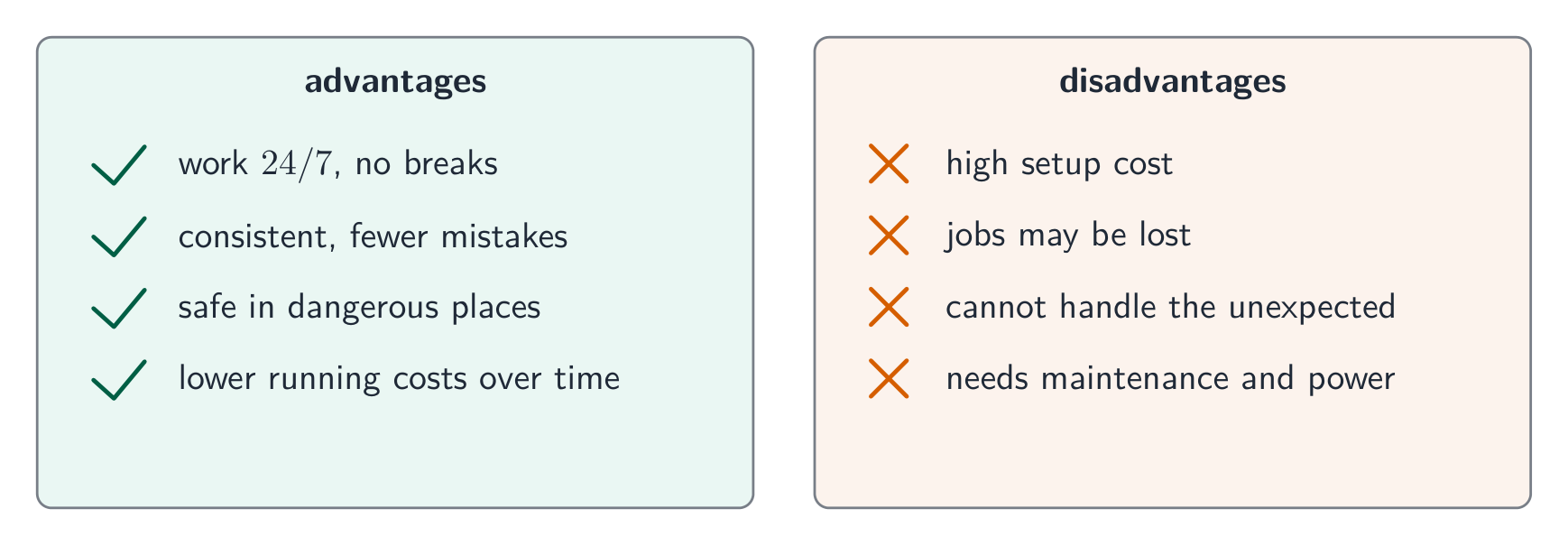
work all day and night, without rest
cost a lot to buy and set up
faster and more consistent 一致的 than people
can break down and need expert repair
can work in places unsafe for people
may replace people's jobs
fewer human mistakes
cannot easily react to a situation they were not built for
Worked example. Describe how an automatic greenhouse holds the temperature at 25 °C. A temperature sensor continuously measures the temperature and sends its reading, converted to digital by an ADC, to the microprocessor. The microprocessor compares the reading with the stored value of 25 °C. If the temperature is above it, the microprocessor signals an actuator to open a window or switch on a fan; if it is below, it switches on a heater. The whole loop then repeats continuously. Two marks nearly always sit on the words "compares with a stored (pre-set) value" and "the process repeats" - a description that stops at "the sensor tells the computer" leaves them behind.
العربية
النظام المؤتمت هو مزيج من البرمجيات والأجهزة التي تكتشف وتستجيب للبيانات في محيطه، دون الحاجة إلى تدخل بشري. بعبارة أخرى، يعمل بشكل مستقل.
أمثلة على الأنظمة المؤتمتة:
نظام التدفئة المركزي؛
عملية كيميائية في مصنع؛
صوبة زراعية (لزراعة النباتات)؛
حاجز موقف السيارات.
المستشعرات ومعالجات الدقيقة والمحفزات
ثلاثة أجزاء تعمل معًا في النظام المؤتمت.
الجزء
الوظيفة
المستشعر
يقيس كمية فيزيائية (مثل درجة الحرارة أو الضوء) ويرسل البيانات
المعالج الدقيق
يقارن البيانات بقيم مخزنة ويتخذ القرارات
المحفز
يستقبل إشارة ويسبب حركة أو إجراء (مثل فتح صمام)
تعمل الدورة كالتالي:
يرسل المستشعر البيانات إلى المعالج الدقيق.
يقارن المعالج الدقيق هذه البيانات بـالقيم المخزنة ويتخذ قراراً.
يرسل المعالج الدقيق إشارات إلى المؤثرات لاتخاذ إجراء.
على سبيل المثال، في دفيئة: يقرأ مستشعر درجة الحرارة الحرارة؛ يقارن المعالج الدقيق القراءة بالقيمة المطلوبة؛ إذا كانت ساخنة جداً، يرسل المعالج الدقيق إشارة لمؤثر لفتح نافذة.
يغذي مستشعر المعالج الدقيق، الذي يقارن القراءة بقيمة مخزنة ويرسل إشارة لمؤثر؛ ثم تتكرر الحلقة
يسرد المنهج أنواع متعددة من المستشعرات، كل منها يقيس كمية فيزيائية واحدة – على سبيل المثال مستشعر التسارع (الحركة أو الميلان)، ومستشعر الرطوبة (الماء في الهواء)، ومستشعر القرب (جسم قريب):
المستشعر
يقيس
الاستخدام النموذجي
درجة الحرارة
الحرارة
الأفران، الدفيئات، التدفئة
الضوء
السطوع
الإضاءة التلقائية، الكاميرات
الضغط
القوة المؤثرة على سطح
حصائر الإنذار، الشاشات اللمسية
الأشعة تحت الحمراء / القرب
جسم قريب
الأبواب التلقائية، حساسات الركن
صوتي (صوت)
مستوى الصوت
مراقب الضوضاء
الرطوبة / الرطوبة
الماء في الهواء أو التربة
الدفيئات، الري
الغاز
وجود غاز
إنذار الدخان وثاني أكسيد الكربون
الحموضة (pH)
الحامضية
المسابح، أحواض الأسماك
مستشعر التسارع
الحركة أو الميلان
الهواتف، محفزات الوسائد الهوائية
المجال المغناطيسي
المغناطيسية
مفاتيح الأبواب، البوصلات
التدفق / المستوى
تدفق السوائل أو عمقها
الأنابيب، الخزانات
للاختيار على مستشعر لحالة معينة، اختر الذي يقيس الكمية الفيزيائية الصحيحة: تحتاج حوض الأسماك إلى مستشعرات للحموضة ودرجة الحرارة؛ تحتاج الباب التلقائي إلى مستشعر للأشعة تحت الحمراء / القرب.
المزايا والعيوب
تُستخدم الأنظمة الآلية في مواقف عديدة، مثل الصناعة، النقل، الزراعة (الزراعة)، الطقس (جمع البيانات)، الألعاب والإضاءة.
المزايا والعيوب للأنظمة الآليةطائرة مسيرة كاميرا: يمكنها الطيران ذاتياً على مسار محدد لجمع البيانات
مميزات
عيوب
تعمل طوال اليوم والليل، دون راحة
تكلف الكثير للشراء والإعداد
أسرع وأكثر اتساقاً من البشر
قد تتعطل وتحتاج إلى إصلاح متخصص
يمكنها العمل في أماكن غير آمنة للبشر
قد تحل محل وظائف البشر
أخطاء بشرية أقل
لا يمكنها الاستجابة بسرعة لموقف لم تُصمم له
مثال محلول. صف كيف تحافظ الدفيئة التلقائية على درجة الحرارة عند 25 °C. يقوم مستشعر درجة الحرارة بقياس درجة الحرارة باستمرار وإرسال قراءته، المحولة إلى رقمي بواسطة محول تناظري-رقمي (ADC)، إلى المعالج الدقيق. يقارن المعالج الدقيق القراءة بالقيمة المخزنة وهي 25 °C. إذا كانت درجة الحرارة أعلى من ذلك، يرسل المعالج الدقيق إشارة لمؤثر لفتح نافذة أو تشغيل مروحة؛ وإذا كانت أقل، يشغل سخاناً. تتكرر الحلقة بأكملها بشكل مستمر. غالباً ما تكون علامتان مخصصتان لكلمتي "يقارن مع قيمة مخزنة (محددة مسبقاً)" و"تتكرر العملية" - الوصف الذي يتوقف عند "يقول المستشعر للحاسوب" يفوتهما.
Explore · استكشف
An automated control loop · حلقة تحكم آلية
Tap round the loop. An automated system senses, compares against a target, then acts — and because the action changes what it senses, it keeps correcting itself with no human needed. · اضغط حول الحلقة. النظام الآلي يحس، يقارن مع هدف، ثم يتصرف — وبسبب أن الفعل يغير ما يُحسّ، فإنه يستمر في تصحيح نفسه دون الحاجة لبشر.
lack of independent decision-making/læk ɒv ˌɪndɪˈpendənt dɪˈsɪʒn ˈmeɪkɪŋ/
غياب اتخاذ القرار المستقل
Artificial intelligence/ˌɑːtɪˈfɪʃl ɪnˈtelɪdʒəns/
الذكاء الاصطناعي
simulation/ˌsɪmjʊˈleɪʃn/
محاكاة
rules/ruːlz/
قواعد
reason/ˈriːzn/
العقل
draw conclusions/drɔː kənˈkluːʒnz/
استخلاص الاستنتاجات
approximate/əˈprɒksɪmət/
تقريب
definite/ˈdefɪnət/
محدد / واضح
learn/lɜːn/
تعلم
adapt/əˈdæpt/
يتكيف / يتكيّف
expert systems/ˈekspɜːt ˈsɪstəmz/
النظم الخبيرة
natural language processing/ˈnætʃərəl ˈlæŋɡwɪdʒ ˈprəʊsesɪŋ/
معالجة اللغة الطبيعية
self-driving cars/self ˈdraɪvɪŋ kɑːz/
السيارات ذاتية القيادة
knowledge base/ˈnɒlɪdʒ beɪs/
قاعدة المعرفة
rule base/ruːl beɪs/
قاعدة القواعد
inference engine/ˈɪnfərəns ˈendʒɪn/
محرك الاستدلال
user interface/ˈjuːzə ˈɪntəfeɪs/
واجهة المستخدم
Machine learning/məˈʃiːn ˈlɜːnɪŋ/
تعلم الآلة
narrow AI/ˈnærəʊ ˌeɪ ˈaɪ/
ذكاء اصطناعي ضيق
general AI/ˈdʒenərəl ˌeɪ ˈaɪ/
ذكاء اصطناعي عام
strong AI/strɒŋ ˌeɪ ˈaɪ/
ذكاء اصطناعي قوي
central heating/ˈsentrəl ˈhiːtɪŋ/
التدفئة المركزية
chemical process/ˈkemɪkl ˈprəʊses/
عملية كيميائية
agriculture/ˈæɡrɪkʌltʃə/
زراعة
mechanical/mɪˈkænɪkl/
ميكانيكية
6.2
Robotics · الروبوتات
Syllabus · المنهج
English
Candidates should be able to:
Notes and guidance
1 Understand what is meant by robotics
• Robotics is a branch of computer science that incorporates the design, construction and operation of robots • Examples include factory equipment, domestic robots and drones
2 Describe the characteristics of a robot
• Including: – a mechanical structure or framework – electrical components, such as sensors, microprocessors and actuators – programmable
3 Understand the roles that robots can perform and describe the advantages and disadvantages of their use
• Robots can be used in areas including: – industry – transport – agriculture – medicine – domestic settings – entertainment
العربية
يجب أن يكون المرشحون قادرين على:
ملاحظات وإرشادات
1 افهم ما يُقصَد بـالروبوتات
• الروبوتات هي فرع من فروع علوم الحاسوب يدمج تصميم وبناء وتشغيل الروبوتات • تشمل الأمثلة: معدات المصانع، والروبوتات المنزلية، والطائرات بدون طيار
2 صف خصائص الروبوت
• بما في ذلك: – هيكل أو إطار ميكانيكي – مكونات كهربائية، مثل المستشعرات والمعالجات الدقيقة والمحفّزات – قابلية البرمجة
3 افهم الأدوار التي يمكن للروبوتات أداءها وصف مزايا وعيوب استخدامها
• يمكن استخدام الروبوتات في مجالات متعددة منها: – الصناعة – النقل – الزراعة – الطب – البيئات المنزلية – الترفيه
Source: Cambridge International syllabus · المصدر: منهج كامبريدج الدولي
English
Robotics 机器人技术 is the branch of technology that deals with the design, building and operation of robots 机器人.
A robot has these characteristics:
a physical structure 物理结构 (a mechanical 机械的 body, such as arms);
electrical components 电子元件 (motors, sensors and wiring);
programmable instructions 可编程指令 — it follows a program that can be changed.
What robots do
Robots can perform many roles, for example:
factory equipment 工厂设备 — building cars, welding, moving heavy parts;
domestic appliances 家用电器 — such as a robotic vacuum cleaner 吸尘器.
Advantages
Disadvantages
do dull or dangerous jobs
expensive to buy and maintain
work quickly and accurately
can replace human workers
do not get tired or bored
a robot has a lack of independent decision-making 缺乏独立决策 — it only does what it is programmed to do
A key limit of a robot is that it cannot think for itself. It cannot make its own choices when something unexpected happens.
العربية
الروبوتات هو فرع من فروع التكنولوجيا يعنى بتصميم وبناء وتشغيل الروبوتات.
يتمتع الروبوت بالخصائص التالية:
هيكل فيزيائي (جسم ميكانيكي، مثل الأذرع);
مكونات كهربائية (محركات، مستشعرات وأسلاك);
تعليمات قابلة للبرمجة — يتبع برنامجاً يمكن تغييره.
ما تفعله الروبوتات
يمكن للروبوتات أداء أدوار عديدة، على سبيل المثال:
معدات المصنع — بناء السيارات، اللحام، نقل القطع الثقيلة;
الأجهزة المنزلية — مثل مكواة الغبار ذاتية الحركة.
ذراع روبوت صناعي. يتبع برنامجًا ويمكن إعادة برمجته لأداء مهمة جديدة.روبوتكنة تنظيف: روبوت منزلي يقود نفسه حول المنزل لتنظيف الأرضية
مميزات
عيوب
تقوم بالمهام المملة أو الخطيرة
باهظة الثمن للشراء والصيانة
تعمل بسرعة ودقة
يمكن أن تحل محل العمال البشر
لا تتعب ولا تمل
يتمتع الروبوت بـعدم القدرة على اتخاذ القرارات المستقلة — يقوم فقط بما تم برمجته عليه
يعتبر الحد الأساسي للروبوت أنه لا يمكنه التفكير بمفرده. لا يمكنه اتخاذ قراراته الخاصة عند حدوث شيء غير متوقع.
Explore · استكشف
Computing concept lab · مختبر مفاهيم الحوسبة.
Classify concrete examples by the computing idea they demonstrate. · صنّف الأمثلة المحددة حسب الفكرة الحاسوبية التي تمثلها.
1 Understand what is meant by artificial intelligence (AI)
• AI is a branch of computer science dealing with the simulation of intelligent behaviours by computers
2 Describe the main characteristics of AI as the collection of data and the rules for using that data, the ability to reason, and it can include the ability to learn and adapt
3 Explain the basic operation and components of AI systems to simulate intelligent behaviour
• Limited to: – expert systems – machine learning • Expert systems have a knowledge base, a rule base, an inference engine and an interface • Machine learning is when a program has the ability to automatically adapt its own processes and/or data
العربية
يجب أن يكون المرشحون قادرين على:
ملاحظات وإرشادات
1 افهم ما يُقصَد بـالذكاء الاصطناعي (AI)
• الذكاء الاصطناعي هو فرع من فروع علوم الحاسوب يتعامل مع محاكاة السلوكيات الذكية بواسطة الحواسيب
2 صف الخصائص الرئيسية للذكاء الاصطناعي كجمع للبيانات والقواعد المستخدمة فيها، وقدرة الاستنتاج، ويشمل إمكانية التعلم والتكيف
3 اشرح التشغيل الأساسي ومكونات أنظمة الذكاء الاصطناعي لمحاكاة السلوك الذكي
• مقيد بـ: – الأنظمة الخبيرة – تعلم الآلة • الأنظمة الخبيرة تحتوي على قاعدة معرفة، وقاعدة قواعد، ومحرك استنتاج، وواجهة • تعلم الآلة هو عندما يكون للبرنامج القدرة على تكييف عملياته و/أو بياناته تلقائياً
Source: Cambridge International syllabus · المصدر: منهج كامبريدج الدولي
English
Artificial intelligence 人工智能 (AI) is the simulation 模拟 of human intelligence by computer systems. This means a computer doing tasks that normally need human thinking.
Characteristics of AI
AI systems usually have these features:
they collect data and the rules 规则 for using that data;
they have the ability to reason 推理 (work things out using the rules);
they have the ability to draw conclusions 得出结论, which may be approximate 近似的 (a best guess) or definite 确定的 (certain);
they have the ability to learn 学习 from data;
they have the ability to adapt 适应 — to change their behaviour as they get new data.
Examples of AI
expert systems 专家系统 — software that gives advice like a human expert (for example, helping a doctor with a diagnosis);
natural language processing 自然语言处理 — understanding human speech or text;
self-driving cars 自动驾驶汽车.
Inside an expert system
An expert system stores human expertise and reasons from it. It has four parts:
a knowledge base 知识库 – the stored facts about the subject;
a rule base 规则库 – the "if… then…" rules a human expert would apply;
an inference engine 推理引擎 – applies the rules to the facts to reach a conclusion;
a user interface 用户界面 – asks the user questions and shows the result.
The interface collects facts from the user; the inference engine runs the rule base against the knowledge base; and the system outputs a diagnosis or a probability – as used to help a doctor diagnose an illness or to find a car fault.
Machine learning
Machine learning 机器学习 is a program that improves its own performance from experience, without being explicitly reprogrammed. It finds patterns in data and adapts: a search engine gets better at ranking results, a voice assistant recognises spoken commands more accurately, and a robot vacuum gradually learns the layout of a room.
Narrow, general and strong AI
Type
What it means
narrow AI 弱人工智能
can do only one task or a small set of tasks (for example, a chess program). All AI today is narrow AI.
general AI 通用人工智能
could do any task a human can do, switching between many different tasks.
strong AI 强人工智能
would think and be aware like a real human mind. This does not exist yet.
العربية
الذكاء الاصطناعي (AI) هو محاكاة للذكاء البشري بواسطة أنظمة الكمبيوتر. وهذا يعني قيام جهاز حاسوب بمهام تتطلب عادةً تفكير بشري.
خصائص الذكاء الاصطناعي
عادةً ما تمتلك أنظمة الذكاء الاصطناعي هذه الخصائص:
تجمع البيانات والقواعد المستخدمة فيها;
لديها القدرة على التفكير المنطقي (استنتاج النتائج باستخدام القواعد);
لديها القدرة على استخلاص الاستنتاجات، والتي قد تكون تقريبية (أفضل تخمين) أو قطعية (مؤكدة);
لديها القدرة على التعلم من البيانات;
لديها القدرة على التكيف — لتغيير سلوكها عندما تحصل على بيانات جديدة.
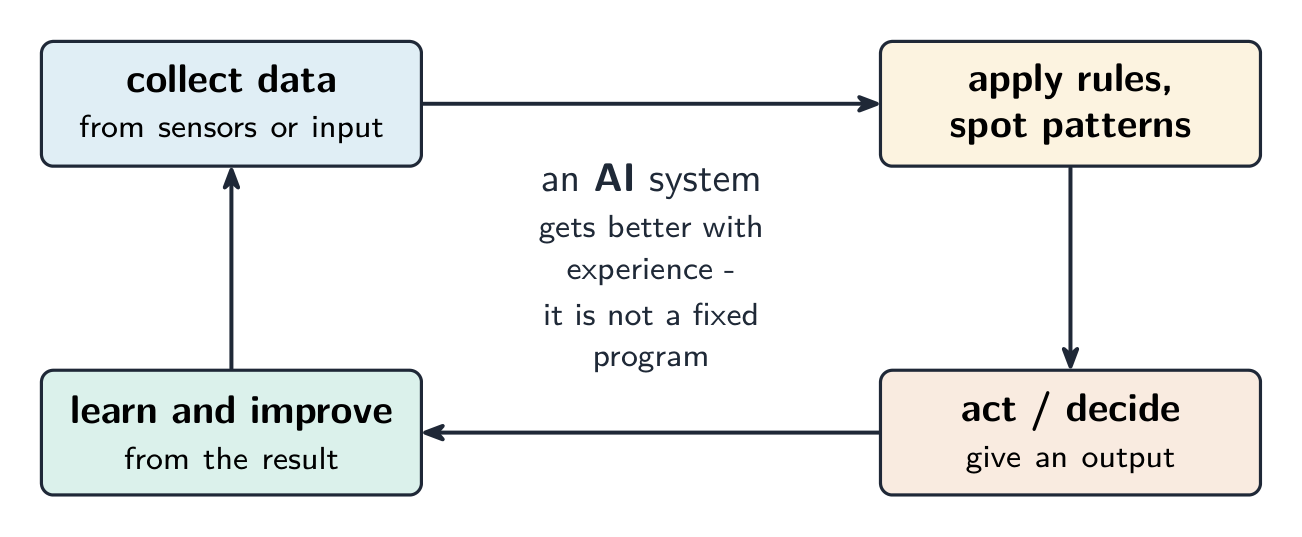
يجمع نظام الذكاء الاصطناعي البيانات، يطبق القواعد، يتخذ إجراءً، ثم يتعلم ويتحسن
أمثلة على الذكاء الاصطناعي
النظم الخبيرة — برامج تعطي نصائح مثل الخبير البشري (على سبيل المثال، مساعدة الطبيب في التشخيص);
معالجة اللغة الطبيعية — فهم الكلام البشري أو النصوص؛
السيارات ذاتية القيادة.
سيارة ذاتية القيادة: الحساسات في السيارة تسمح للحاسوب بتوجيهها بدون سائق
داخل النظام الخبير
يخزن النظام الخبير خبرة البشر ويستنتج منها. يتكون من أربعة أجزاء:
قاعدة المعرفة – الحقائق المخزنة حول الموضوع؛
قاعدة القواعد – قواعد "إذا… فإن…" التي يطبقها خبير بشري؛
محرك الاستنتاج – يطبق القواعد على الحقائق للوصول إلى استنتاج؛
واجهة المستخدم – تطرح أسئلة على المستخدم وتعرض النتيجة.
تجمع الواجهة حقائق من المستخدم؛ يعمل محرك الاستنتاج قاعدة القواعد مقابل قاعدة المعرفة؛ ويخرج النظام تشخيصاً أو احتمالية – كما يُستخدم لمساعدة الطبيب في تشخيص مرض أو اكتشاف عطل في سيارة.
التعلم الآلي
تعلم الآلة هو برنامج يحسن أدائه الخاص من خلال الخبرة، دون إعادة برمجته بشكل صريح. يجد أنماطاً في البيانات ويتكيف: محركات البحث تصبح أفضل في ترتيب النتائج، ومساعدا الصوت يتعرف على الأوامر المنطوقة بدقة أكبر، وروبوت المكنسة يتعلم تدريجياً تخطيط الغرفة.
الذكاء الاصطناعي الضيق والعام والقوي
الذكاء الاصطناعي الضيق يقوم بمهمة واحدة (كل الذكاء الاصطناعي اليوم)؛ الذكاء الاصطناعي العام يمكنه القيام بأي مهمة بشرية؛ الذكاء الاصطناعي القوي سيكون واعياً بنفسه — كلاهما غير موجود بعد
النوع
المعنى
ذكاء اصطناعي ضيق
يمكنه أداء مهمة واحدة أو مجموعة صغيرة من المهام (على سبيل المثال، برنامج الشطرنج). كل الذكاء الاصطناعي اليوم هو ذكاء اصطناعي ضيق.
ذكاء اصطناعي عام
يمكنه أداء أي مهمة يستطيع الإنسان القيام بها، والتبديل بين مهام مختلفة متعددة.
ذكاء اصطناعي قوي
سيفكر ويكون واعياً مثل العقل البشري الحقيقي. هذا لا يوجد حتى الآن.
Explore · استكشف
Computing concept lab · مختبر مفاهيم الحوسبة.
Classify concrete examples by the computing idea they demonstrate. · صنّف الأمثلة المحددة حسب الفكرة الحاسوبية التي تمثلها.
Learn the control loop: a sensor measures a quantity → the microprocessor compares it with a stored value → an actuator takes action; then the loop repeats.
Do not confuse the parts: a sensor sends data in; an actuator causes movement out.
A robot follows programmable instructions and cannot make its own decisions when something unexpected happens.
AI simulates human thinking: it collects data and rules, reasons, draws conclusions, and can learn and adapt.
Know the AI levels: narrow (one task; all AI today), general (any human task), strong (self-aware; does not exist yet).
العربية
تعلم الحلقة التحكمية: المستشعر يقيس كمية ما → المعالج الدقيق يقارنها بقيمة مخزنة → المؤثر يتخذ إجراءً؛ ثم تتكرر الحلقة.
لا تخلط بين الأجزاء: يرسل المستشعر البيانات إلى الداخل؛ والمؤثر يسبب الحركة إلى الخارج.
الروبوت يتبع تعليمات قابلة للبرمجة ولا يمكنه اتخاذ قراراته الخاصة عند حدوث شيء غير متوقع.
Pick one and the site follows you — notes, papers, videos and practice all open on it. · اختر واحدًا وسيتبعك الموقع — الملاحظات، الأوراق، الفيديوهات والتدريب جميعها تفتح عليه.
Type to search notes, lessons, code, vocabulary and past-paper questions across every subject. · اكتب للبحث عن ملاحظات، دروس، أكواد، مفردات وأسئلة امتحانات سابقة عبر جميع المواد.