لا تستطيع النباتات الصيد ولا التحرك. لذا تبني طعامها بنفسها من شبه العدم: غاز من الهواء، ماء من التربة، وضوء. كل وجبة تأكلها…
English narration · English + 中文 subtitles burned in · سرد باللغة الإنجليزية · ترجمة مدمجة بالإنجليزية + الصينية
6.1
Photosynthesis · البناء الضوئي
Syllabus · المنهج
English
Core
Supplement
1 Describe photosynthesis as the process by which plants synthesise carbohydrates from raw materials using energy from light
2 State the word equation for photosynthesis as: carbon dioxide + water $\rightarrow$ glucose + oxygen in the presence of light and chlorophyll
10 State the balanced chemical equation for photosynthesis as: $6\text{CO}_2 + 6\text{H}_2\text{O} \rightarrow \text{C}_6\text{H}_{12}\text{O}_6 + 6\text{O}_2$
3 State that chlorophyll is a green pigment that is found in chloroplasts
4 State that chlorophyll transfers energy from light into energy in chemicals, for the synthesis of carbohydrates
5 Outline the subsequent use and storage of the carbohydrates made in photosynthesis, limited to: (a) starch as an energy store (b) cellulose to build cell walls (c) glucose used in respiration to provide energy (d) sucrose for transport in the phloem (e) nectar to attract insects for pollination
6 Explain the importance of: (a) nitrate ions for making amino acids (b) magnesium ions for making chlorophyll
7 Investigate the need for chlorophyll, light and carbon dioxide for photosynthesis, using appropriate controls
8 Investigate and describe the effects of varying light intensity, carbon dioxide concentration and temperature on the rate of photosynthesis
9 Investigate and describe the effect of light and dark conditions on gas exchange in an aquatic plant using hydrogencarbonate indicator solution
11 Identify and explain the limiting factors of photosynthesis in different environmental conditions
العربية
أساسي
تكميلي
1 صف البناء الضوئي بأنه العملية التي تصنع فيها النباتات الكربوهيدرات من المواد الخام باستخدام طاقة الضوء
2 كتابة المعادلة اللفظية للبناء الضوئي كالتالي: ثاني أكسيد الكربون + ماء $\rightarrow$ سكر جلوكوز + أكسجين في وجود الضوء والكلوروفيل
10 كتابة المعادلة الكيميائية الموزونة للبناء الضوئي كالتالي: $6\text{CO}_2 + 6\text{H}_2\text{O} \rightarrow \text{C}_6\text{H}_{12}\text{O}_6 + 6\text{O}_2$
3 نصّ على أن الكلوروفيل صبغة خضراء توجد في البلاستيدات الخضراء
4 نصّ على أن الكلوروفيل ينقل الطاقة من الضوء إلى طاقة كيميائية، من أجل تصنيع الكربوهيدرات
5 استعرض الاستخدامات والتخزين اللاحق للكربوهيدرات المنتجة في البناء الضوئي، مقتصرة على: (أ) النشا كمخزن للطاقة (ب) السليلوس لبناء جدران الخلايا (ج) الجلوكوز المستخدم في التنفس لتقديم الطاقة (د) السكروز للنقل في الخشب اللحاء (هـ) الرحيق لجذب الحشرات للتلقيح
7 حقق الحاجة إلى الكلوروفيل والضوء وثاني أكسيد الكربون للبناء الضوئي، باستخدام ضوابط مناسبة
8 حقق وصف تأثيرات اختلاف شدة الضوء وتركيز ثاني أكسيد الكربون ودرجة الحرارة على معدل البناء الضوئي
9 حقق وصف تأثير ظروف الضوء والظلام على تبادل الغازات في نبات مائي باستخدام محلول هيدروكربونات البيكربونات
11 حدد واشرح العوامل المحددة للبناء الضوئي في ظروف بيئية مختلفة
Source: Cambridge International syllabus · المصدر: منهج كامبريدج الدولي
English
Photosynthesis: inputs and outputs
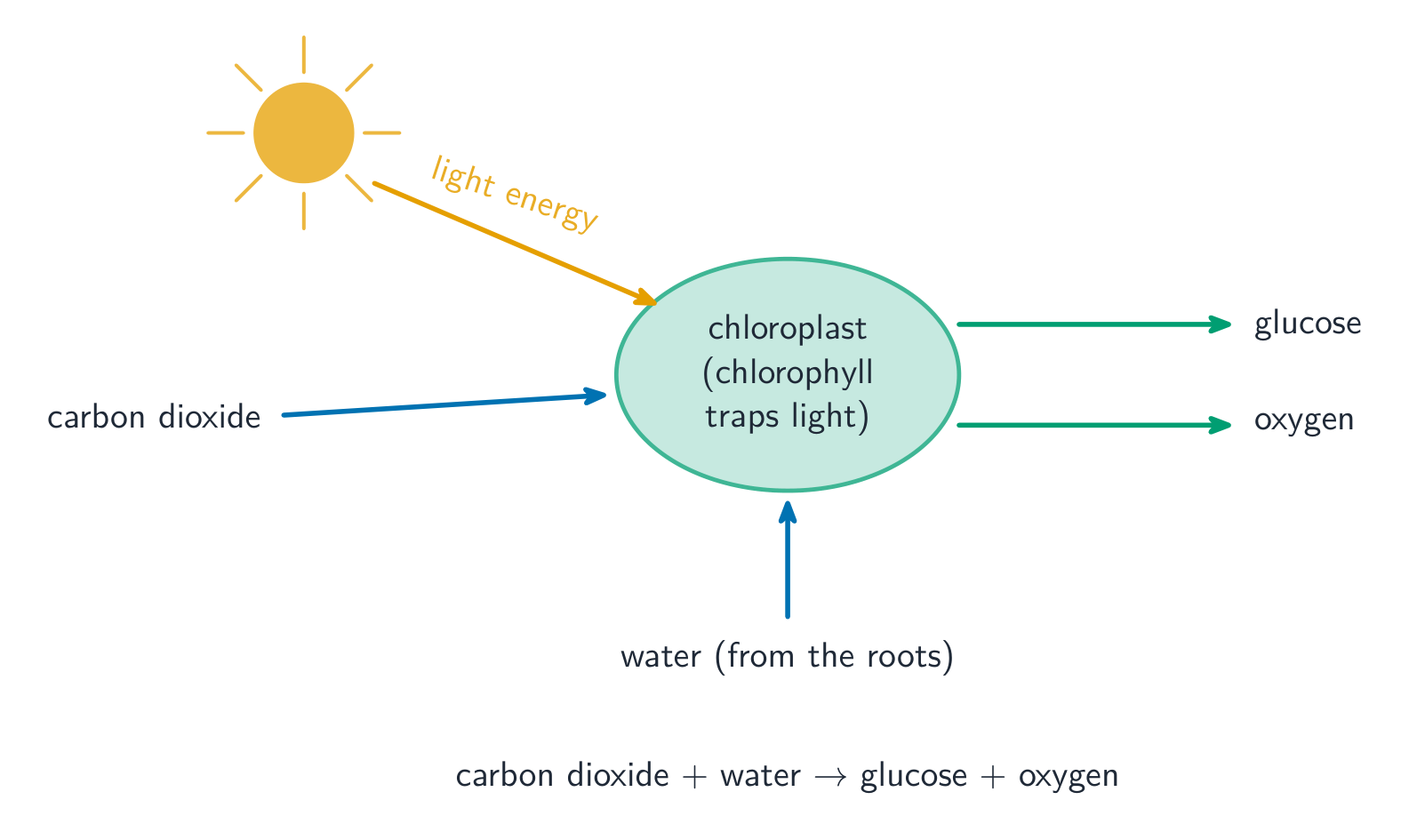
Photosynthesis 光合作用 is the process by which plants make carbohydrates 碳水化合物 from simple raw materials 原料, using energy 能量 from light. It is how plants feed themselves.
In words: plants take in carbon dioxide 二氧化碳 and water, and make glucose 葡萄糖 and oxygen 氧气. This reaction can only happen in the light, and only where there is chlorophyll 叶绿素.
Chlorophyll is a green pigment 色素 found in the chloroplasts 叶绿体. It traps light and transfers the energy from light into energy stored in chemicals. That chemical energy is then used to build carbohydrates.
What the plant does with the glucose
Use
What happens
store
changed to starch 淀粉, an energy store that does not dissolve
build
made into cellulose 纤维素 to build cell walls 细胞壁
release energy
broken down in respiration 呼吸作用 to release energy
transport
changed to sucrose 蔗糖 and moved around the plant in the phloem 韧皮部
attract animals
made into nectar 花蜜 to attract insects 昆虫 for pollination 传粉
Minerals from the soil
Plants also take up mineral ions 离子 from the soil through their roots:
nitrate ions 硝酸根离子 — needed to make amino acids 氨基酸 (and so proteins).
magnesium ions 镁离子 — needed to make chlorophyll.
A plant short of nitrate grows poorly with weak stems; a plant short of magnesium has yellow leaves (it cannot make enough chlorophyll).
The rate of photosynthesis
The rate 速率 of photosynthesis depends on three things:
light intensity 光照强度 — more light gives a faster rate, up to a point.
carbon dioxide concentration 浓度 — more carbon dioxide gives a faster rate.
temperature 温度 — a warmer temperature is faster, until it gets so hot that the enzymes are denatured.
(Supplement) At any moment, the one factor that is in shortest supply holds back the rate. This is called the limiting factor 限制因素. For example, on a dull day light intensity is usually the limiting factor; on a bright day carbon dioxide may be.
Worked example. On a graph of rate against light intensity, the line rises steeply at first and then levels off flat. Which factor is limiting on each part? On the rising part, adding light raises the rate, so light intensity is the limiting factor there. On the flat part, adding more light changes nothing, so light is no longer limiting - something else is, usually carbon dioxide concentration or temperature. The test is always the same: if adding more of a factor speeds the reaction up, that factor was the one holding it back.
Investigating photosynthesis
To show that a plant needs light, chlorophyll and carbon dioxide, you test a leaf for starch after taking one of them away. A control 对照 keeps every other condition the same, so the test is fair. (First leave the plant in the dark to use up its starch.) A leaf with green and white parts shows starch only in the green parts, which have chlorophyll.
You can also watch gas exchange 气体交换 in a water plant using hydrogencarbonate indicator 指示剂, which changes colour as the carbon dioxide level changes. In the light the plant takes in carbon dioxide for photosynthesis; in the dark it gives out carbon dioxide from respiration.
العربية
البناء الضوئي: المدخلات والمخرجاتتلتقط الأوراق الخضراء ضوء الشمس للبناء الضوئي.
البناء الضوئي هو العملية التي تصنع بها النباتات الكربوهيدرات من مواد خام بسيطة، مستخدمةً طاقة الضوء. إنه كيف تتغذى النباتات بنفسها.
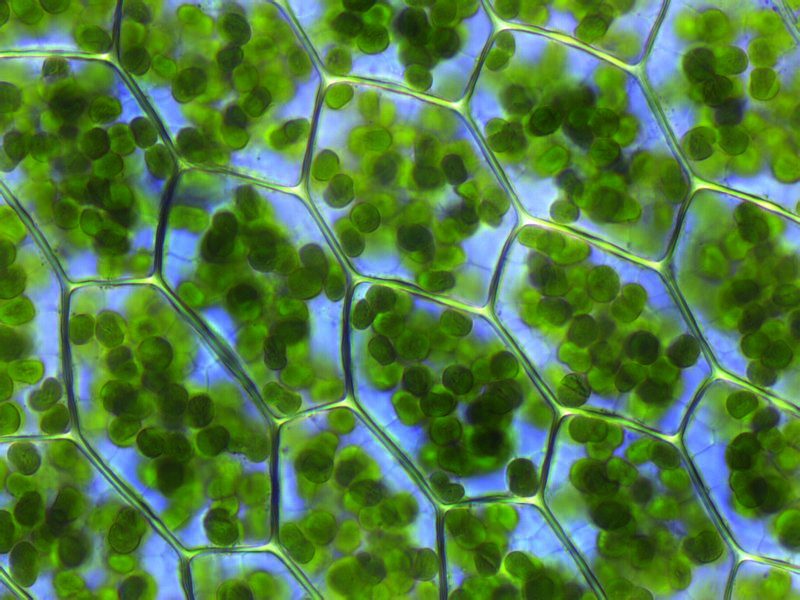
البناء الضوئي يستهلك ثاني أكسيد الكربون والماء وينتج الجلوكوز والأكسجين، باستخدام الضوءنفس البلاستيدات الخضراء تحت المجهر، مكتظة داخل خلايا ورقة الطحالب — اللون الأخضر هو الكلوروفيل
وظيفة الكلوروفيل
الكلوروفيل صبغة خضراء توجد في البلاستيدات الخضراء. يلتقط الضوء وينقل الطاقة من الضوء إلى طاقة مخزنة في المواد الكيميائية. تُستخدم تلك الطاقة الكيميائية لاحقًا لبناء الكربوهيدرات.
ما تفعله النبات بالجلوكوز
الاستخدام
ما يحدث
تخزين
يتحول إلى نشا، وهو مخزن طاقة لا يذوب
بناء
يُصنع منه سلولوز لبناء جدران الخلايا
إطلاق الطاقة
يُحلل في التنفس لإطلاق الطاقة
نقل
يتحول إلى سكروز ويُنتقل حول النبات عبر اللحاء
جذب الحيوانات
يُصنع منه الرحيق لجذب الحشرات لـ التلقيح
ماذا تفعل النبات بالجلوكوز الذي ينتجه
المعادن من التربة
تمتص النباتات أيضًا أيونات معدنية من التربة عبر جذورها:
النبات الذي يفتقر إلى النترات ينمو بشكل سيء بأعناق ضعيفة؛ والنبات الذي يفتقر إلى المغنيسيوم له أوراق صفراء (لأنه لا يستطيع تصنيع ما يكفي من الكلوروفيل).
النبات الناقص للنترات ينمو بشكل سيء؛ والنبات الناقص للمغنيسيوم له أوراق صفراء
معدل البناء الضوئي
يعتمد معدل البناء الضوئي على ثلاثة أشياء:
شدة الضوء — الضوء الأكثر يعطي معدلًا أسرع، حتى نقطة معينة.
تركيز ثاني أكسيد الكربون — ثاني أكسيد الكربون الأكثر يعطي معدلًا أسرع.
درجة الحرارة — درجة الحرارة الأعلى تكون أسرع، حتى تصبح ساخنة للغاية وتنشط الإنزيمات.
(ملحق) في أي لحظة، العامل الذي يتوفر بأقل كمية يحد من المعدل. يسمى هذا العامل المحدد. على سبيل المثال، في يوم غائم عادة ما تكون شدة الضوء هي العامل المحدد؛ وفي يوم مشرق قد يكون ثاني أكسيد الكربون.
زيادة الضوء تسرع البناء الضوئي حتى يصبح عامل آخر محدداً
مثال محلول. على رسم بياني للمعدل مقابل شدة الضوء، يرتفع الخط حاداً في البداية ثم يستقر أفقياً. ما هو العامل المحدد في كل جزء؟ في الجزء الصاعد، إضافة الضوء ترفع المعدل، لذا فإن شدة الضوء هي العامل المحدد هناك. في الجزء الأفقي، إضافة المزيد من الضوء لا يغير شيئاً، لذا لم يعد الضوء عاملاً محدداً - يوجد شيء آخر، عادةً تركيز ثاني أكسيد الكربون أو درجة الحرارة. الاختبار دائماً نفس الشيء: إذا أضافت المزيد من عامل ما وسرع التفاعل، فهذا العامل كان الذي يعيقه.
استقصاء عملية البناء الضوئي
لتوضيح أن النبات يحتاج إلى الضوء والكلوروفيل وثاني أكسيد الكربون، تختبر الورقة النشا بعد إزالة أحد هذه العوامل. التحكم يحافظ على جميع الظروف الأخرى متساوية، مما يجعل الاختبار عادلاً. (أولاً اترك النبات في الظلام لاستهلاك مخزون النشا.) ورقة بها أجزاء خضراء وبيضاء تُظهر النشا فقط في الأجزاء الخضراء، التي تحتوي على الكلوروفيل.
يمكنك أيضاً ملاحظة التبادل الغازي في نبات مائي باستخدام مؤشر هيدروجين الكربونات، الذي يتغير لونه مع تغير مستوى ثاني أكسيد الكربون. في الضوء يأخذ النبات ثاني أكسيد الكربون للبناء الضوئي؛ وفي الظلام يطرد ثاني أكسيد الكربون من التنفس.
Explore · استكشف
What limits photosynthesis · ما الذي يحد من البناء الضوئي
Change light and CO₂. The slowest factor — the limiting factor — sets the rate. · غيّر الضوء وثاني أكسيد الكربون. العامل الأبطأ — العامل المحدد — يحدد المعدل.
1 State that most leaves have a large surface area and are thin, and explain how these features are adaptations for photosynthesis
2 Identify in diagrams and images the following structures in the leaf of a dicotyledonous plant: chloroplasts, cuticle, guard cells and stomata, upper and lower epidermis, palisade mesophyll, spongy mesophyll, air spaces, vascular bundles, xylem and phloem
3 Explain how the structures listed in 6.2.2 adapt leaves for photosynthesis
العربية
أساسي
تكميلي
1 نصّ على أن معظم الأوراق لها مساحة سطح كبيرة ورقيقة، واشرح كيف تُعد هذه الخصائص تكيفات للبناء الضوئي
2 حدد في المخططات والصور الهيايا التالية في ورقة نبات ثنائي الفلقة: البلاستيدات الخضراء، القشرة، الخلايا الحارسة والثغور، البشرة العلوية والسفلية، النسيج الأسفلي والباريزادي، الفراغات الهوائية، الحزم الوعائية، الخشب واللحاء
3 اشرح كيف تتكيف الهيايا المذكورة في 6.2.2 الأوراق للبناء الضوئي
Source: Cambridge International syllabus · المصدر: منهج كامبريدج الدولي
English
A leaf is well adapted 适应 for photosynthesis. Most leaves are broad, with a large surface area 表面积 to catch plenty of light, and thin, so that gases and light quickly reach all the cells.
The middle of the leaf, the mesophyll 叶肉, is where most photosynthesis happens. These are the main parts of a leaf:
Structure
Job / how it helps photosynthesis
cuticle 角质层
a clear waxy layer on top; it reduces water loss but still lets light through
upper epidermis 表皮
a clear layer of cells with no chloroplasts; it lets light pass to the cells below
palisade mesophyll 栅栏叶肉
tall, column-shaped cells packed with chloroplasts, near the top; they do most of the photosynthesis
spongy mesophyll 海绵叶肉
rounded cells with air spaces 气腔 between them, so gases can move easily
stomata 气孔
tiny holes, mostly on the lower surface, that let carbon dioxide in and oxygen out
guard cells 保卫细胞
a pair of cells around each stoma; they open and close it
lower epidermis
a thin layer that holds the stomata
vascular bundles 维管束
contain xylem 木质部 (brings water to the leaf) and phloem (carries sugars away)
العربية
تتكيف الورقة بشكل جيد للبناء الضوئي. معظم الأوراق عريضة، ذات مساحة سطح كبيرة لالتقاط قدر كافٍ من الضوء، ورقيقة، بحيث تصل الغازات والضوء بسرعة إلى جميع الخلايا.
وسط الورقة، وهو النسيج الخلوي، هو المكان الذي يحدث فيه معظم البناء الضوئي. هذه هي الأجزاء الرئيسية للورقة:
البنية
الوظيفة / كيف تساعد في البناء الضوئي
الطبقة الشمعية
طبقة شمعية شفافة في الأعلى؛ تقلل فقدان الماء لكن تسمح بمرور الضوء
البشرة العلوية
طبقة شفافة من الخلايا بدون بلاستيدات خضراء؛ تسمح بمرور الضوء للخلايا السفلية
النسيج الخلوي الإصبعي
خلايا طويلة عمودية مكثفة بالبلاستيدات الخضرية،靠近上部;تقوم بمعظم البناء الضوئي
النسيج الخلوي الإسفنجي
خلايا مستديرة بها مسافات هوائية بينها، لتسهيل حركة الغازات
الثغور
ثقوب صغيرة، غالباً على السطح السفلي، تسمح بدخول ثاني أكسيد الكربون وخروج الأكسجين
الخلايا الحارسة
زوج من الخلايا حول كل ثغرة؛ تفتحها وتغلقها
البشرة السفلى
طبقة رقيقة تحتفظ بالثغور
الحزم الوعائية
تحتوي على الخشب (يحمل الماء إلى الورقة) واللحاء (ينقل السكريات بعيداً)
ورقة في مقطع عرضي: كل نسيج متكيف للبناء الضوئي وتبادل الغازاتثغورات حقيقية في السطح السفلي لورقة — لكل مسام خلية حارسة واحدة (مقياس 20 ميكرومتر)
Explore · استكشف
Inside a leaf · داخل الورقة
Tap each layer of a leaf cross-section to see how its structure is built for photosynthesis and gas exchange. · اضغط على كل طبقة في مقطع عرضي للورقة لرؤية كيف تم بناء تركيبها للبناء الضوئي وتبادل الغازات.
Learn the word equation exactly: carbon dioxide + water → glucose + oxygen (in light, with chlorophyll).
Chlorophyll is in the chloroplasts; it does not get used up — it transfers light energy.
Link each factor to the rate: more light, more carbon dioxide, warmer (but not too hot) → faster, until a limiting factor stops further increase.
For leaf structure, always link the part to its job: broad and thin to catch light; palisade cells full of chloroplasts; stomata and air spaces for gas exchange.
Pick one and the site follows you — notes, papers, videos and practice all open on it. · اختر واحدًا وسيتبعك الموقع — الملاحظات، الأوراق، الفيديوهات والتدريب جميعها تفتح عليه.
Type to search notes, lessons, code, vocabulary and past-paper questions across every subject. · اكتب للبحث عن ملاحظات، دروس، أكواد، مفردات وأسئلة امتحانات سابقة عبر جميع المواد.