Skip to content · ⁨الانتقال إلى المحتوى⁩

Globalization · ⁨العولمة⁩

AP World History: Modern · ⁨تاريخ العالم الحديث (AP)⁩ · Topic 9 · ⁨الموضوع 9⁩

Video lesson for this topic · ⁨درس فيديو لهذا الموضوع⁩ Open the video page · ⁨افتح صفحة الفيديو⁩
7:39

الوحدة 9: العولمة

الخطوة المركزية للوحدة 9 هي تقييمية بدلاً من سردية. كل تطور يذكره ينتج عنه منفعة وتكلفة، والأسئلة تكافئ الإجابات…

English narration · English + 中文 subtitles burned in · ⁨سرد باللغة الإنجليزية · ترجمة مدمجة بالإنجليزية + الصينية⁩

9.1

Advances in Technology and Exchange · ⁨التقدم التكنولوجي والتبادل⁩

Syllabus · ⁨المنهج⁩
English

9.1 Advances in Technology and Exchange After 1900

Thematic Focus (TEC): Technology and Innovation — Human adaptation and innovation have resulted in increased efficiency, comfort, and security, and technological advances have shaped human development and interactions with both intended and unintended consequences.

Learning Objective Unit 9.A: Explain how the development of new technologies changed the world from 1900 to present.

  • KC-6.1.I.A New modes of communication—including radio communication, cellular communication, and the internet—as well as transportation, including air travel and shipping containers, reduced the problem of geographic distance.
  • KC-6.1.I.D Energy technologies, including the use of petroleum and nuclear power, raised productivity and increased the production of material goods.
  • KC-6.1.III.B More effective forms of birth control gave women greater control over fertility, transformed reproductive practices, and contributed to declining rates of fertility in much of the world.
  • KC-6.1.I.B The Green Revolution and commercial agriculture increased productivity and sustained the earth’s growing population as it spread chemically and genetically modified forms of agriculture.
  • KC-6.1.I.C Medical innovations, including vaccines and antibiotics, increased the ability of humans to survive and live longer lives.
العربية

9.1 تقدم التكنولوجيا والتبادل بعد عام 1900

التركيز الموضوعي (TEC): التكنولوجيا والابتكار – أدّى تكيف البشر وابتكاراتهم إلى زيادة الكفاءة والراحة والأمان، وشكّلت التطورات التكنولوجية التطور البشري وتفاعلاته مع عواقب مقصودة وغير مقصودة.

هدف التعلم الوحدة 9.A: اشرح كيف غير تطور التقنيات الجديدة العالم من عام 1900 إلى الوقت الحاضر.

  • KC-6.1.I.A قلّلت modes of communication الجديدة—including الاتصال عبر الراديو والاتصال الخلوي والإنترنت،以及 transportation包括航空旅行和集装箱,问题地理距离。
  • KC-6.1.I.D رفعت تقنيات الطاقة، بما في ذلك استخدام النفط والطاقة النووية، الإنتاجية وزادت من إنتاج السلع المادية.
  • KC-6.1.III.B أتاح أشكال أكثر فعالية لمنع الحمل للنساء سيطرة أكبر على الخصوبة، وحوّلت ممارسات الإنجاب، وساهمت في انخفاض معدلات الخصوبة في معظم أنحاء العالم.
  • KC-6.1.I.B زادت الثورة الخضراء والزراعة التجارية الإنتاجية وأبقَت على زيادة عدد سكان الأرض عندما انتشرت فيها أشكال الزراعة المعدلة كيميائيًا وجينيًا.
  • KC-6.1.I.C زادت الابتكارات الطبية، بما في ذلك اللقاحات والمضادات الحيوية، قدرة البشر على البقاء والعيش في حيات أطول.

Source: College Board AP Course and Exam Description · ⁨المصدر: وصف دورة وامتحان College Board AP⁩

English

Unit 9 covers 1900 to the present, and its central move is evaluative rather than narrative: almost every development it names produced both a benefit and a cost, and questions reward answers that hold both.

The CED names the advances directly:

  • New modes of communication 通信方式 - radio, cellular technology, and the internet.
  • Energy technologies 能源技术, including the use of petroleum 石油 and nuclear power 核能.
  • Medical innovations 医学创新, including vaccines 疫苗 and antibiotics 抗生素, which increased lifespans 寿命.
  • The Green Revolution 绿色革命 and commercial agriculture, which increased the global food supply.
  • More effective forms of birth control 节育, which gave women greater control over fertility 生育, transformed reproductive practices, and contributed to declining fertility rates in industrialised states.

Note the last one carefully. It is a technological change with a demographic and a social consequence, which makes it unusually useful evidence in questions about the changing role of women.

العربية

تغطي الوحدة 9 الفترة من 1900 إلى الآن، وتحركها المركزي تقييمي بدلاً من سردي: تقريباً كل تطور يذكره أنتج فائدة وتكلفة، والأسئلة تكافئ الإجابات التي تحتفظ بكليهما.

يسمّي CED التطورات مباشرة:

  • أنماط جديدة من الاتصال - الراديو، والتكنولوجيا الخلوية، والإنترنت.
  • تقنيات الطاقة، بما في ذلك استخدام البترول والطاقة النووية.
  • الابتكارات الطبية، بما في ذلك اللقاحات والمضادات الحيوية، والتي زادت من أمد الحياة.
  • الثورة الخضراء والزراعة التجارية، اللتين زادتا الإمداد الغذائي العالمي.
  • أشكال أكثر فعالية لـالتحكم في النسل، مما منح النساء سيطرة أكبر على الخصوبة، وحوّلت الممارسات الإنجابية، وساهمت في انخفاض معدلات الخصوبة في الدول الصناعية.

لاحظ النقطة الأخيرة بعناية. إنه تغيير تقني له عواقب ديموغرافية واجتماعية، مما يجعله دليلاً مفيداً بشكل غير عادي في الأسئلة حول المتغير دور المرأة.

Vocabulary · ⁨مفردات⁩ Train · ⁨تدريب⁩
English العربية
New modes of communication/njuː məʊdz ɒv kəˌmjuːnɪˈkeɪʃn/ أساليب اتصال جديدة
Energy technologies/ˈenədʒi tekˈnɒlədʒiz/ تقنيات الطاقة
petroleum/pəˈtrəʊliːəm/ النفط
nuclear power/ˈnjuːklɪə ˈpaʊə/ الطاقة النووية
Medical innovations/ˈmedɪkl ˌɪnəˈveɪʃnz/ الابتكارات الطبية
vaccines/vækˈsiːnz/ اللقاحات
antibiotics/ˌæntɪbaɪˈɒtɪks/ المضادات الحيوية
increased lifespans/ɪnˈkriːst ˈlaɪfspænz/ زيادة متوسط العمر
Green Revolution/ɡriːn ˌrevəˈluːʃn/ الثورة الخضراء
birth control/bɜːθ kənˈtrəʊl/ تنظيم الأسرة
fertility/fɜːˈtɪlɪti/ الخصوبة
deforestation/diːˌfɒrɪˈsteɪʃn/ إزالة الغابات
desertification/dɪˌzɜːtɪfɪˈkeɪʃn/ التصحّر
decline in air quality/dɪˈklaɪn ɪn eə ˈkwɒlɪti/ تدهور جودة الهواء
fresh water/freʃ ˈwɔːtə/ المياه العذبة
greenhouse gases/ˈɡriːnhaʊs ˈɡæsɪz/ غازات الدفيئة
debates about climate change/dɪˈbeɪts əˈbaʊt ˈklaɪmət tʃeɪndʒ/ الجدل حول تغير المناخ
free-market economic policies/friː ˈmɑːkɪt ˌiːkəˈnɒmɪk ˈpɒlɪsiz/ سياسات السوق الحرة
knowledge economies/ˈnɒlɪdʒ ɪˈkɒnəmiz/ اقتصادات المعرفة
and regional trade agreements/ænd ˈriːdʒənl treɪd əˈɡriːmənts/ واتفاقيات التجارة الإقليمية
Rights-based discourses/raɪts beɪst ˈdɪskɔːsɪz/ خطاب قائم على الحقوق
access to education/ˈækses tʊ ˌedʒuːˈkeɪʃn/ الوصول إلى التعليم
global integration/ˈɡləʊbl ˌɪntɪˈɡreɪʃn/ التكامل العالمي
increasingly reflected global influence/ɪnˈkriːsɪŋli rɪˈflektɪd ˈɡləʊbl ˈɪnfluːəns/ انعكاس متزايد للنفوذ العالمي
Consumer culture/kənˈsuːmə ˈkʌltʃə/ ثقافة المستهلك
Religious and traditionalist movements/rɪˈlɪdʒəs ænd trəˈdɪʃənəlɪst ˈmuːvmənts/ الحركات الدينية والتقليدية
New international organisations/njuː ˌɪntəˈnæʃənl ˌɔːɡənaɪˈzeɪʃnz/ منظمات دولية جديدة
United Nations/juːˈnaɪtɪd ˈneɪʃnz/ الأمم المتحدة
9.2

Technological Advances and Limitations: Disease · ⁨تقدم وتقييد التقنيات: الأمراض⁩

Syllabus · ⁨المنهج⁩
English

9.2 Technological Advances and Limitations After 1900: Disease

Thematic Focus (ENV): Humans and the Environments — The environment shapes human societies, and as populations grow and change, these populations in turn shape their environments.

Learning Objective Unit 9.B: Explain how environmental factors affected human populations over time.

  • KC-6.1.III Diseases, as well as medical and scientific developments, had significant effects on populations around the world.
  • KC-6.1.III.A Diseases associated with poverty persisted while other diseases emerged as new epidemics and threats to human populations, in some cases leading to social disruption. These outbreaks spurred technological and medical advances. Some diseases occurred at higher incidence merely because of increased longevity.

Illustrative examples:

  • Diseases associated with poverty: § Malaria § Tuberculosis § Cholera Emergent epidemic diseases: § 1918 influenza pandemic § Ebola § HIV/AIDS Diseases associated with increased longevity: § Heart disease § Alzheimer’s disease
العربية

9.2 التقدم التكنولوجي وقيوده بعد عام 1900: الأمراض

التركيز الموضوعي (ENV): البشر والبيئات — البيئة تُشكّل المجتمعات البشرية، وكما تنمو السكان وتتغير، فإنها بدورها تُشكّل بيئاتها.

هدف التعلم الوحدة 9.B: اشرح كيف أثرت العوامل البيئية على السكان البشريين عبر الزمن.

  • KC-6.1.III كان للأمراض، بالإضافة إلى التطورات الطبية والعلمية، تأثيرات كبيرة على populations حول العالم.
  • KC-6.1.III.A استمرت الأمراض المرتبطة بالفقر بينما ظهرت أمراض أخرى كأوبئة جديدة وتهديدات للسكان البشريين، وفي بعض الحالات أدى ذلك إلى اضطراب اجتماعي. حفزت هذه التفشيات تقدمًا تكنولوجيًا وطبيًا. وقعت بعض الأمراض بحدوث أعلى مجرد بسبب زيادة متوسط العمر.

أمثلة توضيحية:

  • أمراض مرتبطة بالفقر: § الملاريا § السل § الكوليرا. أمراض وبائية ناشئة: § جائحة إنفلونزا 1918 § إيبولا § فيروس نقص المناعة البشرية/الإيدز. أمراض مرتبطة بزيادة متوسط العمر: § أمراض القلب § مرض الزهايمر

Source: College Board AP Course and Exam Description · ⁨المصدر: وصف دورة وامتحان College Board AP⁩

English

Diseases, as well as medical and scientific developments, had significant effects on populations across the century. The CED splits the effect in two:

  • Diseases associated with poverty persisted, while other diseases emerged as epidemics and pandemics.
  • Diseases associated with longer lifespans - conditions such as heart disease and neurological illnesses of old age - became more prominent precisely because medical advances extended life.

That second point is the unit's logic in miniature: the success of one intervention produced the conditions for a different problem. It is not a contradiction, and saying so is what makes an answer analytical.

العربية
كل تقدم في هذه الوحدة يتكبد تكلفة، والامتحان يكافئ تسمية كلاهما
لهذا السبب تطلب أسئلة الوحدة 9 منك التقييم بدلاً من الوصف

الأمراض، بالإضافة إلى التطورات الطبية والعلمية، كان لها تأثيرات كبيرة على السكان عبر القرن. يقسم CED التأثير إلى قسمين:

  • استمرت الأمراض المرتبطة بالفقر، بينما ظهرت أمراض أخرى كأوبئة وجوائح.
  • أصبحت الأمراض المرتبطة بزيادة طول العمر - مثل أمراض القلب والأمراض العصبية الخاصة بكبار السن - أكثر بروزاً تحديداً لأن التقدم الطبي مدّد الحياة.

النقطة الثانية هي منطق الوحدة مصغراً: نجح تدخل واحد وأنتج ظروفًا لمشكلة مختلفة.这不是 تناقض، وقول ذلك هو ما يجعل الإجابة تحليلية.

9.3

Debates About the Environment · ⁨نقاشات بشأن البيئة⁩

Syllabus · ⁨المنهج⁩
English

9.3 Technological Advances: Debates About the Environment After 1900

Thematic Focus (ENV): Humans and the Environments — The environment shapes human societies, and as populations grow and change, these populations in turn shape their environments.

Learning Objective Unit 9.C: Explain the causes and effects of environmental changes in the period from 1900 to present.

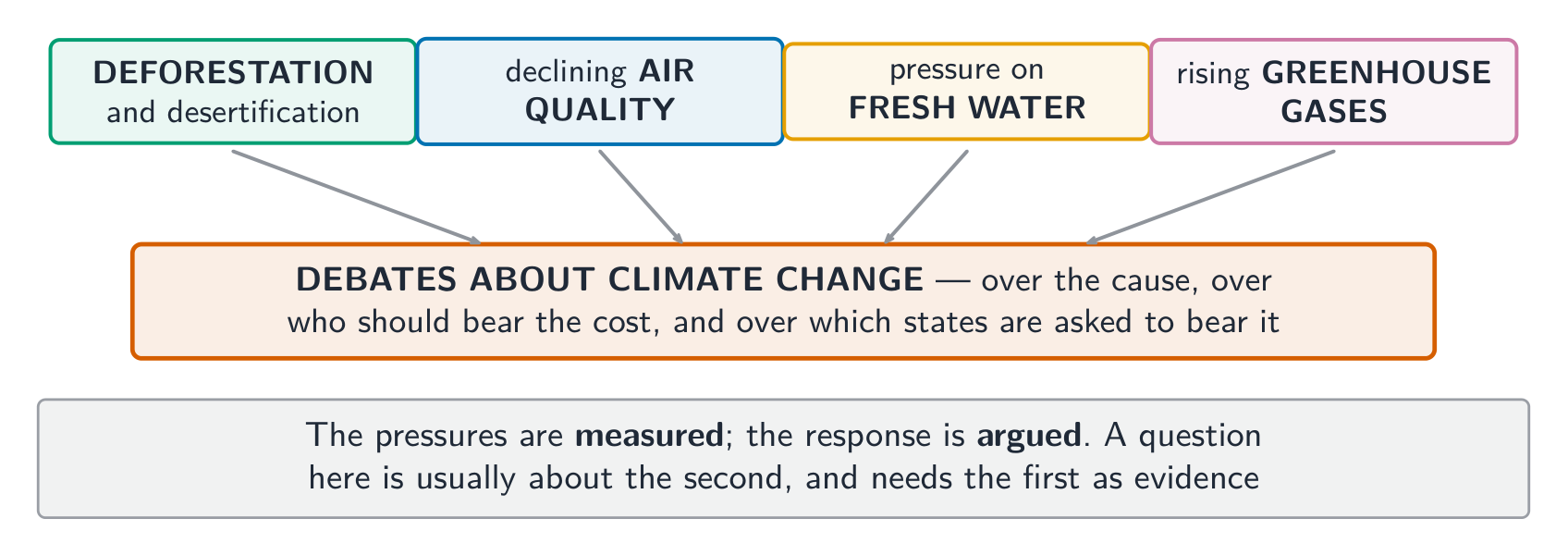
  • KC-6.1.II.A As human activity contributed to deforestation, desertification, a decline in air quality, and increased consumption of the world’s supply of fresh water, humans competed over these and other resources more intensely than ever before.
  • KC-6.1.II.B The release of greenhouse gases and pollutants into the atmosphere contributed to debates about the nature and causes of climate change.
العربية

9.3 التقدم التكنولوجي: نقاشات بشأن البيئة بعد عام 1900

التركيز الموضوعي (ENV): البشر والبيئات — البيئة تُشكّل المجتمعات البشرية، وكما تنمو السكان وتتغير، فإنها بدورها تُشكّل بيئاتها.

هدف التعلم الوحدة 9.C: اشرح أسباب وتأثيرات التغيرات البيئية في الفترة من عام 1900 إلى الوقت الحاضر.

  • KC-6.1.II.A ساهمت الأنشطة البشرية في إزالة الغابات، والتصحّر، وتدهور جودة الهواء، وزيادة استهلاك إمدادات المياه العذبة العالمية، مما جعل البشر يتنافسون على هذه الموارد وأخرى بشكل أكثر حدة من أي وقت مضى.
  • KC-6.1.II.B ساهم انبعاث غازات الدفيئة والملاوثات في الغلاف الجوي في النقاشات حول طبيعة وأسباب التغير المناخي.

Source: College Board AP Course and Exam Description · ⁨المصدر: وصف دورة وامتحان College Board AP⁩

English

Human activity contributed to deforestation 森林砍伐, desertification 荒漠化, a decline in air quality 空气质量下降, and increased consumption of the world's supply of fresh water 淡水.

The release of greenhouse gases 温室气体 and pollutants into the atmosphere provoked debates about climate change 气候变化. The CED's word is debates - the examinable content is that the science and its policy implications became a subject of international argument, not a settled instruction.

العربية

ساهمت النشاط البشري في إزالة الغابات، والتصحّر، وتدهور جودة الهواء، وزيادة استهلاك إمدادات العالم من المياه العذبة.

أدى انبعاث غازات الدفيئة والملوِّثات في الغلاف الجوي إلى نقاشات حول تغير المناخ. كلمة CED هي نقاشات - المحتوى القابل للاختبار هو أن العلم وعواقبه السياسية أصبحا موضوع جدل دولي، وليس تعليمات مستقرة.

الضغوط تُقاس؛ الاستجابة تُجادل
Explore · ⁨استكشف⁩

Separate what is measured from what is argued · ⁨افصل بين ما يُقاس وما يُجادل⁩

The pressures are measured; the response is argued. A question here is usually about the second and needs the first as evidence. · ⁨الضغوط تُقاس؛ الرد يُجادل. السؤال هنا عادةً يتعلق بالثاني ويحتاج الأول كدليل.⁩

9.4

Economics in the Global Age · ⁨الاقتصاد في العصر العالمي⁩

Syllabus · ⁨المنهج⁩
English

9.4 Economics in the Global Age

Thematic Focus (ECN): Economics Systems — As societies develop, they affect and are affected by the ways that they produce, exchange, and consume goods and services.

Learning Objective Unit 9.D: Explain the continuities and changes in the global economy from 1900 to present.

  • KC-6.3.I.D In a trend accelerated by the end of the Cold War, many governments encouraged free-market economic policies and promoted economic liberalization in the late 20th century.
  • KC-6.3.I.E In the late 20th century, revolutions in information and communications technology led to the growth of knowledge economies in some regions, while industrial production and manufacturing were increasingly situated in Asia and Latin America.
  • KC-6.3.II.B Changing economic institutions, multinational corporations, and regional trade agreements reflected the spread of principles and practices associated with free-market economics throughout the world.

Illustrative examples:

  • Governments’ increased encouragement of free-market policies: § The United States under Ronald Reagan § Britain under Margaret Thatcher § China under Deng Xiaoping § Chile under Augusto Pinochet Knowledge economies: § Finland § Japan § U.S. Asian production and manufacturing economies: § Vietnam
    • Bangladesh
  • Latin American production and manufacturing economies:
    • Mexico
    • Honduras
  • Economic institutions and regional trade agreements:
    • World Trade Organization (WTO)
    • North American Free Trade Agreement (NAFTA)
    • Association of Southeast Asian Nations (ASEAN)
  • Multinational corporations:
    • Nestlé
    • Nissan
    • Mahindra and Mahindra
العربية

9.4 الاقتصاد في العصر العالمي

التركيز الموضوعي (ECN): أنظمة الاقتصاد — عندما تتطور المجتمعات، فإنها تؤثر وتتأثر بالطرق التي تنتج بها وتبادلها وتستهلك بها السلع والخدمات.

هدف التعلم الوحدة 9.D: اشرح الاستمرارية والتغيرات في الاقتصاد العالمي من عام 1900 إلى الآن.

  • KC-6.3.I.D في اتجاه تسارع بسبب نهاية الحرب الباردة، شجعت العديد من الحكومات سياسات السوق الحرة وعززت التحرر الاقتصادي في أواخر 20th century.
  • KC-6.3.I.E في أواخر 20th century، أدت الثورات في تكنولوجيا المعلومات والاتصالات إلى نمو اقتصاديات المعرفة في بعض المناطق، بينما تمركز الإنتاج الصناعي والتصنيع بشكل متزايد في آسيا وأمريكا اللاتينية.
  • KC-6.3.II.B عكست المؤسسات الاقتصادية المتغيرة، والشركات متعددة الجنسيات، واتفاقيات التجارة الإقليمية انتشار المبادئ والممارسات المرتبطة بالاقتصاد الحر في جميع أنحاء العالم.

أمثلة توضيحية:

  • زيادة تشجيع الحكومات للسياسات الحرة: § الولايات المتحدة تحت رونالد ريجان § بريطانيا تحت مارجريت ثاتشر § الصين تحت دنغ شياو بينغ § تشيلي تحت أوغوستو بينوشيه اقتصادات المعرفة: § فنلندا § اليابان § إنتاج وصادرات آسيا الأمريكية: § فيتنام
    • بنغلاديش
  • اقتصاديات الإنتاج والتصنيع في أمريكا اللاتينية:
    • المكسيك
    • هندوراس
  • المؤسسات الاقتصادية واتفاقيات التجارة الإقليمية:
    • منظمة التجارة العالمية (WTO)
    • اتفاقية التجارة الحرة لأمريكا الشمالية (NAFTA)
    • رابطة دول جنوب شرق آسيا (ASEAN)
  • الشركات متعددة الجنسيات:
    • نستله
    • نيسان
    • ماهيندرا وماهيندرا

Source: College Board AP Course and Exam Description · ⁨المصدر: وصف دورة وامتحان College Board AP⁩

English

Three developments define the period's economic history, and all three accelerated after 1990:

  • Many governments encouraged free-market economic policies 自由市场政策, a trend accelerated by the end of the Cold War.
  • Revolutions in information and communications technology led to the growth of knowledge economies 知识经济 in some regions, while other regions remained centred on agriculture or manufacturing.
  • Changing economic institutions, multinational corporations, and regional trade agreements 区域贸易协定 reshaped how production and trade were organised across borders.

The continuity worth naming: this is the same story as Unit 6's economic imperialism, in new institutional form. Firms in wealthy states again hold disproportionate influence over the terms on which producers elsewhere participate.

العربية

ثلاثة تطورات تُعرّف التاريخ الاقتصادي لهذه الفترة، وجميعها تسارعت بعد عام 1990:

  • شجعت الحكومات许多政府鼓励سياسات السوق الحرة، وهو اتجاه سرّعته نهاية الحرب الباردة.
  • أدت ثورات في تكنولوجيا المعلومات والاتصالات إلى نمو اقتصادات المعرفة في بعض المناطق، بينما ظلت مناطق أخرى مركزة على الزراعة أو التصنيع.
  • تغيير المؤسسات الاقتصادية، والشركات متعددة الجنسيات، واتفاقيات التجارة الإقليمية أعاد تشكيل كيفية تنظيم الإنتاج والتجارة عبر الحدود.

الاتصال المستحق للتسمية: هذا هو نفس قصة الإمبريالية الاقتصادية في الوحدة 6، بصيغة مؤسسية جديدة. لا تزال الشركات في الدول الثرية تحتفظ بنفوذ مفرط على شروط مشاركة المنتجين في أماكن أخرى.

9.5

Calls for Reform and Responses · ⁨دعوات الإصلاح والاستجابات⁩

Syllabus · ⁨المنهج⁩
English

9.5 Calls for Reform and Responses After 1900

Thematic Focus (SIO): Social Interactions and Organization — The process by which societies group their members and the norms that govern the interactions between these groups and between individuals influence political, economic, and cultural institutions and organization.

Learning Objective Unit 9.E: Explain how social categories, roles, and practices have been maintained and challenged over time.

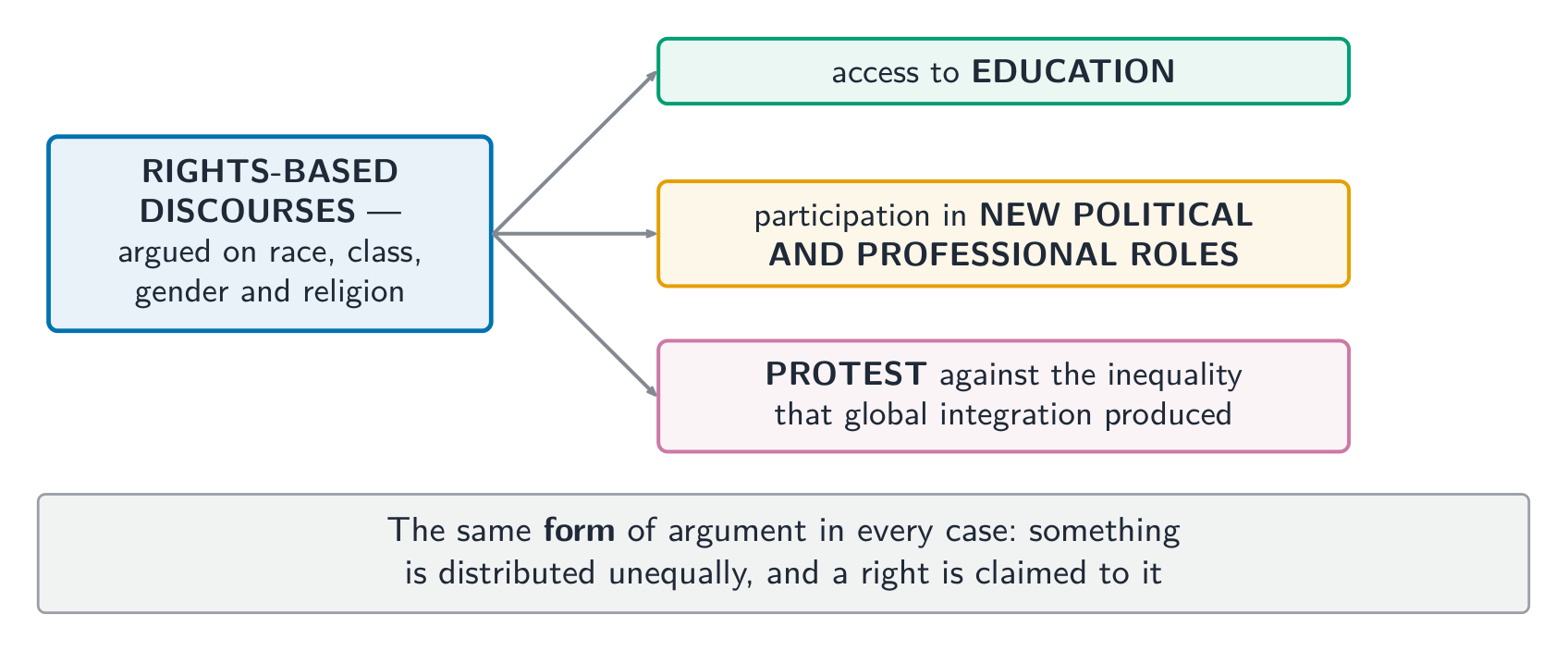
  • KC-6.3.III.i Rights-based discourses challenged old assumptions about race, class, gender, and religion.
  • KC-6.3.III.ii In much of the world, access to education as well as participation in new political and professional roles became more inclusive in terms of race, class, gender, and religion.
  • KC-6.3.II.C Movements throughout the world protested the inequality of the environmental and economic consequences of global integration.

Illustrative examples:

  • Challenges to assumptions about race, class, gender, and religion:
    • The U.N. Universal Declaration of Human Rights, especially as it sought to protect the rights of children, women, and refugees
    • Global feminism movements
    • Negritude movement
    • Liberation theology in Latin America
  • Increased access to education and political and professional roles:
    • The right to vote and/ or to hold public office granted to women in the United States (1920), Brazil (1932), Turkey (1934), Japan (1945), India (1947), and Morocco (1963)
    • The rising rate of female literacy and the increasing numbers of women in higher education, in most parts of the world
    • The U.S. Civil Rights Act of 1965
    • The end of apartheid
    • Caste reservation in India
  • Environmental movements:
    • Greenpeace
    • Professor Wangari Maathai’s Green Belt Movement in Kenya
  • Economic movements:
    • World Fair Trade Organization
العربية

9.5 دعوات الإصلاح والاستجابات بعد عام 1900

التركيز الموضوعي (SIO): التفاعلات الاجتماعية والتنظيم — عملية تجميع المجتمعات لأعضائها والمعايير التي تحكم التفاعل بين هذه المجموعات وبين الأفراد تؤثر على المؤسسات والهيكل السياسي والاقتصادي والثقافي.

هدف التعلم الوحدة 9.E: اشرح كيف تم الحفاظ على الفئات الاجتماعية والأدوار والممارسات وتحديها عبر الزمن.

  • KC-6.3.III.i تحدى الخطاب القائم على الحقوق الافتراضات القديمة حول العرق والطبقة والجنس والدين.
  • KC-6.3.III.ii في معظم أنحاء العالم، أصبح الوصول إلى التعليم بالإضافة إلى المشاركة في الأدوار السياسية والمهنية الجديدة أكثر شمولاً من حيث العرق والطبقة والجنس والدين.
  • KC-6.3.II.C احتجت حركات في جميع أنحاء العالم على عدم المساواة في العواقب البيئية والاقتصادية للتكامل العالمي.

أمثلة توضيحية:

  • تحديات الافتراضات حول العرق والطبقة والجنس والدين:
    • الإعلان العالمي لحقوق الإنسان التابع للأمم المتحدة، لا سيما عندما سعى لحماية حقوق الأطفال والنساء واللاجئين
    • حركات النسوية العالمية
    • حركة النغريتود
    • اللاهوت التحرري في أمريكا اللاتينية
  • زيادة الوصول إلى التعليم والأدوار السياسية والمهنية:
    • منح المرأة حق التصويت و/أو شغل المناصب العامة في الولايات المتحدة (1920)، البرازيل (1932)، تركيا (1934)، اليابان (1945)، الهند (1947)، والمغرب (1963)
    • ارتفاع معدل أمية الإناث increasing numbers of women in higher education, in most parts of the world
    • قانون الحقوق المدنية الأمريكي لعام 1965
    • نهاية نظام الفصل العنصري
    • الحجز الطائفي في الهند
  • الحركات البيئية:
    • غرينبيس
    • حركة الحزام الأخضر للبروفيسورة وانغاري ماتاي في كينيا
  • الحركات الاقتصادية:
    • منظمة التجارة العادلة العالمية

Source: College Board AP Course and Exam Description · ⁨المصدر: وصف دورة وامتحان College Board AP⁩

English

Rights-based discourses 权利话语 challenged old assumptions about race, class, gender, and religion. In much of the world, access to education 受教育机会 and participation in new political and professional roles became more inclusive - an uneven process, but a real one.

At the same time, movements throughout the world protested the inequality of the environmental and economic consequences of global integration 全球一体化. Both halves are examinable: greater inclusion, and organised objection to how the benefits were distributed.

العربية

خطاب الحقوق تحدى الافتراضات القديمة حول العرق والطبقة والجندر والدين. في أجزاء كثيرة من العالم، أصبح الحصول على التعليم والمشاركة في أدوار سياسية ومهنية جديدة أكثر شمولية - عملية متباينة، لكنها حقيقية.

في الوقت نفسه، احتجت حركات في جميع أنحاء العالم على عدم المساواة في النتائج البيئية والاقتصادية لـالتكامل العالمي. كلا الجانبين قابل للاختبار: الشمولية الأكبر، والاعتراض المنظم على كيفية توزيع المنافع.

شكل واحد من أشكال الجدال، من قبل مجموعات مختلفة تماماً
9.6

Globalized Culture · ⁨الثقافة العالمية⁩

Syllabus · ⁨المنهج⁩
English

9.6 Globalized Culture After 1900

Thematic Focus (CDI): Cultural Developments and Interactions — The development of ideas, beliefs, and religions illustrates how groups in society view themselves, and the interactions of societies and their beliefs often have political, social, and cultural implications.

Learning Objective Unit 9.F: Explain how and why globalization changed culture over time.

  • KC-6.3.IV.i Political and social changes of the 20th century led to changes in the arts and in the second half of the century, popular and consumer culture became more global.
  • KC-6.3.IV.ii Arts, entertainment, and popular culture increasingly reflected the influence of a globalized society.
  • KC-6.3.IV.iii Consumer culture became globalized and transcended national borders.

Illustrative examples:

  • Global culture:
    • Music: Reggae
    • Movies: Bollywood
    • Social media: Facebook, Twitter
    • Television: BBC
    • Sports: World Cup soccer, the Olympics
  • Global consumerism:
    • Online commerce: Alibaba, eBay
    • Global brands: Toyota, Coca-Cola
العربية

9.6 الثقافة المعولمة بعد عام 1900

التركيز الموضوعي (CDI): التطورات والتفاعلات الثقافية — يعكس تطور الأفكار والمعتقدات والأديان كيف تنظر المجموعات في المجتمع إلى نفسها، وغالبًا ما يكون للتفاعلات بين المجتمعات ومعتقداتها عواقب سياسية واجتماعية وثقافية.

هدف التعلم الوحدة 9.F: اشرح كيف ولماذا غيرت العولمة الثقافة عبر الزمن.

  • KC-6.3.IV.i أدت التغيرات السياسية والاجتماعية في 20th century إلى تحولات في الفنون وفي النصف الثاني من القرن، أصبحت الثقافة الشعبية والاستهلاكية أكثر عالمية.
  • KC-6.3.IV.ii انعكست影響影响 increasingly reflected the influence of a globalized society.
  • KC-6.3.IV.iii أصبحت ثقافة المستهلك عالمية وتجاوزت الحدود الوطنية.

أمثلة توضيحية:

  • الثقافة العالمية:
    • الموسيقى: ريغي
    • الأفلام: بوليوود
    • وسائل التواصل الاجتماعي: فيسبوك، تويتر
    • التلفزيون: بي بي سي
    • الرياضة: كأس العالم لكرة القدم، الألعاب الأولمبية
  • الاستهلاك العالمي:
    • التجارة الإلكترونية: علي بابا، eBay
    • العلامات التجارية العالمية: تويوتا، كوكاكولا

Source: College Board AP Course and Exam Description · ⁨المصدر: وصف دورة وامتحان College Board AP⁩

English

The CED makes three separate claims about culture, and they are not the same claim:

  • Political and social changes of the twentieth century led to changes in the arts and other forms of cultural expression.
  • Arts, entertainment, and popular culture increasingly reflected global influence 全球影响 - forms borrowed, adapted, and recombined across regions.
  • Consumer culture 消费文化 became globalised and transcended national borders.

The third is the strongest for essays because it is the most measurable: the same products, brands, and consumption patterns appearing across very different societies.

العربية

يقدم CED ثلاثة ادعاءات منفصلة حول الثقافة، وهي ليست ادعاءً واحداً:

  • أدت التغييرات السياسية والاجتماعية في القرن العشرين إلى تغييرات في الفنون وأشكال التعبير الثقافي الأخرى.
  • عكست الفنون والترفيه والثقافة الشعبية increasingly影响 عالمي - أشكال تم اقتباسها وتكييفها وإعادة تركيبها عبر المناطق.
  • أصبحت ثقافة المستهلك عالمية وتجاوزت الحدود الوطنية.

الثالث هو الأقوى للمقالات لأنه الأكثر قابلية للقياس: نفس المنتجات والعلامات التجارية وأنماط الاستهلاك التي تظهر في مجتمعات مختلفة جداً.

9.7

Resistance to Globalization · ⁨مقاومة العولمة⁩

Syllabus · ⁨المنهج⁩
English

9.7 Resistance to Globalization After 1900

Thematic Focus (CDI): Cultural Developments and Interactions — The development of ideas, beliefs, and religions illustrates how groups in society view themselves, and the interactions of societies and their beliefs often have political, social, and cultural implications.

Learning Objective Unit 9.G: Explain the various responses to increasing globalization from 1900 to present.

  • KC-6.3.IV.iv Responses to rising cultural and economic globalization took a variety of forms.

Illustrative examples:

  • Responses to economic globalization:
    • Anti-IMF and anti-World Bank activism
    • Advent of locally developed social media (Weibo in China)
العربية

9.7 مقاومة العولمة بعد عام 1900

التركيز الموضوعي (CDI): التطورات والتفاعلات الثقافية — يعكس تطور الأفكار والمعتقدات والأديان كيف تنظر المجموعات في المجتمع إلى نفسها، وغالبًا ما يكون للتفاعلات بين المجتمعات ومعتقداتها عواقب سياسية واجتماعية وثقافية.

هدف التعلم الوحدة 9.G: اشرح الاستجابات المختلفة لزيادة العولمة من عام 1900 إلى الآن.

  • KC-6.3.IV.iv اتخذت الاستجابات لزيادة العولمة الثقافية والاقتصادية أشكالاً متنوعة.

أمثلة توضيحية:

  • استجابات للعولمة الاقتصادية:
    • نشاط مع صندوق النقد الدولي ومصرف العالم
    • ظهور وسائل تواصل اجتماعي محلي التطوير (ويبو في الصين)

Source: College Board AP Course and Exam Description · ⁨المصدر: وصف دورة وامتحان College Board AP⁩

English

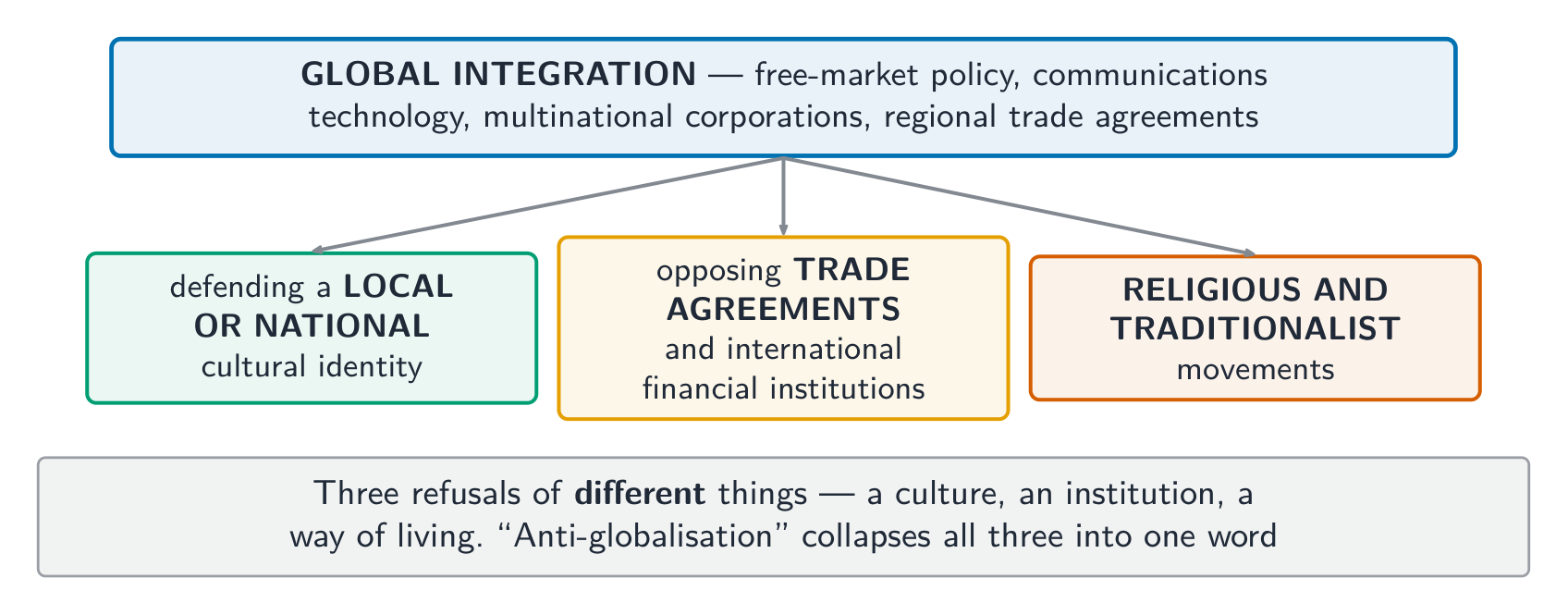
Responses to rising cultural and economic globalisation took a variety of forms. The CED deliberately leaves the category broad, and a good answer fills it with distinct kinds rather than repeating one:

  • Movements defending local or national cultural identity against homogenising influence.
  • Organised opposition to trade agreements and international financial institutions on economic grounds.
  • Religious and traditionalist movements 宗教与传统主义运动 rejecting the social changes that accompanied integration.
العربية

استجابات للاندماج الثقافي والاقتصادي المتزايد اتخذت أشكالاً متنوعة. يترك CED عمداً الفئة واسعة، والإجابة الجيدة تملؤها بأنواع مختلفة بدلاً من تكرار نوع واحد:

  • حركات تدافع عن الهوية الثقافية المحلية أو الوطنية ضد تأثير التجانس.
  • معارضة منظمة لـاتفاقيات التجارة والمؤسسات المالية الدولية لأسباب اقتصادية.
  • الحركات الدينية والتقليدية ترفض التغييرات الاجتماعية التي رافقت الاندماج.
رفض ثلاثة لأشياء مختلفة - 'مناهضة العولمة' طمسها في كلمة واحدة
Explore · ⁨استكشف⁩

Sort each refusal by what it defends · ⁨صنّف كل رفض بما يدافع عنه⁩

'Anti-globalisation' collapses three refusals of three different things into one word. · ⁨'مناهضة العولمة' تطوي ثلاثة رفضات لأشياء مختلفة في كلمة واحدة.⁩

9.8

Institutions in a Globalized World · ⁨المؤسسات في عالم عالمي⁩

Syllabus · ⁨المنهج⁩
English

9.8 Institutions Developing in a Globalized World

Thematic Focus (GOV): Governance — A variety of internal and external factors contribute to state formation, expansion, and decline. Governments maintain order through a variety of administrative institutions, policies, and procedures, and governments obtain, retain, and exercise power in different ways and for different purposes.

Learning Objective Unit 9.H: Explain how and why globalization changed international interactions among states.

  • KC-6.3.II.A New international organizations, including the United Nations, formed with the stated goal of maintaining world peace and facilitating international cooperation.
العربية

9.8 مؤسسات تتطور في عالم معولم

التركيز الموضوعي (GOV): الحكم — تساهم مجموعة متنوعة من العوامل الداخلية والخارجية في تشكيل الدولة وتوسعها وانهيارها. تحافظ الحكومات على النظام من خلال مجموعة متنوعة من المؤسسات والإجراءات والسياسات الإدارية، وتكتسب الحكومات وتحتفظ بالسلطة وتمارسها بطرق مختلفة ولأغراض مختلفة.

هدف التعلم الوحدة 9.H: اشرح كيف ولماذا غيرت العولمة التفاعلات الدولية بين الدول.

  • KC-6.3.II.A نشأت منظمات دولية جديدة، بما في ذلك الأمم المتحدة، بهدف stated goal of maintaining world peace and facilitating international cooperation.

Source: College Board AP Course and Exam Description · ⁨المصدر: وصف دورة وامتحان College Board AP⁩

English

New international organisations 国际组织, including the United Nations 联合国, emerged to manage problems no single state could handle alone - security, health, refugees, trade, and the environment.

This closes the arc of the course: Unit 7 opened with the collapse of an order and unprecedented conflict; Unit 9 ends with the institutions built in response, and with the argument - still unresolved - about how much authority they should hold.

العربية

منظمات دولية جديدة، بما في ذلك الأمم المتحدة، ظهرت لإدارة مشاكل لا يمكن لدولة واحدة التعامل معها وحدها - الأمن والصحة واللاجئين والتجارة والبيئة.

هذا يغلق قوس الدورة: افتتحت الوحدة 7 بهبوط نظام وصراع غير مسبوق؛ تنتهي الوحدة 9 بالمؤسسات المبنية كرد فعل، وبالجدل - الذي لا يزال غير محلول - حول مقدار السلطة التي يجب أن تمتلكها.

9.9

Continuity and Change in a Globalized World · ⁨الاستمرار والتغير في عالم عالمي⁩

Syllabus · ⁨المنهج⁩
English

9.9 Continuity and Change in a Globalized World

Learning Objective Unit 9.I: Explain the extent to which science and technology brought change in the period from 1900 to the present.

  • KC-6.1 Rapid advances in science and technology altered the understanding of the universe and the natural world and led to advances in communication, transportation, industry, agriculture, and medicine.
    • KC-6.1.I.A New modes of communication— including radio communication, cellular communication, and the internet—as well as transportation, including air travel and shipping containers, reduced the problem of geographic distance.
    • KC-6.1.I.D Energy technologies, including the use of petroleum and nuclear power, raised productivity and increased the production of material goods.
    • KC-6.1.III.B More effective forms of birth control gave women greater control over fertility, transformed reproductive practices, and contributed to declining rates of fertility in much of the world.
    • KC-6.1.I.B The Green Revolution and commercial agriculture increased productivity and sustained the earth’s growing population as it spread chemically and genetically modified forms of agriculture.
    • KC-6.1.I.C Medical innovations, including vaccines and antibiotics, increased the ability of humans to survive and live longer lives.
  • KC-6.3.I States responded in a variety of ways to the economic challenges of the 20th century.
  • KC-6.3.III.i Rights-based discourses challenged old assumptions about race, class, gender, and religion.
  • KC-6.3.III.ii In much of the world, access to education as well as participation in new political and professional roles became more inclusive in terms of race, class, gender, and religion.
  • KC-6.3.IV.i Political and social changes of the 20th century led to changes in the arts and in the second half of the century, popular and consumer culture became more global.
  • KC-6.3.IV.ii Arts, entertainment, and popular culture increasingly reflected the influence of a globalized society.
  • KC-6.3.IV.iii Consumer culture became globalized and transcended national borders.
العربية

9.9 الاستمرارية والتغير في عالم معولم

هدف التعلم الوحدة 9.I: اشرح مدى إحضار العلم والتكنولوجيا للتغير في الفترة من 1900 إلى الآن.

  • KC-6.1 أدت التطورات السريعة في العلوم والتكنولوجيا إلى تغيير فهم الكون والعالم الطبيعي وأدت إلى تقدم في الاتصالات والنقل والصناعة والزراعة والطب.
    • KC-6.1.I.A قللت أنماط جديدة من التواصل—بما في ذلك الاتصال الراديوي، والاتصال الخلوي، والإنترنت—فضلاً عن وسائل النقل، مثل الطيران وسلاسل الشحن، من مشكلة المسافة الجغرافية.
    • KC-6.1.I.D رفعت تقنيات الطاقة، بما في ذلك استخدام النفط والطاقة النووية، الإنتاجية وزادت إنتاج السلع المادية.
    • KC-6.1.III.B وفرت أشكال أكثر فعالية لوسائل منع الحمل للنساء سيطرة أكبر على الخصوبة، وحوّلت ممارسات الإنجاب، وساهمت في انخفاض معدلات الخصوبة في معظم أنحاء العالم.
    • KC-6.1.I.B زادت الثورة الخضراء والزراعة التجارية من الإنتاجية وأثبتت النمو السكاني للأرض مع انتشارها بصيغ زراعية معدلة كيميائياً وجينياً.
    • KC-6.1.I.C زادت الابتكارات الطبية، بما في ذلك اللقاحات والمضادات الحيوية، من قدرة البشر على البقاء والعيش لحياة أطول.
  • KC-6.3.I استجابت الدول بطرق متنوعة للتحديات الاقتصادية في 20th century.
  • KC-6.3.III.i تحدى الخطاب القائم على الحقوق الافتراضات القديمة حول العرق والطبقة والجنس والدين.
  • KC-6.3.III.ii في معظم أنحاء العالم، أصبح الوصول إلى التعليم بالإضافة إلى المشاركة في الأدوار السياسية والمهنية الجديدة أكثر شمولاً من حيث العرق والطبقة والجنس والدين.
  • KC-6.3.IV.i أدت التغيرات السياسية والاجتماعية في 20th century إلى تحولات في الفنون وفي النصف الثاني من القرن، أصبحت الثقافة الشعبية والاستهلاكية أكثر عالمية.
  • KC-6.3.IV.ii انعكست影響影响 increasingly reflected the influence of a globalized society.
  • KC-6.3.IV.iii أصبحت ثقافة المستهلك عالمية وتجاوزت الحدود الوطنية.

Source: College Board AP Course and Exam Description · ⁨المصدر: وصف دورة وامتحان College Board AP⁩

English

The unit's reasoning skill is continuity and change, applied across the whole modern period.

Worked example (a real AP exam question). AP World short-answer questions here ask, for example, to "Explain one way in which technological developments after 1900 affected the world's population." A full-mark answer names the development and traces its effect: "Medical innovations such as vaccines and antibiotics reduced deaths from infectious disease, which increased average lifespans and contributed to rapid population growth, particularly in regions where these treatments were introduced faster than birth rates fell." Notice the mechanism: a reason the population changed, not the statement that it did.

العربية

مهارة التفكير في الوحدة هي الاستمرار والتغير، مطبقة على كامل العصر الحديث.

مثال محلول (سؤال حقيقي من امتحان AP). أسئلة الإجابة القصيرة في تاريخ العالم في AP تطلب، على سبيل المثال، "اشرح طريقة واحدة أثرت بها التطورات التكنولوجية بعد عام 1900 على سكان العالم." الإجابة الكاملة التي تحصل على الدرجة الكاملة تذكر التطور وتتبع تأثيره: "أدت الابتكارات الطبية مثل اللقاحات والمضادات الحيوية إلى تقليل الوفيات بسبب الأمراض المعدية، مما زاد من متوسط العمر المتوقع وساهم في النمو السكاني السريع، لا سيما في المناطق التي تم فيها إدخال هذه العلاجات بسرعة أكبر من انخفاض معدلات المواليد." لاحظ الآلية: السبب الذي جعل السكان يتغيرون، وليس مجرد stating أن ذلك حدث.",

9.9

Exam tips · ⁨نصائح للامتحان⁩

English
  • Unit 9 questions are evaluative. For almost every advance, name the benefit and the cost. That single habit lifts most answers here.
  • Birth control is technological, demographic, and social evidence at once - unusually flexible in questions about women's changing roles.
  • The rise of diseases of longer life is caused by medical success. Say that explicitly; it demonstrates causal reasoning.
  • On climate, the CED's word is debates. Write about the argument, not a verdict.
  • Connect the global economy back to Unit 6: the same asymmetry, new institutions. Cross-period links score well on essays.
  • For resistance to globalisation, give distinct kinds - cultural, economic, religious - not one kind three times.
العربية
  • أسئلة الوحدة 9 تقييمية. لكل تقدم، اذكر الفائدة و التكلفة. هذا العرف وحده يرفع معظم الإجابات هنا.
  • التحكم في الخصوبة هو دليل تقني وديموغرافي واجتماعي في آن واحد - مرن بشكل غير عادي في الأسئلة حول أدوار المرأة المتغيرة.
  • ارتفاع أمراض الطول سببه النجاح الطبي. قل ذلك صراحة؛ إنه يُظهر الاستدلال السببي.
  • في مجال المناخ، كلمة CED هي الجدل. اكتب عن الحجة، وليس الحكم النهائي.
  • وصل الاقتصاد العالمي بالوحدة 6: نفس عدم التماثل، مؤسسات جديدة. الروابط عبر الفترات تحظى بتقدير جيد في المقالات.
  • للمقاومة للعولمة، قدم أنواعًا مميزة - ثقافية واقتصادية ودينية - لا نوعًا واحدًا ثلاث مرات.

Interactive lessons on this topic · ⁨دروس تفاعلية حول هذا الموضوع⁩

Work through it step by step, with instant-check exercises. · ⁨ا-working عليه خطوة بخطوة، مع تمارين تحقق فوري.⁩

Past Papers · ⁨أوراق الامتحانات السابقة⁩

More topics in AP World History: Modern · ⁨تاريخ العالم الحديث (AP)⁩ · ⁨المزيد من المواضيع في AP World History: Modern · ⁨تاريخ العالم الحديث (AP)⁩⁩

Log in or create account · ⁨تسجيل الدخول أو إنشاء حساب⁩

IGCSE, A-Level & AP