Skip to content · ⁨الانتقال إلى المحتوى⁩

Land-Based Empires · ⁨الإمبراطوريات البرية⁩

AP World History: Modern · ⁨تاريخ العالم الحديث (AP)⁩ · Topic 3 · ⁨الموضوع 3⁩

Video lesson for this topic · ⁨درس فيديو لهذا الموضوع⁩ Open the video page · ⁨افتح صفحة الفيديو⁩
5:35

الوحدة 3: الإمبراطوريات القائمة على الأرض

كل حاكم في هذه الوحدة يواجه نفس المشكلة العملية. لقد فتحت أراضيًا تبعد أسابيع من رحلتها من عاصمتك، والشعب الذين…

English narration · English + 中文 subtitles burned in · ⁨سرد باللغة الإنجليزية · ترجمة مدمجة بالإنجليزية + الصينية⁩

3.1

How the Land Empires Expanded · ⁨كيف توسعت الإمبراطوريات البرية⁩

Syllabus · ⁨المنهج⁩
English

3.1 Empires Expand

Thematic Focus (GOV): Governance — A variety of internal and external factors contribute to state formation, expansion, and decline. Governments maintain order through a variety of administrative institutions, policies, and procedures, and governments obtain, retain, and exercise power in different ways and for different purposes.

Learning Objective Unit 3.A: Explain how and why various land-based empires developed and expanded from 1450 to 1750.

  • KC-4.3.II Imperial expansion relied on the increased use of gunpowder, cannons, and armed trade to establish large empires in both hemispheres.
  • KC-4.3.II.B Land empires included the Manchu in Central and East Asia; the Mughal in South and Central Asia; the Ottoman in Southern Europe, the Middle East, and North Africa; and the Safavids in the Middle East.
  • KC-4.3.III.i Political and religious disputes led to rivalries and conflict between states.

Illustrative examples:

  • State rivalries:
    • Safavid–Mughal conflict
    • Songhai Empire’s conflict with Morocco
العربية

3.1 الإمبراطوريات تتوسع

التركيز الموضوعي (GOV): الحكم — تساهم مجموعة متنوعة من العوامل الداخلية والخارجية في تشكيل الدولة وتوسعها وانهيارها. تحافظ الحكومات على النظام من خلال مجموعة متنوعة من المؤسسات والإجراءات والسياسات الإدارية، وتكتسب الحكومات وتحتفظ بالسلطة وتمارسها بطرق مختلفة ولأغراض مختلفة.

هدف التعلم الوحدة 3.A: اشرح كيف ولماذا تطورت الإمبراطوريات البرية المختلفة وتوسعت من 1450 إلى 1750.

  • KC-4.3.II اعتمد التوسع الإمبراطوري على الاستخدام المتزايد لمسحوق المدفع والمدافع والتجارة المسلحة لإنشاء إمبراطوريات كبيرة في كلا نصفي الكرة الأرضية.
  • KC-4.3.II.B شملت الإمبراطوريات البرية المغوليين في وسط وشرق آسيا؛ المغول في جنوب ووسط آسيا؛ العثمانيين في جنوب أوروبا والشرق الأوسط وشمال أفريقيا؛ والصفاويين في الشرق الأوسط.
  • KC-4.3.III.i أدت النزاعات السياسية والدينية إلى منافسة وصراع بين الدول.

أمثلة توضيحية:

  • المنافسة بين الدول:
    • الصراع الصفوي-المغولي
    • صراع إمبراطورية سونغهاي مع المغرب

Source: College Board AP Course and Exam Description · ⁨المصدر: وصف دورة وامتحان College Board AP⁩

English

Unit 3 covers the great land-based empires 陆基帝国 of roughly 1450 to 1750. Four questions organise it: how they expanded, how they governed, how they paid for themselves, and how they used religion.

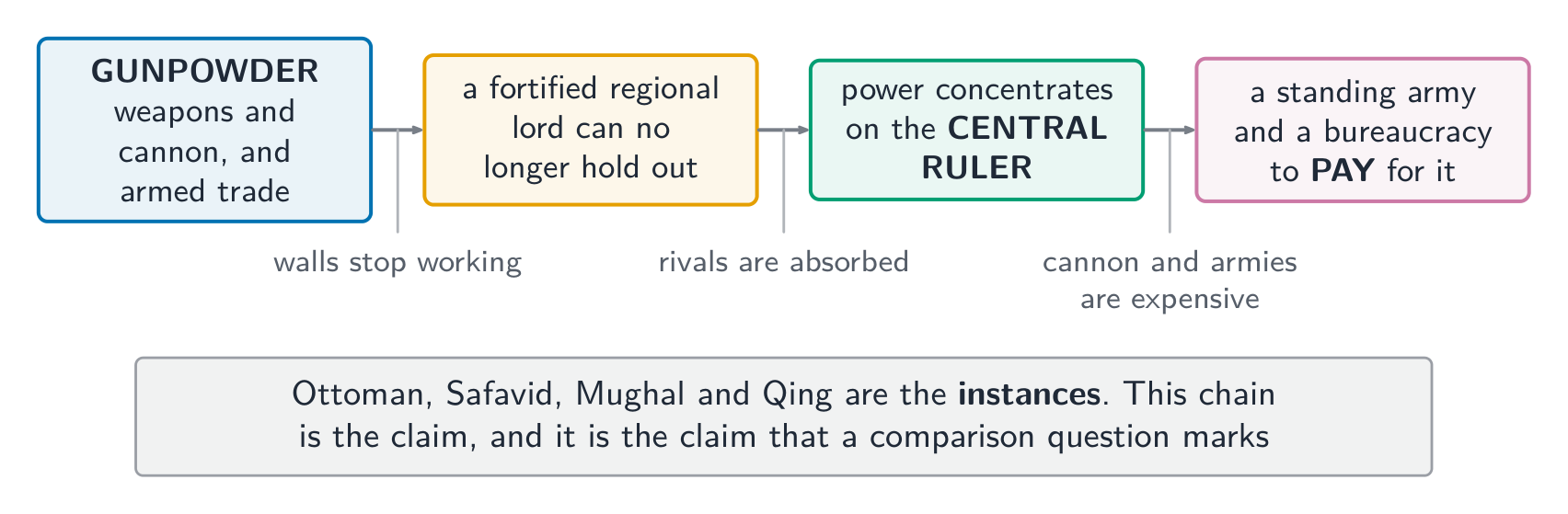
Expansion relied on the increased use of gunpowder, cannons, and armed trade - which is why these are often called the gunpowder empires 火药帝国. Access to gunpowder weapons let a central ruler overpower regional rivals and fortified nobles, so military technology and political centralisation grew together.

The empires to know:

  • The Manchu (Qing) 满清 in Central and East Asia.
  • The Mughal 莫卧儿 in South Asia.
  • The Ottoman 奥斯曼 in the eastern Mediterranean and beyond.
  • The Safavid 萨法维 in Persia.
العربية

تغطي الوحدة 3 الإمبراطوريات البرية الكبرى تقريبًا في الفترة من 1450 إلى 1750. أربعة أسئلة تنظمها: كيف توسعت، وكيف حكمت، وكيف دفعت تكاليفها، وكيف استخدمت الدين.

اعتمد التوسع على الزيادة في استخدام البودرة المدفعية والمدافع والتجارة المسلحة - ولهذا السبب تُعرف غالبًا باسم الإمبراطوريات البودرية. سمحت الوصول إلى أسلحة البودرة للمركز الحاكم بالسيطرة على المنافسين الإقليميين والأرستقراطيين المحصنين، لذا نمت التكنولوجيا العسكرية والتركيز السياسي معًا.

الإمبراطوريات التي يجب معرفتها:

  • مانشو (تشينغ) في آسيا الوسطى وشرق آسيا.
  • الموغول في جنوب آسيا.
  • العثمانيون في البحر الأبيض المتوسط الشرقي وما وراءه.
  • الصفاويون في فارس.
لماذا تُسمى بالإمبراطوريات البودرية: نمت التكنولوجيا العسكرية والتركيز السياسي معًا
Explore · ⁨استكشف⁩

Assemble the gunpowder-empire claim · ⁨جمع ادعاء إمبراطورية البارود⁩

Military technology and political centralisation grew together — and the mechanism is that a cannon ends a fortified lord's advantage. · ⁨تطورت التكنولوجيا العسكرية والتمركز السياسي معاً — والآلية هي أن المدفع ينهي ميزة اللورد المحصّن.⁩

Vocabulary · ⁨مفردات⁩ Train · ⁨تدريب⁩
English العربية
land-based empires/lænd beɪst ˈempaɪəz/ الإمبراطوريات البرية
gunpowder empires/ˈɡʌnpaʊdə ˈempaɪəz/ إمبراطوريات المسحوق
Manchu (Qing)/ˈmæntʃuː/ مانشو (تشينغ)
Mughal/ˈməʊɡl/ مغول
Ottoman/ˈɒtəmən/ عثماني
Safavid/ˈsæfəvɪd/ صفويون
Recruitment of bureaucratic elites/rɪˈkruːtmənt ɒv ˌbjʊərəʊˈkrætɪk ɪˈliːts/ تجنيد النخب البيروقراطية
military professionals/ˈmɪlɪtəri prəˈfeʃənlz/ المهنيين العسكريين
devshirme/ˈdevʃɜːm/ ديشورمه
janissaries/ˈdʒænɪsəriz/ الجانيشاري
ghulams/ˈɡjʊlæmz/ غلّام
tribute collection/ˈtrɪbjuːt kəˈlekʃn/ جمع الجزية
tax farming/tæks ˈfɑːmɪŋ/ استئجار الضرائب
zamindar/ˈzæmaɪndɑː/ زاميندار
hard currency/hɑːd ˈkʌrənsi/ عملة صلبة
Protestant Reformation/ˈprɒtɪstənt rɪfɔːˈmeɪʃn/ الإصلاح البروتستانتي
Sunni-Shia split/ˈsʌni ʃɪə splɪt/ انقسام السني والشيعي
Sikhism/ˈsiːkɪzəm/ السيخية
3.2

Administration · ⁨الإدارة⁩

Syllabus · ⁨المنهج⁩
English

3.2 Empires: Administration

Thematic Focus (GOV): Governance — A variety of internal and external factors contribute to state formation, expansion, and decline. Governments maintain order through a variety of administrative institutions, policies, and procedures, and governments obtain, retain, and exercise power in different ways and for different purposes.

Learning Objective Unit 3.B: Explain how rulers used a variety of methods to legitimize and consolidate their power in land-based empires from 1450 to 1750.

  • KC-4.3.I.C Recruitment and use of bureaucratic elites, as well as the development of military professionals, became more common among rulers who wanted to maintain centralized control over their populations and resources.
  • KC-4.3.I.A Rulers continued to use religious ideas, art, and monumental architecture to legitimize their rule.
  • KC-4.3.I.D Rulers used tribute collection, tax farming, and innovative tax-collection systems to generate revenue in order to forward state power and expansion.

Illustrative examples:

  • Bureaucratic elites or military professionals:
    • Ottoman devshirme
    • Salaried samurai
  • Religious ideas:
    • Mexica practice of human sacrifice
    • European notions of divine right
    • Songhai promotion of Islam
  • Art and monumental architecture:
    • Qing imperial portraits
    • Incan sun temple of Cuzco
    • Mughal mausolea and mosques
    • European palaces, such as Versailles
  • Tax-collection systems:
    • Mughal zamindar tax collection
    • Ottoman tax farming
    • Mexica tribute lists
    • Ming practice of collecting taxes in hard currency
العربية

3.2 الإمبراطوريات: الإدارة

التركيز الموضوعي (GOV): الحكم — تساهم مجموعة متنوعة من العوامل الداخلية والخارجية في تشكيل الدولة وتوسعها وانهيارها. تحافظ الحكومات على النظام من خلال مجموعة متنوعة من المؤسسات والإجراءات والسياسات الإدارية، وتكتسب الحكومات وتحتفظ بالسلطة وتمارسها بطرق مختلفة ولأغراض مختلفة.

هدف التعلم الوحدة 3.B: اشرح كيف استخدم الحكام مجموعة متنوعة من الأساليب لتبريد وتثبيت سلطتهم في الإمبراطوريات البرية من 1450 إلى 1750.

  • KC-4.3.I.C أصبح توظيف和使用 النخب البيروقراطية، بالإضافة إلى تطوير المحترفين العسكريين، أكثر شيوعًا بين الحكام الذين أرادوا الحفاظ على مركزية سيطرتهم على شعوبهم ومواردهم.
  • KC-4.3.I.A استمر الحكام في استخدام الأفكار الدينية والفن والمعمارية الضخمة لتبريد حكمهم.
  • KC-4.3.I.D استخدم الحكام جمع الجزية، والاستئجار الضريبي، وأنظمة جمع الضرائب المبتكرة لتوليد الإيرادات من أجل تعزيز سلطة الدولة والتوسع.

أمثلة توضيحية:

  • النخب البيروقراطية أو المحترفون العسكريون:
    • ديفشيرме العثماني
    • ساموراي متقاضٍ راتبًا
  • الأفكار الدينية:
    • ممارسة المكسيكا للتضحية البشرية
    • مفاهيم الحق الإلهي الأوروبية
    • تشجيع سونغهاي للإسلام
  • الفن والمعمارية الضخمة:
    • لقطات إمبراطورية تشينغ
    • معبد الشمس الإنكي في كوزكو
    • ضريح ومساجد مغول
    • القصور الأوروبية، مثل فرساي
  • أنظمة جمع الضرائب:
    • جمع ضرائب زاميندار المغول
    • الاستئجار الضريبي العثماني
    • قوائم جزية مكسيكا
    • ممارسة مينغ لجمع الضرائب بالعملة الصلبة

Source: College Board AP Course and Exam Description · ⁨المصدر: وصف دورة وامتحان College Board AP⁩

English

Rulers faced the same problem: how to control territory far from the capital. The CED names the tools they used.

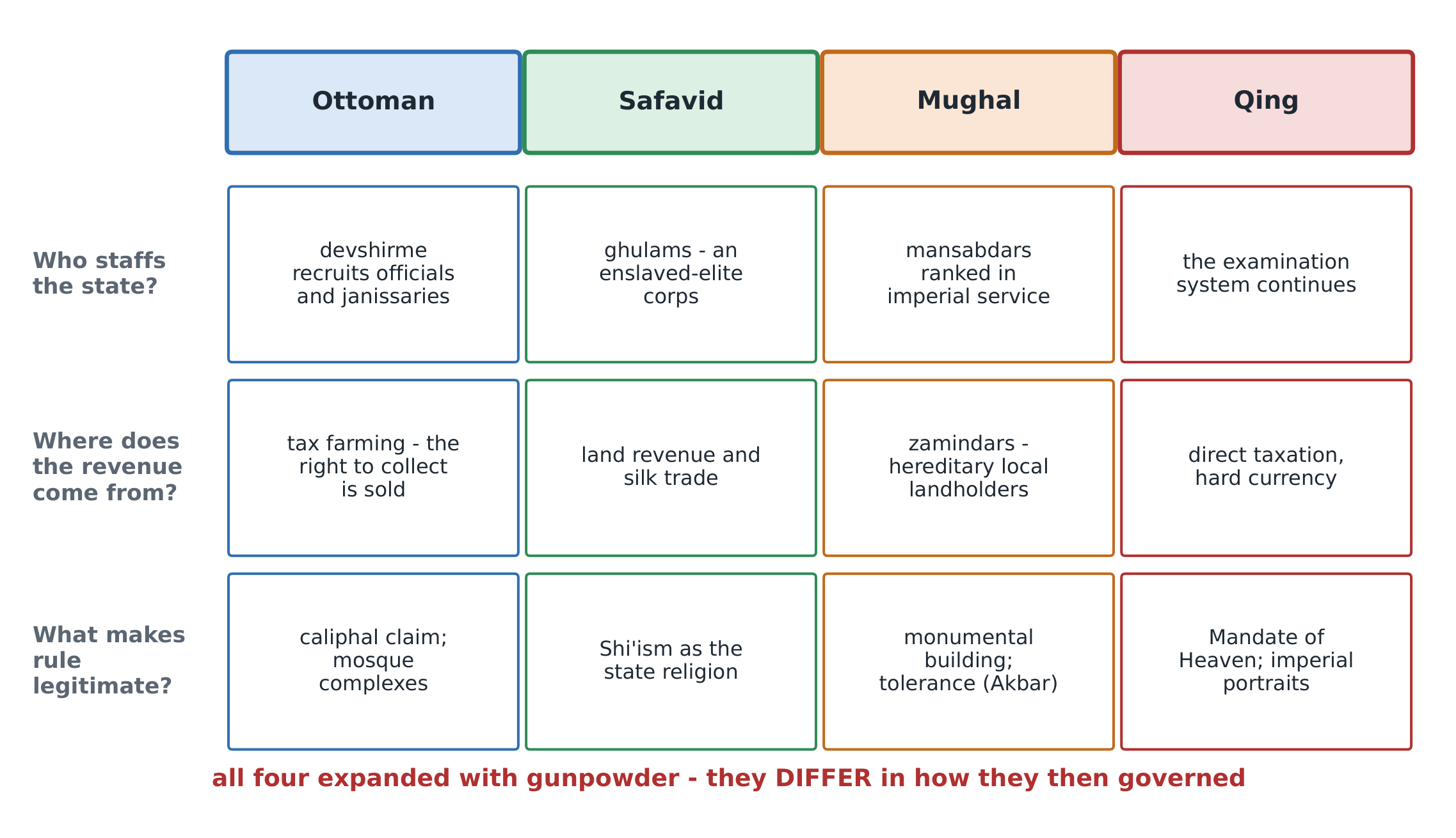
Recruitment of bureaucratic elites 官僚精英的选任 and the development of military professionals 职业军人 gave rulers officials who owed their position to the state rather than to birth. The clearest case is the Ottoman devshirme 德夫希尔梅 system, which recruited and trained administrators and soldiers, including the janissaries 耶尼切里; the Manchu continued China's examination system; the Safavids used ghulams 古拉姆.

Revenue came through tribute collection 纳贡, tax farming 包税制, and innovative tax-collection systems. The Mughal zamindar 柴明达尔 system and Ottoman tax farming are the standard examples, and the Ming practice of collecting taxes in hard currency 硬通货 is another.

العربية
أربع إمبراطوريات، مجموعة واحدة من الأدوات: كيف وظّف كل منها المسؤولين وجمع الإيرادات ودعا شرعيته
نفس المشاكل الثلاث - الكوادر، الإيرادات، الشرعية - حُلت بطرق مختلفة بواسطة كل إمبراطورية

واجه الحكام نفس المشكلة: كيفية التحكم في الأراضي البعيدة عن العاصمة. يُسمّي CED الأدوات التي استخدموها.

توظيف النخب البيروقراطية وتطوير المهنيين العسكريين منح الحكام مسؤولين مدينين بمناصبهم للدولة بدلاً من للنسب. الحالة الأكثر وضوحًا هي نظام ديوشيرме العثماني، الذي وظّف ومدرب الإداريين والجنود، بما في ذلك الجانيساريين؛ وواصل المانشو نظام الاختبارات الصيني؛ واستخدم الصفويون الغلوم.

الإيرادات جاءت من تحصيل الجزية، واستئجار الضرائب، وأنظمة تحصيل ضريبية مبتكرة. يعتبر نظام زمندار الموغولي واستئجار الضرائب العثماني أمثلة قياسية، وممارسة جمع الضرائب بـ عملة صلبة في أسرة مينغ مثال آخر.

3.3

Legitimacy and Belief · ⁨الشرعية والمعتقد⁩

Syllabus · ⁨المنهج⁩
English

3.3 Empires: Belief Systems

Thematic Focus (CDI): Cultural Developments and Interactions — The development of ideas, beliefs, and religions illustrates how groups in society view themselves, and the interactions of societies and their beliefs often have political, social, and cultural implications.

Learning Objective Unit 3.C: Explain continuity and change within the various belief systems during the period from 1450 to 1750.

  • KC-4.1.VI.i The Protestant Reformation marked a break with existing Christian traditions and both the Protestant and Catholic reformations contributed to the growth of Christianity.
  • KC-4.1.VI.ii Political rivalries between the Ottoman and Safavid empires intensified the split within Islam between Sunni and Shi’a.
  • KC-4.1.VI.iii Sikhism developed in South Asia in a context of interactions between Hinduism and Islam.
العربية

3.3 الإمبراطوريات: أنظمة الاعتقاد

التركيز الموضوعي (CDI): التطورات والتفاعلات الثقافية — يعكس تطور الأفكار والمعتقدات والأديان كيف تنظر المجموعات في المجتمع إلى نفسها، وغالبًا ما يكون للتفاعلات بين المجتمعات ومعتقداتها عواقب سياسية واجتماعية وثقافية.

هدف التعلم الوحدة 3.C: اشرح الاستمرارية والتغير داخل أنظمة الاعتقاد المختلفة خلال الفترة من 1450 إلى 1750.

  • KC-4.1.VI.i شكلت الإصلاح البروتستانتي انقطاعًا مع التقاليد المسيحية الحالية، وساهم كل من الإصلاح البروتستانتي والكاثوليكي في نمو المسيحية.
  • KC-4.1.VI.ii شددت المنافسة السياسية بين الإمبراطوريتين العثمانية والصفوية الانقسام داخل الإسلام بين السنة والشيع.
  • KC-4.1.VI.iii تطورت السيخية في جنوب آسيا في سياق تفاعلات بين الهندوسية والإسلام.

Source: College Board AP Course and Exam Description · ⁨المصدر: وصف دورة وامتحان College Board AP⁩

English

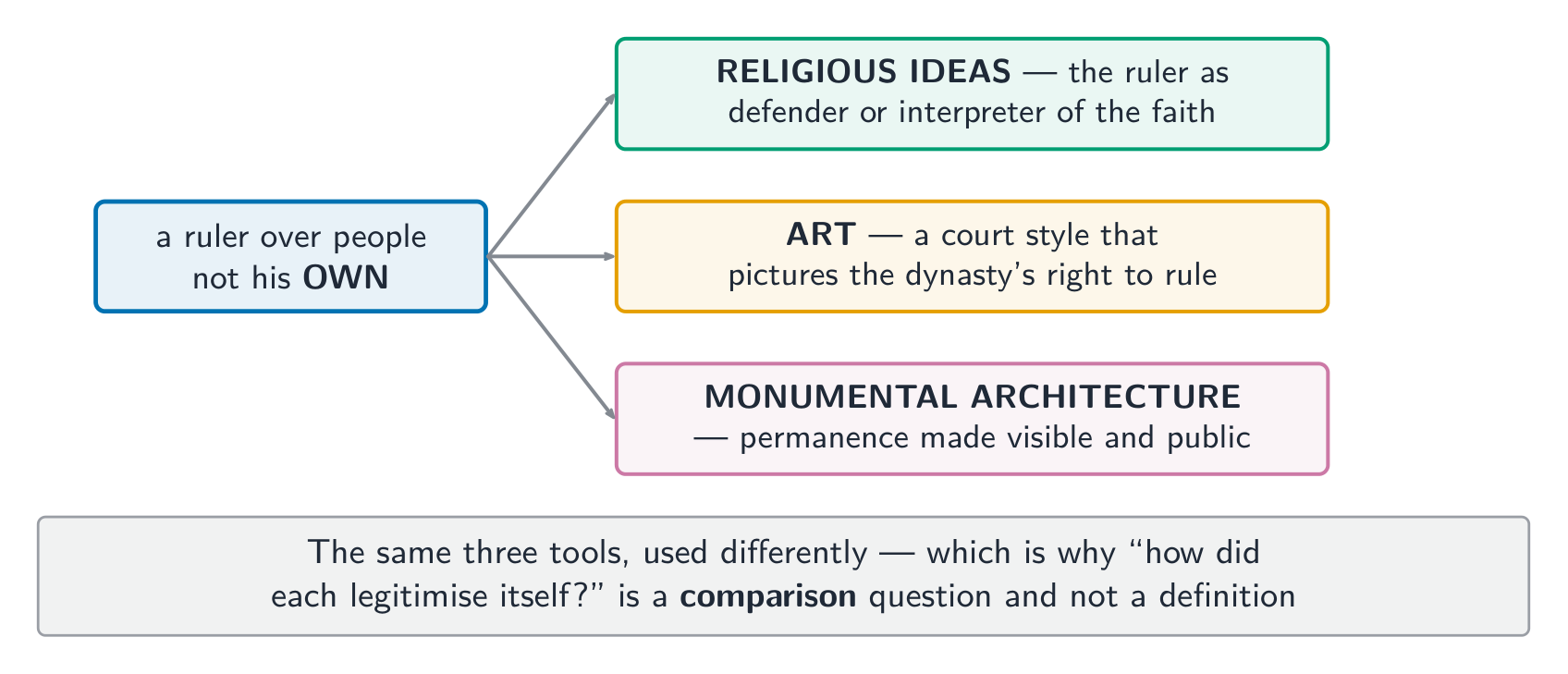
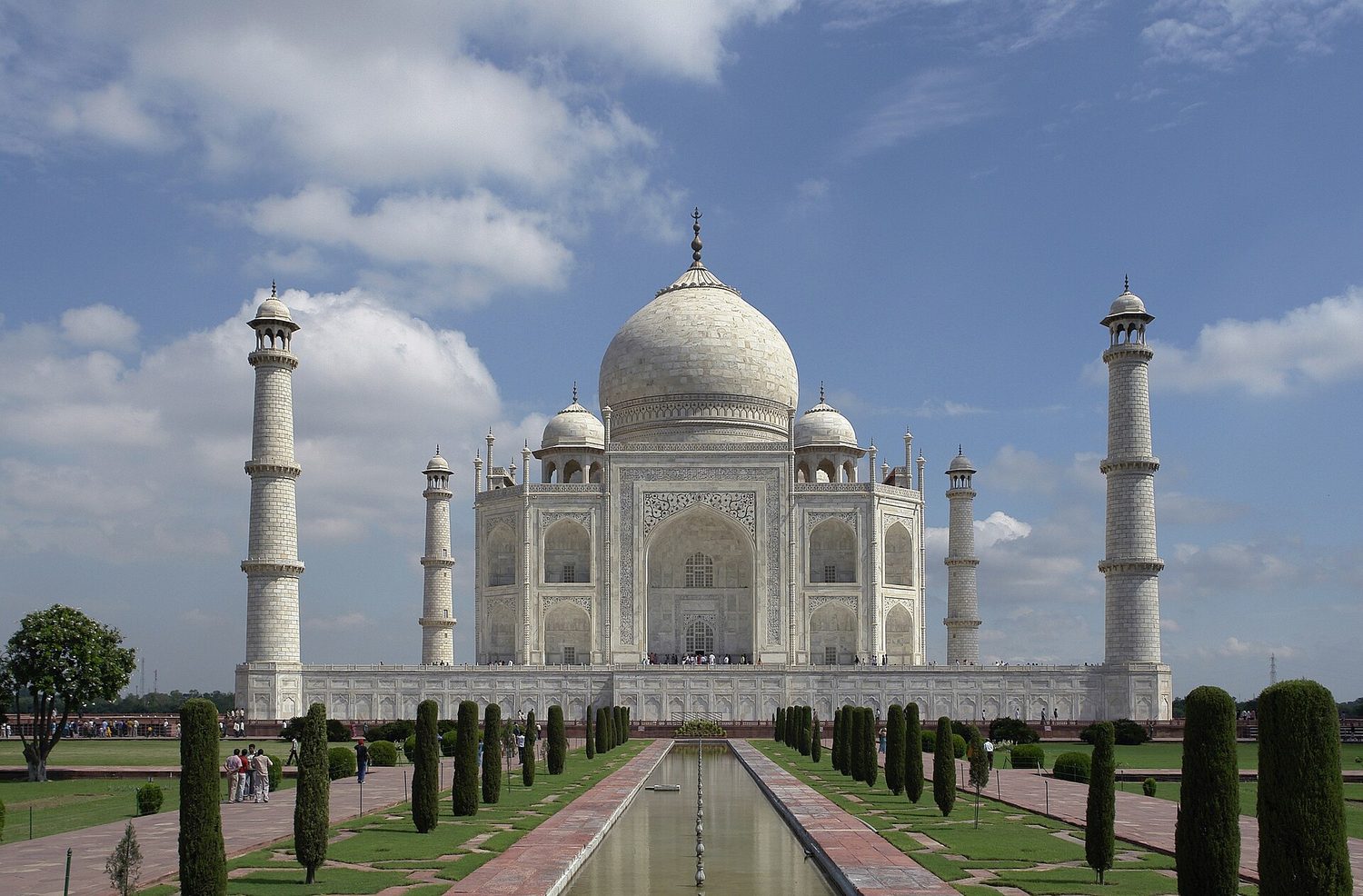
Rulers continued to use religious ideas, art, and monumental architecture to legitimise their rule - Mughal mosques and mausolea, Ottoman mosque complexes, Qing imperial portraits, and European palaces such as Versailles all do the same work.

Religious change also produced conflict:

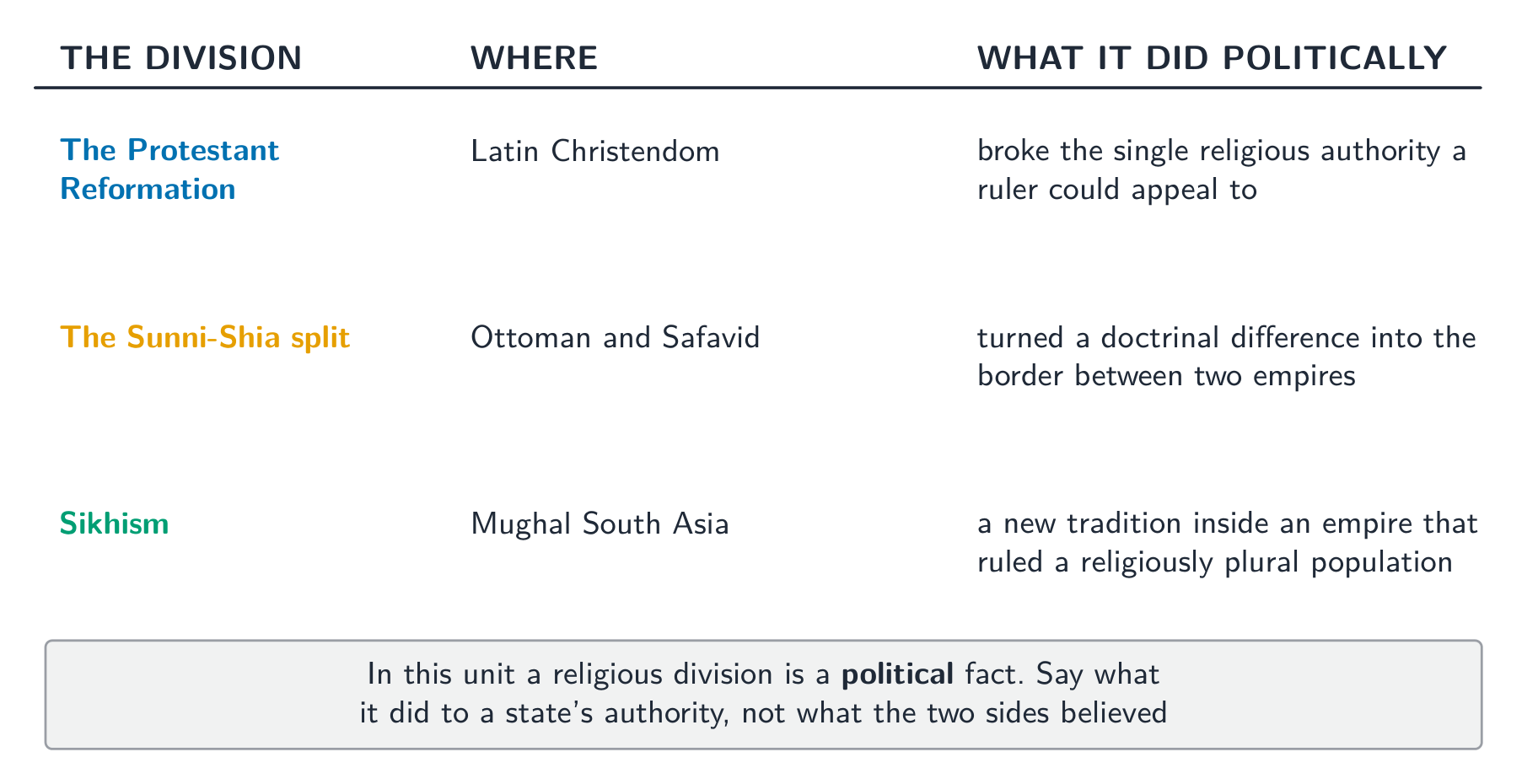
  • The Protestant Reformation 新教改革 marked a break with existing Christian traditions and led to sustained religious and political conflict in Europe.
  • Political rivalry between the Ottoman and Safavid empires intensified the Sunni-Shia split 逊尼派与什叶派分裂, showing how state rivalry can deepen a religious division.
  • Sikhism 锡克教 developed in South Asia in a context of interaction between Hinduism and Islam.

Political and religious disputes together produced rivalries and conflict between states across Eurasia.

العربية

استمرت الحكام في استخدام الأفكار الدينية والفنون والعمارة المعمارية لتبرير حكمهم - مساجد الموغول وضريحهم، ومعقدات المساجد العثمانية، وصور الإمبراطور تشينغ، والقصور الأوروبية مثل فرساي تقوم بنفس العمل.

أنتجت التغييرات الدينية أيضًا صراعات:

  • الإصلاح البروتستانتي شكل قطيعًا مع التقاليد المسيحية القائمة وأدى إلى صراع ديني وسياسي مستمر في أوروبا.
  • اشتعل التنافس السياسي بين الإمبراطوريتين العثمانية والصفاوية الانقسام السني-الشيعي، مما يظهر كيف يمكن أن يعمق التنافس الحكومي الانقسام الديني.
  • تطورت السيخية في جنوب آسيا في سياق تفاعل بين الهندوسية والإسلام.

أنتجت النزاعات السياسية والدينية معًا تنافسات وصراعات بين الدول عبر أوراسيا.

ثلاثة أدوات للحاكم فوق شعب ليس له - استُخدمت بشكل مختلف بواسطة كل إمبراطورية
ثلاث انقسامات دينية، اقرأ ما فعلته كل منها بسلطة الدولة
مسجد سليمانية - العمارة التذكارية كأداة للتشريع
تاج محل - نفس الأداة، استخدمها حاكم مغولي على مجتمع متعدد الديانات
Explore · ⁨استكشف⁩

Sort each instrument of legitimacy · ⁨صنّف كل أداة شرعية⁩

These rulers governed people who shared neither their language nor their faith, so legitimacy had to be manufactured. · ⁨حكم هؤلاء الحكام شعوراً لم يشتركون معهم اللغة ولا الدين، لذا كان لا بد من صناعة الشرعية.⁩

3.4

Comparison in Land-Based Empires · ⁨المقارنة في الإمبراطوريات البرية⁩

Syllabus · ⁨المنهج⁩
English

3.4 Comparison in Land-Based Empires

Learning Objective Unit 3.D: Compare the methods by which various empires increased their influence from 1450 to 1750.

  • KC-4.1 The interconnection of the Eastern and Western Hemispheres made possible by transoceanic voyaging, transformed trade and had a significant social impact on the world.
    • KC-4.1.VI In some cases, the increase and intensification of interactions between newly connected hemispheres expanded the reach and furthered development of existing religions, and contributed to religious conflicts and the development of syncretic belief systems and practices.
  • KC-4.3 Empires achieved increased scope and influence around the world, shaping and being shaped by the diverse populations they incorporated.
    • KC-4.3.II Imperial expansion relied on the increased use of gunpowder, cannons, and armed trade to establish large empires in both hemispheres.
    • KC-4.3.II.B Land empires included the Manchu in Central and East Asia; Mughal in South and Central Asia; Ottoman in Southern Europe, the Middle East, and North Africa; and the Safavids in the Middle East.
    • KC-4.3.III.i Political and religious disputes led to rivalries and conflict between states.
العربية

3.4 المقارنة في الإمبراطوريات البرية

هدف التعلم الوحدة 3.D: قارن الطرق التي استخدمتها إمبراطوريات مختلفة لزيادة نفوذها من 1450 إلى 1750.

  • KC-4.1 جعلت الترابط بين نصفي الكرة الأرضية الشرقي والغربي الذي أمكنه الإبحار عبر المحيطات التجارة ممكنة وكان لها تأثير اجتماعي كبير على العالم.
    • KC-4.1.VI في بعض الحالات، أدى الزيادة والتكثيف في التفاعلات بين نصفي الكرة الأرضية الموصولين حديثًا إلى توسيع نطاق ونشر الديانات القائمة، وساهم في النزاعات الدينية وتطور أنظمة الاعتقاد والممارسات المزيجية.
  • KC-4.3 حققت الإمبراطوريات نطاقًا ونفوذًا متزايدًا حول العالم، مشكّلةً ومُشكَّلة من قبل السكان المتنوعين الذين دمجوها.
    • KC-4.3.II اعتمد التوسع الإمبراطوري على الاستخدام المتزايد لمسحوق المدفع والمدافع والتجارة المسلحة لإنشاء إمبراطوريات كبيرة في كلا نصفي الكرة الأرضية.
    • KC-4.3.II.B شملت الإمبراطوريات البرية المانشو في آسيا الوسطى والشرقية؛ المغول في جنوب آسيا وآسيا الوسطى؛ العثمانيين في جنوب أوروبا والشرق الأوسط وشمال أفريقيا؛ والسافويون في الشرق الأوسط.
    • KC-4.3.III.i أدت النزاعات السياسية والدينية إلى منافسات وصراعات بين الدول.

Source: College Board AP Course and Exam Description · ⁨المصدر: وصف دورة وامتحان College Board AP⁩

English

The unit's reasoning skill is comparison, and the productive comparisons are about method, not size:

  • Recruiting officials by examination (Qing) against by enslaved-elite systems (Ottoman devshirme, Safavid ghulams).
  • Tax farming (Ottoman) against land-revenue intermediaries (Mughal zamindars) against direct taxation (Ming hard currency).
  • Legitimacy through religious identity (Safavid Shi'ism as state religion) against through tolerance of diversity (Mughal policy under Akbar).

Worked example (a real AP exam question). AP World short-answer questions in this unit typically ask students to "Explain one similarity" or "Explain one difference in how land-based empires maintained power." A full-mark answer names the method for both and explains the effect: "Both the Ottoman and Mughal empires used intermediaries to collect revenue rather than salaried tax officials, but the Ottomans used tax farming, which sold the right to collect for a fixed payment, while the Mughals relied on zamindars, hereditary landholders whose local standing gave them a permanent interest in the countryside." Notice the shape: the comparison is one function (raising revenue), performed two ways, with the consequence stated.

العربية

مهارة الاستدلال في الوحدة هي المقارنة، والمقاربات الإنتاجية تتعلق بـالطريقة وليس الحجم:

  • توظيفOfficials بـالاختبار (تشينغ) مقابل بـأنظمة النخبة المستعبدة (ديوشيرمي العثماني، غولام الصفوي).
  • استئجار الضرائب (عثماني) مقابل وسطاء عائدات الأراضي (زمندار المغول) مقابل الضرائب المباشرة (مينغ عملة صلبة).
  • التشريع من خلال الهوية الدينية (الشيعية الصفوية كدين للدولة) مقابل من خلال التسامح مع التنوع (سياسة المغول تحت أكبر).

مثال محلول (سؤال حقيقي من امتحان AP). أسئلة الإجابة القصيرة في امتحان AP World في هذه الوحدة تطلب عادةً من الطلاب "شرح تشابه واحد" أو "شرح اختلاف واحد في كيفية حفاظ الإمبراطوريات البرية على السلطة." الإجابة الكاملة التي تحصل على الدرجة الكاملة تذكر الطريقة لكلتا الإمبراطوريتين وتشرح التأثير: "استخدمت كل من الإمبراطورية العثمانية والإمبراطورية المغولية وسطاء لجمع الإيرادات بدلاً من مسؤولي ضرائب متقاضين رواتب، لكن العثمانيين استخدموا استئجار الضرائب، الذي باع الحق في التحصيل مقابل دفعة ثابتة، بينما اعتمد المغول على الزمندار، أصحاب الأراضي الوراثيين الذين منحهم مكانتهم المحلية مصلحة دائمة في الريف." لاحظ الشكل: المقارنة هي وظيفة واحدة (رفع الإيرادات)، تنفذ بطريقتين، مع ذكر النتيجة.

3.4

Exam tips · ⁨نصائح للامتحان⁩

English
  • Say why gunpowder mattered: it let central rulers overpower regional rivals, so military change and centralisation go together.
  • Learn the four empires by their administrative method, not their territory - devshirme, examinations, zamindars, ghulams.
  • Tax farming sells the right to collect; a zamindar is a hereditary landholder. Questions turn on that difference.
  • Monumental architecture is evidence of legitimation, not decoration. Say what it was doing.
  • The Ottoman-Safavid rivalry is the example of political conflict deepening a religious divide.
  • Comparisons should be one function performed two ways, with the consequence stated.
العربية
  • قل لماذا كانت البودقة مهمة: سمحت للحكام المركزيين بالتغلب على المنافسين الإقليميين، لذا فإن التغيير العسكري والتركيز يمشيان جنبًا إلى جنب.
  • احفظ الإمبراطوريات الأربع بـالطريقة الإدارية، وليس بالمساحة - ديوشيرمي، الاختبارات، الزمندار، الغولام.
  • استئجار الضرائب يبيع الحق في التحصيل؛ والزمندار هو صاحب أراضي وراثي. تدور الأسئلة حول هذا الفرق.
  • العمارة التذكارية هي دليل على التشريع، ليست زينة. قل ما كانت تفعله.
  • المنافسة بين العثمانيين والصفويين هي مثال على صراع سياسي يعزز الانقسام الديني.
  • يجب أن تكون المقاربات وظيفة واحدة تُنفذ بطريقتين، مع ذكر النتيجة.

Interactive lessons on this topic · ⁨دروس تفاعلية حول هذا الموضوع⁩

Work through it step by step, with instant-check exercises. · ⁨ا-working عليه خطوة بخطوة، مع تمارين تحقق فوري.⁩

Past Papers · ⁨أوراق الامتحانات السابقة⁩

More topics in AP World History: Modern · ⁨تاريخ العالم الحديث (AP)⁩ · ⁨المزيد من المواضيع في AP World History: Modern · ⁨تاريخ العالم الحديث (AP)⁩⁩

Log in or create account · ⁨تسجيل الدخول أو إنشاء حساب⁩

IGCSE, A-Level & AP