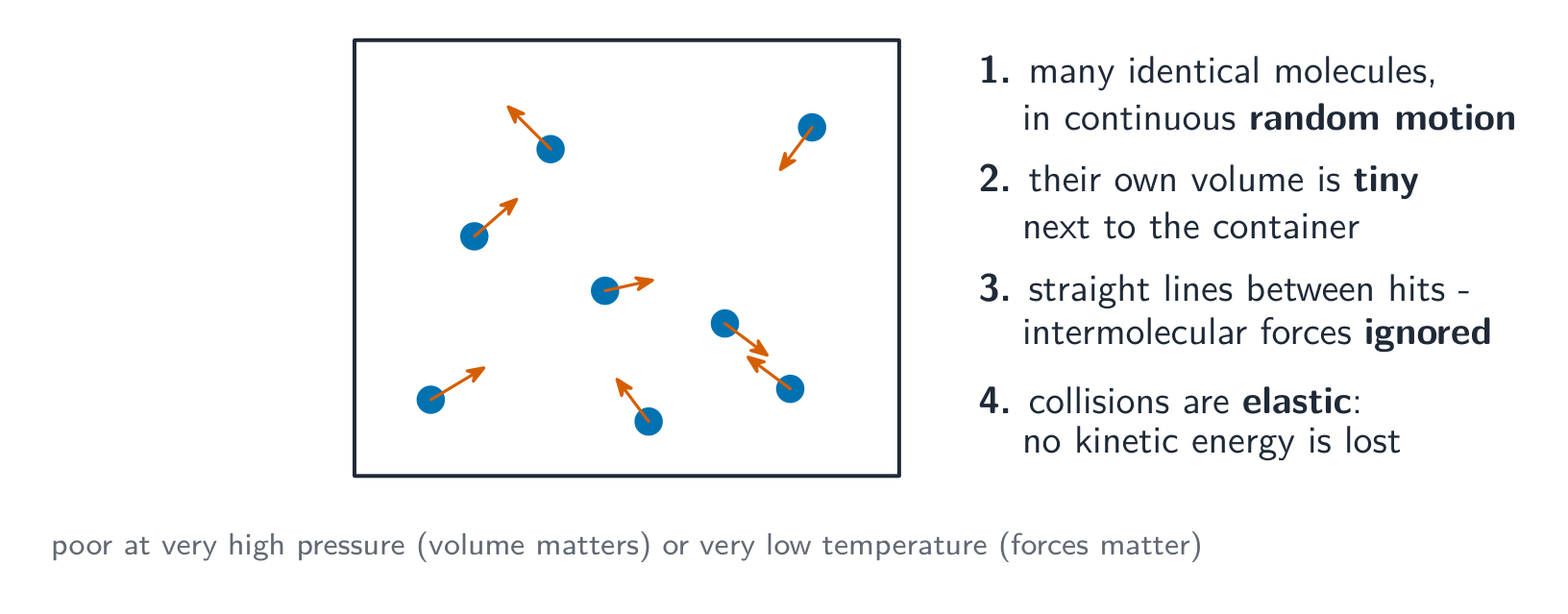
Learning Objective 9.1.A: Describe the pressure a gas exerts on its container in terms of atomic motion within that gas.
- 9.1.A.1 Atoms in a gas collide with and exert forces on other atoms in the gas and with the container in which the gas is contained.
- 9.1.A.1.i Collisions involving pairs of atoms or an atom and a fixed object can be described and analyzed using conservation of momentum principles.
- 9.1.A.1.ii The pressure exerted by a gas on a surface is the ratio of the sum of the magnitudes of the perpendicular components of the forces exerted by the gas's atoms on the surface to the area of the surface.
- Equation: $P = \dfrac{F_{\perp}}{A}$
- 9.1.A.1.iii Pressure exists throughout the gas itself, not just at the boundary between the gas and the container.
Learning Objective 9.1.B: Describe the temperature of a system in terms of the atomic motion within that system.
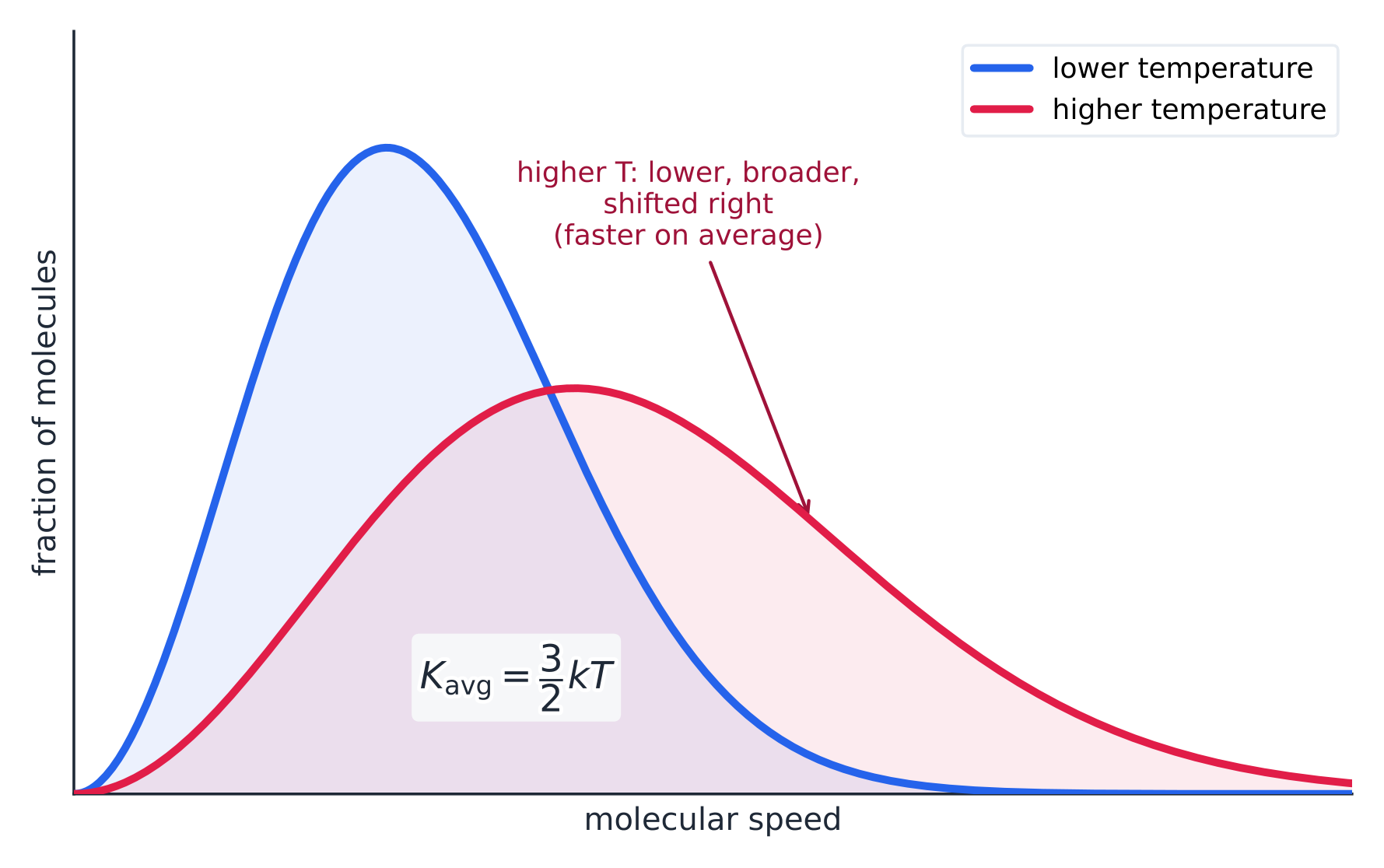
- 9.1.B.1 The temperature of a system is characterized by the average kinetic energy of the atoms within that system.
- 9.1.B.1.i The Maxwell–Boltzmann distribution provides a graphical representation of the energies and speeds of atoms at a given temperature.
- 9.1.B.1.ii The root-mean-square speed corresponding to the average kinetic energy for an ideal gas is related to the temperature of the gas by
- Equation: $K_{\text{avg}} = \dfrac{3}{2} k_B T = \dfrac{1}{2} m v_{\text{rms}}^2$
Boundary statement: AP Physics 2 only expects students to perform qualitative and quantitative analysis of collisions in one and two dimensions. Students are not expected to know the functional form of the Maxwell-Boltzmann distribution but are expected to be familiar with how features of the distribution are related to the temperature of the gas.
الهدف التعليمي 9.1.A: وصف الضغط الذي يبذله الغاز على حاويته بدلالة الحركة الذرية داخل ذلك الغاز.
- 9.1.A.1 تتصادم ذرات الغاز مع بعضها البعض وتبذل قوى عليها، وتتصادم مع الحاوية التي يحتوي فيها الغاز.
- 9.1.A.1.i يمكن وصف وتحليل التصادمات التي تتضمن أزواجًا من الذرات أو ذرة وجسم ثابت باستخدام مبادئ حفظ الزخم.
- 9.1.A.1.ii الضغط الذي يبذله الغاز على سطح ما هو نسبة مجموع مقادير المركبات العمودية للقوى التي تبذلها ذرات الغاز على السطح إلى مساحة السطح.
- معادلة: $P = \dfrac{F_{\perp}}{A}$
- 9.1.A.1.iii يوجد الضغط داخل الغاز نفسه، وليس فقط عند الحد الفاصل بين الغاز والحاوية.
الهدف التعليمي 9.1.B: وصف درجة حرارة النظام بدلالة الحركة الذرية داخل ذلك النظام.
- 9.1.B.1 تتميز درجة حرارة نظام ما بمتوسط الطاقة الحركية للذرات داخل ذلك النظام.
- 9.1.B.1.i يوفر توزيع ماكسويل-بولتزمان تمثيلًا بيانيًا لطاقات وسرعات الذرات عند درجة حرارة معينة.
- 9.1.B.1.ii ترتبط السرعة الجذرية المتوسطة المربعة المقابلة لمتوسط الطاقة الحركية لغاز مثالي بدرجة حرارة الغاز بواسطة
- معادلة: $K_{\text{avg}} = \dfrac{3}{2} k_B T = \dfrac{1}{2} m v_{\text{rms}}^2$
عبارة الحدود: يتوقع من طلاب AP Physics 2 فقط إجراء تحليل نوعي وكمي للتصادمات في بُعد واحد وبُعدَين. لا يُتوقع من الطلاب معرفة الصيغة الدالة لتوزيع ماكسويل-بولتزمان، لكن يُتوقع منهم الإلمام بكيفية ارتباط ميزات التوزيع بدرجة حرارة الغاز.

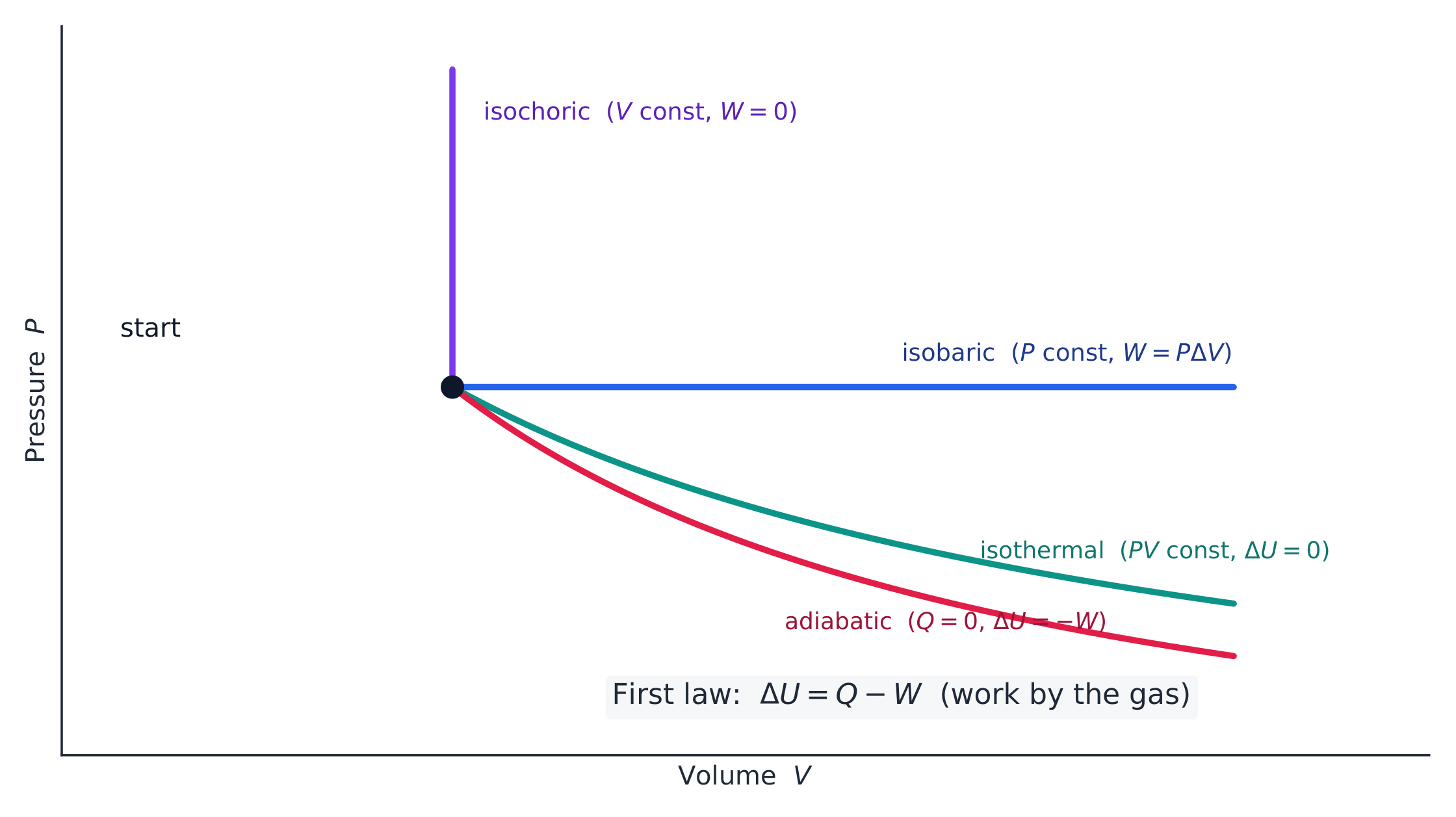 *العمليات الديناميكية الحرارية الأربع المرسومة من حالة بداية مشتركة على مخطط PV
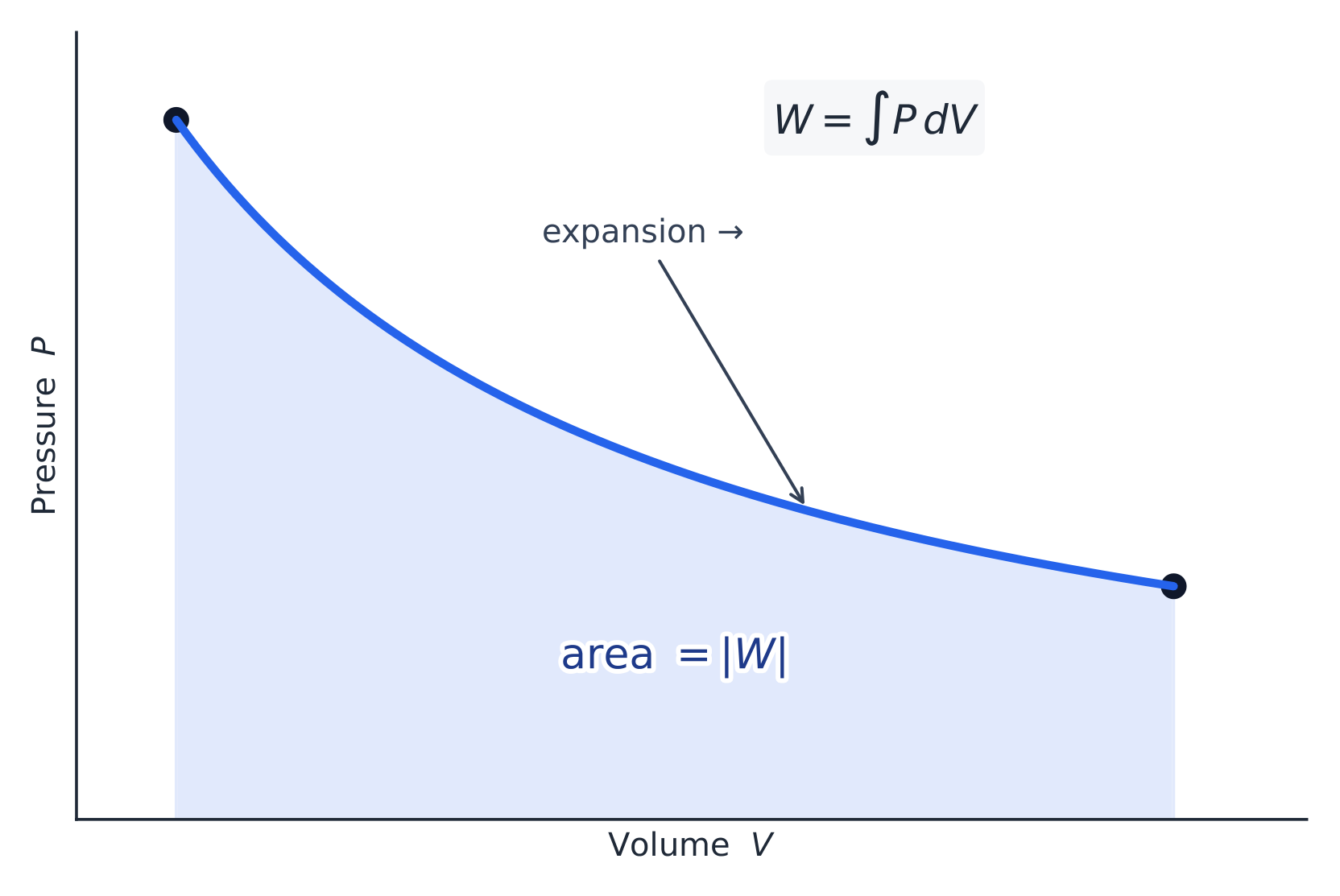 *الشغل المبذول أثناء تغير الحجم يساوي المساحة تحت منحنى P-V