Skip to content · ⁨الانتقال إلى المحتوى⁩

Audience, Tone, and Sentence Craft · ⁨الجمهور، النبرة وصياغة الجمل⁩

AP English Language and Composition · ⁨اللغة الإنجليزية والتأليف (AP)⁩ · Topic 8 · ⁨الموضوع 8⁩

Video lesson for this topic · ⁨درس فيديو لهذا الموضوع⁩ Open the video page · ⁨افتح صفحة الفيديو⁩
5:44

الوحدة 8: الجمهور، والنبرة، وصياغة الجمل

أسلوب الكاتب هو مزيج من اختيار الكلمات، والتراكيب اللغوية، والمواضيع التي يستخدمها ذلك الكاتب. الأسلوب مركب — ولهذا السبب فإن "أسلوب الكاتب رسمي"…

English narration · English + 中文 subtitles burned in · ⁨سرد باللغة الإنجليزية · ترجمة مدمجة بالإنجليزية + الصينية⁩

8.1

Understanding an Audience's Beliefs and Needs · ⁨فهم معتقدات الجمهور واحتياجاته⁩

Syllabus · ⁨المنهج⁩
English

Enduring Understanding (RHS-1): Individuals write within a particular situation and make strategic writing choices based on that situation.

Learning Objective 1.B: Reading – Explain how an argument demonstrates understanding of an audience’s beliefs, values, or needs.

  • RHS-1.K Writers may make comparisons (e.g., similes, metaphors, analogies, or anecdotes) in an attempt to relate to an audience. Effective comparisons must be shared and understood by the audience to advance the writer’s purpose.
  • RHS-1.L Writers’ choices regarding syntax and diction influence how the writer is perceived by an audience and may influence the degree to which an audience accepts an argument.
  • RHS-1.M Word choice may reflect writers’ biases and may affect their credibility with a particular audience.
  • RHS-1.N Because audiences are unique and dynamic, writers must consider the perspectives, contexts, and needs of the intended audience when making choices of evidence, organization, and language in an argument.
العربية

الفهم الدائم (RHS-1): يكتب الأفراد ضمن موقف معين ويتخذون خيارات كتابة استراتيجية بناءً على ذلك الموقف.

الهدف التعليمي 1.B: القراءة - شرح كيف تُظهر الحجة فهمًا لمعتقدات الجمهور أو قيمه أو حاجاته.

  • RHS-1.K قد يقوم الكُتّاب بإجراء مقارنات (مثل التشبيهات، الاستعارات، التشبيهات التحليلية، أو القصص القصيرة) في محاولة للتواصل مع الجمهور. يجب أن تكون المقارنات الفعالة مشتركة ومفهومة من قبل الجمهور لتقدم هدف الكاتب.
  • RHS-1.L تؤثر خيارات الكتاب فيما يتعلق بالتركيب النحوي واختيار الكلمات على كيفية إدراك الجمهور للكاتب وقد تؤثر على درجة قبول الجمهور للحجة.
  • RHS-1.M قد يعكس اختيار الكلمات ميول الكُتّاب وقد يؤثر على مصداقيتهم أمام جمهور معين.
  • RHS-1.N بما أن الجمهور فريد وديناميكي، يجب على الكُتّاب النظر في المنظورات والسياقات والاحتياجات للجمهور المستهدف عند اتخاذ خيارات الأدلة والتنظيم واللغة في الحجة.
Source: College Board AP Course and Exam Description · ⁨المصدر: وصف دورة وامتحان College Board AP⁩

English

Unit 8 is the course's most advanced treatment of style 文体 - the point at which word choice, syntax, and audience stop being separate topics.

  • Writers may make comparisons - similes, metaphors, analogies, or anecdotes - in an attempt to relate to an audience.
  • Writers' choices regarding syntax and diction 句法与措辞 influence how the writer is perceived by an audience.
  • Word choice may reflect a writer's biases and may affect their credibility with a particular audience.
  • Because audiences are unique and dynamic, writers must consider the perspectives, contexts, and needs of the intended audience.

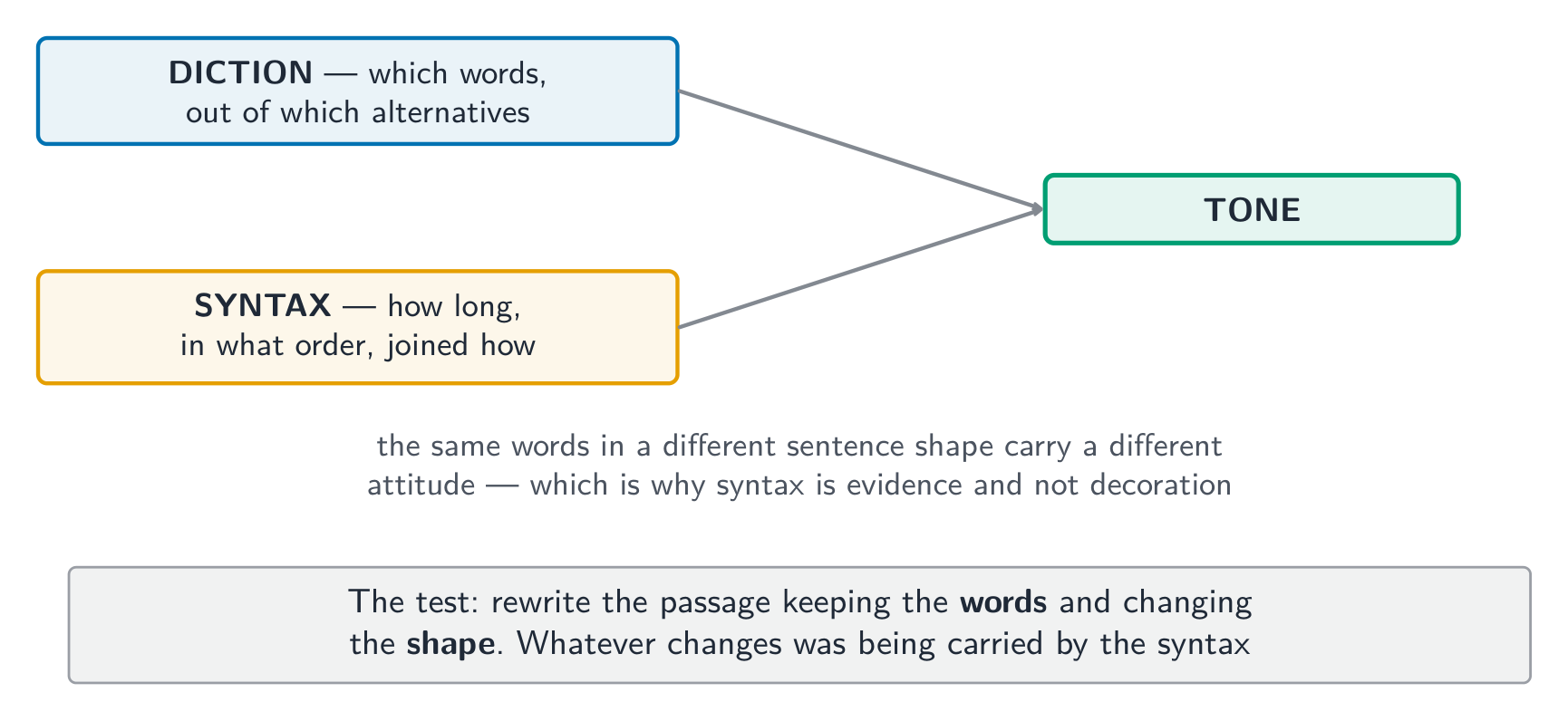
The third point is worth dwelling on. Diction does not only characterise the subject - it characterises the writer. A reader who notices loaded word choice starts to discount everything that follows, which is why an unqualified vocabulary is a credibility risk, not a strength.

العربية

وحدتي 8 هي المعالجة الأكثر تقدماً للمقرر لـ النمط 文体 - النقطة التي تتوقف فيها اختيار الكلمات والنحو والجمهور عن كونها مواضيع منفصلة.

  • قد يقوم المؤلفون بـ إجراء مقارنات - تشبيهات، استعارات، أوجه تشابه، أو حكايات شخصية - لمحاولة التواصل مع الجمهور.
  • تؤثر خيارات المؤلفين حول النحو والمفردات 句法与措辞 على كيف يُدرَك الكاتب من قِبل الجمهور.
  • قد يعكس اختيار الكلمات تحيزات الكاتب وقد يؤثر على مصداقيته لدى جمهور معين.
  • نظرًا لأن الجموع فريدة وديناميكية، يجب على الكتاب مراعاة وجهات النظر والسياقات والاحتياجات للجمهور المستهدف.

النقطة الثالثة تستحق الوقوف عندها. المفردات لا تُصوّر الموضوع فحسب - بل تُصوّر الكاتب. القارئ الذي يلاحظ اختيار كلمات مُحمّلة يبدأ في التقليل من كل ما يأتي، ولهذا السبب فإن مفردات غير محددة هي خطر على المصداقية، وليس قوة.

8.2

Writing for an Audience's Beliefs and Needs · ⁨الكتابة لمعايير ومعتقدات الجمهور⁩

Syllabus · ⁨المنهج⁩
English

Enduring Understanding (RHS-1): Individuals write within a particular situation and make strategic writing choices based on that situation.

Learning Objective 2.B: Writing – Demonstrate an understanding of an audience’s beliefs, values, or needs.

  • RHS-1.K Writers may make comparisons (e.g., similes, metaphors, analogies, or anecdotes) in an attempt to relate to an audience. Effective comparisons must be shared and understood by the audience to advance the writer’s purpose.
  • RHS-1.L Writers’ choices regarding syntax and diction influence how the writer is perceived by an audience and may influence the degree to which an audience accepts an argument.
  • RHS-1.M Word choice may reflect writers’ biases and may affect their credibility with a particular audience.
  • RHS-1.N Because audiences are unique and dynamic, writers must consider the perspectives, contexts, and needs of the intended audience when making choices of evidence, organization, and language in an argument.
العربية

الفهم الدائم (RHS-1): يكتب الأفراد ضمن موقف معين ويتخذون خيارات كتابة استراتيجية بناءً على ذلك الموقف.

الهدف التعليمي 2.B: الكتابة - إظهار فهم لمعتقدات الجمهور أو قيمه أو حاجاته.

  • RHS-1.K قد يقوم الكُتّاب بإجراء مقارنات (مثل التشبيهات، الاستعارات، التشبيهات التحليلية، أو القصص القصيرة) في محاولة للتواصل مع الجمهور. يجب أن تكون المقارنات الفعالة مشتركة ومفهومة من قبل الجمهور لتقدم هدف الكاتب.
  • RHS-1.L تؤثر خيارات الكتاب فيما يتعلق بالتركيب النحوي واختيار الكلمات على كيفية إدراك الجمهور للكاتب وقد تؤثر على درجة قبول الجمهور للحجة.
  • RHS-1.M قد يعكس اختيار الكلمات ميول الكُتّاب وقد يؤثر على مصداقيتهم أمام جمهور معين.
  • RHS-1.N بما أن الجمهور فريد وديناميكي، يجب على الكُتّاب النظر في المنظورات والسياقات والاحتياجات للجمهور المستهدف عند اتخاذ خيارات الأدلة والتنظيم واللغة في الحجة.
Source: College Board AP Course and Exam Description · ⁨المصدر: وصف دورة وامتحان College Board AP⁩

English

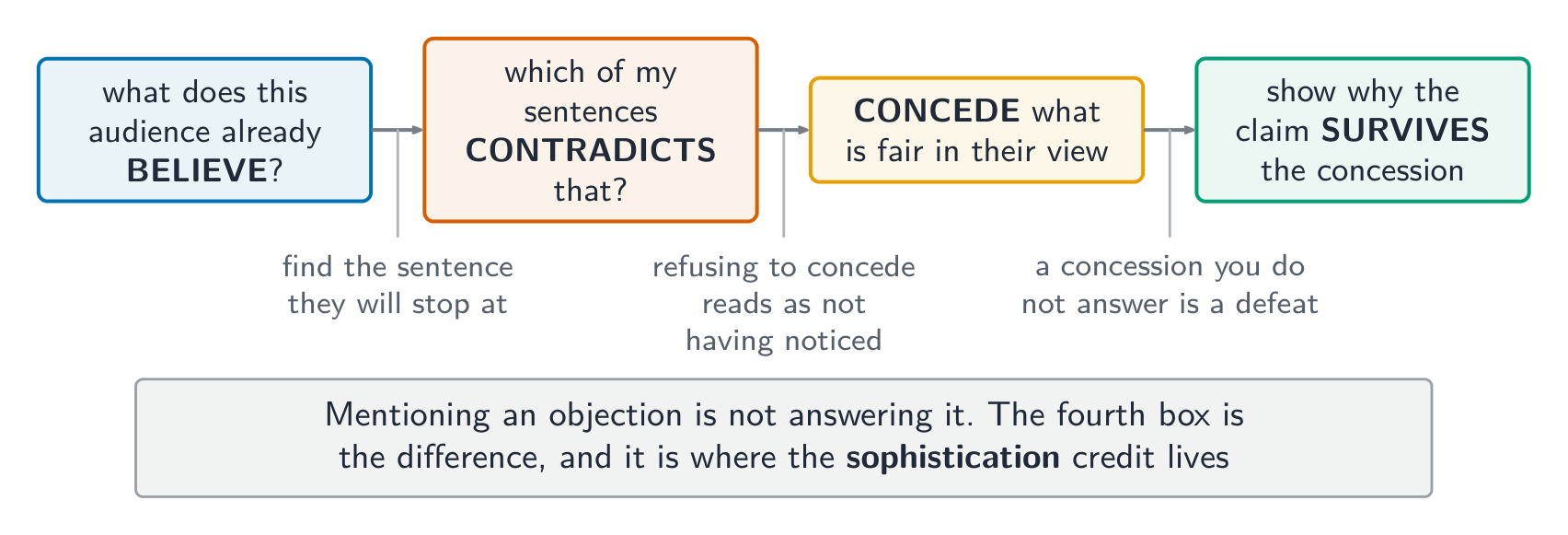
The instruction here is that audiences are dynamic: they change as they read. An argument that has just conceded something is being read by a slightly different audience than the one that began the essay.

Practically, this means the ordering of concession and claim matters. Concede before you press, and you address a reader who now believes you are fair. Press first and concede afterwards, and the concession reads as retreat.

العربية

التعليمات هنا تقول إن الجموع ديناميكية: يتغيرون أثناء القراءة. حجة منحى بها مؤخرًا تُقرأ من قِبل جمهور مختلف قليلاً عن ذلك الذي بدأ المقال.

عمليًا، يعني هذا أن ترتيب الاستثناء والادعاء مهم. استثنِ قبل أن تطالب، وتعالج قارئًا يؤمن الآن أنك عادل. طالب أولًا واستثنِ لاحقًا، وتُقرأ الاستثناءة على أنها تراجع.

ذكر معارضة ليس حلّها - الصندوق الرابع هو الفرق
Explore · ⁨استكشف⁩

Anticipate where the reader will refuse · ⁨توقع أين سيرفض القارئ⁩

Mentioning an objection is not answering it. The fourth step is the difference, and it is where the sophistication credit lives. · ⁨ذكر اعتراض ليس رده. الخطوة الرابعة هي الفرق، وهي حيث resides ائتمانية التعقيد.⁩

8.3

Word Choice, Comparisons, and Syntax · ⁨اختيار الكلمات، المقارنات، والنحو⁩

Syllabus · ⁨المنهج⁩
English

Enduring Understanding (STL-1): The rhetorical situation informs the strategic stylistic choices that writers make.

Learning Objective 7.A: Reading – Explain how word choice, comparisons, and syntax contribute to the specific tone or style of a text.

  • STL-1.Q A writer’s style is made up of the mix of word choice, syntax, and conventions employed by that writer.
  • STL-1.R Writers may signal a complex or ironic perspective through stylistic choices. Irony may emerge from the differences between an argument and the readers’ expectations or values.
العربية

الفهم الدائم (STL-1): informs (يُعلّم/يُحدد) الموقف البلاغي الاختيارات الأسلوبية الاستراتيجية التي يتخذها الكتاب.

الهدف التعليمي 7.A: القراءة – شرح كيف يساهم اختيار الكلمات والمقارنات والنحو في نبرة أو نمط محدد للنص.

  • STL-1.Q يتكون أسلوب الكاتب من مزيج من اختيار الكلمات، والتركيب النحوي، والممارسات التي يستخدمها ذلك الكاتب.
  • STL-1.R قد يرمز الكتاب إلى منظور معقد أو ساخر من خلال الاختيارات الأسلوبية. وقد يظهر السخرية من الفروقات بين الحجة وتوقعات القراء أو قيمهم.

Source: College Board AP Course and Exam Description · ⁨المصدر: وصف دورة وامتحان College Board AP⁩

English
  • A writer's style is the mix of word choice, syntax, and conventions employed by that writer. Style is a composite, which is why "the writer's style is formal" is not analysis - it names the result without any of the components.
  • Writers may signal a complex or ironic perspective through stylistic choices. Irony 反讽 may emerge from the difference between what is said and what is meant, or between what is expected and what occurs.

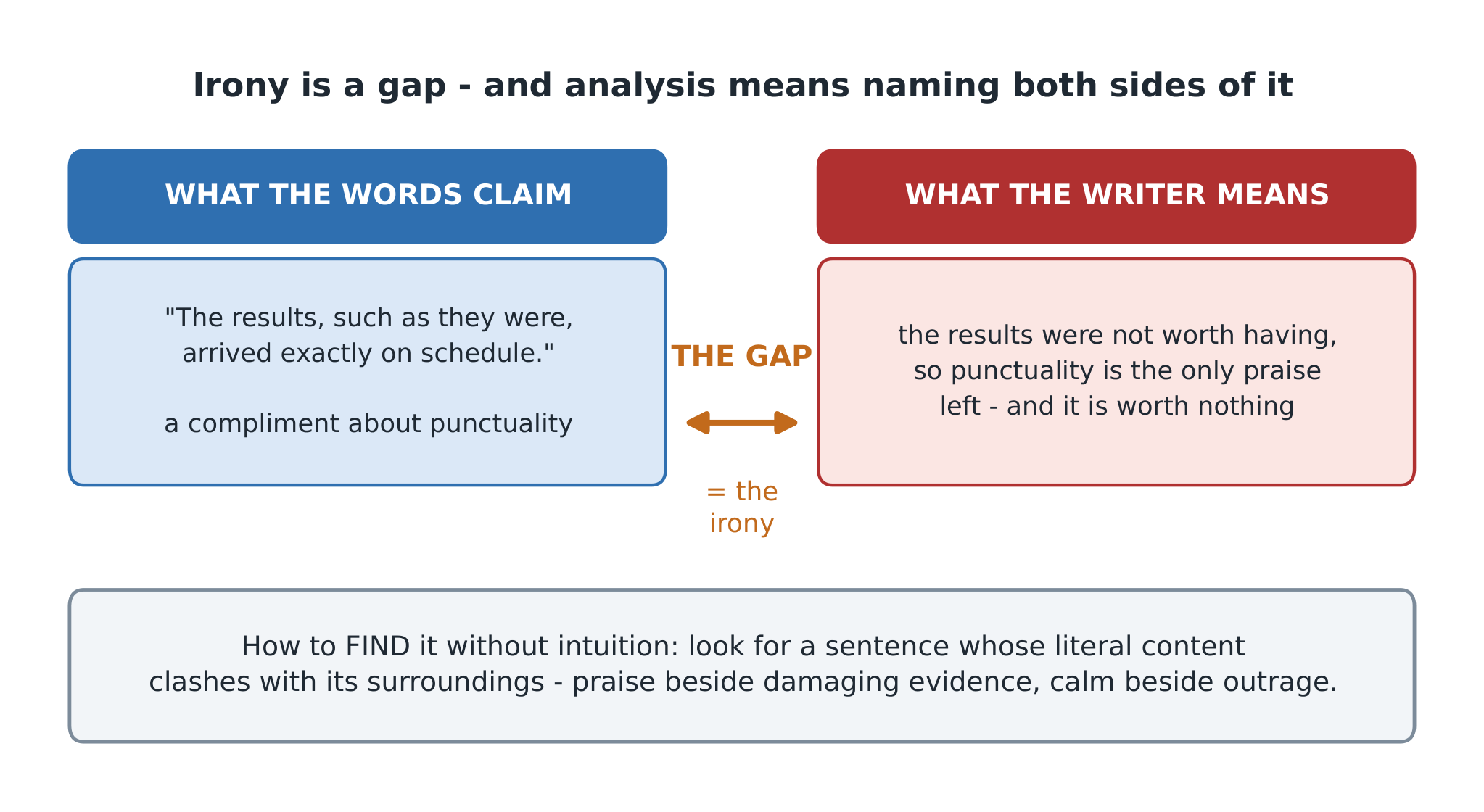
Irony is the hardest thing on this exam for a second-language reader, because it cannot be looked up. The workable method is structural rather than intuitive: find a sentence whose literal content does not match its surroundings - excessive praise beside damaging evidence, calm register beside an outrageous fact - and the mismatch is the signal.

العربية
  • نمط الكاتب هو مزيج اختيار الكلمات والنحو والقواعد الذي يستخدمه ذلك الكاتب. النمط هو تركيب composite، ولهذا فإن "نمط الكاتب رسمي" ليس تحليلًا - إنه يُسمّي النتيجة دون أي من المكونات.
  • قد يُشير المؤلفون إلى وجهة نظر معقدة أو ساخرة من خلال خيارات أسلوبية. السخرية 反讽 قد تنشأ من الفرق بين ما يُقال وما يُقصد، أو بين ما يُتوقع وما يحدث.
السخرية هي فجوة، والتحليل يعني تسمية جانبيها
قل ما تدعيه الكلمات، قل ما يقصده الكاتب، والفجوة هي الحجة

السخرية أصعب شيء في هذا الامتحان لقارئ لغة ثانية، لأنها لا يمكن البحث عنها. الطريقة العملية هي هيكلية وليست حدسية: ابحث عن جملة يكون فيها المحتوى الحرفي لا يطابق محيطه - مجاملة مفرطة بجانب أدلة ضارة، نبرة هادئة بجانب حقيقة صادمة - وعدم التطابق هو الإشارة.

النبرة لها مدخلان، ومعظم التحليلات تذكر أحدهما فقط
Vocabulary · ⁨مفردات⁩ Train · ⁨تدريب⁩
English العربية
style/staɪl/ العنق
syntax and diction/ˈsɪntæks ænd ˈdɪkʃn/ النحو والمفردات
Irony/ˈaɪrəni/ السخرية
Modifiers/ˈmɒdɪfaɪəz/ المُعدِّلات
Parenthetical elements/pərənˈθetɪkl ˈelɪmənts/ العناصر القوسية
8.4

Using Words and Syntax for Tone and Style · ⁨استخدام الكلمات والتركيب النحوي لنبرة الأسلوب⁩

Syllabus · ⁨المنهج⁩
English

Enduring Understanding (STL-1): The rhetorical situation informs the strategic stylistic choices that writers make.

Learning Objective 8.A: Writing – Strategically use words, comparisons, and syntax to convey a specific tone or style in an argument.

  • STL-1.Q A writer’s style is made up of the mix of word choice, syntax, and conventions employed by that writer.
  • STL-1.R Writers may signal a complex or ironic perspective through stylistic choices. Irony may emerge from the differences between an argument and the readers’ expectations or values.
العربية

الفهم الدائم (STL-1): informs (يُعلّم/يُحدد) الموقف البلاغي الاختيارات الأسلوبية الاستراتيجية التي يتخذها الكتاب.

الهدف التعليمي 8.أ: الكتابة – استخدام الكلمات والمقارنات والتركيب نحوياً بشكل استراتيجي لنقل نبرة أو نمط معين في الحجة.

  • STL-1.Q يتكون أسلوب الكاتب من مزيج من اختيار الكلمات، والتركيب النحوي، والممارسات التي يستخدمها ذلك الكاتب.
  • STL-1.R قد يرمز الكتاب إلى منظور معقد أو ساخر من خلال الاختيارات الأسلوبية. وقد يظهر السخرية من الفروقات بين الحجة وتوقعات القراء أو قيمهم.

Source: College Board AP Course and Exam Description · ⁨المصدر: وصف دورة وامتحان College Board AP⁩

English

For your own writing, the safest use of irony is none. What the sophistication point actually rewards is control: a consistent register, a vocabulary that is precise rather than inflated, and syntax that ranks ideas deliberately.

العربية

بالنسبة لكتابتك الخاصة، آمن استخدام للسخرية هو لا شيء. ما تكافئه نقطة التقدم فعليًا هو السيطرة: نبرة متسقة، ومفردات دقيقة بدلاً من المتضخمة، ونحو يرتب الأفكار عمداً.

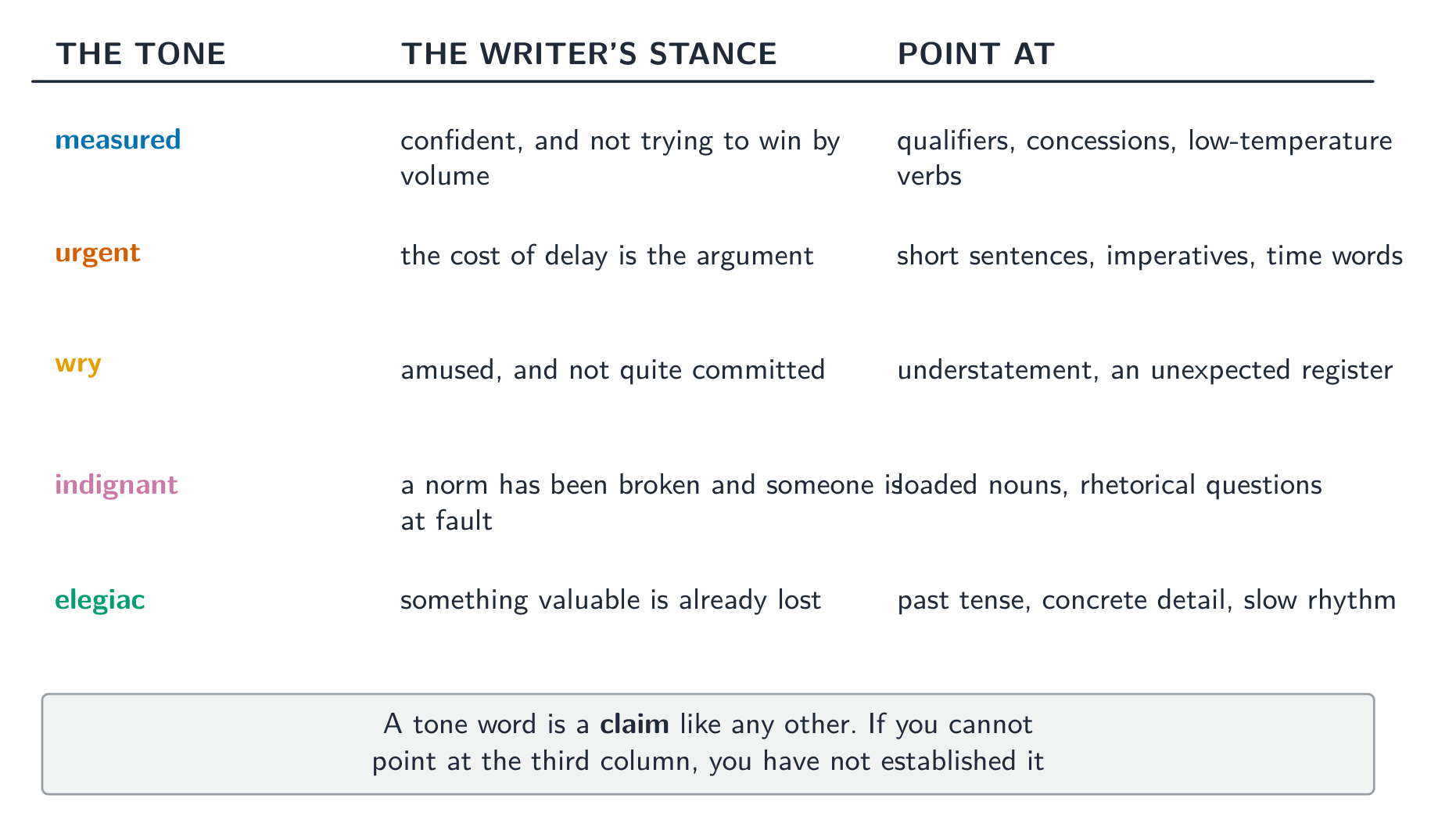
كلمة النبرة هي ادعاء - إذا لم تتمكن من الإشارة إلى العمود الثالث، فلم تجعله
Explore · ⁨استكشف⁩

Match each tone to the evidence for it · ⁨صلّ كل نبرة بالأدلة عليها⁩

A tone word is a claim like any other. If you cannot point at the evidence, you have not established it. · ⁨كلمة النبرة ادعاء كأي ادعاء آخر. إذا لم تتمكن من الإشارة إلى الأدلة، فلم تثبتها.⁩

8.5

Clauses and Relationships Between Ideas · ⁨الجمل والعلاقات بين الأفكار⁩

Syllabus · ⁨المنهج⁩
English

Enduring Understanding (STL-1): The rhetorical situation informs the strategic stylistic choices that writers make.

Learning Objective 7.B: Reading – Explain how writers create, combine, and place independent and dependent clauses to show relationships between and among ideas.

  • STL-1.S Modifiers—including words, phrases, or clauses—qualify, clarify, or specify information about the thing with which they are associated. To reduce ambiguity, modifiers should be placed closest to the word, phrase, or clause that they are meant to modify.
  • STL-1.T Parenthetical elements—though not essential to understanding what they are describing—interrupt sentences to provide additional information that may address an audience’s needs and/or advance a writer’s purpose.
العربية

الفهم الدائم (STL-1): informs (يُعلّم/يُحدد) الموقف البلاغي الاختيارات الأسلوبية الاستراتيجية التي يتخذها الكتاب.

هدف التعلم 7.B: القراءة – اشرح كيف ينشئ الكتاب ويجمعون ويضعون الجمل المستقلة والجمل التابعة لإظهار العلاقات بين الأفكار وداخلها.

  • STL-1.S الصفات – بما في ذلك الكلمات أو العبارات أو الجمل – تحدد أو توضح أو تحدد المعلومات المتعلقة بالشيء المرتبط بها. ولتقليل الغموض، يجب وضع الصفات أقرب ما يمكن إلى الكلمة أو العبارة أو الجملة المقصودة وصفها.
  • STL-1.T العناصر المضافة بين قوسين – على الرغم من أنها ليست ضرورية لفهم ما تصفه – تقطع الجمل لتقديم معلومات إضافية قد تلبي حاجات الجمهور و/أو تعزز غرض الكاتب.

Source: College Board AP Course and Exam Description · ⁨المصدر: وصف دورة وامتحان College Board AP⁩

English
  • Modifiers 修饰成分 - words, phrases, or clauses - qualify, clarify, or specify information about the thing they modify.
  • Parenthetical elements 插入成分 - though not essential to understanding what they describe - interrupt the sentence to add information, comment, or emphasis.

Both are stylistically rich and analytically useful. A modifier is where a writer's judgement hides: the long-delayed report has evaluated the report while appearing only to identify it. A parenthetical is an aside the writer chose to make - and the choice to interrupt is itself an emphasis.

العربية
  • المُعدِّلات 修饰成分 - كلمات، عبارات، أو جمل - تُحدّد، تُوضّح، أو تُحدد المعلومات حول الشيء الذي تعدّله.
  • العناصر بين الأقواس 插入成分 - رغم أنها ليست ضرورية لفهم ما تصفه - تُقاطع الجملة لإضافة معلومات، أو تعليق، أو تأكيد.

كلاهما غني بأسلوبياً ومفيد تحليلياً. المُعدّل هو حيث يختبئ حكم الكاتب: التقرير المؤجل الطويل قيّم التقرير بينما يبدو وكأنه يحدده فقط. العنصر بين الأقواس هو تفصيل جانبي اختاره الكاتب - واختيار المقاطعة هو بحد ذاته تأكيد.

8.6

Writing Clear Sentences · ⁨كتابة جمل واضحة⁩

Syllabus · ⁨المنهج⁩
English

Enduring Understanding (STL-1): The rhetorical situation informs the strategic stylistic choices that writers make.

Learning Objective 8.B: Writing – Write sentences that clearly convey ideas and arguments.

  • STL-1.S Modifiers—including words, phrases, or clauses—qualify, clarify, or specify information about the thing with which they are associated. To reduce ambiguity, modifiers should be placed closest to the word, phrase, or clause that they are meant to modify.
  • STL-1.T Parenthetical elements—though not essential to understanding what they are describing—interrupt sentences to provide additional information that may address an audience’s needs and/or advance a writer’s purpose.
العربية

الفهم الدائم (STL-1): informs (يُعلّم/يُحدد) الموقف البلاغي الاختيارات الأسلوبية الاستراتيجية التي يتخذها الكتاب.

الهدف التعليمي 8.ب: الكتابة – كتابة جمل تنقل الأفكار والحجج بوضوح.

  • STL-1.S الصفات – بما في ذلك الكلمات أو العبارات أو الجمل – تحدد أو توضح أو تحدد المعلومات المتعلقة بالشيء المرتبط بها. ولتقليل الغموض، يجب وضع الصفات أقرب ما يمكن إلى الكلمة أو العبارة أو الجملة المقصودة وصفها.
  • STL-1.T العناصر المضافة بين قوسين – على الرغم من أنها ليست ضرورية لفهم ما تصفه – تقطع الجمل لتقديم معلومات إضافية قد تلبي حاجات الجمهور و/أو تعزز غرض الكاتب.

Source: College Board AP Course and Exam Description · ⁨المصدر: وصف دورة وامتحان College Board AP⁩

English

A concrete discipline: place modifiers next to what they modify, and use parentheticals sparingly. One well-placed interruption creates emphasis; three in a paragraph destroy it, because a reader cannot tell which interruption mattered.

Worked example (a real AP exam task). A rhetorical-analysis passage says of a policy: "The results, such as they were, arrived exactly on schedule." A low answer says the writer "uses a parenthetical phrase". A scoring answer explains both parts: "The parenthetical 'such as they were' dismisses the results in four words, without offering an argument against them - and placing it before 'arrived exactly on schedule' means the praise for punctuality lands on results the reader has just been told to discount. The sentence appears to compliment the programme and in fact withdraws the only thing it could be complimented for." Modifier, parenthetical, irony, and effect on audience, all in one.

العربية

تدقيق عملي: ضع المُعدِّلات بجانب ما تعدّله، واستخدم العناصر بين الأقواس بحذر. مقاطعة واحدة موضوعة جيداً تُحدث تأكيدًا؛ ثلاث في فقرة تدمرها، لأن القارئ لا يستطيع معرفة أي مقاطعة كانت مهمة.

مثال محلل (سؤال حقيقي في امتحان AP). نص تحليل بلاغي يقول عن سياسة: "النتائج، قدر ما كانت، وصلت بالضبط في الموعد المحدد." إجابة منخفضة تقول إن الكاتب "يستخدم جملة بين قوسين". إجابة صحيحة تشرح الجزأين: "الكلمة بين القوسين 'قدر ما كانت' تتجاهل النتائج في أربع كلمات، دون تقديم حجة ضدها - ووضعها قبل 'وصلت بالضبط في الموعد المحدد' يعني أن الثناء على الدقة يقع على نتائج أخبر القارئ للتو بتقليل قيمتها. تبدو الجملة وكأنها تمدح البرنامج وفي الواقع تسحب الشيء الوحيد الذي يمكن مدحه فيه." تعديل، جملة بين قوسين، سخرية، وتأثير على الجمهور، كل ذلك في جملة واحدة.

8.6

Exam tips · ⁨نصائح للامتحان⁩

English
  • Style is a composite - word choice, syntax, conventions. Naming the components is analysis; naming the result is not.
  • Loaded diction damages the writer's credibility. Say so; it is examinable.
  • Find irony structurally: a sentence whose literal content clashes with its surroundings.
  • Concede before you press. The audience that reads your claim will already have decided whether you are fair.
  • A modifier is where judgement hides. The long-delayed report has already evaluated it.
  • Use parentheticals sparingly in your own writing. Three in a paragraph cancel each other out.
العربية
  • النمط أسلوب مركب - اختيار المفردات، التراكيب، والعادات اللغوية. تسمية المكونات هو تحليل؛ تسمية النتيجة ليس كذلك.
  • الكلمات الملوّنة تُضعف مصداقية الكاتب. قل هذا بوضوح؛ فهو موضوع اختباري.
  • ابحث عن السخرية هيكلياً: جملة يتعارض محتواها الحرفي مع سياغتها المحيطة.
  • اعترف قبل أن تتقدم بحجتك. القارئ الذي سيقرأ ادعائك قد قرر بالفعل ما إذا كنت عادلاً أم لا.
  • التعديل هو حيث يختبئ الحكم. التقرير الطويل الانتظار قد تم تقييمه مسبقاً.
  • استخدم العبارات بين القوسين بحذر في كتابتك الخاصة. ثلاث منها في فقرة واحدة تلغي بعضها البعض.

Interactive lessons on this topic · ⁨دروس تفاعلية حول هذا الموضوع⁩

Work through it step by step, with instant-check exercises. · ⁨ا-working عليه خطوة بخطوة، مع تمارين تحقق فوري.⁩

Past Papers · ⁨أوراق الامتحانات السابقة⁩

More topics in AP English Language and Composition · ⁨اللغة الإنجليزية والتأليف (AP)⁩ · ⁨المزيد من المواضيع في AP English Language and Composition · ⁨اللغة الإنجليزية والتأليف (AP)⁩⁩

Log in or create account · ⁨تسجيل الدخول أو إنشاء حساب⁩

IGCSE, A-Level & AP