Skip to content · ⁨الانتقال إلى المحتوى⁩

Audience, Thesis, and Supporting Evidence · ⁨الجمهور، الأطروحة والأدلة الداعمة⁩

AP English Language and Composition · ⁨اللغة الإنجليزية والتأليف (AP)⁩ · Topic 2 · ⁨الموضوع 2⁩

Video lesson for this topic · ⁨درس فيديو لهذا الموضوع⁩ Open the video page · ⁨افتح صفحة الفيديو⁩
5:54

الوحدة 2: الجمهور، الأطروحة، والدليل الداعم

هنا اختبار يمكنك إجراؤه على مسوداتك الخاصة في غضون عشر ثوانٍ تقريباً. اقرأ فقرة واحدة واسأل: هل ستُقرأ بنفس الطريقة لجمهور مختلف تماماً؟…

English narration · English + 中文 subtitles burned in · ⁨سرد باللغة الإنجليزية · ترجمة مدمجة بالإنجليزية + الصينية⁩

2.1

Understanding an Audience's Beliefs and Needs · ⁨فهم معتقدات الجمهور واحتياجاته⁩

Syllabus · ⁨المنهج⁩
English

Enduring Understanding (RHS-1): Individuals write within a particular situation and make strategic writing choices based on that situation.

Learning Objective 1.B: Reading – Explain how an argument demonstrates understanding of an audience’s beliefs, values, or needs.

  • RHS-1.F Writers’ perceptions of an audience’s values, beliefs, needs, and background guide the choices they make.
  • RHS-1.G To achieve a purpose, writers make choices in an attempt to relate to an intended audience’s emotions and values.
  • RHS-1.H Arguments seek to persuade or motivate action through appeals—the modes of persuasion.
العربية

الفهم الدائم (RHS-1): يكتب الأفراد ضمن موقف معين ويتخذون خيارات كتابة استراتيجية بناءً على ذلك الموقف.

الهدف التعليمي 1.B: القراءة - شرح كيف تُظهر الحجة فهمًا لمعتقدات الجمهور أو قيمه أو حاجاته.

  • RHS-1.F توجه تصورات الكُتّاب لقيم الجمهور ومعتقداته وحاجاته وخلفيتهم الخيارات التي يتخذونها.
  • RHS-1.G لتحقيق هدف معين، يتخذ الكُتّاب خيارات سعيًا منهم للتواصل مع مشاعر وقيم الجمهور المستهدف.
  • RHS-1.H تسعى الحجج إلى الإقناع أو تحفيز العمل من خلال الاستنادات - وهي أساليب الإقناع.
Source: College Board AP Course and Exam Description · ⁨المصدر: وصف دورة وامتحان College Board AP⁩

English

Unit 1 established that a text has an audience. Unit 2 makes that audience the engine of every choice a writer makes.

  • Writers' perceptions of an audience's values, beliefs, needs, and background guide the choices they make. Note the word perceptions: what steers the writing is the writer's picture of the audience, which may be accurate or not.
  • To achieve a purpose, writers make choices in an attempt to relate to an intended audience's emotions and values.
  • Arguments seek to persuade or motivate action through appeals 诉求 - the modes of persuasion 说服方式.
العربية

أقرت الوحدة 1 بأن للنص جمهورًا. وتجعل الوحدة 2 ذلك الجمهور هو المحرك لكل اختيار يقوم به الكاتب.

  • إدراك الكتاب لقيم الجمهور ومعتقداته وحاجاته وخلفيته يوجه الاختيارات التي يقومون بها. لاحظ كلمة إدراك: ما يوجه الكتابة هو صورة الكاتب للجمهور، والتي قد تكون دقيقة أو غير دقيقة.
  • لتحقيق غرض معين، يقوم الكتاب باختيار طرق لمحاولة الارتباط بعواطف وقيم الجمهور المستهدف.
  • تسعى الحجج إلى الإقناع أو تحفيز العمل من خلال المناديات Appeals - أساليب الإقناع Persuasion modes.
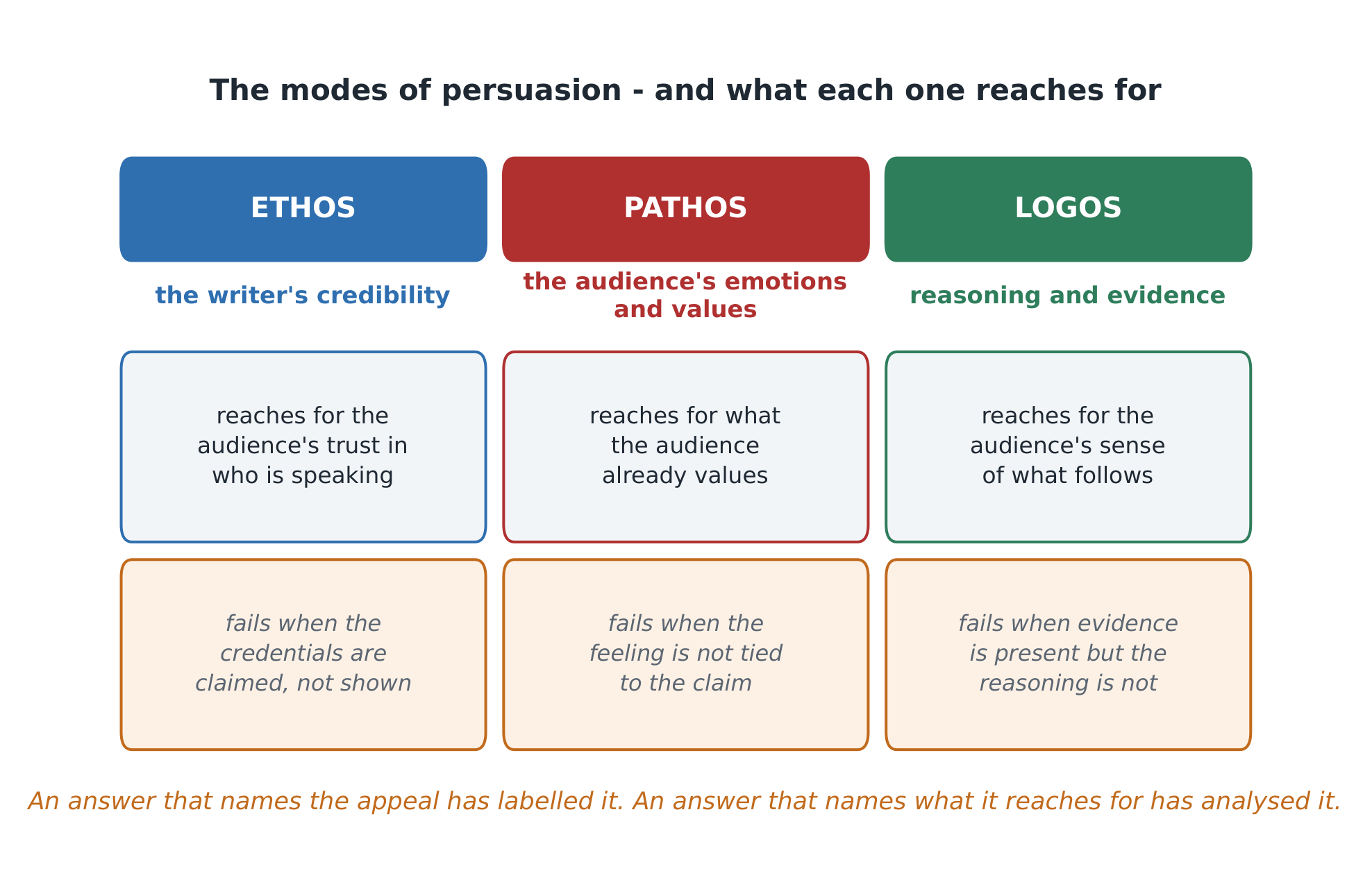
كل منادٍ يستهدف شيئًا مختلفًا في الجمهور - وكل منها يمكن أن يفشل بطريقته الخاصة
تسمية المناداة لا قيمة لها بمفردها؛ تسمية ما تستهدفه هو التحليل
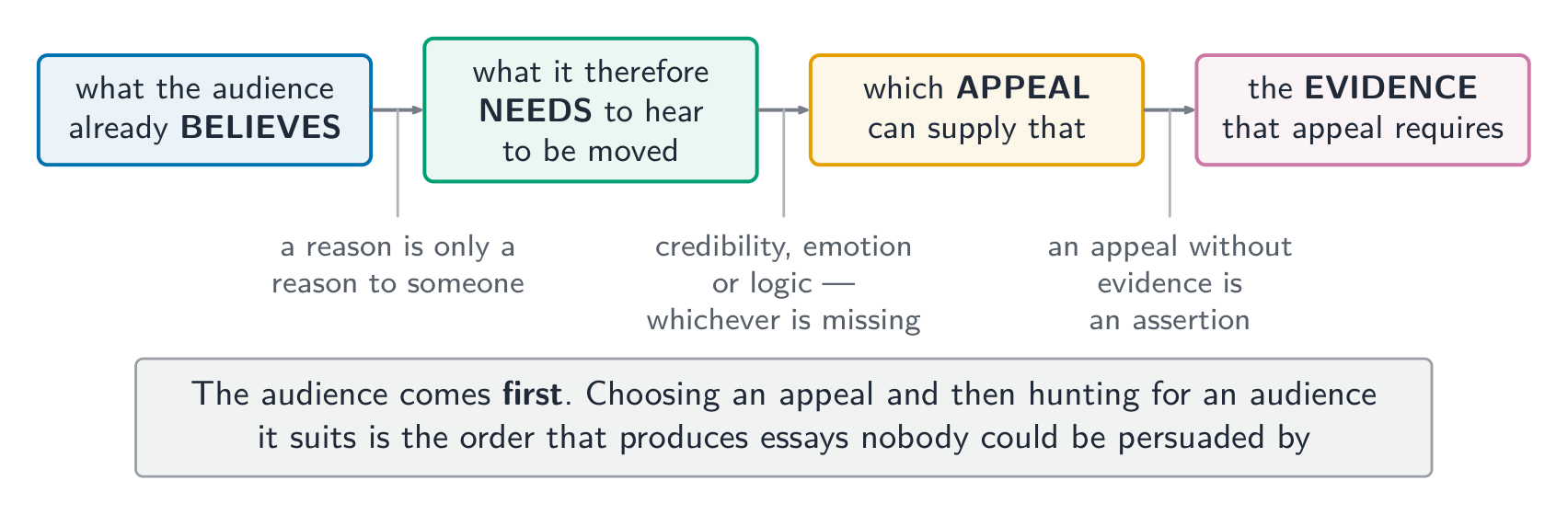
الجمهور يأتي أولاً: ما يؤمن به يحدد ما سيُعد سببًا مقبولًا
Explore · ⁨استكشف⁩

Start from the audience, not the appeal · ⁨ابدأ من الجمهور، لا من الطمع⁩

What the audience already believes determines what will count as a reason to them. · ⁨ما يؤمن به الجمهور بالفعل يحدد ما سيعتبره سبباً بالنسبة لهم.⁩

Vocabulary · ⁨مفردات⁩ Train · ⁨تدريب⁩
English العربية
appeals/əˈpiːlz/ النداءات / الاستدعاءات
modes of persuasion/məʊdz ɒv pəˈsweɪʒn/ أنماط الإقناع
2.2

Writing for an Audience's Beliefs and Needs · ⁨الكتابة لمعايير ومعتقدات الجمهور⁩

Syllabus · ⁨المنهج⁩
English

Enduring Understanding (RHS-1): Individuals write within a particular situation and make strategic writing choices based on that situation.

Learning Objective 2.B: Writing – Demonstrate an understanding of an audience’s beliefs, values, or needs.

  • RHS-1.F Writers’ perceptions of an audience’s values, beliefs, needs, and background guide the choices they make.
  • RHS-1.G To achieve a purpose, writers make choices in an attempt to relate to an intended audience’s emotions and values.
  • RHS-1.H Arguments seek to persuade or motivate action through appeals—the modes of persuasion.
العربية

الفهم الدائم (RHS-1): يكتب الأفراد ضمن موقف معين ويتخذون خيارات كتابة استراتيجية بناءً على ذلك الموقف.

الهدف التعليمي 2.B: الكتابة - إظهار فهم لمعتقدات الجمهور أو قيمه أو حاجاته.

  • RHS-1.F توجه تصورات الكُتّاب لقيم الجمهور ومعتقداته وحاجاته وخلفيتهم الخيارات التي يتخذونها.
  • RHS-1.G لتحقيق هدف معين، يتخذ الكُتّاب خيارات سعيًا منهم للتواصل مع مشاعر وقيم الجمهور المستهدف.
  • RHS-1.H تسعى الحجج إلى الإقناع أو تحفيز العمل من خلال الاستنادات - وهي أساليب الإقناع.
Source: College Board AP Course and Exam Description · ⁨المصدر: وصف دورة وامتحان College Board AP⁩

English

The same three statements now become a writing instruction. Before drafting, decide:

  • What does this audience already believe about the subject?
  • What do they need - information, reassurance, a reason to act?
  • What do they value, and which of those values can honestly be connected to my position?

An argument that ignores these produces writing addressed to nobody. And the CED's framing gives you a useful test for your own drafts: if this paragraph would read identically to a completely different audience, it has not been shaped by one.

العربية

تتحول العبارات الثلاث نفسها الآن إلى تعليمات للكتابة. قبل المسودة، حدد:

  • ماذا يعتقد هذا الجمهور بالفعل حول الموضوع؟
  • ماذا يحتاجون - معلومات، طمأنينة، دافع للعمل؟
  • ماذا يقدرون، وأي من هذه القيم يمكن ربط موقعك بها بصدق؟

الحجة التي تتجاهل هذه things ينتج عنها كتابة موجهة إلى أحد. وإطار عمل CED يمنحك اختبارًا مفيدًا لمسوداتك الخاصة: إذا كانت هذه الفقرة ستُقرأ بنفس الطريقة تماماً من قبل جمهور مختلف تمامًا، فهي لم تتشكل بناءً على جمهور محدد.

2.3

Identifying Claims and Evidence · ⁨تحديد الادعاءات والأدلة⁩

Syllabus · ⁨المنهج⁩
English

Enduring Understanding (CLE-1): Writers make claims about subjects, rely on evidence that supports the reasoning that justifies the claim, and often acknowledge or respond to other, possibly opposing, arguments.

Learning Objective 3.A: Reading – Identify and explain claims and evidence within an argument.

  • CLE-1.F Writers use evidence strategically and purposefully to illustrate, clarify, set a mood, exemplify, associate, or amplify a point.
  • CLE-1.G Strategically selected evidence strengthens the validity and reasoning of the argument, relates to an audience’s emotions and values, and increases a writer’s credibility.
  • CLE-1.H An effective argument contains sufficient evidence; evidence is sufficient when its quantity and quality provide apt support for the argument.
العربية

الفهم الدائم (CLE-1): يطرح الكُتّاب ادعاءات حول موضوعات معينة، ويعتمدون على أدلة تدعم البرهان الذي يبرر الادعاء، وغالبًا ما يعترفون بالرد على حجج أخرى، قد تكون معارضة.

الهدف التعليمي 3.A: القراءة - تحديد وشرح الادعاءات والأدلة داخل الحجة.

  • CLE-1.F يستخدم الكُتّاب الأدلة بشكل استراتيجي وهادف لتوضيح، أو شرح، أو خلق جو، أو تمثيل، أو ارتباط، أو توضيح نقطة ما.
  • CLE-1.G تعزز الأدلة المختارة استراتيجيًا صحة الحجة وبرهانها، وترتبط بمشاعر وقيم الجمهور، وتزيد من مصداقية الكاتب.
  • CLE-1.H تحتوي الحجة الفعالة على أدلة كافية؛ تكون الأدلة كافية عندما يوفر حجمها وجودتها دعمًا مناسبًا للحجة.

Source: College Board AP Course and Exam Description · ⁨المصدر: وصف دورة وامتحان College Board AP⁩

English

Unit 2 deepens Unit 1's treatment of evidence with three claims about how evidence works:

  • Writers use evidence strategically and purposefully to illustrate, clarify, set a mood, exemplify, associate, or amplify. Evidence does a job, and naming that job is analysis.
  • Strategically selected evidence strengthens the validity and reasoning of the argument, relates to an audience's emotions and values, and helps establish the writer's credibility 可信度.
  • An effective argument contains sufficient evidence 充分的证据 - sufficient when its quantity and quality provide apt support for the line of reasoning.

That third point is often misread as "more is better". Sufficiency is quantity and quality together: three well-chosen pieces of evidence that bear directly on the claim beat six that only touch it.

العربية

تعمق الوحدة 2 معالجة الوحدة 1 للدليل بثلاثة ادعاءات حول كيف يعمل الدليل:

  • يستخدم الكتاب الأدلة استراتيجيًا وبغرض واضح لتوضيح، توضيح، خلق جو، تمثيل نموذج، ارتباط، أو تضخيم. الدليل يقوم بـ عمل، وتسمية ذلك العمل هو التحليل.
  • الأدلة المختارة استراتيجيًا تعزز صحة وحجج الحجة، ترتبط بـ عواطف وقيم الجمهور، وتساعد في تأسيس موثوقية الكاتب Credibility.
  • الحجة الفعالة تحتوي على أدلة كافية Sufficient evidence - كافية عندما يوفر كميتها وجودتها دعمًا مناسبًا لسير الحجة.

غالبًا ما يُقرأ النقطة الثالثة بشكل خاطئ على أنها "الأكثر أفضل". الكفاية هي كمية وجودة معًا: ثلاثة قطع مختارة بعناية من الأدلة ذات الصلة المباشرة بالادعاء تفوق ستة فقط تلمسها بشكل عرضي.

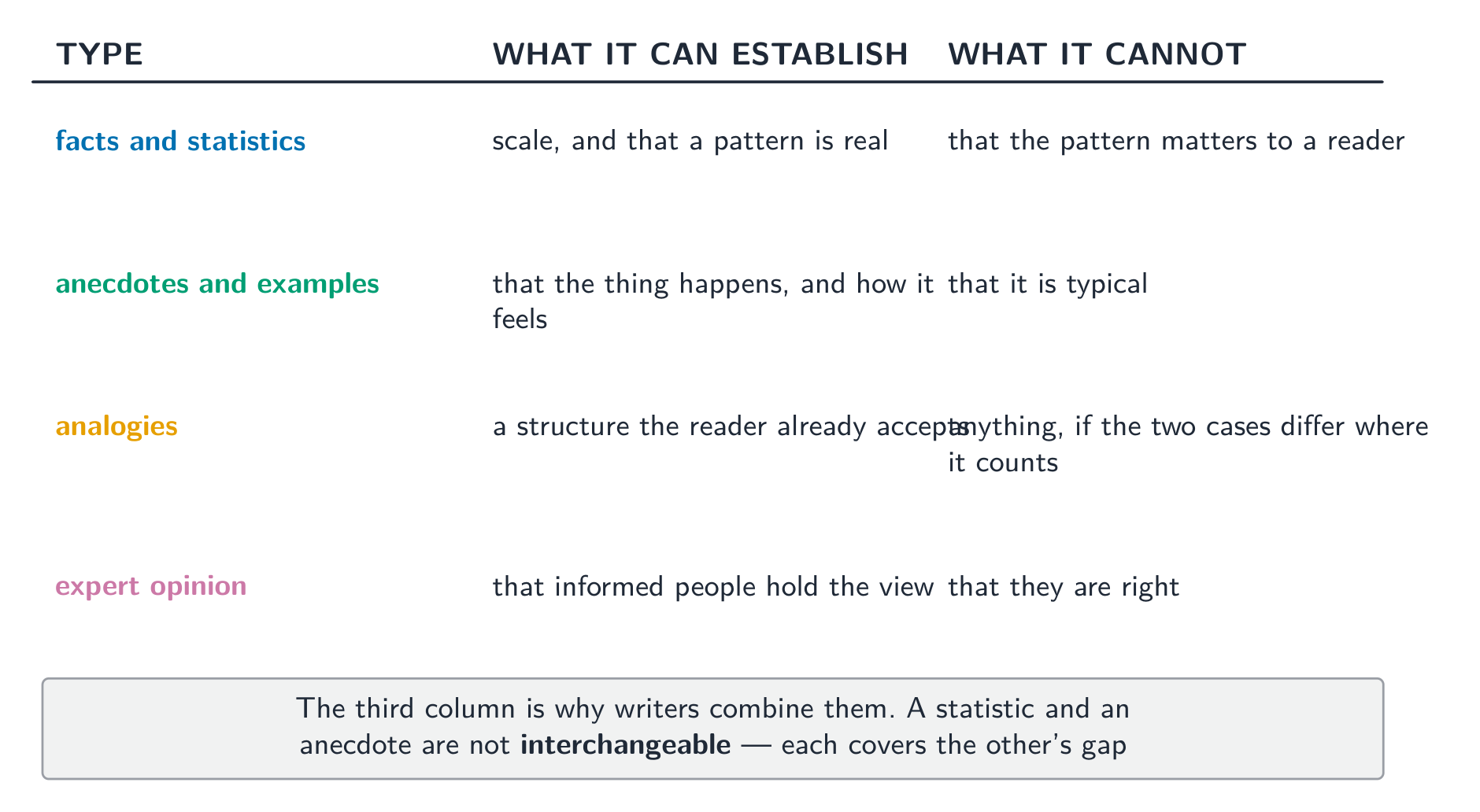
أنواع الأدلة مرتبة حسب ما يمكن لكل نوع أن يثبت وما لا يستطيع إثباته
Explore · ⁨استكشف⁩

Match each evidence type to what it cannot prove · ⁨طابق كل نوع من الأدلة بما لا يمكنه إثباته⁩

A statistic and an anecdote are not interchangeable — each covers the other's gap. · ⁨الإحصاء والحكاية ليستا قابلتين للتبادل — كل منهما يغطي فجأة الآخر.⁩

Vocabulary · ⁨مفردات⁩ Train · ⁨تدريب⁩
English العربية
credibility/ˌkredɪˈbɪlɪti/ المصداقية
sufficient evidence/səˈfɪʃənt ˈevɪdəns/ دليل كافٍ
2.4

Developing a Paragraph with Claim and Evidence · ⁨تطوير فقرة بالادعاء والدليل⁩

Syllabus · ⁨المنهج⁩
English

Enduring Understanding (CLE-1): Writers make claims about subjects, rely on evidence that supports the reasoning that justifies the claim, and often acknowledge or respond to other, possibly opposing, arguments.

Learning Objective 4.A: Writing – Develop a paragraph that includes a claim and evidence supporting the claim.

  • CLE-1.F Writers use evidence strategically and purposefully to illustrate, clarify, set a mood, exemplify, associate, or amplify a point.
  • CLE-1.G Strategically selected evidence strengthens the validity and reasoning of the argument, relates to an audience’s emotions and values, and increases a writer’s credibility.
  • CLE-1.H An effective argument contains sufficient evidence; evidence is sufficient when its quantity and quality provide apt support for the argument.
العربية

الفهم الدائم (CLE-1): يطرح الكُتّاب ادعاءات حول موضوعات معينة، ويعتمدون على أدلة تدعم البرهان الذي يبرر الادعاء، وغالبًا ما يعترفون بالرد على حجج أخرى، قد تكون معارضة.

الهدف التعليمي 4.A: الكتابة - تطوير فقرة تتضمن ادعاءً وأدلة تدعم هذا الادعاء.

  • CLE-1.F يستخدم الكُتّاب الأدلة بشكل استراتيجي وهادف لتوضيح، أو شرح، أو خلق جو، أو تمثيل، أو ارتباط، أو توضيح نقطة ما.
  • CLE-1.G تعزز الأدلة المختارة استراتيجيًا صحة الحجة وبرهانها، وترتبط بمشاعر وقيم الجمهور، وتزيد من مصداقية الكاتب.
  • CLE-1.H تحتوي الحجة الفعالة على أدلة كافية؛ تكون الأدلة كافية عندما يوفر حجمها وجودتها دعمًا مناسبًا للحجة.

Source: College Board AP Course and Exam Description · ⁨المصدر: وصف دورة وامتحان College Board AP⁩

English

Applying the above to your own writing, choose each piece of evidence for a stated reason. In practice this means being able to finish the sentence: I am using this piece because it ...

  • ... illustrates a claim that would otherwise stay abstract;
  • ... establishes my credibility on a subject where readers may doubt it;
  • ... connects my position to a value the audience already holds.

Evidence chosen this way produces commentary almost automatically, because you already know what the evidence is doing. Evidence chosen because it was available produces the blank space where commentary should be.

العربية

بتطبيق ما سبق على كتابتك الخاصة، اختر كل قطعة دليل لسبب صريح. عمليًا يعني هذا القدرة على إكمال الجملة: أنا أستخدم هذه القطعة لأنها ...

  • ... توضح ادعاء كان سيبقى مجردًا لولا ذلك;
  • ... تؤسس لموثوقيتي في موضوع قد يشك فيه القراء في ذلك;
  • ... تربط موقعي بقيمة يحملها الجمهور بالفعل.

الأدلة المختارة بهذه الطريقة تولّد تعليقاً (تعليقاً نقدياً) شبه تلقائي، لأنك تعرف بالفعل ما تقوم به هذه الأدلة. أما الأدلة المختارة لأنها كانت متاحة فقط فتترك فراغاً حيث يجب أن يكون التعليق.

2.5

Identifying the Overarching Thesis · ⁨تحديد الأطروحة العامة⁩

Syllabus · ⁨المنهج⁩
English

Enduring Understanding (CLE-1): Writers make claims about subjects, rely on evidence that supports the reasoning that justifies the claim, and often acknowledge or respond to other, possibly opposing, arguments.

Learning Objective 3.B: Reading – Identify and describe the overarching thesis of an argument, and any indication it provides of the argument’s structure.

  • CLE-1.I A thesis is the main, overarching claim a writer is seeking to defend or prove by using reasoning supported by evidence.
  • CLE-1.J A writer’s thesis is not necessarily a single sentence or an explicit statement and may require a thorough reading of the text to identify, but when a thesis is directly expressed, it is called a thesis statement. [Note: While the texts you assign your students to analyze may not always contain obvious thesis statements, they should each have a thesis. It can be good practice for students to write a thesis statement for such texts. On the AP Exam, a clear communication of the thesis is required in students’ essays.]
العربية

الفهم الدائم (CLE-1): يطرح الكُتّاب ادعاءات حول موضوعات معينة، ويعتمدون على أدلة تدعم البرهان الذي يبرر الادعاء، وغالبًا ما يعترفون بالرد على حجج أخرى، قد تكون معارضة.

الهدف التعليمي 3.B: القراءة - تحديد ووصف الأطروحة العامة للحجة، وأي مؤشرات تقدمها لبنية الحجة.

  • CLE-1.I الأطروحة هي الادعاء الرئيسي والعام الذي يسعى الكاتب للدفاع عنه أو إثباته باستخدام برهان مدعوم بالأدلة.
  • CLE-1.J ليست أطروحة الكاتب بالضرورة جملة واحدة أو صيغة صريحة وقد تتطلب قراءة شاملة للنص لتحديدها، ولكن عندما تُعبّر عن الأطروحة بشكل مباشر، تُسمى عبارة الأطروحة. [ملاحظة: بينما قد لا تحتوي النصوص التي تكليف بها الطلاب للتحليل دائمًا على عبارات أطروحة واضحة، إلا أن كل منها يجب أن يحتوي على أطروحة. يمكن أن يكون من الجيد أن يكتب الطلاب عبارة أطروحة لهذه النصوص. في امتحان AP، مطلوب التواصل الواضح بالأطروحة في مقالات الطلاب.]

Source: College Board AP Course and Exam Description · ⁨المصدر: وصف دورة وامتحان College Board AP⁩

English
  • A thesis 论点 is the main, overarching claim a writer seeks to defend or prove by using reasoning supported by evidence.
  • A writer's thesis is not necessarily a single sentence or an explicit statement, and may require a thorough reading to identify.

That second point matters for the reading side of the exam. On a rhetorical-analysis passage, the thesis may be distributed across the text or implied by its structure. Do not assume the first sentence of the second paragraph is the thesis because that is where you would put yours.

العربية
  • الأطروحة هي الادعاء الرئيسي والشامل الذي يسعى الكاتب للدفاع عنه أو إثباته من خلال استخدام استدلالات مدعومة بالأدلة.
  • أطروحة الكاتب ليست بالضرورة جملة واحدة أو صراحةً نصية، وقد تتطلب قراءة شاملة لتحديدها.

يُعدّ النقطة الثانية مهمة بالنسبة للجانب القرائي في الامتحان. في فقرة التحليل البلاغي، قد تكون الأطروحة موزعة عبر النص أو مستنتجة من بنيته. لا تفترض أن الجملة الأولى من الفقرة الثانية هي الأطروحة لمجرد أنها المكان الذي تضع فيه أنت أطروحتك.

2.6

Writing a Thesis Statement · ⁨كتابة جملة الأطروحة⁩

Syllabus · ⁨المنهج⁩
English

Enduring Understanding (CLE-1): Writers make claims about subjects, rely on evidence that supports the reasoning that justifies the claim, and often acknowledge or respond to other, possibly opposing, arguments.

Learning Objective 4.B: Writing – Write a thesis statement that requires proof or defense and that may preview the structure of the argument.

  • CLE-1.I A thesis is the main, overarching claim a writer is seeking to defend or prove by using reasoning supported by evidence.
  • CLE-1.J A writer’s thesis is not necessarily a single sentence or an explicit statement and may require a thorough reading of the text to identify, but when a thesis is directly expressed, it is called a thesis statement. [Note: While the texts you assign your students to analyze may not always contain obvious thesis statements, they should each have a thesis. It can be good practice for students to write a thesis statement for such texts. On the AP Exam, a clear communication of the thesis is required in students’ essays.]
العربية

الفهم الدائم (CLE-1): يطرح الكُتّاب ادعاءات حول موضوعات معينة، ويعتمدون على أدلة تدعم البرهان الذي يبرر الادعاء، وغالبًا ما يعترفون بالرد على حجج أخرى، قد تكون معارضة.

الهدف التعليمي 4.B: الكتابة - كتابة عبارة أطروحة تتطلب إثباتًا أو دفاعًا، وقد تستعرض بنية الحجة.

  • CLE-1.I الأطروحة هي الادعاء الرئيسي والعام الذي يسعى الكاتب للدفاع عنه أو إثباته باستخدام برهان مدعوم بالأدلة.
  • CLE-1.J ليست أطروحة الكاتب بالضرورة جملة واحدة أو صيغة صريحة وقد تتطلب قراءة شاملة للنص لتحديدها، ولكن عندما تُعبّر عن الأطروحة بشكل مباشر، تُسمى عبارة الأطروحة. [ملاحظة: بينما قد لا تحتوي النصوص التي تكليف بها الطلاب للتحليل دائمًا على عبارات أطروحة واضحة، إلا أن كل منها يجب أن يحتوي على أطروحة. يمكن أن يكون من الجيد أن يكتب الطلاب عبارة أطروحة لهذه النصوص. في امتحان AP، مطلوب التواصل الواضح بالأطروحة في مقالات الطلاب.]

Source: College Board AP Course and Exam Description · ⁨المصدر: وصف دورة وامتحان College Board AP⁩

English

The writing objective is precise: write a thesis statement that requires proof or defence and that may preview the structure of the argument.

Two independent requirements sit in that sentence:

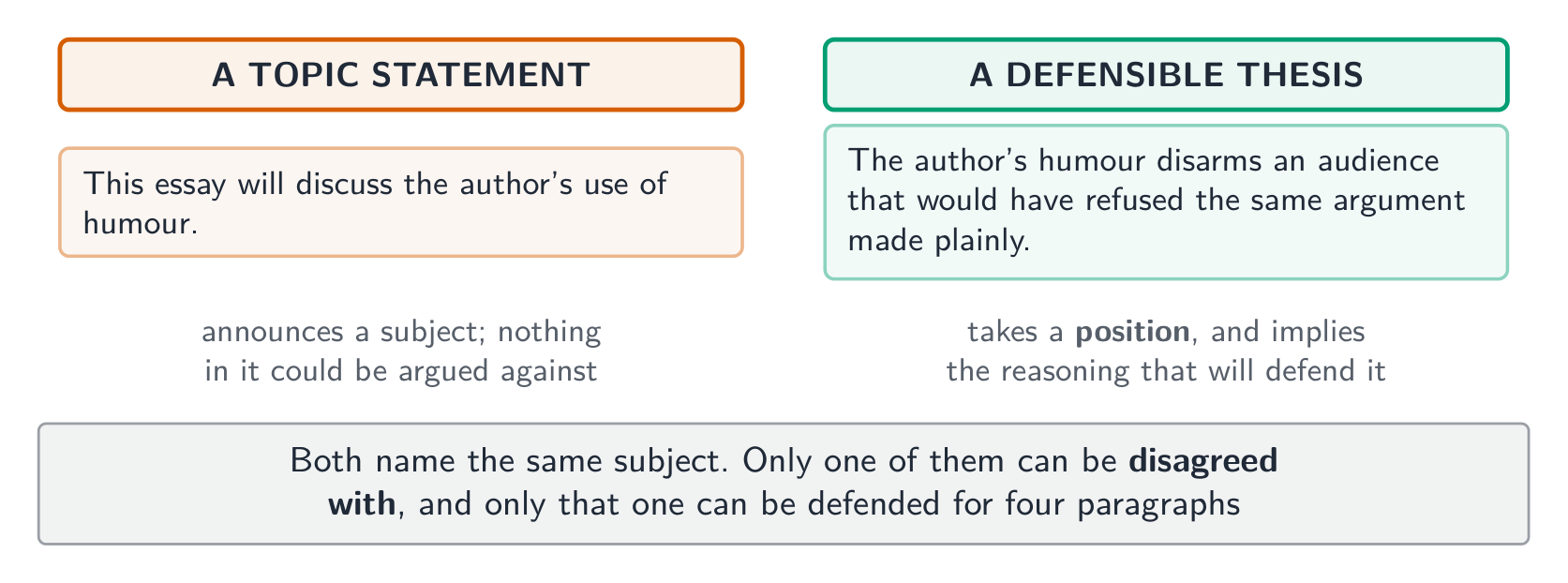
  • It must require defence. Apply the Unit 1 test again: could a reasonable person disagree? A thesis that states a fact cannot be defended, only repeated.
  • It may preview the structure - optional, but useful, because a thesis that names the lines of reasoning it will pursue gives the essay its shape.

On the exam, the thesis point is one of six and it is the cheapest point on the rubric: a defensible thesis in response to the prompt earns it. A restatement of the prompt does not.

Worked example (a real AP exam task). For a Question 3 argument prompt asking you to take a position on the value of a proposed practice, compare two openings. "There are many arguments both for and against this practice." - that earns nothing, because nobody could disagree with it. "Because the practice rewards visible effort rather than actual improvement, it produces the appearance of progress while removing the incentive to seek it." - that earns the point: it is arguable, specific, and it previews the reasoning the essay will develop.

العربية

الهدف الكتابي دقيق: اكتب جملة أطروحة تتطلب برهاناً أو دفاعاً وقد تمهد لبنية الحجة.

في تلك الجملة شرطان مستقلان:

  • يجب أن تتطلب الدفاع. طبق اختبار الوحدة 1 مرة أخرى: هل يمكن لشخص معقول أن يختلف؟ الأطروحة التي تُفصّل حقيقة لا يمكن الدفاع عنها، بل يُعاد تكرارها فقط.
  • قد تمهد لبنية الحجة - وهو أمر اختياري ولكنه مفيد، لأن الأطروحة التي تسمي مسارات الاستدلال التي ستسلكها تمنح المقال شكله.

في الامتحان، نقطة الأطروحة هي واحدة من الست نقاط، وهي أرخص نقطة في معايير التقييم: الأطروحة المدافعة عن نفسها استجابةً للمطلوب تكسبها. أما إعادة صياغة المطلوب فلا تكسبها.

مثال محلل (سؤال حقيقي في امتحان AP). لسياق السؤال 3 الذي يطلب منك اتخاذ موقف بشأن قيمة ممارسة مقترحة، قارن بين مفتاحين. "هناك حجج كثيرة سواء لصالح أو ضد هذه الممارسة." - لا تحصل عليها لأن لا أحد يستطيع معارضتها. "بما أن الممارسة تكافئ الجهد الظاهر بدلاً من التحسن الفعلي، فهي تولد مظهر التقدم بينما تسحب الحافز للبحث عنه." - تحصل عليها: لأنها قابلة للنقاش، محددة، وتُقدّم الاستنتاج الذي سيطوّر به المقال.

نفس الموضوع، وواحدة منهما فقط يمكن مخالفتها
Vocabulary · ⁨مفردات⁩ Train · ⁨تدريب⁩
English العربية
thesis/ˈθiːsɪs/ رسالة البحث
2.6

Exam tips · ⁨نصائح للامتحان⁩

English
  • The audience drives everything. If a paragraph would read the same to any audience, it has not been shaped for one.
  • Name what evidence does - illustrate, clarify, associate, amplify. That is analysis; listing evidence is not.
  • Sufficiency is quantity and quality, not volume. Three apt pieces beat six loose ones.
  • A thesis in a passage may be implied or distributed. Read the whole text before deciding.
  • Your own thesis must be arguable. Restating the prompt earns zero of the six points.
  • Previewing your line of reasoning in the thesis is optional but makes the rest of the essay easier to organise.
العربية
  • الجمهور هو المحرك لكل شيء. إذا كانت الفقرة ستُقرأ بنفس الطريقة لأي جمهور، فهذا يعني أنها لم تُشكّل لجمهور معين.
  • سمِّ ماذا تفعل الأدلة - توضيح، توضيح، ارتباط، تضخيم. هذا تحليل؛ أما سرد الأدلة فهو ليس تحليلاً.
  • الكفاية هي الكمية والجودة، وليس الحجم. ثلاث قطع مناسبة أفضل من ستة غير مترابطة.
  • قد تكون الأطروحة في الفقرة مستنبطة أو موزعة. اقرأ النص كاملاً قبل اتخاذ القرار.
  • أطروحتك الخاصة يجب أن تكون قابلة للنقاش. إعادة صياغة المطلوب تكسب صفراً من النقاط الست.
  • تمهيد مسار استدلالك في الأطروحة اختيارية لكنها تسهل تنظيم باقي المقال.

Interactive lessons on this topic · ⁨دروس تفاعلية حول هذا الموضوع⁩

Work through it step by step, with instant-check exercises. · ⁨ا-working عليه خطوة بخطوة، مع تمارين تحقق فوري.⁩

Past Papers · ⁨أوراق الامتحانات السابقة⁩

More topics in AP English Language and Composition · ⁨اللغة الإنجليزية والتأليف (AP)⁩ · ⁨المزيد من المواضيع في AP English Language and Composition · ⁨اللغة الإنجليزية والتأليف (AP)⁩⁩

Log in or create account · ⁨تسجيل الدخول أو إنشاء حساب⁩

IGCSE, A-Level & AP