跳到主要内容

复杂句型

HSK 5 · 知识点 21

本主题的视频课程 打开视频页面
2:31

HSK 5 语法 21:复杂句式模式

怪不得或难怪。参考讲义中的句型结构。完整形式、含义及用法边界请参见讲义。

英文讲解与普通话例句 · 字幕与原声同步

点击任意汉字可查看拼音和释义。
English

no wonder难怪nán guài and no wonder!怪不得guài bù dé both mean "no wonder": you have just learned the reason for something that surprised you. no wonder难怪nán guài is a little more formal. The reason often comes first: he / him他tāto be / is是shìBeijing北京běi jīngperson人rén,no wonder难怪nán guàiMandarin普通话pǔ tōng huàso much这么zhè megood好hǎo.

21.1

一目了然

English
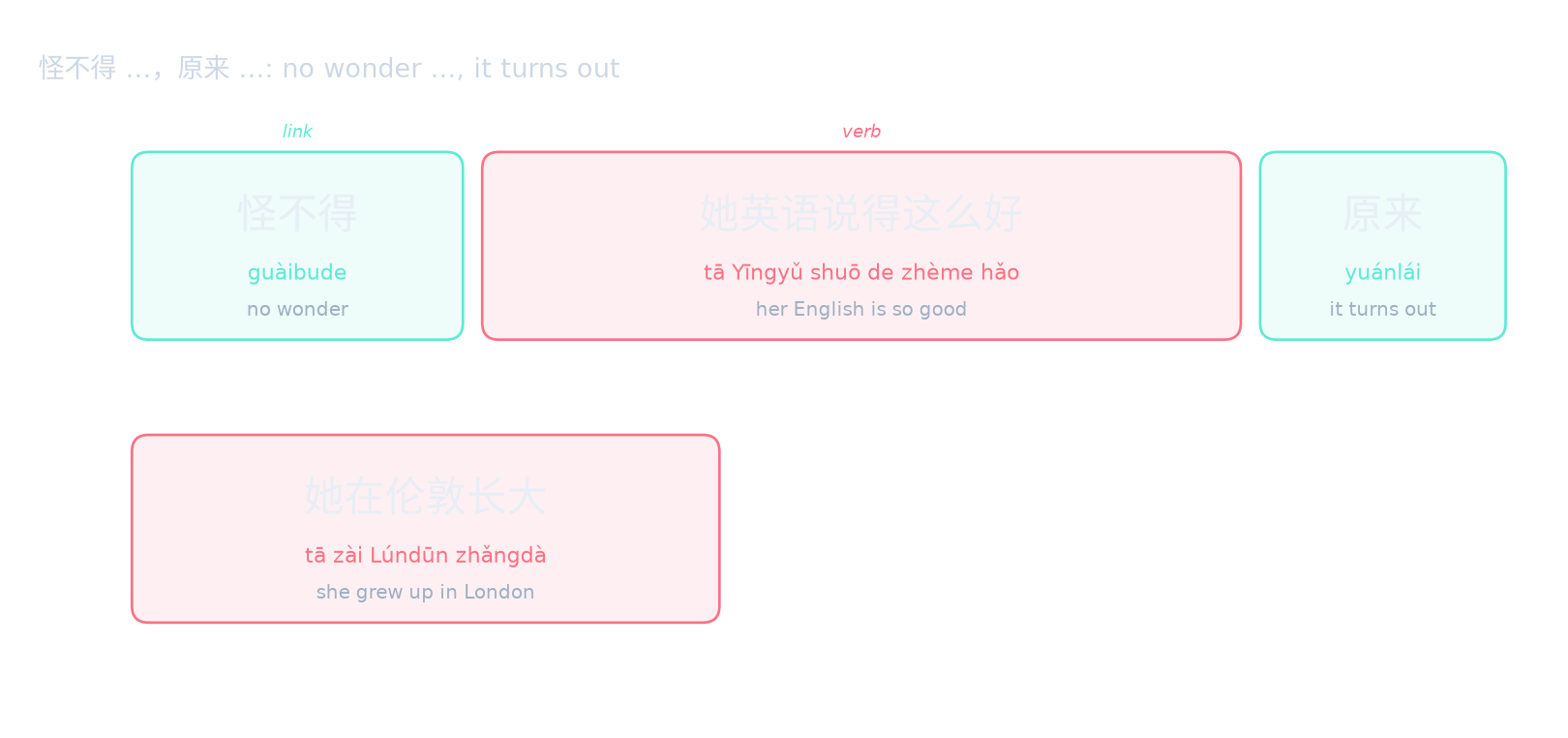
  • 1. no wonder!怪不得guài bù dé – no wonder: no wonder!怪不得guài bù déshe / her她tāEnglish (language)英语yīng yǔto speak说shuō(degree marker)得deso much这么zhè megood好hǎo,originally / so it turns out原来yuán láishe / her她tāat / in在zàiLondon, capital of United…伦敦lún dūnto grow up长大zhǎng dà。
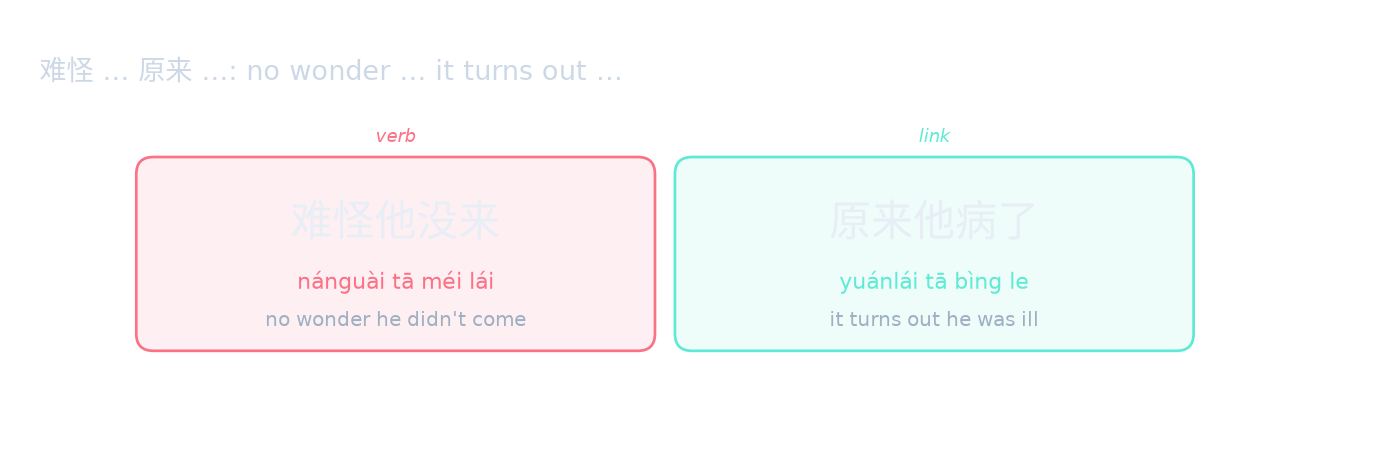
  • 2. no wonder难怪nán guài – no wonder: no wonder难怪nán guàihe / him他tānot / haven't没méito come来lái,originally / so it turns out原来yuán lái他病tā bìng(completed / change)了le。
21.2

1. 怪不得(难怪)

English

Form: no wonder!怪不得guài bù dé + fact,originally / so it turns out原来yuán lái + reason · reason,no wonder!怪不得guài bù dé + fact

  • no wonder!怪不得guài bù déshe / her她tāEnglish (language)英语yīng yǔto speak说shuō(degree marker)得deso much这么zhè megood好hǎo,originally / so it turns out原来yuán láishe / her她tāat / in在zàiLondon, capital of United…伦敦lún dūnto grow up长大zhǎng dà。 Guàibude … – No wonder her English is so good; she grew up in London.
  • he / him他tāyesterday昨天zuó tiānto stay up late or all night熬夜áo yè(completed / change)了le,no wonder!怪不得guài bù détoday今天jīn tiānso much这么zhè metired累lèi。 – He stayed up late last night; no wonder he's so tired today.
  • originally / so it turns out原来yuán láito snow下雪xià xuě(completed / change)了le,no wonder!怪不得guài bù déso much这么zhè mecold冷lěng。 – So it's snowing; no wonder it's so cold.

How it works. no wonder!怪不得guài bù dé guàibude means the same as no wonder难怪nán guài: something odd now makes sense. It starts its clause (wrong: he / him他tāno wonder!怪不得guài bù dé……), and the reason must be known or given nearby.

no wonder!怪不得guài bù dé / no wonder难怪nán guài + fact 这件zhè jiànmatter事shìno wonder!怪不得guài bù déhe / him他tā
no wonder you can't blame him for this

Watch out

  • With a person as the object, no wonder!怪不得guài bù dé can mean "can't blame": read the whole sentence.
怪不得 …,原来 …: no wonder …, it turns out
词汇 训练
汉字 拼音 English
怪不得 guài bu de no wonder!
难怪 nán guài no wonder
21.3

2. 难怪(怪不得)

English

Form: no wonder难怪nán guài + observation,(originally / so it turns out原来yuán lái + reason) · originally / so it turns out原来yuán lái + reason,no wonder难怪nán guài + observation

  • no wonder难怪nán guàihe / him他tānot / haven't没méito come来lái,originally / so it turns out原来yuán láiillness / ill病bìng(completed / change)了le。 Nánguài tā méi lái, yuánlái bìng le. – No wonder he didn't come; it turns out he was ill.
  • originally / so it turns out原来yuán lái他考tā kǎo(completed / change)了le第一名dì yì míng,no wonder难怪nán guàiso much这么zhè mehappy; glad高兴gāo xìng。 – So he came first; no wonder he's so happy.
  • to snow下雪xià xuě(completed / change)了le,no wonder难怪nán guàiso much这么zhè mecold冷lěng。 – It's snowing; no wonder it's so cold.

How it works. no wonder难怪nán guài nánguài "no wonder" reacts to a fact that puzzled you, now that a reason is known. The reason can come before or after, often with originally / so it turns out原来yuán lái "so, it turns out". For a past absence, use not / haven't没méito come来lái (not不bùto come来lái means he won't come).

no wonder难怪nán guàihe / him他tānot / haven't没méito come来lái he / him他tāwhy?为什么wèi shén menot / haven't没méito come来lái?
it makes sense now (reason known) asks for the reason

Watch out

  • no wonder难怪nán guài shows the speaker is satisfied, not that the reason is proven: a guess stays a guess.
  • Without any reason in view, ask a question instead.
难怪 … 原来 …: no wonder … it turns out …
21.4

练习

English

Cover the teaching pages before you answer. The answers are at the end.

1. no wonder!怪不得guài bù dé (no wonder)

1. Complete: “So it snowed – no wonder it's so cold.” originally / so it turns out原来yuán láito snow下雪xià xuě(completed / change)了le,…………so much这么zhè mecold冷lěng。

2. What does 这件zhè jiànmatter事shìno wonder!怪不得guài bù déhe / him他tā mean?

  • A. No wonder he did this.
  • B. You can't blame him for this.
  • C. He is strange.
  • D. He doesn't understand.

3. Build: “He stayed up late; no wonder he's tired.”

Put in order: , / today今天jīn tiānso much这么zhè metired累lèi。 / no wonder!怪不得guài bù dé / he / him他tāyesterday昨天zuó tiānto stay up late or all night熬夜áo yè(completed / change)了le

4. True or false? no wonder难怪nán guài and no wonder!怪不得guài bù dé can both mean “no wonder”. If false, correct it.

5. Your classmate speaks perfect English, and today you learn she grew up in London. Use no wonder!怪不得guài bù dé. Write your answer in Chinese, then say it aloud.

2. no wonder难怪nán guài (no wonder)

6. No wonder he didn't come; he was ill. ………… he / him他tānot / haven't没méito come来lái,originally / so it turns out原来yuán láiillness / ill病bìng(completed / change)了le。

7. Which word usually introduces the reason?

  • A. although虽然suī rán
  • B. originally / so it turns out原来yuán lái
  • C. don't tell me难道nán dào
  • D. so / therefore所以suǒ yǐ

8. Choose the best ending: outside外面wài miànto snow下雪xià xuě(completed / change)了le,……

  • A. no wonder难怪nán guàito rain下雨xià yǔ。
  • B. no wonder难怪nán guàiI / me我wǒdegree / adjective linker很hěnhot热rè。
  • C. no wonder难怪nán guàiso much这么zhè mecold冷lěng。
  • D. no wonder难怪nán guàiwe / us我们wǒ men(suggestion)吧ba。

9. True or false? no wonder难怪nán guàihe / him他tānot / haven't没méito come来lái proves that he was ill. If false, correct it.

10. Say in Chinese: "So he came first; no wonder he's so happy."

11. No wonder his Chinese is so good.

Put in order: he / him他tā(modifier / structural particle)的deChinese language中文zhōng wén / no wonder难怪nán guài / to speak说shuō(degree marker)得de / so much这么zhè megood好hǎo。

21.5

混合练习

English

These questions mix the patterns and use new situations.

12. Add no wonder难怪nán guài or no wonder!怪不得guài bù dé: he / him他tāat / in在zàiChina中国zhōng guóto live (somewhere)住zhù(completed / change)了le十年shí nián,…………Chinese language中文zhōng wénso much这么zhè megood好hǎo。

13. Find and fix the problem. A friend studied all night, and someone says no wonder!怪不得guài bù déhe / him他tāso much这么zhè metired累lèi. A classmate thinks no wonder!怪不得guài bù dé blames the friend. Correct it.

14. Use it yourself. The library door is locked, and you learn it is closed today. React with no wonder难怪nán guài.

21.6

答案与解析

English

Mark your work, then correct each mistake in your own words.

1. no wonder!怪不得guài bù dé (no wonder)

1. no wonder!怪不得guài bù dé

no wonder!怪不得guài bù dé + the fact that now makes sense.

2. B. You can't blame him for this.

no wonder!怪不得guài bù dé + person = can't blame.

3. he / him他tāyesterday昨天zuó tiānto stay up late or all night熬夜áo yè(completed / change)了le,no wonder!怪不得guài bù détoday今天jīn tiānso much这么zhè metired累lèi。

Reason, then no wonder!怪不得guài bù dé + fact.

4. True.

They are synonyms in this sense.

5. Model answer: no wonder!怪不得guài bù déshe / her她tāEnglish (language)英语yīng yǔto speak说shuō(degree marker)得deso much这么zhè megood好hǎo,originally / so it turns out原来yuán láishe / her她tāat / in在zàiLondon, capital of United…伦敦lún dūnto grow up长大zhǎng dà。

Check your answer:

  • no wonder!怪不得guài bù dé only makes sense when the reason is known or given; without it, the listener is left puzzled.
  • It usually starts its clause: no wonder!怪不得guài bù déhe / him他tāso much这么zhè metired累lèi.

2. no wonder难怪nán guài (no wonder)

6. no wonder难怪nán guài

no wonder难怪nán guài + fact that now makes sense.

7. B. originally / so it turns out原来yuán lái

originally / so it turns out原来yuán lái = so, it turns out.

8. C. no wonder难怪nán guàiso much这么zhè mecold冷lěng。

The fact must fit the reason.

9. False.

It shows the speaker accepts a reason; a guess stays a guess.

10. originally / so it turns out原来yuán lái他考tā kǎo(completed / change)了le第一名dì yì míng,no wonder难怪nán guàiso much这么zhè mehappy; glad高兴gāo xìng。

Reason with originally / so it turns out原来yuán lái, then no wonder难怪nán guài.

11. no wonder难怪nán guàihe / him他tā(modifier / structural particle)的deChinese language中文zhōng wénto speak说shuō(degree marker)得deso much这么zhè megood好hǎo。

no wonder难怪nán guài + fact.

Mixed practice

12. he / him他tāat / in在zàiChina中国zhōng guóto live (somewhere)住zhù(completed / change)了le十年shí nián,no wonder难怪nán guài(no wonder!怪不得guài bù dé)Chinese language中文zhōng wénso much这么zhè megood好hǎo。Both work: the reason comes first, then the surprise it explains.

13. no wonder!怪不得guài bù dé means "no wonder": now we know why he is so tired. It does not blame anyone.

14. Model answer. originally / so it turns out原来yuán láilibrary图书馆tú shū guǎntoday今天jīn tiānnot不bùto open a door (lit. and…开门kāi mén,no wonder难怪nán guàidoor lock门锁mén suǒ(ongoing -ing)着zhe。

Review later. Tomorrow, give a reason and react with no wonder!怪不得guài bù dé or no wonder难怪nán guài.

该知识点的互动课程

逐步完成,配合即时检查练习。

更多 HSK 5 知识点

登录或创建账户

IGCSE, A-Level & AP