跳到主要内容

“如果”句型

HSK 5 · 知识点 15

本主题的视频课程 打开视频页面
3:27

HSK 5 语法 15:“如果”类表达

假如……就。类似“如果”,但多用于论文和报告中。结构:假如……就。完整形式、含义及用法边界请参见讲义。

英文讲解与普通话例句 · 字幕与原声同步

点击任意汉字可查看拼音和释义。
English

Three ways to talk about possibilities. supposing假如jiǎ rú……then / just就jiù…… is a formal "supposing"; in case; if by any chance万一wàn yī is for an unlikely, unwelcome event ("what if …?"); and clause + if (coming after a…的话de huà adds "if" to any condition and often follows if如果rú guǒ or if要是yào shi.

15.1

一目了然

English
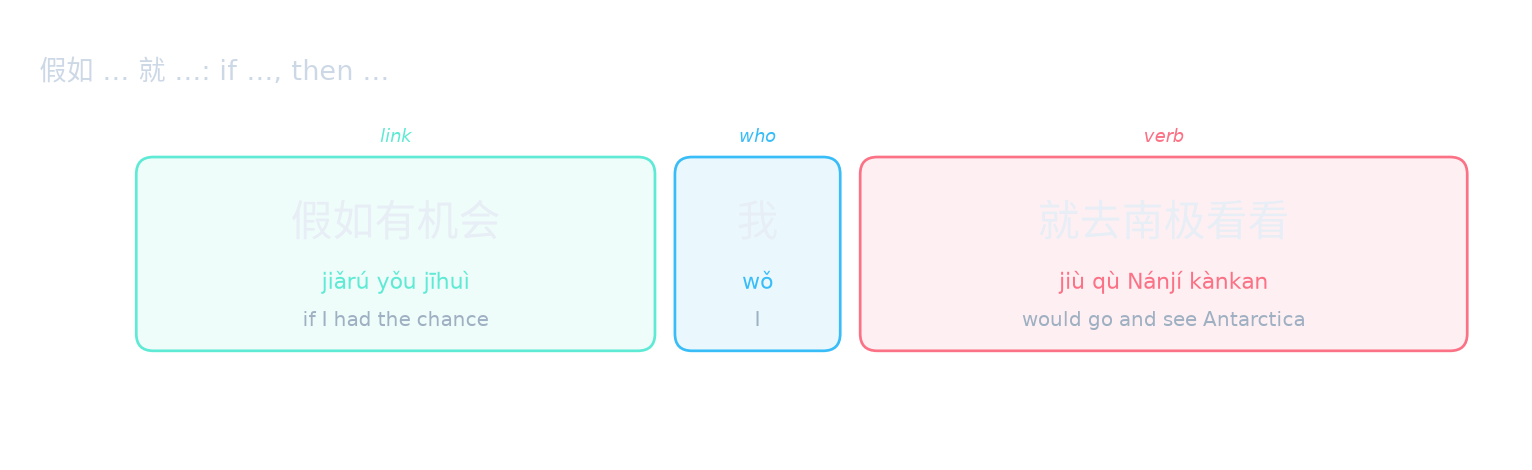
  • 1. supposing假如jiǎ rú … ,then / just就jiù … – if / supposing: supposing假如jiǎ rúto have / there is有yǒuopportunity机会jī huì,I / me我wǒthen / just就jiùto go去qùsouth pole南极nán jíto take a look at看看kàn kàn。
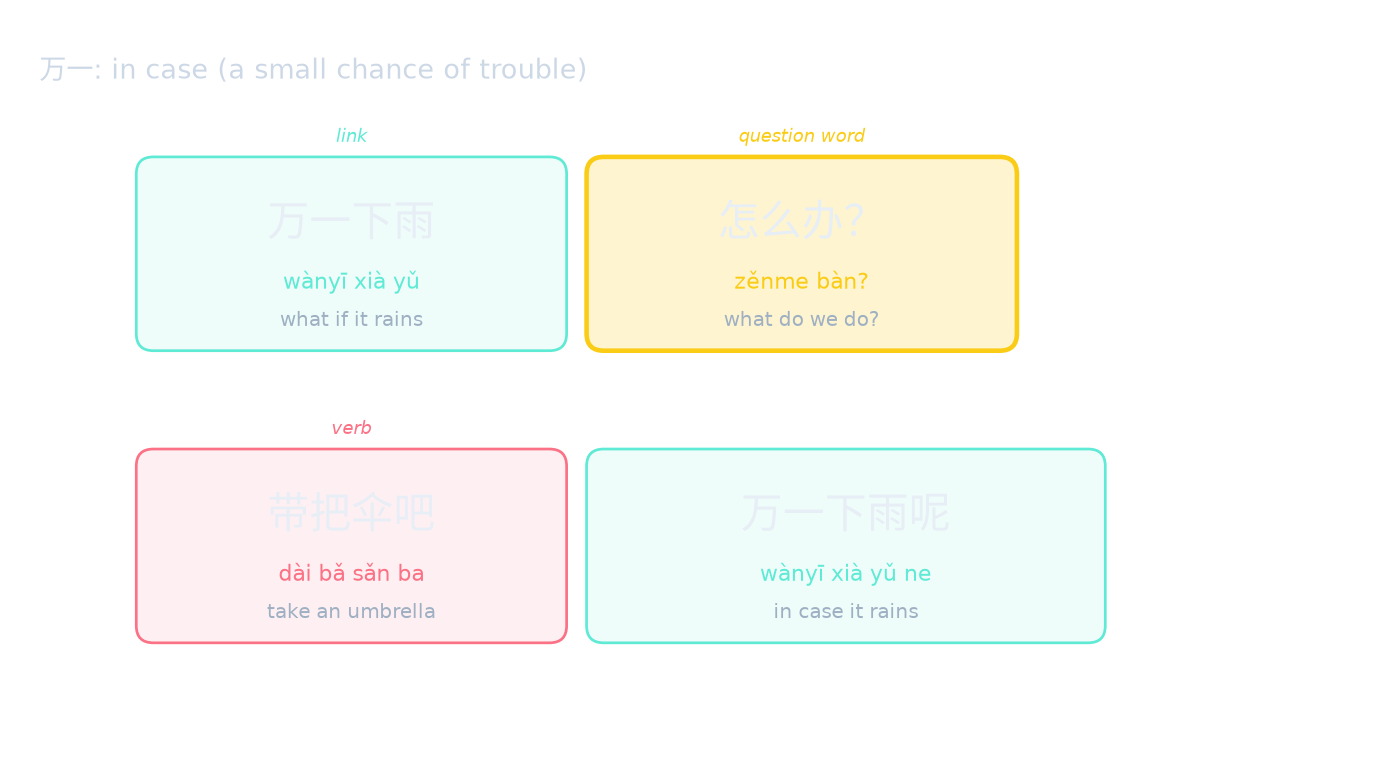
  • 2. in case; if by any chance万一wàn yī … what's to be done怎么办zěn me bàn? – what if: in case; if by any chance万一wàn yīto rain下雨xià yǔwhat's to be done怎么办zěn me bàn?
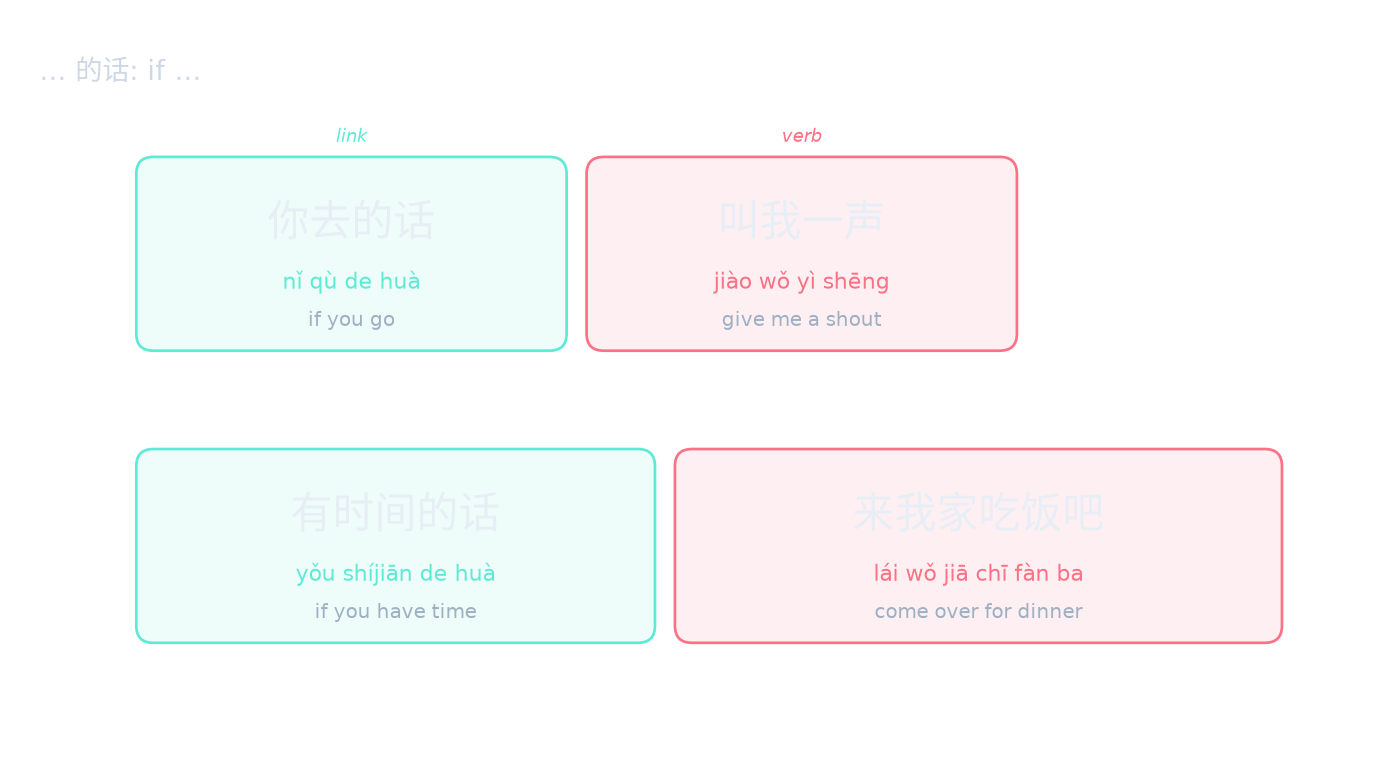
  • 3. Clause + if (coming after a…的话de huà – if / conditional frame: you你nǐto go去qùif (coming after a…的话de huà,to call / be called / (animals) cry, bark叫jiàoI / me我wǒa sound / (告诉我一声) let me know一声yì shēng。
15.2

1. 假如 … ,就 …(如果或假设)

English

Form: supposing假如jiǎ rú + condition,(subject) + then / just就jiù + response

  • supposing假如jiǎ rúto have / there is有yǒuopportunity机会jī huì,then / just就jiùto go去qù试试shì shì。 Jiǎrú yǒu jīhuì, jiù qù shìshi. – If you get the chance, give it a try.
  • supposing假如jiǎ rútomorrow明天míng tiānto have time (to do sth)有空yǒu kòng,we / us我们wǒ menthen / just就jiùto go去qùto look around参观cān guān。 – If we're free tomorrow, we'll go on the visit.
  • supposing假如jiǎ rúyou你nǐto have time (to do sth)有空yǒu kòng,we / us我们wǒ mentogether一起yì qǐto go去qù(suggestion)吧ba。 – If you're free, let's go together.

How it works. supposing假如jiǎ rú jiǎrú "if, supposing" is a slightly more written if如果rú guǒ. then / just就jiù often introduces the response but is not required. The condition is supposed, not reported: no place has been offered yet.

supposing假如jiǎ rúto rain下雨xià yǔ,I / me我wǒthen / just就jiùnot不bùto go去qù exactly就是jiù shìto rain下雨xià yǔ,I / me我wǒalso也yěto go去qù
if: rain changes the plan even if: the plan stays

Watch out

  • Check that new facts match the condition: "free today, busy tomorrow" does not meet supposing假如jiǎ rútomorrow明天míng tiānto have time (to do sth)有空yǒu kòng.
  • A condition isn't the only possible reason: supposing假如jiǎ rúto rain下雨xià yǔ,I / me我wǒthen / just就jiùnot不bùto go去qù doesn't rule out others.
假如 … 就 …: if …, then …
词汇 训练
汉字 拼音 English
假如 jiǎ rú supposing
15.3

2. 万一 … 怎么办?(如果发生了该如何应对)

English

Form: in case; if by any chance万一wàn yī + possible problem (,) what's to be done怎么办zěn me bàn? · in case; if by any chance万一wàn yī + problem,(then / just就jiù) + plan

  • in case; if by any chance万一wàn yīto rain下雨xià yǔwhat's to be done怎么办zěn me bàn? Wànyī xià yǔ zěnme bàn? – What if it rains?
  • in case; if by any chance万一wàn yīto rain下雨xià yǔ,we / us我们wǒ menthen / just就jiùto go去qùindoor室内shì nèiactivity; to exercise活动huó dòng。 – If it does rain, we'll do something indoors.
  • in case; if by any chance万一wàn yīI / me我wǒ晚到wǎn dào(completed / change)了le,you你nǐadvanced先进xiān jìnto go去qù(suggestion)吧ba。 – In case I'm late, go in first.

How it works. in case; if by any chance万一wàn yī wànyī (literally "one in ten thousand") raises an unlikely but unwelcome possibility so you can prepare. With what's to be done怎么办zěn me bàn it asks for a backup plan; with a second clause it gives one. It is not a real probability.

in case; if by any chance万一wàn yī if如果rú guǒ / supposing假如jiǎ rú
unlikely and unwanted case: "in case", "what if" neutral "if"

Watch out

  • Asking isn't forecasting: in case; if by any chance万一wàn yīto rain下雨xià yǔ doesn't say rain is expected, and already已经yǐ jīngto rain下雨xià yǔ(completed / change)了le reports that it has.
  • A backup plan needs to work: an indoor room still has to be booked.
万一: in case (a small chance of trouble)
词汇 训练
汉字 拼音 English
万一 wàn yī in case; if by any chance
15.4

3. 分句 + 的话(表示条件)

English

Form: (if如果rú guǒ) + condition clause + if (coming after a…的话de huà,response

  • you你nǐto go去qùif (coming after a…的话de huà,to call / be called / (animals) cry, bark叫jiàoI / me我wǒa sound / (告诉我一声) let me know一声yì shēng。 Nǐ qù dehuà, jiào wǒ yì shēng. – If you go, let me know.
  • if如果rú guǒtomorrow明天míng tiānto rain下雨xià yǔif (coming after a…的话de huà,we / us我们wǒ menanother day改天gǎi tiānto go去qù。 – If it rains tomorrow, we'll go another day.
  • you你nǐnot不bùto go去qùif (coming after a…的话de huà,to tell告诉gào sùI / me我wǒ。 – If you're not going, tell me.

How it works. if (coming after a…的话de huà dehuà closes a condition. It can work alone (you你nǐto go去qùif (coming after a…的话de huà) or with if如果rú guǒ / if要是yào shi at the front. It is very common in speech. A not不bù inside the condition stays there: you你nǐnot不bùto go去qùif (coming after a…的话de huà means "if you don't go".

you你nǐto go去qùif (coming after a…的话de huà he / him他tāif (coming after a…的话de huà price价格jià géif (coming after a…的话de huà,……
if you go his words as for the price (topic)

Watch out

  • if (coming after a…的话de huà doesn't make a request polite: tone and wording do that.
  • he / him他tāif (coming after a…的话de huàI / me我wǒto understand (on hearing)听懂tīng dǒng(completed / change)了le has no condition; (modifier / structural particle)的de + words / speech话huà here means "his words".
… 的话: if …
词汇 训练
汉字 拼音 English
要是 yào shi if
15.5

练习

English

Cover the teaching pages before you answer. The answers are at the end.

1. supposing假如jiǎ rú … ,then / just就jiù … (if / supposing)

1. If you get the chance, give it a try. ………… to have / there is有yǒuopportunity机会jī huì,then / just就jiùto go去qù试试shì shì。

2. Which word is closest to supposing假如jiǎ rú?

  • A. because因为yīn wèi
  • B. although虽然suī rán
  • C. if如果rú guǒ
  • D. exactly就是jiù shì

3. Plan: supposing假如jiǎ rútomorrow明天míng tiānto have time (to do sth)有空yǒu kòng,we / us我们wǒ menthen / just就jiùto go去qùto look around参观cān guān。 News: free today, busy tomorrow. Do they go tomorrow?

  • A. We can't tell
  • B. Yes
  • C. No

4. True or false? Every supposing假如jiǎ rú sentence needs then / just就jiù. If false, correct it.

5. Say in Chinese: "If it rains, we won't go."

6. If I were you, I'd accept.

Put in order: supposing假如jiǎ rú / then / just就jiù / I / me我wǒ / to accept接受jiē shòu。 / I / me我wǒto be / is是shìyou你nǐ,

2. in case; if by any chance万一wàn yī … what's to be done怎么办zěn me bàn? (what if)

7. What if it rains? ………… to rain下雨xià yǔwhat's to be done怎么办zěn me bàn?

8. in case; if by any chance万一wàn yī is used for…

  • A. a certain fact
  • B. a past event
  • C. an unlikely but unwelcome possibility
  • D. a likely, welcome event

9. Choose the best reply to in case; if by any chance万一wàn yīto rain下雨xià yǔwhat's to be done怎么办zěn me bàn?

  • A. already已经yǐ jīngto rain下雨xià yǔ(completed / change)了le。
  • B. to rain下雨xià yǔdegree / adjective linker很hěngood好hǎo。
  • C. in case; if by any chance万一wàn yīto rain下雨xià yǔ,we / us我们wǒ menthen / just就jiùto go去qùindoor室内shì nèiactivity; to exercise活动huó dòng。
  • D. in case; if by any chance万一wàn yīto be / is是shì。

10. True or false? in case; if by any chance万一wàn yīI / me我wǒ晚到wǎn dào(completed / change)了le means the speaker expects to be late. If false, correct it.

11. Say in Chinese: "Take an umbrella, just in case."

12. In case I'm late, go in first.

Put in order: I / me我wǒ / 晚到wǎn dào(completed / change)了le, / you你nǐ / advanced先进xiān jìnto go去qù(suggestion)吧ba。 / in case; if by any chance万一wàn yī

3. Clause + if (coming after a…的话de huà (if / conditional frame)

13. If you go, let me know. you你nǐto go去qù …………,to call / be called / (animals) cry, bark叫jiàoI / me我wǒa sound / (告诉我一声) let me know一声yì shēng。

14. Which combination is correct?

  • A. if如果rú guǒyou你nǐto go去qù(yes/no ?)吗ma
  • B. if (coming after a…的话de huàyou你nǐto go去qù
  • C. you你nǐif (coming after a…的话de huàto go去qù
  • D. if如果rú guǒyou你nǐto go去qùif (coming after a…的话de huà

15. In he / him他tāif (coming after a…的话de huàI / me我wǒto understand (on hearing)听懂tīng dǒng(completed / change)了le, if (coming after a…的话de huà means…

  • A. if
  • B. as for
  • C. because
  • D. his words ((modifier / structural particle)的de + words / speech话huà)

16. True or false? you你nǐnot不bùto go去qùif (coming after a…的话de huà,to tell告诉gào sùI / me我wǒ means "Don't tell me if you go." If false, correct it.

17. Say in Chinese: "If it rains tomorrow, we'll go another day."

18. If you have time, come round.

Put in order: if (coming after a…的话de huà, / 我家wǒ jiā玩吧wán ba。 / to have time (to do sth)有空yǒu kòng / to come来lái / you你nǐ

15.6

混合练习

English

These questions mix the patterns and use new situations.

19. Choose supposing假如jiǎ rú or in case; if by any chance万一wàn yī: …………tomorrow明天míng tiānto rain下雨xià yǔwhat's to be done怎么办zěn me bàn? / …………I / me我wǒto be / is是shìyou你nǐ,I / me我wǒthen / just就jiùto go去qù。

20. Add if (coming after a…的话de huà: you你nǐto have / there is有yǒutime时间shí jiān,we / us我们wǒ mentogether一起yì qǐto go去qù(suggestion)吧ba。

21. Choose in case; if by any chance万一wàn yī or even if即使jí shǐ: …………to rain下雨xià yǔ(and …? / softener)呢ne?or / still还是hái shìto bring带dài(把: marks the object)把bǎumbrella伞sǎn(suggestion)吧ba。 / …………to rain下雨xià yǔ,we / us我们wǒ menalso也yěwant / will / need要yàoto go去qù。

22. Find and fix the problem. A group asks in case; if by any chance万一wàn yītrain火车huǒ chē(of trains etc) late晚点wǎn diǎnwhat's to be done怎么办zěn me bàn? A classmate translates it as "The train is definitely late." Correct it.

23. Use it yourself. Give a plan in case the train is late, and the normal plan if it is on time.

15.7

答案与解析

English

Mark your work, then correct each mistake in your own words.

1. supposing假如jiǎ rú … ,then / just就jiù … (if / supposing)

1. supposing假如jiǎ rú

supposing假如jiǎ rú = if, supposing.

2. C. if如果rú guǒ

Both mean if.

3. C. No

The condition is about tomorrow.

4. False.

then / just就jiù is common but optional: supposing假如jiǎ rúyou你nǐto have time (to do sth)有空yǒu kòng,we / us我们wǒ mentogether一起yì qǐto go去qù(suggestion)吧ba.

5. supposing假如jiǎ rúto rain下雨xià yǔ,we / us我们wǒ menthen / just就jiùnot不bùto go去qù(completed / change)了le。

supposing假如jiǎ rú + condition,then / just就jiù + response.

6. supposing假如jiǎ rúI / me我wǒto be / is是shìyou你nǐ,I / me我wǒthen / just就jiùto accept接受jiē shòu。

supposing假如jiǎ rú + condition,subject + then / just就jiù.

2. in case; if by any chance万一wàn yī … what's to be done怎么办zěn me bàn? (what if)

7. in case; if by any chance万一wàn yī

in case; if by any chance万一wàn yī + problem + what's to be done怎么办zěn me bàn.

8. C. an unlikely but unwelcome possibility

"In case", "what if".

9. C. in case; if by any chance万一wàn yīto rain下雨xià yǔ,we / us我们wǒ menthen / just就jiùto go去qùindoor室内shì nèiactivity; to exercise活动huó dòng。

A backup plan answers the question.

10. False.

It prepares for an unlikely problem.

11. to bring带dài(把: marks the object)把bǎumbrella伞sǎn(suggestion)吧ba,in case; if by any chance万一wàn yīto rain下雨xià yǔ(and …? / softener)呢ne。

in case; if by any chance万一wàn yī + problem.

12. in case; if by any chance万一wàn yīI / me我wǒ晚到wǎn dào(completed / change)了le,you你nǐadvanced先进xiān jìnto go去qù(suggestion)吧ba。

in case; if by any chance万一wàn yī + problem, then the plan.

3. Clause + if (coming after a…的话de huà (if / conditional frame)

13. if (coming after a…的话de huà

Condition + if (coming after a…的话de huà.

14. D. if如果rú guǒyou你nǐto go去qùif (coming after a…的话de huà

if如果rú guǒ and if (coming after a…的话de huà can work together.

15. D. his words ((modifier / structural particle)的de + words / speech话huà)

No condition here.

16. False.

It means "If you don't go, tell me."

17. if如果rú guǒtomorrow明天míng tiānto rain下雨xià yǔif (coming after a…的话de huà,we / us我们wǒ menanother day改天gǎi tiānto go去qù。

if如果rú guǒ……if (coming after a…的话de huà.

18. you你nǐto have time (to do sth)有空yǒu kòngif (coming after a…的话de huà,to come来lái我家wǒ jiā玩吧wán ba。

Condition + if (coming after a…的话de huà, then the request.

Mixed practice

19. in case; if by any chance万一wàn yītomorrow明天míng tiānto rain下雨xià yǔwhat's to be done怎么办zěn me bàn?(an unwelcome possibility)。supposing假如jiǎ rúI / me我wǒto be / is是shìyou你nǐ,I / me我wǒthen / just就jiùto go去qù (supposing).

20. you你nǐto have / there is有yǒutime时间shí jiānif (coming after a…的话de huà,we / us我们wǒ mentogether一起yì qǐto go去qù(suggestion)吧ba。if (coming after a…的话de huà closes the condition.

21. in case; if by any chance万一wàn yīto rain下雨xià yǔ(and …? / softener)呢ne (an unwelcome chance, so take an umbrella);even if即使jí shǐto rain下雨xià yǔ……also也yě (even then, the plan stays).

22. in case; if by any chance万一wàn yī means "in case, what if": the train might be late. The group is planning for an unlikely problem.

23. Model answer. in case; if by any chance万一wàn yītrain火车huǒ chē(of trains etc) late晚点wǎn diǎn,we / us我们wǒ menthen / just就jiùto sit / to take (a bus …)坐zuòtaxi出租车chū zū chēto go去qù。train火车huǒ chēpunctual准时zhǔn shíif (coming after a…的话de huà,we / us我们wǒ menthen / just就jiùdirectly; direct直接zhí jiēto go去qùmeeting place会场huì chǎng。

Review later. Tomorrow, make one in case; if by any chance万一wàn yī plan and one supposing假如jiǎ rú sentence.

该知识点的互动课程

逐步完成,配合即时检查练习。

更多 HSK 5 知识点

登录或创建账户

IGCSE, A-Level & AP