- define the term recombinant DNA
- explain that genetic engineering is the deliberate manipulation of genetic material to modify specific characteristics of an organism and that this may involve transferring a gene into an organism so that the gene is expressed
- explain that genes to be transferred into an organism may be: • extracted from the DNA of a donor organism • synthesised from the mRNA of a donor organism • synthesised chemically from nucleotides
- explain the roles of restriction endonucleases, DNA ligase, plasmids, DNA polymerase and reverse transcriptase in the transfer of a gene into an organism
- explain why a promoter may have to be transferred into an organism as well as the desired gene
- explain how gene expression may be confirmed by the use of marker genes coding for fluorescent products
- explain that gene editing is a form of genetic engineering involving the insertion, deletion or replacement of DNA at specific sites in the genome
- describe and explain the steps involved in the polymerase chain reaction (PCR) to clone and amplify DNA, including the role of Taq polymerase
- describe and explain how gel electrophoresis is used to separate DNA fragments of different lengths
- outline how microarrays are used in the analysis of genomes and in detecting mRNA in studies of gene expression
- outline the benefits of using databases that provide information about nucleotide sequences of genes and genomes, and amino acid sequences of proteins and protein structures
遗传技术
A-Level 生物 · 第 19 主题
 8:31
8:31
Genetic technology
Two cotton plants. Same field, same insects, same week. The one on the left is barely touched. The one on the right has been eaten to bare stalks. The…
英文讲解 · 内嵌中英文字幕
19.1
遗传技术的原理

大纲
来源:剑桥国际大纲
重组(recombinant)DNA 是通过把来自两个不同来源的 DNA 连接在一起制成的 DNA。基因工程(genetic engineering)是对一个生物体遗传物质的蓄意改变——常常通过把一个基因(gene)转移到一个生物体中,使该基因被表达(开启以制造它的蛋白质(protein))。
要转移的基因能以三种方式获得:
- 从一个供体(donor)生物体的 DNA 中剪出,
- 从供体的 mRNA 制造,用酶逆转录酶(reverse transcriptase),
- 从核苷酸(nucleotides)化学地建造。
The tools
| 工具 | 作用 |
|---|---|
| 限制性内切酶(restriction endonuclease) | 在一个特定的碱基序列切割 DNA,留下"黏性末端" |
| DNA 连接酶(ligase) | 把 DNA 片段连接在一起 |
| 质粒(plasmid) | 一个小的细菌 DNA 环,用作一个载体(cloning vector)以把基因带入一个细胞 |
| DNA 聚合酶(polymerase) | 复制 DNA |
| 逆转录酶 | 从一个 mRNA 模板制造 DNA |

一个启动子(promoter)常常必须与基因一起被转移。启动子是让基因在它的新生物体中被转录的"开关",所以没有它基因会保持沉默。
要检查基因已进入并在工作,科学家在它旁边加一个标记基因(marker gene)——例如一个编码一个荧光(fluorescent,发光)产物的基因。若细胞发光,转移就成功了。

Gene editing
基因编辑(gene editing)是基因工程的一种精确形式。它在基因组(genome)中一个确切的位点插入、删除或替换 DNA。
Copying and sorting DNA
- 聚合酶链式反应(polymerase chain reaction,PCR)被用来克隆(clone)和扩增(amplify)DNA——制造数百万个副本。它重复加热和冷却的循环,用一个叫 Taq 聚合酶的耐热酶。

- 凝胶电泳(gel electrophoresis)按长度分离 DNA 片段(fragments)。片段在一个电场中穿过一个凝胶移动,而更短的片段移动得更远,所以长度铺开成条带。

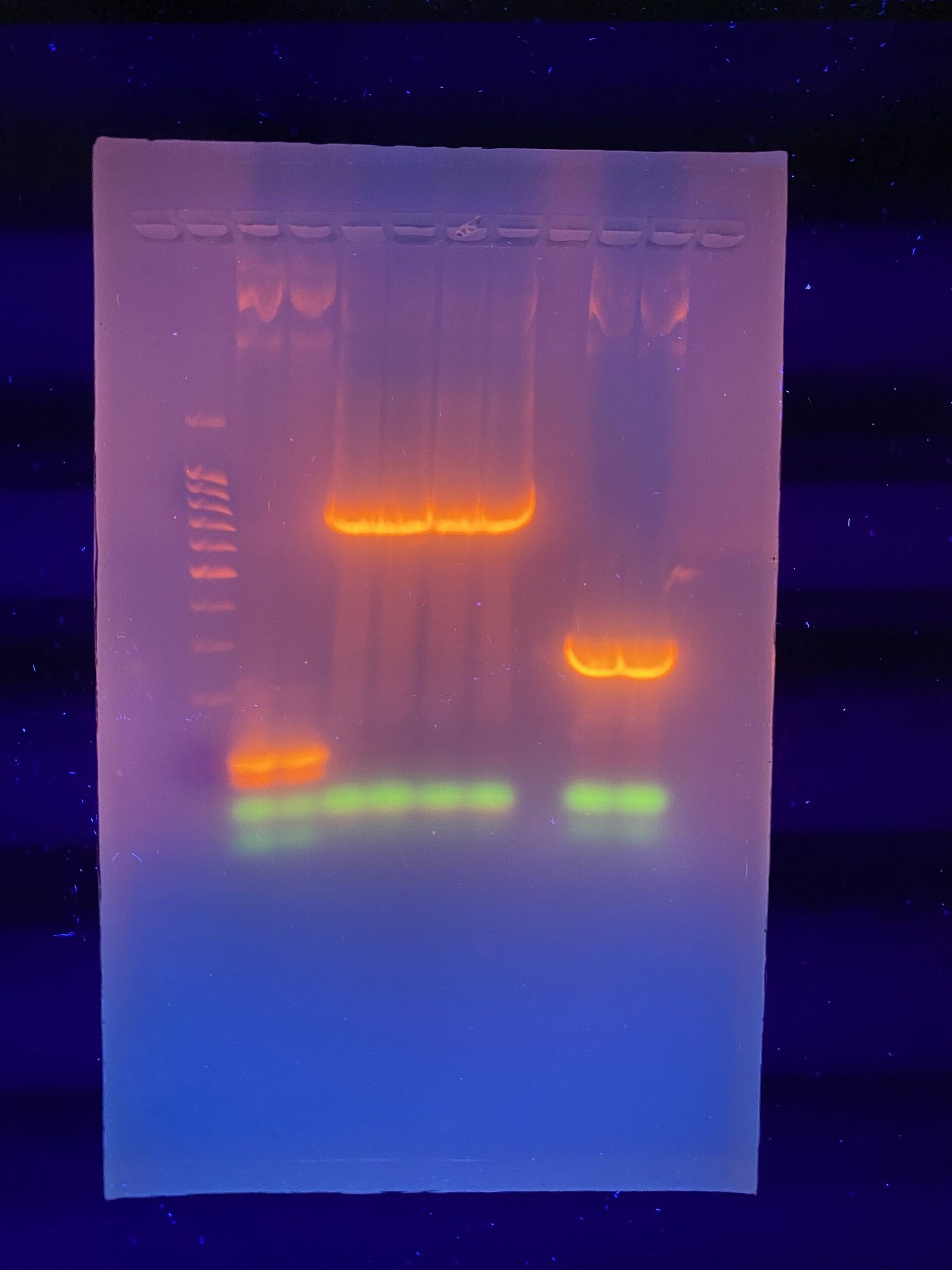
- 微阵列(microarrays)被用来研究整个基因组并通过捕获它们的 mRNA 来检测哪些基因开着。
- 数据库(databases)储存基因的核苷酸序列和蛋白质的氨基酸(amino acid)序列,所以任何地方的科学家都能比较它们。
探索
The tools of genetic technology
Genetic engineering moves a useful gene into another organism so it makes a desired protein.
词汇表
训练
| 英文 | 中文 | 拼音 |
|---|---|---|
| recombinant/ˌriːˈkɒmbɪnənt/ | 重组 | chóng zǔ |
| genetic engineering/dʒɪˈnetɪk ˌendʒɪˈnɪərɪŋ/ | 基因工程 | jī yīn gōng chéng |
| gene/dʒiːn/ | 基因 | jī yīn |
| donor/ˈdəʊnə/ | 供体 | gōng tǐ |
| reverse transcriptase/rɪˈvɜːs trænˈskrɪpteɪs/ | 逆转录酶 | nì zhuǎn lù méi |
| nucleotide/ˈnjuːklɪɒtaɪd/ | 核苷酸 | hé gān suān |
| restriction endonuclease/rɪˈstrɪkʃn ˈendəʊnjuːklɪeɪs/ | 限制性内切酶 | xiàn zhì xìng nèi qiè méi |
| ligase/ˈlɪɡeɪs/ | 连接酶 | lián jiē méi |
| plasmid/ˈplæzmɪd/ | 质粒 | zhì lì |
| cloning vector/ˈkləʊnɪŋ ˈvektə/ | 载体 | zài tǐ |
| polymerase/ˌpɒlɪməˈreɪz/ | 聚合酶 | jù hé méi |
| promoter/prəˈməʊtə/ | 启动子 | qǐ dòng zi |
| marker gene/ˈmɑːkə dʒiːn/ | 标记基因 | biāo jì jī yīn |
| fluorescent/flʊəˈresənt/ | 荧光 | yíng guāng |
| gene editing/dʒiːn ˈedɪtɪŋ/ | 基因编辑 | jī yīn biān jí |
| genome/ˈdʒiːnəʊm/ | 基因组 | jī yīn zǔ |
| polymerase chain reaction/ˌpɒlɪməˈreɪz tʃeɪn rɪˈækʃn/ | 聚合酶链式反应 | jù hé méi liàn shì fǎn yìng |
| clone/kləʊn/ | 克隆 | kè lóng |
| amplify/ˈæmplɪfaɪ/ | 扩增 | kuò zēng |
| gel electrophoresis/dʒel ɪˌlektrəʊfɔːˈriːsɪs/ | 凝胶电泳 | níng jiāo diàn yǒng |
| fragment/ˈfræɡmənt/ | 片段 | piàn duàn |
| microarray/ˈmaɪkrəʊəreɪ/ | 微阵列 | wēi zhèn liè |
| database/ˈdeɪtəbeɪs/ | 数据库 | shù jù kù |
| amino acid/əˈmiːnəʊ ˈæsɪd/ | 氨基酸 | ān jī suān |
19.2
遗传技术在医学中的应用

大纲
- explain the advantages of using recombinant human proteins to treat disease, using the examples insulin, factor VIII and adenosine deaminase
- outline the advantages of genetic screening, using the examples of breast cancer (BRCA1 and BRCA2), Huntington’s disease and cystic fibrosis
- outline how genetic diseases can be treated with gene therapy, using the examples severe combined immunodeficiency (SCID) and inherited eye diseases
- discuss the social and ethical considerations of using genetic screening and gene therapy in medicine
来源:剑桥国际大纲
Recombinant human proteins
一个人类基因能被放入细菌或其他细胞,使它们制造一个重组人类蛋白质——人类那个的一个确切副本。这更安全、永不短缺,而且它避免使用从动物或供体取的蛋白质。例子是胰岛素(insulin,用于糖尿病(diabetes))、因子 VIII(用于血友病)和腺苷脱氨酶(用于一个有缺陷的免疫系统)。
Genetic screening
基因筛查(genetic screening)在症状出现之前检测一个人的 DNA 里的疾病等位基因。例子是 BRCA1 和 BRCA2 等位基因(它们提高乳腺癌(breast cancer)的风险)、亨廷顿病(Huntington's disease),以及囊性纤维化(cystic fibrosis)。知道结果帮助人们对治疗和家庭做出知情的选择。
Gene therapy
基因治疗(gene therapy)通过把一个基因的一个工作副本放入患者的细胞来治疗一种遗传病。它已被用于 SCID(一种免疫系统失灵的疾病)和一些遗传性眼病。
Social and ethical questions
基因筛查和基因治疗引发顾虑:谁应当看到你的遗传结果、保险公司或雇主是否可能滥用它们、改变是否安全和永久,以及谁决定。这些伦理(ethical)和社会问题必须与好处权衡。
探索
Making human insulin with GM bacteria
Step through it. The human insulin gene goes into bacteria, which then churn out exact human insulin in fermenters.
词汇表
训练
| 英文 | 中文 | 拼音 |
|---|---|---|
| protein/ˈprəʊtiːn/ | 蛋白质 | dàn bái zhì |
| insulin/ˈɪnsjuːlɪn/ | 胰岛素 | yí dǎo sù |
| diabetes/ˌdaɪəˈbiːtiːz/ | 糖尿病 | táng niào bìng |
| genetic screening/dʒɪˈnetɪk ˈskriːnɪŋ/ | 基因筛查 | jī yīn shāi chá |
| breast cancer/brest ˈkænsə/ | 乳腺癌 | rǔ xiàn ái |
| Huntington's disease/ˈhʌntɪŋtnz dɪˈziːz/ | 亨廷顿病 | hēng tíng dùn bìng |
| cystic fibrosis/ˈsɪstɪk fɪˈbrəʊsɪs/ | 囊性纤维化 | náng xìng xiān wéi huà |
| gene therapy/dʒiːn ˈθerəpi/ | 基因治疗 | jī yīn zhì liáo |
| ethical/ˈeθɪkl/ | 伦理 | lún lǐ |
19.3
农业中的转基因生物

大纲
- explain that genetic engineering may help to solve the global demand for food by improving the quality and productivity of farmed animals and crop plants, using the examples of GM salmon, herbicide resistance in soybean and insect resistance in cotton
- discuss the ethical and social implications of using genetically modified organisms (GMOs) in food production
来源:剑桥国际大纲
基因工程能通过改善养殖的动物和作物来帮助喂养一个增长的世界。转基因生物(genetically modified organisms,GMOs)的例子是:
- 转基因鲑鱼(GM salmon),它长到大小更快。
- 被制造成对一种除草剂(herbicide)耐受的大豆(soybean),所以杂草能被喷洒而不伤害作物。
- 被制造成对昆虫害虫(pests)耐受的棉花(cotton),因为它制造一种杀死昆虫的蛋白质。
GMO 也引发伦理和社会问题:它们吃起来是否安全、它们对环境和野生物种有什么影响、被工程改造的基因是否可能传播,以及少数几个大公司是否应当控制食物供应。
例题。 犯罪现场取得的微量 DNA 样本必须先扩增,再与嫌疑人的进行比对。概述这两种技术及各自的作用。PCR 通过反复循环来复制 DNA:在约 $95\ °\text{C}$ 下变性使双链分开,在约 $55\ °\text{C}$ 下退火让引物结合到目标片段的两端,在约 $72\ °\text{C}$ 下延伸,由 Taq 聚合酶合成新链。每个循环使数量翻倍,所以 $n$ 个循环得到 $2^n$ 份拷贝 - 30 个循环能把一个分子变成大约十亿个。随后凝胶电泳把片段分开:DNA 因其磷酸基团而带负电,所以向阳极移动,而且较短的片段在凝胶中走得更远。条带图谱吻合就指向同一来源。之所以用 Taq 聚合酶,是因为它是热稳定的 - 普通的聚合酶在第一个循环的 $95\ °\text{C}$ 下就会变性失活。
探索
How a GMO is made
Step through it — the same recombinant-DNA toolkit, now used to give a crop or microbe a brand-new useful gene.
词汇表
训练
| 英文 | 中文 | 拼音 |
|---|---|---|
| genetically modified organism/dʒɪˈnetɪkli ˈmɒdɪfaɪd ˈɔːɡənɪzəm/ | 转基因生物 | zhuǎn jī yīn shēng wù |
| salmon/ˈsæmən/ | 鲑鱼 | guī yú |
| soybean/ˈsɔɪbiːn/ | 大豆 | dà dòu |
| herbicide/ˈhɜːbɪsaɪd/ | 除草剂 | chú cǎo jì |
| cotton/ˈkɒtn/ | 棉花 | mián huā |
| pest/pest/ | 害虫 | hài chóng |
19.3
考试技巧
- 概述工具包:限制酶(在特定序列切割,黏性末端)、连接酶(连接)、质粒载体,以及 PCR(扩增)。
- 解释凝胶电泳:DNA 按大小分离,更小的片段行进得更远——用于基因指纹。
- 为 GMO 和基因治疗给出一个平衡的好处对顾虑。
本主题的互动课程
逐步学习,并即时检测练习。