Skip to content · ⁨Bỏ qua nội dung⁩

Absolutism and Constitutionalism · ⁨Chủ nghĩa chuyên chế và Chủ nghĩa hiến pháp⁩

AP European History · ⁨AP Lịch sử Châu Âu⁩ · Topic 3 · ⁨Chủ đề 3⁩

Video lesson for this topic · ⁨Bài học video cho chủ đề này⁩ Open the video page · ⁨Mở trang video⁩
7:19

Đơn vị 3: Chủ quyền tuyệt đối và Hiến chế

Đặt việc xây dựng nhà nước vào bối cảnh bắt đầu bằng một câu: cuộc đấu tranh vì chủ quyền liên tục dẫn đến các mức độ tập trung chính trị khác nhau. Mọi thứ trong…

English narration · English + 中文 subtitles burned in · ⁨Giọng đọc tiếng Anh · phụ đề tiếng Anh + 中文 được ghi trực tiếp⁩

3.1

Contextualizing State Building · ⁨Đặt quá trình xây dựng nhà nước vào bối cảnh⁩

Syllabus · ⁨Chương trình⁩
English

3.1 Contextualizing State Building

Learning Objective Unit 3.A: Explain the context in which different forms of political power developed from 1648 to 1815.

  • KC-1.5 The struggle for sovereignty within and among states resulted in varying degrees of political centralization.
    • KC-1.5.I The new concept of the sovereign state and secular systems of law played a central role in the creation of new political institutions.
    • KC-1.5.III The competition for power between monarchs and corporate and minority language groups produced different distributions of governmental authority in European states.
    • KC-1.5.III.B Monarchies seeking enhanced power faced challenges from nobles who wished to retain traditional forms of shared governance and regional autonomy.
    • KC-1.5.III.C Within states, minority local and regional identities based on language and culture led to resistance against the dominant national group.
  • KC-2.1 Different models of political sovereignty affected the relationship among states and between states and individuals.
    • KC-2.1.I In much of Europe, absolute monarchy was established over the course of the 17th and 18th centuries.
    • KC-2.1.II Challenges to absolutism resulted in alternative political systems.

Illustrative examples:

  • Competition between monarchs and nobles:
    • Louis XIII and Cardinal Richelieu §Bullet
    • The Fronde in France
    • The Catalan Revolts in Spain
  • Competition between minority and dominant national groups:
    • Celtic regions of Scotland, Ireland, and France
    • Dutch resistance in the Spanish Netherlands
    • Czech identity in the Holy Roman Empire/ Jan Hus/Defenestration
Tiếng Việt

3.1 Bối cảnh Hóa Xây dựng Nhà nước

Mục tiêu học tập Đơn vị 3.A: Giải thích bối cảnh mà các hình thức quyền lực chính trị khác nhau đã phát triển từ năm 1648 đến 1815.

  • KC-1.5 Cuộc đấu tranh giành chủ quyền bên trong và giữa các quốc gia đã dẫn đến các mức độ tập trung chính trị khác nhau.
    • KC-1.5.I Khái niệm mới về nhà nước chủ quyền và hệ thống pháp luật thế tục đã đóng vai trò trung tâm trong việc tạo ra các thể chế chính trị mới.
    • KC-1.5.III Cuộc cạnh tranh quyền lực giữa các monarchs và các nhóm ngôn ngữ tập thể và thiểu số đã tạo ra các phân phối quyền lực chính phủ khác nhau trong các nhà nước Châu Âu.
    • KC-1.5.III.B Các vương triều tìm kiếm quyền lực tăng cường đã đối mặt với thách thức từ giới quý tộc muốn giữ lại các hình thức quản trị chia sẻ truyền thống và tự chủ khu vực.
    • KC-1.5.III.C Trong nội bộ các nhà nước, các bản sắc địa phương và khu vực thiểu số dựa trên ngôn ngữ và văn hóa đã dẫn đến sự kháng cự trước nhóm dân tộc thống trị.
  • KC-2.1 Các mô hình chủ quyền chính trị khác nhau đã ảnh hưởng đến mối quan hệ giữa các nhà nước và giữa nhà nước với cá nhân.
    • KC-2.1.I Ở hầu hết châu Âu, chế độ quân chủ chuyên chế đã được thiết lập trong suốt thế kỷ 17 và thế kỷ 18.
    • KC-2.1.II Những thách thức đối với chủ nghĩa chuyên chế dẫn đến sự hình thành các hệ thống chính trị thay thế.

Ví dụ minh họa:

  • Cạnh tranh giữa monarches và giới quý tộc:
    • Louis XIII và Cardinal Richelieu §Bullet
    • Cuộc nổi dậy Fronde ở Pháp
    • Các cuộc khởi nghĩa Catalonia ở Tây Ban Nha
  • Cạnh tranh giữa nhóm dân tộc thiểu số và nhóm dân tộc chiếm đa số:
    • Các vùng Celtic của Scotland, Ireland và Pháp
    • Kháng chiến Hà Lan ở các xứ thuộc địa Tây Ban Nha
    • Bản sắc Séc trong Đế quốc La Mã Thần thánh / Jan Hus / Vụ ném cửa sổ
Source: College Board AP Course and Exam Description · ⁨Nguồn: Mô tả Khóa học và Bài thi College Board AP⁩

English

Unit 3 covers 1648 to 1815, and its organising claim is that different models of political sovereignty affected the relationship among states, and between states and individuals.

The struggle for sovereignty continued to produce varying degrees of political centralisation - but after Westphalia the competition happens between states that recognise each other as sovereign, which is a different game from the one played in Units 1 and 2. Everything in this unit follows from that: the state must now raise revenue, field armies, and manage an economy in permanent competition with rivals who are doing the same.

Tiếng Việt

Chương 3 bao gồm từ năm 1648 đến 1815, và tuyên bố tổ chức cốt lõi là các mô hình quyền主权 chính trị khác nhau đã ảnh hưởng đến mối quan hệ giữa các quốc gia, cũng như giữa các quốc gia và cá nhân.

Cuộc đấu tranh giành quyền主权 tiếp tục tạo ra mức độ tập trung chính trị khác nhau - nhưng sau Westphalia, sự cạnh tranh diễn ra giữa các quốc gia thừa nhận lẫn nhau là主权, điều này khác hẳn với trò chơi được chơi trong Chương 1 và 2. Mọi thứ trong chương này đều xuất phát từ điều đó: nhà nước giờ đây phải huy động ngân sách, lập quân đội và quản lý nền kinh tế trong cạnh tranh vĩnh viễn với các đối thủ đang làm những việc tương tự.

3.2

The English Civil War and the Glorious Revolution · ⁨Chiến tranh Nội chiến Anh và Cách mạng Vinh quang⁩

Syllabus · ⁨Chương trình⁩

3.2 The English Civil War and the Glorious Revolution

Thematic FocusLearning ObjectiveHistorical Developments

SOP
States and Other Institutions of Power — European states and nations developed governmental and civil institutions from 1450 to the present to organize society and consolidate political power, with a variety of social, cultural, and economic effects.

Unit 3.B
Explain the causes and consequences of the English Civil War.

  • KC-1.5.III.A The English Civil War—a conflict among the monarchy, Parliament, and other elites over their respective roles in the political structure— exemplified the competition for power among monarchs and competing groups.
  • KC-2.1.II.A The outcome of the English Civil War and the Glorious Revolution protected the rights of gentry and aristocracy from absolutism through assertions of the rights of Parliament.

Illustrative examples:

  • Competitors for power in the English Civil War:
    • James I
    • Charles I
    • Oliver Cromwell
  • Outcomes of the English Civil War and the Glorious Revolution:
    • English Bill of Rights
    • Parliamentary sovereignty

Source: College Board AP Course and Exam Description · ⁨Nguồn: Mô tả Khóa học và Bài thi College Board AP⁩

English

The English Civil War 英国内战 was a conflict among the monarchy, Parliament, and other elites over their respective roles in the political structure - not a conflict between the crown and the people.

Its outcome, together with the Glorious Revolution 光荣革命, protected the rights of the gentry and aristocracy from absolutism by asserting the rights of Parliament 议会.

Read that carefully, because it is easy to overstate. The settlement protected the rights of a propertied elite against royal power. It did not create popular government, and an answer that treats 1688 as democratic has misread the CED.

Tiếng Việt

Chiến tranh Nội chiến Anh là xung đột giữa triều đình, Quốc hội và các tầng lớp thượng lưu khác về vai trò riêng biệt của họ trong cấu trúc chính trị - chứ không phải là xung đột giữa vương quyền và nhân dân.

Kết quả của nó, cùng với Cách mạng Vinh quang, bảo vệ quyền lợi của giai cấp địa chủ và quý tộc khỏi chủ nghĩa chuyên chế bằng cách khẳng định quyền của Quốc hội.

Đọc kỹ điều này, vì rất dễ phóng đại. Thỏa thuận bảo vệ quyền của tầng lớp thượng lưu có tài sản trước quyền lực vua chúa. Nó không tạo ra chính phủ dân chủ, và một câu trả lời coi năm 1688 là dân chủ là đã hiểu sai CED.

3.3

Continuities and Changes to Economic Practice · ⁨Sự liên tục và Thay đổi trong Thực hành Kinh tế⁩

Syllabus · ⁨Chương trình⁩
English

3.3 Continuities and Changes to Economic Practice and Development

Thematic Focus (ECD): Economic and Commercial Developments — Economic development, especially the development of capitalism, played an important role in Europe’s history, often having significant social, political, and cultural effects.

Learning Objective Unit 3.C: Explain the continuities and changes in commercial and economic developments from 1648 to 1815.

  • KC-2.2.I.B The Agricultural Revolution raised productivity and increased the supply of food and other agricultural products.
  • KC-2.2.II.D The importation and transplantation of agricultural products from the Americas contributed to an increase in the food supply in Europe.
  • KC-2.2.I.A Labor and trade in commodities were increasingly freed from traditional restrictions imposed by governments and corporate entities.
  • KC-2.2.I.C The putting-out system, or cottage industry, expanded as increasing numbers of laborers in homes or workshops produced for markets through merchant intermediaries or workshop owners.
  • KC-2.2.I.D The development of the market economy led to new financial practices and institutions.
  • KC-2.2.I Early modern Europe developed a market economy that provided the foundation for its global role.

Illustrative examples:

  • New financial practices and institutions: § Insurance § Banking institutions for turning private savings into venture capital § New definitions of property rights and protections against confiscation § Bank of England
Tiếng Việt

3.3 Sự liên tục và Thay đổi trong Thực tiễn và Phát triển Kinh tế

Trọng điểm chủ đề (ECD): Phát triển Kinh tế và Thương mại — Phát triển kinh tế, đặc biệt là sự phát triển của chủ nghĩa tư bản, đã đóng vai trò quan trọng trong lịch sử Châu Âu, thường có những tác động xã hội, chính trị và văn hóa đáng kể.

Mục tiêu học tập Đơn vị 3.C: Giải thích sự liên tục và thay đổi trong phát triển thương mại và kinh tế từ năm 1648 đến 1815.

  • KC-2.2.I.B Cách mạng Nông nghiệp đã nâng cao năng suất và tăng nguồn cung cấp thực phẩm cũng như các sản phẩm nông nghiệp khác.
  • KC-2.2.II.D Việc nhập khẩu và du nhập các sản phẩm nông nghiệp từ Châu Mỹ đã góp phần tăng nguồn cung cấp thực phẩm ở Châu Âu.
  • KC-2.2.I.A Lao động và thương mại hàng hóa ngày càng được giải phóng khỏi những hạn chế truyền thống do chính phủ và các tổ chức doanh nghiệp đặt ra.
  • KC-2.2.I.C Hệ thống phân phát công việc (putting-out system) hay công nghiệp gia đình mở rộng khi ngày càng nhiều lao động trong các hộ gia đình hoặc xưởng sản xuất hàng hóa phục vụ thị trường thông qua các trung gian thương gia hoặc chủ xưởng.
  • KC-2.2.I.D Sự phát triển của nền kinh tế thị trường đã dẫn đến các thực hành và thể chế tài chính mới.
  • KC-2.2.I Châu Âu thời hiện đại sớm đã phát triển một nền kinh tế thị trường làm nền tảng cho vai trò toàn cầu của mình.

Ví dụ minh họa:

  • Các thực hành và thể chế tài chính mới: § Bảo hiểm § Các tổ chức ngân hàng chuyển tiết kiệm tư nhân thành vốn đầu tư mạo hiểm § Các định nghĩa mới về quyền sở hữu và bảo vệ chống lại việc tước đoạt § Ngân hàng Anh

Source: College Board AP Course and Exam Description · ⁨Nguồn: Mô tả Khóa học và Bài thi College Board AP⁩

English

Early modern Europe developed a market economy that provided the foundation for its global role. The CED lists the components, and questions reward naming several:

  • The Agricultural Revolution 农业革命 raised productivity and increased the supply of food and other agricultural products.
  • The importation and transplantation of American crops contributed further to the food supply.
  • Labour and trade in commodities were increasingly freed from traditional restrictions 传统限制 imposed by governments and corporate bodies such as guilds.
  • The putting-out system, or cottage industry 家庭手工业, expanded as more labourers produced for market in homes and workshops.
  • The market economy produced new financial practices and institutions.

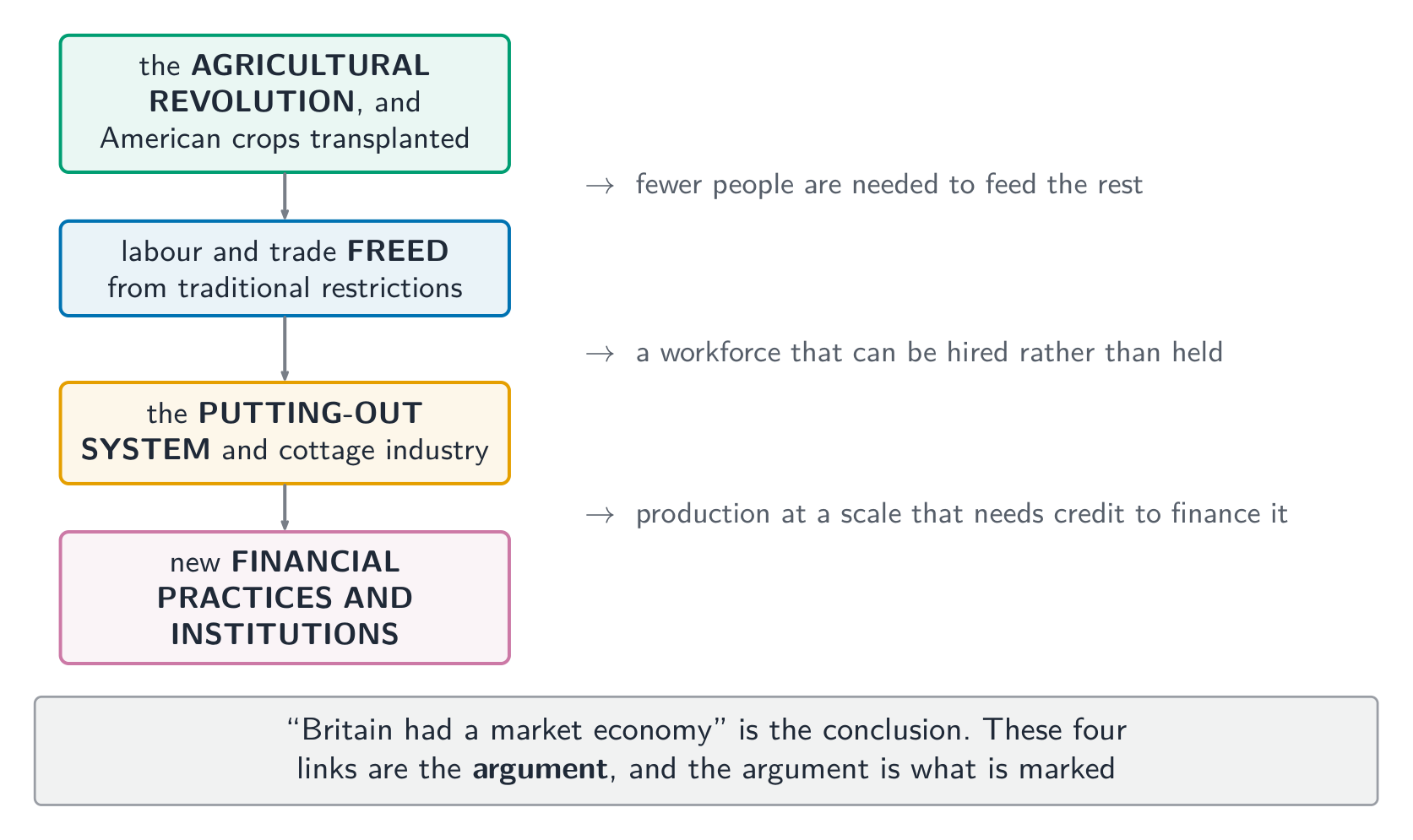
The chain worth holding: more food supports more people, freed labour and cottage industry let those people produce for market, and new finance moves the resulting capital. Each link is separately examinable, and together they are the foundation on which Unit 6's industrialisation is built.

Tiếng Việt

Châu Âu thời cận đại phát triển nền kinh tế thị trường cung cấp nền tảng cho vai trò toàn cầu của mình. CED liệt kê các thành phần, và các câu hỏi thưởng điểm khi tên gọi nhiều thành phần:

  • Cách mạng Nông nghiệp đã nâng cao năng suất và tăng nguồn cung cấp lương thực và các sản phẩm nông nghiệp khác.
  • Việc nhập khẩu và du nhập cây trồng Mỹ đã đóng góp thêm vào nguồn cung cấp lương thực.
  • Lao động và thương mại hàng hóa ngày càng được thoái khỏi các hạn chế truyền thống do chính phủ và các cơ quan hội nghề (guilds) áp đặt.
  • Hệ thống giao việc (putting-out system), hay công nghiệp gia đình, mở rộng khi ngày càng nhiều lao động sản xuất cho thị trường tại nhà và xưởng sản xuất.
  • Nền kinh tế thị trường tạo ra các phương thức và thể chế tài chính mới.

Chuỗi các mắt xích đáng nhớ: lương thực nhiều hơn hỗ trợ dân số đông hơn, lao động tự do và công nghiệp gia đình giúp những người này sản xuất cho thị trường, và tài chính mới di chuyển dòng vốn thu được. Mỗi mắt xích đều có thể trở thành điểm thi riêng lẻ, và cùng nhau chúng là nền tảng mà sự công nghiệp hóa của Chương 6 được xây dựng lên.

Bốn mắt xích giữa biến đổi nông nghiệp và vai trò toàn cầu - các mắt xích chính là luận điểm
Explore · ⁨Khám phá⁩

Build Britain's market economy from the ground up

'Britain had a market economy' is the conclusion. These four links are the argument, and the argument is what is marked.

3.4

Economic Development and Mercantilism · ⁨Phát triển Kinh tế và Chủ nghĩa Mercantilism⁩

Syllabus · ⁨Chương trình⁩

3.4 Economic Development and Mercantilism

Thematic FocusLearning ObjectiveHistorical Developments

ECD
Economic and Commercial Developments — Economic development, especially the development of capitalism, played an important role in Europe’s history, often having significant social, political, and cultural effects.

Unit 3.C
Explain the continuities and changes in commercial and economic developments from 1648 to 1815.

  • KC-2.2.II The European-dominated worldwide economic network contributed to the agricultural, industrial, and consumer revolutions in Europe.
    • KC-2.2.II.A European states followed mercantilist policies by drawing resources from colonies in the New World and elsewhere.
    • KC-2.2.II.B The transatlantic slave-labor system expanded in the 17th and 18th centuries as demand for New World products increased.
    • KC-2.2.II.C Overseas products and influences contributed to the development of a consumer culture in Europe.
    • KC-2.2.II.D The importation and transplantation of agricultural products from the Americas contributed to an increase in the food supply in Europe.
    • KC-2.2.II.E Foreign lands provided raw materials, finished goods, laborers, and markets for the commercial and industrial enterprises in Europe.

Illustrative examples:

  • Transatlantic slave-labor systems:
    • Middle Passage
    • Triangle trade
  • Overseas products:
    • Sugar
    • Tea
    • Silks and other fabrics
    • Tobacco
    • Rum
    • Coffee

Source: College Board AP Course and Exam Description · ⁨Nguồn: Mô tả Khóa học và Bài thi College Board AP⁩

English

The European-dominated worldwide economic network contributed to the agricultural, industrial, and consumer revolutions in Europe.

Mercantilism 重商主义 is the policy frame: the state promotes exports, restricts imports, and acquires colonies to supply raw materials and buy finished goods. Note the direction of causation the CED asserts - the global network is what fed the European transformations, so answers confined to Europe's internal development are incomplete.

Tiếng Việt

Mạng lưới kinh tế toàn cầu do Châu Âu chi phối đã đóng góp vào các cuộc cách mạng nông nghiệp, công nghiệp và tiêu dùng tại Châu Âu.

Chủ nghĩa Mercantilism là khung chính sách: nhà nước thúc đẩy xuất khẩu, hạn chế nhập khẩu và chiếm hữu thuộc địa để cung cấp nguyên liệu thô và mua hàng hóa hoàn thiện. Hãy lưu ý chiều hướng nguyên nhân - kết quả mà CED khẳng định - mạng lưới toàn cầu chính là thứ nuôi dưỡng các biến đổi tại Châu Âu, nên các câu trả lời chỉ giới hạn trong phát triển nội bộ của Châu Âu sẽ chưa đầy đủ.

Vocabulary · ⁨Từ vựng⁩ Train · ⁨Luyện tập⁩
English Tiếng Việt
Mercantilism/ˈmɜːkæntəlɪzəm/ Chủ nghĩa Mercantilism
Dutch Republic/dʌtʃ rɪˈpʌblɪk/ Cộng hòa Hà Lan
competitive state system/kəmˈpetɪtɪv steɪt ˈsɪstəm/ hệ thống nhà nước cạnh tranh
Poland's partition/ˈpəʊləndz pɑːˈtɪʃn/ sự chia cắt Ba Lan
3.5

The Dutch Golden Age · ⁨Thời đại Vàng của Hà Lan⁩

Syllabus · ⁨Chương trình⁩
English

3.5 The Dutch Golden Age

Thematic Focus (SOP): States and Other Institutions of Power — European states and nations developed governmental and civil institutions from 1450 to the present to organize society and consolidate political power, with a variety of social, cultural, and economic effects.

Learning Objective Unit 3.D: Explain the factors that contributed to the development of the Dutch Republic.

  • KC-2.1.II.B The Dutch Republic, established by a Protestant revolt against the Habsburg monarchy, developed an oligarchy of urban gentry and rural landholders to promote trade and protect traditional rights.
Tiếng Việt

3.5 Thời kỳ Hoàng kim của Hà Lan

Trọng điểm Chủ đề (SOP): Nhà nước và Các Thể chế Quyền lực Khác — Các quốc gia và nhà nước châu Âu đã xây dựng các thể chế chính phủ và dân sự từ năm 1450 đến nay để tổ chức xã hội và củng cố quyền lực chính trị, với nhiều tác động về mặt xã hội, văn hóa và kinh tế.

Mục tiêu học tập Đơn vị 3.D: Giải thích các yếu tố đã góp phần vào sự phát triển của Cộng hòa Hà Lan.

  • KC-2.1.II.B Cộng hòa Hà Lan, được thiết lập bởi một cuộc nổi dậy Tin lành chống lại monarchy Habsburg, đã phát triển một chế độ oligarchy gồm giới gentry đô thị và chủ đất nông thôn để thúc đẩy thương mại và bảo vệ các quyền truyền thống.

Source: College Board AP Course and Exam Description · ⁨Nguồn: Mô tả Khóa học và Bài thi College Board AP⁩

English

The Dutch Republic 荷兰共和国, established by a Protestant revolt against the Habsburg monarchy, developed an oligarchy of urban gentry and rural landholders to promote trade and religious toleration.

The Dutch case matters because it is neither absolutism nor English constitutionalism - a third model, commercially dominant, that shows political form and economic success were not tied together in a single formula.

Tiếng Việt

Cộng hòa Hà Lan, được thiết lập qua cuộc khởi nghĩa Tin Lành chống lại triều đình Habsburg, đã phát triển thế oligarchy của giới quý tộc đô thị và chủ đất nông thôn để thúc đẩy thương mại và sự dung thứ tôn giáo.

Trường hợp Hà Lan quan trọng vì nó không phải là chủ nghĩa专制的 và cũng không phải là chủ nghĩa宪法 Anh - một mô hình thứ ba, thống trị về mặt thương mại, cho thấy hình thái chính trị và thành công kinh tế không gắn liền với nhau trong một công thức duy nhất.

3.6

Balance of Power · ⁨Cân bằng Quyền lực⁩

Syllabus · ⁨Chương trình⁩

3.6 Balance of Power

Thematic FocusLearning ObjectiveHistorical Developments

SOP
States and Other Institutions of Power — European states and nations developed governmental and civil institutions from 1450 to the present to organize society and consolidate political power, with a variety of social, cultural, and economic effects.

Unit 3.E
Explain how European states attempted to establish and maintain a balance of power on the continent throughout the period from 1648 to 1815.

  • KC-1.5.II The competitive state system led to new patterns of diplomacy and new forms of warfare.
    • KC-1.5.II.A Following the Peace of Westphalia, religion declined in importance as a cause for warfare among European states; the concept of the balance of power played an important role in structuring diplomatic and military objectives.
  • KC-2.1.I.D The inability of the Polish monarchy to consolidate its authority over the nobility led to Poland’s partition by Prussia, Russia, and Austria, and its disappearance from the map of Europe.
  • KC-2.1.III After 1648, dynastic and state interests, along with Europe’s expanding colonial empires, influenced the diplomacy of European states and frequently led to war.
    • KC-2.1.III.B After the Austrian defeat of the Turks in 1683 at the Battle of Vienna, the Ottomans ceased their westward expansion.
    • KC-2.1.III.C Louis XIV’s nearly continuous wars, pursuing both dynastic and state interests, provoked a coalition of European powers opposing him. HISTORICAL DEVELOPMENTS

Unit 3.F
Explain how advances in technology contributed to a developing balance of power on the continent throughout the period from 1648 to 1815.

  • KC-1.5.II.B Advances in military technology led to new forms of warfare, including greater reliance on infantry, firearms, mobile cannon, and more elaborate fortifications, all financed by heavier taxation and requiring a larger bureaucracy. New military techniques and institutions (i.e., the military revolution) tipped the balance of power toward states able to marshal sufficient resources for the new military environment.

Illustrative examples:

  • Louis XIV’s nearly continuous wars:
    • Dutch War
    • Nine Years’ War
    • War of the Spanish Succession
  • States that benefited from the military revolution:
    • Spain under the Habsburgs §Bullet Sweden under Gustavus Adolphus §Bullet France

Source: College Board AP Course and Exam Description · ⁨Nguồn: Mô tả Khóa học và Bài thi College Board AP⁩

English

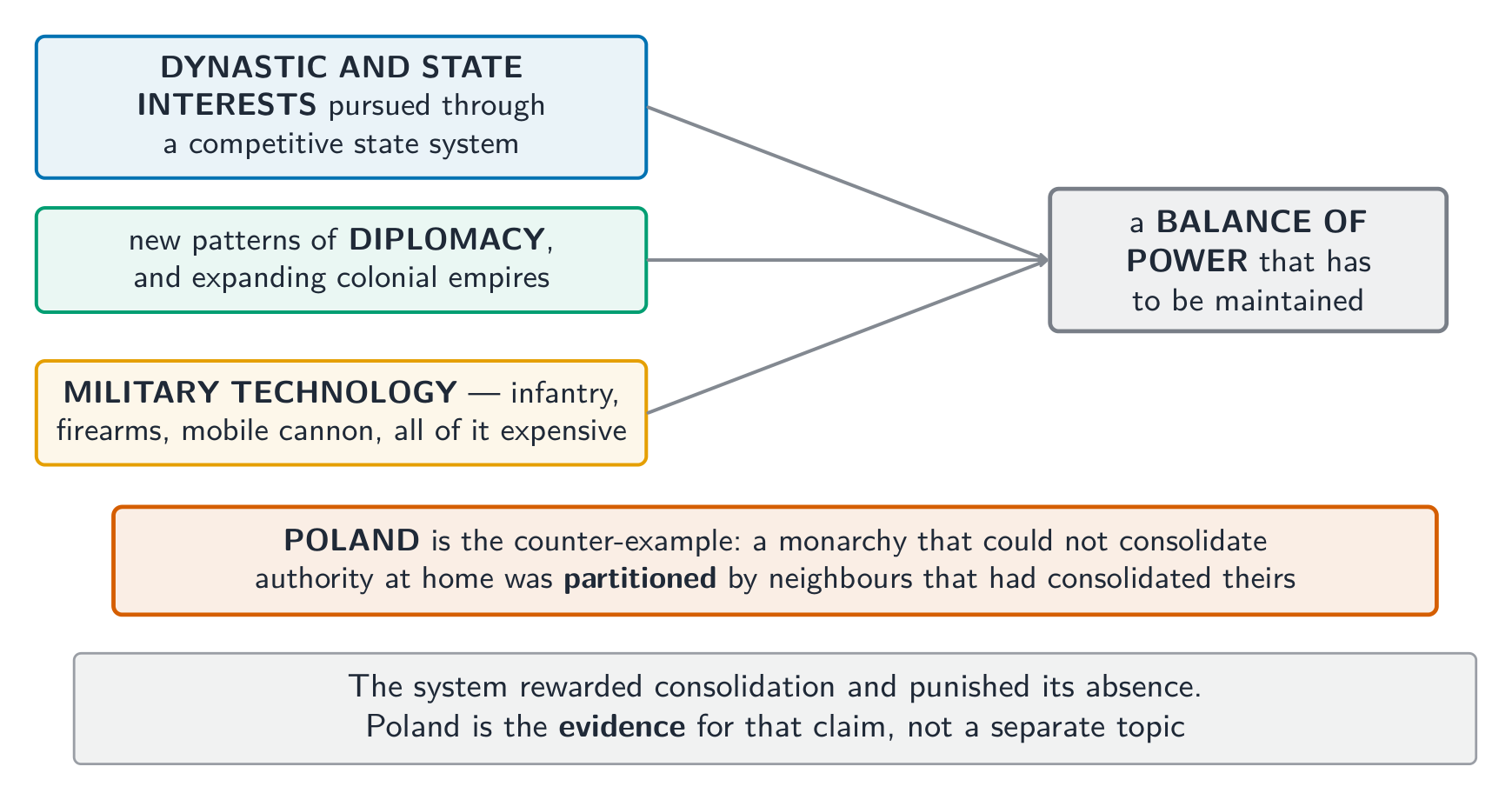
The competitive state system 竞争性国家体系 led to new patterns of diplomacy and new forms of warfare. After 1648, dynastic and state interests, along with expanding colonial empires, drove European diplomacy.

Two specifics are examinable. Advances in military technology produced new forms of warfare - greater reliance on infantry, firearms, and mobile cannon, and larger standing armies that only a centralising state could pay for. And the inability of the Polish monarchy to consolidate authority over its nobility led to Poland's partition 波兰被瓜分 by Prussia, Russia, and Austria - the clearest demonstration in the course that failure to centralise had a price.

Tiếng Việt
Toàn bộ sự so sánh của đơn vị trong một khung hình – và nhiệm vụ suy luận của chính CED là so sánh chúng
Cả hai mô hình đều giữ nguyên vị thế của giới quý tộc; chúng bất đồng về việc quyền主权 nằm ở đâu

Hệ thống quốc gia cạnh tranh dẫn đến các mô hình ngoại giao mới và các hình thức chiến tranh mới. Sau năm 1648, lợi ích dynastic và lợi ích quốc gia, cùng với các đế quốc thuộc địa đang mở rộng, đã thúc đẩy ngoại giao Châu Âu.

Hai nội dung cụ thể sẽ được kiểm tra. Sự tiến bộ trong công nghệ quân sự tạo ra các hình thức chiến tranh mới - phụ thuộc lớn hơn vào bộ binh, súng hỏa Mai và pháo di động, cùng với những đội quân thường trực quy mô lớn mà chỉ một nhà nước tập quyền mới có thể chi trả. Và sự bất lực của chế độ quân chủ Ba Lan trong việc củng cố quyền lực trước giới quý tộc đã dẫn đến sự phân chia lãnh thổ Ba Lan bởi Phổ, Nga và Áo - minh chứng rõ ràng nhất trong chương trình học cho thấy việc không tập trung quyền lực đều phải trả giá.

Hệ thống này khuyến khích sự tập hợp quyền lực - Ba Lan là bằng chứng, không phải chủ đề riêng biệt
3.7

Absolutist Approaches to Power · ⁨Các Phương Tiếp Cận Quyền Lực Theo Chủ Nghĩa Độc裁⁩

Syllabus · ⁨Chương trình⁩
English

3.7 Absolutist Approaches to Power

Thematic Focus (SOP): States and Other Institutions of Power — European states and nations developed governmental and civil institutions from 1450 to the present to organize society and consolidate political power, with a variety of social, cultural, and economic effects.

Learning Objective Unit 3.G: Explain how absolutist forms of rule affected social and political development from 1648 to 1815.

  • KC-2.1.I.A Absolute monarchies limited the nobility’s participation in governance but preserved the aristocracy’s social position and legal privileges.
  • KC-2.1.I.B Louis XIV and his finance minister, Jean-Baptiste Colbert, extended the administrative, financial, military, and religious control of the central state over the French population.
  • KC-2.1.I.E Peter the Great “westernized” the Russian state and society, transforming political, religious, and cultural institutions; Catherine the Great continued this process.

Illustrative examples:

  • Absolute monarchs:
    • James I of England
    • Peter the Great of Russia
    • Philip II, III, and IV of Spain
  • Extended power of the state: §Bullet Intendants §Bullet Modernized, state-controlled military Russian westernization: §Bullet Russian Academy of Sciences §Bullet Education §Bullet Western fashion §Bullet Expanded military
Tiếng Việt

3.7 Cách tiếp cận chuyên chế đối với quyền lực

Trọng điểm Chủ đề (SOP): Nhà nước và Các Thể chế Quyền lực Khác — Các quốc gia và nhà nước châu Âu đã xây dựng các thể chế chính phủ và dân sự từ năm 1450 đến nay để tổ chức xã hội và củng cố quyền lực chính trị, với nhiều tác động về mặt xã hội, văn hóa và kinh tế.

Mục tiêu học tập Đơn vị 3.G: Giải thích cách các hình thức cai trị chuyên chế ảnh hưởng đến sự phát triển xã hội và chính trị từ năm 1648 đến 1815.

  • KC-2.1.I.A Chế độ quân chủ chuyên chế giới hạn sự tham gia của giới quý tộc vào việc quản trị nhưng bảo tồn vị trí xã hội và đặc quyền pháp lý của giới quý tộc.
  • KC-2.1.I.B Louis XIV và bộ trưởng tài chính của ông, Jean-Baptiste Colbert, đã mở rộng quyền kiểm soát hành chính, tài chính, quân sự và tôn giáo của nhà nước trung ương lên nhân dân Pháp.
  • KC-2.1.I.E Peter Đại đế "phương Tây hóa" nhà nước và xã hội Nga, biến đổi các thể chế chính trị, tôn giáo và văn hóa; Catherine Đại đế đã tiếp tục quá trình này.

Ví dụ minh họa:

  • Các vị vua chuyên chế:
    • James I của Anh
    • Peter Đại đế của Nga
    • Philip II, III và IV của Tây Ban Nha
  • Mở rộng quyền lực của nhà nước: §Điểm bullet Intendants §Điểm bullet Quân đội hiện đại hóa, do nhà nước kiểm soát Phương Tây hóa Nga: §Điểm bullet Học viện Khoa học Nga §Điểm bullet Giáo dục §Điểm bullet Thời trang phương Tây §Điểm bullet Quân đội mở rộng

Source: College Board AP Course and Exam Description · ⁨Nguồn: Mô tả Khóa học và Bài thi College Board AP⁩

English

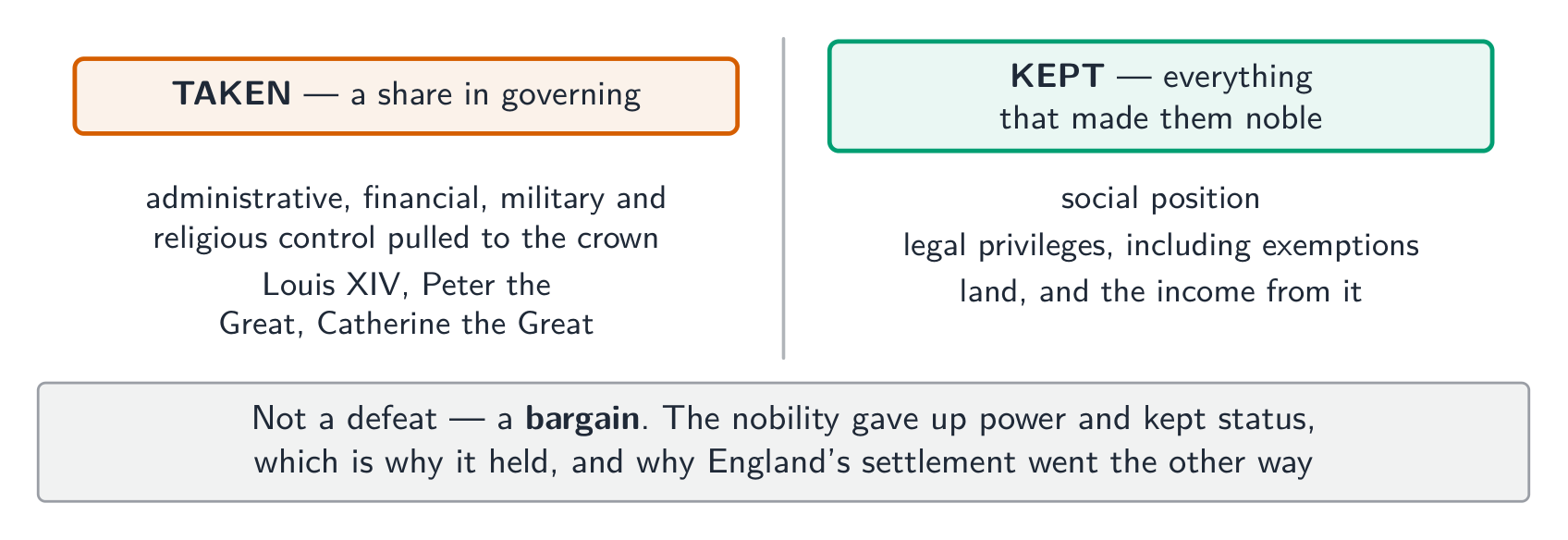
Absolute monarchies limited the nobility's participation in governance but preserved the aristocracy's social position and legal privileges. That trade is the single most useful sentence in the unit: absolutism bought political obedience by leaving social hierarchy untouched.

The CED's named cases:

  • Louis XIV 路易十四 and his finance minister Jean-Baptiste Colbert 柯尔贝尔 extended administrative, financial, military, and religious control over the French state.
  • Peter the Great 彼得大帝 "westernised" the Russian state and society, transforming political, religious, and cultural institutions; Catherine the Great 叶卡捷琳娜大帝 continued that programme.
Tiếng Việt

Chủ nghĩa độc裁 hạn chế sự tham gia của giới quý tộc vào quản trị nhưng bảo tồn vị trí xã hội và đặc quyền pháp lý của tầng lớp thượng lưu. Sự thỏa hiệp đó chính là câu quan trọng nhất trong đơn vị: chủ nghĩa độc裁 mua lấy sự tuân thủ chính trị bằng cách không chạm đến cấu trúc phân tầng xã hội.

Các ví dụ được nêu trong CED:

  • Louis XIV và bộ trưởng tài chính của ông Jean-Baptiste Colbert đã mở rộng sự kiểm soát hành chính, tài chính, quân sự và tôn giáo đối với nhà nước Pháp.
  • Peter Đại Đế "phương Tây hóa" nhà nước và xã hội Nga, biến đổi các thể chế chính trị, tôn giáo và văn hóa; Catherine Đại Đế tiếp tục chương trình đó.
Chủ nghĩa độc裁 là một thỏa thuận, không phải sự thất bại: quyền lực bị trao đi, địa vị được bảo toàn
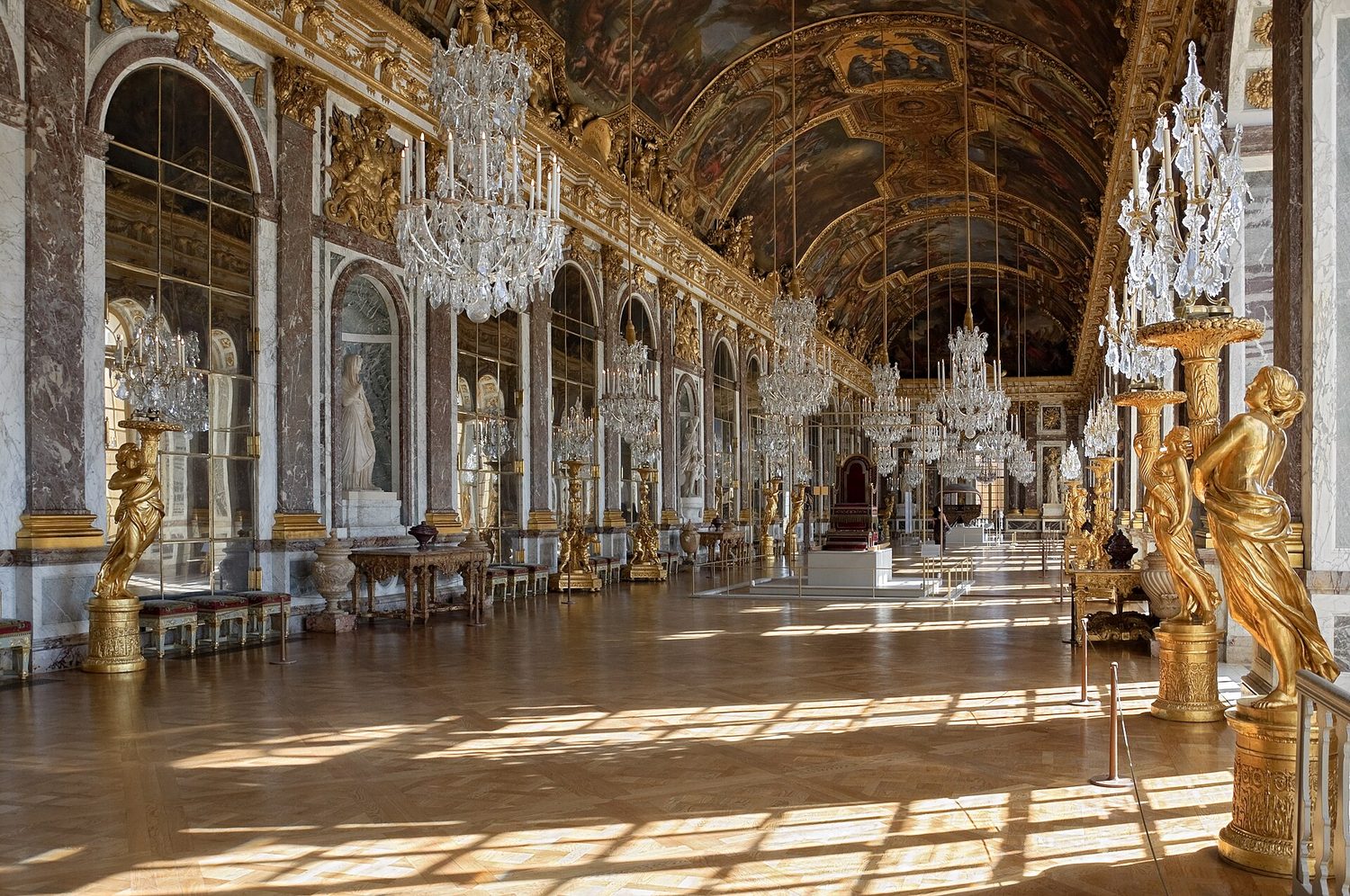
Phòng Gương ở Versailles - chủ nghĩa độc裁 như một kiến trúc
Explore · ⁨Khám phá⁩

Sort what absolutism took from what it left alone

Absolute monarchs limited the nobility's share in governing and preserved its social position — which is why it held.

Vocabulary · ⁨Từ vựng⁩ Train · ⁨Luyện tập⁩
English Tiếng Việt
Louis XIV/ˈluːi ðə ˌfɔːˈtiːnθ/ Louis XIV
Jean-Baptiste Colbert/dʒiːn bæpˈtiːst ˈkəʊlbət/ Jean-Baptiste Colbert
Peter the Great/ˈpiːtə ðə ɡreɪt/ Peter Đại đế
Catherine the Great/ˈkæθrɪn ðə ɡreɪt/ Catherine Đại đế
3.8

Comparison in the Age of Absolutism · ⁨So Sánh Trong Thời Kỳ Chủ Nghĩa Độc裁⁩

Syllabus · ⁨Chương trình⁩
English

3.8 Comparison in the Age of Absolutism and Constitutionalism

Learning Objective Unit 3.H: Compare the different forms of political power that developed in Europe from 1648 to 1815.

  • KC-1.5 The struggle for sovereignty within and among states resulted in varying degrees of political centralization.
    • KC-1.5.I The new concept of the sovereign state and secular systems of law played a central role in the creation of new political institutions.
    • KC-1.5.III The competition for power between monarchs and corporate and minority language groups produced different distributions of governmental authority in European states.
    • KC-1.5.III.B Monarchies seeking enhanced power faced challenges from nobles who wished to retain traditional forms of shared governance and regional autonomy.
    • KC-1.5.III.C Within states, minority local and regional identities based on language and culture led to resistance against the dominant national group.
  • KC-2.1 Different models of political sovereignty affected the relationship among states and between states and individuals.
    • KC-2.1.I In much of Europe, absolute monarchy was established over the course of the 17th and 18th centuries.
    • KC-2.1.II Challenges to absolutism resulted in alternative political systems.
  • KC-2.2 The expansion of European commerce accelerated the growth of a worldwide economic network.
    • KC-2.2.I Early modern Europe developed a market economy that provided the foundation for its global role.
    • KC-2.2.II The European-dominated worldwide economic network contributed to the agricultural, industrial, and consumer revolutions in Europe.
Tiếng Việt

3.8 So sánh trong Thời đại Chuyên chế và Hiến chế

Mục tiêu học tập Đơn vị 3.H: So sánh các hình thức quyền lực chính trị khác nhau đã phát triển ở Châu Âu từ năm 1648 đến 1815.

  • KC-1.5 Cuộc đấu tranh giành chủ quyền bên trong và giữa các quốc gia đã dẫn đến các mức độ tập trung chính trị khác nhau.
    • KC-1.5.I Khái niệm mới về nhà nước chủ quyền và hệ thống pháp luật thế tục đã đóng vai trò trung tâm trong việc tạo ra các thể chế chính trị mới.
    • KC-1.5.III Cuộc cạnh tranh quyền lực giữa các monarchs và các nhóm ngôn ngữ tập thể và thiểu số đã tạo ra các phân phối quyền lực chính phủ khác nhau trong các nhà nước Châu Âu.
    • KC-1.5.III.B Các vương triều tìm kiếm quyền lực tăng cường đã đối mặt với thách thức từ giới quý tộc muốn giữ lại các hình thức quản trị chia sẻ truyền thống và tự chủ khu vực.
    • KC-1.5.III.C Trong nội bộ các nhà nước, các bản sắc địa phương và khu vực thiểu số dựa trên ngôn ngữ và văn hóa đã dẫn đến sự kháng cự trước nhóm dân tộc thống trị.
  • KC-2.1 Các mô hình chủ quyền chính trị khác nhau đã ảnh hưởng đến mối quan hệ giữa các nhà nước và giữa nhà nước với cá nhân.
    • KC-2.1.I Ở hầu hết châu Âu, chế độ quân chủ chuyên chế đã được thiết lập trong suốt thế kỷ 17 và thế kỷ 18.
    • KC-2.1.II Những thách thức đối với chủ nghĩa chuyên chế dẫn đến sự hình thành các hệ thống chính trị thay thế.
  • KC-2.2 Sự mở rộng thương mại Châu Âu đã thúc đẩy sự tăng trưởng của mạng lưới kinh tế toàn cầu.
    • KC-2.2.I Châu Âu thời kỳ đầu hiện đại đã phát triển nền kinh tế thị trường, tạo nền tảng cho vai trò toàn cầu của mình.
    • KC-2.2.II Mạng lưới kinh tế toàn cầu do Châu Âu chi phối đã đóng góp vào các cuộc cách mạng nông nghiệp, công nghiệp và tiêu dùng ở Châu Âu.

Source: College Board AP Course and Exam Description · ⁨Nguồn: Mô tả Khóa học và Bài thi College Board AP⁩

English

The unit's reasoning skill is comparison - the CED's own task is to compare the different forms of political power that developed from 1648 to 1815.

Worked example (a real AP exam question). AP European History short-answer questions here ask, for example, to "Explain one difference between absolutist and constitutionalist forms of government in the period 1648 to 1815." A full-mark answer states the difference in terms that apply to both: "They differed in where sovereignty was located. In absolutist France, Louis XIV concentrated administrative, financial, and military authority in the crown and excluded the nobility from governance. In constitutionalist England, the outcome of the Civil War and the Glorious Revolution located sovereignty in the crown together with Parliament, so that taxation and law required the consent of the propertied elite represented there." Notice the structure: one axis of comparison, then each case measured on it.

Tiếng Việt

Kỹ năng tư duy của đơn vị là so sánh - chính nhiệm vụ của CED là so sánh các hình thức quyền lực chính trị khác nhau phát triển từ năm 1648 đến 1815.

Ví dụ hướng dẫn (một câu hỏi thực tế trong kỳ thi AP). Các câu hỏi trả lời ngắn về Lịch sử Châu Âu AP yêu cầu, ví dụ, "Giải thích một điểm khác biệt giữa các hình thức chính phủ theo chủ nghĩa độc裁 và chính phủ theo chủ nghĩa lập hiến trong giai đoạn 1648-1815." Một câu trả lời đạt điểm tối đa nêu ra sự khác biệt bằng những thuật ngữ áp dụng cho cả hai: "Chúng khác nhau ở nơi đặt chủ quyền. Tại Pháp theo chủ nghĩa độc裁, Louis XIV đã tập trung quyền hành chính, tài chính và quân sự vào triều đình và loại bỏ giới quý tộc khỏi việc quản trị. Tại Anh theo chủ nghĩa lập hiến, kết quả của cuộc Nội chiến và Cách mạng Vua光荣 (Glorious Revolution) đã đặt chủ quyền trong tay triều đình cùng với Quốc hội, do đó thuế khóa và luật pháp cần sự đồng ý của tầng lớp giàu có đại diện tại đó." Hãy chú ý đến cấu trúc: một trục so sánh, sau đó mỗi trường hợp được đo lường trên trục đó.

Vocabulary · ⁨Từ vựng⁩ Train · ⁨Luyện tập⁩
English Tiếng Việt
English Civil War/ˈɪŋɡlɪʃ ˈsɪvl wɔː/ Chiến tranh nội chiến Anh
Glorious Revolution/ˈɡlɔːrɪəs ˌrevəˈluːʃn/ Cách mạng Vĩ đại
Parliament/ˈpɑːləmənt/ Quốc hội
Agricultural Revolution/ˌæɡrɪˈkʌltʃərəl ˌrevəˈluːʃn/ Cách mạng Nông nghiệp
freed from traditional restrictions/friːd frɒm trəˈdɪʃənl rɪˈstrɪkʃnz/ giải phóng khỏi những hạn chế truyền thống
cottage industry/ˈkɒtɪdʒ ˈɪndʌstri/ công nghiệp gia đình
3.8

Exam tips · ⁨Mẹo làm bài thi⁩

English
  • The English Civil War was a conflict among elites about their roles. Do not turn 1688 into democracy.
  • Absolutism limited political participation but preserved social privilege. That trade answers many questions.
  • Keep a third model ready - the Dutch Republic. It breaks the simple two-way comparison and shows examiners you know the period.
  • Poland's partition is the cost of failing to centralise. It is the counter-example the other cases need.
  • The economic topics are a chain: agriculture, freed labour, cottage industry, finance. Name several links, not one.
  • For comparison questions, choose one axis and measure both cases on it. Two separate descriptions are not a comparison.
Tiếng Việt
  • Cuộc Nội chiến Anh là xung đột giữa các tầng lớp tinh hoa về vai trò của họ. Đừng biến sự kiện năm 1688 thành dân chủ.
  • Chủ nghĩa độc裁 hạn chế sự tham gia chính trị nhưng bảo tồn đặc quyền xã hội. Sự thỏa hiệp này trả lời nhiều câu hỏi.
  • Hãy giữ sẵn một mô hình thứ ba - Cộng hòa Hà Lan. Nó phá vỡ sự so sánh hai chiều đơn giản và cho các giám khảo thấy bạn hiểu sâu thời kỳ này.
  • Sự phân chia lãnh thổ Ba Lan là cái giá của việc không tập trung quyền lực. Nó là ví dụ phản chứng mà các trường hợp khác cần đến.
  • Các chủ đề kinh tế tạo thành một chuỗi: nông nghiệp, lao động tự do, công nghiệp gia đình, tài chính. Hãy nêu tên nhiều mắt xích, không chỉ một.
  • Đối với câu hỏi so sánh, hãy chọn một trục và đo lường cả hai trường hợp trên nó. Hai phần mô tả tách rời không phải là sự so sánh.

Interactive lessons on this topic · ⁨Bài học tương tác về chủ đề này⁩

Work through it step by step, with instant-check exercises. · ⁨Làm theo từng bước, kèm theo bài tập kiểm tra ngay lập tức.⁩

Past Papers · ⁨Đề thi cũ⁩

More topics in AP European History · ⁨AP Lịch sử Châu Âu⁩ · ⁨Nhiều chủ đề hơn trong AP European History · ⁨AP Lịch sử Châu Âu⁩⁩

Log in or create account · ⁨Đăng nhập hoặc tạo tài khoản⁩

IGCSE, A-Level & AP