Skip to content · ⁨ข้ามไปยังเนื้อหา⁩

Reading skills · ⁨ทักษะการอ่าน⁩

IGCSE English · ⁨English IGCSE⁩ · Topic 1 · ⁨หัวข้อ 1⁩

Video lesson for this topic · ⁨บทเรียนวิดีโอสำหรับหัวข้อนี้⁩ Open the video page · ⁨เปิดหน้าวิดีโอ⁩
7:55

ทักษะการอ่าน

เปิดกระดาษอ่าน คุณเห็นข้อความยาว — หกร้อยคำ หรือมากกว่านั้น — และคำถามเต็มหน้านาฬิกาบอกสี่สิบห้า นาที นักเรียนหลายคน…

English narration · English + 中文 subtitles burned in · ⁨การบรรยายภาษาอังกฤษ · คำบรรยายภาษาอังกฤษ + 中文 ลอยตัวบนภาพ⁩

1.1

Reading for specific information · ⁨การอ่านเพื่อหาข้อมูลเฉพาะ⁩

Syllabus · ⁨หลักสูตร⁩
English
  1. skim a text quickly to get the general idea, then scan to locate specific facts, names, numbers, times and places
  2. answer short questions with a single word or short phrase, using the exact detail from the text
  3. predict what kind of information a question is asking for before reading the text closely
ไทย
  1. อ่านคร่าวๆ เพื่อจับใจความหลัก แล้วดูหว่านเพื่อหาข้อเท็จจริง ชื่อ จำนวน เวลา และสถานที่เฉพาะเจาะจง
  2. ตอบคำถามสั้นๆ ด้วยคำเดียวหรือวลีสั้นๆ โดยใช้รายละเอียดที่ตรงตามข้อความเป๊ะๆ
  3. คาดเดาประเภทของข้อมูลที่คำถามต้องการก่อนอ่านข้อความอย่างละเอียด
Source: Cambridge International syllabus · ⁨แหล่งที่มา: หลักสูตร Cambridge International⁩

English

In the exam you do not read every word slowly. You change your speed to fit your goal.

Skim first, then scan

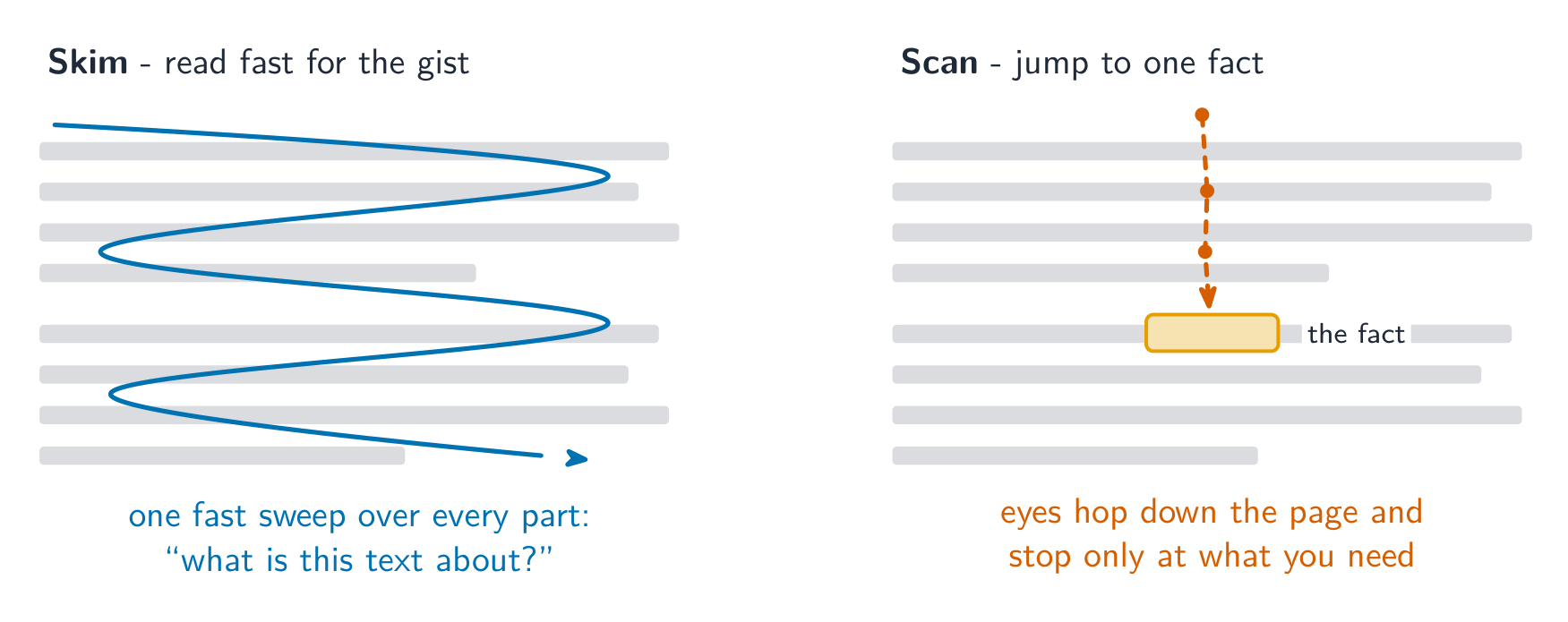
  • First skim 略读 the text. Read it fast to get the gist 大意 — the general idea. Look at the title, the first line of each paragraph 段落, and any pictures.
  • Then scan 扫读 to find one piece of information. Move your eyes quickly down the page. Do not read every word. Stop when you see what you need.
  • Use scanning for facts like names, numbers, dates, times and places.

Match the question to the text

  • Read the question first. Decide what kind of answer it wants: a name? a number? a reason?
  • Predict 预测 the answer before you look. This helps your eyes find it faster.
  • Find the part of the text that talks about the same idea. The answer is usually there.

Write short, exact answers

  • Here you write a single word or a short phrase 短语, not a full sentence.
  • Copy the exact word from the text when you can.
  • Answer only what the question asks. Extra words can lose the mark.
ไทย

ในการสอบ คุณไม่จำเป็นต้องอ่านทุกคำอย่างช้าๆ คุณควรปรับความเร็วในการอ่านให้สอดคล้องกับเป้าหมายของคุณ

สกิมก่อน แล้วสแกน

  • ขั้นแรก สกิม (Skim) ข้อความ อ่านเร็วๆ เพื่อรับ ** gist (大意)** —也就是总体概念或主旨。看标题、每段的第一行以及任何图片。
  • จากนั้น สแกน (Scan) เพื่อหาคำตอบหนึ่งจุด ย้ายสายตาอย่างรวดเร็วตามหน้ากระดาษ อย่าอ่านทุกคำ หยุดเมื่อเจอสิ่งที่ต้องการ
  • ใช้การสแกนสำหรับข้อเท็จจริง เช่น ชื่อ เลข จำนวน วันที่ เวลา และสถานที่
เปรียบเทียบบล็อคข้อความสองชุด: สกิมคือการกวาดสายตาเร็วทั่วทุกบรรทัดเพื่อรับ gist, สแกนคือการกระโดดลงไปตามหน้ากระดาษและหยุดอยู่ที่ข้อเท็จจริงที่ถูกเน้น
Skim掠过everything抓 gist; scan jumps straight to one fact
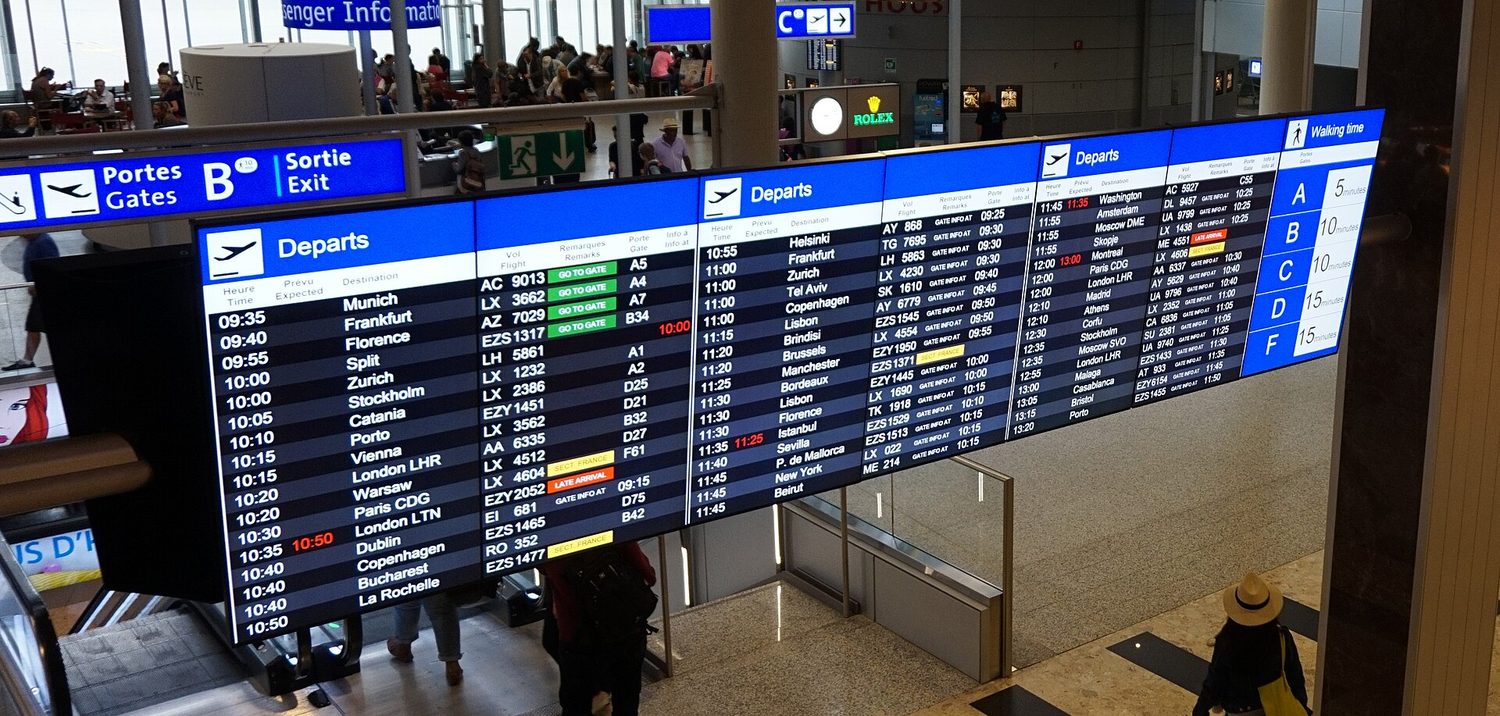
บอร์ดแสดงเวลาออกเดินทางขนาดใหญ่ที่รายการเวลาบิน.keras destinations และทางเดินออกหลายรายการ
บอร์ดแสดงเวลาออกเดินทางคือข้อความจริงที่คุณใช้การสแกน: คุณไม่ได้อ่านทุกบรรทัด — คุณกระโดดตรงไปที่เวลาหรือทางเดินออกที่จำเป็นทันที

จับคู่คำถามกับข้อความ

  • อ่านคำถามก่อน ตัดสินใจว่าคำตอบเป็นแบบไหน: เป็นชื่อ? เป็นตัวเลข? เป็นเหตุผล?
  • ทำนาย (Predict) คำตอบก่อนดูในข้อความ สิ่งนี้จะช่วยให้สายตาของคุณค้นหาได้เร็วขึ้น
  • หาส่วนของข้อความที่พูดถึงประเด็นเดียวกัน คำตอบมักจะอยู่ในส่วนนั้น

เขียนคำตอบสั้นและถูกต้อง

  • ที่นี่คุณเขียนคำเดียวหรือ phrase (短语) สั้นๆ ไม่ใช่ประโยคเต็ม
  • คัดลอกคำที่แน่นอนจากข้อความเมื่อทำได้
  • ตอบเฉพาะสิ่งที่คำถามถาม คำเพิ่มเติมอาจทำให้เสียคะแนน
Vocabulary · ⁨คำศัพท์⁩ Train · ⁨ฝึกฝน⁩
English ไทย
skim/skɪm/ อ่านคร่าวๆ
gist/dʒɪst/ ใจความสำคัญ
paragraph/ˈpærəɡræf/ ย่อหน้า
scan/skæn/ การสแกน
predict/prɪˈdɪkt/ คาดการณ์
phrase/freɪz/ วลี
1.2

Connecting ideas across a text · ⁨เชื่อมโยงความคิดข้ามข้อความ⁩

Syllabus · ⁨หลักสูตร⁩
English
  1. follow how ideas, opinions and attitudes in a text connect to one another
  2. match each question to the section or short text that contains the relevant idea (multiple matching)
  3. recognise words and phrases that signal time, cause and effect, addition and contrast
ไทย
  1. ติดตามการเชื่อมโยงระหว่างแนวคิด ความคิดเห็นและทัศนคติในข้อความ
  2. จับคู่แต่ละคำถามกับย่อหน้าหรือข้อความสั้นที่มีแนวคิดที่เกี่ยวข้อง (การจับคู่หลายข้อ)
  3. จดจำคำและวลีที่บ่งบอกถึงเวลา สาเหตุและผล การเพิ่มข้อมูล และการขัดแย้ง

Source: Cambridge International syllabus · ⁨แหล่งที่มา: หลักสูตร Cambridge International⁩

English

A long text is not just a list of facts. The ideas link to each other, and you must follow how.

Multiple matching

  • In a multiple matching 多项匹配 task you read several short texts, or several parts of one text.
  • Each question describes an idea. You choose the text or part that matches it.
  • The words in the question are usually different from the words in the text. Look for the same meaning, not the same words. This is called a paraphrase 改写.

Signal words

  • Writers use small words to show how ideas connect. These are signal words 信号词.
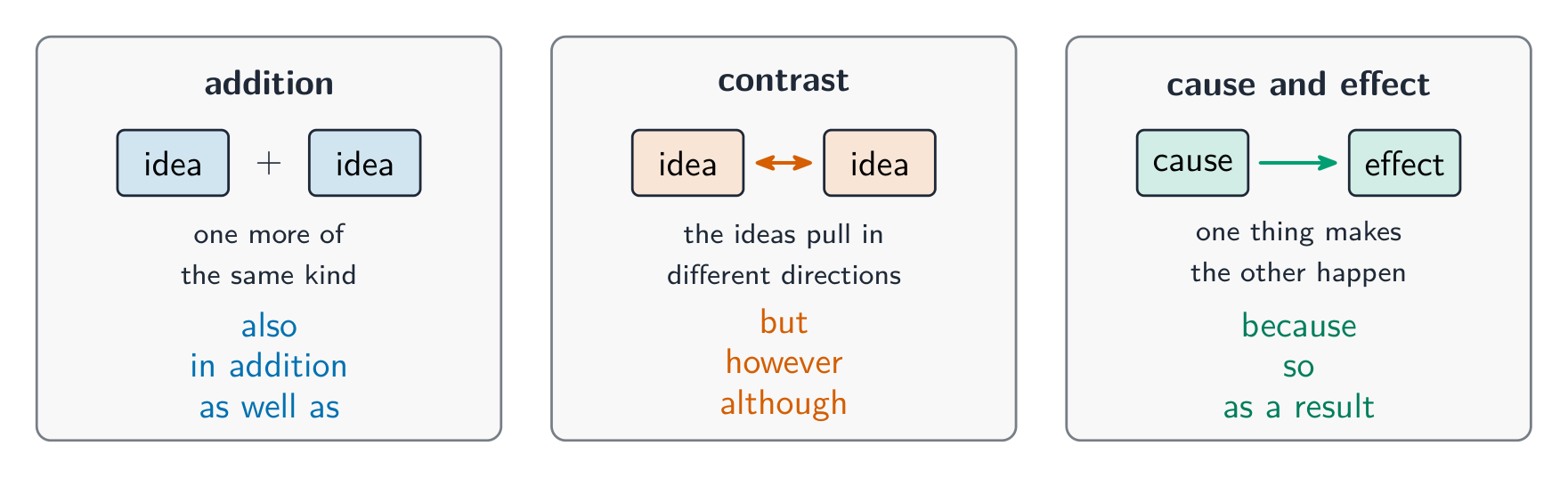
  • Some show addition 递进 (also, in addition, as well as). Some show contrast 对比 (but, however, although). Some show cause and effect 因果 (because, so, as a result).
  • When you notice these words, you can see how the writer's ideas fit together.
ไทย

ข้อความยาวไม่ใช่แค่รายการข้อเท็จจริง ความคิดต่างๆ เชื่อมโยงกัน และคุณต้องติดตามวิธีเชื่อมโยงเหล่านั้น

การจับคู่แบบหลายตัวเลือก

  • ในงาน multiple matching (多项匹配) คุณต้องอ่านข้อความสั้นๆ หลายฉบับ หรือหลายส่วนของข้อความเดียว
  • แต่ละคำถามอธิบายประเด็นหนึ่ง คุณเลือกข้อความหรือส่วนที่ตรงกับมัน
  • คำในคำถามมักต่างจากคำในข้อความ มองหาความหมายเดียวกัน ไม่ใช่คำเดียวกัน สิ่งนี้เรียกว่า paraphrase (改写)

คำบอกสัญญาณ

  • ผู้เขียนใช้คำเล็กๆ เพื่อแสดงวิธีการเชื่อมโยงความคิด คำเหล่านี้คือ signal words (信号词)
  • บางคำแสดง addition (递进) (also, in addition, as well as) บางคำแสดง contrast (对比) (but, however, although) บางคำแสดง cause and effect (因果) (because, so, as a result)
  • เมื่อคุณสังเกตเห็นคำเหล่านี้ คุณจะเห็นได้ว่าความคิดของผู้เขียนเชื่อมโยงกันอย่างไร
บัตรสามใบ: คำเพิ่มเติม的想法,对比词将两个想法引向不同方向,因果关系词将一个原因与其结果联系起来
The three signal-word families and what they do to ideas
Vocabulary · ⁨คำศัพท์⁩ Train · ⁨ฝึกฝน⁩
English ไทย
multiple matching/ˈmʌltɪpl ˈmætʃɪŋ/ จับคู่หลายข้อ
paraphrase/ˈpærəfreɪz/ การเรียบเรียงใหม่
signal words/ˈsɪɡnl wɜːdz/ คำนำ signal words
addition/əˈdɪʃn/ addition
contrast/ˈkɒntræst/ ความแตกต่างของค่าสี
cause and effect/kɔːz ænd ɪˈfekt/ สาเหตุและผล
1.3

Making notes and summaries · ⁨การจดบันทึกและการสรุป⁩

Syllabus · ⁨หลักสูตร⁩
English
  1. select only the relevant points from a text for a given purpose
  2. complete a set of brief notes under headings, using short phrases rather than full sentences
  3. leave out examples and repetition, keeping just the key information
ไทย
  1. เลือกเฉพาะจุดที่สำคัญจากข้อความสำหรับวัตถุประสงค์ที่กำหนด
  2. เติมแบบบันทึกสั้นๆ ภายใต้หัวข้อต่างๆ โดยใช้วลีสั้นแทนประโยคเต็ม
  3. ตัดตัวอย่างและการซ้ำซ้อนออก เก็บไว้เพียงข้อมูลสำคัญเท่านั้น

Source: Cambridge International syllabus · ⁨แหล่งที่มา: หลักสูตร Cambridge International⁩

English

Sometimes you must take the main points out of a text and write them in a short form.

Note-making

  • In a note-making 做笔记 task you complete notes under headings.
  • Write short notes, not full sentences. A word or a short phrase is enough.
  • Choose only the points that fit the heading. Leave out examples and extra detail.

Summary skills

  • A summary 概括 gives only the most important ideas, in fewer words.
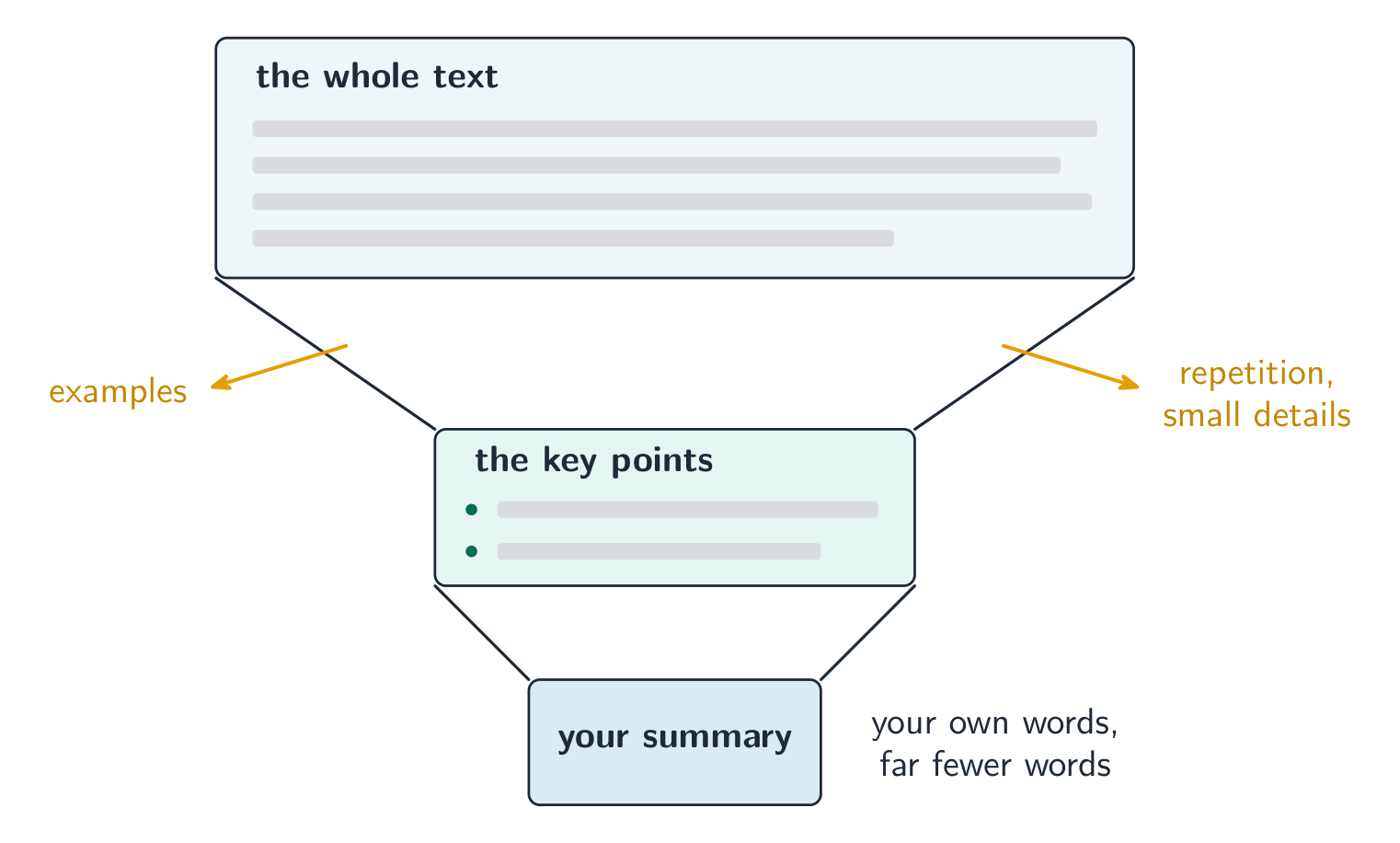
  • Find the key points. Ignore examples, repetition 重复 and small details.
  • Use your own words where you can. Do not copy whole sentences.
ไทย

บางครั้งคุณต้องดึงประเด็นหลักออกจากข้อความและเขียนในรูปแบบสั้นๆ

การจดบันทึก

  • ในงาน note-making (做笔记) คุณจะเติมข้อมูลในหมายเหตุภายใต้หัวข้อ
  • เขียนหมายเหตุสั้นๆ ไม่ใช่ประโยคเต็ม คำเดียวหรือวลีสั้นก็พอ
  • เลือกเฉพาะจุดที่ตรงกับหัวข้อ ทิ้งตัวอย่างและรายละเอียดเพิ่มเติมไว้

ทักษะการสรุป

  • summary (概括) ให้เพียงประเด็นที่สำคัญที่สุด โดยใช้คำจำนวนน้อยกว่า
  • หาประเด็นสำคัญ ทิ้งตัวอย่าง repetition (重复) และรายละเอียดเล็กน้อย
  • ใช้คำของคุณเองเมื่อทำได้ อย่าคัดลอกทั้งประโยค
กรวย: ข้อความทั้งหมดเข้าไปด้านบน ตัวอย่างและการซ้ำซ้อนถูกบีบออกด้านข้าง ประเด็นสำคัญคงอยู่ และสรุปสั้นๆ ในคำของคุณเองออกมาด้านล่าง
A summary keeps only the key points, in your own words
Vocabulary · ⁨คำศัพท์⁩ Train · ⁨ฝึกฝน⁩
English ไทย
note-making/nəʊt ˈmeɪkɪŋ/ การทำบันทึกย่อ
summary/ˈsʌməri/ สรุป
repetition/ˌrepəˈtɪʃn/ การซ้ำซ้อน
1.4

Reading between the lines · ⁨การอ่านระหว่างบรรทัด⁩

Syllabus · ⁨หลักสูตร⁩
English
  1. understand meaning that is implied but not directly stated
  2. work out a writer's opinion, attitude or feelings from the words and phrases they choose
  3. deduce the meaning of an unfamiliar word from the information around it
  4. answer multiple-choice questions about main ideas, details and attitudes
ไทย
  1. เข้าใจความหมายที่สื่อโดยนัยแต่ไม่ได้ระบุไว้อย่างชัดเจน
  2. วิเคราะห์ความคิดเห็น ทัศนคติหรือความรู้สึกของผู้เขียนจากคำและวลีที่เลือกใช้
  3. สันนิษฐานความหมายของคำที่ไม่รู้จักจากข้อมูลรอบข้าง
  4. ตอบคำถามแบบเลือกตอบเกี่ยวกับใจความหลัก รายละเอียดและทัศนคติ

Source: Cambridge International syllabus · ⁨แหล่งที่มา: หลักสูตร Cambridge International⁩

English

Some answers are not written directly in the text. You must work them out. This is called inference 推断.

Implied meaning

  • Sometimes the writer implies 暗示 something without saying it openly. The meaning is there, but it is hidden.
  • Read the words around the idea. Ask: what does the writer want me to understand here?

The writer's attitude

  • The writer's attitude 态度 is how they feel about the topic — for example, excited, worried, or unsure.
  • You find the attitude in the writer's word choice 用词. Strong or emotional words show feelings.
  • In a multiple-choice 选择题 question about attitude, read all the options. Choose the one that fits the whole text, not just one line.

Unfamiliar words

  • You will meet words you do not know. Do not stop.
  • Use the context 语境 — the words around it — to guess the meaning of the new word.
ไทย
ผู้หญิงถือหนังสือเก่ากองหนึ่ง กำลังอ่านเล่มหนึ่งอย่างละเอียด
การอ่านอย่างละเอียด: คำตอบเชิงอนุมานมาจากคำที่ผู้เขียนเลือกใช้ ไม่ใช่จากประโยคที่คุณสามารถคัดลอกออกมาได้

บางคำตอบไม่ได้เขียนไว้อย่างชัดเจนในข้อความ คุณต้องคิดหามันเอง สิ่งนี้เรียกว่า inference (推断)

ความหมายที่สื่อโดยนัย

  • บางครั้งผู้เขียน **implies (暗示)**บางอย่างโดยไม่พูดออกมาโดยตรง ความหมายมีอยู่แต่ซ่อนเร้น
  • อ่านคำรอบๆ ประเด็นนั้น ถามตัวเองว่า: ผู้เขียนต้องการให้ฉันเข้าใจอะไรที่นี่?

มุมมองของผู้เขียน

  • attitude (态度) ของผู้เขียนคือความรู้สึกของพวกเขาต่อหัวข้อ — ตัวอย่างเช่น ตื่นเต้น กังวล หรือไม่แน่ใจ
  • คุณพบมุมมอง这在作者的 word choice (用词) คำที่หนักแน่นหรือมีความรู้สึก แสดงถึงอารมณ์
  • ในคำถามแบบเลือกตอบ (multiple-choice) ที่เกี่ยวกับทัศนคติ ให้อ่านตัวเลือกทั้งหมด เลือกข้อที่ตรงกับเนื้อหาทั้งฉบับ ไม่ใช่แค่บรรทัดเดียว

คำศัพท์ที่ไม่คุ้นเคย

  • คุณจะเจอคำที่ไม่รู้จัก อย่าหยุดอ่าน
  • ใช้ บริบท (context) — คำศัพท์โดยรอบ — เพื่อเดาความหมายของคำใหม่
Vocabulary · ⁨คำศัพท์⁩ Train · ⁨ฝึกฝน⁩
English ไทย
inference/ˈɪnfərəns/ การอนุมาน (inference)
implies/ɪmˈplaɪz/ บ่งชี้ว่า
attitude/ˈætɪtjuːd/ ทัศนคติ
word choice/wɜːd tʃɔɪs/ การเลือกคำศัพท์
multiple-choice/ˈmʌltɪpl tʃɔɪs/ แบบเลือกตอบ
context/ˈkɒntekst/ บริบท
1.4

Exam tips · ⁨ข้อแนะนำสำหรับการสอบ⁩

English
  • Read the question before the text. Underline the key word: a name? a number? a reason?
  • Answers usually come in the same order as the text, so do not hunt backwards for question 1.
  • Copy the exact word from the text when you can; a changed word can lose the mark.
  • Check how many answers the question wants: "Give TWO reasons" needs two, not one.
  • In multiple matching, the text usually does not repeat the question's words. Hunt for the same idea said differently.
  • Never leave an empty line. A guess can win a mark; a blank never can.
ไทย
  • อ่านคำถามก่อนอ่านเนื้อเรื่อง ใต้เส้นคำสำคัญ: ชื่อคน? ตัวเลข? หรือเหตุผล?
  • คำตอบมักเรียงตามลำดับในเนื้อเรื่อง ดังนั้นอย่าย้อนกลับไปหาคำตอบข้อ 1
  • คัดลอกคำที่ถูกต้องจากเนื้อเรื่องเท่าที่จะทำได้ คำที่เปลี่ยนไปอาจทำให้เสียคะแนน
  • ตรวจสอบว่าคำถามต้องการคำตอบกี่ข้อ: "ให้สองเหตุผล" ต้องมีสองข้อ ไม่ใช่หนึ่ง
  • ในแบบจับคู่หลายข้อ เนื้อเรื่องมักไม่ใช้คำเดิมกับคำถาม ให้มองหาไอเดียเดียวกันแต่พูดด้วยภาษาอื่น
  • อย่าปล่อยช่องว่างไว้ การทายคำตอบอาจได้คะแนน แต่ช่องว่างไม่ได้

Interactive lessons on this topic · ⁨บทเรียนเชิงโต้ตอบสำหรับหัวข้อนี้⁩

Work through it step by step, with instant-check exercises. · ⁨ทำทีละขั้นตอน พร้อมแบบฝึกหัดตรวจสอบผลทันที⁩

Past Papers · ⁨ข้อสอบย้อนหลัง⁩

More topics in IGCSE English · ⁨English IGCSE⁩ · ⁨หัวข้อเพิ่มเติมใน IGCSE English · ⁨English IGCSE⁩⁩

Log in or create account · ⁨เข้าสู่ระบบหรือสร้างบัญชี⁩

IGCSE, A-Level & AP